

Online University Teaching During and After the Covid-19 Crisis: Refocusing Teacher Presence and Learning Activity
Open accessThe DOI matches its Crossref record; 71 of the 75 references it cites were found in a registry or an index; 6 of the 42 sources its claims cite were checked for support.
Abstract
The Covid-19 pandemic has raised significant challenges for the higher education community worldwide. A particular challenge has been the urgent and unexpected request for previously face-to-face university courses to be taught online. Online teaching and learning imply a certain pedagogical content knowledge (PCK), mainly related to designing and organising for better learning experiences and creating distinctive learning environments, with the help of digital technologies.
Overview
CoChat Summary
TL;DR
This article is an expert-interview piece offering pedagogical guidance for university teachers suddenly moving online during Covid-19. Its central message is that effective online teaching depends less on tools or materials alone and more on careful learning design, multiple forms of teacher presence, and continuous assessment.
Key findings
- The four experts argue that online learning should be built around carefully designed learning activities, with a mix of synchronous, asynchronous, online, and offline tasks that are clear, appropriately difficult, authentic, and accessible to students.
- They propose a tripartite teaching presence for online courses: cognitive presence, social presence, and facilitatory presence.
- Successful online learning requires students not to feel alone, and it benefits from timely feedback, peer collaboration, and student co-design/co-configuration of activities.
- The paper states that continuous assessment is needed in online learning, and suggests self-reflections, portfolios, self-paced asynchronous activities, and use of learning analytics as part of evaluation.
Methods
- Exploratory qualitative study using expert interviews administered by e-mail.
- Sample: 4 online pedagogy experts/co-authors, selected for research expertise, more than a decade of online teaching experience, and experience across different national education systems; they worked in Switzerland, Australia, Spain, and Canada.
- Main analysis: the first author organized the responses into a panel-like article, then the authors jointly revised and synthesized the material; the discussion summarizes themes under learning design, teacher presence, and assessment.
Limitations
- The paper states that all four experts came from “rich parts of the world” (Switzerland, Canada, Australia, and North of Spain), which limits the lens to a “monofocal” view of educational reality.
- The paper itself says the study used a heuristic method based on expert viewpoints and “by no means can replace rigorous, systematic research” following the scientific method.
- Evident from the text: the sample is very small (4 experts) and highly selected, so the findings are expert-opinion guidance rather than generalizable empirical results.
Model-written summary. Check it against the paper before relying on it.
Integrity signals
Registry
Cites
Statistics
Figures
Verification
Claims the paper makes
5 Valid · 0 Not valid · 32 Not checked · 24 Own results and interpretations
The sources with a verdict support this claim; the rest weren’t checked yet, have no full text we could read, or their verdicts aren’t rated yet.
In the paper
“On top of that, a significant challenge for university teachers has been their lack of the pedagogical content knowledge (PCK) (Shulman 1987) needed for teaching online (Angeli and Valanides 2005; Kali, Goodyear and Markauskaite 2011; Ching, Hsu and Baldwin 2018).”
§ Springer Nature Switzerland AG 2020 Published online: 7 July 2020 > Introduction
What the sources say
- Supportedcites Shulman 1987 matched to “Knowledge and teaching: Foundations of the new reform” (1987) source
The parenthetical (Shulman 1987) is attached to the term 'pedagogical content knowledge (PCK)' — an identification citation — while the online-teaching studies are credited to Angeli & Valanides, Kali et al. and Ching et al. Our copy (the Portuguese edition of Shulman's 1987 Harvard Educational Review article) establishes exactly that concept: the 'Categorias da base de conhecimento' section lists 'conhecimento pedagógico do conteúdo' as one of the categories of the knowledge base for teaching, 'esse amálgama especial de conteúdo e pedagogia que é o terreno exclusivo dos professores', and the 'Novas compreensões' section calls it 'a categoria que melhor distingue a compreensão de um especialista em conteúdo daquela de um pedagogo'. The paper itself says nothing about online teaching or about university teachers lacking PCK, but that part of the sentence is not attributed to this source. (LLM, conf=0.85)
- Not checked — no full text of the sourcecites Angeli and Valanides 2005 matched to “Preservice elementary teachers as information and communication technology designers: an instructional systems design model based on an expanded view of pedagogical content knowledge” (2005) source
- Could not verifycites Ching, Hsu and Baldwin 2018 matched to “Online Course Design and Development among College and University Instructors: An Analysis using Grounded Theory” (2018) sourceExperimental — accuracy not yet measured
Our copy of Baldwin, Ching & Friesen (2018) never mentions pedagogical content knowledge, PCK, Shulman, or TPACK; searches for 'pedagogical content knowledge PCK online teaching', 'TPACK technological pedagogical content knowledge', 'Shulman pedagogical content knowledge Angeli Valanides' and 'challenge lack of knowledge training online instructors pedagogy' returned only the References list and design-process passages. The paper's content is a grounded-theory account of how 14 four-year-institution instructors design online courses (Abstract; Results themes; Discussion mapping to ADDIE), and its nearest statements — that instructors 'must develop new curriculum with instructional strategies effective for online learning' (Discussion) and 'rarely use formal instructional design models' (Results) — concern design practice, not a PCK deficiency framed as a significant challenge. Nothing in our copy either states or contradicts the attributed claim. (LLM, conf=0.72)
plain- Asserted: passes — The authors put it forward as true.
- Checkable: passes — It can be checked against evidence.
- Load-bearing: passes — The paper’s conclusions depend on it.
- Based: passes — The paper gives a reason why it holds.
- Supported
The cited sources support only part of this claim — read each source’s verdict below.
In the paper
“Assessment can possibly be considered the most challenging part of the transition to distance learning for an institution used to face-to-face oral or written exam, as the control shift towards the students makes it hardly possible to ensure that students are not cheating (Munoz and Mackay 2019).”
§ Springer Nature Switzerland AG 2020 Published online: 7 July 2020 > Assessment
What the sources say
- Partly supportedcites Munoz and Mackay 2019 matched to “An online testing design choice typology towards cheating threat minimisation” (2019) sourceExperimental — accuracy not yet measured
Split into 2 atoms — 0 confirmed, 2 partially supported, 0 disputed, 0 misattributed, 0 unverifiable. Expand the claim to see per-atom verdicts.
hedgedstates a possible cause- Asserted: passes — The authors put it forward as true.
- Checkable: passes — It can be checked against evidence.
- Load-bearing: unclear — It is unclear whether the paper’s conclusions depend on it.
- Based: passes — The paper gives a reason why it holds.
- Partly supported
A result the paper reports from its own data — it cites no other source for it, so there is none to check. The quote shows it is in the paper.
In the paper
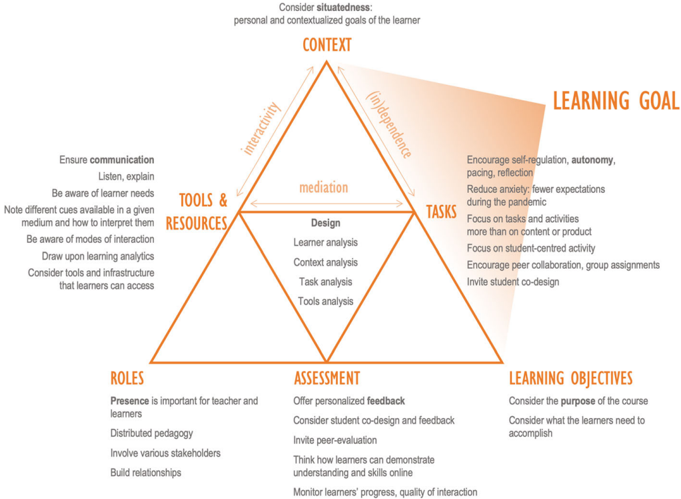
“Our findings point at the design of learning activities with certain characteristics, the combination of three types of presence (social, cognitive and facilitatory) and the need for adapting assessment to the new learning requirements.”
§ Springer Nature Switzerland AG 2020 Published online: 7 July 2020 > Abstract
plainstates an association- Asserted: passes — The authors put it forward as true.
- Checkable: passes — It can be checked against evidence.
- Load-bearing: passes — The paper’s conclusions depend on it.
- Based: passes — The paper gives a reason why it holds.
None of the sources cited for this claim have been checked yet.
In the paper
“What all four experts focus on as a prime ' piece ' of pedagogical knowledge (Kali et al. 2011) is the careful design of activities.”
§ Springer Nature Switzerland AG 2020 Published online: 7 July 2020 > Learning Design
plain- Asserted: passes — The authors put it forward as true.
- Checkable: passes — It can be checked against evidence.
- Load-bearing: unclear — It is unclear whether the paper’s conclusions depend on it.
- Based: passes — The paper gives a reason why it holds.
A result the paper reports from its own data — it cites no other source for it, so there is none to check. The quote shows it is in the paper.
In the paper
“Inspired by Anderson et al. ' s (2001) understanding of teaching presence and how it can be re-conceived in the current Covid-19 situation in which educators are the designers, the tutors and the evaluators of the learning experience, a tripartite framework emerges from the interviews, with three main sub-presences of the teaching presence, namely:”
§ Springer Nature Switzerland AG 2020 Published online: 7 July 2020 > Teacher Presence
plain- Asserted: passes — The authors put it forward as true.
- Checkable: passes — It can be checked against evidence.
- Load-bearing: passes — The paper’s conclusions depend on it.
- Based: passes — The paper gives a reason why it holds.
5 more claims
Create a free account to see all 61 claims and to verify the 9 references still open.
- Probably not a substantial claim. 50
- It may state two separate claims as one. 18
Claims other papers make about this one
Each is checked against this paper’s own text: does it say what the citing paper says it does?
The source backs part of the claim, not all of it — or backs it for a different population, condition or comparison.
In the citing paper
“while it is known that for learning success, input formats usually depend on both attention and interest from the students (Rapanta et al., 2020).”
From Impact of Synchronous and Asynchronous Settings of Online Teaching and Learning in Higher Education on Students' Learning Experience During COVID-19 (2021) · cites this paper as Rapanta et al., 2020
Experimental — accuracy not yet measuredIn the citing paper
“Evaluating AI applications could be beneficial for enhancing their motivation and interest in teaching with AI [40].”
From Developing AI Literacy for Primary and Middle School Teachers in China: Based on a Structural Equation Modeling Analysis (2022) · cites this paper as [40]
Citations
Cites
The Reflective Practitioner: How Professionals Think in Action
Checkoway, B., & Schon, D. A. (1985) · Journal of Policy Analysis and Management · doi:10.2307/3324262 · Cited by 21,268
The reflective practitioner: How professionals think in action
Stewart, C. J. (1984) · Patient Education and Counseling · doi:10.1016/0738-3991(84)90022-3 · Cited by 19,752
Knowledge and teaching: Foundations of the new reform
Shulman, L. (1987) · Harvard Educational Review · doi:10.17763/haer.57.1.j463w79r56455411 · Cited by 16,787
Phenomenological research methods
Moustakas, C. (1994) · doi:10.4135/9781412995658 · Cited by 13,919 · cited 1×
“’ This study ’ s participants, i.e. the four online pedagogy experts, also functioned as co-researchers, following Moustakas ’ (1994) idea (l).”
BackgroundDetermining Validity in Qualitative Inquiry
Creswell, J. W., & Miller, D. L. (2000) · Theory Into Practice · doi:10.1207/s15430421tip3903_2 · Cited by 9,184
Speech Genres and Other Late Essays
Bakhtin, M. M. (1986) · University of Texas Press eBooks · doi:10.7560/720466 · Cited by 8,470
The Difference between Emergency Remote Teaching and Online Learning
Hodges, C. B., Moore, S., Lockee, B. B., Trust, T., & Bond, M. A. (2024) · Handbook of Research in Online Learning · doi:10.1163/9789004702813_021 · Cited by 6,253
Blended learning: Uncovering its transformative potential in higher education
Garrison, D. R., & Kanuka, H. (2004) · The Internet and Higher Education · doi:10.1016/j.iheduc.2004.02.001 · Cited by 4,849
Speech Genres and Other Late Essays
Melaver, M., Bakhtin, M. M., McGee, V. W., Emerson, C., & Holquist, M. (1987) · Poetics Today · doi:10.2307/1772598 · Cited by 3,185
ASSESSING TEACHING PRESENCE IN A COMPUTER CONFERENCING CONTEXT
Anderson, T., Rourke, L., Garrison, R., & Archer, W. (2001) · Online Learning · doi:10.24059/olj.v5i2.1875 · Cited by 1,885
Research works printed but not linked: 2
- Bates, A. W. (2019). Teaching in a digital age. 2nd Edition. Vancouver: Tony Bates Associates. https://pressbooks.bccampus.ca/teachinginadigitalagev2/. Accessed 15 June 2020.
- Shor, I., & Freire, P. (1987). A pedagogy for deliberation: dialogues on transforming education . Westport: Bergin & Garvey Publishers.
Cited by
Items 401–500 of 2,106
Briones, M. R., Prudente, M. S., & Errabo, D. D. R. (2023) · Education Sciences · doi:10.3390/educsci13111131 · Cited by 30
Crisp, B. R., Stanford, S., & Moulding, N. (2021) · The British Journal of Social Work · doi:10.1093/bjsw/bcab108 · Cited by 18
“The utilisation of mixed learning strategies that include active learning, synchronous and asynchronous strategies, and strong teacher presence, have been emphasised by researchers as central to good design of online learning (Rapanta et al., 2020).”
BackgroundZajdel, M., Michalcewicz-Kaniowska, M., Modrzyński, P., Komarnicka, A., & Modrzyńska, J. (2021) · Sustainability · doi:10.3390/su131810373 · Cited by 18
“[59] interviewed experts working in Switzerland, Australia, Spain, and Canada, with the aim of helping university teachers who have little experience with online learning to navigate e-learning in these challenging times caused by COVID-19.”
BackgroundAsiamah, N., Vieira, E. R., Kouveliotis, K., Gasana, J., Awuviry‐Newton, K., & Eduafo, R. (2021) · Health Promotion International · doi:10.1093/heapro/daab093 · Cited by 13
Simuţ, C. C., Petrila, L., Popescu, F.-A., & Oprea, I. M. (2021) · Sustainability · doi:10.3390/su131810296 · Cited by 16
The Challenges and Constraints of Online Teaching and Learning in the New Normal Environment
Haron, H. N., Masrom, M. B., Yaacob, S., & Sabri, S. A. (2021) · International Journal of Academic Research in Business and Social Sciences · doi:10.6007/ijarbss/v11-i4/9825 · Cited by 17
“…teachers or lecturers and students while using online teaching and learning approach among others are (Dhawan, 2020; Misha, Gupta, and Shree, 2020; Rapanta et al. 2020; Selvanathan, Atikah, & Alyani, 2020): • Accessibility: It is said that students without reliable internet access and technology…”
Haider, A. S., & Al-Salman, S. M. (2021) · Journal of Applied Research in Higher Education · doi:10.1108/jarhe-07-2021-0261 · Cited by 18
‘Maslow before Bloom’: Implementing a caring pedagogy during Covid-19
Mutch, C. (2021) · Teachers Work · doi:10.24135/teacherswork.v18i2.334 · Cited by 18
“Rapanta et al., (2020) noted that not only did Covid-19 alter approaches to learning and assessment but that teachers had to redevelop their ‘teacher presence’.”
BackgroundTransformasi Lingkungan Pembelajaran Berbasis Literasi Digital Pada Anak Usia Dini
Putri, M. S., & Chairiyah (2021) · Jurnal Pendidikan Anak Usia Dini Undiksha · doi:10.23887/paud.v9i3.38491 · Cited by 50
Meda, L., & ElSayary, A. (2021) · Contemporary Educational Technology · doi:10.30935/cedtech/11073 · Cited by 18
“According to Rapanta et al. (2020), the teaching presence during the time of COVID-19 is indispensable as teachers design course materials, facilitate students’ discussions and resolve any issue that may arise from students’ learning.”
BackgroundMshayisa, V. V., & Ivala, E. N. (2022) · Education Sciences · doi:10.3390/educsci12060386 · Cited by 19
“Much of the research on online learning during the COVID-19 pandemic has been devoted to online assessments [11], preventing cheating or dishonesty during assessments [11–14], students’ satisfaction with online learning [15], use of digital technologies [2] and instructional strategies [3,11].”
BackgroundAldossari, S., & Altalhab, S. (2022) · English Language Teaching · doi:10.5539/elt.v15n7p85 · Cited by 24
“According to the reviewed literature, students’ engagement in coursework and their interaction with peers and teachers might be better in online classes than in conventional classes (Darmawansah & Indartono, 2019; Sari, 2020; Oraif & Elyas, 2021). In contrast, some teachers in the present study indicated that distance…”
BackgroundAdvantages and disadvantages of distance teaching in foreign language education during COVID-19
Kruse, I. I., Lutskovskaia, L., & Stepanova, V. V. (2022) · Frontiers in Education · doi:10.3389/feduc.2022.964135 · Cited by 13
“They assert that such changes heavily contributed to transforming the entire organizational component of the higher education system (Rapanta et al., 2020; Soudien, 2020; Ivanova et al., 2022; Uzunboylu et al., 2022).”
BackgroundChallenges Faced by Teachers in Online Teaching during the Pandemic
Haron, S. B. C., Rashid, K. K. A., Haron, S. C., Mamat, A., & Abdullah, N. (2021) · doi:10.7176/jep/12-2-06 · Cited by 22
Alsayed, A. R., Hasoun, L., Khader, H. A., Al-Dulaimi, A., AbuAwad, A., Basheti, I. A., & Maqbali, M. A. H. A. (2022) · Pharmacy Practice · doi:10.18549/pharmpract.2022.2.2652 · Cited by 19
Deliberative academic development with university teachers in times of crisis
Lundberg, A., & Stigmar, M. (2022) · The International Journal for Academic Development · doi:10.1080/1360144x.2022.2084742 · Cited by 15
“Otherwise stable and reliable practices within higher education institutions were disrupted, and this reportedly increased workloads and stress (Rapanta et al., 2020).”
BackgroundGeneric competences and learning results during the COVID-19 pandemic: a comparative study
Ferreras-Garcia, R., Sales-Zaguirre, J., & Serradell-López, E. (2022) · Campus Virtuales · doi:10.54988/cv.2022.2.1177 · Cited by 13
University teachers’ shifting views of successful learning environments in the future
Lundberg, A., & Stigmar, M. (2022) · Scandinavian Journal of Educational Research · doi:10.1080/00313831.2022.2115127 · Cited by 17
“Of particular relevance is the fact that not only educators with a particular interest in digital tools and methods were involved in this transformation, but all university teachers, even those without particular interest and competencies in the field (Rapanta et al., 2020).”
BackgroundHsia, L., Hwang, G., Lin, Y., & Hwang, J.-P. (2025) · Educational Technology Research and Development · doi:10.1007/s11423-025-10452-7 · Cited by 20
“Numerous studies have reported successful applications, for example, improvement of teachers’ teaching ability (Rapanta et al., 2020; Yuan et al., 2022), enhancement of healthcare professionals’ professional skills (Mantzou-rani et al., 2019), and improvement of motor skills (Hsia & Hwang, 2020;…”
Enhancing faculty members’ technology-enhanced teaching practices through leadership
Zhang, Y., & Chen, D. (2025) · Frontiers in Education · doi:10.3389/feduc.2025.1586296 · Cited by 31
Exploring the concept of the digital educator during COVID-19
Schalk, A. E., McAvinia, C., & Rooney, P. (2022) · Australasian Journal of Educational Technology · doi:10.14742/ajet.7316 · Cited by 14
“Academic developers and educational technologists already struggle to carve out any time in which to research practice and pedagogy in their work (Rapanta et al., 2020), and this has been further eroded by the pressure under which teams are working in order to support their colleagues in the…”
BackgroundEducational reflections on the coronavirus pandemic in three different countries
Öznaçar, B., Sorakın, Y., Akarturk, H., Prokopyev, A. I., Burkhanova, I. Y., Musin, O. A., Shaleeva, E. F., & Krivonozhkina, E. G. (2022) · Eurasia Journal of Mathematics Science and Technology Education · doi:10.29333/ejmste/12514 · Cited by 13
Tan, A. J. Y., Davies, J., Nicolson, R. I., & Karaminis, T. N. (2022) · Research and Practice in Technology Enhanced Learning · doi:10.58459/rptel.2023.18001 · Cited by 25
“There now appears to be an agreement that online learning is more than a short-term remedy for challenges during the pandemic (Rapanta et al., 2020).”
BackgroundMajewska, I. A., & Zvobgo, V. (2023) · Online Learning · doi:10.24059/olj.v27i1.3201 · Cited by 21
“Interactions among students allow the cohort to build a virtual community to compensate for the sudden loss of face-to-face communication (Rapanta et. al., 2020).”
BackgroundMiao, M., Ahmed, M., Ahsan, N., & Qamar, B. (2023) · International Journal of Educational Management · doi:10.1108/ijem-02-2023-0066 · Cited by 26
Chen, T. (2023) · Brain Informatics · doi:10.1186/s40708-023-00205-8 · Cited by 19
“…specific challenges presented by the pandemic including the forced conversion of more online learning that students found challenging to engage [5]; the distancing measures that limited opportunities for social-ising and establishing relationships [6], and increased uncertainties on job market…”
BackgroundTaha, S., Abulibdeh, E. S. A., Qunais, J., Skaik, H. A., Alghazo, E. M., Daoud, S., & Bouzenoun, A. (2023) · Emerging Science Journal · doi:10.28991/esj-2023-sied2-016 · Cited by 16
“The integration of new technologies with shifting to online learning has become increasingly challenging in this situation for both students and educators [12, 13].”
BackgroundInfluentialDeng, K., & Wang, G. (2023) · The Journal of Supercomputing · doi:10.1007/s11227-023-05776-1 · Cited by 17
“Rapanta et al. [26] supplied some expert opinions on the teaching content knowledge related to online learning, thus helping non-professional university teachers (that is, those who have insufficient experience in online learning) to offer ideas in these challenging times.”
Olayinka, T. A., Mataka, T. W., & Shambare, B. (2024) · Education and Information Technologies · doi:10.1007/s10639-024-12587-1 · Cited by 23
“…and implementing different pedagogical plans in technology-rich environments, there are also queries on how the availability of technology has assisted teacher educators in making different peda - gogical plans during and after the Covid-19 pandemic (Rapanta et al., 2020; Cinco et al., 2022).”
OKOYE, K. O., Campos, E., Das, A. K., Chakraborty, V., Ghosh, M., Chakrabarti, A., & Hosseini, S. (2025) · Sustainable Futures · doi:10.1016/j.sftr.2025.100851 · Cited by 46
Oltre l'era Covid-19: dall'emergenza alle prospettive di sviluppo professionale
Perla, L., Felisatti, E., Grion, V., Agrati, L. S., Gallelli, R., Vinci, V., Amati, I., & Bonelli, R. (2020) · EXCELLENCE AND INNOVATION IN LEARNING AND TEACHING · doi:10.3280/exioa2-2020oa10802 · Cited by 46
THE DEVELOPMENT DESIGN OF CURRICULUM 2013 FOR FIQIH LEARNING THROUGH A HUMANISTIC APPROACH
Monaziroh, A., & Choirudin, C. (2021) · AL-TANZIM JURNAL MANAJEMEN PENDIDIKAN ISLAM · doi:10.33650/al-tanzim.v5i1.1675 · Cited by 12
“It facilitates experiences where students are encouraged to explore their interests and ideas (Rapanta et al., 2020) and present imaginatively to situations.”
BackgroundMoore, V. D. G., Scheifele, L. Z., Chihade, J. W., Provost, J. J., Roecklein‐Canfield, J. A., Tsotakos, N., & Wolyniak, M. J. (2021) · Journal of Microbiology and Biology Education · doi:10.1128/jmbe.v22i1.2623 · Cited by 14
“This can be the most challenging part of instructional mode transitions, such as the ones initiated by the COVID pandemic (17).”
BackgroundDelgado, F., Enríquez, M., & Jaimes-Nájera, A. (2021) · Education Sciences · doi:10.3390/educsci11090543 · Cited by 16
“Implementation of technologies and alternative methodologies during the COVID19 lockdown began to be implemented progressively as normally occurred in other experiences [62] and expected in terms of CCLT approaches [8].”
BackgroundMethodUsing Padlet as a Pedagogical Tool
Ali, A. (2021) · Journal of Learning Development in Higher Education · doi:10.47408/jldhe.vi22.799 · Cited by 32
“I chose to make this a very student-led space; however, I did engage with students’ posts occasionally so as to ensure instructor presence in the learning environment (Rapanta et al., 2020).”
BackgroundFino, L., Alsayed, A. R., Basheti, I. A., Saini, B., Moles, R. J., & Chaar, B. B. (2021) · Currents in Pharmacy Teaching and Learning · doi:10.1016/j.cptl.2021.11.031 · Cited by 23
Caldera, S., Desha, C., & Dawes, L. A. (2022) · Australasian journal of engineering education · doi:10.1080/22054952.2021.2020958 · Cited by 18
The use of ICT during lockdown in higher education and the effects on university instructors
Krassadaki, E., Tsafarakis, S., Kapenis, V., & Matsatsinis, N. F. (2022) · Heliyon · doi:10.1016/j.heliyon.2022.e11214 · Cited by 24
“…focus more on the psychological domain regarding their response to their complex – demanding and responsible role (Goodyear and Dimitriadis, 2013; Rapanta et al., 2020), where the entire educational process is the responsibility of the instructor, in contrast to other levels of education,…”
BackgroundMethodNussli, N., Oh, K., & Davis, J. P. (2022) · E-Learning and Digital Media · doi:10.1177/20427530221147112 · Cited by 18
“…online, of fl ine), be described and communicated in an accurate and clear manner, have an adequate level of dif fi culty for students ’ capabilities and expectations, be related to authentic contexts to increase students ’ engagement and be accessible to everyone (Rapanta et al., 2020: 937).”
BackgroundInfluentialA systematic review of programmed learning approach in science education
Sadykov, T., Кокибасова, Г. Т., Minayeva, Y., Ospanova, A., & Kasymova, M. (2023) · Cogent Education · doi:10.1080/2331186x.2023.2189889 · Cited by 25
“For successful online teaching (Rapanta et al., 2020), emphasise the significance of the effective design of online learning activities, which increases teacher presence, and an assessment and feedback mechanism.”
BackgroundThe impact of the first wave of COVID-19 on students’ attainment, analysed by IRT modelling method
Takács, R., Takács, S., Kárász, J. T., Oláh, A., & Horváth, Z. (2023) · Humanities and Social Sciences Communications · doi:10.1057/s41599-023-01613-1 · Cited by 19
“The lockdown during the COVID-19 pandemic created new challenges for teachers all over the world and called for innovative teaching techniques (Adedoyin and Soykan, 2020; Gamage et al., 2020; Paudel, 2020; Peimani and Kamalipour, 2021; Rapanta et al., 2020; Watermeyer et al., 2021).”
BackgroundDeveloping a digital learning environment team-based project to support online learning in Indonesia
Fadhli, R., Suharyadi, A., Firdaus, F. M., & Bustari, M. (2023) · International Journal of Evaluation and Research in Education (IJERE) · doi:10.11591/ijere.v12i3.24040 · Cited by 34
Not Only Survival but Stronger: The Impact of Alarming Invader of SARS-CoV-2 on Global Education
Cheng, X., Pellegrini, M., Zhou, L., & Cheung, A. (2020) · Science Insights Education Frontiers · doi:10.15354/sief.20.or061 · Cited by 15
“We should gradually clear that the achievement of the goal of “mastering” knowledge is only the basis of future teaching, and higher-level teaching goals are to teach students the method of “learning” and the motivation for “active learning” (Rapanta et al., 2020 ).”
BackgroundArchila, P. A., Restrepo, S., de Mejía, A. T., Rueda‐Esteban, R. J., & Bloch, N. I. (2022) · Revista eureka sobre enseñanza y divulgación de las ciencias · doi:10.25267/rev_eureka_ensen_divulg_cienc.2022.v19.i1.1101 · Cited by 16
Shahba, A. A.-W., Alashban, Z., Sales, I., Sherif, A. Y., & Yusuf, O. (2022) · International Journal of Environmental Research and Public Health · doi:10.3390/ijerph19073902 · Cited by 22
“On the other hand, teachers have reported the transition to online learning being time constraining and demanding more preparation, better classroom management [24,31] as well as the difficulty to work from home [21], and limited supervision on online assessments [29].”
BackgroundDinç, M. S., Super, J. F., Kuzey, C., & Youssef, D. (2022) · International Journal of Leadership in Education · doi:10.1080/13603124.2022.2066186 · Cited by 18
“…that the university might need to downsize (Charoensukmongkol & Phungsoonthorn, 2020) has added to the stresses and workload experienced by faculty members, who were already struggling to balance their teaching, research, and service obligations (Houlden & Veletsianos, 2020; Rapanta et al., 2020).”
Alatta, R. T. A., Momani, H., & Bataineh, A. (2022) · Architectural Science Review · doi:10.1080/00038628.2022.2153791 · Cited by 15
“Online teaching is a student-centred teaching approach (Anderson 2004; Masdéu and Fuses 2017; Rapanta et al. 2020).”
BackgroundMethodInfluentialInformation technology and management in higher education and science
Haidabrus, B. (2022) · Futurity Education · doi:10.57125/fed.2022.25.12.03 · Cited by 22
Management of Higher Education Institutions as a New Tool for the Development of Higher Education
Kubitskyi, S., Shchokin, R., Федорук, О., Horokhivska, T., & Shorobur, I. (2023) · Journal of Curriculum and Teaching · doi:10.5430/jct.v12n2p74 · Cited by 28
Saphıra, H. V., Prahanı, B. K., Hariyono, E., Wıbowo, F. C., Bunyamin, M. A. H., & Wahono, S. (2023) · E3S Web of Conferences · doi:10.1051/e3sconf/202345001005 · Cited by 11
The importance of the school principals' role in the digital transformation of the education sector
Alnuaimi, H., Ahmad, S. Z., & Khalid, K. (2023) · International journal of comparative education and development · doi:10.1108/ijced-05-2023-0044 · Cited by 29
Baddar, A., & Khan, M. H. (2023) · Higher Learning Research Communications · doi:10.18870/hlrc.v13i2.1397 · Cited by 25
“Teachers now have access to a wide range of digital tools and resources that enhance teaching and learning experiences (Rapanta et al., 2020).”
BackgroundAdjin-Tettey, T. D. (2024) · African Journalism Studies · doi:10.1080/23743670.2024.2321133 · Cited by 20
“…of digital technologies, designing learning activities with certain characteristics, combining three types of presence (social, cognitive and facilitatory) and adapting assessment to the new learning requirements (Rapanta et al. 2020), etc. which have continued to impact post-pandemic pedagogy.”
Tonheim, L. E., Molin, M., Brevik, A., Gundersen, M. W., & Garnweidner-Holme, L. M. (2024) · Medical Education Online · doi:10.1080/10872981.2024.2341508 · Cited by 21
“Following the wide adoption of online teaching, group work is increasingly taking place in online environments [12], and challenges in online group work in higher education, in general, have been thoroughly addressed in previous research [13].”
BackgroundInfluentialHutahaean, B., Telaumbanua, S., Tamba, L., Hutabarat, R. G. N., & Sumani, S. (2024) · International Journal of Learning Teaching and Educational Research · doi:10.26803/ijlter.23.4.5 · Cited by 58
Wang, P., Li, Z., Wang, Y., & Wang, F. (2024) · Sustainability · doi:10.3390/su16114868 · Cited by 19
“Amid the growing focus on online learning, research has predominantly centered on adult college students, providing insights into various areas such as learning activity design [5], the factors influencing achievement [6], and the integration of interactive technologies [7].”
Hanifah, U., Adam, Z. B., Faizin, M., Jannah, I. M., & Hanafi, Y. (2024) · Cogent Education · doi:10.1080/2331186x.2024.2413241 · Cited by 26
“…the ability to manage learning activities, including planning, implementation, and evaluation of the learning activities (Biasutti et al., 2021; Rapanta et al., 2020), by utilising information and communication technology (ICT) in order to meet the 21st century competencies, namely information…”
Using interactive technologies and distance learning in sustainable education
Rybakova, A., Shcheglova, A. S., Bogatov, D., et al. (2021) · E3S Web of Conferences · doi:10.1051/e3sconf/202125007003 · Cited by 11
Miloshevska, L., Gajek, E., Džanić, N. D., & Hatipoğlu, Ç. (2020) · ExELL · doi:10.2478/exell-2021-0002 · Cited by 16
“…tutor/instructor, (2) the learner uses some form of technology to access the learning materials, (3) the learner uses technology to interact with the tutor/instructor and with other learners and (4) some kind of support is provided to learners” (Anderson 2011a, as cited in Rapanta et al., 2020).”
BackgroundInfluentialAivaz, K.-A., & Teodorescu, D. (2022) · Sustainability · doi:10.3390/su14010542 · Cited by 18
“Although studies to date have described the benefits of online education for faculty [13], the evidence of benefits from the student perspective is scattered and sometimes even contradictory.”
BackgroundOKUL YÖNETİCİLERİNİN COVID-19 PANDEMİ SÜRECİNE İLİŞKİN GÖRÜŞLERİ
Demirdağ, S. (2022) · Trakya Eğitim Dergisi · doi:10.24315/tred.896204 · Cited by 17
The Effect of Motivation and Learning Style on Students' Mathematics Learning Achievement
Sinaga, S. J. (2022) · Jurnal Basicedu · doi:10.31004/basicedu.v6i3.2669 · Cited by 26
Pavlou, V. (2022) · Arts Education Policy Review · doi:10.1080/10632913.2022.2087813 · Cited by 17
“This has changed recently – as mentioned above – due to the Covid-19 lockdown that had a global effect on the way education has been delivered (Azorìn, 2020; Harris, 2020; Rapanta et al., 2020; UNESCO, 2020).”
Сhallenges for scientific and pedagogical staff of universities after pandemia 2019
Melnyk, N., Stepanova, T., Sytchenko, A., Zaplatynska, A., & Korniienko, I. (2022) · EDUWEB · doi:10.46502/issn.1856-7576/2022.16.02.1 · Cited by 12
Moll, I., Agherdien, N., Hoosen, N., Na-Allah, D. M., Nkambule, T., Martin, C. D., Pillay, P., Martin, M., Nkomo, S. A., Phakathi, N., et al. (2022) · doi:10.4102/aosis.2022.bk376 · Cited by 15
The Difficulties of Teaching Traditional Filipino Games Online
Tanucan, J. C. M. (2023) · International Journal of Learning Teaching and Educational Research · doi:10.26803/ijlter.22.3.7 · Cited by 21
“Social presence involves the interaction and social engagement of students with their peers and teachers (Rapanta et al., 2020).”
ATTITUDES AND PERCEPTIONS OF USING ZOOM: A SURVEY OF CAMBODIAN UNIVERSITY STUDENTS
Sey, K., & Em, S. (2023) · Jurnal As-Salam · doi:10.37249/assalam.v7i1.511 · Cited by 12
“It is quite shocking that education is moving to online platforms while technopedagogy is a real challenge since it is a new context for Cambodia (Rapanta et al., 2020).”
BackgroundLevin, O., & Segev, Y. (2023) · Education Sciences · doi:10.3390/educsci13111123 · Cited by 16
Graduate Education during COVID-19 Pandemic: Inputs to Policy Formulation in the New Normal
Ancho, I. (2020) · Recoletos Multidisciplinary Research Journal · doi:10.32871/rmrj2008.02.07 · Cited by 17
The Imposed Online Learning and Teaching During COVID-19 Times
Gesú, M. G. D., & González, M. F. (2020) · Cultural psychology of education · doi:10.1007/978-3-030-63157-4_11 · Cited by 11
Alghamdi, A. K. H., & Al-Ghamdi, N. (2021) · International Journal of Learning Teaching and Educational Research · doi:10.26803/ijlter.20.3.3 · Cited by 24
“It is the instructor’s responsibility to ensure that the learning environment operated well (König et al., 2020; Rapanta et al., 2020).”
BackgroundThe Effect or Non-effect of Virtual Versus Non-virtual Backgrounds in Digital Learning
Goethe, O., Sørum, H., & Johansen, J. (2021) · Lecture notes in networks and systems · doi:10.1007/978-3-030-85540-6_35 · Cited by 11
Akojie, P., Laroche, I., & Schumacher, J. (2021) · American Journal of Qualitative Research · doi:10.29333/ajqr/11457 · Cited by 15
“Even those schools or classroom environments that already were operating in blended or hybrid ways, discovered the need for teachers to enhance their instructional skills and build upon existing knowledge and expertise (Rapanta et al., 2020).”
BackgroundEducation and COVID-19: Learning Arabic Language and Perspectives
Kerras, N., & Essayahi, M.-L. B. (2022) · The Electronic Journal of e-Learning · doi:10.34190/ejel.20.1.1976 · Cited by 31
“…everything into consideration, the difference between face-to-face classes and online classes is limited to the following points: “[…] three key differences between face -to-face and online learning include (1) space and presence, (2) self-presentation, and (3) interaction” (Rapanta, et al., 2020).”
BackgroundInfluentialMcKenna, B. A., Horton, C., & Kopittke, P. M. (2022) · Human Behavior and Emerging Technologies · doi:10.1155/2022/6813033 · Cited by 22
Indiran, D., Ismail, H. H., & Rashid, R. A. (2022) · Creative Education · doi:10.4236/ce.2022.135107 · Cited by 19
“In the classroom, teachers model, demonstrate, explain and ask—essentially scaffolds—students for them to learn and perform (Rapanta et al., 2020) in the classroom.”
BackgroundInfluentialAquino, J. M. (2023) · Physical Education and Sports Studies and Research · doi:10.56003/pessr.v2i1.190 · Cited by 21
Elaoufy, H. (2026) · American Journal of Education and Technology · doi:10.54536/ajet.v2i2.1522 · Cited by 20
", Hudrea, A. V., Spoaller, D., & Urs, N. (2023) · Transylvanian Review of Administrative Sciences · doi:10.24193/tras.69e.3 · Cited by 13
Interactive Multimedia Based on Articulate Storylines in the Topic of Plant Anatomy and Physiology
Septiana, I. G. Y., Wibawa, I. M. C., & Trisna, G. A. P. S. (2022) · International Journal of Elementary Education · doi:10.23887/ijee.v6i2.46486 · Cited by 31
The postdigital turn: Philosophy, education, research
Jandrić, P., & Knox, J. (2021) · Policy Futures in Education · doi:10.1177/14782103211062713 · Cited by 307
“The sudden switch to ‘ emergency remote learning ’ (Hodges et al., 2020) and the rise of ‘ emergency EdTech ’ (Williamson, 2020) introduced some new challenges; perhaps more importantly, it has revealed many tensions that have always been there (Rapanta et al., 2020).”
BackgroundWei, X., Chow, M.-K., Huang, L., Huang, X., & Cheng, G. (2023) · Sustainability · doi:10.3390/su15097280 · Cited by 30
(2023) · doi:10.3389/fpsyg.2023.1241477 · Cited by 10
“These inquiries have yielded insights spanning diverse domains, encompassing the design of learning activities (Rapanta et al., 2020), the OPEN ACCESS”
BackgroundNdung’u, J., Vertinsky, I. B., & Onyango, J. O. (2023) · Heliyon · doi:10.1016/j.heliyon.2023.e22946 · Cited by 27
“Teaching, research, and service are indicators for measuring faculty job performance [42,43].”
BackgroundBhatia, K. V., Arora, P., & Gupta, S. (2024) · Learning Media and Technology · doi:10.1080/17439884.2024.2328693 · Cited by 23
“Scholars (Bozkurt et al. 2020; Butcher, Davies, and Highton 2020; Rapanta et al. 2020) argue that digital technologies provide the most efficient and cost-effective way to fulfill students’ educational needs during emergencies where in-person learning and teaching are impossible.”
Mata, M. N., Haider, S. A., Dantas, R. M., Rita, J. X., & Lucas, J. L. (2024) · Studies in Higher Education · doi:10.1080/03075079.2024.2357717 · Cited by 12
“…emphasis placed on the following indicators: the presence of certain functionalities within the system, such as a chat room or a forum, for example (Rapanta et al. 2020); communication facilities among students (Bucea-Manea-Țoniş et al. 2021); the adaptability of the system to different learning…”
Bitar, N., & Davidovitch, N. (2024) · TechTrends · doi:10.1007/s11528-024-01007-3 · Cited by 27
“The accelerated integration of digital learning modalities, catalyzed by the COVID-19 pandemic, has transformed global educational landscapes (Hodges et al., 2020; Rapanta et al., 2020).”
Moreira-Chóez, J. S., Acosta, J. M. Z., & Padrón, A. L. (2023) · F1000Research · doi:10.12688/f1000research.139064.1 · Cited by 44
An evaluation of online flipped instruction methods during the COVID-19 pandemic
Sanandaji, A., & Ghanbartehrani, S. (2021) · Journal of Information Technology Case and Application Research · doi:10.1080/15228053.2021.1901360 · Cited by 10
“…have been published on topics including but not limited to online teaching methods (Crawford et al., 2020; Dhawan, 2020), case studies (Bao, 2020; Mulenga & Marbán, 2020), education strategy (Cahapay, 2020; Rapanta et al., 2020), and the use of technology (Naciri, Baba, Achbani, & Kharbach, 2020).”
BackgroundMethodInfluentialSPICE-19: a 3-Month Prospective Cohort Study of 640 Medical Students and Foundation Doctors
Bandyopadhyay, S., Georgiou, I., Bligh, E. R., Coyle, C., Pancharatnam, R. A., Saunders, K., Collaborative, T. N., Crespo, M. D. A., Handa, A. I., Gillespie, C. S., et al. (2021) · Medical Science Educator · doi:10.1007/s40670-021-01349-0 · Cited by 11
“Multiple lessons have been learnt in the field of technology-enhanced learning during this pandemic [57, 58], and this new knowledge should be utilised to create a bank of long-term engaging and educational tasks that can be implemented online; this should especially be considered for education involving medical imagi…”
BackgroundRoss, A. J. (2021) · African Journal of Primary Health Care & Family Medicine · doi:10.4102/phcfm.v13i1.3002 · Cited by 11
The Influence of Metacognitive Scaffolding on Learning Academic Writing Online
Rahmat, N. H., Aripin, N., Razlan, Z., & Khairuddin, Z. (2021) · International Journal of Education · doi:10.5296/ije.v13i3.18902 · Cited by 20
Badiozaman, I. F. A., & Segar, A. R. (2021) · Journal of Further and Higher Education · doi:10.1080/0309877x.2021.2002284 · Cited by 15
“Rapanta et al. (2020) summed this aptly: ‘Now that the initial shock has passed, it is a good time to reconsider how we might better invest time and resources in course design’ (937).”
BackgroundResultDouglas, K. A., Johnston, A. C., Martin, J. P., Short, T., & Pérez, R. A. S. (2022) · Computer Applications in Engineering Education · doi:10.1002/cae.22495 · Cited by 13
“[26]; Tu and McIsaac [34]; and Marsden and Campbell [22] DOUGLAS ET AL.”
BackgroundCOVID-19 Pandemic and Emergency Remote Education Practices: Effects on Dentistry Students
Toprak, M. E., & Tunç, S. (2022) · Nigerian Journal of Clinical Practice · doi:10.4103/njcp.njcp_1564_21 · Cited by 17
Draxler, F., Hirsch, L. S., Li, J., Oechsner, C., Völkel, S. T., & Butz, A. M. (2022) · Designing Interactive Systems Conference · doi:10.1145/3532106.3533537 · Cited by 15
Bui, Q. T. T., Bui, T. D. C., & Nguyen, Q. N. (2022) · Frontiers in Education · doi:10.3389/feduc.2022.911910 · Cited by 13
“In fact, the under-preparedness of teachers to conduct online teaching has been recorded both before and during the outbreak of the COVID-19 pandemic (Stockwell and Reinders, 2019; Rapanta et al., 2020; Pressley, 2021).”
BackgroundSanz, M. T., & López-Iñesta, E. (2022) · Frontiers in Education · doi:10.3389/feduc.2022.991276 · Cited by 13
Matczak, A., Akdoğan, H., & Ashmore, D. (2022) · Higher Education · doi:10.1007/s10734-022-00971-0 · Cited by 15
“Given this lack of infrastructure, much of the early advice and support for non-expert online teachers focused on the technological tools available in each institution and whether they were considered adequate to support the transition (Rapanta et al., 2020).”
BackgroundZhang, Y., & Chen, X. (2023) · Sustainability · doi:10.3390/su15020946 · Cited by 22
Metadata
- Authors
- Rapanta, C., Botturi, L., Goodyear, P., Guàrdia, L., & Koole, M.
- Affiliations
- Universidade Nova de Lisboa (PT)
- University of Applied Sciences and Arts of Southern Switzerland (CH)
- The University of Sydney (AU)
- University of Saskatchewan (CA)
- Corresponding author
- Rapanta, Chrysi
- ORCID
- Rapanta, Chrysi
- Venue
- Postdigital Science and Education
- Published
- 2020-07-07
- Volume
- 2
- Issue
- 3
- Pages
- 923-945
- ISSN
- 2524-485X (ISSN-L)
- 2524-4868
- PMC
- PMC7339092
- OpenAlex
- W3042009104
- Semantic Scholar
- fed495af71b417de8d60cf16b6da44926faf24a0
- Cited by
- 2,130
- References
- 75
- Citations by year
- 2026: 134 · 2025: 158 · 2024: 261 · 2023: 426 · 2022: 556 · 2021: 509 · 2020: 73
- FWCI
- 454.18
- Type
- journal article
- Language
- en
- Open access
- hybrid
- doi.org
- Licence
- other-oa
- www.springer.com/tdm (tdm)
- www.springer.com/tdm (vor)
- Locations
- Postdigital Science and Education (publishedVersion, other-oa)
- PubMed (publishedVersion)
- PubMed Central (submittedVersion)
- The Sydney eScholarship Repository (The University of Sydney) (submittedVersion)
- Funders
- Fundação para a Ciência e a Tecnologia (DL 57/2016/CP1453/CT0066)
- Australian Research Council (DP150104163)
- Topics
- Social Sciences › Education › Digital Education and Society
- Social Sciences › Education › Higher Education Practises and Engagement
- Social Sciences › Education › Educational Innovations and Technology
- Keywords
- online learning, COVID-19 pandemic, higher education, teacher presence, pedagogical content knowledge, learning activities, social presence, cognitive presence
About these checks
Registry, retraction, Cites and statistics results are computed, not judged, with one exception: a printed reference that no index lists is read once by a model before it counts as a citation error. Claims are extracted by a model and kept only when their quote appears verbatim in the text; each cited source is then checked, with a model’s help, for whether it says what the claim relies on. Those verdicts can be wrong — read the claim’s quote and the cited source before relying on one.
The claim verdicts this report counts are experimental: their accuracy is not yet measured.
A language model drew the claims from the paper on 2026-10-10, under version 3 of the claim definition (model deepseek-v4.1-flash, prompt extract-v3).
A second model labelled each claim on 2026-10-10 (model jev-1.13-20260917, definition revision gold-guideline-v0.2).
Cited sources are checked with a language model’s help (qwen3.8-omni-flash).
Statistics and arithmetic are recomputed, not judged.
Confidence bands are shown only for fields calibrated on our annotated test set. None is calibrated yet, so no band is shown.
What counts as a claim ›How we measure confidence ›How we check this ›
Are you an author, or do you see a problem with this page? Request a review
Data sources
Bibliographic data: Semantic Scholar, OpenAlex, Crossref.
Contains information from the Semantic Scholar Academic Graph Datasets, made available under the ODC Attribution License (ODC-BY 1.0).
Semantic Scholar’s data is described in: Kinney, R., et al. (2023). The Semantic Scholar Open Data Platform. arXiv:2301.10140.
