

The DOI matches its Crossref record; 145 of the 145 references it cites were found in a registry or an index; 4 of the 170 sources its claims cite were checked for support.
The ethics of using artificial intelligence in scientific research: new guidance needed for a new tool
Open accessAbstract
Using artificial intelligence (AI) in research offers many important benefits for science and society but also creates novel and complex ethical issues. While these ethical issues do not necessitate changing established ethical norms of science, they require the scientific community to develop new guidance for the appropriate use of AI. In this article, we briefly introduce AI and explain how it can be used in research, examine some of the ethical issues raised when using it, and offer nine recommendations for responsible use, including: (1) Researchers are responsible for identifying, describing, reducing, and controlling AI-related biases and random errors; (2) Researchers should disclose, describe, and explain their use of AI in research, including its limitations, in language that can be understood by non-experts; (3) Researchers should engage with impacted communities, populations, and other stakeholders concerning the use of AI in research to obtain their advice and assistance and address their interests and concerns, such as issues related to bias; (4) Researchers who use synthetic data should (a) indicate which parts of the data are synthetic; (b) clearly label the synthetic data; (c) describe how the data were generated; and (d) explain how and why the data were used; (5) AI systems should not be named as authors, inventors, or copyright holders but their contributions to research should be disclosed and described; (6) Education and mentoring in responsible conduct of research should include discussion of ethical use of AI.
Overview
AI snapshot
Written from the paper’s full text.
TL;DR
The paper argues that using AI in scientific research creates novel ethical issues but does not require a radical revision of established scientific norms; instead, the scientific community needs new guidance for responsible use. It reviews AI/ML capabilities and ethical challenges and offers nine recommendations covering bias and error, disclosure, stakeholder engagement, synthetic data, authorship, confidentiality, and research ethics education.
Key findings
- The authors propose nine recommendations for ethical AI use in research, including that researchers are responsible for identifying, describing, reducing, and controlling AI-related biases and random errors; should disclose and explain AI use in non-expert language; should use AI only when they have sufficient expertise or judgment; should engage impacted communities; are liable for misconduct if they intentionally, knowingly, or recklessly use AI to fabricate/falsify data or plagiarize; should label and describe synthetic data; should not name AI as author, inventor, or copyright holder; should avoid AI where it risks unauthorized disclosure of confidential information; and should include AI ethics in responsible conduct of research education (Table 2).
- The paper reports that ChatGPT 3.5-generated medical papers produced references that were 47% fabricated, 46% authentic but inaccurately used, and only 7% correct.
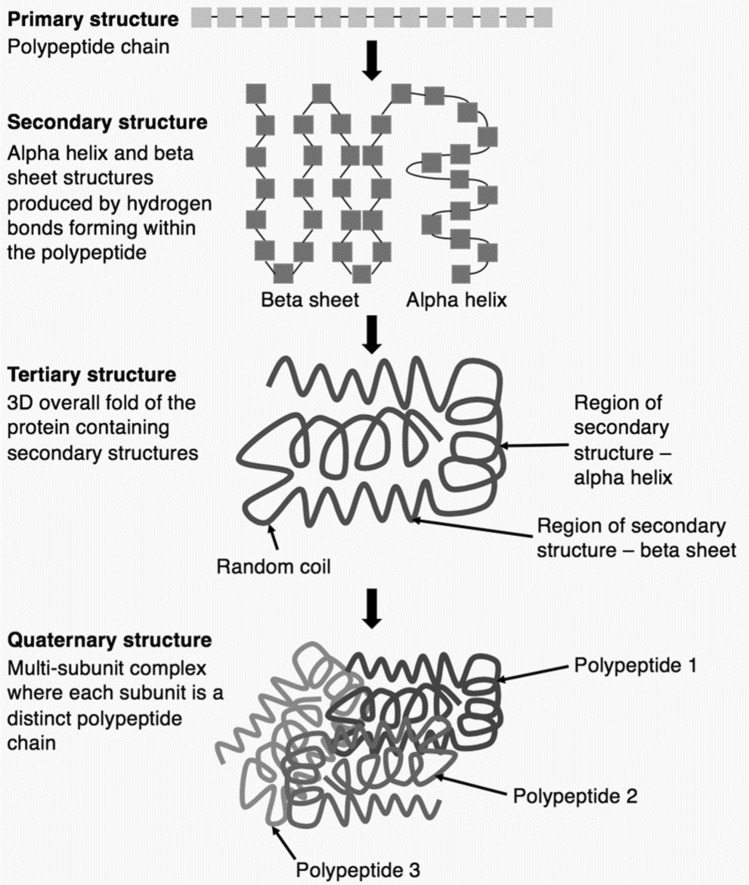
- It cites AlphaFold’s protein-structure prediction accuracy as 92.4%, while noting human researchers still needed to test and refine outputs for 100% accuracy.
- It notes ChatGPT scored in the 93rd percentile on the SAT reading exam and 89th percentile on the math exam, and that two US lawyers were fined $5000 for submitting a court filing with fake ChatGPT-generated citations.
Methods
- Design: conceptual and ethical analysis, not an empirical study; the paper introduces AI/ML, examines ethical issues in research, and develops recommendations.
- Data/sample: no primary data or human subjects; it draws on published literature, ethics codes and policies (e.g., European Code of Conduct, NIH, ICMJE, UNESCO), and illustrative cases.
- Main analysis: identifies ethical challenges related to AI in science and derives nine recommendations, summarized in Table 2.
Limitations
- Stated: the authors say their list of scientific norms is not original, exhaustive, or exclusive; they call one point about sanitizing LLM data “highly speculative”; they state more empirical research and ethical/policy analysis is needed on explainability; and they note their assumption that current AI lacks moral agency may need revision in the future.
- Evident: the recommendations are normative and not empirically tested, and the paper does not use a systematic review or stakeholder-engagement methodology to validate them.
Model-written summary. Check it against the paper before relying on it.
Integrity signals
Registry
Cites
Statistics
Figures
Verification
Claims the paper makes
98 Not checked yet · 38 Own interpretation · 12 No basis given · 1 Supported · 1 Partly supported · accuracy not yet measured
Every source the paper cites for this claim was checked and supports it.
In the paper
“Although human researchers still needed to test and refine AlphaFold’s output to ensure that the proposed structure is 100% accurate, the ML system greatly improves the efficiency of protein chemistry research [216].”
§ The ethics of using artificial intelligence in scientific research: new guidance needed for a new tool > What is machine learning?
What the sources say
- Supportedcites [216] Terwilliger, T.C., Liebschner, D., Croll, T.I., Williams, C.J., McCoy, A.J., Poon, B.K., Afonine, P.V., Oeffner, R.D., Richardson, J.S., Read, R.J., Adams, P.D.: AlphaFold predictions are valuable hypotheses and accelerate but do not replace experimental structure determination. Nat. Methods (2023). https://doi.org/10.1038/s41592-023-02087-4 source
The Conclusions state that AlphaFold predictions can greatly accelerate experimental protein-structure determination and change how structural hypotheses are generated and tested. This supports the attributed claim that AlphaFold improves research efficiency. (LLM, conf=0.90)
plaindirect- Asserted: passes — The authors put it forward as true.
- Checkable: passes — It can be checked against evidence.
- Load-bearing: unclear — It is unclear whether the paper’s conclusions depend on it.
- Based: passes — The paper gives a reason why it holds.
- Supported
None of the sources cited for this claim have been checked yet.
In the paper
“it is unclear whether making AI explainable will satisfy non-experts because considerable expertise in computer science and/or data analytics may be required to understand what is being explained [120, 186].”
§ The ethics of using artificial intelligence in scientific research: new guidance needed for a new tool > Challenges of using AI > Explainable AI
What the sources say
- Not checked yetcites [120] Kahn, J.: What wrong with “explainable A.I.” Fortune (2022). https://fortune.com/2022/03/22/ai-explainable-radiology-medicine-crisis-eye-on-ai/
- Could not verifycites [186] Ratti, E., Graves, M.: Explainable machine learning practices: opening another black box for reliable medical AI. AI Ethics 2, 801–814 (2022) sourceExperimental — accuracy not yet measured
The Introduction and Section 2 discuss opacity, explainability, and clinicians’ trust, but do not address whether explanations satisfy non-experts or require computer-science or data-analytics expertise to understand. Searches for non-experts, technical expertise, and understanding explanations found no passage making that point in our copy. (LLM, conf=0.74)
hedgedconditional- Asserted: passes — The authors put it forward as true.
- Checkable: passes — It can be checked against evidence.
- Load-bearing: passes — The paper’s conclusions depend on it.
- Based: passes — The paper gives a reason why it holds.
The cited sources support only part of this claim — read each source’s verdict below.
In the paper
“because synthetic data are similar to but not the same as real data, they can be used to eliminate or mask personal identifiers and protect the confidentiality of human participants [31, 81, 200].”
§ The ethics of using artificial intelligence in scientific research: new guidance needed for a new tool > AI and the ethical norms of science > AI and research misconduct
What the sources say
- Partly supportedcites [31] Bordukova, M., Makarov, N., Rodriguez-Esteban, P., Schmich, F., Menden, M.P.: Generative artificial intelligence empowers digital twins in drug discovery and clinical trials. Expert Opin. Drug Discov. 19(1), 33–42 (2024) sourceExperimental — accuracy not yet measured
Section 4 says synthetic trial participants can statistically replace enrolled patients to preserve privacy and enable data sharing, and that these synthetic entities are not linked to real patients. It does not specifically say that synthetic data eliminate or mask personal identifiers, so that mechanism is not established by this source. (LLM, conf=0.82)
- Partly supportedcites [81] Giuffrè, M., Shung, D.L.: Harnessing the power of synthetic data in healthcare: innovation, application, and privacy. NPJ Digit. Med. 6, 186 (2023) sourceExperimental — accuracy not yet measured
The ‘Synthetic data generation and types’ section says partially synthetic data can protect patient privacy while remaining useful for analysis. The ‘Regulatory blind spots and proposals’ section describes removing direct identifiers as a de-identification method, but does not say that synthetic data itself eliminates or masks them; the ‘Privacy concerns and regulatory agencies’ section also warns that synthetic data can disclose identifiable details. The claim’s privacy benefit is supported, but its specific mechanism is not. (LLM, conf=0.84)
- Not checked yetcites [200] Savage, N.: Synthetic data could be better than real data. Nature (2023). https://www.nature.com/articles/d41586-023-01445-8 source
plaindirect- Asserted: passes — The authors put it forward as true.
- Checkable: passes — It can be checked against evidence.
- Load-bearing: unclear — It is unclear whether the paper’s conclusions depend on it.
- Based: passes — The paper gives a reason why it holds.
- Partly supported
None of the sources cited for this claim have been checked yet.
In the paper
“Indeed, dealing with the black box problem has been a key issue in FDA approval of medical devices that use AI/ML [74, 183].”
§ The ethics of using artificial intelligence in scientific research: new guidance needed for a new tool > Challenges of using AI > The black box problem
What the sources say
- Not checked yetcites [74] Food and Drug Administration.: Artificial intelligence (AI) and machine learning (ML) in medical devices (2020). https://www.fda.gov/media/142998/download
- Not checked yetcites [183] Pew Charitable Trust.: How FDA regulates artificial intelligence in medical products. Issue brief (2021). https://www.pewtrusts.org/en/research-and-analysis/issue-briefs/2021/08/how-fda-regulates-artificial-intelligence-in-medical-products
plaincorrelational- Asserted: passes — The authors put it forward as true.
- Checkable: passes — It can be checked against evidence.
- Load-bearing: unclear — It is unclear whether the paper’s conclusions depend on it.
- Based: passes — The paper gives a reason why it holds.
In the paper
“in 2021, Alexa, Amazon’s LLM-based voice-assistant, instructed a 10-year-old girl to stick a penny into an electric outlet when she asked it for a challenge to do [20].”
§ The ethics of using artificial intelligence in scientific research: new guidance needed for a new tool > Challenges of using AI > Lack of moral agency
What the sources say
- Not checked yetcites [20] BBC News.: Alexa tells 10-year-old girl to touch live plug with penny. BBC News (2021). https://www.bbc.com/news/technology-59810383
plaindirectSingle case- Asserted: passes — The authors put it forward as true.
- Checkable: passes — It can be checked against evidence.
- Load-bearing: unclear — It is unclear whether the paper’s conclusions depend on it.
- Based: passes — The paper gives a reason why it holds.
None of the sources cited for this claim have been checked yet.
In the paper
“While an expert computer scientist or engineer could troubleshoot the code, they will not be able to interpret the thousands of numbers used in the weightings and the billions of calculations from those numbers [110, 151, 199].”
§ The ethics of using artificial intelligence in scientific research: new guidance needed for a new tool > Challenges of using AI > The black box problem
What the sources say
- Not checked yetcites [110] IBM.: Explainable AI (2023). https://www.ibm.com/topics/explainable-ai
- Not checked yetcites [151] Mitchell, M.: Artificial Intelligence. Picador, New York (2019)
- Not checked yetcites [199] Savage, N.: Breaking into the black box of artificial intelligence. Nature (2022). https://www.nature.com/articles/d41586-022-00858-1 source
plain- Asserted: passes — The authors put it forward as true.
- Checkable: passes — It can be checked against evidence.
- Load-bearing: passes — The paper’s conclusions depend on it.
- Based: passes — The paper gives a reason why it holds.
In the paper
“OpenAI, Google, and other generative AI developers have been using filters that prevent their systems from generating text that is outright racist, sexist, homophobic, pornographic, offensive, or dangerous [93].”
§ The ethics of using artificial intelligence in scientific research: new guidance needed for a new tool > AI and the ethical norms of science > AI biases and the ethical norms of science
What the sources say
- Not checked yetcites [93] Heikkilä, M.: How OpenAI is trying to make ChatGPT safer and less biased. The Atlantic (2023). https://www.technologyreview.com/2023/02/21/1068893/how-openai-is-trying-to-make-chatgpt-safer-and-less-biased/
plaindirect- Asserted: passes — The authors put it forward as true.
- Checkable: passes — It can be checked against evidence.
- Load-bearing: unclear — It is unclear whether the paper’s conclusions depend on it.
- Based: passes — The paper gives a reason why it holds.
None of the sources cited for this claim have been checked yet.
In the paper
“The use of computer software to analyze large sets of complex data has challenged traditional views about norms related to hypothesis testing [193, 194].”
§ The ethics of using artificial intelligence in scientific research: new guidance needed for a new tool > Ethical norms of science
What the sources say
- Not checked yetcites [193] Resnik, D.B., Elliott, K.C., Soranno, P.A., Smith, E.M.: Data-intensive science and research integrity. Account. Res. 24(6), 344–358 (2017) source
- Not checked yetcites [194] Resnik, D.B., Smith, E.M., Chen, S.H., Goller, C.: What is recklessness in scientific research? The Frank Sauer case. Account. Res. 24(8), 497–502 (2017) source
plaindirect- Asserted: passes — The authors put it forward as true.
- Checkable: passes — It can be checked against evidence.
- Load-bearing: unclear — It is unclear whether the paper’s conclusions depend on it.
- Based: passes — The paper gives a reason why it holds.
The paper states this without a source or data behind it here, so there is nothing to check it against. The quote shows it is in the paper.
In the paper
“Synthetic data are playing an increasingly important role in some areas of science.”
§ The ethics of using artificial intelligence in scientific research: new guidance needed for a new tool > AI and the ethical norms of science > AI and research misconduct
plaincorrelational- Asserted: passes — The authors put it forward as true.
- Checkable: passes — It can be checked against evidence.
- Load-bearing: unclear — It is unclear whether the paper’s conclusions depend on it.
- Based: passes — The paper gives a reason why it holds.
In the paper
“there is very little agreement about what explainability means in practice, because what makes AI explainable depends on the context of its use [58].”
§ The ethics of using artificial intelligence in scientific research: new guidance needed for a new tool > AI and the ethical norms of science > The black box problem and the ethical norms of science
What the sources say
- Not checked yetcites [58] de Bruijn, H., Warnier, M., Janssen, M.: The perils and pitfalls of explainable AI: strategies for explaining algorithmic decision-making. Gov. Inf. Q. 39(2), 101666 (2022) source
plaindirect- Asserted: passes — The authors put it forward as true.
- Checkable: passes — It can be checked against evidence.
- Load-bearing: passes — The paper’s conclusions depend on it.
- Based: passes — The paper gives a reason why it holds.
- It may state two separate claims as one. 42
- Probably not a substantial claim. 49
In the paper
“Bhattacharyya et al. [24] used ChatGPT 3.5 to generate 30 short papers (200 words or less) on medical topics. 47% of the references produced by the chatbot were fabricated, 46% were authentic but inaccurately used, and only 7% were correct.”
§ The ethics of using artificial intelligence in scientific research: new guidance needed for a new tool > Challenges of using AI > Random errors in AI
What the sources say
- Not checked yetcites [24] Bhattacharyya, M., Miller, V.M., Bhattacharyya, D., Miller, L.E.: High rates of fabricated and inaccurate references in ChatGPT-generated medical content. Cureus 15(5), e39238 (2023)
plain- Asserted: passes — The authors put it forward as true.
- Checkable: passes — It can be checked against evidence.
- Load-bearing: passes — The paper’s conclusions depend on it.
- Based: passes — The paper gives a reason why it holds.
It may state two separate claims as one.
In the paper
“A recent study found that while ChatGPT can pass medical boards, it can give dangerous medical advice due to its tendency to make factual errors and its lack of understanding of the meaning and context of language [51].”
§ The ethics of using artificial intelligence in scientific research: new guidance needed for a new tool > Challenges of using AI > Lack of moral agency
What the sources say
- Not checked yetcites [51] Chen, S., Kann, B.H., Foote, M.B., Aerts, H.J.W.L., Savova, G.K., Mak, R.H., Bitterman, D.S.: Use of artificial intelligence chatbots for cancer treatment information. JAMA Oncol. 9(10), 1459–1462 (2023) source
plaindirect- Asserted: passes — The authors put it forward as true.
- Checkable: passes — It can be checked against evidence.
- Load-bearing: unclear — It is unclear whether the paper’s conclusions depend on it.
- Based: passes — The paper gives a reason why it holds.
It may state two separate claims as one.
None of the sources cited for this claim have been checked yet.
In the paper
“which is already in decline, due primarily to the politicization of topics with significant social implications, such as climate change, COVID-19 vaccines and public health measures [123, 189].”
§ The ethics of using artificial intelligence in scientific research: new guidance needed for a new tool > Challenges of using AI > The black box problem
What the sources say
- Not checked yetcites [123] Kennedy, B., Tyson, A., Funk, C.: Americans’ trust in scientists, other groups declines. Pew Research Center (2022). https://www.pewresearch.org/science/2022/02/15/americans-trust-in-scientists-other-groups-declines/
- Not checked yetcites [189] Resnik, D.B.: Playing Politics with Science: Balancing Scientific Independence and Government Oversight. Oxford University Press, New York (2009) source
plaindirect- Asserted: passes — The authors put it forward as true.
- Checkable: passes — It can be checked against evidence.
- Load-bearing: unclear — It is unclear whether the paper’s conclusions depend on it.
- Based: passes — The paper gives a reason why it holds.
It may state two separate claims as one.
In the paper
“The increased presence of women and racial and ethnic minorities in science has led to the development of policies for preventing sexual and other forms of harassment [185].”
§ The ethics of using artificial intelligence in scientific research: new guidance needed for a new tool > Ethical norms of science
What the sources say
- Not checked yetcites [185] Rasmussen, L.: Why and how to incorporate issues of race/ethnicity and gender in research integrity education. Accountability in Research (2023) source
plaindirect- Asserted: passes — The authors put it forward as true.
- Checkable: passes — It can be checked against evidence.
- Load-bearing: fails — The paper’s conclusions may not depend on it.
- Based: passes — The paper gives a reason why it holds.
Probably not a substantial claim. The paper’s conclusions may not depend on it.
None of the sources cited for this claim have been checked yet.
In the paper
“ChatGPT, for example, is a highly opaque system that is yet to disclose its training data and it is unclear whether/when OpenAI would open up its technology to external scrutiny [28, 66, 130].”
§ The ethics of using artificial intelligence in scientific research: new guidance needed for a new tool > Challenges of using AI > Explainable AI
What the sources say
- Not checked yetcites [28] Blumauer, A.: How ChatGPT works and the problems with non-explainable AI. Pool Party (2023). https://www.poolparty.biz/blogposts/how-chat-gpt-works-non-explainable-ai#:~:text=ChatGPT%20is%20the%20antithesis%20of,and%20explainability%20are%20critical%20requirements
- Not checked yetcites [66] Eliot, L.: Nobody can explain for sure why ChatGPT is so good at what it does, troubling AI ethics and AI Law. Forbes (2023). https://www.forbes.com/sites/lanceeliot/2023/04/17/nobody-can-explain-for-sure-why-chatgpt-is-so-good-at-what-it-does-troubling-ai-ethics-and-ai-law/?sh=334c95685041
- Not checked yetcites [130] La Malfa, E., Petrov, A., Frieder, S., Weinhuber, C., Burnell, R., Cohn, A.G., Shadbolt, N., Woolridge, M.: The ARRT of language-models-as-a-service: overview of a new paradigm and its challenges (2023). arXiv: 2309.16573 source
hedged- Asserted: passes — The authors put it forward as true.
- Checkable: passes — It can be checked against evidence.
- Load-bearing: unclear — It is unclear whether the paper’s conclusions depend on it.
- Based: passes — The paper gives a reason why it holds.
It may state two separate claims as one.
None of the sources cited for this claim have been checked yet.
In the paper
“While norms such as empiricism, objectivity, and consistency originated in ancient Greek science, others, such as reproducibility and openness, developed during the 1500s; and many, such as protection of research subjects and social responsibility, did not emerge as formalized norms until the twentieth century.”
§ The ethics of using artificial intelligence in scientific research: new guidance needed for a new tool > Ethical norms of science
plain- Asserted: passes — The authors put it forward as true.
- Checkable: passes — It can be checked against evidence.
- Load-bearing: fails — The paper’s conclusions may not depend on it.
- Based: passes — The paper gives a reason why it holds.
Probably not a substantial claim. The paper’s conclusions may not depend on it. It may state two separate claims as one.
In the paper
“the funding of science by private companies and their requirements concerning data access and release policies have led to changes in norms related to open sharing of data and materials [188].”
§ The ethics of using artificial intelligence in scientific research: new guidance needed for a new tool > Ethical norms of science
What the sources say
- Not checked yetcites [188] Resnik, D.B.: The Price of Truth: How Money Affects the Norms of Science. Oxford University Press, New York (2007) source
plaindirect- Asserted: passes — The authors put it forward as true.
- Checkable: passes — It can be checked against evidence.
- Load-bearing: fails — The paper’s conclusions may not depend on it.
- Based: passes — The paper gives a reason why it holds.
Probably not a substantial claim. The paper’s conclusions may not depend on it.
The paper states this without a source or data behind it here, so there is nothing to check it against. The quote shows it is in the paper.
In the paper
“While there seems to be an emerging consensus on the utility and importance of making AI explainable”
§ The ethics of using artificial intelligence in scientific research: new guidance needed for a new tool > AI and the ethical norms of science > The black box problem and the ethical norms of science
hedged- Asserted: passes — The authors put it forward as true.
- Checkable: fails — It may be too vague to check against evidence.
- Load-bearing: fails — The paper’s conclusions may not depend on it.
- Based: fails — The paper may give no reason why it holds.
Probably not a substantial claim. It may be too vague to check against evidence. The paper’s conclusions may not depend on it. The paper may give no reason why it holds.
None of the sources cited for this claim have been checked yet.
In the paper
“LLMs are also impacted by various biases inherent in their training data, and when used in generative AI models like ChatGPT, can propagate biases related to race, ethnicity, nationality, gender, sexuality, age, and politics [25, 171].”
§ The ethics of using artificial intelligence in scientific research: new guidance needed for a new tool > Challenges of using AI > AI biases
What the sources say
- Not checked yetcites [25] Biddle, S.: The internet’s new favorite AI proposes torturing Iranians and surveilling mosques. The Intercept (2022). https://theintercept.com/2022/12/08/openai-chatgpt-ai-bias-ethics/
- Not checked yetcites [171] Omiye, J.A., Lester, J.C., Spichak, S., Rotemberg, V., Daneshjou, R.: Large language models propagate race-based medicine. NPJ Digit. Med. 6, 195 (2023) source
plaindirect- Asserted: passes — The authors put it forward as true.
- Checkable: passes — It can be checked against evidence.
- Load-bearing: passes — The paper’s conclusions depend on it.
- Based: passes — The paper gives a reason why it holds.
It may state two separate claims as one.
None of the sources cited for this claim have been checked yet.
In the paper
“AI tools have been used to perform or augment a variety of scientific tasks, including1:Analyzing data and images [34, 43, 65, 88, 106, 115, 122, 124, 149, 161].Interpreting data and images [13, 14, 21, 41].Generating hypotheses [32, 37, 41, 107, 149].Modelling complex phenomena [32, 41, 43, 122, 129].Designing molecules and materials [15, 37, 43, 205].Generating data for use in validation of hy”
§ The ethics of using artificial intelligence in scientific research: new guidance needed for a new tool > Introduction: exponential growth in the use of artificial intelligence in scientific research
plain- Asserted: passes — The authors put it forward as true.
- Checkable: passes — It can be checked against evidence.
- Load-bearing: passes — The paper’s conclusions depend on it.
- Based: passes — The paper gives a reason why it holds.
Probably not a substantial claim. It may state two separate claims as one.
In the paper
“Although ChatGPT 4.0 performs significantly better than ChatGPT 3.5, it still produces fabricated and inaccurate citations [230].”
§ The ethics of using artificial intelligence in scientific research: new guidance needed for a new tool > Challenges of using AI > Random errors in AI
What the sources say
- Not checked yetcites [230] Walters, W.H., Wilder, E.I.: Fabrication and errors in the bibliographic citations generated by ChatGPT. Sci. Rep. 13, 14045 (2023) source
plaincorrelational- Asserted: passes — The authors put it forward as true.
- Checkable: passes — It can be checked against evidence.
- Load-bearing: passes — The paper’s conclusions depend on it.
- Based: passes — The paper gives a reason why it holds.
It may state two separate claims as one.
None of the sources cited for this claim have been checked yet.
In the paper
“Codes of AI ethics, such as UNESCO’s [223] Ethics of Artificial Intelligence and the Office of Science and Technology Policy’s [168, 169] Blueprint for an AI Bill of Rights, provide useful guidance for the development and use of AI in general without including specific guidance concerning the development and use of AI in scientific research [215].”
§ The ethics of using artificial intelligence in scientific research: new guidance needed for a new tool > Introduction: exponential growth in the use of artificial intelligence in scientific research
What the sources say
- Not checked yetcites [223] UNESCO.: Ethics of Artificial Intelligence (2024). https://www.unesco.org/en/artificial-intelligence/recommendation-ethics
- Not checked yetcites [168] Office of Science and Technology Policy: Federal research misconduct policy. Fed. Reg. 65(235), 76260–76264 (2000)
- Not checked yetcites [169] Office and Science and Technology Policy.: Blueprint for an AI Bill of Rights (2022). https://www.whitehouse.gov/ostp/ai-bill-of-rights/
- Not checked yetcites [215] Tambornino, L., Lanzerath, D., Rodrigues, R., Wright, D.: SIENNA D4.3: survey of REC approaches and codes for Artificial Intelligence & Robotics (2019). https://zenodo.org/records/4067990
plain- Asserted: passes — The authors put it forward as true.
- Checkable: passes — It can be checked against evidence.
- Load-bearing: passes — The paper’s conclusions depend on it.
- Based: passes — The paper gives a reason why it holds.
It may state two separate claims as one.
In the paper
“the 2023 revision of the European Code of Conduct for Research Integrity [4] briefly discusses the importance of transparency. The code stipulates that researchers should report “their results and methods including the use of external services or AI and automated tools” (Ibid., p. 7) and considers “hiding the use of AI or automated tools in the creation of content or drafting of publications” as a”
§ The ethics of using artificial intelligence in scientific research: new guidance needed for a new tool > Introduction: exponential growth in the use of artificial intelligence in scientific research
What the sources say
- Not checked yetcites [4] All European Academies.: The European Code of Conduct for Research Integrity, Revised Edition 2023 (2023). https://allea.org/code-of-conduct/
plain- Asserted: passes — The authors put it forward as true.
- Checkable: passes — It can be checked against evidence.
- Load-bearing: fails — The paper’s conclusions may not depend on it.
- Based: passes — The paper gives a reason why it holds.
Probably not a substantial claim. The paper’s conclusions may not depend on it. It may state two separate claims as one.
In the paper
“the National Institutes of Health Guidelines and Policies for the Conduct of Research provides guidance for using AI to write and edit manuscripts but not for other tasks [158].”
§ The ethics of using artificial intelligence in scientific research: new guidance needed for a new tool > Introduction: exponential growth in the use of artificial intelligence in scientific research
What the sources say
- Not checked yetcites [158] National Institutes of Health.: Guidelines for the Conduct of Research in the Intramural Program of the NIH (2023). https://oir.nih.gov/system/files/media/file/2023-11/guidelines-conduct_research.pdf
plain- Asserted: passes — The authors put it forward as true.
- Checkable: passes — It can be checked against evidence.
- Load-bearing: passes — The paper’s conclusions depend on it.
- Based: passes — The paper gives a reason why it holds.
It may state two separate claims as one.
In the paper
“This response to the black box problem does not solve the problem but simply tells us not to worry about it [63].”
§ The ethics of using artificial intelligence in scientific research: new guidance needed for a new tool > Challenges of using AI > The black box problem
What the sources say
- Not checked yetcites [63] Durán, J.M., Jongsma, K.R.: Who is afraid of black box algorithms? On the epistemological and ethical basis of trust in medical AI. J. Med. Ethics 47(5), 329–335 (2021)
plain- Asserted: passes — The authors put it forward as true.
- Checkable: fails — It may be too vague to check against evidence.
- Load-bearing: fails — The paper’s conclusions may not depend on it.
- Based: passes — The paper gives a reason why it holds.
Probably not a substantial claim. It may be too vague to check against evidence. The paper’s conclusions may not depend on it. It may state two separate claims as one.
A conclusion the paper draws from its own results — it cites no other source for it, so there is none to check. The quote shows it is in the paper.
In the paper
“The correct output of an AI system is ultimately defined by its users and others who may be affected.”
§ The ethics of using artificial intelligence in scientific research: new guidance needed for a new tool > Challenges of using AI > Error
plaindirect- Asserted: passes — The authors put it forward as true.
- Checkable: fails — It may be too vague to check against evidence.
- Load-bearing: passes — The paper’s conclusions depend on it.
- Based: passes — The paper gives a reason why it holds.
Probably not a substantial claim. It may be too vague to check against evidence.
None of the sources cited for this claim have been checked yet.
In the paper
“ChatGPT has passed licensing exams for medicine and law and scored in the 93rd percentile on the Scholastic Aptitude Test reading exam and in the 89th percentile on the math exam [133, 138, 232].”
§ The ethics of using artificial intelligence in scientific research: new guidance needed for a new tool > What is generative AI?
What the sources say
- Not checked yetcites [133] Leswing, K.: OpenAI announces GPT-4, claims it can beat 90% of humans on the SAT. CNBC (2023). https://www.cnbc.com/2023/03/14/openai-announces-gpt-4-says-beats-90percent-of-humans-on-sat.html
- Not checked yetcites [138] Lubell, J.: ChatGPT passed the USMLE. What does it mean for med ed? AMA (2023). https://www.ama-assn.org/practice-management/digital/chatgpt-passed-usmle-what-does-it-mean-med-ed
- Not checked yetcites [232] Weiss, D.C.: Latest version of ChatGPT aces bar exam with score nearing 90th percentile. ABA J. (2023). https://www.abajournal.com/web/article/latest-version-of-chatgpt-aces-the-bar-exam-with-score-in-90th-percentile
plain- Asserted: passes — The authors put it forward as true.
- Checkable: passes — It can be checked against evidence.
- Load-bearing: fails — The paper’s conclusions may not depend on it.
- Based: passes — The paper gives a reason why it holds.
Probably not a substantial claim. The paper’s conclusions may not depend on it. It may state two separate claims as one.
A conclusion the paper draws from its own results — it cites no other source for it, so there is none to check. The quote shows it is in the paper.
In the paper
“even though AI cannot be held morally or legally responsible or accountable.”
§ The ethics of using artificial intelligence in scientific research: new guidance needed for a new tool > Challenges of using AI > Lack of moral agency
plain- Asserted: passes — The authors put it forward as true.
- Checkable: passes — It can be checked against evidence.
- Load-bearing: passes — The paper’s conclusions depend on it.
- Based: passes — The paper gives a reason why it holds.
It may state two separate claims as one.
A conclusion the paper draws from its own results — it cites no other source for it, so there is none to check. The quote shows it is in the paper.
In the paper
“LLMs do not do this,they only process symbols and predict the most likely string of symbols from linguistic prompts.”
§ The ethics of using artificial intelligence in scientific research: new guidance needed for a new tool > Challenges of using AI > Prospects for reducing AI errors
plain- Asserted: passes — The authors put it forward as true.
- Checkable: passes — It can be checked against evidence.
- Load-bearing: passes — The paper’s conclusions depend on it.
- Based: passes — The paper gives a reason why it holds.
It may state two separate claims as one.
None of the sources cited for this claim have been checked yet.
In the paper
“Tremendous progress on the protein-folding problem was made in 2022, when scientists demonstrated that an ML system, DeepMind’s AlphaFold, can predict 3-D structures from amino acid sequences with 92.4% accuracy [118, 204].”
§ The ethics of using artificial intelligence in scientific research: new guidance needed for a new tool > What is machine learning?
What the sources say
- Not checked yetcites [118] Jumper, J., Evans, R., Pritzel, A., Green, T., Figurnov, M., Ronneberger, O., Tunyasuvunakool, K., Bates, R., Žídek, A., Potapenko, A., Bridgland, A., Meyer, C., Kohl, S.A.A., Ballard, A.J., Cowie, A., Romera-Paredes, B., Nikolov, S., Jain, R., Adler, J., Back, T., Petersen, S., Reiman, D., Clancy, E., Zielinski, M., Steinegger, M., Pacholska, M., Berghammer, T., Bodenstein, S., Silver, D., Vinyals, O., Senior, A.W., Kavukcuoglu, K., Kohli, P., Hassabis, D.: Highly accurate protein structure prediction with AlphaFold. Nature 596(7873), 583–589 (2021) source
- Not checked yetcites [204] Service RF: The game has changed. AI trumphs at protein folding. Science 370(6521), 1144–1145 (2022) source
boosteddirect- Asserted: passes — The authors put it forward as true.
- Checkable: passes — It can be checked against evidence.
- Load-bearing: fails — The paper’s conclusions may not depend on it.
- Based: passes — The paper gives a reason why it holds.
Probably not a substantial claim. The paper’s conclusions may not depend on it.
None of the sources cited for this claim have been checked yet.
In the paper
“Scientists have dealt with bias in research for years and have developed methods and strategies for minimizing and controlling bias in experimental design, data analysis, model building, and theory construction [79, 89, 104].”
§ The ethics of using artificial intelligence in scientific research: new guidance needed for a new tool > Challenges of using AI > AI biases
What the sources say
- Not checked yetcites [79] Giere, R., Bickle, J., Maudlin, R.F.: Understanding Scientific Reasoning, 5th edn. Wadsworth, Belmont (2005)
- Not checked yetcites [89] Haack, S.: Defending Science within Reason. Prometheus Books, New York (2007)
- Not checked yetcites [104] Howson, C., Urbach, P.: Scientific Reasoning: A Bayesian Approach, 3rd edn. Open Court, New York (2005)
plain- Asserted: passes — The authors put it forward as true.
- Checkable: passes — It can be checked against evidence.
- Load-bearing: fails — The paper’s conclusions may not depend on it.
- Based: passes — The paper gives a reason why it holds.
Probably not a substantial claim. The paper’s conclusions may not depend on it. It may state two separate claims as one.
A conclusion the paper draws from its own results — it cites no other source for it, so there is none to check. The quote shows it is in the paper.
In the paper
“While AI systems can play a key role in providing information that is used to define correct outputs (for example, when a system is used to discover new chemical compounds or solve complex math problems), human beings are ultimately responsible for determining whether outputs are correct (see discussion of moral agency in Sect. 7.6).”
§ The ethics of using artificial intelligence in scientific research: new guidance needed for a new tool > Challenges of using AI > Error
plain- Asserted: passes — The authors put it forward as true.
- Checkable: passes — It can be checked against evidence.
- Load-bearing: passes — The paper’s conclusions depend on it.
- Based: passes — The paper gives a reason why it holds.
Probably not a substantial claim.
- Rests on an assumption: AI systems are not moral agents.
None of the sources cited for this claim have been checked yet.
In the paper
“The opacity of AI systems is ethically problematic because one might argue that we should not use these devices if we cannot trust them, and we cannot trust them if even the best experts do not completely understand how they work [6, 7, 39, 47, 63, 186].”
§ The ethics of using artificial intelligence in scientific research: new guidance needed for a new tool > Challenges of using AI > The black box problem
What the sources say
- Not checked yetcites [6] Alvarado, R.: Should we replace radiologists with deep learning? Bioethics 36(2), 121–133 (2022) source
- Not checked yetcites [7] Alvarado, R.: What kind of trust does AI deserve, if any? AI Ethics (2022). https://doi.org/10.1007/s43681-022-00224-x source
- Not checked yetcites [39] Burrell, J.: How the machine ‘thinks’: understanding opacity in machine learning algorithms. Big Data Soc. 3(1), 2053951715622512 (2016) source
- Not checked yetcites [47] Chan, B.: Black-box assisted medical decisions: AI power vs. ethical physician care. Med. Health Care Philos. 26, 285–292 (2023) source
- Not checked yetcites [63] Durán, J.M., Jongsma, K.R.: Who is afraid of black box algorithms? On the epistemological and ethical basis of trust in medical AI. J. Med. Ethics 47(5), 329–335 (2021)
- Not checked yetcites [186] Ratti, E., Graves, M.: Explainable machine learning practices: opening another black box for reliable medical AI. AI Ethics 2, 801–814 (2022) source
hedgeddirect- Asserted: passes — The authors put it forward as true.
- Checkable: unclear — It is unclear whether it could be checked against evidence.
- Load-bearing: passes — The paper’s conclusions depend on it.
- Based: passes — The paper gives a reason why it holds.
It may state two separate claims as one.
None of the sources cited for this claim have been checked yet.
In the paper
“AI systems also make errors in reading, classifying, and reconstructing radiological images, but the error rate is decreasing, and AI systems will soon outperform humans in terms of speed and accuracy of image reading [12, 17, 103, 228].”
§ The ethics of using artificial intelligence in scientific research: new guidance needed for a new tool > Challenges of using AI > Prospects for reducing AI errors
What the sources say
- Not checked yetcites [12] Antun, V., Renna, F., Poon, C., Adcock, B., Hansen, A.C.: On instabilities of deep learning in image reconstruction and the potential costs of AI. Proc. Natl. Acad. Sci. U.S.A. 117(48), 30088–30095 (2020) source
- Not checked yetcites [17] Barrera, F.J., Brown, E.D.L., Rojo, A., Obeso, J., Plata, H., Lincango, E.P., Terry, N., Rodríguez-Gutiérrez, R., Hall, J.E., Shekhar, S.: Application of machine learning and artificial intelligence in the diagnosis and classification of polycystic ovarian syndrome: a systematic review. Front. Endocrinol. (2023). https://doi.org/10.3389/fendo.2023.1106625 source
- Not checked yetcites [103] Hosny, A., Parmar, C., Quackenbush, J., Schwartz, L.H., Aerts, H.J.W.L.: Artificial intelligence in radiology. Nat. Rev. Cancer 18(8), 500–510 (2018) source
- Not checked yetcites [228] Varoquaux, G., Cheplygina, V.: Machine learning for medical imaging: methodological failures and recommendations for the future. NPJ Digit. Med. 5, 48 (2022) source
plaindirect- Asserted: passes — The authors put it forward as true.
- Checkable: passes — It can be checked against evidence.
- Load-bearing: unclear — It is unclear whether the paper’s conclusions depend on it.
- Based: passes — The paper gives a reason why it holds.
It may state two separate claims as one.
None of the sources cited for this claim have been checked yet.
In the paper
“Some researchers have used ChatGPT to write scientific papers and have even named them as authors [48, 53, 54, 167].”
§ The ethics of using artificial intelligence in scientific research: new guidance needed for a new tool > What is generative AI?
What the sources say
- Not checked yetcites [48] ChatGPT, Zhavoronkov, A.: Rapamycin in the context of Pascal’s Wager: generative pre-trained transformer perspective. Oncoscience 9, 82–84 (2022) source
- Not checked yetcites [53] Conroy, G.: Scientists used ChatGPT to generate an entire paper from scratch—but is it any good? Nature 619, 443–444 (2023) source
- Not checked yetcites [54] Conroy, G.: How ChatGPT and other AI tools could disrupt scientific publishing. Nature (2023). https://www.nature.com/articles/d41586-023-03144-w
- Not checked yetcites [167] O’Connor, S., ChatGPT: Open artificial intelligence platforms in nursing education: tools for academic progress or abuse? Nurse Educ. Pract. 66, 103537 (2023) source
plain- Asserted: passes — The authors put it forward as true.
- Checkable: passes — It can be checked against evidence.
- Load-bearing: fails — The paper’s conclusions may not depend on it.
- Based: passes — The paper gives a reason why it holds.
Probably not a substantial claim. The paper’s conclusions may not depend on it. It may state two separate claims as one.
None of the sources cited for this claim have been checked yet.
In the paper
“Nevertheless, scientists can (and should) take steps to understand sources of bias and control them, especially those that can lead to discrimination, stigmatization, harm, or injustice [89, 154, 188].”
§ The ethics of using artificial intelligence in scientific research: new guidance needed for a new tool > Challenges of using AI > AI biases
What the sources say
- Not checked yetcites [89] Haack, S.: Defending Science within Reason. Prometheus Books, New York (2007)
- Not checked yetcites [154] Mittermaier, M., Raza, M.M., Kvedar, J.C.: Bias in AI-based models for medical applications: challenges and mitigation strategies. NPJ Digit. Med. 6, 113 (2023) source
- Not checked yetcites [188] Resnik, D.B.: The Price of Truth: How Money Affects the Norms of Science. Oxford University Press, New York (2007) source
plain- Asserted: passes — The authors put it forward as true.
- Checkable: fails — It may be too vague to check against evidence.
- Load-bearing: passes — The paper’s conclusions depend on it.
- Based: passes — The paper gives a reason why it holds.
Probably not a substantial claim. It may be too vague to check against evidence.
The paper states this without a source or data behind it here, so there is nothing to check it against. The quote shows it is in the paper.
In the paper
“Trust in a technology is partially based on understanding that technology.”
§ The ethics of using artificial intelligence in scientific research: new guidance needed for a new tool > Challenges of using AI > The black box problem
plaincorrelational- Asserted: passes — The authors put it forward as true.
- Checkable: fails — It may be too vague to check against evidence.
- Load-bearing: passes — The paper’s conclusions depend on it.
- Based: passes — The paper gives a reason why it holds.
Probably not a substantial claim. It may be too vague to check against evidence.
A conclusion the paper draws from its own results — it cites no other source for it, so there is none to check. The quote shows it is in the paper.
In the paper
“private companies uninterested in sharing information about their systems may not comply with explainable AI requirements or they may “game” the requirements to resemble compliance without actually complying.”
§ The ethics of using artificial intelligence in scientific research: new guidance needed for a new tool > Challenges of using AI > Explainable AI
hedgedconditional- Asserted: passes — The authors put it forward as true.
- Checkable: passes — It can be checked against evidence.
- Load-bearing: unclear — It is unclear whether the paper’s conclusions depend on it.
- Based: unclear — It is unclear why the paper says it holds.
It may state two separate claims as one.
None of the sources cited for this claim have been checked yet.
In the paper
“AI biases in medical research have generated considerable concern, since biases related to race, ethnicity, gender, sexuality, age, nationality, and socioeconomic status in health-related datasets can perpetuate health disparities by supporting biased hypotheses, models, theories, and policies [177, 198, 211].”
§ The ethics of using artificial intelligence in scientific research: new guidance needed for a new tool > AI and the ethical norms of science > AI biases and the ethical norms of science
What the sources say
- Not checked yetcites [177] Parikh, R.B., Teeple, S., Navathe, A.S.: Addressing bias in artificial intelligence in health care. J. Am. Med. Assoc. 322(24), 2377–2378 (2019) source
- Not checked yetcites [198] Röösli, E., Rice, B., Hernandez-Boussard, T.: Bias at warp speed: how AI may contribute to the disparities gap in the time of COVID-19. J. Am. Med. Inform. Assoc. 28(1), 190–192 (2021) source
- Not checked yetcites [211] Straw, I., Callison-Burch, C.: Artificial Intelligence in mental health and the biases of language based models. PLoS ONE 15(12), e0240376 (2020) source
plaindirect- Asserted: passes — The authors put it forward as true.
- Checkable: passes — It can be checked against evidence.
- Load-bearing: passes — The paper’s conclusions depend on it.
- Based: passes — The paper gives a reason why it holds.
It may state two separate claims as one.
The paper states this without a source or data behind it here, so there is nothing to check it against. The quote shows it is in the paper.
In the paper
“ethical norms promote trust among scientists, which is essential for collaboration, peer review, publication, sharing of data and resources, mentoring, education, and other scientific activities.”
§ The ethics of using artificial intelligence in scientific research: new guidance needed for a new tool > Ethical norms of science
plaindirect- Asserted: passes — The authors put it forward as true.
- Checkable: fails — It may be too vague to check against evidence.
- Load-bearing: fails — The paper’s conclusions may not depend on it.
- Based: passes — The paper gives a reason why it holds.
Probably not a substantial claim. It may be too vague to check against evidence. The paper’s conclusions may not depend on it. It may state two separate claims as one.
None of the sources cited for this claim have been checked yet.
In the paper
“science’s ethical norms have changed over time, and they are likely to continue to evolve [80, 128, 147, 237].”
§ The ethics of using artificial intelligence in scientific research: new guidance needed for a new tool > Ethical norms of science
What the sources say
- Not checked yetcites [80] Gillispie, C.C.: The Edge of Objectivity. Princeton University Press, Princeton (1960)
- Not checked yetcites [128] Kuhn, T.S.: The Essential Tension. University of Chicago Press, Chicago (1977) source
- Not checked yetcites [147] Merton, R.: The Sociology of Science. University of Chicago Press, Chicago (1973)
- Not checked yetcites [237] Ziman, J.: Real Science. Cambridge University Press, Cambridge (2000) source
hedged- Asserted: passes — The authors put it forward as true.
- Checkable: passes — It can be checked against evidence.
- Load-bearing: passes — The paper’s conclusions depend on it.
- Based: passes — The paper gives a reason why it holds.
It may state two separate claims as one.
In the paper
“model-building in science may involve tradeoffs among various epistemic norms, including generality, precision, realism, simplicity, and explanatory power [143].”
§ The ethics of using artificial intelligence in scientific research: new guidance needed for a new tool > Ethical norms of science
What the sources say
- Not checked yetcites [143] Matthewson, J.: Trade-offs in model-building: a more target-oriented approach. Stud. Hist. Philos. Sci. Part A 42(2), 324–333 (2011) source
hedgedconditional- Asserted: passes — The authors put it forward as true.
- Checkable: passes — It can be checked against evidence.
- Load-bearing: fails — The paper’s conclusions may not depend on it.
- Based: passes — The paper gives a reason why it holds.
Probably not a substantial claim. The paper’s conclusions may not depend on it.
None of the sources cited for this claim have been checked yet.
In the paper
“AI can reproduce and amplify biases inherent in the data and generate results that lend support to policies that are discriminatory, unfair, harmful, or ineffective [16, 202].”
§ The ethics of using artificial intelligence in scientific research: new guidance needed for a new tool > AI and the ethical norms of science > AI biases and the ethical norms of science
What the sources say
- Not checked yetcites [16] Ball, P.: Is AI leading to a reproducibility crisis in science? Nature 624, 22–25 (2023) source
- Not checked yetcites [202] Schwartz, R., Vassilev, A., Greene, K., Perine, L., Burt, A., Hal, P.: Towards a standard for identifying and managing bias in artificial intelligence. National Institute of Standards and Technology (2022). https://view.ckcest.cn/AllFiles/ZKBG/Pages/264/c914336ac0e68a6e3e34187adf9dd83bb3b7c09f.pdf
plaindirect- Asserted: passes — The authors put it forward as true.
- Checkable: passes — It can be checked against evidence.
- Load-bearing: passes — The paper’s conclusions depend on it.
- Based: passes — The paper gives a reason why it holds.
It may state two separate claims as one.
A conclusion the paper draws from its own results — it cites no other source for it, so there is none to check. The quote shows it is in the paper.
In the paper
“If we want to use LLMs to make sound moral and political judgments, sanitizing their data processing and output may hinder their ability to excel at this task, because the ability to make sound moral judgements or anticipate harm may depend, in part, on some familiarity with immoral choices and the darker side of humanity.”
§ The ethics of using artificial intelligence in scientific research: new guidance needed for a new tool > AI and the ethical norms of science > AI biases and the ethical norms of science
hedgedconditional- Asserted: passes — The authors put it forward as true.
- Checkable: fails — It may be too vague to check against evidence.
- Load-bearing: fails — The paper’s conclusions may not depend on it.
- Based: passes — The paper gives a reason why it holds.
Probably not a substantial claim. It may be too vague to check against evidence. The paper’s conclusions may not depend on it.
In the paper
“Strategies for reducing errors in science include time-honored quality assurance and quality improvement techniques, such as auditing data, instruments, and systems; validating and testing instruments that analyze or process data; and investigating and analyzing errors [1].”
§ The ethics of using artificial intelligence in scientific research: new guidance needed for a new tool > AI and the ethical norms of science > AI random errors and the ethical norms of science
What the sources say
- Not checked yetcites [1] Aboumatar, H., Thompson, C., Garcia-Morales, E., Gurses, A.P., Naqibuddin, M., Saunders, J., Kim, S.W., Wise, R.: Perspective on reducing errors in research. Contemp. Clin. Trials Commun. 23, 100838 (2021) source
plaindirect- Asserted: passes — The authors put it forward as true.
- Checkable: passes — It can be checked against evidence.
- Load-bearing: fails — The paper’s conclusions may not depend on it.
- Based: passes — The paper gives a reason why it holds.
Probably not a substantial claim. The paper’s conclusions may not depend on it. It may state two separate claims as one.
None of the sources cited for this claim have been checked yet.
In the paper
“honesty is the hallmark of good science, and there are very few situations in which scientists are justified in deviating from this norm.”
§ The ethics of using artificial intelligence in scientific research: new guidance needed for a new tool > Ethical norms of science
plain- Asserted: passes — The authors put it forward as true.
- Checkable: fails — It may be too vague to check against evidence.
- Load-bearing: fails — The paper’s conclusions may not depend on it.
- Based: passes — The paper gives a reason why it holds.
Probably not a substantial claim. It may be too vague to check against evidence. The paper’s conclusions may not depend on it. It may state two separate claims as one.
In the paper
“Openness, on the other hand, can be deemphasized to protect research participants’ privacy, intellectual property, classified information, or unpublished research [207].”
§ The ethics of using artificial intelligence in scientific research: new guidance needed for a new tool > Ethical norms of science
What the sources say
- Not checked yetcites [207] Shamoo, A.E., Resnik, D.B.: Responsible Conduct of Research, 4th edn. Oxford University Press, New York (2022) source
plainconditional- Asserted: passes — The authors put it forward as true.
- Checkable: passes — It can be checked against evidence.
- Load-bearing: fails — The paper’s conclusions may not depend on it.
- Based: passes — The paper gives a reason why it holds.
Probably not a substantial claim. The paper’s conclusions may not depend on it.
In the paper
“given the accessibility of AI systems and the fact that they can exploit our cognitive shortcomings, they are creating an illusion of understanding [148].”
§ The ethics of using artificial intelligence in scientific research: new guidance needed for a new tool > AI and the ethical norms of science > AI biases and the ethical norms of science
What the sources say
- Not checked yetcites [148] Messeri, L., Crockett, M.J.: Artificial intelligence and illusions of understanding in scientific research. Nature (2024). https://doi.org/10.1038/s41586-024-07146-0 source
plaindirect- Asserted: passes — The authors put it forward as true.
- Checkable: unclear — It is unclear whether it could be checked against evidence.
- Load-bearing: unclear — It is unclear whether the paper’s conclusions depend on it.
- Based: passes — The paper gives a reason why it holds.
It may state two separate claims as one.
In the paper
“This evolution is in response to changes in science’s social, institutional, economic, and political environment and advancements in scientific instruments, tools, and methods [100].”
§ The ethics of using artificial intelligence in scientific research: new guidance needed for a new tool > Ethical norms of science
What the sources say
- Not checked yetcites [100] Hosseini, M., Senabre Hidalgo, E., Horbach, S.P.J.M., Güttinger, S., Penders, B.: Messing with Merton: the intersection between open science practices and Mertonian values. Accountability in Research, pp. 1–28 (2022) source
plaindirect- Asserted: passes — The authors put it forward as true.
- Checkable: passes — It can be checked against evidence.
- Load-bearing: fails — The paper’s conclusions may not depend on it.
- Based: passes — The paper gives a reason why it holds.
Probably not a substantial claim. The paper’s conclusions may not depend on it.
A conclusion the paper draws from its own results — it cites no other source for it, so there is none to check. The quote shows it is in the paper.
In the paper
“an excessive amount when using AI could be considered carelessness or recklessness when using AI”
§ The ethics of using artificial intelligence in scientific research: new guidance needed for a new tool > AI and the ethical norms of science > AI random errors and the ethical norms of science
hedgedconditional- Asserted: passes — The authors put it forward as true.
- Checkable: fails — It may be too vague to check against evidence.
- Load-bearing: fails — The paper’s conclusions may not depend on it.
- Based: passes — The paper gives a reason why it holds.
Probably not a substantial claim. It may be too vague to check against evidence. The paper’s conclusions may not depend on it.
None of the sources cited for this claim have been checked yet.
In the paper
“Explainability, according to proponents of this approach, helps to promote trust in AI because it allows users and other stakeholders to make rational and informed decisions about it [77, 83, 110, 186].”
§ The ethics of using artificial intelligence in scientific research: new guidance needed for a new tool > Challenges of using AI > Explainable AI
What the sources say
- Not checked yetcites [77] Fuhrman, J.D., Gorre, N., Hu, Q., Li, H., El Naqa, I., Giger, M.L.: A review of explainable and interpretable AI with applications in COVID-19 imaging. Med. Phys. 49(1), 1–14 (2022) source
- Not checked yetcites [83] Google.: Responsible AI practices (2023). https://ai.google/responsibility/responsible-ai-practices/
- Not checked yetcites [110] IBM.: Explainable AI (2023). https://www.ibm.com/topics/explainable-ai
- Not checked yetcites [186] Ratti, E., Graves, M.: Explainable machine learning practices: opening another black box for reliable medical AI. AI Ethics 2, 801–814 (2022) source
plaindirect- Asserted: passes — The authors put it forward as true.
- Checkable: passes — It can be checked against evidence.
- Load-bearing: fails — The paper’s conclusions may not depend on it.
- Based: passes — The paper gives a reason why it holds.
Probably not a substantial claim. The paper’s conclusions may not depend on it.
In the paper
“Although vital for conducting science, ethical norms are not rigid rules. Norms sometimes conflict, and when they do, scientists must make decisions concerning epistemic or moral priorities [191].”
§ The ethics of using artificial intelligence in scientific research: new guidance needed for a new tool > Ethical norms of science
What the sources say
- Not checked yetcites [191] Resnik, D.B., Elliott, K.C.: Value-entanglement and the integrity of scientific research. Stud. Hist. Philos. Sci. 75, 1–11 (2019) source
plain- Asserted: passes — The authors put it forward as true.
- Checkable: fails — It may be too vague to check against evidence.
- Load-bearing: passes — The paper’s conclusions depend on it.
- Based: passes — The paper gives a reason why it holds.
Probably not a substantial claim. It may be too vague to check against evidence. It may state two separate claims as one.
In the paper
“placebo control groups are not used in clinical trials when receiving a placebo instead of an effective treatment would cause serious harm to the participant [207].”
§ The ethics of using artificial intelligence in scientific research: new guidance needed for a new tool > Ethical norms of science
What the sources say
- Not checked yetcites [207] Shamoo, A.E., Resnik, D.B.: Responsible Conduct of Research, 4th edn. Oxford University Press, New York (2022) source
plaindirect- Asserted: passes — The authors put it forward as true.
- Checkable: passes — It can be checked against evidence.
- Load-bearing: fails — The paper’s conclusions may not depend on it.
- Based: passes — The paper gives a reason why it holds.
Probably not a substantial claim. The paper’s conclusions may not depend on it.
The paper states this without a source or data behind it here, so there is nothing to check it against. The quote shows it is in the paper.
In the paper
“Research with human subjects often involves tradeoffs between rigor and protection of participants.”
§ The ethics of using artificial intelligence in scientific research: new guidance needed for a new tool > Ethical norms of science
plaincorrelational- Asserted: passes — The authors put it forward as true.
- Checkable: passes — It can be checked against evidence.
- Load-bearing: fails — The paper’s conclusions may not depend on it.
- Based: passes — The paper gives a reason why it holds.
Probably not a substantial claim. The paper’s conclusions may not depend on it.
The paper states this without a source or data behind it here, so there is nothing to check it against. The quote shows it is in the paper.
In the paper
“It is nearly impossible to understand how a natural or social process works or make accurate predictions about it without standards pertaining to honesty, logical consistency, empirical support, and reproducibility of data and results.”
§ The ethics of using artificial intelligence in scientific research: new guidance needed for a new tool > Ethical norms of science
boosteddirect- Asserted: passes — The authors put it forward as true.
- Checkable: fails — It may be too vague to check against evidence.
- Load-bearing: passes — The paper’s conclusions depend on it.
- Based: passes — The paper gives a reason why it holds.
Probably not a substantial claim. It may be too vague to check against evidence.
A conclusion the paper draws from its own results — it cites no other source for it, so there is none to check. The quote shows it is in the paper.
In the paper
“If we try to weed undesirable features of this data, we will eliminate parts of our language and culture, and ultimately, parts of us.”
§ The ethics of using artificial intelligence in scientific research: new guidance needed for a new tool > AI and the ethical norms of science > AI biases and the ethical norms of science
plaindirect- Asserted: passes — The authors put it forward as true.
- Checkable: fails — It may be too vague to check against evidence.
- Load-bearing: fails — The paper’s conclusions may not depend on it.
- Based: fails — The paper may give no reason why it holds.
Probably not a substantial claim. It may be too vague to check against evidence. The paper’s conclusions may not depend on it. The paper may give no reason why it holds. It may state two separate claims as one.
In the paper
“It is only by understanding evil that we can freely and rationally choose the good [40].”
§ The ethics of using artificial intelligence in scientific research: new guidance needed for a new tool > AI and the ethical norms of science > AI biases and the ethical norms of science
What the sources say
- Not checked yetcites [40] Calder, T.: The concept of evil. Stanford Encyclopedia of Philosophy (2022). https://plato.stanford.edu/entries/concept-evil/#KanTheEvi
plaindirect- Asserted: passes — The authors put it forward as true.
- Checkable: fails — It may be too vague to check against evidence.
- Load-bearing: fails — The paper’s conclusions may not depend on it.
- Based: passes — The paper gives a reason why it holds.
Probably not a substantial claim. It may be too vague to check against evidence. The paper’s conclusions may not depend on it.
A conclusion the paper draws from its own results — it cites no other source for it, so there is none to check. The quote shows it is in the paper.
In the paper
“by taking machines’ disinterestedness in findings as a necessary and sufficient condition of objectivity, users of AI in research may overestimate the objectivity of their findings.”
§ The ethics of using artificial intelligence in scientific research: new guidance needed for a new tool > AI and the ethical norms of science > AI biases and the ethical norms of science
hedgedconditional- Asserted: passes — The authors put it forward as true.
- Checkable: fails — It may be too vague to check against evidence.
- Load-bearing: passes — The paper’s conclusions depend on it.
- Based: fails — The paper may give no reason why it holds.
Probably not a substantial claim. It may be too vague to check against evidence. The paper may give no reason why it holds.
In the paper
“Transparency about these is important for making research trustworthy and reproducible [16].”
§ The ethics of using artificial intelligence in scientific research: new guidance needed for a new tool > AI and the ethical norms of science > AI random errors and the ethical norms of science
What the sources say
- Not checked yetcites [16] Ball, P.: Is AI leading to a reproducibility crisis in science? Nature 624, 22–25 (2023) source
plaindirect- Asserted: passes — The authors put it forward as true.
- Checkable: fails — It may be too vague to check against evidence.
- Load-bearing: passes — The paper’s conclusions depend on it.
- Based: passes — The paper gives a reason why it holds.
Probably not a substantial claim. It may be too vague to check against evidence.
A conclusion the paper draws from its own results — it cites no other source for it, so there is none to check. The quote shows it is in the paper.
In the paper
“Also, as mentioned in Sect. 7.3, the use of synthetic data may help to protect confidentiality.”
§ The ethics of using artificial intelligence in scientific research: new guidance needed for a new tool > AI and the ethical norms of science > AI and confidentiality
hedgedconditional- Asserted: passes — The authors put it forward as true.
- Checkable: passes — It can be checked against evidence.
- Load-bearing: fails — The paper’s conclusions may not depend on it.
- Based: fails — The paper may give no reason why it holds.
Probably not a substantial claim. The paper’s conclusions may not depend on it. The paper may give no reason why it holds.
A conclusion the paper draws from its own results — it cites no other source for it, so there is none to check. The quote shows it is in the paper.
In the paper
“using synthetic data in research, even appropriately, may blur the line between real and fake data and undermine data integrity.”
§ The ethics of using artificial intelligence in scientific research: new guidance needed for a new tool > AI and the ethical norms of science > AI and research misconduct
hedgedconditional- Asserted: passes — The authors put it forward as true.
- Checkable: unclear — It is unclear whether it could be checked against evidence.
- Load-bearing: passes — The paper’s conclusions depend on it.
- Based: unclear — It is unclear why the paper says it holds.
It may state two separate claims as one.
The paper states this without a source or data behind it here, so there is nothing to check it against. The quote shows it is in the paper.
In the paper
“Regarding the second reason, when we hold humans accountable, we expect them to explain their behavior in clear and intelligible language.”
§ The ethics of using artificial intelligence in scientific research: new guidance needed for a new tool > AI and the ethical norms of science > AI and moral agency
plain- Asserted: passes — The authors put it forward as true.
- Checkable: fails — It may be too vague to check against evidence.
- Load-bearing: passes — The paper’s conclusions depend on it.
- Based: fails — The paper may give no reason why it holds.
Probably not a substantial claim. It may be too vague to check against evidence. The paper may give no reason why it holds.
A conclusion the paper draws from its own results — it cites no other source for it, so there is none to check. The quote shows it is in the paper.
In the paper
“These systems do not have interests, values, reputation and feelings in the same way that humans do and cannot be punished by law enforcement.”
§ The ethics of using artificial intelligence in scientific research: new guidance needed for a new tool > AI and the ethical norms of science > AI and moral agency
plain- Asserted: passes — The authors put it forward as true.
- Checkable: passes — It can be checked against evidence.
- Load-bearing: passes — The paper’s conclusions depend on it.
- Based: passes — The paper gives a reason why it holds.
It may state two separate claims as one.
The paper states this without a source or data behind it here, so there is nothing to check it against. The quote shows it is in the paper.
In the paper
“researchers can use synthetic data to develop and validate models and enhance statistical analysis.”
§ The ethics of using artificial intelligence in scientific research: new guidance needed for a new tool > AI and the ethical norms of science > AI and research misconduct
plaindirect- Asserted: passes — The authors put it forward as true.
- Checkable: passes — It can be checked against evidence.
- Load-bearing: fails — The paper’s conclusions may not depend on it.
- Based: passes — The paper gives a reason why it holds.
Probably not a substantial claim. The paper’s conclusions may not depend on it. It may state two separate claims as one.
In the paper
“Some US courts now require lawyers to disclose their use of generative AI in preparing legal documents and make assurances that they have taken appropriate steps to protect confidentiality [146].”
§ The ethics of using artificial intelligence in scientific research: new guidance needed for a new tool > AI and the ethical norms of science > AI and confidentiality
What the sources say
- Not checked yetcites [146] Merken, S.: Another US judge says lawyers must disclose AI use. Reuters (2023). https://www.reuters.com/legal/transactional/another-us-judge-says-lawyers-must-disclose-ai-use-2023-06-08/
plain- Asserted: passes — The authors put it forward as true.
- Checkable: passes — It can be checked against evidence.
- Load-bearing: fails — The paper’s conclusions may not depend on it.
- Based: passes — The paper gives a reason why it holds.
Probably not a substantial claim. The paper’s conclusions may not depend on it. It may state two separate claims as one.
In the paper
“Electronic medical records, for example, have this type of security [127].”
§ The ethics of using artificial intelligence in scientific research: new guidance needed for a new tool > AI and the ethical norms of science > AI and confidentiality
What the sources say
- Not checked yetcites [127] Kruse, C.S., Smith, B., Vanderlinden, H., Nealand, A.: Security techniques for the electronic health records. J. Med. Syst. 41(8), 127 (2017) source
plain- Asserted: passes — The authors put it forward as true.
- Checkable: passes — It can be checked against evidence.
- Load-bearing: fails — The paper’s conclusions may not depend on it.
- Based: passes — The paper gives a reason why it holds.
Probably not a substantial claim. The paper’s conclusions may not depend on it.
In the paper
“The last topic we will address in this section has to do with education and mentoring in responsible conduct of research (RCR), which is widely recognized as essential to promoting ethical judgment, reasoning, and behavior in science [207].”
§ The ethics of using artificial intelligence in scientific research: new guidance needed for a new tool > AI and the ethical norms of science > AI and research ethics education
What the sources say
- Not checked yetcites [207] Shamoo, A.E., Resnik, D.B.: Responsible Conduct of Research, 4th edn. Oxford University Press, New York (2022) source
boosteddirect- Asserted: passes — The authors put it forward as true.
- Checkable: passes — It can be checked against evidence.
- Load-bearing: passes — The paper’s conclusions depend on it.
- Based: passes — The paper gives a reason why it holds.
Probably not a substantial claim.
A conclusion the paper draws from its own results — it cites no other source for it, so there is none to check. The quote shows it is in the paper.
In the paper
“it is only a matter of time until this happens, given the pressures to produce results, publish, and obtain grants, and the temptations to cheat or cut corners.”
§ The ethics of using artificial intelligence in scientific research: new guidance needed for a new tool > AI and the ethical norms of science > AI and research misconduct
boosteddirect- Asserted: passes — The authors put it forward as true.
- Checkable: fails — It may be too vague to check against evidence.
- Load-bearing: fails — The paper’s conclusions may not depend on it.
- Based: passes — The paper gives a reason why it holds.
Probably not a substantial claim. It may be too vague to check against evidence. The paper’s conclusions may not depend on it.
In the paper
“Authorship on scientific papers is based not only on making a substantial contribution, but also on being accountable for the work [207].”
§ The ethics of using artificial intelligence in scientific research: new guidance needed for a new tool > AI and the ethical norms of science > AI and moral agency
What the sources say
- Not checked yetcites [207] Shamoo, A.E., Resnik, D.B.: Responsible Conduct of Research, 4th edn. Oxford University Press, New York (2022) source
plaincorrelational- Asserted: passes — The authors put it forward as true.
- Checkable: passes — It can be checked against evidence.
- Load-bearing: passes — The paper’s conclusions depend on it.
- Based: passes — The paper gives a reason why it holds.
Probably not a substantial claim. It may state two separate claims as one.
In the paper
“In the US, the NIH and National Science Foundation (NSF) require RCR education for funded students and trainees, and many academic institutions require some form of RCR training for all research faculty [190].”
§ The ethics of using artificial intelligence in scientific research: new guidance needed for a new tool > AI and the ethical norms of science > AI and research ethics education
What the sources say
- Not checked yetcites [190] Resnik, D.B., Dinse, G.E.: Do U.S. research institutions meet or exceed federal mandates for instruction in responsible conduct of research? A national survey. Acad. Med. 87, 1237–1242 (2012) source
plain- Asserted: passes — The authors put it forward as true.
- Checkable: passes — It can be checked against evidence.
- Load-bearing: fails — The paper’s conclusions may not depend on it.
- Based: passes — The paper gives a reason why it holds.
Probably not a substantial claim. The paper’s conclusions may not depend on it. It may state two separate claims as one.
A conclusion the paper draws from its own results — it cites no other source for it, so there is none to check. The quote shows it is in the paper.
In the paper
“(3) they cannot suffer consequences nor can be sanctioned.”
§ The ethics of using artificial intelligence in scientific research: new guidance needed for a new tool > AI and the ethical norms of science > AI and moral agency
plain- Asserted: passes — The authors put it forward as true.
- Checkable: passes — It can be checked against evidence.
- Load-bearing: passes — The paper’s conclusions depend on it.
- Based: passes — The paper gives a reason why it holds.
It may state two separate claims as one.
None of the sources cited for this claim have been checked yet.
In the paper
“Currently, there seems to be an emerging consensus that falls in between these two extremes position, namely, that AI systems can be used in preparing manuscripts but that their use should be appropriately disclosed and discussed, [4, 102].”
§ The ethics of using artificial intelligence in scientific research: new guidance needed for a new tool > AI and the ethical norms of science > AI and moral agency
What the sources say
- Not checked yetcites [4] All European Academies.: The European Code of Conduct for Research Integrity, Revised Edition 2023 (2023). https://allea.org/code-of-conduct/
- Not checked yetcites [102] Hosseini, M., Resnik, D.B., Holmes, K.: The ethics of disclosing the use of artificial intelligence in tools writing scholarly manuscripts. Res. Ethics (2023). https://doi.org/10.1177/17470161231180449 source
hedged- Asserted: passes — The authors put it forward as true.
- Checkable: passes — It can be checked against evidence.
- Load-bearing: passes — The paper’s conclusions depend on it.
- Based: passes — The paper gives a reason why it holds.
It may state two separate claims as one.
A conclusion the paper draws from its own results — it cites no other source for it, so there is none to check. The quote shows it is in the paper.
In the paper
“Researchers who use generative AI to edit or review a document should assume that the material contained in it will not be kept confidential”
§ The ethics of using artificial intelligence in scientific research: new guidance needed for a new tool > AI and the ethical norms of science > AI and confidentiality
plaindirect- Asserted: passes — The authors put it forward as true.
- Checkable: passes — It can be checked against evidence.
- Load-bearing: passes — The paper’s conclusions depend on it.
- Based: fails — The paper may give no reason why it holds.
Probably not a substantial claim. The paper may give no reason why it holds.
None of the sources cited for this claim have been checked yet.
In the paper
“making AI explainable does not completely solve the black box problem but it can play a key role in promoting transparency, accountability, and trust [7, 9].”
§ The ethics of using artificial intelligence in scientific research: new guidance needed for a new tool > AI and the ethical norms of science > The black box problem and the ethical norms of science
What the sources say
plainconditional- Asserted: passes — The authors put it forward as true.
- Checkable: unclear — It is unclear whether it could be checked against evidence.
- Load-bearing: passes — The paper’s conclusions depend on it.
- Based: passes — The paper gives a reason why it holds.
It may state two separate claims as one.
None of the sources cited for this claim have been checked yet.
In the paper
“While the concept of moral agency, like the concept of consciousness, is controversial, there is general agreement that moral agency requires the capacity to perform intentional (or purposeful) actions, understand moral norms, and make decisions based on moral norms.”
§ The ethics of using artificial intelligence in scientific research: new guidance needed for a new tool > AI and the ethical norms of science > AI and moral agency
What the sources say
- Not checked yetcites [46] Cervantes, J.A., López, S., Rodríguez, L.F., Cervantes, S., Cervantes, F., Ramos, F.: Artificial moral agents: a survey of the current status. Sci. Eng. Ethics 26(2), 501–532 (2020) source
- Not checked yetcites [95] Himma, K.E.: Artificial agency, consciousness, and the criteria for moral agency: what properties must an artificial agent have to be a moral agent? Ethics Inf. Technol. 11, 19–29 (2009) source
- Not checked yetcites [213] Talbert, M.: Moral responsibility. Stanford Encyclopedia of Philosophy (2019). https://plato.stanford.edu/entries/moral-responsibility/
plain- Asserted: passes — The authors put it forward as true.
- Checkable: passes — It can be checked against evidence.
- Load-bearing: passes — The paper’s conclusions depend on it.
- Based: passes — The paper gives a reason why it holds.
Probably not a substantial claim.
None of the sources cited for this claim have been checked yet.
In the paper
“scientists may still be liable for misconduct due to recklessness [42, 193, 194], which may have consequences for using AI.”
§ The ethics of using artificial intelligence in scientific research: new guidance needed for a new tool > AI and the ethical norms of science > AI and research misconduct
What the sources say
- Not checked yetcites [42] Caron, M.M., Dohan, S.B., Barnes, M., Bierer, B.E.: Defining "recklessness" in research misconduct proceedings. Accountability in Research, pp. 1–23 (2023) source
- Not checked yetcites [193] Resnik, D.B., Elliott, K.C., Soranno, P.A., Smith, E.M.: Data-intensive science and research integrity. Account. Res. 24(6), 344–358 (2017) source
- Not checked yetcites [194] Resnik, D.B., Smith, E.M., Chen, S.H., Goller, C.: What is recklessness in scientific research? The Frank Sauer case. Account. Res. 24(8), 497–502 (2017) source
hedgedconditional- Asserted: passes — The authors put it forward as true.
- Checkable: passes — It can be checked against evidence.
- Load-bearing: passes — The paper’s conclusions depend on it.
- Based: passes — The paper gives a reason why it holds.
It may state two separate claims as one.
In the paper
“This became a major issue for the ethical norms of science in the winter of 2022–2023, when some researchers listed ChatGPT as authors on papers [102].”
§ The ethics of using artificial intelligence in scientific research: new guidance needed for a new tool > AI and the ethical norms of science > AI and moral agency
What the sources say
- Not checked yetcites [102] Hosseini, M., Resnik, D.B., Holmes, K.: The ethics of disclosing the use of artificial intelligence in tools writing scholarly manuscripts. Res. Ethics (2023). https://doi.org/10.1177/17470161231180449 source
plaindirect- Asserted: passes — The authors put it forward as true.
- Checkable: passes — It can be checked against evidence.
- Load-bearing: passes — The paper’s conclusions depend on it.
- Based: passes — The paper gives a reason why it holds.
It may state two separate claims as one.
In the paper
“For example, if an organization operates a local application of an LLM and places the technology behind a secure firewall, its members can use the technology safely.”
§ The ethics of using artificial intelligence in scientific research: new guidance needed for a new tool > AI and the ethical norms of science > AI and confidentiality
What the sources say
- Not checked yetcites [127] Kruse, C.S., Smith, B., Vanderlinden, H., Nealand, A.: Security techniques for the electronic health records. J. Med. Syst. 41(8), 127 (2017) source
plaindirect- Asserted: passes — The authors put it forward as true.
- Checkable: passes — It can be checked against evidence.
- Load-bearing: fails — The paper’s conclusions may not depend on it.
- Based: passes — The paper gives a reason why it holds.
Probably not a substantial claim. The paper’s conclusions may not depend on it.
A conclusion the paper draws from its own results — it cites no other source for it, so there is none to check. The quote shows it is in the paper.
In the paper
“The black box problem presents significant challenges to the trustworthiness and transparency of research that use AI because some of the steps in the scientific process will not be fully open and understandable to humans, including AI experts.”
§ The ethics of using artificial intelligence in scientific research: new guidance needed for a new tool > AI and the ethical norms of science > The black box problem and the ethical norms of science
plaindirect- Asserted: passes — The authors put it forward as true.
- Checkable: fails — It may be too vague to check against evidence.
- Load-bearing: passes — The paper’s conclusions depend on it.
- Based: fails — The paper may give no reason why it holds.
Probably not a substantial claim. It may be too vague to check against evidence. The paper may give no reason why it holds.
In the paper
“Some universities have already begun experimenting with operating their own AI systems for use by students, faculty, and administrators [225].”
§ The ethics of using artificial intelligence in scientific research: new guidance needed for a new tool > AI and the ethical norms of science > AI and confidentiality
What the sources say
- Not checked yetcites [225] University of Michigan.: Generative artificial intelligence (2023). https://genai.umich.edu/
plain- Asserted: passes — The authors put it forward as true.
- Checkable: passes — It can be checked against evidence.
- Load-bearing: fails — The paper’s conclusions may not depend on it.
- Based: passes — The paper gives a reason why it holds.
Probably not a substantial claim. The paper’s conclusions may not depend on it.
A conclusion the paper draws from its own results — it cites no other source for it, so there is none to check. The quote shows it is in the paper.
In the paper
“As demonstrated in this paper, the use of AI in research has a direct bearing on most of these topics, but especially on authorship, rigor and reproducibility, peer review, and social responsibility.”
§ The ethics of using artificial intelligence in scientific research: new guidance needed for a new tool > AI and the ethical norms of science > AI and research ethics education
boostedcorrelational- Asserted: passes — The authors put it forward as true.
- Checkable: passes — It can be checked against evidence.
- Load-bearing: passes — The paper’s conclusions depend on it.
- Based: fails — The paper may give no reason why it holds.
Probably not a substantial claim. The paper may give no reason why it holds.
A conclusion the paper draws from its own results — it cites no other source for it, so there is none to check. The quote shows it is in the paper.
In the paper
“Although scientists do not need to radically revise their ethical norms to deal with these issues, they do need new guidance for the appropriate use of AI in research.”
§ The ethics of using artificial intelligence in scientific research: new guidance needed for a new tool > Conclusion
plain- Asserted: passes — The authors put it forward as true.
- Checkable: fails — It may be too vague to check against evidence.
- Load-bearing: passes — The paper’s conclusions depend on it.
- Based: passes — The paper gives a reason why it holds.
Probably not a substantial claim. It may be too vague to check against evidence. It may state two separate claims as one.
A conclusion the paper draws from its own results — it cites no other source for it, so there is none to check. The quote shows it is in the paper.
In the paper
“Using AI in research benefits science and society but also creates some novel and complex ethical issues that affect accountability, responsibility, transparency, trustworthiness, reproducibility, fairness, and objectivity, and other important values in research.”
§ The ethics of using artificial intelligence in scientific research: new guidance needed for a new tool > Conclusion
plaindirect- Asserted: passes — The authors put it forward as true.
- Checkable: fails — It may be too vague to check against evidence.
- Load-bearing: passes — The paper’s conclusions depend on it.
- Based: fails — The paper may give no reason why it holds.
Probably not a substantial claim. It may be too vague to check against evidence. The paper may give no reason why it holds. It may state two separate claims as one.
The paper relies on this without support.
Bias reduction and management is essential to promoting public trust in AI.
“Indeed, bias reduction and management is essential to promoting public trust in AI (discussed in Sects. 5.5 and 5.7).”
The paper relies on this without support.
AI systems are not moral agents.
“If we set aside questions related to intent on the grounds that AI systems are not moral agents (see discussion in Sect. 7.6), we can think of AI error as the difference between the output of an AI system and the correct output.”
The paper relies on this without support.
The ethical norms of science listed in Table 1 are the relevant norms for evaluating AI in research.
“These are some commonly discussed norms. We do not claim that our list is original, exhaustive, or exclusive”
The paper relies on this without support.
AI systems are currently used in scientific research in ways that raise ethical issues.
“With this overview of AI in mind, we can now consider how using AI in research impacts the ethical norms of science.”
The authors state this as an assumption.
Today's AI systems lack the capacities necessary for moral agency.
“In closing, we will observe that many scholars, including ourselves, assume that today’s AI systems lack the capacities necessary for moral agency.”
Claims other papers make about this one
Each is checked against this paper’s own text: does it say what the citing paper says it does?
The source backs part of the claim, not all of it — or backs it for a different population, condition or comparison.
In the citing paper
“Diffusion of responsibility and accountability is a well-known moral and legal problem with complex systems involving human and technological components, including AI [5, 121].”
From Autonomous artificial intelligence, scientific research, and human values (2026) · cites this paper as [5]
Experimental — accuracy not yet measuredThe cited source says what the claim attributes to it.
In the citing paper
“First, the literature review that forms the basis of research conception may include facts or citations that are inaccurate, irrelevant, or fake, i.e., “hallucinations” [5, 34–36].”
From Autonomous artificial intelligence, scientific research, and human values (2026) · cites this paper as [5]
The cited source says what the claim attributes to it.
In the citing paper
“Trust is an overarching theme that arises in all previously discussed topics and the development and deployment of AI generally [5, 138, 139, 145, 146].”
From Autonomous artificial intelligence, scientific research, and human values (2026) · cites this paper as [5]
In the citing paper
“AI systems may also produce outputs that are skewed by biases related to race, ethnicity, sex, religion, politics, and other factors. [5, 23, 53–56]”
From Autonomous artificial intelligence, scientific research, and human values (2026) · cites this paper as [5]
In the citing paper
“While the integration of AI into the research workflow may significantly benefit science and society, it also raises ethical issues and concerns pertaining to accountability, transparency, trust, bias, confidentiality, among others [5].”
From Autonomous artificial intelligence, scientific research, and human values (2026) · cites this paper as [5]
In the citing paper
“For more than a decade, non-autonomous AI systems have been assisting with various tasks that involve only the manipulation of information, such as processing and analyzing data [5].”
From Autonomous artificial intelligence, scientific research, and human values (2026) · cites this paper as [5]
In the citing paper
“As mentioned in Sect. 2.4, one concern with uploading data into an AI system is that this could compromise the confidentiality of the data because other (unauthorized) users of the system or hackers could access the data [5, 118].”
From Autonomous artificial intelligence, scientific research, and human values (2026) · cites this paper as [5]
In the citing paper
“Although the black box problem presents a challenge to trusting AI by limiting our ability to understand how AI works, most AI ethicists argue that this problem can be adequately dealt with by making AI more explainable, which involves disclosing details about how an AI system operates, such as its training data, algorithms, architecture and so on31 [5, 147].”
From Autonomous artificial intelligence, scientific research, and human values (2026) · cites this paper as [5]
Self-check
Percentages, sums and reported differences re-computed from the paper’s own numbers.
Each contradiction between two passages listed here was confirmed by an independent check.
Rated minor: it would not touch a result — a value no result rests on, a p-value that stays on the same side of the significance level, or a conflict that is clerical, resolved elsewhere in the paper, or outside its own findings.
In the paper
§ The ethics of using artificial intelligence in scientific research: new guidance needed for a new tool > AI and the ethical norms of science > AI and moral agency
“AI systems cannot be held accountable for their actions for two reasons:”
§ The ethics of using artificial intelligence in scientific research: new guidance needed for a new tool > AI and the ethical norms of science > AI and moral agency
“(1) they cannot provide intelligible explanations for what they did, (2) they cannot be held morally responsible for their actions, (3) they cannot suffer consequences nor can be sanctioned.”
Rated minor: it would not touch a result — a value no result rests on, a p-value that stays on the same side of the significance level, or a conflict that is clerical, resolved elsewhere in the paper, or outside its own findings.
In the paper
§ The ethics of using artificial intelligence in scientific research: new guidance needed for a new tool > Introduction: exponential growth in the use of artificial intelligence in scientific research
“the Office of Science and Technology Policy’s [168, 169] Blueprint for an AI Bill of Rights”
§ The ethics of using artificial intelligence in scientific research: new guidance needed for a new tool > References
“168. Office of Science and Technology Policy: Federal research misconduct policy. Fed. Reg. 65 (235), 76260–76264 (2000)”
Citations
Cites
Highly accurate protein structure prediction with AlphaFold
Jumper, J., Evans, R., Pritzel, A., Green, T., Figurnov, M., Ronneberger, O., Tunyasuvunakool, K., Bates, R., Žídek, A., Potapenko, A., et al. (2021) · Nature · doi:10.1038/s41586-021-03819-2 · Cited by 43,764 · cited 2×
“For example, although many scientists and engineers deserve considerable accolades for solving the protein folding problem [118, 176], failing to mention the role of AlphaFold in this discovery would be giving human contributors more credit than they deserve.”
InfluentialInternational Organization for Standardization
(2011) · Springer eBooks · doi:10.1007/springerreference_16847 · Cited by 12,504
I.—COMPUTING MACHINERY AND INTELLIGENCE
TURING, A. M. (1950) · Mind · doi:10.1093/mind/lix.236.433 · Cited by 10,290
Alberts, B., Johnson, A., Lewis, J. H., Morgan, D. O., RAFF, M. C., Roberts, K. J., & Walter, P. (2017) · W.W. Norton eBooks · doi:10.1201/9781315735368 · Cited by 7,937
Gulshan, V., Peng, L., Coram, M., Stumpe, M. C., Wu, D., Narayanaswamy, A., Venugopalan, S., Widner, K., Madams, T., Cuadros, J., et al. (2016) · JAMA · doi:10.1001/jama.2016.17216 · Cited by 7,697 · cited 1×
“AI tools have been used to perform or augment a variety of scientific tasks, including 1 : • Analyzing data and images [34, 43, 65, 88, 106, 115, 122, 124, 149, 161].”
The Essential Tension: Selected Studies in Scientific Tradition and Change
Kuhn, T. S. (1977) · doi:10.7208/chicago/9780226217239.001.0001 · Cited by 3,861 · cited 2×
“Scholars from different fields, including philosophy, sociology, history, logic, decision theory, and statistics have studied ethical norms of science [84, 89, 104, 125, 128, 137, 147, 180, 208, 209, 237].”
Artificial intelligence in radiology
Hosny, A., Parmar, C., Quackenbush, J., Schwartz, L. H., & Aerts, H. J. W. L. (2018) · Nature Reviews Cancer · doi:10.1038/s41568-018-0016-5 · Cited by 3,803 · cited 1×
“AI systems also make errors in reading, classifying, and reconstructing radiological images, but the error rate is decreasing, and AI systems will soon outperform humans in terms of speed and accuracy of image reading [12, 17, 103, 228].”
How the machine “thinks”: Understanding opacity in machine learning algorithms
Burrell, J. (2016) · Big Data & Society · doi:10.1177/2053951715622512 · Cited by 3,196 · cited 1×
“13 The opacity of AI systems is ethically problematic because one might argue that we should not use these devices if we cannot trust them, and we cannot trust them if even the best experts do not completely understand how they work [6, 7, 39, 47, 63, 186].”
Science as Social Knowledge: Values and Objectivity in Scientific Inquiry
Longino, H. E. (1990) · doi:10.1515/9780691209753 · Cited by 3,092
Superintelligence: paths, dangers, strategies
Bostrom, N. (2015) · Choice Reviews Online · doi:10.5860/choice.187536 · Cited by 1,998
Research works printed but not linked: 25
- All European Academies.: The European Code of Conduct for Research Integrity, Revised Edition 2023 (2023). https://allea.org/code-of-conduct/
- American Society of Microbiology.: Code of Conduct (2021). https://asm.org/Articles/Ethics/COEs/ASM-Code-of-Ethics-and-Conduct
- Bevier, C.: ChatGPT broke the Turing test—the race is on for new ways to assess AI. Nature (2023). https://www.nature.com/articles/d41586-023-02361-7
- Brainard, J.: As scientists face a flood of papers, AI developers aim to help. Science (2023). https://www.science.org/content/article/scientists-face-flood-papers-ai-developers-aim-help
- Cyrus, L.: How to fold graciously. In: Mossbauer Spectroscopy in Biological Systems: Proceedings of a Meeting Held at Allerton House, Monticello, Illinois, pp. 22–24 (1969)
- Einstein, A.: Letter to Max Born. Walker and Company, New York (1926). Published in: Irene Born (translator), The Born-Einstein Letters (1971)
- Gillispie, C.C.: The Edge of Objectivity. Princeton University Press, Princeton (1960)
- Haack, S.: Defending Science within Reason. Prometheus Books, New York (2007)
- Kahneman, D.: Thinking, Fast and Slow. Farrar, Straus, Giroux, New York (2011)
- Kitcher, P.: The Advancement of Knowledge. Oxford University Press, New York (1993)
- Lee, N.T., Resnick, P., Barton, G.: Algorithmic Bias Detection and Mitigation: Best Practices and Policies to Reduce Consumer Harms. Brookings Institute, Washington, DC (2019)
- Lubell, J.: ChatGPT passed the USMLE. What does it mean for med ed? AMA (2023). https://www.ama-assn.org/practice-management/digital/chatgpt-passed-usmle-what-does-it-mean-med-ed
- Martins, C., Padovan, P., Reed, C.: The role of explainable AI (XAI) in addressing AI liability. SSRN (2020). https://ssrn.com/abstract=3751740
- Matta, V., Bansal, G., Akakpo, F., Christian, S., Jain, S., Poggemann, D., Rousseau, J., Ward, E.: Diverse perspectives on bias in AI. J. Inf. Technol. Case Appl. Res. 24(2), 135–143 (2022)
- Merton, R.: The Sociology of Science. University of Chicago Press, Chicago (1973)
- Mitchell, M.: Artificial Intelligence. Picador, New York (2019)
- Office of Science and Technology Policy: Federal research misconduct policy. Fed. Reg. 65(235), 76260–76264 (2000)
- Parrilla, J.M.: ChatGPT use shows that the grant-application system is broken. Nature (2023). https://www.nature.com/articles/d41586-023-03238-5
- Pearson, J.: Scientific Journal Publishes AI-Generated Rat with Gigantic Penis In Worrying Incident [Internet]. Vice (2024). https://www.vice.com/en/article/dy3jbz/scientific-journal-frontiers-publishes-ai-generated-rat-with-gigantic-penis-in-worrying-incident
- Rodgers, W., Murray, J.M., Stefanidis, A., Degbey, W.Y., Tarba, S.: An artificial intelligence algorithmic approach to ethical decision-making in human resource management processes. Hum. Resour. Manag. Rev. 33(1), 100925 (2023)
- Service R.: Materials-predicting AI from DeepMind could revolutionize electronics, batteries, and solar cells. Science (2023). https://www.science.org/content/article/materials-predicting-ai-deepmind-could-revolutionize-electronics-batteries-and-solar
- Solomon, M.: Social Empiricism. MIT Press, Cambridge (2007)
- Southern, M.G.: ChatGPT update: Improved math capabilities. Search Engine Journal (2023). https://www.searchenginejournal.com/chatgpt-update-improved-math-capabilities/478057/
- US Copyright Office: Copyright registration guidance: works containing material generated by artificial intelligence. Fed. Reg. 88(51), 16190–16194 (2023)
- World Conference on Research Integrity.: Singapore Statement (2010). http://www.singaporestatement.org/statement.html
Cited by
Sorted by citations
Andersen, J. P., Degn, L., Fishberg, R., Graversen, E., Horbach, S., Schmidt, E. K., Schneider, J. W., & Sørensen, M. P. (2025) · Technology and Society · doi:10.1016/j.techsoc.2025.102813 · Cited by 113
Resnik, D. B., & Hosseini, M. (2026) · Accountability in Research · doi:10.1080/08989621.2025.2481949 · Cited by 104
“Fifth, disclosure of the of the use of AI tools is important for promoting the trustworthiness and the overall integrity of research (Resnik and Hosseini 2024).”
Self-citationAI Anxiety: a comprehensive analysis of psychological factors and interventions
Kim, J. J. H., Soh, J. Y., Kadkol, S., Solomon, I., Yeh, H., Srivatsa, A. V., Nahass, G. R., Choi, J. Y., Lee, S., Nyugen, T., et al. (2025) · AI and Ethics · doi:10.1007/s43681-025-00686-9 · Cited by 181
Suchikova, Y., Tsybuliak, N., Teixeira da Silva, J. A., & Nazarovets, S. (2026) · Accountability in Research · doi:10.1080/08989621.2025.2544331 · Cited by 70
“As discussions about ethical AI use continue, concerns have been raised regarding the risks of excessive reliance on AI-generated content, including the potential for compromised originality and academic integrity (Resnik and Hosseini 2024).”
Exosomes in Precision Oncology and Beyond: From Bench to Bedside in Diagnostics and Therapeutics
Youssef, E. M., Palmer, D., Fletcher, B., & Vaughn, R. (2025) · Cancers · doi:10.3390/cancers17060940 · Cited by 85
“Achieving universally accepted isolation and characterization protocols is essential to ensure consistency and reproducibility across applications, especially when targeting non-oncology indications [258–260].”
Advancing materials discovery through artificial intelligence
Otyepka, M., Pykal, M., & Otyepka, M. (2025) · Applied Materials Today · doi:10.1016/j.apmt.2025.102981 · Cited by 81
Madanchian, M., & Taherdoost, H. (2025) · Frontiers in Artificial Intelligence · doi:10.3389/frai.2025.1619029 · Cited by 106
“As AI increasingly influences decision-making traditionally reserved for humans, its integration into scientific research also necessitates adherence to established ethical norms (Resnik and Elliott, 2019; Pennock, 2019; Resnik, 1996; Resnik and Hosseini, 2024).”
Open Science at the generative AI turn: An exploratory analysis of challenges and opportunities
Hosseini, M., Horbach, S. P. J. M., Holmes, K., & Ross-Hellauer, T. (2025) · Quantitative Science Studies · doi:10.1162/qss_a_00337 · Cited by 40
“Although these fabricated data sets are identifiable now, as technology becomes more sophisticated, synthetic data could be made openly available without being appropriately labeled, or worse, be misused to falsely validate research in academic papers (Resnik & Hosseini, 2024).”
Self-citationBeyond principlism: practical strategies for ethical AI use in research practices
Lin, Z. (2024) · AI and Ethics · doi:10.1007/s43681-024-00585-5 · Cited by 56
Bjelobaba, S., Waddington, L., Perkins, M., Foltýnek, T., Bhattacharyya, S., & Weber-Wulff, D. (2025) · International Journal for Educational Integrity · doi:10.1007/s40979-025-00191-w · Cited by 96
“For example, Resnik and Hosseini (2024) summarised the ethical challenges involved in using GenAI tools for research purposes, identifying the risks of bias, errors, the lack of moral agency present in such tools, and the challenges of a lack of explainability of the output from these tools (the…”
van Quaquebeke, N., Tonidandel, S., & Banks, G. C. (2025) · Leadership Quarterly · doi:10.1016/j.leaqua.2025.101895 · Cited by 37
Son, A., Park, J., Kim, W., Yoon, Y., Lee, S., Park, Y., & Kim, H. (2024) · Molecules · doi:10.3390/molecules29194626 · Cited by 42
“Researchers and developers are encouraged to actively participate in ethical frameworks and principles that prioritize fairness, the prevention of harm, and the respect for human autonomy in the implementation of AI applications [201,203].”
BackgroundOdone, A., Barbati, C., Amadasi, S., Schultz, T., & Resnik, D. B. (2025) · The Lancet Infectious Diseases · doi:10.1016/s1473-3099(25)00412-8 · Cited by 39
Self-citationLin, Y., Luo, Z., Ye, Z., Zhong, N., Zhao, L., Zhang, L., Li, X., Chen, Z., & Chen, Y. (2025) · JMIR Medical Education · doi:10.2196/71125 · Cited by 31
“Specifically at the resource layer, clinicians and educators must oversee the development of educational resources (eg, clinical cases) to balance efficiency, ethics, and clinical authenticity [174,175].”
Prandner, D., Wetzelhütter, D., & Hese, S. (2025) · Frontiers in Education · doi:10.3389/feduc.2024.1417900 · Cited by 45
Public Anxieties About AI: Implications for Corporate Strategy and Societal Impact
Gerlich, M. (2024) · Administrative Sciences · doi:10.3390/admsci14110288 · Cited by 35
When and how to disclose AI use in academic publishing: AMEE Guide No.192
Cleland, J., Driessen, E. W., Masters, K., Lingard, L., & Maggio, L. A. (2025) · Medical Teacher · doi:10.1080/0142159x.2025.2607513 · Cited by 44
“Moreover, because AI models learn from historic data, authors should scrutinize the AI-generated text for potential bias or examples that might inadvertently perpetuate inequalities or harm marginalized groups [37].”
Estimating the use of ChatGPT in dental research publications
Uribe, S. E., & Maldupa, I. (2024) · Journal of Dentistry · doi:10.1016/j.jdent.2024.105275 · Cited by 27
Artificial Intelligence in Organoid-Based Disease Modeling: A New Frontier in Precision Medicine
Balkhair, O., & Albalushi, H. (2025) · Biomimetics · doi:10.3390/biomimetics10120845 · Cited by 34
“This constitutes a significant problem related to AI use due to the “black box” nature of some advanced ML tools [104].”
GenAI synthetic data create ethical challenges for scientists. Here’s how to address them.
Resnik, D. B., Hosseini, M., Kim, J. J. H., Epiphaniou, G., & Maple, C. R. (2025) · Proceedings of the National Academy of Sciences · doi:10.1073/pnas.2409182122 · Cited by 22
Self-citationResnik, D. B., & Hosseini, M. (2026) · Accountability in Research · doi:10.1080/08989621.2026.2645390 · Cited by 26
Self-citationThe Paradox of Ethical AI-Assisted Research
Mezzadri, D. (2025) · Journal of Academic Ethics · doi:10.1007/s10805-025-09671-7 · Cited by 30
The Impact of Generative Artificial Intelligence in Scientific Content Synthesis for Authors
Chauhan, C. (2024) · American Journal Of Pathology · doi:10.1016/j.ajpath.2024.06.002 · Cited by 17
Personal experience with AI-generated peer reviews: a case study
Lo Vecchio, N. (2025) · Research Integrity and Peer Review · doi:10.1186/s41073-025-00161-3 · Cited by 15
Enhancing qualitative research through virtual focus groups and artificial intelligence: A review
Olawade, D. B., Omeni, D., Gore, M. N., & Hadi, M. (2025) · International Journal of Medical Informatics · doi:10.1016/j.ijmedinf.2025.106004 · Cited by 16
Responsible use of AI in social science research
Ivanov, S. H. (2025) · Service Industries Journal · doi:10.1080/02642069.2025.2537115 · Cited by 18
Ng, J. Y. (2025) · Integrative Medicine Research · doi:10.1016/j.imr.2025.101222 · Cited by 19
“92 However, researchers remain ultimately accountable for ensuring that all outputs, whether in journals, conference proceedings, press releases, or social media, are accurate, ethical, and contextually appropriate.”
Koçyiğit, B. F., Okyay, R. A., Seiil, B., Qumar, A. B., & Sümbül, H. E. (2025) · Journal of Korean Medical Science · doi:10.3346/jkms.2025.40.e280 · Cited by 19
Clarifying Ethical Dilemmas of Using Artificial Intelligence in Research Writing: A Rapid Review
Ugwu, N. F., Igbinlade, A. S., Ochiaka, R. E., Ezeani, U. D., Okorie, N. C., Opele, J. K., Onayinka, T. S., Iroegbu, O., Onyekwere, O. K., Adams, A. B., et al. (2024) · Higher Learning Research Communications · doi:10.18870/hlrc.v142.1549 · Cited by 27
Perspectives of Artificial Intelligence Use for In-House Ethics Checks of Journal Submissions
Alnaimat, F., AlSamhori, A. R. F., Hamdan, O., Seiil, B., & Qumar, A. B. (2025) · Journal of Korean Medical Science · doi:10.3346/jkms.2025.40.e170 · Cited by 15
“49,50 AI can help identify missing ethics statements by using text analysis and natural language processing (NLP).”
The crucial role and challenges of medical journal editors in the modern era
Vaishya, R., Vaish, A., Scarlat, M. M., & Jain, V. K. (2025) · Journal of Clinical Orthopaedics and Trauma · doi:10.1016/j.jcot.2025.102918 · Cited by 12
Autonomous artificial intelligence, scientific research, and human values
Resnik, D. B., Hosseini, M., & Hauswald, R. (2026) · AI and Ethics · doi:10.1007/s43681-025-00908-0 · Cited by 15
Self-citationBeyond principlism: Practical strategies for ethical AI use in research practicesPreprint
Lin, Z. (2023) · PsyArXiv (OSF Preprints) · doi:10.31234/osf.io/w75gs · Cited by 11
Cinquin, O. (2024) · Briefings in Bioinformatics · doi:10.1093/bib/bbaf045 · Cited by 10
Core principles of responsible generative AI usage in research
Knöchel, T.-D., Schweizer, K. J., Acar, O. A., Akıl, A. M., Al‐Hoorie, A. H., Buehler, F., Elsherif, M. M., Giannini, A., Heyselaar, E., Hosseini, M., et al. (2025) · AI and Ethics · doi:10.1007/s43681-025-00768-8 · Cited by 22
“…health, and environment (UNESCO, 2025), cross-sector general purpose and generative AI (OECD, 2025), AI overall in scientific research (e.g., Hosseini et al., 2024), publishing with generative AI (e.g., Liu et al., 2020; World Association of Medical Editors, 2023) to specific reporting of…”
Self-citationWeerasinghe, K., Olawade, D. B., Teke, J., Msiska, M., & Boussios, S. (2025) · Journal of Personalized Medicine · doi:10.3390/jpm15070269 · Cited by 7
“This approach aligns with recommendations from AI ethics literature, which emphasises the importance of human oversight in AI-assisted decision making [19,31].”
Ethical AI in the workplace: ensuring fairness and transparency
Rauhala, M., Drake, M., & Saaranen, P. (2025) · AI and Ethics · doi:10.1007/s43681-025-00903-5 · Cited by 13
Benefits and Risks of Using AI Agents in Research
Hosseini, M., Murad, M., & Resnik, D. B. (2026) · The Hastings Center Report · doi:10.1002/hast.70025 · Cited by 9
Self-citationCutting-edge AI tools revolutionizing scientific research in life sciences
Lorenc-Kukuła, K. (2025) · Biotechnologia · doi:10.5114/bta/200803 · Cited by 9
“Additionally, there are legal and social implications, as well as concerns regarding data security and confidentiality, the validity of research findings, and potential incidents of research misconduct, that must be resolved (Bouhouita-Guermech et al., 2023; Resnik and Hosseini, 2024).”
Miao, W., Zang, H., Liu, Q., Zheng, T., Zhou, Y., Liu, C., Yang, N., Zhang, H., Zhang, Y., Zhang, Y., et al. (2025) · BMC Medical Ethics · doi:10.1186/s12910-025-01288-0 · Cited by 7
“Third, scientific research administrators must collaborate with relevant agencies to establish timely regulatory frameworks [32].”
Cimino, A., Longo, P. F., Solina, V., & Veltri, P. (2025) · European Journal of Innovation Management · doi:10.1108/ejim-10-2024-1246 · Cited by 11
Guidelines needed for the use of AI in the preparation or review of IRB, IBC, and IACUC applications
Hosseini, M., Eisenman, D., Riddle, J., Pyle, S., Peters, A., Cobb, N. L., & Holmes, K. (2026) · Accountability in Research · doi:10.1080/08989621.2025.2612564 · Cited by 7
“AI tools, by contrast, lacks grounding for inclusion as an entity with legal and moral capacity (Resnik and Hosseini 2024), and relying on them introduces additional risks.”
InfluentialSelf-citationKhairil, L., Benny, K. H. S., Jerry, J., Khatib, F. M., Ramli, M. D. C., & Kumar, S. (2026) · Pharmaceuticals · doi:10.3390/ph19060916 · Cited by 11
“The theoretical chemical search space, estimated to exceed 10 60 possible molecules, presents a substantial obstacle for AI-assisted drug discovery [45].”
Techno-solutionism a Fact or Farce? A Critical Assessment of GenAI in Open and Distance Education
Olojede, H. T. (2024) · Journal of Ethics in Higher Education · doi:10.26034/fr.jehe.2024.5963 · Cited by 13
Teaching Medicine With Generative Artificial Intelligence (GenAI)
Garcia, M. B., de Almeida, R. S., Acut, D. P., Almeida, R., Garcia, P. S., & Stefani, E. (2025) · IGI Global eBooks · doi:10.4018/979-8-3373-1519-5.ch005 · Cited by 7
Best practices for responsibly using AI tools in social sciences research
Feng, G. C. (2024) · Cogent Social Sciences · doi:10.1080/23311886.2024.2420484 · Cited by 27
“With full transparency and integrity, some innovative uses of ai, such as employing synthesized datasets generated by ai in simulation studies, are definitely feasible (BaHammam, 2023; Macal & north, 2009; resnik & Hosseini, 2024).”
Redefining Literature Education: The Role of ChatGPT in Undergraduate Courses
Bellot, A. R., Gutiérrez‐Colón, M., & Baran, K. A. (2025) · International Journal of Artificial Intelligence in Education · doi:10.1007/s40593-025-00497-3 · Cited by 10
“As highlighted by Messeri and Crockett ( 2024 ), Resnik and Hosseini ( 2024 ), and Roe ( 2024 ), AI-generated outputs often reflect a Western-cen - tric perspective.”
Evaluating AI guidelines in leading family medicine journals: a cross-sectional study
O’Brien, C., Thayani, Z., Smith, T., Tran, A. V., Crotty, P., Young, A., Ford, A. I., & Vassar, M. B. (2025) · BMC Family Practice · doi:10.1186/s12875-025-03044-0 · Cited by 5
“…of AI use in study design or writing, hallucinated or fabricated outputs that risk undermining scientific integrity, algorithmic bias that can perpetuate inequities in research and publishing, and barriers to reproducibility stemming from limited access to code, data, and model parameters [7, 8].”
Dai, W., & Chan, C. K. Y. (2026) · International Journal of Educational Technology in Higher Education · doi:10.1186/s41239-026-00609-6 · Cited by 11
“These concerns become more complex in research contexts where GenAI use is closely tied to knowledge production rather than to learning or assessment alone (Resnik & Hosseini, 2025).”
Ekmekçi, P. E., Buruk, B., Akar, B., & Akışın, Y. A. (2025) · Journal of Empirical Research on Human Research Ethics · doi:10.1177/15562646251370869 · Cited by 4
AI-Produced Humanities Research: On the Dangers of Technical Incrementalism
Metcalf, T. R. (2026) · Philosophy & Technology · doi:10.1007/s13347-026-01085-6 · Cited by 5
“Other authors have already discussed the moral status of AI-generated manuscripts, especially when it comes to the sciences (Resnik & Hosseini, 2024).”
A plea for caution and guidance about using AI in genomics
Hosseini, M., & Donohue, C. R. (2024) · Nature Machine Intelligence · doi:10.1038/s42256-024-00947-y · Cited by 4
Self-citationArtificial Intelligence Algorithms as a Precursor for Personalized Learning and Education
van der Merwe, R., & Goosen, L. (2024) · Advances in computational intelligence and robotics book series · doi:10.4018/979-8-3693-4252-7.ch009 · Cited by 4
Rethinking the scientific method in the age of AI
Rolauffs, B., Kato, R., Hart, M. L., Raimondo, C., & Walsh, M. C. (2025) · Nature Reviews Bioengineering · doi:10.1038/s44222-025-00386-3 · Cited by 3
Chowdhury, P. R., Medhi, H., Bhattacharyya, K. G., & Hussain, C. M. (2026) · Coordination Chemistry Reviews · doi:10.1016/j.ccr.2026.217886 · Cited by 4
Ng, J. Y. (2026) · Frontiers in Artificial Intelligence · doi:10.3389/frai.2026.1745928 · Cited by 5
“When used responsibly, GenAI chatbots can facilitate the writing and dissemination process (Resnik and Hosseini, 2024).”
Karmakar, D., Das, A., & Khati, A. (2025) · Advances in human and social aspects of technology book series · doi:10.4018/979-8-3693-9035-1.ch008 · Cited by 3
Academic and Research Integrity in Nepali Universities: A Comprehensive Policy Analysis
Dahal, B., & Eaton, S. E. (2025) · Journal of Academic Ethics · doi:10.1007/s10805-025-09649-5 · Cited by 5
Criminal Justice System in the Age of Artificial Intelligence
Wani, S. A., & Mansoor, S. I. U. (2025) · Advances in computational intelligence and robotics book series · doi:10.4018/979-8-3693-9395-6.ch004 · Cited by 3
Hüttel, S., Rommel, J., Teuber, R., Banse, M., & Grebitus, C. (2025) · German Journal of Agricultural Economics · doi:10.52825/gjae.v74i.2824 · Cited by 2
Tamrat, T., Malpani, R., Mengistu, S., Kovacs, A., Zhao, Y., Kapilashrami, A., Maleche, A. A., Pujari, S., Reis, A. A., & Say, L. (2025) · npj Women s Health · doi:10.1038/s44294-025-00113-8 · Cited by 2
Varju, B. R., Noman, M. E., Dicks, A. P., & Seferos, D. S. (2025) · Journal of Chemical Education · doi:10.1021/acs.jchemed.5c00790 · Cited by 2
Generative Artificial Intelligence in Academic Research
Arbabi, M. A., Monib, W. K., Abubakari, M. S., & Shafik, W. (2026) · Advances in computational intelligence and robotics book series · doi:10.4018/979-8-3373-4982-4.ch003 · Cited by 2
Emerging conventions in GenAI disclosure: how applied linguistics scholars disclose AI use
Moorhouse, B. L., Nejadghanbar, H., Wu, C., Kaur, H., & Yeo, M. A. (2026) · Applied Linguistics Review · doi:10.1515/applirev-2025-0291 · Cited by 4
“Resnik and Hosseini (2025) provide an overview of the ethical challenges of using GenAI for research purposes.”
Guarding truth in an AI world: ethics for the next generation of scholarship
Mubarak, F. (2026) · Journal of Information Communication and Ethics in Society · doi:10.1108/jices-09-2025-0241 · Cited by 2
The Hidden Erosion of Authorship Honor and AI Disclosure in Science
Wang, S. (2026) · Journal of Academic Ethics · doi:10.1007/s10805-026-09737-0 · Cited by 2
Ethics and Data in Precision Nutrition: A Roadmap for Responsible Innovation
Martinho, A. M., Ordovás, J. M., Daniel, H., Roche, H. M., Berry, S. E., Thomas, D. M., Patra, A., & Booth, S. L. (2026) · Journal of Nutrition · doi:10.1016/j.tjnut.2026.101547 · Cited by 2
Is AI-Produced Humanities Scholarship a Case of Research Misconduct?
Metcalf, T. R. (2026) · Journal of Academic Ethics · doi:10.1007/s10805-026-09745-0 · Cited by 3
Bietti, L. M., & Bangerter, A. (2026) · PLoS Biology · doi:10.1371/journal.pbio.3003801 · Cited by 2
“As a result, the debate has broad-ened from policing AI use to establishing ethical norms of disclosure and accountability [7].”
Authorship, moral responsibility, and generative AI in nursing
Zakhari, R. (2026) · Nursing Ethics · doi:10.1177/09697330261465739 · Cited by 2
Hudoud, A. (2025) · The Arab Journal For Quality Assurance In Higher Education · doi:10.20428/ajqahe.v18i64.2680 · Cited by 1
Ethical Considerations in Applying AI and Data Science in Education
Priya, S. B., Harinderan, T., Rahaman, F., & Tamilselvi, M. (2025) · Advances in computational intelligence and robotics book series · doi:10.4018/979-8-3693-8292-9.ch006 · Cited by 3
Okafor, P.-E., Udosen, A. N., & Igboanugo, B. I. (2025) · AI and Ethics · doi:10.1007/s43681-025-00714-8 · Cited by 1
“Therefore, the use of AI and its related tools should be strictly with human supervision and careful scrutiny [47].”
Cousineau, C., Herger, N., & Dara, R. A. (2025) · AI and Ethics · doi:10.1007/s43681-025-00725-5 · Cited by 1
Ethical Aspects of Generative AI in Medicine
Põder, J.-C., & Helgesson, G. (2025) · Integrated science · doi:10.1007/978-3-031-87023-1_12 · Cited by 1
Ethics of Using AI in Writing Student Research Papers
Podgornaya, A., Sagdatullina, A., Shibanova, N. A., & Shustova, E. V. (2025) · Lecture notes in networks and systems · doi:10.1007/978-3-031-99598-9_87 · Cited by 3
Neurotechnology and Cyber–Human Interaction
Reddy, K. (2025) · Advances in computational intelligence and robotics book series · doi:10.4018/979-8-3373-5656-3.ch009 · Cited by 1
Valluri, N. V. L. S. S., & Kumar, G. S. (2025) · Advances in computational intelligence and robotics book series · doi:10.4018/979-8-3373-5656-3.ch007 · Cited by 1
Ervens, B., Carslaw, K. S., Koop, T., & Pöschl, U. (2025) · EGUsphere · doi:10.5194/egusphere-2025-419 · Cited by 1
Barchane, M., & Zahour, O. (2025) · Mathematical Modeling and Computing · doi:10.23939/mmc2025.04.1109 · Cited by 3
The Role of AI in Advancing Scientific Research from Hypothesis to Publication
Mohammad, A. F., Ahmed, W. K., Almekhlafi, A. G., Alzahmi, S., Al-Marzouqi, A. H., Alrabaee, S., & Zaneldin, E. K. (2025) · IEEE International Conference on Application of Information and Communication Technologies (AICT) · doi:10.1109/aict67988.2025.11268778 · Cited by 1
Dera, J. (2025) · Science & Technology Libraries · doi:10.1080/0194262x.2025.2606669 · Cited by 3
“Such limitations arise especially with transparency, data privacy, incorrect and/or fabricated output amplifying bias from training data, or the inability to reproduce results (Qadir 2023; Resnik and Hosseini 2024).”
The relationship between AI literacy and research skills in Vietnam's universities
Bui, T. T., Hoang, T. P. T. B., Hoang, Q. N., Tran, T. T. P., Trieu, V. H., & Dinh, L. D. (2026) · IFLA Journal · doi:10.1177/03400352251412908 · Cited by 1
“Resnik and Hosseini (2025) recommended integrating content on ethical AI use as an essential part of education and research training.”
Analysis of Factors Affecting Defense Expenditures: An XAI-Based Model
KİŞMAN, Z. A., Uzun, S., GÜLER, M. A., Bakal, C., Kıraç, Z. K., Yıldırım, G., Ayden, C., & Alataş, B. (2026) · Systems · doi:10.3390/systems14030283 · Cited by 1
“XAI models are being developed as a solution to these problems [25].”
Pathak, J. L., Zhang, K., Jiang, H., Zhang, Y., Zhang, W., Wang, H., Mo, Y., Liu, F., Tian, Z., & Lihong, W. U. (2026) · BMC Medical Ethics · doi:10.1186/s12910-026-01415-5 · Cited by 1
“However, the ethical implications and practical adoption of GenAI are not uniform; they are critically mediated by disciplinary context, epistemological foundations, and methodological practices [12, 13].”
Zhang, X. (2026) · AI & Future Society · doi:10.63802/afs.v2.i1.208 · Cited by 1
The Challenges of Web Scraping and AI for Research Ethics in Canada: A Survey of University REBs
Cappello, A., & Stinson, C. (2026) · Journal of Empirical Research on Human Research Ethics · doi:10.1177/15562646261434135 · Cited by 1
“These principles “ provide useful guidance for the development and use of AI … without including speci fi c guidance concerning the development and use of AI in scienti fi c research ” (Resnik & Hosseini, 2025).”
Ejiyi, C. J., Djukem, D. L. W., Diokpo, C. N., Eze, F. O., Muoka, G. W., Sam, F., Zhang, Q., Cai, D., Atwereboannah, A. A., Dossa, J. V., et al. (2026) · Archives of Computational Methods in Engineering · doi:10.1007/s11831-026-10559-x · Cited by 3
“Although transparency initiatives such as the TREE framework have improved reporting practices [60], black-box modelling [61 ] and insufficient stakeholder integration continue to undermine trust and large-scale adoption.”
An integrated framework for ensuring quality in qualitative case study research
Agilan, N. (2026) · Qualitative Research Journal · doi:10.1108/qrj-11-2025-0427 · Cited by 4
Using an Ethical Framework to Examine K-12 Leaders’ Perceived Risks About AI
Borasi, R., Herington, J., DeAngelis, K. J., Yu Jung, H. A. N., Mason, S., Vaughan-Brogan, P., & Miller, D. E. (2026) · AI in Education · doi:10.3390/aieduc2020009 · Cited by 2
“Ethical issues raised by AI are not unique to education, but rather have been debated in many other fields such as art (e.g., Goetze, 2024), medicine (e.g., Angus et al., 2025) and science (e.g., Resnik & Hosseini, 2023).”
Prahmana, R. C. I. (2026) · AI and Ethics · doi:10.1007/s43681-026-01127-x · Cited by 1
“Developers could use these insights, together with ethi - cal guidance such as that proposed by Resnik and Hosseini [ 4 ], to prioritise features that enhance transparency (e.g. extended to scholars and practitioners in ChatGPT whose work has informed broader perspectives on the scientific research…”
InfluentialPitfalls and risks of generative AI in machine learning
Lones, M. A. (2026) · Patterns · doi:10.1016/j.patter.2026.101534 · Cited by 2
“Ethical considerations are also discussed by Re-snik and Hosseini, 62 who include recommendations for best practices in documenting generative AI use in scientific research.”
Hassanikordedeh, M., Fathi, M. R., & Payvar, A. (2026) · Journal of Librarianship and Information Science · doi:10.1177/09610006251411534 · Cited by 3
Plagiarism of ideas in the age of generative artificial intelligence
Resnik, D. B., & Hosseini, M. (2026) · Nature Machine Intelligence · doi:10.1038/s42256-026-01247-3 · Cited by 1
Self-citationLuckett, B., Acosta, G., Bixler, E., & Bobier, C. A. (2026) · Clinical Anatomy · doi:10.1002/ca.70151 · Cited by 1
Hundal, J., Veettil, A. A. V., Chung, C., & Hosseini, M. (2026) · American Society of Clinical Oncology Educational Book · doi:10.1200/edbk-26-517280 · Cited by 1
Self-citationAccuracy, reliability, and regulatory concerns in the use of AI tools in education and research
AllahRakha, N. (2026) · Social Sciences & Humanities Open · doi:10.1016/j.ssaho.2026.103102 · Cited by 3
Misuse of Generative AI in Academic and Research Publishing
Tang, B. L. (2026) · Publishing Research Quarterly · doi:10.1007/s12109-026-10074-8 · Cited by 1
“Pertaining more specifically to research and education, AI use incurs ethical issues and concerns (Kim 2024; Resnik and Hosseini 2025), as well as epistemic downsides such as illusions of understanding, cognitive dulling or impairment, and AI dependency (Tang 2025a), as well as epistemic harm such…”
Navigating generative AI in service research: the effectiveness–legitimacy matrix
Canhoto, A. I., Filippaios, F., & Johnson, M. (2026) · Service Industries Journal · doi:10.1080/02642069.2026.2702956 · Cited by 1
“Therefore, there is an urgent need for clear guidance on whether to use generative AI and how, which reflects the characteristics of the field (Budhwar et al., 2025; Ivanov, 2025; Resnik & Hosseini, 2024).”
Artificial intelligence in medical publishing
Ørstavik, R. (2024) · Tidsskrift for Den norske legeforening · doi:10.4045/tidsskr.24.0514 · Cited by 1
Metadata
- Authors
- Resnik, D. B., & Hosseini, M.
- Affiliations
- National Institute of Environmental Health Sciences (US)
- Northwestern University (US)
- Corresponding author
- Resnik, David B.
- Venue
- AI and Ethics
- Published
- 2024-05-27
- Volume
- 5
- Issue
- 2
- Pages
- 1499-1521
- ISSN
- 2730-5953 (ISSN-L)
- 2730-5961
- PMC
- PMC12057767
- OpenAlex
- W4399054066
- Semantic Scholar
- 36b88327acc36b282c34955e20e3d789c48ba24d
- Cited by
- 228
- References
- 135
- Citations by year
- 2026: 131 · 2025: 76 · 2024: 19
- FWCI
- 93.36
- Type
- journal article
- Language
- en
- Open access
- hybrid
- doi.org
- Locations
- AI and Ethics (publishedVersion, cc-by)
- PubMed (publishedVersion)
- PubMed Central (acceptedVersion, cc-by-sa)
- SocArXiv (OSF Preprints) (submittedVersion)
- Funders
- Foundation for the National Institutes of Health (ziaes102646-10)
- National Institutes of Health
- Topics
- Physical Sciences › Computer Science › Artificial Intelligence › Ethics and Social Impacts of AI
- Social Sciences › Education › Academic integrity and plagiarism
- Physical Sciences › Computer Science › Artificial Intelligence › Law, AI, and Intellectual Property
- Keywords
- artificial intelligence in research, research ethics, responsible AI use, synthetic data, AI disclosure, stakeholder engagement
About these checks
Registry, retraction, Cites and statistics results are computed, not judged, with one exception: a printed reference that no index lists is read once by a model before it counts as a citation error. Claims are extracted by a model and kept only when their quote appears verbatim in the text; each cited source is then checked, with a model’s help, for whether it says what the claim relies on. Those verdicts can be wrong — read the claim’s quote and the cited source before relying on one.
A language model drew the claims from the paper on 2026-10-07, under version 3 of the claim definition (model deepseek-v4.1-flash, prompt extract-v3).
A second model labelled each claim on 2026-10-07 (model jev-1.13-20260917, definition revision gold-guideline-v0.2).
Cited sources are checked with a language model’s help (gpt-6-sol).
Statistics and arithmetic are recomputed, not judged.
Confidence bands are shown only for fields calibrated on our annotated test set. None is calibrated yet, so no band is shown.
What counts as a claim ›How we measure confidence ›How we check this ›
Are you an author, or do you see a problem with this page? Request a review
