

The DOI matches its Crossref record; 66 of the 67 references it cites were found in a registry or an index.
Bassoon Speeds Vesicle Reloading at a Central Excitatory Synapse
Open accessAbstract
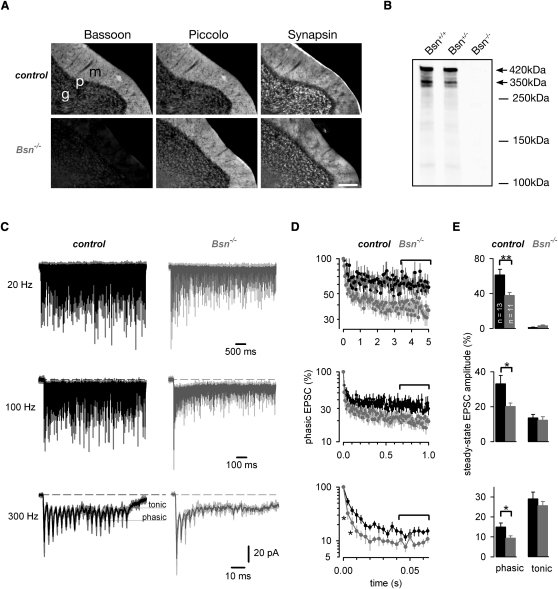
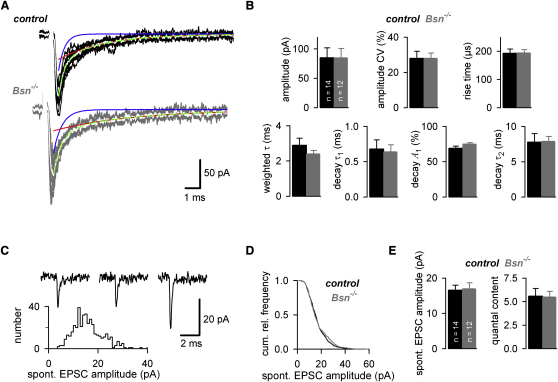
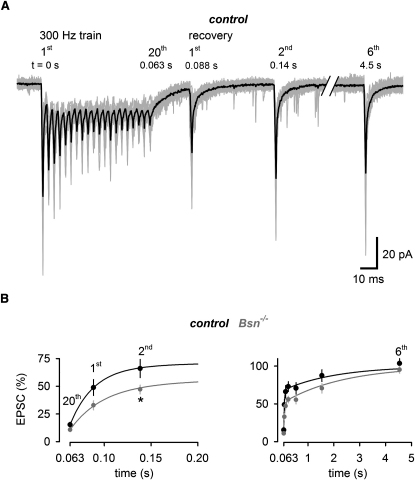
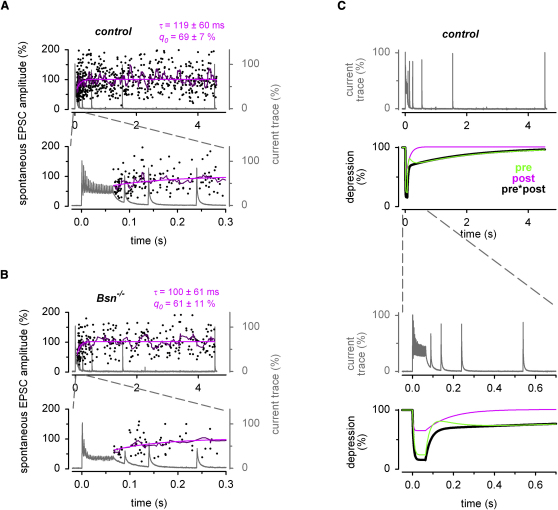
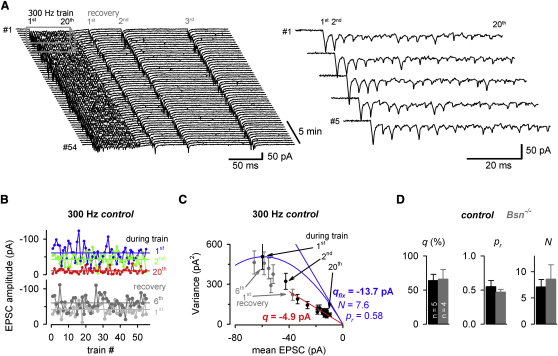
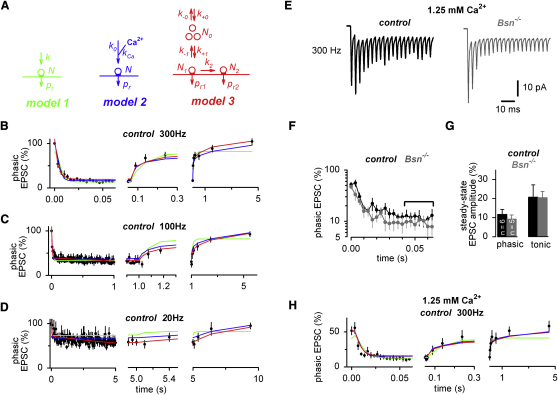
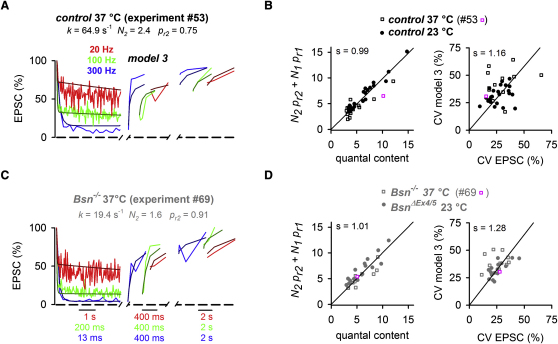
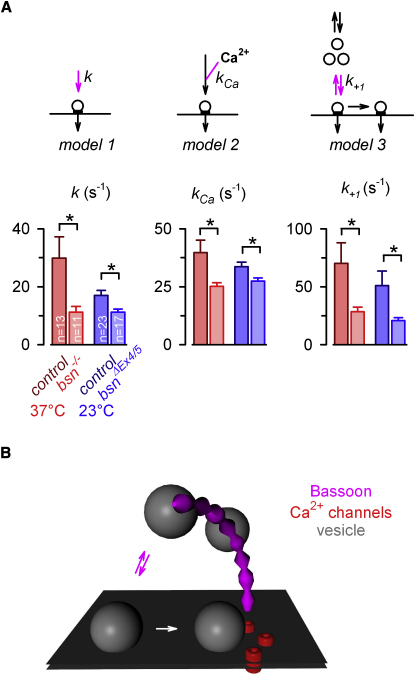
Sustained rate-coded signals encode many types of sensory modalities. Some sensory synapses possess specialized ribbon structures, which tether vesicles, to enable high-frequency signaling. However, central synapses lack these structures, yet some can maintain signaling over a wide bandwidth. To analyze the underlying molecular mechanisms, we investigated the function of the active zone core component Bassoon in cerebellar mossy fiber to granule cell synapses. We show that short-term synaptic depression is enhanced in Bassoon knockout mice during sustained high-frequency trains but basal synaptic transmission is unaffected. Fluctuation and quantal analysis as well as quantification with constrained short-term plasticity models revealed that the vesicle reloading rate was halved in the absence of Bassoon. Thus, our data show that the cytomatrix protein Bassoon speeds the reloading of vesicles to release sites at a central excitatory synapse.
Overview
The claims and statistics of this paper haven’t been checked yet.
Run the check — free, no account needed. It reads the open-access text and checks the sources it cites.
Integrity signals
Registry
Cites
Statistics
Figures
Verification
Claims the paper makes
The claims and statistics of this paper haven’t been checked yet.
Run the check — free, no account needed. It reads the open-access text and checks the sources it cites.
Claims other papers make about this one
Each is checked against this paper’s own text: does it say what the citing paper says it does?
The source backs part of the claim, not all of it — or backs it for a different population, condition or comparison.
In the citing paper
“Piccolo and bassoon are large proteins specific to vertebrates whose major function appears to be to guide synaptic vesicles from the backfield of the synapse to the active zone (Mukherjee et al., 2010; Hallermann et al., 2010).”
From The Presynaptic Active Zone (2012) · cites this paper as Hallermann et al., 2010
Experimental — accuracy not yet measuredThe cited source says what the claim attributes to it.
In the citing paper
“Recovery at MF–GC synapses follows a bi‐exponential time course (Hallermann et al., 2010).”
From MicroRNA‐138‐5p suppresses excitatory synaptic strength at the cerebellar input layer (2025) · cites this paper as Hallermann et al., 2010
The check wasn’t confident either way, so it gives no verdict — never disputed.
In the citing paper
“a deletion of the 17 C-terminal residues of bruchpilot (which are part of the plectin-homology region) impaired attachment of synaptic vesicles to t bars in Drosophila synapses and altered synaptic transmission”
From The Presynaptic Active Zone (2012) · cites this paper as Hallermann et al., 2010
Experimental — accuracy not yet measuredThe check wasn’t confident either way, so it gives no verdict — never disputed.
In the citing paper
“suggesting that a major contribution to bruchpilot function is derived from the plectin-homology region (Hallermann et al., 2010).”
From The Presynaptic Active Zone (2012) · cites this paper as Hallermann et al., 2010
Experimental — accuracy not yet measured
Self-check
Percentages, sums and reported differences re-computed from the paper’s own numbers.
The self-check needs the paper’s full text.
Citations
Cites
Südhof, T. C. (2004) · Annual Review of Neuroscience · doi:10.1146/annurev.neuro.26.041002.131412 · Cited by 2,491
Quantal components of the end‐plate potential
del Castillo, J., & Katz, B. (1954) · The Journal of Physiology · doi:10.1113/jphysiol.1954.sp005129 · Cited by 2,201
Synaptic depression and cortical gain control
Abbott, L. F., Varela, J. A., Sen, K., & Nelson, S. B. (1997) · Science · doi:10.1126/science.275.5297.221 · Cited by 1,690
Edwards, F. A., Konnerth, A., Sakmann, B. J., & Takahashi, T. (1989) · Pflügers Archiv - European Journal of Physiology · doi:10.1007/bf00580998 · Cited by 1,282
Differential signaling via the same axon of neocortical pyramidal neurons
Markram, H., Wang, Y., & Tsodyks, M. (1998) · Proceedings of the National Academy of Sciences · doi:10.1073/pnas.95.9.5323 · Cited by 1,102
Multiple Roles of Calcium Ions in the Regulation of Neurotransmitter Release
Neher, E., & Sakaba, T. (2008) · Neuron · doi:10.1016/j.neuron.2008.08.019 · Cited by 966
Hair cell synaptic ribbons are essential for synchronous auditory signalling
Khimich, D., Nouvian, R., Pujol, R., Dieck, S. T., Egner, A., Gundelfinger, E. D., & Moser, T. (2005) · Nature · doi:10.1038/nature03418 · Cited by 583
Self-citationDieck, S., Sanmartí-Vila, L., Langnaese, K., Richter, K., Kindler, S., Soyke, A., Wex, H., Smalla, K.-H., Kämpf, U., Fränzer, J.-T., et al. (1998) · The Journal of Cell Biology · doi:10.1083/jcb.142.2.499 · Cited by 482
Self-citationDick, O., Dieck, S. T., Altrock, W. D., Ammermüller, J., Weiler, R., Garner, C., Gundelfinger, E., & Brandstätter, J. (2003) · Neuron · doi:10.1016/s0896-6273(03)00086-2 · Cited by 453
Self-citationDittman, J. S., & Regehr, W. G. (1998) · Journal of Neuroscience · doi:10.1523/jneurosci.18-16-06147.1998 · Cited by 410
Cited by
Sorted by citations
Südhof, T. C. (2012) · Neuron · doi:10.1016/j.neuron.2012.06.012 · Cited by 1,062
Short-Term Presynaptic Plasticity
Regehr, W. G. (2012) · Cold Spring Harbor Perspectives in Biology · doi:10.1101/cshperspect.a005702 · Cited by 482
Sterling, P., & Laughlin, S. (2015) · doi:10.7551/mitpress/9780262028707.001.0001 · Cited by 482
Short-term forms of presynaptic plasticity
Fioravante, D., & Regehr, W. G. (2011) · Current Opinion in Neurobiology · doi:10.1016/j.conb.2011.02.003 · Cited by 375
Synaptic vesicle recycling: steps and principles
Rizzoli, S. O. (2014) · The EMBO Journal · doi:10.1002/embj.201386357 · Cited by 317
Frank, T., Rutherford, M. A., Strenzke, N., Neef, A., Pangršič, T., Khimich, D., Fejtová, A., Gundelfinger, E. D., Liberman, M. C., Harke, B., et al. (2010) · Neuron · doi:10.1016/j.neuron.2010.10.027 · Cited by 298
Self-citationSynaptic Vesicle Pools and Dynamics
Alabi, A. A., & Tsien, R. W. (2012) · Cold Spring Harbor Perspectives in Biology · doi:10.1101/cshperspect.a013680 · Cited by 284
Quantitative super-resolution imaging of Bruchpilot distinguishes active zone states
Ehmann, N., van de Linde, S., Alon, A., Ljaschenko, D., Keung, X. Z., Holm, T., Rings, A., DiAntonio, A., Hallermann, S., Ashery, U., et al. (2014) · Nature Communications · doi:10.1038/ncomms5650 · Cited by 233
Self-citationThe Calyx of Held Synapse: From Model Synapse to Auditory Relay
Borst, J. G. G., & van Hoeve, J. S. S. (2011) · Annual Review of Physiology · doi:10.1146/annurev-physiol-020911-153236 · Cited by 225
Sensory Processing at Ribbon Synapses in the Retina and the Cochlea
Moser, T., Grabner, C. P., & Schmitz, F. (2019) · Physiological Reviews · doi:10.1152/physrev.00026.2018 · Cited by 215
Cerebellar Modules and Their Role as Operational Cerebellar Processing Units
Apps, R., Hawkes, R. B., Aoki, S., Bengtsson, F., Brown, A. M., Chen, G., Ebner, T. J., Isope, P., Jörntell, H., Lackey, E. P., et al. (2018) · The Cerebellum · doi:10.1007/s12311-018-0952-3 · Cited by 229
Dynamically Primed Synaptic Vesicle States: Key to Understand Synaptic Short-Term Plasticity
Neher, E., & Brose, N. (2018) · Neuron · doi:10.1016/j.neuron.2018.11.024 · Cited by 210
Role of Bassoon and Piccolo in Assembly and Molecular Organization of the Active Zone
Gundelfinger, E. D., Reissner, C., & Garner, C. C. (2016) · Frontiers in Synaptic Neuroscience · doi:10.3389/fnsyn.2015.00019 · Cited by 203
Self-citationBassoon Specifically Controls Presynaptic P/Q-type Ca2+ Channels via RIM-Binding Protein
Davydova, D., Marini, C., King, C., Klueva, J., Bischof, F., Romorini, S., Montenegro‐Venegas, C., Heine, M., Schneider, R., Schröder, M. S., et al. (2014) · Neuron · doi:10.1016/j.neuron.2014.02.012 · Cited by 181
Self-citationRapid Active Zone Remodeling during Synaptic Plasticity
Rings, A., Hallermann, S., Wagner, N., & Eilers, J. (2011) · Journal of Neuroscience · doi:10.1523/jneurosci.6698-10.2011 · Cited by 173
Self-citationJing, Z., Rutherford, M. A., Takago, H., Frank, T., Fejtová, A., Khimich, D., Moser, T., & Strenzke, N. (2013) · Journal of Neuroscience · doi:10.1523/jneurosci.3491-12.2013 · Cited by 167
Otoferlin: a multi-C2 domain protein essential for hearing
Pangršič, T., Reisinger, E., & Moser, T. (2012) · Trends in Neurosciences · doi:10.1016/j.tins.2012.08.002 · Cited by 164
State and location dependence of action potential metabolic cost in cortical pyramidal neurons
Hallermann, S., de Kock, C. P. J., Stuart, G. J., & Kole, M. H. P. (2012) · Nature Neuroscience · doi:10.1038/nn.3132 · Cited by 163
Self-citationBassoon and Piccolo maintain synapse integrity by regulating protein ubiquitination and degradation
Waites, C. L., Leal‐Ortiz, S., Okerlund, N. D., Dalke, H., Fejtová, A., Altrock, W. D., Gundelfinger, E. D., & Garner, C. C. (2013) · The EMBO Journal · doi:10.1038/emboj.2013.27 · Cited by 156
Self-citationFusion Competent Synaptic Vesicles Persist upon Active Zone Disruption and Loss of Vesicle Docking
Wang, S. S. H., Held, R. G., Wong, M. Y., Liu, C., Karakhanyan, A., & Kaeser, P. S. (2016) · Neuron · doi:10.1016/j.neuron.2016.07.005 · Cited by 143
Giovanoli, S., Weber‐Stadlbauer, U., Schedlowski, M., Meyer, U., & Engler, H. (2015) · Brain Behavior and Immunity · doi:10.1016/j.bbi.2015.09.015 · Cited by 139
The synaptic ribbon is critical for sound encoding at high rates and with temporal precision
Jean, P., de la Morena, D. L., Michanski, S., Tobón, L. M. J., Chakrabarti, R., Picher, M. M., Neef, J., Jung, S., Gültaş, M., Maxeiner, S., et al. (2018) · eLife · doi:10.7554/elife.29275 · Cited by 136
Molecular organization and plasticity of the cytomatrix at the active zone
Gundelfinger, E. D., & Fejtová, A. (2011) · Current Opinion in Neurobiology · doi:10.1016/j.conb.2011.10.005 · Cited by 139
Self-citationUltrafast Action Potentials Mediate Kilohertz Signaling at a Central Synapse
Ritzau‐Jost, A., Delvendahl, I., Rings, A., Byczkowicz, N., Harada, H., Shigemoto, R., Hirrlinger, J., Eilers, J., & Hallermann, S. (2014) · Neuron · doi:10.1016/j.neuron.2014.08.036 · Cited by 132
Self-citationCryo–electron tomography reveals a critical role of RIM1α in synaptic vesicle tethering
Fernández‐Busnadiego, R., Asano, S. M., Oprişoreanu, A., Sakata, E., Doengi, M., Kochovski, Z., Zürner, M., Stein, V., Schoch, S., Baumeister, W. P., et al. (2013) · The Journal of Cell Biology · doi:10.1083/jcb.201206063 · Cited by 132
Taschenberger, H., Woehler, A., & Neher, E. (2016) · Proceedings of the National Academy of Sciences · doi:10.1073/pnas.1606383113 · Cited by 128
Role of exercise in maintaining the integrity of the neuromuscular junction
Nishimune, H., Stanford, J. A., & Mori, Y. (2013) · Muscle and Nerve · doi:10.1002/mus.24095 · Cited by 119
Super-resolving Microscopy in Neuroscience
Werner, C. D., Sauer, M., & Geis, C. (2021) · Chemical Reviews · doi:10.1021/acs.chemrev.0c01174 · Cited by 113
Dieck, S. T., Specht, D., Strenzke, N., Hida, Y., Krishnamoorthy, V., Schmidt, K.-F., Inoue, E., Ishizaki, H., Tanaka, M., Miyoshi, J., et al. (2012) · Journal of Neuroscience · doi:10.1523/jneurosci.0752-12.2012 · Cited by 94
Andrés‐Benito, P., Moreno, J. R., Aso, E., Povedano, M., & Ferrer, I. (2017) · Aging · doi:10.18632/aging.101195 · Cited by 92
Presynaptic function in health and disease
Waites, C. L., & Garner, C. C. (2011) · Trends in Neurosciences · doi:10.1016/j.tins.2011.03.004 · Cited by 96
Müller, M., Genç, Ö., & Davis, G. W. (2015) · Neuron · doi:10.1016/j.neuron.2015.01.024 · Cited by 99
Limbach, C., Laue, M. M., Wang, X., Hu, B., Thiede, N., Hultqvist, G., & Kilimann, M. W. (2011) · Proceedings of the National Academy of Sciences · doi:10.1073/pnas.1101707108 · Cited by 92
Nanoscale Structural Plasticity of the Active Zone Matrix Modulates Presynaptic Function
Glebov, O. O., Jackson, R. E., Winterflood, C. M., Owen, D. M., Barker, E. A., Doherty, P., Ewers, H., & Burrone, J. (2017) · Cell Reports · doi:10.1016/j.celrep.2017.02.064 · Cited by 90
Synaptic activity controls localization and function of CtBP1 via binding to Bassoon and Piccolo
Ivanova, D., Dirks, A., Montenegro‐Venegas, C., Schöne, C., Altrock, W. D., Marini, C., Frischknecht, R., Schanze, D., Zenker, M., Gundelfinger, E. D., et al. (2015) · The EMBO Journal · doi:10.15252/embj.201488796 · Cited by 91
Self-citationHull, C., & Regehr, W. G. (2022) · Annual Review of Neuroscience · doi:10.1146/annurev-neuro-091421-125115 · Cited by 95
Lin, K., Taschenberger, H., & Neher, E. (2022) · Proceedings of the National Academy of Sciences · doi:10.1073/pnas.2207987119 · Cited by 84
Short-distance vesicle transport via phase separation
Qiu, H., Wu, X., Ma, X., Li, S., Cai, Q., Ganzella, M., Ge, L., Zhang, H., & Zhang, M. (2024) · Cell · doi:10.1016/j.cell.2024.03.003 · Cited by 88
Sustaining rapid vesicular release at active zones: potential roles for vesicle tethering
Hallermann, S., & Silver, R. A. (2012) · Trends in Neurosciences · doi:10.1016/j.tins.2012.10.001 · Cited by 88
Self-citationMercer, A. J., & Thoreson, W. B. (2011) · Visual Neuroscience · doi:10.1017/s0952523811000356 · Cited by 85
Active zone density is conserved during synaptic growth but impaired in aged mice
Chen, J., Mizushige, T., & Nishimune, H. (2012) · The Journal of comparative neurology · doi:10.1002/cne.22764 · Cited by 78
Doussau, F., Schmidt, H., Dorgans, K., Valera, A. M., Poulain, B., & Isope, P. (2017) · eLife · doi:10.7554/elife.28935 · Cited by 76
Self-citationClarinet (CLA-1), a novel active zone protein required for synaptic vesicle clustering and release
Zhao, X., Manning, L., Nelson, J. C., Richmond, J. E., Colón‐Ramos, D. A., Shen, K., & Kurshan, P. T. (2017) · eLife · doi:10.7554/elife.29276 · Cited by 76
Molecular Machines Regulating the Release Probability of Synaptic Vesicles at the Active Zone
Körber, C., & Kuner, T. (2016) · Frontiers in Synaptic Neuroscience · doi:10.3389/fnsyn.2016.00005 · Cited by 77
van Beugen, B. J., Gao, Z., Boele, H., Hoebeek, F. E., & Zeeuw, C. I. D. (2013) · Frontiers in Neural Circuits · doi:10.3389/fncir.2013.00095 · Cited by 78
Emerging Synaptic Molecules as Candidates in the Etiology of Neurological Disorders
Torres, V. I., Vallejo, D., & Inestrosa, N. C. (2017) · Neural Plasticity · doi:10.1155/2017/8081758 · Cited by 71
Nishimune, H., Badawi, Y., Mori, S., & Shigemoto, K. (2016) · Scientific Reports · doi:10.1038/srep27935 · Cited by 68
Miki, T., Nakamura, Y., Malagon, G., Neher, E., & Marty, A. (2018) · Nature Communications · doi:10.1038/s41467-018-06336-5 · Cited by 53
Fife organizes synaptic vesicles and calcium channels for high-probability neurotransmitter release
Bruckner, J. J., Zhan, H., Gratz, S. J., Rao, M., Ukken, F. P., Zilberg, G., & O’Connor-Giles, K. M. (2016) · The Journal of Cell Biology · doi:10.1083/jcb.201601098 · Cited by 62
Parkin contributes to synaptic vesicle autophagy in Bassoon-deficient mice
Hoffmann-Conaway, S., Brockmann, M. M., Schneider, K., Annamneedi, A., Rahman, K. A., Bruns, C., Textoris‐Taube, K., Trimbuch, T., Smalla, K., Rosenmund, C., et al. (2020) · eLife · doi:10.7554/elife.56590 · Cited by 61
Self-citationBassoon‐disruption slows vesicle replenishment and induces homeostatic plasticity at a CNS synapse
Schulz, A. M., Jing, Z., Sanchez‐Caro, J. M., Wetzel, F., Dresbach, T., Strenzke, N., Wichmann, C., & Moser, T. (2014) · The EMBO Journal · doi:10.1002/embj.201385887 · Cited by 63
Synaptic mechanisms of sensorimotor learning in the cerebellum
Carey, M. R. (2011) · Current Opinion in Neurobiology · doi:10.1016/j.conb.2011.06.011 · Cited by 61
Nishimune, H., Numata, T., Chen, J., Aoki, Y., Wang, Y., Starr, M. P., Mori, Y., & Stanford, J. A. (2012) · PLoS ONE · doi:10.1371/journal.pone.0038029 · Cited by 62
Rapid and sustained homeostatic control of presynaptic exocytosis at a central synapse
Delvendahl, I., Kita, K., & Müller, M. (2019) · Proceedings of the National Academy of Sciences · doi:10.1073/pnas.1909675116 · Cited by 62
Action potential-coupled Rho GTPase signaling drives presynaptic plasticity
Dube, S., Rácz, B., Brown, W. E., Gao, Y., Soderblom, E. J., Yasuda, R., & Soderling, S. H. (2021) · eLife · doi:10.7554/elife.63756 · Cited by 57
Reduced endogenous Ca 2+ buffering speeds active zone Ca 2+ signaling
Delvendahl, I., Jablonski, L., Baade, C., Matveev, V., Neher, E., & Hallermann, S. (2015) · Proceedings of the National Academy of Sciences · doi:10.1073/pnas.1508419112 · Cited by 63
Self-citationCalcium dependence of neurotransmitter release at a high fidelity synapse
Eshra, A., Schmidt, H., Eilers, J., & Hallermann, S. (2021) · eLife · doi:10.7554/elife.70408 · Cited by 56
Self-citationSchwartz, E., Rothman, J. S., Dugué, G. P., Diana, M. A., Rousseau, C. V., Silver, R. A., & Dieudonné, S. (2012) · Journal of Neuroscience · doi:10.1523/jneurosci.5736-11.2012 · Cited by 57
Self-citationFast resupply of synaptic vesicles requires synaptotagmin-3
Weingarten, D. J., Shrestha, A., Juda-Nelson, K., Kissiwaa, S. A., Spruston, E., & Jackman, S. L. (2022) · Nature · doi:10.1038/s41586-022-05337-1 · Cited by 55
Developmental Tightening of Cerebellar Cortical Synaptic Influx-Release Coupling
Baur, D., Bornschein, G., Althof, D., Watanabe, M., Kulik, Á., Eilers, J., & Schmidt, H. (2015) · Journal of Neuroscience · doi:10.1523/jneurosci.2900-14.2015 · Cited by 57
Self-citationModulation of Presynaptic Release Probability by the Vertebrate-Specific Protein Mover
Körber, C., Horstmann, H., Venkataramani, V., Herrmannsdörfer, F., Kremer, T., Kaiser, M., Schwenger, D. B., Ahmed, S., Dean, C., Dresbach, T., et al. (2015) · Neuron · doi:10.1016/j.neuron.2015.07.001 · Cited by 55
Physical determinants of vesicle mobility and supply at a central synapse
Rothman, J. S., Kocsis, L., Herzog, É., Nusser, Z., & Silver, R. A. (2016) · eLife · doi:10.7554/elife.15133 · Cited by 53
Self-citationLipstein, N., Chang, S., Lin, K., López-Murcia, F. J., Neher, E., Taschenberger, H., & Brose, N. (2021) · Neuron · doi:10.1016/j.neuron.2021.09.054 · Cited by 53
The Cerebellar Mossy Fiber Synapse as a Model for High-Frequency Transmission in the Mammalian CNS
Delvendahl, I., & Hallermann, S. (2016) · Trends in Neurosciences · doi:10.1016/j.tins.2016.09.006 · Cited by 52
Self-citationEto, K., Sakai, N., Shimada, S., Shioda, M., Ishigaki, K., Hamada, Y., Shinpo, M., Azuma, J., Tominaga, K., Shimojima, K. Y., et al. (2013) · American Journal of Medical Genetics Part A · doi:10.1002/ajmg.a.36156 · Cited by 47
Incomplete vesicular docking limits synaptic strength under high release probability conditions
Malagón, G., Miki, T., Tran, V., Gomez, L. C., & Marty, A. (2020) · eLife · doi:10.7554/elife.52137 · Cited by 44
Insights into the molecular organization of the neuron by cryo-electron tomography
Fernández‐Busnadiego, R., Schrod, N., Kochovski, Z., Asano, S. M., Vanhecke, D., Baumeister, W., & Lučić, V. (2011) · Microscopy · doi:10.1093/jmicro/dfr018 · Cited by 44
Piccolo Promotes Vesicle Replenishment at a Fast Central Auditory Synapse
Butola, T., Wichmann, C., & Moser, T. (2017) · Frontiers in Synaptic Neuroscience · doi:10.3389/fnsyn.2017.00014 · Cited by 42
Development and maintenance of vision’s first synapse
Burger, C. A., Jiang, D., Mackin, R. D., & Samuel, M. A. (2021) · Developmental Biology · doi:10.1016/j.ydbio.2021.04.001 · Cited by 41
Fife, aDrosophilaPiccolo-RIM Homolog, Promotes Active Zone Organization and Neurotransmitter Release
Bruckner, J. J., Gratz, S. J., Slind, J. K., Geske, R. R., Cummings, A. M., Galindo, S. E., Donohue, L. K., & O’Connor-Giles, K. M. (2012) · Journal of Neuroscience · doi:10.1523/jneurosci.3267-12.2012 · Cited by 42
Miki, T., Midorikawa, M., & Sakaba, T. (2020) · Proceedings of the National Academy of Sciences · doi:10.1073/pnas.2000265117 · Cited by 47
Zucker, R. S., Kullmann, D. M., & Kaeser, P. S. (2014) · Elsevier eBooks · doi:10.1016/b978-0-12-397179-1.00015-4 · Cited by 44
Synaptic Vesicle Proteins and Active Zone Plasticity
Kittel, R. J., & Heckmann, M. (2016) · Frontiers in Synaptic Neuroscience · doi:10.3389/fnsyn.2016.00008 · Cited by 43
Ishiyama, S., Schmidt, H., Cooper, B. H., Brose, N., & Eilers, J. (2014) · Journal of Neuroscience · doi:10.1523/jneurosci.2060-14.2014 · Cited by 40
Self-citationMolecular anatomy and physiology of exocytosis in sensory hair cells
Rutherford, M. A., & Pangršič, T. (2012) · Cell Calcium · doi:10.1016/j.ceca.2012.05.008 · Cited by 39
Apparent calcium dependence of vesicle recruitment
Ritzau‐Jost, A., Jablonski, L., Viotti, J., Lipstein, N., Eilers, J., & Hallermann, S. (2018) · The Journal of Physiology · doi:10.1113/jp275911 · Cited by 39
Self-citationSynaptic basis of a sub-second representation of time in a neural circuit model
Barri, A., Wiechert, M. T., Jazayeri, M., & DiGregorio, D. A. (2022) · Nature Communications · doi:10.1038/s41467-022-35395-y · Cited by 43
Bando, S. Y., Alegro, M., Amaro, E., da Silva, A. V., Castro, L. H. M., Tzu, W. H., Lima, L. D. A., Brentani, H., & Moreira‐Filho, C. A. (2011) · PLoS ONE · doi:10.1371/journal.pone.0026268 · Cited by 37
Noise-induced Cochlear Synaptopathy and Signal Processing Disorders
Chen, H.-C., Shi, L., Liu, L., Yin, S., Aiken, S. J., & Wang, J. (2018) · Neuroscience · doi:10.1016/j.neuroscience.2018.09.026 · Cited by 36
RIM-binding protein couples synaptic vesicle recruitment to release sites
Petzoldt, A. G., Götz, T., Driller, J. H., Lützkendorf, J., Reddy‐Alla, S., Matkovic, T., Liu, S., Knoche, E., Mertel, S., Ugorets, V., et al. (2020) · The Journal of Cell Biology · doi:10.1083/jcb.201902059 · Cited by 42
Disentangling the roles of RIM and Munc13 in synaptic vesicle localization and neurotransmission
Zarebidaki, F., Camacho, M., Brockmann, M. M., Trimbuch, T., Herman, M. A., & Rosenmund, C. (2020) · The Journal of Neuroscience · doi:10.1523/jneurosci.1922-20.2020 · Cited by 37
Bando, S. Y., Silva, F. N., Costa, L. D. F., da Silva, A. V., Pimentel‐Silva, L. R., Castro, L. H. M., Tzu, W. H., Amaro, E., & Moreira‐Filho, C. A. (2013) · PLoS ONE · doi:10.1371/journal.pone.0079913 · Cited by 36
Neher, E. (2023) · The Journal of General Physiology · doi:10.1085/jgp.202313454 · Cited by 34
Wahl, S., Magupalli, V. G., Dembla, M., Katiyar, R., Schwarz, K., Köblitz, L., Alpadi, K., Krause, E., Rettig, J., Sung, C.-H., et al. (2016) · Journal of Neuroscience · doi:10.1523/jneurosci.2275-15.2016 · Cited by 31
A two-step docking site model predicting different short-term synaptic plasticity patterns
Pulido, C., & Marty, A. (2018) · The Journal of General Physiology · doi:10.1085/jgp.201812072 · Cited by 33
Straub, I., Witter, L., Eshra, A., Hoidis, M., Byczkowicz, N., Maas, S., Delvendahl, I., Dorgans, K., Savier, E. L., Bechmann, I., et al. (2020) · eLife · doi:10.7554/elife.51771 · Cited by 32
Self-citationPresynaptic active zone density during development and synaptic plasticity
Clarke, G. L. (2012) · Frontiers in Molecular Neuroscience · doi:10.3389/fnmol.2012.00012 · Cited by 33
Vilmint, A. G., Valera, A. M., Kumar, A., & Isope, P. (2018) · Journal of Neuroscience · doi:10.1523/jneurosci.3270-17.2018 · Cited by 32
Bassoon inhibits proteasome activity via interaction with PSMB4
Montenegro‐Venegas, C., Fieńko, S., Anni, D., Pina-Fernández, E., Frischknecht, R., & Fejtová, A. (2020) · Cellular and Molecular Life Sciences · doi:10.1007/s00018-020-03590-z · Cited by 32
Böhme, M. A., Grasskamp, A. T., & Walter, A. M. (2018) · FEBS Letters · doi:10.1002/1873-3468.13188 · Cited by 35
Multiple roles of integrin-α3 at the neuromuscular junction
Ross, J. A., Webster, R. G., Lechertier, T., Reynolds, L. E., Turmaine, M., Bencze, M., Jamshidi, Y., Çetin, H., Francesco Muntoni, A., Beeson, D., et al. (2017) · Journal of Cell Science · doi:10.1242/jcs.201103 · Cited by 31
Drosophila active zones: From molecules to behaviour
Ehmann, N., Owald, D., & Kittel, R. J. (2017) · Neuroscience Research · doi:10.1016/j.neures.2017.11.015 · Cited by 29
Morelli, E., Ghiglieri, V., Pendolino, V., Bagetta, V., Pignataro, A., Fejtová, A., Costa, C., Ammassari‐Teule, M., Gundelfinger, E. D., Picconi, B., et al. (2014) · Experimental Neurology · doi:10.1016/j.expneurol.2014.05.010 · Cited by 31
Self-citationActive zones of mammalian neuromuscular junctions: formation, density, and aging
Nishimune, H. (2012) · Annals of the New York Academy of Sciences · doi:10.1111/j.1749-6632.2012.06836.x · Cited by 35
Guillaud, L., Dimitrov, D., & Takahashi, T. (2017) · eLife · doi:10.7554/elife.24845 · Cited by 31
Action potential-coupled Rho GTPase signaling drives presynaptic plasticityPreprint
Dube, S., Rácz, B., Brown, W. E., Gao, Y., Soderblom, E. J., Yasuda, R., & Soderling, S. H. (2020) · bioRxiv (Cold Spring Harbor Laboratory) · doi:10.1101/2020.10.07.330126 · Cited by 31
Annamneedi, A., Çalışkan, G., Müller, S., Montag, D., Budinger, E., Angenstein, F., Fejtová, A., Tischmeyer, W., Gundelfinger, E. D., & Stork, O. (2018) · Brain Structure and Function · doi:10.1007/s00429-018-1692-3 · Cited by 33
Self-citationMover Is a Homomeric Phospho-Protein Present on Synaptic Vesicles
Ahmed, S., Wittenmayer, N., Kremer, T., Hoeber, J., Akula, A. K., Urlaub, H., Islinger, M., Kirsch, J., Dean, C., & Dresbach, T. (2013) · PLoS ONE · doi:10.1371/journal.pone.0063474 · Cited by 32
Molecular Mechanism of Active Zone Organization at Vertebrate Neuromuscular Junctions
Nishimune, H. (2012) · Molecular Neurobiology · doi:10.1007/s12035-011-8216-y · Cited by 29
“” The roles of Bassoon and Piccolo in the synaptic vesicle clustering at the active zones have been demonstrated in the analyses of the central nervous system synapses in single knockout mice for Bassoon or Piccolo, as well as in the Piccolo knockout/ Bassoon knockdown mice [47, 48, 50–56].”
BackgroundDiverse Precerebellar Neurons Share Similar Intrinsic Excitability
Kolkman, K. E., McElvain, L. E., & du Lac, S. (2011) · Journal of Neuroscience · doi:10.1523/jneurosci.3314-11.2011 · Cited by 29
Metadata
- Authors
- Hallermann, S., Fejtova, A., Schmidt, H., Weyhersmüller, A., Silver, R. A., Gundelfinger, E. D., & Eilers, J.
- Affiliations
- Leipzig University (DE)
- University College London (GB)
- Leibniz Institute for Neurobiology (DE)
- Corresponding author
- Hallermann, Stefan
- Venue
- Neuron
- Publisher
- Elsevier BV
- Published
- 2010-11
- Volume
- 68
- Issue
- 4
- Pages
- 710-723
- ISSN
- 0896-6273 (ISSN-L)
- PMC
- PMC3004039
- OpenAlex
- W2050878615
- Cited by
- 223
- References
- 67
- Citations by year
- 2026: 7 · 2025: 13 · 2024: 7 · 2023: 12 · 2022: 15 · 2021: 11 · 2020: 16 · 2019: 17 · 2018: 13 · 2017: 16 · 2016: 17 · 2015: 13 · 2014: 17 · 2013: 15 · 2012: 16
- FWCI
- 6.34
- Type
- journal article
- Language
- en
- Open access
- hybrid
- doi.org
- Licence
- Locations
- Neuron (publishedVersion, cc-by)
- PubMed Central (publishedVersion, cc-by)
- PubMed (publishedVersion)
- UCL Discovery (University College London) (submittedVersion)
- Funders
- Wellcome Trust
- Topics
- Life Sciences › Neuroscience › Cellular and Molecular Neuroscience › Neuroscience and Neuropharmacology Research
- Life Sciences › Biochemistry, Genetics and Molecular Biology › Cell Biology › Cellular transport and secretion
- Life Sciences › Biochemistry, Genetics and Molecular Biology › Genetics › Genetics and Neurodevelopmental Disorders
- Keywords
- bassoon, short-term synaptic depression, cerebellum, active zone, quantal analysis, rate coding
- MeSH terms
- Animals, Cells, Cultured, Cerebellum, Hippocampus, Mice, Inbred C57BL, Mice, Transgenic, Nerve Tissue Proteins, Neural Inhibition, Reaction Time, Synapses, Synaptic Vesicles, Time Factors, Mice, Knockout, Excitatory Postsynaptic Potentials, Mice, Mice, 129 Strain
About these checks
Registry, retraction, Cites and statistics results are computed, not judged, with one exception: a printed reference that no index lists is read once by a model before it counts as a citation error. Claims are extracted by a model and kept only when their quote appears verbatim in the text; each cited source is then checked, with a model’s help, for whether it says what the claim relies on. Those verdicts can be wrong — read the claim’s quote and the cited source before relying on one.
Statistics and arithmetic are recomputed, not judged.
Confidence bands are shown only for fields calibrated on our annotated test set. None is calibrated yet, so no band is shown.
What counts as a claim ›How we measure confidence ›How we check this ›
Are you an author, or do you see a problem with this page? Request a review
