

The DOI matches its Crossref record; 233 of the 233 references it cites were found in a registry or an index.
Role of advanced glycation end products in cellular signaling
Open accessAbstract
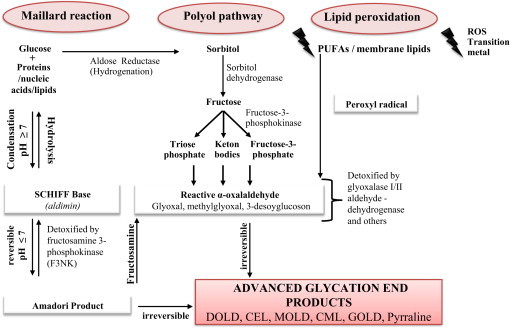
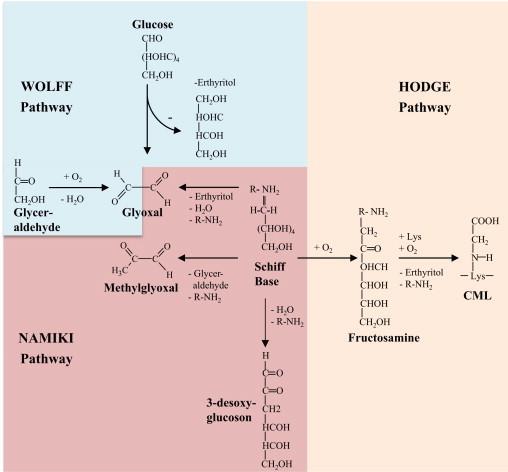
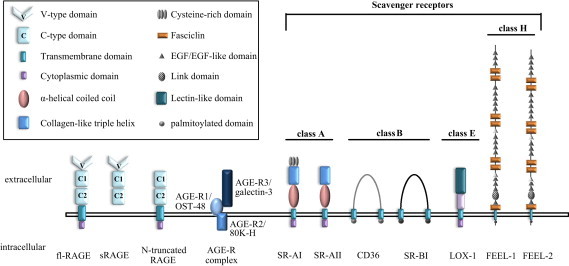
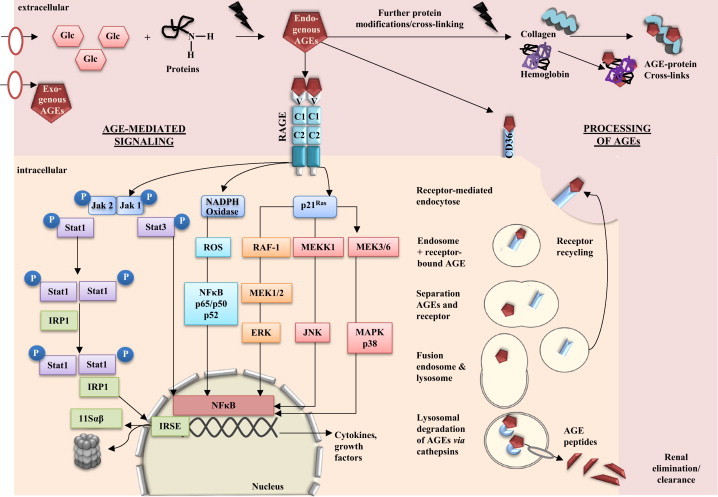
Improvements in health care and lifestyle have led to an elevated lifespan and increased focus on age-associated diseases, such as neurodegeneration, cardiovascular disease, frailty and arteriosclerosis. In all these chronic diseases protein, lipid or nucleic acid modifications are involved, including cross-linked and non-degradable aggregates, such as advanced glycation end products (AGEs). Formation of endogenous or uptake of dietary AGEs can lead to further protein modifications and activation of several inflammatory signaling pathways. This review will give an overview of the most prominent AGE-mediated signaling cascades, AGE receptor interactions, prevention of AGE formation and the impact of AGEs during pathophysiological processes.
Overview
The claims and statistics of this paper haven’t been checked yet.
Run the check — free, no account needed. It reads the open-access text and checks the sources it cites.
Integrity signals
Registry
Cites
Statistics
Figures
Verification
Claims the paper makes
The claims and statistics of this paper haven’t been checked yet.
Run the check — free, no account needed. It reads the open-access text and checks the sources it cites.
Claims other papers make about this one
Each is checked against this paper’s own text: does it say what the citing paper says it does?
In the citing paper
“These AGE cell surface receptors include AGE-R1, AGE-R2, AGE-R3, and scavenger receptors such as macrophage scavenger receptors, scavenger receptor class B type I and II (SR-BI, SR-BII), and cluster of differentiation 36 (CD36).”
From Advanced glycation end products (AGEs) and other adducts in aging-related diseases and alcohol-mediated tissue injury (2021) · cites this paper as [46]
In the citing paper
“The interaction of AGEs with these receptors can enhance their catabolism and clearance by modulating endocytosis and degradation45,46, suggesting a potentially adaptive defensive mechanism in the body to reduce the detrimental effects of increased glycation products.”
From Advanced glycation end products (AGEs) and other adducts in aging-related diseases and alcohol-mediated tissue injury (2021) · cites this paper as [46]
In the citing paper
“Notably, several conditions, including aging, diabetes, renal failure, tobacco smoking, and excessive alcohol consumption that induce AGE accumulation and AGE-RAGE interaction, are risk factors for increased bone fracture and osteoporosis46,85.”
From Advanced glycation end products (AGEs) and other adducts in aging-related diseases and alcohol-mediated tissue injury (2021) · cites this paper as [46]
In the citing paper
“In addition to lipid peroxide-related protein adducts, recent data suggest that sugar moiety-related protein adduct such as advanced glycation end products (AGEs) can be produced by high fat or excessive alcohol exposure or under pathological states such as diabetes, cardiovascular diseases and Alzheimer's disease, as recently reviewed [190], [191], [192], [193].”
Self-check
Percentages, sums and reported differences re-computed from the paper’s own numbers.
The self-check needs the paper’s full text.
Citations
Cites
Bundesgesundheitsblatt - Gesundheitsforschung - Gesundheitsschutz
(2013) · Bundesgesundheitsblatt - Gesundheitsforschung - Gesundheitsschutz · doi:10.1007/103.1437-1588 · Cited by 11,769
Pathways towards and Away from Alzheimer’s Disease
Mattson, M. P. (2004) · Nature · doi:10.1038/nature02621 · Cited by 3,052
Broken Limits to Life Expectancy
Oeppen, J., & Vaupel, J. W. (2002) · Science · doi:10.1126/science.1069675 · Cited by 2,819
Advanced glycation end-products: A review
Singh, R., Barden, A., Mori, T., & Beilin, L. (2001) · Diabetologia · doi:10.1007/s001250051591 · Cited by 2,597
Goldstein, J. L., Ho, Y. K., Basu, S. K., & Brown, M. S. (1979) · Proceedings of the National Academy of Sciences · doi:10.1073/pnas.76.1.333 · Cited by 2,447
Advanced Glycation End Products: Sparking the Development of Diabetic Vascular Injury
Goldin, A., Beckman, J. A., Schmidt, A. M., & Creager, M. A. (2006) · Circulation · doi:10.1161/circulationaha.106.621854 · Cited by 2,261
Identification of Scavenger Receptor SR-BI as a High Density Lipoprotein Receptor
Acton, S., Rigotti, A., Landschulz, K. T., Xu, S., Hobbs, H. H., & Krieger, M. (1996) · Science · doi:10.1126/science.271.5248.518 · Cited by 2,026
Understanding the odd science of aging
Kirkwood, T. B. L. (2005) · Cell · doi:10.1016/j.cell.2005.01.027 · Cited by 1,984
RAGE Mediates a Novel Proinflammatory Axis
Hofmann, M. A., Drury, S., Fu, C., Qu, W., Taguchi, A., Lu, Y., Avila, C., Kambham, N., Bierhaus, A., Nawroth, P., et al. (1999) · Cell · doi:10.1016/s0092-8674(00)80801-6 · Cited by 1,864
Steinbrecher, U. P., Parthasarathy, S., Leake, D. S., Witztum, J. L., & Steinberg, D. I. (1984) · Proceedings of the National Academy of Sciences · doi:10.1073/pnas.81.12.3883 · Cited by 1,626
Cited by
Sorted by citations
Items 901–1,000 of 1,000
RAGE-Dependent Effect of Exogenous Methylglyoxal Intake on Lung Biomechanics in Mice
Al‐Robaiy, S., Santos, A. N., & Simm, A. (2022) · Nutrients · doi:10.3390/nu15010023 · Cited by 3
Parhizgari, N., Ghobadi, M. Z., Rezaei, F., Marashi, S. M., Khatami, M., & Mokhtari‐Azad, T. (2023) · Transplant Immunology · doi:10.1016/j.trim.2022.101746 · Cited by 3
Sztolsztener, K., Bzdęga, W., Konstantynowicz-Nowicka, K., Chabowski, A., & Harasim‐Symbor, E. (2023) · Prostaglandins & Other Lipid Mediators · doi:10.1016/j.prostaglandins.2023.106767 · Cited by 3
Regulation of Transporters for Organic Cations by High Glucose
Steinbüchel, M., Menne, J., Schröter, R., Neugebauer, U., Schlatter, E., & Ciarimboli, G. (2023) · International Journal of Molecular Sciences · doi:10.3390/ijms241814051 · Cited by 3
Different modulation of STING/TBK1/IRF3 signaling by advanced glycation end products
Nishinaka, T., Hatipoğlu, Ö. F., Wake, H., Watanabe, M., Toyomura, T., Mori, S., Nishibori, M., & Takahashi, H. K. (2023) · Archives of Biochemistry and Biophysics · doi:10.1016/j.abb.2023.109808 · Cited by 3
Haque, A., Alenezi, K. M., Khan, M. W. A., Soury, R., Khan, M. S., Ahamad, S., Ahmad, S., & Gupta, D. K. (2023) · Journal of Biomolecular Structure and Dynamics · doi:10.1080/07391102.2023.2290621 · Cited by 3
Effect of nattokinase on the pathological conditions in streptozotocin induced diabetic rats
Yamaguchi, M., Fukuyama, R., & Fujita, M. (2024) · Heliyon · doi:10.1016/j.heliyon.2024.e28835 · Cited by 3
Wang, H., Zhao, X., & Wu, Z. (2024) · Medicine · doi:10.1097/md.0000000000038699 · Cited by 3
Nowak, A. J., Przywara-Chowaniec, B., Damasiewicz-Bodzek, A., Janoszka, B., Szumska, M., Waligóra, S., & Tyrpień-Golder, K. (2024) · Archives of Medical Science · doi:10.5114/aoms/176941 · Cited by 3
Tanaka, M., Kanazashi, M., Kondo, H., & Fujino, H. (2024) · Journal of Muscle Research and Cell Motility · doi:10.1007/s10974-024-09680-w · Cited by 3
Sharifi‐Zahabi, E., Soltani, S., Hajizadeh‐Sharafabad, F., & Abdollahzad, H. (2024) · Food Science & Nutrition · doi:10.1002/fsn3.4396 · Cited by 3
Modulating OCA2 Expression as a Promising Approach to Enhance Skin Brightness and Reduce Dark Spots
Cho, E., Hyung, K. E., Choi, Y.-H., Chun, H., Kim, D., Jun, S., & Kang, N. (2024) · Biomolecules · doi:10.3390/biom14101284 · Cited by 3
Impact of Cold Atmospheric Plasma Treatment on Native and Glycated Collagen
Zende, R., Bharati, A. J., & Sankaranarayanan, K. (2024) · Plasma Processes and Polymers · doi:10.1002/ppap.202400172 · Cited by 3
Zhang, X., Mao, J., Shao, L., Liu, S., Zhou, J., Mei, M., & Zhang, Z. (2024) · Frontiers in Pharmacology · doi:10.3389/fphar.2024.1450154 · Cited by 3
Cho, S., Lee, Y. R., Ha, S. K., Ahn, J., Suh, H. J., & Kim, Y. (2025) · Analytical Methods · doi:10.1039/d4ay01602e · Cited by 3
Motta, B. P., Kaga, A. K., Oliveira, J. O., Inácio, M. D., da Silva, C. F., de Sousa, P. T., Brunetti, I. L., & Baviera, A. M. (2018) · Natural Product Research · doi:10.1080/14786419.2018.1537276 · Cited by 3
Jeong, J. Y., Baek, Y.-C., Ji, S. Y., Oh, Y. K., Cho, S., Seo, H.-W., Kim, M., & Lee, H. J. (2020) · Journal of Animal Science and Technology · doi:10.5187/jast.2020.62.3.321 · Cited by 3
Khan, H., Waseem, M., Faisal, M., Alatar, A. A., Qahtan, A. A., & Ahmad, S. (2021) · BioMed Research International · doi:10.1155/2021/8892156 · Cited by 3
Liuqing, Y., Yang, N., Huang, H., Yu, J., Sui, X., Tao, L., Gao, Y., & Liu, Z. (2022) · Combinatorial Chemistry & High Throughput Screening · doi:10.2174/1386207325666221007111239 · Cited by 3
Dietary Modulation of Chronic Inflammation of Diabetes: A Narrative Review
Joseph, S. (2023) · Open Access Journal of Endocrinology · doi:10.23880/oaje-16000181 · Cited by 2
Santos, A. N., Yan, J., Lochmann, P., Pfeil, H., Petersen, M., Simm, A., Treede, H., Sievers, H. H., & Mohamed, S. A. (2016) · Archives of Physiology and Biochemistry · doi:10.1080/13813455.2016.1211710 · Cited by 3
Chao, K., Chen, S., Chang, C., Lee, Y., Wang, C., & Chang, J. (2016) · Molecular Nutrition & Food Research · doi:10.1002/mnfr.201600753 · Cited by 3
Baroroh, A. R. E., Miasih, D. S., Lestari, S. R., & Gofur, A. (2020) · AIP conference proceedings · doi:10.1063/5.0002530 · Cited by 3
Abdel‐Razik, A., Mousa, N., Zakaria, S., Abdelsalam, M., Eissa, M. O., El-Ghany, M. I. A., Hasan, A. S., Elhelaly, R. M., Elzehery, R. R., El‐Wakeel, N., et al. (2020) · Frontiers in Medicine · doi:10.3389/fmed.2020.588519 · Cited by 3
Iron chelating, reducing and anti-glycation activities of Coleus aromaticus leaves protein
Santhosh Kumar, N., Kalaivanam., K. N., Nusrath, A., & Ramadas, D. (2019) · International Journal of Clinical Biochemistry and Research · doi:10.18231/j.ijcbr.2019.040 · Cited by 3
Hakeim, H. K. A., Altufaili, M. F., Alhaideri, A. F., Almulla, A. F., Moustafa, S. R., & Maes, M. (2023) · medRxiv · doi:10.1101/2023.01.21.23284873 · Cited by 3
Huang, X., Pan, Z., Shen, L., Chen, H., Chen, C., Lv, T., & Mei, Y. (2025) · Hereditas · doi:10.1186/s41065-025-00434-3 · Cited by 2
The Role of Periodontitis in Increasing Cognitive Decline in Alzheimer\'s Disease
Freitas, C. M. T., Patil, S., Klonaris, N., & Murcia, J. D. G. (2025) · The Journal of Contemporary Dental Practice · doi:10.5005/jp-journals-10024-3847 · Cited by 2
Influence of Aging and Diabetes on the Mechanical Properties of Mouse Skin
Miny, S., Runel, G., Chlasta, J., & Bonod‐Bidaud, C. (2025) · Dermatopathology · doi:10.3390/dermatopathology12020018 · Cited by 2
Sun, H., Liu, Z., Li, X., Wen, D., Li, B., & Huang, X. (2025) · Journal of Applied Microbiology · doi:10.1093/jambio/lxaf233 · Cited by 2
Hyperglycemia in the focus of prevention of age-related skin changes
Shperling, N. V., Chaplygin, A. V., & Васильевна, Ч. Н. (2025) · Meditsinskiy sovet = Medical Council · doi:10.21518/ms2025-360 · Cited by 2
Xu, Q., Tang, M., Wang, Y., & Tan, J. (2025) · International Urology and Nephrology · doi:10.1007/s11255-025-04866-8 · Cited by 2
Zhao, P., Pan, B., Gao, J., Lv, X., Wang, Y., & Liu, J. (2025) · Scientific Reports · doi:10.1038/s41598-025-22984-2 · Cited by 2
Sahoo, S., Howsam, M., Tessier, F. J., & Tupe, R. S. (2025) · Biochimie · doi:10.1016/j.biochi.2025.12.004 · Cited by 3
Microenvironment-mediated stem cell fate in periodontal tissue remodeling and repair
Zheng, J.-X., Yin, H., Tian, G., Quan, Z.-F., Dong, Z.-L., Ding, W.-Q., Wang, Z.-X., Niu, Y., Guo, Q.-Y., Tang, Y.-Q., et al. (2025) · Bioactive Materials · doi:10.1016/j.bioactmat.2025.12.025 · Cited by 2
Chan, P. Y., Yuan, S., & Hunter, D. J. (2026) · Expert Review of Clinical Pharmacology · doi:10.1080/17512433.2026.2649611 · Cited by 2
Nguyen, D. H., Howsam, M., Boulanger, É., & Tessier, F. J. (2026) · Critical Reviews in Clinical Laboratory Sciences · doi:10.1080/10408363.2026.2651310 · Cited by 2
Chen, X.-M., Chen, J.-X., Chen, X.-M., Gao, Y., Zeng, C., Chen, D.-Y., Xiang, X.-Q., Hao, X.-T., Wang, S., & Tang, D. (2026) · Phytomedicine · doi:10.1016/j.phymed.2026.158204 · Cited by 2
Bai, X., Zhang, G., Xiao, X., Zeng, Q., Zhao, Y., Wang, P., Long, F., & Liu, W. (2026) · Experimental & Molecular Medicine · doi:10.1038/s12276-026-01678-3 · Cited by 3
Gutierrez, E. J., Mitevski, L. E., Haus, J. M., & Carroll, C. C. (2026) · Endocrinology Diabetes & Metabolism · doi:10.1002/edm2.70250 · Cited by 2
Updates on Endoplasmic Reticulum
Favero, G. (2022) · Biochemistry · doi:10.5772/intechopen.100952 · Cited by 2
Protective Effect of Pomegranate Seed Oil against D-Galactose-Induced Aging in Rats
Hosseini, A., Ziaee, L., Rajabian, A., & Boroushaki, M. T. (2023) · Journal of Advances in Medical and Biomedical Research · doi:10.30699/jambs.31.144.80 · Cited by 2
Vilyanen, D. V., Pashkevich, N. I., Borisova‐Mubarakshina, M. M., & Стефанович, О. С. (2023) · BIOPHYSICS · doi:10.1134/s0006350923010190 · Cited by 2
Guo, W., Luo, J., Zhao, S., Li, L., Xing, W., & Gao, R. (2024) · Clinical Immunology · doi:10.1016/j.clim.2024.110178 · Cited by 2
Breath of fresh air: Investigating the link between AGEs, sRAGE, and lung diseases
Delrue, C., Speeckaert, R., Delanghe, J., & Speeckaert, M. M. (2024) · Vitamins and hormones · doi:10.1016/bs.vh.2024.01.003 · Cited by 4
Rosenberg, J., Sundaresh, V., Gililland, J., Osman, A., Woolley, W., & Acevedo, C. (2024) · JOM · doi:10.1007/s11837-024-06744-7 · Cited by 2
Unraveling the RAGE axis in pulmonary disorders: Mechanisms and therapeutical potential
PANG, S., Jia, T., & YANG, Z. (2024) · Biocell · doi:10.32604/biocell.2024.055753 · Cited by 2
Biomarkers of Oxidative Damage
Khelfi, A. (2024) · Springer eBooks · doi:10.1007/978-3-031-60738-7_3 · Cited by 2
Wang, P., Zuo, H., Shi, H., Wang, Z., Ren, X., Shi, J., Guo, T., Kuang, X., Zhao, M., Li, J., et al. (2024) · Acta Biochimica et Biophysica Sinica · doi:10.3724/abbs.2024235 · Cited by 3
Luo, Y., Ma, W., Kang, Q., Pan, H., Shi, L., Ma, J., Song, J., Gong, D., Kang, K., & Jin, X. (2025) · Acta Biochimica et Biophysica Sinica · doi:10.3724/abbs.2025018 · Cited by 2
Fei, M., Wu, B., Tu, J., Chen, H., & Guo, Y. (2025) · BMC Cardiovascular Disorders · doi:10.1186/s12872-025-04578-y · Cited by 2
The Biology of Advanced Glycation End Products
Malik, P., Rani, R., & Mukherjee, T. K. (2025) · BENTHAM SCIENCE PUBLISHERS eBooks · doi:10.2174/9789815322521125010006 · Cited by 2
El‐Shiekh, R. A., Mohamed, A. F., Mandour, A. A., Adel, I. M., Atwa, A. M., Elgindy, A. M., Esmail, M. M., Senna, M. M., Ebid, N., & Mustafa, A. M. (2025) · Chemistry & Biodiversity · doi:10.1002/cbdv.202403506 · Cited by 2
Micro/nanomotors: A novel platform for food safety detection and auxiliary processing
Yang, G., Qin, X., Ma, J., Zhang, Z., Wang, J., & Yang, X. (2025) · Food Bioscience · doi:10.1016/j.fbio.2025.106626 · Cited by 2
Jansen, F. A. C., Rubert, J., van Norren, K., Fogliano, V., & Hoppenbrouwers, T. (2025) · International Journal of Biological Macromolecules · doi:10.1016/j.ijbiomac.2025.144889 · Cited by 2
The role of methylglyoxal detoxification in Mycobacterium tuberculosis fitness and pathogenesis
Chen, H., Abudukadier, A., Zhang, Q., Li, P., & Xie, J. (2025) · Microbial Pathogenesis · doi:10.1016/j.micpath.2025.107948 · Cited by 2
S 100?A New Biomarker in Asthma?
Konstantinidis, T. G., & Cassimos, D. C. (2014) · Journal of Ancient Diseases & Preventive Remedies · doi:10.4172/2329-8731.1000e118 · Cited by 2
Cutaneous Oxidative Stress and Aging
Polefka, T. G., & Meyer, T. A. (2015) · Springer eBooks · doi:10.1007/978-3-642-27814-3_123-1 · Cited by 2
Methodological approaches and insights on protein aggregation in biological systems
Bastos, P. A. D., Trindade, F., Leite-Moreira, A. F., Falcão‐Pires, I., Ferreira, R. M., & Vitorino, R. M. P. (2016) · Expert Review of Proteomics · doi:10.1080/14789450.2017.1264877 · Cited by 2
Protein Metabolism in the Elderly
Dillon, E. L. (2016) · Elsevier eBooks · doi:10.1016/b978-0-12-802167-5.00007-4 · Cited by 3
Allergie, Mikrobiom und weitere epigenetische Faktoren
Stockert, K. (2020) · Springer eBooks · doi:10.1007/978-3-662-58140-7_4 · Cited by 2
GLYCATION STRESS AND PHOTOAGING OF THE SKIN
Vavilova, A. A., Ивановна, Г. Е., & Gladko, V. V. (2017) · Russian Journal of Skin and Venereal Diseases · doi:10.18821/1560-9588-2017-20-4-243-248 · Cited by 2
Protective Role of White Cabbage Extract Against Amiodarone-Induced Lung Damage in Rats
Ak, E. Ç., Türkyılmaz, İ. B., Muhan, A., & Yanardağ, R. (2022) · Online Türk Sağlık Bilimleri Dergisi · doi:10.26453/otjhs.1058146 · Cited by 2
D’Haese, S., Deluyker, D., & Bito, V. (2022) · International Journal of Molecular Sciences · doi:10.3390/ijms232314916 · Cited by 2
Inhibitory Effect of 6-shogaol on Fructose-Induced Protein Glycation and Oxidation in Vitro
Malakul, W. (2017) · วารสารมหาวิทยาลัยนเรศวร: วิทยาศาสตร์และเทคโนโลยี (Naresuan University Journal: Science and Technology) · Cited by 2
Kerschan‐Schindl, K., Nebot, E., & Pietschmann, P. (2018) · Springer eBooks · doi:10.1007/978-3-319-64597-1_153-1 · Cited by 2
Naffa, R., Gaar, J., Zhang, W., Maidment, C., Shehadi, I. A., Etxabide, A., Holmes, G., Kavianinia, I., & Brimble, M. A. (2020) · Separation Science Plus · doi:10.1002/sscp.202000077 · Cited by 2
Borg, D. J., Faridi, P., Giam, K., Reeves, P., Fotheringham, A. K., McCarthy, D. A., Leung, S. S., Ward, M. S., Harcourt, B. E., Ayala, R., et al. (2021) · Metabolites · doi:10.3390/metabo11070426 · Cited by 2
Innovative Ways of Treating Diabetic Peripheral Neuropathy in the United States: A Narrative Review
Joseph, S. (2022) · Open Access Journal of Endocrinology · doi:10.23880/oaje-16000173 · Cited by 2
Li, R., Chen, W. X., Liu, H. H., Fan, G. Z., Qiu, Z., Jiang, Q., Wu, Y. F., Zhang, D. D., Luo, H. H., & Hu, P. (2021) · Advances in Medical Sciences · doi:10.1016/j.advms.2021.03.003 · Cited by 1
Effects of Diabetes and Insulin Resistance on Endothelial Functions
Fu, J., Yu, M. G., Li, Q., Park, K., & King, G. L. (2023) · Contemporary cardiology · doi:10.1007/978-3-031-13177-6_3 · Cited by 1
Nanoparticles in prevention of protein glycation
Sivaram, A., & Patil, N. A. (2024) · Vitamins and hormones · doi:10.1016/bs.vh.2024.04.001 · Cited by 1
Zubareva, T. S., Lykova, K. O., Panfilova, A. S., Yablonsky, P., Kvetnaia, T. V., & Paltseva, E. M. (2024) · Molekulyarnaya Meditsina (Molecular medicine) · doi:10.29296/24999490-2024-04-01 · Cited by 1
Improved ASCVD Screening in Diabetes: a Focus on Scoring Models and Detection Techniques
Zanfirescu, R.-L., Anghel, L., Tudurachi, B.-S., Clement, A.-M., Zăvoi, A., Benchea, L.-C., Ciocoiu, M., Sascău, R. A., Stătescu, C., & Radu, R. (2025) · Romanian Journal of Internal Medicine · doi:10.2478/rjim-2025-0009 · Cited by 1
Chaudhary, P., Diwakar, S., & Joshi, D. (2025) · IGI Global eBooks · doi:10.4018/979-8-3693-9730-5.ch012 · Cited by 1
Oxidized angiotensin II peptides as mediators of cell signaling?
Bablu, F. E., TERAMOTO, T., & Suzuki, Y. (2025) · Free Radical Biology and Medicine · doi:10.1016/j.freeradbiomed.2025.10.271 · Cited by 1
Receptor for advanced glycation end-product in ischemia-reperfusion injury
Luo, X., Hu, Q., Ye, Q., & Zhong, Z. (2025) · International Immunopharmacology · doi:10.1016/j.intimp.2025.115792 · Cited by 1
Balancing the dual nature of glycotoxins: interplay of diet, digestion, and gut microbiome
Semchyshyn, H. M. (2025) · Frontiers in Nutrition · doi:10.3389/fnut.2025.1693167 · Cited by 2
Lee, E. Y., Hong, S. M., Kim, S. Y., & Rukhsana Sultana, A. (2026) · Pharmaceuticals · doi:10.3390/ph19010121 · Cited by 1
Ailanthone hijacks ERK/NF-κB cascade to attenuate osteoclastogenesis for osteoporosis
Zhang, X., Kang, J., Wang, Q., Zhang, Y., Jiang, J., Jin, Z., Zhang, C., Sun, Z., Li, Z., Liu, R., et al. (2026) · Phytomedicine · doi:10.1016/j.phymed.2026.157870 · Cited by 1
Xue, L., Dong, W., Li, J., Chen, R., Li, N., Liu, C., Zhou, P., Chen, Y., Li, S., Zhao, X., et al. (2026) · Journal of Diabetes · doi:10.1111/1753-0407.70195 · Cited by 1
Zhou, Q., Zhang, Y., Dai, Z., Li, Q., Xiu, W., Lv, H., Mou, Y., & Dong, H. (2026) · Regenerative Biomaterials · doi:10.1093/rb/rbag055 · Cited by 2
Darmishonnejad, Z., Hassan‐Zadeh, V., Tavalaee, M., Moazamian, A., Aitken, R. J., Drevet, J. R., Gharagozloo, P., & Nasr-Esfahani, M. H. (2026) · Scientific Reports · doi:10.1038/s41598-026-42820-5 · Cited by 2
Wang, L., Liu, X., Tan, C., Wang, Z., & Cheng, Y. (2026) · BMC Cancer · doi:10.1186/s12885-026-16070-7 · Cited by 1
Wang, Y., Song, M., Chen, S., He, Y., Chen, S., Li, Z., Xu, M., Zhang, Q., Rui, Y., & Shen, J. (2026) · International Journal of Nanomedicine · doi:10.2147/ijn.s607165 · Cited by 1
Bai, L., & Zhu, S. (2026) · Pharmacognosy Magazine · doi:10.1177/09731296261447608 · Cited by 1
Blocking AGEs reduces airway epithelial viral susceptibility in diabetes-exacerbated COPD
Chen, Z., Qin, Y., Lin, B., Jiang, L., Feng, Z., Chen, S., Ye, Z., Zhou, M., Li, J., Wang, D. Y., et al. (2026) · EMBO Molecular Medicine · doi:10.1038/s44321-026-00502-9 · Cited by 1
Wang, Z., Shi, Q., Li, X., Zhang, Z., & Li, M. (2026) · Frontiers in Cardiovascular Medicine · doi:10.3389/fcvm.2026.1846184 · Cited by 1
Tea, the “Ambrosia” Beverage: Biochemical, Cellular, Molecular, and Clinical Evidences
Ramlagan, P., Narrain, D., Fawdar, S., & Bahorun, T. (2019) · Elsevier eBooks · doi:10.1016/b978-0-12-815270-6.00001-3 · Cited by 1
Ramlagan, P., Issa, M. Y., Rondeau, P., Bourdon, E., Bahorun, T., Farag, M. A., & Neergheen, V. S. (2021) · Journal of the American Nutrition Association · doi:10.1080/07315724.2021.1978349 · Cited by 1
Li, B., Yuan, L., Liu, P., Geng, Z., Zhang, K., Jiang, H., Sui, H. X., & Zhang, B. (2022) · PubMed Central · Cited by 1
Ravi, R., & Rajesh, B. S. (2022) · Biochemistry · doi:10.5772/intechopen.106018 · Cited by 2
Advanced glycation end products and allergy
Toda, M., Hellwig, M., Hattori, H., Henle, T., & Vieths, S. (2023) · Allergo Journal International · doi:10.1007/s40629-023-00259-4 · Cited by 2
Qu, S., Huang, H. F., Diao, Y., Liu, B., Tang, B., Huo, S., Yu, L., Xuan, X., Mou, W., Liu, P., et al. (2023) · Cellular and Molecular Biology · doi:10.14715/cmb/2023.69.10.38 · Cited by 1
Vilyanen, D. V., Pashkevich, N. I., Borisova‐Mubarakshina, M. M., & Стефанович, О. С. (2023) · Биофизика · doi:10.31857/s0006302923010180 · Cited by 1
Embryonic Mice with Lung-Specific RAGE Upregulation Have Enhanced Mitochondrial Respiration
Clarke, D. M., Curtis, K. L., Harward, K., Scott, J., Stapley, B. M., Kirkham, M. N., Clark, E. T., Robertson, P., Chambers, E., Warren, C. E., et al. (2024) · Journal of Respiration · doi:10.3390/jor4020012 · Cited by 1
Galectin-3 protects distal convoluted tubules in rhabdomyolysis-induced kidney injury
Kulow, V. A., Labes, R., Czopek, C. S., Rosenberger, C., & Fähling, M. (2024) · Pflügers Archiv - European Journal of Physiology · doi:10.1007/s00424-024-02987-0 · Cited by 1
Bixin Combined with Metformin Ameliorates Insulin Resistance and Antioxidant Defenses in Obese Mice
Pinheiro, C. G., Motta, B. P., Oliveira, J. O., Cardoso, F. N., Figueiredo, I. D., Machado, R. T. A., da Silva, P. B., Chorilli, M., Brunetti, I. L., & Baviera, A. M. (2024) · Pharmaceuticals · doi:10.3390/ph17091202 · Cited by 1
Navigating the Intersection of Glycemic Control and Fertility: A Network Perspective
Carlo, C. D., Cimini, C., Belda-Pérez, R., Valbonetti, L., Bernabò, N., & Barboni, B. (2024) · International Journal of Molecular Sciences · doi:10.3390/ijms25189967 · Cited by 1
RAGE-mediated intestinal pro-inflammatory responses triggered by Giardia duodenalis
Lu, L., Yao, Y., Cao, L., Le, Y., Li, X., Wang, X., Zhang, X., Li, J., Zhang, N., Jiang, W., et al. (2025) · Acta Tropica · doi:10.1016/j.actatropica.2025.107529 · Cited by 1
Metadata
- Authors
- Ott, C., Jacobs, K., Haucke, E., Navarrete Santos, A., Grune, T., & Simm, A.
- Affiliations
- Friedrich Schiller University Jena (DE)
- University Hospital in Halle (DE)
- Martin Luther University Halle-Wittenberg (DE)
- Corresponding author
- Simm, Andreas
- Venue
- Redox Biology
- Publisher
- Elsevier BV
- Published
- 2014
- Volume
- 2
- Pages
- 411-429
- ISSN
- 2213-2317 (ISSN-L)
- PMC
- PMC3949097
- OpenAlex
- W2086327676
- Cited by
- 1,150
- References
- 233
- Citations by year
- 2026: 62 · 2025: 82 · 2024: 105 · 2023: 121 · 2022: 108 · 2021: 131 · 2020: 107 · 2019: 106 · 2018: 86 · 2017: 94 · 2016: 70 · 2015: 52 · 2014: 21
- FWCI
- 10.15
- Type
- journal article
- Language
- en
- Open access
- gold
- doi.org
- Licence
- Locations
- Redox Biology (publishedVersion, cc-by-nc-sa)
- Europe PMC (PubMed Central) (publishedVersion)
- PubMed Central (publishedVersion, cc-by-nc-sa)
- PubMed (publishedVersion)
- DOAJ (DOAJ: Directory of Open Access Journals) (submittedVersion)
- Topics
- Life Sciences › Biochemistry, Genetics and Molecular Biology › Clinical Biochemistry › Advanced Glycation End Products research
- Life Sciences › Agricultural and Biological Sciences › Food Science › Potato Plant Research
- Life Sciences › Biochemistry, Genetics and Molecular Biology › Aging › Genetics, Aging, and Longevity in Model Organisms
- Keywords
- advanced glycation end products, AGE receptor, signal transduction, protein modification, inflammatory signaling, age-related diseases, neurodegeneration, cardiovascular disease, arteriosclerosis, frailty, dietary AGEs
- MeSH terms
- Receptor for Advanced Glycation End Products, Aging, Animals, Bone and Bones, Dietary Proteins, Humans, Hyperglycemia, Immune System, Inflammation, Lung, Models, Biological, Neurons, Polymers, Receptors, Immunologic, Lipid Peroxidation, Signal Transduction, Maillard Reaction, NF-kappa B, Glycation End Products, Advanced, Reactive Oxygen Species, Oxidative Stress, Protein Transport, Reactive Nitrogen Species, Receptors, Scavenger, Protein Aggregates
About these checks
Registry, retraction, Cites and statistics results are computed, not judged, with one exception: a printed reference that no index lists is read once by a model before it counts as a citation error. Claims are extracted by a model and kept only when their quote appears verbatim in the text; each cited source is then checked, with a model’s help, for whether it says what the claim relies on. Those verdicts can be wrong — read the claim’s quote and the cited source before relying on one.
Statistics and arithmetic are recomputed, not judged.
Confidence bands are shown only for fields calibrated on our annotated test set. None is calibrated yet, so no band is shown.
What counts as a claim ›How we measure confidence ›How we check this ›
Are you an author, or do you see a problem with this page? Request a review
