

The DOI matches its Crossref record; 233 of the 233 references it cites were found in a registry or an index.
Role of advanced glycation end products in cellular signaling
Open accessAbstract
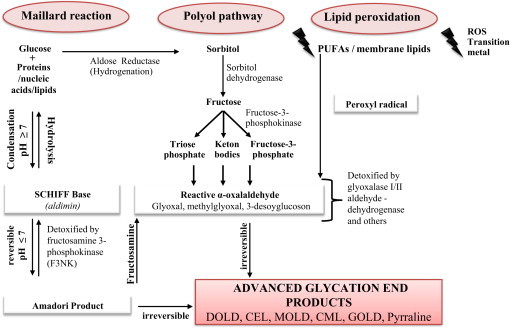
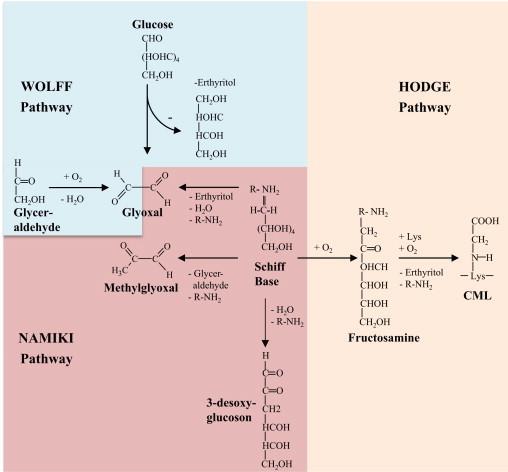
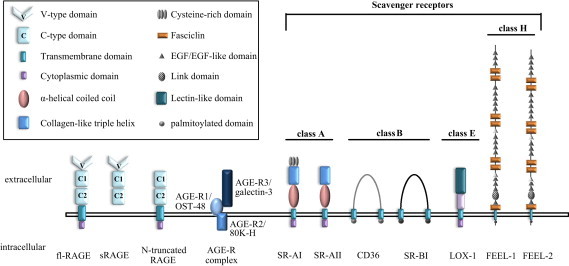
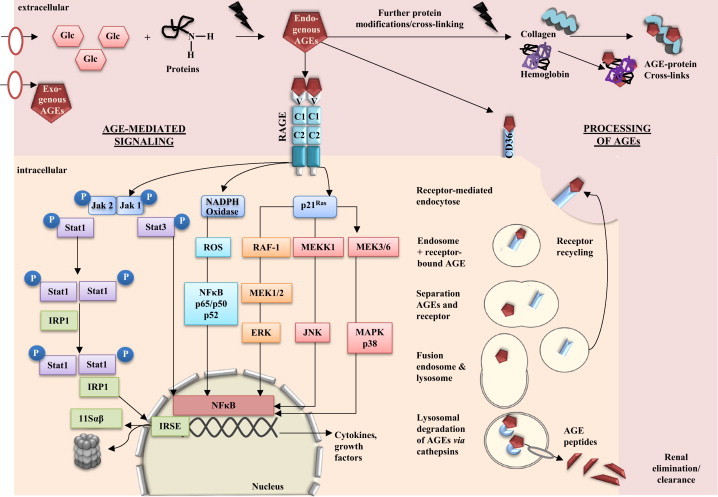
Improvements in health care and lifestyle have led to an elevated lifespan and increased focus on age-associated diseases, such as neurodegeneration, cardiovascular disease, frailty and arteriosclerosis. In all these chronic diseases protein, lipid or nucleic acid modifications are involved, including cross-linked and non-degradable aggregates, such as advanced glycation end products (AGEs). Formation of endogenous or uptake of dietary AGEs can lead to further protein modifications and activation of several inflammatory signaling pathways. This review will give an overview of the most prominent AGE-mediated signaling cascades, AGE receptor interactions, prevention of AGE formation and the impact of AGEs during pathophysiological processes.
Overview
The claims and statistics of this paper haven’t been checked yet.
Run the check — free, no account needed. It reads the open-access text and checks the sources it cites.
Integrity signals
Registry
Cites
Statistics
Figures
Verification
Claims the paper makes
The claims and statistics of this paper haven’t been checked yet.
Run the check — free, no account needed. It reads the open-access text and checks the sources it cites.
Claims other papers make about this one
Each is checked against this paper’s own text: does it say what the citing paper says it does?
In the citing paper
“These AGE cell surface receptors include AGE-R1, AGE-R2, AGE-R3, and scavenger receptors such as macrophage scavenger receptors, scavenger receptor class B type I and II (SR-BI, SR-BII), and cluster of differentiation 36 (CD36).”
From Advanced glycation end products (AGEs) and other adducts in aging-related diseases and alcohol-mediated tissue injury (2021) · cites this paper as [46]
In the citing paper
“The interaction of AGEs with these receptors can enhance their catabolism and clearance by modulating endocytosis and degradation45,46, suggesting a potentially adaptive defensive mechanism in the body to reduce the detrimental effects of increased glycation products.”
From Advanced glycation end products (AGEs) and other adducts in aging-related diseases and alcohol-mediated tissue injury (2021) · cites this paper as [46]
In the citing paper
“Notably, several conditions, including aging, diabetes, renal failure, tobacco smoking, and excessive alcohol consumption that induce AGE accumulation and AGE-RAGE interaction, are risk factors for increased bone fracture and osteoporosis46,85.”
From Advanced glycation end products (AGEs) and other adducts in aging-related diseases and alcohol-mediated tissue injury (2021) · cites this paper as [46]
In the citing paper
“In addition to lipid peroxide-related protein adducts, recent data suggest that sugar moiety-related protein adduct such as advanced glycation end products (AGEs) can be produced by high fat or excessive alcohol exposure or under pathological states such as diabetes, cardiovascular diseases and Alzheimer's disease, as recently reviewed [190], [191], [192], [193].”
Self-check
Percentages, sums and reported differences re-computed from the paper’s own numbers.
The self-check needs the paper’s full text.
Citations
Cites
Bundesgesundheitsblatt - Gesundheitsforschung - Gesundheitsschutz
(2013) · Bundesgesundheitsblatt - Gesundheitsforschung - Gesundheitsschutz · doi:10.1007/103.1437-1588 · Cited by 11,769
Pathways towards and Away from Alzheimer’s Disease
Mattson, M. P. (2004) · Nature · doi:10.1038/nature02621 · Cited by 3,052
Broken Limits to Life Expectancy
Oeppen, J., & Vaupel, J. W. (2002) · Science · doi:10.1126/science.1069675 · Cited by 2,819
Advanced glycation end-products: A review
Singh, R., Barden, A., Mori, T., & Beilin, L. (2001) · Diabetologia · doi:10.1007/s001250051591 · Cited by 2,597
Goldstein, J. L., Ho, Y. K., Basu, S. K., & Brown, M. S. (1979) · Proceedings of the National Academy of Sciences · doi:10.1073/pnas.76.1.333 · Cited by 2,447
Advanced Glycation End Products: Sparking the Development of Diabetic Vascular Injury
Goldin, A., Beckman, J. A., Schmidt, A. M., & Creager, M. A. (2006) · Circulation · doi:10.1161/circulationaha.106.621854 · Cited by 2,261
Identification of Scavenger Receptor SR-BI as a High Density Lipoprotein Receptor
Acton, S., Rigotti, A., Landschulz, K. T., Xu, S., Hobbs, H. H., & Krieger, M. (1996) · Science · doi:10.1126/science.271.5248.518 · Cited by 2,026
Understanding the odd science of aging
Kirkwood, T. B. L. (2005) · Cell · doi:10.1016/j.cell.2005.01.027 · Cited by 1,984
RAGE Mediates a Novel Proinflammatory Axis
Hofmann, M. A., Drury, S., Fu, C., Qu, W., Taguchi, A., Lu, Y., Avila, C., Kambham, N., Bierhaus, A., Nawroth, P., et al. (1999) · Cell · doi:10.1016/s0092-8674(00)80801-6 · Cited by 1,864
Steinbrecher, U. P., Parthasarathy, S., Leake, D. S., Witztum, J. L., & Steinberg, D. I. (1984) · Proceedings of the National Academy of Sciences · doi:10.1073/pnas.81.12.3883 · Cited by 1,626
Cited by
Sorted by citations
Items 301–400 of 1,000
Jiao, N., Chen, Y., Zhu, Y., Wang, W., Liu, M., Ding, W., Lv, G., Lu, J., Yu, B., & Xu, H. (2019) · Life Sciences · doi:10.1016/j.lfs.2019.116736 · Cited by 39
Nishihara, H., Shimizu, F., Kitagawa, T., Yamanaka, N., Akada, J. K., Kuramitsu, Y., Sano, Y., Takeshita, Y., Maeda, T., Abe, M., et al. (2016) · Multiple Sclerosis Journal · doi:10.1177/1352458516655217 · Cited by 39
Markiewicz, E., Jerome, J., Mammone, T., & Idowu, O. C. (2022) · Clinical Cosmetic and Investigational Dermatology · doi:10.2147/ccid.s364538 · Cited by 38
Effect of Diabetes on Tendon Structure and Function: Not Limited to Collagen Crosslinking
Vaidya, R., Lake, S. P., & Zellers, J. A. (2022) · Journal of Diabetes Science and Technology · doi:10.1177/19322968221100842 · Cited by 38
Stimulatory effects of advanced glycation endproducts (AGEs) on fibronectin matrix assembly
Pastino, A. K., Greco, T. M., Mathias, R. A., Cristea, I. M., & Schwarzbauer, J. E. (2016) · Matrix Biology · doi:10.1016/j.matbio.2016.07.003 · Cited by 38
Chang, C.-C., Khan, I., Tsai, K.-L., Li, H., Yang, L., Chou, R., & Yu, C. (2016) · Biochimica et Biophysica Acta (BBA) - Proteins and Proteomics · doi:10.1016/j.bbapap.2016.08.008 · Cited by 40
Hafsa, J., Hammi, K. M., Cerf, D. L., Limem, K., Majdoub, H., & Charfeddine, B. (2017) · International Journal of Biological Macromolecules · doi:10.1016/j.ijbiomac.2017.09.046 · Cited by 38
Wang, C., Lee, A., Liu, S., Chang, K., Shen, M., & Chang, C. (2019) · BMC Nephrology · doi:10.1186/s12882-019-1534-4 · Cited by 38
Chen, Y., & Guo, T. L. (2021) · Journal of Immunotoxicology · doi:10.1080/1547691x.2021.1959677 · Cited by 41
Peripheral Levels of AGEs and Astrocyte Alterations in the Hippocampus of STZ-Diabetic Rats
Nardin, P., Zanotto, C., Hansen, F., Batassini, C., Gasparin, M. S., Sesterheim, P., & Gonçalves, C. (2016) · Neurochemical Research · doi:10.1007/s11064-016-1912-2 · Cited by 38
Methods to investigate advanced glycation end-product and their application in clinical practice
Corica, D., Pepe, G., Currò, M., Aversa, T., Tropeano, A., Ientile, R., & Wasniewska, M. G. (2021) · Methods · doi:10.1016/j.ymeth.2021.12.008 · Cited by 38
Yuan, X., Chen, M., Liu, H., & Sun, B. (2023) · Food Chemistry · doi:10.1016/j.foodchem.2023.136252 · Cited by 37
Research progress on the mechanism of ferroptosis and its role in diabetic retinopathy
He, W., Lu, C., Li, X., & Mei, Y. (2023) · Frontiers in Endocrinology · doi:10.3389/fendo.2023.1155296 · Cited by 37
Celep, İ. K., Zengin, G., Uba, A. İ., Caprioli, G., Mustafa, A. M., Angeloni, S., Çakılcıoğlu, U., Güler, O., Kaplan, A., Jugreet, S., et al. (2023) · Archiv der Pharmazie · doi:10.1002/ardp.202300263 · Cited by 38
HMGB1/RAGE axis in tumor development: unraveling its significance
Fan, A., Gao, M., Tang, X., Jiao, M., Wang, C., Wei, Y., Gong, Q., & Zhong, J. (2024) · Frontiers in Oncology · doi:10.3389/fonc.2024.1336191 · Cited by 42
Sengani, M., & Rajeswari, V. D. (2017) · Environmental Toxicology and Pharmacology · doi:10.1016/j.etap.2017.01.007 · Cited by 37
An insight on the association of glycation with hepatocellular carcinoma
Jabir, N. R., Ahmad, S., & Tabrez, S. S. M. (2017) · Seminars in Cancer Biology · doi:10.1016/j.semcancer.2017.06.005 · Cited by 36
Age-related oxidative changes in pancreatic islets are predominantly located in the vascular system
Kehm, R., König, J., Nowotny, K., Jung, T., Deubel, S., Gohlke, S., Schulz, T. J., & Höhn, A. (2017) · Redox Biology · doi:10.1016/j.redox.2017.12.015 · Cited by 41
Konopka, C. J., Woźniak, M., Hedhli, J., Płoska, A., Schwartz‐Duval, A. S., Siekierzycka, A., Pan, D., Munirathinam, G., Dobrucki, I. T., Kalinowski, L., et al. (2018) · Theranostics · doi:10.7150/thno.24791 · Cited by 35
Fang, J., Ouyang, M., Qu, Y., Wang, M., Huang, X., Lan, J., Lai, W., & Xu, Q. (2022) · Journal of Investigative Dermatology · doi:10.1016/j.jid.2022.03.025 · Cited by 39
Sharifi‐Zahabi, E., Hajizadeh‐Sharafabad, F., Abdollahzad, H., Malekahmadi, M., & Rad, N. B. (2021) · Advances in Nutrition · doi:10.1093/advances/nmab072 · Cited by 36
Gasparotto, J., Ribeiro, C. T., Bortolin, R. C., Somensi, N., Fernandes, H. S., Teixeira, A. A., Guasselli, M. O. R., Agani, C. A. J. O., Souza, N. C., Grings, M., et al. (2017) · Brain Behavior and Immunity · doi:10.1016/j.bbi.2017.01.008 · Cited by 37
Ramlagan, P., Rondeau, P., Planesse, C., Neergheen, V. S., Bourdon, E., & Bahorun, T. (2017) · Food & Function · doi:10.1039/c7fo01038a · Cited by 36
Lin, P., Chang, C.-C., Wu, K., Shih, C., Chiang, W., Chen, H.-Y., Shih, Y.-H., Wang, K.-L., Hong, Y., Shieh, T., et al. (2019) · Biomolecules · doi:10.3390/biom9080327 · Cited by 36
Role of the Nuclear Lamina in Age-Associated Nuclear Reorganization and Inflammation
Kristiani, L., Kim, M., & Kim, Y. (2020) · Cells · doi:10.3390/cells9030718 · Cited by 36
Pawlukianiec, C., Gryciuk, M. E., Mil, K. M., Żendzian‐Piotrowska, M., Zalewska, A., & Maciejczyk, M. (2020) · Pharmaceuticals · doi:10.3390/ph13090240 · Cited by 36
Targeting extracellular matrix glycation to attenuate fibroblast activation
Jang, M., Oh, S. W., Lee, Y., Kim, J. Y., Ji, E. S., & Kim, P. (2022) · Acta Biomaterialia · doi:10.1016/j.actbio.2022.01.040 · Cited by 37
The role of germanium in diseases: exploring its important biological effects
Luo, X., Sun, J., Kong, D., Lei, Y., Gong, F., Zhang, T., Shen, Z., Wang, K., Luo, H., & Xu, Y. (2023) · Journal of Translational Medicine · doi:10.1186/s12967-023-04643-0 · Cited by 35
Key structural and functional differences between early and advanced glycation products
Paradela‐Dobarro, B., Rodiño‐Janeiro, B. K., Alonso, J., Raposeiras‐Roubín, S., González‐Peteiro, M., González‐Juanatey, J. R., & Álvarez, E. (2015) · Journal of Molecular Endocrinology · doi:10.1530/jme-15-0031 · Cited by 35
Plasma levels of soluble receptor for advanced glycation end products in Alzheimer's disease
Xu, X., Deng, C., Wang, J., Deng, X., Xiao, Q., Li, Y., He, Q., Fan, W.-H., Quan, F., Zhu, Y.-P., et al. (2016) · International Journal of Neuroscience · doi:10.1080/00207454.2016.1193861 · Cited by 35
Impaired Vascular Redox Signaling in the Vascular Complications of Obesity and Diabetes Mellitus
Akoumianakis, I., & Antoniades, C. A. (2017) · Antioxidants and Redox Signaling · doi:10.1089/ars.2017.7421 · Cited by 37
Non-enzymatic glycation mediated structure–function changes in proteins: case of serum albumin
Awasthi, S., & Saraswathi, N. T. (2016) · RSC Advances · doi:10.1039/c6ra08283a · Cited by 36
Shi, L., Lu, P., Dai, G.-C., Li, Y., & Rui, Y. (2021) · World Journal of Stem Cells · doi:10.4252/wjsc.v13.i9.1338 · Cited by 34
Salama, A., Yassen, N. N., & Mansour, H. M. (2023) · Life Sciences · doi:10.1016/j.lfs.2023.121471 · Cited by 35
The role of neurovascular coupling dysfunction in cognitive decline of diabetes patients
Feng, L., & Gao, L. (2024) · Frontiers in Neuroscience · doi:10.3389/fnins.2024.1375908 · Cited by 42
Yue, S., Zhou, H. M., Zhu, J., Rao, J., Busuttil, R. W., Kupiec‐Weglinski, J. W., Lü, L., & Zhai, Y. (2015) · American Journal of Transplantation · doi:10.1111/ajt.13360 · Cited by 34
Zhou, J., Ueda, K., Zhao, J., & Sparrow, J. R. (2015) · Journal of Biological Chemistry · doi:10.1074/jbc.m115.680363 · Cited by 34
Icariin Inhibits AGE-Induced Injury in PC12 Cells by Directly Targeting Apoptosis Regulator Bax
Zhao, S.-Y., Liao, L., Tu, P., Li, W., & Zeng, K. (2019) · Oxidative Medicine and Cellular Longevity · doi:10.1155/2019/7940808 · Cited by 34
Hajizadeh‐Sharafabad, F., Sahebkar, A., Zabetian‐Targhi, F., & Maleki, V. (2019) · BioFactors · doi:10.1002/biof.1531 · Cited by 34
Leonova, T. S., Popova, V., Tsarev, A. A., Henning, C., Antonova, K. A., Rogovskaya, N. Y., Vikhnina, M., Baldensperger, T., Soboleva, A., Dinastia, E., et al. (2020) · International Journal of Molecular Sciences · doi:10.3390/ijms21020567 · Cited by 34
RAGE silencing deters CML-AGE induced inflammation and TLR4 expression in endothelial cells
Ramya, R., Coral, K., & Rajesh, B. S. (2021) · Experimental Eye Research · doi:10.1016/j.exer.2021.108519 · Cited by 37
Inflammatory stress in SARS-COV-2 associated Acute Kidney Injury
Chen, J., Wang, W., Tang, Y., Huang, X., Yu, X., & Lan, H.-Y. (2021) · International Journal of Biological Sciences · doi:10.7150/ijbs.58791 · Cited by 37
(De)Toxifying the Epigenetic Code
Zheng, Q., Prescott, N. A., Maksimovic, I., & David, Y. (2019) · Chemical Research in Toxicology · doi:10.1021/acs.chemrestox.9b00013 · Cited by 34
Vianello, E., Beltrami, A. P., Aleksova, A., Janjusevic, M., Fluca, A. L., Romanelli, M. M. C., Sala, L. L., & Dozio, E. (2025) · International Journal of Molecular Sciences · doi:10.3390/ijms26083707 · Cited by 43
Nam, M., Son, W.-R., Lee, Y. S., & Lee, K. (2015) · Cell Communication & Adhesion · doi:10.1080/15419061.2016.1225196 · Cited by 33
Hiroshima, Y., Sakamoto, E., Yoshida, K., Abe, K., Naruishi, K., Yamamoto, T., Shinohara, Y., Kido, J., & Geczy, C. L. (2017) · Journal of Cellular Biochemistry · doi:10.1002/jcb.26319 · Cited by 33
Marques, C. M. S., Nunes, E. A., Lago, L., Pedron, C. N., Manieri, T. M., Sato, R. H., Oliveira, V. X., & Cerchiaro, G. (2017) · Mutation Research/Genetic Toxicology and Environmental Mutagenesis · doi:10.1016/j.mrgentox.2017.10.005 · Cited by 33
Sánchez, Á., Mengíbar, M., Fernández, M., Alemany, S., Heras, Á., & Acosta, N. (2018) · Marine Drugs · doi:10.3390/md16110430 · Cited by 33
Small Substrate or Large? Debate Over the Mechanism of Glycation Adduct Repair by DJ-1
Jun, Y. W., & Kool, E. T. (2020) · Cell chemical biology · doi:10.1016/j.chembiol.2020.07.016 · Cited by 37
High-Sugar Diet Disrupts Hypothalamic but Not Cerebral Cortex Redox Homeostasis
Żebrowska, E., Chabowski, A., Zalewska, A., & Maciejczyk, M. (2020) · Nutrients · doi:10.3390/nu12103181 · Cited by 33
Glycation by glyoxal leads to profound changes in the behavior of dermal fibroblasts
Guillon, C., Ferraro, S., Clément, S., Bouschbacher, M., Sigaudo‐Roussel, D., & Bonod‐Bidaud, C. (2021) · BMJ Open Diabetes Research & Care · doi:10.1136/bmjdrc-2020-002091 · Cited by 33
Rahman, M. H., Jha, M. K., & Suk, K. (2016) · Current Pharmaceutical Design · doi:10.2174/1381612822666151204001234 · Cited by 37
Matou‐Nasri, S., Sharaf, H., Wang, Q., Almobadel, N., Rabhan, Z., Al‐Eidi, H., Yahya, W. B., Trivilegio, T., Ali, R., Al‐Shanti, N., et al. (2017) · Biochimica et Biophysica Acta (BBA) - Molecular Basis of Disease · doi:10.1016/j.bbadis.2017.07.011 · Cited by 35
Genetic analysis of advanced glycation end products in the DHS MIND study
Adams, J. N., Raffield, L. M., Martelle, S. E., Freedman, B. I., Langefeld, C. D., Carr, J. J., Cox, A. J., & Bowden, D. W. (2016) · Gene · doi:10.1016/j.gene.2016.02.029 · Cited by 32
Exploration of the mechanism and therapy of ovarian aging by targeting cellular senescence
Tang, W., Wang, K., Feng, Y., Tsui, K., Singh, K. K., Stout, M. B., Wang, S., & Wu, M. (2025) · Life Medicine · doi:10.1093/lifemedi/lnaf004 · Cited by 37
Carbonyl stress and schizophrenia
Arai, M., Miyashita, M., Kobori, A., Toriumi, K., Horiuchi, Y., & Itokawa, M. (2014) · Psychiatry and Clinical Neurosciences · doi:10.1111/pcn.12216 · Cited by 32
Victorino, V. J., Mencalha, A. L., & Panis, C. (2014) · Life Sciences · doi:10.1016/j.lfs.2014.11.008 · Cited by 32
Maciejczyk, M., Heropolitańska–Pliszka, E., Pietrucha, B. M., Sawicka-Powierza, J., Bernatowska, E. A., Wolska‐Kuśnierz, B., Pac, M., Car, H., Zalewska, A., & Mikołuć, B. (2019) · Frontiers in Immunology · doi:10.3389/fimmu.2019.02322 · Cited by 32
Nabi, R., Alvi, S. S., Shah, A., Chaturvedi, C. P., Faisal, M., Alatar, A. A., Ahmad, S., & Khan, M. S. (2021) · Archives of Physiology and Biochemistry · doi:10.1080/13813455.2021.1874996 · Cited by 32
LL-37 and HMGB1 induce alveolar damage and reduce lung tissue regeneration via RAGE
Pouwels, S. D., Hesse, L., Wu, X., Allam, V. S. R. R., van Oldeniel, D., Bhiekharie, L. J., Phipps, S., Oliver, B. G. G., Gosens, R., Sukkar, M. B., et al. (2021) · American Journal of Physiology-Lung Cellular and Molecular Physiology · doi:10.1152/ajplung.00138.2021 · Cited by 32
Effects of age and gender on the redox homeostasis of morbidly obese people
Choromańska, B., Myśliwiec, P., Dadan, J., Maleckas, A., Zalewska, A., & Maciejczyk, M. (2021) · Free Radical Biology and Medicine · doi:10.1016/j.freeradbiomed.2021.08.009 · Cited by 32
Feng, N., Feng, Y., Tan, J., Zhou, C. Y., Xu, J., Chen, Y., Xiao, J., He, Y., Wang, C., Zhou, M., et al. (2023) · International Journal of Biological Macromolecules · doi:10.1016/j.ijbiomac.2023.125814 · Cited by 32
Șerban, A. I., Stanca, L., Geicu, O. I., & Dinischiotu, A. (2015) · International Journal of Molecular Sciences · doi:10.3390/ijms160920100 · Cited by 32
Calero, C. S., Ortega‐Castro, J., Frau, J., & Muñoz, F. (2015) · Oxidative Medicine and Cellular Longevity · doi:10.1155/2015/319505 · Cited by 31
RAGE influences the development of aortic valve stenosis in mice on a high fat diet
Hofmann, B., Yakobus, Y., Indrasari, M., Naß, N., Santos, A. N., Kraus, F. B., Silber, R., & Simm, A. (2014) · Experimental Gerontology · doi:10.1016/j.exger.2014.05.001 · Cited by 31
Uncovering Neurodegenerative Protein Modifications via Proteomic Profiling
Gallart‐Palau, X., Serra, A., & Sze, S. K. (2015) · International review of neurobiology · doi:10.1016/bs.irn.2015.06.002 · Cited by 29
Investigation of post-translational modifications in type 2 diabetes
Chatterjee, B., & Thakur, S. S. (2018) · Clinical Proteomics · doi:10.1186/s12014-018-9208-y · Cited by 33
Zenker, H. E., Ewaz, A., Deng, Y., Savelkoul, H. F. J., van Neerven, R. J. J., de Jong, N. W., Wichers, H. J., Hettinga, K. A., & Teodorowicz, M. (2019) · Nutrients · doi:10.3390/nu11061432 · Cited by 31
Yi, X., Zhang, L., Lu, W., Tan, X., Yue, J., Wang, P., Xu, W., Ye, L., & Huang, D. (2019) · Journal of Periodontal Research · doi:10.1111/jre.12677 · Cited by 30
Bariatric Surgery Normalizes Protein Glycoxidation and Nitrosative Stress in Morbidly Obese Patients
Choromańska, B., Myśliwiec, P., Łuba, M., Wojskowicz, P., Myśliwiec, H., Choromańska, K., Dadan, J., Żendzian‐Piotrowska, M., Zalewska, A., & Maciejczyk, M. (2020) · Antioxidants · doi:10.3390/antiox9111087 · Cited by 30
Revealing Advanced Glycation End Products Associated Structural Changes in Serum Albumin
Naftaly, A., Izgilov, R., Omari, E., & Benayahu, D. (2021) · ACS Biomaterials Science & Engineering · doi:10.1021/acsbiomaterials.1c00387 · Cited by 31
AGEs-related dysfunctions in PCOS: evidence from animal and clinical research
Tatone, C., Emidio, G. D., Placidi, M., Rossi, G., Ruggieri, S., Taccaliti, C., D’Alfonso, A., Amicarelli, F., & Guido, M. (2021) · Journal of Endocrinology · doi:10.1530/joe-21-0143 · Cited by 34
Monu, M., Agnihotri, P., Saquib, M., Sarkar, A., Chakraborty, D., Kumar, U., & Biswas, S. (2021) · Journal of Inflammation Research · doi:10.2147/jir.s327736 · Cited by 31
Inhibition of RAGE Axis Signaling: A Pharmacological Challenge
Armando Rojas, R., Morales, M. A., González, I., & Araya, P. (2018) · Current Drug Targets · doi:10.2174/1389450119666180820105956 · Cited by 31
Diabetes mellitus type 2 as an underlying, comorbid or consequent state of mental disorders
Borovčanin, M., Vesić, K., Petrović, I., Jovanović, I., & Mijailović, N. R. (2023) · World Journal of Diabetes · doi:10.4239/wjd.v14.i5.481 · Cited by 34
Gu, M. J., Lee, Y. R., Kim, D., Kim, Y., & Ha, S. K. (2024) · Comprehensive Reviews in Food Science and Food Safety · doi:10.1111/1541-4337.13412 · Cited by 34
Zhang, Q., Yu, G., Jiang, Y., Shi, H. N., Yang, X., Gao, Z., Wang, Q., Sun, J., Wang, C., Li, Q., et al. (2025) · Nature Communications · doi:10.1038/s41467-025-60235-0 · Cited by 34
Molecular biomarkers of oxidative stress and role of dietary factors in gasoline station attendants
Costa, C., Özçağlı, E., Gangemi, S., Schembri, F., Giambò, F., Androutsopoulos, V. P., Tsatsakis, A. M., & Fenga, C. (2016) · Food and Chemical Toxicology · doi:10.1016/j.fct.2016.01.017 · Cited by 30
Zhang, L., Zhang, C.-J., Tu, Z., Yang, W., Zhao, Y., Zheng-Qi, X. I. N., Wang, H., Sha, X., & Chen, J. (2018) · Journal of Functional Foods · doi:10.1016/j.jff.2018.01.012 · Cited by 30
Truong, C.-S., Seo, E., & Jun, H. (2019) · Oxidative Medicine and Cellular Longevity · doi:10.1155/2019/4310319 · Cited by 30
Jarisarapurin, W., Kunchana, K., Chularojmontri, L., & Wattanapitayakul, S. K. (2021) · Antioxidants · doi:10.3390/antiox10081158 · Cited by 30
Dorf, J., Zaręba, K. P., Kamińska, J., Koper‐Lenkiewicz, O. M., Dymicka-Piekarska, V., Pryczynicz, A., Guzińska-Ustymowicz, K., Kędra, B., Matowicka-Karna, J., Żendzian‐Piotrowska, M., et al. (2021) · Cancer Management and Research · doi:10.2147/cmar.s314940 · Cited by 31
Hormone-linked redox status and its modulation by antioxidants
Sahoo, D. K., & Chainy, G. B. N. (2023) · Vitamins and hormones · doi:10.1016/bs.vh.2022.10.007 · Cited by 34
Winden, D. R., Barton, D. B., Betteridge, B. C., Bodine, J. S., Jones, C. M., Rogers, G., Chavarria, M., Wright, A. J., Jergensen, Z. R., Jimenez, F. R., et al. (2014) · Respiratory Research · doi:10.1186/s12931-014-0129-7 · Cited by 29
The anti-inflammatory function of high-density lipoprotein in type II diabetes: A systematic review
Lemmers, R. F. H., van Hoek, M., Lieverse, A. G., Verhoeven, A. J. M., Sijbrands, E. J. G., & Mulder, M. T. (2017) · Journal of clinical lipidology · doi:10.1016/j.jacl.2017.03.013 · Cited by 29
Wang, H., Mei, X., Cao, Y., Liu, C., Zhao, Z., Guo, Z., Bi, Y., Shen, Z., Yuan, Y., Guo, Y., et al. (2017) · Scientific Reports · doi:10.1038/s41598-017-10611-8 · Cited by 32
Chiazza, F., Cento, A. S., Collotta, D., Nigro, D., Rosa, G., Baratta, F., Bitonto, V., Cutrìn, J. C., Aragno, M., Mastrocola, R., et al. (2017) · BioMed Research International · doi:10.1155/2017/2682861 · Cited by 29
Hu, X., Feng, Y., Xiang, G., Lei, W., & Wang, L. Q. (2018) · Journal of Materials Chemistry B · doi:10.1039/c7tb03247a · Cited by 27
Das, A., Basak, P., Pramanik, A., Majumder, R., Ghosh, A., Hazra, S., Guria, M. K., Bhattacharyya, M., & Banik, S. P. (2020) · Heliyon · doi:10.1016/j.heliyon.2020.e05053 · Cited by 29
Maciejczyk, M., Gerreth, P., Zalewska, A., Hojan, K., & Gerreth, K. (2020) · Oxidative Medicine and Cellular Longevity · doi:10.1155/2020/6619439 · Cited by 28
Roles and Mechanisms of Dipeptidyl Peptidase 4 Inhibitors in Vascular Aging
Cao, F., Wu, K., Zhu, Y., & Bao, Z.-W. (2021) · Frontiers in Endocrinology · doi:10.3389/fendo.2021.731273 · Cited by 34
Diabetes Mellitus and Periodontitis Share Intracellular Disorders as the Main Meeting Point
Portes, J., Bullón, B., Quiles, J. L., Battino, M. A., & Bullón, P. (2021) · Cells · doi:10.3390/cells10092411 · Cited by 29
Protein glycation in diabetes mellitus
Shin, A., Connolly, S. M., & Kabytaev, K. (2023) · Advances in clinical chemistry · doi:10.1016/bs.acc.2022.11.003 · Cited by 34
Utilization of plant extracts to control the safety and quality of fried foods—A review
Li, C., Chen, L., McClements, D. J., Liu, W., Long, J., Qiu, C., Wang, Y., Yang, Z., Xu, Z., Meng, M., et al. (2023) · Comprehensive Reviews in Food Science and Food Safety · doi:10.1111/1541-4337.13148 · Cited by 30
Lee, K. J., Yoo, J. W., Kim, Y. K., Choi, J. H., Ha, T., & Gil, M. (2017) · Biochemical and Biophysical Research Communications · doi:10.1016/j.bbrc.2017.11.182 · Cited by 29
Berdowska, I., Matusiewicz, M., & Fecka, I. (2025) · International Journal of Molecular Sciences · doi:10.3390/ijms26062394 · Cited by 30
Role of the Enterocyte in Fructose-Induced Hypertriglyceridaemia
Steenson, S., Umpleby, A. M., Lovegrove, J. A., Jackson, K. G., & Fielding, B. A. (2017) · Nutrients · doi:10.3390/nu9040349 · Cited by 29
Sohouli, M. H., Sharifi‐Zahabi, E., Lari, A., Fatahi, S., & Shidfar, F. (2020) · Scientific Reports · doi:10.1038/s41598-020-79216-y · Cited by 30
Potential Mechanisms by which Glucocorticoids Induce Breast Carcinogenesis through Nrf2 Inhibition
Giudice, A., Aliberti, S. M., Barbieri, A., Pentangelo, P., Bisogno, I., D'Arena, G. F., Cianciola, E., Caraglia, M., & Capunzo, M. (2022) · Frontiers in Bioscience-Landmark · doi:10.31083/j.fbl2707223 · Cited by 27
The expanding impact of methylglyoxal on behavior-related disorders
de Almeida, G. R. L., Szczepanik, J. C., Selhorst, I., Cunha, M. P., & Dafré, A. L. (2022) · Progress in Neuro-Psychopharmacology and Biological Psychiatry · doi:10.1016/j.pnpbp.2022.110635 · Cited by 29
Metadata
- Authors
- Ott, C., Jacobs, K., Haucke, E., Navarrete Santos, A., Grune, T., & Simm, A.
- Affiliations
- Friedrich Schiller University Jena (DE)
- University Hospital in Halle (DE)
- Martin Luther University Halle-Wittenberg (DE)
- Corresponding author
- Simm, Andreas
- Venue
- Redox Biology
- Publisher
- Elsevier BV
- Published
- 2014
- Volume
- 2
- Pages
- 411-429
- ISSN
- 2213-2317 (ISSN-L)
- PMC
- PMC3949097
- OpenAlex
- W2086327676
- Cited by
- 1,150
- References
- 233
- Citations by year
- 2026: 62 · 2025: 82 · 2024: 105 · 2023: 121 · 2022: 108 · 2021: 131 · 2020: 107 · 2019: 106 · 2018: 86 · 2017: 94 · 2016: 70 · 2015: 52 · 2014: 21
- FWCI
- 10.15
- Type
- journal article
- Language
- en
- Open access
- gold
- doi.org
- Licence
- Locations
- Redox Biology (publishedVersion, cc-by-nc-sa)
- Europe PMC (PubMed Central) (publishedVersion)
- PubMed Central (publishedVersion, cc-by-nc-sa)
- PubMed (publishedVersion)
- DOAJ (DOAJ: Directory of Open Access Journals) (submittedVersion)
- Topics
- Life Sciences › Biochemistry, Genetics and Molecular Biology › Clinical Biochemistry › Advanced Glycation End Products research
- Life Sciences › Agricultural and Biological Sciences › Food Science › Potato Plant Research
- Life Sciences › Biochemistry, Genetics and Molecular Biology › Aging › Genetics, Aging, and Longevity in Model Organisms
- Keywords
- advanced glycation end products, AGE receptor, signal transduction, protein modification, inflammatory signaling, age-related diseases, neurodegeneration, cardiovascular disease, arteriosclerosis, frailty, dietary AGEs
- MeSH terms
- Receptor for Advanced Glycation End Products, Aging, Animals, Bone and Bones, Dietary Proteins, Humans, Hyperglycemia, Immune System, Inflammation, Lung, Models, Biological, Neurons, Polymers, Receptors, Immunologic, Lipid Peroxidation, Signal Transduction, Maillard Reaction, NF-kappa B, Glycation End Products, Advanced, Reactive Oxygen Species, Oxidative Stress, Protein Transport, Reactive Nitrogen Species, Receptors, Scavenger, Protein Aggregates
About these checks
Registry, retraction, Cites and statistics results are computed, not judged, with one exception: a printed reference that no index lists is read once by a model before it counts as a citation error. Claims are extracted by a model and kept only when their quote appears verbatim in the text; each cited source is then checked, with a model’s help, for whether it says what the claim relies on. Those verdicts can be wrong — read the claim’s quote and the cited source before relying on one.
Statistics and arithmetic are recomputed, not judged.
Confidence bands are shown only for fields calibrated on our annotated test set. None is calibrated yet, so no band is shown.
What counts as a claim ›How we measure confidence ›How we check this ›
Are you an author, or do you see a problem with this page? Request a review
