

The DOI matches its Crossref record; 233 of the 233 references it cites were found in a registry or an index.
Role of advanced glycation end products in cellular signaling
Open accessAbstract
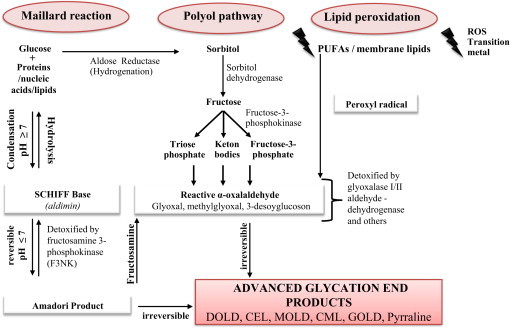
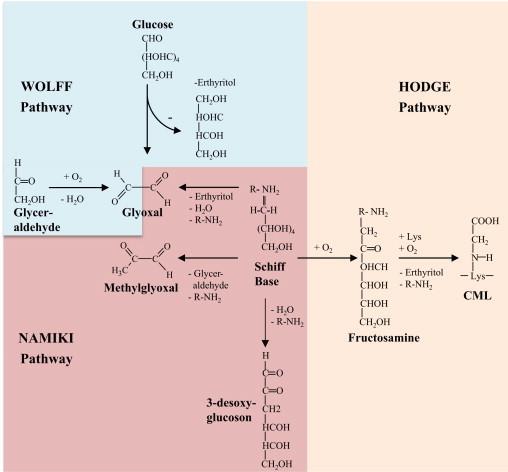
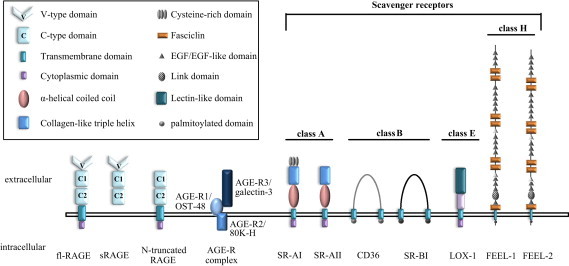
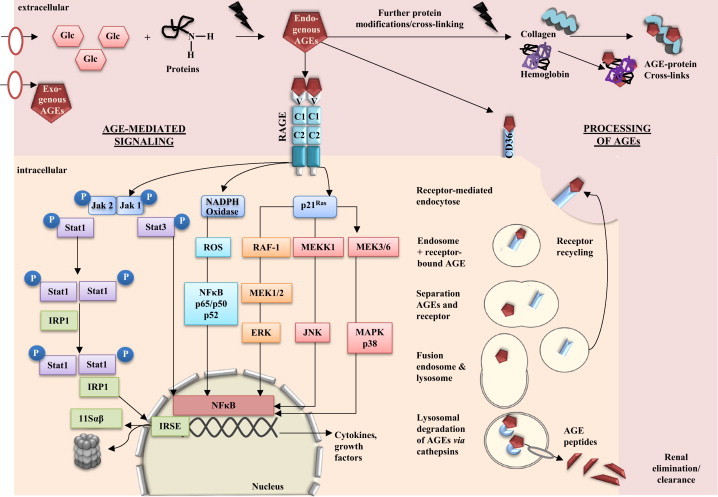
Improvements in health care and lifestyle have led to an elevated lifespan and increased focus on age-associated diseases, such as neurodegeneration, cardiovascular disease, frailty and arteriosclerosis. In all these chronic diseases protein, lipid or nucleic acid modifications are involved, including cross-linked and non-degradable aggregates, such as advanced glycation end products (AGEs). Formation of endogenous or uptake of dietary AGEs can lead to further protein modifications and activation of several inflammatory signaling pathways. This review will give an overview of the most prominent AGE-mediated signaling cascades, AGE receptor interactions, prevention of AGE formation and the impact of AGEs during pathophysiological processes.
Overview
The claims and statistics of this paper haven’t been checked yet.
Run the check — free, no account needed. It reads the open-access text and checks the sources it cites.
Integrity signals
Registry
Cites
Statistics
Figures
Verification
Claims the paper makes
The claims and statistics of this paper haven’t been checked yet.
Run the check — free, no account needed. It reads the open-access text and checks the sources it cites.
Claims other papers make about this one
Each is checked against this paper’s own text: does it say what the citing paper says it does?
In the citing paper
“These AGE cell surface receptors include AGE-R1, AGE-R2, AGE-R3, and scavenger receptors such as macrophage scavenger receptors, scavenger receptor class B type I and II (SR-BI, SR-BII), and cluster of differentiation 36 (CD36).”
From Advanced glycation end products (AGEs) and other adducts in aging-related diseases and alcohol-mediated tissue injury (2021) · cites this paper as [46]
In the citing paper
“The interaction of AGEs with these receptors can enhance their catabolism and clearance by modulating endocytosis and degradation45,46, suggesting a potentially adaptive defensive mechanism in the body to reduce the detrimental effects of increased glycation products.”
From Advanced glycation end products (AGEs) and other adducts in aging-related diseases and alcohol-mediated tissue injury (2021) · cites this paper as [46]
In the citing paper
“Notably, several conditions, including aging, diabetes, renal failure, tobacco smoking, and excessive alcohol consumption that induce AGE accumulation and AGE-RAGE interaction, are risk factors for increased bone fracture and osteoporosis46,85.”
From Advanced glycation end products (AGEs) and other adducts in aging-related diseases and alcohol-mediated tissue injury (2021) · cites this paper as [46]
In the citing paper
“In addition to lipid peroxide-related protein adducts, recent data suggest that sugar moiety-related protein adduct such as advanced glycation end products (AGEs) can be produced by high fat or excessive alcohol exposure or under pathological states such as diabetes, cardiovascular diseases and Alzheimer's disease, as recently reviewed [190], [191], [192], [193].”
Self-check
Percentages, sums and reported differences re-computed from the paper’s own numbers.
The self-check needs the paper’s full text.
Citations
Cites
Bundesgesundheitsblatt - Gesundheitsforschung - Gesundheitsschutz
(2013) · Bundesgesundheitsblatt - Gesundheitsforschung - Gesundheitsschutz · doi:10.1007/103.1437-1588 · Cited by 11,769
Pathways towards and Away from Alzheimer’s Disease
Mattson, M. P. (2004) · Nature · doi:10.1038/nature02621 · Cited by 3,052
Broken Limits to Life Expectancy
Oeppen, J., & Vaupel, J. W. (2002) · Science · doi:10.1126/science.1069675 · Cited by 2,819
Advanced glycation end-products: A review
Singh, R., Barden, A., Mori, T., & Beilin, L. (2001) · Diabetologia · doi:10.1007/s001250051591 · Cited by 2,597
Goldstein, J. L., Ho, Y. K., Basu, S. K., & Brown, M. S. (1979) · Proceedings of the National Academy of Sciences · doi:10.1073/pnas.76.1.333 · Cited by 2,447
Advanced Glycation End Products: Sparking the Development of Diabetic Vascular Injury
Goldin, A., Beckman, J. A., Schmidt, A. M., & Creager, M. A. (2006) · Circulation · doi:10.1161/circulationaha.106.621854 · Cited by 2,261
Identification of Scavenger Receptor SR-BI as a High Density Lipoprotein Receptor
Acton, S., Rigotti, A., Landschulz, K. T., Xu, S., Hobbs, H. H., & Krieger, M. (1996) · Science · doi:10.1126/science.271.5248.518 · Cited by 2,026
Understanding the odd science of aging
Kirkwood, T. B. L. (2005) · Cell · doi:10.1016/j.cell.2005.01.027 · Cited by 1,984
RAGE Mediates a Novel Proinflammatory Axis
Hofmann, M. A., Drury, S., Fu, C., Qu, W., Taguchi, A., Lu, Y., Avila, C., Kambham, N., Bierhaus, A., Nawroth, P., et al. (1999) · Cell · doi:10.1016/s0092-8674(00)80801-6 · Cited by 1,864
Steinbrecher, U. P., Parthasarathy, S., Leake, D. S., Witztum, J. L., & Steinberg, D. I. (1984) · Proceedings of the National Academy of Sciences · doi:10.1073/pnas.81.12.3883 · Cited by 1,626
Cited by
Sorted by citations
Items 601–700 of 1,000
Chen, N., Fu, Y., Wang, Z., & Zhao, X. (2022) · Nutrients · doi:10.3390/nu14235067 · Cited by 14
Kim, Y. (2023) · Nutrients · doi:10.3390/nu15082002 · Cited by 16
Kingsbury, K. D., Skeie, J. M., Cosert, K. M., Schmidt, G. A., Aldrich, B. T., Sáles, C. S., Weller, J. M., Kruse, F. E., Thomasy, S. M., Schlötzer-Schrehardt, U. M., et al. (2023) · Investigative Ophthalmology & Visual Science · doi:10.1167/iovs.64.7.26 · Cited by 14
Erdemli, Z., Gül, M., Kayhan, E., Göktürk, N., Bag, H. G., & Erdemli, M. E. (2024) · Prostaglandins & Other Lipid Mediators · doi:10.1016/j.prostaglandins.2024.106822 · Cited by 14
Chen, C., Liu, X., Li, L., Guo, M., He, Y., Dong, Y., Meng, H., & Yi, F. (2024) · Scientific Reports · doi:10.1038/s41598-024-55525-4 · Cited by 15
Tanaka, M., Morifuji, T., Yoshikawa, M., Nakanishi, R., & Fujino, H. (2018) · Journal of Diabetes · doi:10.1111/1753-0407.12857 · Cited by 16
Tziastoudi, M., Stefanidis, I., STRAVODIMOS, K. G., & Zintzaras, E. (2019) · Genetic Testing and Molecular Biomarkers · doi:10.1089/gtmb.2018.0209 · Cited by 14
Iron and Advanced Glycation End Products: Emerging Role of Iron in Androgen Deficiency in Obesity
Chen, S., Yuan, K.-C., Lee, Y., Shih, C., Tseng, S., Tinkov, A. A., Skalny, A. V., & Chang, J. (2020) · Antioxidants · doi:10.3390/antiox9030261 · Cited by 14
Role of Glycation in Type 2 Diabetes Mellitus and Its Prevention through Nymphaea Species
Ishrat, N., Khan, H., Patel, O. P., Mahdi, A. A., Mujeeb, F., & Ahmad, S. (2021) · BioMed Research International · doi:10.1155/2021/7240046 · Cited by 17
Bone matrix quality in a developing high-fat diet mouse model is altered by RAGE deletion
Stephen, S. J., Bailey, S., D'Erminio, D. N., Krishnamoorthy, D., Iatridis, J. C., & Vashishth, D. (2022) · Bone · doi:10.1016/j.bone.2022.116470 · Cited by 14
Lipofuscin-Mediated Photic Stress Induces a Dark Toxic Effect on ARPE-19 Cells
Feldman, T. B., Ostrovskiy, D. S., Yakovleva, M. A., Dontsov, A. E., Анатольевич, Б. С., & Оstrovsky, М. А. (2022) · International Journal of Molecular Sciences · doi:10.3390/ijms232012234 · Cited by 14
AGE-breaker ALT711 reverses glycation-mediated cancer cell migration
Rowe, M. M., Wang, W., Taufalele, P., & Reinhart‐King, C. A. (2022) · Soft Matter · doi:10.1039/d2sm00004k · Cited by 14
Signal and regulatory effects of methylglyoxal in eukaryotic cells (review)
Kosmachevskaya, O. V., Шумаев, К. Б., & Topunov, A. F. (2017) · Applied Biochemistry and Microbiology · doi:10.1134/s0003683817030103 · Cited by 10
Chotimah, C., Ciptadi, G., Setiawan, B., & Fatchiyah, F. (2015) · Asian Pacific Journal of Tropical Disease · doi:10.1016/s2222-1808(14)60657-5 · Cited by 13
Fingertip advanced glycation end products and psychotic symptoms among adolescents
Miyashita, M., Yamasaki, S., Ando, S., Suzuki, K., Toriumi, K., Horiuchi, Y., Yoshikawa, A., Imai, A., Nagase, Y., Miyano, Y., et al. (2021) · Schizophrenia · doi:10.1038/s41537-021-00167-y · Cited by 13
Huang, Y., Liu, M., Liu, C., Dong, N., & Chen, L. (2022) · Frontiers in Pharmacology · doi:10.3389/fphar.2022.871748 · Cited by 13
Advanced Glycation End Products and Bone Metabolism in Patients with Chronic Kidney Disease
Quadros, K. R. D. S., Roza, N. A. V., França, R. A., Esteves, A. B. A., Barreto, J., Dominguez, W. V., Furukawa, L. N. S., Caramori, J. C. T., Sposito, A. C., & de Oliveira, R. B. (2023) · JBMR Plus · doi:10.1002/jbm4.10727 · Cited by 13
Cyclophilin A is a ligand for RAGE in thrombo-inflammation
Seizer, P., von Ungern‐Sternberg, S. N. I., Haug, V., Dicenta, V., Rosa, A., Butt, E., Nöthel, M., Rohlfing, A., Sigle, M., Nawroth, P. P., et al. (2024) · Cardiovascular Research · doi:10.1093/cvr/cvad189 · Cited by 13
Abdisa, K. B., Szerdahelyi, E., Molnár, M. A., Friedrich, L., Lakner, Z., Koris, A. K., Tóth, A., & Nath, A. (2024) · Biomolecules · doi:10.3390/biom14040478 · Cited by 17
Effects of protein glycation and protective mechanisms against glycative stress
Najjar, J. A., & Calvert, J. W. (2024) · Current Opinion in Pharmacology · doi:10.1016/j.coph.2024.102464 · Cited by 13
The relationship of redox signaling with the risk for atherosclerosis
Lei, S., Liu, C., Zheng, T., Fu, W., & Huang, M.-Z. (2024) · Frontiers in Pharmacology · doi:10.3389/fphar.2024.1430293 · Cited by 14
Lin, H., Xu, Y., Xiong, H., Wang, L., Shi, Y., Wang, D., Wang, Z., Ren, J., & Wang, Z. (2024) · Journal of Ethnopharmacology · doi:10.1016/j.jep.2024.118907 · Cited by 13
Burman, M. D., Bag, S., Ghosal, S., & Bhowmik, S. (2025) · ACS Pharmacology & Translational Science · doi:10.1021/acsptsci.4c00684 · Cited by 14
Watanabe, M., Toyomura, T., Tomiyama, M., Wake, H., Liu, K., Teshigawara, K., Takahashi, H. K., Nishibori, M., & Mori, S. (2020) · Molecular Biology Reports · doi:10.1007/s11033-020-05783-y · Cited by 13
Yulianti, E., Sunarti, S., & Wahyuningsih, M. S. H. (2021) · Heliyon · doi:10.1016/j.heliyon.2021.e05978 · Cited by 16
Hsia, S., Lee, W., Yen, G., & Wu, C. (2016) · Journal of Functional Foods · doi:10.1016/j.jff.2015.11.043 · Cited by 13
Metabolic pathways in the periphery and brain: Contribution to mental disorders?
Nagalski, A., Koziński, K., & Wisniewska, M. B. (2016) · The International Journal of Biochemistry & Cell Biology · doi:10.1016/j.biocel.2016.09.012 · Cited by 14
Furukawa, K., Fuse, I., Iwakura, Y., Sotoyama, H., Hanyu, O., Nawa, H., Sone, H., & Takei, N. (2017) · Cardiovascular Diabetology · doi:10.1186/s12933-017-0505-y · Cited by 13
LeWinter, M. M., Taatjes, D. J., Ashikaga, T., Palmer, B. M., Bishop, N. M., VanBuren, P., Bell, S., Donaldson, C., Meyer, M., Margulies, K. B., et al. (2017) · Physiological Reports · doi:10.14814/phy2.13462 · Cited by 13
Nakata, Y., Kohchi, C., Ogawa, K., Nakamoto, T., Yoshimura, H., & Soma, G. (2017) · Food Science & Nutrition · doi:10.1002/fsn3.547 · Cited by 13
Yang, G.-M., Huang, Y., Wu, X., Lin, X., Xu, J., Chen, X., Bai, X., & Li, Q. (2018) · BioMed Research International · doi:10.1155/2018/8216578 · Cited by 13
New compounds of Siolmatra brasiliensis and inhibition of in vitro protein glycation damage
dos Santos, C. H. C., Talpo, T. C., Motta, B. P., Kaga, A. K., Baviera, A. M., Castro, R. N., da Silva, V. C., Júnior, P. T. D. S., Wessjohann, L. A., & de Carvalho, M. G. (2018) · Fitoterapia · doi:10.1016/j.fitote.2018.12.023 · Cited by 13
Zhang, X., Xu, L., Chen, W., Yu, X., Shen, L., & Huang, Y. (2020) · Molecular Pain · doi:10.1177/1744806920917251 · Cited by 13
Xu, S., Zhou, X., Zhu, C.-J., Qin, W. D., Zhu, J., Zhang, K., Li, H.-J., Lü, X., Lian, K., Li, C., et al. (2020) · Frontiers in Pharmacology · doi:10.3389/fphar.2020.00626 · Cited by 13
Antioxidant and Antiglycation Properties of Seventeen Fruit Teas Obtained from One Manufacturer
Zieniewska, I., Zalewska, A., Żendzian‐Piotrowska, M., Ładny, J. R., & Maciejczyk, M. (2020) · Applied Sciences · doi:10.3390/app10155195 · Cited by 13
Ohira, H., Tsuruya, A., Oikawa, D., Nakagawa, W., Mamoto, R., Hattori, M., Waki, T., Takahashi, S., Fujioka, Y., & Nakayama, T. (2021) · PLoS ONE · doi:10.1371/journal.pone.0246580 · Cited by 13
Nonenzymatic glycosylation of isolated human immunoglobulin‐G by D‐ribose
Ahmad, S., Alshaghdali, K., Rehman, S., Khan, M. Y., Rafi, Z., Faisal, M., Alatar, A. A., Tahir, I. K., Khan, S. A., Ahmad, S., et al. (2022) · Cell Biochemistry and Function · doi:10.1002/cbf.3722 · Cited by 13
Tapía, J., Vera, N., Aguilar, J., González, M., Sánchez, S. A., Coelho, P., Saavedra, C., & Staforelli, J. P. (2021) · Scientific Reports · doi:10.1038/s41598-021-82018-5 · Cited by 12
Panasenko, O. M., Ivanov, V. A., Mikhalchik, E. V., Gorudko, I. V., Grigorieva, D. V., Basyreva, L. Y., Shmeleva, E. V., Гусев, С. А., Kostevich, V. A., Gorbunov, N., et al. (2022) · Antioxidants · doi:10.3390/antiox11112263 · Cited by 12
Epigenetic meets metabolism: novel vulnerabilities to fight cancer
Scumaci, D., & Zheng, Q. (2023) · Cell Communication and Signaling · doi:10.1186/s12964-023-01253-7 · Cited by 13
Zha, A., Yan, J., Li, J., Wang, J., Qi, M., Liao, P., Chun, G., & Yin, Y. (2023) · Journal of the Science of Food and Agriculture · doi:10.1002/jsfa.13114 · Cited by 12
Tissue-resident macrophages exacerbate lung injury after remote sterile damage
Zhong, H., Ji, J., Zhuang, J., Xiong, Z., Xie, P., Liu, X., Zheng, J., Tian, W., Hong, X., & Tang, J. Y. (2024) · Cellular and Molecular Immunology · doi:10.1038/s41423-024-01125-1 · Cited by 11
Vitamin B6 and diabetes and its role in counteracting advanced glycation end products
Vernı̀, F. (2024) · Vitamins and hormones · doi:10.1016/bs.vh.2024.02.005 · Cited by 12
The Impact of HIV on Early Brain Aging—A Pathophysiological (Re)View
Lazăr, M., Moroti, R., Barbu, E. C., Chițu, C. E., Tilişcan, C., Erculescu, T. M., Rosca, R. R., Frasila, S., Schmilevschi, E. T., Simion, V., et al. (2024) · Journal of Clinical Medicine · doi:10.3390/jcm13237031 · Cited by 12
Traoré, K., Thera, M. A., Bienvenu, A., Arama, C., Bonnot, G., Lavoignat, A., Doumbo, O. K., & Picot, S. (2017) · PLoS ONE · doi:10.1371/journal.pone.0189724 · Cited by 12
Dietary Technologies to Optimize Healing from Injury-Induced Inflammation
Sears, B., Perry, M., & Saha, A. K. (2020) · Anti-Inflammatory & Anti-Allergy Agents in Medicinal Chemistry · doi:10.2174/1871523019666200512114210 · Cited by 13
Hyperglycaemia and the risk of post-surgical adhesion
Ferns, G. A., Hassanian, S. M., & Arjmand, M. (2020) · Archives of Physiology and Biochemistry · doi:10.1080/13813455.2020.1776330 · Cited by 13
Gürbüz, N., Gurkan, R., Caylan, A. E., Usta, S. S., & Usta, M. F. (2021) · International Journal of Impotence Research · doi:10.1038/s41443-021-00417-8 · Cited by 12
Dong, W., Zhao, Y., Hao, Y., Sun, G., Huo, J., & Wang, W. (2021) · Journal of Ethnopharmacology · doi:10.1016/j.jep.2021.114756 · Cited by 12
Matsumoto, T., Taguchi, K., & Kobayashi, T. (2021) · Journal of Smooth Muscle Research · doi:10.1540/jsmr.57.94 · Cited by 13
Yu, G., Zhang, Q., Li, H., Wang, Y., Sheng, H., Shuifeng, Z., & Fu, L. (2022) · Molecular Nutrition & Food Research · doi:10.1002/mnfr.202200221 · Cited by 14
Protective effects of honokiol against methylglyoxal-induced osteoblast damage
Suh, K. S., Chon, S., & Choi, E. M. (2015) · Chemico-Biological Interactions · doi:10.1016/j.cbi.2015.12.015 · Cited by 12
Association of advanced glycation end products in Dupuytren disease
Takase, F., Mifune, Y., Inui, A., Ueda, Y., Kataoka, T., Kokubu, T., & Kuroda, R. (2018) · Journal of Orthopaedic Surgery and Research · doi:10.1186/s13018-018-0848-4 · Cited by 12
Murine models of vascular endothelial injury: Techniques and pathophysiology
Wu, Y., Su, S., Xie, Y., Shen, J., Zhu, W. P., & Xiang, M. (2018) · Thrombosis Research · doi:10.1016/j.thromres.2018.07.014 · Cited by 12
Identification of a novel advanced glycation end product derived from lactaldehyde
Fujimoto, S., Murakami, Y., Miyake, H., Hayase, F., & Watanabe, H. (2019) · Bioscience Biotechnology and Biochemistry · doi:10.1080/09168451.2019.1585745 · Cited by 12
Allen, M. R., Wallace, J. M., McNerney, E., Nyman, J. S., Avin, K. G., Chen, N. X., & Moe, S. M. (2020) · PLoS ONE · doi:10.1371/journal.pone.0230379 · Cited by 12
Mendes, N. P., Ribeiro, P. V. D. M., & Alfenas, R. D. C. G. (2021) · Nutrition Reviews · doi:10.1093/nutrit/nuab095 · Cited by 12
Du, Q., Qian, M., Liu, P., Zhang, L., Wang, Y., & Liu, D. (2017) · PubMed Central · doi:10.11909/j.issn.1671-5411.2017.07.003 · Cited by 12
Arginine Reduces Glycation in γ2 Subunit of AMPK and Pathologies in Alzheimer’s Disease Model Mice
Zhu, R., Lei, Y., Shi, F.-X., Tian, Q., & Zhou, X. (2022) · Cells · doi:10.3390/cells11213520 · Cited by 11
Furukawa, T., Kurosawa, T., Mifune, Y., Inui, A., Nishimoto, H., Ueda, Y., Kataoka, T., Yamaura, K., Mukohara, S., Yoshikawa, T., et al. (2023) · Current Issues in Molecular Biology · doi:10.3390/cimb45040225 · Cited by 11
Jabagi, H., Levine, D., Gharibeh, L., Camillo, C., Castillero, E., Ferrari, G. M., Takayama, H., & Grau, J. B. (2023) · Reviews in Cardiovascular Medicine · doi:10.31083/j.rcm2406178 · Cited by 11
Syed, N. A., Bhatti, A., & John, P. C. L. (2023) · Antioxidants · doi:10.3390/antiox12091663 · Cited by 11
Jiang, F., Yang, W., Cao, Y., Cao, X., Zhang, Y., Yao, L., & Cao, Q. (2024) · Alimentary Pharmacology & Therapeutics · doi:10.1111/apt.18218 · Cited by 11
Fatima, N., Khan, M., Jawed, H. A., Qureshi, U., Ul‐Haq, Z., Hafizur, R. M., Shah, T. A., Dauelbait, M., Jardan, Y. A. B., & Shazly, G. A. (2024) · BMC Pharmacology and Toxicology · doi:10.1186/s40360-024-00811-0 · Cited by 11
Liu, C., Zhang, H., Guan, R., Zou, Y., Chen, M., Du, M., Luo, W., & Zhang, J. (2025) · International Journal of Molecular Sciences · doi:10.3390/ijms26188782 · Cited by 11
Drinda, S., Franke, S., Schmidt, S., Stoy, K., Lehmann, T., Wolf, G., & Neumann, T. E. (2017) · Complementary Medicine Research · doi:10.1159/000486237 · Cited by 11
Advanced Glycation End Products and Oxidative Stress in a Hyperglycaemic Environment
Nakamura, A., & Kawaharada, R. (2021) · IntechOpen eBooks · doi:10.5772/intechopen.97234 · Cited by 13
The role of advanced glycation end products in patogenesis of diabetic nephropathy
Gavrilova, A. O., Severina, A. S., Shamhalova, M., & Shestakova, M. V. (2022) · Diabetes Mellitus · doi:10.14341/dm12784 · Cited by 11
Advanced glycation end-products and advanced oxidation protein products in schizophrenia
Pandolfo, G., Genovese, G., Bruno, A., Campolo, D., Tigano, V., Cristani, M., Casciaro, M., Pioggia, G., & Gangemi, S. (2022) · Psychiatry Research · doi:10.1016/j.psychres.2022.114527 · Cited by 11
Choi, J.-H., Song, I., Lee, S., You, M., & Kwon, J. (2022) · Medicina · doi:10.3390/medicina58111519 · Cited by 11
Glycation of the high affinity NGF-receptor and RAGE leads to reduced ligand affinity
Bennmann, D., Kannicht, C., Fisseau, C., Jacobs, K., Navarette-Santos, A., Hofmann, B., & Horstkorte, R. (2015) · Mechanisms of Ageing and Development · doi:10.1016/j.mad.2015.07.003 · Cited by 11
Do advanced glycation end-products play a role in malaria susceptibility?
Traoré, K., Arama, C., Médebielle, M., Doumbo, O. K., & Picot, S. (2016) · Parasite · doi:10.1051/parasite/2016015 · Cited by 11
Barandalla, M., Haucke, E., Fischer, B., Santos, A. N., Colleoni, S., Galli, C., Santos, A. N., & Lazzari, G. (2017) · Oxidative Medicine and Cellular Longevity · doi:10.1155/2017/4240136 · Cited by 11
In Vitro Inhibitory Activity of Acca sellowiana Fruit Extract on End Products of Advanced Glycation
Muñiz-Ramírez, A., Garcia-Campoy, A. H., Pérez, R., García, E., & González‐Juárez, D. E. (2017) · Diabetes Therapy · doi:10.1007/s13300-017-0335-7 · Cited by 11
Dutkowska, A., Konieczna, A., Breska-Kruszewska, J., Krzyczkowska-Sendrakowska, M., Kowalska, I., & Rachoń, D. (2019) · Endokrynologia Polska · doi:10.5603/ep.a2019.0006 · Cited by 14
Liu, Q., Hua, B., Su, W., Di, B., Yu, S., Gao, S., Liu, H., Zhao, X.-Q., Li, W., & Li, H. (2019) · Biomedicine & Pharmacotherapy · doi:10.1016/j.biopha.2019.109527 · Cited by 11
Zhou, X., Lin, N., Zhang, M., Wang, X., An, Y., Su, Q., Du, P., Li, B., & Chen, H. (2020) · BMC Endocrine Disorders · doi:10.1186/s12902-020-00647-9 · Cited by 11
AGEs promote calcification of HASMCs by mediating Pi3k/AKT-GSK3𝜷 signaling
Hou, Q.-C., Wang, J., Yuan, G., Wang, Y.-P., Xu, K., Zhang, L., Xu, X., Mao, W.-J., & Liu, Y. (2021) · Frontiers in Bioscience-Landmark · doi:10.52586/4929 · Cited by 11
Chen, Z., Bertin, R., Marin, R., Djeujo, F. M., & Froldi, G. (2021) · Natural Product Research · doi:10.1080/14786419.2021.1960520 · Cited by 11
Ravi, R., & Rajesh, B. S. (2021) · Biochimica et Biophysica Acta (BBA) - General Subjects · doi:10.1016/j.bbagen.2021.130043 · Cited by 11
Ahmad, S., Mittal, S., Gulia, R., Alam, K., Saha, T. K., Arif, Z., Nafees, K. A., Alshaghdali, K., & Ahmad, S. (2022) · Cell Biochemistry and Function · doi:10.1002/cbf.3708 · Cited by 11
Glycolaldehyde-derived advanced glycation end products suppress STING/TBK1/IRF3 signaling via CD36
Nishinaka, T., Hatipoğlu, Ö. F., Wake, H., Watanabe, M., Toyomura, T., Mori, S., Nishibori, M., & Takahashi, H. K. (2022) · Life Sciences · doi:10.1016/j.lfs.2022.121116 · Cited by 11
Ghelani, H., Razmovski‐Naumovski, V., Pragada, R. R., & Nammi, S. (2018) · BMC Complementary and Alternative Medicine · doi:10.1186/s12906-017-2076-6 · Cited by 13
Nass, N., Bayreuther, K., & Simm, A. (2017) · Glycoconjugate Journal · doi:10.1007/s10719-017-9762-y · Cited by 10
Glucuronic acid is a novel source of pentosidine, associated with schizophrenia
Toriumi, K., Iino, K., Ozawa, A., Miyashita, M., Yamasaki, S., Suzuki, K., Sugawa, H., Tabata, K., Yamaguchi, S., Usami, S., et al. (2023) · Redox Biology · doi:10.1016/j.redox.2023.102876 · Cited by 11
Zhuang, S., Zhou, X., Yang, X., Chang, D., Chen, T., Sun, Y., Wang, C., Zhang, C., Jiang, J., Chen, Y., et al. (2023) · Heliyon · doi:10.1016/j.heliyon.2023.e22007 · Cited by 10
Aasmul‐Olsen, K., Akıllıoğlu, H. G., Christiansen, L. I., Engholm‐Keller, K., Brunse, A., Stefanova, D. V., Bjørnshave, A., Bechshøft, M. R., Skovgaard, K., Thymann, T., et al. (2024) · Molecular Nutrition & Food Research · doi:10.1002/mnfr.202300458 · Cited by 10
He, J., Qin, W., Jiang, S., Lin, Y., Lin, Y., Yang, R., Xu, M., & Liu, Q. (2024) · Drug Development Research · doi:10.1002/ddr.22219 · Cited by 10
Jahan, H., Tufail, P., Shamim, S., Khan, K. M., Gennari, M. M., Pizzi, M., & Choudhary, M. I. (2024) · International Immunopharmacology · doi:10.1016/j.intimp.2024.113145 · Cited by 10
A comparative study on the antioxidant and antiglycation properties of different vitamin D forms
Pawlukianiec, C., Lauko, K. K., Michalak, D., Żendzian‐Piotrowska, M., Zalewska, A., & Maciejczyk, M. (2025) · European Journal of Medicinal Chemistry · doi:10.1016/j.ejmech.2025.117263 · Cited by 11
Arcaro, A., Lepore, A., Cetrangolo, G. P., Paventi, G., Ames, P. R. J., & Gentile, F. (2025) · International Journal of Molecular Sciences · doi:10.3390/ijms26167787 · Cited by 14
Colzani, M., Criscuolo, A., Casali, G., Carini, M., & Aldini, G. (2015) · Free Radical Research · doi:10.3109/10715762.2015.1118472 · Cited by 10
Liu, Y., Chen, Z., Liu, L., Tang, H., Zhu, H., & Tang, S. (2021) · Cellular Signalling · doi:10.1016/j.cellsig.2021.110193 · Cited by 10
Laget, J., Duranton, F., Argilés, À., & Gayrard, N. (2022) · Molecular Aspects of Medicine · doi:10.1016/j.mam.2022.101082 · Cited by 11
Anwar, L., Ali, S. A., Khan, S. I., Uzairullah, M. M., Mustafa, N., Ali, U. A., Siddiqui, F., Bhatti, H. A., Rehmani, S. J., & Abbas, G. (2023) · Heliyon · doi:10.1016/j.heliyon.2023.e16866 · Cited by 10
Glyoxal in hyperglycaemic ischemic stroke – a cohort study
Rhein, S., Inderhees, J., Herrmann, O., Othman, A., Begemann, K., Fleming, T. H., Nawroth, P. P., Klika, K. D., Isa, R., König, I. R., et al. (2023) · Cardiovascular Diabetology · doi:10.1186/s12933-023-01892-7 · Cited by 10
Dietary and serum advanced glycation end-products and clinical outcomes in breast cancer
Peterson, L. L., & Ligibel, J. A. (2023) · Biochimica et Biophysica Acta (BBA) - Reviews on Cancer · doi:10.1016/j.bbcan.2023.188995 · Cited by 10
Chen, L., Wang, Q., Lv, Y., Xu, W., Jiang, G., Li, Y., Luo, P., He, R., & Liu, L. (2023) · Diabetes/Metabolism Research and Reviews · doi:10.1002/dmrr.3735 · Cited by 11
Taday, J., Fróes, F. T., Seady, M., Gonçalves, C., & Leite, M. C. (2024) · Metabolites · doi:10.3390/metabo14030151 · Cited by 11
Hormetic modulation of hepatic insulin sensitivity by advanced glycation end products
Fabre, N., Thieme, K., da Silva, K. S., Catanozi, S., Cavaleiro, A. M., Júnior, D. A. C. P., Okamoto, M. M., Morais, M., Falquetto, B., Zorn, T. M. T., et al. (2017) · Molecular and Cellular Endocrinology · doi:10.1016/j.mce.2017.02.035 · Cited by 10
Metadata
- Authors
- Ott, C., Jacobs, K., Haucke, E., Navarrete Santos, A., Grune, T., & Simm, A.
- Affiliations
- Friedrich Schiller University Jena (DE)
- University Hospital in Halle (DE)
- Martin Luther University Halle-Wittenberg (DE)
- Corresponding author
- Simm, Andreas
- Venue
- Redox Biology
- Publisher
- Elsevier BV
- Published
- 2014
- Volume
- 2
- Pages
- 411-429
- ISSN
- 2213-2317 (ISSN-L)
- PMC
- PMC3949097
- OpenAlex
- W2086327676
- Cited by
- 1,150
- References
- 233
- Citations by year
- 2026: 62 · 2025: 82 · 2024: 105 · 2023: 121 · 2022: 108 · 2021: 131 · 2020: 107 · 2019: 106 · 2018: 86 · 2017: 94 · 2016: 70 · 2015: 52 · 2014: 21
- FWCI
- 10.15
- Type
- journal article
- Language
- en
- Open access
- gold
- doi.org
- Licence
- Locations
- Redox Biology (publishedVersion, cc-by-nc-sa)
- Europe PMC (PubMed Central) (publishedVersion)
- PubMed Central (publishedVersion, cc-by-nc-sa)
- PubMed (publishedVersion)
- DOAJ (DOAJ: Directory of Open Access Journals) (submittedVersion)
- Topics
- Life Sciences › Biochemistry, Genetics and Molecular Biology › Clinical Biochemistry › Advanced Glycation End Products research
- Life Sciences › Agricultural and Biological Sciences › Food Science › Potato Plant Research
- Life Sciences › Biochemistry, Genetics and Molecular Biology › Aging › Genetics, Aging, and Longevity in Model Organisms
- Keywords
- advanced glycation end products, AGE receptor, signal transduction, protein modification, inflammatory signaling, age-related diseases, neurodegeneration, cardiovascular disease, arteriosclerosis, frailty, dietary AGEs
- MeSH terms
- Receptor for Advanced Glycation End Products, Aging, Animals, Bone and Bones, Dietary Proteins, Humans, Hyperglycemia, Immune System, Inflammation, Lung, Models, Biological, Neurons, Polymers, Receptors, Immunologic, Lipid Peroxidation, Signal Transduction, Maillard Reaction, NF-kappa B, Glycation End Products, Advanced, Reactive Oxygen Species, Oxidative Stress, Protein Transport, Reactive Nitrogen Species, Receptors, Scavenger, Protein Aggregates
About these checks
Registry, retraction, Cites and statistics results are computed, not judged, with one exception: a printed reference that no index lists is read once by a model before it counts as a citation error. Claims are extracted by a model and kept only when their quote appears verbatim in the text; each cited source is then checked, with a model’s help, for whether it says what the claim relies on. Those verdicts can be wrong — read the claim’s quote and the cited source before relying on one.
Statistics and arithmetic are recomputed, not judged.
Confidence bands are shown only for fields calibrated on our annotated test set. None is calibrated yet, so no band is shown.
What counts as a claim ›How we measure confidence ›How we check this ›
Are you an author, or do you see a problem with this page? Request a review
