

Restoration of reaching and grasping movements through brain-controlled muscle stimulation in a person with tetraplegia: a proof-of-concept demonstration
Open accessThe DOI matches its Crossref record; 31 of the 32 references it cites were found in a registry or an index.
Abstract
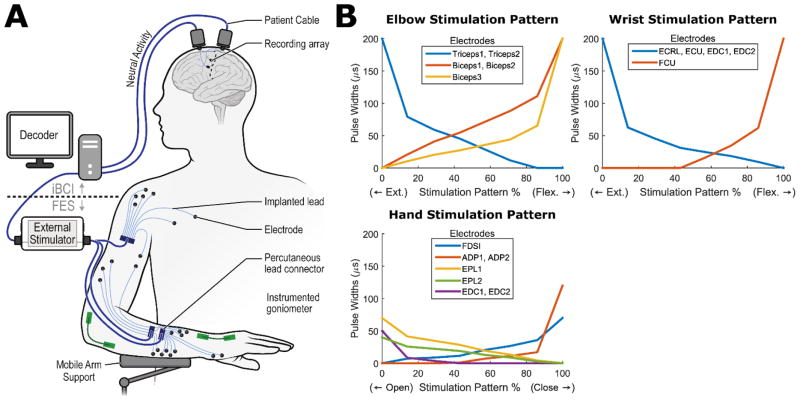
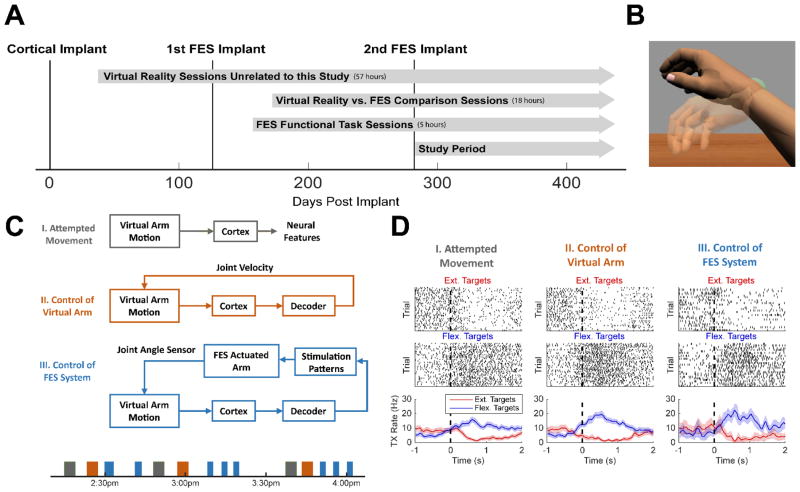
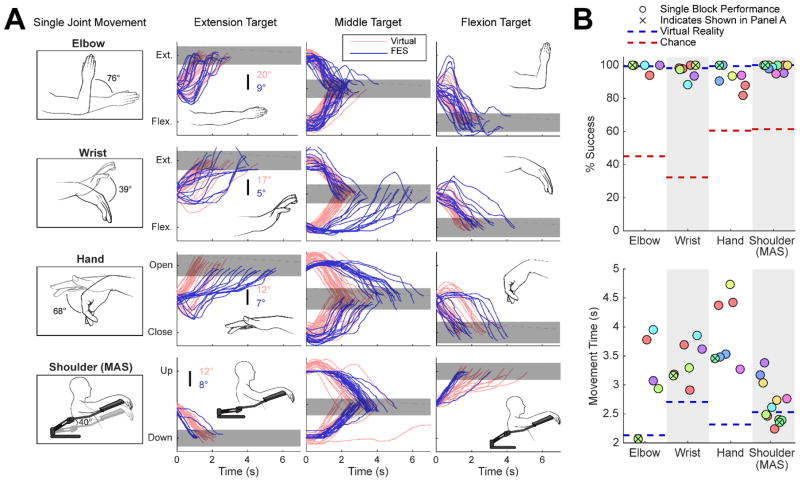
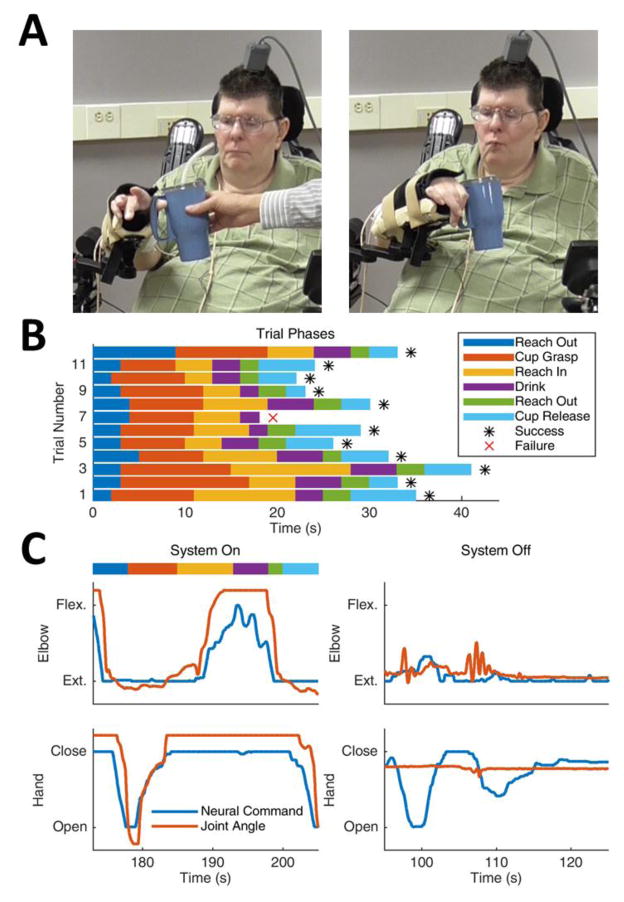
Background People with chronic tetraplegia, due to high-cervical spinal cord injury, can regain limb movements through coordinated electrical stimulation of peripheral muscles and nerves, known as functional electrical stimulation (FES). Users typically command FES systems through other preserved, but unrelated and limited in number, volitional movements (eg, facial muscle activity, head movements, shoulder shrugs). We report the findings of an individual with traumatic high-cervical spinal cord injury who coordinated reaching and grasping movements using his own paralysed arm and hand, reanimated through implanted FES, and commanded using his own cortical signals through an intracortical brain-computer interface (iBCI).Methods We recruited a participant into the BrainGate2 clinical trial, an ongoing study that obtains safety information regarding an intracortical neural interface device, and investigates the feasibility of people with tetraplegia controlling assistive devices using their cortical signals. Surgical procedures were performed at University Hospitals Cleveland Medical Center (Cleveland, OH, USA). Study procedures and data analyses were performed at Case Western Reserve University (Cleveland, OH, USA) and the US Department of Veterans Affairs, Louis Stokes Cleveland Veterans Affairs Medical Center (Cleveland, OH, USA). The study participant was a 53-year-old man with a spinal cord injury (cervical level 4, American Spinal Injury Association Impairment Scale category A). He received two intracortical microelectrode arrays in the hand area of his motor cortex, and 4 months and 9 months later received a total of 36 implanted percutaneous electrodes in his right upper and lower arm to electrically stimulate his hand, elbow, and shoulder muscles. The participant used a motorised mobile arm support for gravitational assistance and to provide humeral abduction and adduction under cortical control. We assessed the participant's ability to cortically command his paralysed arm to perform simple single-joint arm and hand movements and functionally meaningful multi-joint movements. We compared iBCI control of his paralysed arm with that of a virtual three-dimensional arm. This study is registered with ClinicalTrials.gov, number NCT00912041.Findings The intracortical implant occurred on Dec 1, 2014, and we are continuing to study the participant. The last session included in this report was Nov 7, 2016. The point-to-point target acquisition sessions began on Oct 8, 2015 (311 days after implant). The participant successfully cortically commanded single-joint and coordinated multi-joint arm movements for point-to-point target acquisitions (80-100% accuracy), using first a virtual arm and second his own arm animated by FES. Using his paralysed arm, the participant volitionally performed self-paced reaches to drink a mug of coffee (successfully completing 11 of 12 attempts within a single session 463 days after implant) and feed himself (717 days after implant).Interpretation To our knowledge, this is the first report of a combined implanted FES+iBCI neuroprosthesis for restoring both reaching and grasping movements to people with chronic tetraplegia due to spinal cord injury, and represents a major advance, with a clear translational path, for clinically viable neuroprostheses for restoration of reaching and grasping after paralysis.Funding National Institutes of Health, Department of Veterans Affairs.
Overview
The claims and statistics of this paper haven’t been checked yet.
Free: it reads the open-access text and checks the first 5 claims that cite a source we can check. Create a free account to check every claim.
Integrity signals
Registry
Cites
Statistics
Figures
Verification
Claims the paper makes
The claims and statistics of this paper haven’t been checked yet.
Free: it reads the open-access text and checks the first 5 claims that cite a source we can check. Create a free account to check every claim.
Claims other papers make about this one
Each is checked against this paper’s own text: does it say what the citing paper says it does?
The source backs part of the claim, not all of it — or backs it for a different population, condition or comparison.
In the citing paper
“and has enabled the highest BCI performance to date compared to other recording technologies (EEG, ECoG) for restoring communication7, arm control2,5, and general-purpose computer use39.”
From High-performance brain-to-text communication via handwriting (2021) · cites this paper as [5]
Experimental — accuracy not yet measuredThe cited source says what the claim attributes to it.
In the citing paper
“Prior BCI studies have shown that the motor intention for gross motor skills, such as reaching, grasping or moving a computer cursor, remains neurally encoded in motor cortex after paralysis1–7.”
From High-performance brain-to-text communication via handwriting (2021) · cites this paper as [5]
Self-check
Percentages, sums and reported differences re-computed from the paper’s own numbers.
The self-check needs the paper’s full text.
Citations
Cites
Isolated Hand Paresis: A Case Series
Alstadhaug, K. B., & Sjulstad, A. (2013) · Cerebrovascular Diseases Extra · doi:10.1159/000350708 · Cited by 4,058
Neuronal ensemble control of prosthetic devices by a human with tetraplegia
Hochberg, L. R., Serruya, M. D., Friehs, G. M., Mukand, J. A., Saleh, M., Caplan, A. H., Branner, A., Chen, D., Penn, R. D., & Donoghue, J. P. (2006) · Nature · doi:10.1038/nature04970 · Cited by 3,295
Self-citationReach and grasp by people with tetraplegia using a neurally controlled robotic arm
Hochberg, L. R., Bacher, D., Jarosiewicz, B., Masse, N. Y., Simeral, J. D., Vogel, J., Haddadin, S., Liu, J., Cash, S. S., van der Smagt, P., et al. (2012) · Nature · doi:10.1038/nature11076 · Cited by 2,719
Self-citationHigh-performance neuroprosthetic control by an individual with tetraplegia
Collinger, J. L., Wodlinger, B., Downey, J. E., Wang, W., Tyler-Kabara, E. C., Weber, D. J., McMorland, A. J., Velliste, M., Boninger, M. L., & Schwartz, A. B. (2013) · The Lancet · doi:10.1016/s0140-6736(12)61816-9 · Cited by 1,848
Localization of the motor hand area to a knob on the precentral gyrus. A new landmark
Yousry, T. (1997) · Brain · doi:10.1093/brain/120.1.141 · Cited by 1,837
Cortical control of a prosthetic arm for self-feeding
Velliste, M., Perel, S., Spalding, M. C., Whitford, A. S., & Schwartz, A. B. (2008) · Nature · doi:10.1038/nature06996 · Cited by 1,591
Direct Cortical Control of 3D Neuroprosthetic Devices
Taylor, D. M., Tillery, S. I. H., & Schwartz, A. B. (2002) · Science · doi:10.1126/science.1070291 · Cited by 1,540
Instant neural control of a movement signal
Serruya, M. D., Hatsopoulos, N. G., Paninski, L., Fellows, M. R., & Donoghue, J. P. (2002) · Nature · doi:10.1038/416141a · Cited by 1,409
Self-citationRestoring cortical control of functional movement in a human with quadriplegia
Bouton, C. E., Shaikhouni, A., Annetta, N. V., Bockbrader, M. A., Friedenberg, D. A., Nielson, D. M., Sharma, G., Sederberg, P. B., Glenn, B. C., Mysiw, W. J., et al. (2016) · Nature · doi:10.1038/nature17435 · Cited by 924
Intracortical microstimulation of human somatosensory cortex
Flesher, S. N., Collinger, J. L., Foldes, S. T., Weiss, J. M., Downey, J. E., Tyler-Kabara, E. C., Bensmaia, S. J., Schwartz, A. B., Boninger, M. L., & Gaunt, R. A. (2016) · Science Translational Medicine · doi:10.1126/scitranslmed.aaf8083 · Cited by 704
Cited by
Items 401–500 of 896
Capadona, J. R. (2018) · Journal of Immunological Sciences · doi:10.29245/2578-3009/2018/4.1157 · Cited by 12
Brain–Computer Interfaces for Spinal Cord Injury Rehabilitation
Merante, A., Zhang, Y., Kumar, S., & Nam, C. S. (2020) · Cognitive science and technology · doi:10.1007/978-3-030-34784-0_16 · Cited by 13
Bouton, C. E. (2019) · Cold Spring Harbor Perspectives in Medicine · doi:10.1101/cshperspect.a034306 · Cited by 12
“Another group of researchers showed later that a BCI, with assistance from a motorized arm, could allow volitional movement in a C4 participant (Ajiboye et al. 2017).”
BackgroundLam, D., Javadekar, A., Patil, N. T., Yu, M. H., Li, L., Menendez, D. M., Gupta, A. S., Capadona, J. R., & Shoffstall, A. J. (2022) · SSRN Electronic Journal · doi:10.1016/j.actbio.2023.05.004 · Cited by 12
Combining FES and Exoskeletons in a Hybrid Haptic System for Enhancing VR Experience
de Mongeot, L. B., Galofaro, E., Ramadan, F., D’Antonio, E., Missiroli, F., Lotti, N., Casadio, M., & Masia, L. (2023) · IEEE Transactions on Neural Systems and Rehabilitation Engineering · doi:10.1109/tnsre.2023.3334190 · Cited by 11
Motor somatotopy impacts imagery strategy success in human intracortical brain–computer interfaces
Kunigk, N. G., Schone, H. R., Gontier, C., Hockeimer, W., Tortolani, A. F., Hatsopoulos, N. G., Downey, J. E., Chase, S. M., Boninger, M. L., Dekleva, B. M., et al. (2025) · Journal of Neural Engineering · doi:10.1088/1741-2552/adb995 · Cited by 12
Advances in Neuromodulation and Digital Brain–Spinal Cord Interfaces for Spinal Cord Injury
Jaszczuk, P., Bratelj, D., Capone, C., Rudnick, M., Pötzel, T., Verma, R. K., & Fiechter, M. (2025) · International Journal of Molecular Sciences · doi:10.3390/ijms26136021 · Cited by 13
“Feedback from SCI communities, both automated and voluntary, is critical to align technological advancements with real-world needs, prioritizing quality of life and independence [39].”
Rehabilitasyon Hizmetlerinde Yapay Zekâ Uygulamaları
AKALIN, B., & DEMİRBAŞ, M. B. (2022) · Acta Infologica · doi:10.26650/acin.1068576 · Cited by 16
Pellot-Cestero, J. E., Herring, E. Z., Graczyk, E. L., Memberg, W. D., Kirsch, R. F., Ajiboye, A. B., & Miller, J. P. (2023) · Neurosurgery · doi:10.1227/neu.0000000000002561 · Cited by 12
Self-citationSawyer, A., Cooke, L., Ramsey, N. F., & Putrino, D. F. (2023) · Journal of NeuroInterventional Surgery · doi:10.1136/jnis-2023-020316 · Cited by 13
Spinal cord neural interfacing in common marmosets ( Callithrix jacchus )
Prins, N. W., Mylavarapu, R. V., Shoup, A. M., Debnath, S., & Prasad, A. (2020) · Journal of Neural Engineering · doi:10.1088/1741-2552/ab4104 · Cited by 11
“Neural prosthetics, when introduced into activities of a patient’s day-today life, can restore select movements either through the implementation of a robotic limb or using the individual’s own limbs through functional electrical stimulation (FES) [4–15].”
BackgroundCamarrone, F., Branco, M. P., Ramsey, N. F., & Hulle, M. M. V. (2020) · IEEE Transactions on Biomedical Engineering · doi:10.1109/tbme.2020.3037934 · Cited by 14
Crowder, D. C., Abreu, J., & Kirsch, R. F. (2021) · IEEE Transactions on Neural Systems and Rehabilitation Engineering · doi:10.1109/tnsre.2021.3135471 · Cited by 11
“When paired with an appropriate command source, such as a brain computer interface [1], and a controller to coordinate electrical stimulation [2]-[14], FES systems can help people with paralysis regain some independence and quality of life [15].”
BackgroundSelf-citationFattal, C., Teissier, J., Geffrier, A., da Fonseca, L. O., William, L., Andreu, D., Guiraud, D., & Coste, C. (2022) · Journal of Neurotrauma · doi:10.1089/neu.2021.0381 · Cited by 13
Nason, S. R., Mender, M. J., Kennedy, E., Lambrecht, J. M., Kilgore, K. L., Chiravuri, S., Kumar, N. G., Kung, T. A., Willsey, M. S., Chestek, C. A., et al. (2023) · Journal of Neural Engineering · doi:10.1088/1741-2552/accf36 · Cited by 13
“We have already demonstrated SBP’s efficacy on embedded and integrated systems [56–60], and others have used it in similar BMI and BCFES applications [33, 61, 62].”
BackgroundMethodInfluentialNeural Interfaces Based on Amorphous Silicon Carbide Ultramicroelectrode Arrays
Deku, F., Ghazavi, A., & Cogan, S. F. (2018) · Bioelectronics in Medicine · doi:10.2217/bem-2018-0006 · Cited by 11
High-frequency band temporal dynamics in response to a grasp force task
Branco, M. P., Geukes, S. H., Aarnoutse, E. J., Vansteensel, M. J., Freudenburg, Z. V., & Ramsey, N. F. (2019) · Journal of Neural Engineering · doi:10.1088/1741-2552/ab3189 · Cited by 11
“1741-2552/19/056009+14$33.00 M P Branco et al (2016), Ajiboye et al (2017), Branco et al (2017), Milekovic et al (2018); for a review see also Branco et al (2019)).”
BackgroundInfluentialA Nonlinear Maximum Correntropy Information Filter for High-Dimensional Neural Decoding
Liu, X., Chen, S., Shen, X., Zhang, X., & Wang, Y. (2021) · Entropy · doi:10.3390/e23060743 · Cited by 11
Fan, J., Li, X., Wang, P. L., Yang, F., Zhao, B., Yang, J., Zhao, Z., & Li, X. (2023) · Advanced Science · doi:10.1002/advs.202303377 · Cited by 12
A Wireless Bi-Directional Brain–Computer Interface Supporting Both Bluetooth and Wi-Fi Transmission
Ji, W., Su, H., Jin, S., Tian, Y., Li, G., Yang, Y., Li, J., Zhou, Z., Wei, X., Tao, T. H., et al. (2024) · Micromachines · doi:10.3390/mi15111283 · Cited by 10
Druschel, L. N., Song, S. S., Kasthuri, N. M., Wang, J., Conard, J. H., Chan, E. R., Hess‐Dunning, A., & Capadona, J. R. (2025) · Biomaterials · doi:10.1016/j.biomaterials.2025.123477 · Cited by 11
Verma, N., Oh, J., Bedoy, E. H., Chetty, N., Steele, A. G., Park, S. J., Guerrero, J. R., Faraji, A. H., Weber, D. J., & Sayenko, D. G. (2025) · Journal of Neurophysiology · doi:10.1152/jn.00422.2024 · Cited by 10
“The direct approach is to stimulate the muscles, a technique often described as functional electrical stimulation (FES), which, when combined with the signals from the motor cortex, allows paralyzed nonhuman primates and humans to regain voluntary control over their limbs (64–67).”
Brain Co-processors: Using AI to Restore and Augment Brain Function
Rao, R. P. N. (2021) · Handbook of Neuroengineering · doi:10.1007/978-981-15-2848-4_32-1 · Cited by 12
The impact of task context on predicting finger movements in a brain-machine interface
Mender, M. J., Nason, S. R., Temmar, H., Costello, J. T., Wallace, D. M., Willsey, M. S., Kumar, N. G., Kung, T. A., Patil, P. G., & Chestek, C. A. (2023) · eLife · doi:10.7554/elife.82598 · Cited by 11
Mirfathollahi, A., Ghodrati, M. T., Shalchyan, V., Zarrindast, M., & Daliri, M. R. (2023) · iScience · doi:10.1016/j.isci.2023.107808 · Cited by 10
Applications of Brain Computer Interface in Present Healthcare Setting
Alkaff, Z. A., Malim, N. H. A. H., Sumari, P., & Abdullah, J. M. (2024) · Artificial intelligence · doi:10.5772/intechopen.112353 · Cited by 19
Song, S. S., Druschel, L. N., Conard, J. H., Wang, J., Kasthuri, N. M., Chan, E. R., & Capadona, J. R. (2024) · Brain Behavior and Immunity · doi:10.1016/j.bbi.2024.03.004 · Cited by 10
“…applications are under consideration and development in this field (Obien, 2014; Hubel and Wiesel, 1959; Muller, 2015; Stett, 2003; Proix, 2019; Heelan, 2019; Ajiboye, 2017; Jar-osiewicz, 2015; Hochberg, 2006; Hochberg and Donoghue, 2006; Khorasani, 2016; Park, 2020; Schroeder and Chestek, 2016).”
Wolf, M., Rupp, R., & Schwarz, A. (2024) · Journal of Neural Engineering · doi:10.1088/1741-2552/ad331f · Cited by 13
Intracortical Brain–Machine Interfaces
Oby, E. R., Hennig, J. A., Batista, A. P., Yu, B. M., & Chase, S. M. (2020) · Springer eBooks · doi:10.1007/978-3-030-43395-6_5 · Cited by 11
A Roadmap Towards Standards for Neurally Controlled End Effectors
Paek, A. Y., Brantley, J. A., Ravindran, A. S., Nathan, K., He, Y., Eguren, D., Cruz-Garza, J. G., Nakagome, S., Wickramasuriya, D. S., Chang, J., et al. (2021) · IEEE Open Journal of Engineering in Medicine and Biology · doi:10.1109/ojemb.2021.3059161 · Cited by 10
Wang, S., Dong, S., Li, W., Cen, J., Zhu, H., Fu, C., Jin, H., Li, Y., Feng, X., Luo, J., et al. (2021) · Advanced Science · doi:10.1002/advs.202004987 · Cited by 10
Karlsson, P., Orlandi, S., Zhao, H., & McEwan, A. L. (2021) · Springer eBooks · doi:10.1007/978-981-16-5324-7_2 · Cited by 10
Tokutake, K., Takeuchi, M., Kurimoto, S., Saeki, S., Asami, Y., Onaka, K., Saeki, M., Aoyama, T., Hasegawa, Y., & Hirata, H. (2022) · International Journal of Molecular Sciences · doi:10.3390/ijms23158760 · Cited by 11
“developed a FES system with a brain– computer interface (BCI) to assist an affected person to regain reaching and grasping limb movements [17].”
BackgroundFaes, A., Camarrone, F., & Hulle, M. M. V. (2022) · IEEE Transactions on Neural Networks and Learning Systems · doi:10.1109/tnnls.2022.3216589 · Cited by 15
From unstable input to robust output
Wimalasena, L. N., Miller, L. E., & Pandarinath, C. (2020) · Nature Biomedical Engineering · doi:10.1038/s41551-020-0587-9 · Cited by 12
Javeed, S., Zhang, J. K., Greenberg, J. K., Botterbush, K. S., Benedict, B. C., Plog, B. A., Gupta, V. P., Dibble, C. F., Khalifeh, J. M., Wen, H., et al. (2023) · Journal of Neurotrauma · doi:10.1089/neu.2023.0140 · Cited by 9
Brain–computer interfaces as a causal probe for scientific inquiry
Motiwala, A., Soldado-Magraner, J., Batista, A. P., Smith, M. A., & Yu, B. M. (2025) · Trends in Cognitive Sciences · doi:10.1016/j.tics.2025.06.017 · Cited by 13
Neuroimplants and the Glial Scar: What Makes the Brain–Computer Link Work?
Paveliev, M., Melnikova, A., Egorchev, A. A., Parpura, V., & Aganov, A. V. (2025) · Journal of Neurochemistry · doi:10.1111/jnc.70203 · Cited by 11
Sun, Z., Hu, S., Zhu, J., Ye, Z., Ma, M., & Ma, G. (2025) · Journal of NeuroEngineering and Rehabilitation · doi:10.1186/s12984-025-01766-x · Cited by 12
3D‐Printable, Honeycomb‐Inspired Tissue‐Like Bioelectrodes for Patient‐Specific Neural Interface
Momin, M., Feng, L., Chen, X., Ahmed, S., AlMahmood, B., Huang, L., Ren, J., Wang, X., Lee, H., Cramer, S. R., et al. (2026) · Advanced Materials · doi:10.1002/adma.202516291 · Cited by 9
Johnston, R., Abbass, M., Corrigan, B. W., Gulli, R. A., Martínez-Trujillo, J., & Sachs, A. J. (2023) · Journal of Neural Engineering · doi:10.1088/1741-2552/acb5c2 · Cited by 9
Wolf, D. N., van den Bogert, A. J., & Schearer, E. M. (2023) · IEEE Transactions on Neural Systems and Rehabilitation Engineering · doi:10.1109/tnsre.2023.3272929 · Cited by 9
“[11] and BrainGate2 studies [12] which both compensated for these muscular actuation difficulties by using a robot.”
BackgroundIwama, S., & Ushiba, J. (2024) · IEEE Transactions on Neural Systems and Rehabilitation Engineering · doi:10.1109/tnsre.2024.3365197 · Cited by 10
Machine learning decoding of single neurons in the thalamus for speech brain-machine interfaces
Tankus, A., Rosenberg, N., Ben-Hamo, O., Stern, E., & Strauss, I. (2024) · Journal of Neural Engineering · doi:10.1088/1741-2552/ad4179 · Cited by 9
Song, S., Druschel, L. N., Kasthuri, N. M., Wang, J., Conard, J. H., Chan, E. R., Acharya, A. P., & Capadona, J. R. (2024) · Scientific Reports · doi:10.1038/s41598-024-68017-2 · Cited by 11
Implanted cortical neuroprosthetics for speech and movement restoration
Muirhead, W. R., Horsfall, H. L., Aicardi, C., Carolan, J., Akram, H., Vanhoestenberghe, A., Schaefer, A. T., & Marcus, H. J. (2024) · Journal of Neurology · doi:10.1007/s00415-024-12604-w · Cited by 10
Barra, B., Badi, M., Perich, M. G., Conti, S., Salehian, S. S. M., Moreillon, F., Bogaard, A. R., Wurth, S. M., Kaeser, M., Passeraub, P., et al. (2019) · Journal of Neural Engineering · doi:10.1088/1741-2552/ab4c77 · Cited by 11
“, 2002) and restore motor control (Ajiboye et al., 2017; Bouton et al., 2016; Ethier et al., 2012; Moritz et al., 2007).”
BackgroundDeep Learning Neural Encoders for Motor Cortex
Liang, K.-F., & Kao, J. C. (2019) · IEEE Transactions on Biomedical Engineering · doi:10.1109/tbme.2019.2955722 · Cited by 9
Dalrymple, A. N., & Mushahwar, V. K. (2020) · Journal of Medical Robotics Research · doi:10.1142/s2424905x20410032 · Cited by 9
Bridging the gap — biomimetic design of bioelectronic interfaces
Promiński, A., & Tian, B. (2021) · Current Opinion in Biotechnology · doi:10.1016/j.copbio.2021.10.005 · Cited by 11
Grier, A. J., Loeffler, B. J., & Gaston, R. G. (2021) · Hand Clinics · doi:10.1016/j.hcl.2021.04.007 · Cited by 9
A Wireless Somatosensory Feedback System Using Human Body Communication
Hao, H., Liu, H., der Spiegel, J. V., & Aflatouni, F. (2022) · IEEE Journal of Solid-State Circuits · doi:10.1109/jssc.2022.3143462 · Cited by 9
Goss-Varley, M., Shoffstall, A. J., Dona, K. R., McMahon, J. A., Lindner, S. C., Ereifej, E. S., & Capadona, J. R. (2018) · Journal of Visualized Experiments · doi:10.3791/57829 · Cited by 9
Simple Quasi-Static Control of Functional Electrical Stimulation-Driven Reaching Motions
Wolf, D. N., & Schearer, E. M. (2019) · International IEEE/EMBS Conference on Neural Engineering · doi:10.1109/ner.2019.8716955 · Cited by 9
Graudejus, O., Barton, C. D., Wong, R. D. P., Rowan, C. C., Oswalt, D. N., & Greger, B. E. (2020) · Journal of Neural Engineering · doi:10.1088/1741-2552/abb4a5 · Cited by 9
Philip, B. A., Valyear, K. F., Cirstea, C. M., Baune, N. A., Kaufman, C. L., & Frey, S. H. (2022) · Frontiers in Neuroimaging · doi:10.3389/fnimg.2022.919694 · Cited by 9
“, 2018), and the nature of these changes will define the limits of peripheralinput restoration technologies such as brain-computer interfaces (Ajiboye et al., 2017) and prostheses with sensory feedback (Li et al.”
Motor neuroprosthesis for injured spinal cord: who is an ideal candidate?
Alam, M., & Zheng, Y. (2017) · Neural Regeneration Research · doi:10.4103/1673-5374.219041 · Cited by 10
“Volitional control of paretic hands by using such cortical MNP has recently been demonstrated (Bouton et al., 2016; Ajiboye et al., 2017).”
BackgroundIkegaya, N., Mallela, A. N., Warnke, P. C., Kunigk, N. G., Liu, F., Schone, H. R., Verbaarschot, C., Hatsopoulos, N. G., Downey, J. E., Boninger, M. L., et al. (2024) · Journal of neurosurgery · doi:10.3171/2024.7.jns241296 · Cited by 10
Clinical practice of Brain–Machine interfaces in neurological disorders
Wang, K., Wei, P., Shan, Y., & Zhao, G. (2025) · EngMedicine · doi:10.1016/j.engmed.2025.100090 · Cited by 9
Gesture encoding in human left precentral gyrus neuronal ensembles
Vargas-Irwin, C. E., Hosman, T., Gusman, J. T., Pun, T. K., Simeral, J. D., Singer-Clark, T., Kapitonava, A., Nicolas, C., Shah, N. P., Avansino, D. T., et al. (2025) · Communications Biology · doi:10.1038/s42003-025-08557-z · Cited by 9
Self-citationWang, Z., Yi-min, D., Guo, D., Jiang, H., Li, Z., Wu, J., Yang, J., Li, H., Li, L., Fei, J., et al. (2025) · International Journal of Surgery · doi:10.1097/js9.0000000000004392 · Cited by 8
A neuroprosthesis for restoring hand movement and sensation in a person with complete tetraplegia
Chandrasekaran, S., Wandelt, S. K., Jangam, A., Elias, Z., Ibroçi, E., Maffei, C., Rosenthal, I. A., Ramdeo, R., Kim, J.-W., Xu, J., et al. (2026) · Nature Medicine · doi:10.1038/s41591-026-04498-0 · Cited by 8
Müller-Putz, G., Mondini, V., Martínez-Cagigal, V., Kobler, R. J., Pereira, J., Lopes-Dias, C., Hehenberger, L., & Sburlea, A. I. (2021) · International IEEE/EMBS Conference on Neural Engineering · doi:10.1109/ner49283.2021.9441346 · Cited by 10
FPGA implementation of a Spiking Neural Network for Real-Time Action Potential and Burst Detection
Cheslet, J., Beaubois, R., Rançon, U., Bailly, L., Bernert, M., Kohno, T., Yvert, B., & Levi, T. (2023) · IEEE Biomedical Circuits and Systems Conference (BioCAS) · doi:10.1109/biocas58349.2023.10388622 · Cited by 8
Non-invasive Cognitive-level Human Interfacing for the Robotic Restoration of Reaching & Grasping
Shafti, A., & Faisal, A. A. (2021) · International IEEE/EMBS Conference on Neural Engineering · doi:10.1109/ner49283.2021.9441453 · Cited by 9
Biomedical Microtechnologies Beyond Scholarly Impact
Vomero, M., & Schiavone, G. (2021) · Micromachines · doi:10.3390/mi12121471 · Cited by 8
“Notable examples of medical devices that have emerged in response to subsequent advances in microfabrication and biomaterials, and that have reached clinical experimentation stages, are the retinal prostheses developed in the 1980s [4,5], and the silicon micromachined, intracortical microelectrode arrays, named Utah a…”
BackgroundAtherton, E., Hu, Y., Brown, S., Papiez, E., Ling, V., Colvin, V. L., & Borton, D. A. (2022) · Journal of Neural Engineering · doi:10.1088/1741-2552/ac6908 · Cited by 8
On The Verge of the Hybrid Mind
Soekadar, S. R., Chandler, J. A., Ienca, M., & Bublitz, C. (2021) · Morals & Machines · doi:10.5771/2747-5174-2021-1-30 · Cited by 10
Intracortical Hindlimb Brain–Computer Interface Systems: A Systematic Review
Ghodrati, M. T., Mirfathollahi, A., Shalchyan, V., & Daliri, M. R. (2023) · IEEE Access · doi:10.1109/access.2023.3258969 · Cited by 9
“[121] showed that people with tetraplegia can move their whole arm to perform reach and grasp using FES controlled by intracortical BCI.”
BackgroundAn Investigation of Manifold-Based Direct Control for a Brain-to-Body Neural Bypass
Losanno, E., Badi, M., Roussinova, E., Bogaard, A. R., Delacombaz, M., Shokur, S., & Micera, S. (2024) · IEEE Open Journal of Engineering in Medicine and Biology · doi:10.1109/ojemb.2024.3381475 · Cited by 9
A graphical user interface to assess the neuroinflammatory response to intracortical microelectrodes
Lindner, S. C., Yu, M. H., Capadona, J. R., & Shoffstall, A. J. (2019) · Journal of Neuroscience Methods · doi:10.1016/j.jneumeth.2019.01.003 · Cited by 8
Deep Learning Based Recognition of Hand Movement Intention EEG in Patients with Spinal Cord Injury
Jiang, Y., Zhang, X., Chen, C., Lu, Z., & Wang, Y. (2020) · IEEE International Conference on Cyber Technology in Automation, Control, and Intelligent Systems · doi:10.1109/cyber50695.2020.9279190 · Cited by 8
“For such patients, the brain-controlled prosthetic hand or hand-worn exoskeleton assists them to achieve daily hand movements by acquiring EEG signals of patients' hand movement intentions [7].”
BackgroundNeural interface translates thoughts into type
Rajeswaran, P., & Orsborn, A. L. (2021) · Nature · doi:10.1038/d41586-021-00776-8 · Cited by 8
Márquez-Chin, C., Kapadia, N. M., & Kalsi‐Ryan, S. (2021) · Synthesis lectures on assistive, rehabilitative, and health-preserving technologies · doi:10.2200/s01090ed1v01y202104arh017 · Cited by 9
Capadona, J. R., Shoffstall, A. J., & Pancrazio, J. J. (2019) · Nature Materials · doi:10.1038/s41563-019-0312-9 · Cited by 9
Supraspinal control of motoneurons after paralysis enabled by spinal cord stimulationPreprint
Capogrosso, M., Balaguer, J.-M., Prat-Ortega, G., Verma, N., Yadav, P., Sorensen, E., de Freitas, R., Ensel, S., Borda, L., Donadio, S., et al. (2024) · Research Square · doi:10.21203/rs.3.rs-3650257/v1 · Cited by 9
Huff, J. R. T., Wang, J., Gao, Y., Yayci, Z. E., Chan, E. R., Hess‐Dunning, A., & Capadona, J. R. (2025) · Biomaterials · doi:10.1016/j.biomaterials.2025.123692 · Cited by 7
Faes, A., & Hulle, M. M. V. (2022) · Journal of Neural Engineering · doi:10.1088/1741-2552/ac9a75 · Cited by 9
Duncan, J. L., Wang, J., Glusauskas, G., Weagraff, G. R., Gao, Y., Hoeferlin, G. F., Hunter, A. H., Hess‐Dunning, A., Ereifej, E. S., & Capadona, J. R. (2024) · Micromachines · doi:10.3390/mi15020286 · Cited by 7
Sadeghi, S., & Maleki, A. (2024) · Journal of Integrative Neuroscience · doi:10.31083/j.jin2304073 · Cited by 7
Murphy, E. F., Means, A., Li, C., Baez, H. C., & Gomez‐Ramirez, M. (2024) · NeuroImage · doi:10.1016/j.neuroimage.2024.120882 · Cited by 7
“ICMS has become one of the leading methods used in brain computer interface (BCI) applications, especially in clinical applications for human patients that rely on neu-roprosthetic devices (Ajiboye et al., 2017; Chaudhary et al., 2022; Collinger et al., 2014, 2013; Downey et al., 2016).”
Neurosurgery and the Brain-Computer Interface
Rosenfeld, J. V. (2024) · Advances in experimental medicine and biology · doi:10.1007/978-3-031-64892-2_32 · Cited by 8
The impact of distractions on intracortical brain–computer interface control of a robotic arm
Guthrie, M. D., Herrera, A. J., Downey, J. E., Brane, L., Boninger, M. L., & Collinger, J. L. (2021) · Brain-Computer Interfaces · doi:10.1080/2326263x.2021.1980292 · Cited by 7
Improving reaching with functional electrical stimulation by incorporating stiffness modulation
Johnson, T. R., & Taylor, D. M. (2021) · Journal of Neural Engineering · doi:10.1088/1741-2552/ac2f7a · Cited by 8
Flint, R. D., Li, Y., Wang, P. T., Vaidya, M., Barry, A. J., Ghassemi, M., Tomic, G., Brkic, N., Ripley, D. L., Liu, C. Y., et al. (2022) · Journal of Neural Engineering · doi:10.1088/1741-2552/ac7004 · Cited by 8
Spinal Cord Stimulation to Enable Leg Motor Control and Walking in People with Spinal Cord Injury
Seáñez, I., Capogrosso, M., Minassian, K., & Wagner, F. B. (2022) · Springer eBooks · doi:10.1007/978-3-031-08995-4_18 · Cited by 11
Innovative perspectives in limbic surgery using deep brain stimulation
Carrillo-Ruiz, J. D., Carrillo-Márquez, J. R., Beltrán, J. Q., Jiménez-Ponce, F., García‐Muñoz, L., Navarro-Olvera, J. L., Márquez-Franco, R., & Velasco, F. (2023) · Frontiers in Neuroscience · doi:10.3389/fnins.2023.1167244 · Cited by 8
Kim, Y., Druschel, L. N., Mueller, N. N., Sarno, D., Gisser, K., Hess‐Dunning, A., & Capadona, J. R. (2023) · Frontiers in Biomaterials Science · doi:10.3389/fbiom.2023.1279367 · Cited by 7
May the Force Be with You: Biomimetic Grasp Force Decoding for Brain Controlled Bionic Hands
Okorokova, E. V., Sobinov, A. R., Downey, J. E., He, Q., van Driesche, A., Satzer, D. I., Warnke, P. C., Hatsopoulos, N. G., & Bensmaïa, S. J. (2023) · Springer briefs in electrical and computer engineering · doi:10.1007/978-3-031-49457-4_11 · Cited by 7
Spinal cord injury: pathophysiology and principles of management
Roberts, S. B., & Tsirikos, A. I. (2024) · Orthopaedics and Trauma · doi:10.1016/j.mporth.2024.07.002 · Cited by 7
Stefanyshyn, V., Stefanyshyn, I., Pastukh, O., & Kulikov, S. (2024) · Scientific journal of the Ternopil national technical university · doi:10.33108/visnyk_tntu2024.03.082 · Cited by 7
Rudroff, T. (2025) · Brain Sciences · doi:10.3390/brainsci15050449 · Cited by 7
“While these invasive approaches demonstrate remarkable capabilities, they require neurosurgical intervention with associated risks and limitations in longevity and stability, restricting their widespread applicability [9].”
Neuroprosthetics: Restoring multi-joint motor control
Micera, S. (2017) · Nature Biomedical Engineering · doi:10.1038/s41551-017-0073 · Cited by 8
Prospects for a Robust Cortical Recording Interface
Shoffstall, A. J., & Capadona, J. R. (2018) · Elsevier eBooks · doi:10.1016/b978-0-12-805353-9.00028-0 · Cited by 8
Visual Feedback Control of a Rat Ankle Angle Using a Wirelessly Powered Two-Channel Neurostimulator
Takeuchi, M., Watanabe, K., Ishihara, K., Miyamoto, T., Tokutake, K., Saeki, S., Aoyama, T., Hasegawa, Y., Kurimoto, S., & Hirata, H. (2020) · Sensors · doi:10.3390/s20082210 · Cited by 7
“developed the FES system with Brain-Computer Interface (BCI) to regain limb movements through FES of peripheral muscles and nerves [1].”
MethodJohnston, R., Doucet, G., Boulay, C., Miller, K. J., Martínez-Trujillo, J., & Sachs, A. J. (2021) · International Journal of Neural Systems · doi:10.1142/s0129065721500234 · Cited by 7
Hierarchical Dynamical Model for Multiple Cortical Neural Decoding
Liu, X., Shen, X., Chen, S., Zhang, X., Huang, Y., Wang, Y., & Wang, Y. (2021) · Neural Computation · doi:10.1162/neco_a_01380 · Cited by 7
“…2006, 2012; Truccolo, Friehs, Donoghue, & Hochberg, 2008; Moritz, Perlmutter, & Fetz, 2008; Collinger et al., 2013; Gilja et al., 2015; Bouton et al., 2016; Ajiboye et al., 2017; Brandman et al., 2018; Wolpaw et al., 2000; Chapin, Moxon, Markowitz, & Nicolelis, 1999; Chhat-bar & Francis, 2013).”
Kasukawa, Y., Shimada, Y., Kudo, D., Saito, K., Kimura, R., Chida, S., Hatakeyama, K., & Miyakoshi, N. (2022) · Applied Sciences · doi:10.3390/app12094532 · Cited by 7
“Several recent studies have reported the reconstruction of reach and grip movements of the upper limbs using the BCI and FES systems in cervical SCI with quadriplegia [66,67].”
BackgroundTechnological trends in medical robotic sensing with soft electronic skin
Zhou, Y., Tang, Y., & Yu, Y. (2024) · Sensors & Diagnostics · doi:10.1039/d3sd00284e · Cited by 8
Invasive Brain–Computer Interfaces for Functional Restoration
Ajiboye, A. B., & Kirsch, R. F. (2018) · Elsevier eBooks · doi:10.1016/b978-0-12-805353-9.00027-9 · Cited by 9
Self-citation
Metadata
- Authors
- Ajiboye, A. B., Willett, F. R., Young, D. R., Memberg, W. D., Murphy, B. A., Miller, J. P., Walter, B. L., Sweet, J. A., Hoyen, H. A., Keith, M. W., Peckham, P. H., Simeral, J. D., Donoghue, J. P., Hochberg, L. R., & Kirsch, R. F.
- Affiliations
- United States Department of Veterans Affairs (US)
- MetroHealth (US)
- Brown University (US)
- Harvard University (US)
- Corresponding author
- Ajiboye, A Bolu
- ORCID
- Venue
- The Lancet
- Publisher
- Elsevier BV
- Published
- 2017-05
- Volume
- 389
- Issue
- 10081
- Pages
- 1821-1830
- ISSN
- 0099-5355 (ISSN-L)
- 0140-6736
- PMC
- PMC5516547
- OpenAlex
- W2603380332
- Cited by
- 862
- References
- 32
- Citations by year
- 2026: 60 · 2025: 104 · 2024: 97 · 2023: 87 · 2022: 107 · 2021: 106 · 2020: 107 · 2019: 85 · 2018: 79 · 2017: 29
- FWCI
- 47.07
- Type
- journal article
- Language
- en
- Open access
- green
- www.ncbi.nlm.nih.gov
- Licence
- cc-by-nc-nd
- www.elsevier.com/tdm/userlicense/1.0/ (tdm)
- Locations
- The Lancet (publishedVersion)
- PubMed (publishedVersion)
- Europe PMC (PubMed Central) (acceptedVersion, cc-by-nc-nd)
- PubMed Central (acceptedVersion, cc-by-nc-nd)
- Digital Access to Scholarship at Harvard (DASH) (Harvard University) (submittedVersion, cc-by)
- Funders
- U.S. Department of Veterans Affairs (B6453-R)
- National Institutes of Health (n01hd53403-6-0-1)
- National Institute on Deafness and Other Communication Disorders (R01DC009899)
- National Institute of Biomedical Imaging and Bioengineering (T32EB004314)
- Eunice Kennedy Shriver National Institute of Child Health and Human Development (R01HD077220, N01 HD053403)
- Topics
- Life Sciences › Neuroscience › Cognitive Neuroscience › EEG and Brain-Computer Interfaces
- Health Sciences › Medicine › Clinical Neurology › Spinal Cord Injury Research
- Life Sciences › Neuroscience › Cellular and Molecular Neuroscience › Neuroscience and Neural Engineering
- Keywords
- tetraplegia, high cervical spinal cord injury, intracortical brain-computer interfaces, functional electrical stimulation, reach-to-grasp, upper limb rehabilitation, assistive devices, neuroprosthetics
- MeSH terms
- Brain, Electrodes, Implanted, Electric Stimulation Therapy, Feasibility Studies, Hand, Humans, Male, Microelectrodes, Middle Aged, Motor Cortex, Movement, Quadriplegia, Self-Help Devices, Spinal Cord Injuries, United States, United States Department of Veterans Affairs, User-Computer Interface, Muscle, Skeletal, Hand Strength, Brain-Computer Interfaces
About these checks
Registry, retraction, Cites and statistics results are computed, not judged, with one exception: a printed reference that no index lists is read once by a model before it counts as a citation error. Claims are extracted by a model and kept only when their quote appears verbatim in the text; each cited source is then checked, with a model’s help, for whether it says what the claim relies on. Those verdicts can be wrong — read the claim’s quote and the cited source before relying on one.
Statistics and arithmetic are recomputed, not judged.
Confidence bands are shown only for fields calibrated on our annotated test set. None is calibrated yet, so no band is shown.
What counts as a claim ›How we measure confidence ›How we check this ›
Are you an author, or do you see a problem with this page? Request a review
Data sources
Bibliographic data: Semantic Scholar, OpenAlex, Crossref.
Contains information from the Semantic Scholar Academic Graph Datasets, made available under the ODC Attribution License (ODC-BY 1.0).
Semantic Scholar’s data is described in: Kinney, R., et al. (2023). The Semantic Scholar Open Data Platform. arXiv:2301.10140.
