

Restoration of reaching and grasping movements through brain-controlled muscle stimulation in a person with tetraplegia: a proof-of-concept demonstration
Open accessThe DOI matches its Crossref record; 31 of the 32 references it cites were found in a registry or an index.
Abstract
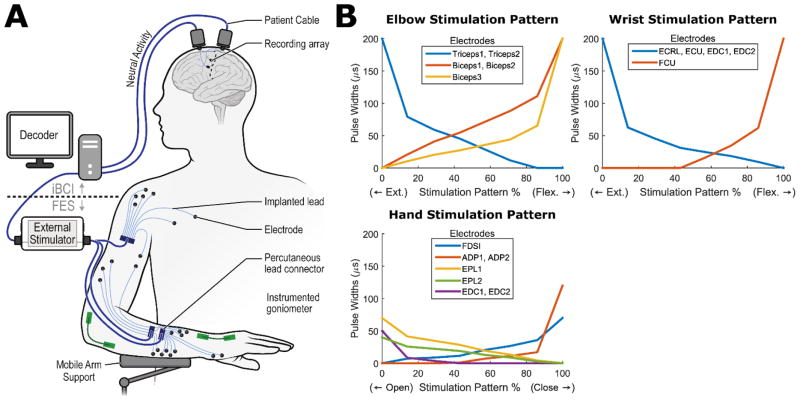
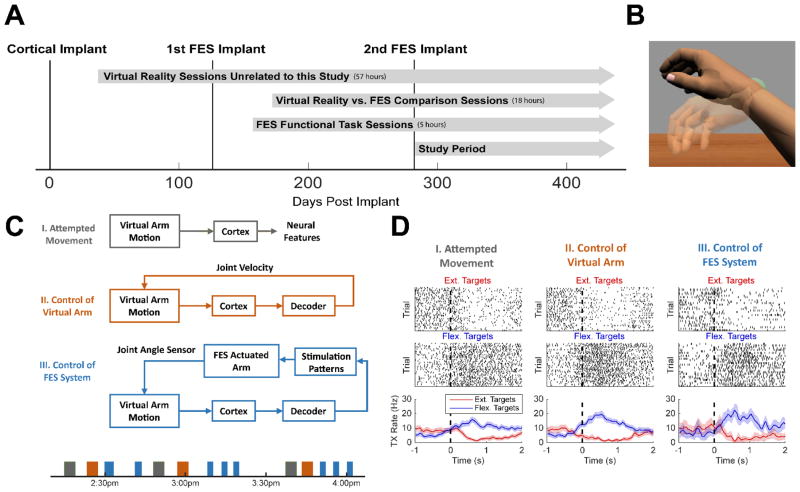
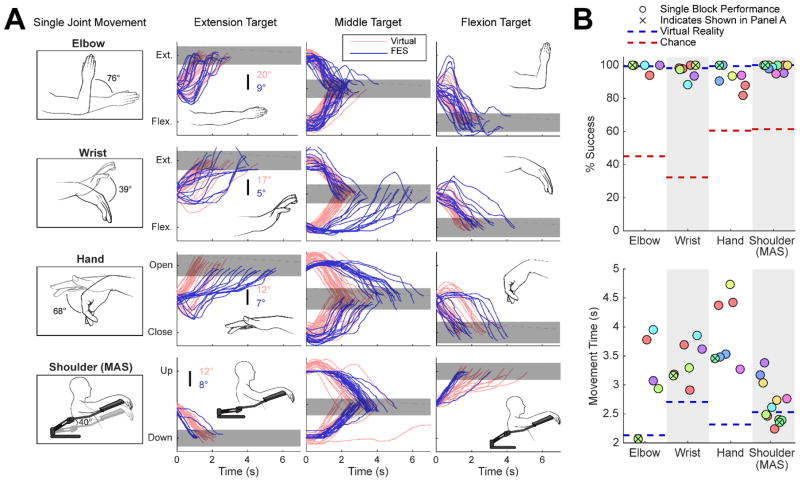
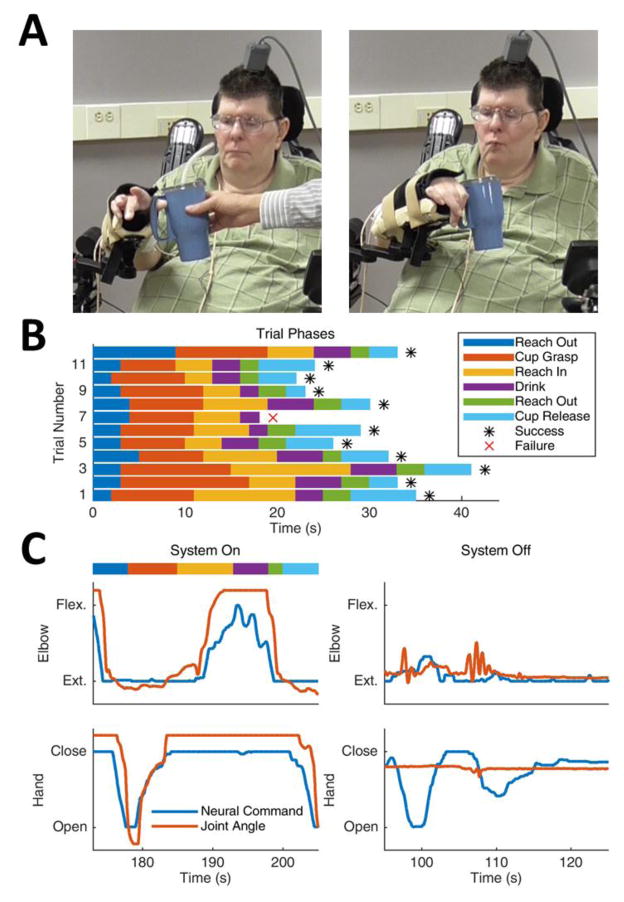
Background People with chronic tetraplegia, due to high-cervical spinal cord injury, can regain limb movements through coordinated electrical stimulation of peripheral muscles and nerves, known as functional electrical stimulation (FES). Users typically command FES systems through other preserved, but unrelated and limited in number, volitional movements (eg, facial muscle activity, head movements, shoulder shrugs). We report the findings of an individual with traumatic high-cervical spinal cord injury who coordinated reaching and grasping movements using his own paralysed arm and hand, reanimated through implanted FES, and commanded using his own cortical signals through an intracortical brain-computer interface (iBCI).Methods We recruited a participant into the BrainGate2 clinical trial, an ongoing study that obtains safety information regarding an intracortical neural interface device, and investigates the feasibility of people with tetraplegia controlling assistive devices using their cortical signals. Surgical procedures were performed at University Hospitals Cleveland Medical Center (Cleveland, OH, USA). Study procedures and data analyses were performed at Case Western Reserve University (Cleveland, OH, USA) and the US Department of Veterans Affairs, Louis Stokes Cleveland Veterans Affairs Medical Center (Cleveland, OH, USA). The study participant was a 53-year-old man with a spinal cord injury (cervical level 4, American Spinal Injury Association Impairment Scale category A). He received two intracortical microelectrode arrays in the hand area of his motor cortex, and 4 months and 9 months later received a total of 36 implanted percutaneous electrodes in his right upper and lower arm to electrically stimulate his hand, elbow, and shoulder muscles. The participant used a motorised mobile arm support for gravitational assistance and to provide humeral abduction and adduction under cortical control. We assessed the participant's ability to cortically command his paralysed arm to perform simple single-joint arm and hand movements and functionally meaningful multi-joint movements. We compared iBCI control of his paralysed arm with that of a virtual three-dimensional arm. This study is registered with ClinicalTrials.gov, number NCT00912041.Findings The intracortical implant occurred on Dec 1, 2014, and we are continuing to study the participant. The last session included in this report was Nov 7, 2016. The point-to-point target acquisition sessions began on Oct 8, 2015 (311 days after implant). The participant successfully cortically commanded single-joint and coordinated multi-joint arm movements for point-to-point target acquisitions (80-100% accuracy), using first a virtual arm and second his own arm animated by FES. Using his paralysed arm, the participant volitionally performed self-paced reaches to drink a mug of coffee (successfully completing 11 of 12 attempts within a single session 463 days after implant) and feed himself (717 days after implant).Interpretation To our knowledge, this is the first report of a combined implanted FES+iBCI neuroprosthesis for restoring both reaching and grasping movements to people with chronic tetraplegia due to spinal cord injury, and represents a major advance, with a clear translational path, for clinically viable neuroprostheses for restoration of reaching and grasping after paralysis.Funding National Institutes of Health, Department of Veterans Affairs.
Overview
The claims and statistics of this paper haven’t been checked yet.
Free: it reads the open-access text and checks the first 5 claims that cite a source we can check. Create a free account to check every claim.
Integrity signals
Registry
Cites
Statistics
Figures
Verification
Claims the paper makes
The claims and statistics of this paper haven’t been checked yet.
Free: it reads the open-access text and checks the first 5 claims that cite a source we can check. Create a free account to check every claim.
Claims other papers make about this one
Each is checked against this paper’s own text: does it say what the citing paper says it does?
The source backs part of the claim, not all of it — or backs it for a different population, condition or comparison.
In the citing paper
“and has enabled the highest BCI performance to date compared to other recording technologies (EEG, ECoG) for restoring communication7, arm control2,5, and general-purpose computer use39.”
From High-performance brain-to-text communication via handwriting (2021) · cites this paper as [5]
Experimental — accuracy not yet measuredThe cited source says what the claim attributes to it.
In the citing paper
“Prior BCI studies have shown that the motor intention for gross motor skills, such as reaching, grasping or moving a computer cursor, remains neurally encoded in motor cortex after paralysis1–7.”
From High-performance brain-to-text communication via handwriting (2021) · cites this paper as [5]
Self-check
Percentages, sums and reported differences re-computed from the paper’s own numbers.
The self-check needs the paper’s full text.
Citations
Cites
Isolated Hand Paresis: A Case Series
Alstadhaug, K. B., & Sjulstad, A. (2013) · Cerebrovascular Diseases Extra · doi:10.1159/000350708 · Cited by 4,058
Neuronal ensemble control of prosthetic devices by a human with tetraplegia
Hochberg, L. R., Serruya, M. D., Friehs, G. M., Mukand, J. A., Saleh, M., Caplan, A. H., Branner, A., Chen, D., Penn, R. D., & Donoghue, J. P. (2006) · Nature · doi:10.1038/nature04970 · Cited by 3,295
Self-citationReach and grasp by people with tetraplegia using a neurally controlled robotic arm
Hochberg, L. R., Bacher, D., Jarosiewicz, B., Masse, N. Y., Simeral, J. D., Vogel, J., Haddadin, S., Liu, J., Cash, S. S., van der Smagt, P., et al. (2012) · Nature · doi:10.1038/nature11076 · Cited by 2,719
Self-citationHigh-performance neuroprosthetic control by an individual with tetraplegia
Collinger, J. L., Wodlinger, B., Downey, J. E., Wang, W., Tyler-Kabara, E. C., Weber, D. J., McMorland, A. J., Velliste, M., Boninger, M. L., & Schwartz, A. B. (2013) · The Lancet · doi:10.1016/s0140-6736(12)61816-9 · Cited by 1,848
Localization of the motor hand area to a knob on the precentral gyrus. A new landmark
Yousry, T. (1997) · Brain · doi:10.1093/brain/120.1.141 · Cited by 1,837
Cortical control of a prosthetic arm for self-feeding
Velliste, M., Perel, S., Spalding, M. C., Whitford, A. S., & Schwartz, A. B. (2008) · Nature · doi:10.1038/nature06996 · Cited by 1,591
Direct Cortical Control of 3D Neuroprosthetic Devices
Taylor, D. M., Tillery, S. I. H., & Schwartz, A. B. (2002) · Science · doi:10.1126/science.1070291 · Cited by 1,540
Instant neural control of a movement signal
Serruya, M. D., Hatsopoulos, N. G., Paninski, L., Fellows, M. R., & Donoghue, J. P. (2002) · Nature · doi:10.1038/416141a · Cited by 1,409
Self-citationRestoring cortical control of functional movement in a human with quadriplegia
Bouton, C. E., Shaikhouni, A., Annetta, N. V., Bockbrader, M. A., Friedenberg, D. A., Nielson, D. M., Sharma, G., Sederberg, P. B., Glenn, B. C., Mysiw, W. J., et al. (2016) · Nature · doi:10.1038/nature17435 · Cited by 924
Intracortical microstimulation of human somatosensory cortex
Flesher, S. N., Collinger, J. L., Foldes, S. T., Weiss, J. M., Downey, J. E., Tyler-Kabara, E. C., Bensmaia, S. J., Schwartz, A. B., Boninger, M. L., & Gaunt, R. A. (2016) · Science Translational Medicine · doi:10.1126/scitranslmed.aaf8083 · Cited by 704
Cited by
High-performance brain-to-text communication via handwriting
Willett, F. R., Avansino, D. T., Hochberg, L. R., Henderson, J. M., & Shenoy, K. V. (2021) · Nature · doi:10.1038/s41586-021-03506-2 · Cited by 1,024
Self-citationSpeech synthesis from neural decoding of spoken sentences
Anumanchipalli, G. K., Chartier, J., & Chang, E. F. (2019) · Nature · doi:10.1038/s41586-019-1119-1 · Cited by 883
“Neural prosthetic control was first demonstrated in participants without disabilities 33,34,35 before translating the technology to participants with tetraplegia 36,37,38,39 .”
BackgroundBrain-actuated functional electrical stimulation elicits lasting arm motor recovery after stroke
Biasiucci, A., Leeb, R., Iturrate, I., Perdikis, S., Al-Khodairy, A., Corbet, T., Schnider, A., Schmidlin, T., Zhang, H., Bassolino, M., et al. (2018) · Nature Communications · doi:10.1038/s41467-018-04673-z · Cited by 649
A brain-computer interface that evokes tactile sensations improves robotic arm control
Flesher, S. N., Downey, J. E., Weiss, J. M., Hughes, C. L., Herrera, A. J., Tyler-Kabara, E. C., Boninger, M. L., Collinger, J. L., & Gaunt, R. A. (2021) · Science · doi:10.1126/science.abd0380 · Cited by 617
Spinal cord repair: advances in biology and technology
Courtine, G., & Sofroniew, M. V. (2019) · Nature Medicine · doi:10.1038/s41591-019-0475-6 · Cited by 508
Piech, D. K., Johnson, B. C., Shen, K., Ghanbari, M. M., Li, K. Y., Neely, R. M., Kay, J. E., Carmena, J. M., Maharbiz, M. M., & Muller, R. (2020) · Nature Biomedical Engineering · doi:10.1038/s41551-020-0518-9 · Cited by 442
Benabid, A. L., Costecalde, T., Eliseyev, A., Charvet, G., Verney, A., Karakas, S., Foerster, M., Lambert, A., Morinière, B., Abroug, N., et al. (2019) · The Lancet Neurology · doi:10.1016/s1474-4422(19)30321-7 · Cited by 404
Summary of over Fifty Years with Brain-Computer Interfaces—A Review
Kawala-Sterniuk, A., Browarska, N., Al-Bakri, A., Pelc, M., Zygarlicki, J., Sidikova, M., Martinek, R., & Gorzelanczyk, E. J. (2021) · Brain Sciences · doi:10.3390/brainsci11010043 · Cited by 292
Large-scale neural recordings with single neuron resolution using Neuropixels probes in human cortex
Paulk, A. C., Kfir, Y., Khanna, A. R., Mustroph, M. L., Trautmann, E. M., Soper, D. J., Stavisky, S. D., Welkenhuysen, M., Dutta, B., Shenoy, K. V., et al. (2022) · Nature Neuroscience · doi:10.1038/s41593-021-00997-0 · Cited by 283
Self-citationKhan, M. A., Das, R., Iversen, H. K., & Puthusserypady, S. (2020) · Computers in Biology and Medicine · doi:10.1016/j.compbiomed.2020.103843 · Cited by 250
“Research has shown that FES has been implemented in several clinical practices to restore walking [68-70], standing [71-73], hand grasp [74-76], arm reaching [77, 78] and other post-stroke rehabilitation [79].”
BackgroundRecommendations for Responsible Development and Application of Neurotechnologies
Goering, S., Klein, E., Specker Sullivan, L., Wexler, A., Agüera y Arcas, B., Bi, G., Carmena, J. M., Fins, J. J., Friesen, P., Gallant, J., et al. (2021) · Neuroethics · doi:10.1007/s12152-021-09468-6 · Cited by 228
“robotic arms, wheelchairs, computer cursors), but also to “reanimate” paralyzed limbs [41].”
BackgroundBrain–machine interfaces from motor to mood
Shanechi, M. M. (2019) · Nature Neuroscience · doi:10.1038/s41593-019-0488-y · Cited by 263
Accurate Estimation of Neural Population Dynamics without Spike Sorting
Trautmann, E. M., Stavisky, S. D., Lahiri, S., Ames, K. C., Kaufman, M. T., O’Shea, D. J., Vyas, S., Sun, X., Ryu, S. I., Ganguli, S., et al. (2019) · Neuron · doi:10.1016/j.neuron.2019.05.003 · Cited by 255
Biomarkers for closed-loop deep brain stimulation in Parkinson disease and beyond
Bouthour, W., Mégevand, P., Donoghue, J., Lüscher, C., Birbaumer, N., & Krack, P. (2019) · Nature Reviews Neurology · doi:10.1038/s41582-019-0166-4 · Cited by 230
Self-citationHramov, A. E., Maksimenko, V. A., & Pisarchik, A. N. (2021) · Physics Reports · doi:10.1016/j.physrep.2021.03.002 · Cited by 213
Speech synthesis from ECoG using densely connected 3D convolutional neural networks
Angrick, M., Herff, C., Mugler, E., Tate, M. C., Slutzky, M. W., Krusienski, D. J., & Schultz, T. (2019) · Journal of Neural Engineering · doi:10.1088/1741-2552/ab0c59 · Cited by 225
Epidural stimulation of the cervical spinal cord for post-stroke upper-limb paresis
Powell, M. P., Verma, N., Sorensen, E., Carranza, E., Boos, A., Fields, D. P., Roy, S., Ensel, S., Barra, B., Balzer, J., et al. (2023) · Nature Medicine · doi:10.1038/s41591-022-02202-6 · Cited by 192
Recent progress and challenges in the treatment of spinal cord injury
Tian, T., Zhang, S., & Yang, M. (2023) · Protein & Cell · doi:10.1093/procel/pwad003 · Cited by 186
Non-Invasive Brain-Computer Interfaces: State of the Art and Trends
Edelman, B. J., Zhang, S., Schalk, G., Brunner, P., Müller-Putz, G., Guan, C., & He, B. (2025) · IEEE Reviews in Biomedical Engineering · doi:10.1109/rbme.2024.3449790 · Cited by 170
Degenhart, A. D., Bishop, W. E., Oby, E. R., Tyler-Kabara, E. C., Chase, S. M., Batista, A. P., & Yu, B. M. (2020) · Nature Biomedical Engineering · doi:10.1038/s41551-020-0542-9 · Cited by 212
Neuromodulation in the restoration of function after spinal cord injury
James, N. D., McMahon, S. B., Field-Fote, E. C., & Bradbury, E. J. (2018) · The Lancet Neurology · doi:10.1016/s1474-4422(18)30287-4 · Cited by 184
Schwemmer, M. A., Skomrock, N. D., Sederberg, P. B., Ting, J. E., Sharma, G., Bockbrader, M. A., & Friedenberg, D. A. (2018) · Nature Medicine · doi:10.1038/s41591-018-0171-y · Cited by 163
Hand Knob Area of Premotor Cortex Represents the Whole Body in a Compositional Way
Willett, F. R., Deo, D. R., Avansino, D. T., Rezaii, P., Hochberg, L. R., Henderson, J. M., & Shenoy, K. V. (2020) · Cell · doi:10.1016/j.cell.2020.02.043 · Cited by 171
“A Whole-Body Discrete Decoding BCI that Increases Information Throughput Current intracortical BCIs (iBCIs) are limited to recording from a small number of locations (e.g., Hochberg et al., 2012; Collinger et al., 2013; Aflalo et al., 2015; Bouton et al., 2016; Pandarinath et al., 2017; Ajiboye et al., 2017), making i…”
BackgroundSelf-citationOfner, P., Schwarz, A., Pereira, J., Wyss, D., Wildburger, R., & Müller-Putz, G. R. (2019) · Scientific Reports · doi:10.1038/s41598-019-43594-9 · Cited by 166
Simeral, J. D., Hosman, T., Saab, J., Flesher, S. N., Vilela, M., Franco, B., Kelemen, J. N., Brandman, D. M., Ciancibello, J. G., Rezaii, P. G., et al. (2021) · IEEE Transactions on Biomedical Engineering · doi:10.1109/tbme.2021.3069119 · Cited by 165
“prosthetic limbs [2], [3], [11] and their own reanimated limb [6], [12], and have demonstrated reliable cursor control for tablet use [8] and on-screen typing for communication [4], [7], [13].”
BackgroundSelf-citationCurrent Researches and Future Development Trend of Intelligent Robot: A Review
Wang, T., Tao, Y., & Liu, H. (2018) · Machine Intelligence Research · doi:10.1007/s11633-018-1115-1 · Cited by 170
“By implanting 2 cerebral motor cortex recording chips and 36 electrodes, the BoluAjiboye team from the Case Western Reserve University helps patients in eating, fetching objects and doing other simple actions by controlling the robot arm[117, 118].”
MethodRapid calibration of an intracortical brain–computer interface for people with tetraplegia
Brandman, D. M., Hosman, T., Saab, J., Burkhart, M. C., Shanahan, B. E., Ciancibello, J. G., Sarma, A. A., Milstein, D. J., Vargas-Irwin, C. E., Franco, B., et al. (2018) · Journal of Neural Engineering · doi:10.1088/1741-2552/aa9ee7 · Cited by 153
Self-citationRestoring the Sense of Touch Using a Sensorimotor Demultiplexing Neural Interface
Ganzer, P. D., Colachis, S. C., Schwemmer, M. A., Friedenberg, D. A., Dunlap, C. F., Swiftney, C. E., Jacobowitz, A. F., Weber, D. J., Bockbrader, M. A., & Sharma, G. (2020) · Cell · doi:10.1016/j.cell.2020.03.054 · Cited by 156
Conformal in-ear bioelectronics for visual and auditory brain-computer interfaces
Wang, Z., Shi, N., Zhang, Y., Zheng, N., Li, H., Jiao, Y., Cheng, J., Wang, Y., Zhang, X., Chen, Y., et al. (2023) · Nature Communications · doi:10.1038/s41467-023-39814-6 · Cited by 157
Translational opportunities and challenges of invasive electrodes for neural interfaces
Shen, K., Chen, O., Edmunds, J. L., Piech, D. K., & Maharbiz, M. M. (2023) · Nature Biomedical Engineering · doi:10.1038/s41551-023-01021-5 · Cited by 160
Yogev, D., Goldberg, T., Arami, A., Tejman‐Yarden, S., Winkler, T. E., & Maoz, B. M. (2023) · APL Bioengineering · doi:10.1063/5.0152290 · Cited by 164
He, B., Yuan, H., Meng, J., & Gao, S. (2020) · Springer eBooks · doi:10.1007/978-3-030-43395-6_4 · Cited by 167
Brain-controlled modulation of spinal circuits improves recovery from spinal cord injury
Bonizzato, M., Pidpruzhnykova, G., DiGiovanna, J., Shkorbatova, P., Pavlova, N., Micera, S., & Courtine, G. (2018) · Nature Communications · doi:10.1038/s41467-018-05282-6 · Cited by 149
Stable long-term BCI-enabled communication in ALS and locked-in syndrome using LFP signals
Milekovic, T., Sarma, A. A., Bacher, D., Simeral, J. D., Saab, J., Pandarinath, C., Sorice, B. L., Blabe, C., Oakley, E. M., Tringale, K. R., et al. (2018) · Journal of Neurophysiology · doi:10.1152/jn.00493.2017 · Cited by 137
Self-citationRapid prototyping of soft bioelectronic implants for use as neuromuscular interfaces
Afanasenkau, D., Kalinina, D., Lyakhovetskii, V., Tondera, C., Gorsky, O., Moosavi, S., Pavlova, N., Merkulyeva, N., Kalueff, A. V., Minev, I. R., et al. (2020) · Nature Biomedical Engineering · doi:10.1038/s41551-020-00615-7 · Cited by 148
Towards brain-tissue-like biomaterials
Axpe, E., Orive, G., Franze, K., & Appel, E. A. (2020) · Nature Communications · doi:10.1038/s41467-020-17245-x · Cited by 146
The role of electrical stimulation for rehabilitation and regeneration after spinal cord injury
Karamian, B. A., Siegel, N. M., Nourie, B., Serruya, M. D., Heary, R. F., Harrop, J. S., & Vaccaro, A. R. (2022) · Journal of Orthopaedics and Traumatology · doi:10.1186/s10195-021-00623-6 · Cited by 155
A Review on Human-Computer Interaction and Intelligent Robots
Ren, F., & Bao, Y. (2020) · International Journal of Information Technology & Decision Making · doi:10.1142/s0219622019300052 · Cited by 164
“Future intelligent robots and their interaction technologies need to be developed in the following aspects”
BackgroundNeural Population Dynamics Underlying Motor Learning Transfer
Vyas, S., Even-Chen, N., Stavisky, S. D., Ryu, S. I., Nuyujukian, P., & Shenoy, K. V. (2018) · Neuron · doi:10.1016/j.neuron.2018.01.040 · Cited by 134
Synergy-Based FES for Post-Stroke Rehabilitation of Upper-Limb Motor Functions
Niu, C. M., Bao, Y., Zhuang, C., Li, S., Wang, T., Cui, L., Xie, Q., & Lan, N. (2019) · IEEE Transactions on Neural Systems and Rehabilitation Engineering · doi:10.1109/tnsre.2019.2891004 · Cited by 144
“The feasibility of using FES in clinic has been established in pioneering works to restore standing [5]–[7], walking [8], [9], arm reaching [10], [11],”
BackgroundStrategies and prospects of effective neural circuits reconstruction after spinal cord injury
Yang, B., Zhang, F., Cheng, F., Ying, L., Wang, C., Shi, K., Wang, J., Xia, K., Gong, Z., Huang, X., et al. (2020) · Cell Death & Disease · doi:10.1038/s41419-020-2620-z · Cited by 128
High-density single-unit human cortical recordings using the Neuropixels probe
Chung, J. E., Sellers, K. K., Leonard, M. K., Gwilliams, L., Xu, D., Dougherty, M. E., Kharazia, V., Metzger, S. L., Welkenhuysen, M., Dutta, B., et al. (2022) · Neuron · doi:10.1016/j.neuron.2022.05.007 · Cited by 126
Plug-and-play control of a brain–computer interface through neural map stabilization
Silversmith, D. B., Abiri, R., Hardy, N. F., Natraj, N., Tu-Chan, A., Chang, E. F., & Ganguly, K. (2021) · Nature Biotechnology · doi:10.1038/s41587-020-0662-5 · Cited by 126
Neuromorphic hardware for somatosensory neuroprostheses
Donati, E., & Valle, G. (2024) · Nature Communications · doi:10.1038/s41467-024-44723-3 · Cited by 131
“Different types of neural interfaces have been adopted to record the neural activity from the brain 33 – 35 or nerves 36 – 38 and, more recently, to also deliver electrical stimulation to peripheral nerves 4,11,39 – 44 (see Box 3 for more details), spinal cord 45,46 , or cortex 47 – 49 to restore…”
The state of clinical trials of implantable brain–computer interfaces
Patrick-Krueger, K. M., Burkhart, I., & Contreras-Vidal, J. L. (2024) · Nature Reviews Bioengineering · doi:10.1038/s44222-024-00239-5 · Cited by 125
Configuration of electrical spinal cord stimulation through real-time processing of gait kinematics
Capogrosso, M., Wagner, F. B., Gandar, J., Moraud, E. M., Wenger, N., Milekovic, T., Shkorbatova, P., Pavlova, N., Musienko, P., Bezard, E., et al. (2018) · Nature Protocols · doi:10.1038/s41596-018-0030-9 · Cited by 126
Herff, C., Krusienski, D. J., & Kubben, P. (2020) · Frontiers in Neuroscience · doi:10.3389/fnins.2020.00123 · Cited by 119
“…microarrays implanted on the cortex have achieved robust control of commercial tablets (Nuyujukian et al., 2018), robotic arms (Hochberg et al., 2006, 2012) and even allowed paralyzed patients to regain control of their own arms using functional electric stimulation (Ajiboye et al., 2017).”
MethodSoft, Implantable Bioelectronic Interfaces for Translational Research
Schiavone, G., Fallegger, F., Kang, X., Barra, B., Vachicouras, N., Roussinova, E., Furfaro, I., Jiguet, S., Seáñez, I., Borgognon, S., et al. (2020) · Advanced Materials · doi:10.1002/adma.201906512 · Cited by 116
Implantable brain machine interfaces: first-in-human studies, technology challenges and trends
Rapeaux, A. B., & Constandinou, T. G. (2021) · Current Opinion in Biotechnology · doi:10.1016/j.copbio.2021.10.001 · Cited by 119
Power-saving design opportunities for wireless intracortical brain–computer interfaces
Even-Chen, N., Muratore, D. G., Stavisky, S. D., Hochberg, L. R., Henderson, J. M., Murmann, B., & Shenoy, K. V. (2020) · Nature Biomedical Engineering · doi:10.1038/s41551-020-0595-9 · Cited by 118
“A few studies, in addition to threshold-crossing events, also used high-frequency band power (250 Hz up to 3–5 kHz) for iBCIs 3,9,63 .”
BackgroundMethodSelf-citationBrain Computer Interfaces in Rehabilitation Medicine
Bockbrader, M. A., Francisco, G. E., Lee, R., Olson, J. D., Solinsky, R. J., & Boninger, M. L. (2018) · PM&R · doi:10.1016/j.pmrj.2018.05.028 · Cited by 126
“However, motor and sensory BCI systems using implanted electrodes have relied on intact brain substrate in precentral and postcentral gyrus areas to capture or stimulate neural signals through the BCI [13,18,50,72].”
BackgroundMethodInfluentialDecoding Inner Speech Using Electrocorticography: Progress and Challenges Toward a Speech Prosthesis
Martin, S., Iturrate, I., Millán, J. D. R., Knight, R. T., & Pasley, B. N. (2018) · Frontiers in Neuroscience · doi:10.3389/fnins.2018.00422 · Cited by 115
“Neural engineering research has made tremendous advances in decoding motor (Ajiboye et al., 2017) or visual neural signals (Lewis et al.”
BackgroundBarra, B., Conti, S., Perich, M. G., Zhuang, K., Schiavone, G., Fallegger, F., Galan, K., James, N. D., Barraud, Q., Delacombaz, M., et al. (2022) · Nature Neuroscience · doi:10.1038/s41593-022-01106-5 · Cited by 122
Brain–Computer Interface-Controlled Exoskeletons in Clinical Neurorehabilitation: Ready or Not?
Colucci, A., Vermehren, M., Cavallo, A., Angerhöfer, C., Peekhaus, N., Zollo, L., Kim, W., Paik, N., & Soekadar, S. R. (2022) · Neurorehabilitation and neural repair · doi:10.1177/15459683221138751 · Cited by 126
Neuroprosthetics: from sensorimotor to cognitive disorders
Gupta, A., Vardalakis, N., & Wagner, F. B. (2023) · Communications Biology · doi:10.1038/s42003-022-04390-w · Cited by 121
Nason, S. R., Vaskov, A. K., Willsey, M. S., Welle, E. J., An, H., Vu, P. P., Bullard, A. J., Nu, C. S., Kao, J. C., Shenoy, K. V., et al. (2020) · Nature Biomedical Engineering · doi:10.1038/s41551-020-0591-0 · Cited by 113
Stavisky, S. D., Kao, J. C., Ryu, S. I., & Shenoy, K. V. (2017) · Neuron · doi:10.1016/j.neuron.2017.05.023 · Cited by 109
Human motor decoding from neural signals: a review
Tam, W.-K., Wu, T., Zhao, Q., Keefer, E. W., & Yang, Z. (2019) · BMC Biomedical Engineering · doi:10.1186/s42490-019-0022-z · Cited by 117
Review: Human Intracortical Recording and Neural Decoding for Brain–Computer Interfaces
Brandman, D. M., Cash, S. S., & Hochberg, L. R. (2017) · IEEE Transactions on Neural Systems and Rehabilitation Engineering · doi:10.1109/tnsre.2017.2677443 · Cited by 103
“with [22] and an implanted, percutaneous FES system [23], the latter successfully providing reanimation of elbow”
Self-citationNeural ensemble dynamics in dorsal motor cortex during speech in people with paralysis
Stavisky, S. D., Willett, F. R., Wilson, G. H., Murphy, B. A., Rezaii, P., Avansino, D. T., Memberg, W. D., Miller, J. P., Kirsch, R. F., Hochberg, L. R., et al. (2019) · eLife · doi:10.7554/elife.46015 · Cited by 105
Self-citationKim, S., Baek, S., Sluyter, R., Konstantinov, K., Kim, J. H., Kim, S., & Kim, J. H. (2023) · EcoMat · doi:10.1002/eom2.12356 · Cited by 106
EEG-based brain-computer interface enables real-time robotic hand control at individual finger level
Ding, Y., Udompanyawit, C., Zhang, Y., & He, B. (2025) · Nature Communications · doi:10.1038/s41467-025-61064-x · Cited by 140
Decoding spoken English from intracortical electrode arrays in dorsal precentral gyrus
Wilson, G. H., Stavisky, S. D., Willett, F. R., Avansino, D. T., Kelemen, J. N., Hochberg, L. R., Henderson, J. M., Druckmann, S., & Shenoy, K. V. (2020) · Journal of Neural Engineering · doi:10.1088/1741-2552/abbfef · Cited by 103
“…volitional arm and hand movements (Hochberg et al 2006, 2012, Collinger et al 2013, Wodlinger et al 2015, Bouton et al 2016, Pandarinath et al 2017, Ajiboye et al 2017, Downey et al 2018b, Rastogi et al 2020) and modulates to a lesser extent during movements of other body parts (Stavisky et al…”
BackgroundSelf-citationLatent Factors and Dynamics in Motor Cortex and Their Application to Brain–Machine Interfaces
Pandarinath, C., Ames, K. C., Russo, A. A., Farshchian, A., Miller, L. E., Dyer, E. L., & Kao, J. C. (2018) · The Journal of Neuroscience · doi:10.1523/jneurosci.1669-18.2018 · Cited by 103
“…intent from neuron spiking activity to con-trol external devices or restore movement (Taylor et al., 2002; Carmena et al., 2003; Hochberg et al., 2006, 2012; Ethier et al., 2012; Collinger et al., 2013; Sadtler et al., 2014; Gilja et al., 2015; Ajiboye et al., 2017; Pandarinath et al., 2017).”
BackgroundApplications of brain-computer interfaces to the control of robotic and prosthetic arms
Vilela, M., & Hochberg, L. R. (2020) · Handbook of clinical neurology · doi:10.1016/b978-0-444-63934-9.00008-1 · Cited by 118
Self-citationWillsey, M. S., Shah, N. P., Avansino, D. T., Hahn, N. V., Jamiolkowski, R. M., Kamdar, F. B., Hochberg, L. R., Willett, F. R., & Henderson, J. M. (2025) · Nature Medicine · doi:10.1038/s41591-024-03341-8 · Cited by 116
Self-citationCrea, S., Nann, M., Trigili, E., Cordella, F., Baldoni, A., Badesa, F. J., Catalan, J. M., Zollo, L., Vitiello, N., García-Aracil, N., et al. (2018) · Scientific Reports · doi:10.1038/s41598-018-29091-5 · Cited by 108
Milosevic, M., Márquez-Chin, C., Masani, K., Hirata, M., Nomura, T., Popović, M. R., & Nakazawa, K. (2020) · BioMedical Engineering OnLine · doi:10.1186/s12938-020-00824-w · Cited by 105
Thin film multi-electrode softening cuffs for selective neuromodulation
González-González, M. A., Kanneganti, A., Joshi-Imre, A., Hernandez-Reynoso, A. G., Bendale, G., Modi, R., Ecker, M., Khurram, A., Cogan, S. F., Voit, W. E., et al. (2018) · Scientific Reports · doi:10.1038/s41598-018-34566-6 · Cited by 97
Wang, A., Tian, X., Jiang, D., Yang, C., Xu, Q., Zhang, Y., Zhao, S., Zhang, X., Jing, J., Wei, N., et al. (2024) · Med · doi:10.1016/j.medj.2024.02.014 · Cited by 106
Implantation of Neural Probes in the Brain Elicits Oxidative Stress
Ereifej, E. S., Rial, G. M., Hermann, J. K., Smith, C. S., Meade, S. M., Rayyan, J. M., Chen, K., Feng, H., & Capadona, J. R. (2018) · Frontiers in Bioengineering and Biotechnology · doi:10.3389/fbioe.2018.00009 · Cited by 94
Shi, Z., Zheng, F., Zhou, Z., Li, M., Fan, Z., Ye, H., Zhang, S., Xiao, T., Chen, L., Tao, T. H., et al. (2019) · Advanced Science · doi:10.1002/advs.201801617 · Cited by 94
From thought to action: The brain–machine interface in posterior parietal cortex
Andersen, R. A., Aflalo, T., & Kellis, S. (2019) · Proceedings of the National Academy of Sciences · doi:10.1073/pnas.1902276116 · Cited by 94
Brain-Machine Interfaces: A Tale of Two Learners
Perdikis, S., & Millán, J. D. R. (2020) · IEEE Systems Man and Cybernetics Magazine · doi:10.1109/msmc.2019.2958200 · Cited by 101
“neglect the issue of subject learning [53,56,59,61,62], save a few notable exceptions [57].”
BackgroundBrain–Computer Interfaces in Neurorecovery and Neurorehabilitation
Young, M. J., Lin, D. J., & Hochberg, L. R. (2021) · Seminars in Neurology · doi:10.1055/s-0041-1725137 · Cited by 102
Self-citationA prototype closed-loop brain–machine interface for the study and treatment of pain
Zhang, Q., Hu, S., Talay, R. S., Xiao, Z., Rosenberg, D., Liu, Y., Sun, G., Li, A., Caravan, B., Singh, A., et al. (2021) · Nature Biomedical Engineering · doi:10.1038/s41551-021-00736-7 · Cited by 98
Stabilizing brain-computer interfaces through alignment of latent dynamics
Karpowicz, B. M., Ali, Y. H., Wimalasena, L. N., Sedler, A. R., Keshtkaran, M. R., Bodkin, K. L., Ma, X., Rubin, D. B., Williams, Z. M., Cash, S. S., et al. (2025) · Nature Communications · doi:10.1038/s41467-025-59652-y · Cited by 114
Self-citationMotor imagery recognition with automatic EEG channel selection and deep learning
Zhang, H., Zhao, X., Wu, Z., Sun, B., & Li, T. (2021) · Journal of Neural Engineering · doi:10.1088/1741-2552/abca16 · Cited by 100
Explant Analysis of Utah Electrode Arrays Implanted in Human Cortex for Brain-Computer-Interfaces
Woeppel, K., Hughes, C., Herrera, A. J., Eles, J. R., Tyler-Kabara, E. C., Gaunt, R. A., Collinger, J. L., & Cui, X. T. (2021) · Frontiers in Bioengineering and Biotechnology · doi:10.3389/fbioe.2021.759711 · Cited by 90
“In recent years intracortical implants in motor cortex have been used for BCI control in primates and human participants with up to 10 degrees of freedom (Hochberg et al., 2006; Santhanam et al., 2006; Velliste et al., 2008; Collinger et al., 2013; Wodlinger et al., 2014; Bouton et al., 2016; Ajiboye et al., 2017).”
BackgroundMethodMondini, V., Kobler, R. J., Sburlea, A. I., & Müller-Putz, G. (2020) · Journal of Neural Engineering · doi:10.1088/1741-2552/aba6f7 · Cited by 95
Brain-Machine Interfaces: Powerful Tools for Clinical Treatment and Neuroscientific Investigations
Slutzky, M. W. (2019) · The Neuroscientist · doi:10.1177/1073858418775355 · Cited by 81
Neural Decoding for Intracortical Brain–Computer Interfaces
Dong, Y., Wang, S., Huang, Q., Berg, R. W., Li, G., & He, J. (2023) · Cyborg and Bionic Systems · doi:10.34133/cbsystems.0044 · Cited by 90
“0044 9 activating the relevant muscles with the FES and controlling them with his intracortical signals through an iBCI [68].”
MethodA Mosquito Inspired Strategy to Implant Microprobes into the Brain
Shoffstall, A. J., Srinivasan, S., Willis, M., Stiller, A. M., Ecker, M., Voit, W. E., Pancrazio, J. J., & Capadona, J. R. (2018) · Scientific Reports · doi:10.1038/s41598-017-18522-4 · Cited by 82
Gaze-based, Context-aware Robotic System for Assisted Reaching and Grasping
Shafti, A., Orlov, P. A., & Faisal, A. A. (2019) · Proceedings - IEEE International Conference on Robotics and Automation/Proceedings · doi:10.1109/icra.2019.8793804 · Cited by 96
“These interfaces are not available to all patients, and/or require invasive procedures and long training times for the user to be adept with their use [11]–[13].”
BackgroundInterim Safety Profile From the Feasibility Study of the BrainGate Neural Interface System
Rubin, D. B., Ajiboye, A. B., Barefoot, L., Bowker, M., Cash, S. S., Chen, D., Donoghue, J. P., Eskandar, E. N., Friehs, G., Grant, C., et al. (2023) · Neurology · doi:10.1212/wnl.0000000000201707 · Cited by 81
Self-citationThe science and engineering behind sensitized brain-controlled bionic hands
Pandarinath, C., & Bensmaïa, S. J. (2021) · Physiological Reviews · doi:10.1152/physrev.00034.2020 · Cited by 86
Replay of Learned Neural Firing Sequences during Rest in Human Motor Cortex
Eichenlaub, J.-B., Jarosiewicz, B., Saab, J., Franco, B., Kelemen, J., Halgren, E., Hochberg, L. R., & Cash, S. S. (2020) · Cell Reports · doi:10.1016/j.celrep.2020.107581 · Cited by 69
“This clinical trial is part of the ongoing effort to develop brain-computer interfaces (BCIs) that allow people with tetraplegia to control computer cursors, tablet computers, robotic arms, and other devices with their neural activity (Aflalo et al., 2015; Ajiboye et al., 2017; Bouton et al., 2016; Collinger et al., 2…”
BackgroundSelf-citationSelfslagh, A., Shokur, S., Campos, D. S. F., Donati, A. R. C., Almeida, S., Yamauti, S. Y., Coelho, D. B., Bouri, M., & Nicolelis, M. A. L. (2019) · Scientific Reports · doi:10.1038/s41598-019-43041-9 · Cited by 78
Brain control of bimanual movement enabled by recurrent neural networks
Deo, D. R., Willett, F. R., Avansino, D. T., Hochberg, L. R., Henderson, J. M., & Shenoy, K. V. (2024) · Scientific Reports · doi:10.1038/s41598-024-51617-3 · Cited by 86
Self-citationImplantable Neural Probes for Brain-Machine Interfaces ? Current Developments and Future Prospects
Choi, J., Kim, S., Ryu, R.-H., Kim, S.-P., & Sohn, J.-W. (2018) · Experimental Neurobiology · doi:10.5607/en.2018.27.6.453 · Cited by 81
Ali, O., Saif-ur-Rehman, M., Glasmachers, T., Iossifidis, I., & Klaes, C. (2023) · Computers in Biology and Medicine · doi:10.1016/j.compbiomed.2023.107649 · Cited by 79
Brain-computer interfaces for communication
Vansteensel, M. J., & Jarosiewicz, B. (2020) · Handbook of clinical neurology · doi:10.1016/b978-0-444-63934-9.00007-x · Cited by 84
“Their use has also been demonstrated in controlling multi-dimensional reach-and-grasp movements of robotic arms (Hochberg et al., 2012; Collinger et al., 2013; Aflalo et al., 2015; Wodlinger et al., 2015) and even of the person ’ s own paralyzed arm (Ajiboye et al., 2017).”
BackgroundMultichannel parallel processing of neural signals in memristor arrays
Liu, Z., Tang, J., Gao, B., Li, X., Yao, P., Lin, Y., Liu, D., Hong, B., Qian, H., & Wu, H. (2020) · Science Advances · doi:10.1126/sciadv.abc4797 · Cited by 76
Interfacing with the Brain: How Nanotechnology Can Contribute
Ahmed, A. A. A., Alegret, N., Almeida, B., Álvarez‐Puebla, R. A., Andrews, A. M., Ballerini, L., Barrios‐Capuchino, J. J., Becker, C., Blick, R. H., Bonakdar, S., et al. (2025) · ACS Nano · doi:10.1021/acsnano.4c10525 · Cited by 75
Gribi, S., du Bois de Dunilac, S., Ghezzi, D., & Lacour, S. P. (2018) · Nature Communications · doi:10.1038/s41467-018-06895-7 · Cited by 72
Brain-Computer-Spinal Interface Restores Upper Limb Function After Spinal Cord Injury
Samejima, S., Khorasani, A., Ranganathan, V. N., Nakahara, J., Tolley, N. M., Boissenin, A., Shalchyan, V., Daliri, M. R., Smith, J. R., & Moritz, C. T. (2021) · IEEE Transactions on Neural Systems and Rehabilitation Engineering · doi:10.1109/tnsre.2021.3090269 · Cited by 75
Targeting Sensory and Motor Integration for Recovery of Movement After CNS Injury
Asan, A. S., McIntosh, J. R., & Carmel, J. B. (2022) · Frontiers in Neuroscience · doi:10.3389/fnins.2021.791824 · Cited by 78
Colachis, S. C., Bockbrader, M. A., Zhang, M., Friedenberg, D. A., Annetta, N. V., Schwemmer, M. A., Skomrock, N. D., Mysiw, W. J., Rezai, A. R., Bresler, H. S., et al. (2018) · Frontiers in Neuroscience · doi:10.3389/fnins.2018.00208 · Cited by 67
“Not surprisingly therefore, there are only a few reports of successful demonstration of BCI-enabled hand grasp, most of which were limited by the number of functional handmovements that could be enabled (Bouton et al., 2016; Sharma et al., 2016; Ajiboye et al., 2017; Friedenberg et al., 2017).”
BackgroundInfluentialNeuromodulation in multiple sclerosis
Abboud, H., Hill, E., Siddiqui, J., Serra, A., & Walter, B. L. (2017) · Multiple Sclerosis Journal · doi:10.1177/1352458517736150 · Cited by 72
Self-citationTranslational Neuroelectronics
Jastrzebska‐Perfect, P., Chowdhury, S., Spyropoulos, G. D., Zhao, Z., Cea, C., Gelinas, J. N., & Khodagholy, D. (2020) · Advanced Functional Materials · doi:10.1002/adfm.201909165 · Cited by 72
Metadata
- Authors
- Ajiboye, A. B., Willett, F. R., Young, D. R., Memberg, W. D., Murphy, B. A., Miller, J. P., Walter, B. L., Sweet, J. A., Hoyen, H. A., Keith, M. W., Peckham, P. H., Simeral, J. D., Donoghue, J. P., Hochberg, L. R., & Kirsch, R. F.
- Affiliations
- United States Department of Veterans Affairs (US)
- MetroHealth (US)
- Brown University (US)
- Harvard University (US)
- Corresponding author
- Ajiboye, A Bolu
- ORCID
- Venue
- The Lancet
- Publisher
- Elsevier BV
- Published
- 2017-05
- Volume
- 389
- Issue
- 10081
- Pages
- 1821-1830
- ISSN
- 0099-5355 (ISSN-L)
- 0140-6736
- PMC
- PMC5516547
- OpenAlex
- W2603380332
- Cited by
- 862
- References
- 32
- Citations by year
- 2026: 60 · 2025: 104 · 2024: 97 · 2023: 87 · 2022: 107 · 2021: 106 · 2020: 107 · 2019: 85 · 2018: 79 · 2017: 29
- FWCI
- 47.07
- Type
- journal article
- Language
- en
- Open access
- green
- www.ncbi.nlm.nih.gov
- Licence
- cc-by-nc-nd
- www.elsevier.com/tdm/userlicense/1.0/ (tdm)
- Locations
- The Lancet (publishedVersion)
- PubMed (publishedVersion)
- Europe PMC (PubMed Central) (acceptedVersion, cc-by-nc-nd)
- PubMed Central (acceptedVersion, cc-by-nc-nd)
- Digital Access to Scholarship at Harvard (DASH) (Harvard University) (submittedVersion, cc-by)
- Funders
- U.S. Department of Veterans Affairs (B6453-R)
- National Institutes of Health (n01hd53403-6-0-1)
- National Institute on Deafness and Other Communication Disorders (R01DC009899)
- National Institute of Biomedical Imaging and Bioengineering (T32EB004314)
- Eunice Kennedy Shriver National Institute of Child Health and Human Development (R01HD077220, N01 HD053403)
- Topics
- Life Sciences › Neuroscience › Cognitive Neuroscience › EEG and Brain-Computer Interfaces
- Health Sciences › Medicine › Clinical Neurology › Spinal Cord Injury Research
- Life Sciences › Neuroscience › Cellular and Molecular Neuroscience › Neuroscience and Neural Engineering
- Keywords
- tetraplegia, high cervical spinal cord injury, intracortical brain-computer interfaces, functional electrical stimulation, reach-to-grasp, upper limb rehabilitation, assistive devices, neuroprosthetics
- MeSH terms
- Brain, Electrodes, Implanted, Electric Stimulation Therapy, Feasibility Studies, Hand, Humans, Male, Microelectrodes, Middle Aged, Motor Cortex, Movement, Quadriplegia, Self-Help Devices, Spinal Cord Injuries, United States, United States Department of Veterans Affairs, User-Computer Interface, Muscle, Skeletal, Hand Strength, Brain-Computer Interfaces
About these checks
Registry, retraction, Cites and statistics results are computed, not judged, with one exception: a printed reference that no index lists is read once by a model before it counts as a citation error. Claims are extracted by a model and kept only when their quote appears verbatim in the text; each cited source is then checked, with a model’s help, for whether it says what the claim relies on. Those verdicts can be wrong — read the claim’s quote and the cited source before relying on one.
Statistics and arithmetic are recomputed, not judged.
Confidence bands are shown only for fields calibrated on our annotated test set. None is calibrated yet, so no band is shown.
What counts as a claim ›How we measure confidence ›How we check this ›
Are you an author, or do you see a problem with this page? Request a review
Data sources
Bibliographic data: Semantic Scholar, OpenAlex, Crossref.
Contains information from the Semantic Scholar Academic Graph Datasets, made available under the ODC Attribution License (ODC-BY 1.0).
Semantic Scholar’s data is described in: Kinney, R., et al. (2023). The Semantic Scholar Open Data Platform. arXiv:2301.10140.
