

Restoration of reaching and grasping movements through brain-controlled muscle stimulation in a person with tetraplegia: a proof-of-concept demonstration
Open accessThe DOI matches its Crossref record; 31 of the 32 references it cites were found in a registry or an index.
Abstract
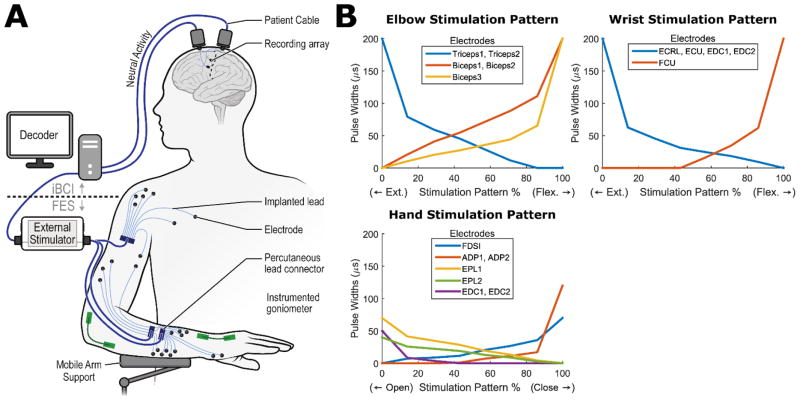
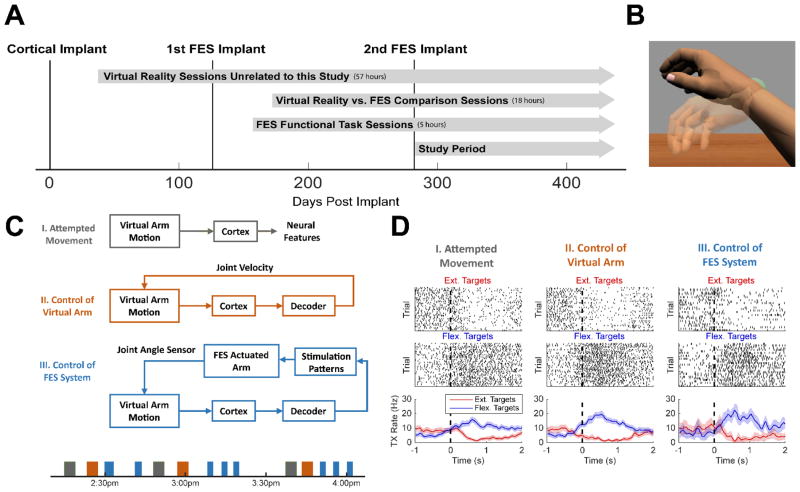
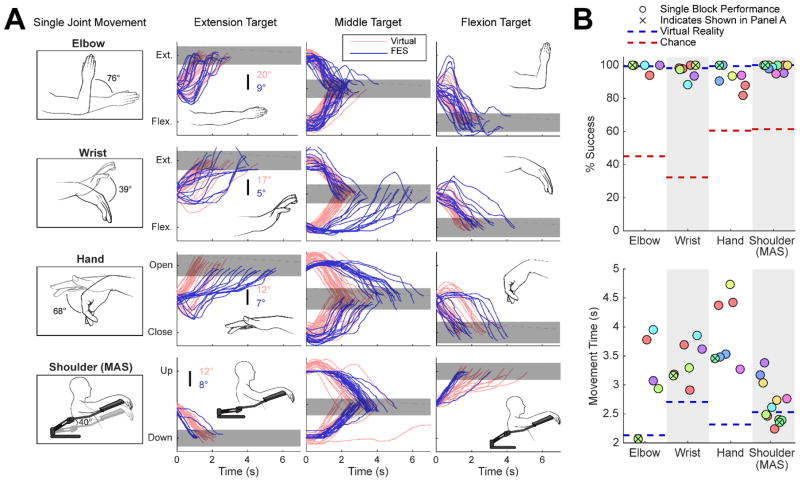
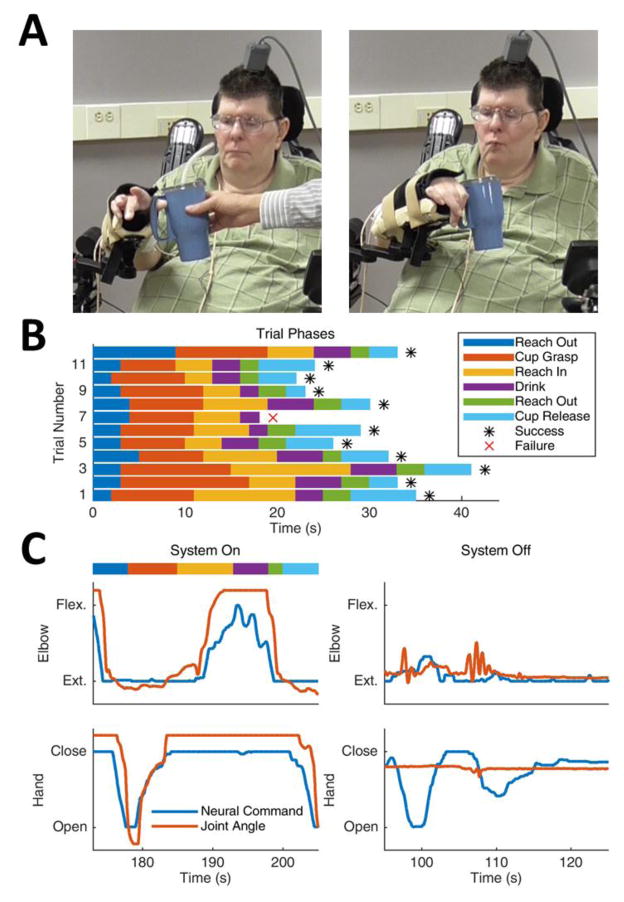
Background People with chronic tetraplegia, due to high-cervical spinal cord injury, can regain limb movements through coordinated electrical stimulation of peripheral muscles and nerves, known as functional electrical stimulation (FES). Users typically command FES systems through other preserved, but unrelated and limited in number, volitional movements (eg, facial muscle activity, head movements, shoulder shrugs). We report the findings of an individual with traumatic high-cervical spinal cord injury who coordinated reaching and grasping movements using his own paralysed arm and hand, reanimated through implanted FES, and commanded using his own cortical signals through an intracortical brain-computer interface (iBCI).Methods We recruited a participant into the BrainGate2 clinical trial, an ongoing study that obtains safety information regarding an intracortical neural interface device, and investigates the feasibility of people with tetraplegia controlling assistive devices using their cortical signals. Surgical procedures were performed at University Hospitals Cleveland Medical Center (Cleveland, OH, USA). Study procedures and data analyses were performed at Case Western Reserve University (Cleveland, OH, USA) and the US Department of Veterans Affairs, Louis Stokes Cleveland Veterans Affairs Medical Center (Cleveland, OH, USA). The study participant was a 53-year-old man with a spinal cord injury (cervical level 4, American Spinal Injury Association Impairment Scale category A). He received two intracortical microelectrode arrays in the hand area of his motor cortex, and 4 months and 9 months later received a total of 36 implanted percutaneous electrodes in his right upper and lower arm to electrically stimulate his hand, elbow, and shoulder muscles. The participant used a motorised mobile arm support for gravitational assistance and to provide humeral abduction and adduction under cortical control. We assessed the participant's ability to cortically command his paralysed arm to perform simple single-joint arm and hand movements and functionally meaningful multi-joint movements. We compared iBCI control of his paralysed arm with that of a virtual three-dimensional arm. This study is registered with ClinicalTrials.gov, number NCT00912041.Findings The intracortical implant occurred on Dec 1, 2014, and we are continuing to study the participant. The last session included in this report was Nov 7, 2016. The point-to-point target acquisition sessions began on Oct 8, 2015 (311 days after implant). The participant successfully cortically commanded single-joint and coordinated multi-joint arm movements for point-to-point target acquisitions (80-100% accuracy), using first a virtual arm and second his own arm animated by FES. Using his paralysed arm, the participant volitionally performed self-paced reaches to drink a mug of coffee (successfully completing 11 of 12 attempts within a single session 463 days after implant) and feed himself (717 days after implant).Interpretation To our knowledge, this is the first report of a combined implanted FES+iBCI neuroprosthesis for restoring both reaching and grasping movements to people with chronic tetraplegia due to spinal cord injury, and represents a major advance, with a clear translational path, for clinically viable neuroprostheses for restoration of reaching and grasping after paralysis.Funding National Institutes of Health, Department of Veterans Affairs.
Overview
The claims and statistics of this paper haven’t been checked yet.
Free: it reads the open-access text and checks the first 5 claims that cite a source we can check. Create a free account to check every claim.
Integrity signals
Registry
Cites
Statistics
Figures
Verification
Claims the paper makes
The claims and statistics of this paper haven’t been checked yet.
Free: it reads the open-access text and checks the first 5 claims that cite a source we can check. Create a free account to check every claim.
Claims other papers make about this one
Each is checked against this paper’s own text: does it say what the citing paper says it does?
The source backs part of the claim, not all of it — or backs it for a different population, condition or comparison.
In the citing paper
“and has enabled the highest BCI performance to date compared to other recording technologies (EEG, ECoG) for restoring communication7, arm control2,5, and general-purpose computer use39.”
From High-performance brain-to-text communication via handwriting (2021) · cites this paper as [5]
Experimental — accuracy not yet measuredThe cited source says what the claim attributes to it.
In the citing paper
“Prior BCI studies have shown that the motor intention for gross motor skills, such as reaching, grasping or moving a computer cursor, remains neurally encoded in motor cortex after paralysis1–7.”
From High-performance brain-to-text communication via handwriting (2021) · cites this paper as [5]
Self-check
Percentages, sums and reported differences re-computed from the paper’s own numbers.
The self-check needs the paper’s full text.
Citations
Cites
Isolated Hand Paresis: A Case Series
Alstadhaug, K. B., & Sjulstad, A. (2013) · Cerebrovascular Diseases Extra · doi:10.1159/000350708 · Cited by 4,058
Neuronal ensemble control of prosthetic devices by a human with tetraplegia
Hochberg, L. R., Serruya, M. D., Friehs, G. M., Mukand, J. A., Saleh, M., Caplan, A. H., Branner, A., Chen, D., Penn, R. D., & Donoghue, J. P. (2006) · Nature · doi:10.1038/nature04970 · Cited by 3,295
Self-citationReach and grasp by people with tetraplegia using a neurally controlled robotic arm
Hochberg, L. R., Bacher, D., Jarosiewicz, B., Masse, N. Y., Simeral, J. D., Vogel, J., Haddadin, S., Liu, J., Cash, S. S., van der Smagt, P., et al. (2012) · Nature · doi:10.1038/nature11076 · Cited by 2,719
Self-citationHigh-performance neuroprosthetic control by an individual with tetraplegia
Collinger, J. L., Wodlinger, B., Downey, J. E., Wang, W., Tyler-Kabara, E. C., Weber, D. J., McMorland, A. J., Velliste, M., Boninger, M. L., & Schwartz, A. B. (2013) · The Lancet · doi:10.1016/s0140-6736(12)61816-9 · Cited by 1,848
Localization of the motor hand area to a knob on the precentral gyrus. A new landmark
Yousry, T. (1997) · Brain · doi:10.1093/brain/120.1.141 · Cited by 1,837
Cortical control of a prosthetic arm for self-feeding
Velliste, M., Perel, S., Spalding, M. C., Whitford, A. S., & Schwartz, A. B. (2008) · Nature · doi:10.1038/nature06996 · Cited by 1,591
Direct Cortical Control of 3D Neuroprosthetic Devices
Taylor, D. M., Tillery, S. I. H., & Schwartz, A. B. (2002) · Science · doi:10.1126/science.1070291 · Cited by 1,540
Instant neural control of a movement signal
Serruya, M. D., Hatsopoulos, N. G., Paninski, L., Fellows, M. R., & Donoghue, J. P. (2002) · Nature · doi:10.1038/416141a · Cited by 1,409
Self-citationRestoring cortical control of functional movement in a human with quadriplegia
Bouton, C. E., Shaikhouni, A., Annetta, N. V., Bockbrader, M. A., Friedenberg, D. A., Nielson, D. M., Sharma, G., Sederberg, P. B., Glenn, B. C., Mysiw, W. J., et al. (2016) · Nature · doi:10.1038/nature17435 · Cited by 924
Intracortical microstimulation of human somatosensory cortex
Flesher, S. N., Collinger, J. L., Foldes, S. T., Weiss, J. M., Downey, J. E., Tyler-Kabara, E. C., Bensmaia, S. J., Schwartz, A. B., Boninger, M. L., & Gaunt, R. A. (2016) · Science Translational Medicine · doi:10.1126/scitranslmed.aaf8083 · Cited by 704
Cited by
Items 301–400 of 896
Volitional control of individual neurons in the human brain
Patel, K., Katz, C. N., Kalia, S. K., Popović, M. R., & Valiante, T. A. (2021) · Brain · doi:10.1093/brain/awab370 · Cited by 23
Wolf, D. N., & Schearer, E. M. (2022) · IEEE Robotics and Automation Letters · doi:10.1109/lra.2022.3145946 · Cited by 21
“In practice, however, the two most influential FES-driven reaching studies, MUNDUS [3], [4] and the BrainGate2 clinical trials [5], controlled each degree of freedom independently and struggled due to the coupled motions of the other joints.”
BackgroundTankus, A., Solomon, L., Aharony, Y., Faust-Socher, A., & Strauss, I. (2021) · Journal of Neural Engineering · doi:10.1088/1741-2552/ac3315 · Cited by 20
Real-time Closed Loop Neural Decoding on a Neuromorphic chip
Shaikh, S., So, R. Q., Sibindi, T. M., Libedinsky, C., & Basu, A. (2019) · International IEEE/EMBS Conference on Neural Engineering · doi:10.1109/ner.2019.8717122 · Cited by 20
Brain-Computer Interfaces in Quadriplegic Patients
Lee, M. B., Kramer, D. R., Peng, T. D., Barbaro, M. F., Liu, C. Y., Kellis, S., & Lee, B. (2019) · Neurosurgery Clinics of North America · doi:10.1016/j.nec.2018.12.009 · Cited by 21
Cole, N. M., & Ajiboye, A. B. (2019) · Journal of Neural Engineering · doi:10.1088/1741-2552/ab2d47 · Cited by 20
Self-citationIndustrial perspectives on brain-computer interface technology
Pulliam, C. L., Stanslaski, S. R., & Denison, T. (2020) · Handbook of clinical neurology · doi:10.1016/b978-0-444-63934-9.00025-1 · Cited by 22
Emerging Security Technologies and EU Governance: Actors, Practices and Processes
Calcara, A., Csernatoni, R., & Lavallée, C. (2020) · Routledge eBooks · doi:10.4324/9780429351846 · Cited by 34
Model Learning for Control of a Paralyzed Human Arm with Functional Electrical Stimulation
Wolf, D. N., Hall, Z. A., & Schearer, E. M. (2020) · Proceedings - IEEE International Conference on Robotics and Automation/Proceedings · doi:10.1109/icra40945.2020.9196992 · Cited by 21
“The current state-of-the-art FESreaching system, the BrainGate2 clinical trials, controls each joint independently but simultaneously [7].”
MethodMACHINE LEARNING AND MEANINGFUL CAREERS: INCREASING THE NUMBER OF WOMEN IN STEM
Hoffman, S., & Friedman, H. H. (2017) · Journal of Research in Gender Studies · doi:10.22381/jrgs8120181 · Cited by 20
Crowder, D. C., Abreu, J., & Kirsch, R. F. (2021) · IEEE Transactions on Neural Systems and Rehabilitation Engineering · doi:10.1109/tnsre.2021.3081056 · Cited by 23
“movements, FES can produce functional movements [1], [2].”
BackgroundMethodSelf-citationArtificial Intelligence Integration for Neurodegenerative Disorders
Vashistha, R., Yadav, D., Chhabra, D., & Shukla, P. (2018) · Elsevier eBooks · doi:10.1016/b978-0-12-809556-0.00005-8 · Cited by 26
The brain-reading devices helping paralysed people to move, talk and touch
Drew, L. (2022) · Nature · doi:10.1038/d41586-022-01047-w · Cited by 19
Bavishi, S., Rosenthal, J., & Bockbrader, M. A. (2018) · Elsevier eBooks · doi:10.1016/b978-0-323-54456-6.00017-7 · Cited by 21
Cajigas, I., Davis, K., Prins, N. W., Gallo, S., Naeem, J., Fisher, L., Ivan, M. E., Prasad, A., & Jagid, J. R. (2023) · Frontiers in Human Neuroscience · doi:10.3389/fnhum.2022.1077416 · Cited by 22
“This control has been demonstrated in brain-driven motor control, ranging from control of exoskeletons (Benabid et al., 2019) or muscle reanimation (Ajiboye et al., 2017) to control of motor intent-totext systems for improved communication (Willett et al., 2021).”
Franklin, M. E., Bennett, C., Arboite, M., Álvarez-Ciara, A., Corrales, N., Verdelus, J., Dietrich, W. D., Keane, R. W., Vaccari, J. P. D. R., & Prasad, A. (2023) · Biomaterials · doi:10.1016/j.biomaterials.2023.122102 · Cited by 20
SCALO: An Accelerator-Rich Distributed System for Scalable Brain-Computer Interfacing
Sriram, K., Pothukuchi, R. P., Gerasimiuk, M., Ugur, M., Ye, O., Manohar, R., Khandelwal, A., & Bhattacharjee, A. (2023) · Proceedings - International Symposium on Computer Architecture/Proceedings · doi:10.1145/3579371.3589107 · Cited by 20
“Decoded intended movement is relayed to computer screens, artificial limbs, or even paralyzed limbs implanted with electrodes [4].”
BackgroundMulti Degree of Freedom Hybrid FES and Robotic Control of the Upper Limb
Dunkelberger, N., Carlson, S. A., Berning, J., Schearer, E. M., & O’Malley, M. K. (2024) · IEEE Transactions on Neural Systems and Rehabilitation Engineering · doi:10.1109/tnsre.2024.3364517 · Cited by 20
Correlation of mRNA Expression and Signal Variability in Chronic Intracortical Electrodes
Falcone, J., Carroll, S. L., Saxena, T. K., Mandavia, D., Clark, A., Yarabarla, V., & Bellamkonda, R. V. (2018) · Frontiers in Bioengineering and Biotechnology · doi:10.3389/fbioe.2018.00026 · Cited by 20
“Brain machine interfaces (BMIs) using intracortical electrodes are promising to restore virtual and physical functionality to paralysis patients (Simeral et al., 2011; Collinger et al., 2013; Perge et al., 2014; Bouton et al., 2016; Downey et al., 2016; Ajiboye et al., 2017).”
Closed-Loop Systems and In Vitro Neuronal Cultures: Overview and Applications
Bisio, M., Pimashkin, A. S., Buccelli, S., Tessadori, J., Semprini, M., Levi, T., Colombi, I., Gladkov, A., Mukhina, I. V., Averna, A., et al. (2019) · Advances in neurobiology · doi:10.1007/978-3-030-11135-9_15 · Cited by 20
Sun, M., Smith, C., Howard, D., Kenney, L. P. J., Luckie, H., Waring, K., Taylor, P. N., Merson, E., & Finn, S. (2018) · Frontiers in Neuroscience · doi:10.3389/fnins.2018.00449 · Cited by 22
Dalla Gasperina, S., Ferrari, F., Gandolla, M., Pedrocchi, A., & Ambrosini, E. (2024) · IEEE Transactions on Biomedical Engineering · doi:10.1109/tbme.2024.3384939 · Cited by 18
Ahmed, B., Khan, S., Lim, H., & Ku, J. H. (2025) · Electronics · doi:10.3390/electronics14030491 · Cited by 23
Tissue-like Bioelectronic Material Strategies for Personalized Closed-Loop Neuroprostheses
Kim, Y., Lee, H., Lee, J., Shin, M., & Son, D. (2025) · ACS Nano · doi:10.1021/acsnano.5c07150 · Cited by 21
Ahmadi, N., Adiono, T., Purwarianti, A., Constandinou, T. G., & Bouganis, C.-S. (2022) · IEEE Access · doi:10.1109/access.2022.3159225 · Cited by 19
Adaptive Hybrid FES-Force Controller for Arm Exosuit
Burchielli, D., Lotti, N., Missiroli, F., Bokranz, C., Pedrocchi, A., Ambrosini, E., & Masia, L. (2022) · International Conference on Rehabilitation Robotics · doi:10.1109/icorr55369.2022.9896493 · Cited by 18
“Functional Electrical Stimulation (FES) is a technique able to actively stimulate muscles fibers by delivering short electrical stimuli to intact lower motor neurons to reactivate paretic muscles, achieving functional tasks or restoring lost motor skills [11].”
BackgroundClinical Applications and Future Translation of Somatosensory Neuroprostheses
Graczyk, E. L., Hutchison, B. C., Valle, G. D., Bjånes, D. A., Gates, D. H., Raspopović, S., & Gaunt, R. A. (2024) · Journal of Neuroscience · doi:10.1523/jneurosci.1237-24.2024 · Cited by 20
Lim, M. J. R., Lo, Y. T., Tan, Y. Y., Lin, H.-Y., Wang, Y., Tan, D., Wang, E., Ma, Y. Y. N., Ng, J. J. W., Jefree, R. A., et al. (2025) · Journal of Neural Engineering · doi:10.1088/1741-2552/adb88e · Cited by 21
5-year follow-up of a fully implanted brain–computer interface in a spinal cord injury patient
Davis, K., Wyse‐Sookoo, K., Raza, F., Meschede-Krasa, B., Prins, N. W., Fisher, L., Brown, E. N., Cajigas, I., Ivan, M. E., Jagid, J. R., et al. (2025) · Journal of Neural Engineering · doi:10.1088/1741-2552/adc48c · Cited by 21
“Yet, such studies of singular subject are often the nature of studies with implanted neural interfaces [21, 23, 35, 37, 49] Using ECoG for sampling neural activity is beneficial as these signals are known to have stable recording over time [102], as we have seen here.”
Principled Approaches to Direct Brain Stimulation for Cognitive Enhancement
Sreekumar, V., Wittig, J. H., Sheehan, T. C., & Zaghloul, K. A. (2017) · Frontiers in Neuroscience · doi:10.3389/fnins.2017.00650 · Cited by 19
Wang, J., Wang, H., & Lee, C. (2019) · Advanced Biosystems · doi:10.1002/adbi.201800281 · Cited by 18
Mahajan, S., Hermann, J. K., Bedell, H. W., Sharkins, J. A., Chen, L., Chen, K., Meade, S. M., Smith, C. S., Rayyan, J., Feng, H., et al. (2020) · Frontiers in Bioengineering and Biotechnology · doi:10.3389/fbioe.2020.00416 · Cited by 19
Srisrisawang, N., & Müller-Putz, G. (2022) · Frontiers in Human Neuroscience · doi:10.3389/fnhum.2022.830221 · Cited by 20
“…possible in humans via intracortical measurement (Hochberg et al., 2012, 2006; Collinger et al., 2013; Wodlinger et al., 2015; Bouton et al., 2016; Ajiboye et al., 2017; Willett et al., 2017) and electrocorticography (ECoG) (Schalk et al., 2007; Pistohl et al., 2008; Nakanishi et al., 2013; Wang…”
BackgroundPreserved cortical somatotopic and motor representations in tetraplegic humans
Andersen, R. A., & Aflalo, T. (2022) · Current Opinion in Neurobiology · doi:10.1016/j.conb.2022.102547 · Cited by 19
Insausti-Delgado, A., López‐Larraz, E., Nishimura, Y., Ziemann, U., & Ramos‐Murguialday, A. (2022) · Frontiers in Bioengineering and Biotechnology · doi:10.3389/fbioe.2022.975037 · Cited by 24
Bouton, C. E. (2020) · Handbook of clinical neurology · doi:10.1016/b978-0-444-63934-9.00022-6 · Cited by 21
Current insights into the management of spinal cord injury
Srikandarajah, N., Alvi, M. A., & Fehlings, M. G. (2023) · Journal of Orthopaedics · doi:10.1016/j.jor.2023.05.007 · Cited by 20
Chen, K., Forrest, A. M., Burgos, G.-G., & Kozai, T. D. Y. (2024) · Journal of Neural Engineering · doi:10.1088/1741-2552/ad5049 · Cited by 18
Volitional control of single-electrode high gamma local field potentials by people with paralysis
Milekovic, T., Bacher, D., Sarma, A. A., Simeral, J. D., Saab, J., Pandarinath, C., Yvert, B., Sorice, B. L., Blabe, C. H., Oakley, E. M., et al. (2019) · Journal of Neurophysiology · doi:10.1152/jn.00131.2018 · Cited by 18
Self-citationFatima, N., Shuaib, A. M., & Saqqur, M. (2020) · Clinical Neurology and Neurosurgery · doi:10.1016/j.clineuro.2020.106069 · Cited by 18
Liu, X., Wang, J., Li, G., & Lv, H. (2018) · Molecular Medicine Reports · doi:10.3892/mmr.2018.8933 · Cited by 17
HD-EEG Based Classification of Motor-Imagery Related Activity in Patients With Spinal Cord Injury
Höller, Y., Thomschewski, A. C., Uhl, A., Bathke, A. C., Nardone, R., Leis, S., Trinka, E., & Höller, P. (2018) · Frontiers in Neurology · doi:10.3389/fneur.2018.00955 · Cited by 18
An emerging view of neural geometry in motor cortex supports high-performance decoding
Perkins, S. M., Amematsro, E. A., Cunningham, J. P., Wang, Q., & Churchland, M. M. (2025) · eLife · doi:10.7554/elife.89421 · Cited by 33
Intracortical brain-computer interfaces in primates: a review and outlook
Rouzitalab, A., Boulay, C., Park, J., & Sachs, A. J. (2023) · Biomedical Engineering Letters · doi:10.1007/s13534-023-00286-8 · Cited by 16
The role of distinct ECoG frequency features in decoding finger movement
Merino, E. C., Faes, A., & Hulle, M. M. V. (2023) · Journal of Neural Engineering · doi:10.1088/1741-2552/ad0c5e · Cited by 20
Intelligent Neural Interfaces: An Emerging Era in Neurotechnology
Shoaran, M., Shin, U., & Shaeri, M. (2024) · Custom Integrated Circuits Conference · doi:10.1109/cicc60959.2024.10529099 · Cited by 21
Current and emergent therapies targeting spinal cord injury
Grasso, G., Cusimano, L. M., Noto, M., Maugeri, R., & Iacopino, D. G. (2025) · Brain and Spine · doi:10.1016/j.bas.2025.104243 · Cited by 19
Uran, A., Leblebici, Y., Emami, A., & Cevher, V. (2020) · IEEE Solid-State Circuits Letters · doi:10.1109/lssc.2020.3013993 · Cited by 16
“Recording and decoding high-frequency neural features through the intracortical brain–computer interfaces have allowed accurate control of complex actuators [1].”
BackgroundA low-power communication scheme for wireless, 1000 channel brain–machine interfaces
Costello, J. T., Nason, S. R., An, H., Lee, J., Mender, M. J., Temmar, H., Wallace, D. M., Lim, J., Willsey, M. S., Patil, P. G., et al. (2022) · Journal of Neural Engineering · doi:10.1088/1741-2552/ac7352 · Cited by 16
Future Developments in Brain/Neural–Computer Interface Technology
Soekadar, S. R., Vermehren, M., Colucci, A., Haslacher, D., Bublitz, C., Ienca, M., Chandler, J. A., & Blankertz, B. (2023) · Advances in neuroethics · doi:10.1007/978-3-031-26801-4_5 · Cited by 21
Central nervous system microstimulation: Towards selective micro-neuromodulation
Urdaneta, M. E., Koivuniemi, A. S., & Otto, K. J. (2017) · Current Opinion in Biomedical Engineering · doi:10.1016/j.cobme.2017.09.012 · Cited by 16
Hahn, N. V., Stein, E. A., Donoghue, J. P., Simeral, J. D., Hochberg, L. R., & Willett, F. R. (2025) · medRxiv · doi:10.1101/2025.07.02.25330310 · Cited by 24
Self-citationMokienko, O. A. (2024) · Современные технологии в медицине · doi:10.17691/stm2024.16.1.08 · Cited by 17
A Multimodal Assistive-Robotic-Arm Control System to Increase Independence After Tetraplegia
Hansen, T. C., Tully, T. N., Mathews, V. J., & Warren, D. J. (2024) · IEEE Transactions on Neural Systems and Rehabilitation Engineering · doi:10.1109/tnsre.2024.3408833 · Cited by 16
Electroencephalogram (EEG) Based Imagined Speech Decoding and Recognition
Saminu, S., Xu, G., Zhang, S., Kader, I. A. E., Jabire, A. H., Karaye, I. A., Ahmad, I. S., & Abdulkarim, A. (2021) · Journal of Applied Materials and Technology · doi:10.31258/jamt.2.2.74-84 · Cited by 15
“Loss in verbal communication can be due to neurodegenerative disorganization that in uence speech articulation and motor production such as aphasia and its variants [3,4].”
BackgroundImproving hand function after spinal cord injury
Fridén, J. O., House, J. H., Keith, M. W., Schibli, S., & van Zyl, N. (2021) · Journal of Hand Surgery (European Volume) · doi:10.1177/17531934211027460 · Cited by 15
“Previous studies have shown intra-muscular EMG, cranial recording of operant conditioned bio-potentials, direct brain motor cortex recording via a brain control interface (Ajiboye et al., 2017), implanted electronic sensors of motion, and preprogrammed patterns of hand grasp and release can restore motor control and s…”
BackgroundSelf-citationStavisky, S. D., Kao, J. C., Nuyujukian, P., Pandarinath, C., Blabe, C. H., Ryu, S. I., Hochberg, L. R., Henderson, J. M., & Shenoy, K. V. (2018) · Scientific Reports · doi:10.1038/s41598-018-34711-1 · Cited by 16
Self-citationHuggins, J. E., Guger, C., Aarnoutse, E. J., Allison, B. Z., Anderson, C. W., Bedrick, S. D., Besio, W. G., Chavarriaga, R., Collinger, J. L., Do, A. H., et al. (2019) · Brain-Computer Interfaces · doi:10.1080/2326263x.2019.1697163 · Cited by 18
Procházka, A. (2018) · Comprehensive physiology · doi:10.1002/cphy.c180006 · Cited by 17
Supraspinal control of motoneurons after paralysis enabled by spinal cord stimulationPreprint
Balaguer, J.-M., Prat-Ortega, G., Verma, N., Yadav, P., Sorensen, E., de Freitas, R., Ensel, S., Borda, L., Donadio, S., Liang, L., et al. (2023) · medRxiv · doi:10.1101/2023.11.29.23298779 · Cited by 19
Forenzo, D., Zhang, Y., Wittenberg, G. F., & He, B. (2025) · IEEE Transactions on Neural Systems and Rehabilitation Engineering · doi:10.1109/tnsre.2025.3611821 · Cited by 14
Brain‐to‐brain interface technology: A brief history, current state, and future goals
Vakilipour, P., & Fekrvand, S. (2024) · International Journal of Developmental Neuroscience · doi:10.1002/jdn.10334 · Cited by 15
Mueller, N. N., Ocoko, M. Y. M., Kim, Y., Li, K., Gisser, K., Glusauskas, G., Lugo, I., Dernelle, P., Hermoso, A. C., Wang, J., et al. (2025) · npj Flexible Electronics · doi:10.1038/s41528-025-00440-5 · Cited by 15
Gerboni, G., John, S. E., Rind, G. S., Ronayne, S. M., May, C. N., Oxley, T. J., Grayden, D. B., Opie, N. L., & Wong, Y. T. (2018) · Biomedical Physics & Engineering Express · doi:10.1088/2057-1976/aad714 · Cited by 14
“…of localized populations of neurons (Nicolelis et al 2003, Chestek et al 2011, Schwarz et al 2014) and enabling the control of dexterous robotic armmovement in humans © 2018 IOPPublishing Ltd (Collinger et al 2012, Hochberg et al 2012, Bouton et al 2016, Flesher et al 2016, Ajiboye et al 2017).”
BackgroundBarra, B., Roux, C., Kaeser, M., Schiavone, G., Lacour, S. P., Bloch, J., Courtine, G., Rouiller, E. M., Schmidlin, E., & Capogrosso, M. (2018) · Annual International Conference of the IEEE Engineering in Medicine and Biology Society (EMBC) · doi:10.1109/embc.2018.8512554 · Cited by 16
“Systems based on functional electrical stimulation (FES) of the forearm muscles have restored simple hand and arm movements in non-human primates [1] and humans [2,3] with complete paralysis.”
BackgroundRisk of seizures induced by intracranial research stimulation: analysis of 770 stimulation sessions
Goldstein, H. E., Smith, E. H., Gross, R. E., Jobst, B. C., Lega, B. C., Sperling, M. R., Worrell, G. A., Zaghloul, K. A., Wanda, P. A., Kahana, M. J., et al. (2019) · Journal of Neural Engineering · doi:10.1088/1741-2552/ab4365 · Cited by 14
“Adverse events associated with implanted neuroprostheses that have been reported include infection and device migration, without mention of seizures [7, 8].”
BackgroundMulti-source domain adaptation for decoder calibration of intracortical brain-machine interface
Li, W., Ji, S., Chen, X., Kuai, B., He, J., Zhang, P., & Li, Q. (2020) · Journal of Neural Engineering · doi:10.1088/1741-2552/abc528 · Cited by 14
Lee, T., Kim, M. K., Lee, H. J., & Je, M. (2022) · IEEE Transactions on Biomedical Circuits and Systems · doi:10.1109/tbcas.2022.3146324 · Cited by 17
Popović, M. R., Masani, K., & Milosevic, M. (2022) · Springer eBooks · doi:10.1007/978-3-031-08995-4_19 · Cited by 18
Kibleur, P., Ramalingasetty, S. T., Greiner, N., Conti, S., Barra, B., Zhuang, K., Kaeser, M., Ijspeert, A. J., & Capogrosso, M. (2020) · IEEE Transactions on Neural Systems and Rehabilitation Engineering · doi:10.1109/tnsre.2020.2986491 · Cited by 15
On The Verge of the Hybrid Mind
Soekadar, S. R., Chandler, J. A., Ienca, M., & Bublitz, C. (2021) · Morals & Machines · doi:10.5771/2747-5182-2021-1-30 · Cited by 16
Restoration of complex movement in the paralyzed upper limb
Hasse, B. A., Sheets, D. E. G., Holly, N. L., Gothard, K. M., & Fuglevand, A. J. (2022) · Journal of Neural Engineering · doi:10.1088/1741-2552/ac7ad7 · Cited by 14
Thomas, T. M., Nickl, R. W., Thompson, M. C., Candrea, D. N., Fifer, M. S., McMullen, D. P., Osborn, L. E., Pohlmeyer, E. A., Anaya, M. A., Anderson, W. S., et al. (2020) · medRxiv · doi:10.1101/2020.06.02.20116913 · Cited by 17
“While several BMI studies have demonstrated that paralyzed individuals can achieve successful unimanual reach and grasp control (Aflalo et al., 2015; Ajiboye et al., 2017; Bouton et al., 2016; Colachis et al., 2018; Collinger et al., 2013; Hochberg et al., 2012; Wang et al., 2013; Wodlinger et al.,…”
BackgroundNeuroBus - Architecture for an Ultra-Flexible Neural Interface
Sporer, M., Vasilaş, I.-G., Adžemović, A., Graber, N., Reich, S., Gueli, C., Eickenscheidt, M., Diester, I., Stieglitz, T., & Ortmanns, M. (2024) · IEEE Transactions on Biomedical Circuits and Systems · doi:10.1109/tbcas.2024.3354785 · Cited by 13
Bazarek, S. F., Krenn, M. J., Shah, S. B., Mandeville, R. M., & Brown, J. M. (2024) · Cells · doi:10.3390/cells13141231 · Cited by 14
“BCIs interpret signals directly from the brain [3,7], which are then relayed to peripheral targets via functional electrical stimulation (FES) for execution of the desired function [8,9].”
BackgroundLow-Power FPGA-Based Spiking Neural Networks for Real-Time Decoding of Intracortical Neural Activity
Martis, L., Leone, G., Raffo, L., & Meloni, P. (2024) · IEEE Sensors Journal · doi:10.1109/jsen.2024.3487021 · Cited by 13
Kim, Y., Ereifej, E. S., Schwartzman, W. E., Meade, S. M., Chen, K., Rayyan, J., He, F., Aluri, V., Mueller, N. N., Bhambra, R., et al. (2021) · Micromachines · doi:10.3390/mi12121446 · Cited by 13
“Intracortical microelectrode have been used for decades in basic brain research and are a critical part of neural interfacing systems designed to improve the quality of life for those with amputations, spinal cord injury, or degenerative brain diseases [1,2].”
BackgroundA hybrid autoencoder framework of dimensionality reduction for brain-computer interface decoding
Ran, X., Chen, W., Yvert, B., & Zhang, S. (2022) · Computers in Biology and Medicine · doi:10.1016/j.compbiomed.2022.105871 · Cited by 16
Abreu, J., Crowder, D. C., & Kirsch, R. F. (2022) · IEEE Transactions on Neural Systems and Rehabilitation Engineering · doi:10.1109/tnsre.2022.3203970 · Cited by 13
“195 Anecdotally, our group observed that exercised upper extrem196 ity muscle strength in chronically paralyzed individuals is typ197 ically 50% of non-paralyzed individuals [10], [37].”
BackgroundMethodInfluentialSelf-citationAn emerging view of neural geometry in motor cortex supports high-performance decoding
Perkins, S. M., Amematsro, E. A., Cunningham, J. P., Wang, Q., & Churchland, M. M. (2025) · eLife · doi:10.1101/2023.04.05.535396 · Cited by 16
Noel, J., Bockbrader, M. A., Bertoni, T., Colachis, S. C., Solcà, M., Orepić, P., Ganzer, P. D., Haggard, P., Rezai, A. R., Blanke, O., et al. (2025) · PLoS Biology · doi:10.1371/journal.pbio.3003118 · Cited by 13
Biomechatronic Applications of Brain-Computer Interfaces
Novak, D. (2018) · Elsevier eBooks · doi:10.1016/b978-0-12-812539-7.00008-8 · Cited by 16
Innovations in Electrical Stimulation Harness Neural Plasticity to Restore Motor Function
Peng, X., Hickman, J. L., Bowles, S. G., Donegan, D., & Welle, C. G. (2018) · Bioelectronics in Medicine · doi:10.2217/bem-2019-0002 · Cited by 13
Sparse Ensemble Machine Learning to Improve Robustness of Long-Term Decoding in iBMIs
Shaikh, S., So, R. Q., Sibindi, T. M., Libedinsky, C., & Basu, A. (2019) · IEEE Transactions on Neural Systems and Rehabilitation Engineering · doi:10.1109/tnsre.2019.2962708 · Cited by 14
“These systems take neural activity as an input and drive effectors such as a computer cursor [4], [6], wheelchair [7] and prosthetic [3], [8], paralysed [5] limbs for the purposes of communication, locomotion and artificial hand control respectively.”
BackgroundFocused Ion Beam Lithography to Etch Nano-architectures into Microelectrodes
Mahajan, S., Sharkins, J. A., Hunter, A. H., Avishai, A., & Ereifej, E. S. (2020) · Journal of Visualized Experiments · doi:10.3791/60004 · Cited by 13
Bose, S. K., Acharya, J., & Basu, A. (2019) · Asilomar Conference on Signals, Systems and Computers (ACSSC) · doi:10.1109/ieeeconf44664.2019.9048891 · Cited by 13
“tems take neural activity as an input and drive effectors such as a computer cursor [22], wheelchair [21] and prosthetic [23], paralysed [24] limbs for the purposes of communication, locomotion and artificial hand control respectively.”
BackgroundKobler, R. J., Hirata, M., Hashimoto, H., Dowaki, R., Sburlea, A. I., & Müller-Putz, G. (2019) · TUGraz OPEN Library (Graz University of Technology) · doi:10.3217/978-3-85125-682-6-19 · Cited by 13
Piech, D. K., Johnson, B. C., Shen, K., Ghanbari, M. M., Li, K. Y., Neely, R., Kay, J. E., Carmena, J. M., Maharbiz, M. M., & Muller, R. (2018) · arXiv (Cornell University) · doi:10.48550/arxiv.1807.07590 · Cited by 14
Combinatorial strategies for cell transplantation in traumatic spinal cord injury
Jagrit, V., Koffler, J. Y., & Dulin, J. N. (2024) · Frontiers in Neuroscience · doi:10.3389/fnins.2024.1349446 · Cited by 13
Agudelo-Toro, A., Michaels, J. A., Sheng, W.-A., & Scherberger, H. (2024) · Neuron · doi:10.1016/j.neuron.2024.09.018 · Cited by 13
Investigating the benefits of artificial neural networks over linear approaches to BMI decoding
Temmar, H., Willsey, M. S., Costello, J. T., Mender, M. J., Cubillos, L. H., DeMatteo, J. C., Lam, J. L., Wallace, D. M., Kelberman, M. M., Patil, P. G., et al. (2025) · Journal of Neural Engineering · doi:10.1088/1741-2552/ade568 · Cited by 13
Garcia-Garcia, M. G., Márquez-Chin, C., & Popović, M. R. (2020) · Scientific Reports · doi:10.1038/s41598-020-77090-2 · Cited by 13
Volitional Control of Brain Motor Activity and Its Therapeutic Potential
Girges, C., Vijiaratnam, N., Zrinzo, L. U., Ekanayake, J., & Foltynie, T. (2022) · Neuromodulation Technology at the Neural Interface · doi:10.1016/j.neurom.2022.01.007 · Cited by 13
Rizzoglio, F., Altan, E., Ma, X., Bodkin, K. L., Dekleva, B. M., Solla, S. A., Kennedy, A., & Miller, L. E. (2023) · Journal of Neural Engineering · doi:10.1088/1741-2552/ad038e · Cited by 13
Combining SNNs with filtering for efficient neural decoding in implantable brain-machine interfaces
Zhou, B., Sun, P.-S. V., & Basu, A. (2025) · Neuromorphic Computing and Engineering · doi:10.1088/2634-4386/adba82 · Cited by 12
Balancing memorization and generalization in RNNs for high performance brain-machine Interfaces
Costello, J. T., Temmar, H., Cubillos, L. H., Mender, M. J., Wallace, D. M., Willsey, M. S., Patil, P. G., & Chestek, C. A. (2023) · neural information processing systems · doi:10.52202/075280-0328 · Cited by 17
A Wireless Artificial Mechanoreceptor in 180-nm CMOS
Hao, H., Du, L., Richardson, A. G., Lucas, T. H., Allen, M. G., der Spiegel, J. V., & Aflatouni, F. (2021) · IEEE Transactions on Microwave Theory and Techniques · doi:10.1109/tmtt.2021.3072398 · Cited by 12
“(FES) of paralyzed muscles [1], [2], they have lacked the technology to restore a sense of touch.”
BackgroundKim, J., Moon, J. H., & Kim, J. (2021) · IEEE Transactions on Neural Systems and Rehabilitation Engineering · doi:10.1109/tnsre.2021.3104091 · Cited by 12
Shared Control of Elbow Movements with Functional Electrical Stimulation and Exoskeleton Assistance
Dunkelberger, N., Carlson, S. A., Berning, J., Stovicek, K. C., Schearer, E. M., & O’Malley, M. K. (2022) · International Conference on Rehabilitation Robotics · doi:10.1109/icorr55369.2022.9896570 · Cited by 12
“Other work used robotic support devices to actuate one set of degrees of freedom, while FES was used to actuate another set [4], [9], [10].”
BackgroundMethodYang, C., Zhang, Y., Chang, Z., Li, Z., Gao, H., Luo, Y., Xu, K., Pan, G., & Zhao, B. (2022) · IEEE Transactions on Biomedical Circuits and Systems · doi:10.1109/tbcas.2022.3232783 · Cited by 13
“for neurological diseases, such as communication disability [1], sports dysfunction [2], [3], epilepsy, etc.”
Background
Metadata
- Authors
- Ajiboye, A. B., Willett, F. R., Young, D. R., Memberg, W. D., Murphy, B. A., Miller, J. P., Walter, B. L., Sweet, J. A., Hoyen, H. A., Keith, M. W., Peckham, P. H., Simeral, J. D., Donoghue, J. P., Hochberg, L. R., & Kirsch, R. F.
- Affiliations
- United States Department of Veterans Affairs (US)
- MetroHealth (US)
- Brown University (US)
- Harvard University (US)
- Corresponding author
- Ajiboye, A Bolu
- ORCID
- Venue
- The Lancet
- Publisher
- Elsevier BV
- Published
- 2017-05
- Volume
- 389
- Issue
- 10081
- Pages
- 1821-1830
- ISSN
- 0099-5355 (ISSN-L)
- 0140-6736
- PMC
- PMC5516547
- OpenAlex
- W2603380332
- Cited by
- 862
- References
- 32
- Citations by year
- 2026: 60 · 2025: 104 · 2024: 97 · 2023: 87 · 2022: 107 · 2021: 106 · 2020: 107 · 2019: 85 · 2018: 79 · 2017: 29
- FWCI
- 47.07
- Type
- journal article
- Language
- en
- Open access
- green
- www.ncbi.nlm.nih.gov
- Licence
- cc-by-nc-nd
- www.elsevier.com/tdm/userlicense/1.0/ (tdm)
- Locations
- The Lancet (publishedVersion)
- PubMed (publishedVersion)
- Europe PMC (PubMed Central) (acceptedVersion, cc-by-nc-nd)
- PubMed Central (acceptedVersion, cc-by-nc-nd)
- Digital Access to Scholarship at Harvard (DASH) (Harvard University) (submittedVersion, cc-by)
- Funders
- U.S. Department of Veterans Affairs (B6453-R)
- National Institutes of Health (n01hd53403-6-0-1)
- National Institute on Deafness and Other Communication Disorders (R01DC009899)
- National Institute of Biomedical Imaging and Bioengineering (T32EB004314)
- Eunice Kennedy Shriver National Institute of Child Health and Human Development (R01HD077220, N01 HD053403)
- Topics
- Life Sciences › Neuroscience › Cognitive Neuroscience › EEG and Brain-Computer Interfaces
- Health Sciences › Medicine › Clinical Neurology › Spinal Cord Injury Research
- Life Sciences › Neuroscience › Cellular and Molecular Neuroscience › Neuroscience and Neural Engineering
- Keywords
- tetraplegia, high cervical spinal cord injury, intracortical brain-computer interfaces, functional electrical stimulation, reach-to-grasp, upper limb rehabilitation, assistive devices, neuroprosthetics
- MeSH terms
- Brain, Electrodes, Implanted, Electric Stimulation Therapy, Feasibility Studies, Hand, Humans, Male, Microelectrodes, Middle Aged, Motor Cortex, Movement, Quadriplegia, Self-Help Devices, Spinal Cord Injuries, United States, United States Department of Veterans Affairs, User-Computer Interface, Muscle, Skeletal, Hand Strength, Brain-Computer Interfaces
About these checks
Registry, retraction, Cites and statistics results are computed, not judged, with one exception: a printed reference that no index lists is read once by a model before it counts as a citation error. Claims are extracted by a model and kept only when their quote appears verbatim in the text; each cited source is then checked, with a model’s help, for whether it says what the claim relies on. Those verdicts can be wrong — read the claim’s quote and the cited source before relying on one.
Statistics and arithmetic are recomputed, not judged.
Confidence bands are shown only for fields calibrated on our annotated test set. None is calibrated yet, so no band is shown.
What counts as a claim ›How we measure confidence ›How we check this ›
Are you an author, or do you see a problem with this page? Request a review
Data sources
Bibliographic data: Semantic Scholar, OpenAlex, Crossref.
Contains information from the Semantic Scholar Academic Graph Datasets, made available under the ODC Attribution License (ODC-BY 1.0).
Semantic Scholar’s data is described in: Kinney, R., et al. (2023). The Semantic Scholar Open Data Platform. arXiv:2301.10140.
