

Restoration of reaching and grasping movements through brain-controlled muscle stimulation in a person with tetraplegia: a proof-of-concept demonstration
Open accessThe DOI matches its Crossref record; 31 of the 32 references it cites were found in a registry or an index.
Abstract
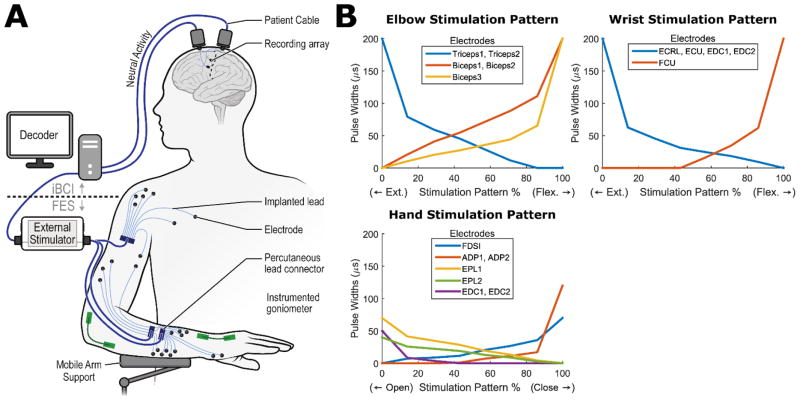
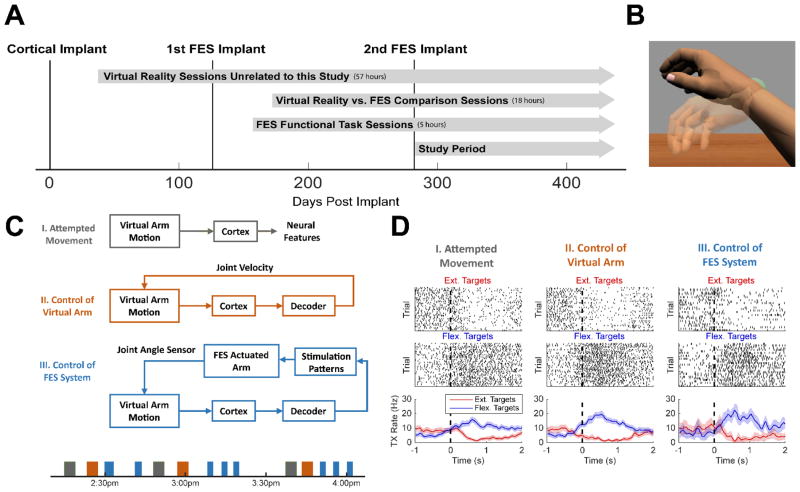
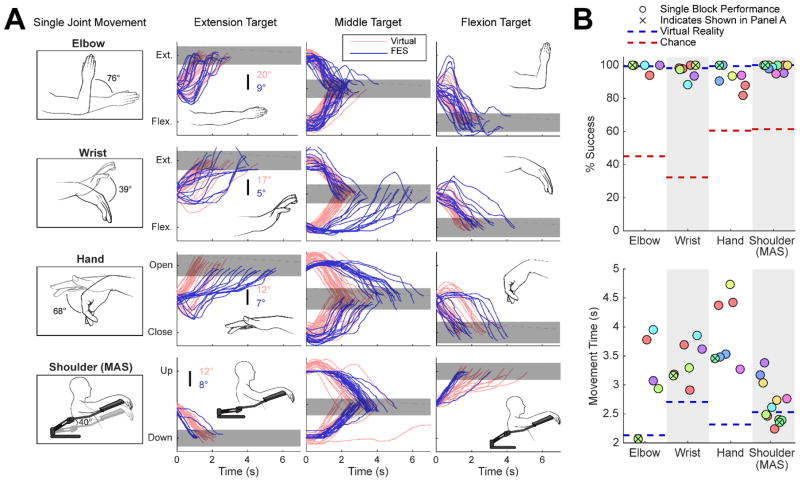
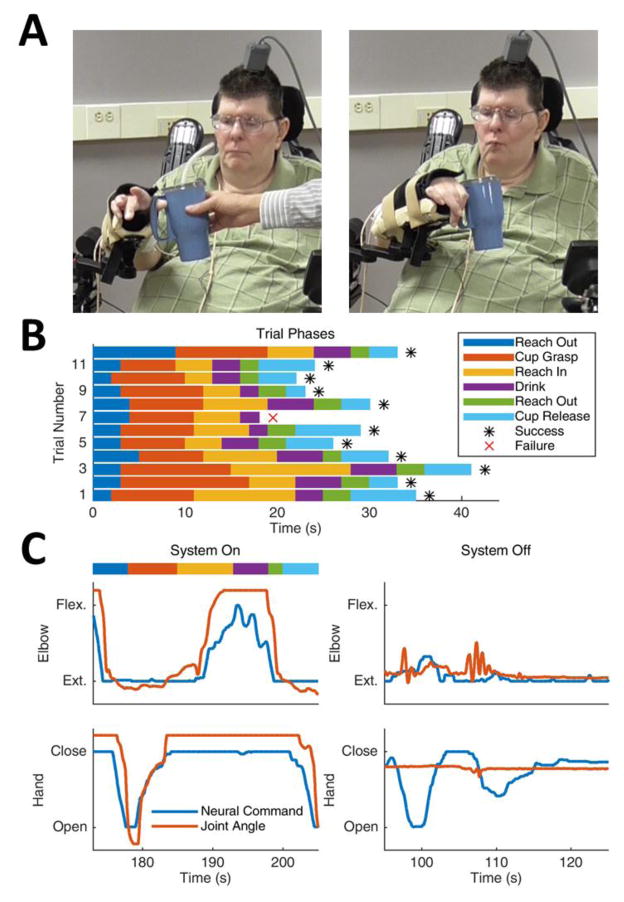
Background People with chronic tetraplegia, due to high-cervical spinal cord injury, can regain limb movements through coordinated electrical stimulation of peripheral muscles and nerves, known as functional electrical stimulation (FES). Users typically command FES systems through other preserved, but unrelated and limited in number, volitional movements (eg, facial muscle activity, head movements, shoulder shrugs). We report the findings of an individual with traumatic high-cervical spinal cord injury who coordinated reaching and grasping movements using his own paralysed arm and hand, reanimated through implanted FES, and commanded using his own cortical signals through an intracortical brain-computer interface (iBCI).Methods We recruited a participant into the BrainGate2 clinical trial, an ongoing study that obtains safety information regarding an intracortical neural interface device, and investigates the feasibility of people with tetraplegia controlling assistive devices using their cortical signals. Surgical procedures were performed at University Hospitals Cleveland Medical Center (Cleveland, OH, USA). Study procedures and data analyses were performed at Case Western Reserve University (Cleveland, OH, USA) and the US Department of Veterans Affairs, Louis Stokes Cleveland Veterans Affairs Medical Center (Cleveland, OH, USA). The study participant was a 53-year-old man with a spinal cord injury (cervical level 4, American Spinal Injury Association Impairment Scale category A). He received two intracortical microelectrode arrays in the hand area of his motor cortex, and 4 months and 9 months later received a total of 36 implanted percutaneous electrodes in his right upper and lower arm to electrically stimulate his hand, elbow, and shoulder muscles. The participant used a motorised mobile arm support for gravitational assistance and to provide humeral abduction and adduction under cortical control. We assessed the participant's ability to cortically command his paralysed arm to perform simple single-joint arm and hand movements and functionally meaningful multi-joint movements. We compared iBCI control of his paralysed arm with that of a virtual three-dimensional arm. This study is registered with ClinicalTrials.gov, number NCT00912041.Findings The intracortical implant occurred on Dec 1, 2014, and we are continuing to study the participant. The last session included in this report was Nov 7, 2016. The point-to-point target acquisition sessions began on Oct 8, 2015 (311 days after implant). The participant successfully cortically commanded single-joint and coordinated multi-joint arm movements for point-to-point target acquisitions (80-100% accuracy), using first a virtual arm and second his own arm animated by FES. Using his paralysed arm, the participant volitionally performed self-paced reaches to drink a mug of coffee (successfully completing 11 of 12 attempts within a single session 463 days after implant) and feed himself (717 days after implant).Interpretation To our knowledge, this is the first report of a combined implanted FES+iBCI neuroprosthesis for restoring both reaching and grasping movements to people with chronic tetraplegia due to spinal cord injury, and represents a major advance, with a clear translational path, for clinically viable neuroprostheses for restoration of reaching and grasping after paralysis.Funding National Institutes of Health, Department of Veterans Affairs.
Overview
The claims and statistics of this paper haven’t been checked yet.
Free: it reads the open-access text and checks the first 5 claims that cite a source we can check. Create a free account to check every claim.
Integrity signals
Registry
Cites
Statistics
Figures
Verification
Claims the paper makes
The claims and statistics of this paper haven’t been checked yet.
Free: it reads the open-access text and checks the first 5 claims that cite a source we can check. Create a free account to check every claim.
Claims other papers make about this one
Each is checked against this paper’s own text: does it say what the citing paper says it does?
The source backs part of the claim, not all of it — or backs it for a different population, condition or comparison.
In the citing paper
“and has enabled the highest BCI performance to date compared to other recording technologies (EEG, ECoG) for restoring communication7, arm control2,5, and general-purpose computer use39.”
From High-performance brain-to-text communication via handwriting (2021) · cites this paper as [5]
Experimental — accuracy not yet measuredThe cited source says what the claim attributes to it.
In the citing paper
“Prior BCI studies have shown that the motor intention for gross motor skills, such as reaching, grasping or moving a computer cursor, remains neurally encoded in motor cortex after paralysis1–7.”
From High-performance brain-to-text communication via handwriting (2021) · cites this paper as [5]
Self-check
Percentages, sums and reported differences re-computed from the paper’s own numbers.
The self-check needs the paper’s full text.
Citations
Cites
Isolated Hand Paresis: A Case Series
Alstadhaug, K. B., & Sjulstad, A. (2013) · Cerebrovascular Diseases Extra · doi:10.1159/000350708 · Cited by 4,058
Neuronal ensemble control of prosthetic devices by a human with tetraplegia
Hochberg, L. R., Serruya, M. D., Friehs, G. M., Mukand, J. A., Saleh, M., Caplan, A. H., Branner, A., Chen, D., Penn, R. D., & Donoghue, J. P. (2006) · Nature · doi:10.1038/nature04970 · Cited by 3,295
Self-citationReach and grasp by people with tetraplegia using a neurally controlled robotic arm
Hochberg, L. R., Bacher, D., Jarosiewicz, B., Masse, N. Y., Simeral, J. D., Vogel, J., Haddadin, S., Liu, J., Cash, S. S., van der Smagt, P., et al. (2012) · Nature · doi:10.1038/nature11076 · Cited by 2,719
Self-citationHigh-performance neuroprosthetic control by an individual with tetraplegia
Collinger, J. L., Wodlinger, B., Downey, J. E., Wang, W., Tyler-Kabara, E. C., Weber, D. J., McMorland, A. J., Velliste, M., Boninger, M. L., & Schwartz, A. B. (2013) · The Lancet · doi:10.1016/s0140-6736(12)61816-9 · Cited by 1,848
Localization of the motor hand area to a knob on the precentral gyrus. A new landmark
Yousry, T. (1997) · Brain · doi:10.1093/brain/120.1.141 · Cited by 1,837
Cortical control of a prosthetic arm for self-feeding
Velliste, M., Perel, S., Spalding, M. C., Whitford, A. S., & Schwartz, A. B. (2008) · Nature · doi:10.1038/nature06996 · Cited by 1,591
Direct Cortical Control of 3D Neuroprosthetic Devices
Taylor, D. M., Tillery, S. I. H., & Schwartz, A. B. (2002) · Science · doi:10.1126/science.1070291 · Cited by 1,540
Instant neural control of a movement signal
Serruya, M. D., Hatsopoulos, N. G., Paninski, L., Fellows, M. R., & Donoghue, J. P. (2002) · Nature · doi:10.1038/416141a · Cited by 1,409
Self-citationRestoring cortical control of functional movement in a human with quadriplegia
Bouton, C. E., Shaikhouni, A., Annetta, N. V., Bockbrader, M. A., Friedenberg, D. A., Nielson, D. M., Sharma, G., Sederberg, P. B., Glenn, B. C., Mysiw, W. J., et al. (2016) · Nature · doi:10.1038/nature17435 · Cited by 924
Intracortical microstimulation of human somatosensory cortex
Flesher, S. N., Collinger, J. L., Foldes, S. T., Weiss, J. M., Downey, J. E., Tyler-Kabara, E. C., Bensmaia, S. J., Schwartz, A. B., Boninger, M. L., & Gaunt, R. A. (2016) · Science Translational Medicine · doi:10.1126/scitranslmed.aaf8083 · Cited by 704
Cited by
Items 801–896 of 896
Colachis, S. C., Ganzer, P. D., Friedenberg, D. A., & Sharma, G. (2023) · Handbook of Neuroengineering · doi:10.1007/978-981-16-5540-1_119
刘, 玉. (2023) · Advances in Clinical Medicine · doi:10.12677/acm.2023.1371510
Realizing Upper Extremity Bionic Limbs: Leveraging Neuroprosthetic Control Strategies
Kumar, N. G., Chestek, C. A., Cederna, P. S., & Kung, T. A. (2023) · Plastic & Reconstructive Surgery · doi:10.1097/prs.0000000000011183
Digital Bridge to Restore Voluntary Control of Leg Movements After Paralysis
Gálvez, A., Charvet, G., Bloch, J., Courtine, G., & Lorach, H. (2024) · Springer briefs in electrical and computer engineering · doi:10.1007/978-3-031-49457-4_6
Brain-Body Interfaces to Assist and Restore Motor Functions in People with Paralysis
Losanno, E., Badi, M., Roussinova, E., Bogaard, A. R., Delacombaz, M., Shokur, S., & Micera, S. (2024) · Springer briefs in electrical and computer engineering · doi:10.1007/978-3-031-49457-4_7
Designing Touch: Intracortical Neurohaptic Feedback in Virtual Reality
Paschall, C. J., Hauptman, J. S., Rao, R. P. N., Ojemann, J. G., & Herron, J. A. (2024) · Springer briefs in electrical and computer engineering · doi:10.1007/978-3-031-49457-4_10
Acute Spinal Cord Injury and Spinal Trauma
Higgins, D. M. O., Upadhyayula, P. S., Argenziano, M., & McCormick, P. C. (2024) · Cambridge University Press eBooks · doi:10.1017/9781108917339.020
Шевалдова, О. В., & Vartanov, A. (2024) · Studies in computational intelligence · doi:10.1007/978-3-031-50381-8_86
Lai, D., Chen, L., Chen, W., Meng, X., Hao, Y., & Xu, K. (2023) · International Conference on Biomedical and Bioinformatics Engineering (ICBBE) · doi:10.1145/3637732.3637785
Unveiling Current Advances in Bioelectronic Medicine: A Comprehensive Review
Deshkar, S. S., Ovhal, K. G., Kothapalli, L., Shirolkar, S. V., & Pagar, R. R. (2024) · Drug Delivery Letters · doi:10.2174/0122103031288230240424043423
A guiding light for stimulating paralyzed muscles
Williams, J. J. (2024) · Science Robotics · doi:10.1126/scirobotics.ado9987
Lam, D., Javadekar, A., Patil, N. T., Yu, M. H., Li, L., Menendez, D. M., Gupta, A. S., Capadona, J. R., & Shoffstall, A. J. (2024) · Acta Biomaterialia · doi:10.1016/j.actbio.2024.05.039
Gou, G., Cheng, K. H., Sun, J., Lin, C., Pan, W., Huang, G., Leng, Y., Guo, Y., & Fu, C. (2024) · International Conference on Advanced Robotics and Mechatronics (ICARM) · doi:10.1109/icarm62033.2024.10715889
Protocol for state-based decoding of hand movement parameters using neural signals
Ghodrati, M. T., Aghababaei, S., Mirfathollahi, A., Shalchyan, V., Zarrindast, M., & Daliri, M. R. (2024) · STAR Protocols · doi:10.1016/j.xpro.2024.103503
Enhancing Brain Machine Interface Decoding Accuracy through Domain Knowledge Integration
Okitsu, K., Isezaki, T., Obara, K., & Nishimura, Y. (2024) · Annual International Conference of the IEEE Engineering in Medicine and Biology Society (EMBC) · doi:10.1109/embc53108.2024.10782166
Sandoval, A., & Chen, B. (2024) · Springer eBooks · doi:10.1007/978-3-031-68237-7_53
Biomaterials for Bionic Implants
Shokuhfar, T. (2025) · Wiley eBooks · doi:10.1002/9781119851004.ch8
Okada, K., Takeuchi, M., Tokutake, K., Hirata, H., Aoyama, T., & Hasegawa, Y. (2024) · IEEE International Conference on Cyborg and Bionic Systems (CBS) · doi:10.1109/cbs61689.2024.10860429
AI Integration for Neurodegenerative Disorders: Advancements and Challenges
Falih, R. K., Abef, H. M., Jawad, A. Q., Farag, A. A. R., Shnain, A. H., Al-Ani, H. A., & Jabbar, I. (2024) · International Conference on IoT, Communication and Automation Technology (ICICAT) · doi:10.1109/icicat62666.2024.10923359
An innovative integrated processing framework for enhanced decoding of Mental-Imagery MEG signals
Wang, F., Wang, P., Ding, P., Gong, A., Chen, Y., Xue, Y., & Fu, Y. (2025) · Biomedical Signal Processing and Control · doi:10.1016/j.bspc.2025.108068
Dataflow-Specific Algorithms for Resource-Constrained Scheduling and Memory Design
Bhattacharjee, A., Liu, Q. C., Manohar, R., Pothukuchi, R. P., & Ugur, M. (2025) · ACM Symposium on Parallelism in Algorithms and Architectures (SPAA) · doi:10.1145/3694906.3743342
Wang, F., Dong, Q., Xie, X., Zhao, G., Tian, M., & Wang, X. (2025) · International Conference on Mechatronics and Machine Vision in Practice (M2VIP) · doi:10.1109/m2vip67511.2025.11165693
Cubillos, L. H. (2025) · Deep Blue (University of Michigan) · doi:10.7302/25565
Longitudinal study of gesture decoding in a clinical trial participant with ALSPreprint
Candrea, D. N., Angrick, M., Luo, S., Ganji, R., Coogan, C. G., Milsap, G., Rosenblatt, K. R., Uchil, A., Clawson, L., Maragakis, N. J., et al. (2025) · medRxiv · doi:10.1101/2025.09.26.25335804
In-vitro real-time magnetic recording of neuronal activity on spinal cord slices
Vera, A., Calaresu, I., Martínez, I., Guerrero, R., Scaini, D., Schoebel, G. D. A., Hernández, J. J., Rodríguez, I., Miranda, R., Martín, E. D., et al. (2025) · Sensing and Bio-Sensing Research · doi:10.1016/j.sbsr.2025.100885
Yao, R., Zhou, W., Liu, D., Li, W., Liang, F., Liu, T., Xu, H., Wang, J., & Hong, B. (2025) · medRxiv · doi:10.1101/2025.10.06.25337264
Generative AI for Advances in Biomedicine
Sun, Y. (2025) · Journal of Medicine and Life Sciences · doi:10.71222/7dmwdj95
Behavior-Reinforced Latent Alignment for Generating Functional Neural Spike Patterns *
Wu, S., Zhang, X., & Wang, Y. (2025) · International Joint Conference on Neural Networks (IJCNN) · doi:10.1109/ijcnn64981.2025.11228048
“For lower-level regions closely linked to motor control, such as the spinal cord or muscles, stimulation can be mapped to joint movements using anatomical knowledge and imaging techniques [5], [6], [7], [8].”
Svejgaard, B. (2025) · VBN Forskningsportal (Aalborg Universitet) · doi:10.54337/aau805587500
Neuromodulation Through Axonal Stimulations in Brain
Feng, Z. (2025) · Springer eBooks · doi:10.1007/978-981-95-4145-4_9
Decoding of Individual Fingers Attempted Movement from Epidural ECoG in a Patient with Tetraplegia
Carvallo-Pecci, A., Struber, L., Costecalde, T., Souriau, R., Charvet, G., & Aksenova, T. (2025) · Annual International Conference of the IEEE Engineering in Medicine and Biology Society (EMBC) · doi:10.1109/embc58623.2025.11254592
Nakayoshi, K., & Watanabe, T. (2025) · IEEE Global Conference on Consumer Electronics (GCCE) · doi:10.1109/gcce65946.2025.11274861
Li, T., Zhao, Z.-H., Tang, H., Chen, Z., Lu, Z., Yang, X.-L., Zhao, L.-L., Li, Y., Dang, M., Chen, Z., et al. (2025) · Cellular and Molecular Neurobiology · doi:10.1007/s10571-025-01647-w · Cited by 1
Engineered hydrogel coating for improved biocompatibility of chronically implanted neural electrodes
Stüve, A. I. R. (2022) · Portuguese National Funding Agency for Science, Research and Technology (RCAAP Project by FCT) · doi:10.34626/smcs-2n14
Arm Rehabilitation Assistive Device using a Sensory Unit and Arduino
Sabah, A. A., & Naho, S. A.-J. (2024) · Information Horizons: American Journal of Library and Information Science Innovation (2993-2777) · doi:10.5281/zenodo.14406841
Bidirectional Brain-Machine Interfaces for Modulating Stimulation and Neural Plasticity
Jo, H. (2021) · CaltechTHESIS (California Institute of Technology) · doi:10.7907/df0t-1t79
Brain-computer interfaces and the decoding of thoughts as personal data of the mind
Fonseca, D. M. D. B. (2023) · Portuguese National Funding Agency for Science, Research and Technology (RCAAP Project by FCT) · Cited by 3
The Influences of Posture and Motivation on Neural Population Activity in Motor Cortex
Marino, P. J. (2023) · D-Scholarship@Pitt (University of Pittsburgh)
Decoding four-finger proprioceptive and tactile stimuli from magnetoencephalography
Nyländen, P. (2024) · Jyväskylä University Digital Archive (University of Jyväskylä) · Cited by 1
Montgomery‐Walsh, R. (2023) · eScholarship (California Digital Library)
Cortical Computations during Maintenance of Postural Stability: Towards a Postural Neuroprosthetic
Disse, G. D. (2023) · eScholarship (California Digital Library)
Young, D. R. (2018) · OhioLink ETD Center (Ohio Library and Information Network)
Self-citationHerrera, A. J. (2023) · D-Scholarship@Pitt (University of Pittsburgh)
Nuthi, S. G. (2018) · Arizona State University Library Digital Repository (Arizona State University)
Cole, N. M. (2020) · OhioLink ETD Center (Ohio Library and Information Network)
İnanıcı, F. (2019) · ResearchWorks at the University of Washington (University of Washington) · Cited by 1
Gaunt, R. A., & Collinger, J. L. (2019) · The Conversation · doi:10.64628/aai.swfynqa3e · Cited by 1
Capi, G., Pongthanisorn, G., Progri, G., & Kaneko, S.-I. (2026) · Lecture notes in computer science · doi:10.1007/978-3-032-07343-3_39
Andrade, P., Mercado, R. R. P. S., Jiménez, F., & Visser-Vandewalle, V. E. R. M. (2026) · Die Chirurgie · doi:10.1007/s00104-025-02436-3
Wei, J., Rong, D., Hong, D., Zhang, Z., Zhu, X., He, Q., & Wang, Y. (2025) · IEEE International Conference on Bioinformatics and Biomedicine (BIBM) · doi:10.1109/bibm66473.2025.11356796
An, S., Meng, Z., & Li, X. (2025) · IEEE International Conference on Bioinformatics and Biomedicine (BIBM) · doi:10.1109/bibm66473.2025.11356351
Murai, R., Hagio, S., & Nozaki, D. (2026) · bioRxiv (Cold Spring Harbor Laboratory) · doi:10.64898/2026.02.14.705802
Optimizing Federated Block-Term Tensor Regression: Strategy Comparisons and Applications
Faes, A., & Peeters, L. M. (2025) · International Conference on Foundation and Large Language Models (FLLM) · doi:10.1109/fllm67465.2025.11391186
Fat-Intrabody Communication for Medical Implants and Brain–Computer Interfaces
Engstrand, J. (2026) · Uppsala University Publications (Uppsala University)
Huang, Z. Z., Liu, R., Ma, X., Pang, Y., Li, Y., Ma, D., Yu, Z., Liu, J., Li, J., & Li, Z. (2026) · IEEE International Conference on Micro Electro Mechanical Systems (MEMS) · doi:10.1109/mems64181.2026.11419532
Abbasi, A. (2019) · theses.fr (ABES) · doi:10.70675/d2187cf3z47a0z4420z8005zb0c6f6b4e73f
EEG correlates of well-being and wearable EEG
Cannard, C. (2022) · theses.fr (ABES) · doi:10.70675/df2fc223ze70cz4c74zbdeez427a8788428b
Śliwowski, M. (2022) · theses.fr (ABES) · doi:10.70675/7c6c593ezcd6az41a3z8ad3za50ae36de60c · Cited by 5
Réseaux cognitifs sous-jacents à la prise de décision basée sur la valeur
Baratin, C. (2024) · theses.fr (ABES) · doi:10.70675/ff62619dz4685z4ef0z9c13z90f163cde7e3
Neural Reconstruction in Disorders of Consciousness: Prospects and Emerging Challenges
Kolisnyk, M., Rankaduwa, S., Gupta, G., Kazazian, K., Debicki, D., & Owen, A. M. (2026) · The Neuroscientist · doi:10.1177/10738584261434939
Accelerometer – Driven motion interpretation for prosthetic hand control
Chandrasegar, P. N., Sivasubramaniam, D., Scinduja, O. C. S. M., Muniraj, M., Kumar, A., & Velayudham, S. (2026) · AIP conference proceedings · doi:10.1063/5.0334877
Zhou, B., & Basu, A. (2026) · Neuromorphic Computing and Engineering · doi:10.1088/2634-4386/ae6728 · Cited by 2
Lu, Y., Zhang, Z., & Peng, G. (2026) · Biomedical engineering · doi:10.5772/intechopen.1015791 · Cited by 1
Mahan, E. E., King, S. T., Chase, E. D. Z., Schearer, E. M., & O’Malley, M. K. (2026) · IEEE Transactions on Neural Systems and Rehabilitation Engineering · doi:10.1109/tnsre.2026.3700177
Ding, Y., Karrenbach, M., Johnson, Z., Wang, H., Zhang, J., Wittenberg, G. F., & He, B. (2026) · bioRxiv (Cold Spring Harbor Laboratory) · doi:10.64898/2026.06.15.732267
Chatzimichail, K., Paschalidis, C., Tzamali, E., Papadourakis, V., & Raos, V. (2026) · Science Advances · doi:10.1126/sciadv.aed9309
Canario, E., Shearer, C., Akçakaya, M., Weber, D. J., Chase, S. M., & Collinger, J. L. (2026) · Journal of Neural Engineering · doi:10.64898/2026.06.16.732398
González-Prieto, J., Arenillas, M., Barbero, E. S., Pecharromán, A. G., Muñoz, J. D., Rivas, E. A., Morillo, M. D. C., Cristóbal, L., Giannetti, R., & Maldonado, A. A. (2026) · Journal of Translational Medicine · doi:10.1186/s12967-026-08453-y
Bhatia, S., de Freitas, R. M., Kanter, J. H., Buell, T. J., Okonkwo, D. O., Pirondini, E., Prat-Ortega, G., Capogrosso, M., & Gerszten, P. C. (2026) · medRxiv · doi:10.64898/2026.06.22.26356277
Neural mechanisms of mixed speech and grasp representation in sensorimotor cortices
Foli, C., Conlan, E. C., Memberg, W. D., Bhat, P., Graczyk, E. L., Johnson, T. R., Taylor, D. M., Herring, E. Z., Sweet, J. A., & Ajiboye, A. B. (2026) · Journal of Neural Engineering · doi:10.1088/1741-2552/ae847b
Self-citationConlan, E. C., Foli, C., Memberg, W. D., Herring, E. Z., Sweet, J. A., & Ajiboye, A. B. (2026) · Frontiers in Neuroscience · doi:10.64898/2026.06.30.735663
Self-citationNeurorobotics for Neurorehabilitation: Clinical Applications and Future Research Direction
Brossy, T., Katic, N., & Raspopović, S. (2026) · Springer eBooks · doi:10.1007/978-981-96-7448-0_35-1
Neuromodulation in Spinal Cord Injury
Mansour, N., Keller, A., Parr, A. M., & Saigal, R. (2026) · Neurosurgery Clinics of North America · doi:10.1016/j.nec.2026.05.016
Identification of Optical H-Reflex Activation Using Optogenetic Tibial Nerve Stimulation
Moravec, E. M., & Williams, J. J. (2025) · International IEEE/EMBS Conference on Neural Engineering · doi:10.1109/ner61569.2025.11589047
Robert, T., Shaeri, M., & Shoaran, M. (2025) · International IEEE/EMBS Conference on Neural Engineering · doi:10.1109/ner61569.2025.11589063
Cost-Effective Open-Source Neuroprosthetic Arm with Modular Design and Environmental Haptic Feedback
Chen, O., & Amurthur, R. (2025) · International IEEE/EMBS Conference on Neural Engineering · doi:10.1109/ner61569.2025.11588991
“This challenge is compounded by the lack of open-source designs that enable further academic or clinical innovation [5][6].”
Rizzoglio, F., Darbhe, V., Carvajal, M., Firouzabadi, P., Moisio, K. C., Murray, W. M., Cerone, G. L., Botter, A., & Miller, L. E. (2026) · bioRxiv (Cold Spring Harbor Laboratory) · doi:10.64898/2026.07.10.737782
Rosado, E., Shon, A., & Wu, W. (2026) · Sensors · doi:10.3390/s26144480
“Ting et al. showed that wearable sleeve arrays can decode neural drive from paralyzed muscles during attempted movement [31,36].”
Transregional Neural Prostheses: Applications and Computational Tools
Wu, S., Príncipe, J. C., & Wang, Y. (2026) · IEEE Transactions on Neural Systems and Rehabilitation Engineering · doi:10.1109/tnsre.2026.3717163
Vazquez, S. T. (2026) · Tesis Doctorals en Xarxa (Consorci de Serveis Universitaris de Catalunya)
A Real-Time GUI Platform for Neural Signal Transmission: Design, Resource Profiling, and Usability
Alzubaidi, L. H. J., Farjami, Y., & Beni, M. A. (2026) · International Journal of Computer Information Systems and Industrial Management Applications · doi:10.70917/ijcisim-2026-3951
Körpınar, Ş., & Gezen, O. (2023) · Çanakkale Onsekiz Mart University Institutional Repository
Sun, P.-S. V., Ke, Y., & Basu, A. (2026) · Neuromorphic Computing and Engineering · doi:10.1088/2634-4386/aea4ec
Convergence of Artificial Intelligence and Cognitive Neuroscience Innovations and Future DirectionsPreprint
Ukpong, U. J., & Chetachi, O. M. (2026) · Research Square · doi:10.21203/rs.3.rs-10591570/v1
Phase Variable Impedance Hybrid Volitional Control for Transtibial Prostheses
Posh, R. R., Schmiedeler, J. P., & Wensing, P. M. (2026) · IEEE Transactions on Medical Robotics and Bionics · doi:10.1109/tmrb.2026.3736252
Neural Repair Therapies After Stroke: I. Therapeutic Advances
Lin, D. J., & Cramer, S. C. (2026) · Stroke · doi:10.1161/strokeaha.126.056092
Silk Fibroin-Based Flexible Electronics: A Mesoscopic Pathway Toward Human–Machine Interconnection
Li, J., Gao, S., Wang, C., Xiahou, J., & Liu, X. (2026) · Advanced Fiber Materials · doi:10.1007/s42765-026-00777-0
Xu, K., Li, Q., Dong, Y., Zhong, M., Shi, W., Lu, B., Mo, Z., Park, J., & WU, J. (2026) · Biomaterials Research · doi:10.34133/bmr.0437
Generalizable neural decoding for clinically scalable brain-computer interfaces
Gu, Y., Yin, H., Wang, Y., Woon, Y.-Q.-V., Wang, Y., Teng, M., Lu, C., Lü, Z., & Chen, J. (2026) · npj Biomedical Innovations. · doi:10.1038/s44385-026-00119-0
Xing, B., Zhang, L., & Tu, W.-J. (2026) · Frontiers in Neuroscience · doi:10.3389/fnins.2026.1994636
A phase decoder for reconstructing missing muscle activityPreprint
Bahdasariants, S., & Yakovenko, S. (2026) · bioRxiv (Cold Spring Harbor Laboratory) · doi:10.64898/2026.10.28.762227
Vespa, V., Kemp, S. W. P., Gates, D. H., Gillespie, R. B., Cederna, P. S., & Kung, T. A. (2026) · PM&R · doi:10.1002/pmrj.70250
Metadata
- Authors
- Ajiboye, A. B., Willett, F. R., Young, D. R., Memberg, W. D., Murphy, B. A., Miller, J. P., Walter, B. L., Sweet, J. A., Hoyen, H. A., Keith, M. W., Peckham, P. H., Simeral, J. D., Donoghue, J. P., Hochberg, L. R., & Kirsch, R. F.
- Affiliations
- United States Department of Veterans Affairs (US)
- MetroHealth (US)
- Brown University (US)
- Harvard University (US)
- Corresponding author
- Ajiboye, A Bolu
- ORCID
- Venue
- The Lancet
- Publisher
- Elsevier BV
- Published
- 2017-05
- Volume
- 389
- Issue
- 10081
- Pages
- 1821-1830
- ISSN
- 0099-5355 (ISSN-L)
- 0140-6736
- PMC
- PMC5516547
- OpenAlex
- W2603380332
- Cited by
- 862
- References
- 32
- Citations by year
- 2026: 60 · 2025: 104 · 2024: 97 · 2023: 87 · 2022: 107 · 2021: 106 · 2020: 107 · 2019: 85 · 2018: 79 · 2017: 29
- FWCI
- 47.07
- Type
- journal article
- Language
- en
- Open access
- green
- www.ncbi.nlm.nih.gov
- Licence
- cc-by-nc-nd
- www.elsevier.com/tdm/userlicense/1.0/ (tdm)
- Locations
- The Lancet (publishedVersion)
- PubMed (publishedVersion)
- Europe PMC (PubMed Central) (acceptedVersion, cc-by-nc-nd)
- PubMed Central (acceptedVersion, cc-by-nc-nd)
- Digital Access to Scholarship at Harvard (DASH) (Harvard University) (submittedVersion, cc-by)
- Funders
- U.S. Department of Veterans Affairs (B6453-R)
- National Institutes of Health (n01hd53403-6-0-1)
- National Institute on Deafness and Other Communication Disorders (R01DC009899)
- National Institute of Biomedical Imaging and Bioengineering (T32EB004314)
- Eunice Kennedy Shriver National Institute of Child Health and Human Development (R01HD077220, N01 HD053403)
- Topics
- Life Sciences › Neuroscience › Cognitive Neuroscience › EEG and Brain-Computer Interfaces
- Health Sciences › Medicine › Clinical Neurology › Spinal Cord Injury Research
- Life Sciences › Neuroscience › Cellular and Molecular Neuroscience › Neuroscience and Neural Engineering
- Keywords
- tetraplegia, high cervical spinal cord injury, intracortical brain-computer interfaces, functional electrical stimulation, reach-to-grasp, upper limb rehabilitation, assistive devices, neuroprosthetics
- MeSH terms
- Brain, Electrodes, Implanted, Electric Stimulation Therapy, Feasibility Studies, Hand, Humans, Male, Microelectrodes, Middle Aged, Motor Cortex, Movement, Quadriplegia, Self-Help Devices, Spinal Cord Injuries, United States, United States Department of Veterans Affairs, User-Computer Interface, Muscle, Skeletal, Hand Strength, Brain-Computer Interfaces
About these checks
Registry, retraction, Cites and statistics results are computed, not judged, with one exception: a printed reference that no index lists is read once by a model before it counts as a citation error. Claims are extracted by a model and kept only when their quote appears verbatim in the text; each cited source is then checked, with a model’s help, for whether it says what the claim relies on. Those verdicts can be wrong — read the claim’s quote and the cited source before relying on one.
Statistics and arithmetic are recomputed, not judged.
Confidence bands are shown only for fields calibrated on our annotated test set. None is calibrated yet, so no band is shown.
What counts as a claim ›How we measure confidence ›How we check this ›
Are you an author, or do you see a problem with this page? Request a review
Data sources
Bibliographic data: Semantic Scholar, OpenAlex, Crossref.
Contains information from the Semantic Scholar Academic Graph Datasets, made available under the ODC Attribution License (ODC-BY 1.0).
Semantic Scholar’s data is described in: Kinney, R., et al. (2023). The Semantic Scholar Open Data Platform. arXiv:2301.10140.
