

Restoration of reaching and grasping movements through brain-controlled muscle stimulation in a person with tetraplegia: a proof-of-concept demonstration
Open accessThe DOI matches its Crossref record; 31 of the 32 references it cites were found in a registry or an index.
Abstract
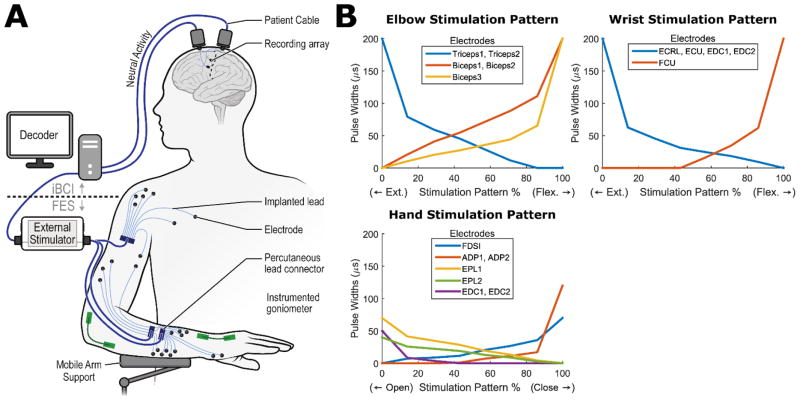
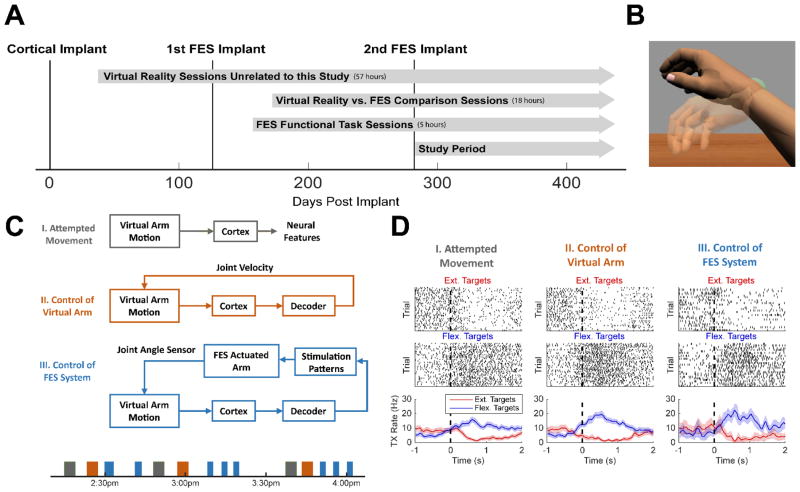
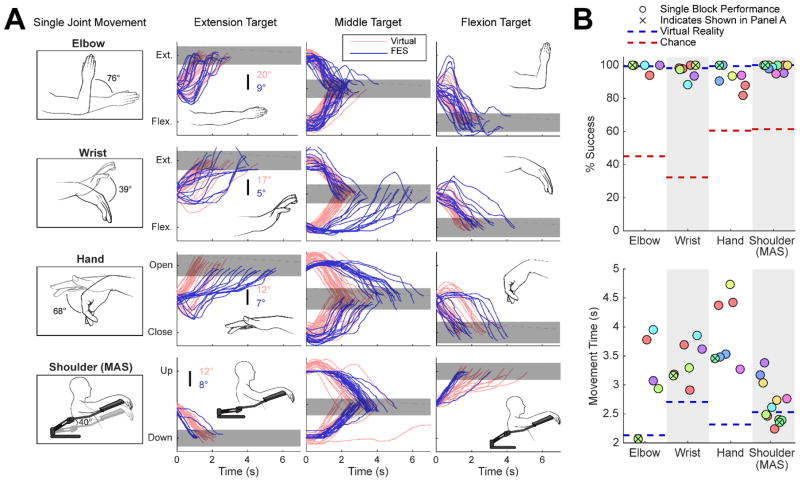
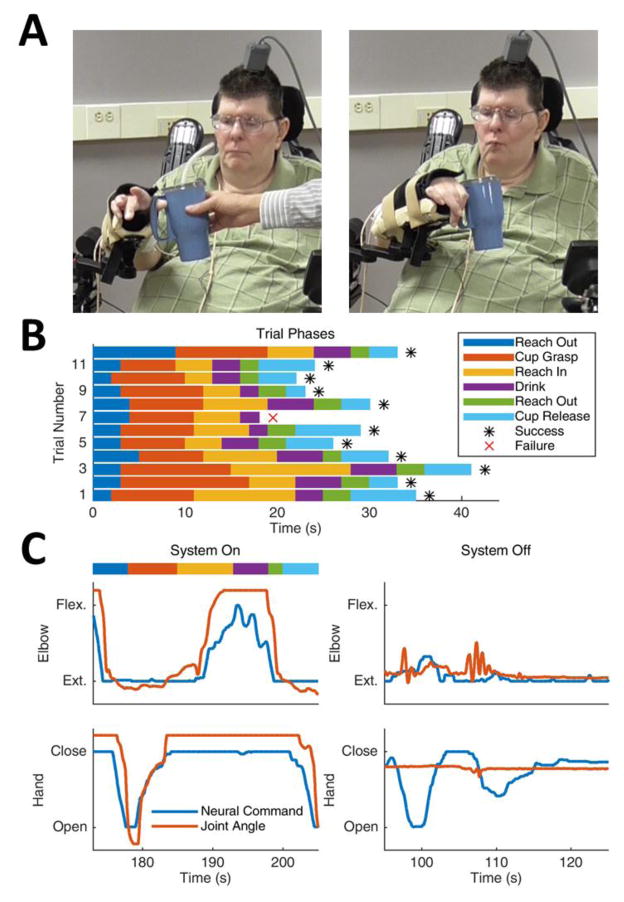
Background People with chronic tetraplegia, due to high-cervical spinal cord injury, can regain limb movements through coordinated electrical stimulation of peripheral muscles and nerves, known as functional electrical stimulation (FES). Users typically command FES systems through other preserved, but unrelated and limited in number, volitional movements (eg, facial muscle activity, head movements, shoulder shrugs). We report the findings of an individual with traumatic high-cervical spinal cord injury who coordinated reaching and grasping movements using his own paralysed arm and hand, reanimated through implanted FES, and commanded using his own cortical signals through an intracortical brain-computer interface (iBCI).Methods We recruited a participant into the BrainGate2 clinical trial, an ongoing study that obtains safety information regarding an intracortical neural interface device, and investigates the feasibility of people with tetraplegia controlling assistive devices using their cortical signals. Surgical procedures were performed at University Hospitals Cleveland Medical Center (Cleveland, OH, USA). Study procedures and data analyses were performed at Case Western Reserve University (Cleveland, OH, USA) and the US Department of Veterans Affairs, Louis Stokes Cleveland Veterans Affairs Medical Center (Cleveland, OH, USA). The study participant was a 53-year-old man with a spinal cord injury (cervical level 4, American Spinal Injury Association Impairment Scale category A). He received two intracortical microelectrode arrays in the hand area of his motor cortex, and 4 months and 9 months later received a total of 36 implanted percutaneous electrodes in his right upper and lower arm to electrically stimulate his hand, elbow, and shoulder muscles. The participant used a motorised mobile arm support for gravitational assistance and to provide humeral abduction and adduction under cortical control. We assessed the participant's ability to cortically command his paralysed arm to perform simple single-joint arm and hand movements and functionally meaningful multi-joint movements. We compared iBCI control of his paralysed arm with that of a virtual three-dimensional arm. This study is registered with ClinicalTrials.gov, number NCT00912041.Findings The intracortical implant occurred on Dec 1, 2014, and we are continuing to study the participant. The last session included in this report was Nov 7, 2016. The point-to-point target acquisition sessions began on Oct 8, 2015 (311 days after implant). The participant successfully cortically commanded single-joint and coordinated multi-joint arm movements for point-to-point target acquisitions (80-100% accuracy), using first a virtual arm and second his own arm animated by FES. Using his paralysed arm, the participant volitionally performed self-paced reaches to drink a mug of coffee (successfully completing 11 of 12 attempts within a single session 463 days after implant) and feed himself (717 days after implant).Interpretation To our knowledge, this is the first report of a combined implanted FES+iBCI neuroprosthesis for restoring both reaching and grasping movements to people with chronic tetraplegia due to spinal cord injury, and represents a major advance, with a clear translational path, for clinically viable neuroprostheses for restoration of reaching and grasping after paralysis.Funding National Institutes of Health, Department of Veterans Affairs.
Overview
The claims and statistics of this paper haven’t been checked yet.
Free: it reads the open-access text and checks the first 5 claims that cite a source we can check. Create a free account to check every claim.
Integrity signals
Registry
Cites
Statistics
Figures
Verification
Claims the paper makes
The claims and statistics of this paper haven’t been checked yet.
Free: it reads the open-access text and checks the first 5 claims that cite a source we can check. Create a free account to check every claim.
Claims other papers make about this one
Each is checked against this paper’s own text: does it say what the citing paper says it does?
The source backs part of the claim, not all of it — or backs it for a different population, condition or comparison.
In the citing paper
“and has enabled the highest BCI performance to date compared to other recording technologies (EEG, ECoG) for restoring communication7, arm control2,5, and general-purpose computer use39.”
From High-performance brain-to-text communication via handwriting (2021) · cites this paper as [5]
Experimental — accuracy not yet measuredThe cited source says what the claim attributes to it.
In the citing paper
“Prior BCI studies have shown that the motor intention for gross motor skills, such as reaching, grasping or moving a computer cursor, remains neurally encoded in motor cortex after paralysis1–7.”
From High-performance brain-to-text communication via handwriting (2021) · cites this paper as [5]
Self-check
Percentages, sums and reported differences re-computed from the paper’s own numbers.
The self-check needs the paper’s full text.
Citations
Cites
Isolated Hand Paresis: A Case Series
Alstadhaug, K. B., & Sjulstad, A. (2013) · Cerebrovascular Diseases Extra · doi:10.1159/000350708 · Cited by 4,058
Neuronal ensemble control of prosthetic devices by a human with tetraplegia
Hochberg, L. R., Serruya, M. D., Friehs, G. M., Mukand, J. A., Saleh, M., Caplan, A. H., Branner, A., Chen, D., Penn, R. D., & Donoghue, J. P. (2006) · Nature · doi:10.1038/nature04970 · Cited by 3,295
Self-citationReach and grasp by people with tetraplegia using a neurally controlled robotic arm
Hochberg, L. R., Bacher, D., Jarosiewicz, B., Masse, N. Y., Simeral, J. D., Vogel, J., Haddadin, S., Liu, J., Cash, S. S., van der Smagt, P., et al. (2012) · Nature · doi:10.1038/nature11076 · Cited by 2,719
Self-citationHigh-performance neuroprosthetic control by an individual with tetraplegia
Collinger, J. L., Wodlinger, B., Downey, J. E., Wang, W., Tyler-Kabara, E. C., Weber, D. J., McMorland, A. J., Velliste, M., Boninger, M. L., & Schwartz, A. B. (2013) · The Lancet · doi:10.1016/s0140-6736(12)61816-9 · Cited by 1,848
Localization of the motor hand area to a knob on the precentral gyrus. A new landmark
Yousry, T. (1997) · Brain · doi:10.1093/brain/120.1.141 · Cited by 1,837
Cortical control of a prosthetic arm for self-feeding
Velliste, M., Perel, S., Spalding, M. C., Whitford, A. S., & Schwartz, A. B. (2008) · Nature · doi:10.1038/nature06996 · Cited by 1,591
Direct Cortical Control of 3D Neuroprosthetic Devices
Taylor, D. M., Tillery, S. I. H., & Schwartz, A. B. (2002) · Science · doi:10.1126/science.1070291 · Cited by 1,540
Instant neural control of a movement signal
Serruya, M. D., Hatsopoulos, N. G., Paninski, L., Fellows, M. R., & Donoghue, J. P. (2002) · Nature · doi:10.1038/416141a · Cited by 1,409
Self-citationRestoring cortical control of functional movement in a human with quadriplegia
Bouton, C. E., Shaikhouni, A., Annetta, N. V., Bockbrader, M. A., Friedenberg, D. A., Nielson, D. M., Sharma, G., Sederberg, P. B., Glenn, B. C., Mysiw, W. J., et al. (2016) · Nature · doi:10.1038/nature17435 · Cited by 924
Intracortical microstimulation of human somatosensory cortex
Flesher, S. N., Collinger, J. L., Foldes, S. T., Weiss, J. M., Downey, J. E., Tyler-Kabara, E. C., Bensmaia, S. J., Schwartz, A. B., Boninger, M. L., & Gaunt, R. A. (2016) · Science Translational Medicine · doi:10.1126/scitranslmed.aaf8083 · Cited by 704
Cited by
Items 601–700 of 896
Feasibility of Using the Utah Array for Long-Term Fully Implantable Neuroprosthesis Systems
Bullard, A. J. (2019) · Deep Blue (University of Michigan) · Cited by 8
Invasive Brain Signal Acquisition Techniques: SUA, MUA, LFP, ECoG in Neuroimaging and Recording
Chaudhary, U. (2025) · Springer eBooks · doi:10.1007/978-3-031-76081-5_3 · Cited by 3
Intracortical brain-computer interface for navigation in virtual reality in macaque monkeys
Saussus, O., Schrijver, S. D., Ramirez, J. G., Decramer, T., & Janssen, P. (2026) · Science Advances · doi:10.1126/sciadv.adw3876 · Cited by 3
Non-invasive closed-loop spinal stimulation restores leg stepping control in humans with paraplegia
Tazoe, T., Sasada, S., Murayama, T., Nakao, Y., Kato, K., Kadowaki, S., Yoshida, S., Tsuji, H., Ozaki, A., Komiyama, T., et al. (2025) · Brain · doi:10.1093/brain/awaf230 · Cited by 5
Brain-computer interface: an update for the clinicians
Jain, A., Raveendran, S., Nair, K. P. S., & Ramakrishnan, S. (2026) · Frontiers in Human Neuroscience · doi:10.3389/fnhum.2026.1777024 · Cited by 6
“Ajiboye et al., conducted a proof-of-concept study, in which a patient with chronic C4 SCI and quadriparesis received implantation of two microelectrode arrays into the left motor cortex and 36 FES electrodes over the right arm.”
Charge‐Engineered COFs for Biointegrated Memristor Nerves
Meng, Z., Wu, J., Xue, F., Zhang, Q., Li, L., Qi, M., Zhang, S., Feng, T., Kong, P., Wang, X., et al. (2026) · Advanced Materials · doi:10.1002/adma.73189 · Cited by 3
Technologies in clinical neurophysiology for brain-body interfacing: IFCN handbook chapter
Cimolato, A., Sparapani, A., & Raspopović, S. (2026) · Clinical Neurophysiology · doi:10.1016/j.clinph.2026.2111913 · Cited by 3
Cimolato, A., Cekic, D., Katic, N., Razzoli, M., Missiroli, F., Dittli, J., Palopoli, P., Bellomo, S., Kenel, J., Dujović, S. D., et al. (2026) · Science Advances · doi:10.1126/sciadv.ady3144 · Cited by 3
Targeting grasp-related cortical areas for intracortical brain-machine interfaces
Johnson, T. R., Foli, C., Conlan, E. C., Koenig, K. A., Lowe, M. J., Memberg, W. D., Kirsch, R. F., Herring, E. Z., Bazarek, S. F., Graczyk, E. L., et al. (2026) · Neuroimage Reports · doi:10.1016/j.ynirp.2026.100381 · Cited by 3
“Previous studies have demonstrated the feasibility of BMI-controlled FES to restore movement, using neural signals predominantly from the primary motor cortex to command functional reach and grasp (Ajiboye et al., 2017; Bouton et al., 2016; Collinger et al., 2013).”
Self-citationReaching again: a glimpse of the future with neuroprosthetics
Perlmutter, S. I. (2017) · The Lancet · doi:10.1016/s0140-6736(17)30562-7 · Cited by 3
Hu, D., Wang, S., Li, B., Liu, H., & He, J. (2021) · Brain Sciences · doi:10.3390/brainsci11091193 · Cited by 3
“Functional electrical stimulation (FES) is a well-developed technique to restore lost motor function in patients after SCI [27,38], and the brain–computer interface (BCI) is a promising technique that involves transforming brain activity to control peripheral equipment, especially a functional electrical stimulator, t…”
BackgroundSchultz, J. R., Slifkin, A. B., & Schearer, E. M. (2022) · PLoS ONE · doi:10.1371/journal.pone.0263440 · Cited by 3
Invasive Brain-Computer Interface (BCI) for Communication
Chaudhary, U. (2025) · Springer eBooks · doi:10.1007/978-3-031-78991-5_5 · Cited by 3
Li, L., Hartzler, A., Menendez, D. M., Zhang, J., Chen, A., Lam, D., Traylor, B., Quill, E., Nethery, D. E., Hoeferlin, G. F., et al. (2025) · Nature Communications · doi:10.1038/s41467-025-63583-z · Cited by 6
Developing a Quasi-Static Controller for a Paralyzed Human Arm: A Simulation Study
Wolf, D. N., & Schearer, E. M. (2019) · International Conference on Rehabilitation Robotics · doi:10.1109/icorr.2019.8779381 · Cited by 3
“The state-of-the-art strategy, demonstrated in the BrainGate2 clinical trial, simultaneously controlled each joint independently [3].”
MethodSchultz, T., Angrick, M., Diener, L., Küster, D., Meier, M., Krusienski, D. J., Herff, C., & Brumberg, J. S. (2019) · Annual International Conference of the IEEE Engineering in Medicine and Biology Society (EMBC) · doi:10.1109/embc.2019.8857670 · Cited by 3
Dunlap, C. F., Franklin, R. K., Gerhardt, M., Ravindran, A., Hassani, A., Filev, D., Solzbacher, F., Bockbrader, M. A., Bird, L., Burkhart, I., et al. (2019) · Conference proceedings/Conference proceedings - IEEE International Conference on Systems, Man, and Cybernetics · doi:10.1109/smc.2019.8914317 · Cited by 5
“Proof of concept BMI systems have been demonstrated that enable humans with motor impairments to control a robotic arm [1, 2], computer cursor [3-5], wheelchair [6, 7], or their own paralyzed limbs through electrical stimulation (Estim) [8-12].”
BackgroundSchearer, E. M., & Wolf, D. N. (2020) · Journal of Neural Engineering · doi:10.1088/1741-2552/ab68b3 · Cited by 3
Improvement of the Electronic—Neuronal Interface by Natural Deposition of ECM
Weigel, T., Brennecke, J., & Hansmann, J. (2021) · Materials · doi:10.3390/ma14061378 · Cited by 4
“Permanent applications, like implants for stimulation in the central nervous system for motor functions [4] or concepts of permanent brain–computer interfaces, require highly tissue compatible electrode surfaces with ideally no inflammatory reaction.”
BackgroundMINI REVIEW: THE APPLICATION OF BRAIN-COMPUTER INTERFACES IN ROBOTIC THERAPY
Farzaneh, M. M. (2021) · International Journal of Engineering Science Technologies · doi:10.29121/ijoest.v5.i3.2021.186 · Cited by 3
Vaskov, A. K., & Chestek, C. A. (2021) · Hand Clinics · doi:10.1016/j.hcl.2021.04.003 · Cited by 3
“No other uses without perm (FES) systems.(48,49) More recently, both NHP and clinical studies have demonstrated that a linear framework can be extended to precisely control individual finger or grasp dimensions.”
BackgroundRestoring the sense of touch with electrical stimulation of the nerve and brain
Callier, T., & Bensmaïa, S. J. (2021) · Elsevier eBooks · doi:10.1016/b978-0-12-822828-9.00010-1 · Cited by 3
Ganzer, P. D., Colachis, S. C., Schwemmer, M. A., Friedenberg, D. A., Dunlap, C. F., Swiftney, C. E., Jacobowitz, A. F., Weber, D. J., Bockbrader, M. A., & Sharma, G. (2021) · Springer briefs in electrical and computer engineering · doi:10.1007/978-3-030-79287-9_8 · Cited by 3
Tools for Surface Treatment of Silicon Planar Intracortical Microelectrodes
Krebs, O. K., Mittal, G., Ramani, S., Zhang, J., Shoffstall, A. J., Cogan, S. F., Pancrazio, J. J., & Capadona, J. R. (2022) · Journal of Visualized Experiments · doi:10.3791/63500 · Cited by 3
Ferrea, E., Morel, P., & Gail, A. (2022) · The Journal of Open Source Software · doi:10.21105/joss.03956 · Cited by 3
“Recent advances in intracortical Brain-Computer Interface (BCI) technology allowed motor disabled patients to partially regain lost motor functions (Aflalo et al., 2015; Ajiboye et al., 2017; Collinger et al., 2013; Hochberg et al., 2012).”
BackgroundBrain-computer interface—Brain information reading and activity control
Xu, W., Chen, L., Sui, X., Yun, T., & Liu, Z. (2022) · Chinese Science Bulletin (Chinese Version) · doi:10.1360/tb-2022-0338 · Cited by 5
From Transparent Cranial Windows to Multifunctional Smart Cranial Platforms
Yang, N., Li, Q., Zhang, X., Xu, J., Xu, S., & Liu, F. (2022) · Electronics · doi:10.3390/electronics11162559 · Cited by 3
A Comprehensive Framework for the Modelling of Cartesian Force Output in Human Limbs
Sierotowicz, M., Lotti, N., Rupp, R., Masia, L., & Castellini, C. (2022) · International Conference on Rehabilitation Robotics · doi:10.1109/icorr55369.2022.9896547 · Cited by 3
“Particularly in individuals with cervical spinal cord injury (SCI) and the associated impairments of the reaching and grasping function, FES has been successfully employed for assistance in activities of daily living (ADL), both using trans-cutaneous [2] and intramuscular electrodes [3].”
Irastorza-Landa, N., Sarasola-Sanz, A., Bibián, C., Ray, A. M., Insausti-Delgado, A., Helmhold, F., Mahmoud, W. J., Ortego-Isasa, I., López‐Larraz, E., & Ramos‐Murguialday, A. (2023) · Handbook of Neuroengineering · doi:10.1007/978-981-16-5540-1_120 · Cited by 3
Park, K. S. (2023) · Springer eBooks · doi:10.1007/978-3-031-20784-6_10 · Cited by 4
How Does Artificial Intelligence Contribute to iEEG Research?
Berezutskaya, J., Saive, A.-L., Jerbi, K., & van Gerven, M. A. J. (2023) · Studies in neuroscience, psychology and behavioral economics · doi:10.1007/978-3-031-20910-9_47 · Cited by 5
Deep Q-Learning for Channel Optimization in MRCP BMI Systems: A Teleoperated Robot Implementation
Pongthanisorn, G., & Capi, G. (2024) · IEEE Access · doi:10.1109/access.2024.3405967 · Cited by 3
Restorative Treatments for Cervical Spinal Cord Injury, a Narrative Review
Kaleem, M. I., Javeed, S., Plog, B. A., Gupta, V. P., & Ray, W. Z. (2024) · Clinical Spine Surgery A Spine Publication · doi:10.1097/bsd.0000000000001699 · Cited by 3
“43,44 Utilizing a consumer-grade EEG headset instead of intracranial electrodes to control FES has also been shown to be feasible and reproducible.”
Cetera, A., Rabiee, A., Ghafoori, S., Shahriari, Y., & Abiri, R. (2024) · Annual International Conference of the IEEE Engineering in Medicine and Biology Society (EMBC) · doi:10.1109/embc53108.2024.10782523 · Cited by 3
Chaudhary, U. (2025) · Springer eBooks · doi:10.1007/978-3-031-78991-5_3 · Cited by 3
The future of brain-computer interaction: How future cars will interact with their passengers
Thum, G. E., & Gaffar, A. (2017) · IEEE SmartWorld, Ubiquitous Intelligence & Computing, Advanced & Trusted Computing, Scalable Computing & Communications, Cloud & Big Data Computing, Internet of People and Smart City Innovation (SmartWorld/SCALCOM/UIC/ATC/CBDCom/IOP/SCI) · doi:10.1109/uic-atc.2017.8397600 · Cited by 3
Chen, L., Feng, Y., Zhang, Y., Huang, H., & Guo, X. (2018) · Journal of Neurorestoratology · doi:10.26599/jnr.2018.9040016 · Cited by 3
“(7) Spinal cord firearm or sharp weapon injury.”
BackgroundFunctional Electrical Stimulation Capability Maps
Schearer, E. M., & Wolf, D. N. (2019) · International IEEE/EMBS Conference on Neural Engineering · doi:10.1109/ner.2019.8717134 · Cited by 3
“Very few FES neuroprostheses have demonstrated control of shoulder, elbow, and hand movements in people with high tetraplegia [3] [4] [5], but these systems are not versatile or robust and have not restored arm and hand function to people with high tetraplegia for”
BackgroundDecoding Movements Using Local Field Potentials from Premotor Cortex of Stroke Rats
Gao, H., Qi, Y., Zhang, F., Sun, M., Zhang, J., & Xu, K. (2019) · IEEE Biomedical Circuits and Systems Conference (BioCAS) · doi:10.1109/biocas.2019.8919223 · Cited by 3
“Movement intent decoding from neuron populations could be used to control computer cursors [1] or prosthetic limbs [2], or even to relink the communications between cerebral and peripheral nerve systems via electrical stimulation (ES) [3-5], which motivates the development of brain machine interfaces (BMIs).”
Brain-computer interfaces for basic neuroscience
Batista, A. P. (2020) · Handbook of clinical neurology · doi:10.1016/b978-0-444-63934-9.00017-2 · Cited by 3
Hu, K., Bounni, F., & Williams, Z. M. (2017) · Neurosurgical FOCUS · doi:10.3171/2017.5.focus17244 · Cited by 3
Normalization by Valence and Motivational Intensity in the Sensorimotor Cortices (PMd, rM1, and cS1)Preprint
Yao, Z., Hessburg, J. P., & Francis, J. T. (2019) · bioRxiv (Cold Spring Harbor Laboratory) · doi:10.1101/702050 · Cited by 5
Decoding speech from brain activity using linear methods
Godais, G. L. (2022) · theses.fr (ABES) · doi:10.70675/a715ba1dz66edz4e28za0faz7cd8ac99c928 · Cited by 6
Neural signal analysis in chronic stroke: advancing intracortical brain-computer interface design
Shawki, N., Napoli, A., Vargas-Irwin, C. E., Thompson, C. K., Donoghue, J. P., & Serruya, M. D. (2025) · Frontiers in Human Neuroscience · doi:10.3389/fnhum.2025.1544397 · Cited by 4
Self-citationEyvazpour, R., Farrokhi, B., & Erfanian, A. (2025) · iScience · doi:10.1016/j.isci.2025.114521 · Cited by 4
Coste, C., Guiho, T., Ferreira, F. A., Bailly, F., Degeorge, B., Geffrier, A., Andreu, D., Teissier, J., Guiraud, D., & Fattal, C. (2026) · Journal of NeuroEngineering and Rehabilitation · doi:10.1186/s12984-025-01857-9 · Cited by 3
Desideri, L., Grgič, R. G., Pirrera, A., & Giansanti, D. (2026) · Healthcare · doi:10.3390/healthcare14020274 · Cited by 2
“Ethical and data governance considerations, especially for AI-driven or invasive interventions, ensuring transparency, autonomy, and protection of sensitive information [37,40,62,65].”
InfluentialAn intracortical brain-machine interface based on macaque ventral premotor activity
Schrijver, S. D., Ramirez, J. G., Iregui, S., Aertbeliën, E., Schutter, J. D., Theys, T., Decramer, T., & Janssen, P. (2026) · Scientific Reports · doi:10.1038/s41598-026-38536-1 · Cited by 2
Ulnar nerve innervation patterns and muscle fiber type composition of intrinsic hand muscles in mice
Chen, C., Zhou, M., Xu, C., Jiang, T., He, Q., Prunières, G., Liverneaux, P. A., & Jiang, S. (2026) · Journal of Plastic Surgery and Hand Surgery · doi:10.2340/jphs.v61.45556 · Cited by 2
Wagner, A., Eisenkolb, V. M., Utzschmid, A., Gempt, J., Jacob, S. N., & Meyer, B. (2026) · Operative Neurosurgery · doi:10.1227/ons.0000000000002067 · Cited by 2
Swanson, E., Dohle, E., Bashford, L., Horsfall, H. L., Jovanovic, L., Muirhead, W. R., & Brannigan, J. (2026) · Journal of Neural Engineering · doi:10.1088/1741-2552/ae7694 · Cited by 2
A roadmap to navigate the future of neural engineering
Grill, W. M., Chestek, C. A., Wang, Y., Aberra, A. S., Destexhe, A., Chan, R. H. M., Lu, B., Hanein, Y., Robinson, J. T., Whitmire, C., et al. (2026) · Journal of Neural Engineering · doi:10.1088/1741-2552/ae78c2 · Cited by 3
Brain–computer interfaces and neuroprosthetics in the next era of neurosurgery
Banta, A. R., Fedorov, D., Altilia, A., Malliaras, G. G., & Barone, D. G. (2026) · British Journal of Neurosurgery · doi:10.1080/02688697.2026.2682817 · Cited by 2
Blumenthal, G. H., Dekleva, B. M., Gontier, C., Gonzalez, I. C., Gonzalez-martinez, J., Yu, B. M., Batista, A. P., Sobinov, A. R., Miller, L. E., Gaunt, R. A., et al. (2026) · Journal of Neuroscience · doi:10.1523/jneurosci.0205-26.2026 · Cited by 2
Solinsky, R. J., & Sullivan, L. S. (2018) · PM&R · doi:10.1016/j.pmrj.2018.05.020 · Cited by 2
“Recently, this has been accomplished in patients with SCI by using the participant’s brain to control peripheral functional electrical stimulation in their own muscles [7] and also in a bidirectional manner, in experiments in which a brain-controlled robotic arm directly conveyed sensory feedback from the robot back t…”
BackgroundBrain Computer Interface for the Hand Function Restoration
Zhang, X., Song, Z., Li, S., Zhang, Y., Fang, T., Wang, S., Li, H., Lin, Y., Jia, J., Zhang, L., et al. (2021) · International Winter Conference on Brain-Computer Interface (BCI) · doi:10.1109/bci51272.2021.9385348 · Cited by 4
Translational research in spinal cord injury – What is in the future?
Hejrati, N., McIntyre, W. B., Pieczonka, K., Ostmeier, S., Ahuja, C. S., Kwon, B. K., Vaccaro, A. R., Öner, F. C., & Fehlings, M. G. (2022) · Elsevier eBooks · doi:10.1016/b978-0-12-819835-3.00013-7 · Cited by 2
Sex differences in invasive and noninvasive neurotechnologies
Dubreuil-Vall, L., Laabs, T. L., Eyre, H. A., Smith, E., & Catuara‐Solarz, S. (2022) · Elsevier eBooks · doi:10.1016/b978-0-12-821392-6.00008-x · Cited by 2
Colachis, S. C., Ganzer, P. D., Friedenberg, D. A., & Sharma, G. (2021) · Handbook of Neuroengineering · doi:10.1007/978-981-15-2848-4_119-1 · Cited by 2
Kruppa, C. G., Benner, S., Brinkemper, A., Aach, M., Reimertz, C., & Schildhauer, T. A. (2022) · Die Unfallchirurgie · doi:10.1007/s00113-022-01270-0 · Cited by 2
Chepla, K. J., Perkins, B., Bryden, A. M., & Keith, M. W. (2024) · Cureus · doi:10.7759/cureus.52447 · Cited by 2
Self-citationAbryandoko, E. W., Susmartini, S., Widyo, L., & Herdiman, L. (2024) · Istrazivanja i projektovanja za privredu · doi:10.5937/jaes0-44644 · Cited by 2
Chen, W., Wang, S., Bao, J., Yu, C., Jiang, Q., Song, J., Zheng, Y., Hao, Y., & Xu, K. (2024) · Journal of Neural Engineering · doi:10.1088/1741-2552/ad5935 · Cited by 2
Mender, M. J., Ward, A. L., Cubillos, L. H., Kelberman, M. M., Costello, J. T., Temmar, H., Wallace, D. M., Lin, E. T., Lam, J. L. W., Willsey, M. S., et al. (2026) · Journal of NeuroEngineering and Rehabilitation · doi:10.1186/s12984-026-02091-7 · Cited by 3
Das, T., & Sut, D. J. (2024) · Elsevier eBooks · doi:10.1016/b978-0-323-95437-2.00007-0 · Cited by 2
Multi-gesture drag-and-drop decoding in a 2D iBCI control task
Gusman, J. T., Hosman, T., Crawford, R., Singer-Clark, T., Kapitonava, A., Kelemen, J. N., Hahn, N. V., Henderson, J. M., Hochberg, L. R., Simeral, J. D., et al. (2025) · Journal of Neural Engineering · doi:10.1088/1741-2552/adb180 · Cited by 3
Self-citationJohnson, T. R., Haddix, C. A., Ajiboye, A. B., & Taylor, D. M. (2025) · Journal of Neural Engineering · doi:10.1088/1741-2552/adc9e3 · Cited by 2
Self-citationNonlinear Optimization for Personalized Path Planning for a Hybrid FES-Exoskeleton System
Mahan, E. E., King, S. T., Chase, E. D. Z., Schearer, E. M., & O'Malley, M. K. (2025) · IEEE Robotics and Automation Letters · doi:10.1109/lra.2025.3548535 · Cited by 3
Milekovic, T. (2018) · International Winter Conference on Brain-Computer Interface (BCI) · doi:10.1109/iww-bci.2018.8311507 · Cited by 2
Wang, L., Wang, H., Tang, K., Zhong, W., Chen, Z., & Quan, Z. (2020) · Evidence-based Complementary and Alternative Medicine · doi:10.1155/2020/3561235 · Cited by 2
Thengone, D. J., Hosman, T., Simeral, J. D., & Hochberg, L. R. (2020) · Communications in computer and information science · doi:10.1007/978-3-030-60703-6_13 · Cited by 2
Self-citationNeural electrodes for long-term tissue interfaces
del Valle, J., Rodríguez‐Meana, B., & Navarro, X. (2021) · Elsevier eBooks · doi:10.1016/b978-0-12-822828-9.00009-5 · Cited by 2
Functional Electrical Stimulation
Rupp, R. (2021) · Springer eBooks · doi:10.1007/978-3-030-68545-4_2 · Cited by 2
Restoring upper extremity function with brain-machine interfaces
Nason, S. R., Mender, M. J., Letner, J. G., Chestek, C. A., & Patil, P. G. (2021) · International review of neurobiology · doi:10.1016/bs.irn.2021.06.001 · Cited by 2
Gehirn-Computer Schnittstellen zur Verbesserung von Lebensqualität und sozialer Teilhabe
Soekadar, S. R. (2022) · Schriften der Mathematisch-naturwissenschaftlichen Klasse · doi:10.1007/978-3-658-34859-5_12 · Cited by 2
Irastorza-Landa, N., Sarasola-Sanz, A., Bibián, C., Ray, A. M., Insausti-Delgado, A., Helmhold, F., Mahmoud, W. J., Ortego-Isasa, I., López‐Larraz, E., & Ramos‐Murguialday, A. (2022) · Handbook of Neuroengineering · doi:10.1007/978-981-15-2848-4_120-1 · Cited by 2
Gschwind, C. R., Ledgard, J. P., & Scott, T. R. D. (2023) · Handbook of Neuroengineering · doi:10.1007/978-981-16-5540-1_55 · Cited by 2
Extracting Semantic-Dynamic Features for Long-Term Stable Brain Computer Interface
Fang, T., Zheng, Q., Qi, Y., & Pan, G. (2023) · Proceedings of the AAAI Conference on Artificial Intelligence · doi:10.1609/aaai.v37i5.25738 · Cited by 4
Pitfalls in the Assessment of Brain-Machine Interfaces Using Information Transfer RatePreprint
Lebedev, M., Tseng, P.-H., Ifft, P. J., Ochei, D., & Nicolelis, M. A. L. (2017) · bioRxiv (Cold Spring Harbor Laboratory) · doi:10.1101/205013 · Cited by 2
Machine Learning to Characterize Motor Patterns and Restore Walking after Neural Injury
Dalrymple, A. W. (2019) · ERA: Education and Research Archive (University of Alberta) · doi:10.7939/r3-6q2s-s362 · Cited by 3
Slutzky, M. W. (2020) · Nature Biomedical Engineering · doi:10.1038/s41551-020-00631-7 · Cited by 2
Ali, O., Saif-ur-Rehman, M., Dyck, S., Glasmachers, T., Iossifidis, I., & Klaes, C. (2020) · arXiv (Cornell University) · Cited by 2
Sea of Electrodes Array (SEA): Customizable 3D High-Density High-Count Neural Probe Array Technology
Zardini, S., & ., S. I. A. (2019) · Deep Blue (University of Michigan) · Cited by 2
Okkesim, Ş., Rastogi, S., Christ, O., Hubka, P., Roßkothen-Kuhl, N., & Hofmann, U. (2021) · bioRxiv (Cold Spring Harbor Laboratory) · doi:10.1101/2021.03.10.434718 · Cited by 2
Hochberg, L. R., & Cash, S. S. (2021) · New England Journal of Medicine · doi:10.1056/nejme2106392 · Cited by 3
Self-citationBarra, B., Rose, D. S., Kumar, R., Gopinath, C., Mirzakhalili, E., Lempka, S. F., Gaunt, R. A., Głowacki, E. D., & Fisher, L. E. (2024) · bioRxiv (Cold Spring Harbor Laboratory) · doi:10.1101/2024.02.14.580219 · Cited by 4
SONIC: A Benchmarking Paradigm for Brain-Computer InterfacesPreprint
Perkins, S. M., Trumpis, M., Reitman, M. E., Jarosiewicz, B., Patel, A. N., Weiss, A., Scott, J. W., Nishimura, K. A., Angle, M. R., Qiao, S., et al. (2025) · bioRxiv (Cold Spring Harbor Laboratory) · doi:10.1101/2025.09.30.679683 · Cited by 4
Overlap in neural representations of coordinated wrist and finger movements in human motor cortexPreprint
Emonds, A. M., Okorokova, E. V., Blumenthal, G. H., Collinger, J. L., Bensmaïa, S. J., Miller, L. E., Downey, J. E., & Sobinov, A. R. (2026) · bioRxiv (Cold Spring Harbor Laboratory) · doi:10.64898/2026.03.19.712976 · Cited by 2
Qin, Y., Xu, Q., Kujala, T., Wang, X., & Cong, F. (2026) · Biomedical Signal Processing and Control · doi:10.1016/j.bspc.2026.109535 · Cited by 1
Upper Extremity Neuroprosthetics for Spinal Cord Injury
Kilgore, K. L. (2021) · Springer eBooks · doi:10.1007/978-3-030-68545-4_5 · Cited by 1
Brain Co-processors: Ethical and Social Implications
Rao, R. P. N., & Schönau, A. (2023) · Advances in neuroethics · doi:10.1007/978-3-031-26801-4_10 · Cited by 1
Johnston, R., Boulay, C., Miller, K. J., & Sachs, A. J. (2024) · Biomedical Physics & Engineering Express · doi:10.1088/2057-1976/ad795e · Cited by 1
Silicon carbide fibres – production, structure, and applications
Elango, J., & Wu, W. (2024) · Elsevier eBooks · doi:10.1016/b978-0-443-15459-1.00023-1 · Cited by 1
Moravec, E. M., & Williams, J. J. (2024) · Annual International Conference of the IEEE Engineering in Medicine and Biology Society (EMBC) · doi:10.1109/embc53108.2024.10782792 · Cited by 1
Invasive Brain–Computer Interfaces: 25 Years of Clinical Trials, Scientific and Practical Issues
Mokienko, O. A. (2025) · Annals of the Russian academy of medical sciences · doi:10.15690/vramn17994 · Cited by 1
Letner, J. G., Lam, J. L. W., Copenhaver, M. G., Barrow, M., Patel, P. R., Richie, J. M., Lee, J., Kim, H.-S., Cai, D., Weiland, J. D., et al. (2026) · Frontiers in Neuroscience · doi:10.3389/fnins.2026.1848862 · Cited by 2
Mirfathollahi, A., Ghodrati, M. T., Shalchyan, V., Zarrindast, M., & Daliri, M. R. (2025) · Heliyon · doi:10.1016/j.heliyon.2025.e42402 · Cited by 1
Neuromuscular Interactions: a Bridge between Mind and Technology
Djordjević, N. D., Jovović, T., Jovović, M., & Djordjević, V. (2023) · Sovremennye informacionnye tehnologii i IT-obrazovanie. · doi:10.25559/sitito.019.202303.659-669 · Cited by 1
Xie, C., Wang, L., Yang, J., & Guo, J. (2025) · Journal of Neuroscience Methods · doi:10.1016/j.jneumeth.2025.110483 · Cited by 2
Ruszala, B. M., & Schieber, M. H. (2025) · Cell Reports · doi:10.1016/j.celrep.2025.115664 · Cited by 1
Metadata
- Authors
- Ajiboye, A. B., Willett, F. R., Young, D. R., Memberg, W. D., Murphy, B. A., Miller, J. P., Walter, B. L., Sweet, J. A., Hoyen, H. A., Keith, M. W., Peckham, P. H., Simeral, J. D., Donoghue, J. P., Hochberg, L. R., & Kirsch, R. F.
- Affiliations
- United States Department of Veterans Affairs (US)
- MetroHealth (US)
- Brown University (US)
- Harvard University (US)
- Corresponding author
- Ajiboye, A Bolu
- ORCID
- Venue
- The Lancet
- Publisher
- Elsevier BV
- Published
- 2017-05
- Volume
- 389
- Issue
- 10081
- Pages
- 1821-1830
- ISSN
- 0099-5355 (ISSN-L)
- 0140-6736
- PMC
- PMC5516547
- OpenAlex
- W2603380332
- Cited by
- 862
- References
- 32
- Citations by year
- 2026: 60 · 2025: 104 · 2024: 97 · 2023: 87 · 2022: 107 · 2021: 106 · 2020: 107 · 2019: 85 · 2018: 79 · 2017: 29
- FWCI
- 47.07
- Type
- journal article
- Language
- en
- Open access
- green
- www.ncbi.nlm.nih.gov
- Licence
- cc-by-nc-nd
- www.elsevier.com/tdm/userlicense/1.0/ (tdm)
- Locations
- The Lancet (publishedVersion)
- PubMed (publishedVersion)
- Europe PMC (PubMed Central) (acceptedVersion, cc-by-nc-nd)
- PubMed Central (acceptedVersion, cc-by-nc-nd)
- Digital Access to Scholarship at Harvard (DASH) (Harvard University) (submittedVersion, cc-by)
- Funders
- U.S. Department of Veterans Affairs (B6453-R)
- National Institutes of Health (n01hd53403-6-0-1)
- National Institute on Deafness and Other Communication Disorders (R01DC009899)
- National Institute of Biomedical Imaging and Bioengineering (T32EB004314)
- Eunice Kennedy Shriver National Institute of Child Health and Human Development (R01HD077220, N01 HD053403)
- Topics
- Life Sciences › Neuroscience › Cognitive Neuroscience › EEG and Brain-Computer Interfaces
- Health Sciences › Medicine › Clinical Neurology › Spinal Cord Injury Research
- Life Sciences › Neuroscience › Cellular and Molecular Neuroscience › Neuroscience and Neural Engineering
- Keywords
- tetraplegia, high cervical spinal cord injury, intracortical brain-computer interfaces, functional electrical stimulation, reach-to-grasp, upper limb rehabilitation, assistive devices, neuroprosthetics
- MeSH terms
- Brain, Electrodes, Implanted, Electric Stimulation Therapy, Feasibility Studies, Hand, Humans, Male, Microelectrodes, Middle Aged, Motor Cortex, Movement, Quadriplegia, Self-Help Devices, Spinal Cord Injuries, United States, United States Department of Veterans Affairs, User-Computer Interface, Muscle, Skeletal, Hand Strength, Brain-Computer Interfaces
About these checks
Registry, retraction, Cites and statistics results are computed, not judged, with one exception: a printed reference that no index lists is read once by a model before it counts as a citation error. Claims are extracted by a model and kept only when their quote appears verbatim in the text; each cited source is then checked, with a model’s help, for whether it says what the claim relies on. Those verdicts can be wrong — read the claim’s quote and the cited source before relying on one.
Statistics and arithmetic are recomputed, not judged.
Confidence bands are shown only for fields calibrated on our annotated test set. None is calibrated yet, so no band is shown.
What counts as a claim ›How we measure confidence ›How we check this ›
Are you an author, or do you see a problem with this page? Request a review
Data sources
Bibliographic data: Semantic Scholar, OpenAlex, Crossref.
Contains information from the Semantic Scholar Academic Graph Datasets, made available under the ODC Attribution License (ODC-BY 1.0).
Semantic Scholar’s data is described in: Kinney, R., et al. (2023). The Semantic Scholar Open Data Platform. arXiv:2301.10140.
