

Restoration of reaching and grasping movements through brain-controlled muscle stimulation in a person with tetraplegia: a proof-of-concept demonstration
Open accessThe DOI matches its Crossref record; 31 of the 32 references it cites were found in a registry or an index.
Abstract
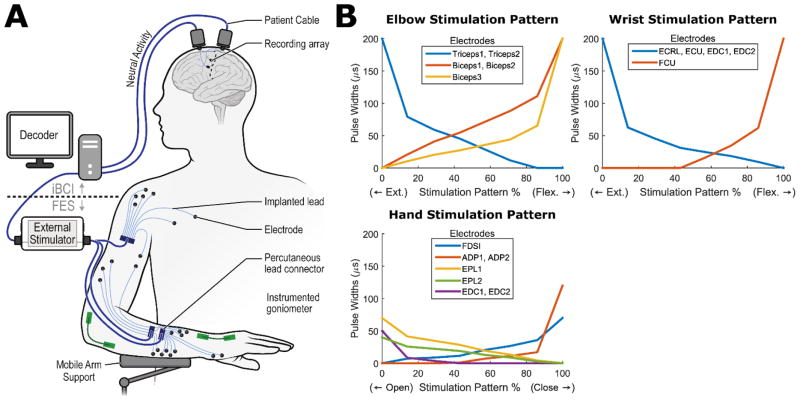
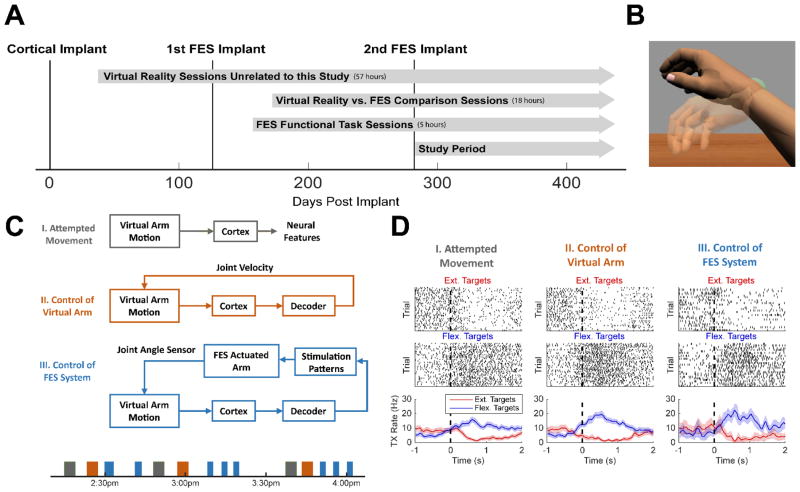
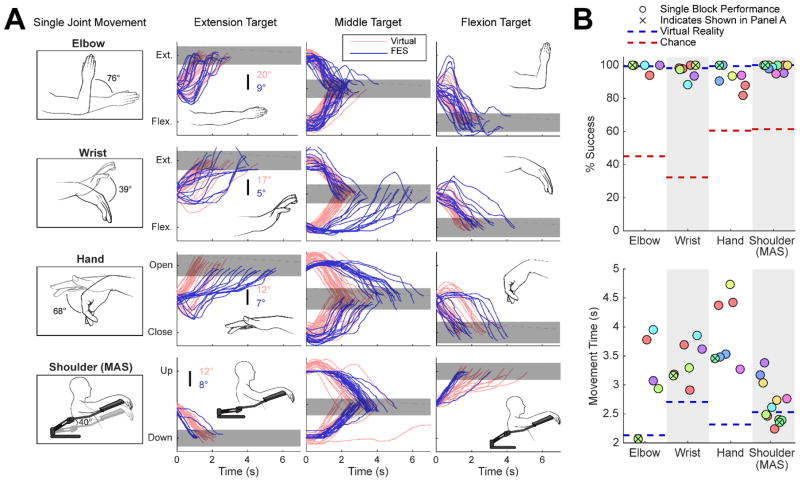
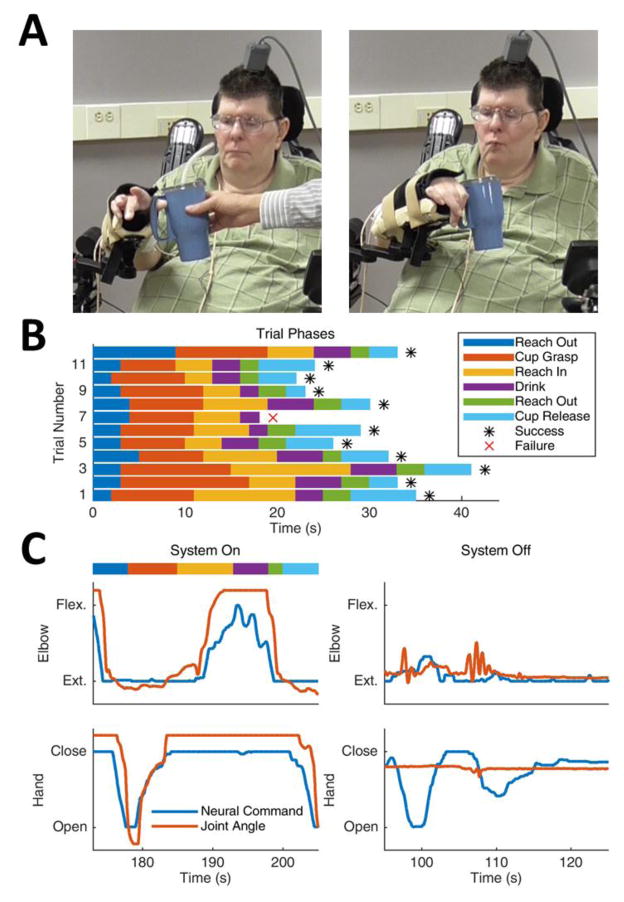
Background People with chronic tetraplegia, due to high-cervical spinal cord injury, can regain limb movements through coordinated electrical stimulation of peripheral muscles and nerves, known as functional electrical stimulation (FES). Users typically command FES systems through other preserved, but unrelated and limited in number, volitional movements (eg, facial muscle activity, head movements, shoulder shrugs). We report the findings of an individual with traumatic high-cervical spinal cord injury who coordinated reaching and grasping movements using his own paralysed arm and hand, reanimated through implanted FES, and commanded using his own cortical signals through an intracortical brain-computer interface (iBCI).Methods We recruited a participant into the BrainGate2 clinical trial, an ongoing study that obtains safety information regarding an intracortical neural interface device, and investigates the feasibility of people with tetraplegia controlling assistive devices using their cortical signals. Surgical procedures were performed at University Hospitals Cleveland Medical Center (Cleveland, OH, USA). Study procedures and data analyses were performed at Case Western Reserve University (Cleveland, OH, USA) and the US Department of Veterans Affairs, Louis Stokes Cleveland Veterans Affairs Medical Center (Cleveland, OH, USA). The study participant was a 53-year-old man with a spinal cord injury (cervical level 4, American Spinal Injury Association Impairment Scale category A). He received two intracortical microelectrode arrays in the hand area of his motor cortex, and 4 months and 9 months later received a total of 36 implanted percutaneous electrodes in his right upper and lower arm to electrically stimulate his hand, elbow, and shoulder muscles. The participant used a motorised mobile arm support for gravitational assistance and to provide humeral abduction and adduction under cortical control. We assessed the participant's ability to cortically command his paralysed arm to perform simple single-joint arm and hand movements and functionally meaningful multi-joint movements. We compared iBCI control of his paralysed arm with that of a virtual three-dimensional arm. This study is registered with ClinicalTrials.gov, number NCT00912041.Findings The intracortical implant occurred on Dec 1, 2014, and we are continuing to study the participant. The last session included in this report was Nov 7, 2016. The point-to-point target acquisition sessions began on Oct 8, 2015 (311 days after implant). The participant successfully cortically commanded single-joint and coordinated multi-joint arm movements for point-to-point target acquisitions (80-100% accuracy), using first a virtual arm and second his own arm animated by FES. Using his paralysed arm, the participant volitionally performed self-paced reaches to drink a mug of coffee (successfully completing 11 of 12 attempts within a single session 463 days after implant) and feed himself (717 days after implant).Interpretation To our knowledge, this is the first report of a combined implanted FES+iBCI neuroprosthesis for restoring both reaching and grasping movements to people with chronic tetraplegia due to spinal cord injury, and represents a major advance, with a clear translational path, for clinically viable neuroprostheses for restoration of reaching and grasping after paralysis.Funding National Institutes of Health, Department of Veterans Affairs.
Overview
The claims and statistics of this paper haven’t been checked yet.
Free: it reads the open-access text and checks the first 5 claims that cite a source we can check. Create a free account to check every claim.
Integrity signals
Registry
Cites
Statistics
Figures
Verification
Claims the paper makes
The claims and statistics of this paper haven’t been checked yet.
Free: it reads the open-access text and checks the first 5 claims that cite a source we can check. Create a free account to check every claim.
Claims other papers make about this one
Each is checked against this paper’s own text: does it say what the citing paper says it does?
The source backs part of the claim, not all of it — or backs it for a different population, condition or comparison.
In the citing paper
“and has enabled the highest BCI performance to date compared to other recording technologies (EEG, ECoG) for restoring communication7, arm control2,5, and general-purpose computer use39.”
From High-performance brain-to-text communication via handwriting (2021) · cites this paper as [5]
Experimental — accuracy not yet measuredThe cited source says what the claim attributes to it.
In the citing paper
“Prior BCI studies have shown that the motor intention for gross motor skills, such as reaching, grasping or moving a computer cursor, remains neurally encoded in motor cortex after paralysis1–7.”
From High-performance brain-to-text communication via handwriting (2021) · cites this paper as [5]
Self-check
Percentages, sums and reported differences re-computed from the paper’s own numbers.
The self-check needs the paper’s full text.
Citations
Cites
Isolated Hand Paresis: A Case Series
Alstadhaug, K. B., & Sjulstad, A. (2013) · Cerebrovascular Diseases Extra · doi:10.1159/000350708 · Cited by 4,058
Neuronal ensemble control of prosthetic devices by a human with tetraplegia
Hochberg, L. R., Serruya, M. D., Friehs, G. M., Mukand, J. A., Saleh, M., Caplan, A. H., Branner, A., Chen, D., Penn, R. D., & Donoghue, J. P. (2006) · Nature · doi:10.1038/nature04970 · Cited by 3,295
Self-citationReach and grasp by people with tetraplegia using a neurally controlled robotic arm
Hochberg, L. R., Bacher, D., Jarosiewicz, B., Masse, N. Y., Simeral, J. D., Vogel, J., Haddadin, S., Liu, J., Cash, S. S., van der Smagt, P., et al. (2012) · Nature · doi:10.1038/nature11076 · Cited by 2,719
Self-citationHigh-performance neuroprosthetic control by an individual with tetraplegia
Collinger, J. L., Wodlinger, B., Downey, J. E., Wang, W., Tyler-Kabara, E. C., Weber, D. J., McMorland, A. J., Velliste, M., Boninger, M. L., & Schwartz, A. B. (2013) · The Lancet · doi:10.1016/s0140-6736(12)61816-9 · Cited by 1,848
Localization of the motor hand area to a knob on the precentral gyrus. A new landmark
Yousry, T. (1997) · Brain · doi:10.1093/brain/120.1.141 · Cited by 1,837
Cortical control of a prosthetic arm for self-feeding
Velliste, M., Perel, S., Spalding, M. C., Whitford, A. S., & Schwartz, A. B. (2008) · Nature · doi:10.1038/nature06996 · Cited by 1,591
Direct Cortical Control of 3D Neuroprosthetic Devices
Taylor, D. M., Tillery, S. I. H., & Schwartz, A. B. (2002) · Science · doi:10.1126/science.1070291 · Cited by 1,540
Instant neural control of a movement signal
Serruya, M. D., Hatsopoulos, N. G., Paninski, L., Fellows, M. R., & Donoghue, J. P. (2002) · Nature · doi:10.1038/416141a · Cited by 1,409
Self-citationRestoring cortical control of functional movement in a human with quadriplegia
Bouton, C. E., Shaikhouni, A., Annetta, N. V., Bockbrader, M. A., Friedenberg, D. A., Nielson, D. M., Sharma, G., Sederberg, P. B., Glenn, B. C., Mysiw, W. J., et al. (2016) · Nature · doi:10.1038/nature17435 · Cited by 924
Intracortical microstimulation of human somatosensory cortex
Flesher, S. N., Collinger, J. L., Foldes, S. T., Weiss, J. M., Downey, J. E., Tyler-Kabara, E. C., Bensmaia, S. J., Schwartz, A. B., Boninger, M. L., & Gaunt, R. A. (2016) · Science Translational Medicine · doi:10.1126/scitranslmed.aaf8083 · Cited by 704
Cited by
Items 201–300 of 896
Shaikh, S., So, R. Q., Sibindi, T. M., Libedinsky, C., & Basu, A. (2019) · IEEE Transactions on Biomedical Circuits and Systems · doi:10.1109/tbcas.2019.2944486 · Cited by 36
“The continuous mode system is the more popularly used one owing to it’s generality of use in applications ranging from cursor control [2], [24] to robotic arm control [4] and paralyzed limb control [5].”
BackgroundBypassing stroke-damaged neural pathways via a neural interface induces targeted cortical adaptation
Kato, K., Sawada, M., & Nishimura, Y. (2019) · Nature Communications · doi:10.1038/s41467-019-12647-y · Cited by 39
An, H., Nason, S. R., Lim, J., Kwon, K., Willsey, M. S., Patil, P. G., Kim, H.-S., Sylvester, D., Chestek, C. A., & Blaauw, D. T. (2022) · IEEE Transactions on Biomedical Circuits and Systems · doi:10.1109/tbcas.2022.3175926 · Cited by 41
Davis, K., Meschede-Krasa, B., Cajigas, I., Prins, N. W., Alver, C. G., Gallo, S., Bhatia, S., Abel, J. H., Naeem, J., Fisher, L., et al. (2022) · Journal of NeuroEngineering and Rehabilitation · doi:10.1186/s12984-022-01026-2 · Cited by 36
“These settings were defined by the software Class’s Application Programming Interface (API) on the computer’s end and were delivered over Bluetooth for dynamic display. d A data collection session that presented prompts to the subject either for assessing accuracy or applying calibration to the device’s decoder Togeth…”
InfluentialNicolelis, M. A. L., Alho, E. J. L., Donati, A. R. C., Yamauti, S. Y., Aratanha, M. A., Bao, G., Campos, D. S. F., Almeida, S. B., Fischer, D., & Shokur, S. (2022) · Scientific Reports · doi:10.1038/s41598-022-24864-5 · Cited by 36
Evolution, biomechanics, and neurobiology converge to explain selective finger motor control
Xu, J., Mawase, F., & Schieber, M. H. (2024) · Physiological Reviews · doi:10.1152/physrev.00030.2023 · Cited by 36
Zhang, M., Schwemmer, M. A., Ting, J. E., Majstorovic, C. E., Friedenberg, D. A., Bockbrader, M. A., Jerry Mysiw, W., Rezai, A. R., Annetta, N. V., Bouton, C. E., et al. (2018) · Bioelectronic Medicine · doi:10.1186/s42234-018-0011-x · Cited by 32
Kumaravelu, K., Tomlinson, T., Callier, T., Sombeck, J. T., Bensmaïa, S. J., Miller, L. E., & Grill, W. M. (2020) · Journal of Neural Engineering · doi:10.1088/1741-2552/abacd8 · Cited by 34
Generalizable cursor click decoding using grasp-related neural transients
Dekleva, B. M., Weiss, J. M., Boninger, M. L., & Collinger, J. L. (2021) · Journal of Neural Engineering · doi:10.1088/1741-2552/ac16b2 · Cited by 33
Deep brain–machine interfaces: sensing and modulating the human deep brain
Sui, Y., Yu, H., Zhang, C., Chen, Y., Jiang, C., & Li, L. (2022) · National Science Review · doi:10.1093/nsr/nwac212 · Cited by 39
“They help restore, improve and modulate human physical or mental functions [1,2].”
BackgroundEnhanced selectivity of transcutaneous spinal cord stimulation by multielectrode configuration
Bryson, N. K., Lombardi, L., Hawthorn, R., Fei, J., Keesey, R., Peiffer, J. D., & Seáñez, I. (2023) · Journal of Neural Engineering · doi:10.1088/1741-2552/ace552 · Cited by 35
The future of upper extremity rehabilitation robotics: research and practice
Vu, P. P., Chestek, C. A., Nason, S. R., Kung, T. A., Kemp, S. W. P., & Cederna, P. S. (2020) · Muscle & Nerve · doi:10.1002/mus.26860 · Cited by 38
“demonstrated the ability of SCI patients to control grip force of paralyzed hands via FES delivered by surface electrodes(97) or self-feed with the use of implanted FES electrodes.(98) In general, these studies have focused mainly on controlling only arm movements and hand”
BackgroundBRAND: a platform for closed-loop experiments with deep network models
Ali, Y. H., Bodkin, K., Rigotti-Thompson, M., Patel, K., Card, N. S., Bhaduri, B., Nason-Tomaszewski, S. R., Mifsud, D. M., Hou, X., Nicolas, C., et al. (2024) · Journal of Neural Engineering · doi:10.1088/1741-2552/ad3b3a · Cited by 32
Self-citationNeurorestorative interventions involving bioelectronic implants after spinal cord injury
Cho, N., Squair, J. W., Bloch, J., & Courtine, G. (2019) · Bioelectronic Medicine · doi:10.1186/s42234-019-0027-x · Cited by 33
“Two individuals even learned to map M1 activity to neuromuscular stimulation programs in order to mobilize the upper limbs (Bouton et al. 2016; Ajiboye et al. 2017).”
BackgroundNeuroprosthesis for individuals with spinal cord injury
Kilgore, K. L., Anderson, K. D., & Peckham, P. H. (2020) · Neurological Research · doi:10.1080/01616412.2020.1798106 · Cited by 32
“duals with high tetraplegia (C4 or higher) has been rare [46], although implanted intracortical arrays have been used with the surface [47] or percutaneous [48]”
MethodSelf-citationReward signals in the motor cortex: from biology to neurotechnology
Derosière, G., Shokur, S., & Vassiliadis, P. (2025) · Nature Communications · doi:10.1038/s41467-024-55016-0 · Cited by 33
Cortical Control of Virtual Self-Motion Using Task-Specific Subspaces
Schroeder, K. E., Perkins, S. M., Wang, Q., & Churchland, M. M. (2021) · Journal of Neuroscience · doi:10.1523/jneurosci.2687-20.2021 · Cited by 33
Even-Chen, N., Stavisky, S. D., Pandarinath, C., Nuyujukian, P., Blabe, C. H., Hochberg, L. R., Henderson, J. M., & Shenoy, K. V. (2018) · IEEE Transactions on Biomedical Engineering · doi:10.1109/tbme.2017.2776204 · Cited by 29
“and human clinical trials [21], [23], [24], [27], [28], [64]–[66] has focused on designing better kinematic or kinetic decoders to more accurately infer the user’s movement intention.”
BackgroundSelf-citationCiancibello, J. G., King, K., Alizadeh-Meghrazi, M., Padmanaban, S., Levy, T. J., Ramdeo, R., Straka, M., & Bouton, C. E. (2019) · Bioelectronic Medicine · doi:10.1186/s42234-019-0034-y · Cited by 30
“…Medicine, Feinstein Institute for Medical Research, New York, USA Full list of author information is available at the end of the article recording and decoding motor activity in the brain to allow volitional control of an otherwise paralyzed hand (Bouton et al. 2016) (Ajiboye et al. 2017).”
BackgroundDunlap, C. F., Colachis, S. C., Meyers, E., Bockbrader, M. A., & Friedenberg, D. A. (2020) · Frontiers in Neurorobotics · doi:10.3389/fnbot.2020.558987 · Cited by 33
“We concentrate primarily on disruptions affecting the Utah array because it is currently the gold standard for clinical intracortical BMIs (Hochberg et al., 2012; Klaes et al., 2015; Bouton et al., 2016; Flesher et al., 2016; Ajiboye et al., 2017; Thomas et al., 2020), and both the chronic recording performance and fa…”
BackgroundMethodSburlea, A. I., Wilding, M., & Müller-Putz, G. (2021) · Neuroimage Reports · doi:10.1016/j.ynirp.2021.100012 · Cited by 33
“Grasping movements have been also investigated in other patients with different motor disabilities such as paraplegia or tetraplegia (Bockbrader, 2019; Ajiboye et al., 2017; Rastogi et al., 2020; Muller--Putz et al., 2019; Ofner et al., 2019).”
Plasticity in Cervical Motor Circuits following Spinal Cord Injury and Rehabilitation
Walker, J., & Detloff, M. R. (2021) · Biology · doi:10.3390/biology10100976 · Cited by 37
Hybrid FES-exoskeleton control: Using MPC to distribute actuation for elbow and wrist movements
Dunkelberger, N., Berning, J., Schearer, E. M., & O’Malley, M. K. (2023) · Frontiers in Neurorobotics · doi:10.3389/fnbot.2023.1127783 · Cited by 31
“Further, general multi-jointmotions are notoriously hard to control with FES even with the most advanced systems (Ajiboye et al., 2017), often resulting in fine-tuned feed-forward implementations due to the physiological delays in muscle response to applied stimulation, and difficulty in accurately modeling the respon…”
A fast intracortical brain–machine interface with patterned optogenetic feedback
Abbasi, A., Goueytes, D., Shulz, D. E., Ego‐Stengel, V., & Estebanez, L. (2018) · Journal of Neural Engineering · doi:10.1088/1741-2552/aabb80 · Cited by 30
Rastogi, A., Vargas-Irwin, C. E., Willett, F. R., Abreu, J., Crowder, D. C., Murphy, B. A., Memberg, W. D., Miller, J. P., Sweet, J. A., Walter, B. L., et al. (2020) · Scientific Reports · doi:10.1038/s41598-020-58097-1 · Cited by 30
Self-citationPoststroke Cognitive Impairment Research Progress on Application of Brain‐Computer Interface
Sun, X., Li, M., Li, Q., Yin, H.-N., Jiang, X., Li, H., Sun, Z., & Yang, T. (2022) · BioMed Research International · doi:10.1155/2022/9935192 · Cited by 32
Upper limb sensorimotor restoration through brain–computer interface technology in tetraparesis
Bockbrader, M. A. (2019) · Current Opinion in Biomedical Engineering · doi:10.1016/j.cobme.2019.09.002 · Cited by 29
Ienca, M., Valle, G. D., & Raspopović, S. (2025) · The Lancet Digital Health · doi:10.1016/s2589-7500(24)00222-x · Cited by 34
Dohle, E., Swanson, E., Jovanović, L., Yusuf, S., Thompson, L., Horsfall, H. L., Muirhead, W. R., Bashford, L., & Brannigan, J. (2025) · Advanced Science · doi:10.1002/advs.202501912 · Cited by 31
Song, S., Regan, B., Ereifej, E. S., Chan, E. R., & Capadona, J. R. (2022) · Cells · doi:10.3390/cells11152348 · Cited by 28
“Clinical studies using chronically implanted electrodes for BMIs have enabled individuals to move a computer cursor in three dimensions [8,9], control a robotic arm [10–12], or restore function to their disabled limb [13].”
BackgroundCoste, C., William, L., da Fonseca, L. O., Hiairrassary, A., Andreu, D., Geffrier, A., Teissier, J., Fattal, C., & Guiraud, D. (2022) · Scientific Reports · doi:10.1038/s41598-022-19906-x · Cited by 31
Jarosiewicz, B., Sarma, A. A., Saab, J., Franco, B., Cash, S. S., Eskandar, E. N., & Hochberg, L. R. (2016) · Journal of Physiology-Paris · doi:10.1016/j.jphysparis.2017.03.001 · Cited by 29
Self-citationWillett, F. R., Murphy, B. A., Young, D. R., Memberg, W. D., Blabe, C. H., Pandarinath, C., Franco, B., Saab, J., Walter, B. L., Sweet, J. A., et al. (2017) · IEEE Transactions on Biomedical Engineering · doi:10.1109/tbme.2017.2783358 · Cited by 28
Self-citationDowney, J. E., Quick, K. M., Schwed, N., Weiss, J. M., Wittenberg, G. F., Boninger, M. L., & Collinger, J. L. (2020) · Cerebral Cortex · doi:10.1093/cercor/bhaa120 · Cited by 32
Foysal, K. M. R., & Baker, S. N. (2020) · The Journal of Physiology · doi:10.1113/jp279794 · Cited by 29
“Such covert activation can be extracted using implantable electrode arrays (e.g. Ajiboye et al. 2017), forming the basis for the clinical promise of brain–machine interfaces.”
MethodHosman, T., Hynes, J. B., Saab, J., Wilcoxen, K. G., Buchbinder, B. R., Schmansky, N. J., Cash, S. S., Eskandar, E. N., Simeral, J. D., Franco, B., et al. (2021) · Scientific Reports · doi:10.1038/s41598-020-77616-8 · Cited by 27
Self-citationEvaluating the clinical benefit of brain-computer interfaces for control of a personal computer
Fry, A., Chan, A. H. W., Harel, N. Y., Spielman, L. A., Escalon, M. X., & Putrino, D. F. (2022) · Journal of Neural Engineering · doi:10.1088/1741-2552/ac60ca · Cited by 30
An implantable, wireless, battery-free system for tactile pressure sensing
Du, L., Hao, H., Ding, Y., Gabros, A. D., Mier, T. C. E., der Spiegel, J. V., Lucas, T. H., Aflatouni, F., Richardson, A. G., & Allen, M. G. (2023) · Microsystems & Nanoengineering · doi:10.1038/s41378-023-00602-3 · Cited by 32
Dai, K., Huo, Z., Miao, X., Xiong, P., Zhang, H., Wang, X., You, Z., & Kim, S. (2023) · EnergyChem · doi:10.1016/j.enchem.2023.100109 · Cited by 28
Gant, K. L., Guerra, S., Zimmerman, L., Parks, B. A., Prins, N. W., & Prasad, A. (2018) · Biomedical Physics & Engineering Express · doi:10.1088/2057-1976/aabb13 · Cited by 28
Thomas, T. M., Candrea, D. N., Fifer, M. S., McMullen, D. P., Anderson, W. S., Thakor, N. V., & Crone, N. E. (2019) · IEEE Transactions on Neural Systems and Rehabilitation Engineering · doi:10.1109/tnsre.2019.2891362 · Cited by 33
A Fully Integrated Sensor-Brain–Machine Interface System for Restoring Somatosensation
Liu, X., Zhu, H., Qiu, T., Sritharan, S. Y., Ge, D., Yang, S. M., Zhang, M., Richardson, A. G., Lucas, T. H., Engheta, N., et al. (2020) · IEEE Sensors Journal · doi:10.1109/jsen.2020.3030899 · Cited by 34
Meeting Proceedings for SCI 2020: Launching a Decade of Disruption in Spinal Cord Injury Research
Morse, L. R., Field-Fote, E. C., Contreras-Vidal, J. L., Noble‐Haeusslein, L. J., Rodreick, M., SCI 2020 Working Group, Shields, R. K., Sofroniew, M. V., Wudlick, R., Zanca, J. M., et al. (2020) · Journal of Neurotrauma · doi:10.1089/neu.2020.7174 · Cited by 29
Improving scalability in systems neuroscience
Chen, Z. S., & Pesaran, B. (2021) · Neuron · doi:10.1016/j.neuron.2021.03.025 · Cited by 29
Downey, J. E., Schone, H. R., Foldes, S. T., Greenspon, C. M., Liu, F., Verbaarschot, C., Biro, D., Satzer, D. I., Moon, C., Coffman, B. A., et al. (2024) · Human Brain Mapping · doi:10.1002/hbm.70118 · Cited by 28
Müller-Putz, G., Kobler, R. J., Pereira, J., Lopes-Dias, C., Hehenberger, L., Mondini, V., Martínez-Cagigal, V., Srisrisawang, N., Pulferer, H. S., Batistić, L., et al. (2022) · Frontiers in Human Neuroscience · doi:10.3389/fnhum.2022.841312 · Cited by 28
“Neuroprosthetic devices, i.e., systems based on functional electrical stimulation (FES; Rupp et al., 2015), applied to the upper limb of tetraplegic participants, can also be successfully controlled by invasive BCIs (Bouton et al., 2016; Ajiboye et al., 2017).”
BackgroundAdvances and Challenges in Spinal Cord Injury Treatments
Alvi, M. A., Pedro, K. M., Quddusi, A. I., & Fehlings, M. G. (2024) · Journal of Clinical Medicine · doi:10.3390/jcm13144101 · Cited by 30
“Either soft robotics (SR) or functional electrical stimulation (FES) constitute the technical foundation of the majority of these interactions [178].”
BackgroundWang, P. T., Camacho, E., Wang, M., Li, Y., Shaw, S. J., Armacost, M., Gong, H., Kramer, D. R., Lee, B., Andersen, R. A., et al. (2019) · Journal of Neural Engineering · doi:10.1088/1741-2552/ab4b0c · Cited by 27
“For example, such invasive BMIs have enabled accurate brain-control of multi-degree-of-freedom (DOF) robotic arms [1–6] or functional electrical stimulation (FES) devices [7, 8] after stroke or spinal cord injury.”
BackgroundEstimating muscle activation from EMG using deep learning-based dynamical systems models
Wimalasena, L. N., Braun, J., Keshtkaran, M. R., Hofmann, D., Gallego, J. Á., Alessandro, C., Tresch, M. C., Miller, L. E., & Pandarinath, C. (2022) · Journal of Neural Engineering · doi:10.1088/1741-2552/ac6369 · Cited by 30
The business of brain–computer interfaces
Smalley, E. (2019) · Nature Biotechnology · doi:10.1038/s41587-019-0231-y · Cited by 31
Speech-related dorsal motor cortex activity does not interfere with iBCI cursor control
Stavisky, S. D., Willett, F. R., Avansino, D. T., Hochberg, L. R., Shenoy, K. V., & Henderson, J. M. (2020) · Journal of Neural Engineering · doi:10.1088/1741-2552/ab5b72 · Cited by 25
Self-citationAlgorithm and hardware considerations for real-time neural signal on-implant processing
Zhang, Z., Savolainen, O. W., & Constandinou, T. G. (2022) · Journal of Neural Engineering · doi:10.1088/1741-2552/ac5268 · Cited by 25
“They have been shown to enable significant restoration of human movement via control of a robotic arm [67] and via rebuilding of neural feedback [1].”
BackgroundCandrea, D. N., Shah, S., Luo, S., Angrick, M., Rabbani, Q., Coogan, C. G., Milsap, G., Nathan, K., Wester, B. A., Anderson, W. S., et al. (2024) · Communications Medicine · doi:10.1038/s43856-024-00635-3 · Cited by 32
Amoruso, E., Dowdall, L., Kollamkulam, M., Ukaegbu, O. C., Kieliba, P., Ng, T., Dempsey‐Jones, H., Clode, D., & Makin, T. R. (2022) · Journal of Neural Engineering · doi:10.1088/1741-2552/ac47d9 · Cited by 27
Implicit Grasp Force Representation in Human Motor Cortical Recordings
Downey, J. E., Weiss, J. M., Flesher, S. N., Thumser, Z. C., Marasco, P. D., Boninger, M. L., Gaunt, R. A., & Collinger, J. L. (2018) · Frontiers in Neuroscience · doi:10.3389/fnins.2018.00801 · Cited by 24
Viral-Mediated Optogenetic Stimulation of Peripheral Motor Nerves in Non-human Primates
Williams, J. J., Watson, A. M., Vazquez, A. L., & Schwartz, A. B. (2019) · Frontiers in Neuroscience · doi:10.3389/fnins.2019.00759 · Cited by 26
da Fonseca, L. O., Tigra, W., Navarro, B., Guiraud, D., Fattal, C., Bó, A. P. L., Fachin‐Martins, E., Leynaert, V., Gélis, A., & Coste, C. (2019) · Sensors · doi:10.3390/s19204532 · Cited by 29
“Several non-invasive interfaces have been developed in the past, notably electroencephalography (EEG)-based brain computer interfaces (BCIs).”
Feasibility and Safety of Bilateral Hybrid EEG/EOG Brain/Neural–Machine Interaction
Nann, M., Peekhaus, N., Angerhöfer, C., & Soekadar, S. R. (2020) · Frontiers in Human Neuroscience · doi:10.3389/fnhum.2020.580105 · Cited by 25
Yao, D., Zhang, Y., Liu, T., Xu, P., Gong, D., Lu, J., Xia, Y., Luo, C., Guo, D., Dong, L., et al. (2020) · Cognitive Neurodynamics · doi:10.1007/s11571-020-09577-7 · Cited by 27
Management of Acute Spinal Cord Injury: Where Have We Been? Where Are We Now? Where Are We Going?
Fehlings, M. G., Pedro, K. M., & Hejrati, N. (2022) · Journal of Neurotrauma · doi:10.1089/neu.2022.0009 · Cited by 25
Self-Help Devices for Quadriplegic Population: A Systematic Literature Review
Orejuela-Zapata, J. F., Rodríguez, S., & Llano, G. (2019) · IEEE Transactions on Neural Systems and Rehabilitation Engineering · doi:10.1109/tnsre.2019.2901399 · Cited by 24
Larzabal, C., Auboiroux, V., Karakas, S., Charvet, G., Benabid, A. L., Chabardès, S., Costecalde, T., & Bonnet, S. (2021) · Journal of Neural Engineering · doi:10.1088/1741-2552/abf291 · Cited by 26
Brain-Computer Interface, Neuromodulation, and Neurorehabilitation Strategies for Spinal Cord Injury
Cajigas, I., & Vedantam, A. (2021) · Neurosurgery Clinics of North America · doi:10.1016/j.nec.2021.03.012 · Cited by 27
Liao, J., Widmer, L., Wang, X., Mauro, A. D., Nason, S. R., Chestek, C. A., Benini, L., & Jang, T. (2022) · IEEE International Conference on Artificial Intelligence Circuits and Systems (AICAS) · doi:10.1109/aicas54282.2022.9869846 · Cited by 24
“They are essential tools in motor rehabilitation by restoring the movement ability of amputees and tetraplegic patients [1]–[4].”
Stability of motor representations after paralysis
Guan, C., Aflalo, T., Zhang, C. Y., Amoruso, E., Rosario, E. R., Pouratian, N., & Andersen, R. A. (2022) · eLife · doi:10.7554/elife.74478 · Cited by 25
Bibliometric analysis on Brain-computer interfaces in a 30-year period
Yin, Z., Wan, Y., Fang, H., Li, L., Wang, T., Wang, Z., & Tan, D. (2022) · Applied Intelligence · doi:10.1007/s10489-022-04226-4 · Cited by 26
Emerging Medical Technologies and Their Use in Bionic Repair and Human Augmentation
Manero, A. C., Rivera, V., Fu, Q., Schwartzman, J. D., Gibbs, H. P., Shah, N., Gandhi, D. A., White, E., Crawford, K. E., & Coathup, M. J. (2024) · Bioengineering · doi:10.3390/bioengineering11070695 · Cited by 28
“…have been used for patients with tetraplegia to control highly articulated robotic limbs [36,37], through using functional electrical stimulation of the native limb to perform functional reach-and-grasp tasks [37,38], or to provide sensations of touch through intracortical microstimulation [39].”
MethodHolding Static Arm Configurations With Functional Electrical Stimulation: A Case Study
Wolf, D. N., & Schearer, E. M. (2018) · IEEE Transactions on Neural Systems and Rehabilitation Engineering · doi:10.1109/tnsre.2018.2866226 · Cited by 25
A 200-Mb/s Energy Efficient Transcranial Transmitter Using Inductive Coupling
Li, W., Duan, Y., & Rabaey, J. M. (2018) · IEEE Transactions on Biomedical Circuits and Systems · doi:10.1109/tbcas.2018.2889802 · Cited by 25
“The numerous applications of BMI include sensory-motor restorations of paralyzed patients [1]–[3], pre-surgical mapping to find seizure locations prior to surgery [4], deep brain stimulation to treat Parkinson’s disease [5], and etc.”
BackgroundDecoding of muscle activity from the sensorimotor cortex in freely behaving monkeys
Umeda, T., Koizumi, M., Katakai, Y., Saito, R., & Seki, K. (2019) · NeuroImage · doi:10.1016/j.neuroimage.2019.04.045 · Cited by 28
Sombeck, J. T., & Miller, L. E. (2019) · Journal of Neural Engineering · doi:10.1088/1741-2552/ab5cf3 · Cited by 25
Classification of Individual Finger Movements Using Intracortical Recordings in Human Motor Cortex
Jorge, A., Royston, D., Tyler‐Kabara, E. C., Boninger, M. L., & Collinger, J. L. (2020) · Neurosurgery · doi:10.1093/neuros/nyaa026 · Cited by 26
Electrical Stimulation and Motor Function Rehabilitation in Spinal Cord Injury: A Systematic Review
Kanakis, A. K., Benetos, I. S., Evangelopoulos, D. S., Vlamis, J., Vasiliadis, E. S., Kotroni, A., & Pneumaticos, S. G. (2024) · Cureus · doi:10.7759/cureus.61436 · Cited by 28
“In another trial when FES and BCI combination was applied, intuitive control over reaching and grasping movements was provided as an outcome by Ajiboye et al. [59].”
MethodHoeferlin, G. F., Grabinski, S. E., Druschel, L. N., Duncan, J. L., Burkhart, G., Weagraff, G. R., Lee, A. H., Hong, C., Bambroo, M., Olivares, H., et al. (2025) · Nature Communications · doi:10.1038/s41467-025-56979-4 · Cited by 24
Self-citationBalaguer, J.-M., Prat-Ortega, G., Ostrowski, J., Borda, L., Verma, N., Yadav, P., Sorensen, E., de Freitas, R., Ensel, S., Donadio, S., et al. (2025) · Neuron · doi:10.1016/j.neuron.2025.08.023 · Cited by 27
Single-cell selectivity and functional architecture of human lateral occipital complex
Decramer, T., Premereur, E., Uytterhoeven, M., Paesschen, W. V., Loon, J. V., Janssen, P., & Theys, T. (2019) · PLoS Biology · doi:10.1371/journal.pbio.3000280 · Cited by 23
Cisneros-Fernandez, J., Garcia‐Cortadella, R., Illa, X., Martinez-Aguilar, J., Paetzold, J., Mohrlok, R., Kurnoth, M., Jeschke, C., Terés, L., Garrido, J. A., et al. (2021) · IEEE Transactions on Biomedical Circuits and Systems · doi:10.1109/tbcas.2021.3113556 · Cited by 25
Vansteensel, M. J., Branco, M. P., Leinders, S., Freudenburg, Z. V., Schippers, A., Geukes, S. H., Gaytant, M. A., Gosselaar, P. H., Aarnoutse, E. J., & Ramsey, N. F. (2022) · Neurorehabilitation and neural repair · doi:10.1177/15459683221125788 · Cited by 23
Challenges of neural interfaces for stroke motor rehabilitation
Vidaurre, C., Irastorza-Landa, N., Sarasola-Sanz, A., Insausti-Delgado, A., Ray, A. M., Bibián, C., Helmhold, F., Mahmoud, W. J., Ortego-Isasa, I., López‐Larraz, E., et al. (2023) · Frontiers in Human Neuroscience · doi:10.3389/fnhum.2023.1070404 · Cited by 34
Closed-loop optogenetic neuromodulation enables high-fidelity fatigue-resistant muscle control
Herrera-Arcos, G., Song, H., Yeon, S. H., Ghenand, O., Gutierrez-Arango, S., Sinha, S., & Herr, H. (2024) · Science Robotics · doi:10.1126/scirobotics.adi8995 · Cited by 24
Young, D. R., Willett, F. R., Memberg, W. D., Murphy, B., Rezaii, P. G., Walter, B. L., Sweet, J., Miller, J. P., Shenoy, K. V., Hochberg, L. R., et al. (2019) · Journal of Neural Engineering · doi:10.1088/1741-2552/aaf606 · Cited by 25
“For online control, this command vector was then smoothed with a first-order low-pass filter [10]; for offline analysis, only the unsmoothed vector ut was considered.”
InfluentialSelf-citationYao, Z., Hessburg, J. P., Kumar, J. N. A., & Francis, J. T. (2018) · Frontiers in Neuroscience · doi:10.3389/fnins.2018.00579 · Cited by 24
The Neural Representation of Force across Grasp Types in Motor Cortex of Humans with Tetraplegia
Rastogi, A., Willett, F. R., Abreu, J., Crowder, D. C., Murphy, B. A., Memberg, W. D., Vargas-Irwin, C. E., Miller, J. P., Sweet, J. A., Walter, B. L., et al. (2021) · eNeuro · doi:10.1523/eneuro.0231-20.2020 · Cited by 23
Self-citationHermann, J. K., Lin, S., Soffer, A., Wong, C., Ali, A., Chang, J. B., Sunil, S., Sudhakar, S., Tomaszewski, W. H., Protasiewicz, G., et al. (2018) · Frontiers in Bioengineering and Biotechnology · doi:10.3389/fbioe.2018.00113 · Cited by 24
“Intracortical microelectrodes remain a high-resolution tool for extracting information from the brain (Ajiboye et al., 2017), critical for current and future applications.”
Bayesian optimization of peripheral intraneural stimulation protocols to evoke distal limb movements
Losanno, E., Badi, M., Wurth, S. M., Borgognon, S., Courtine, G., Capogrosso, M., Rouiller, E. M., & Micera, S. (2021) · Journal of Neural Engineering · doi:10.1088/1741-2552/ac3f6c · Cited by 22
Rouanne, V., Costecalde, T., Benabid, A. L., & Aksenova, T. (2022) · Scientific Reports · doi:10.1038/s41598-022-25049-w · Cited by 23
Differential expression of genes involved in the chronic response to intracortical microelectrodes
Song, S., Druschel, L. N., Chan, E. R., & Capadona, J. R. (2023) · Acta Biomaterialia · doi:10.1016/j.actbio.2023.07.038 · Cited by 22
Tao, G., Yang, S., Xu, J., Wang, L., & Yang, B. (2024) · Frontiers in Neurology · doi:10.3389/fneur.2024.1361235 · Cited by 23
Using machine learning to reveal the population vector from EEG signals
Kobler, R. J., Almeida, I. A. T., Sburlea, A. I., & Müller-Putz, G. (2020) · Journal of Neural Engineering · doi:10.1088/1741-2552/ab7490 · Cited by 25
“Impressive results showing the con-trol of robotic arms of up to ten degrees of freedom, as well as upper-limb neuroprostheses using invasively acquired directional information from the human brain have been published in recent years (Collinger et al 2013, Wodlinger et al 2014, Ajiboye et al 2017).”
BackgroundLoutit, A. J., & Potas, J. R. (2020) · Frontiers in Neuroscience · doi:10.3389/fnins.2020.00156 · Cited by 24
Burkhart, M. C., Brandman, D. M., Franco, B., Hochberg, L. R., & Harrison, M. T. (2020) · Neural Computation · doi:10.1162/neco_a_01275 · Cited by 23
“…et al., 2015; Jarosiewicz et al., 2015; Nuyujukian et al., 2018), robotic arms (Hochberg et al., 2012; Collinger et al., 2013), and functional electrical stimulation systems (Bouton et al., 2016; Ajiboye et al., 2017) with the real-time decoded neural activity generated during attempted movement.”
BackgroundSelf-citationState-Based Decoding of Force Signals From Multi-Channel Local Field Potentials
Ahmadi, A., Khorasani, A., Shalchyan, V., & Daliri, M. R. (2020) · IEEE Access · doi:10.1109/access.2020.3019267 · Cited by 22
Artificial Intelligence in Science and Society: The Vision of USERN
Dorigo, T., Brown, G. D., Casonato, C., Cerdà, A., Ciarrochi, J., Lio, M. D., D’Souza, N., Gauger, N. R., Hayes, S. C., Hofmann, S. G., et al. (2025) · IEEE Access · doi:10.1109/access.2025.3529357 · Cited by 27
A pilot study of synergy-based FES for upper-extremity poststroke rehabilitation
Niu, C. M., Chou, C.-H., Bao, Y., Wang, T., Gu, L., Zhang, X., Cui, L., Xuan, Z., Zhuang, C., Li, S., et al. (2022) · Neuroscience Letters · doi:10.1016/j.neulet.2022.136621 · Cited by 23
Impact of dataset size and long-term ECoG-based BCI usage on deep learning decoders performance
Śliwowski, M., Martin, M., Souloumiac, A., Blanchart, P., & Aksenova, T. (2023) · Frontiers in Human Neuroscience · doi:10.3389/fnhum.2023.1111645 · Cited by 23
Giuliano Vanghetti and the innovation of “cineplastic operations”
Tropea, P., Mazzoni, A., Micera, S., & Corbo, M. (2017) · Neurology · doi:10.1212/wnl.0000000000004488 · Cited by 23
Combining functional electrical stimulation and a powered exoskeleton to control elbow flexion
Wolf, D. N., Dunkelberger, N., McDonald, C. G., Rudy, K., Beck, C., O’Malley, M. K., & Schearer, E. M. (2017) · International Symposium on Wearable Robotics and Rehabilitation (WeRob) · doi:10.1109/werob.2017.8383860 · Cited by 22
“FES has achieved reaching motions [2] [3], but the complicated and ever-changing arm dynamics due to fatigue and muscle atrophy make accurate control of a paralyzed arm difficult with FES.”
BackgroundDesign and testing of a 96-channel neural interface module for the Networked Neuroprosthesis system
Bullard, A. J., Nason, S. R., Irwin, Z. T., Nu, C. S., Smith, B., Campean, A., Peckham, P. H., Kilgore, K. L., Willsey, M. S., Patil, P. G., et al. (2019) · Bioelectronic Medicine · doi:10.1186/s42234-019-0019-x · Cited by 24
Self-citationDecoding neural activity to predict rat locomotion using intracortical and epidural arrays
Barroso, F. O., Yoder, B., Tentler, D. P., Wallner, J. J., Kinkhabwala, A. A., Jantz, M., Flint, R. D., Tostado-Marcos, P., Pei, E., Satish, A. D. R., et al. (2019) · Journal of Neural Engineering · doi:10.1088/1741-2552/ab0698 · Cited by 21
Sharon, A., Jankowski, M. M., Shmoel, N., Erez, H., & Spira, M. E. (2021) · Frontiers in Neuroscience · doi:10.3389/fnins.2021.646914 · Cited by 21
Metadata
- Authors
- Ajiboye, A. B., Willett, F. R., Young, D. R., Memberg, W. D., Murphy, B. A., Miller, J. P., Walter, B. L., Sweet, J. A., Hoyen, H. A., Keith, M. W., Peckham, P. H., Simeral, J. D., Donoghue, J. P., Hochberg, L. R., & Kirsch, R. F.
- Affiliations
- United States Department of Veterans Affairs (US)
- MetroHealth (US)
- Brown University (US)
- Harvard University (US)
- Corresponding author
- Ajiboye, A Bolu
- ORCID
- Venue
- The Lancet
- Publisher
- Elsevier BV
- Published
- 2017-05
- Volume
- 389
- Issue
- 10081
- Pages
- 1821-1830
- ISSN
- 0099-5355 (ISSN-L)
- 0140-6736
- PMC
- PMC5516547
- OpenAlex
- W2603380332
- Cited by
- 862
- References
- 32
- Citations by year
- 2026: 60 · 2025: 104 · 2024: 97 · 2023: 87 · 2022: 107 · 2021: 106 · 2020: 107 · 2019: 85 · 2018: 79 · 2017: 29
- FWCI
- 47.07
- Type
- journal article
- Language
- en
- Open access
- green
- www.ncbi.nlm.nih.gov
- Licence
- cc-by-nc-nd
- www.elsevier.com/tdm/userlicense/1.0/ (tdm)
- Locations
- The Lancet (publishedVersion)
- PubMed (publishedVersion)
- Europe PMC (PubMed Central) (acceptedVersion, cc-by-nc-nd)
- PubMed Central (acceptedVersion, cc-by-nc-nd)
- Digital Access to Scholarship at Harvard (DASH) (Harvard University) (submittedVersion, cc-by)
- Funders
- U.S. Department of Veterans Affairs (B6453-R)
- National Institutes of Health (n01hd53403-6-0-1)
- National Institute on Deafness and Other Communication Disorders (R01DC009899)
- National Institute of Biomedical Imaging and Bioengineering (T32EB004314)
- Eunice Kennedy Shriver National Institute of Child Health and Human Development (R01HD077220, N01 HD053403)
- Topics
- Life Sciences › Neuroscience › Cognitive Neuroscience › EEG and Brain-Computer Interfaces
- Health Sciences › Medicine › Clinical Neurology › Spinal Cord Injury Research
- Life Sciences › Neuroscience › Cellular and Molecular Neuroscience › Neuroscience and Neural Engineering
- Keywords
- tetraplegia, high cervical spinal cord injury, intracortical brain-computer interfaces, functional electrical stimulation, reach-to-grasp, upper limb rehabilitation, assistive devices, neuroprosthetics
- MeSH terms
- Brain, Electrodes, Implanted, Electric Stimulation Therapy, Feasibility Studies, Hand, Humans, Male, Microelectrodes, Middle Aged, Motor Cortex, Movement, Quadriplegia, Self-Help Devices, Spinal Cord Injuries, United States, United States Department of Veterans Affairs, User-Computer Interface, Muscle, Skeletal, Hand Strength, Brain-Computer Interfaces
About these checks
Registry, retraction, Cites and statistics results are computed, not judged, with one exception: a printed reference that no index lists is read once by a model before it counts as a citation error. Claims are extracted by a model and kept only when their quote appears verbatim in the text; each cited source is then checked, with a model’s help, for whether it says what the claim relies on. Those verdicts can be wrong — read the claim’s quote and the cited source before relying on one.
Statistics and arithmetic are recomputed, not judged.
Confidence bands are shown only for fields calibrated on our annotated test set. None is calibrated yet, so no band is shown.
What counts as a claim ›How we measure confidence ›How we check this ›
Are you an author, or do you see a problem with this page? Request a review
Data sources
Bibliographic data: Semantic Scholar, OpenAlex, Crossref.
Contains information from the Semantic Scholar Academic Graph Datasets, made available under the ODC Attribution License (ODC-BY 1.0).
Semantic Scholar’s data is described in: Kinney, R., et al. (2023). The Semantic Scholar Open Data Platform. arXiv:2301.10140.
