

Restoration of reaching and grasping movements through brain-controlled muscle stimulation in a person with tetraplegia: a proof-of-concept demonstration
Open accessThe DOI matches its Crossref record; 31 of the 32 references it cites were found in a registry or an index.
Abstract
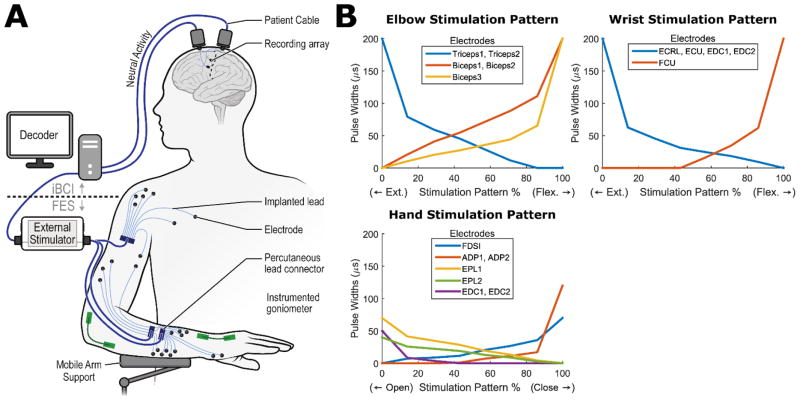
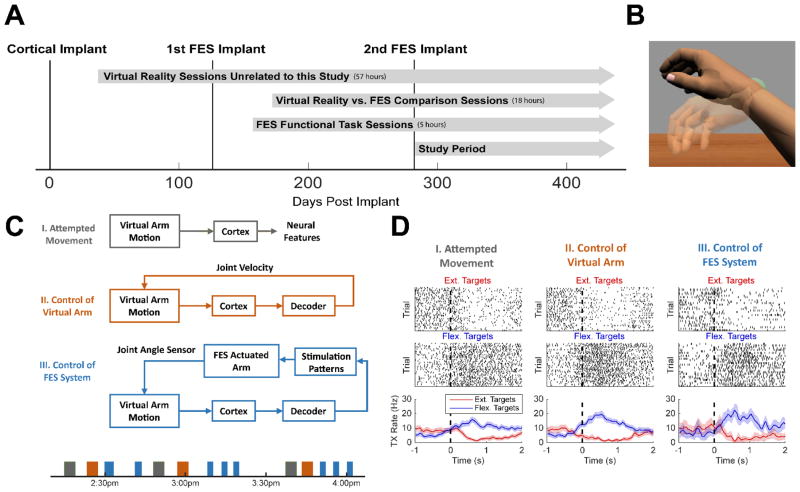
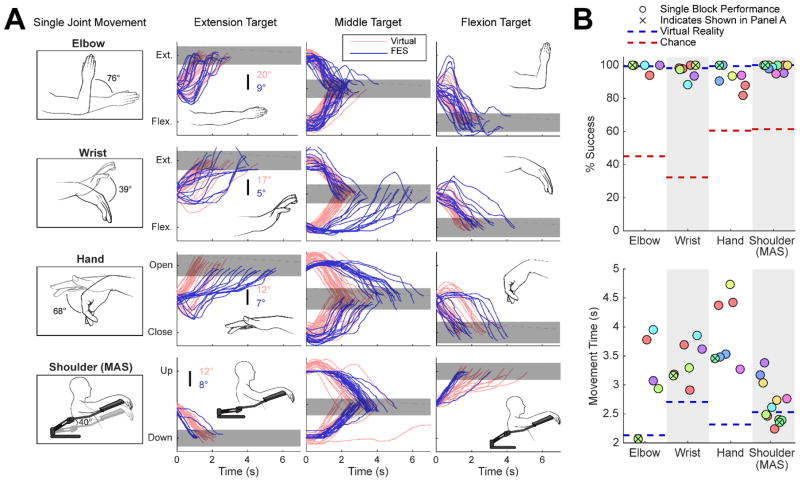
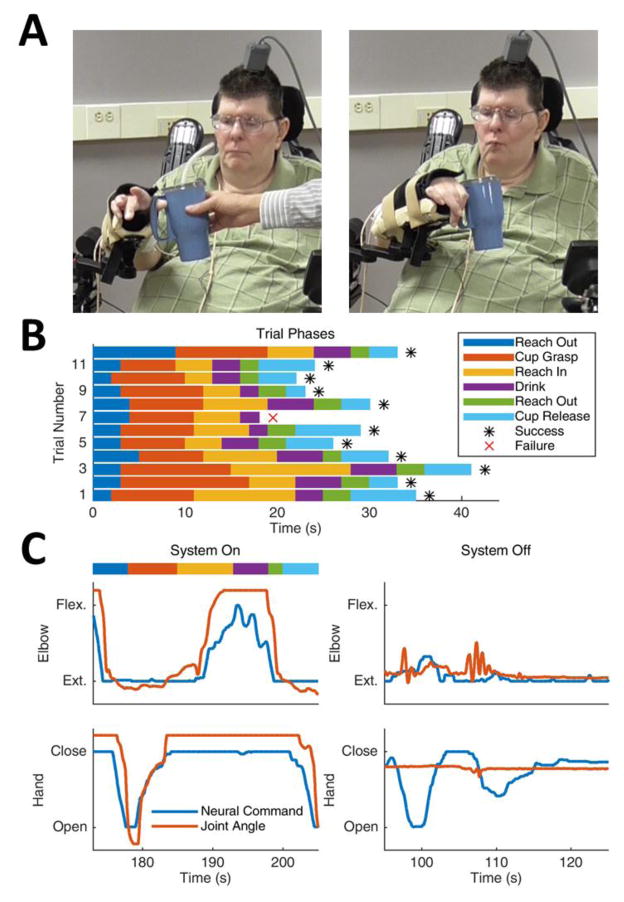
Background People with chronic tetraplegia, due to high-cervical spinal cord injury, can regain limb movements through coordinated electrical stimulation of peripheral muscles and nerves, known as functional electrical stimulation (FES). Users typically command FES systems through other preserved, but unrelated and limited in number, volitional movements (eg, facial muscle activity, head movements, shoulder shrugs). We report the findings of an individual with traumatic high-cervical spinal cord injury who coordinated reaching and grasping movements using his own paralysed arm and hand, reanimated through implanted FES, and commanded using his own cortical signals through an intracortical brain-computer interface (iBCI).Methods We recruited a participant into the BrainGate2 clinical trial, an ongoing study that obtains safety information regarding an intracortical neural interface device, and investigates the feasibility of people with tetraplegia controlling assistive devices using their cortical signals. Surgical procedures were performed at University Hospitals Cleveland Medical Center (Cleveland, OH, USA). Study procedures and data analyses were performed at Case Western Reserve University (Cleveland, OH, USA) and the US Department of Veterans Affairs, Louis Stokes Cleveland Veterans Affairs Medical Center (Cleveland, OH, USA). The study participant was a 53-year-old man with a spinal cord injury (cervical level 4, American Spinal Injury Association Impairment Scale category A). He received two intracortical microelectrode arrays in the hand area of his motor cortex, and 4 months and 9 months later received a total of 36 implanted percutaneous electrodes in his right upper and lower arm to electrically stimulate his hand, elbow, and shoulder muscles. The participant used a motorised mobile arm support for gravitational assistance and to provide humeral abduction and adduction under cortical control. We assessed the participant's ability to cortically command his paralysed arm to perform simple single-joint arm and hand movements and functionally meaningful multi-joint movements. We compared iBCI control of his paralysed arm with that of a virtual three-dimensional arm. This study is registered with ClinicalTrials.gov, number NCT00912041.Findings The intracortical implant occurred on Dec 1, 2014, and we are continuing to study the participant. The last session included in this report was Nov 7, 2016. The point-to-point target acquisition sessions began on Oct 8, 2015 (311 days after implant). The participant successfully cortically commanded single-joint and coordinated multi-joint arm movements for point-to-point target acquisitions (80-100% accuracy), using first a virtual arm and second his own arm animated by FES. Using his paralysed arm, the participant volitionally performed self-paced reaches to drink a mug of coffee (successfully completing 11 of 12 attempts within a single session 463 days after implant) and feed himself (717 days after implant).Interpretation To our knowledge, this is the first report of a combined implanted FES+iBCI neuroprosthesis for restoring both reaching and grasping movements to people with chronic tetraplegia due to spinal cord injury, and represents a major advance, with a clear translational path, for clinically viable neuroprostheses for restoration of reaching and grasping after paralysis.Funding National Institutes of Health, Department of Veterans Affairs.
Overview
The claims and statistics of this paper haven’t been checked yet.
Free: it reads the open-access text and checks the first 5 claims that cite a source we can check. Create a free account to check every claim.
Integrity signals
Registry
Cites
Statistics
Figures
Verification
Claims the paper makes
The claims and statistics of this paper haven’t been checked yet.
Free: it reads the open-access text and checks the first 5 claims that cite a source we can check. Create a free account to check every claim.
Claims other papers make about this one
Each is checked against this paper’s own text: does it say what the citing paper says it does?
The source backs part of the claim, not all of it — or backs it for a different population, condition or comparison.
In the citing paper
“and has enabled the highest BCI performance to date compared to other recording technologies (EEG, ECoG) for restoring communication7, arm control2,5, and general-purpose computer use39.”
From High-performance brain-to-text communication via handwriting (2021) · cites this paper as [5]
Experimental — accuracy not yet measuredThe cited source says what the claim attributes to it.
In the citing paper
“Prior BCI studies have shown that the motor intention for gross motor skills, such as reaching, grasping or moving a computer cursor, remains neurally encoded in motor cortex after paralysis1–7.”
From High-performance brain-to-text communication via handwriting (2021) · cites this paper as [5]
Self-check
Percentages, sums and reported differences re-computed from the paper’s own numbers.
The self-check needs the paper’s full text.
Citations
Cites
Isolated Hand Paresis: A Case Series
Alstadhaug, K. B., & Sjulstad, A. (2013) · Cerebrovascular Diseases Extra · doi:10.1159/000350708 · Cited by 4,058
Neuronal ensemble control of prosthetic devices by a human with tetraplegia
Hochberg, L. R., Serruya, M. D., Friehs, G. M., Mukand, J. A., Saleh, M., Caplan, A. H., Branner, A., Chen, D., Penn, R. D., & Donoghue, J. P. (2006) · Nature · doi:10.1038/nature04970 · Cited by 3,295
Self-citationReach and grasp by people with tetraplegia using a neurally controlled robotic arm
Hochberg, L. R., Bacher, D., Jarosiewicz, B., Masse, N. Y., Simeral, J. D., Vogel, J., Haddadin, S., Liu, J., Cash, S. S., van der Smagt, P., et al. (2012) · Nature · doi:10.1038/nature11076 · Cited by 2,719
Self-citationHigh-performance neuroprosthetic control by an individual with tetraplegia
Collinger, J. L., Wodlinger, B., Downey, J. E., Wang, W., Tyler-Kabara, E. C., Weber, D. J., McMorland, A. J., Velliste, M., Boninger, M. L., & Schwartz, A. B. (2013) · The Lancet · doi:10.1016/s0140-6736(12)61816-9 · Cited by 1,848
Localization of the motor hand area to a knob on the precentral gyrus. A new landmark
Yousry, T. (1997) · Brain · doi:10.1093/brain/120.1.141 · Cited by 1,837
Cortical control of a prosthetic arm for self-feeding
Velliste, M., Perel, S., Spalding, M. C., Whitford, A. S., & Schwartz, A. B. (2008) · Nature · doi:10.1038/nature06996 · Cited by 1,591
Direct Cortical Control of 3D Neuroprosthetic Devices
Taylor, D. M., Tillery, S. I. H., & Schwartz, A. B. (2002) · Science · doi:10.1126/science.1070291 · Cited by 1,540
Instant neural control of a movement signal
Serruya, M. D., Hatsopoulos, N. G., Paninski, L., Fellows, M. R., & Donoghue, J. P. (2002) · Nature · doi:10.1038/416141a · Cited by 1,409
Self-citationRestoring cortical control of functional movement in a human with quadriplegia
Bouton, C. E., Shaikhouni, A., Annetta, N. V., Bockbrader, M. A., Friedenberg, D. A., Nielson, D. M., Sharma, G., Sederberg, P. B., Glenn, B. C., Mysiw, W. J., et al. (2016) · Nature · doi:10.1038/nature17435 · Cited by 924
Intracortical microstimulation of human somatosensory cortex
Flesher, S. N., Collinger, J. L., Foldes, S. T., Weiss, J. M., Downey, J. E., Tyler-Kabara, E. C., Bensmaia, S. J., Schwartz, A. B., Boninger, M. L., & Gaunt, R. A. (2016) · Science Translational Medicine · doi:10.1126/scitranslmed.aaf8083 · Cited by 704
Cited by
Items 501–600 of 896
A rodent brain-machine interface paradigm to study the impact of paraplegia on BMI performance
Bridges, N. R., Meyers, M., Garcia, J., Shewokis, P. A., & Moxon, K. A. (2018) · Journal of Neuroscience Methods · doi:10.1016/j.jneumeth.2018.05.015 · Cited by 8
Falcone, J., Sohal, H. S., Kyriakides, T. R., & Bellamkonda, R. V. (2019) · Journal of Neural Engineering · doi:10.1088/1741-2552/ab1ef9 · Cited by 8
Control of a robotic prosthesis simulation by a closed-loop intracortical brain-machine interface
Goueytes, D., Abbasi, A., Lassagne, H., Shulz, D. E., Estebanez, L., & Ego‐Stengel, V. (2019) · International IEEE/EMBS Conference on Neural Engineering · doi:10.1109/ner.2019.8716885 · Cited by 7
“This simple, one-directional strategy has already shown impressive results during the past years, successfully giving control of complex robotic prostheses to patients with heavy disabilities [1], [2].”
BackgroundArtificial sensory feedback for bionic hands
Downey, J. E., Brooks, J., & Bensmaïa, S. J. (2019) · Elsevier eBooks · doi:10.1016/b978-0-12-814942-3.00008-8 · Cited by 7
Kontogiannopoulos, S., Bertos, G. A., & Papadopoulos, E. G. (2020) · IEEE Transactions on Medical Robotics and Bionics · doi:10.1109/tmrb.2020.2980077 · Cited by 7
“There is the idea to control via the brain interface [56] using Brain Machine Interface via a chip implant, which is not the right methodology for amputees, but for tetraplegic patients.”
BackgroundA Discriminative Approach to Bayesian Filtering with Applications to Human Neural Decoding
Burkhart, M. C. (2019) · HAL · Cited by 10
Exploring the trade-off between deep-learning and explainable models for brain-machine interfaces
Cubillos, L. H., Revach, G., Mender, M. J., Costello, J., Temmar, H., Hite, A., Zutshi, D., Wallace, D. M., Ni, X., Kelberman, M. M., et al. (2024) · neural information processing systems · doi:10.52202/079017-4257 · Cited by 14
Xu, Y., Chen, D., Ye, Q., Zhang, P., Shi, J., Li, S., Sun, Y., Zhao, Z., Tang, Y., Zhang, P., et al. (2026) · MedComm · doi:10.1002/mco2.70739 · Cited by 6
Intracortical brain-computer interfaces for improved motor function: a systematic review
Holt, M. W., Robinson, E. C., Shlobin, N. A., Hanson, J. T., & Bozkurt, İ. (2023) · Reviews in the Neurosciences · doi:10.1515/revneuro-2023-0077 · Cited by 6
Losanno, E., Ceradini, M., Agnesi, F., Righi, G., POPOLO, G. D., Shokur, S., & Micera, S. (2024) · IEEE Transactions on Neural Systems and Rehabilitation Engineering · doi:10.1109/tnsre.2024.3413192 · Cited by 6
Yang, C., Zhang, Z., Zhang, L., Zhang, Y., Li, Z., Luo, Y., Pan, G., & Zhao, B. (2024) · IEEE Transactions on Biomedical Circuits and Systems · doi:10.1109/tbcas.2024.3416728 · Cited by 6
Real-Time spike sorting using an optimized STDP Spiking Neural Network on FPGA
Cheslet, J., Bernert, M., Beaubois, R., Yvert, B., & Levi, T. (2024) · International Joint Conference on Neural Networks (IJCNN) · doi:10.1109/ijcnn60899.2024.10650675 · Cited by 6
Ma, X., Rizzoglio, F., Bodkin, K. L., & Miller, L. E. (2025) · Journal of Neural Engineering · doi:10.1088/1741-2552/adab93 · Cited by 6
EEG-based recognition of hand movement and its parameter
Yan, Y., Li, J., & Yin, M. (2025) · Journal of Neural Engineering · doi:10.1088/1741-2552/adba8a · Cited by 8
Ho, T. L., Xue, W., See, M. K., Chan, D., Tsang, A. C. O., Mak, C. H., Wong, S., & Lee, M. W. (2025) · Surgical Practice · doi:10.1111/1744-1633.70002 · Cited by 6
Brain–Computer Interfaces in Spinal Cord Injury: A Promising Therapeutic Strategy
Li, S., Gao, S., Hu, Y., Xu, J., & Sheng, W. (2025) · European Journal of Neuroscience · doi:10.1111/ejn.70183 · Cited by 10
Bolaños, C. D. F., & Correa, H. L. (2018) · Revista Ingeniería Biomédica · doi:10.24050/19099762.n24.2018.1222 · Cited by 7
“En este sentido la literatura muestra que la rehabilitación de miembros superiores mediante dispositivos de asistencia tecnológica comandadas mediante bioseñales remanentes en los pacientes tales como las EEG, EOG y EMG brindan una gran oportunidad para los terapeutas y pacientes, y constituyen un campo activo de inve…”
BackgroundBrain Co-processors: Using AI to Restore and Augment Brain Function
Rao, R. P. N. (2023) · Handbook of Neuroengineering · doi:10.1007/978-981-16-5540-1_32 · Cited by 8
Abreu, J., Crowder, D. C., & Kirsch, R. F. (2023) · IEEE Transactions on Neural Systems and Rehabilitation Engineering · doi:10.1109/tnsre.2023.3285983 · Cited by 6
“Therefore, individuals with SCI with some degree of denervation in upper-limb extensors could still benefit from neuroprostheses aimed at restoring reach, as long as the arm was supported against gravity by an assistive device, such as a mobile arm support [11].”
BackgroundSelf-citationUnsupervised Neural Manifold Alignment for Stable Decoding of Movement from Cortical Signals
Ganjali, M., Mehridehnavi, A., Rakhshani, S., & Khorasani, A. (2023) · International Journal of Neural Systems · doi:10.1142/s0129065724500060 · Cited by 7
Wireless Battery‐Free Peripheral Nerve Stimulation Conch for Remote Muscle Activation
Mingwang, Z., Yang, G., Long, Z., Tang, Y. C., Li, D., Liang, S., Lin, R., Yang, Z., Bao, H., Xing, L., et al. (2023) · Advanced Materials Technologies · doi:10.1002/admt.202301458 · Cited by 6
Effective Phoneme Decoding With Hyperbolic Neural Networks for High-Performance Speech BCIs
Tan, X., Lian, Q., Zhu, J., Zhang, J., Wang, Y., & Qi, Y. (2024) · IEEE Transactions on Neural Systems and Rehabilitation Engineering · doi:10.1109/tnsre.2024.3457313 · Cited by 10
Rusev, G., Yordanov, S., Nedelcheva, S., Banderov, A., Sauter-Starace, F., Koprinkova‐Hristova, P., & Kasabov, N. K. (2025) · Biomimetics · doi:10.3390/biomimetics10030183 · Cited by 6
“The research and practical applications of BMIs for controlling human prosthetics have been developing fast in the last decade [5–9].”
Amann, L. K., Casasnovas, V., & Gail, A. (2025) · Nature Communications · doi:10.1038/s41467-025-58738-x · Cited by 6
Blockchain consensus algorithms and platforms: a survey
Anita, N., Vijayalakshmi, M., Shalini, S., & Lakshmi, K. D. (2025) · Journal of Management Analytics · doi:10.1080/23270012.2025.2465253 · Cited by 8
Few-shot Algorithms for Consistent Neural Decoding (FALCON) Benchmark
Karpowicz, B. M., Ye, J., Fan, C., Tostado-Marcos, P., Rizzoglio, F., Washington, C., Scodeler, T., de Lucena, D., Nason, S. R., Mender, M. J., et al. (2024) · neural information processing systems · doi:10.52202/079017-2439 · Cited by 26
Self-citationWu, S., Song, Z., Zhang, X., Huang, Y., Chen, S., Shen, X., Tan, J., Li, M., Wang, Z., Chen, Y., et al. (2026) · Nature Computational Science · doi:10.1038/s43588-025-00915-5 · Cited by 6
Advancing sensory neuroprosthetics using artificial brain networks
Haslacher, D., Nasr, K., & Soekadar, S. R. (2021) · Patterns · doi:10.1016/j.patter.2021.100304 · Cited by 8
Implantable Neural Stimulators
Peckham, P. H., & Ackermann, D. M. (2018) · Elsevier eBooks · doi:10.1016/b978-0-12-805353-9.00021-8 · Cited by 8
Self-citationObara, K., Kaneshige, M., Suzuki, M., Yokoyama, O., Tazoe, T., & Nishimura, Y. (2023) · Frontiers in Neuroscience · doi:10.3389/fnins.2023.1127095 · Cited by 6
“Bypassing the damaged descending pathway using braincontrolled functional electrical stimulation is a promising approach to restore the voluntary control of paralyzed limb movements after the complete loss of descending pathways (Moritz et al., 2008; Pohlmeyer et al., 2009; Ethier et al., 2012; Nishimura et al., 2013;…”
Kim, Y., Mueller, N. N., Schwartzman, W. E., Sarno, D., Wynder, R., Hoeferlin, G. F., Gisser, K., Capadona, J. R., & Hess‐Dunning, A. (2023) · Micromachines · doi:10.3390/mi14051015 · Cited by 6
“The detected signals can be translated to control of implanted functional electrical stimulation systems or external devices [4,6,7,9].”
Restoring Touch through Intracortical Microstimulation of Human Somatosensory Cortex
Flesher, S. N., Collinger, J. L., Weiss, J. M., Hughes, C. L., Bensmaïa, S. J., Boninger, M. L., & Gaunt, R. A. (2017) · IEEE International Conference on New Generation of Circuits and Systems (NGCAS) · doi:10.1109/ngcas.2017.68 · Cited by 8
“Using these technologies, people have been able to control complex robotic prosthetics with many degrees of freedom simultaneously [1], [2], regain control over their own paralyzed limbs [3], [4], and achieve high-performance computer access tasks [5], [6].”
BackgroundDonoghue, J. P. (2018) · Elsevier eBooks · doi:10.1016/b978-0-12-805353-9.00025-5 · Cited by 6
Self-citationA Sordid Affair: Spike Sorting and Data Reproducibility
Febinger, H. Y., Dorval, A. D., & Rolston, J. D. (2017) · Neurosurgery · doi:10.1093/neuros/nyx590 · Cited by 6
Neural implant for the treatment of multiple sclerosis
Moghadasi, A. N. (2020) · Medical Hypotheses · doi:10.1016/j.mehy.2020.110324 · Cited by 6
Projection Mapping User Interface for Disabled People
Gelšvartas, J., Simutis, R., & Maskeliūnas, R. (2018) · Journal of Healthcare Engineering · doi:10.1155/2018/6916204 · Cited by 6
Augmenting Quadriplegic Hand Function Using a Sensorimotor Demultiplexing Neural InterfacePreprint
Ganzer, P. D., Colachis, S. C., Schwemmer, M., Friedenberg, D. A., Swiftney, C. E., Jacobowitz, A. F., Weber, D., Bockbrader, M., & Sharma, G. (2019) · bioRxiv (Cold Spring Harbor Laboratory) · doi:10.1101/604108 · Cited by 6
Simple decoding of behavior from a complicated neural manifoldPreprint
Perkins, S. M., Cunningham, J. P., Wang, Q., & Churchland, M. M. (2023) · eLife · doi:10.7554/elife.89421.1 · Cited by 8
78.8 pJ/b, 100 Mb/s Noncoherent IR-UWB Receiver for Multichannel Neurorecording Implants
Eskandari, R., & Sawan, M. (2024) · IEEE Transactions on Biomedical Circuits and Systems · doi:10.1109/tbcas.2024.3471818 · Cited by 7
Neurotechnology in Stroke Rehabilitation: Innovations in Stroke Recovery and Neurotechnology
Chaudhary, U. (2025) · Springer eBooks · doi:10.1007/978-3-031-78991-5_2 · Cited by 8
Fu, T., Zhou, Z., & Yuan, W. (2025) · Electronics · doi:10.3390/electronics14132670 · Cited by 5
Daly, J. E., Delen, D., Han, Z., Smith, R. J., Honerlaw, J. P., Cho, K., Bennett, B., & Sippel, J. L. (2026) · Journal of Medical Internet Research · doi:10.2196/71532 · Cited by 7
Luo, Y., Liu, X., & Yang, M. (2026) · Frontiers in Rehabilitation Sciences · doi:10.3389/fresc.2026.1666530 · Cited by 6
Zariffa, J., Starkey, M. L., Curt, A. E. P., & Kalsi‐Ryan, S. (2022) · Springer eBooks · doi:10.1007/978-3-031-08995-4_4 · Cited by 6
Robot-Inspired Human Impedance Control Through Functional Electrical Stimulation
Sierotowicz, M., & Castellini, C. (2023) · International Conference on Rehabilitation Robotics · doi:10.1109/icorr58425.2023.10304750 · Cited by 5
“Particularly in individuals with cervical spinal cord injury (SCI) and the associated impairments of the reaching and grasping function, FES has been successfully employed for assistance in activities of daily living (ADL), both using trans-cutaneous [2] and intramuscular electrodes [3].”
Li, E., Yan, R., Qiao, H., Sun, J., Zou, P., Chang, J., Li, S., Ma, Q., Zhang, R., & Liao, B. (2023) · Heliyon · doi:10.1016/j.heliyon.2023.e23960 · Cited by 6
“The limb movements of patients with chronic quadriplegia caused by high cervical SCI can be restored by coordinating the ES of the peripheral muscles and nerves [8].”
BackgroundInformation Transmission through Biotic–Abiotic Interfaces to Restore or Enhance Human Function
Kelly, A. R., & Glover, D. J. (2024) · ACS Applied Bio Materials · doi:10.1021/acsabm.4c00435 · Cited by 5
Neural Manifold Constraint for Spike Prediction Models Under Behavioral Reinforcement
Wu, S., Zhang, X., & Wang, Y. (2024) · IEEE Transactions on Neural Systems and Rehabilitation Engineering · doi:10.1109/tnsre.2024.3435568 · Cited by 5
Brain-Computer Interface for Patients with Spinal Cord Injury: A Bibliometric Study
Feng, J., Gao, S., Hu, Y., Sun, G., & Sheng, W. (2024) · World Neurosurgery · doi:10.1016/j.wneu.2024.08.163 · Cited by 5
Bhagat, N. A., King, K., Ramdeo, R., Stein, A., & Bouton, C. E. (2020) · Bioelectronic Medicine · doi:10.1186/s42234-020-00053-5 · Cited by 5
“These modalities range from conventional push button or shoulder position control (Ragnarsson 2008; Cornwall and Hausman 2004), to implanted muscle sensors (Kilgore et al. 2008), and most recently brain implants (Bouton et al. 2016; Ajiboye et al. 2017).”
Vasko, J. L., Aume, L., Tamrakar, S., Colachis, S. C., Dunlap, C. F., Rich, A., Meyers, E., Gabrieli, D. J., & Friedenberg, D. A. (2022) · Frontiers in Neuroscience · doi:10.3389/fnins.2022.858377 · Cited by 5
A Wirelessly Powered 4-Channel Neurostimulator for Reconstructing Walking Trajectory
Takeuchi, M., Tokutake, K., Watanabe, K., Ito, N., Aoyama, T., Saeki, S., Kurimoto, S., Hirata, H., & Hasegawa, Y. (2022) · Sensors · doi:10.3390/s22197198 · Cited by 5
“developed the FES system using a Brain–Computer Interface (BCI) to regenerate limb motions using FES applied to peripheral muscles and nerves [1].”
MethodAil, B. E., Ramele, R., Gambini, J., & Santos, J. M. (2024) · Brain Sciences · doi:10.3390/brainsci14080836 · Cited by 5
“Some specific use-cases require a very high bandwidth (>15 bps), for instance, the one needed to control all the degrees-of-freedom (DOF) of an arm prosthesis [2,76,77].”
BackgroundLi, L., Menendez, D. M., Hartzler, A., Pogharian, A., Zaorski, B., Chen, A., Palen, J., Traylor, B., Quill, E., Pawlowski, C. L., et al. (2024) · Biomaterials · doi:10.1016/j.biomaterials.2025.123082 · Cited by 5
Júnior, P. B., Nunes, W. R. B. M., Lazzaretti, A. E., Nohama, P., de Carvalho, A. A., Krueger, E., & Teixeira, M. C. M. (2019) · International IEEE/EMBS Conference on Neural Engineering · doi:10.1109/ner.2019.8717105 · Cited by 5
Ereifej, E. S., Li, Y., Goss-Varley, M., Kim, Y., Meade, S. M., Chen, K., Rayyan, J., Feng, H., Dona, K. R., McMahon, J. A., et al. (2020) · Micromachines · doi:10.3390/mi11090838 · Cited by 5
“Recordings from individual or small populations of neurons via intracortical microelectrodes (IMEs) has allowed patients with neurological disease and spinal cord injuries to use their thoughts to control computer cursors [1], robotic arms [2], as well as the patient’s own limb [3].”
Traumatic Spinal Cord Disorders: Current Topics and Future Directions
Huang, K. T., & Lu, Y. (2021) · Seminars in Neurology · doi:10.1055/s-0041-1725125 · Cited by 5
Invasive BCI Approaches for Restoration of Upper Extremity Movements
Müller-Putz, G. (2021) · Springer eBooks · doi:10.1007/978-3-030-68545-4_9 · Cited by 5
CNN-Based Hand Grasping Prediction and Control via Postural Synergy Basis Extraction
Liu, Q., Li, M., Yin, C., Qian, G., Meng, W., Ai, Q., & Hu, J. (2022) · Sensors · doi:10.3390/s22030831 · Cited by 5
“In [33], an individual with tr umatic high-cervical spinal cord injury coordinated grasping movements with his ow paralyzed arm and hand.”
BackgroundNickl, R. W., Anaya, M. A., Thomas, T. M., Fifer, M. S., Candrea, D. N., McMullen, D. P., Thompson, M. C., Osborn, L. E., Anderson, W. S., Wester, B. A., et al. (2022) · Scientific Reports · doi:10.1038/s41598-022-13436-2 · Cited by 5
Foldes, S. T., Chandrasekaran, S., Camerone, J., Lowe, J., Ramdeo, R., Ebersole, J. S., & Bouton, C. E. (2021) · Frontiers in Neurology · doi:10.3389/fneur.2021.739693 · Cited by 5
“(BCI) have been used to decode intended movements from neural activity recorded in the primary motor cortex (Ajiboye et al., 2017; Collinger et al., 2013; Gilja et al., 2015; Hochberg et al., 2012) and subsequently, used to restore intention-driven movement in tetraplegia (Bouton et al.”
Brain-Controlled Epidural Spinal Stimulation for Upper-Limb Motor Function after TetraplegiaPreprint
Sasaki, A., Fadli, R. A., Yuasa, A., Boogaart, Z., Saito, H., Musikic, N., de Freitas, R., Macellari, N., Davis, K., Datta, N., et al. (2025) · medRxiv · doi:10.1101/2025.07.02.25330433 · Cited by 5
Hutchison, B. C., Bose, R., Spilker, B. J., Bhat, P., Memberg, W. D., Ketting-Olivier, A., Herring, E., Sweet, J. A., Miller, J. P., Kirsch, R. F., et al. (2025) · medRxiv · doi:10.1101/2025.08.20.25334094 · Cited by 5
Self-citationDeep Learning: A Primer for Neurosurgeons
Hong-xi, Y., Yuwen, C., Cheng, X., Fan, H., Wang, X., & Ge, Z. (2024) · Advances in experimental medicine and biology · doi:10.1007/978-3-031-64892-2_4 · Cited by 5
Daly, J. E., Smith, R., Li, C., & Sippel, J. L. (2025) · Archives of Rehabilitation Research and Clinical Translation · doi:10.1016/j.arrct.2025.100488 · Cited by 4
Neural–Computer Interfaces: Theory, Practice, Perspectives
Dubynin, I. A., Zemlyanskov, M. S., Shalayeva, I., Gorskii, O., Grinevich, V. P., & Евгеньевич, М. П. (2025) · Applied Sciences · doi:10.3390/app15168900 · Cited by 7
Chen, Z., Huang, X., Xia, N. L., Gu, M., Xu, J., Lu, M., Chen, H., Xiong, C., & Chen, Y. (2025) · Research · doi:10.34133/research.0942 · Cited by 4
Zhou, M., Yao, X. X., Huang, B., Ren, J., Feng, H., & Feng, S. (2025) · Engineering · doi:10.1016/j.eng.2025.11.012 · Cited by 6
Xiao, Z., Li, T., Zhang, L., Xia, C., Su, Z., Ren, X., Fan, Y., Wu, Z., Liu, Y., & Su, M. (2026) · Advanced Science · doi:10.1002/advs.202514954 · Cited by 4
Wang, X., Fang, Y., Zhang, Z., Zhao, X., Xiong, D., & Li, J. (2026) · Biomimetics · doi:10.3390/biomimetics11020104 · Cited by 5
Yang, D., Liu, X., Hu, J., & Zhang, W. (2026) · Medical Science Monitor · doi:10.12659/msm.951925 · Cited by 7
Kozai, T. D. Y., Hooks, B. M., Vazquez, A. L., Gharbawie, O. A., Huang, C., Graczyk, E. L., Smith, M. A., Taylor, D. M., Hernandez-Reynoso, A. G., London, A. J., et al. (2026) · Journal of Neural Engineering · doi:10.1088/1741-2552/ae54cf · Cited by 4
Lin, D., Tran, T., Thaploo, S., Matias, J. G. E., Pixley, J. E., Nenadić, Z., & Do, A. H. (2026) · Frontiers in Neuroscience · doi:10.3389/fnins.2026.1678175 · Cited by 6
A Personalized and Adaptable User Interface for a Speech and Cursor Brain-Computer Interface
Peracha, H., Iacobacci, C., Singer-Clark, T., Hochberg, L. R., Stavisky, S. D., Brandman, D. M., & Card, N. S. (2026) · CHI Conference on Human Factors in Computing Systems · doi:10.1145/3772318.3790750 · Cited by 5
Self-citationA holistic perspective on noninvasive brain–computer interfaces
Ding, Y., Kosnoff, J., & He, B. (2026) · Trends in Neurosciences · doi:10.1016/j.tins.2026.04.009 · Cited by 4
Ceisler, J., Datta, N., Saraiva, P. P., & Guest, J. D. (2026) · Biomedicines · doi:10.3390/biomedicines14061348 · Cited by 4
“Intracortical recordings in individuals with long-standing tetraplegia further show that M1 neurons retain normal directional tuning and muscle-synergy encoding despite decades without descending output [71,72].”
Huang, Y., Gong, Y., Liu, Y., & Lü, J.-Q. (2022) · Frontiers in Neurology · doi:10.3389/fneur.2022.991099 · Cited by 5
“(43), have been cited more than 300 times.”
Heravi, M. A. Y., Maghooli, K., Rahatabad, F. N., & Rezaee, R. (2023) · Basic and Clinical Neuroscience Journal · doi:10.32598/bcn.2022.1840.1 · Cited by 4
[The research status and development trends of brain-computer interfaces in medicine].
Chen, Q., Yuan, T., Zhang, L., Gong, J., Fu, L., Han, X., Ruan, M., & Yu, Z. (2023) · PubMed Central · doi:10.7507/1001-5515.202303038 · Cited by 5
Chen, J., Liu, Q., Tan, C., Yang, X., Zhao, Y., Hu, Q., Chen, G., & Lan, Y. (2024) · Brain Network and Modulation · doi:10.4103/bnm.bnm_15_24 · Cited by 5
Neuralite: Enabling Wireless High-Resolution Brain-Computer Interfaces
Liu, H., Wang, J., Zhai, L., Fang, Y. M., & Huang, J. (2024) · ACM Annual International Conference on Mobile Computing and Networking (MobiCom) · doi:10.1145/3636534.3690673 · Cited by 5
Müller-Putz, G., Plank, P., Stadlbauer, B., Statthaler, K., & Uroko, J. B. (2017) · Journal of Biomedical Science and Engineering · doi:10.4236/jbise.2017.106024 · Cited by 4
“Currently, most advances are done in invasive research by intracortical recordings [6-10].”
BackgroundMethodAjiboye, A. B., Hochberg, L. R., & Kirsch, R. F. (2020) · Springer briefs in electrical and computer engineering · doi:10.1007/978-3-030-49583-1_4 · Cited by 4
Self-citationNeural Bypasses: Literature Review and Future Directions in Developing Artificial Neural Connections
Zuccaroli, I., Lucke-Wold, B. P., Palla, A., Eremiev, A. N., Sorrentino, Z. A., Zakare-Fagbamila, R. T., McNulty, J., Christie, C., Chandra, V., & Mampre, D. M. (2023) · OBM Neurobiology · doi:10.21926/obm.neurobiol.2301158 · Cited by 4
Virtual reality, augmented reality technologies, and rehabilitation
Gupta, M., Bhatia, D., & Kumar, P. (2023) · Elsevier eBooks · doi:10.1016/b978-0-323-99124-7.00001-8 · Cited by 4
How different immersive environments affect intracortical brain computer interfaces
Tortolani, A. F., Kunigk, N. G., Sobinov, A. R., Boninger, M. L., Bensmaïa, S. J., Collinger, J. L., Hatsopoulos, N. G., & Downey, J. E. (2025) · Journal of Neural Engineering · doi:10.1088/1741-2552/adb078 · Cited by 5
Ouyang, Z., Yang, R., & Wang, Y. (2025) · World Neurosurgery · doi:10.1016/j.wneu.2025.123832 · Cited by 4
Stieglitz, T., Bersch, I., Mrachacz‐Kersting, N., & Pasluosta, C. F. (2025) · Artificial Organs · doi:10.1111/aor.15017 · Cited by 4
Experimental Comparison of Hardware-Amenable Spike Detection Algorithms for iBMIs
Shaikh, S., So, R. Q., Libedinsky, C., & Basu, A. (2019) · International IEEE/EMBS Conference on Neural Engineering · doi:10.1109/ner.2019.8717142 · Cited by 4
“Intra-cortical Brain Machine Interfaces (iBMIs) have enabled patients suffering from debilitating spinal cord afflictions to regain a sense of control through demonstrations such as [1], [2] where the subjects are successfully able to feed themselves and [3] where record communication speeds have been achieved among o…”
BackgroundMethodLoza, C. A., Reddy, C. G., Akella, S., & Príncipe, J. C. (2019) · Frontiers in Neuroscience · doi:10.3389/fnins.2019.01248 · Cited by 4
“…to restoration of motor control for patients with severe disabilities (Pfurtscheller et al., 2000; Hochberg et al., 2012; Yanagisawa et al., 2012; Ajiboye et al., 2017), and neurorehabilitation where BCIs are doubled as therapeutic devices (Dobkin, 2007; Soekadar et al., 2015; Bundy et al.,…”
BackgroundNeural-gesteuerte Robotik für Assistenz und Rehabilitation im Alltag
Soekadar, S. R., & Nann, M. (2020) · Springer eBooks · doi:10.1007/978-3-658-28307-0_8 · Cited by 4
Naufel, S. N., & Klein, E. P. (2020) · Science and Engineering Ethics · doi:10.1007/s11948-020-00227-z · Cited by 4
Loutit, A. J., & Potas, J. R. (2020) · Frontiers in Systems Neuroscience · doi:10.3389/fnsys.2020.00046 · Cited by 4
“Neural prostheses enable users to control robotic limbs, computer cursors, or even effect movement of the users own limbs, by translating brain signals into movement control signals (Ethier et al., 2012; Hochberg et al., 2012; Collinger et al., 2013; Gilja et al., 2015; Jarosiewicz et al., 2015; Bouton et al., 2016; C…”
BackgroundAn artificial nervous system to treat chronic stroke
Serruya, M. D., & Rosenwasser, R. H. (2021) · Artificial Organs · doi:10.1111/aor.13998 · Cited by 5
Cho, Y. K., Koh, C. S., Lee, Y., Park, M., Kim, T. J., Jung, H. H., Chang, J. W., & Jun, S. B. (2022) · Biomedical Engineering Letters · doi:10.1007/s13534-022-00256-6 · Cited by 5
Dong, Y., Hu, D., Wang, S., & He, J. (2022) · Biomedical Signal Processing and Control · doi:10.1016/j.bspc.2022.104453 · Cited by 6
Omnidirectional endpoint force control through functional electrical stimulation
Sierotowicz, M., & Castellini, C. (2023) · Biomedical Physics & Engineering Express · doi:10.1088/2057-1976/acf04b · Cited by 5
Cole, K. R., Dudley‐Javoroski, S., & Shields, R. K. (2018) · Journal of Spinal Cord Medicine · doi:10.1080/10790268.2018.1485312 · Cited by 4
Adaptation Strategies for Personalized Gait Neuroprosthetics
Koelewijn, A. D., Audu, M. L., del‐Ama, A. J., Colucci, A., Font-Llagunes, J. M., Gogeascoechea, A., Hnat, S. K., Makowski, N. S., Moreno, J. C., Nandor, M. J., et al. (2021) · Frontiers in Neurorobotics · doi:10.3389/fnbot.2021.750519 · Cited by 6
“, 2018) and the brain (Ajiboye et al., 2017) have shown promising results, achieving restoration of control of extremities.”
BackgroundImpact of VA Research on Health Care for All: Contributions Over Nine Decades and Counting
Dell’Italia, L. J. (2017) · Circulation Research · doi:10.1161/circresaha.117.311152 · Cited by 4
Metadata
- Authors
- Ajiboye, A. B., Willett, F. R., Young, D. R., Memberg, W. D., Murphy, B. A., Miller, J. P., Walter, B. L., Sweet, J. A., Hoyen, H. A., Keith, M. W., Peckham, P. H., Simeral, J. D., Donoghue, J. P., Hochberg, L. R., & Kirsch, R. F.
- Affiliations
- United States Department of Veterans Affairs (US)
- MetroHealth (US)
- Brown University (US)
- Harvard University (US)
- Corresponding author
- Ajiboye, A Bolu
- ORCID
- Venue
- The Lancet
- Publisher
- Elsevier BV
- Published
- 2017-05
- Volume
- 389
- Issue
- 10081
- Pages
- 1821-1830
- ISSN
- 0099-5355 (ISSN-L)
- 0140-6736
- PMC
- PMC5516547
- OpenAlex
- W2603380332
- Cited by
- 862
- References
- 32
- Citations by year
- 2026: 60 · 2025: 104 · 2024: 97 · 2023: 87 · 2022: 107 · 2021: 106 · 2020: 107 · 2019: 85 · 2018: 79 · 2017: 29
- FWCI
- 47.07
- Type
- journal article
- Language
- en
- Open access
- green
- www.ncbi.nlm.nih.gov
- Licence
- cc-by-nc-nd
- www.elsevier.com/tdm/userlicense/1.0/ (tdm)
- Locations
- The Lancet (publishedVersion)
- PubMed (publishedVersion)
- Europe PMC (PubMed Central) (acceptedVersion, cc-by-nc-nd)
- PubMed Central (acceptedVersion, cc-by-nc-nd)
- Digital Access to Scholarship at Harvard (DASH) (Harvard University) (submittedVersion, cc-by)
- Funders
- U.S. Department of Veterans Affairs (B6453-R)
- National Institutes of Health (n01hd53403-6-0-1)
- National Institute on Deafness and Other Communication Disorders (R01DC009899)
- National Institute of Biomedical Imaging and Bioengineering (T32EB004314)
- Eunice Kennedy Shriver National Institute of Child Health and Human Development (R01HD077220, N01 HD053403)
- Topics
- Life Sciences › Neuroscience › Cognitive Neuroscience › EEG and Brain-Computer Interfaces
- Health Sciences › Medicine › Clinical Neurology › Spinal Cord Injury Research
- Life Sciences › Neuroscience › Cellular and Molecular Neuroscience › Neuroscience and Neural Engineering
- Keywords
- tetraplegia, high cervical spinal cord injury, intracortical brain-computer interfaces, functional electrical stimulation, reach-to-grasp, upper limb rehabilitation, assistive devices, neuroprosthetics
- MeSH terms
- Brain, Electrodes, Implanted, Electric Stimulation Therapy, Feasibility Studies, Hand, Humans, Male, Microelectrodes, Middle Aged, Motor Cortex, Movement, Quadriplegia, Self-Help Devices, Spinal Cord Injuries, United States, United States Department of Veterans Affairs, User-Computer Interface, Muscle, Skeletal, Hand Strength, Brain-Computer Interfaces
About these checks
Registry, retraction, Cites and statistics results are computed, not judged, with one exception: a printed reference that no index lists is read once by a model before it counts as a citation error. Claims are extracted by a model and kept only when their quote appears verbatim in the text; each cited source is then checked, with a model’s help, for whether it says what the claim relies on. Those verdicts can be wrong — read the claim’s quote and the cited source before relying on one.
Statistics and arithmetic are recomputed, not judged.
Confidence bands are shown only for fields calibrated on our annotated test set. None is calibrated yet, so no band is shown.
What counts as a claim ›How we measure confidence ›How we check this ›
Are you an author, or do you see a problem with this page? Request a review
Data sources
Bibliographic data: Semantic Scholar, OpenAlex, Crossref.
Contains information from the Semantic Scholar Academic Graph Datasets, made available under the ODC Attribution License (ODC-BY 1.0).
Semantic Scholar’s data is described in: Kinney, R., et al. (2023). The Semantic Scholar Open Data Platform. arXiv:2301.10140.
