

Global trends in insufficient physical activity among adolescents: a pooled analysis of 298 population-based surveys with 1·6 million participants
Open accessThe DOI matches its Crossref record; 25 of the 25 references it cites were found in a registry or an index.
Abstract
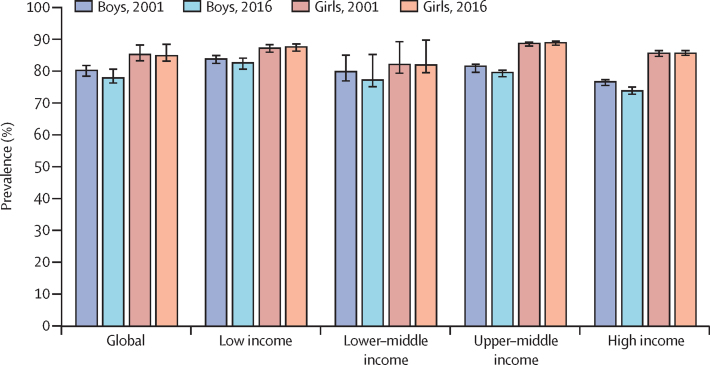
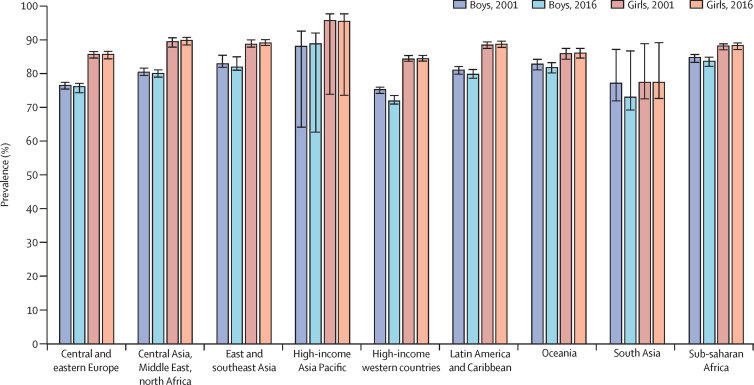
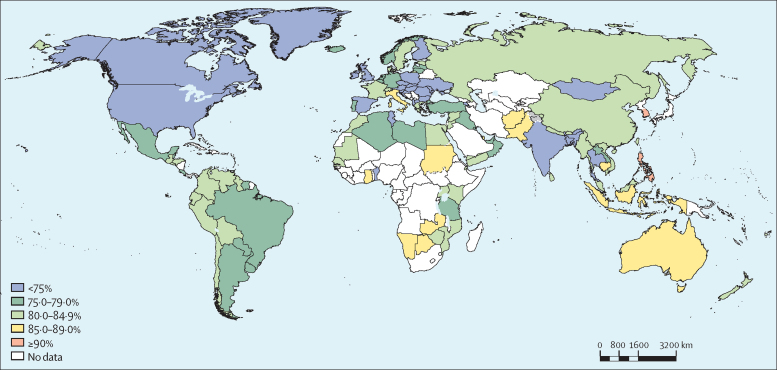
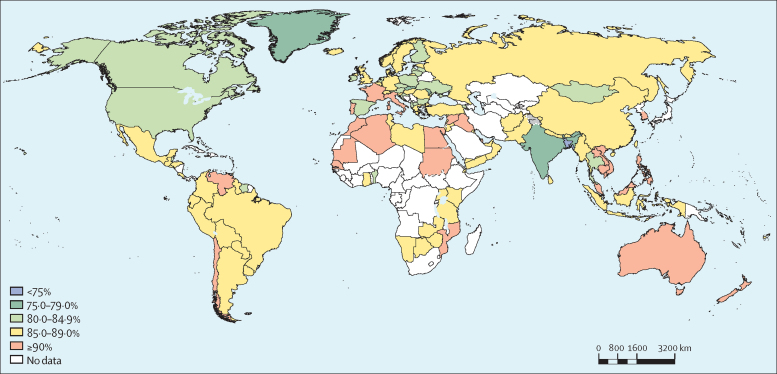
BACKGROUND: Physical activity has many health benefits for young people. In 2018, WHO launched More Active People for a Healthier World, a new global action on physical activity, including new targets of a 15% relative reduction of global prevalence of insufficient physical activity by 2030 among adolescents and adults. We describe current prevalence and trends of insufficient physical activity among school-going adolescents aged 11-17 years by country, region, and globally. METHODS: We did a pooled analysis of cross-sectional survey data that were collected through random sampling with a sample size of at least 100 individuals, were representative of a national or defined subnational population, and reported prevalence of of insufficient physical activity by sex in adolescents. Prevalence had to be reported for at least three of the years of age within the 10-19-year age range. We estimated the prevalence of insufficient physical activity in school-going adolescents aged 11-17 years (combined and by sex) for individual countries, for four World Bank income groups, nine regions, and globally for the years 2001-16. To derive a standard definition of insufficient physical activity and to adjust for urban-only survey coverage, we used regression models. We estimated time trends using multilevel mixed-effects modelling. FINDINGS: We used data from 298 school-based surveys from 146 countries, territories, and areas including 1·6 million students aged 11-17 years. Globally, in 2016, 81·0% (95% uncertainty interval 77·8-87·7) of students aged 11-17 years were insufficiently physically active (77·6% [76·1-80·4] of boys and 84·7% [83·0-88·2] of girls). Although prevalence of insufficient physical activity significantly decreased between 2001 and 2016 for boys (from 80·1% [78·3-81·6] in 2001), there was no significant change for girls (from 85·1% [83·1-88·0] in 2001). There was no clear pattern according to country income group: insufficient activity prevalence in 2016 was 84·9% (82·6-88·2) in low-income countries, 79·3% (77·2-87·5) in lower-middle-income countries, 83·9% (79·5-89·2) in upper-middle-income countries, and 79·4% (74·0-86·2) in high-income countries. The region with the highest prevalence of insufficient activity in 2016 was high-income Asia Pacific for both boys (89·0%, 62·8-92·2) and girls (95·6%, 73·7-97·9). The regions with the lowest prevalence were high-income western countries for boys (72·1%, 71·1-73·6), and south Asia for girls (77·5%, 72·8-89·3). In 2016, 27 countries had a prevalence of insufficient activity of 90% or more for girls, whereas this was the case for two countries for boys. INTERPRETATION: The majority of adolescents do not meet current physical activity guidelines. Urgent scaling up of implementation of known effective policies and programmes is needed to increase activity in adolescents. Investment and leadership at all levels to intervene on the multiple causes and inequities that might perpetuate the low participation in physical activity and sex differences, as well as engagement of youth themselves, will be vital to strengthen the opportunities for physical activity in all communities. Such action will improve the health of this and future young generations and support achieving the 2030 Sustainable Development Goals. FUNDING: WHO.
Overview
The claims and statistics of this paper haven’t been checked yet.
Free: it reads the open-access text and checks the first 5 claims that cite a source we can check. Create a free account to check every claim.
Integrity signals
Registry
Cites
Statistics
Figures
Verification
Claims the paper makes
The claims and statistics of this paper haven’t been checked yet.
Free: it reads the open-access text and checks the first 5 claims that cite a source we can check. Create a free account to check every claim.
Claims other papers make about this one
Each is checked against this paper’s own text: does it say what the citing paper says it does?
The source backs part of the claim, not all of it — or backs it for a different population, condition or comparison.
In the citing paper
“These data also reveal no overall improvement in global levels of participation over the last two decades and substantial gender differences.3 4”
From World Health Organization 2020 guidelines on physical activity and sedentary behaviour (2020) · cites this paper as [4]
Experimental — accuracy not yet measuredThe source backs part of the claim, not all of it — or backs it for a different population, condition or comparison.
In the citing paper
“Given that the most recent global estimates show that one in four (27.5%) adults3 and more than three-quarters (81%) of adolescents4 do not meet the recommendations for aerobic exercise, as outlined in the 2010 Global Recommendations on Physical Activity for Health,2”
From World Health Organization 2020 guidelines on physical activity and sedentary behaviour (2020) · cites this paper as [4]
Experimental — accuracy not yet measuredThe cited source says what the claim attributes to it.
In the citing paper
“a large proportion of children and youth, including those living in low and middle-income countries, are either sedentary or not achieving recommended levels of physical activity.8–11”
From Physical activity and health in Chinese children and adolescents: expert consensus statement (2020) (2020) · cites this paper as [11]
Self-check
Percentages, sums and reported differences re-computed from the paper’s own numbers.
The self-check needs the paper’s full text.
Citations
Cites
Abarca-Gómez, L., Abdeen, Z. A., Hamid, Z. A., Abu-Rmeileh, N. M., Acosta-Cazares, B., Acuin, C., Adams, R. J., Aekplakorn, W., Afsana, K., Aguilar-Salinas, C. A., et al. (2017) · The Lancet · doi:10.1016/s0140-6736(17)32129-3 · Cited by 7,482
Self-citationGlobal physical activity levels: surveillance progress, pitfalls, and prospects
Hallal, P. C., Andersen, L. B., Bull, F. C., Guthold, R., Haskell, W., & Ekelund, U. (2012) · The Lancet · doi:10.1016/s0140-6736(12)60646-1 · Cited by 5,711
Self-citationGuthold, R., Stevens, G. A., Riley, L. M., & Bull, F. C. (2018) · The Lancet Global Health · doi:10.1016/s2214-109x(18)30357-7 · Cited by 4,819
Self-citationA Physical Activity Screening Measure for Use With Adolescents in Primary Care
Prochaska, J. J., Sallis, J. F., & Long, B. (2001) · Archives of Pediatrics & Adolescent Medicine · doi:10.1001/archpedi.155.5.554 · Cited by 1,002
Progress in physical activity over the Olympic quadrennium
Sallis, J. F., Bull, F., Guthold, R., Heath, G. W., Inoue, S., Kelly, P., Oyeyemi, A. L., Perez, L. G., Richards, J., & Hallal, P. C. (2016) · The Lancet · doi:10.1016/s0140-6736(16)30581-5 · Cited by 935
Self-citationAubert, S., Barnes, J. D., Abdeta, C., Abi Nader, P., Adeniyi, A. F., Aguilar-Farias, N., Andrade Tenesaca, D. S., Bhawra, J., Brazo-Sayavera, J., Cardon, G., et al. (2018) · Journal of Physical Activity and Health · doi:10.1123/jpah.2018-0472 · Cited by 799
Biddle, S. J., Gorely, T., Pearson, N., & Bull, F. C. (2011) · International Journal of Behavioral Nutrition and Physical Activity · doi:10.1186/1479-5868-8-1 · Cited by 711
Self-citationGlobal Prevalence of Vision Impairment and Blindness
Stevens, G. A., White, R. A., Flaxman, S. R., Price, H., Jonas, J. B., Keeffe, J., Leasher, J., Naidoo, K., Pesudovs, K., Resnikoff, S., et al. (2013) · Ophthalmology · doi:10.1016/j.ophtha.2013.05.025 · Cited by 510
Self-citationStalsberg, R., & Pedersen, A. V. (2010) · Scandinavian Journal of Medicine & Science in Sports · doi:10.1111/j.1600-0838.2009.01047.x · Cited by 481
Farooq, M. A., Parkinson, K. N., Adamson, A. J., Pearce, M. S., Reilly, J. K., Hughes, A. R., Janssen, X., Basterfield, L., & Reilly, J. J. (2018) · British Journal of Sports Medicine · doi:10.1136/bjsports-2016-096933 · Cited by 418
Research works printed but not linked: 1
- WHO Global Recommendations on Physical Activity for Health 2010 World Health Organization Geneva 26180873
Cited by
Items 301–400 of 1,006
Rivas, R. A. G., Gastélum-Cuadras, G., Velducea, W. V., González-Bustos, J. B., & Esparza, S. D. (2021) · Retos · doi:10.47197/retos.v42i0.86242 · Cited by 48
Lerum, Ø., Tjomsland, H. E., Leirhaug, P. E., McKenna, J., Quarmby, T., Bartholomew, J. B., Jenssen, E. S., Daly-Smith, A., & Resaland, G. K. (2021) · Teaching and Teacher Education · doi:10.1016/j.tate.2021.103434 · Cited by 45
Hino, K., Ikeda, E., Sadahiro, S., & Inoue, S. (2021) · International Journal of Behavioral Nutrition and Physical Activity · doi:10.1186/s12966-021-01202-y · Cited by 31
“However, the prevalence of insufficient PA is high globally [1, 2].”
BackgroundZhang, X.-L., Wang, T.-Y., Targher, G., Byrne, C. D., & Zheng, M. (2022) · Diabetes & Metabolism Journal · doi:10.4093/dmj.2022.0048 · Cited by 33
“For example, the most recent global estimates show that one in four (27%) adults [59] and more than three-quarters (81%) of adolescents [60] do not meet the recommendations for aerobic exercise, as outlined in the 2010 Global Recommendations on Physical Activity for Health [61].”
BackgroundMuntaner‐Mas, A., Mazzoli, E., Abbott, G., Mavilidi, M. F., & Galmes-Panades, A. M. (2022) · Children · doi:10.3390/children9060823 · Cited by 44
“However, only a very small proportion of children worldwide reach the levels of PA that are recommended for the health-related benefits [2,3].”
BackgroundSchöttl, S. E., Schnitzer, M., Savoia, L., & Kopp, M. (2022) · Frontiers in Public Health · doi:10.3389/fpubh.2022.901763 · Cited by 35
Ozaki, Y., & Shaw, R. (2022) · Sustainability · doi:10.3390/su142114471 · Cited by 49
“Among these, [35] states that this requires intervention in social, economic, cultural, technological, and environmental inequities.”
BackgroundMethodInfluentialButtazzoni, A. N., Ferguson, K. N., & Gilliland, J. (2023) · SSM - Population Health · doi:10.1016/j.ssmph.2023.101369 · Cited by 40
“Trends in youth physical activity level have been significantly declining for decades (Guthold et al., 2020).”
BackgroundTime Use and Cognitive Achievement among Adolescents in China: Depression Symptoms as Mediators
Cao, X., & Liu, X. (2023) · Journal of Intelligence · doi:10.3390/jintelligence11050088 · Cited by 36
Jurado‐Castro, J. M., Gil‐Campos, M., González, H. G., & Llorente‐Cantarero, F. J. (2020) · International Journal of Environmental Research and Public Health · doi:10.3390/ijerph17176031 · Cited by 35
“Addressing the alarming reduction in PA practice amongst children [19] is the main priority of the present programs to tackle childhood obesity.”
BackgroundBritton, Ú., Onibonoje, O., Belton, S., Behan, S., Peers, C., Issartel, J., & Roantree, M. (2023) · Applied Psychology Health and Well-Being · doi:10.1111/aphw.12429 · Cited by 40
Regular physical activity across the lifespan to build resilience against rising global temperatures
Deshayes, T. A., & Périard, J. D. (2023) · EBioMedicine · doi:10.1016/j.ebiom.2023.104793 · Cited by 37
Wójcik, M., Pitti, J. Á., Kozioł-Kozakowska, A., Brzeziński, M., Gabbianelli, R., Herceg-Čavrak, V., Wühl, E., Lucas, I., Radovanović, D. S., Melk, A., et al. (2023) · Frontiers in Cardiovascular Medicine · doi:10.3389/fcvm.2023.1268364 · Cited by 49
Yan, W., Wang, Y., Yuan, Y., Farid, M., Zhang, P., & Peng, K. (2024) · Journal of Youth and Adolescence · doi:10.1007/s10964-024-02011-9 · Cited by 35
“However, globally, 80% of adolescents are inactive, with many spending over two hours daily on sedentary activities such as screen time (Guthold et al., 2020; Liu et al., 2019; van Sluijs et al., 2021), and engaging in signi fi cantly more moderate-to-vigorous physical activity on weekdays than…”
The future of physical activity: from sick individuals to healthy populations
Hallal, P. C., Lee, I.-M. M., Sarmiento, O. L., & Powell, K. E. (2024) · International Journal of Epidemiology · doi:10.1093/ije/dyae129 · Cited by 35
Zhao, G., Xiao, L., Chen, Y.-H., Zhang, M., Peng, K.-W., & Wu, H. (2024) · Journal of Affective Disorders · doi:10.1016/j.jad.2024.10.041 · Cited by 34
Guzmán-Muñoz, E., Concha‐Cisternas, Y., Jofré‐Saldía, E., Castillo-Paredes, A., Molina-Márquez, I., & Sepulveda, R. A. Y. (2025) · Brain Sciences · doi:10.3390/brainsci15111238 · Cited by 46
“…active in 2016, including 77.6% of boys and 84.7% of girls, according to a pooled analysis of 1.6 million students from 146 countries, in which insufficient physical activity was defined as not meeting the WHO recommendation of at least 60 min of moderate-to-vigorous physical activity per day [7].”
InfluentialGrit as Perseverance in Physical Activity Participation
Rutberg, S., Nyberg, L., Castelli, D. M., & Lindqvist, A.-K. (2020) · International Journal of Environmental Research and Public Health · doi:10.3390/ijerph17030807 · Cited by 36
Zhan, X., Clark, C. C. T., Bao, R., Duncan, M. J., Hong, J.-T., & Chen, S. (2021) · Jornal de Pediatria · doi:10.1016/j.jped.2020.11.009 · Cited by 39
Suga, A. C. M., da Silva, A. A. D. P., Brey, J. R., Guerra, P. H., & Rodríguez-Añez, C. R. (2021) · Jornal de Pediatria · doi:10.1016/j.jped.2021.02.005 · Cited by 52
“In regards to PA assessment, four distinct instruments ere identified (SOPLAY, accelerometers Actigraph 7164, T1M and GT3X, CAST-3, and heart rate Polar).”
BackgroundInfluentialRollo, S., Fraser, B. J., Seguin, N., Sampson, M., Lang, J. J., Tomkinson, G. R., & Tremblay, M. S. (2021) · Sports Medicine · doi:10.1007/s40279-021-01537-3 · Cited by 34
Sanz-Martín, D., Ubago-Jiménez, J. L., Tendero, G. R., Ortega, F. Z., Melguizo-Ibáñez, E., & Puertas-Molero, P. (2022) · Healthcare · doi:10.3390/healthcare10101955 · Cited by 38
“[5], more than 80% of adolescents do not meet physical activity practice recommendations.”
BackgroundCowley, E. S., & Schneider, J. (2025) · PLoS ONE · doi:10.1371/journal.pone.0316756 · Cited by 43
Wade, L., Lubans, D. R., Smith, J. J., & Duncan, M. J. (2020) · Psychology of sport and exercise · doi:10.1016/j.psychsport.2020.101707 · Cited by 36
Global Matrix 3.0 physical activity report card for children and youth: a comparison across Europe
Coppinger, T. C., Milton, K. E., Murtagh, E., Harrington, D. M., Johansen, D. L. N., Seghers, J., Skovgaard, T., & Chalkley, A. E. (2020) · Public Health · doi:10.1016/j.puhe.2020.07.025 · Cited by 33
Chalkley, A. E., & Milton, K. E. (2020) · Journal of sport and health science/Journal of Sport and Health Science · doi:10.1016/j.jshs.2020.09.010 · Cited by 37
“A recent analysis of pooled data from 146 countries reported that an estimated 81% of young people (aged 11 17 years) globally are insufficiently active.(8) In England 52.”
BackgroundRahman, M. L., Pocock, T., Moore, A., & Mandic, S. (2020) · International Journal of Environmental Research and Public Health · doi:10.3390/ijerph17239013 · Cited by 29
“Decreasing levels of PA among adolescents is now a major public health concern [6,7].”
BackgroundMarconcin, P., de Matos, M. G., Ihle, A., Ferrari, G., Gouveia, É. R., López-Flores, M., Peralta, M., & Marques, A. (2021) · Frontiers in Pediatrics · doi:10.3389/fped.2021.645074 · Cited by 40
Sampasa‐Kanyinga, H., Colman, I., Dumuid, D., Janssen, I., Goldfield, G. S., Wang, J., Patte, K. A., Leatherdale, S. T., & Chaput, J. (2021) · PLoS ONE · doi:10.1371/journal.pone.0256867 · Cited by 35
“The overall pattern is consistent with current literature indicating that as adolescents get older they become less active and well versed into modern sedentary activities [42,43].”
ResultTay, G. W. N., Chan, M. J., Kembhavi, G., Lim, J., Rebello, S. A., Ng, H., Lin, C., Shek, L. P., Lança, C., Müller‐Riemenschneider, F., et al. (2021) · International Journal of Qualitative Studies on Health and Well-Being · doi:10.1080/17482631.2021.1980279 · Cited by 44
“…moderate-to-vigorous physical activity (MVPA) every day for its associated health benefits to be realized, current evidence demonstrates that more than two-thirds of young people do not engage in sufficient PA to benefit their health (Chaput et al., 2020; Guthold et al., 2020; Hallal et al., 2012).”
BackgroundIs physical activity always good for you? The physical activity paradox
Temporelli, P. L. (2021) · European Heart Journal Supplements · doi:10.1093/eurheartj/suab115 · Cited by 36
Hatch, L. M., Dring, K. J., Williams, R. A., Sunderland, C. D., Nevill, M. E., & Cooper, S. B. (2021) · International Journal of Environmental Research and Public Health · doi:10.3390/ijerph182111594 · Cited by 31
“Specifically, while young people typically choose to engage in high-intensity intermittent activity during both discretionary exercise [13,14] and self-paced exercise interventions [38], the majority of young people do not meet the government-recommended 60 min of daily physical activity [47,48].”
BackgroundDu, F., He, L., Francis, M. R., Forshaw, M. J., Woolfall, K., Lv, Q., Shi, L., & Hou, Z. (2021) · Scientific Reports · doi:10.1038/s41598-021-02672-7 · Cited by 30
Mansfield, K. L., Puntis, S., Soneson, E., Cipriani, A., Geulayov, G., & Fazel, M. S. (2021) · BMJ Open · doi:10.1136/bmjopen-2021-052717 · Cited by 46
Moschonis, G., Siopis, G., Anastasiou, C. A., Iotova, V., Stefanova, T., Dimova, R. B., Rurik, I., Radó, A. S., Cardon, G., Craemer, M. D., et al. (2022) · Nutrients · doi:10.3390/nu14091830 · Cited by 37
Viciana, J., Casado-Robles, C., Guijarro-Romero, S., & Mayorga-Vega, D. (2022) · Journal of Sports Science and Medicine · doi:10.52082/jssm.2022.356 · Cited by 39
“Study 2: Kappa, k0 = 0.40 (Cicchetti, 2001); k1 = 0.85 (Mayorga-Vega et al., 2021), p = 0.25 (Guthold et al., 2020), α = 0.05, 1 – β = 0.80, k = 2, dropout = 10% (Rowlands et al., 2018).”
BackgroundInfluentialIncreasing Physical Activity at School Improves Physical Fitness of Early Adolescents
Ługowska, K., Kolanowski, W., & Trafiałek, J. (2023) · International Journal of Environmental Research and Public Health · doi:10.3390/ijerph20032348 · Cited by 49
“There is a global problem of PF decline in school-aged children [4,20].”
BackgroundRüth, M., Schmelzer, M., Burtniak, K., & Kaspar, K. (2023) · Frontiers in Psychology · doi:10.3389/fpsyg.2023.1155569 · Cited by 36
“It has been shown that an adequate amount of physical activity is key for people’s health at every age, yet about 80% of adolescents and almost 30% of adults worldwide are not sufficiently physically active (Guthold et al., 2018, 2020; WHO, 2022).”
BackgroundNevill, A. M., Duncan, M. J., Gaya, A. C. A., & Mello, J. B. (2023) · Scandinavian Journal of Medicine and Science in Sports · doi:10.1111/sms.14440 · Cited by 35
Future physical education teachers’ perceptions of sustainability
Merma-Molina, G., Solano, M. E. U., González‐Víllora, S., & Baena‐Morales, S. (2023) · Teaching and Teacher Education · doi:10.1016/j.tate.2023.104254 · Cited by 64
Hip fracture surgery initiation after admission to the hospital, 2017 (or nearest year)
(2020) · Health at a glance. Europe · doi:10.1787/295f3095-en · Cited by 28
Effectiveness of a school-based intervention on physical activity and screen time among adolescents
Ahmed, K. R., Kolbe-Alexander, T. L., & Khan, A. (2021) · Journal of science and medicine in sport · doi:10.1016/j.jsams.2021.10.007 · Cited by 34
Body Image Perception in Adolescents: The Role of Sports Practice and Sex
Toselli, S., Rinaldo, N., Mauro, M., Grigoletto, A., & Zaccagni, L. (2022) · International Journal of Environmental Research and Public Health · doi:10.3390/ijerph192215119 · Cited by 42
“7% of girls aged 11–17 years are insufficiently physically active [37], and within the EU, the prevalence of physical inactivity is 64.”
BackgroundBurgueño, R., García‐González, L., Abós, Á., & Sevil‐Serrano, J. (2023) · European Physical Education Review · doi:10.1177/1356336x231165229 · Cited by 34
“However, the most recent global prevalence report showed that 77.60% of male and 84.70% of female youth fail to engage in at least 60 minutes of daily moderate-to-vigorous PA (MVPA) (Guthold et al., 2020).”
BackgroundInfluentialLev-Arey, D., Gutman, T., & Levental, O. (2024) · Behavioral Sciences · doi:10.3390/bs14020130 · Cited by 42
“Yet despite this robust evidence, there is a disconcerting discrepancy: a substantial segment of the population does not achieve the PA levels that are recommended by health authorities [7,8].”
BackgroundSchool-based environment and physical activity in adolescents: A systematic review and meta-analysis
Wang, H., Pang, J., Yang, X., Jia, Y., Huang, X., Yu, L., & Hou, X. (2025) · Preventive Medicine · doi:10.1016/j.ypmed.2025.108221 · Cited by 53
Physical Self-Concept, Gender, and Physical Condition of Bizkaia University Students
Sáez, I., Solabarrieta, J., & Florido, I. R. (2020) · International Journal of Environmental Research and Public Health · doi:10.3390/ijerph17145152 · Cited by 41
“The benefits of having a physically active lifestyle during different stages of life are well documented [1].”
Backgroundda Costa, B. G. G., Chaput, J., Lopes, M. V. V., Malheiros, L. E. A., Tremblay, M. S., & da Silva, K. S. (2020) · PLoS ONE · doi:10.1371/journal.pone.0239833 · Cited by 34
“However, when assessing behaviors according to these criteria, many adolescents do not engage in enough MVPA [13,14], spend excessive time on screen-based activities [14], and do not obtain sufficient sleep [15,16].”
BackgroundGiuseppe, G. D., Pelullo, C. P., Mitidieri, M., Lioi, G., & Pavía, M. (2020) · International Journal of Environmental Research and Public Health · doi:10.3390/ijerph17228294 · Cited by 31
“Indeed, these data have been confirmed by a pooled analysis of surveys conducted in a large number of countries, reporting that more than 80% of teenagers aged 11 to 17 do not reach the levels of physical activity recommended for a healthy lifestyle [35].”
BackgroundGualdi‐Russo, E., Rinaldo, N., Toselli, S., & Zaccagni, L. (2020) · Sustainability · doi:10.3390/su13010335 · Cited by 32
Densley, B., Calvert, H. G., Boedeker, P., & Turner, L. R. (2021) · International Journal of Environmental Research and Public Health · doi:10.3390/ijerph18094476 · Cited by 32
“Despite overwhelming evidence about the benefits of regular physical activity [1], most children worldwide do not meet guidelines [2].”
BackgroundSingh, D. R., Sunuwar, D. R., Dahal, B. D., & Sah, R. K. (2021) · BMC Public Health · doi:10.1186/s12889-021-10985-5 · Cited by 37
Bourke, M., Hilland, T. A., & Craike, M. J. (2021) · Psychology and Health · doi:10.1080/08870446.2021.1965603 · Cited by 32
“However, based on self-reported data, it is estimated that 80% of adolescents worldwide are insufficiently active (Guthold et al., 2020).”
BackgroundScully, M. L., Gascoyne, C., Wakefield, M. A., & Morley, B. (2022) · BMC Public Health · doi:10.1186/s12889-021-12387-z · Cited by 27
“The observation that adolescent females are faring worse than their male counterparts with regard to physical activity is a disparity that is evident globally [38].”
BackgroundNigg, C., Weber, C., Schipperijn, J., Reichert, M., Oriwol, D., Worth, A., Wöll, A., & Niessner, C. (2022) · Health Education & Behavior · doi:10.1177/10901981221090153 · Cited by 41
“However, only about 20% of youth meet the physical activity recommendations of the World Health Organization (WHO; Guthold et al., 2020), whereas about 88.”
BackgroundInfluentialRoutledge Handbook of Sustainable Diets
Kevany, K. M., & Prosperi, P. (2022) · Routledge eBooks · doi:10.4324/9781003174417 · Cited by 32
Romero‐Parra, N., Solera-Alfonso, A., Bores‐García, D., & Delfa-de-la-Morena, J. M. (2022) · European Journal of Pediatrics · doi:10.1007/s00431-022-04742-y · Cited by 42
“Therefore, research on the factors that motivate children and adolescents to increase PA is of key importance in an attempt to encourage them to obtain all the benefits of a physically active lifestyle [8].”
BackgroundPiotrowski, T. A., Makaruk, H., Tekień, E., Feleszko, W., Kołodziej, M., Albrecht, K., Grela, K., Makuch, R., Werner, B., & Gąsior, J. S. (2025) · Children · doi:10.3390/children12101406 · Cited by 75
Tong, H. L., Alnasser, A., Alshahrani, N. Z., Bawaked, R. A., AlAhmed, R. S., Alsukait, R. F., Rakić, S., Çetinkaya, V., Al-Hazzaa, H. M., & Alqahtani, S. A. (2024) · Journal of Medical Internet Research · doi:10.2196/53651 · Cited by 40
“Worldwide studies have revealed that the MENA region has higher rates of physical inactivity compared with the global average, with 32.8% of adults and 85% of adolescents considered insufficiently active compared with 28% of adults and 81% of adolescents worldwide [9,10].”
InfluentialBrasil, I. A., Monteiro, W., Lima, T. D. P., Seabra, A., & Farinatti, P. (2020) · Journal of Sports Sciences · doi:10.1080/02640414.2020.1792189 · Cited by 36
Chen, K. K., Wee, S. L., Pang, B. W. J., Lau, L. K., Jabbar, K. B. A., Seah, W. T., Srinivasan, S., Jagadish, M. U., & Ng, T. P. (2020) · BMC Musculoskeletal Disorders · doi:10.1186/s12891-020-03646-y · Cited by 27
Wheatley, C., Wassenaar, T. M., Salvan, P., Beale, N., Nichols, T. E., Dawes, H., & Johansen‐Berg, H. (2020) · BMJ Open Sport & Exercise Medicine · doi:10.1136/bmjsem-2020-000819 · Cited by 37
Does Vigorous Physical Activity Contribute to Adolescent Life Satisfaction?
Chmelík, F., Frömel, K., Groffik, D., Šafář, M., & Mitáš, J. (2021) · International Journal of Environmental Research and Public Health · doi:10.3390/ijerph18052236 · Cited by 32
Bentzen, M., & Malmquist, L. K. (2021) · Disability and Rehabilitation · doi:10.1080/09638288.2021.1894489 · Cited by 33
“6 million students aged 11–17 years, showed that 81% were insufficiently active [7].”
BackgroundLiao, J., Cao, C., Hur, J., Cohen, J., Chen, W., Zong, X., Colditz, G. A., Yang, L., Stamatakis, E., & Cao, Y. (2021) · International Journal of Obesity · doi:10.1038/s41366-021-00874-7 · Cited by 27
Andarge, E., Trevethan, R., & Fikadu, T. (2021) · BioMed Research International · doi:10.1155/2021/5511728 · Cited by 35
“That might not be a defect in the scale, however, because the scores congregated at the lower end of the distribution and PA is widely known to be low among adolescents [7].”
BackgroundDrummond, K. D., Waring, M. L., Faulkner, G. J., Blewitt, M. E., Perry, C. J., & Kim, J. H. (2021) · Neurobiology of Stress · doi:10.1016/j.ynstr.2021.100367 · Cited by 27
Abdulla, A., Whipp, P. R., & Teo, T. P. (2021) · European Physical Education Review · doi:10.1177/1356336x211033696 · Cited by 42
Harris, N., Warbrick, I., Atkins, D. R., Vandal, A. C., Plank, L. D., & Lubans, D. R. (2021) · Pediatric Exercise Science · doi:10.1123/pes.2020-0255 · Cited by 30
Physical Inactivity and COVID-19: When Pandemics Collide
Varela, A. R., Sallis, R. E., Rowlands, A. V., & Sallis, J. F. (2021) · Journal of Physical Activity and Health · doi:10.1123/jpah.2021-0454 · Cited by 70
Nigg, C., Niessner, C., Nigg, C. R., Oriwol, D., Schmidt, S., & Wöll, A. (2021) · BMC Public Health · doi:10.1186/s12889-021-11754-0 · Cited by 38
“However, prevalence data show that youth across the US and Europe spend between 4 and 12 h a day sedentary [9] and that globally only about 20% of youth conduct at least 60 min moderate-to-vigorous physical activity daily [10], which is similar to physical activity levels in Germany when assessed via self-report [11].”
ResultVerdot, C., Salanave, B., Aubert, S., Varela, A. R., & Deschamps, V. (2022) · International Journal of Environmental Research and Public Health · doi:10.3390/ijerph19042164 · Cited by 33
“0% among adolescents aged 11–17 years [17].”
Nally, S., Ridgers, N. D., Gallagher, A. M., MURPHY, M. H., Salmon, J., & Carlin, A. (2022) · Frontiers in Sports and Active Living · doi:10.3389/fspor.2022.789259 · Cited by 44
“According to the World Health Organization (WHO), a major public health concern is the increasing number of children who fail to meet the current PA guidelines of an average of 60 min/day of moderate- to –vigorous-intensity aerobic PA across the week (Bull et al., 2020; Guthold et al., 2020).”
BackgroundBourion-Bédès, S., Rousseau, H., Batt, M., Tarquinio, P., Lebreuilly, R., Sorsana, C., Legrand, K., Tarquinio, C., & Baumann, C. (2022) · BMC Public Health · doi:10.1186/s12889-022-12941-3 · Cited by 33
“On the one hand, this difference may be due to a difference in the level of physical activity between boys and girls in developing countries, as girls have a lower level of physical activity than boys [29].”
BackgroundDalene, K. E., Kolle, E., Steene-Johannessen, J., Hansen, B. H., Ekelund, U., Grydeland, M., Anderssen, S. A., & Tarp, J. (2022) · International Journal of Epidemiology · doi:10.1093/ije/dyac063 · Cited by 27
Results from Poland’s 2022 Report Card on Physical Activity for Children and Youth
Zembura, P., Korcz, A., Nałęcz, H., & Cieśla, E. (2022) · International Journal of Environmental Research and Public Health · doi:10.3390/ijerph19074276 · Cited by 31
“Yet, among children and adolescent populations we are faced with a global epidemic of insufficient PA [6] and obesity [7], further exacerbated by the effects of the COVID-19 pandemic [8].”
BackgroundOECD, & World Health Organization (2020) · Health at a glance. Asia/Pacific · doi:10.1787/1ad1c42a-en · Cited by 27
Grujičić, M., Ilić, M., Novaković, B., Vrkatić, A., & Lozanov-Crvenković, Z. (2022) · International Journal of Environmental Research and Public Health · doi:10.3390/ijerph19137691 · Cited by 34
“7% of girls), risking their present and future health [15].”
BackgroundZhang, D., Hong, J., Chen, S., & Liu, Y. (2022) · BMC Public Health · doi:10.1186/s12889-022-13886-3 · Cited by 33
“However, an increasing number of studies used nationally representative data showed that children and adolescents were in low levels of MVPA [24, 25].”
BackgroundManzano-Carrasco, S., García‐Unanue, J., Fernández, J. L., Hernández-Martín, A., Sánchez‐Sánchez, J., Gallardo, L., & Felipe, J. L. (2022) · European Journal of Public Health · doi:10.1093/eurpub/ckac075 · Cited by 34
Marques, A., Ramírez‐Campillo, R., Gouveia, É. R., Ferrari, G., Tesler, R., Marconcin, P., Loureiro, V., Peralta, M., & Sarmento, H. (2023) · Sports Medicine - Open · doi:10.1186/s40798-023-00569-5 · Cited by 29
Yang, Y., Zhu, Y., Zhang, J.-C., Zhang, H., Fan, R., Jin, Y., Hu, H., Xin, X., & Li, D. (2023) · Frontiers in Neurology · doi:10.3389/fneur.2023.1216777 · Cited by 28
Jiang, W., Sun, L., He, Y., Liu, W., Hua, Y., Zheng, X., Huang, C., Liu, Q., Xiong, L., & Guo, L. (2023) · Psychiatry Research · doi:10.1016/j.psychres.2023.115544 · Cited by 30
Tian, L., & Shen, J. (2023) · Frontiers in Psychology · doi:10.3389/fpsyg.2023.1233556 · Cited by 48
Blyth, F., Haycraft, E., Peral‐Suárez, Á., & Pearson, N. (2025) · Obesity Reviews · doi:10.1111/obr.13909 · Cited by 36
Huang, W., Chen, B., & Hu, C. (2025) · Frontiers in Public Health · doi:10.3389/fpubh.2025.1681504 · Cited by 33
Lower Quarter Y Balance Test performance: Reference values for healthy youth aged 10 to 17 years
Schwiertz, G., Brueckner, D., Beurskens, R., & Muehlbauer, T. (2020) · Gait & Posture · doi:10.1016/j.gaitpost.2020.05.041 · Cited by 25
Martins, J., Marques, A., Peralta, M., Henriques‐Neto, D., Costa, J., Onofre, M., & Valeiro, M. G. (2020) · International Journal of Environmental Research and Public Health · doi:10.3390/ijerph17155579 · Cited by 35
“Getting more girls more active is of importance, and schools and PE contributions are fundamental in order to help to overcome this global challenge [1,6].”
BackgroundNourish Your Tree! Developing a Persuasive Exergame for Promoting Physical Activity Among Adults
Oyebode, O., Maurya, D., & Orji, R. (2020) · SeGAH ... IEEE ... International Conference on Serious Games and Applications for Health/IEEE International Conference on Serious Games and Applications for Health · doi:10.1109/segah49190.2020.9201637 · Cited by 31
“In addition, despite efforts from health organizations to turn the tide [9], most people are still less physically active globally [10], [11].”
BackgroundMa, C., Zhang, Y., Zhao, M., Bovet, P., & Xi, B. (2020) · International Journal of Environmental Research and Public Health · doi:10.3390/ijerph17217752 · Cited by 28
“Based on the GSHS in 2001 to 2016, another study reported that ≥80% of students aged 11–17 years were physically inactive [9].”
BackgroundMethodInfluentialZarrett, N. R., Law, L. H., Wilson, D. K., Abraczinskas, M., Taylor, S., Cook, B. S., & Roberts, A. M. (2021) · Journal of Behavioral Medicine · doi:10.1007/s10865-021-00206-0 · Cited by 36
“However, similar to other PA interventions (Guthold et al., 2020; Pearson et al., 2014), gender disparities favoring boys’ greater accrual of MVPA were observed, indicating additional supports may still be needed for girls.”
BackgroundMedeiros, A., Buttazzoni, A. N., Coen, S. E., Clark, A. F., Wilson, K., & Gilliland, J. (2021) · Journal of Transport & Health · doi:10.1016/j.jth.2021.101035 · Cited by 27
Golshani, S., Najafpour, A., Hashemian, S. S., Goudarzi, N., Shahmari, F., Golshani, S., Babaei, M., Firoozabadi, K., Dürsteler, K. M., Brühl, A. B., et al. (2021) · Healthcare · doi:10.3390/healthcare9101289 · Cited by 32
“An increasing pattern of sedentary lifestyle and insufficient physical activity (IPA) were associated with poor psychological functioning among adolescents aged 11–17 years [6] and adults aged 18 to 80 years [7].”
BackgroundNyberg, G., Ekblom, Ö. B., Kjellenberg, K., Wang, R., Larsson, H., Jakobsson, B. T., & Helgadóttir, B. (2021) · International Journal of Environmental Research and Public Health · doi:10.3390/ijerph181910239 · Cited by 33
Woodforde, J., Alsop, T., Salmon, J., Gomersall, S. R., & Stylianou, M. (2021) · British Journal of Sports Medicine · doi:10.1136/bjsports-2021-104470 · Cited by 30
Gavanda, S., Isenmann, E., Geisler, S., Faigenbaum, A. D., & Zinner, C. (2022) · The Journal of Strength and Conditioning Research · doi:10.1519/jsc.0000000000004221 · Cited by 40
Nobles, J., Fox, C., Inman-Ward, A., Beasley, T., Redwood, S., Jago, R., & Foster, C. E. (2022) · BMJ Open · doi:10.1136/bmjopen-2022-063638 · Cited by 34
García‐Hermoso, A., Ezzatvar, Y., Alonso-Martínez, A. M., Ramírez‐Vélez, R., Izquierdo, M., & López‐Gil, J. F. (2022) · European Journal of Pediatrics · doi:10.1007/s00431-022-04760-w · Cited by 31
Meerits, P.-R., Tilga, H., & Koka, A. (2023) · BMC Public Health · doi:10.1186/s12889-023-16528-4 · Cited by 32
“Although WHO recommends that children and adolescents should get an average of 60 min of moderate-to-vigorous physical activity (MVPA) per day [7], the worldwide problem is that most children and adolescents to not meet the guideline levels of PA [8].”
BackgroundMethodKou, R., Zhang, Z., Zhu, F., Tang, Y., & Li, Z. (2024) · PLoS ONE · doi:10.1371/journal.pone.0309462 · Cited by 43
Metadata
- Authors
- Guthold, R., Stevens, G. A., Riley, L. M., & Bull, F. C.
- Affiliations
- World Health Organization (CH)
- Imperial College London (GB)
- The University of Western Australia (AU)
- Corresponding author
- Guthold, Regina
- Venue
- The Lancet Child & Adolescent Health
- Publisher
- Elsevier BV
- Published
- 2020-01
- Volume
- 4
- Issue
- 1
- Pages
- 23-35
- ISSN
- 2352-4642 (ISSN-L)
- PMC
- PMC6919336
- OpenAlex
- W2989617484
- Semantic Scholar
- f46a550ac37c8a6425eb044c3c76e0da5d9756a8
- Cited by
- 4,033
- References
- 25
- Citations by year
- 2026: 622 · 2025: 654 · 2024: 638 · 2023: 562 · 2022: 567 · 2021: 496 · 2020: 485
- FWCI
- 266.68
- Type
- journal article
- Language
- en
- Open access
- hybrid
- doi.org
- Licence
- cc-by
- www.elsevier.com/tdm/userlicense/1.0/ (tdm)
- www.elsevier.com/legal/tdmrep-license (tdm)
- creativecommons.org/licenses/by/3.0/igo/ (vor)
- Locations
- The Lancet Child & Adolescent Health (publishedVersion, cc-by)
- PubMed Central (publishedVersion, cc-by)
- PubMed (publishedVersion)
- UWA Profiles and Research Repository (UWA) (submittedVersion, cc-by)
- Funders
- World Health Organization
- Topics
- Health Sciences › Medicine › Public Health, Environmental and Occupational Health › Physical Activity and Health
- Health Sciences › Medicine › Public Health, Environmental and Occupational Health › Obesity, Physical Activity, Diet
- Social Sciences › Life-span and Life-course Studies › Recreational Sport and Physical Activity
- Keywords
- physical inactivity, adolescents, global trends, sex differences, school-based survey, country income groups, physical activity guidelines, low-income countries
- MeSH terms
- Adolescent, Child, Cross-Sectional Studies, Developing Countries, Female, Health Surveys, Humans, Income, Male, Sex Factors, Global Health, Exercise, Prevalence, Developed Countries
About these checks
Registry, retraction, Cites and statistics results are computed, not judged, with one exception: a printed reference that no index lists is read once by a model before it counts as a citation error. Claims are extracted by a model and kept only when their quote appears verbatim in the text; each cited source is then checked, with a model’s help, for whether it says what the claim relies on. Those verdicts can be wrong — read the claim’s quote and the cited source before relying on one.
Statistics and arithmetic are recomputed, not judged.
Confidence bands are shown only for fields calibrated on our annotated test set. None is calibrated yet, so no band is shown.
What counts as a claim ›How we measure confidence ›How we check this ›
Are you an author, or do you see a problem with this page? Request a review
Data sources
Bibliographic data: Semantic Scholar, OpenAlex, Crossref.
Contains information from the Semantic Scholar Academic Graph Datasets, made available under the ODC Attribution License (ODC-BY 1.0).
Semantic Scholar’s data is described in: Kinney, R., et al. (2023). The Semantic Scholar Open Data Platform. arXiv:2301.10140.
