

Global trends in insufficient physical activity among adolescents: a pooled analysis of 298 population-based surveys with 1·6 million participants
Open accessThe DOI matches its Crossref record; 25 of the 25 references it cites were found in a registry or an index.
Abstract
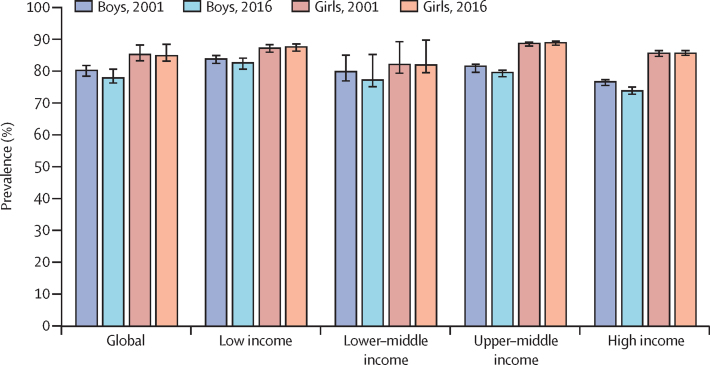
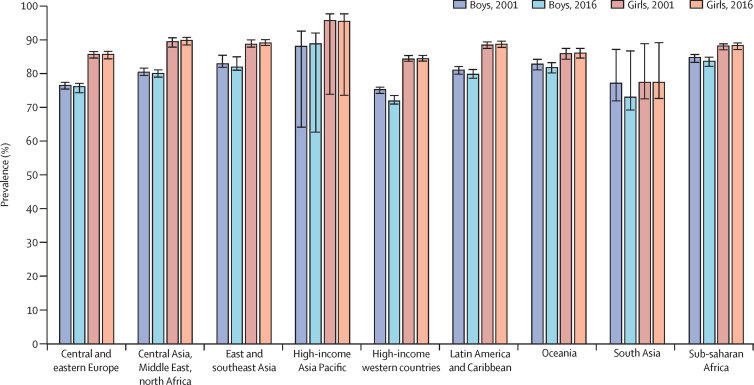
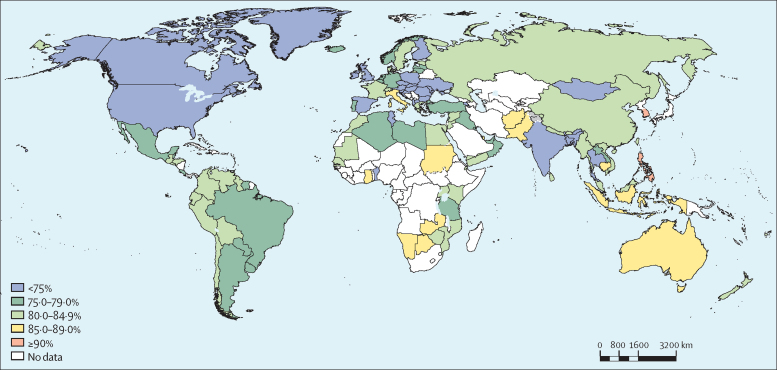
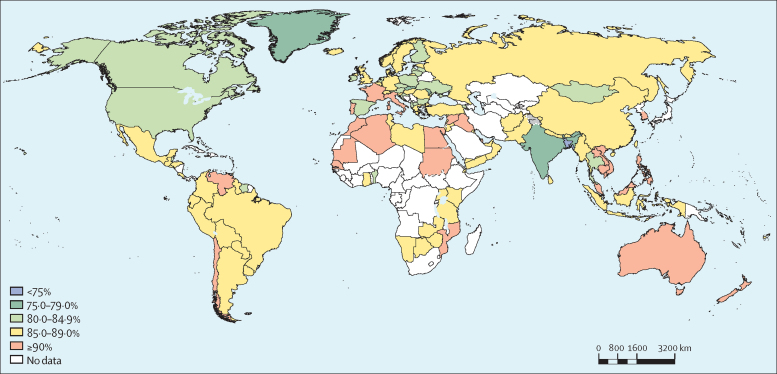
BACKGROUND: Physical activity has many health benefits for young people. In 2018, WHO launched More Active People for a Healthier World, a new global action on physical activity, including new targets of a 15% relative reduction of global prevalence of insufficient physical activity by 2030 among adolescents and adults. We describe current prevalence and trends of insufficient physical activity among school-going adolescents aged 11-17 years by country, region, and globally. METHODS: We did a pooled analysis of cross-sectional survey data that were collected through random sampling with a sample size of at least 100 individuals, were representative of a national or defined subnational population, and reported prevalence of of insufficient physical activity by sex in adolescents. Prevalence had to be reported for at least three of the years of age within the 10-19-year age range. We estimated the prevalence of insufficient physical activity in school-going adolescents aged 11-17 years (combined and by sex) for individual countries, for four World Bank income groups, nine regions, and globally for the years 2001-16. To derive a standard definition of insufficient physical activity and to adjust for urban-only survey coverage, we used regression models. We estimated time trends using multilevel mixed-effects modelling. FINDINGS: We used data from 298 school-based surveys from 146 countries, territories, and areas including 1·6 million students aged 11-17 years. Globally, in 2016, 81·0% (95% uncertainty interval 77·8-87·7) of students aged 11-17 years were insufficiently physically active (77·6% [76·1-80·4] of boys and 84·7% [83·0-88·2] of girls). Although prevalence of insufficient physical activity significantly decreased between 2001 and 2016 for boys (from 80·1% [78·3-81·6] in 2001), there was no significant change for girls (from 85·1% [83·1-88·0] in 2001). There was no clear pattern according to country income group: insufficient activity prevalence in 2016 was 84·9% (82·6-88·2) in low-income countries, 79·3% (77·2-87·5) in lower-middle-income countries, 83·9% (79·5-89·2) in upper-middle-income countries, and 79·4% (74·0-86·2) in high-income countries. The region with the highest prevalence of insufficient activity in 2016 was high-income Asia Pacific for both boys (89·0%, 62·8-92·2) and girls (95·6%, 73·7-97·9). The regions with the lowest prevalence were high-income western countries for boys (72·1%, 71·1-73·6), and south Asia for girls (77·5%, 72·8-89·3). In 2016, 27 countries had a prevalence of insufficient activity of 90% or more for girls, whereas this was the case for two countries for boys. INTERPRETATION: The majority of adolescents do not meet current physical activity guidelines. Urgent scaling up of implementation of known effective policies and programmes is needed to increase activity in adolescents. Investment and leadership at all levels to intervene on the multiple causes and inequities that might perpetuate the low participation in physical activity and sex differences, as well as engagement of youth themselves, will be vital to strengthen the opportunities for physical activity in all communities. Such action will improve the health of this and future young generations and support achieving the 2030 Sustainable Development Goals. FUNDING: WHO.
Overview
The claims and statistics of this paper haven’t been checked yet.
Free: it reads the open-access text and checks the first 5 claims that cite a source we can check. Create a free account to check every claim.
Integrity signals
Registry
Cites
Statistics
Figures
Verification
Claims the paper makes
The claims and statistics of this paper haven’t been checked yet.
Free: it reads the open-access text and checks the first 5 claims that cite a source we can check. Create a free account to check every claim.
Claims other papers make about this one
Each is checked against this paper’s own text: does it say what the citing paper says it does?
The source backs part of the claim, not all of it — or backs it for a different population, condition or comparison.
In the citing paper
“These data also reveal no overall improvement in global levels of participation over the last two decades and substantial gender differences.3 4”
From World Health Organization 2020 guidelines on physical activity and sedentary behaviour (2020) · cites this paper as [4]
Experimental — accuracy not yet measuredThe source backs part of the claim, not all of it — or backs it for a different population, condition or comparison.
In the citing paper
“Given that the most recent global estimates show that one in four (27.5%) adults3 and more than three-quarters (81%) of adolescents4 do not meet the recommendations for aerobic exercise, as outlined in the 2010 Global Recommendations on Physical Activity for Health,2”
From World Health Organization 2020 guidelines on physical activity and sedentary behaviour (2020) · cites this paper as [4]
Experimental — accuracy not yet measuredThe cited source says what the claim attributes to it.
In the citing paper
“a large proportion of children and youth, including those living in low and middle-income countries, are either sedentary or not achieving recommended levels of physical activity.8–11”
From Physical activity and health in Chinese children and adolescents: expert consensus statement (2020) (2020) · cites this paper as [11]
Self-check
Percentages, sums and reported differences re-computed from the paper’s own numbers.
The self-check needs the paper’s full text.
Citations
Cites
Abarca-Gómez, L., Abdeen, Z. A., Hamid, Z. A., Abu-Rmeileh, N. M., Acosta-Cazares, B., Acuin, C., Adams, R. J., Aekplakorn, W., Afsana, K., Aguilar-Salinas, C. A., et al. (2017) · The Lancet · doi:10.1016/s0140-6736(17)32129-3 · Cited by 7,482
Self-citationGlobal physical activity levels: surveillance progress, pitfalls, and prospects
Hallal, P. C., Andersen, L. B., Bull, F. C., Guthold, R., Haskell, W., & Ekelund, U. (2012) · The Lancet · doi:10.1016/s0140-6736(12)60646-1 · Cited by 5,711
Self-citationGuthold, R., Stevens, G. A., Riley, L. M., & Bull, F. C. (2018) · The Lancet Global Health · doi:10.1016/s2214-109x(18)30357-7 · Cited by 4,819
Self-citationA Physical Activity Screening Measure for Use With Adolescents in Primary Care
Prochaska, J. J., Sallis, J. F., & Long, B. (2001) · Archives of Pediatrics & Adolescent Medicine · doi:10.1001/archpedi.155.5.554 · Cited by 1,002
Progress in physical activity over the Olympic quadrennium
Sallis, J. F., Bull, F., Guthold, R., Heath, G. W., Inoue, S., Kelly, P., Oyeyemi, A. L., Perez, L. G., Richards, J., & Hallal, P. C. (2016) · The Lancet · doi:10.1016/s0140-6736(16)30581-5 · Cited by 935
Self-citationAubert, S., Barnes, J. D., Abdeta, C., Abi Nader, P., Adeniyi, A. F., Aguilar-Farias, N., Andrade Tenesaca, D. S., Bhawra, J., Brazo-Sayavera, J., Cardon, G., et al. (2018) · Journal of Physical Activity and Health · doi:10.1123/jpah.2018-0472 · Cited by 799
Biddle, S. J., Gorely, T., Pearson, N., & Bull, F. C. (2011) · International Journal of Behavioral Nutrition and Physical Activity · doi:10.1186/1479-5868-8-1 · Cited by 711
Self-citationGlobal Prevalence of Vision Impairment and Blindness
Stevens, G. A., White, R. A., Flaxman, S. R., Price, H., Jonas, J. B., Keeffe, J., Leasher, J., Naidoo, K., Pesudovs, K., Resnikoff, S., et al. (2013) · Ophthalmology · doi:10.1016/j.ophtha.2013.05.025 · Cited by 510
Self-citationStalsberg, R., & Pedersen, A. V. (2010) · Scandinavian Journal of Medicine & Science in Sports · doi:10.1111/j.1600-0838.2009.01047.x · Cited by 481
Farooq, M. A., Parkinson, K. N., Adamson, A. J., Pearce, M. S., Reilly, J. K., Hughes, A. R., Janssen, X., Basterfield, L., & Reilly, J. J. (2018) · British Journal of Sports Medicine · doi:10.1136/bjsports-2016-096933 · Cited by 418
Research works printed but not linked: 1
- WHO Global Recommendations on Physical Activity for Health 2010 World Health Organization Geneva 26180873
Cited by
Items 501–600 of 1,006
Physical activity as an intervention in severe mental illness
Kandola, A. A., & Osborn, D. (2021) · BJPsych Advances · doi:10.1192/bja.2021.33 · Cited by 27
van Lankveld, W., Linskens, F., & Stolwijk, N. M. (2021) · International Journal of Environmental Research and Public Health · doi:10.3390/ijerph18105328 · Cited by 30
“Insufficient PA has been reported across countries in the general population [3,10].”
BackgroundSchlund, A., Reimers, A. K., Bucksch, J., Linder, S., & Demetriou, Y. (2021) · German Journal of Exercise and Sport Research · doi:10.1007/s12662-021-00724-8 · Cited by 25
Aburto, M. J., Romero, D., Rezende, L. F. M., Sanchez, Z. M., Bolados, C. C., Guzman-Habinger, J. M., Rios, M., Suárez‐Reyes, M., Marques, A., Drenowatz, C. J., et al. (2021) · Scientific Reports · doi:10.1038/s41598-021-01167-9 · Cited by 28
Adolescent’s movement behaviors and built environment: a latent class analysis
Caetano, I. T., Miranda, V. P. N., dos Santos, F. K., & Amorim, P. R. D. S. (2021) · BMC Public Health · doi:10.1186/s12889-021-11974-4 · Cited by 22
“[4] using a grouped analysis of 298 population-based studies from 146 countries, representing 1.”
MethodKetelhut, S., Röglin, L., Martin‐Niedecken, A. L., Nigg, C. R., & Ketelhut, K. (2022) · Journal of Clinical Medicine · doi:10.3390/jcm11061570 · Cited by 36
“Despite the well-established positive effects of regular PA, 41% of children and adolescents worldwide fail to meet the current activity guidelines [2], placing them at risk for future non-communicable chronic diseases [3–5].”
BackgroundDomingues, S. F., da Silva, C. D., de Faria, F. R., Souza, H. D. S., & Amorim, P. R. D. S. (2022) · PLoS ONE · doi:10.1371/journal.pone.0266926 · Cited by 25
“A recent study showed that 81% of the world’s adolescents do not meet these recommendations [76].”
BackgroundMekkaoui, L., Schnitzler, C., Sidney, M. C., Gandrieau, J., Camporelli, F., & Potdevin, F. (2022) · International Journal of Environmental Research and Public Health · doi:10.3390/ijerph19106180 · Cited by 32
“In view of the sedentary lifestyle and the lack of physical activity (PA) observed for many years among young people [3], water can be a rich and abundant medium for PA, allowing a sustainable commitment to an active and healthy lifestyle [4].”
BackgroundBossmann, T., Wöll, A., & Wagner, I. (2022) · International Journal of Environmental Research and Public Health · doi:10.3390/ijerph19116855 · Cited by 34
“Worldwide, 81% of children and e nagers do not r ach he WHO recommendations for moderately inte sive aerobic ct vity and strength training according to their age group [1].”
BackgroundInfluentialStival, C., Lugo, A., Barone, L., Fattore, G., Odone, A., Salvatore, S., Santoro, E., Scaglioni, S., van den Brandt, P. A., Gallus, S., et al. (2022) · Nutrients · doi:10.3390/nu14112258 · Cited by 28
“Recent estimates show that less than 20% of European children and adolescents meet the World Health Organization (WHO) recommendations on physical activity [14,15].”
BackgroundAny increment in physical activity reduces mortality of primary care inactive patients
Grandes, G., García-Álvarez, A., Ansorena, M., Sánchez-Pinilla, R. O., Torcal, J., Arietaleanizbeaskoa, M. S., & Sánchez, Á. (2022) · British Journal of General Practice · doi:10.3399/bjgp.2022.0118 · Cited by 33
Zhang, Y., Su, F., Song, Y., & Lu, J. (2022) · International Journal of Environmental Research and Public Health · doi:10.3390/ijerph191610155 · Cited by 26
“Studies have shown that boys are naturally active and spend more time participating in physical exercise than girls, resulting in higher levels of physical activity and higher PFI levels in boys than girls [32,33].”
BackgroundGába, A., Baďura, P., Vorlíček, M., Dygrýn, J., Hamřík, Z., Kudláček, M., Rubín, L., Sigmund, E., Sigmundová, D., & Vašíčková, J. (2022) · Journal of Exercise Science & Fitness · doi:10.1016/j.jesf.2022.08.002 · Cited by 21
“To support national PA surveillance in Czech children and adolescents, this paper (1) presents a comprehensive summary and analysis of grades for the twelve PA-related indicators along with a rationale for the assignment of grades, (2) attempts to analyze the differences between sex and age groups, and (3) offers a co…”
The role of school medicine in the early detection and management of adolescent idiopathic scoliosis
Glavaš, J., Rumboldt, M., Karin, Ž., Matković, R., Kresina, S., Zubalj, N. D., & Aljinović, J. (2022) · Wiener klinische Wochenschrift · doi:10.1007/s00508-022-02092-1 · Cited by 20
Britton, Ú., Belton, S., Peers, C., Issartel, J., Goss, H. R., Roantree, M., & Behan, S. (2022) · European Physical Education Review · doi:10.1177/1356336x221131272 · Cited by 32
Lee, E., Kim, Y.-B., Goo, S. Y., Oyama, O., Lee, J., Kim, G., Lim, H., Sung, H., Yoon, J., Hwang, J., et al. (2022) · Journal of Exercise Science & Fitness · doi:10.1016/j.jesf.2022.10.014 · Cited by 24
Murphy, J., Milton, K. E., McLaughlin, M. J., Shilton, T., McLoughlin, G. M., Reece, L. J., Mair, J. L., Direito, A., Kariippanon, K. E., Mackenzie, K., et al. (2022) · Journal of Physical Activity and Health · doi:10.1123/jpah.2022-0357 · Cited by 22
Impact of economic growth on physical activity and sedentary behaviors: a Systematic Review
Yang, H., An, R., Clarke, C. V., & Shen, J. (2023) · Public Health · doi:10.1016/j.puhe.2022.11.020 · Cited by 25
Physical Activity Levels and Sleep in Schoolchildren (6–17) with and without School Sport
Larrínaga-Undabarrena, A., Río, X., Sáez, I., Angulo-Garay, G., Aguirre-Betolaza, A. M., Albisua, N., Aguirre, G. M. D. L., Isla, J. R. S., García, N., Urbano, M., et al. (2023) · International Journal of Environmental Research and Public Health · doi:10.3390/ijerph20021263 · Cited by 31
“There is an association between sleep duration and the risk of being overweight or obese [26,27] in both children [28,29] and adolescents [7,30].”
BackgroundBae, M.-H. (2023) · Iranian Journal of Public Health · doi:10.18502/ijph.v52i2.11890 · Cited by 34
“1% of children failed to maintain usual physical activity habits during the COVID19 outbreak (2), highlighting the additional burden associated with sedentary behavior in the context of the pandemic and its potential adverse effects on health (3-4).”
BackgroundPhysical Activity, Body Image, and Its Relationship with Academic Performance in Adolescents
Guimarães, J. P., García, J. P. F., Gónzález-Silva, J., & Martínez‐Patiño, M. J. (2023) · Healthcare · doi:10.3390/healthcare11040602 · Cited by 28
“According to Guthold [5] in 2010, 81% of adolescents aged 11–17 years were considered insufficiently active.”
BackgroundLiu, Y., Ge, X., Li, H., Zhang, E., Hu, F., Cai, Y., & Xiang, M. (2023) · Frontiers in Public Health · doi:10.3389/fpubh.2023.1175439 · Cited by 34
Telford, D. M., Meiring, R. M., & Gusso, S. (2023) · Frontiers in Sports and Active Living · doi:10.3389/fspor.2023.1282482 · Cited by 25
Deng, Y., Liang, J., & Chen, Q. (2023) · Frontiers in Public Health · doi:10.3389/fpubh.2023.1268502 · Cited by 24
Sharma, N., Sanjeevi, R. R., Balasubramanian, K., Chahal, A., Sharma, A., & Sidiq, M. (2024) · Indian Journal of Endocrinology and Metabolism · doi:10.4103/ijem.ijem_365_23 · Cited by 29
Smout, S., Champion, K. E., O’Dean, S., Halladay, J. E., Gardner, L. A., & Newton, N. C. (2024) · International Journal of Mental Health and Addiction · doi:10.1007/s11469-024-01350-9 · Cited by 27
“This precludes realistic, strengths-based conclusions as findings are centred around guidelines or behavioural thresholds that the vast majority of adolescents do not meet (Beal et al., 2019; Guthold et al., 2020; Khan et al., 2021).”
Rodríguez‐Rodríguez, F., Huertas‐Delgado, F. J., Barranco-Ruíz, Y., Aranda-Balboa, M. J., & Chillón, P. (2020) · International Journal of Environmental Research and Public Health · doi:10.3390/ijerph17186864 · Cited by 23
“Unfortunately, a small proportion of children/adolescents [5,6] and adults [7] meet these recommendations.”
BackgroundBurgueño, R., Bonet-Medina, A., Cerván-Cantón, Á., Espejo, R., Fernández-Berguillo, F. B., Gordo-Ruiz, F., Linares-Martínez, H., Montenegro-Lozano, S., Ordoñez-Tejero, N., Vergara-Luque, J. J., et al. (2020) · Retos · doi:10.47197/retos.v0i39.78792 · Cited by 29
“No obstante, la investigación ha detectado que la mayoría de los adolescentes no reúnen las recomendaciones de al menos 60 minutos diarios de AF de moderada a vigorosa y, por tanto, no se benefician de las implicaciones para salud derivadas de su práctica (Guthold et al., 2020).”
BackgroundExamining Portuguese High School Students’ Attitudes Toward Physical Education
Pereira, P., Santos, F., & Marinho, D. A. (2020) · Frontiers in Psychology · doi:10.3389/fpsyg.2020.604556 · Cited by 30
Kanellopoulou, A., Diamantis, D. V., Notara, V., & Panagiotakos, D. B. (2021) · Current Nutrition Reports · doi:10.1007/s13668-021-00352-6 · Cited by 28
Ávila‐García, M., Esojo-Rivas, M., Villa‐González, E., Tercedor, P., & Huertas‐Delgado, F. J. (2021) · International Journal of Environmental Research and Public Health · doi:10.3390/ijerph18052702 · Cited by 28
Secular trends in motor performance of children and adolescents between 2010 and 2020
Schlag, E., Ferrari, N., Koch, B., Dordel, S., & Joisten, C. (2021) · Translational Sports Medicine · doi:10.1002/tsm2.292 · Cited by 20
Physical activity and sedentary behaviors among Chinese children: recent trends and correlatesPreprint
Yang, X., Leung, A. W. Y., Jago, R., Yu, S., & Zhao, W. H. (2020) · PubMed · doi:10.3967/bes2021.059 · Cited by 26
Ackah, M., Owiredu, D., Salifu, M. G., & Yeboah, C. O. (2022) · PLOS Global Public Health · doi:10.1371/journal.pgph.0001016 · Cited by 27
Miranda, V. P. N., Amorim, P. R. D. S., Bastos, R. R., Canabrava, K. L. R., Júnior, M. V. M., de Faria, F. R., Franceschini, S. D. C. C., Pelúzio, M. D. C. G., & Priore, S. E. (2020) · Mediators of Inflammation · doi:10.1155/2020/9170640 · Cited by 25
Dimensions of Leisure and Perceived Health in Young University Students
Andrés-Villas, M., Díaz-Milanés, D., Cobreros, R. R., Toral, M. V., & Pérez-Moreno, P. J. (2020) · International Journal of Environmental Research and Public Health · doi:10.3390/ijerph17238750 · Cited by 20
“However, the gender differences found here to indicate the lower practice of physical activity in females is a worrying result that is in line with the findings reported in other studies on leisure [23,45], in the study on physical activity in adolescents commissioned by the WHO [46] or in the study on physical activi…”
Resultde Morais, L. M. S., Paravidino, V. B., Mediano, M. F. F., Benthroldo, R. S., Gonçalves, T. R., Sgambato, M. R., de Souza, B. D. S. N., Eliseu, V., Marques, E. S., Pereira, R. A., et al. (2021) · European Journal of Public Health · doi:10.1093/eurpub/ckab025 · Cited by 23
Constantini, K., Markus, I., Epel, N., Jakobovich, R., Gepner, Y., & Lev‐Ari, S. (2021) · International Journal of Environmental Research and Public Health · doi:10.3390/ijerph18084386 · Cited by 23
“In addition, maintaining regular physical activity is an important internal resource that can enhance resilience and improve physical and mental health during the SARS-CoV-2 crisis [8,21,22].”
BackgroundWang, H., Blake, H., & Chattopadhyay, K. (2021) · Frontiers in Public Health · doi:10.3389/fpubh.2021.610245 · Cited by 22
“ORIGINAL RESEARCH published: 27 April 2021 doi: 10.3389/fpubh.2021.610245 Frontiers in Public Health | www.frontiersin.org 1 April 2021 | Volume 9 | Article 610245 Edited by: Vijay S. Gc, University of York, United Kingdom Reviewed by: Warren G. McDonald, Methodist University, United States Andrew Brinkley, Loughborou…”
BackgroundInfluentialPérez-Mármol, M., Cuberos, R. C., García-Mármol, E., & Sánchez, M. C. (2021) · Children · doi:10.3390/children8100901 · Cited by 27
“This being said, there can be no doubt that national and international policies are particularly important when it comes to pooling forces towards the common outcome of all adolescents meeting physical activity recommendations and, in this way, improving their wellbeing [41].”
BackgroundAdolescents’ Physical Activity and Depressive Symptoms: A Psychosocial Mechanism
Shen, L., Gu, X., Zhang, T., & Lee, J. (2022) · International Journal of Environmental Research and Public Health · doi:10.3390/ijerph19031276 · Cited by 26
“However, a recent population-based survey study from 146 countries reported that more than 77% of adolescents aged 11–17 years engaged in insufficient PA regardless of gender [32].”
BackgroundZhang, D., Li, T., Xie, Y., Tao, S., Yang, Y., Zou, L., Qu, Y., Zhai, S., Tao, F., & Wu, X. (2022) · BMC Public Health · doi:10.1186/s12889-022-12518-0 · Cited by 19
“According to the latest World Health Organization (WHO) survey, about 80 per cent of adolescents worldwide do not meet the recommended level of PA per day [3].”
BackgroundReimers, A. K., Marzi, I., Beck, F., Engels, E. S., Renninger, D., Buttazzoni, A. N., Krieger, C., & Demetriou, Y. (2022) · BMJ Open · doi:10.1136/bmjopen-2021-056383 · Cited by 21
“4 However, concerning low levels of physical activity among children, adolescent 5 and adults 6 in countries across the globe demands urgent action.”
BackgroundAlmutairi, N., Burns, S. K., & Portsmouth, L. (2022) · Journal of Obesity · doi:10.1155/2022/1892017 · Cited by 20
“recommended level of PA and the percentage is higher among girls (85%) [13].”
BackgroundZhao, M., Liu, S., Han, X., Li, Z., Liu, B., Chen, J., & Li, X. (2022) · BioMed Research International · doi:10.1155/2022/7464815 · Cited by 37
“3% of Chinese students (global 81% students) aged 11-17 years were insufficiently physical active in 2016[11].”
BackgroundPeralta, L. R., Cinelli, R. L., Cotton, W. G., Morris, S., Galy, O., & Caillaud, C. (2022) · International Journal of Environmental Research and Public Health · doi:10.3390/ijerph191811554 · Cited by 23
“However, research on children and adolescents’ PA shows that the overall PA levels tend to be lower than PA recommendations, decline with age, and are substantially lower for girls and those from low socioeconomic status (SES) groups [4,11,12].”
BackgroundCadenas‐Sánchez, C., Migueles, J. H., Verdejo‐Román, J., Erickson, K. I., Esteban‐Cornejo, I., Catena, A., & Ortega, F. B. (2022) · Scandinavian Journal of Medicine and Science in Sports · doi:10.1111/sms.14263 · Cited by 24
“28 Our novel study supports the idea of increasing physical activity levels, particularly high intensity activities (i.e., vigorous) seem to be related to brain morphology and intelligence.”
BackgroundPhysical activity and sedentary behaviors in Polish children and adolescents
Górna, S., Pazdro-Zastawny, K., Basiak-Rasała, A., Krajewska, J., Kolator, M., Cichy, I., Rokita, A., & Zatoński, T. (2022) · Archives de Pédiatrie · doi:10.1016/j.arcped.2022.11.010 · Cited by 24
Effect of Elite Sport on Physical Activity Practice in the General Population: A Systematic Review
Lion, A., Vuillemin, A., Léon, F., Delagardelle, C., & Hoye, A. V. (2022) · Journal of Physical Activity and Health · doi:10.1123/jpah.2022-0123 · Cited by 33
Tanucan, J. C. M., Garcia, M. A., & Bojos, M. T. (2022) · Pedagogy of Physical Culture and Sports · doi:10.15561/26649837.2022.0602 · Cited by 23
“Before the COVID-19 pandemic [2, 11, 12] reported that 1 in 3 adults and 3 in 4 adolescents worldwide did not meet the guidelines for physical activity.”
BackgroundAn analysis of the learning implementation of physical education in junior high schools
Khairuddin, K., Masrun, M., Bakhtiar, S., & Syahruddin, S. (2023) · Jurnal Cakrawala Pendidikan · doi:10.21831/cp.v42i1.54605 · Cited by 41
Carver, A., Cerin, E., Akram, M., Sallis, J. F., Cain, K. L., Frank, L. D., Geremia, C. M., Conway, T. L., Glanz, K., & Saelens, B. E. (2023) · International Journal of Behavioral Nutrition and Physical Activity · doi:10.1186/s12966-023-01415-3 · Cited by 25
“In particular, parents were asked to rate the importance (on a five-point Likert scale ranging from 1 ‘Not at all important’ to 5 ‘Very important’) of the following 16 neighborhood characteristics: [1] affordability; [2] other children living nearby; proximity to [3] parks, [4] workplace/school, [5] public transport,…”
BackgroundMandic, S., Bengoechea, E. G., Hopkins, D., Coppell, K. J., Smith, M., Moore, A., Keall, M., Ergler, C. R., Sandretto, S., Wilson, G. A., et al. (2023) · Journal of Transport & Health · doi:10.1016/j.jth.2023.101585 · Cited by 22
Nilsen, S. A., Stormark, K. M., Heradstveit, O., & Breivik, K. (2023) · SSM - Population Health · doi:10.1016/j.ssmph.2023.101394 · Cited by 27
Teaching models in physical education: current and future perspectives
Ferraz, R. M. P., Branquinho, L., CI-ISCE-ISCE Douro, 4.-7. P., Sortwell, A., Teixeira, J. E., Forte, P. M., CI-ISCE-ISCE Douro, 4.-7. P., & Marinho, D. A. (2023) · Montenegrin Journal of Sports Science and Medicine · doi:10.26773/mjssm.230307 · Cited by 56
Turska‐Kmieć, A., Neunhäeuserer, D., Mazur, A., Dembiński, Ł., del Torso, S., Grossman, Z., Barak, S., Hadjipanayis, A., Peregud-Pogorzelski, J. W., Kostka, T., et al. (2023) · Frontiers in Pediatrics · doi:10.3389/fped.2023.1125958 · Cited by 27
Lee, H., Choi, H., Koh, S. B., & Kim, H. C. (2023) · Epidemiology and Health · doi:10.4178/epih.e2023085 · Cited by 23
“[13].”
ResultInfluentialEmotional Virtual Characters for Improving Motivation and Performance in VR Exergames
Graf, L., Abramowski, S., Born, F., & Masuch, M. (2023) · Proceedings of the ACM on Human-Computer Interaction · doi:10.1145/3611063 · Cited by 24
“5 % of all adults and 81 % of all adolescents do not adhere to the WHO’s prescribed activity recommendations, which leads to a lack of exercise and thus to many further physical complications [39, 40].”
BackgroundSilva, C. S., Godinho, C. I. A., Encantado, J., Rodrigues, B., Carraça, E. V., Teixeira, P. J., & Silva, M. N. (2023) · BMC Health Services Research · doi:10.1186/s12913-023-09881-y · Cited by 27
“However, worldwide physical inactivity prevalence remains high [3–5].”
Backgroundda Silva, A. G., de Souza, J. B., Gomes, C. S., da Silva, T. P. R., de Sá, A. C. M. G. N., & Malta, D. C. (2024) · BMC Pediatrics · doi:10.1186/s12887-024-04601-9 · Cited by 23
“Older adolescents are prone to exhibit habits associated with less healthy lifestyles, such as excessive screen time [26, 27], insufficient physical activity [28, 29], and alcohol and tobacco consumption [26].”
BackgroundGermany’s 2022 Report Card on Physical Activity for Children and Adolescents
Demetriou, Y., Beck, F., Sturm, D. J., Abu‐Omar, K., Forberger, S., Hebestreit, A., Hohmann, A., Hülse, H., Kläber, M., Kobel, S., et al. (2024) · German Journal of Exercise and Sport Research · doi:10.1007/s12662-024-00946-6 · Cited by 34
“Recent international research shows a gap, with girls being consistently less active across all age groups (Guthold et al., 2020; Steene-Johannessen et al., 2020).”
InfluentialLeite, G. S., Alves, C. P. D. L., Leão, O. A. D. A., & Crochemore‐Silva, I. (2024) · Journal of Physical Activity and Health · doi:10.1123/jpah.2024-0313 · Cited by 27
Mayo, X., Luque‐Casado, A., Jiménez, A., & Álvarez, F. D. V. (2020) · Sustainability · doi:10.3390/su12156265 · Cited by 25
“Despite the well-known health benefits of physical activity, the prevalence of physical inactivity has remained stable during the last decade for both adolescents [7] and adults [8].”
BackgroundResultFerrari, G., Rezende, L. F. M., Wagner, G. A., Florindo, A. A., & Peres, M. F. T. (2020) · BMJ Open · doi:10.1136/bmjopen-2020-037290 · Cited by 19
Challenges of making healthy lifestyle changes for families in Aotearoa/New Zealand
Wild, C. E. K., Rawiri, N. T., Willing, E. J., Hofman, P. L., & Anderson, Y. C. (2020) · Public Health Nutrition · doi:10.1017/s1368980020003699 · Cited by 19
“Given the low numbers of NZ children meeting national recommendations in these areas(7,37), this is an important element of understanding the effectiveness of interventions in NZ.”
BackgroundSong, K., Kwon, A., Chae, H. W., Suh, J., Choi, H. S., Choi, Y., Oh, J. S., & Kim, H.-S. (2020) · Nutrition Research · doi:10.1016/j.nutres.2020.12.011 · Cited by 25
Estilo motivacional docente en educación física: ¿cómo afecta a las experiencias del alumnado?
Diloy-Peña, S., García‐González, L., Sevil‐Serrano, J., Sanz-Remacha, M., & Abós, Á. (2021) · Apunts Educación Física y Deportes · doi:10.5672/apunts.2014-0983.es.(2021/2).144.06 · Cited by 24
“Por ejemplo, un estudio reciente llevado a cabo en 146 países mostró que el 81% de los jóvenes entre 11 y 17 años no cumplía estas recomendaciones internacionales (Guthold et al., 2020).”
BackgroundAinsworth, B. E., & Sallis, J. F. (2021) · Journal of sport and health science/Journal of Sport and Health Science · doi:10.1016/j.jshs.2021.09.005 · Cited by 29
“Because the physical activity plan for the 2022 Winter Olympic Games targets youth, there is potential for a successful physical activity legacy, with particular benefits among school-aged children and adolescents, the majority of whom are insufficiently active or not meeting physical activity guidelines.(10) Clearly,…”
BackgroundEvery child with congenital heart disease should be exercising
Hansen, K., & Tierney, E. S. S. (2021) · Current Opinion in Cardiology · doi:10.1097/hco.0000000000000931 · Cited by 21
Marzi, I., Tcymbal, A., Gelius, P. C., Abu‐Omar, K., Reimers, A. K., Whiting, S., & Wickramasinghe, K. K. (2021) · European Journal of Public Health · doi:10.1093/eurpub/ckab193 · Cited by 29
Burchartz, A., Oriwol, D., Kolb, S., Schmidt, S., von Haaren‐Mack, B., Niessner, C., & Wöll, A. (2022) · German Journal of Exercise and Sport Research · doi:10.1007/s12662-022-00811-4 · Cited by 28
Bassi, S., Bahl, D., Harrell, M. B., Jain, N., Kandasamy, A., Salunke, S. R., Shah, V. G., Raghunathan, P., Markandan, S., Murthy, P., et al. (2021) · F1000Research · doi:10.12688/f1000research.51136.1 · Cited by 25
Rigby, B. P., Dodd-Reynolds, C. J., & Oliver, E. J. (2022) · Health Research Policy and Systems · doi:10.1186/s12961-022-00864-9 · Cited by 42
“Background The benefits of physical activity (PA) are well known, yet globally many people do not undertake recommended levels [1, 2].”
BackgroundDemographic, social, and environmental factors predicting Danish children’s greenspace use
Arvidsen, J., Schmidt, T., Præstholm, S., Andkjær, S., Olafsson, A. S., Nielsen, J. V., & Schipperijn, J. (2022) · Urban Forestry & Urban Greening · doi:10.1016/j.ufug.2022.127487 · Cited by 18
Exercise Adherence in Hispanic Adolescents with Obesity or Type 2 Diabetes
Faulkner, M. S., & Michaliszyn, S. F. (2021) · Journal of Pediatric Nursing · doi:10.1016/j.pedn.2020.09.012 · Cited by 18
Grasaas, E., & Sandbakk, Ø. B. (2024) · Frontiers in Public Health · doi:10.3389/fpubh.2024.1382028 · Cited by 22
Developing technologies to assess vascular ageing: a roadmap from VascAgeNet
Zanelli, S., Agnoletti, D., Alastruey, J., Allen, J., Bianchini, E., Bikia, V., Boutouyrie, P., Bruno, R. M., Climie, R. E., Djeldjli, D., et al. (2024) · Physiological Measurement · doi:10.1088/1361-6579/ad548e · Cited by 26
Bucksch, J., Häußler, A., Schneider, K., Finne, E., Schmidt, K., Dadacynski, K., & Sudeck, G. (2020) · PubMed Central · doi:10.25646/6900 · Cited by 26
“1%, respectively) would then be below the global average [13].”
BackgroundSekulic, D., Prus, D., Zevrnja, A., Peric, M., & Zaletel, P. (2020) · Children · doi:10.3390/children7120297 · Cited by 18
Yusuf, R. A., Mont, D. F., Lin, W., & Chen, H. (2021) · Asia Pacific Journal of Public Health · doi:10.1177/1010539521997255 · Cited by 24
Influence of weekly physical exercises on indicators of biological age of student's youth
Присяжнюк, С. І., Pryimakov, O., Єрмаков, С., Oleniev, D. G., Еider, J., & Mazurok, N. (2021) · Physical Education of Students · doi:10.15561/20755279.2021.0108 · Cited by 22
“Guthold et al [10] described the current prevalence and trends of insufficient physical activity of school children aged 11-17 according to countries, regions, and worldwide.”
BackgroundSuspension vs. Plyometric Training in Children's Explosive Strength
Marta, C., Alves, A. R., Casanova, N., Neiva, H. P., Marinho, D. A., Izquierdo, M., Nunes, C., & Marques, M. C. (2021) · The Journal of Strength and Conditioning Research · doi:10.1519/jsc.0000000000004009 · Cited by 20
“3% of the European youth do not achieve the international physical activity guidelines per day (13), clearly evidenced by the weakness in youth’s physical fitness levels(13,17).”
BackgroundThe need for adolescents’ agency in salutogenic approaches shaping physical activity in schools
Boonekamp, G., Jansen, E., O’Sullivan, T. L., Dierx, J. A. J., Lindström, B., Pérez-Wilson, P., & Díaz, C. Á.-D. (2021) · Health Promotion International · doi:10.1093/heapro/daab073 · Cited by 27
Kjellenberg, K., Ekblom, Ö. B., Stålman, C., Helgadóttir, B., & Nyberg, G. (2021) · Children · doi:10.3390/children8110998 · Cited by 32
“, do not meet the PA recommendations of 60 min of MVPA per day) [20].”
BackgroundAl-Hazzaa, H. M., Alothman, S., Alghannam, A. F., & Al-Masud, A. A. (2021) · Nutrients · doi:10.3390/nu14010110 · Cited by 26
“A recent report indicated that more than 80% of school-aged adolescents worldwide do not achieve the minimum level of recommended daily PA [13].”
BackgroundResultInfluentialFrömel, K., Groffik, D., Kudláček, M., Šafář, M., Zwierzchowska, A., & Mitáš, J. (2022) · Sustainability · doi:10.3390/su14020891 · Cited by 22
Frömel, K., Groffik, D., Šafář, M., & Mitáš, J. (2022) · BioMed Research International · doi:10.1155/2022/6305204 · Cited by 38
“This also requires respecting the possibilities for active participation in organized PA by less physically active adolescents [34] and reversing the fact that four in every five adolescents do not experience the enjoyment motive and social, physical, and mental health benefits of regular PA [47].”
Motivation Regarding Physical Exercise among Health Science University Students
Herrera, S. S., Juánez, J. C., Molina, S. F., & Durán-Vinagre, M. Á. (2022) · International Journal of Environmental Research and Public Health · doi:10.3390/ijerph19116524 · Cited by 32
Alkhraiji, M. H., BARKER, A. R., & Williams, C. A. (2022) · Journal of Sports Sciences · doi:10.1080/02640414.2022.2092982 · Cited by 23
Frömel, K., Groffik, D., Valach, P., Šafář, M., & Mitáš, J. (2022) · Journal of School Health · doi:10.1111/josh.13232 · Cited by 22
Theuring, S., van Loon, W., Hommes, F., Bethke, N., Mall, M. A., Kurth, T., Seybold, J., & Mockenhaupt, F. P. (2022) · International Journal of Environmental Research and Public Health · doi:10.3390/ijerph191610103 · Cited by 23
“Insufficient physical activity is a major public health concern [39] and was further exacerbated during the pandemic, particularly in less socioeconomically advantaged households [9,40].”
BackgroundMwase‐Vuma, T., Janssen, X., Okely, A. D., Tremblay, M. S., Draper, C. E., Florindo, A. A., Tanaka, C., Koh, D., Guan, H., Tang, H., et al. (2022) · Journal of science and medicine in sport · doi:10.1016/j.jsams.2022.10.003 · Cited by 21
Kryst, Ł., Żegleń, M., Artymiak, P., Kowal, M., & Woronkowicz, A. (2022) · American Journal of Human Biology · doi:10.1002/ajhb.23829 · Cited by 18
“According to the WHO European Childhood Obesity Surveillance 22%–52% of children had at least 2 h of screen time on weekdays, while on weekend days, the same number ranges from 52% to 91% (World Health Organisation, 2018).”
BackgroundInfluentialDong, Y., Jan, C., Chen, L., Ma, T., Liu, J., Zhang, Y., Ma, Q., Zhong, P., Song, Y., Ma, J., et al. (2022) · Translational Vision Science & Technology · doi:10.1167/tvst.11.12.9 · Cited by 23
Relationship Between Quality of Life and Level of Physical Activity and Family Well-Being
Валеріївна, А. О., Maltsev, D., Кашуба, В. О., Dutchak, M., Ratnikov, D., Grygus, I. M., Byshevets, N., & Horodinska, I. (2022) · Physical Education Theory and Methodology · doi:10.17309/tmfv.2022.4.16 · Cited by 18
“Every year, the percentage of sedentary people who do not meet the recommended level of regular physical activity is increasing (Guthold et al., 2020).”
BackgroundMartín-Martínez, C., Valenzuela, P. L., Martinez‐Zamora, M. D., & Martínez‐de‐Quel, Ó. (2022) · Journal of science and medicine in sport · doi:10.1016/j.jsams.2022.12.007 · Cited by 31
Leone, M., Levesque, P., Bourget-Gaudreault, S., Lemoyne, J., Kalinova, É., Comtois, A. S., Bui, H. T., Léger, L., Frémont, P., & Allisse, M. (2023) · Frontiers in Public Health · doi:10.3389/fpubh.2022.1056484 · Cited by 36
“As of 2016, combined data from 146 countries indicates that over 80% of adolescents do not meet the recommended levels of physical activity (38).”
BackgroundWho Uses Mhealth? User Archetypes for Physical and Mental Health Apps
Aziz, M., Erbad, A., Belhaouari, S. B., Almourad, M. B., Altuwairiqi, M., & Ali, R. (2022) · Digital Health · doi:10.1177/20552076231152175 · Cited by 21
Analysis of national physical activity and sedentary behaviour policies in China
Chen, S., Hong, J., Milton, K. E., Pogrmilović, B. K., Ma, J., & Pedišić, Ž. (2023) · BMC Public Health · doi:10.1186/s12889-023-15865-8 · Cited by 23
“However, a relatively high proportion of the global population do not meet the guidelines [9, 10].”
BackgroundTerra, L. F., da Costa, W. P., Silva, R. M. F., de Rezende, L. M. T., Noll, M. A., & Noll, P. R. E. S. (2023) · PLoS ONE · doi:10.1371/journal.pone.0287868 · Cited by 21
Metadata
- Authors
- Guthold, R., Stevens, G. A., Riley, L. M., & Bull, F. C.
- Affiliations
- World Health Organization (CH)
- Imperial College London (GB)
- The University of Western Australia (AU)
- Corresponding author
- Guthold, Regina
- Venue
- The Lancet Child & Adolescent Health
- Publisher
- Elsevier BV
- Published
- 2020-01
- Volume
- 4
- Issue
- 1
- Pages
- 23-35
- ISSN
- 2352-4642 (ISSN-L)
- PMC
- PMC6919336
- OpenAlex
- W2989617484
- Semantic Scholar
- f46a550ac37c8a6425eb044c3c76e0da5d9756a8
- Cited by
- 4,033
- References
- 25
- Citations by year
- 2026: 622 · 2025: 654 · 2024: 638 · 2023: 562 · 2022: 567 · 2021: 496 · 2020: 485
- FWCI
- 266.68
- Type
- journal article
- Language
- en
- Open access
- hybrid
- doi.org
- Licence
- cc-by
- www.elsevier.com/tdm/userlicense/1.0/ (tdm)
- www.elsevier.com/legal/tdmrep-license (tdm)
- creativecommons.org/licenses/by/3.0/igo/ (vor)
- Locations
- The Lancet Child & Adolescent Health (publishedVersion, cc-by)
- PubMed Central (publishedVersion, cc-by)
- PubMed (publishedVersion)
- UWA Profiles and Research Repository (UWA) (submittedVersion, cc-by)
- Funders
- World Health Organization
- Topics
- Health Sciences › Medicine › Public Health, Environmental and Occupational Health › Physical Activity and Health
- Health Sciences › Medicine › Public Health, Environmental and Occupational Health › Obesity, Physical Activity, Diet
- Social Sciences › Life-span and Life-course Studies › Recreational Sport and Physical Activity
- Keywords
- physical inactivity, adolescents, global trends, sex differences, school-based survey, country income groups, physical activity guidelines, low-income countries
- MeSH terms
- Adolescent, Child, Cross-Sectional Studies, Developing Countries, Female, Health Surveys, Humans, Income, Male, Sex Factors, Global Health, Exercise, Prevalence, Developed Countries
About these checks
Registry, retraction, Cites and statistics results are computed, not judged, with one exception: a printed reference that no index lists is read once by a model before it counts as a citation error. Claims are extracted by a model and kept only when their quote appears verbatim in the text; each cited source is then checked, with a model’s help, for whether it says what the claim relies on. Those verdicts can be wrong — read the claim’s quote and the cited source before relying on one.
Statistics and arithmetic are recomputed, not judged.
Confidence bands are shown only for fields calibrated on our annotated test set. None is calibrated yet, so no band is shown.
What counts as a claim ›How we measure confidence ›How we check this ›
Are you an author, or do you see a problem with this page? Request a review
Data sources
Bibliographic data: Semantic Scholar, OpenAlex, Crossref.
Contains information from the Semantic Scholar Academic Graph Datasets, made available under the ODC Attribution License (ODC-BY 1.0).
Semantic Scholar’s data is described in: Kinney, R., et al. (2023). The Semantic Scholar Open Data Platform. arXiv:2301.10140.
