

Global trends in insufficient physical activity among adolescents: a pooled analysis of 298 population-based surveys with 1·6 million participants
Open accessThe DOI matches its Crossref record; 25 of the 25 references it cites were found in a registry or an index.
Abstract
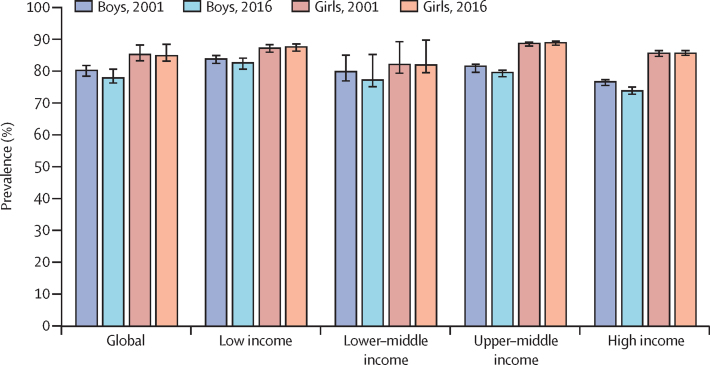
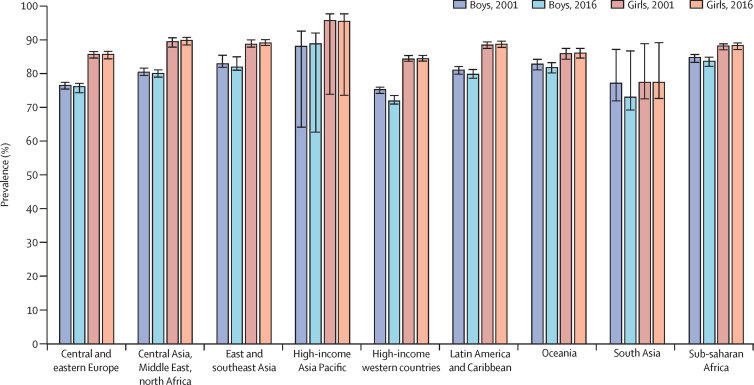
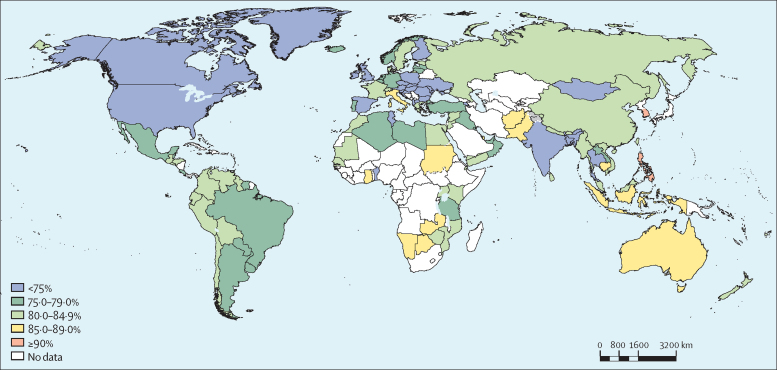
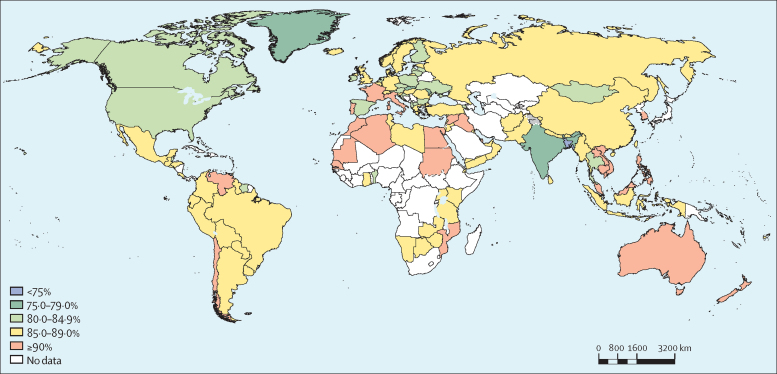
BACKGROUND: Physical activity has many health benefits for young people. In 2018, WHO launched More Active People for a Healthier World, a new global action on physical activity, including new targets of a 15% relative reduction of global prevalence of insufficient physical activity by 2030 among adolescents and adults. We describe current prevalence and trends of insufficient physical activity among school-going adolescents aged 11-17 years by country, region, and globally. METHODS: We did a pooled analysis of cross-sectional survey data that were collected through random sampling with a sample size of at least 100 individuals, were representative of a national or defined subnational population, and reported prevalence of of insufficient physical activity by sex in adolescents. Prevalence had to be reported for at least three of the years of age within the 10-19-year age range. We estimated the prevalence of insufficient physical activity in school-going adolescents aged 11-17 years (combined and by sex) for individual countries, for four World Bank income groups, nine regions, and globally for the years 2001-16. To derive a standard definition of insufficient physical activity and to adjust for urban-only survey coverage, we used regression models. We estimated time trends using multilevel mixed-effects modelling. FINDINGS: We used data from 298 school-based surveys from 146 countries, territories, and areas including 1·6 million students aged 11-17 years. Globally, in 2016, 81·0% (95% uncertainty interval 77·8-87·7) of students aged 11-17 years were insufficiently physically active (77·6% [76·1-80·4] of boys and 84·7% [83·0-88·2] of girls). Although prevalence of insufficient physical activity significantly decreased between 2001 and 2016 for boys (from 80·1% [78·3-81·6] in 2001), there was no significant change for girls (from 85·1% [83·1-88·0] in 2001). There was no clear pattern according to country income group: insufficient activity prevalence in 2016 was 84·9% (82·6-88·2) in low-income countries, 79·3% (77·2-87·5) in lower-middle-income countries, 83·9% (79·5-89·2) in upper-middle-income countries, and 79·4% (74·0-86·2) in high-income countries. The region with the highest prevalence of insufficient activity in 2016 was high-income Asia Pacific for both boys (89·0%, 62·8-92·2) and girls (95·6%, 73·7-97·9). The regions with the lowest prevalence were high-income western countries for boys (72·1%, 71·1-73·6), and south Asia for girls (77·5%, 72·8-89·3). In 2016, 27 countries had a prevalence of insufficient activity of 90% or more for girls, whereas this was the case for two countries for boys. INTERPRETATION: The majority of adolescents do not meet current physical activity guidelines. Urgent scaling up of implementation of known effective policies and programmes is needed to increase activity in adolescents. Investment and leadership at all levels to intervene on the multiple causes and inequities that might perpetuate the low participation in physical activity and sex differences, as well as engagement of youth themselves, will be vital to strengthen the opportunities for physical activity in all communities. Such action will improve the health of this and future young generations and support achieving the 2030 Sustainable Development Goals. FUNDING: WHO.
Overview
The claims and statistics of this paper haven’t been checked yet.
Free: it reads the open-access text and checks the first 5 claims that cite a source we can check. Create a free account to check every claim.
Integrity signals
Registry
Cites
Statistics
Figures
Verification
Claims the paper makes
The claims and statistics of this paper haven’t been checked yet.
Free: it reads the open-access text and checks the first 5 claims that cite a source we can check. Create a free account to check every claim.
Claims other papers make about this one
Each is checked against this paper’s own text: does it say what the citing paper says it does?
The source backs part of the claim, not all of it — or backs it for a different population, condition or comparison.
In the citing paper
“These data also reveal no overall improvement in global levels of participation over the last two decades and substantial gender differences.3 4”
From World Health Organization 2020 guidelines on physical activity and sedentary behaviour (2020) · cites this paper as [4]
Experimental — accuracy not yet measuredThe source backs part of the claim, not all of it — or backs it for a different population, condition or comparison.
In the citing paper
“Given that the most recent global estimates show that one in four (27.5%) adults3 and more than three-quarters (81%) of adolescents4 do not meet the recommendations for aerobic exercise, as outlined in the 2010 Global Recommendations on Physical Activity for Health,2”
From World Health Organization 2020 guidelines on physical activity and sedentary behaviour (2020) · cites this paper as [4]
Experimental — accuracy not yet measuredThe cited source says what the claim attributes to it.
In the citing paper
“a large proportion of children and youth, including those living in low and middle-income countries, are either sedentary or not achieving recommended levels of physical activity.8–11”
From Physical activity and health in Chinese children and adolescents: expert consensus statement (2020) (2020) · cites this paper as [11]
Self-check
Percentages, sums and reported differences re-computed from the paper’s own numbers.
The self-check needs the paper’s full text.
Citations
Cites
Abarca-Gómez, L., Abdeen, Z. A., Hamid, Z. A., Abu-Rmeileh, N. M., Acosta-Cazares, B., Acuin, C., Adams, R. J., Aekplakorn, W., Afsana, K., Aguilar-Salinas, C. A., et al. (2017) · The Lancet · doi:10.1016/s0140-6736(17)32129-3 · Cited by 7,482
Self-citationGlobal physical activity levels: surveillance progress, pitfalls, and prospects
Hallal, P. C., Andersen, L. B., Bull, F. C., Guthold, R., Haskell, W., & Ekelund, U. (2012) · The Lancet · doi:10.1016/s0140-6736(12)60646-1 · Cited by 5,711
Self-citationGuthold, R., Stevens, G. A., Riley, L. M., & Bull, F. C. (2018) · The Lancet Global Health · doi:10.1016/s2214-109x(18)30357-7 · Cited by 4,819
Self-citationA Physical Activity Screening Measure for Use With Adolescents in Primary Care
Prochaska, J. J., Sallis, J. F., & Long, B. (2001) · Archives of Pediatrics & Adolescent Medicine · doi:10.1001/archpedi.155.5.554 · Cited by 1,002
Progress in physical activity over the Olympic quadrennium
Sallis, J. F., Bull, F., Guthold, R., Heath, G. W., Inoue, S., Kelly, P., Oyeyemi, A. L., Perez, L. G., Richards, J., & Hallal, P. C. (2016) · The Lancet · doi:10.1016/s0140-6736(16)30581-5 · Cited by 935
Self-citationAubert, S., Barnes, J. D., Abdeta, C., Abi Nader, P., Adeniyi, A. F., Aguilar-Farias, N., Andrade Tenesaca, D. S., Bhawra, J., Brazo-Sayavera, J., Cardon, G., et al. (2018) · Journal of Physical Activity and Health · doi:10.1123/jpah.2018-0472 · Cited by 799
Biddle, S. J., Gorely, T., Pearson, N., & Bull, F. C. (2011) · International Journal of Behavioral Nutrition and Physical Activity · doi:10.1186/1479-5868-8-1 · Cited by 711
Self-citationGlobal Prevalence of Vision Impairment and Blindness
Stevens, G. A., White, R. A., Flaxman, S. R., Price, H., Jonas, J. B., Keeffe, J., Leasher, J., Naidoo, K., Pesudovs, K., Resnikoff, S., et al. (2013) · Ophthalmology · doi:10.1016/j.ophtha.2013.05.025 · Cited by 510
Self-citationStalsberg, R., & Pedersen, A. V. (2010) · Scandinavian Journal of Medicine & Science in Sports · doi:10.1111/j.1600-0838.2009.01047.x · Cited by 481
Farooq, M. A., Parkinson, K. N., Adamson, A. J., Pearce, M. S., Reilly, J. K., Hughes, A. R., Janssen, X., Basterfield, L., & Reilly, J. J. (2018) · British Journal of Sports Medicine · doi:10.1136/bjsports-2016-096933 · Cited by 418
Research works printed but not linked: 1
- WHO Global Recommendations on Physical Activity for Health 2010 World Health Organization Geneva 26180873
Cited by
Items 701–800 of 1,006
Cholley-Gomez, M., Laujac, S., Delpierre, C., & Carayol, M. (2023) · Frontiers in Public Health · doi:10.3389/fpubh.2023.1106206 · Cited by 24
“mentioned; (6) the method used to randomize participants [if randomization was used]; (7) the blinding to group assignment of assessors; (8) the participants flow; (9) the characteristics of the”
BackgroundMethodPhysical activity habits and their relationship with sociodemographic factors in Chilean adolescents
Fuentealba-Urra, S., Rubio, A., Flores-Rivera, C., González‐Carrasco, M., Oyanedel, J. C., Castillo-Quezada, H., Céspedes, C., & Pacheco-Carrillo, J. (2022) · Frontiers in Psychology · doi:10.3389/fpsyg.2022.915314 · Cited by 23
Yman, J., Helgadóttir, B., Kjellenberg, K., & Nyberg, G. (2022) · Acta Paediatrica · doi:10.1111/apa.16556 · Cited by 29
Forberger, S., Reisch, L. A., Meshkovska, B., Łobczowska, K., Scheller, D. A., Wendt, J., Christianson, L., Frense, J., Steinacker, J. M., Woods, C. B., et al. (2022) · European Journal of Public Health · doi:10.1093/eurpub/ckac089 · Cited by 15
Jussila, J. J., Pulakka, A., Ervasti, J. M., Halonen, J. I., Mikkonen, S. J., Allaouat, S., Salo, P., & Lanki, T. (2022) · Scandinavian Journal of Medicine and Science in Sports · doi:10.1111/sms.14292 · Cited by 51
Ames, M. E., Robillard, C. L., Ryan, J. E. H., Merrin, G. J., & Turner, B. J. (2023) · Mental health and physical activity · doi:10.1016/j.mhpa.2023.100513 · Cited by 16
Physical fitness in Austrian elementary school children prior to and post-COVID-19
Drenowatz, C. J., Ferrari, G., Greier, K., Chen, S., & Hinterkörner, F. (2023) · AIMS Public Health · doi:10.3934/publichealth.2023034 · Cited by 23
Tsai, M. M., Olarte, D. A., Hager, E. R., Cohen, J. F. W., & Turner, L. R. (2023) · Journal of School Health · doi:10.1111/josh.13368 · Cited by 19
Liu, G., Li, W., & Li, X. (2023) · Frontiers in Psychology · doi:10.3389/fpsyg.2023.1226007 · Cited by 27
Bouten, A., Haerens, L. L., Doren, N. V., Compernolle, S., & Cocker, K. A. D. (2023) · Teaching and Teacher Education · doi:10.1016/j.tate.2023.104307 · Cited by 25
Cook, E., Kabasinguzi, I., Randhawa, G., & Ali, N. (2024) · Urban forestry & urban greening · doi:10.1016/j.ufug.2024.128210 · Cited by 16
Oh, W., & Heo, Y. (2024) · Journal of Pediatric Health Care · doi:10.1016/j.pedhc.2023.12.011 · Cited by 19
Cao, X., & Ji, S. (2024) · Humanities and Social Sciences Communications · doi:10.1057/s41599-024-02699-x · Cited by 20
O’Dean, S., Sunderland, M., Newton, N. C., Gardner, L. A., Teesson, M., Chapman, C., Thornton, L. K., Slade, T. N., Hides, L. M., MCBRIDE, N. T., et al. (2024) · The Medical Journal of Australia · doi:10.5694/mja2.52279 · Cited by 19
Tafuri, F., Martínez-Roig, R., Susanto, N., Setyawan, H., & Latino, F. (2024) · Retos · doi:10.47197/retos.v58.106154 · Cited by 29
“This is particularly important given that the prevalence of obesity seems to be more closely linked to a lack of physical movement rather than simply an increase in caloric intake (Guthold, Stevens, Riley, Bull, 2019).”
BackgroundNg, K., Kokko, S. P., Tammelin, T., Kallio, J., Belton, S., O’Brien, W., MURPHY, M. H., Powell, C., & Woods, C. B. (2020) · Journal of Medical Internet Research · doi:10.2196/18509 · Cited by 23
“Previous studies suggest that an average between the previous week and the usual week can provide a more accurate recall of physical activity behaviors [40]; however, in other international surveys, a single item was used to reduce the number of items in the survey [41].”
Urgent Need for Adolescent Physical Activity Policies and Promotion: Lessons from “Jeeluna”
Baqal, O. J., Saleheen, H. N., & AlBuhairan, F. S. (2020) · International Journal of Environmental Research and Public Health · doi:10.3390/ijerph17124464 · Cited by 15
“It found that more than 80% of school-going adolescents globally did not meet current daily PA recommendations, including 85% of girls and 78% of boys [30].”
BackgroundLaudańska–Krzemińska, I., Krzysztoszek, J., Naczk, M., & Gajewska, E. (2020) · International Journal of Environmental Research and Public Health · doi:10.3390/ijerph17165791 · Cited by 21
“It is estimated that 80% of teenagers worldwide are not sufficiently active [2].”
BackgroundThe COVID‐19 pandemic: Distance‐delivered care for childhood cancer survivors
McLoone, J. K., Wakefield, C. E., Taylor, N. J., Johnston, K. A., Sansom‐Daly, U. M., Cohen, J. E., O'Brien, T. A., Cohn, R. J., & Signorelli, C. (2020) · Pediatric Blood & Cancer · doi:10.1002/pbc.28715 · Cited by 17
Belton, S., Britton, Ú., Murtagh, E., Meegan, S., Duff, C., & McGann, J. (2020) · Children · doi:10.3390/children7120300 · Cited by 24
“that, globally, only 22% of males and 15% of females aged 11–17 are sufficiently active [7].”
BackgroundCadenas‐Sánchez, C., Prieto, J. L., & Huertas‐Delgado, F. J. (2021) · International Journal of Environmental Research and Public Health · doi:10.3390/ijerph18052317 · Cited by 21
“In addition, the physical activity level has been associated to a higher fitness level [31,32], and boys tend to present with higher levels of physical activity than girls [33].”
Backgroundla Corte‐Rodríguez, H. D., Rodriguez-Merchan, E. C., Román, M. T. Á., & Jiménez‐Yuste, V. (2021) · Expert Review of Hematology · doi:10.1080/17474086.2021.1924054 · Cited by 17
“As in the general population [6,7], children and adolescents with hemophilia have a lower tolerance for aerobic exercise and are more overweight than their peers.”
BackgroundSilva, Á. S., & Prieto, J. L. (2021) · Retos · doi:10.47197/retos.v42i0.87274 · Cited by 15
Woods, C. B., Crowley, E., Powell, C., O’Brien, W., MURPHY, M. H., Belton, S., Saunders, J. A., Connolly, S., Farmer, O., & Ng, K. (2021) · Preventive Medicine Reports · doi:10.1016/j.pmedr.2021.101472 · Cited by 19
Röglin, L., Ketelhut, S., Ketelhut, K., Kircher, E., Ketelhut, R. G., Martin‐Niedecken, A. L., Hottenrott, K., & Stoll, O. (2021) · Games for Health Journal · doi:10.1089/g4h.2021.0014 · Cited by 18
Fukui, K., Suzuki, Y., Kaneda, K., Kuroda, S., Komiya, M., Maeda, N., & Urabe, Y. (2021) · Sustainability · doi:10.3390/su132111600 · Cited by 16
“The World Health Organization (WHO) recommends that adults engage in at least 150 min of moderate-intensity PA, 75 min of vigorous PA, or an equivalent combination of moderate-intensity and vigorous PA each week [4].”
BackgroundGottfredson, L. S. (2021) · Journal of Intelligence · doi:10.3390/jintelligence9040061 · Cited by 21
Funabashi, D., Wakiyama, Y., Muto, N., Kita, I., & Nishijima, T. (2022) · Experimental Physiology · doi:10.1113/ep090132 · Cited by 18
“However, a large number of adolescents and adults do notmeet the recommended physical activity level (Guthold et al., 2018, 2020).”
BackgroundBoman, C., & Bernhardsson, S. (2022) · Journal of Intellectual Disabilities · doi:10.1177/17446295211064368 · Cited by 23
“Insufficient physical activity (PA) is a growing global health concern among children and adolescents (Guthold et al., 2020).”
BackgroundAdolescents' perceptions of school neighbourhood built environment for walking and cycling to school
Rahman, M. L., Moore, A., & Mandic, S. (2022) · Transportation Research Part F Traffic Psychology and Behaviour · doi:10.1016/j.trf.2022.05.011 · Cited by 20
Östenberg, A. H., Enberg, A., Pojskić, H., Gilić, B., Sekulić, D., & Alricsson, M. (2022) · International Journal of Environmental Research and Public Health · doi:10.3390/ijerph191912841 · Cited by 32
“Unfortunately, it is frequently reported that children and adolescents have an insufficient level of physical fitness [25,32,33], mainly due to decreased PA [23].”
BackgroundResultCárcamo-Oyarzún, J., Salvo-Garrido, S. I., & Estevan, I. (2023) · Behavioral Sciences · doi:10.3390/bs13040306 · Cited by 18
“High levels of physical inactivity in children are concerning, given that a high global percentage of children and adolescents do not fulfill the recommendations of physical activity for their age [3], which negatively affects their health [4].”
BackgroundMacdonald, K., Milne, N., Pope, R., & Orr, R. M. (2020) · Early Childhood Education Journal · doi:10.1007/s10643-020-01076-y · Cited by 20
“However, low levels of PA continue to be reported globally (Guthold 2019).”
BackgroundMonge‐Rojas, R., Godinho, C. I. A., & Fernández, B. R. (2020) · International Journal of Behavioral Medicine · doi:10.1007/s12529-020-09936-y · Cited by 18
“However, recent global data confirms that the prevalence of insufficient activity among adolescents is alarming [6].”
BackgroundWerneck, A. O., Barboza, L. L. S., Silva, E. C. M., & Araújo, R. H. D. O. (2022) · International Journal of Public Health · doi:10.3389/ijph.2022.1605125 · Cited by 15
Fernandes, V., Silva, A., Carvalho, A., Ribeiro, S., & Deslandes, A. (2024) · Behavioral Sciences · doi:10.3390/bs14111022 · Cited by 15
Ketelhut, S., Ketelhut, K., Ketelhut, S. R., & Ketelhut, R. G. (2024) · The Journal of Strength and Conditioning Research · doi:10.1519/jsc.0000000000004744 · Cited by 16
Meerits, P.-R., Tilga, H., & Koka, A. (2025) · BMC Public Health · doi:10.1186/s12889-025-22590-x · Cited by 15
“However, 81% of adolescents around the world are physically inactive [8].”
Viskari, T., Koivumäki, T., Appelqvist‐Schmidlechner, K., Ståhl, T., Ruiz‐Ariza, A., & Fröjd, S. A. (2025) · Scandinavian Journal of Medicine and Science in Sports · doi:10.1111/sms.70150 · Cited by 18
“Globally, up to 81% of adolescents aged 11–17 years are insufficiently physically active [36].”
Chen, B., Hua, S., Tu, Z., Hu, C., & Yang, J. (2026) · Frontiers in Psychology · doi:10.3389/fpsyg.2025.1742211 · Cited by 16
Wade, M., Carroll, D., Fox, N. A., Zeanah, C. H., & Nelson, C. A. (2021) · Journal of Clinical Child & Adolescent Psychology · doi:10.1080/15374416.2020.1864737 · Cited by 23
“The HBSC in particular has been used extensively in Romania to monitor health-related behaviors over time, with cross-national comparisons on risk-taking conducted by several researchers (Currie et al., 2012; Guthold et al., 2020; Haug et al., 2009; Steppan et al., 2019).”
BackgroundThe Promise of Youth Resistance Training
Faigenbaum, A. D., & Geisler, S. (2021) · B&G Bewegungstherapie und Gesundheitssport · doi:10.1055/a-1378-3385 · Cited by 23
Oluwasanu, M. M., Oladepo, O., & Ibitoye, S. E. (2021) · BMC Public Health · doi:10.1186/s12889-021-12327-x · Cited by 23
“7% in girls) of students globally remain physically inactive further rendering a setback to the targeted 15% global adolescent physical inactivity reduction by 2030 [6].”
BackgroundRuedl, G., Niedermeier, M., Posch, M., Kirschner, W., Wirnitzer, K., Cocca, A., & Greier, K. (2022) · Journal of Sports Sciences · doi:10.1080/02640414.2022.2038874 · Cited by 17
“At the same time, sedentary behaviours have increased among youth in past decades (Guthold et al., 2020).”
InfluentialA Reusable Multiplayer Game for Promoting Active School Transport: Development Study
Laine, T. H., Duong, N., Lindvall, H., Oyelere, S. S., Rutberg, S., & Lindqvist, A.-K. (2022) · JMIR Serious Games · doi:10.2196/31638 · Cited by 18
“However, most children and adolescents worldwide do not reach the recommendation of daily physical activity from the World Health Organization [1,5].”
BackgroundInfluentialSurfing on physical education curriculum and the impact on student’s well-being
Silva, B., Cruz, G., Bentes, R., & Lima, R. (2022) · journal of physical education · doi:10.4025/jphyseduc.v33i1.3317 · Cited by 21
Ecological correlates related to adolescent movement behaviors: A latent class analysis
Caetano, I. T., Miranda, V. P. N., dos Santos, F. K., & Amorim, P. R. D. S. (2022) · PLoS ONE · doi:10.1371/journal.pone.0271111 · Cited by 15
“more than three-quarters (81%) of adolescents do not meet the global PA recommendations [3].”
BackgroundTravel Behaviour and Barriers to Active Travel among Adults in Yaoundé, Cameroon
Tatah, L., Wasnyo, Y. F., Pearce, M., Oni, T., Foley, L. S., Mogo, E., Obonyo, C., Mbanya, J. C., Woodcock, J., & Assah, F. K. (2022) · Sustainability · doi:10.3390/su14159092 · Cited by 14
Duncombe, S. L., BARKER, A. R., Price, L., Walker, J. L., Dux, P. E., Fox, A. J., Matthews, N. L., & Stylianou, M. (2022) · BMC Pediatrics · doi:10.1186/s12887-022-03440-w · Cited by 16
“Background Physical inactivity is an important global issue as a high proportion of children and adolescents are not achieving the recommended levels of physical activity for health benefits [1, 2].”
BackgroundTandon, K., Adhikari, N., Adhikari, B., & Pradhan, P. M. S. (2022) · PLoS ONE · doi:10.1371/journal.pone.0272266 · Cited by 14
Wen, L., Li, R., Zhao, Y., Yang, J., Li, X.-Y., Xue, C., Zhang, T., & Wang, Y. (2022) · Marine Drugs · doi:10.3390/md20100629 · Cited by 18
“However, obese patients are faced with practical difficulties such as insufficient exercise time, low public participation, and difficulty in adhering to exercise for a long period [4,5].”
BackgroundHutmacher, D., Eckelt, M., Bund, A., Melzer, A., & Steffgen, G. (2022) · International Journal of Environmental Research and Public Health · doi:10.3390/ijerph192012999 · Cited by 21
“This is especially relevant as only around 30% of adolescents across 146 countries reach the recommended World Health Organization (WHO) guidelines of being physically active for at least 60 min a day [37].”
BackgroundHenning, L., Dreiskämper, D., Pauly, H., Filz, S., & Tietjens, M. (2022) · Journal of Sport and Exercise Psychology · doi:10.1123/jsep.2021-0270 · Cited by 17
Motor competence, physical activity, and perceived motor competence: A relational systems approach
Feitoza, A. H. P., Santos, A. B. D., Barnett, L. M., & Cattuzzo, M. T. (2022) · Journal of Sports Sciences · doi:10.1080/02640414.2022.2158268 · Cited by 27
“In global terms, girls were always less active than boys, independent of income groups and regions (Guthold et al., 2020).”
BackgroundResultKleppang, A. L., Vettore, M. V., Hartz, I., Haugland, S. H., & Stea, T. H. (2023) · International Journal of Behavioral Nutrition and Physical Activity · doi:10.1186/s12966-023-01408-2 · Cited by 18
“Despite a possible strong link between unhealthy lifestyle behaviours and poor mental health, global studies as well as Norwegian studies, have reported that few adolescents adhere to guidelines for physical activity [10, 11], food and beverage consumption [12, 13] and sleep [14, 15], provided by international and nat…”
BackgroundCampos-Garzón, P., Saucedo‐Araujo, R. G., Sevil‐Serrano, J., Migueles, J. H., Barranco-Ruíz, Y., & Chillón, P. (2023) · Transport Reviews · doi:10.1080/01441647.2023.2175276 · Cited by 17
“However, the majority of the young people do not meet these recommendations (Guthold et al., 2020).”
BackgroundPedersen, N. H., Grøntved, A., Brønd, J. C., Møller, N. C., Larsen, K. T., Debrabant, B., Koch, S., Troelsen, J., Brage, S., Schipperijn, J., et al. (2023) · The Lancet Regional Health - Europe · doi:10.1016/j.lanepe.2022.100575 · Cited by 22
Llanos-Muñoz, R., Vaquero‐Solís, M., López-Gajardo, M. Á., Miguel, P. A. S., Tapia‐Serrano, M. Á., & Marcos, F. M. L. (2023) · Children · doi:10.3390/children10030504 · Cited by 27
“6 million students worldwide from 146 different countries, found that more than 81% of 11–17-year-olds do not meet the daily PA recommendations [5].”
BackgroundDing, P., Ding, C., & Feng, S. (2023) · Frontiers in Public Health · doi:10.3389/fpubh.2023.1049254 · Cited by 19
“The question was ‘How often have you felt (1) depressed (2) unfocused (3) unhappy (4) boring (5) could not work hard (6) sadness (7) tension (8) worry (9) something wrong will happen (10) too energetic and inattentive in class in the past 7 days?’.”
BackgroundInfluentialKozák, M., Bakken, A., & von Soest, T. (2023) · Nature Mental Health · doi:10.1038/s44220-023-00088-y · Cited by 18
Pedagogical Models, Physical Activity and Intention to be Physically Active: A Systematic Review
Saiz-González, P., Gallego, D. I., & Fernández‐Río, J. (2023) · Quest · doi:10.1080/00336297.2023.2209734 · Cited by 24
“On the other hand, 27.5% of adults (Guthold et al., 2018) and 81% of adolescents (Guthold et al., 2020) do not meet the minimum levels of weekly PA.”
BackgroundInfluentialWang, Y., Luo, D., Jiang, H., Song, Y., Wang, Z., Lin, S., & Liu, Y. (2023) · Open Life Sciences · doi:10.1515/biol-2022-0668 · Cited by 26
“Globally, roughly 27.5% of adults [1] and 81% of adolescents [2] are physically inactive, which increases 6 – 10% risk of chronic diseases, premature death [3], and the risk of dementia [4].”
InfluentialKusakabe, T., Arai, H., Yamamoto, Y., Nakao, K., Akamatsu, Y., Ishihara, Y., Tagami, T., Yasoda, A., & Satoh‐Asahara, N. (2023) · Nutrition · doi:10.1016/j.nut.2023.112265 · Cited by 19
Deng, A., Zarrett, N. R., Moon, J., & Sweeney, A. M. (2023) · BMC Public Health · doi:10.1186/s12889-023-16949-1 · Cited by 23
“With this understanding, ASP designers and educators should provide active choices that are based on the needs and interests of girls and minority youth in order to reduce the persistent disparities observed in youth PA [36].”
BackgroundInfluentialThe The Effect of Consumer Characteristics and Lifestyle toward Purchase Decision
Rahmah, K., & Satyaninggrat, L. M. W. (2023) · Journal of Consumer Sciences · doi:10.29244/jcs.8.3.395-413 · Cited by 14
Global Burden of Ischemic Heart Disease in Adolescents and Young Adults, 1990–2019
Yuan, R., Tong, Z., Chen, J., Wang, Y., & Zhou, Y. (2023) · American Journal of Preventive Medicine · doi:10.1016/j.amepre.2023.12.009 · Cited by 18
Mishina, K. E., Kronström, K., Heinonen, E., & Sourander, A. (2024) · European Child & Adolescent Psychiatry · doi:10.1007/s00787-023-02327-0 · Cited by 25
“Global trends show that the majority of adolescents do not meet current physical activity guidelines [41].”
BackgroundMURPHY, M. H., O’Kane, S. M., Carlin, A., Lahart, I. M., Doherty, L. C., Jago, R., McDermott, G., Faulkner, M., & Gallagher, A. M. (2024) · International Journal of Behavioral Nutrition and Physical Activity · doi:10.1186/s12966-024-01563-0 · Cited by 19
“The Global Action Plan on Physical Activity recommends that opportunities for physical activity should be integrated across multiple settings including schools [5].”
BackgroundInfluentialGuijo, J. A., do Prado, W. L., de Araújo, R. C., dos Santos, E. E. P., Malik, N., Lofrano‐Prado, M. C., & Botero, J. P. (2024) · Obesity Reviews · doi:10.1111/obr.13721 · Cited by 19
“5 Adherence is broadly defined as the degree to which a patient (or participant) follows the recommendations of a prescription or intervention.”
BackgroundChen, S., Brown, D. M. Y., Parker, K. E., & Lee, E. (2024) · Scandinavian Journal of Medicine and Science in Sports · doi:10.1111/sms.14609 · Cited by 18
Sigmundová, D., Voráčová, J., Dygrýn, J., Vorlíček, M., & Sigmund, E. (2024) · Children · doi:10.3390/children11060710 · Cited by 19
“Despite the many health benefits of sufficient physical activity (PA) and reduced sedentary behaviour (SB) [1], a large number of youths still do not meet the recommended levels of PA [2].”
BackgroundSarı, E. S., Terzi, H., & Şahin, D. (2024) · Public Health Nursing · doi:10.1111/phn.13446 · Cited by 23
Feng, S., Zhou, H., Lin, X., Zhu, S., Chen, H., Zhou, H., Wang, R., Wang, P., Shao, X., & Wang, J. (2024) · Cellular & Molecular Biology Letters · doi:10.1186/s11658-024-00670-x · Cited by 19
“However, studies have revealed that approximately 80% of school-going adolescents failed to meet recommended physical activity levels, largely attributed to the ubiquitous use of electronic devices and a lack of exercise motivation [45, 46].”
Li, L., Ren, K., & Fan, B. (2024) · PLoS ONE · doi:10.1371/journal.pone.0313489 · Cited by 18
Dehghani, A., Molani‐Gol, R., Mohammadi-Narab, M., Norouzy, A., Abolhassani, M. H., Jabali, S. M. T., Pazouki, A., Soheilipour, F., & Mohammadi-Nasrabadi, F. (2024) · BMC Public Health · doi:10.1186/s12889-024-20860-8 · Cited by 21
“A school-based study in 146 countries found that insufficient physical activity decreased among adolescent boys but showed no change among adolescent girls [66–68].”
Bone Marrow Reconversion With Reambulation: A Prospective Clinical Trial
Liu, T., Melkus, G., Ramsay, T., Sheikh, A. M., Laneuville, O., & Trudel, G. (2020) · Investigative Radiology · doi:10.1097/rli.0000000000000730 · Cited by 16
A school-based intervention for a better future: study protocol of Sintra Grows Healthy
Ferreira, R. J., Nogueira, T. L., da Silva, V. D., Pinto, M. L., Sousa, J., Pereira, A. M., Nogueira, P., Borrego, R., Raposo, A., Martins, J., et al. (2020) · BMC Public Health · doi:10.1186/s12889-020-09715-0 · Cited by 21
“This is a valid and reliable question assessing physical activity [63] and it has been used in several international and national studies [28, 64].”
BackgroundMethodChanges in physical activity behavior and development of cardiovascular risk in children
Lona, G., Hauser, C., Köchli, S., Infanger, D., Endes, K., Faude, O., & Hanssen, H. (2021) · Scandinavian Journal of Medicine and Science in Sports · doi:10.1111/sms.13931 · Cited by 18
O’Brien, W., Coppinger, T. C., Hogan, I., Belton, S., MURPHY, M. H., Powell, C., & Woods, C. B. (2021) · Journal of Physical Activity and Health · doi:10.1123/jpah.2020-0386 · Cited by 17
Denerel, N., Şenışık, S., Köyağasıoğlu, O., Çiğdem, S., & Tunç, S. (2021) · Pediatric Exercise Science · doi:10.1123/pes.2020-0164 · Cited by 19
Ráthonyi, G., Takács, V. L., Szilágyi, R., Bába, É. B., Müller, A., Bács, Z., Harangi–Rákos, M., Balogh, L., & Ráthonyi-Ódor, K. (2021) · Frontiers in Public Health · doi:10.3389/fpubh.2021.661471 · Cited by 24
“A worrying trend is that more and more children and young people are experiencing obesity (2, 3), and according to research, 60% of them will struggle with excess weight by adulthood (4).”
BackgroundA dual process model to predict adolescents’ screen time and physical activity
Aulbach, M. B., Konttinen, H. M., Gardner, B., Kujala, E., Araújo‐Soares, V., Sniehotta, F. F., Lintunen, T., Haukkala, A., & Hankonen, N. E. (2021) · Psychology and Health · doi:10.1080/08870446.2021.1988598 · Cited by 17
“Four-fifths of adolescents do not reach public health guidelines of recommended levels of PA globally (Guthold et al., 2020; Hallal et al., 2012; Tremblay, Barnes, et al., 2016).”
BackgroundYoung People in the Social World of Physical Activities: Meanings and Barriers
Koski, P., Hirvensalo, M. H., Villberg, J. J., & Kokko, S. P. (2022) · International Journal of Environmental Research and Public Health · doi:10.3390/ijerph19095466 · Cited by 53
“In 2016, globally less than 20 per cent of adolescents aged 11–17 year old were sufficiently physically active [6].”
BackgroundBello, B., Hartley, S. E., & Yeowell, G. (2022) · PLoS ONE · doi:10.1371/journal.pone.0266765 · Cited by 15
Parker, K. E., Gould, L., Nand, M., Rawstorn, J. C., Ayala, A. M. C., Maddison, R., & Toffoletti, K. (2022) · BMC Public Health · doi:10.1186/s12889-022-13869-4 · Cited by 16
“For example, 81% of adolescents worldwide fail to achieve the recommended levels of physical activity for optimal health and wellbeing [4], majority (68%) of waking hours are spent sitting [5], as much as 72.”
BackgroundNigg, C., Niessner, C., Burchartz, A., Wöll, A., & Schipperijn, J. (2022) · International Journal of Health Geographics · doi:10.1186/s12942-022-00309-0 · Cited by 21
Barriers to Physical Activity among Full-Time Students: A Case Study during the COVID-19 Pandemic
Silva, R. M. F., Terra, L. F., Fernandes, M. D. S. V., Noll, P. R. E. S., de Abreu, L. C., & Noll, M. A. (2022) · Sustainability · doi:10.3390/su141911896 · Cited by 19
Ruiz‐Ariza, A., Suárez-Manzano, S., Mezcua-Hidalgo, A., & López, E. J. M. (2022) · Educational Studies · doi:10.1080/03055698.2022.2128992 · Cited by 22
“Guthold et al. (2020), showed that 81% of students aged 11–17 years were insufficiently physically active, with girls being more inactive than boys (84% vs. 77%, respectively) without finding a clear pattern in the prevalence of physical inactivity according to the country.”
Huang, Y., Aubert, S., Tremblay, M. S., & Wong, S. H. (2022) · Journal of Exercise Science & Fitness · doi:10.1016/j.jesf.2022.10.002 · Cited by 18
Logan, N. E., & Ward‐Ritacco, C. L. (2022) · Children · doi:10.3390/children9121802 · Cited by 19
Physical Activity Epidemiology
Weber, A., Schmid, D., & Leitzmann, M. F. (2023) · Springer eBooks · doi:10.1007/978-1-4614-6625-3_67-1 · Cited by 16
Sun, Y., Yin, X., Li, Y., Bi, C., Li, M., Yang, X., Zhang, T., Zhang, F., Junfang, C., Guo, Y., et al. (2020) · Medicine · doi:10.1097/md.0000000000021367 · Cited by 19
“5% of Chinese children and adolescents were insufficiently physically active, is consistent with recent literature.([43]) The data from China is representative.”
ResultYang, T., Lee, Y.-Y., Wang, L.-Y., Chang, T.-C., Chang, L., & Kuo, H. (2020) · International Journal of Environmental Research and Public Health · doi:10.3390/ijerph17228352 · Cited by 14
Terra, L. F., de Rezende, L. M. T., Silva, R. M. F., da Costa, W. P., Miñana-Signes, V., Noll, M. A., & Noll, P. R. E. S. (2025) · International Journal of Environmental Research and Public Health · doi:10.3390/ijerph22060881 · Cited by 21
Owen, K., Clare, P. J., Eime, R., Ding, D., Nguyen, B., Luo, M., Nau, T., Reece, L. J., & Bauman, A. E. (2025) · BMC Public Health · doi:10.1186/s12889-025-24011-5 · Cited by 18
“%] of boys [7].”
Asia at the Epicenter of the Global Cardiometabolic Shift
Khanna, S., Gan, G. C. H., Sindone, A. P., Tromp, J., Butler, J., Foo, R., Nerlekar, N., & Bhat, A. (2026) · JACC Asia · doi:10.1016/j.jacasi.2026.01.001 · Cited by 20
Outdoor Recreation within the School Setting: A Physiological and Psychological Exploration
Hyndman, B., & Wyver, S. R. (2020) · IntechOpen eBooks · doi:10.5772/intechopen.91900 · Cited by 17
“For instance, a major international report on adolescent physical activity participation from decades of population data revealed that in most countries, just one (lowest) or two (highest) out of 5 children will meet national physical activity guidelines [17].”
BackgroundMarzi, I., Emmerling, S., Demetriou, Y., Bucksch, J., Schulze, C., Brindley, C., & Reimers, A. K. (2020) · Frontiers in Sports and Active Living · doi:10.3389/fspor.2020.590857 · Cited by 15
Schwarz, A. F., Cardon, G., CHASTIN, S. F. M., Stragier, J., Marez, L. D., & DeSmet, A. (2021) · International Journal of Environmental Research and Public Health · doi:10.3390/ijerph18147444 · Cited by 16
“Physical activity interventions are needed because approximately 80 percent of adolescents worldwide currently do not meet activity level guidelines [4,5].”
BackgroundEffect of exercise on inhibitory control is dose-dependent for adolescents
Li, X., Wang, Z., Wang, Y., Li, X., & Li, D. (2021) · Sports Medicine and Health Science · doi:10.1016/j.smhs.2021.10.005 · Cited by 21
Metadata
- Authors
- Guthold, R., Stevens, G. A., Riley, L. M., & Bull, F. C.
- Affiliations
- World Health Organization (CH)
- Imperial College London (GB)
- The University of Western Australia (AU)
- Corresponding author
- Guthold, Regina
- Venue
- The Lancet Child & Adolescent Health
- Publisher
- Elsevier BV
- Published
- 2020-01
- Volume
- 4
- Issue
- 1
- Pages
- 23-35
- ISSN
- 2352-4642 (ISSN-L)
- PMC
- PMC6919336
- OpenAlex
- W2989617484
- Semantic Scholar
- f46a550ac37c8a6425eb044c3c76e0da5d9756a8
- Cited by
- 4,033
- References
- 25
- Citations by year
- 2026: 622 · 2025: 654 · 2024: 638 · 2023: 562 · 2022: 567 · 2021: 496 · 2020: 485
- FWCI
- 266.68
- Type
- journal article
- Language
- en
- Open access
- hybrid
- doi.org
- Licence
- cc-by
- www.elsevier.com/tdm/userlicense/1.0/ (tdm)
- www.elsevier.com/legal/tdmrep-license (tdm)
- creativecommons.org/licenses/by/3.0/igo/ (vor)
- Locations
- The Lancet Child & Adolescent Health (publishedVersion, cc-by)
- PubMed Central (publishedVersion, cc-by)
- PubMed (publishedVersion)
- UWA Profiles and Research Repository (UWA) (submittedVersion, cc-by)
- Funders
- World Health Organization
- Topics
- Health Sciences › Medicine › Public Health, Environmental and Occupational Health › Physical Activity and Health
- Health Sciences › Medicine › Public Health, Environmental and Occupational Health › Obesity, Physical Activity, Diet
- Social Sciences › Life-span and Life-course Studies › Recreational Sport and Physical Activity
- Keywords
- physical inactivity, adolescents, global trends, sex differences, school-based survey, country income groups, physical activity guidelines, low-income countries
- MeSH terms
- Adolescent, Child, Cross-Sectional Studies, Developing Countries, Female, Health Surveys, Humans, Income, Male, Sex Factors, Global Health, Exercise, Prevalence, Developed Countries
About these checks
Registry, retraction, Cites and statistics results are computed, not judged, with one exception: a printed reference that no index lists is read once by a model before it counts as a citation error. Claims are extracted by a model and kept only when their quote appears verbatim in the text; each cited source is then checked, with a model’s help, for whether it says what the claim relies on. Those verdicts can be wrong — read the claim’s quote and the cited source before relying on one.
Statistics and arithmetic are recomputed, not judged.
Confidence bands are shown only for fields calibrated on our annotated test set. None is calibrated yet, so no band is shown.
What counts as a claim ›How we measure confidence ›How we check this ›
Are you an author, or do you see a problem with this page? Request a review
Data sources
Bibliographic data: Semantic Scholar, OpenAlex, Crossref.
Contains information from the Semantic Scholar Academic Graph Datasets, made available under the ODC Attribution License (ODC-BY 1.0).
Semantic Scholar’s data is described in: Kinney, R., et al. (2023). The Semantic Scholar Open Data Platform. arXiv:2301.10140.
