

Dietary carbohydrate intake and mortality: a prospective cohort study and meta-analysis
Open accessThe DOI matches its Crossref record; 33 of the 33 references it cites were found in a registry or an index.
Abstract
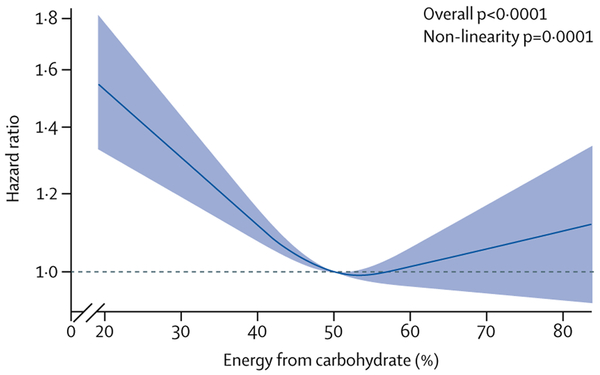
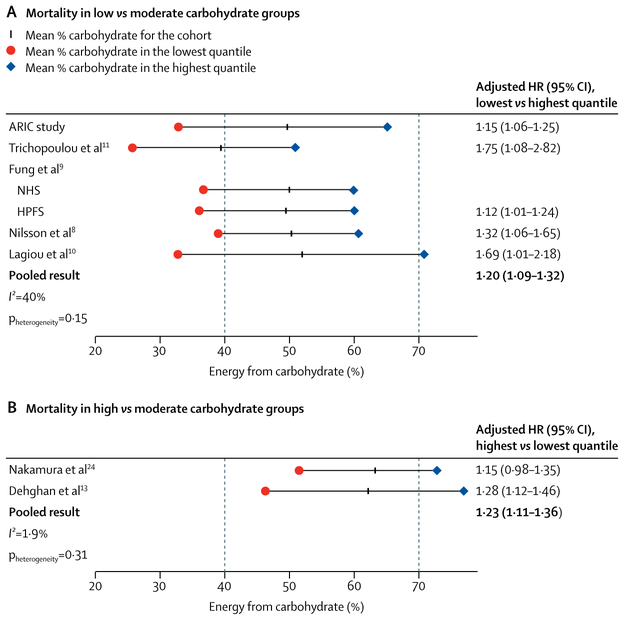
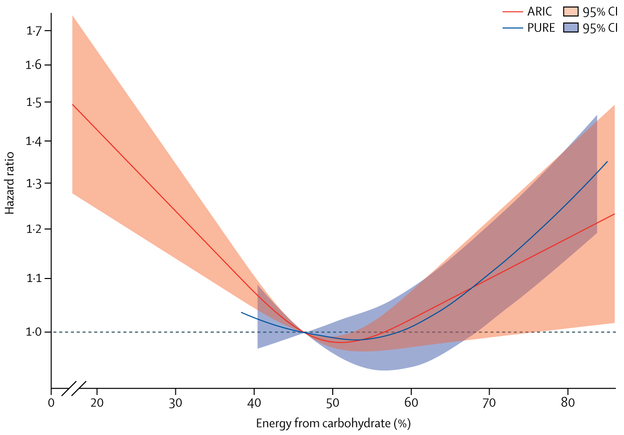
BACKGROUND: Low carbohydrate diets, which restrict carbohydrate in favour of increased protein or fat intake, or both, are a popular weight-loss strategy. However, the long-term effect of carbohydrate restriction on mortality is controversial and could depend on whether dietary carbohydrate is replaced by plant-based or animal-based fat and protein. We aimed to investigate the association between carbohydrate intake and mortality. METHODS: We studied 15 428 adults aged 45-64 years, in four US communities, who completed a dietary questionnaire at enrolment in the Atherosclerosis Risk in Communities (ARIC) study (between 1987 and 1989), and who did not report extreme caloric intake (<600 kcal or >4200 kcal per day for men and <500 kcal or >3600 kcal per day for women). The primary outcome was all-cause mortality. We investigated the association between the percentage of energy from carbohydrate intake and all-cause mortality, accounting for possible non-linear relationships in this cohort. We further examined this association, combining ARIC data with data for carbohydrate intake reported from seven multinational prospective studies in a meta-analysis. Finally, we assessed whether the substitution of animal or plant sources of fat and protein for carbohydrate affected mortality. FINDINGS: During a median follow-up of 25 years there were 6283 deaths in the ARIC cohort, and there were 40 181 deaths across all cohort studies. In the ARIC cohort, after multivariable adjustment, there was a U-shaped association between the percentage of energy consumed from carbohydrate (mean 48·9%, SD 9·4) and mortality: a percentage of 50-55% energy from carbohydrate was associated with the lowest risk of mortality. In the meta-analysis of all cohorts (432 179 participants), both low carbohydrate consumption (<40%) and high carbohydrate consumption (>70%) conferred greater mortality risk than did moderate intake, which was consistent with a U-shaped association (pooled hazard ratio 1·20, 95% CI 1·09-1·32 for low carbohydrate consumption; 1·23, 1·11-1·36 for high carbohydrate consumption). However, results varied by the source of macronutrients: mortality increased when carbohydrates were exchanged for animal-derived fat or protein (1·18, 1·08-1·29) and mortality decreased when the substitutions were plant-based (0·82, 0·78-0·87). INTERPRETATION: Both high and low percentages of carbohydrate diets were associated with increased mortality, with minimal risk observed at 50-55% carbohydrate intake. Low carbohydrate dietary patterns favouring animal-derived protein and fat sources, from sources such as lamb, beef, pork, and chicken, were associated with higher mortality, whereas those that favoured plant-derived protein and fat intake, from sources such as vegetables, nuts, peanut butter, and whole-grain breads, were associated with lower mortality, suggesting that the source of food notably modifies the association between carbohydrate intake and mortality. FUNDING: National Institutes of Health.
Overview
The claims and statistics of this paper haven’t been checked yet.
Free: it reads the open-access text and checks the first 5 claims that cite a source we can check. Create a free account to check every claim.
Integrity signals
Registry
Cites
Statistics
Figures
Verification
Claims the paper makes
The claims and statistics of this paper haven’t been checked yet.
Free: it reads the open-access text and checks the first 5 claims that cite a source we can check. Create a free account to check every claim.
Claims other papers make about this one
Each is checked against this paper’s own text: does it say what the citing paper says it does?
The cited source says what the claim attributes to it.
In the citing paper
“Considering this and a recent systematic review of cohort studies suggesting that long term LCDs are associated with increased mortality,73 clinicians might consider short term LCDs for management of type 2 diabetes, while actively monitoring and adjusting diabetes medication as needed.”
The cited source says what the claim attributes to it.
In the citing paper
“Large cohort studies suggest higher mortality at lower carbohydrate levels, but this association disappears when plant-based protein is substituted for animal-based sources of protein”
From Lifestyle Medicine for Obesity in the Era of Highly Effective Anti-Obesity Treatment (2025) · cites this paper as [188]
The check wasn’t confident either way, so it gives no verdict — never disputed.
In the citing paper
“Dietary carbohydrate has a 'neutral' effect on LDL-C, although excessive consumption is represented by untoward effects on plasma TGs and HDL-C levels [164].”
From 2019 ESC/EAS guidelines for the management of dyslipidaemias: lipid modification to reduce cardiovascular risk (2019) · cites this paper as [164]
Experimental — accuracy not yet measuredIn the citing paper
“low intakes of fats and oils increase the risk of inadequate intakes of vitamin E and of essential fatty acids, and may contribute to a reduction of HDL-C [164].”
From 2019 ESC/EAS guidelines for the management of dyslipidaemias: lipid modification to reduce cardiovascular risk (2019) · cites this paper as [164]
Self-check
Percentages, sums and reported differences re-computed from the paper’s own numbers.
The self-check needs the paper’s full text.
Citations
Cites
von Elm, E., Altman, D. G., Egger, M., Pocock, S. J., Gøtzsche, P. C., Vandenbroucke, J. P., & Initiative, F. T. S. (2007) · PLoS Medicine · doi:10.1371/journal.pmed.0040296 · Cited by 23,020
von Elm, E., Altman, D. G., Egger, M., Pocock, S. J., Gøtzsche, P. C., & Vandenbroucke, J. P. (2007) · The Lancet · doi:10.1016/s0140-6736(07)61602-x · Cited by 21,320
(2014) · Medical Entomology and Zoology · Cited by 17,633
CONSORT 2010 Statement: updated guidelines for reporting parallel group randomised trials
the CONSORT Group, Schulz, K. F., Altman, D. G., & Moher, D. (2010) · BMC Medicine · doi:10.1186/1741-7015-8-18 · Cited by 13,371
Harrell, F. E. (2001) · Springer Series in Statistics · doi:10.1007/978-1-4757-3462-1 · Cited by 9,195
Reproducibility and validity of a semiquantitative food frequency questionnaire
WILLETT, W. C., SAMPSON, L., STAMPFER, M. J., ROSNER, B., BAIN, C., WITSCHI, J., HENNEKENS, C. H., & SPEIZER, F. E. (1985) · American Journal of Epidemiology · doi:10.1093/oxfordjournals.aje.a114086 · Cited by 4,274
Self-citationA short questionnaire for the measurement of habitual physical activity in epidemiological studies
Baecke, J., Burema, J., & Frijters, J. (1982) · The American Journal of Clinical Nutrition · doi:10.1093/ajcn/36.5.936 · Cited by 3,945
CONSORT 2010 statement: updated guidelines for reporting parallel group randomized trials
Schulz, K. F., Altman, D. G., Moher, D., & for the CONSORT Group* (2010) · Annals of Internal Medicine · doi:10.7326/0003-4819-152-11-201006010-00232 · Cited by 3,824
(1989) · PubMed · Cited by 3,139
THE ATHEROSCLEROSIS RISK IN COMMUNIT (ARIC) STUDY: DESIGN AND OBJECTIVES
THE ARIC INVESTIGATORS (1989) · American Journal of Epidemiology · doi:10.1093/oxfordjournals.aje.a115184 · Cited by 2,924
Cited by
Mach, F., Baigent, C., Catapano, A. L., Koskinas, K. C., Casula, M., Badimon, L., Chapman, M. J., De Backer, G. G., Delgado, V., Ference, B. A., et al. (2020) · European Heart Journal · doi:10.1093/eurheartj/ehz455 · Cited by 8,961
2021 ESC Guidelines on cardiovascular disease prevention in clinical practice
Visseren, F. L. J., Mach, F., Smulders, Y. M., Carballo, D., Koskinas, K. C., Bäck, M., Benetos, A., Biffi, A., Boavida, J.-M., Capodanno, D., et al. (2021) · European Heart Journal · doi:10.1093/eurheartj/ehab484 · Cited by 6,485
Mach, F., Baigent, C., Catapano, A. L., Koskinas, K. C., Casula, M., Badimon, L., Chapman, M. J., De Backer, G. G., Delgado, V., Ference, B. A., et al. (2019) · Atherosclerosis · doi:10.1016/j.atherosclerosis.2019.08.014 · Cited by 4,854
Arnett, D. K., Blumenthal, R. S., Albert, M. A., Buroker, A. B., Goldberger, Z. D., Hahn, E. J., Himmelfarb, C. D., Khera, A., Lloyd-Jones, D., McEvoy, J. W., et al. (2019) · Circulation · doi:10.1161/cir.0000000000000678 · Cited by 4,536
(2019) · doi:10.1161/cir.0000000000000677 · Cited by 4,501
2019 ACC/AHA Guideline on the Primary Prevention of Cardiovascular Disease
Arnett, D. K., Blumenthal, R. S., Albert, M. A., Buroker, A. B., Goldberger, Z. D., Hahn, E. J., Himmelfarb, C. D., Khera, A., Lloyd-Jones, D., McEvoy, J. W., et al. (2019) · Journal of the American College of Cardiology · doi:10.1016/j.jacc.2019.03.010 · Cited by 1,896
2019 ACC/AHA Guideline on the Primary Prevention of Cardiovascular Disease: Executive Summary
Arnett, D. K., Blumenthal, R. S., Albert, M. A., Buroker, A. B., Goldberger, Z. D., Hahn, E. J., Himmelfarb, C. D., Khera, A., Lloyd-Jones, D., McEvoy, J. W., et al. (2019) · Journal of the American College of Cardiology · doi:10.1016/j.jacc.2019.03.009 · Cited by 1,193
Gut Microbiome: Profound Implications for Diet and Disease
Hills, R., Pontefract, B., Mishcon, H., Black, C., Sutton, S., & Theberge, C. (2019) · Nutrients · doi:10.3390/nu11071613 · Cited by 1,092
The aetiology and molecular landscape of insulin resistance
James, D. E., Stöckli, J., & Birnbaum, M. J. (2021) · Nature Reviews Molecular Cell Biology · doi:10.1038/s41580-021-00390-6 · Cited by 690
2021 ESC Guidelines on cardiovascular disease prevention in clinical practice
Visseren, F. L. J., Mach, F., Smulders, Y. M., Carballo, D., Koskinas, K. C., Bäck, M., Benetos, A., Biffi, A., Boavida, J.-M., Capodanno, D., et al. (2022) · European Journal of Preventive Cardiology · doi:10.1093/eurjpc/zwab154 · Cited by 542
Clase, C. M., Carrero, J.-J., Ellison, D. H., Grams, M. E., Hemmelgarn, B. R., Jardine, M. J., Kovesdy, C. P., Kline, G. A., Lindner, G., Obrador, G. T., et al. (2020) · Kidney International · doi:10.1016/j.kint.2019.09.018 · Cited by 498
Dietary Strategies for Metabolic Syndrome: A Comprehensive Review
Castro-Barquero, S., Ruiz-León, A. M., Sierra-Pérez, M., Estruch, R., & Casas, R. (2020) · Nutrients · doi:10.3390/nu12102983 · Cited by 482
Goldenberg, J. Z., Day, A., Brinkworth, G. D., Sato, J., Yamada, S., Jönsson, T., Beardsley, J., Johnson, J. A., Thabane, L., & Johnston, B. C. (2021) · BMJ · doi:10.1136/bmj.m4743 · Cited by 428
Kirkpatrick, C. F., Bolick, J. P., Kris-Etherton, P. M., Sikand, G., Aspry, K. E., Soffer, D. E., Willard, K.-E., & Maki, K. C. (2019) · Journal of Clinical Lipidology · doi:10.1016/j.jacl.2019.08.003 · Cited by 390
Nutrition, longevity and disease: From molecular mechanisms to interventions
Longo, V. D., & Anderson, R. M. (2022) · Cell · doi:10.1016/j.cell.2022.04.002 · Cited by 335
A Review of Obesity, Physical Activity, and Cardiovascular Disease
Elagizi, A., Kachur, S., Carbone, S., Lavie, C. J., & Blair, S. N. (2020) · Current Obesity Reports · doi:10.1007/s13679-020-00403-z · Cited by 310
Ultra-processed foods and human health: from epidemiological evidence to mechanistic insights
Srour, B., Kordahi, M. C., Bonazzi, E., Deschasaux-Tanguy, M., Touvier, M., & Chassaing, B. (2022) · The Lancet Gastroenterology & Hepatology · doi:10.1016/s2468-1253(22)00169-8 · Cited by 303
Okamura, T., Tsukamoto, K., Arai, H., Fujioka, Y., Ishigaki, Y., Koba, S., Ohmura, H., Shoji, T., Yokote, K., Yoshida, H., et al. (2024) · Journal of Atherosclerosis and Thrombosis · doi:10.5551/jat.gl2022 · Cited by 302
Guasch-Ferré, M., Satija, A., Blondin, S. A., Janiszewski, M., Emlen, E., O’Connor, L. E., Campbell, W. W., Hu, F. B., Willett, W. C., & Stampfer, M. J. (2019) · Circulation · doi:10.1161/circulationaha.118.035225 · Cited by 304
Self-citationFreire, R. (2020) · Nutrition · doi:10.1016/j.nut.2019.07.001 · Cited by 262
“They also reported that animal-derived protein and fat were associated with higher mortality, whereas plant-derived protein and fat were associated with lower mortality [31].”
BackgroundEvidence-based European recommendations for the dietary management of diabetes
The Diabetes and Nutrition Study Group (DNSG) of the European Association for the Study of Diabetes (EASD), Aas, A.-M., Axelsen, M., Churuangsuk, C., Hermansen, K., Kendall, C. W. C., Kahleova, H., Khan, T., Lean, M. E. J., Mann, J. I., et al. (2023) · Diabetologia · doi:10.1007/s00125-023-05894-8 · Cited by 262
Rethinking healthy eating in light of the gut microbiome
Armet, A. M., Deehan, E. C., O’Sullivan, A. F., Mota, J. F., Field, C. J., Prado, C. M., Lucey, A. J., & Walter, J. (2022) · Cell Host & Microbe · doi:10.1016/j.chom.2022.04.016 · Cited by 252
Cardio-Metabolic Effects of High-Fat Diets and Their Underlying Mechanisms—A Narrative Review
Wali, J. A., Jarzebska, N., Raubenheimer, D., Simpson, S. J., Rodionov, R. N., & O’Sullivan, J. F. (2020) · Nutrients · doi:10.3390/nu12051505 · Cited by 235
“The increase in mortality risk reported by the PURE study is based on the data comparing very high carbohydrate intake (70% energy) with moderate carbohydrate intake (45–55% energy) [26].”
BackgroundLow-Carb and Ketogenic Diets in Type 1 and Type 2 Diabetes
Bolla, A. M., Caretto, A., Laurenzi, A., Scavini, M., & Piemonti, L. (2019) · Nutrients · doi:10.3390/nu11050962 · Cited by 226
“A recent metanalysis described a U-shaped association between the proportion of CHO in diet and mortality: diets with both high and low percentage of CHO were associated with increased mortality, with the minimal risk observed at 50–55% of CHO intake [44].”
BackgroundPlant-based and vegetarian diets: an overview and definition of these dietary patterns
Hargreaves, S. M., Rosenfeld, D. L., Moreira, A. V. B., & Zandonadi, R. P. (2023) · European Journal of Nutrition · doi:10.1007/s00394-023-03086-z · Cited by 211
Duan, W., Xu, C., Liu, Q., Xu, J., Weng, Z., Zhang, X., Basnet, T. B., Dahal, M., & Gu, A. (2020) · Environmental Pollution · doi:10.1016/j.envpol.2020.114630 · Cited by 207
Ketogenic diets inhibit mitochondrial biogenesis and induce cardiac fibrosis
Xu, S., Tao, H., Cao, W., Cao, L., Lin, Y., Zhao, S.-M., Xu, W., Cao, J., & Zhao, J.-Y. (2021) · Signal Transduction and Targeted Therapy · doi:10.1038/s41392-020-00411-4 · Cited by 191
Implications of Altered Ketone Metabolism and Therapeutic Ketosis in Heart Failure
Selvaraj, S., Kelly, D. P., & Margulies, K. B. (2020) · Circulation · doi:10.1161/circulationaha.119.045033 · Cited by 193
Association of Low-Carbohydrate and Low-Fat Diets with Mortality Among US Adults
Shan, Z., Guo, Y., Hu, F. B., Liu, L., & Qi, Q. (2020) · JAMA Internal Medicine · doi:10.1001/jamainternmed.2019.6980 · Cited by 192
Cardiovascular Risk in Non-Alcoholic Fatty Liver Disease: Mechanisms and Therapeutic Implications
Tana, C., Ballestri, S., Ricci, F., Di Vincenzo, A., Ticinesi, A., Gallina, S., Giamberardino, M. A., Cipollone, F., Sutton, R., Vettor, R., et al. (2019) · International Journal of Environmental Research and Public Health · doi:10.3390/ijerph16173104 · Cited by 191
“A low quality diet and high consumption of foods containing saturated fat and processed meat are shared risk factors for the development of NAFLD, metabolic disorders [11–14], as well as for cardiovascular and all-causes mortality [15,16], confirming the complex interconnection between diet, metabolism, metabolic live…”
BackgroundAdvantages and Disadvantages of the Ketogenic Diet: A Review Article
Batch, J. T., Lamsal, S. P., Adkins, M., Sultan, S., & Ramirez, M. N. (2020) · Cureus · doi:10.7759/cureus.9639 · Cited by 181
“A relationship may exist between decreasing mortality rates and long-term approach considerations in the replacement of CHO with plant-based fats and proteins such as vegetables, nuts, and whole grains [10].”
BackgroundDiet and exercise in NAFLD/NASH: Beyond the obvious
Semmler, G., Datz, C., Reiberger, T., & Trauner, M. (2021) · Liver International · doi:10.1111/liv.15024 · Cited by 179
Obesity and MASLD: Is weight loss the (only) key to treat metabolic liver disease?
Huttasch, M., Roden, M., & Kahl, S. (2024) · Metabolism · doi:10.1016/j.metabol.2024.155937 · Cited by 169
Dietary fats and cardiometabolic disease: mechanisms and effects on risk factors and outcomes
Wu, J. H. Y., Micha, R., & Mozaffarian, D. (2019) · Nature Reviews Cardiology · doi:10.1038/s41569-019-0206-1 · Cited by 165
Skytte, M. J., Samkani, A., Petersen, A. D., Thomsen, M. N., Astrup, A., Chabanova, E., Frystyk, J., Holst, J. J., Thomsen, H. S., Madsbad, S., et al. (2019) · Diabetologia · doi:10.1007/s00125-019-4956-4 · Cited by 158
Ho, F. K., Gray, S. R., Welsh, P., Petermann-Rocha, F., Foster, H., Waddell, H., Anderson, J., Lyall, D., Sattar, N., Gill, J. M. R., et al. (2020) · BMJ · doi:10.1136/bmj.m688 · Cited by 160
Genomic analysis of diet composition finds novel loci and associations with health and lifestyle
Meddens, S. F. W., de Vlaming, R., Bowers, P., Burik, C. A. P., Linnér, R. K., Lee, C. W., Okbay, A., Turley, P., Rietveld, C. A., Fontana, M. A., et al. (2020) · Molecular Psychiatry · doi:10.1038/s41380-020-0697-5 · Cited by 179
Mazidi, M., Katsiki, N., Mikhailidis, D. P., Sattar, N., & Banach, M. (2019) · European Heart Journal · doi:10.1093/eurheartj/ehz174 · Cited by 153
Primary prevention of ischaemic heart disease: populations, individuals, and health professionals
Gupta, R., & Wood, D. (2019) · The Lancet · doi:10.1016/s0140-6736(19)31893-8 · Cited by 172
Dietary Restrictions and Nutrition in the Prevention and Treatment of Cardiovascular Disease
Brandhorst, S., & Longo, V. D. (2019) · Circulation Research · doi:10.1161/circresaha.118.313352 · Cited by 146
“prevention and are, in many studies, associated with increased overall and disease-specific mortality.(132) The use of KD in the”
BackgroundSievenpiper, J. L. (2020) · Nutrition Reviews · doi:10.1093/nutrit/nuz082 · Cited by 144
“In a systematic review and meta-analysis of 5 prospective cohort studies involving 432 179 participants over a median follow-up of 25 years, there was a U-shaped relationship between carbohydrate and mortality, with low-carbohydrate (<40% energy) and highcarbohydrate (>70% energy) diets associated with increased morta…”
BackgroundCastro, A. I., Gomez-Arbelaez, D., Crujeiras, A. B., Granero, R., Aguera, Z., Jimenez-Murcia, S., Sajoux, I., Lopez-Jaramillo, P., Fernandez-Aranda, F., & Casanueva, F. F. (2018) · Nutrients · doi:10.3390/nu10101348 · Cited by 140
“This association was mitigated when the substitutions were plant-based [63].”
The role of the Mediterranean diet on weight loss and obesity-related diseases
Estruch, R., & Ros, E. (2020) · Reviews in Endocrine and Metabolic Disorders · doi:10.1007/s11154-020-09579-0 · Cited by 176
Wee, M. S. M., & Henry, C. J. (2020) · Comprehensive Reviews in Food Science and Food Safety · doi:10.1111/1541-4337.12525 · Cited by 151
Ten things to know about ten cardiovascular disease risk factors – 2022
Bays, H. E., Agarwala, A., German, C. A., Satish, P., Iluyomade, A., Dudum, R., Thakkar, A., Rifai, M. A., Mehta, A., Thobani, A., et al. (2022) · American Journal of Preventive Cardiology · doi:10.1016/j.ajpc.2022.100342 · Cited by 172
Xu, H.-L., Gong, T., Liu, F.-H., Chen, H.-Y., Xiao, Q., Hou, Y., Huang, Y., Sun, H., Shi, Y., Gao, S., et al. (2022) · EClinicalMedicine · doi:10.1016/j.eclinm.2022.101662 · Cited by 156
Kelly, T., Unwin, D., & Finucane, F. (2020) · International Journal of Environmental Research and Public Health · doi:10.3390/ijerph17072557 · Cited by 128
“[33], and increased cardiovascular, cancer and all-cause mortality associated with a lower carbohydrate intake in Greek adults [34].”
BackgroundINTERDISCIPLINARY CLINICAL PRACTICE GUIDELINES "MANAGEMENT OF OBESITY AND ITS COMORBIDITIES"
Dedov, I. I., Shestakova, M. V., Mel'nichenko, G. A., Mazurina, N. V., Andreeva, E. N., Bondarenko, I. Z., Руслановна, Г. З., Dzgoeva, F. K., Елисеев, М. С., Ershova, E. V., et al. (2021) · Obesity and metabolism · doi:10.14341/omet12714 · Cited by 215
Neuenschwander, M., Stadelmaier, J., Eble, J., Grummich, K., Szczerba, E., Kiesswetter, E., Schlesinger, S., & Schwingshackl, L. (2023) · BMC Medicine · doi:10.1186/s12916-023-03093-1 · Cited by 124
Starchy Carbohydrates in a Healthy Diet: The Role of the Humble Potato
Robertson, T. M., Alzaabi, A., Robertson, M. D., & Fielding, B. A. (2018) · Nutrients · doi:10.3390/nu10111764 · Cited by 155
“According to current UK government guidelines, carbohydrate (CHO) intake should be maintained at a population average of approximately 50% of total energy intake [1] and this is strongly supported by a recent meta-analysis indicating that a carbohydrate intake of 50–55% is optimal [2].”
BackgroundGómez-Delgado, F., Katsiki, N., López‐Miranda, J., & Pérez‐Martínez, P. (2020) · Critical Reviews in Food Science and Nutrition · doi:10.1080/10408398.2020.1764487 · Cited by 134
“Recently, a meta-analysis of PCS showed that low-carbohydrate diet health benefits even more consistent in the presence of increased fat content with PUFA and MUFA from vegetables and plant foods (Seidelmann et al. 2018).”
BackgroundThe Low-Carbohydrate Diet: Short-Term Metabolic Efficacy Versus Longer-Term Limitations
Barber, T. M., Hanson, P., Kabisch, S., Pfeiffer, A. F. H., & Weickert, M. O. (2021) · Nutrients · doi:10.3390/nu13041187 · Cited by 109
“Furthermore, diets that have both low and high percentages of carbohydrates associate with increased mortality, with minimal mortality risk at 50–55% carbohydrate intake (with a plant-based diet) [48].”
BackgroundWagenaar, C. A., van de Put, M., Bisschops, M., Walrabenstein, W., de Jonge, C. S., Herrema, H., & van Schaardenburg, D. (2021) · Nutrients · doi:10.3390/nu13093208 · Cited by 133
“Although these diets have been shown to be effective at inducing T2DM remission after six months compared to other diets, these benefits diminish at 12 months and such diets, when predominantly animal-based, are associated with an increased risk of cardiovascular disease and mortality [90,91].”
BackgroundDietary Fats and Chronic Noncommunicable Diseases
Billingsley, H., Carbone, S., & Lavie, C. J. (2018) · Nutrients · doi:10.3390/nu10101385 · Cited by 132
“Additionally, a recent analysis suggested that both low (<40% daily calories from carbohydrate) and high (>70%) carbohydrate diets were associated with a greater risk for all-cause mortality [67].”
BackgroundInfluentialChinese Guideline on the Primary Prevention of Cardiovascular Diseases
Chinese Society of Cardiology of Chinese Medical Association, C. D. P. A. R. C. O. C. A. O. R. M. (2021) · Cardiology Discovery · doi:10.1097/cd9.0000000000000025 · Cited by 133
COVID-19: Role of Nutrition and Supplementation
Moscatelli, F., Sessa, F., Valenzano, A. A., Polito, R., Monda, V., Cibelli, G., Villano, I., Pisanelli, D., Perrella, M., Daniele, A., et al. (2021) · Nutrients · doi:10.3390/nu13030976 · Cited by 119
“[25] suggest that to improve the efficiency of the immune system, it would be advisable to include specific foods in the diet as good sources of antioxidants, such as fresh fruit and vegetables, soy, nuts [38], and omega-3 fatty acids all being low in saturated fats and trans fats [39].”
BackgroundVery‐low‐carbohydrate diet enhances human T‐cell immunity through immunometabolic reprogramming
Hirschberger, S., Strauß, G., Effinger, D., Marstaller, X., Ferstl, A., Müller, M. B., Wu, T., Hübner, M., Rahmel, T., Mascolo, H., et al. (2021) · EMBO Molecular Medicine · doi:10.15252/emmm.202114323 · Cited by 108
“However, large observational studies investigating this approach are highly controversial (Dehghan et al, 2018; Seidelmann et al, 2018), and molecular data in humans are scarce.”
BackgroundPlant-Based Diets in the Reduction of Body Fat: Physiological Effects and Biochemical Insights
Najjar, R. S., & Feresin, R. G. (2019) · Nutrients · doi:10.3390/nu11112712 · Cited by 100
Li, Z.-H., Gao, X., Chung, V. C., Zhong, W.-F., Fu, Q., Lv, Y.-B., Wang, Z.-H., Shen, D., Zhang, X.-R., Zhang, P.-D., et al. (2020) · Annals of the Rheumatic Diseases · doi:10.1136/annrheumdis-2020-217176 · Cited by 91
Low-carbohydrate versus balanced-carbohydrate diets for reducing weight and cardiovascular risk
Naude, C. E., Brand, A., Schoonees, A., Nguyen, K. A., Chaplin, M., & Volmink, J. (2022) · Cochrane Database of Systematic Reviews · doi:10.1002/14651858.cd013334.pub2 · Cited by 91
Carpentier, A. C. (2021) · American Journal of Physiology-Endocrinology and Metabolism · doi:10.1152/ajpendo.00620.2020 · Cited by 108
The Role of Exercise, Diet, and Cytokines in Preventing Obesity and Improving Adipose Tissue
Atakan, M. M., Koşar, Ş. N., Güzel, Y., Tin, H. T., & Yan, X. (2021) · Nutrients · doi:10.3390/nu13051459 · Cited by 87
“Furthermore, a meta-analysis that investigated the association between the percentage of energy from CHO intake and all-cause mortality has reported that both low and high percentages of CHO were associated with increased mortality, and, therefore, the authors suggested that CHO intake should be 50–55% of total energy…”
BackgroundNutrition Concepts for the Treatment of Obesity in Adults
Wiechert, M., & Holzapfel, C. (2021) · Nutrients · doi:10.3390/nu14010169 · Cited by 136
“Low carb diets, as well as high carb diets, increase the mortality risk (U-shaped association) [29].”
BackgroundNutrition and longevity—From mechanisms to uncertainties
Ekmekcioglu, C. (2020) · Critical Reviews in Food Science and Nutrition · doi:10.1080/10408398.2019.1676698 · Cited by 87
Mota, I. A., Sobrinho, G. D. D. O., Morais, I. P. S., & Dantas, T. F. (2021) · Arquivos de Neuro-Psiquiatria · doi:10.1590/0004-282x-anp-2020-0482 · Cited by 112
Perspective: Whole and Refined Grains and Health—Evidence Supporting “Make Half Your Grains Whole”
Jones, J. M., Guzmán, C., & Braun, H. J. (2019) · Advances in Nutrition · doi:10.1093/advances/nmz114 · Cited by 94
Cui, Z., Qi, C., Zhou, T., Yu, Y., Wang, Y., Zhang, Z., Zhang, Y., Wang, W., & Liu, Y. (2025) · Comprehensive Reviews in Food Science and Food Safety · doi:10.1111/1541-4337.70068 · Cited by 106
Perissiou, M., Borkoles, E., Kobayashi, K., & Polman, R. (2020) · Nutrients · doi:10.3390/nu12020482 · Cited by 81
“Epidemiological studies and meta-analysis have shown an increased risk of mortality with carbohydrate intake < 40 g per day [63,64].”
BackgroundDietary patterns, dietary nutrients and cardiovascular disease
Nestel, P. J., & Mori, T. A. (2022) · Reviews in Cardiovascular Medicine · doi:10.31083/j.rcm2301017 · Cited by 108
“The optimal intake of carbohydrate was examined in the Atherosclerosis Risk in Communities study [39].”
BackgroundEichelmann, F., Prada, M., Sellem, L., Jackson, K. G., Salas‐Salvadó, J., Razquín, C., Estruch, R., Friedén, M., Rosqvist, F., Risérus, U., et al. (2024) · Nature Medicine · doi:10.1038/s41591-024-03124-1 · Cited by 100
Self-citationKatz, D. L., Karlsen, M. C., Chung, M., Shams‐White, M., Green, L. W., Fielding, J. E., Saito, A., & Willett, W. C. (2019) · BMC Medical Research Methodology · doi:10.1186/s12874-019-0811-z · Cited by 89
“Cost constraints and challenges with adherence makes it difficult to randomize individuals to lifestyle interventions and maintain the prescribed behaviors for sufficient time periods (decades) to investigate the effects of such exposures on mortality or long-term morbidity [26, 27].”
BackgroundSelf-citationCarbohydrate and fat intake associated with risk of metabolic diseases through epigenetics of CPT1A
Lai, C., Parnell, L. D., Smith, C. E., Guo, T., Sayols-Baixeras, S., Aslibekyan, S. W., Tiwari, H. K., Irvin, M. R., Bender, C., Fei, D., et al. (2020) · American Journal of Clinical Nutrition · doi:10.1093/ajcn/nqaa233 · Cited by 91
“This is well supported by recent epidemiological studies based on 432,179 participants in 18 countries, demonstrating that both low (<40% of total energy intake) and high (>70% of total energy intake) carbohydrate consumption were associated with increased mortality when compared with moderate intake (45).”
ResultMacronutrients and Human Health for the 21st Century
Venn, B. J. (2020) · Nutrients · doi:10.3390/nu12082363 · Cited by 94
“A carbohydrate content of 50–55% has been associated with a low risk of mortality in a modern Western setting [12].”
BackgroundAre excess carbohydrates the main link to diabetes & its complications in Asians?
Mohan, V., Unnikrishnan, R., Shobana, S., Malavika, M., Anjana, R. M., & Sudha, V. (2018) · Indian Journal of Medical Research · doi:10.4103/ijmr.ijmr_1698_18 · Cited by 78
Guía ESC 2021 sobre la prevención de la enfermedad cardiovascular en la práctica clínica
Visseren, F. L. J., Mach, F., Smulders, Y. M., Carballo, D., Koskinas, K. C., Bäck, M., Bénétos, A., Biffi, A., Boavida, J. M., Capodanno, D., et al. (2022) · Revista Española de Cardiología · doi:10.1016/j.recesp.2021.10.016 · Cited by 125
Gut Microbiome: Profound Implications for Diet and Disease
Hills, R. D., Pontefract, B., Mishcon, H. R., Black, C. A., Sutton, S. C., & Theberge, C. R. (2022) · Kompass Nutrition & Dietetics · doi:10.1159/000523712 · Cited by 87
“However, 20-year studies involving a large prospective cohort reveal that diet quality and the source of protein and fat can ultimately determine health outcomes in low (40% of caloric intake) carbohydrate diets [251,252].”
BackgroundFoster, S., Beck, E. J., Hughes, J., & Grafenauer, S. (2020) · Nutrients · doi:10.3390/nu12082170 · Cited by 86
“Diets with varying carbohydrate content and aversions to carbohydrate foods and grains have gained substantial popularity in recent years [47,48].”
BackgroundBai, Y., Atluri, S. C., Zhang, Z., Gidley, M. J., Li, E., & Gilbert, R. G. (2021) · Food Hydrocolloids · doi:10.1016/j.foodhyd.2020.106581 · Cited by 79
Embracing complexity: making sense of diet, nutrition, obesity and type 2 diabetes
Forouhi, N. G. (2023) · Diabetologia · doi:10.1007/s00125-023-05873-z · Cited by 98
“Accumulating evidence from prospective studies with long-term follow-up data indicates that both high and low intakes of carbohydrates may have adverse health impacts on mortality risk, with a U-shaped relationship [43].”
BackgroundKetogenic diets: Boon or bane?
Shilpa, J., & Mohan, V. (2018) · Indian Journal of Medical Research · doi:10.4103/ijmr.ijmr_1666_18 · Cited by 72
The role of bread in the UK diet: An update
Lockyer, S., & Spiro, A. (2020) · Nutrition Bulletin · doi:10.1111/nbu.12435 · Cited by 83
Chen, W., Zhang, S., Hu, X., Chen, F., & Li, D. (2023) · Nutrients · doi:10.3390/nu15234898 · Cited by 89
“Interestingly, another meta-analysis of prospective cohort studies showed that both high and low carbohydrate intake are associated with increased mortality, reflecting a potential U-shaped relationship between carbohydrate intake and mortality [25].”
BackgroundCena, H., & Chieppa, M. (2020) · Frontiers in Immunology · doi:10.3389/fimmu.2020.00944 · Cited by 77
“These can be generally described as those rich in plant-based foods, including fresh fruits and vegetables, soya, nuts, good sources of antioxidants (58), and omega-3 fatty acids (59) and low in saturated fats and trans fats, animalderived proteins, and added/refined sugars (60).”
BackgroundTsompanaki, E., Thanapirom, K., Papatheodoridi, Μ., Parikh, P. M., de Lima, Y. C., & Tsochatzis, E. A. (2021) · Clinical Gastroenterology and Hepatology · doi:10.1016/j.cgh.2021.11.026 · Cited by 79
Top 10 dietary strategies for atherosclerotic cardiovascular risk reduction
Sikand, G., & Severson, T. (2020) · American Journal of Preventive Cardiology · doi:10.1016/j.ajpc.2020.100106 · Cited by 81
Plant-Based and Ketogenic Diets As Diverging Paths to Address Cancer: A Review
Shah, U. A., & Iyengar, N. M. (2022) · JAMA Oncology · doi:10.1001/jamaoncol.2022.1769 · Cited by 74
Macronutrient Determinants of Obesity, Insulin Resistance and Metabolic Health
Wali, J. A., Solon‐Biet, S. M., Freire, T., & Brandon, A. E. (2021) · Biology · doi:10.3390/biology10040336 · Cited by 84
Liu, Y., Wu, Q., Xia, Y., Zhang, J., Jiang, Y., Chang, Q., & Zhao, Y. (2019) · Nutrition Metabolism and Cardiovascular Diseases · doi:10.1016/j.numecd.2019.09.003 · Cited by 77
Prentice, R. L., Aragaki, A. K., Howard, B. V., Chlebowski, R. T., Thomson, C. A., Van Horn, L., Tinker, L. F., Manson, J. E., Anderson, G. L., Kuller, L. E., et al. (2019) · The Journal of Nutrition · doi:10.1093/jn/nxz107 · Cited by 62
“However, a recent cohort study in the United States reported elevated mortality risks with high-carbohydrate diets (>70% of energy) and even more so with low-carbohydrate diets (<40% of energy), with lowest mortality among persons having 50–55% of energy from carbohydrate (26).”
BackgroundSchwingshackl, L., Balduzzi, S., Beyerbach, J., Bröckelmann, N., Werner, S. S., Zähringer, J., Nagavci, B., & Meerpohl, J. J. (2021) · BMJ · doi:10.1136/bmj.n1864 · Cited by 70
Carbohydrate Nutrition and the Risk of Cancer
Vieytes, C. A. M., Taha, H. M., Burton-Obanla, A. A., Douglas, K. G., & Arthur, A. E. (2019) · Current Nutrition Reports · doi:10.1007/s13668-019-0264-3 · Cited by 73
Capurso, C. A. (2021) · Nutrients · doi:10.3390/nu13082540 · Cited by 73
“Food intake is recorded so that diet content and calorie and macronutrient intake can be assessed [158].”
BackgroundDietary modifications for weight loss and weight loss maintenance
Yannakoulia, M., Poulimeneas, D., Mamalaki, E., & Anastasiou, C. A. (2019) · Metabolism · doi:10.1016/j.metabol.2019.01.001 · Cited by 60
Dietary carbohydrates restriction inhibits the development of cardiac hypertrophy and heart failure
Nakamura, M., Odanovic, N. R., Nakada, Y., Dohi, S., Zhai, P., Ivessa, A., Yang, Z., Abdellatif, M., & Sadoshima, J. (2020) · Cardiovascular Research · doi:10.1093/cvr/cvaa298 · Cited by 60
“carbohydrate intake is associated with a higher risk of total mortality in the general population.(1,2) Strict restriction of carbohydrates in con-”
BackgroundAmino acid variability, tradeoffs and optimality in human diet
Dai, Z., Zheng, W., & Locasale, J. W. (2022) · Nature Communications · doi:10.1038/s41467-022-34486-0 · Cited by 66
Diet quality and cardiovascular outcomes: A systematic review and meta‐analysis of cohort studies
Taylor, R., Haslam, R. L., Herbert, J., Whatnall, M. C., Trijsburg, L. E., de Vries, J. H. M., Josefsson, M. S., Koochek, A., Nowicka, P., Neuman, N., et al. (2023) · Nutrition & Dietetics · doi:10.1111/1747-0080.12860 · Cited by 69
Kwon, Y., Lee, H. S., Park, J.-Y., & Lee, J. (2020) · Nutrients · doi:10.3390/nu12103208 · Cited by 70
“The Atherosclerosis Risk in Communities (ARIC) study showed a U-shaped association between carbohydrate intake and mortality [14].”
BackgroundMethodAlternative Dietary Patterns for Americans: Low-Carbohydrate Diets
Volek, J. S., Phinney, S. D., Krauss, R. M., Johnson, R. J., Saslow, L. R., Gower, B., Yancy, W. S., King, J. C., Hecht, F. M., Teicholz, N., et al. (2021) · Nutrients · doi:10.3390/nu13103299 · Cited by 57
Wilson, K. A., Chamoli, M., Hilsabeck, T. A. U., Pandey, M., Bansal, S., Chawla, G., & Kapahi, P. (2021) · Cell Metabolism · doi:10.1016/j.cmet.2021.08.018 · Cited by 60
“, 2018), and fat consumption leads to either higher (animal fats) or lower (plant-based fats) mortality (Seidelmann et al., 2018).”
BackgroundLow carbohydrate diet and all cause and cause-specific mortality
Akter, S., Mizoue, T., Nanri, A., Goto, A., Noda, M., Sawada, N., Yamaji, T., Iwasaki, M., Inoue, M., Tsugane, S., et al. (2021) · Clinical Nutrition · doi:10.1016/j.clnu.2020.09.022 · Cited by 55
Metadata
- Authors
- Seidelmann, S. B., Claggett, B., Cheng, S., Henglin, M., Shah, A., Steffen, L. M., Folsom, A. R., Rimm, E. B., Willett, W. C., & Solomon, S. D.
- Affiliations
- Brigham and Women's Hospital (US)
- University of Minnesota (US)
- Corresponding author
- Solomon, Scott D
- ORCID
- Venue
- The Lancet Public Health
- Publisher
- Elsevier BV
- Published
- 2018-09
- Volume
- 3
- Issue
- 9
- Pages
- e419-e428
- ISSN
- 2468-2667 (ISSN-L)
- PMC
- PMC6339822
- OpenAlex
- W2885382674
- Semantic Scholar
- ee38d52ac78aab923b1f4de7d8d9e79b60dd20df
- Cited by
- 776
- References
- 33
- Citations by year
- 2026: 44 · 2025: 87 · 2024: 100 · 2023: 103 · 2022: 122 · 2021: 121 · 2020: 96 · 2019: 73 · 2018: 29
- FWCI
- 76.04
- Type
- journal article
- Language
- en
- Open access
- gold
- doi.org
- Licence
- cc-by-nc-nd
- www.elsevier.com/tdm/userlicense/1.0/ (tdm)
- creativecommons.org/licenses/by-nc-nd/4.0/ (vor)
- Locations
- The Lancet Public Health (publishedVersion, cc-by-nc-nd)
- PubMed (publishedVersion)
- Europe PMC (PubMed Central) (acceptedVersion, cc-by)
- PubMed Central (acceptedVersion, cc-by)
- DOAJ (DOAJ: Directory of Open Access Journals) (submittedVersion, cc-by-sa)
- Funders
- National Heart, Lung, and Blood Institute contracts (HHSN268201100005C, HHSN268201100006C, HHSN268201100007C, HHSN268201100008C, HHSN26820110000 9C, HHSN268201100010C, HHSN268201100011C, HHSN26820 1100012C)
- NIH (R01-HL134168, R01-HL131532)
- Topics
- Health Sciences › Medicine › Public Health, Environmental and Occupational Health › Nutritional Studies and Diet
- Health Sciences › Medicine › Physiology (medical) › Diet and metabolism studies
- Health Sciences › Medicine › Endocrinology, Diabetes and Metabolism › Diet, Metabolism, and Disease
- Keywords
- carbohydrate intake, all-cause mortality, low-carbohydrate diet, U-shaped relationship, macronutrient substitution, vegetable fats, plant proteins, animal protein, Atherosclerosis Risk in Communities Study, weight loss diet, nonlinear dose-response relationship, long-term mortality risk
- MeSH terms
- Diet Surveys, Dietary Carbohydrates, Female, Humans, Male, Middle Aged, Mortality, Prospective Studies, United States
About these checks
Registry, retraction, Cites and statistics results are computed, not judged, with one exception: a printed reference that no index lists is read once by a model before it counts as a citation error. Claims are extracted by a model and kept only when their quote appears verbatim in the text; each cited source is then checked, with a model’s help, for whether it says what the claim relies on. Those verdicts can be wrong — read the claim’s quote and the cited source before relying on one.
Statistics and arithmetic are recomputed, not judged.
Confidence bands are shown only for fields calibrated on our annotated test set. None is calibrated yet, so no band is shown.
What counts as a claim ›How we measure confidence ›How we check this ›
Are you an author, or do you see a problem with this page? Request a review
Data sources
Bibliographic data: Semantic Scholar, OpenAlex, Crossref.
Contains information from the Semantic Scholar Academic Graph Datasets, made available under the ODC Attribution License (ODC-BY 1.0).
Semantic Scholar’s data is described in: Kinney, R., et al. (2023). The Semantic Scholar Open Data Platform. arXiv:2301.10140.
