

Climate anxiety in children and young people and their beliefs about government responses to climate change: a global survey
Open accessThe DOI matches its Crossref record; 27 of the 30 references it cites were found in a registry or an index, and 1 are not checked yet; 14 of the 48 sources its claims cite were checked for support.
Abstract
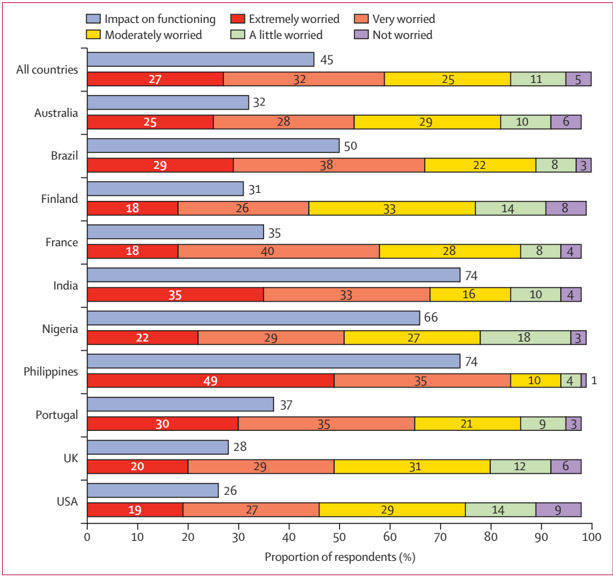
Background Climate change has important implications for the health and futures of children and young people, yet they have little power to limit its harm, making them vulnerable to climate anxiety. This is the first large-scale investigation of climate anxiety in children and young people globally and its relationship with perceived government response. Methods We surveyed 10 000 children and young people (aged 16-25 years) in ten countries (Australia, Brazil, Finland, France, India, Nigeria, Philippines, Portugal, the UK, and the USA; 1000 participants per country). Invitations to complete the survey were sent via the platform Kantar between May 18 and June 7, 2021. Data were collected on participants' thoughts and feelings about climate change, and government responses to climate change. Descriptive statistics were calculated for each aspect of climate anxiety, and Pearson's correlation analysis was done to evaluate whether climate-related distress, functioning, and negative beliefs about climate change were linked to thoughts and feelings about government response. Findings Respondents across all countries were worried about climate change (59% were very or extremely worried and 84% were at least moderately worried). More than 50% reported each of the following emotions: sad, anxious, angry, powerless, helpless, and guilty. More than 45% of respondents said their feelings about climate change negatively affected their daily life and functioning, and many reported a high n…
Verified 2026-11-25 · 1 reference not checked yet
Overview
CoChat Summary
TL;DR
This global survey of 10,000 people aged 16–25 across ten countries found widespread climate anxiety and distress, with many reporting negative functional impacts. Climate distress was correlated with negative perceptions of government responses and feelings of betrayal.
Key findings
- 59% were very or extremely worried about climate change and 84% were at least moderately worried; more than 50% reported feeling sad, anxious, angry, powerless, helpless, and guilty.
- More than 45% said their feelings about climate change negatively affected their daily life and functioning; 75% said the future is frightening and 83% said people have failed to take care of the planet.
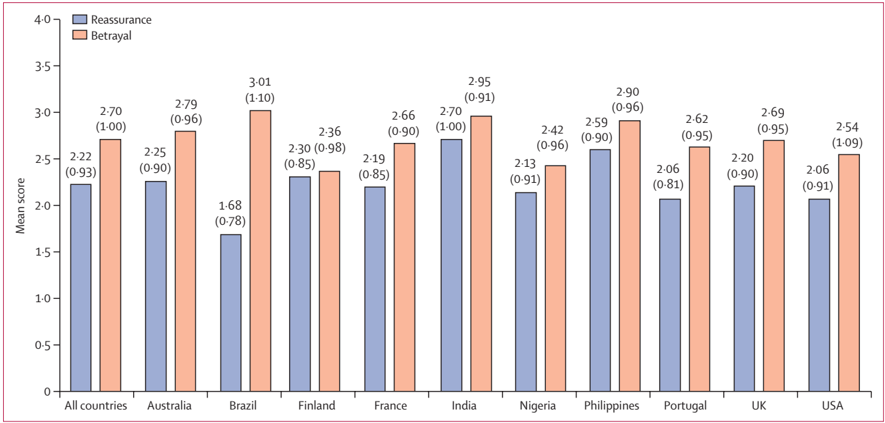
- Respondents rated government responses negatively (mean 14.96 on a 9–18 scale, SD 2.57) and reported greater betrayal (mean 2.7, SD 1.0) than reassurance (mean 2.22, SD 0.93; p<0.0001).
- Climate anxiety and distress were correlated with perceived inadequate government response and associated feelings of betrayal.
Methods
- Cross-sectional online survey of 10,000 children and young people aged 16–25 years in ten countries (Australia, Brazil, Finland, France, India, Nigeria, Philippines, Portugal, the UK, and the USA; 1000 per country), recruited via Kantar between May 18 and June 7, 2021.
- Quota sampling was based on age, gender, and region, with data weighted to OECD statistics for each country by age group, gender, and region.
- Descriptive statistics were calculated for climate anxiety constructs, and Pearson’s correlation analysis explored links between climate-related distress, functioning, negative beliefs, and thoughts/feelings about government response; findings significant at p≤0.001 are reported.
Limitations
- The paper states that non-standardised measures were used because no appropriate standardised measures existed; the study cannot indicate severity compared with normative samples, did not measure mental health outcomes, and used a yes/no/prefer-not-to-say response scale.
- The paper states that equal sample sizes per country were not weighted by population size, so aggregated results are not globally representative; online polling required internet access and sometimes English, and gender was recorded only as male or female.
- Evident from the text: the cross-sectional design cannot establish causality between perceived government response and climate distress.
Model-written summary. Check it against the paper before relying on it.
Integrity signals
Registry
Cites
Statistics
Figures
Verification
Claims the paper makes
12 Valid · 0 Not valid · 19 Not checked · 99 Own results and interpretations
Every source the paper cites for this claim was checked and supports it.
In the paper
“Children are now turning to legal action based on government failure to protect ecosystems, young citizens, and their futures. 26”
What the sources say
- Supportedcites [26] 26 Salas RN, Jacobs W, Perera F. The case of Juliana v. US-children and the health burdens of climate change. N Engl J Med 2019; 380: 2085-87 . source
The supplied Abstract passages describe children filing suit over federal inaction on climate change, which they say violates their constitutional rights. They also connect that inaction to threats to children’s safe environment and to future generations, supporting the citing sentence’s paraphrase. (LLM, conf=0.88)
plainstates a cause- Asserted: passes — The authors put it forward as true.
- Checkable: passes — It can be checked against evidence.
- Load-bearing: unclear — It is unclear whether the paper’s conclusions depend on it.
- Based: passes — The paper gives a reason why it holds.
- Supported
A result the paper reports from its own data — it cites no other source for it, so there is none to check. The quote shows it is in the paper.
In the paper
“in the Global North, Portugal (which had dramatic increases in wildfires since 2017) showed the highest level of worry.”
plainn = 1,000- Asserted: passes — The authors put it forward as true.
- Checkable: passes — It can be checked against evidence.
- Load-bearing: unclear — It is unclear whether the paper’s conclusions depend on it.
- Based: passes — The paper gives a reason why it holds.
A result the paper reports from its own data — it cites no other source for it, so there is none to check. The quote shows it is in the paper.
In the paper
“Respondents rated governmental responses to climate change negatively”
plain- Asserted: passes — The authors put it forward as true.
- Checkable: passes — It can be checked against evidence.
- Load-bearing: passes — The paper’s conclusions depend on it.
- Based: passes — The paper gives a reason why it holds.
A result the paper reports from its own data — it cites no other source for it, so there is none to check. The quote shows it is in the paper.
In the paper
“This distress was associated with beliefs about inadequate governmental response and feelings of betrayal.”
plainstates an association- Asserted: passes — The authors put it forward as true.
- Checkable: passes — It can be checked against evidence.
- Load-bearing: passes — The paper’s conclusions depend on it.
- Based: passes — The paper gives a reason why it holds.
A result the paper reports from its own data — it cites no other source for it, so there is none to check. The quote shows it is in the paper.
In the paper
“More than 45% of respondents said their feelings about climate change negatively affected their daily life and functioning”
- Also stated in: § Results · p. 5 · plain
“More than 45% of respondents said their feelings about climate change negatively affected their daily lives”
plainn = 10- Asserted: passes — The authors put it forward as true.
- Checkable: passes — It can be checked against evidence.
- Load-bearing: passes — The paper’s conclusions depend on it.
- Based: passes — The paper gives a reason why it holds.
- Also stated in: § Results · p. 5 · plain
50 more claims
Create a free account to see all 130 claims and to verify the 1 reference still open.
- Probably not a substantial claim. 51
- It may state two separate claims as one. 41
- The quote only partly states this claim. 6
Claims other papers make about this one
Each is checked against this paper’s own text: does it say what the citing paper says it does?
The source backs part of the claim, not all of it — or backs it for a different population, condition or comparison.
In the citing paper
“Investigations into anxiety about climate change have revealed that it is increasingly common for many people across the globe [9], with large-scale international studies identifying growing concern about climate change [10–12].”
From The relationship between climate change and mental health: a systematic review of the association between eco-anxiety, psychological distress, and symptoms of major affective disorders (2024) · cites this paper as [10]
Experimental — accuracy not yet measuredThe source backs part of the claim, not all of it — or backs it for a different population, condition or comparison.
In the citing paper
“The high prevalence of eco-anxiety [10] - be it at clinical or subclinical levels - underscores the need for broader level changes related to climate change.”
From The relationship between climate change and mental health: a systematic review of the association between eco-anxiety, psychological distress, and symptoms of major affective disorders (2024) · cites this paper as [10]
Experimental — accuracy not yet measuredThe source backs part of the claim, not all of it — or backs it for a different population, condition or comparison.
In the citing paper
“and varied understandings and experiences of climate change have differing impacts on the relationship with mental health [10, 12].”
From The relationship between climate change and mental health: a systematic review of the association between eco-anxiety, psychological distress, and symptoms of major affective disorders (2024) · cites this paper as [10]
Experimental — accuracy not yet measuredThe source backs part of the claim, not all of it — or backs it for a different population, condition or comparison.
In the citing paper
“A global survey of 10,000 young people (16-25) across 10 countries found: (1) 75% were frightened about the future; (2) 84% were moderately worried; (3) 59% were very or extremely worried; and (4) 45%+ reported climate change-related feelings negatively affected their daily life and functioning [21].”
From Climate Distress: A Review of Current Psychological Research and Practice (2023) · cites this paper as [21]
Experimental — accuracy not yet measuredThe source backs part of the claim, not all of it — or backs it for a different population, condition or comparison.
In the citing paper
“An overall lack of trust in government was also identified, with a wide belief that the government response to climate change will continue to be inadequate [21].”
From Climate Distress: A Review of Current Psychological Research and Practice (2023) · cites this paper as [21]
Experimental — accuracy not yet measured
21 more claims about this paper
Create a free account to see every claim other papers make about this one.
Self-check
Percentages, sums and reported differences re-computed from the paper’s own numbers.
Rated minor: it would not touch a result — a value no result rests on, a p-value that stays on the same side of the significance level, or a conflict that is clerical, resolved elsewhere in the paper, or outside its own findings.
In the paper
“15 543 people began the survey and 10 000 (68%) completed it.”
Reported 68 · recomputed 64.337644
Citations
Cites
Mental health of young people: A global public-health challenge
Patel, V., Flisher, A. J., Hetrick, S., & McGorry, P. (2007) · The Lancet · doi:10.1016/s0140-6736(07)60368-7 · Cited by 3,126 · cited 2×
“23 Children facing a future severely damaged by climate change will need support.”
Stress and Health: Psychological, Behavioral, and Biological Determinants
Schneiderman, N., Ironson, G., & Siegel, S. D. (2005) · Annual Review of Clinical Psychology · doi:10.1146/annurev.clinpsy.1.102803.144141 · Cited by 2,252 · cited 2×
“22 Exposure to chronic stress in childhood has a long-lasting impact and increases the risk of developing mental health problems.”
Development and validation of a measure of climate change anxiety
Clayton, S., & Karazsia, B. T. (2020) · Journal of Environmental Psychology · doi:10.1016/j.jenvp.2020.101434 · Cited by 1,196
Self-citationAnxiety and the Ecological Crisis: An Analysis of Eco-Anxiety and Climate Anxiety
Pihkala, P. (2020) · Sustainability · doi:10.3390/su12197836 · Cited by 978 · cited 2×
“In threatening and uncertain situations such as the climate crisis, this response can be seen as what is sometimes referred to as practical anxiety 1,4 because it has the beneficial effect of leading people to reassess their behaviour in order to respond appropriately.”
Self-citationMoral Injury: An Integrative Review
Griffin, B. J., Purcell, N., Burkman, K., Litz, B. T., Bryan, C. J., Schmitz, M., Villierme, C., Walsh, J., & Maguen, S. (2019) · Journal of Traumatic Stress · doi:10.1002/jts.22362 · Cited by 752 · cited 2×
“28 This might include an awareness of or failure to prevent harmful unethical behaviour.”
Stanley, S. K., Hogg, T. L., Leviston, Z., & Walker, I. (2021) · The Journal of Climate Change and Health · doi:10.1016/j.joclim.2021.100003 · Cited by 715
Anxiety, worry, and grief in a time of environmental and climate crisis: a narrative review
Ojala, M., Cunsolo, A., Ogunbode, C. A., & Middleton, J. (2021) · Annual Review of Environment and Resources · doi:10.1146/annurev-environ-012220-022716 · Cited by 670
The case for systems thinking about climate change and mental health
Berry, H. L., Waite, T. D., Dear, K. B. G., Capon, A. G., & Murray, V. (2018) · Nature Climate Change · doi:10.1038/s41558-018-0102-4 · Cited by 485 · cited 2×
“Changing climate and weather-related disasters have diverse impacts, both direct (eg, destruction and trauma) and indirect (eg, strained personal and public resources, interrupted community functioning), 2 as well as resulting in climate anxiety.”
Eco-Anxiety and Environmental Education
Pihkala, P. (2020) · Sustainability · doi:10.3390/su122310149 · Cited by 475
Self-citationThe Hogg Eco-Anxiety Scale: Development and Validation of a Multidimensional Scale
(2021) · doi:10.31219/osf.io/rxudb · Cited by 465
Research works printed but not linked: 4
- 11 Jensen T. Ecologies of guilt in environmental rhetorics. Cham: Palgrave Macmillan, 2019.
- 18 UNICEF. One billion children at 'extremely high risk' of the impacts of the climate crisis. Aug 20, 2021. https://www.unicef.org. uk/press-releases/onebillion-children-at-extremely-high-risk-of-theimpacts-of-the-climate-crisis-unicef (accessed Sept 5, 2021).
- 27 Weintrobe S. Psychological roots of the climate crisis: neoliberal exceptionalism and the culture of uncare. New York, NY: Bloomsbury Academic, 2021.
- 32 Mavronicola N. Torture, inhumanity and degradation under article 3 of the ECHR: absolute rights and absolute wrongs. Oxford: Bloomsbury Publishing, 2021.
Cited by
Items 1,001–1,100 of 2,164
Abraczinskas, M., Kennedy, H., Vines, E., Winer, E., Johnson, E., Sullivan, P. J., & Chávez, N. R. (2025) · Journal of Prevention & Intervention in the Community · doi:10.1080/10852352.2025.2572845 · Cited by 2
“…shared that structural forces, like climate change, impacted their wellbeing through anxiety, which aligns with findings of other studies (e.g., Hickman et al., 2021) and points to the need for integrating topics like environmental sustainability into well-being interventions (Ronen & Kerret,…”
Strengthening trust or fuelling fears? – Evaluation of a serious game on climate change adaptation
Wankmüller, F., & Siegmund, A. (2025) · International Journal of Disaster Risk Reduction · doi:10.1016/j.ijdrr.2025.105863 · Cited by 5
Nandyal, N. (2025) · Environmental Education Research · doi:10.1080/13504622.2025.2572825 · Cited by 2
Gebhardt, N., Beckord, J., Bäuerle, A., Teufel, M., Friederich, H., & Nikendei, C. (2025) · Frontiers in Psychiatry · doi:10.3389/fpsyt.2025.1664040 · Cited by 5
Sormanen, N., Hietajärvi, L., & Wilska, T. (2025) · Journal of Youth Studies · doi:10.1080/13676261.2025.2581983 · Cited by 11
Valle, M. E. D., & Matusewicz, K. (2025) · Information Communication & Society · doi:10.1080/1369118x.2025.2587124 · Cited by 4
“As anxiety is ‘an emotion which alerts us to danger’, Hickman et al. (2021, p. e863) suggest that it could lead one to research further information about the issue in an attempt to come up with solutions.”
InfluentialDalisay, F. S., Hong, Y., Chu, H., & Salloum, R. G. (2025) · Tobacco Induced Diseases · doi:10.18332/tid/203427 · Cited by 3
“The association with e-cigarettes rather than conventional cigarettes may reflect demographic patterns, as younger individuals tend to both use e-cigarettes more frequently and report higher levels of climate change concern 38-40 .”
Gupta, A., Jaiswal, S., Purpura, S. R., Dizon, S., Buan, M., Dong, F., Forman, F., & Mishra, J. (2025) · Sustainability · doi:10.3390/su17177831 · Cited by 4
Parsons, K. J., Halstead, F., Jones, L., & Harris-Smith, S. (2025) · Geoscience Communication · doi:10.5194/gc-8-213-2025 · Cited by 9
“…thought about their changing coastline, what the intergenerational dialogues across the community in regard to coastal change were, and whether they recognised that climate change was already impacting their town and that as a result they were effectively at the frontline of climate change risk”
Fagerholm, N., Coles, N., Beery, T. H., Torralba, M., Hakkarainen, V., Albert, C., Andersson, E., Bergstrom, R. D., Bieling, C., Gentin, S., et al. (2025) · Sustainability Science · doi:10.1007/s11625-025-01746-z · Cited by 6
“Such skills would be needed to address the mental health crisis and increasing ecoanxiety (Hickman et al. 2021), acting to build a radically better future.”
Kalbarczyk, E., & Kalbarczyk, R. (2025) · Cities · doi:10.1016/j.cities.2025.106672 · Cited by 3
Embedding rewilding in policy: Perspectives on overcoming barriers and unlocking opportunities
Hopkins, C. R., Brooker, E. E., Adaway, K. A., Collins, C. E., Cowgill, C., Morgan, M. C., Trotman, C. E., Thompson‐Jones, D., Bolland, J. D., Burns, N. M., et al. (2025) · People and Nature · doi:10.1002/pan3.70205 · Cited by 3
“Globally, government responses to climate and environmental issues have been perceived negatively by younger people (Hickman et al., 2021 ).”
Promoting children’s psychological agency through balanced engagement with climate
Okamoto, S., Weru, K., Nagabhatla, N., & Oakes, R. (2025) · Communications Psychology · doi:10.1038/s44271-025-00367-7 · Cited by 2
Kaman, A., Devine, J., Erhart, M., Napp, A.-K., Reiß, F., Freitag, C. M., Zoellner, F., & Ravens‐Sieberer, U. (2026) · European Child & Adolescent Psychiatry · doi:10.1007/s00787-026-03092-6 · Cited by 2
Holloway, B. T., Kilby, M., Doyle, M., & Bender, K. (2025) · International Journal of Transgender Health · doi:10.1080/26895269.2025.2595475 · Cited by 4
Eco-emotions in children and adolescents: A rapid review of the qualitative literature
Wu, J., Gina, M., Gislason, M., Julia, K., & Samji, H. (2025) · Journal of Environmental Psychology · doi:10.1016/j.jenvp.2025.102894 · Cited by 4
Stay with guilt, leave with purpose: eco-emotions behind peer-to-peer homestay tourism
Pandita, S., Bhat, A. A., & Hari Govind Mishra, S. (2025) · Journal of Cleaner Production · doi:10.1016/j.jclepro.2025.146883 · Cited by 3
Environmental Drivers of Mental Health: A Planetary Health Perspective
Fenton, A., Neiling, K., Goode, C. K., Win, R., & Cooper, N. (2025) · The Journal for Nurse Practitioners · doi:10.1016/j.nurpra.2025.105549 · Cited by 3
Martin, G., Treble, M., Dubois, C., Ojala, M., Faulkner, V., Roswell, T., Card, K., Gilliland, J., & Cosma, A. P. (2025) · Wellbeing Space and Society · doi:10.1016/j.wss.2025.100325 · Cited by 5
Paymard, P., Ellis, G., & Briers, G. (2025) · Journal of Agricultural Education · doi:10.5032/jae.v66i4.3244 · Cited by 3
Spiteri, J. (2025) · Environmental Education Research · doi:10.1080/13504622.2025.2609196 · Cited by 6
Kayır, G. T., & Akyol, T. (2025) · Early Childhood Education Journal · doi:10.1007/s10643-025-02084-6 · Cited by 9
“…of literature emphasises that young children are not only capable of engaging with complex environmental issues, including climate change, but are also experiencing emotional and cognitive responses to the climate crisis (Hickman et al., 2021; Mokhele-Ram-ulumo et al., 2025; Sanson et al., 2019).”
Steele, S. L. (2025) · European Journal of Investigation in Health Psychology and Education · doi:10.3390/ejihpe16010006 · Cited by 4
“Among them, eco-anxiety—that is, distress associated with awareness of environmental decline and perceived systemic inadequacy—has emerged as a defining psychosocial phenomenon of the Anthropocene (Verplanken et al., 2020; Hickman et al., 2021; Ogunbode et al., 2022).”
InfluentialTejera, M. E. T., Pérez, M. C. A., Domínguez, M. G., & Beltrá, M. N. (2026) · Atención Primaria · doi:10.1016/j.aprim.2025.103386 · Cited by 4
Plohl, N., Lampret, A., Smrke, U., Krajnc, Ž., Kos, T., & Musil, B. (2026) · Current Psychology · doi:10.1007/s12144-025-08553-w · Cited by 8
Do environmental concerns play an important role in the desire for children?
Saliez, Z., Brohez, C., Roskam, I., & Mikolajczak, M. (2026) · Current Psychology · doi:10.1007/s12144-025-08750-7 · Cited by 2
“For example, the salience of environmental changes varies from one country to another, just as the level of concern about it (e.g. Hickman et al., 2021).”
Mouguiama-Daouda, C., McNally, R. J., & Heeren, A. (2026) · Journal of Anxiety Disorders · doi:10.1016/j.janxdis.2026.103114 · Cited by 3
Chen, X., Schneider, C. R., & Hine, D. W. (2026) · Climatic Change · doi:10.1007/s10584-025-04094-0 · Cited by 3
“…and infrastructure, yet is highly exposed to climate risks and has high per capita emissions (Ministry for the Environment 2024 ; Nguyen et al. 2022 ; Opacic 2018 theless, New Zealand remains underrepresented in cross-cultural climate psychology (e.g., Ogunbode et al. 2022 ; Hickman et al. 2021 ).”
DEMİR, H. H., & Fahri, O. L. U. K. (2026) · Sustainability · doi:10.3390/su18020953 · Cited by 5
More Than We Can Return: Rethinking Reciprocity with a Nature That Heals Us
Stocco, A., Barbiero, G., Pinna, S., & Pranovi, F. (2026) · Ecopsychology · doi:10.1177/19429347261415609 · Cited by 2
“This can lead to eco-anxiety, discouragement, or moral fatigue (Clayton, 2020; Hickman et al., 2021).”
Abate, R., Rogier, G., Łopuszańska, U., & Velotti, P. (2026) · Current Psychology · doi:10.1007/s12144-025-08541-0 · Cited by 3
“Eco-anxiety has been defined in several studies as an emotion closely related to fear and worry, which is generated by encountering problematic uncertainties or worrying situations related to the natural environment (Clayton, 2020; Pihkala,2020; Hickman et al., 2021; Stanley et al., 2021).”
Mouguiama-Daouda, C., & Heeren, A. (2026) · Climatic Change · doi:10.1007/s10584-026-04130-7 · Cited by 3
“Three items adapted from Hickman et al. (2021) assessed pessimistic anticipation of the future: “I think that humanity is doomed,” “The future is frightening,” and “The things I most value will be destroyed.””
InfluentialSü, S., Yavuz, M. F., & Dalbudak, O. (2026) · Nurse Education Today · doi:10.1016/j.nedt.2026.107020 · Cited by 2
Han, T., Gu, J., Han, Y. H., & He, Z. (2026) · Sustainability · doi:10.3390/su18031559 · Cited by 2
“Recent cross-national research indicates that many children and adolescents exhibit significant worry and uncertainty about the future when confronted with climate risks, linking this experience to perceptions of inadequate societal action [19,21].”
InfluentialBianchi, G., Pisiotis, U., & Koršňáková, P. (2026) · IEA research for education · doi:10.1007/978-3-032-14725-7_1 · Cited by 4
Building communities of hope is the central task of climate educators in the 21st century
Hirons, M. A. (2026) · Oxford Review of Education · doi:10.1080/03054985.2025.2603288 · Cited by 2
“…change, and biodiversity loss continue to cause considerable concerns regarding widespread doubt, despair and hopelessness as contemporary societies grap-ple with how to address decades of failure in addressing these key sustainability challenges (Boluda-Verdu et al., 2022; Hickman et al., 2021).”
Toyirova, H., & Toyirov, P. (2026) · Frontiers in Sports and Active Living · doi:10.3389/fspor.2026.1794795 · Cited by 3
Navigating climate emotions: a call for emotion-sensitive ESD – a scoping review
Zimmermann, C. L., & Scheering, J. (2026) · International Journal of Sustainability in Higher Education · doi:10.1108/ijshe-05-2024-0344 · Cited by 3
Zembylas, M. (2026) · Emotion, space and society · doi:10.1016/j.emospa.2026.101173 · Cited by 2
Torales, J. C., Barrios, I., Liebrenz, M., Smith, A. J., Caycho-Rodríguez, T., Ventriglio, A., & Castaldelli-Maia, J. M. (2026) · Acta Psychologica · doi:10.1016/j.actpsy.2026.106933 · Cited by 3
Rana, S. S. J. B., Morris, P. G., Brett, C. E., Pacheco, E.-M., Demetriou, K., & Tunç, H. (2026) · Applied Psychology Health and Well-Being · doi:10.1111/aphw.70157 · Cited by 8
Aruta, J. J. B. R., Teng, J. C. C., Mansibang, M. A. C., Clarke, C. L. P., & Gollon, H. K. Y. (2026) · Journal of Environmental Psychology · doi:10.1016/j.jenvp.2026.103073 · Cited by 2
Bontempo, D., Perazzini, M., Giancola, M., & Perilli, E. (2026) · Buildings · doi:10.3390/buildings16112136 · Cited by 4
“…Eco-anger is an activating emotion associated with frustration, moral indignation, and perceptions of environmental injustice and has been conceptualised as an action-oriented emotional response that may motivate individuals to engage in behaviours aimed at caring for the natural environment [8,9].”
Gavrilas, L., Papanikolaou, M.-S., & Kotsis, K. Τ. (2026) · Interdisciplinary Journal of Environmental and Science Education · doi:10.29333/ijese/18615 · Cited by 2
“The broader literature has shown that climate-related topics may evoke fear, confusion, or eco-anxiety, especially if they are presented in alarming ways (Burke et al., 2018; Hickman et al., 2021; Ojala, 2012, 2016; Pihkala, 2020).”
Pour un tournant écologique en psychosociologie
Faure, D. (2022) · Nouvelle revue de psychosociologie · doi:10.3917/nrp.033.0247 · Cited by 2
The nature photography project: A creative approach to the climate and ecological emergencies
JONES, L. M. (2022) · Intervention · doi:10.4103/intv.intv_28_21 · Cited by 2
Grant, B., & Case, R. (2022) · Educação Sociedade & Culturas · doi:10.24840/esc.vi62.264 · Cited by 5
Paus, T., Brook, J., & Doiron, D. (2022) · Frontiers in Neuroimaging · doi:10.3389/fnimg.2022.884191 · Cited by 2
“, vaccination), as well as social cohesion, social support and role models and, most recently, for the emerging issues related to environmental anxiety (Hickman et al., 2021; To et al., 2021; Soutar and Wand, 2022; Usher, 2022).”
BackgroundUnderstanding Eco-Anxiety and Eco-Grief: A Comprehensive Review
Rai, A. (2023) · International Journal of Research Publication and Reviews · doi:10.55248/gengpi.4.823.50353 · Cited by 4
Teaching Climate Change to Kindergarteners Through Art-Based Methods
Λιαράκου, Γ., & Kalafati, M. (2023) · Springer eBooks · doi:10.1007/978-3-031-25960-9_52-1 · Cited by 2
Stadtgrün – erleben, denken, vermitteln. Exkursionsimpulse für den Frankfurter GrünGürtel
Nöthen, E., & Schlottmann, A. (2023) · GW-Unterricht · doi:10.1553/gw-unterricht171s18 · Cited by 4
Regules, R., Pinchoff, J., Gómez-Ugarte, A. C., Abularrage, T. F., Vieitez, I., & Ngo, T. D. (2023) · Scientific Reports · doi:10.1038/s41598-023-43305-5 · Cited by 2
Hickie, I. B., Ospina‐Pinillos, L., Scott, E. M., Merikangas, K. R., Iorfino, F., & Crouse, J. J. (2023) · Research Directions Depression · doi:10.1017/dep.2023.25 · Cited by 2
“…Arctic and Antarctic ice sheet losses, hottest years on record), and the ongoing lack of a coordinated global response, has been associated with increased ‘ climate anxiety ’ – especially among young people, leading to a sense of hopelessness about their long-term futures (Hickman et al., 2021).”
The role of family dialogue in becoming response-able: a common worlds approach
Edwards, L. (2023) · Children s Geographies · doi:10.1080/14733285.2023.2276279 · Cited by 2
Climate change, paediatric health and ways that digestive health professionals can engage
Philipsborn, R. P., Manivannan, M., & Sack, T. L. (2023) · Gut · doi:10.1136/gutjnl-2023-331166 · Cited by 2
Young People's Climate Activism and Wellbeing in Aotearoa New Zealand
Ritchie, J. (2023) · Emerald Group Publishing Limited eBooks · doi:10.1108/s1537-46612023007 · Cited by 2
Негативные эмоции и поддержка климатической политики в России
Valko, D., & Мальцева, А. С. (2023) · Психология Журнал Высшей школы экономики · doi:10.17323/1813-8918-2023-4-643-665 · Cited by 3
Bowen, E. A. (2023) · Addiction Research & Theory · doi:10.1080/16066359.2023.2292593 · Cited by 2
Flannery, F. L. (2024) · Zygon® · doi:10.16995/zygon.11610 · Cited by 2
Canada’s Nuclear Colonialism: Capitalist Realism and the Neoliberal Public Sphere
Dressler, H. (2024) · Canadian Journal of Communication · doi:10.3138/cjc-2022-0074 · Cited by 2
A sad tree: visualising ecological emotions through bodies in place
Watfern, C., Watson, M., Doran, B., & Vaughan, P. (2024) · Visual Studies · doi:10.1080/1472586x.2024.2328603 · Cited by 2
“This is an intergenerational challenge, but we know that young people are particularly distressed (Hickman et al. 2021), and that they feel frustrated, ignored, and betrayed by older generations when talking with them about climate change (Jones and Lucas 2023).”
Léger‐Goodes, T., Malboeuf‐Hurtubise, C., Lefrançois, D., Gagnon, M., Herba, C. M., Paradis, P.-O., & Éthier, M. (2023) · Éthique en éducation et en formation Les Dossiers du GREE · doi:10.7202/1110004ar · Cited by 3
Birth Strikes, Climate Responsibility, and Hannah Arendt
Brown, M. B. (2024) · The Review of Politics · doi:10.1017/s003467052400024x · Cited by 3
Narrativas Sobre Mudanças Climáticas no TikTok Brasil: Entre o Diagnóstico e a Desesperança
Evangelista, S., & Garcia, M. P. (2024) · Revista Lusófona de Estudos Culturais · doi:10.21814/rlec.5448 · Cited by 6
“(2022) apontam, em pesquisa com jovens entre 16–25 anos, resi-dentes em Madri, que a ampliação dos debates sobre o tema tem contribuído para um aumento da ansiedade climática (Hickman et al., 2021), levando alguns à eco-paralisia (Albrecht, 2011).”
BackgroundVidal, D. G., Lencastre, M. P. A., Lopes, H. S., de Magalhães, S. P. L. V. T., & Estrada, R. (2024) · Revista Lusófona de Estudos Culturais · doi:10.21814/rlec.5405 · Cited by 3
“…Change: A Global Survey” (Ansiedade Climática em Crianças e Jovens e as Suas Crenças Sobre as Respostas Governamentais às Alterações Climáticas: Um Inquérito Global; Hickman et al., 2021) mostra que os jovens sofrem de ecoansiedade, temem o futuro e culpam os governos por esta situação dramá-tica.”
BackgroundLarocque, E., Roy, M., & MacDonald, S.-A. (2024) · Intervention · doi:10.7202/1111607ar · Cited by 4
Teaching under an orange sky: Toward reimagining educational purpose on a damaged planet
Perkins, H. (2024) · The Journal of Environmental Education · doi:10.1080/00958964.2024.2364210 · Cited by 2
“The realities of the ever-increasing climate anxiety in young people show that most students share these feelings of sadness, fear, sorrow, anger, and anxiety about living on a damaged earth (Clayton, 2020; Hickman et al., 2021).”
Ovaa, R., & Lockton, D. (2024) · Springer eBooks · doi:10.1007/978-3-031-56736-0_18 · Cited by 2
Mullan-Jensen, C., Macintyre, T. E., & Gallagher, E. A. (2024) · Cities & Health · doi:10.1080/23748834.2024.2381968 · Cited by 3
“2021, 2022) and demonstrating high eco anxiety (Clayton 2020, Hickman et al .”
Epistocracy and populism: second-order ideologies challenging democracy
Kiik, M. H. (2024) · Political Research Exchange · doi:10.1080/2474736x.2024.2385475 · Cited by 4
“…of ongoing climate disruption where ‘climate anxiety and dissatisfaction with government responses are widespread in children and young people in countries across the world and impact their daily functioning’ (Hickman et al. 2021, p. e863), the proposition to disenfranchise the youth is peculiar.”
Cultural contexts of adolescent anxiety: Paradox, ambivalence, and disjuncture
Atkinson, S. (2024) · Social Sciences & Humanities Open · doi:10.1016/j.ssaho.2024.101081 · Cited by 4
Bambara groundnut landraces response and tolerance to drought stress: A meta-analysis
Mabitsela, M., Phiri, E. E., Booysen, M. J., & Mavengahama, S. (2024) · Journal of Underutilised Crops Research · doi:10.4102/jucr.v3i1.18 · Cited by 2
“…by climate change on agricultural production, farmers and researchers are increasingly concerned about the potential rise in extreme changes, changes in critical climatic elements, including severe temperatures and extended periods of drought (Hickman et al. 2021; Stoddard et al. 2021; Weber 2010).”
BackgroundSimple Climate Models That Can Be Used in Primary, Secondary, and Tertiary Education
Harrison, T. G., Davies‐Coleman, M. T., Rivett, A. C., et al. (2024) · Journal of Chemical Education · doi:10.1021/acs.jchemed.4c00541 · Cited by 2
Shidhaye, R. R. (2024) · Australasian Psychiatry · doi:10.1177/10398562241278542 · Cited by 2
Climate Change and Global Mental Health
Charlson, F., Patrick, R., & Dey, C. (2024) · CABI eBooks · doi:10.1079/9781800620025.0026 · Cited by 4
The limits to sustainability: views and tensions expressed by future leaders for change
Galeote, D. F., Spors, V., Cardinale, A., Scartapenna, A., Buruk, O., & Hamari, J. (2024) · Environmental Education Research · doi:10.1080/13504622.2024.2409955 · Cited by 4
“Here, it seems that future sustainability leaders are worried, as many other young people around Europe and the world are as well (Hickman et al. 2021; Dunne & Bijwaard, 2021).”
Nurturing children and protecting our planet from climate change
Alfvén, T., & Bhutta, Z. A. (2024) · BMJ · doi:10.1136/bmj.q2056 · Cited by 2
Kanwal, P., Mittal, S., & Wijethilaka, H. P. G. D. (2024) · Advances in environmental engineering and green technologies book series · doi:10.4018/979-8-3693-5792-7.ch004 · Cited by 3
Imagining alternative climate futures in higher education
Magrane, E. (2024) · Geographical Research · doi:10.1111/1745-5871.12678 · Cited by 3
Climate change, bodies and diplomacy: Performing watery futures in Tuvalu
Saddington, L. (2024) · Transactions of the Institute of British Geographers · doi:10.1111/tran.12731 · Cited by 5
Authentic Hope During Troubling Times
Grande, S., & Staton, A. R. (2025) · New Directions for Teaching and Learning · doi:10.1002/tl.20645 · Cited by 4
Attunement and the Sense of Significance in Dianthropocene Life
Lybke, S. H. (2025) · Dialog · doi:10.1111/dial.12874 · Cited by 2
Schepers, M., Lagerweij, P., Geurts, D. E. M., Krause, F., den Ouden, H. E. M., Cools, R., Speckens, A. E. M., & Collin, G. (2025) · BMC Psychiatry · doi:10.1186/s12888-024-06430-7 · Cited by 7
“Climate anxiety is screened for at T0 using two questions from a recent global survey on climate anxiety in youth [4].”
Examining STEM pre-service teachers’ perceptions of climate change education: insights from Morocco
Idrissi, H. A. (2025) · Environmental Education Research · doi:10.1080/13504622.2025.2471984 · Cited by 7
Orman, T. F. (2025) · Youth · doi:10.3390/youth5010025 · Cited by 2
“This resonates with global studies, such as Hickman et al. (2021), which found that most young people feel anxious, powerless, and emotionally affected by climate change, with half experiencing feelings of sadness, anger, and guilt.”
Emotions and violences: Everyday coloniality
Scríbano, A. (2025) · Violence An International Journal · doi:10.1177/26330024251324947 · Cited by 3
“Climate anxiety is associated with various feelings, including concern, fear, wrath, grief, despair, guilt, and hope, although the prevalence of these emotions differs among individuals (Hickman et al., 2021; Ojala et al., 2021; Pihkala, 2020).”
Percepcja zagrożeń dla bezpieczeństwa wśród młodzieży – przykład bydgoskich maturzystów 2018-2023
Trempała, W., & Kapsa, I. (2024) · Forum Pedagogiczne · doi:10.21697/fp.2024.2.1.13 · Cited by 2
Sandhu, S., Patel, J., Khadilkar, A. V., Bhawra, J., & Katapally, T. R. (2025) · Health & Place · doi:10.1016/j.healthplace.2025.103440 · Cited by 3
Xi, J., Chen, L., Li, X., Hu, J. H., Hu, W., Bai, J., Xiang, Y.-N., Zhang, Y.-C., Wang, J., Wang, S., et al. (2025) · Sustainable Cities and Society · doi:10.1016/j.scs.2025.106389 · Cited by 3
Reliability generalization meta-analysis of the Climate Change Worry Scale
Gezer, M., Yıldırım, Y., & İlhan, M. (2025) · Frontiers in Psychology · doi:10.3389/fpsyg.2025.1590126 · Cited by 2
Global narcissistic collapse: A metaphorical lens on humanity’s ecological crisis
Rost, S. (2025) · The Anthropocene Review · doi:10.1177/20530196251339471 · Cited by 4
“Among young people, a global survey found that over half described the future as “frightening,” using terms such as “sad, anxious, angry, powerless, helpless, and guilty” to articulate their feelings (Hickman et al., 2021).”
Hunt, D. F., Morshead, G. R., Hayes, R. A., Mitchell, S. B., Chapman, B. L., Dutton, C., Adlam, A., & Mellor, C. (2025) · Child and Adolescent Mental Health · doi:10.1111/camh.12768 · Cited by 4
“As such, incorporating natural environments into healthcare through an eco-biopsychosocial approach can play a dual role in meeting the changing landscape of patient needs while promoting long-term resilience and environmental stew-ardship (Hickman et al., 2021).”
Self-citationCosh, S., Bartik, W. J., Ryan, R., Jefferys, A., Fallander, K., Tully, P. J., & Lykins, A. D. (2025) · JMIR Research Protocols · doi:10.2196/69005 · Cited by 3
“Young people around the world report high levels of climate change concern [17], with higher levels of eco-anxiety observed in young people than in older age groups [18-21].”
Pykett, J., Facer, K., Valladares, C., & Williamson, B. (2025) · Futures · doi:10.1016/j.futures.2025.103643 · Cited by 5
Hennessy, L. J. (2025) · British Educational Research Journal · doi:10.1002/berj.4210 · Cited by 6
Jones, L., Le, H. T. V., Parsons, K. J., Võ, T. T., & Halstead, F. (2025) · British Educational Research Journal · doi:10.1002/berj.70004 · Cited by 3
Sapiains, R., Azócar, G., Vélez, G. F. P., & Rondanelli, R. (2025) · Frontiers in Psychology · doi:10.3389/fpsyg.2025.1507487 · Cited by 4
Climate induced heat stress and its psychological effects among South Indian workers
Gayathri, K. G., Vijayalakshmi, P., Srinivasan, K., Shanmugam, R., & Venugopal, V. (2025) · Archives of Environmental & Occupational Health · doi:10.1080/19338244.2025.2545778 · Cited by 3
From Gold to Grief: The Psychological Toll of Climate Change on Mining Communities in Zimbabwe
Nyakuwanika, M., & Panicker, M. (2025) · Sustainability · doi:10.3390/su17167503 · Cited by 3
Karkdijk, E. M., Daas, R., Dam, G. T. M. T., & Dijkstra, A. B. (2025) · Young · doi:10.1177/11033088251359442 · Cited by 3
“Recent studies consistently show that adolescents are worried about the world’s future (e.g., Hickman et al., 2021).”
Metadata
- Authors
- Hickman, C., Marks, E., Pihkala, P., Clayton, S., Lewandowski, R. E., Mayall, E. E., Wray, B., Mellor, C., & van Susteren, L.
- Affiliations
- University of Bath (GB)
- University of Helsinki (FI)
- College of Wooster (US)
- NYU Langone Health (US)
- University of East Anglia (GB)
- London School of Hygiene & Tropical Medicine (GB)
- Oxford Health NHS Foundation Trust (GB)
- Corresponding author
- Hickman, Caroline
- Venue
- The Lancet Planetary Health
- Publisher
- Elsevier BV
- Published
- 2021-12
- Volume
- 5
- Issue
- 12
- Pages
- e863-e873
- ISSN
- 2542-5196 (ISSN-L)
- OpenAlex
- W4200005759
- Semantic Scholar
- 4a876cc35863ba593aacf58fe6a24773b3cb9c29
- Cited by
- 2,324
- References
- 27
- Citations by year
- 2026: 566 · 2025: 652 · 2024: 566 · 2023: 364 · 2022: 170 · 2021: 4
- FWCI
- 382.19
- Type
- journal article
- Language
- en
- Open access
- gold
- doi.org
- Licence
- cc-by-nc-nd
- www.elsevier.com/tdm/userlicense/1.0/ (tdm)
- www.elsevier.com/legal/tdmrep-license (tdm)
- creativecommons.org/licenses/by-nc-nd/4.0/ (vor)
- Locations
- The Lancet Planetary Health (publishedVersion, cc-by-nc-nd)
- PubMed (publishedVersion)
- DOAJ (DOAJ: Directory of Open Access Journals) (submittedVersion, cc-by-sa)
- Työväentutkimus Vuosikirja (submittedVersion)
- Topics
- Social Sciences › Sociology and Political Science › Climate Change Communication and Perception
- Physical Sciences › Environmental Science › Health, Toxicology and Mutagenesis › Climate Change and Health Impacts
- Social Sciences › Psychology › Clinical Psychology › COVID-19 and Mental Health
- Keywords
- climate anxiety, children and young people, climate change, betrayal, climate change beliefs, daily functioning, global survey
- MeSH terms
- Adolescent, Adult, Anxiety, Australia, Child, Government, Humans, Surveys and Questionnaires, Young Adult, Climate Change
About these checks
Registry, retraction, Cites and statistics results are computed, not judged, with one exception: a printed reference that no index lists is read once by a model before it counts as a citation error. Claims are extracted by a model and kept only when their quote appears verbatim in the text; each cited source is then checked, with a model’s help, for whether it says what the claim relies on. Those verdicts can be wrong — read the claim’s quote and the cited source before relying on one.
The claim verdicts this report counts are experimental: their accuracy is not yet measured.
A language model drew the claims from the paper on 2026-10-10, under version 3 of the claim definition (model deepseek-v4.1-flash, prompt extract-v3).
A second model labelled each claim on 2026-10-10 (model jev-1.13-20260917, definition revision gold-guideline-v0.2).
Cited sources are checked with a language model’s help (gpt-6-sol).
Statistics and arithmetic are recomputed, not judged.
Confidence bands are shown only for fields calibrated on our annotated test set. None is calibrated yet, so no band is shown.
What counts as a claim ›How we measure confidence ›How we check this ›
Are you an author, or do you see a problem with this page? Request a review
Data sources
Bibliographic data: Semantic Scholar, OpenAlex, Crossref.
Contains information from the Semantic Scholar Academic Graph Datasets, made available under the ODC Attribution License (ODC-BY 1.0).
Semantic Scholar’s data is described in: Kinney, R., et al. (2023). The Semantic Scholar Open Data Platform. arXiv:2301.10140.
