

Climate anxiety in children and young people and their beliefs about government responses to climate change: a global survey
Open accessThe DOI matches its Crossref record; 27 of the 30 references it cites were found in a registry or an index, and 1 are not checked yet; 14 of the 48 sources its claims cite were checked for support.
Abstract
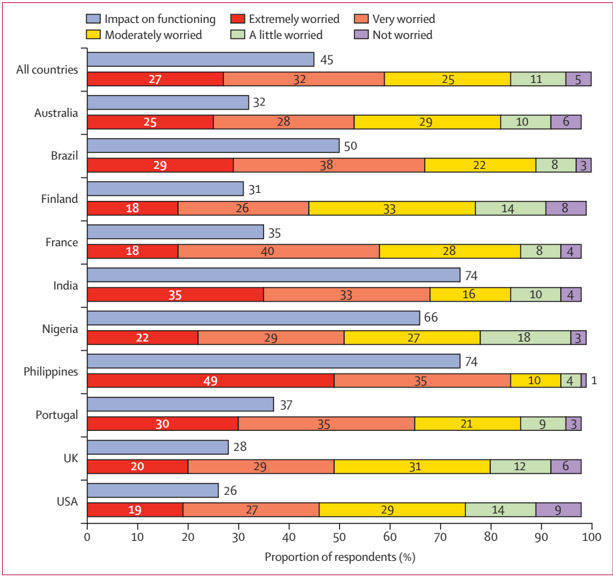
Background Climate change has important implications for the health and futures of children and young people, yet they have little power to limit its harm, making them vulnerable to climate anxiety. This is the first large-scale investigation of climate anxiety in children and young people globally and its relationship with perceived government response. Methods We surveyed 10 000 children and young people (aged 16-25 years) in ten countries (Australia, Brazil, Finland, France, India, Nigeria, Philippines, Portugal, the UK, and the USA; 1000 participants per country). Invitations to complete the survey were sent via the platform Kantar between May 18 and June 7, 2021. Data were collected on participants' thoughts and feelings about climate change, and government responses to climate change. Descriptive statistics were calculated for each aspect of climate anxiety, and Pearson's correlation analysis was done to evaluate whether climate-related distress, functioning, and negative beliefs about climate change were linked to thoughts and feelings about government response. Findings Respondents across all countries were worried about climate change (59% were very or extremely worried and 84% were at least moderately worried). More than 50% reported each of the following emotions: sad, anxious, angry, powerless, helpless, and guilty. More than 45% of respondents said their feelings about climate change negatively affected their daily life and functioning, and many reported a high n…
Verified 2026-11-25 · 1 reference not checked yet
Overview
CoChat Summary
TL;DR
This global survey of 10,000 people aged 16–25 across ten countries found widespread climate anxiety and distress, with many reporting negative functional impacts. Climate distress was correlated with negative perceptions of government responses and feelings of betrayal.
Key findings
- 59% were very or extremely worried about climate change and 84% were at least moderately worried; more than 50% reported feeling sad, anxious, angry, powerless, helpless, and guilty.
- More than 45% said their feelings about climate change negatively affected their daily life and functioning; 75% said the future is frightening and 83% said people have failed to take care of the planet.
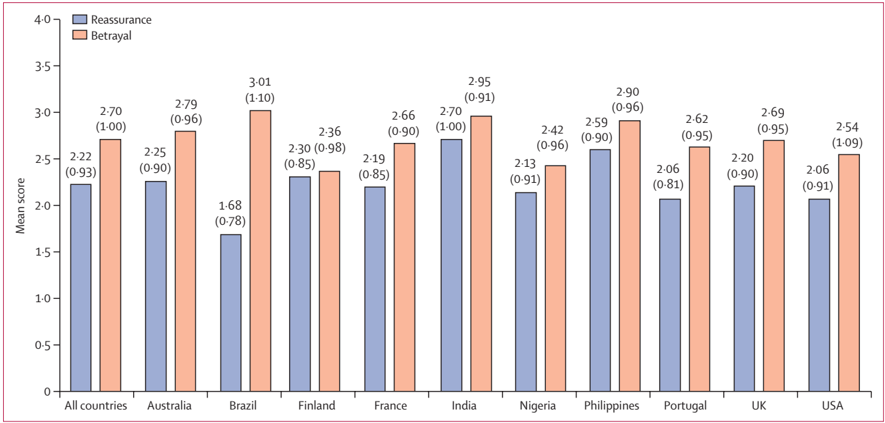
- Respondents rated government responses negatively (mean 14.96 on a 9–18 scale, SD 2.57) and reported greater betrayal (mean 2.7, SD 1.0) than reassurance (mean 2.22, SD 0.93; p<0.0001).
- Climate anxiety and distress were correlated with perceived inadequate government response and associated feelings of betrayal.
Methods
- Cross-sectional online survey of 10,000 children and young people aged 16–25 years in ten countries (Australia, Brazil, Finland, France, India, Nigeria, Philippines, Portugal, the UK, and the USA; 1000 per country), recruited via Kantar between May 18 and June 7, 2021.
- Quota sampling was based on age, gender, and region, with data weighted to OECD statistics for each country by age group, gender, and region.
- Descriptive statistics were calculated for climate anxiety constructs, and Pearson’s correlation analysis explored links between climate-related distress, functioning, negative beliefs, and thoughts/feelings about government response; findings significant at p≤0.001 are reported.
Limitations
- The paper states that non-standardised measures were used because no appropriate standardised measures existed; the study cannot indicate severity compared with normative samples, did not measure mental health outcomes, and used a yes/no/prefer-not-to-say response scale.
- The paper states that equal sample sizes per country were not weighted by population size, so aggregated results are not globally representative; online polling required internet access and sometimes English, and gender was recorded only as male or female.
- Evident from the text: the cross-sectional design cannot establish causality between perceived government response and climate distress.
Model-written summary. Check it against the paper before relying on it.
Integrity signals
Registry
Cites
Statistics
Figures
Verification
Claims the paper makes
12 Valid · 0 Not valid · 19 Not checked · 99 Own results and interpretations
Every source the paper cites for this claim was checked and supports it.
In the paper
“Children are now turning to legal action based on government failure to protect ecosystems, young citizens, and their futures. 26”
What the sources say
- Supportedcites [26] 26 Salas RN, Jacobs W, Perera F. The case of Juliana v. US-children and the health burdens of climate change. N Engl J Med 2019; 380: 2085-87 . source
The supplied Abstract passages describe children filing suit over federal inaction on climate change, which they say violates their constitutional rights. They also connect that inaction to threats to children’s safe environment and to future generations, supporting the citing sentence’s paraphrase. (LLM, conf=0.88)
plainstates a cause- Asserted: passes — The authors put it forward as true.
- Checkable: passes — It can be checked against evidence.
- Load-bearing: unclear — It is unclear whether the paper’s conclusions depend on it.
- Based: passes — The paper gives a reason why it holds.
- Supported
A result the paper reports from its own data — it cites no other source for it, so there is none to check. The quote shows it is in the paper.
In the paper
“in the Global North, Portugal (which had dramatic increases in wildfires since 2017) showed the highest level of worry.”
plainn = 1,000- Asserted: passes — The authors put it forward as true.
- Checkable: passes — It can be checked against evidence.
- Load-bearing: unclear — It is unclear whether the paper’s conclusions depend on it.
- Based: passes — The paper gives a reason why it holds.
A result the paper reports from its own data — it cites no other source for it, so there is none to check. The quote shows it is in the paper.
In the paper
“Respondents rated governmental responses to climate change negatively”
plain- Asserted: passes — The authors put it forward as true.
- Checkable: passes — It can be checked against evidence.
- Load-bearing: passes — The paper’s conclusions depend on it.
- Based: passes — The paper gives a reason why it holds.
A result the paper reports from its own data — it cites no other source for it, so there is none to check. The quote shows it is in the paper.
In the paper
“This distress was associated with beliefs about inadequate governmental response and feelings of betrayal.”
plainstates an association- Asserted: passes — The authors put it forward as true.
- Checkable: passes — It can be checked against evidence.
- Load-bearing: passes — The paper’s conclusions depend on it.
- Based: passes — The paper gives a reason why it holds.
A result the paper reports from its own data — it cites no other source for it, so there is none to check. The quote shows it is in the paper.
In the paper
“More than 45% of respondents said their feelings about climate change negatively affected their daily life and functioning”
- Also stated in: § Results · p. 5 · plain
“More than 45% of respondents said their feelings about climate change negatively affected their daily lives”
plainn = 10- Asserted: passes — The authors put it forward as true.
- Checkable: passes — It can be checked against evidence.
- Load-bearing: passes — The paper’s conclusions depend on it.
- Based: passes — The paper gives a reason why it holds.
- Also stated in: § Results · p. 5 · plain
50 more claims
Create a free account to see all 130 claims and to verify the 1 reference still open.
- Probably not a substantial claim. 51
- It may state two separate claims as one. 41
- The quote only partly states this claim. 6
Claims other papers make about this one
Each is checked against this paper’s own text: does it say what the citing paper says it does?
The source backs part of the claim, not all of it — or backs it for a different population, condition or comparison.
In the citing paper
“Investigations into anxiety about climate change have revealed that it is increasingly common for many people across the globe [9], with large-scale international studies identifying growing concern about climate change [10–12].”
From The relationship between climate change and mental health: a systematic review of the association between eco-anxiety, psychological distress, and symptoms of major affective disorders (2024) · cites this paper as [10]
Experimental — accuracy not yet measuredThe source backs part of the claim, not all of it — or backs it for a different population, condition or comparison.
In the citing paper
“The high prevalence of eco-anxiety [10] - be it at clinical or subclinical levels - underscores the need for broader level changes related to climate change.”
From The relationship between climate change and mental health: a systematic review of the association between eco-anxiety, psychological distress, and symptoms of major affective disorders (2024) · cites this paper as [10]
Experimental — accuracy not yet measuredThe source backs part of the claim, not all of it — or backs it for a different population, condition or comparison.
In the citing paper
“and varied understandings and experiences of climate change have differing impacts on the relationship with mental health [10, 12].”
From The relationship between climate change and mental health: a systematic review of the association between eco-anxiety, psychological distress, and symptoms of major affective disorders (2024) · cites this paper as [10]
Experimental — accuracy not yet measuredThe source backs part of the claim, not all of it — or backs it for a different population, condition or comparison.
In the citing paper
“A global survey of 10,000 young people (16-25) across 10 countries found: (1) 75% were frightened about the future; (2) 84% were moderately worried; (3) 59% were very or extremely worried; and (4) 45%+ reported climate change-related feelings negatively affected their daily life and functioning [21].”
From Climate Distress: A Review of Current Psychological Research and Practice (2023) · cites this paper as [21]
Experimental — accuracy not yet measuredThe source backs part of the claim, not all of it — or backs it for a different population, condition or comparison.
In the citing paper
“An overall lack of trust in government was also identified, with a wide belief that the government response to climate change will continue to be inadequate [21].”
From Climate Distress: A Review of Current Psychological Research and Practice (2023) · cites this paper as [21]
Experimental — accuracy not yet measured
21 more claims about this paper
Create a free account to see every claim other papers make about this one.
Self-check
Percentages, sums and reported differences re-computed from the paper’s own numbers.
Rated minor: it would not touch a result — a value no result rests on, a p-value that stays on the same side of the significance level, or a conflict that is clerical, resolved elsewhere in the paper, or outside its own findings.
In the paper
“15 543 people began the survey and 10 000 (68%) completed it.”
Reported 68 · recomputed 64.337644
Citations
Cites
Mental health of young people: A global public-health challenge
Patel, V., Flisher, A. J., Hetrick, S., & McGorry, P. (2007) · The Lancet · doi:10.1016/s0140-6736(07)60368-7 · Cited by 3,126 · cited 2×
“23 Children facing a future severely damaged by climate change will need support.”
Stress and Health: Psychological, Behavioral, and Biological Determinants
Schneiderman, N., Ironson, G., & Siegel, S. D. (2005) · Annual Review of Clinical Psychology · doi:10.1146/annurev.clinpsy.1.102803.144141 · Cited by 2,252 · cited 2×
“22 Exposure to chronic stress in childhood has a long-lasting impact and increases the risk of developing mental health problems.”
Development and validation of a measure of climate change anxiety
Clayton, S., & Karazsia, B. T. (2020) · Journal of Environmental Psychology · doi:10.1016/j.jenvp.2020.101434 · Cited by 1,196
Self-citationAnxiety and the Ecological Crisis: An Analysis of Eco-Anxiety and Climate Anxiety
Pihkala, P. (2020) · Sustainability · doi:10.3390/su12197836 · Cited by 978 · cited 2×
“In threatening and uncertain situations such as the climate crisis, this response can be seen as what is sometimes referred to as practical anxiety 1,4 because it has the beneficial effect of leading people to reassess their behaviour in order to respond appropriately.”
Self-citationMoral Injury: An Integrative Review
Griffin, B. J., Purcell, N., Burkman, K., Litz, B. T., Bryan, C. J., Schmitz, M., Villierme, C., Walsh, J., & Maguen, S. (2019) · Journal of Traumatic Stress · doi:10.1002/jts.22362 · Cited by 752 · cited 2×
“28 This might include an awareness of or failure to prevent harmful unethical behaviour.”
Stanley, S. K., Hogg, T. L., Leviston, Z., & Walker, I. (2021) · The Journal of Climate Change and Health · doi:10.1016/j.joclim.2021.100003 · Cited by 715
Anxiety, worry, and grief in a time of environmental and climate crisis: a narrative review
Ojala, M., Cunsolo, A., Ogunbode, C. A., & Middleton, J. (2021) · Annual Review of Environment and Resources · doi:10.1146/annurev-environ-012220-022716 · Cited by 670
The case for systems thinking about climate change and mental health
Berry, H. L., Waite, T. D., Dear, K. B. G., Capon, A. G., & Murray, V. (2018) · Nature Climate Change · doi:10.1038/s41558-018-0102-4 · Cited by 485 · cited 2×
“Changing climate and weather-related disasters have diverse impacts, both direct (eg, destruction and trauma) and indirect (eg, strained personal and public resources, interrupted community functioning), 2 as well as resulting in climate anxiety.”
Eco-Anxiety and Environmental Education
Pihkala, P. (2020) · Sustainability · doi:10.3390/su122310149 · Cited by 475
Self-citationThe Hogg Eco-Anxiety Scale: Development and Validation of a Multidimensional Scale
(2021) · doi:10.31219/osf.io/rxudb · Cited by 465
Research works printed but not linked: 4
- 11 Jensen T. Ecologies of guilt in environmental rhetorics. Cham: Palgrave Macmillan, 2019.
- 18 UNICEF. One billion children at 'extremely high risk' of the impacts of the climate crisis. Aug 20, 2021. https://www.unicef.org. uk/press-releases/onebillion-children-at-extremely-high-risk-of-theimpacts-of-the-climate-crisis-unicef (accessed Sept 5, 2021).
- 27 Weintrobe S. Psychological roots of the climate crisis: neoliberal exceptionalism and the culture of uncare. New York, NY: Bloomsbury Academic, 2021.
- 32 Mavronicola N. Torture, inhumanity and degradation under article 3 of the ECHR: absolute rights and absolute wrongs. Oxford: Bloomsbury Publishing, 2021.
Cited by
Items 1,101–1,200 of 2,164
Lange, S., & Gutschik, L. (2025) · Zeitschrift für Erziehungswissenschaft · doi:10.1007/s11618-025-01347-7 · Cited by 6
Pinho, M. (2025) · Frontiers in Psychology · doi:10.3389/fpsyg.2025.1674161 · Cited by 2
Relational experiences of ecological grief amongst environmental activists
Malcolm, F. (2025) · Environmental Values · doi:10.1177/09632719251383213 · Cited by 2
“A 2021 study of 10,000 people aged 16 – 25 years from 10 countries found that 42% reported feelings of ecological grief (Hickman et al., 2021).”
Canova, L., Bobbio, A., Benincà, A., & Manganelli, A. M. (2025) · Humanities and Social Sciences Communications · doi:10.1057/s41599-025-05962-x · Cited by 4
“For example, in an international survey, Hickman et al. (2021) found that among individuals aged 16 – 25 years, 59% are extremely worried or very worried about climate change and 83% believe that people have failed to take care of the planet.”
Communicating science to motivate action: A case study of birds and climate change
Wilsey, C. B., Bateman, B. L., Pomper, L., Bogo, J., & Shepherd, R. (2022) · Frontiers in Climate · doi:10.3389/fclim.2022.918948 · Cited by 3
“And because it is broadly known how overwhelming climate change can be, the guide offers Coping Skills for climate anxiety (Hickman et al., 2021) Frontiers inClimate 05 frontiersin.org as well—pointers for staying focused on the task ahead.”
BackgroundAzuri, N. (2022) · Psychotherapy and Counselling Journal of Australia · doi:10.59158/001c.71205 · Cited by 3
Discussion: Broadening the Scope of Wellbeing Science
Kemp, A. H., & Edwards, D. J. (2022) · Springer eBooks · doi:10.1007/978-3-031-18329-4_11 · Cited by 2
Sparking Emotions Conducive to Action Is Critical to Solving the Climate Crisis
Novoselov, A., & Hayes, K. (2022) · Sustainability and Climate Change · doi:10.1089/scc.2022.0102 · Cited by 3
Anxiety in Later Life and Across the Lifespan: Progress and Future Directions
Pachana, N. A. (2023) · GeroPsych · doi:10.1024/1662-9647/a000315 · Cited by 3
(EFSA), E. F. S. A., Lourenço, J. S., Vrbos, D., Adeboye, A. K., Zanetti, I., Mancarella, G., Luca, A., Robinson, T. P., Jansen, T., Maxim, L., et al. (2023) · EFSA Supporting Publications · doi:10.2903/sp.efsa.2023.en-8023 · Cited by 4
Sly, P. D., & Stanley, F. J. (2023) · The Medical Journal of Australia · doi:10.5694/mja2.52133 · Cited by 2
Zielony aktywizm. Wizerunek Grety Thunberg w książkach obrazkowych na szwedzkim rynku wydawniczym
Dymel‐Trzebiatowska, H. (2023) · Edukacja Elementarna w Teorii i Praktyce · doi:10.35765/eetp.2023.1871.05 · Cited by 2
How climate‐change awareness can provoke physical symptoms
Pitron, V., Witthöft, M., Lemogne, C., Léger, D., Clayton, S., & den Bergh, O. V. (2024) · Frontiers in Ecology and the Environment · doi:10.1002/fee.2700 · Cited by 2
Self-citationSocial-Ecological Perspectives and Their Influence on Climate Distress in Young People
Crandon, T., Thomas, H. J., & Scott, J. G. (2024) · Cambridge University Press eBooks · doi:10.1017/9781009252904.017 · Cited by 3
Eco-Anxiety and Morita Therapy—A Review and Illustrative Case Report
Raile, P. (2024) · Challenges · doi:10.3390/challe15030034 · Cited by 3
“Caro‑ line Hickman has provided valuable insights into the psychological mechanisms under‑ lying eco‑anxiety, particularly focusing on how it affects young people [6,7].”
BackgroundPsychological Anxiety Responses to Climate Change in Nangarhar University Students
Haqyar, H. K., Bayan, E., & Abdulrashid, M. (2024) · Nangarhar University international journal of biosciences. · doi:10.70436/nuijb.v3i02.163 · Cited by 4
How education can transform children’s anxiety into agency in the climate emergency
Omrani, O. E. (2024) · BMJ · doi:10.1136/bmj.q1870 · Cited by 2
Lee, H.-S., & Ho, G. (2024) · Korean Journal of Journalism & Communication Studies · doi:10.20879/kjjcs.2024.68.5.001 · Cited by 2
Rinder, T., Neuber, F., & von Hagke, C. (2022) · doi:10.31223/x52w7n · Cited by 2
Health and Climate Change: How do we protect people's health in the climate crisis?
Astorga, I., Sório, R. E., & Bauhoff, S. (2023) · doi:10.18235/0004845 · Cited by 3
Plohl, N., Mlakar, I., Musil, B., et al. (2023) · doi:10.31234/osf.io/kxzcn · Cited by 2
Parmentier, M., Weiss, K., Aroua, A., et al. (2023) · doi:10.31234/osf.io/7kqfx · Cited by 2
Translation and validation to the Arabic language of the Climate Change Anxiety Scale (CCAS)Preprint
Fekih‐Romdhane, F., Malaeb, D. N., Yakın, E., Sakr, F., Dabbous, M., Khatib, S. E., Obeïd, S., & Hallit, S. R. (2024) · Research Square · doi:10.21203/rs.3.rs-3821981/v1 · Cited by 2
Baschieri, A., & Udeh, C. (2024) · Sexual and Reproductive Health Matters · doi:10.1080/26410397.2025.2468574 · Cited by 7
Greening the lab: fighting climate change to enhance mental health
Albert, P. R., Marotel, M., Doré, C., & Auer, R. C. (2025) · Journal of Psychiatry and Neuroscience · doi:10.1503/jpn.250040 · Cited by 2
“10,11 However, it is possible to take actions to mitigate and reduce climate change.”
Alibudbud, R. C. (2026) · SAGE Open Nursing · doi:10.1177/23779608251413025 · Cited by 3
“Filipino children also experience greater climate-related anxiety than their global counter-parts (Aruta & Simon, 2022; Hickman et al., 2021).”
Allured, E., & Easterlin, B. (2024) · Climate Change and Youth Mental Health · doi:10.1017/9781009252904.012 · Cited by 1
Wagner, L., & Witthöft, M. (2024) · Zeitschrift für Klinische Psychologie und Psychotherapie · doi:10.1026/1616-3443/a000754 · Cited by 3
Exploring current responses to the climate crisis in MHPSS interventions in humanitarian settings
Ager, W., Reifels, L., Augustinavicius, J., & Pschiuk, L. (2022) · Intervention · doi:10.4103/intv.intv_3_22 · Cited by 2
Climate, Gender and Consumption
Sand, J. (2022) · TemaNord · doi:10.6027/temanord2022-553 · Cited by 7
Students’ Quality of Life, Resources, and Promotion
Métais, C., Oger, M., Broc, G., Douet, S. V., Müller, A., Roux, F. L., & Martin‐Krumm, C. (2023) · Springer eBooks · doi:10.1007/978-981-99-5609-8_2 · Cited by 2
Invest in youth led efforts for gender equality and pandemic preparedness
Khalil, M., Cyubahiro, V. K., & Choonara, S. (2023) · BMJ · doi:10.1136/bmj.p2861 · Cited by 1
Doherty, T. J., & Lykins, A. D. (2024) · Oxford University Press eBooks · doi:10.1093/oso/9780197683293.003.0009 · Cited by 4
Peden, A. E., & Brander, R. W. (2024) · Australian and New Zealand Journal of Public Health · doi:10.1016/j.anzjph.2023.100116 · Cited by 1
Approaches to Understanding Youth Well-Being
Cahill, H., & Gowing, A. (2024) · Springer eBooks · doi:10.1007/978-981-4451-96-3_10-2 · Cited by 5
Pöllänen, E., Yeung, T. Y.-C., Arroyo, J., Park, H. W., Formella, C., & Osika, W. (2024) · One Health · doi:10.1016/j.onehlt.2024.100732 · Cited by 2
“Higher levels of compassion towards others, and more sustainable attitudes and behaviours, have been related to lower levels of wellbeing [36], and engagement in climate issues has been shown to be related to grief and higher levels of anxiety and depression [37 – 38].”
BackgroundLa Climate Psychology Alliance : enjeux sociopolitiques et processus inconscients
Anderson, J., Hoggett, P., & Goff, J. L. (2024) · Nouvelle revue de psychosociologie · doi:10.3917/nrp.037.0149 · Cited by 1
Perspectives on Addressing Young People’s Climate Distress in Education
Carmichael, M. (2024) · Cambridge University Press eBooks · doi:10.1017/9781009252904.019 · Cited by 1
The Hoosier Science Teacher, Volume 47, Issue 1
HASTI Board of Directors (2024) · The Hoosier Science Teacher · doi:10.14434/thst.v47i1.38729 · Cited by 1
Climate data democracy is essential for climate action
Nagendra, H., Goswami, S., & Mundoli, S. (2024) · PLOS Climate · doi:10.1371/journal.pclm.0000447 · Cited by 1
“Young people are increasingly anxious about climate and environmental change yet feel dis-empowered to act [7].”
Climate Change and Mental Health from a Developmental and Life Course Perspective
Ha, S. (2024) · Springer eBooks · doi:10.1007/978-3-031-56736-0_2 · Cited by 1
Greening science: what’s in it for you?
Dekkers, F. (2024) · Nature · doi:10.1038/d41586-024-03011-2 · Cited by 1
Intergenerational Injustice and Youth Mental Health: A Call to Action
Jordan, G., Akhtar, F., Ahsan, N., Egharevba, E., Kimber, R., Saffy, N., & Horvath, E. (2024) · Early Intervention in Psychiatry · doi:10.1111/eip.13619 · Cited by 1
“Previous generations enjoyed a stable, predictable climate, that is today increasingly warm and driving extreme weather events, death, mass-displacement and climate-related mental health issues (Hickman et al. 2021; Berry, Bowen, and Kjellstrom 2010).”
Relational visioning and the emerging future: Transforming towards a sustainable local society
Nerland, R., Hestad, D., Solbu, G., Hansen, K., & Nilsen, H. R. (2024) · Futures · doi:10.1016/j.futures.2024.103486 · Cited by 7
Bechtoldt, M. N., Reese, G., Liu, S., Gutberlet, P., van Bronswijk, K., & Peter, F. (2024) · Springer eBooks · doi:10.1007/978-3-662-69213-4_28 · Cited by 1
Our children’s health depends on climate action
Weinstein, K. L. (2024) · Elsevier eBooks · doi:10.1016/b978-0-443-29240-8.00016-x · Cited by 2
Duroy, H., François, L., & Soidet, I. (2024) · L’Orientation scolaire et professionnelle · doi:10.4000/12y6w · Cited by 2
Tagle, M. J. G., & Vito, D. (2024) · The 2nd International One Health Conference · doi:10.3390/msf2024025015 · Cited by 3
Psyche in der Klimakrise? Update zur ökologischen Psychiatrie und Psychotherapie
Brakemeier, E., Karl, S., Stapel, S., & Meyer‐Lindenberg, A. (2025) · Fortschritte der Neurologie · Psychiatrie · doi:10.1055/a-2444-5039 · Cited by 1
Local to Global Intersections of Environmental Justice, Social Practice, and Climate Change
Collins, S., Gervich, C. D., Kehl, J. R., & Nesmith, A. A. (2025) · Journal of Human Rights and Social Work · doi:10.1007/s41134-024-00356-6 · Cited by 3
“Hickman et al.’s (2021) study revealed that 84% of the youth were worried about climate change, 45% found their daily life functioning negatively affected, and 75% thought the future was frightening.”
Climate Mental Health Disparities: A Biopsychosociocultural Perspective
Shaligram, D., Acquaye, A. G., Wortzel, J. R., & DeJong, S. M. (2025) · Journal of the American Academy of Child & Adolescent Psychiatry · doi:10.1016/j.jaac.2024.12.011 · Cited by 1
Why Pediatric Surgeons Need to Care About Climate Change
Fitzpatrick, C. M., Muratore, C. S., Glick, R. D., Raval, M. V., & Li, L. (2025) · Journal of Pediatric Surgery · doi:10.1016/j.jpedsurg.2025.162280 · Cited by 1
Kleeberg‐Niepage, A., Degen, J. L., Kleijberg, M., Rullander, A., Goitiandia, S. W., & Tishelman, C. (2025) · Children & Society · doi:10.1111/chso.12959 · Cited by 1
Brown, J., Williams, K. A., & Lichy, J. (2025) · World sustainability series · doi:10.1007/978-3-031-80434-2_12 · Cited by 1
Reynante, B. M., Ardoin, N. M., & Pea, R. D. (2025) · The Journal of Environmental Education · doi:10.1080/00958964.2024.2436162 · Cited by 2
“In a global survey of 10,000 young people, 75% reported that they think climate change makes the future frightening (Hickman et al., 2021).”
More work is needed to identify how people perceive and value nature
Johnson, T. F., Millard, J. W., & Evans, L. C. (2025) · Nature Reviews Biodiversity · doi:10.1038/s44358-025-00047-8 · Cited by 1
Hervé, N., & Marzin-Janvier, P. (2024) · RDST · doi:10.4000/13q1c · Cited by 2
Digital Technologies for Climate Change Resilient Health Systems
Laracuente, T. J., Nakielski, M. L., Sarabu, C. R., & Bradley, P. (2025) · Springer eBooks · doi:10.1007/978-3-031-80704-6_13 · Cited by 5
Stubbing, J., Gibson, K. L., Bardsley, A., & Gluckman, P. (2025) · BMC Public Health · doi:10.1186/s12889-025-22618-2 · Cited by 4
“Globally, young people have described mental health challenges associated with COVID [53–55] and climate change [56, 57].”
The Climate Crisis and Indigenous Youths’ Mental Health: The Pilot Project
Stewart, E., Mirza, S., & Brown, M. (2025) · Mental Health Global Challenges Journal · doi:10.56508/mhgcj.v8i1.254 · Cited by 1
Under Fire: A Brazilian Perspective on Climate Change and Child Health
Cabral‐Miranda, W., Solé, D., Wandalsen, G. F., Urrutia‐Pereira, M., Corrêa, M. D. P., Silveira, C. M., Constantino, C. F., de Albuquerque, M. P., Waksman, R. D., de Araújo, E. D. M. P. A., et al. (2025) · Sustainability · doi:10.3390/su17104482 · Cited by 4
Jones, V., & Bear, C. (2025) · Environmental Education Research · doi:10.1080/13504622.2025.2504532 · Cited by 2
“Research has shown that young people feel an array of emotional responses to the current climate and ecological emergency including being worried, anxious, scared, guilty and angry (see Jones and Podpadec 2023 and Hickman et al. 2021).”
Abner, D. A. (2025) · SCIENCE International Journal · doi:10.35120/sciencej0402067a · Cited by 1
Woods, B., Danks, N., Gorman, J., et al. (2025) · Journal of Applied Youth Studies · doi:10.1007/s43151-025-00178-x · Cited by 1
“There is increasing research documenting young people’s “rational” climate anxiety relating to government/corporate/adult inaction relating to the climate crisis (Walker and van Holstein 2024, p. 1169; Hickman et al. 2021; Teo et al. 2024).”
Das „innere Klima“ regulieren in Zeiten globaler Erwärmung
Dixius, A., & Möhler, E. (2025) · Praxis der Kinderpsychologie und Kinderpsychiatrie · doi:10.13109/prkk.2025.74.4.371 · Cited by 1
Environmental Distress Among Dutch Young Adults: Worried Minds or Indifferent Hearts?
Venhof, V. S. M., Jeronimus, B. F., & Martens, P. (2025) · EcoHealth · doi:10.1007/s10393-025-01717-x · Cited by 4
“Such ‘anticipatory’ environmental worries and stress in young people have been observed in other countries (Hickman et al., 2021).”
InfluentialClimate Change and Mental Health: A Human Rights Perspective
Varvaštian, S. (2025) · The Journal of Law Medicine & Ethics · doi:10.1017/jme.2025.10114 · Cited by 2
Saha, B., & Haq, S. M. A. (2025) · PLoS ONE · doi:10.1371/journal.pone.0325369 · Cited by 2
“Additionally, a survey of ten countries highlights the emotional and psychological impact of climate change on young people who express anxiety and dissatisfaction with government climate change policies [5].”
Unveiling awareness gaps: pre-service teachers and responsible consumption in Spain
López-Fernández, C., Paños, E., Fernández, B. G., & Ruíz-Gallardo, J.-R. (2025) · European Journal of Teacher Education · doi:10.1080/02619768.2025.2516067 · Cited by 2
Psychosocial Recovery Interventions for Flood Victims: A Narrative Review
Harun, N. A. B., & Akhir, N. M. (2025) · Salud Ciencia y Tecnología · doi:10.56294/saludcyt20251730 · Cited by 1
Sustainability and eco-anxiety: Strategies for addressing environmental concern
Liguori, F., Aouissi, H. A., & Pelullo, C. P. (2025) · RIVISTA DI STUDI SULLA SOSTENIBILITA · doi:10.3280/riss2025oa19772 · Cited by 2
Field, E., & Barraclough, L. (2025) · Youth · doi:10.3390/youth5030066 · Cited by 1
“Frustration of climate inaction by young people is also evidenced in the 34 youth climate cases being adjudicated worldwide (UNEP, 2023), and high rates of climate anxiety experienced by young people globally (Hickman et al., 2021; Galway & Field, 2023).”
Riggio, C. R., Olson, J., Lee, J.-H., Kim, J. J. H., & Constantino, S. M. (2025) · International Perspectives in Psychology · doi:10.1027/2157-3891/a000129 · Cited by 2
Furu, A.-C., Manni, A., Knekta, E., Svens, M., Sjöblom, P., & Nordin, P. (2025) · Environmental Education Research · doi:10.1080/13504622.2025.2523963 · Cited by 3
“Research shows that eco-anxiety, that is, distress related to climate and ecological crises (Hickman et al. 2021; Vandaele and Stålhammar 2022), is growing among children and youth (Léger-Goodes et al. 2022) resulting in both maladaptive (e.g. denial) and adaptive (e.g. constructive hope) responses.”
Competences Enabling Young Germans to Engage in Activities for Climate Protection and Global Health
Gehrau, V., Morgenstern, I., Grunschel, C., Könemann, J., Nührenbörger, M., Schwering, A., & Fischer, C. S. (2025) · International Journal of Environmental Research and Public Health · doi:10.3390/ijerph22071111 · Cited by 2
“Young people may feel overwhelmed by the complexity and urgency of climate change and global health challenges [43].”
Furlong, M. (2025) · Australian and New Zealand Journal of Family Therapy · doi:10.1002/anzf.70005 · Cited by 1
The impact of social crises on nursing students’ mental health: a cross-sectional study
Saçıkara, Z., Koçoğlu, D., & Dengiz, K. S. (2025) · BMC Nursing · doi:10.1186/s12912-025-03706-5 · Cited by 4
“Because vulnerable people who cannot cope with multiple stressors are more likely to develop mental health problems [10, 41].”
InfluentialClimate-related challenges to brain health: A European perspective review
Reis, J. J., Buguet, A., Tülek, Z., Landtblom, A., Radomski, M. W., Öztürk, Ş., Pugliatti, M., Kallweit, U., & Spencer, P. S. (2025) · Revue Neurologique · doi:10.1016/j.neurol.2025.07.010 · Cited by 1
Chapman, B. L., Mitchell, S. B., Hardwick, R., Bonnici, H., Banks, H., Mareva, S., & Hayes, R. A. (2025) · PLOS mental health. · doi:10.1371/journal.pmen.0000389 · Cited by 3
“Surveys suggest a direct link between nature connection and pro-environmental and pro-conservation behaviours, which could be a crucial step to redressing the threat to health due to the loss of nature, especially in a generation that globally experiences high levels of climate anxiety [25,26].”
Multimodal Metaphorical Constructions of Climate Change in Chinese and American Political Cartoons
Zhao, X., & Wu, Y. (2025) · Critical Arts · doi:10.1080/02560046.2025.2543021 · Cited by 2
“Scholars caution against such alarmist metaphors, suggesting they may generate “climate fatigue”, disengagement, or eco-anxiety, particularly among younger audiences already burdened by climate anxiety (Hickman et al. 2021; Russill 2011; Shaw and Nerlich 2015).”
Orbach, L., Silva, E. D. O., & de Salles, J. F. (2025) · Review of Education · doi:10.1002/rev3.70106 · Cited by 1
EcoARology: Using AR to empower children in the face of climate change
Beckingham, A., Pschetz, L., Manches, A., & Nissen, B. (2025) · International Journal of Child-Computer Interaction · doi:10.1016/j.ijcci.2025.100771 · Cited by 2
Italian children's visions of nature: A cluster analysis of environmental themes in drawings
Mastrokoukou, S., Longobardi, C., & Fabris, M. A. (2025) · Journal of Environmental Psychology · doi:10.1016/j.jenvp.2025.102753 · Cited by 2
Mazuruse, G., & Nyagadza, B. (2025) · Quality & Quantity · doi:10.1007/s11135-025-02384-4 · Cited by 1
“Against this background, the current study will examine the factors that affect climate awareness and education (Fauzi, 2022; Hickman et al., 2021).”
Climate anxiety among adolescents in a pediatric emergency department
Assaf, R. R., Shelton, S. K., Morphew, T. L., Clayton, S., & Wu, J. (2025) · Environmental Research Health · doi:10.1088/2752-5309/ae09d2 · Cited by 2
“National and international public polls have revealed a predominant sense of hopelessness [18] and worry—even daily [15, 17, 42] among teens and young adults.”
Self-citationLloyd, D., & Hazelhurst, E. T. (2025) · Journalism · doi:10.1177/14648849251383363 · Cited by 4
“…we consider the surging levels of ecoanxiety, and the amounts of young people who genuinely believe that they may be one of the last generations, as Hickman ’ s study so lucidly highlights (2021), the commonality of such headlines becomes much more malign, and terms like “ apocalypse ” , “…”
InfluentialParenting and climate change: assessing carbon capability in early parenthood
Hampton, S., Taylor, E., & Whitmarsh, L. E. (2025) · Population and Environment · doi:10.1007/s11111-025-00506-6 · Cited by 2
“…experience significant levels of climate-induced mental distress, with climate anxiety generally found to be higher among women and children than men, and particularly acute among younger people (Bechard et al., 2023; Blum, 2020; Clayton & Karazsia, 2020; Hickman et al., 2021; Thomas et al., 2018).”
Association Between Climate Change Awareness and Depression & Anxiety: Findings from a U.S. Sample
Nkemjika, S., Brown, C., Onyeaka, H., Banerjee, S. K., & Oliphant, J. A. (2025) · International Journal of Environmental Research and Public Health · doi:10.3390/ijerph22091426 · Cited by 2
“This emotional engagement can lead to heightened levels of mental health concerns in the form of anxiety, depressive symptoms, and existential dread, particularly among adolescents and young adults who perceive their futures as compromised [28].”
“I would prefer not to”: Resilience and Refusal in Literary Learning
Bartosch, R. (2025) · Environmental humanities · doi:10.1007/978-3-662-71079-1_16 · Cited by 1
Always on duty - Fostering climate resilience in the nursing profession: A discussion paper
Baumbusch, J., Yip, I. S., & Bandara, N. A. (2025) · International Journal of Nursing Studies · doi:10.1016/j.ijnurstu.2025.105227 · Cited by 3
Climate change and health—What is the connection?
Sullivan, J., & Gordon, I. O. (2025) · Elsevier eBooks · doi:10.1016/b978-0-443-31568-8.00049-0 · Cited by 1
From Building Emissions to Resident Well-Being: The Role of Environmental Pollution Perception
Wang, Y., He, Y., Zheng, C., & Rahnamayiezekavat, P. (2025) · Buildings · doi:10.3390/buildings15203669 · Cited by 1
López‐Cuadrado, T., Mortier, P., Alonso, J., & Martínez‐Alés, G. (2025) · The Lancet Regional Health - Europe · doi:10.1016/j.lanepe.2025.101467 · Cited by 7
“20 Monthly temporal trends suggest an inflection point in early 2021, where rates of NLISH admission increased sharply.”
Learning eco-friendly food choice using extended reality – an exploratory investigation
Dobricki, M., Rihs, M., & Shahmoradi, S. (2025) · Frontiers in Virtual Reality · doi:10.3389/frvir.2025.1498770 · Cited by 1
Climate Trauma and Habits Toward Hope: A Decolonizing Earth-Centered Approach
McCarroll, P. R. (2025) · Journal of Pastoral Theology · doi:10.1080/10649867.2025.2571817 · Cited by 2
Ahmed, D. R., Kakamad, K. K., Al-Taie, R. H., Ahmed, J. O., & Heun, R. (2025) · BJPsych International · doi:10.1192/bji.2025.10068 · Cited by 4
Mehr als Wissen – Der Beitrag des Religionsunterrichts zu einer transformativen Klimabildung
Hunze, G., Gärtner, C., & Dransmann, J. (2025) · Springer eBooks · doi:10.1007/978-3-658-48374-6_9 · Cited by 1
Holding the time: whither the meaning of climate breakdown for child psychotherapists?
Bodycote, L. (2025) · Journal of Child Psychotherapy · doi:10.1080/0075417x.2025.2571230 · Cited by 1
“The prevalence of eco-anxiety amongst young people has been established (Hickman et al., 2021), some of its developmental impacts considered (Pihkala, 2024) and psychoanalytic insights into its presence in the consulting room discussed (Slater, 2023).”
Youth and democracy in the climate crisis
Rinne, J., Jokela, T., Hiltunen, M., Korsström-Magga, K. M., & Lintumäki, A. (2024) · Points de vue sur la jeunesse · doi:10.3917/e.europ.gorma.2024.01.0056 · Cited by 1
Sharma, M., & Stephen, S. S. (2025) · Studies in big data · doi:10.1007/978-3-031-97613-1_35 · Cited by 1
Metadata
- Authors
- Hickman, C., Marks, E., Pihkala, P., Clayton, S., Lewandowski, R. E., Mayall, E. E., Wray, B., Mellor, C., & van Susteren, L.
- Affiliations
- University of Bath (GB)
- University of Helsinki (FI)
- College of Wooster (US)
- NYU Langone Health (US)
- University of East Anglia (GB)
- London School of Hygiene & Tropical Medicine (GB)
- Oxford Health NHS Foundation Trust (GB)
- Corresponding author
- Hickman, Caroline
- Venue
- The Lancet Planetary Health
- Publisher
- Elsevier BV
- Published
- 2021-12
- Volume
- 5
- Issue
- 12
- Pages
- e863-e873
- ISSN
- 2542-5196 (ISSN-L)
- OpenAlex
- W4200005759
- Semantic Scholar
- 4a876cc35863ba593aacf58fe6a24773b3cb9c29
- Cited by
- 2,324
- References
- 27
- Citations by year
- 2026: 566 · 2025: 652 · 2024: 566 · 2023: 364 · 2022: 170 · 2021: 4
- FWCI
- 382.19
- Type
- journal article
- Language
- en
- Open access
- gold
- doi.org
- Licence
- cc-by-nc-nd
- www.elsevier.com/tdm/userlicense/1.0/ (tdm)
- www.elsevier.com/legal/tdmrep-license (tdm)
- creativecommons.org/licenses/by-nc-nd/4.0/ (vor)
- Locations
- The Lancet Planetary Health (publishedVersion, cc-by-nc-nd)
- PubMed (publishedVersion)
- DOAJ (DOAJ: Directory of Open Access Journals) (submittedVersion, cc-by-sa)
- Työväentutkimus Vuosikirja (submittedVersion)
- Topics
- Social Sciences › Sociology and Political Science › Climate Change Communication and Perception
- Physical Sciences › Environmental Science › Health, Toxicology and Mutagenesis › Climate Change and Health Impacts
- Social Sciences › Psychology › Clinical Psychology › COVID-19 and Mental Health
- Keywords
- climate anxiety, children and young people, climate change, betrayal, climate change beliefs, daily functioning, global survey
- MeSH terms
- Adolescent, Adult, Anxiety, Australia, Child, Government, Humans, Surveys and Questionnaires, Young Adult, Climate Change
About these checks
Registry, retraction, Cites and statistics results are computed, not judged, with one exception: a printed reference that no index lists is read once by a model before it counts as a citation error. Claims are extracted by a model and kept only when their quote appears verbatim in the text; each cited source is then checked, with a model’s help, for whether it says what the claim relies on. Those verdicts can be wrong — read the claim’s quote and the cited source before relying on one.
The claim verdicts this report counts are experimental: their accuracy is not yet measured.
A language model drew the claims from the paper on 2026-10-10, under version 3 of the claim definition (model deepseek-v4.1-flash, prompt extract-v3).
A second model labelled each claim on 2026-10-10 (model jev-1.13-20260917, definition revision gold-guideline-v0.2).
Cited sources are checked with a language model’s help (gpt-6-sol).
Statistics and arithmetic are recomputed, not judged.
Confidence bands are shown only for fields calibrated on our annotated test set. None is calibrated yet, so no band is shown.
What counts as a claim ›How we measure confidence ›How we check this ›
Are you an author, or do you see a problem with this page? Request a review
Data sources
Bibliographic data: Semantic Scholar, OpenAlex, Crossref.
Contains information from the Semantic Scholar Academic Graph Datasets, made available under the ODC Attribution License (ODC-BY 1.0).
Semantic Scholar’s data is described in: Kinney, R., et al. (2023). The Semantic Scholar Open Data Platform. arXiv:2301.10140.
