

Rapid antidepressant effects of the psychedelic ayahuasca in treatment-resistant depression: a randomized placebo-controlled trial
Open accessPublished version of a preprint
The DOI matches its Crossref record; 55 of the 55 references it cites were found in a registry or an index.
Abstract
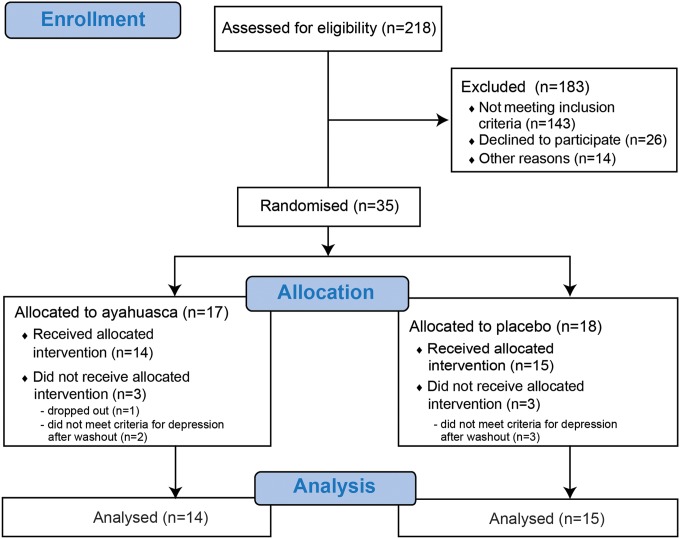
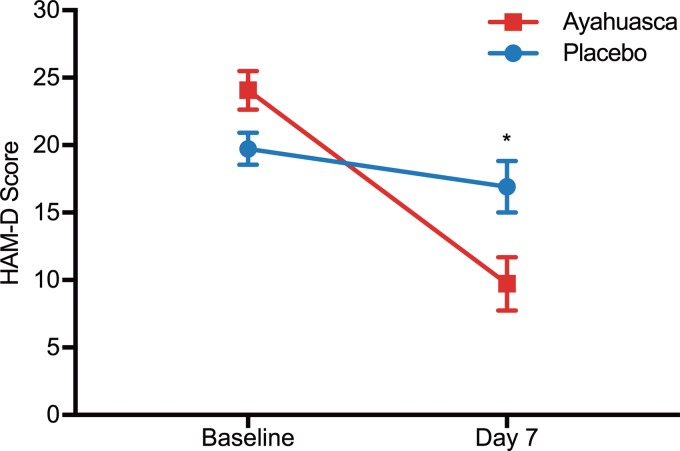
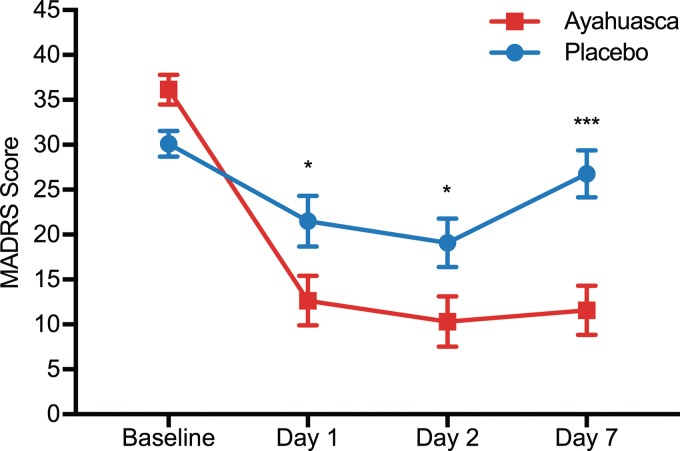
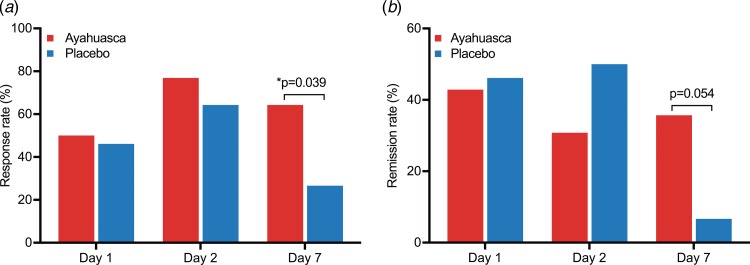
Background: Recent open-label trials show that psychedelics, such as ayahuasca, hold promise as fast-onset antidepressants in treatment-resistant depression. Methods: To test the antidepressant effects of ayahuasca, we conducted a parallel-arm, double-blind randomized placebo-controlled trial in 29 patients with treatment-resistant depression. Patients received a single dose of either ayahuasca or placebo. We assessed changes in depression severity with the Montgomery-Åsberg Depression Rating Scale (MADRS) and the Hamilton Depression Rating scale at baseline, and at 1 (D1), 2 (D2), and 7 (D7) days after dosing. Results: We observed significant antidepressant effects of ayahuasca when compared with placebo at all-time points. MADRS scores were significantly lower in the ayahuasca group compared with placebo at D1 and D2 ( p = 0.04), and at D7 ( p < 0.0001). Between-group effect sizes increased from D1 to D7 (D1: Cohen's d = 0.84; D2: Cohen's d = 0.84; D7: Cohen's d = 1.49). Response rates were high for both groups at D1 and D2, and significantly higher in the ayahuasca group at D7 (64% v. 27%; p = 0.04). Remission rate showed a trend toward significance at D7 (36% v. 7%, p = 0.054). Conclusions: To our knowledge, this is the first controlled trial to test a psychedelic substance in treatment-resistant depression. Overall, this study brings new evidence supporting the safety and therapeutic value of ayahuasca, dosed within an appropriate setting, to help treat depression. This study is registered at http://clinicaltrials.gov (NCT02914769).
Overview
The claims and statistics of this paper haven’t been checked yet.
Free: it reads the open-access text and checks the first 5 claims that cite a source we can check. Create a free account to check every claim.
Integrity signals
Registry
Cites
Statistics
Figures
Verification
Claims the paper makes
The claims and statistics of this paper haven’t been checked yet.
Free: it reads the open-access text and checks the first 5 claims that cite a source we can check. Create a free account to check every claim.
Claims other papers make about this one
Each is checked against this paper’s own text: does it say what the citing paper says it does?
The cited source doesn’t support the claim as written.
In the citing paper
“overall psychiatric scales in the ayahuasca group were significatively higher than those in the placebo group in all time points after dosing.”
From Virtual reality and psychedelics for the treatment of psychiatric disease: A systematic literature review (2020) · doi:10.36131/cnfioritieditore20200606 · cites this paper as Palhano-Fontes et al. (2019)
Checked by a reasoning model — may be wrong.
Experimental — accuracy not yet measuredThe source backs part of the claim, not all of it — or backs it for a different population, condition or comparison.
In the citing paper
“Ayahuasca stimulates emotional dream-like experiences involving potent cognitive-affective changes and spiritual insights (Dobkin de Rios, 1971) that have been associated with substantial and enduring antidepressant effects (Palhano-Fontes et al., 2019; Weiss et al., 2021).”
From Prospective examination of the therapeutic role of psychological flexibility and cognitive reappraisal in the ceremonial use of ayahuasca (2022) · cites this paper as Palhano-Fontes et al., 2019
Experimental — accuracy not yet measuredThe source backs part of the claim, not all of it — or backs it for a different population, condition or comparison.
In the citing paper
“Ayahuasca, or its chemical equivalent known as pharmahuasca, has emerged as a tool for psychotherapy in the contexts of affective and substance use disorders [130,131], thus calling for a better understanding of its possible mechanisms of action.”
From Molecular and Functional Imaging Studies of Psychedelic Drug Action in Animals and Humans. (2021) · cites this paper as [130]
Experimental — accuracy not yet measuredThe source backs part of the claim, not all of it — or backs it for a different population, condition or comparison.
In the citing paper
“Moreover, comorbid conditions such as suicidality and substance use disorders further complicate research efforts (13, 18, 20, 21).”
From Psychoanalytically informed MDMA-assisted therapy for pathological narcissism: a novel theoretical approach (2025) · cites this paper as [20]
Experimental — accuracy not yet measuredThe source backs part of the claim, not all of it — or backs it for a different population, condition or comparison.
In the citing paper
“Ayahuasca has been demonstrated to be safe in naturalistic (35, 108) and clinical settings, across varying dosages and multiple administrations (26, 109–112).”
From Ayahuasca-assisted meaning reconstruction therapy for grief: a non-randomized clinical trial protocol (2025) · cites this paper as [26]
Experimental — accuracy not yet measured
16 more claims about this paper
Create a free account to see every claim other papers make about this one.
Self-check
Percentages, sums and reported differences re-computed from the paper’s own numbers.
The self-check needs the paper’s full text.
Citations
Cites
Hamilton, M. (1960) · Journal of Neurology, Neurosurgery & Psychiatry · doi:10.1136/jnnp.23.1.56 · Cited by 32,817 · cited 1×
“HAM-D was applied only at baseline and D7, as it was designed to access depression symptoms present in the last week (Hamilton, 1960).”
MethodAntidepressant effects of ketamine in depressed patients
Berman, R. M., Cappiello, A., Anand, A., Oren, D. A., Heninger, G. R., Charney, D. S., & Krystal, J. H. (2000) · Biological Psychiatry · doi:10.1016/s0006-3223(99)00230-9 · Cited by 3,856 · cited 7×
“While we find a response rate to placebo of 46% at D1, and 26% at D7, ketamine trials have found a placebo effect of the order of 0 – 6% at D1, and 0 – 11% at D7 (Berman et al. , 2000; Zarate et al. , 2006; Murrough et al. , 2013; Lapidus et al. , 2014).”
BackgroundInfluentialA randomized trial of an N-methyl-D-aspartate antagonist in treatment-resistant major depression.
Zarate, C. A., Singh, J. B., Carlson, P. J., Brutsche, N. E., Ameli, R., Luckenbaugh, D. A., Charney, D. S., & Manji, H. K. (2006) · Archives of General Psychiatry · doi:10.1001/archpsyc.63.8.856 · Cited by 3,766 · cited 4×
“At D7, the ketamine response rate ranges between 7 and 35% (Berman et al., 2000; Zarate et al., 2006; Murrough et al., 2013; Lapidus et al., 2014), while in our study 64% responded to ayahuasca.”
BackgroundInfluentialOtte, C., Gold, S. M., Penninx, B. W., Pariante, C. M., Etkin, A., Fava, M., Mohr, D. C., & Schatzberg, A. F. (2016) · Nature Reviews Disease Primers · doi:10.1038/nrdp.2016.65 · Cited by 2,269 · cited 2×
“We recently found that a single ayahuasca session in patients with depression increases blood flow in brain regions consistently implicated in the regulation of mood and emotions, such as the left nucleus accumbens, right insula and left subgenual area (Otte et al. , 2016; Sanches et al. , 2016).”
BackgroundGriffiths, R. R., Johnson, M. W., Carducci, M. A., Umbricht, A., Richards, W. A., Richards, B. D., Cosimano, M. P., & Klinedinst, M. A. (2016) · Journal of Psychopharmacology · doi:10.1177/0269881116675513 · Cited by 2,201
Nichols, D. E. (2016) · Pharmacological Reviews · doi:10.1124/pr.115.011478 · Cited by 1,762
Ross, S., Bossis, A., Guss, J., Agin-Liebes, G., Malone, T., Cohen, B., Mennenga, S. E., Belser, A., Kalliontzi, K., Babb, J., et al. (2016) · Journal of Psychopharmacology · doi:10.1177/0269881116675512 · Cited by 1,698 · cited 4×
“Prior studies suggest that elements of the psychedelic experience, such as experiences of mystical-type, account for the therapeutic benefit (Bogenschutz et al., 2015; Garcia-Romeu et al., 2015; Majić et al., 2015; Griffiths et al., 2016; Ross et al., 2016).”
BackgroundInfluentialCarhart-Harris, R. L., Bolstridge, M., Rucker, J., Day, C. M. J., Erritzoe, D., Kaelen, M., Bloomfield, M., Rickard, J. A., Forbes, B., Feilding, A., et al. (2016) · The Lancet Psychiatry · doi:10.1016/s2215-0366(16)30065-7 · Cited by 1,540 · cited 4×
“substances affect the brain, and also probing their potential in treating different psychiatric conditions, including mood disorders (Grob et al., 2011; Osório et al., 2015; Carhart-Harris et al., 2016; Griffiths et al., 2016; Ross et al., 2016; Sanches et al., 2016).”
BackgroundResultInfluentialThe default mode network and self-referential processes in depression
Sheline, Y. I., Barch, D. M., Price, J. L., Rundle, M. M., Vaishnavi, S. N., Snyder, A. Z., Mintun, M. A., Wang, S., Coalson, R. S., & Raichle, M. E. (2009) · Proceedings of the National Academy of Sciences · doi:10.1073/pnas.0812686106 · Cited by 1,480 · cited 2×
“Moreover, we have shown that ayahuasca reduces the activity of the Default Mode Network (Palhano-Fontes et al. , 2015), a brain network found to be hyperactive in depression (Sheline et al. , 2009).”
BackgroundPilot Study of Psilocybin Treatment for Anxiety in Patients With Advanced-Stage Cancer
Grob, C. S., Danforth, A. L., Chopra, G. S., Hagerty, M., McKay, C. R., Halberstadt, A. L., & Greer, G. R. (2011) · Archives of General Psychiatry · doi:10.1001/archgenpsychiatry.2010.116 · Cited by 1,206 · cited 2×
“…exploring how these substances affect the brain, and also probing their potential in treating different psychiatric conditions, including mood disorders (Grob et al. , 2011; Osório et al. , 2015; Carhart-Harris et al. , 2016; Griffiths et al. , 2016; Ross et al. , 2016; Sanches et al. , 2016).”
Background
Research works printed but not linked: 3
- World Health Organization (2017) Depression and Other Common Mental Disorders: Global Health Estimates. Rep. CC BY-NC-SA 3.0 IGO. Geneva: World Health Organization.
- Tafur J (2017) The Fellowship of the River: A Medical Doctor's Exploration into Traditional Amazonian Plant Medicine. Espiritu, Phoenix.
- Luna LE (2011) Indigenous and Mestizo use of Ayahuasca. An Overview. The Ethnopharmacology of Ayahuasca. Tivandrum: Transworld Research Network.
Cited by
Items 301–400 of 850
Solaja, I., Haldane, K., Mason, N. L., Weiss, B., Xu, X., Xu, M., Nikolin, S., Jayasena, T., Millard, M., Brett, J., et al. (2024) · Neuroscience & Biobehavioral Reviews · doi:10.1016/j.neubiorev.2024.105570 · Cited by 23
Psychedelics and Evidence-based Psychotherapy
Leone, L., McSpadden, B., DeMarco, A., Enten, L., Kline, R., & Fonzo, G. A. (2024) · Psychiatric Clinics of North America · doi:10.1016/j.psc.2024.02.006 · Cited by 19
The Power of Social Attribution: Perspectives on the Healing Efficacy of Ayahuasca
de Mori, B. B. (2021) · Frontiers in Psychology · doi:10.3389/fpsyg.2021.748131 · Cited by 28
Looking beyond the opioid receptor: A desperate need for new treatments for opioid use disorder
Lee, Y. K., Gold, M. S., & Fuehrlein, B. (2021) · Journal of the Neurological Sciences · doi:10.1016/j.jns.2021.120094 · Cited by 21
Liu, P., Zhang, S., Liang, Y., Gao, Z., Gao, W., & Dong, B. (2022) · Neuropsychiatric Disease and Treatment · doi:10.2147/ndt.s388764 · Cited by 21
Heal, D. J., Gosden, J., Smith, S. L., & Atterwill, C. K. (2022) · Neuropharmacology · doi:10.1016/j.neuropharm.2022.109375 · Cited by 20
Eckernäs, E., Timmermann, C., Carhart-Harris, R. L., Röshammar, D., & Ashton, M. (2023) · CPT Pharmacometrics & Systems Pharmacology · doi:10.1002/psp4.12933 · Cited by 17
Campanale, A., Inserra, A., & Comai, S. (2024) · Progress in Neuro-Psychopharmacology and Biological Psychiatry · doi:10.1016/j.pnpbp.2024.111058 · Cited by 20
Concurrent stress modulates the acute and post-acute effects of psilocybin in a sex-dependent manner
Farinha‐Ferreira, M., Miranda‐Lourenço, C., Galipeau, C., Lenkei, Z., & Sebastião, A. M. (2024) · Neuropharmacology · doi:10.1016/j.neuropharm.2024.110280 · Cited by 20
Psilocybin and Mental Health–Don't Lose Control
Barnby, J. M., & Mehta, M. A. (2018) · Frontiers in Psychiatry · doi:10.3389/fpsyt.2018.00293 · Cited by 18
Politi, M., Friso, F., Rojas, G. S., & Romero, J. T. (2020) · Journal of Psychoactive Drugs · doi:10.1080/02791072.2020.1820641 · Cited by 20
“…evidence for its antidepressant qualities (Dos Santos et al. 2016; Galvão et al. 2018; Osório et al. 2015) that could again be linked to the presence of MAOi in the decoction, and the bioactivity of alkaloids such harmine is compatible with antidepressant effects (Palhano-Fontes et al. 2019).”
BackgroundScheidegger, M. (2021) · Springer eBooks · doi:10.1007/978-3-030-55688-4_3 · Cited by 25
Set and setting of psychedelics for therapeutic use in psychiatry: A systematic review
Estric, C., Duron, T., Kabani, S., & López‐Castromán, J. (2025) · Journal of Psychopharmacology · doi:10.1177/02698811251338214 · Cited by 19
“Advice on how to behave during the session was given during these exchanges (in one study, this advice was given to the participant on the morning of the session (Palhano-Fontes et al., 2019)).”
InfluentialArtru, E., & Rabeyron, T. (2021) · L Évolution Psychiatrique · doi:10.1016/j.evopsy.2021.03.013 · Cited by 22
Alves, C. L., Cury, R. G., Roster, K. I. O., Pineda, A. M., Rodrigues, F. A., Thielemann, C., & Ciba, M. (2022) · PLoS ONE · doi:10.1371/journal.pone.0277257 · Cited by 18
Impact of a Naturalistic Psychedelic Experience on Smoking: A Retrospective Survey
Roméo, B., Fauvel, B., Dejean, S., Strika-Bruneau, L., Amirouche, A., Verroust, V., Piolino, P., & Benyamina, A. (2023) · Journal of Psychoactive Drugs · doi:10.1080/02791072.2023.2227171 · Cited by 17
“Studies have been conducted in the field of treatment-resistant depression (Carhart-Harris et al. 2016, 2021; Palhano-Fontes et al. 2019), but also of addiction, such as tobacco (Johnson et al. 2014; Johnson, Garcia-Romeu, and Griffiths 2017) or alcohol use disorder (Bogenschutz et al. 2015, 2022).”
Gomez-Escolar, A., Folch‐Sanchez, D., Stefaniuk, J., Swithenbank, Z., Nisa, A., Braddick, F., Chaudhary, N. I., van der Meer, P. B., & Batalla, A. (2024) · CNS Drugs · doi:10.1007/s40263-024-01101-3 · Cited by 22
“Ayahuasca has been explored in therapeutic settings with promising results for several mental health disorders and symptoms, including depression [42, 43], social anxiety [44] and grief [45].”
Walther, R. F. E., & van Schie, H. T. (2024) · Psychoactives · doi:10.3390/psychoactives3030026 · Cited by 22
Meling, D., Egger, K., Aicher, H., Redondo, J. J., Mueller, J., Dornbierer, J., Temperli, E., Vasella, E. A., Caflisch, L., Pfeiffer, D., et al. (2024) · Journal of Psychopharmacology · doi:10.1177/02698811241282637 · Cited by 24
“…(Griffiths et al., 2018; Smigielski et al., 2019a) and in other not explicitly meditative contexts including psilocybin (Griffiths et al., 2016, 2006, 2008, 2011; Garcia-Romeu et al., 2015) and ayahuasca or ayahuasca-analogs (Palhano-Fontes et al., 2019; Pontual et al., 2022; Sarris et al., 2021).”
Backgroundde Camargo, R. W., Joaquim, L. D. S., Machado, R. S., Ramos, S. D. S., da Rosa, L. R., Júnior, L. R. D. N., Mathias, K., Maximiano, L., Strickert, Y. R., Nord, R., et al. (2024) · Molecular Neurobiology · doi:10.1007/s12035-024-04597-4 · Cited by 22
“…displays the human dosage equivalent of the 4 mL/kg rat dose [34] Compound (concentration) Doses employed > rapid antidepressant effects of AYA (i.e., 0.36 mg/kg DMT in [35]), while the 4 mL/kg dosage represent a higher dosage (i.e., ~ 2.5 times greater) to those employed in the same study [35].”
InfluentialSelf-citationDaldegan‐Bueno, D., Révész, D., Morais, P. R., Barbosa, P. C. R., & Maia, L. O. (2022) · Substance Use & Misuse · doi:10.1080/10826084.2022.2063896 · Cited by 21
Natural Psychoplastogens As Antidepressant Agents
Benko, J., & Vranková, S. (2020) · Molecules · doi:10.3390/molecules25051172 · Cited by 19
“In general, authors conclude that psychedelics are generally safe [48,77,80,85,86].”
BackgroundInfluentialSANTOS, R. G. D., Bouso, J. C., & Hallak, J. E. C. (2019) · BMC Psychiatry · doi:10.1186/s12888-019-2288-z · Cited by 23
Self-citationCellular rules underlying psychedelic control of prefrontal pyramidal neuronsPreprint
Ekins, T. G., Brooks, I. A. W., Kailasa, S., Rybicki-Kler, C., Jedrasiak‐Cape, I., Donoho, E., Mashour, G. A., Rech, J. C., & Ahmed, O. J. (2023) · bioRxiv (Cold Spring Harbor Laboratory) · doi:10.1101/2023.10.20.563334 · Cited by 24
A systematic review of income and education reporting in psychedelic clinical trials
Grossman, D. H., Madden, K. R., Mehtani, N. J., Anderson, B. T., Davis, L. L., Mitchell, J., & Hendricks, P. S. (2025) · Nature Mental Health · doi:10.1038/s44220-025-00417-3 · Cited by 17
“A Brazil-based trial 33 also reported lower education levels, with 69% of participants completing 11 years of education or less, compared with 40% of the total population between the ages of 25 and 64 attaining less than upper secondary education (that is, between 9 and 11 years of total education)…”
Vorobyeva, N. S., & Kozlova, A. A. (2022) · Frontiers in Pharmacology · doi:10.3389/fphar.2022.927984 · Cited by 24
Berlowitz, I., Torres, E. G., Maake, C., Wolf, U., & Martin-Söelch, C. (2023) · Plants · doi:10.3390/plants12020346 · Cited by 22
Low, F., & Earleywine, M. (2023) · Journal of Psychoactive Drugs · doi:10.1080/02791072.2023.2228303 · Cited by 22
Effects of Ayahuasca on Gratitude and Relationships with Nature: A Prospective, Naturalistic Study
Aday, J. S., Bloesch, E. K., Davis, A. K., Domoff, S. E., Scherr, K. C., Woolley, J. D., & Davoli, C. C. (2024) · Journal of Psychoactive Drugs · doi:10.1080/02791072.2024.2312980 · Cited by 20
“Indeed, recent studies of so-called “psychedelic therapy” have demonstrated positive clinical outcomes in patients with depression (Davis et al. 2021; Palhano-Fontes et al. 2019), substance misuse (Bogenschutz et al. 2022), and end-of-life distress (Griffiths et al. 2016) as well as prosocial…”
BackgroundSanabria, E. (2021) · BioSocieties · doi:10.1057/s41292-020-00222-4 · Cited by 23
van Oorsouw, K. I. M., Uthaug, M. V., Mason, N. L., Broers, N. J., & Ramaekers, J. G. (2021) · Journal of Psychedelic Studies · doi:10.1556/2054.2021.00174 · Cited by 20
Rossi, G. N., Hallak, J. E. C., Baker, G. B., Dursun, S. M., & SANTOS, R. G. D. (2022) · European Archives of Psychiatry and Clinical Neuroscience · doi:10.1007/s00406-022-01460-2 · Cited by 16
“Both these trials were randomized and placebo-controlled with parallel groups with the same sample, and both were derived from the same original trial [46].”
BackgroundMethodSelf-citationLedwos, N., Rosenblat, J. D., Blumberger, D. M., Castle, D. J., McIntyre, R. S., Mulsant, B. H., & Husain, M. I. (2022) · Journal of Clinical Psychopharmacology · doi:10.1097/jcp.0000000000001608 · Cited by 20
Weiss, B., Sleep, C., Miller, J. D., & Campbell, W. K. (2023) · Journal of Personality Disorders · doi:10.1521/pedi.2023.37.2.131 · Cited by 15
Blinding and expectancy confounds in psychedelic randomised controlled trials
Muthukumaraswamy, S., Forsyth, A., & Lumley, T. (2021) · doi:10.31234/osf.io/q2hzm · Cited by 15
Further education in psychedelic-assisted therapy – experiences from Switzerland
Aicher, H., Müller, F., & Gasser, P. (2025) · BMC Medical Education · doi:10.1186/s12909-025-06871-y · Cited by 20
Blinding Integrity in Psychedelic Randomized Clinical Trials: A Systematic Review
Orsini, D. K., Wong, S., Luch, S. D. D., Chan, B., Vasudeva, S., Lovell, G. F. M., Le, G. H., Jones, B. D. M., Chisamore, N., Mollica, A., et al. (2026) · JAMA Psychiatry · doi:10.1001/jamapsychiatry.2026.0255 · Cited by 22
González, D., Aixalà, M., Neimeyer, R. A., Cantillo, J., Nicolson, D., & Farré, M. (2022) · Frontiers in Psychology · doi:10.3389/fpsyg.2022.832879 · Cited by 20
Moderators of ayahuasca’s biological antidepressant action
de Sousa, G. M., Tavares, V. D. D. O., Galvão, A. C. D. M., de Almeida, R. N., Palhano-Fontes, F., Soares, B. L., Freire, F. A. D. M., Nunes, E. A., Maia‐de‐Oliveira, J. P., Perkins, D., et al. (2022) · Frontiers in Psychiatry · doi:10.3389/fpsyt.2022.1033816 · Cited by 26
Self-citationRamaekers, J. G., Mallaroni, P., Kloft, L., Reckweg, J. T., Toennes, S. W., van Oorsouw, K. I. M., & Mason, N. L. (2023) · Journal of Cognitive Neuroscience · doi:10.1162/jocn_a_02003 · Cited by 16
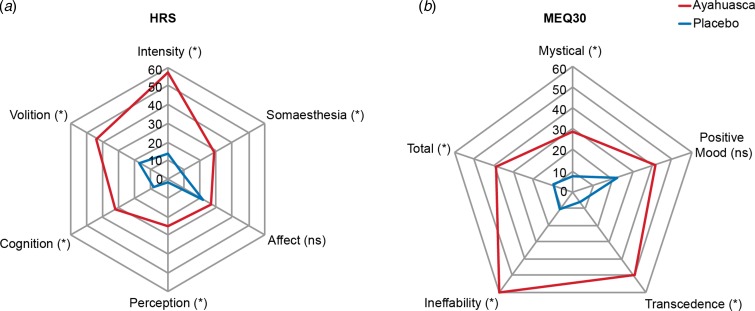
“However, somewhat higher ratings on the HRS and the mystical experience questionnaire after a single dose of ayahuasca have been reported as well in a clinical trial with depressed patients (Fernanda Palhano-Fontes et al., 2019).”
BackgroundZeifman, R. J., & Maia, L. O. (2023) · European Neuropsychopharmacology · doi:10.1016/j.euroneuro.2023.09.007 · Cited by 18
Falchi-Carvalho, M., Barros, H., Bolcont, R., Laborde, S., Wießner, I., Silva, S. R. B., Montanini, D., Barbosa, D. C., Teixeira, E., Florence-Vilela, R., et al. (2025) · Psychedelic Medicine · doi:10.1089/psymed.2024.0002 · Cited by 28
“4,5 The results from our Phase 2a and Phase 2b clinical trials with ayahuasca in treatment-resistant depression (TRD) have been remarkable, suggesting rapid and sustained antidepressant effects in individuals with TRD, 6 – 8 a condition notoriously challenging to manage.”
Self-citationPositioning rTMS Within a Sequential Treatment Algorithm of Depression
Kaster, T. S., & Blumberger, D. M. (2024) · American Journal of Psychiatry · doi:10.1176/appi.ajp.20240604 · Cited by 16
Zeng, Q.-B., Zou, D.-C., Huang, X., Shang, D., Huang, X., Yang, X.-H., Ning, Y.-P., Balbuena, L., Xiang, Y., & Zheng, W. (2024) · Journal of Affective Disorders · doi:10.1016/j.jad.2024.09.038 · Cited by 19
Ayahuasca: Pharmacology, Safety, and Therapeutic Effects
SANTOS, R. G. D., & Hallak, J. E. C. (2024) · Cambridge University Press eBooks · doi:10.1017/9781009585330.005 · Cited by 24
Self-citationIntegrating Psychedelic Medicines and Psychiatry: Theory and Methods of a Model Clinic
Sloshower, J. (2018) · Springer eBooks · doi:10.1007/978-3-319-76720-8_7 · Cited by 18
Oña, G., & Bouso, J. C. (2019) · Current Medicinal Chemistry · doi:10.2174/0929867326666191212103330 · Cited by 19
Effectiveness of Psilocybin on Depression: A Qualitative Study
Alshaikhli, H., Al-Naggar, R. A., & Erlam, G. D. (2021) · Electronic Journal of General Medicine · doi:10.29333/ejgm/10862 · Cited by 23
“Concerning the quality of life, 47% of psilocybin users in one study reported their peak experience in life (Maslow’s hierarchy of needs) occurred while using this drug [34].”
BackgroundEffect of Ritualistic Consumption of Ayahuasca on Hepatic Function in Chronic Users
Mello, S. M., Soubhia, P. C., Silveira, G. D. O., Correa-Netto, N. F., Lanaro, R., Costa, J. L., & Linardi, A. (2018) · Journal of Psychoactive Drugs · doi:10.1080/02791072.2018.1557355 · Cited by 19
“This effect remained for seven days after administration of ayahuasca when compared to patients receiving a placebo (Palhano-Fontes et al. 2018).”
Resultvan den Berg, M., Magaraggia, I., Schreiber, R., Hillhouse, T. M., & Porter, J. H. (2022) · Psychopharmacology · doi:10.1007/s00213-022-06106-8 · Cited by 13
Apud, I., Scuro, J., Carrera, I., & Oliveri, A. (2022) · Journal of Psychoactive Drugs · doi:10.1080/02791072.2022.2053004 · Cited by 25
Postpartum depression: A role for psychedelics?
Jairaj, C., & Rucker, J. (2022) · Journal of Psychopharmacology · doi:10.1177/02698811221093793 · Cited by 17
“More recently, a randomised placebo-controlled trial of a single dose of ayahuasca in 29 participants with treatment-resistant depression was reported (Palhano-Fontes et al., 2019).”
BackgroundNatural psychedelics in the treatment of depression; a review focusing on neurotransmitters
Jahanabadi, S., Amiri, S., Karkeh-abadi, M., & Razmi, A. (2023) · Fitoterapia · doi:10.1016/j.fitote.2023.105620 · Cited by 16
Rush, B. R., Marcus, O., García, S., Loizaga-Velder, A. K., Spitalier, A., & Mendive, F. M. (2023) · Journal of Studies on Alcohol and Drugs · doi:10.15288/jsad.23-00005 · Cited by 17
Wong, S., Yu, A. Y., Fabiano, N., Finkelstein, O., Pasricha, A., Jones, B. D. M., Rosenblat, J. D., Blumberger, D. M., Mulsant, B. H., & Husain, M. I. (2023) · Journal of Psychoactive Drugs · doi:10.1080/02791072.2023.2251133 · Cited by 17
Psychedelics, epilepsy, and seizures: a review
Freidel, N., Kreuder, L., Rabinovitch, B. S., Chen, F. Y., Huang, R. S., & Lewis, E. C. (2024) · Frontiers in Pharmacology · doi:10.3389/fphar.2023.1326815 · Cited by 18
Psychedelic Therapy: A Primer for Primary Care Clinicians—N,N-Dimethyltryptamine and Ayahuasca
Shinozuka, K., Tabaac, B. J., Arenas, A., Beutler, B. D., Cherian, K. N., Evans, V. D., Fasano, C., & Muir, O. S. (2024) · American Journal of Therapeutics · doi:10.1097/mjt.0000000000001725 · Cited by 21
Vohryzek, J., Cabral, J., Timmermann, C., Atasoy, S., Roseman, L., Nutt, D. J., Carhart-Harris, R. L., Deco, G., & Kringelbach, M. L. (2024) · National Science Review · doi:10.1093/nsr/nwae124 · Cited by 20
“Studies with Ayahuasca, containing DMT itself as well as monoamine oxidase inhibitors (MAOIs), have shown promising results in patients with depression [15 ].”
BackgroundBrain Networks, Neurotransmitters and Psychedelics: Towards a Neurochemistry of Self-Awareness
Mograbi, D. C., Rodrigues, R. F. S., Bienemann, B., & Huntley, J. D. (2024) · Current Neurology and Neuroscience Reports · doi:10.1007/s11910-024-01353-y · Cited by 22
“The past years have witnessed an acceleration in the research into the therapeutic potential of psychedelics, with relevant preliminary results for conditions such as depression (aya-huasca [12, 13], psilocybin [14, 15]), anxiety (LSD [16]), and trauma (MDMA [17, 18]).”
BackgroundGlynos, N. G., Huels, E. R., Groenhout, T., Raghu, A., Nelson, A. G., Kim, Y., Zeid, A. M., Liu, T., Mashour, G. A., Kennedy, R. T., et al. (2025) · Journal of Neuroscience · doi:10.1523/jneurosci.0742-24.2025 · Cited by 21
Psilocybin for depression: Considerations for clinical trial design
O’Donnell, K. C., Mennenga, S. E., & Bogenschutz, M. P. (2019) · Journal of Psychedelic Studies · doi:10.1556/2054.2019.026 · Cited by 18
Hallucinogens/psychedelics resurrected as new tools in psychiatric therapy
SANTOS, R. G. D., Bouso, J. C., & Hallak, J. E. C. (2020) · Brazilian Journal of Psychiatry · doi:10.1590/1516-4446-2020-1035 · Cited by 14
Self-citationWhole Organisms or Pure Compounds? Entourage Effect Versus Drug Specificity
Ribeiro, S. T. G. (2018) · Springer eBooks · doi:10.1007/978-3-319-76720-8_8 · Cited by 17
“With his team from the Federal University of Rio Grande do Norte, Araujo obtained excellent evidence that ayahuasca is quite useful in the effective care of treatment-resistant major depression in a randomized, placebo-controlled clinical trial (Palhano-Fontes et al., 2017).”
BackgroundAixalà, M., SANTOS, R. G. D., Hallak, J. E. C., & Bouso, J. C. (2018) · ACS Chemical Neuroscience · doi:10.1021/acschemneuro.8b00237 · Cited by 21
Self-citationMcCulloch, D., Knudsen, G., Barrett, F., Doss, M. K., Carhart-Harris, R. L., Rosas, F., Deco, G., Kringelbach, M., Preller, K., Ramaekers, J., et al. (2021) · Neuroscience and Biobehavioral Reviews · doi:10.31234/osf.io/64kyg · Cited by 106
Barnett (2024) · doi:10.1089/psymed.2023.0010 · Cited by 13
Brouns, E. J., Ekins, T. G., & Ahmed, O. J. (2025) · Psychedelics. · doi:10.61373/pp025r.0002 · Cited by 16
Erritzøe, D., Barba, T., Benway, T. A., Joel, Z., Good, M., Layzell, M., Baker-Jones, M., Campbell, G., Murphy-Beiner, A., Rands, P., et al. (2026) · Nature Medicine · doi:10.1038/s41591-025-04154-z · Cited by 22
Rossi, G. N., Rocha, J. M., Osório, F. D. L., Bouso, J. C., Oña, G., Silveira, G. D. O., Yonamine, M., Bertozi, G., Crevelin, E. J., Queiroz, M. E. C., et al. (2023) · Journal of Clinical Psychopharmacology · doi:10.1097/jcp.0000000000001691 · Cited by 13
“The ayahuasca dose (1 mL/kg) was chosen based on previous work by our group in which it had been proven to elicit psychotropic effects.(21,22) The Santo Daime church Rainha do Céu (“Queen of Heaven”) (Ribeirão Preto, Brazil) donated the single ayahuasca batch used during this trial.”
MethodSelf-citationSanchez, T. A., Ramos, L. R., Araujo, F., Schenberg, E. E., Yonamine, M., Lobo, I., de Araújo, D. B., & Luna, L. E. (2023) · Journal of Ethnopharmacology · doi:10.1016/j.jep.2023.117430 · Cited by 16
Self-citationAtiq, M. A., Baker, M. R., Voort, J. L. V., Vargas, M. V., & Choi, D. (2024) · Psychopharmacology · doi:10.1007/s00213-024-06599-5 · Cited by 18
“…al. 2022; Carhart-Harris et al. 2016; Davis et al. 2021; Ehrmann et al. 2022; Gasser et al. 2015; Griffiths et al. 2016; Johnson et al. 2017; Lee & Shlain 1992; Mithoefer et al. 2016; Moreno et al. 2006; Palhano-Fontes et al. 2019; Schmid et al. 2021; van der Meer et al. 2023; Zeifman et al. 2019).”
Fonseca, A. M., SANTOS, R. G. D., de Medeiros, L. S., Veiga, T. A. M., Cassas, F., Bruniera, C. P., Rossi, G. N., Bouso, J. C., Hallak, J. E. C., Santos, F. P., et al. (2024) · European Archives of Psychiatry and Clinical Neuroscience · doi:10.1007/s00406-024-01817-9 · Cited by 17
Self-citationStudy protocol for “Psilocybin in patients with fibromyalgia: brain biomarkers of action”
Bornemann, J., Close, J. B., Ahmad, K., Barba, T., Godfrey, K., Macdonald, L., Erritzøe, D., Nutt, D. J., & Carhart-Harris, R. L. (2024) · Frontiers in Psychiatry · doi:10.3389/fpsyt.2024.1320780 · Cited by 16
Pain and Perception: Exploring Psychedelics as Novel Therapeutic Agents in Chronic Pain Management
Strand, N. H., Whitney, M. A., Johnson, B. W., Dunn, T., Attanti, S., Maloney, J. A., Misra, L., Gomez, D., Viswanath, O., Emami, E., et al. (2025) · Current Pain and Headache Reports · doi:10.1007/s11916-024-01353-0 · Cited by 15
Ayahuasca and Childhood Trauma: Potential Therapeutic Applications
Perkins, D., & Sarris, J. J. (2021) · Springer eBooks · doi:10.1007/978-3-030-55688-4_6 · Cited by 15
Syd Barrett took a left turn and never came back, Andrew Voyce did. Why?
Hopkinson, P., Voyce, A., & Carson, J. F. (2021) · Mental Health and Social Inclusion · doi:10.1108/mhsi-06-2021-0031 · Cited by 14
Earleywine, M., Mian, M. N., Altman, B. R., & Leo, J. A. D. (2022) · Cannabis · doi:10.26828/cannabis/2022.02.02 · Cited by 12
Eller, S., Borges, G. R., Ossanes, D. S., Birk, L., Scheid, C., Yonamine, M., Grossi, P., Merib, J., & de Oliveira, T. F. (2020) · Forensic Science International · doi:10.1016/j.forsciint.2020.110298 · Cited by 14
Self-citationThe Potential Role of Serotonergic Hallucinogens in Depression Treatment
Psiuk, D., Nowak, E., Cholewa, K., Łopuszańska, U., & Samardakiewicz, M. (2021) · Life · doi:10.3390/life11080765 · Cited by 16
Human behavioral pharmacology of psychedelics
Strickland, J. C., & Johnson, M. W. (2022) · Advances in pharmacology · doi:10.1016/bs.apha.2021.10.003 · Cited by 16
Gómez-Busto, F. J., & Ortiz, M. I. (2020) · PubMed Central · doi:10.36131/cnfioritieditore20200606 · Cited by 12
“Psilocybin has been found to have a lower rate of adverse reactions compared to ayahuasca, which frequently cause nausea and vomiting (Palhano-Fontes et al., 2019).”
BackgroundMethodPsychedelic medicines for mood disorders: current evidence and clinical considerations.
Sarris, J. J., Rubiano, D. P., Day, K., Coelho, N. L. G., & Perkins, D. (2022) · PubMed · doi:10.1097/yco.0000000000000759 · Cited by 12
“48] have prompted human and animal studies exploring its antidepressant’s effects, which have revealed an alacrity in response, even after a single dose of treatment [49,50].”
BackgroundProphylactic action of ayahuasca in a non-human primate model of depressive-like behavior
Grilo, M. L. P. D. M., de Sousa, G. M., de Mendonça, L. A. C., Soares, B. L., de Sousa, M. B. C., Palhano-Fontes, F., de Araújo, D. B., Perkins, D., Hallak, J. E. C., & Coelho, N. L. G. (2022) · Frontiers in Behavioral Neuroscience · doi:10.3389/fnbeh.2022.901425 · Cited by 18
“Moreover, some clinical trials and animal models studies have reported the antidepressant action of ayahuasca (de Osório et al., 2015; Sanches et al., 2016; Palhano-Fontes et al., 2019).”
ResultSelf-citationLi, X., Yan, D., Liao, M., Zhang, L., Li, Z., Liu, B., Chen, Y., Zhang, Y., Liu, J., & Li, L. (2023) · Frontiers in Psychiatry · doi:10.3389/fpsyt.2023.1163754 · Cited by 15
Psychedelic science and Indigenous shamanism: an urgent dialogue
Omágua-Kambeba, A., Labate, B. C., & Ribeiro, S. T. G. (2023) · Nature Mental Health · doi:10.1038/s44220-023-00150-9 · Cited by 12
Breau, J. A., & Gillis‐Smith, P. (2023) · Interdisciplinary Science Reviews · doi:10.1080/03080188.2023.2266322 · Cited by 16
Psychedelic Therapy: A Primer for Primary Care Clinicians—Historical Perspective and Overview
Tabaac, B. J., Shinozuka, K., Arenas, A., Beutler, B. D., Cherian, K. N., Evans, V. D., Fasano, C., & Muir, O. S. (2024) · American Journal of Therapeutics · doi:10.1097/mjt.0000000000001727 · Cited by 15
Krupp, K. T., Yaeger, J. D. W., Ledesma, L. J., Withanage, M. H. H., Gale, J., Howe, C. B., Allen, T. J., Sathyanesan, M., Newton, S. S., & Summers, C. H. (2024) · Neuropharmacology · doi:10.1016/j.neuropharm.2024.109949 · Cited by 13
Efficacy, Safety, and Tolerability of Psychedelics in Treatment-Resistant Depression (TRD)
Olivier, B., & Olivier, J. D. A. (2024) · Advances in experimental medicine and biology · doi:10.1007/978-981-97-4402-2_3 · Cited by 14
What should constitute a control condition in psychedelic drug trials?
Colloca, L., & Fava, M. (2024) · Nature Mental Health · doi:10.1038/s44220-024-00321-2 · Cited by 17
“This may have led some participants to believe that they had taken ayahuasca, resulting in a larger therapeutic effect in the ayahuasca trial 83 than in the psilocybin trial 5 .”
Soares, C., Lima, G., Pais, M. L., Teixeira, M., Cabral, C., & Castelo-Branco, M. S. (2024) · Frontiers in Pharmacology · doi:10.3389/fphar.2024.1454628 · Cited by 15
A landscape analysis of psychedelic retreat organizations advertising online
Neitzke‐Spruill, L., Beit, C. S., Robinson, J. O., Singh, N., Kambala, S., Ramesh, R., & McGuire, A. L. (2025) · PLoS ONE · doi:10.1371/journal.pone.0321648 · Cited by 15
Psychedelic neuroplasticity of cortical neurons lacking 5-HT2A receptors
Ekins, T. G., Rybicki-Kler, C., Deng, T., Brooks, I. A. W., Jedrasiak‐Cape, I., Donoho, E., & Ahmed, O. J. (2025) · Molecular Psychiatry · doi:10.1038/s41380-025-03257-w · Cited by 22
Nižňanský, Ľ., Nižnanská, Ž., Kuruc, R., Szórádová, A., Šikuta, J., & Zummerová, A. (2022) · Journal of Clinical Medicine · doi:10.3390/jcm11041147 · Cited by 16
“Multiple studies suggest that the use of ayahuasca may be beneficial for people with mood disorders, depression, anxiety or post-traumatic stress disorder [61,70].”
BackgroundSocial Psychopharmacology: Novel Approaches to Treat Deficits in Social Motivation in Schizophrenia
Bershad, A. K., & de Wit, H. (2023) · Schizophrenia Bulletin · doi:10.1093/schbul/sbad094 · Cited by 12
Silveira, G. D. O., Lourenço, F. R., Bruno, V., & Yonamine, M. (2020) · Frontiers in Chemistry · doi:10.3389/fchem.2020.558501 · Cited by 14
Self-citationKojic, M., Saelens, J., Kadriu, B., Zarate, C. A., & Kraus, C. (2022) · Current topics in behavioral neurosciences · doi:10.1007/7854_2022_313 · Cited by 13
Psychiatry might need some psychedelic therapy
Johnson, M. W. (2018) · International Review of Psychiatry · doi:10.1080/09540261.2018.1509544 · Cited by 17
“, 2016), treatment-resistant depression (Carhart-Harris et al., 2016; Palhano-Fontes et al., 2018), tobacco addiction (Johnson, Garcia-Romeu, Cosimano, & Griffiths, 2014; Johnson, Garcia-Romeu, & Griffiths, 2017), and alcohol addiction (Bogenschutz et al.”
Johansen, L., Liknaitzky, P., Nedeljkovic, M., Mastin-Purcell, L., & Murray, G. (2022) · Systematic Reviews · doi:10.1186/s13643-022-01930-7 · Cited by 11
“Similar reductions in depression symptoms have been described with ayahuasca, a brew containing DMT from the Psychotria viridis plant and monoamine oxidase inhibitors from the Banisteriopsis caapi vine (19-21).”
BackgroundChaves, C., SANTOS, R. G. D., Dursun, S. M., Tusconi, M., Carta, M. G., Brietzke, E. M., & Hallak, J. E. C. (2024) · Frontiers in Psychiatry · doi:10.3389/fpsyt.2024.1485337 · Cited by 15
Self-citation
Metadata
- Authors
- Palhano-Fontes, F., Barreto, D., Onias, H., Andrade, K. C., Novaes, M. M., Pessoa, J. A., Mota-Rolim, S. A., Osório, F. L., Sanches, R., dos Santos, R. G., Tófoli, L. F., de Oliveira Silveira, G., Yonamine, M., Riba, J., Santos, F. R., Silva-Junior, A. A., Alchieri, J. C., Galvão-Coelho, N. L., Lobão-Soares, B., Hallak, J. E. C., Arcoverde, E., Maia-de-Oliveira, J. P., & Araújo, D. B.
- Affiliations
- Universidade Federal do Rio Grande do Norte (BR)
- Universidade de São Paulo (BR)
- Universidade Estadual de Campinas (UNICAMP) (BR)
- Corresponding author
- Araújo, Dráulio B.
- ORCID
- Venue
- Psychological Medicine
- Publisher
- Cambridge University Press (CUP)
- Published
- 2018-06-15
- Volume
- 49
- Issue
- 4
- Pages
- 655-663
- ISSN
- 0033-2917 (ISSN-L)
- 1469-8978
- PMC
- PMC6378413
- OpenAlex
- W2952169207
- Semantic Scholar
- 8e6a44612a52817ea7aa6d429c7bebd0e4d85192
- Cited by
- 852
- References
- 55
- Citations by year
- 2026: 93 · 2025: 98 · 2024: 142 · 2023: 124 · 2022: 131 · 2021: 116 · 2020: 77 · 2019: 45 · 2018: 22
- FWCI
- 76.38
- Type
- journal article
- Language
- en
- Open access
- hybrid
- doi.org
- Locations
- Psychological Medicine (publishedVersion, cc-by)
- bioRxiv (Cold Spring Harbor Laboratory) (acceptedVersion)
- Europe PMC (PubMed Central) (publishedVersion, cc-by)
- PubMed Central (publishedVersion, cc-by)
- PubMed (publishedVersion)
- Americanae (AECID Library) (publishedVersion, other-oa)
- LA Referencia (Red Federada de Repositorios Institucionales de Publicaciones Científicas) (publishedVersion, other-oa)
- Funders
- Coordenação de Aperfeiçoamento de Pessoal de Nível Superior (#1677/2012, 1577/2013)
- Conselho Nacional de Desenvolvimento Científico e Tecnológico (466760/2014, #479466/2013)
- Universidade Federal do Rio Grande do Norte
- Topics
- Social Sciences › Psychology › Clinical Psychology › Psychedelics and Drug Studies
- Health Sciences › Medicine › Pharmacology (medical) › Treatment of Major Depression
- Life Sciences › Neuroscience › Biological Psychiatry › Tryptophan and brain disorders
- Keywords
- ayahuasca, treatment-resistant depression, antidepressant effects, psychedelics, single-dose administration, depression remission
- MeSH terms
- Adult, Antidepressive Agents, Double-Blind Method, Female, Hallucinogens, Humans, Male, Phytotherapy, Psychiatric Status Rating Scales, Time Factors, Treatment Outcome, Banisteriopsis, Depressive Disorder, Treatment-Resistant
About these checks
Registry, retraction, Cites and statistics results are computed, not judged, with one exception: a printed reference that no index lists is read once by a model before it counts as a citation error. Claims are extracted by a model and kept only when their quote appears verbatim in the text; each cited source is then checked, with a model’s help, for whether it says what the claim relies on. Those verdicts can be wrong — read the claim’s quote and the cited source before relying on one.
Statistics and arithmetic are recomputed, not judged.
Confidence bands are shown only for fields calibrated on our annotated test set. None is calibrated yet, so no band is shown.
What counts as a claim ›How we measure confidence ›How we check this ›
Are you an author, or do you see a problem with this page? Request a review
Data sources
Bibliographic data: Semantic Scholar, OpenAlex, Crossref.
Contains information from the Semantic Scholar Academic Graph Datasets, made available under the ODC Attribution License (ODC-BY 1.0).
Semantic Scholar’s data is described in: Kinney, R., et al. (2023). The Semantic Scholar Open Data Platform. arXiv:2301.10140.
