

Rapid antidepressant effects of the psychedelic ayahuasca in treatment-resistant depression: a randomized placebo-controlled trial
Open accessPublished version of a preprint
The DOI matches its Crossref record; 55 of the 55 references it cites were found in a registry or an index.
Abstract
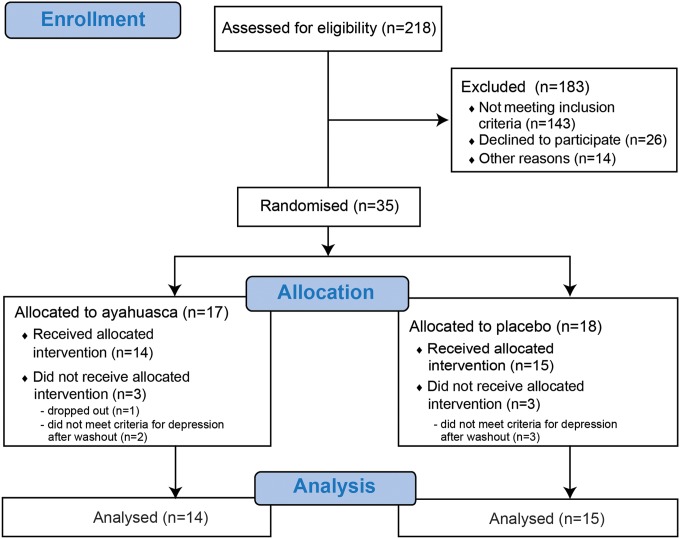
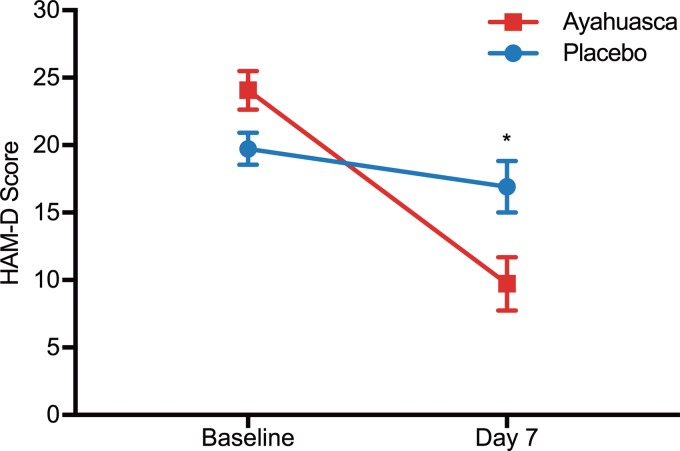
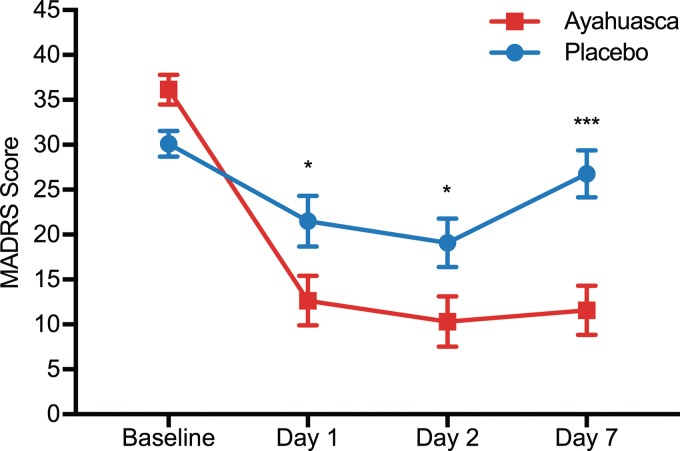
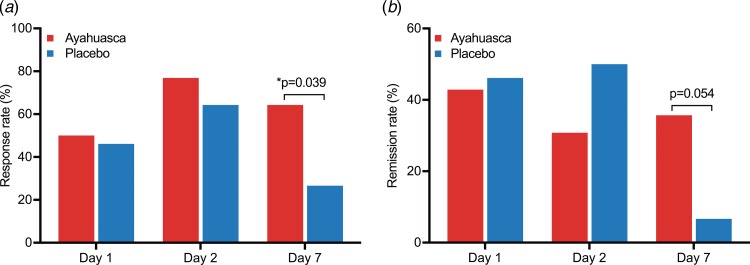
Background: Recent open-label trials show that psychedelics, such as ayahuasca, hold promise as fast-onset antidepressants in treatment-resistant depression. Methods: To test the antidepressant effects of ayahuasca, we conducted a parallel-arm, double-blind randomized placebo-controlled trial in 29 patients with treatment-resistant depression. Patients received a single dose of either ayahuasca or placebo. We assessed changes in depression severity with the Montgomery-Åsberg Depression Rating Scale (MADRS) and the Hamilton Depression Rating scale at baseline, and at 1 (D1), 2 (D2), and 7 (D7) days after dosing. Results: We observed significant antidepressant effects of ayahuasca when compared with placebo at all-time points. MADRS scores were significantly lower in the ayahuasca group compared with placebo at D1 and D2 ( p = 0.04), and at D7 ( p < 0.0001). Between-group effect sizes increased from D1 to D7 (D1: Cohen's d = 0.84; D2: Cohen's d = 0.84; D7: Cohen's d = 1.49). Response rates were high for both groups at D1 and D2, and significantly higher in the ayahuasca group at D7 (64% v. 27%; p = 0.04). Remission rate showed a trend toward significance at D7 (36% v. 7%, p = 0.054). Conclusions: To our knowledge, this is the first controlled trial to test a psychedelic substance in treatment-resistant depression. Overall, this study brings new evidence supporting the safety and therapeutic value of ayahuasca, dosed within an appropriate setting, to help treat depression. This study is registered at http://clinicaltrials.gov (NCT02914769).
Overview
The claims and statistics of this paper haven’t been checked yet.
Free: it reads the open-access text and checks the first 5 claims that cite a source we can check. Create a free account to check every claim.
Integrity signals
Registry
Cites
Statistics
Figures
Verification
Claims the paper makes
The claims and statistics of this paper haven’t been checked yet.
Free: it reads the open-access text and checks the first 5 claims that cite a source we can check. Create a free account to check every claim.
Claims other papers make about this one
Each is checked against this paper’s own text: does it say what the citing paper says it does?
The cited source doesn’t support the claim as written.
In the citing paper
“overall psychiatric scales in the ayahuasca group were significatively higher than those in the placebo group in all time points after dosing.”
From Virtual reality and psychedelics for the treatment of psychiatric disease: A systematic literature review (2020) · doi:10.36131/cnfioritieditore20200606 · cites this paper as Palhano-Fontes et al. (2019)
Checked by a reasoning model — may be wrong.
Experimental — accuracy not yet measuredThe source backs part of the claim, not all of it — or backs it for a different population, condition or comparison.
In the citing paper
“Ayahuasca stimulates emotional dream-like experiences involving potent cognitive-affective changes and spiritual insights (Dobkin de Rios, 1971) that have been associated with substantial and enduring antidepressant effects (Palhano-Fontes et al., 2019; Weiss et al., 2021).”
From Prospective examination of the therapeutic role of psychological flexibility and cognitive reappraisal in the ceremonial use of ayahuasca (2022) · cites this paper as Palhano-Fontes et al., 2019
Experimental — accuracy not yet measuredThe source backs part of the claim, not all of it — or backs it for a different population, condition or comparison.
In the citing paper
“Ayahuasca, or its chemical equivalent known as pharmahuasca, has emerged as a tool for psychotherapy in the contexts of affective and substance use disorders [130,131], thus calling for a better understanding of its possible mechanisms of action.”
From Molecular and Functional Imaging Studies of Psychedelic Drug Action in Animals and Humans. (2021) · cites this paper as [130]
Experimental — accuracy not yet measuredThe source backs part of the claim, not all of it — or backs it for a different population, condition or comparison.
In the citing paper
“Moreover, comorbid conditions such as suicidality and substance use disorders further complicate research efforts (13, 18, 20, 21).”
From Psychoanalytically informed MDMA-assisted therapy for pathological narcissism: a novel theoretical approach (2025) · cites this paper as [20]
Experimental — accuracy not yet measuredThe source backs part of the claim, not all of it — or backs it for a different population, condition or comparison.
In the citing paper
“Ayahuasca has been demonstrated to be safe in naturalistic (35, 108) and clinical settings, across varying dosages and multiple administrations (26, 109–112).”
From Ayahuasca-assisted meaning reconstruction therapy for grief: a non-randomized clinical trial protocol (2025) · cites this paper as [26]
Experimental — accuracy not yet measured
16 more claims about this paper
Create a free account to see every claim other papers make about this one.
Self-check
Percentages, sums and reported differences re-computed from the paper’s own numbers.
The self-check needs the paper’s full text.
Citations
Cites
Hamilton, M. (1960) · Journal of Neurology, Neurosurgery & Psychiatry · doi:10.1136/jnnp.23.1.56 · Cited by 32,817 · cited 1×
“HAM-D was applied only at baseline and D7, as it was designed to access depression symptoms present in the last week (Hamilton, 1960).”
MethodAntidepressant effects of ketamine in depressed patients
Berman, R. M., Cappiello, A., Anand, A., Oren, D. A., Heninger, G. R., Charney, D. S., & Krystal, J. H. (2000) · Biological Psychiatry · doi:10.1016/s0006-3223(99)00230-9 · Cited by 3,856 · cited 7×
“While we find a response rate to placebo of 46% at D1, and 26% at D7, ketamine trials have found a placebo effect of the order of 0 – 6% at D1, and 0 – 11% at D7 (Berman et al. , 2000; Zarate et al. , 2006; Murrough et al. , 2013; Lapidus et al. , 2014).”
BackgroundInfluentialA randomized trial of an N-methyl-D-aspartate antagonist in treatment-resistant major depression.
Zarate, C. A., Singh, J. B., Carlson, P. J., Brutsche, N. E., Ameli, R., Luckenbaugh, D. A., Charney, D. S., & Manji, H. K. (2006) · Archives of General Psychiatry · doi:10.1001/archpsyc.63.8.856 · Cited by 3,766 · cited 4×
“At D7, the ketamine response rate ranges between 7 and 35% (Berman et al., 2000; Zarate et al., 2006; Murrough et al., 2013; Lapidus et al., 2014), while in our study 64% responded to ayahuasca.”
BackgroundInfluentialOtte, C., Gold, S. M., Penninx, B. W., Pariante, C. M., Etkin, A., Fava, M., Mohr, D. C., & Schatzberg, A. F. (2016) · Nature Reviews Disease Primers · doi:10.1038/nrdp.2016.65 · Cited by 2,269 · cited 2×
“We recently found that a single ayahuasca session in patients with depression increases blood flow in brain regions consistently implicated in the regulation of mood and emotions, such as the left nucleus accumbens, right insula and left subgenual area (Otte et al. , 2016; Sanches et al. , 2016).”
BackgroundGriffiths, R. R., Johnson, M. W., Carducci, M. A., Umbricht, A., Richards, W. A., Richards, B. D., Cosimano, M. P., & Klinedinst, M. A. (2016) · Journal of Psychopharmacology · doi:10.1177/0269881116675513 · Cited by 2,201
Nichols, D. E. (2016) · Pharmacological Reviews · doi:10.1124/pr.115.011478 · Cited by 1,762
Ross, S., Bossis, A., Guss, J., Agin-Liebes, G., Malone, T., Cohen, B., Mennenga, S. E., Belser, A., Kalliontzi, K., Babb, J., et al. (2016) · Journal of Psychopharmacology · doi:10.1177/0269881116675512 · Cited by 1,698 · cited 4×
“Prior studies suggest that elements of the psychedelic experience, such as experiences of mystical-type, account for the therapeutic benefit (Bogenschutz et al., 2015; Garcia-Romeu et al., 2015; Majić et al., 2015; Griffiths et al., 2016; Ross et al., 2016).”
BackgroundInfluentialCarhart-Harris, R. L., Bolstridge, M., Rucker, J., Day, C. M. J., Erritzoe, D., Kaelen, M., Bloomfield, M., Rickard, J. A., Forbes, B., Feilding, A., et al. (2016) · The Lancet Psychiatry · doi:10.1016/s2215-0366(16)30065-7 · Cited by 1,540 · cited 4×
“substances affect the brain, and also probing their potential in treating different psychiatric conditions, including mood disorders (Grob et al., 2011; Osório et al., 2015; Carhart-Harris et al., 2016; Griffiths et al., 2016; Ross et al., 2016; Sanches et al., 2016).”
BackgroundResultInfluentialThe default mode network and self-referential processes in depression
Sheline, Y. I., Barch, D. M., Price, J. L., Rundle, M. M., Vaishnavi, S. N., Snyder, A. Z., Mintun, M. A., Wang, S., Coalson, R. S., & Raichle, M. E. (2009) · Proceedings of the National Academy of Sciences · doi:10.1073/pnas.0812686106 · Cited by 1,480 · cited 2×
“Moreover, we have shown that ayahuasca reduces the activity of the Default Mode Network (Palhano-Fontes et al. , 2015), a brain network found to be hyperactive in depression (Sheline et al. , 2009).”
BackgroundPilot Study of Psilocybin Treatment for Anxiety in Patients With Advanced-Stage Cancer
Grob, C. S., Danforth, A. L., Chopra, G. S., Hagerty, M., McKay, C. R., Halberstadt, A. L., & Greer, G. R. (2011) · Archives of General Psychiatry · doi:10.1001/archgenpsychiatry.2010.116 · Cited by 1,206 · cited 2×
“…exploring how these substances affect the brain, and also probing their potential in treating different psychiatric conditions, including mood disorders (Grob et al. , 2011; Osório et al. , 2015; Carhart-Harris et al. , 2016; Griffiths et al. , 2016; Ross et al. , 2016; Sanches et al. , 2016).”
Background
Research works printed but not linked: 3
- World Health Organization (2017) Depression and Other Common Mental Disorders: Global Health Estimates. Rep. CC BY-NC-SA 3.0 IGO. Geneva: World Health Organization.
- Tafur J (2017) The Fellowship of the River: A Medical Doctor's Exploration into Traditional Amazonian Plant Medicine. Espiritu, Phoenix.
- Luna LE (2011) Indigenous and Mestizo use of Ayahuasca. An Overview. The Ethnopharmacology of Ayahuasca. Tivandrum: Transworld Research Network.
Cited by
Items 701–800 of 850
Silveira, G. D. O. (2020) · Digital Library of Theses and Dissertations (Universidade de São Paulo) · doi:10.11606/t.9.2020.tde-25082022-101857
Klassieke psychedelica als behandeling voor depressie: waar staan we vandaag?
Slechten, F., & Hert, M. D. H. M. D. (2022) · Tijdschrift voor Geneeskunde · doi:10.47671/tvg.78.22.075
Natural Hallucinogens in Mental Health
SANTOS, R. G. D., & Hallak, J. E. C. (2022) · Psychoactives · doi:10.3390/psychoactives1020009
Self-citationSubstâncias psicotrópicas de origem natural: o que os usuários encontram na internet?
Lopes, J. P., Neto, J. A. R. S., & Mendes, F. R. (2022) · Vigilância Sanitária em Debate · doi:10.22239/2317-269x.02066
VIAJES DE AYAHUASCA DESDE LA REPÚBLICA CHECA
Horák, M., Segovia, E. M., & Salinas, S. (2020) · doi:10.11118/978-80-7509-737-8-0080
HABILIDADES COGNITIVAS DE ADEPTOS DA DOUTRINA DO SANTO DAIME
FONSECA, A. M., Marteleto, M. R. F., & SCHOEN, T. H. (2022) · Editora Científica Digital eBooks · doi:10.37885/220910296
РЕНЕСАНС ПСИХОДЕЛІЧНОЇ ТЕРАПІЇ ТА ЇЇ ЗНАЧЕННЯ ДЛЯ УКРАЇНИ
Matrenitsky, V. L. (2022) · Likarska sprava · doi:10.31640/2706-8803-2022-(3-4)-04 · Cited by 3
Processos Neuropsicológicos: uma abordagem do desenvolvimento - Volume 2
Fonseca, A. M., Marteleto, M. R. F., & Schöen, T. H. (2022) · Editora Científica Digital eBooks · doi:10.37885/978-65-5360-206-9
Therapeutic Choice in the SUDs Treatment
Horák, M., & Verter, N. (2022) · Springer eBooks · doi:10.1007/978-3-031-16459-0_17
IsHak, W. W., Magakian, N., Ishak, W. W., Mikhail, A. A., & Lim, R. F. (2023) · Springer eBooks · doi:10.1007/978-3-031-15401-0_25
Neue und experimentelle medikamentöse Therapieverfahren
Mertens, L. J., Hart, X. M., Scharf, D., Spangemacher, M., & Gründer, G. (2022) · Springer eBooks · doi:10.1007/978-3-662-65734-8_11
Ayahuasca in the treatment of bipolar disorder with psychotic features–A retrospective case studyPreprint
Turkia, M. (2023) · PsyArXiv (OSF Preprints) · doi:10.31234/osf.io/65se9 · Cited by 2
Perkins, D., Ruffell, S., & Sarris, J. J. (2023) · Oxford University Press eBooks · doi:10.1093/med/9780192863607.003.0006
A UTILIZAÇÃO DA AYAHUASCA NO TRATAMENTO DE PERTURBAÇÕES PSIQUIÁTRICAS: UMA REVISÃO DA LITERATURA
Boas, J. M. D. B. V. V. (2023) · Revista Contemporânea · doi:10.56083/rcv3n4-026 · Cited by 1
Aplicações terapêuticas e benéficas do LSD: uma revisão sistemática
Marson, M. A. G., Neto, J. V. D. P., Zaniratto, J., & Borges, K. K. (2023) · Peer Review · doi:10.53660/516.prw1503b
Montgomery, C., Amaya, I. A., & Schmidt, T. T. (2023) · PsyArXiv (OSF Preprints) · doi:10.31234/osf.io/s6dnr · Cited by 1
Becher, L., Nanni, F., & Koslowski, M. (2023) · Nervenheilkunde · doi:10.1055/a-2101-9358 · Cited by 1
“unverblindete Studien [36, 41, 60, 72], unkontrollierte Studiendesigns [36, 41, 72], eine geringe Stichprobengröße [36, 42, 45, 73] und statistische Schwächen [46, 74].”
BackgroundInfluentialExperiencias psicodélicas: fenomenología, potenciales terapéuticos y modelos explicativos
Chernoff, T., Kliger, B., & Venturini, D. H. (2023) · Vertex Revista Argentina de Psiquiatría · doi:10.53680/vertex.v34i160.463 · Cited by 2
Klassieke psychedelica: veiligheid, neveneffecten en medicatie-interacties
Geleyn, E., Kuypers, K. P. C., Seynaeve, M., & Lemmens, G. M. D. (2023) · Tijdschrift voor Geneeskunde · doi:10.47671/tvg.79.23.049
Classical psychedelics in psychiatry – renaissance of interest and therapeutic perspectives
Jachimowski, A., & Kucia, K. A. (2023) · Psychiatria Polska · doi:10.12740/pp/150053
On the application of Machine Learning and Complex Networks to Neuroscience
Alves, C. L. (2023) · Digital Library of Theses and Dissertations (Universidade de São Paulo) · doi:10.11606/t.55.2023.tde-31082023-145944
EVALUATION OF THE THERAPEUTIC NEUROTOXIC EFFECTS OF THE USE OF AYAHUASCA BY DEPRESSIVE PATIENTS
Murucci, C. R. D., de Freitas, R. D. C. R. Q., Viana, G. R., Martins, T. D. A., Tosta, A., Amaro, A. G. V., Rapagnã, L. C., Queiroz, M. S. R., da Silva, G. V., & de Souza, C. (2023) · Revista Contemporânea · doi:10.56083/rcv3n9-011
Psilocybin Use in Palliative Care #464
Sims, M. D., & Hendrick, J. (2023) · Journal of Palliative Medicine · doi:10.1089/jpm.2023.0180
Dubbini, A. (2023) · OBM Integrative and Complementary Medicine · doi:10.21926/obm.icm.2303035
Canale, L., Raval, D., Chatha, P., Penn, K., Weber, C. G., Stout, C., & Weleff, J. (2023) · American Journal of Psychiatry Residents Journal · doi:10.1176/appi.ajp-rj.2023.190103
Medicalisation of Ayahuasca as a Depression Treatment: Cultural Reductivism and Biopiracy Concerns
Cordeiro, E. G. (2023) · The Maastricht Journal of Liberal Arts · doi:10.26481/mjla.2023.v14.912 · Cited by 1
(2021) · Romanian Journal of Psychiatry & Psychotherapy · doi:10.37897/rjpp.2021.3.3
“Nausea and vomiting were common side effects reported by participants [45].”
AYAHUASCA POSSUI EFEITO ANTIDEPRESSIVO?
Júnior, J. R. D. O. (2023) · Editora Omnis Scietia eBooks · doi:10.47094/978-65-81609-96-2/1191-1200
Can ayahuasca reduce inattention, hyperactivity and impulsivity? A pilot study
Tsang, W., Ruffell, S., Netzband, N., Jong, A., Rucker, J., Deeley, Q., & Hollingdale, J. (2023) · Drug Science Policy and Law · doi:10.1177/20503245231215413 · Cited by 1
“It should be noted that these studies were based on small sample sizes, and, to date, there has only been one placebo-controlled trial exploring ayahuasca ’ s effects on depressive symptoms (Palhano-Fontes et al., 2019).”
BackgroundAndando pelo Caminho Vermelho: por uma contracolonização do corpo
Caravita, R. I. (2022) · doi:10.47749/t/unicamp.2022.1251112
A relação entre os processos migratórios e o Santo Daime
Meneses, C. S., Teixeira, F., & Morato, R. B. D. S. (2023) · OBSERVATÓRIO DE LA ECONOMÍA LATINOAMERICANA · doi:10.55905/oelv21n11-119
The Effectiveness of Drug Treatment for Depressive Symptoms
Xu, X. (2023) · Journal of Education Humanities and Social Sciences · doi:10.54097/ehss.v22i.13058
“Palhano-Fontes and colleagues selected 18 - to 60-year-old major depressive disorder individuals as subjects, and assessed the impact of ayahuasca using MADRS as an additional measure and HAM-D (a scale used to identify depression symptoms) as the main result measure [10].”
MethodSantos, F. P. (2023) · Digital Library of Theses and Dissertations (Universidade de São Paulo) · doi:10.11606/d.9.2023.tde-12122023-105953
Self-citationBreeksema, J. J. (2024) · University of Groningen research database (University of Groningen / Centre for Information Technology) · doi:10.33612/diss.912040905 · Cited by 1
The Role of Rapid-Acting Antidepressants in Suicidal Crisis Management
Lengvenytė, A., Sarchiapone, M., Iosue, M., & Courtet, P. (2024) · Cambridge University Press eBooks · doi:10.1017/9781009067287.016
Masking influences: A systematic review of placebo control and blinding in psychedelic studiesPreprint
Barstowe, A., & Kajonius, P. (2024) · Research Square · doi:10.21203/rs.3.rs-3973393/v1
Introduction to the EMBARK Approach
Brennan, B., & Belser, A. (2024) · Oxford University Press eBooks · doi:10.1093/9780197762622.003.0003
Brennan, B., & Belser, A. (2024) · Oxford University Press eBooks · doi:10.1093/9780197762622.003.0006
Bringing It Home and Carrying It Forward
Brennan, B., & Belser, A. (2024) · Oxford University Press eBooks · doi:10.1093/9780197762622.003.0009
Considerations Prior to Meeting With a Participant
Brennan, B., & Belser, A. (2024) · Oxford University Press eBooks · doi:10.1093/9780197762622.003.0005
INTRODUCTION: A New Approach for the Whole Person
Brennan, B., & Belser, A. (2024) · Oxford University Press eBooks · doi:10.1093/9780197762622.003.0001
Choosing Suggested Integration Goals
Brennan, B., & Belser, A. (2024) · Oxford University Press eBooks · doi:10.1093/9780197762622.005.0004
Working Within the EMBARK Domains Cheat Sheet
Brennan, B., & Belser, A. (2024) · Oxford University Press eBooks · doi:10.1093/9780197762622.005.0003
Brennan, B., & Belser, A. (2024) · Oxford University Press eBooks · doi:10.1093/9780197762622.003.0007
Brennan, B., & Belser, A. (2024) · Oxford University Press eBooks · doi:10.1093/9780197762622.005.0002
An Overview of Psychedelic-Assisted Therapy
Brennan, B., & Belser, A. (2024) · Oxford University Press eBooks · doi:10.1093/9780197762622.003.0002
Personal Care for the Therapist
Brennan, B., & Belser, A. (2024) · Oxford University Press eBooks · doi:10.1093/9780197762622.005.0001
Brennan, B., & Belser, A. (2024) · Oxford University Press eBooks · doi:10.1093/9780197762622.003.0008
Brennan, B., & Belser, A. (2024) · Oxford University Press eBooks · doi:10.1093/9780197762622.002.0004
EMBARK Mechanisms of Change in the Treatment of Depression
Brennan, B., & Belser, A. (2024) · Oxford University Press eBooks · doi:10.1093/9780197762622.003.0004
Psychedelics: The New Kid on the Block
Ghosh, P., & Desousa, A. (2024) · Annals of Indian Psychiatry · doi:10.4103/aip.aip_195_23
Therapeutics Uses of Psychedelics in patients with psychiatric disorders A Systematic Review
Nawaz, S., Althwanay, A. M., AlEdani, E. M., Kaur, H., Kasapoglu, M., Yadavalli, R., & Yu, A. K. (2024) · Journal For International Medical Graduates · doi:10.56570/jimgs.v1i1.155 · Cited by 1
Uso da ayahuasca no tratamento da depressão
Alves, R. D., da Silva, E. F., Fernandes, M. L. D. S., da Silva, J. J. C., & Silvestre, J. S. (2021) · RCMOS - Revista Científica Multidisciplinar O Saber · doi:10.51473/rcmos.v1i11.2021.178
SANTOS, R. G. D., & Hallak, J. E. C. (2024) · Elsevier eBooks · doi:10.1016/b978-0-443-18496-3.00015-x
Self-citationAyahuasca e saúde mental: efeitos do seu uso associado a casos de depressão
dos Santos, L. D., & Garcia, W. P. (2023) · Estudos Interdisciplinares em Psicologia · doi:10.5433/2236-6407.2023.v14.47818 · Cited by 2
“Encontra-se em Palhano-Fontes et al. (2019), e em outros estudos analisados, a sugestão de que o contexto do uso da ayahuasca, que compõe a experiência ritualística/psicodélica, pode favorecer os efeitos terapêuticos do uso da bebida indicando que o consumo no contexto religioso pode influenciar…”
BackgroundTeixeira, F. (2024) · Revista Ouricuri · doi:10.59360/ouricuri.vol14.i1.a18806
Treatment-Resistant Depression: Pharmacological Approach
Díaz, A. P., Quevedo, J., Sanches, M., & Soares, J. C. (2024) · Cambridge University Press eBooks · doi:10.1017/9781108973922.020
Fármacos enteógenos y la depresión resistente al tratamiento: Una revisión narrativa
Herrera-Solís, A., Morelos, J. C., Ruiz‐Contreras, A. E., Méndez‐Díaz, M., Ortega-Gómez, A., & Prospero-Garcia, O. E. (2024) · PSICUMEX · doi:10.36793/psicumex.v14i1.628 · Cited by 1
Ramarushton, B. (2024) · University of North Texas Digital Library (University of North Texas) · doi:10.12794/metadc2332656
Holas, P., & Kamińska, J. (2024) · Research Square · doi:10.21203/rs.3.rs-4860906/v1
Mattu, J., & Sullivan, J. A. (2024) · Oxford University Press eBooks · doi:10.1093/oso/9780192898371.003.0007
The Use of Psychedelics as an Adjunct to Psychotherapy: An overview
Watt, J. S. (2024) · Psychotherapie-Wissenschaft · doi:10.30820/1664-9583-2024-2-53
Trinca, V., Silva, S. R., Almeida, J. V. A., Miranda, V. F. O., Costa-Macedo, J. V., Carnaval, T. K. B. A., de Araújo, D. B., Prosdocimi, F., & Varani, A. M. (2024) · Functional & Integrative Genomics · doi:10.1007/s10142-024-01511-y
“Indeed, research based on the DMT from Jurema-Preta could pave the way for new, evidence-based treatments for a range of psychiatric conditions (Palhano-Fontes et al. 2019; Maia et al. 2023).”
Self-citationAyahuasca Retreats: The Role of Awe and Mystical Experiences in Well-Being
Maclean, B. R., Wilson, A. E., Allen, A., Schaffer, V., & Kannis‐Dymand, L. (2025) · Journal of Psychoactive Drugs · doi:10.1080/02791072.2025.2491378 · Cited by 1
Psychedelics in the treatment of cluster headaches
Židó, M., Páleníček, T., & Štětkářová, I. (2025) · Klinická farmakologie a farmacie · doi:10.36290/far.2025.021
Cabral-Carvalho, R. M., Palhano-Fontes, F., de Araújo, D. B., & Sato, J. R. (2025) · bioRxiv (Cold Spring Harbor Laboratory) · doi:10.1101/2025.04.25.650509
“Traditionally used by indigenous cultures for spiritual and medicinal purposes, ayahuasca has recently garnered significant scientific interest for its profound effects on consciousness and therapeutic potential (Falchi-Carvalho et al., 2025; Maia et al., 2023; Palhano-Fontes et al., 2019, 2022).”
Self-citationHayes, C. (2025) · Journal of Psychedelic Studies · doi:10.1556/2054.2025.00412
Educational materials and image induction increase treatment credibility
Low, Z. L. F. (2022) · Scholars Archive - University at Albany (University at Albany, State University of New York) · doi:10.54014/d2ej-5hb3
Ayahuasca's antidepressant effects covary with behavioral activation as well as mindfulness
Mian, M. N. (2019) · Scholars Archive - University at Albany (University at Albany, State University of New York) · doi:10.54014/1c38-bn99 · Cited by 1
Assessing novel expectancies about ayahuasca : a preliminary report
Altman, B. R. (2019) · Scholars Archive - University at Albany (University at Albany, State University of New York) · doi:10.54014/57py-y18d
Ukaigwe, A., Chauhan, A., & Kumar, S. (2025) · Oxford University Press eBooks · doi:10.1093/med/9780197760864.003.0007
Chauhan, A., Ukaigwe, A., & Kumar, S. (2025) · Oxford University Press eBooks · doi:10.1093/med/9780197760864.003.0006
Ayahuasca revisited. Case studies & observationsPreprint
Turkia, M. (2025) · PsyArXiv (OSF Preprints) · doi:10.31234/osf.io/pefct_v1 · Cited by 1
Psychedelic agents for treatment-resistant depression
Gukasyan, N., & Griffiths, R. R. (2022) · Elsevier eBooks · doi:10.1016/b978-0-12-824067-0.00014-1
Zhang, X., Liu, D.-N., Miao, Q.-S., Cai, X., Zong, L.-X., Hou, Y.-K., & Xiong, J. (2025) · Pharmacology Biochemistry and Behavior · doi:10.1016/j.pbb.2025.174099
Ham, R., Gardner, J., Carter, A., & Liknaitzky, P. (2026) · Psychology and Psychotherapy Theory Research and Practice · doi:10.1111/papt.70098
“PAT is often described as rapid-acting compared to traditional treatments like antidepressants or psychotherapy (Palhano-Fontes et al., 2019).”
Psychedelic-induced behavioral and developmental effects on zebrafish: a systematic review
de Oliveira, A. L., de Oliveira, D. P., SANTOS, R. G. D., & Hallak, J. E. C. (2025) · Progress in Neuro-Psychopharmacology and Biological Psychiatry · doi:10.1016/j.pnpbp.2025.111534
Self-citationAyahuasca prevents the reinstatement of cocaine-induced rewarding effects in C57Bl/6 mice
Bruno, V., Spelta, L. E. W., Pereira, M. L., Dörr, F., Paranhos, B. A. P. B., Santos, F. P., Yonamine, M., Garcia, R. C. T., Torres, L. H., Pasquale, R. D., et al. (2025) · Psychopharmacology · doi:10.1007/s00213-025-06946-0 · Cited by 1
Self-citationMcGuigan, A. (2025) · Drugs & Therapy Perspectives · doi:10.1007/s40267-025-01199-5
“…and diarrhoea; no serious AEs occurred; some pts reported that the ayahuasca dosing session was unpleasant and caused psychological distress [10] In a phase 2 open-label trial, 7 of the 8 pts who received up to 3 increasing doses of vapourised 5-MeO-DMT (6, 12 and 18 mg; administered over 1…”
InfluentialFoundations of holistic mental health
Reddy, K. J. (2025) · Elsevier eBooks · doi:10.1016/b978-0-443-43908-7.00007-0
Predicting and exploring ayahuasca effects: Perception, mind-wandering, and EEG oscillations
Silva-Costa, N., Pessoa, J. A., Andrade, K. C., Mota-Rolim, S. A., Palhano-Fontes, F., de Araújo, D. B., & Wießner, I. (2025) · Journal of Psychopharmacology · doi:10.1177/02698811251389563 · Cited by 1
“…Federal University of Rio Grande do Norte, to simulate ayahuasca’s organoleptic properties and physiological effects: caramel colourant for the brownish colour, yeast and citric acid for the bitter and sour taste, and zinc sulphate for mild gastrointestinal discomfort (Palhano-Fontes et al., 2019).”
InfluentialSelf-citationFuture Ayahuasca Care Spaces: An Experimental Speculative Exercise
Benedito, P., de Rose, I. S., Sanabria, E., & Talin, P. (2025) · Vibrant Virtual Brazilian Anthropology · doi:10.1590/1809-4341.2025v22e00507
Toscano, M. O., Civardi, S. C., & Durbano, F. (2025) · Pharmaceutical science. · doi:10.5772/intechopen.1014070
Touch and play—'spiritual attacks' in ayahuasca ceremoniesPreprint
Turkia, M. (2023) · PsyArXiv (OSF Preprints) · doi:10.31234/osf.io/uqxft
“Tragic Person evolved: Transforming tragedy into hope through new, alternative treatments”
Zimmerman, D. (2025) · Psychoanalysis Self and Context · doi:10.1080/24720038.2025.2604803
“And there is much research, including studies by Ly et al. (2018) and Richards (2015), which explore the use of psychedelics in psychotherapy, highlighting their potential to enhance structural and functional neural plasticity (Majić et al., 2015; Palhano-Fontes et al., 2019).”
Wongpaiboon, M., Shelton, J. L., Rendon, E. D., & Vail, M. (2025) · Current Treatment Options in Psychiatry · doi:10.1007/s40501-025-00373-w · Cited by 2
“Ayahuasca open-label studies have been focused on mood disorders, predominantly MDD, with a few additional studies examining anxiety with symptom improvement [ 32 – 34 ].”
Mass spectrometry approaches for monitoring therapeutic response in major depressive disorder
Romani, S. A. S., Silva, M. L. D., Ravaglia, G. B., Ferreira, P. C., Carvalho, C. D. D. A., Pereira, T. F. D., & Sussulini, A. (2025) · Bioanalysis · doi:10.1080/17576180.2025.2608564
Animal models in psychedelic research – Tripping over translation
Hay, M. Y. A. E., Cukić, A., Schölvinck, M. L., & Havenith, M. N. (2026) · Translational Psychiatry · doi:10.64898/2026.01.14.699469
“Specifically, participants that report experiencing mystical or meaningful experiences during their sessions often achieve better long-term outcomes such as a reduction in depressive symptoms (15, 55), while participants who report aversive or anxious experiences may derive less benefit (56).”
La Ayahuasca como recurso educativo: integración de saberes ancestrales y educación contemporánea
Herrera, R. M. S., & Sarmiento, M. D. R. V. (2026) · Revista Científica Multidisciplinaria SAPIENTIAE · doi:10.56124/sapientiae.v9i19.007
Personality, not cognition, distinguishes chronic ayahuasca and cannabis users from non-users
Bouso, J. C., Andión, Ó., Fondevila, S., González, D., Alcázar‐Córcoles, M. Á., Kohek, M., SANTOS, R. G. D., Hallak, J. E. C., & Riba, J. (2026) · European Neuropsychopharmacology · doi:10.1016/j.euroneuro.2026.112782
Self-citationAyahuasca, DMT, and Mental Health: A Current Review of Scientific Studies
Araújo, D. B., Maia, L. O., Sanchez, T. A., Coelho, N. L. G., & Palhano-Fontes, F. (2026) · Current Addiction Reports · doi:10.1007/s40429-026-00721-7
“While some RCTs have been conducted, particularly in depression, the number remains relatively small [70, 71 ].”
InfluentialSelf-citationPredictors of the Effectiveness of Psychedelics in Treating Depression—A Scoping Review
Chmiel, J., & Rybakowski, F. (2026) · International Journal of Molecular Sciences · doi:10.3390/ijms27052202 · Cited by 2
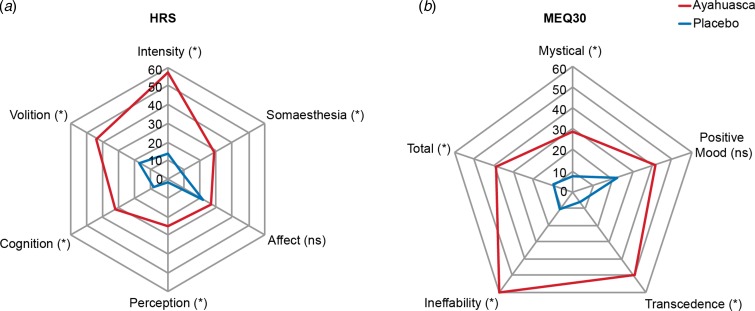
“Among responders, stronger HRS perception scores correlated with symptom reduction, and higher MEQ-30 transcendence of time/space correlated inversely with residual depression, suggesting selective experiential mediators within the ayahuasca arm [56].”
Inserra, A., VanderZwaag, J., Campanale, A., Murray, C. J., & Szabo, A. J. (2026) · Elsevier eBooks · doi:10.1016/b978-0-443-27340-7.00008-5
Age moderates the relationship between psychedelics use and mental health in naturalistic settingsPreprint
Gregorio, G. D., Sophia, B., Manmohan, H., Nixon, W. C., Pogaku, A., Zhou, J., Sanderson, D. J., Lengieza, M. L., & Bocchio, M. (2026) · Research Square · doi:10.21203/rs.3.rs-9022170/v1
Changes over time in hallucinogen‐related emergency department visits in Ontario, Canada
Myran, D. T., MacDonald‐Spracklin, R., Levesque, A. R., Pugliese, M., Fiedorowicz, J. G., McDonald, A. J., Rosenblat, J. D., Colman, I., Zein, J., & Solmi, M. (2026) · Addiction · doi:10.1111/add.70363
Lowe, M. X., Darby, Q. A., Kalcheff-Korn, S., & Jackson, H. (2026) · Journal of Psychoactive Drugs · doi:10.1080/02791072.2026.2644858 · Cited by 2
Teixeira, P. J., Encantado, J., Amaro, H. D., Veiga, D., de Carvalho, L. L., Alcázar‐Córcoles, M. Á., Hallak, J. E. C., SANTOS, R. G. D., Bouso, J. C., & Kohek, M. (2026) · Journal of Psychoactive Drugs · doi:10.1080/02791072.2026.2631378
Self-citationPsychedelics and Mental Health in Endurance Athletes: A Cross-Sectional Study in Brazil
Portes, M. A. M., & Bertoglio, L. J. (2026) · Journal of Psychoactive Drugs · doi:10.1080/02791072.2026.2644865
Metadata
- Authors
- Palhano-Fontes, F., Barreto, D., Onias, H., Andrade, K. C., Novaes, M. M., Pessoa, J. A., Mota-Rolim, S. A., Osório, F. L., Sanches, R., dos Santos, R. G., Tófoli, L. F., de Oliveira Silveira, G., Yonamine, M., Riba, J., Santos, F. R., Silva-Junior, A. A., Alchieri, J. C., Galvão-Coelho, N. L., Lobão-Soares, B., Hallak, J. E. C., Arcoverde, E., Maia-de-Oliveira, J. P., & Araújo, D. B.
- Affiliations
- Universidade Federal do Rio Grande do Norte (BR)
- Universidade de São Paulo (BR)
- Universidade Estadual de Campinas (UNICAMP) (BR)
- Corresponding author
- Araújo, Dráulio B.
- ORCID
- Venue
- Psychological Medicine
- Publisher
- Cambridge University Press (CUP)
- Published
- 2018-06-15
- Volume
- 49
- Issue
- 4
- Pages
- 655-663
- ISSN
- 0033-2917 (ISSN-L)
- 1469-8978
- PMC
- PMC6378413
- OpenAlex
- W2952169207
- Semantic Scholar
- 8e6a44612a52817ea7aa6d429c7bebd0e4d85192
- Cited by
- 852
- References
- 55
- Citations by year
- 2026: 93 · 2025: 98 · 2024: 142 · 2023: 124 · 2022: 131 · 2021: 116 · 2020: 77 · 2019: 45 · 2018: 22
- FWCI
- 76.38
- Type
- journal article
- Language
- en
- Open access
- hybrid
- doi.org
- Locations
- Psychological Medicine (publishedVersion, cc-by)
- bioRxiv (Cold Spring Harbor Laboratory) (acceptedVersion)
- Europe PMC (PubMed Central) (publishedVersion, cc-by)
- PubMed Central (publishedVersion, cc-by)
- PubMed (publishedVersion)
- Americanae (AECID Library) (publishedVersion, other-oa)
- LA Referencia (Red Federada de Repositorios Institucionales de Publicaciones Científicas) (publishedVersion, other-oa)
- Funders
- Coordenação de Aperfeiçoamento de Pessoal de Nível Superior (#1677/2012, 1577/2013)
- Conselho Nacional de Desenvolvimento Científico e Tecnológico (466760/2014, #479466/2013)
- Universidade Federal do Rio Grande do Norte
- Topics
- Social Sciences › Psychology › Clinical Psychology › Psychedelics and Drug Studies
- Health Sciences › Medicine › Pharmacology (medical) › Treatment of Major Depression
- Life Sciences › Neuroscience › Biological Psychiatry › Tryptophan and brain disorders
- Keywords
- ayahuasca, treatment-resistant depression, antidepressant effects, psychedelics, single-dose administration, depression remission
- MeSH terms
- Adult, Antidepressive Agents, Double-Blind Method, Female, Hallucinogens, Humans, Male, Phytotherapy, Psychiatric Status Rating Scales, Time Factors, Treatment Outcome, Banisteriopsis, Depressive Disorder, Treatment-Resistant
About these checks
Registry, retraction, Cites and statistics results are computed, not judged, with one exception: a printed reference that no index lists is read once by a model before it counts as a citation error. Claims are extracted by a model and kept only when their quote appears verbatim in the text; each cited source is then checked, with a model’s help, for whether it says what the claim relies on. Those verdicts can be wrong — read the claim’s quote and the cited source before relying on one.
Statistics and arithmetic are recomputed, not judged.
Confidence bands are shown only for fields calibrated on our annotated test set. None is calibrated yet, so no band is shown.
What counts as a claim ›How we measure confidence ›How we check this ›
Are you an author, or do you see a problem with this page? Request a review
Data sources
Bibliographic data: Semantic Scholar, OpenAlex, Crossref.
Contains information from the Semantic Scholar Academic Graph Datasets, made available under the ODC Attribution License (ODC-BY 1.0).
Semantic Scholar’s data is described in: Kinney, R., et al. (2023). The Semantic Scholar Open Data Platform. arXiv:2301.10140.
