

Rapid antidepressant effects of the psychedelic ayahuasca in treatment-resistant depression: a randomized placebo-controlled trial
Open accessPublished version of a preprint
The DOI matches its Crossref record; 55 of the 55 references it cites were found in a registry or an index.
Abstract
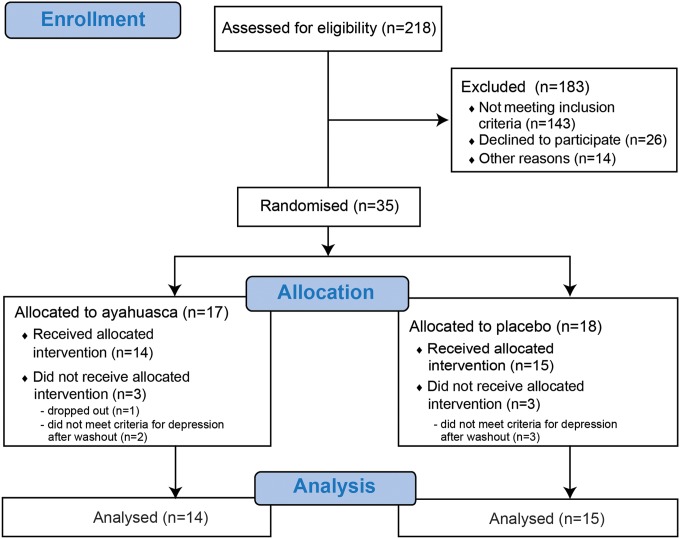
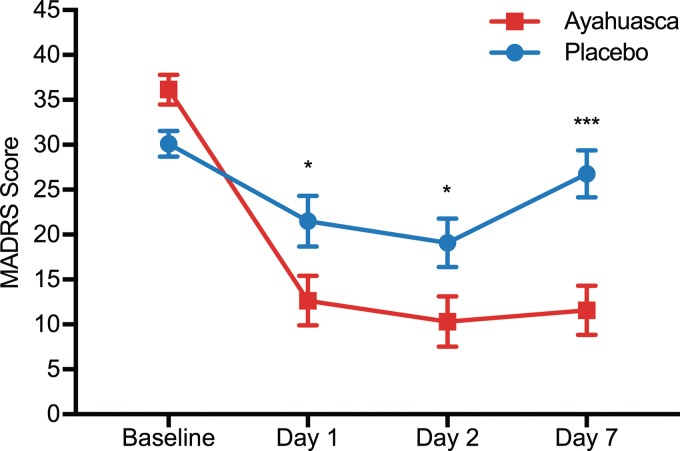
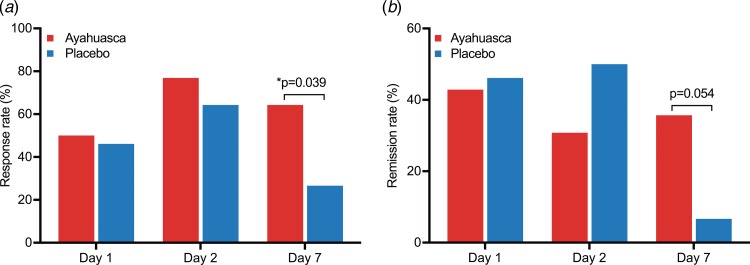
Background: Recent open-label trials show that psychedelics, such as ayahuasca, hold promise as fast-onset antidepressants in treatment-resistant depression. Methods: To test the antidepressant effects of ayahuasca, we conducted a parallel-arm, double-blind randomized placebo-controlled trial in 29 patients with treatment-resistant depression. Patients received a single dose of either ayahuasca or placebo. We assessed changes in depression severity with the Montgomery-Åsberg Depression Rating Scale (MADRS) and the Hamilton Depression Rating scale at baseline, and at 1 (D1), 2 (D2), and 7 (D7) days after dosing. Results: We observed significant antidepressant effects of ayahuasca when compared with placebo at all-time points. MADRS scores were significantly lower in the ayahuasca group compared with placebo at D1 and D2 ( p = 0.04), and at D7 ( p < 0.0001). Between-group effect sizes increased from D1 to D7 (D1: Cohen's d = 0.84; D2: Cohen's d = 0.84; D7: Cohen's d = 1.49). Response rates were high for both groups at D1 and D2, and significantly higher in the ayahuasca group at D7 (64% v. 27%; p = 0.04). Remission rate showed a trend toward significance at D7 (36% v. 7%, p = 0.054). Conclusions: To our knowledge, this is the first controlled trial to test a psychedelic substance in treatment-resistant depression. Overall, this study brings new evidence supporting the safety and therapeutic value of ayahuasca, dosed within an appropriate setting, to help treat depression. This study is registered at http://clinicaltrials.gov (NCT02914769).
Overview
The claims and statistics of this paper haven’t been checked yet.
Free: it reads the open-access text and checks the first 5 claims that cite a source we can check. Create a free account to check every claim.
Integrity signals
Registry
Cites
Statistics
Figures
Verification
Claims the paper makes
The claims and statistics of this paper haven’t been checked yet.
Free: it reads the open-access text and checks the first 5 claims that cite a source we can check. Create a free account to check every claim.
Claims other papers make about this one
Each is checked against this paper’s own text: does it say what the citing paper says it does?
The cited source doesn’t support the claim as written.
In the citing paper
“overall psychiatric scales in the ayahuasca group were significatively higher than those in the placebo group in all time points after dosing.”
From Virtual reality and psychedelics for the treatment of psychiatric disease: A systematic literature review (2020) · doi:10.36131/cnfioritieditore20200606 · cites this paper as Palhano-Fontes et al. (2019)
Checked by a reasoning model — may be wrong.
Experimental — accuracy not yet measuredThe source backs part of the claim, not all of it — or backs it for a different population, condition or comparison.
In the citing paper
“Ayahuasca stimulates emotional dream-like experiences involving potent cognitive-affective changes and spiritual insights (Dobkin de Rios, 1971) that have been associated with substantial and enduring antidepressant effects (Palhano-Fontes et al., 2019; Weiss et al., 2021).”
From Prospective examination of the therapeutic role of psychological flexibility and cognitive reappraisal in the ceremonial use of ayahuasca (2022) · cites this paper as Palhano-Fontes et al., 2019
Experimental — accuracy not yet measuredThe source backs part of the claim, not all of it — or backs it for a different population, condition or comparison.
In the citing paper
“Ayahuasca, or its chemical equivalent known as pharmahuasca, has emerged as a tool for psychotherapy in the contexts of affective and substance use disorders [130,131], thus calling for a better understanding of its possible mechanisms of action.”
From Molecular and Functional Imaging Studies of Psychedelic Drug Action in Animals and Humans. (2021) · cites this paper as [130]
Experimental — accuracy not yet measuredThe source backs part of the claim, not all of it — or backs it for a different population, condition or comparison.
In the citing paper
“Moreover, comorbid conditions such as suicidality and substance use disorders further complicate research efforts (13, 18, 20, 21).”
From Psychoanalytically informed MDMA-assisted therapy for pathological narcissism: a novel theoretical approach (2025) · cites this paper as [20]
Experimental — accuracy not yet measuredThe source backs part of the claim, not all of it — or backs it for a different population, condition or comparison.
In the citing paper
“Ayahuasca has been demonstrated to be safe in naturalistic (35, 108) and clinical settings, across varying dosages and multiple administrations (26, 109–112).”
From Ayahuasca-assisted meaning reconstruction therapy for grief: a non-randomized clinical trial protocol (2025) · cites this paper as [26]
Experimental — accuracy not yet measured
16 more claims about this paper
Create a free account to see every claim other papers make about this one.
Self-check
Percentages, sums and reported differences re-computed from the paper’s own numbers.
The self-check needs the paper’s full text.
Citations
Cites
Hamilton, M. (1960) · Journal of Neurology, Neurosurgery & Psychiatry · doi:10.1136/jnnp.23.1.56 · Cited by 32,817 · cited 1×
“HAM-D was applied only at baseline and D7, as it was designed to access depression symptoms present in the last week (Hamilton, 1960).”
MethodAntidepressant effects of ketamine in depressed patients
Berman, R. M., Cappiello, A., Anand, A., Oren, D. A., Heninger, G. R., Charney, D. S., & Krystal, J. H. (2000) · Biological Psychiatry · doi:10.1016/s0006-3223(99)00230-9 · Cited by 3,856 · cited 7×
“While we find a response rate to placebo of 46% at D1, and 26% at D7, ketamine trials have found a placebo effect of the order of 0 – 6% at D1, and 0 – 11% at D7 (Berman et al. , 2000; Zarate et al. , 2006; Murrough et al. , 2013; Lapidus et al. , 2014).”
BackgroundInfluentialA randomized trial of an N-methyl-D-aspartate antagonist in treatment-resistant major depression.
Zarate, C. A., Singh, J. B., Carlson, P. J., Brutsche, N. E., Ameli, R., Luckenbaugh, D. A., Charney, D. S., & Manji, H. K. (2006) · Archives of General Psychiatry · doi:10.1001/archpsyc.63.8.856 · Cited by 3,766 · cited 4×
“At D7, the ketamine response rate ranges between 7 and 35% (Berman et al., 2000; Zarate et al., 2006; Murrough et al., 2013; Lapidus et al., 2014), while in our study 64% responded to ayahuasca.”
BackgroundInfluentialOtte, C., Gold, S. M., Penninx, B. W., Pariante, C. M., Etkin, A., Fava, M., Mohr, D. C., & Schatzberg, A. F. (2016) · Nature Reviews Disease Primers · doi:10.1038/nrdp.2016.65 · Cited by 2,269 · cited 2×
“We recently found that a single ayahuasca session in patients with depression increases blood flow in brain regions consistently implicated in the regulation of mood and emotions, such as the left nucleus accumbens, right insula and left subgenual area (Otte et al. , 2016; Sanches et al. , 2016).”
BackgroundGriffiths, R. R., Johnson, M. W., Carducci, M. A., Umbricht, A., Richards, W. A., Richards, B. D., Cosimano, M. P., & Klinedinst, M. A. (2016) · Journal of Psychopharmacology · doi:10.1177/0269881116675513 · Cited by 2,201
Nichols, D. E. (2016) · Pharmacological Reviews · doi:10.1124/pr.115.011478 · Cited by 1,762
Ross, S., Bossis, A., Guss, J., Agin-Liebes, G., Malone, T., Cohen, B., Mennenga, S. E., Belser, A., Kalliontzi, K., Babb, J., et al. (2016) · Journal of Psychopharmacology · doi:10.1177/0269881116675512 · Cited by 1,698 · cited 4×
“Prior studies suggest that elements of the psychedelic experience, such as experiences of mystical-type, account for the therapeutic benefit (Bogenschutz et al., 2015; Garcia-Romeu et al., 2015; Majić et al., 2015; Griffiths et al., 2016; Ross et al., 2016).”
BackgroundInfluentialCarhart-Harris, R. L., Bolstridge, M., Rucker, J., Day, C. M. J., Erritzoe, D., Kaelen, M., Bloomfield, M., Rickard, J. A., Forbes, B., Feilding, A., et al. (2016) · The Lancet Psychiatry · doi:10.1016/s2215-0366(16)30065-7 · Cited by 1,540 · cited 4×
“substances affect the brain, and also probing their potential in treating different psychiatric conditions, including mood disorders (Grob et al., 2011; Osório et al., 2015; Carhart-Harris et al., 2016; Griffiths et al., 2016; Ross et al., 2016; Sanches et al., 2016).”
BackgroundResultInfluentialThe default mode network and self-referential processes in depression
Sheline, Y. I., Barch, D. M., Price, J. L., Rundle, M. M., Vaishnavi, S. N., Snyder, A. Z., Mintun, M. A., Wang, S., Coalson, R. S., & Raichle, M. E. (2009) · Proceedings of the National Academy of Sciences · doi:10.1073/pnas.0812686106 · Cited by 1,480 · cited 2×
“Moreover, we have shown that ayahuasca reduces the activity of the Default Mode Network (Palhano-Fontes et al. , 2015), a brain network found to be hyperactive in depression (Sheline et al. , 2009).”
BackgroundPilot Study of Psilocybin Treatment for Anxiety in Patients With Advanced-Stage Cancer
Grob, C. S., Danforth, A. L., Chopra, G. S., Hagerty, M., McKay, C. R., Halberstadt, A. L., & Greer, G. R. (2011) · Archives of General Psychiatry · doi:10.1001/archgenpsychiatry.2010.116 · Cited by 1,206 · cited 2×
“…exploring how these substances affect the brain, and also probing their potential in treating different psychiatric conditions, including mood disorders (Grob et al. , 2011; Osório et al. , 2015; Carhart-Harris et al. , 2016; Griffiths et al. , 2016; Ross et al. , 2016; Sanches et al. , 2016).”
Background
Research works printed but not linked: 3
- World Health Organization (2017) Depression and Other Common Mental Disorders: Global Health Estimates. Rep. CC BY-NC-SA 3.0 IGO. Geneva: World Health Organization.
- Tafur J (2017) The Fellowship of the River: A Medical Doctor's Exploration into Traditional Amazonian Plant Medicine. Espiritu, Phoenix.
- Luna LE (2011) Indigenous and Mestizo use of Ayahuasca. An Overview. The Ethnopharmacology of Ayahuasca. Tivandrum: Transworld Research Network.
Cited by
Items 501–600 of 850
Davis, A. K., Timmermann, C., Bernal, A. M. O., Lancelotta, R., Nayak, S. M., Sepeda, N. D., Nikolaidis, A., & Griffiths, R. R. (2023) · Journal of Psychoactive Drugs · doi:10.1080/02791072.2023.2232379 · Cited by 7
“…have shown preliminary safety and efficacy for such indications as Major Depressive Disorder (Carhart-Harris et al. 2021; Davis et al. 2021; Palhano-Fontes et al. 2019), nicotine use disorder (Johnson et al. 2014), and alcohol use disorder (Bogenschutz et al. 2015), as well as a variety of…”
Xu, R., Bao, Y.-Q., Jiao, F., Li, M.-R., Zhang, X.-X., Zhang, F., & Guo, J.-J. (2024) · Journal of Biomolecular Structure and Dynamics · doi:10.1080/07391102.2024.2318472 · Cited by 4
Evaluating the value and risks of psychedelics for psychiatric medicine: a clinical perspective
Marazziti, D., Weiss, F., Gurrieri, R., Russomanno, G., Gambini, M., Magnesa, A., Coccoglioniti, A., & Perugi, G. (2024) · Expert Review of Neurotherapeutics · doi:10.1080/14737175.2024.2445016 · Cited by 5
History of psychedelic drug science and molecular pharmacology
Nichols, D. E., & Nichols, C. D. (2025) · International review of neurobiology · doi:10.1016/bs.irn.2025.02.001 · Cited by 7
Kim, S., Yang, S., Jung, J., Choi, J., Kang, M., & Joo, J. (2025) · Advanced Science · doi:10.1002/advs.202413786 · Cited by 10
Ayahuasca-induzierte Psychose bei einem Patienten mit bipolarer Störung
Zellner, N., Zellner, T., & Warninghoff, J. C. (2019) · Der Nervenarzt · doi:10.1007/s00115-019-0728-0 · Cited by 5
Mason, N. L., Szabó, A., Kuypers, K. P. C., Mallaroni, P., de la Torre, R., Reckweg, J. T., Tse, D. H. Y., Hutten, N. R. P. W., Feilding, A., & Ramaekers, J. G. (2022) · medRxiv · doi:10.1101/2022.10.31.22281688 · Cited by 5
“Thus, the long-term effect of psilocybin on circulating biomarkers of inflammation may reflect an important biological component of its documented, persistent antidepressant effects[67, 68], and suggests a similar mechanism for other tryptamines[69, 70].”
BackgroundRodan, S.-C., Meez, N., Lloyd-Hurwitz, S., Bedoya‐Pérez, M. A., Suraev, A. S., Sommer, N., Greenstien, K., Maguire, S., & McGregor, I. S. (2025) · Journal of Eating Disorders · doi:10.1186/s40337-025-01328-5 · Cited by 5
“In well-controlled clinical trials, classic psychedelics exhibit superiority over placebo in treating MDD [101], treatment-resistant depression [102] and end of life distress [11, 13, 103].”
Horato, N., Dalvi-Garcia, F., Dutra, P. E. P., & Nardi, A. E. (2026) · Journal of Clinical Psychopharmacology · doi:10.1097/jcp.0000000000002122 · Cited by 5
Psychedelic therapeutics in psychiatric conditions
Harvey, P. D., & Nemeroff, C. B. (2026) · Neuropsychopharmacology · doi:10.1038/s41386-026-02335-z · Cited by 8
Drug-induced psychosis following use of Ayahuasca: a presentation to forensic psychiatric services
Baker, M., & O'Shea, C. I. (2024) · BMJ Case Reports · doi:10.1136/bcr-2024-260648 · Cited by 4
Synaptic Plasticity in the Hippocampus
Bliss, T., Collingridge, G. L., Cooke, S. F., Georgiou, J., & Morris, R. (2025) · Oxford University Press eBooks · doi:10.1093/med/9780190065324.003.0010 · Cited by 5
Xing, H., Liu, X., Zhang, Y., Wu, J., Li, M., Ye, H., Ding, Y., Wang, W., Zheng, Z., & Bao, T. (2025) · Reviews in the Neurosciences · doi:10.1515/revneuro-2024-0151 · Cited by 6
de Lira-Bandeira, W. G., Batista, L. A. C. M., Medeiros-Bandeira, A. S., Morais, P. L. A. D. G., Pereira, L. R. F., Grilo, M. L. P. D. M., Cavalcante, J. S., de Santana, M. A. D., de Lima, R. R. M., Coelho, N. L. G., et al. (2025) · Frontiers in Neuroanatomy · doi:10.3389/fnana.2025.1457557 · Cited by 4
Tudorancea, I.-M., Stanciu, G. D., Torrent, C., Madero, S., Hriţcu, L., & Tamba, B.-I. (2025) · Dialogues in Clinical Neuroscience · doi:10.1080/19585969.2025.2499458 · Cited by 4
Clark, G. (2021) · International Journal of Jungian Studies · doi:10.1163/19409060-bja10017 · Cited by 11
Navigating through the ebbs and flows of language
Viol, A., Treves, A., & Ciaramelli, E. (2021) · Current Opinion in Neurobiology · doi:10.1016/j.conb.2021.10.009 · Cited by 6
Lawrence, D. W., Battista, A. P. D., & Timmermann, C. (2023) · Journal of Psychoactive Drugs · doi:10.1080/02791072.2023.2230568 · Cited by 6
“…promise for a role of DMT in the management of neuropsychiatric disorders, such as depression, anxiety, substance dependency, and stroke (Dominguez-Clave et al. 2019; Lawn et al. 2018; Osorio Fde et al. 2015; Palhano-Fontes et al. 2019; Sanches et al. 2016; Santos et al. 2007; Zeifman et al. 2021).”
Johansen, L., Liknaitzky, P., Nedeljkovic, M., & Murray, G. (2023) · Frontiers in Psychiatry · doi:10.3389/fpsyt.2023.1265910 · Cited by 6
Vicentini, A. B., Rodrigues, L. S., Rossi, G. N., Rocha, J. M., Guerra, L. T. L., Reis, J. A. S., Maekawa, R. M., Osório, F. D. L., Bouso, J. C., Santos, F. P., et al. (2023) · Psychoactives · doi:10.3390/psychoactives2040022 · Cited by 5
Self-citationGuidelines for Establishing Safety in Ayahuasca and Ibogaine Administration in Clinical Settings
Rocha, J. M., Reis, J. A. S., Rossi, G. N., Bouso, J. C., Hallak, J. E. C., & SANTOS, R. G. D. (2023) · Psychoactives · doi:10.3390/psychoactives2040024 · Cited by 6
“The main findings related to potential anxiolytic and antidepressant effects were derived from preclinical studies and phase I and phase II clinical trials involving patients diagnosed with major depressive disorder [7–10].”
BackgroundSelf-citationNoribogaine acute administration in rats promotes wakefulness and suppresses REM sleep
Castro‐Nin, J. P., Serantes, D., Rodríguez, P. M., González, B., Carrera, I., Torterolo, P., & González, J. (2024) · Psychopharmacology · doi:10.1007/s00213-024-06572-2 · Cited by 5
“These compounds’ poten - tial health benefits include treating depression, anxiety, and addictions, outperforming traditional therapeutics (Palhano-Fontes et al. 2019, 2022 ).”
Trips through the Skin: Reviewing Cutaneous Drug Reactions to Psychedelics and Hallucinogens
Rahman, S. M., Salem, Y., & Hussain, A. N. (2024) · Dermatitis · doi:10.1089/derm.2023.0292 · Cited by 4
Griffin, C., & Knight, A. (2024) · Journal of Psychedelic Studies · doi:10.1556/2054.2024.00333 · Cited by 3
Poulin, J. M., Bigford, G. E., Lanctôt, K. L., Giacobbe, P., Schaffer, A., Sinyor, M., Rabin, J. S., Masellis, M., Singnurkar, A., Pople, C. B., et al. (2024) · Trials · doi:10.1186/s13063-024-08268-6 · Cited by 7
“showing trial design, sample sizes, intervention details, and the reported changes in MADRS score [83–87].”
BackgroundSznitman, S. R., Behar, Y. A., Dicker‐Oren, S. D., Shochat, T., Meiri, D., Butto, N., Roe, D., & Bernstein, A. (2025) · Psychopharmacology · doi:10.1007/s00213-024-06704-8 · Cited by 8
Quantitative evaluation of multiple treatment regimens for treatment-resistant depression
Feng, Y., Lv, Y., Yang, J., Xu, L., Chen, J., Huang, J., Ren, J., Zheng, Q., & Li, L. (2025) · The International Journal of Neuropsychopharmacology · doi:10.1093/ijnp/pyaf007 · Cited by 5
“Ten studies reporting on HAMD were not included in this analysis, which involved 7 for oral administration, 46–52 2 for intravenous, 53,54 and 1 for intranasal administration regimens.”
Silva, F., Butlen‐Ducuing, F., Guizzaro, L., & Balabanov, P. (2025) · Neuroscience Applied · doi:10.1016/j.nsa.2025.105516 · Cited by 7
Exploring serotonergic psychedelics as a treatment for personality disorders
Carrithers, B. M., Roberts, D. E., Weiss, B., King, J. D., Carhart-Harris, R. L., Gordon, A. R., Pagni, B. A., Moreau, M., Ross, S., & Zeifman, R. J. (2025) · Neuropharmacology · doi:10.1016/j.neuropharm.2025.110413 · Cited by 4
The Novelty of Ayahuasca Scale and the prediction of intentions to use
Altman, B. R., Mian, M. N., & Earleywine, M. (2020) · Journal of Psychedelic Studies · doi:10.1556/2054.2020.00117 · Cited by 3
“Across numerous randomized control and open label trials, ayahuasca demonstrates strong antidepressant and anxiolytic effects (Os orio et al., 2015; Palhano-Fontes et al., 2019; Sanches et al., 2016).”
BackgroundFarré, M., Papaseit, E., Fonseca, F., & Torrens, M. (2020) · Springer eBooks · doi:10.1007/978-3-030-36391-8_19 · Cited by 5
Altman, B. R., Earleywine, M., & Leo, J. A. D. (2022) · Journal of Psychoactive Drugs · doi:10.1080/02791072.2021.2020382 · Cited by 4
“Specifically for depression, recent studies indicate that psychedelic substances can rapidly decrease depressive symptoms, with some work citing sustained symptom reduction for months after treatment (Carhart-Harris et al. 2018; Palhano-Fontes et al. 2019; Rosenblat et al. 2019).”
BackgroundLawrence, D. W. (2022) · Journal of Psychedelic Studies · doi:10.1556/2054.2022.00178 · Cited by 5
Psychedelics for Alzheimer's Disease Palliative Care
McManus, K. R., Patrick, R. E., Striepe, M. I., Drury, M. J., Ozonsi, R., Forester, B. P., & Weinberg, M. S. (2022) · Advances in Psychiatry and Behavioral Health · doi:10.1016/j.ypsc.2022.06.001 · Cited by 5
Evaluation of the In Vitro Wound-Healing Potential of Ayahuasca
Gonçalves, J., Luís, Â., Gallardo, E., & Duarte, A. P. (2022) · Molecules · doi:10.3390/molecules27185760 · Cited by 10
Michael, P. (2022) · Psychotherapy Section Review · doi:10.53841/bpspsr.2022.1.67.99 · Cited by 5
A mechanistic insight for the biosynthesis of N,N-dimethyltryptamine: An ONIOM theoretical approach
Coutinho, L. P., Silva, S. R. B., de Lima‐Neto, P., & Monteiro, N. D. K. V. (2023) · Biochemical and Biophysical Research Communications · doi:10.1016/j.bbrc.2023.08.043 · Cited by 5
Mendive, F. M., Giovannetti, C., & Arce, S. G. (2023) · The American Journal of Drug and Alcohol Abuse · doi:10.1080/00952990.2023.2264466 · Cited by 7
The pharmacological management of treatment-resistant depression: what does the future hold?
Serretti, A. (2023) · Expert Opinion on Pharmacotherapy · doi:10.1080/14656566.2023.2287011 · Cited by 4
“It has shown a rapid antidepressant effect, but tolerability is probably more of an issue compared to psilocybin, partly due to frequent gastro-intestinal effects [6].”
BackgroundLiblik, S. A., da Cunha, T. R., Liblik, C. S. D. F. K., Biscioni, D. N., & Girardi, D. R. (2024) · Salud Colectiva · doi:10.18294/sc.2024.4630 · Cited by 8
“Publicaciones de estudios reali-zados en Latinoamérica, especialmente con ayahuasca, también han mostrado iguales potenciales de usos terapéuticos (36,37) .”
Use of hallucinogens in Slovakia: Does it differ from global trends?
Lukačovič, M., & Masaryk, R. (2021) · International Journal of Drug Policy · doi:10.1016/j.drugpo.2021.103385 · Cited by 4
Acute antidepressant effect of ayahuasca in juvenile non-human primate model of depressionPreprint
da Silva, F. S., Silva, E. A. D. S., de Sousa, G. M., Maia‐de‐Oliveira, J. P., Soares-Rachetti, V. D. P., de Araújo, D. B., de Sousa, M. B. C., Soares, B. L., & Coelho, N. L. G. (2018) · bioRxiv (Cold Spring Harbor Laboratory) · doi:10.1101/254268 · Cited by 4
Self-citationPsychedelic drugs as a long-needed innovation in psychiatryPreprint
Oña, G., & Bouso, J. C. (2020) · Qeios · doi:10.32388/t3em5e.2 · Cited by 3
“Several clinical trials using psychedelic drugs or 3,4-Methylenedioxymethamphetamine (MDMA) have recently been published and show promising results for the treatment of depression [56,74-76], anxiety in cancer patients [77-80], addictions [81], social anxiety in autism [82], and PT SD [83-87].”
Backgroundda Cruz, R. V. L., Moulin, T. C., Petiz, L. L., & Leão, R. N. (2019) · Frontiers in Molecular Neuroscience · doi:10.3389/fnmol.2019.00079 · Cited by 7
“, 2016) even in a placebo controlled frame (Palhano-Fontes et al., 2018).”
PHARMACOKINETICS OF N,N-DIMETHYLTRYPTAMINE FUMARATE IN HUMANSPreprint
Good, M., Benway, T. A., Joel, Z., Routledge, C. A., Timmermann, C., Erritzøe, D., Weaver, R., Allen, G., Hughes, C., Topping, H., et al. (2022) · doi:10.22541/au.165237523.39763980/v1 · Cited by 4
The current state of ayahuasca research in animal models: A systematic reviewPreprint
Daldegan‐Bueno, D., Simionato, N. M., Favaro, V. M., & Maia, L. O. (2022) · doi:10.31234/osf.io/7s3b8 · Cited by 4
Vohryzek, J., Cabral, J., Timmermann, C., Atasoy, S., Roseman, L., Nutt, D. J., Carhart-Harris, R. L., Deco, G., & Kringelbach, M. L. (2023) · bioRxiv (Cold Spring Harbor Laboratory) · doi:10.1101/2023.08.20.554019 · Cited by 4
“5 containing DMT itself as well as monoamine oxidase inhibitors (MAOIs), have shown 99 promising results in patients with depression [35].”
BackgroundFalchi-Carvalho, M., Barros, H., Bolcont, R., Laborde, S., Wießner, I., Silva, S. R. B., Montanini, D., Barbosa, D. C., Teixeira, E., Florence-Vilela, R., et al. (2024) · medRxiv · doi:10.1101/2024.01.03.23300610 · Cited by 4
Self-citationCould psychedelics treat personality disorders
(2022) · Journal of Addiction Science · doi:10.17756/jas.2022-057 · Cited by 3
Tavares, V. D. D. O., Gonçalves, K. T. D. C., Barros, M. L. D. M., de Brito, A. J. C., Cavalcanti-Ribeiro, P., Palhano-Fontes, F., Falchi-Carvalho, M., Nunes, E. A., Sarris, J. J., Perkins, D., et al. (2024) · Journal of Clinical Psychopharmacology · doi:10.1097/jcp.0000000000001946 · Cited by 5
Self-citationA systematic review of psychedelic use and its relationship with meaning and purpose in life
Rupiński, P., Drabek, W., & Holas, P. (2025) · Journal of Psychedelic Studies · doi:10.1556/2054.2025.00442 · Cited by 3
Reckweg, J. T., Mason, N. L., Theunissen, E. L., Svendsen, C. B., Terwey, T. H., & Ramaekers, J. G. (2025) · Frontiers in Psychology · doi:10.3389/fpsyg.2025.1543640 · Cited by 5
From molecules to meaning: unpacking the antidepressant mechanisms of psychedelic drugs
Acero, V. P., Flatt, T. A., Gooch, P. M., Gaughan, S. J., Levin, A. W., & Davis, A. K. (2025) · Expert Review of Clinical Pharmacology · doi:10.1080/17512433.2025.2515866 · Cited by 4
Garrigosa, M. S., Perl, Y. S., Kringelbach, M. L., Erritzøe, D., Nutt, D. J., Carhart-Harris, R. L., Vohryzek, J., & Deco, G. (2025) · Annals of the New York Academy of Sciences · doi:10.1111/nyas.15391 · Cited by 8
“42,43 Evidence suggests that they work mainly but not only through 5-HT 2A serotonin receptor (5-HT 2A R) agonism, which increases serotonin release and opens a window of plasticity from which supportive psychotherapy could benefit.”
Suggestion Effects in Psychedelics: Confounds and Opportunities
Stein, M. V., & Terhune, D. B. (2025) · International Journal of Clinical and Experimental Hypnosis · doi:10.1080/00207144.2025.2501964 · Cited by 7
“Notably, this trial observed a higher placebo effect at the first treatment dose than is typically observed (46% of participants in this trial’s placebo condition compared to 0–6% in others; see Palhano-Fontes et al., 2019 for examples).”
Rosa, I., Padula, L. P., Semeraro, F., Marrangone, C., Inserra, A., Risio, L. D., Boffa, M., Zoratto, F., Borgi, M., Guidotti, R., et al. (2025) · Psychiatry Research · doi:10.1016/j.psychres.2025.116697 · Cited by 6
Soto-Angona, Ó., Andión, Ó., Sabucedo, P., Neimeyer, R. A., Haro, J. M., Javkin, J., Farré, M., & González, D. (2025) · Scientific Reports · doi:10.1038/s41598-025-13251-5 · Cited by 5
“evoked by ayahuasca have been correlated with reductions in depressive symptoms, underscoring the therapeutic importance of the phenomenological experience itself 13 .”
Psychedelics for major depression—From controlled research settings into broader clinical use
Avram, M., & Borgwardt, S. (2025) · Cell Reports Medicine · doi:10.1016/j.xcrm.2025.102361 · Cited by 8
Clinical pharmacology of ayahuasca: potential applications and future considerations
Guerra, L. T. L., Dias, I. C. D. S., Hallak, J. E. C., & SANTOS, R. G. D. (2025) · Expert Review of Clinical Pharmacology · doi:10.1080/17512433.2025.2577726 · Cited by 3
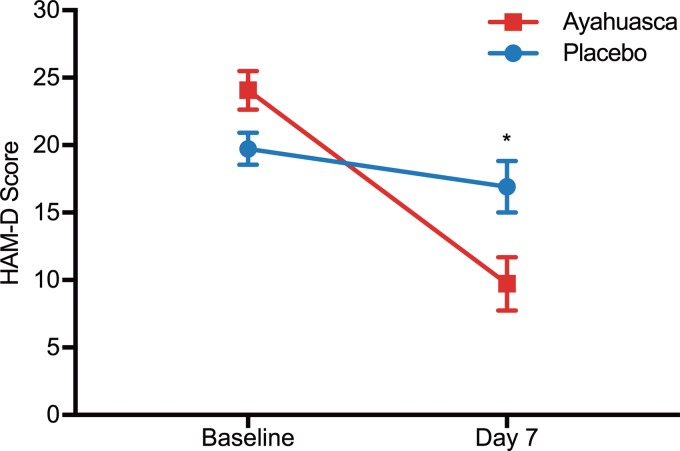
“HAM-D scores had a significant group effect (p = 0.019), and at day 7 effect size was large on AYA group (Cohen’s d = 2.22; 95% CI 1.283.17) while medium in placebo (Cohen’s d = 0.46; 95% CI − 0.27 to 1.18), again indicating an AYA antidepressive effect [69].”
InfluentialSelf-citationRoberts, C., Seynaeve, M., Ermakova, A. O., Dunbar, F., Wells, H., Puri, A., Bird, C., & Rucker, J. (2026) · Journal of Psychopharmacology · doi:10.1177/02698811261420087 · Cited by 6
“Over the past decade, research into psychedelics has gained traction with several studies demonstrating the potential beneficial effects of psychedelics in people with TRD (Carhart-Harris et al., 2018; Goodwin et al., 2022; Palhano-Fontes et al., 2019; Raison et al., 2023; Wong et al., 2024).”
Registered Clinical Trials of Ayahuasca and DMT : A Scoping Review
Stojanovic, T., Nilsson, K. W., Fredriksson, R., Schiöth, H. B., & Moulin, T. C. (2026) · Clinical Pharmacology & Therapeutics · doi:10.1002/cpt.70311 · Cited by 3
A Qualitative Assessment of Risks and Benefits of Ayahuasca for Trauma Survivors
Nielson, J. L., Megler, J. D., & Cavnar, C. (2021) · Springer eBooks · doi:10.1007/978-3-030-55688-4_5 · Cited by 3
Consciousness as a domain of extraterritoriality
Falcon, J. (2021) · Culture, theory and critique/Culture, theory & critique · doi:10.1080/14735784.2021.1908904 · Cited by 3
Andersen, K. A. A., Holmøy, B., & Stewart, L. H. (2024) · Journal of Psychedelic Studies · doi:10.1556/2054.2024.00346 · Cited by 4
Lima, G., Soares, C., Teixeira, M., & Castelo-Branco, M. S. (2024) · British Journal of Clinical Pharmacology · doi:10.1111/bcp.16264 · Cited by 3
Äbelö, A., Smallridge, J. W., von Rotz, R., Dornbierer, D., Egger, K., Ashton, M., & Scheidegger, M. (2025) · Biomedicine & Pharmacotherapy · doi:10.1016/j.biopha.2025.118329 · Cited by 6
Modification of natural tryptamines for the treatment of neuropsychiatric diseases
Palfreyman, M. G., Varty, G. B., Stang, E. M., Boltaev, U., Avery, K., & Nivorozhkin, A. (2025) · Journal of Psychopharmacology · doi:10.1177/02698811251368362 · Cited by 3
“…pioneer, Dennis McKenna (Grob et al., 1996) and later followed by fMRI studies (de Araujo et al., 2012) and then the first published placebo-controlled randomized clinical trials of ayahuasca in depression led by a cohort of the Brazilian investigators (Palhano-Fontes et al., 2019).”
Psychedelics for treating psychiatric disorders: Are they safe?
Thakur, M. (2022) · Current Psychiatry · doi:10.12788/cp.0309 · Cited by 4
Educational Materials and Image Induction Increase Treatment Credibility
Low, F., & Earleywine, M. (2023) · Journal of Psychoactive Drugs · doi:10.1080/02791072.2022.2154722 · Cited by 3
“The priming effect was relevant for PAT and future studies should examine if this approach could be effective for other psychedelic-assisted therapies such as ketamine (Dore et al. 2019), MDMA (Vermetten and Yehuda 2020), or ayahuasca (Palhano-Fontes et al. 2019).”
BackgroundInformation parity increases on functional brain networks under influence of a psychedelic substance
Viol, A., Viswanathan, G. M., Soldatkina, O., Palhano-Fontes, F., Onias, H., de Araújo, D. B., & Hövel, P. (2023) · Journal of Physics Complexity · doi:10.1088/2632-072x/acc22b · Cited by 4
Self-citationNext generation antidepressants with novel mechanisms for treatment resistant depression
Chen, M., Tu, P., & Su, T. (2023) · Progress in brain research · doi:10.1016/bs.pbr.2023.02.005 · Cited by 3
Black, J. C., Schow, N., Burkett, H. L., Pena, M., Jewell, J. S., Czizik, A. M., Monte, A. A., & Dart, R. C. (2023) · International Journal of Mental Health and Addiction · doi:10.1007/s11469-023-01163-2 · Cited by 3
“…United Kingdom suggest that psychedelic use in a clinical setting is largely safe and well-tolerated (Andersen et al., 2021; Belouin et al., 2022; Palhano-Fontes et al., 2019), the real-world abuse potential of any medicinal psychedelics will likely be assessed separately for each drug by US…”
da Cruz, L. V. M., Bienemann, B., Palhano-Fontes, F., Tófoli, L. F., de Araújo, D. B., & Mograbi, D. C. (2023) · Scientific Reports · doi:10.1038/s41598-023-44193-5 · Cited by 13
“Future studies should investigate this further, given the potential clinical benefits of ayahuasca for people with depression 12,42 .”
InfluentialSelf-citationMechanisms of integration in psychedelic-assisted therapy
Coverdale, N. S., & Cook, D. J. (2023) · Journal of Military Veteran and Family Health · doi:10.3138/jmvfh-2023-0014 · Cited by 6
Wang, C. K., Kim, G., Aleksandrova, L. R., Panenka, W. J., & Barr, A. M. (2024) · Frontiers in Pharmacology · doi:10.3389/fphar.2024.1387158 · Cited by 3
Engel, L. B., Thal, S. B., Bright, S. J., & Low, M. (2024) · Journal of Psychedelic Studies · doi:10.1556/2054.2024.00377 · Cited by 3
Therapeutic Use of Psychedelics for Mental Disorders: A Systematized Review
Alyahya, N. M., & Saleem, E. A. A. (2024) · Journal of Nature and Science of Medicine · doi:10.4103/jnsm.jnsm_76_24 · Cited by 6
Effects of ayahuasca on fear and anxiety: cross-talk between 5HT1A and 5HT2A receptors
Guerra, L. T. L., SANTOS, R. G. D., & Hallak, J. E. C. (2024) · Psychedelics. · doi:10.61373/pp024i.0037 · Cited by 3
Self-citationLow, Z. X. B., Yong, S. J., AlRasheed, H. A., Al‐Subaie, M. F., Kaabi, N. A., Alfaresi, M. S., Albayat, H., Alotaibi, J., bshabshe, A. A. A. A., Alwashmi, A. S. S., et al. (2025) · Progress in Neuro-Psychopharmacology and Biological Psychiatry · doi:10.1016/j.pnpbp.2025.111279 · Cited by 4
The Spiritual Dimension of Yage Shamanism in Colombia
Rincón, C. M. G. (2020) · Religions · doi:10.3390/rel11070375 · Cited by 6
Acute and Long-Term Effects of Ayahuasca on (Higher-Order) Cognitive Processes
Mason, N. L., & Kuypers, K. P. C. (2021) · Springer eBooks · doi:10.1007/978-3-030-55688-4_7 · Cited by 4
Symptom specificity of ayahuasca's effect on depressive symptoms
Gilbert, C., Earleywine, M., Mian, M. N., & Altman, B. R. (2021) · Journal of Psychedelic Studies · doi:10.1556/2054.2021.00165 · Cited by 4
“Laboratory administrations improve depressive symptoms at rates comparable to standard treatments, and with rapid onset of relief (e.g., dos Santos, Sanches, Os orio, & Hallak, 2018; Osorio, 2015; Palhano-Fontes et al., 2019a, 2019b; Palhano-Fontes et al., 2018).”
BackgroundInfluentialBaseline power of theta oscillations predicts mystical-type experiences induced by DMTPreprint
Tagliazucchi, E., Zamberlán, F., Cavanna, F., de la Fuente, L., Romero, C., Perl, Y. S., & Pallavicini, C. (2021) · bioRxiv (Cold Spring Harbor Laboratory) · doi:10.1101/2021.03.11.434994 · Cited by 3
Classical Hallucinogens As Antidepressant Drugs: A Cautionary Approach
SANTOS, R. G. D., Rossi, G. N., Hallak, J. E. C., Öngür, D., & Dursun, S. M. (2022) · Current Neuropharmacology · doi:10.2174/1570159x20666220425133824 · Cited by 3
“Compared to placebo, ayahuasca significantly reduced depressive symptoms in the TRD patients one and seven days after its intake [6].”
BackgroundSelf-citation(Dis)connectedness, suicidality and group psychedelic therapies.Preprint
McAlpine, R. G., & Blackburne, G. (2024) · PsyArXiv (OSF Preprints) · doi:10.31234/osf.io/haeqs · Cited by 2
Gordon, A. R., Carrithers, B. M., Pagni, B. A., Kettner, H., Marrocu, A., Nayak, S. M., Weiss, B., Carhart-Harris, R. L., Roberts, D. E., & Zeifman, R. J. (2024) · Research Square · doi:10.21203/rs.3.rs-4203641/v1 · Cited by 5
Serotonergic psychedelics for depression: A comprehensive overview
Wingert, A. M., Agnorelli, C., Peill, J., Reed, S., Nutt, D. J., & Erritzoe, D. (2025) · International Review of Neurobiology · doi:10.1016/bs.irn.2025.04.009 · Cited by 3
The Therapeutic Potential of Psychedelics on Reducing Rumination: A Mini-Review
Ramarushton, B., Blumenthal, H., Ryals, A. J., Boals, A., & Thompson, L. (2024) · Psychedelic Medicine · doi:10.1089/psymed.2024.0009 · Cited by 3
Bezo, A., Roméo, B., Strat, Y. L., Strika-Bruneau, L., Benyamina, A., & Hermand, M. (2024) · Journal of Psychoactive Drugs · doi:10.1080/02791072.2024.2424263 · Cited by 2
“…who believed in effectiveness of psychedelics mentioning psychiatry and oncology as areas of potential treatment, specialties that are thoroughly studied in publications (Carhart-Harris et al. 2016, 2021; Griffiths et al. 2016; Palhano-Fontes et al. 2019; Romeo et al. 2020; Ross et al. 2016).”
Psychedelics: Safety and Efficacy
Miller, N. (2025) · International Journal of Environmental Research and Public Health · doi:10.3390/ijerph22020134 · Cited by 3
“Palhano-Fontes et al. conducted a double-blind study with the goal of testing “the antidepressant effects of ayahuasca” [65].”
InfluentialPouyan, N., Aday, J. S., Harte, S. E., Kaplan, C. M., Williams, D. A., Glynos, N. G., Herberholz, M., Kruger, D. J., Barron, J., Mashour, G. A., et al. (2025) · Journal of Psychopharmacology · doi:10.1177/02698811251330763 · Cited by 2
“…with current literature on the therapeutic potential of psychedelics for these conditions (Bogenschutz et al., 2022; Davis et al., 2021; dos Santos et al., 2021; Gasser et al., 2014; Glue et al., 2020; Mitchell et al., 2023; Palhano-Fontes et al., 2019; Rotz et al., 2023; Wolfson et al., 2020).”
Andión, Ó., Bouso, J. C., Sarris, J. J., Tófoli, L. F., Opaleye, E. S., & Perkins, D. (2025) · PLOS mental health. · doi:10.1371/journal.pmen.0000097 · Cited by 3
Self-citationAicher, H., Wicki, I. A., Meling, D., Mueller, M. J., Dornbierer, D., & Scheidegger, M. (2025) · Journal of Psychopharmacology · doi:10.1177/02698811251344689 · Cited by 3
“Notably, the indigenous plant medicine ayahuasca shows a rapid antidepressant action in patients with treatment-resistant depression in placebo-controlled trials (Palhano-Fontes et al., 2019; Zeifman et al., 2019).”
From Policy to Perception: Do Public Views on UK Drug Policy Shape Attitudes Toward Psychedelics?
Dickson, K., Stubbings, D. R., Hurst, M., & Davies, J. L. (2025) · Journal of Psychoactive Drugs · doi:10.1080/02791072.2025.2558579 · Cited by 4
Brown, R. E., Lissemore, J. I., Shinozuka, K., Coetzee, J. P., Faerman, A., Olash, C., Geoly, A. D., Buchanan, D. M., Cherian, K. N., Chaiken, A., et al. (2025) · Journal of Affective Disorders · doi:10.1016/j.jad.2025.120722 · Cited by 4
Lima, G., Soares, C., Teixeira, M., Pais, M. L., Cabral, C., Rijo, P. M., & Castelo-Branco, M. S. (2025) · Scientific Reports · doi:10.1038/s41598-025-31431-1 · Cited by 2
“Our findings of increased connectivity between these regions under DMT resonates with finding from clinical trials showing rapid antidepressant effects of ayahuasca and DMT 32,37 .”
Pereira, L. R. F., de Lira-Bandeira, W. G., Medeiros-Bandeira, A. S., de Mendonça, L. A. C., Ladd, F. V. L., Grilo, M. L. P. D. M., Cavalcante, J. S., Coelho, N. L. G., & Júnior, E. S. D. N. (2026) · Translational Psychiatry · doi:10.1038/s41398-026-03887-w · Cited by 2
“This compound, found in various plants, has been traditionally used in cultural rituals and has recently attracted interest for its potential antidepressant and anti-Received in fl ammatory effects [13, 14].”
InfluentialAvram, M., Menegaux, A., Müller, F., Zaczek, H., Korda, A. I., Rogg, H. V., Becker, A. M., Ley, L., Liechti, M. E., & Borgwardt, S. (2026) · Cell Reports Medicine · doi:10.1016/j.xcrm.2026.102791 · Cited by 2
Langlitz, N., Greenway, K. T., Pronovost-Morgan, C., & Gainsley, R. (2026) · Neuroethics · doi:10.1007/s12152-026-09663-3 · Cited by 2
“…in treatment-resistant depression in a (2026) 19:34 Page 5 of 11 34 Vol.: (0123456789) Brazilian population of living under “significant psychosocial stressors” (with about half of participants being unemployed), suggesting that there might also be positive responders in adverse contexts [42].”
Return to Nature: How media art heals?
Langford, T. (2019) · Electronic workshops in computing · doi:10.14236/ewic/eva2019.73 · Cited by 7
“…are not directly comparable to psychedelics, since there is currently no evidence to equate the effect of technology on consciousness in the transformative way that has been proven with the use of LSD (Carhart-Harris et al. 2016) or plant medicine such as ayahuasca (Palhano-Fontes et al. 2019).”
Background
Metadata
- Authors
- Palhano-Fontes, F., Barreto, D., Onias, H., Andrade, K. C., Novaes, M. M., Pessoa, J. A., Mota-Rolim, S. A., Osório, F. L., Sanches, R., dos Santos, R. G., Tófoli, L. F., de Oliveira Silveira, G., Yonamine, M., Riba, J., Santos, F. R., Silva-Junior, A. A., Alchieri, J. C., Galvão-Coelho, N. L., Lobão-Soares, B., Hallak, J. E. C., Arcoverde, E., Maia-de-Oliveira, J. P., & Araújo, D. B.
- Affiliations
- Universidade Federal do Rio Grande do Norte (BR)
- Universidade de São Paulo (BR)
- Universidade Estadual de Campinas (UNICAMP) (BR)
- Corresponding author
- Araújo, Dráulio B.
- ORCID
- Venue
- Psychological Medicine
- Publisher
- Cambridge University Press (CUP)
- Published
- 2018-06-15
- Volume
- 49
- Issue
- 4
- Pages
- 655-663
- ISSN
- 0033-2917 (ISSN-L)
- 1469-8978
- PMC
- PMC6378413
- OpenAlex
- W2952169207
- Semantic Scholar
- 8e6a44612a52817ea7aa6d429c7bebd0e4d85192
- Cited by
- 852
- References
- 55
- Citations by year
- 2026: 93 · 2025: 98 · 2024: 142 · 2023: 124 · 2022: 131 · 2021: 116 · 2020: 77 · 2019: 45 · 2018: 22
- FWCI
- 76.38
- Type
- journal article
- Language
- en
- Open access
- hybrid
- doi.org
- Locations
- Psychological Medicine (publishedVersion, cc-by)
- bioRxiv (Cold Spring Harbor Laboratory) (acceptedVersion)
- Europe PMC (PubMed Central) (publishedVersion, cc-by)
- PubMed Central (publishedVersion, cc-by)
- PubMed (publishedVersion)
- Americanae (AECID Library) (publishedVersion, other-oa)
- LA Referencia (Red Federada de Repositorios Institucionales de Publicaciones Científicas) (publishedVersion, other-oa)
- Funders
- Coordenação de Aperfeiçoamento de Pessoal de Nível Superior (#1677/2012, 1577/2013)
- Conselho Nacional de Desenvolvimento Científico e Tecnológico (466760/2014, #479466/2013)
- Universidade Federal do Rio Grande do Norte
- Topics
- Social Sciences › Psychology › Clinical Psychology › Psychedelics and Drug Studies
- Health Sciences › Medicine › Pharmacology (medical) › Treatment of Major Depression
- Life Sciences › Neuroscience › Biological Psychiatry › Tryptophan and brain disorders
- Keywords
- ayahuasca, treatment-resistant depression, antidepressant effects, psychedelics, single-dose administration, depression remission
- MeSH terms
- Adult, Antidepressive Agents, Double-Blind Method, Female, Hallucinogens, Humans, Male, Phytotherapy, Psychiatric Status Rating Scales, Time Factors, Treatment Outcome, Banisteriopsis, Depressive Disorder, Treatment-Resistant
About these checks
Registry, retraction, Cites and statistics results are computed, not judged, with one exception: a printed reference that no index lists is read once by a model before it counts as a citation error. Claims are extracted by a model and kept only when their quote appears verbatim in the text; each cited source is then checked, with a model’s help, for whether it says what the claim relies on. Those verdicts can be wrong — read the claim’s quote and the cited source before relying on one.
Statistics and arithmetic are recomputed, not judged.
Confidence bands are shown only for fields calibrated on our annotated test set. None is calibrated yet, so no band is shown.
What counts as a claim ›How we measure confidence ›How we check this ›
Are you an author, or do you see a problem with this page? Request a review
Data sources
Bibliographic data: Semantic Scholar, OpenAlex, Crossref.
Contains information from the Semantic Scholar Academic Graph Datasets, made available under the ODC Attribution License (ODC-BY 1.0).
Semantic Scholar’s data is described in: Kinney, R., et al. (2023). The Semantic Scholar Open Data Platform. arXiv:2301.10140.
