

Rapid antidepressant effects of the psychedelic ayahuasca in treatment-resistant depression: a randomized placebo-controlled trial
Open accessPublished version of a preprint
The DOI matches its Crossref record; 55 of the 55 references it cites were found in a registry or an index.
Abstract
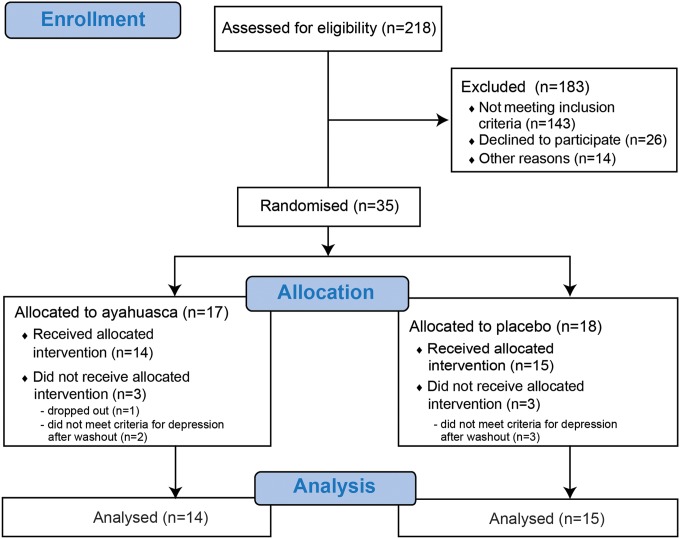
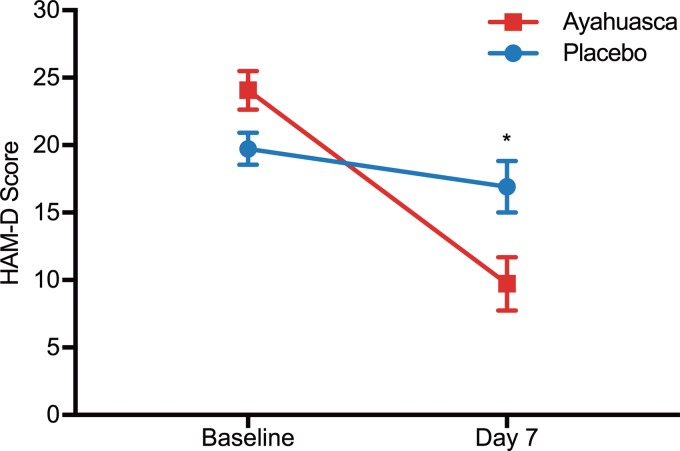
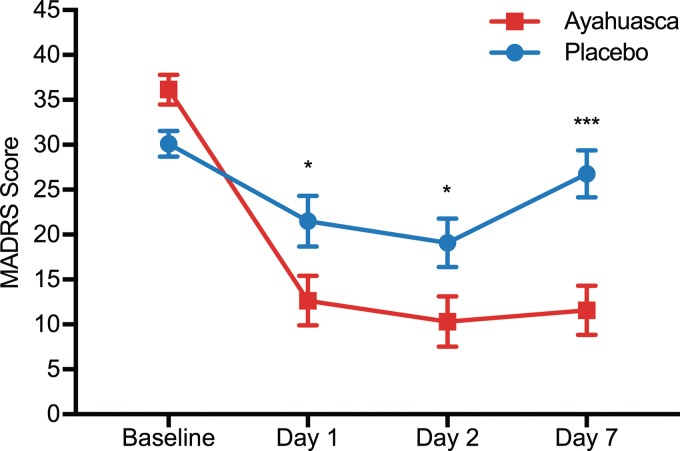
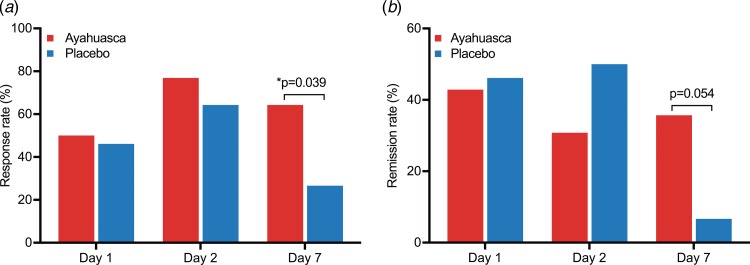
Background: Recent open-label trials show that psychedelics, such as ayahuasca, hold promise as fast-onset antidepressants in treatment-resistant depression. Methods: To test the antidepressant effects of ayahuasca, we conducted a parallel-arm, double-blind randomized placebo-controlled trial in 29 patients with treatment-resistant depression. Patients received a single dose of either ayahuasca or placebo. We assessed changes in depression severity with the Montgomery-Åsberg Depression Rating Scale (MADRS) and the Hamilton Depression Rating scale at baseline, and at 1 (D1), 2 (D2), and 7 (D7) days after dosing. Results: We observed significant antidepressant effects of ayahuasca when compared with placebo at all-time points. MADRS scores were significantly lower in the ayahuasca group compared with placebo at D1 and D2 ( p = 0.04), and at D7 ( p < 0.0001). Between-group effect sizes increased from D1 to D7 (D1: Cohen's d = 0.84; D2: Cohen's d = 0.84; D7: Cohen's d = 1.49). Response rates were high for both groups at D1 and D2, and significantly higher in the ayahuasca group at D7 (64% v. 27%; p = 0.04). Remission rate showed a trend toward significance at D7 (36% v. 7%, p = 0.054). Conclusions: To our knowledge, this is the first controlled trial to test a psychedelic substance in treatment-resistant depression. Overall, this study brings new evidence supporting the safety and therapeutic value of ayahuasca, dosed within an appropriate setting, to help treat depression. This study is registered at http://clinicaltrials.gov (NCT02914769).
Overview
The claims and statistics of this paper haven’t been checked yet.
Free: it reads the open-access text and checks the first 5 claims that cite a source we can check. Create a free account to check every claim.
Integrity signals
Registry
Cites
Statistics
Figures
Verification
Claims the paper makes
The claims and statistics of this paper haven’t been checked yet.
Free: it reads the open-access text and checks the first 5 claims that cite a source we can check. Create a free account to check every claim.
Claims other papers make about this one
Each is checked against this paper’s own text: does it say what the citing paper says it does?
The cited source doesn’t support the claim as written.
In the citing paper
“overall psychiatric scales in the ayahuasca group were significatively higher than those in the placebo group in all time points after dosing.”
From Virtual reality and psychedelics for the treatment of psychiatric disease: A systematic literature review (2020) · doi:10.36131/cnfioritieditore20200606 · cites this paper as Palhano-Fontes et al. (2019)
Checked by a reasoning model — may be wrong.
Experimental — accuracy not yet measuredThe source backs part of the claim, not all of it — or backs it for a different population, condition or comparison.
In the citing paper
“Ayahuasca stimulates emotional dream-like experiences involving potent cognitive-affective changes and spiritual insights (Dobkin de Rios, 1971) that have been associated with substantial and enduring antidepressant effects (Palhano-Fontes et al., 2019; Weiss et al., 2021).”
From Prospective examination of the therapeutic role of psychological flexibility and cognitive reappraisal in the ceremonial use of ayahuasca (2022) · cites this paper as Palhano-Fontes et al., 2019
Experimental — accuracy not yet measuredThe source backs part of the claim, not all of it — or backs it for a different population, condition or comparison.
In the citing paper
“Ayahuasca, or its chemical equivalent known as pharmahuasca, has emerged as a tool for psychotherapy in the contexts of affective and substance use disorders [130,131], thus calling for a better understanding of its possible mechanisms of action.”
From Molecular and Functional Imaging Studies of Psychedelic Drug Action in Animals and Humans. (2021) · cites this paper as [130]
Experimental — accuracy not yet measuredThe source backs part of the claim, not all of it — or backs it for a different population, condition or comparison.
In the citing paper
“Moreover, comorbid conditions such as suicidality and substance use disorders further complicate research efforts (13, 18, 20, 21).”
From Psychoanalytically informed MDMA-assisted therapy for pathological narcissism: a novel theoretical approach (2025) · cites this paper as [20]
Experimental — accuracy not yet measuredThe source backs part of the claim, not all of it — or backs it for a different population, condition or comparison.
In the citing paper
“Ayahuasca has been demonstrated to be safe in naturalistic (35, 108) and clinical settings, across varying dosages and multiple administrations (26, 109–112).”
From Ayahuasca-assisted meaning reconstruction therapy for grief: a non-randomized clinical trial protocol (2025) · cites this paper as [26]
Experimental — accuracy not yet measured
16 more claims about this paper
Create a free account to see every claim other papers make about this one.
Self-check
Percentages, sums and reported differences re-computed from the paper’s own numbers.
The self-check needs the paper’s full text.
Citations
Cites
Hamilton, M. (1960) · Journal of Neurology, Neurosurgery & Psychiatry · doi:10.1136/jnnp.23.1.56 · Cited by 32,817 · cited 1×
“HAM-D was applied only at baseline and D7, as it was designed to access depression symptoms present in the last week (Hamilton, 1960).”
MethodAntidepressant effects of ketamine in depressed patients
Berman, R. M., Cappiello, A., Anand, A., Oren, D. A., Heninger, G. R., Charney, D. S., & Krystal, J. H. (2000) · Biological Psychiatry · doi:10.1016/s0006-3223(99)00230-9 · Cited by 3,856 · cited 7×
“While we find a response rate to placebo of 46% at D1, and 26% at D7, ketamine trials have found a placebo effect of the order of 0 – 6% at D1, and 0 – 11% at D7 (Berman et al. , 2000; Zarate et al. , 2006; Murrough et al. , 2013; Lapidus et al. , 2014).”
BackgroundInfluentialA randomized trial of an N-methyl-D-aspartate antagonist in treatment-resistant major depression.
Zarate, C. A., Singh, J. B., Carlson, P. J., Brutsche, N. E., Ameli, R., Luckenbaugh, D. A., Charney, D. S., & Manji, H. K. (2006) · Archives of General Psychiatry · doi:10.1001/archpsyc.63.8.856 · Cited by 3,766 · cited 4×
“At D7, the ketamine response rate ranges between 7 and 35% (Berman et al., 2000; Zarate et al., 2006; Murrough et al., 2013; Lapidus et al., 2014), while in our study 64% responded to ayahuasca.”
BackgroundInfluentialOtte, C., Gold, S. M., Penninx, B. W., Pariante, C. M., Etkin, A., Fava, M., Mohr, D. C., & Schatzberg, A. F. (2016) · Nature Reviews Disease Primers · doi:10.1038/nrdp.2016.65 · Cited by 2,269 · cited 2×
“We recently found that a single ayahuasca session in patients with depression increases blood flow in brain regions consistently implicated in the regulation of mood and emotions, such as the left nucleus accumbens, right insula and left subgenual area (Otte et al. , 2016; Sanches et al. , 2016).”
BackgroundGriffiths, R. R., Johnson, M. W., Carducci, M. A., Umbricht, A., Richards, W. A., Richards, B. D., Cosimano, M. P., & Klinedinst, M. A. (2016) · Journal of Psychopharmacology · doi:10.1177/0269881116675513 · Cited by 2,201
Nichols, D. E. (2016) · Pharmacological Reviews · doi:10.1124/pr.115.011478 · Cited by 1,762
Ross, S., Bossis, A., Guss, J., Agin-Liebes, G., Malone, T., Cohen, B., Mennenga, S. E., Belser, A., Kalliontzi, K., Babb, J., et al. (2016) · Journal of Psychopharmacology · doi:10.1177/0269881116675512 · Cited by 1,698 · cited 4×
“Prior studies suggest that elements of the psychedelic experience, such as experiences of mystical-type, account for the therapeutic benefit (Bogenschutz et al., 2015; Garcia-Romeu et al., 2015; Majić et al., 2015; Griffiths et al., 2016; Ross et al., 2016).”
BackgroundInfluentialCarhart-Harris, R. L., Bolstridge, M., Rucker, J., Day, C. M. J., Erritzoe, D., Kaelen, M., Bloomfield, M., Rickard, J. A., Forbes, B., Feilding, A., et al. (2016) · The Lancet Psychiatry · doi:10.1016/s2215-0366(16)30065-7 · Cited by 1,540 · cited 4×
“substances affect the brain, and also probing their potential in treating different psychiatric conditions, including mood disorders (Grob et al., 2011; Osório et al., 2015; Carhart-Harris et al., 2016; Griffiths et al., 2016; Ross et al., 2016; Sanches et al., 2016).”
BackgroundResultInfluentialThe default mode network and self-referential processes in depression
Sheline, Y. I., Barch, D. M., Price, J. L., Rundle, M. M., Vaishnavi, S. N., Snyder, A. Z., Mintun, M. A., Wang, S., Coalson, R. S., & Raichle, M. E. (2009) · Proceedings of the National Academy of Sciences · doi:10.1073/pnas.0812686106 · Cited by 1,480 · cited 2×
“Moreover, we have shown that ayahuasca reduces the activity of the Default Mode Network (Palhano-Fontes et al. , 2015), a brain network found to be hyperactive in depression (Sheline et al. , 2009).”
BackgroundPilot Study of Psilocybin Treatment for Anxiety in Patients With Advanced-Stage Cancer
Grob, C. S., Danforth, A. L., Chopra, G. S., Hagerty, M., McKay, C. R., Halberstadt, A. L., & Greer, G. R. (2011) · Archives of General Psychiatry · doi:10.1001/archgenpsychiatry.2010.116 · Cited by 1,206 · cited 2×
“…exploring how these substances affect the brain, and also probing their potential in treating different psychiatric conditions, including mood disorders (Grob et al. , 2011; Osório et al. , 2015; Carhart-Harris et al. , 2016; Griffiths et al. , 2016; Ross et al. , 2016; Sanches et al. , 2016).”
Background
Research works printed but not linked: 3
- World Health Organization (2017) Depression and Other Common Mental Disorders: Global Health Estimates. Rep. CC BY-NC-SA 3.0 IGO. Geneva: World Health Organization.
- Tafur J (2017) The Fellowship of the River: A Medical Doctor's Exploration into Traditional Amazonian Plant Medicine. Espiritu, Phoenix.
- Luna LE (2011) Indigenous and Mestizo use of Ayahuasca. An Overview. The Ethnopharmacology of Ayahuasca. Tivandrum: Transworld Research Network.
Cited by
Items 601–700 of 850
de, M. O. F., de, A. M., de Oliveira, S. I. M., Ruiz, A. L. T. G., da, C. J. L., da Silva, M. R., & Foglio, M. A. (2021) · World Journal of Advanced Research and Reviews · doi:10.30574/wjarr.2021.10.2.0209 · Cited by 2
Behavioral characterization of ayahuasca treatment on Wistar rats in the open field test
Farias, C. P., Victoria, P. P., Xavier, J., Sekine, F. G., Ribeiro, E. S., Cognato, G. D. P., & de Carvalho, H. W. (2022) · Brazilian Journal of Pharmaceutical Sciences · doi:10.1590/s2175-97902022e21110 · Cited by 3
Arbouche, N., de Lestrange, A., Hacquet, R., Ricaut, F., Raul, J., & Kintz, P. (2023) · Annales de Toxicologie Analytique · doi:10.1016/j.toxac.2023.07.004 · Cited by 2
Oña, G. (2023) · Quaderns de l'Institut Català d'Antropologia · doi:10.56247/qua.401 · Cited by 4
Disorders due to Substance Use: Hallucinogens and MDMA-Related Substances
Nayak, S. M., & Johnson, M. W. (2023) · Springer eBooks · doi:10.1007/978-3-030-42825-9_94-1 · Cited by 4
NPS pharmacology and toxicology
Gerona, R. R. L. (2024) · Elsevier eBooks · doi:10.1016/b978-0-12-811764-4.00013-6 · Cited by 2
Disorders due to Substance Use: Hallucinogens and MDMA-Related Substances
Nayak, S. M., & Johnson, M. W. (2024) · Springer eBooks · doi:10.1007/978-3-030-51366-5_94 · Cited by 2
Fluyau, D., Kailasam, V. K., & Revadigar, N. (2024) · Psychoactives · doi:10.3390/psychoactives3040029 · Cited by 2
Li, J.-R., Chiang, K.-T., Kao, Y., Yu, C., Yang, F., Liang, C., & Hsu, T. (2024) · Journal of Affective Disorders · doi:10.1016/j.jad.2024.10.016 · Cited by 4
Psychedelic Nation? (De)Provincializing the Psychedelic Renaissance from Brazil
Benedito, P., & Sanabria, E. (2024) · Science Technology & Human Values · doi:10.1177/01622439241300210 · Cited by 6
“The Brain Institute of Natal, Brazil went on to conduct the fi rst ever double-blind randomized controlled trial of ayahuasca, which showed promise for addressing treatment-resistant depression, placing Brazil on the map of the global psyche-delic renaissance (Palhano-Fontes et al. 2019).”
Is there a place for psychedelics in sports practice?
Portes, M. A. M., Werle, I., & Bertoglio, L. J. (2025) · Acta Neuropsychiatrica · doi:10.1017/neu.2025.13 · Cited by 4
Holborn, T., Schifano, F., Smith, E., & Deluca, P. (2025) · Psychoactives · doi:10.3390/psychoactives4030028 · Cited by 4
Terapia antidepresiboaren azken pausoak: oraina eta geroa
Erkizia-Santamaría, I., Ortega, J. E., & Horrillo, I. (2020) · Osagaiz osasun-zientzien aldizkaria · doi:10.26876/osagaiz.2.2020.311 · Cited by 2
Hibicke, M., Billac, G. B., & Nichols, C. D. (2024) · Psychedelic Medicine · doi:10.1089/psymed.2023.0037 · Cited by 2
Propriété égolytique des psychédéliques et intérêts dans le traitement de la dépression
Fauvel, B., Mutlu, J., & Piolino, P. (2020) · Psychologie Française · doi:10.1016/j.psfr.2020.09.007 · Cited by 5
Salamat, J. M., Abbott, K. L., Gill, K. S., Flannery, P. C., Biancardi, V. C., Boothe, D. M., Huang, C. J., Mani, S., Chandran, A., Vishveshwara, S., et al. (2021) · Springer eBooks · doi:10.1007/978-981-33-4141-8_5 · Cited by 2
Oña, G. (2018) · Cultura y Droga · doi:10.17151/culdr.2018.23.26.3 · Cited by 7
de Moura, A. M., Aragão, M. B. D. M., Conceição, D. C. D. O., & Seixas, K. B. (2022) · Research Society and Development · doi:10.33448/rsd-v11i4.27182 · Cited by 5
Husain, M. I., Umer, M., & Mulsant, B. H. (2022) · Expert Opinion on Drug Safety · doi:10.1080/14740338.2022.2063274 · Cited by 2
“Three studies used ayahuasca administered orally in patients with TRD (defined as >1 antidepressant failure).”
BackgroundInfluentialUnveiling ayahuasca psychopharmacology: the accomplishments of Jordi Riba (1968-2020)
SANTOS, R. G. D., de Araújo, D. B., Sanches, R. F., & Hallak, J. E. C. (2020) · Brazilian Journal of Psychiatry · doi:10.1590/1516-4446-2020-0021 · Cited by 2
Self-citationUpdate of the Altered States Database (ASDB): 2022-12-31Preprint
Peters, M., Prugger, J., Dimkov, P. R., & Schmidt, T. T. (2023) · PsyArXiv (OSF Preprints) · doi:10.31234/osf.io/wdfhg · Cited by 3
Peled‐Avron, L., Aday, J. S., Kalafateli, A. L., Hamilton, H., & Woolley, J. D. (2024) · Frontiers in Psychiatry · doi:10.3389/fpsyt.2024.1431389 · Cited by 3
MDMA-assisted therapy for borderline personality disorder
Inouye, A. M., Wolfgang, A. S., & Philhower, L. T. (2023) · Journal of Psychedelic Studies · doi:10.1556/2054.2023.00196 · Cited by 1
Fernandes, L. A., Viegas, F., Serrano, R., & Santos, N. B. (2019) · European Neuropsychopharmacology · doi:10.1016/j.euroneuro.2019.09.621 · Cited by 1
Inouye, A. M., Wolfgang, A. S., & Philhower, L. T. (2024) · Journal of Psychedelic Studies · doi:10.1556/2054.2023.00281 · Cited by 1
Brazilian Psychedelic Science and the Frontiers of Psychiatry
de Araújo, D. B., Sanchez, T. A., & Ribeiro, S. T. G. (2024) · Jornal Brasileiro de Psiquiatria · doi:10.1590/0047-2085-2023-0087 · Cited by 1
Self-citationThe role of Folk medicine in achieving the traditional goals through IKS: A Review
Anowar, S., & Das, S. (2024) · doi:10.52756/lbsopf.2024.e03.007 · Cited by 1
Fradet, M. (2025) · Psychoactives · doi:10.3390/psychoactives4030021 · Cited by 2
Wittayakarn, N., Tan, Y., Choomalaiwong, P., Chen, S., Hoer, D. R., Thaoboonruang, N., & Lohitnavy, M. (2025) · Toxicological Sciences · doi:10.1093/toxsci/kfaf118 · Cited by 2
Lam, K. D., Griffin, C., Kantipudi, S., Mwai, D., Kahn, J. G., & Marseille, E. (2025) · Journal of Psychedelic Studies · doi:10.1556/2054.2025.00432 · Cited by 1
Psychedelic studies in nonhuman primates: Past and future
Masthay, J. C., Kwan, A. C., & Chang, S. W. C. (2025) · Molecular Psychiatry · doi:10.1038/s41380-025-03240-5 · Cited by 4
“Less research has been devoted to DMT and mescaline in this context, but preliminary evidence suggests that they may have similar therapeutic effects [45, 100, 101].”
Herrmann, F. M., Jones, G. M., Low, D. M., Zech, J. M., Carhart-Harris, R. L., & Kettner, H. (2025) · Journal of Psychiatric Research · doi:10.1016/j.jpsychires.2025.09.007 · Cited by 1
Valle-Kendall, R. B., & Rivera, C. P. (2025) · Religions · doi:10.3390/rel16101322 · Cited by 2
“…studies have documented improvements in mood, affect regulation, and well-being following participation in rituals such as ayahuasca ceremonies (Palhano-Fontes et al. 2019; Uthaug et al. 2018), and similar effects have been linked to cacao’s psychoactive components (Scholey et al. 2010).”
InfluentialNadal‐Gratacós, N., Puigseslloses, P., Guzmán, L., Weiss, N., Pottie, E., Riera-Colomer, C., Lardeux, V., Thiriet, N., Wang, F.-H., Källsten, L., et al. (2025) · Molecular Psychiatry · doi:10.1038/s41380-025-03341-1 · Cited by 3
“In recent years, interest has grown in the potential of psychedelics, such as psilocybin and dimethyltryptamine (DMT), to provide rapid and long-lasting antidepressant effects [7, 8].”
Baumann, M. H., Glatfelter, G. C., Walton, S. E., Krotulski, A. J., Witowski, C. G., & von Salm, J. L. (2025) · Psychopharmacology · doi:10.1007/s00213-025-06879-8 · Cited by 2
“…of indigenous populations provide valuable insights into the therapeutic potential of natural drug mixtures, and Ayahuasca is reported to induce antidepressant effects similar to those produced by psilo - cybin in controlled human trials (see Sanches et al. 2016; Palhano-Fontes et al. 2019).”
Perkins, D., Halman, A., Urokohara, A., Palumbo, J., Low, M., Ruffell, S., Coelho, N. L. G., Collins, L., Norman, A. F., & Sarris, J. J. (2025) · Scientific Reports · doi:10.1038/s41598-025-25767-x · Cited by 1
“Comparison between mean total scores given on the Mystical Experience Questionnaire (MEQ) in the present study and in other psychedelic studies 10,18,19,21,27,46,49–59 . that the product was able to reliably induce mystical experiences comparable to, or surpassing, those reported in other…”
InfluentialLodetti, G., Réus, G. Z., & Rico, E. P. (2026) · Neuroscience · doi:10.1016/j.neuroscience.2026.01.022 · Cited by 1
Camargos, G. S., de Faria, G. M., Lourenço, M., & Filho, G. M. D. A. (2026) · Frontiers in Psychiatry · doi:10.3389/fpsyt.2026.1726909 · Cited by 4
Soares, C., Lima, G., Teixeira, M., André, R., Rijo, P. M., Cabral, C., & Castelo-Branco, M. S. (2026) · Social Cognitive and Affective Neuroscience · doi:10.1093/scan/nsag004 · Cited by 1
Haupt, M. J., Carra, S., Boehnke, K. F., & Aday, J. S. (2026) · Progress in Neuro-Psychopharmacology and Biological Psychiatry · doi:10.1016/j.pnpbp.2026.111634 · Cited by 3
Effects of ayahuasca on neuropsychological performance and social cognition: A systematic review
de Paula, C. C., Vicentini, A. B., Guerra, L. T. L., Bouso, J. C., Hallak, J. E. C., & SANTOS, R. G. D. (2026) · Journal of Psychopharmacology · doi:10.1177/02698811261424212 · Cited by 1
“For instance, clinical trials have reported antidepressant and anxiolytic effects of ayahuasca/DMT (Falchi-Carvalho et al., 2025; Palhano-Fontes et al., 2019; Sanches et al., 2016), psilocybin (Goodwin et al., 2022, 2023, 2025), and LSD (Müller et al., 2025).”
Self-citationBrache, K., & Diazgranados, M. (2026) · Frontiers in Pharmacology · doi:10.3389/fphar.2026.1729887 · Cited by 1
Deutsch, A., Contreras, L. E., Kratina, S., & Mayo, L. M. (2026) · Therapeutic Advances in Psychopharmacology · doi:10.1177/20451253261433836 · Cited by 1
“28,29,32 Overall, about half ( n = 6/13) of all studies measured anxiety symptoms, and all (100%; n = 13/13) studies measured depressive symptoms.”
InfluentialLodetti, G., Inserra, A., Redivo, H., Teixeira, A. G., de Bitencourt, R. M., & Rico, E. P. (2026) · Psychopharmacology · doi:10.1007/s00213-026-07058-z · Cited by 1
New Antidepressant Development in the Treatment of Depression
Spiti, A., Caldirola, D., & Perna, G. (2026) · Advances in experimental medicine and biology · doi:10.1007/978-981-95-6872-7_23 · Cited by 2
Bhat, A., Zolali, E., Sakib, M. A., Rahimian, M., McMahon, L. R., German, N., & Obeng, S. (2026) · ACS Chemical Neuroscience · doi:10.1021/acschemneuro.6c00202 · Cited by 2
Music Playlist Use in Clinical Trials of Psychedelic Assisted Psychotherapy: A Systematic Review
da Cruz, L. V. M., Beserra, F. R., FREIND, J. M. K., Rodrigues, S. E., & Mograbi, D. C. (2026) · Journal of Clinical Psychology · doi:10.1002/jclp.70167 · Cited by 3
Guidetti, C., Fava, M., & Papakostas, G. I. (2026) · Molecular Psychiatry · doi:10.1038/s41380-026-03722-0 · Cited by 1
“A parallel-arm, double-blind, randomized, placebo-controlled trial in 29 patients with TRD was conducted to evaluate the effect of a single dose of ayahuasca [63].”
Depression in neurodegenerative disease: neurobiological mechanisms and emerging treatments
Costello, H., Reeves, S., Glue, P., Young, A. H., & Howard, R. J. (2026) · Molecular Psychiatry · doi:10.1038/s41380-026-03728-8 · Cited by 3
“Smaller trials of ayahuasca ( n = 29) [105] and dimethyltryptamine (DMT) ( n = 10) [106], also reported rapid symptom reductions, but were limited by sample size and short follow-up.”
Bolcont, R., Palhano-Fontes, F., Barros, H., Laborde, S., Amorim, D., Falchi-Carvalho, M., Coelho, N. L. G., Wießner, I., & de Araújo, D. B. (2026) · Journal of Psychopharmacology · doi:10.1177/02698811261465005 · Cited by 1
“Studies with ayahuasca have shown rapid antidepressant and anxiolytic effects, alongside improvements in quality of life, often after a single administration (Barbosa et al., 2012; Palhano-Fontes et al., 2018; Ruffell et al., 2023; Sanches et al., 2016).”
Self-citationVarela, Y. M., Cavalcanti-Ribeiro, P., de Sousa, G. M., Falchi-Carvalho, M., Barbalho, J. D. S. F., Gomes, R. B. D. O., Gurgel, M. M. M., Pereira, B. C., Souza, P. M. D. L., Gonçalves, K. T. D. C., et al. (2026) · Journal of Affective Disorders · doi:10.1016/j.jad.2026.122369 · Cited by 1
Self-citationvan der Heijden, K. V., Makai‐Bölöni, S., Inamdar, A., Otto, M. E., Hegle, A. P., Aa, L., Zuiker, R. G. J. A., Bohoslavsky, R., de Kam, M. L., James, E., et al. (2026) · Journal of Psychopharmacology · doi:10.1177/02698811261473451 · Cited by 2
Mechlińska, A., Kwaśny, A., Pastuszak, M., & Cubała, W. J. (2026) · Nutritional Psychiatry · doi:10.1016/j.nupsyc.2026.100036 · Cited by 1
Compreensão de Sentidos Atribuídos à Ayahuasca: Percursos Terapêuticos do Uso Ritualístico
de Assis, J. T., & Conceição, M. I. G. (2020) · PHENOMENOLOGICAL STUDIES - Revista da Abordagem Gestáltica · doi:10.18065/2020v26n2.4 · Cited by 6
“…2015; Doering-Silveira et al., 2005; Escobar, 2012; Grob et al., 2004; Halpern et al., 2008; Lizardo de Assis, Faria & Lins, 2014; Mercante, 2013; Mercante, 2017; Mckenna, 2004; Osório, 2011; Osório et al., 2015; Palhano-Fontes et al., 2013; Palhano-Fontes et al., 2019; Silveira et al., 2005).”
Trevisani, A. C., Trevisani, J. P. C., Haverroth, M., Melo, A. D. C., dos Santos, I. C., Barbosa, L. N., & Gonçalves, D. D. (2021) · Journal of Agricultural Studies · doi:10.5296/jas.v9i1.17910 · Cited by 3
Amanai, A. B. A., Faria, S. M., Bigatto, K. R. S., & de Azevedo, O. A. (2022) · Research Society and Development · doi:10.33448/rsd-v11i11.33651 · Cited by 2
Plantes psychotropes, médecines traditionnelles autochtones du Pérou et renaissance psychédélique
Berlowitz, I. (2022) · Drogues santé et société · doi:10.7202/1090700ar · Cited by 1
Uso de psicodélicos para tratamento de transtornos psiquiátricos: uma revisão integrativa
de Souza, P. H. M., & Souza, G. P. (2023) · Bionorte · doi:10.47822/bn.v12isuppl.2.528 · Cited by 2
The DEA report on ayahuasca risks: “Science” in service of prohibition?
Labate, B. C., Ermakova, A. O., Sloshower, J., Coelho, N. L. G., Palhano-Fontes, F., Antunes, H. F., de Assis, G. L., Cavnar, C., de Araújo, D. B., & Ribeiro, S. T. G. (2023) · Journal of Psychedelic Studies · doi:10.1556/2054.2023.00279 · Cited by 2
Self-citationPharmacotherapy of Psychological Disorders Using Psychedelic Drugs: A Treatise for Psychiatrists
Ghosh, P., & Sur, D. (2024) · Current Psychiatry Research and Reviews · doi:10.2174/0126660822258502231120074036 · Cited by 1
RATTACASO, G. G., de Moraes, R. A., & Bachur, T. P. R. (2024) · Revista Intertox de Toxicologia Risco Ambiental e Sociedade · doi:10.22280/revintervol17ed1.567 · Cited by 1
Introduction: philosophy and psychedelic psychiatry
Letheby, C., & Gerrans, P. (2024) · Oxford University Press eBooks · doi:10.1093/oso/9780192898371.003.0001 · Cited by 1
Psychedelic-assisted grief therapy: a mixed-method case study
Sabucedo, P., Evans, C., Nicolson, D., Farré, M., & González, D. (2024) · Mortality · doi:10.1080/13576275.2024.2434456 · Cited by 2
“…a series of randomised controlled studies has found ayahuasca to be potentially effective for treatment-resistant depression (Osório et al., 2015; Palhano-Fontes et al., 2019; Sanches et al., 2016), and non-controlled studies suggest it may be effective for the treatment of addiction (Nunes et…”
Vinarcsik, L., Smoller, C., & Grossberg, G. T. (2025) · Drugs & Aging · doi:10.1007/s40266-025-01221-5 · Cited by 1
“Expanding on the potential of psychedelics for depression treatment, a 2019 randomized placebo-controlled trial of ayahuasca in treatment-resistant depression revealed significant antidepressant effects in comparison with placebo [75].”
Bonomo, Y. A., Norman, A. F., Collins, L., Ross, M., Dwyer, J. L., Perkins, D., & Sarris, J. J. (2025) · Frontiers in Psychiatry · doi:10.3389/fpsyt.2025.1545915 · Cited by 4
Serotonin and the psychedelics
Mehta, M. A., & Tricklebank, M. D. (2019) · Elsevier eBooks · doi:10.1016/b978-0-12-813323-1.00011-6 · Cited by 1
Ferreira, J. P. E., Bortoli, S., & Pereira, A. V. (2022) · Revista Virtual de Química · doi:10.21577/1984-6835.20220053 · Cited by 1
“Em outro estudo com Ayahuasca, mas com o grupo controle recebendo placebo, a ingestão da bebida foi eficaz no tratamento de transtornos depressivos resistentes à terapêutica tradicional com uma dose única correspondente a 0,36 mg/kg de DMT.30”
BackgroundApud, I. (2023) · Studies in Psychology Estudios de Psicología · doi:10.1080/02109395.2022.2163776 · Cited by 2
“Furthermore, ayahuasca could be useful for the treatment of certain mental afflictions such as depression, (Palhano-Fontes et al., 2019), eating disorders (Renelli et al., 2020) and SUD (Barbosa et al., 2018), among others.”
BackgroundMartins, B. L., Leite, E. D. S., Salomé, R. E. V., & Piazera, B. K. L. (2023) · Revista Científica do UBM · doi:10.52397/rcubm.v0i48.1423 · Cited by 27
Eckernäs, E., Koomen, J. V., Timmermann, C., Carhart-Harris, R. L., Röshammar, D., & Ashton, M. (2023) · CPT Pharmacometrics & Systems Pharmacology · doi:10.1002/psp4.13037 · Cited by 2
Usos da ayahuasca e discursos sobre transtornos mentais na imprensa brasileira 1960-2010
de Lima, V. M. (2023) · Ciencias Sociales y Religión · doi:10.20396/csr.v25i00.8671997 · Cited by 2
Ayahuasca no tratamento da farmacodependência à cocaína: possíveis intervenções terapêuticas?
Bruno, V. (2019) · Digital Library of Theses and Dissertations (Universidade de São Paulo) · doi:10.11606/d.9.2019.tde-09122019-185108 · Cited by 2
Stocker, K., Hasler, G., & Hartmann, M. (2021) · Journal of Psychiatric Research · doi:10.1016/j.jpsychires.2021.03.017 · Cited by 1
Kelley, D. P., Venable, K. E., Billac, G. B., Destouni, A., Ebenezer, P. J., Stadler, K., Nichols, C. D., Barker, S. A., & Francis, J. (2021) · Research Square · doi:10.21203/rs.3.rs-602961/v1 · Cited by 1
Karmirian, K., Goto‐Silva, L., Nascimento, J. M., Costa, M. N., Salerno, J. A., Ornelas, I. M., Vanderborght, B., Martins‐de‐Souza, D., & Rehen, S. K. (2021) · bioRxiv (Cold Spring Harbor Laboratory) · doi:10.1101/2021.06.16.448740 · Cited by 1
A Needs Assessment of Older Hispanics in Omaha, Nebraska
DiMartino, D. R. (1979) · DigitalCommons@UNO · Cited by 1
Depression and Anxiety Disorders
(2021) · Wiley eBooks · doi:10.1002/9781119870203.mpg003 · Cited by 1
Perkins, D., Ruffell, S., Day, K., Pinzon, D., & Sarris, J. J. (2022) · doi:10.31219/osf.io/e5tjc · Cited by 1
Kelley, D. P. (2022) · Louisiana State University · doi:10.31390/gradschool_dissertations.5761 · Cited by 1
Noribogaine effects on wakefulness and sleepPreprint
Castro‐Nin, J. P., Serantes, D., Rodríguez, P. M., González, B., Carrera, I., Torterolo, P., & González, J. (2023) · bioRxiv (Cold Spring Harbor Laboratory) · doi:10.1101/2023.07.26.550725 · Cited by 1
“These compounds’ potential health benefits include treating depression, anxiety, and addictions, outperforming traditional therapeutics (Palhano-Fontes et al., 2022, 2019).”
BackgroundLane, C. P., Tarka, V., Valentin, O., Lehmann, A., Hamel, É., & de Villers‐Sidani, E. (2024) · bioRxiv (Cold Spring Harbor Laboratory) · doi:10.1101/2024.09.27.614985 · Cited by 1
Orlowski, P., Ruban, A., Szczypiński, J., Hobot, J., Bielecki, M., & Bola, M. (2021) · PsyArXiv (OSF Preprints) · doi:10.31234/osf.io/k4xfg
“…reduced symptoms of depression and anxiety in patients diagnosed with a major depressive disorder (Carhart-Harris et al., 2016, 2021; Galvão-Coelho et al., 2021; Luoma et al., 2020; Palhano-Fontes et al., 2019), and increased participants’ extraversion and openness (Erritzoe et al., 2018).”
BackgroundHunter, N. (2018) · Springer eBooks · doi:10.1007/978-3-319-91752-8_5
The Nature of Healing in the Psychedelic Experience
Criddle, A. (2020) · PhilPapers (PhilPapers Foundation)
Efeitos agudos e subagudos de dose única de Ayahuasca no reconhecimento de expressões faciais
Rocha, J. M. (2020) · Digital Library of Theses and Dissertations (Universidade de São Paulo) · doi:10.11606/d.17.2020.tde-13042020-155227 · Cited by 1
Pesquisas com Ayahuasca na Psicologia: Uma revisão de literatura sobre o potencial terapêutico
Araújo, S. A. D., & Tatmatsu, D. I. B. (2020) · Revista de Psicologia · doi:10.36517/10.36517/revpsiufc.11.2.2020.12 · Cited by 6
FLCCC Alliance MATH+ ascorbic acid and I-MASK+ ivermectin protocols for COVID-19 – A Brief ReviewPreprint
Turkia, M. (2020) · SSRN Electronic Journal · doi:10.2139/ssrn.3723854
Johansen, L., Liknaitzky, P., Nedeljkovic, M., Mastin‐Purcell, L., & Murray, G. (2020) · Research Square · doi:10.21203/rs.3.rs-121894/v1
de Miranda, O. F. (2020) · Digital Library of Theses and Dissertations (Universidade de São Paulo) · doi:10.11606/t.11.2020.tde-12022021-101623 · Cited by 3
Fonseca, A. M., & Rodrigues, E. (2021) · Revista de ciencias farmaceuticas · doi:10.4322/2179-443x.0720 · Cited by 2
Ayahuasca as a Versatile Therapeutic Agent: From Molecules to Metacognition and Back
Valle, M., Domínguez‐Clavé, E., Elices, M., Pascual, J. C., Soler, J., Morales-Garcia, J. A., Pérez‐Castillo, A., & Riba, J. (2021) · Springer eBooks · doi:10.1007/978-3-030-55688-4_1 · Cited by 1
Honorato, B. E. F., & Saraiva, L. A. S. (2021) · REVER - Revista de Estudos da Religião · doi:10.23925/1677-1222.2021vol21i1a8
Rossi, G. N. (2020) · Digital Library of Theses and Dissertations (Universidade de São Paulo) · doi:10.11606/d.17.2020.tde-08022021-150020
Elaboração de escala avaliativa do setting no uso de ayahuasca
Pontual, A. A. D. D. (2021) · Digital Library of Theses and Dissertations (Universidade de São Paulo) · doi:10.11606/t.59.2021.tde-06082021-152437 · Cited by 1
ルポ 昼休みを生かしてリフレッシュ--東京急行電鉄(株)車両部長津田検車区 (作業の合間でリフレッシュ--休憩時間の過ごし方のヒント )
労働衛生編集部 (1995) · 労働衛生
Subjektívne vnímané riziká užívania psychedelík
Ústav aplikovanej psychológie, F. U., Lukačovič, M., Masaryk, R., & Ústav aplikovanej psychológie, F. U. (2021) · Ceskoslovenska psychologie · doi:10.51561/cspsych.65.6.608
Mason, N. L. (2021) · Research Publications (Maastricht University) · doi:10.26481/dis.20210608nm · Cited by 1
Bonson, K. R. (2020) · Wiley eBooks · doi:10.1002/9780470015902.a0029200 · Cited by 1
Forstmann, M., & Sagioglou, C. (2021) · PsyArXiv (OSF Preprints) · doi:10.31234/osf.io/2489x
(2022) · Brazilian Journal of Pharmaceutical Sciences · doi:10.1590/s2175-97902022e19373e
Metadata
- Authors
- Palhano-Fontes, F., Barreto, D., Onias, H., Andrade, K. C., Novaes, M. M., Pessoa, J. A., Mota-Rolim, S. A., Osório, F. L., Sanches, R., dos Santos, R. G., Tófoli, L. F., de Oliveira Silveira, G., Yonamine, M., Riba, J., Santos, F. R., Silva-Junior, A. A., Alchieri, J. C., Galvão-Coelho, N. L., Lobão-Soares, B., Hallak, J. E. C., Arcoverde, E., Maia-de-Oliveira, J. P., & Araújo, D. B.
- Affiliations
- Universidade Federal do Rio Grande do Norte (BR)
- Universidade de São Paulo (BR)
- Universidade Estadual de Campinas (UNICAMP) (BR)
- Corresponding author
- Araújo, Dráulio B.
- ORCID
- Venue
- Psychological Medicine
- Publisher
- Cambridge University Press (CUP)
- Published
- 2018-06-15
- Volume
- 49
- Issue
- 4
- Pages
- 655-663
- ISSN
- 0033-2917 (ISSN-L)
- 1469-8978
- PMC
- PMC6378413
- OpenAlex
- W2952169207
- Semantic Scholar
- 8e6a44612a52817ea7aa6d429c7bebd0e4d85192
- Cited by
- 852
- References
- 55
- Citations by year
- 2026: 93 · 2025: 98 · 2024: 142 · 2023: 124 · 2022: 131 · 2021: 116 · 2020: 77 · 2019: 45 · 2018: 22
- FWCI
- 76.38
- Type
- journal article
- Language
- en
- Open access
- hybrid
- doi.org
- Locations
- Psychological Medicine (publishedVersion, cc-by)
- bioRxiv (Cold Spring Harbor Laboratory) (acceptedVersion)
- Europe PMC (PubMed Central) (publishedVersion, cc-by)
- PubMed Central (publishedVersion, cc-by)
- PubMed (publishedVersion)
- Americanae (AECID Library) (publishedVersion, other-oa)
- LA Referencia (Red Federada de Repositorios Institucionales de Publicaciones Científicas) (publishedVersion, other-oa)
- Funders
- Coordenação de Aperfeiçoamento de Pessoal de Nível Superior (#1677/2012, 1577/2013)
- Conselho Nacional de Desenvolvimento Científico e Tecnológico (466760/2014, #479466/2013)
- Universidade Federal do Rio Grande do Norte
- Topics
- Social Sciences › Psychology › Clinical Psychology › Psychedelics and Drug Studies
- Health Sciences › Medicine › Pharmacology (medical) › Treatment of Major Depression
- Life Sciences › Neuroscience › Biological Psychiatry › Tryptophan and brain disorders
- Keywords
- ayahuasca, treatment-resistant depression, antidepressant effects, psychedelics, single-dose administration, depression remission
- MeSH terms
- Adult, Antidepressive Agents, Double-Blind Method, Female, Hallucinogens, Humans, Male, Phytotherapy, Psychiatric Status Rating Scales, Time Factors, Treatment Outcome, Banisteriopsis, Depressive Disorder, Treatment-Resistant
About these checks
Registry, retraction, Cites and statistics results are computed, not judged, with one exception: a printed reference that no index lists is read once by a model before it counts as a citation error. Claims are extracted by a model and kept only when their quote appears verbatim in the text; each cited source is then checked, with a model’s help, for whether it says what the claim relies on. Those verdicts can be wrong — read the claim’s quote and the cited source before relying on one.
Statistics and arithmetic are recomputed, not judged.
Confidence bands are shown only for fields calibrated on our annotated test set. None is calibrated yet, so no band is shown.
What counts as a claim ›How we measure confidence ›How we check this ›
Are you an author, or do you see a problem with this page? Request a review
Data sources
Bibliographic data: Semantic Scholar, OpenAlex, Crossref.
Contains information from the Semantic Scholar Academic Graph Datasets, made available under the ODC Attribution License (ODC-BY 1.0).
Semantic Scholar’s data is described in: Kinney, R., et al. (2023). The Semantic Scholar Open Data Platform. arXiv:2301.10140.
