

Rapid antidepressant effects of the psychedelic ayahuasca in treatment-resistant depression: a randomized placebo-controlled trial
Open accessPublished version of a preprint
The DOI matches its Crossref record; 55 of the 55 references it cites were found in a registry or an index.
Abstract
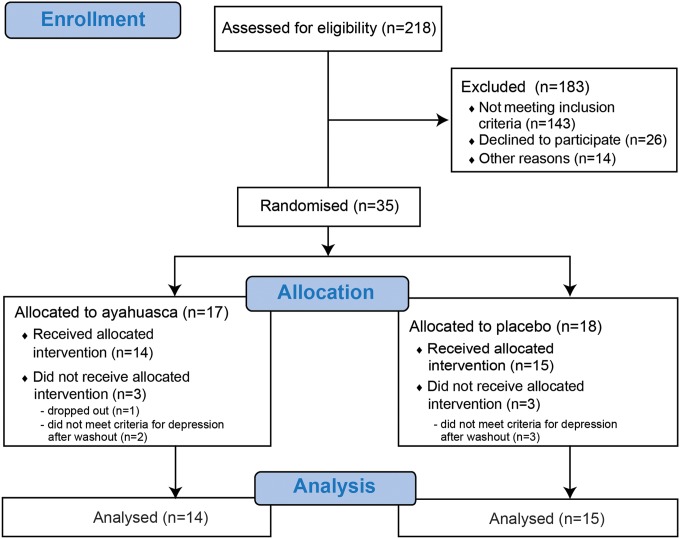
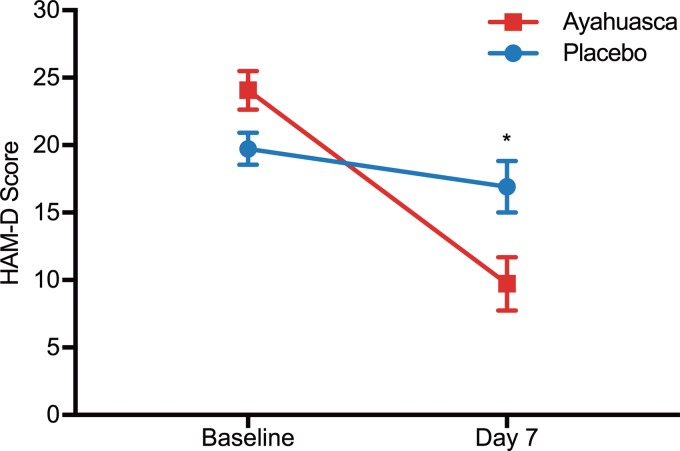
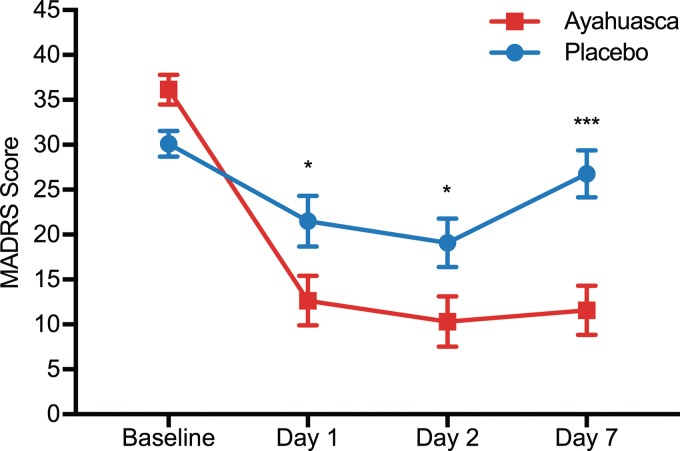
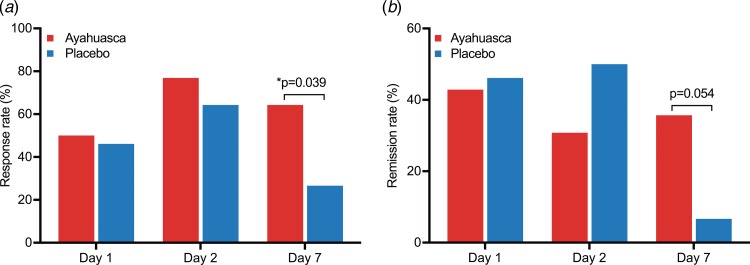
Background: Recent open-label trials show that psychedelics, such as ayahuasca, hold promise as fast-onset antidepressants in treatment-resistant depression. Methods: To test the antidepressant effects of ayahuasca, we conducted a parallel-arm, double-blind randomized placebo-controlled trial in 29 patients with treatment-resistant depression. Patients received a single dose of either ayahuasca or placebo. We assessed changes in depression severity with the Montgomery-Åsberg Depression Rating Scale (MADRS) and the Hamilton Depression Rating scale at baseline, and at 1 (D1), 2 (D2), and 7 (D7) days after dosing. Results: We observed significant antidepressant effects of ayahuasca when compared with placebo at all-time points. MADRS scores were significantly lower in the ayahuasca group compared with placebo at D1 and D2 ( p = 0.04), and at D7 ( p < 0.0001). Between-group effect sizes increased from D1 to D7 (D1: Cohen's d = 0.84; D2: Cohen's d = 0.84; D7: Cohen's d = 1.49). Response rates were high for both groups at D1 and D2, and significantly higher in the ayahuasca group at D7 (64% v. 27%; p = 0.04). Remission rate showed a trend toward significance at D7 (36% v. 7%, p = 0.054). Conclusions: To our knowledge, this is the first controlled trial to test a psychedelic substance in treatment-resistant depression. Overall, this study brings new evidence supporting the safety and therapeutic value of ayahuasca, dosed within an appropriate setting, to help treat depression. This study is registered at http://clinicaltrials.gov (NCT02914769).
Overview
The claims and statistics of this paper haven’t been checked yet.
Free: it reads the open-access text and checks the first 5 claims that cite a source we can check. Create a free account to check every claim.
Integrity signals
Registry
Cites
Statistics
Figures
Verification
Claims the paper makes
The claims and statistics of this paper haven’t been checked yet.
Free: it reads the open-access text and checks the first 5 claims that cite a source we can check. Create a free account to check every claim.
Claims other papers make about this one
Each is checked against this paper’s own text: does it say what the citing paper says it does?
The cited source doesn’t support the claim as written.
In the citing paper
“overall psychiatric scales in the ayahuasca group were significatively higher than those in the placebo group in all time points after dosing.”
From Virtual reality and psychedelics for the treatment of psychiatric disease: A systematic literature review (2020) · doi:10.36131/cnfioritieditore20200606 · cites this paper as Palhano-Fontes et al. (2019)
Checked by a reasoning model — may be wrong.
Experimental — accuracy not yet measuredThe source backs part of the claim, not all of it — or backs it for a different population, condition or comparison.
In the citing paper
“Ayahuasca stimulates emotional dream-like experiences involving potent cognitive-affective changes and spiritual insights (Dobkin de Rios, 1971) that have been associated with substantial and enduring antidepressant effects (Palhano-Fontes et al., 2019; Weiss et al., 2021).”
From Prospective examination of the therapeutic role of psychological flexibility and cognitive reappraisal in the ceremonial use of ayahuasca (2022) · cites this paper as Palhano-Fontes et al., 2019
Experimental — accuracy not yet measuredThe source backs part of the claim, not all of it — or backs it for a different population, condition or comparison.
In the citing paper
“Ayahuasca, or its chemical equivalent known as pharmahuasca, has emerged as a tool for psychotherapy in the contexts of affective and substance use disorders [130,131], thus calling for a better understanding of its possible mechanisms of action.”
From Molecular and Functional Imaging Studies of Psychedelic Drug Action in Animals and Humans. (2021) · cites this paper as [130]
Experimental — accuracy not yet measuredThe source backs part of the claim, not all of it — or backs it for a different population, condition or comparison.
In the citing paper
“Moreover, comorbid conditions such as suicidality and substance use disorders further complicate research efforts (13, 18, 20, 21).”
From Psychoanalytically informed MDMA-assisted therapy for pathological narcissism: a novel theoretical approach (2025) · cites this paper as [20]
Experimental — accuracy not yet measuredThe source backs part of the claim, not all of it — or backs it for a different population, condition or comparison.
In the citing paper
“Ayahuasca has been demonstrated to be safe in naturalistic (35, 108) and clinical settings, across varying dosages and multiple administrations (26, 109–112).”
From Ayahuasca-assisted meaning reconstruction therapy for grief: a non-randomized clinical trial protocol (2025) · cites this paper as [26]
Experimental — accuracy not yet measured
16 more claims about this paper
Create a free account to see every claim other papers make about this one.
Self-check
Percentages, sums and reported differences re-computed from the paper’s own numbers.
The self-check needs the paper’s full text.
Citations
Cites
Hamilton, M. (1960) · Journal of Neurology, Neurosurgery & Psychiatry · doi:10.1136/jnnp.23.1.56 · Cited by 32,817 · cited 1×
“HAM-D was applied only at baseline and D7, as it was designed to access depression symptoms present in the last week (Hamilton, 1960).”
MethodAntidepressant effects of ketamine in depressed patients
Berman, R. M., Cappiello, A., Anand, A., Oren, D. A., Heninger, G. R., Charney, D. S., & Krystal, J. H. (2000) · Biological Psychiatry · doi:10.1016/s0006-3223(99)00230-9 · Cited by 3,856 · cited 7×
“While we find a response rate to placebo of 46% at D1, and 26% at D7, ketamine trials have found a placebo effect of the order of 0 – 6% at D1, and 0 – 11% at D7 (Berman et al. , 2000; Zarate et al. , 2006; Murrough et al. , 2013; Lapidus et al. , 2014).”
BackgroundInfluentialA randomized trial of an N-methyl-D-aspartate antagonist in treatment-resistant major depression.
Zarate, C. A., Singh, J. B., Carlson, P. J., Brutsche, N. E., Ameli, R., Luckenbaugh, D. A., Charney, D. S., & Manji, H. K. (2006) · Archives of General Psychiatry · doi:10.1001/archpsyc.63.8.856 · Cited by 3,766 · cited 4×
“At D7, the ketamine response rate ranges between 7 and 35% (Berman et al., 2000; Zarate et al., 2006; Murrough et al., 2013; Lapidus et al., 2014), while in our study 64% responded to ayahuasca.”
BackgroundInfluentialOtte, C., Gold, S. M., Penninx, B. W., Pariante, C. M., Etkin, A., Fava, M., Mohr, D. C., & Schatzberg, A. F. (2016) · Nature Reviews Disease Primers · doi:10.1038/nrdp.2016.65 · Cited by 2,269 · cited 2×
“We recently found that a single ayahuasca session in patients with depression increases blood flow in brain regions consistently implicated in the regulation of mood and emotions, such as the left nucleus accumbens, right insula and left subgenual area (Otte et al. , 2016; Sanches et al. , 2016).”
BackgroundGriffiths, R. R., Johnson, M. W., Carducci, M. A., Umbricht, A., Richards, W. A., Richards, B. D., Cosimano, M. P., & Klinedinst, M. A. (2016) · Journal of Psychopharmacology · doi:10.1177/0269881116675513 · Cited by 2,201
Nichols, D. E. (2016) · Pharmacological Reviews · doi:10.1124/pr.115.011478 · Cited by 1,762
Ross, S., Bossis, A., Guss, J., Agin-Liebes, G., Malone, T., Cohen, B., Mennenga, S. E., Belser, A., Kalliontzi, K., Babb, J., et al. (2016) · Journal of Psychopharmacology · doi:10.1177/0269881116675512 · Cited by 1,698 · cited 4×
“Prior studies suggest that elements of the psychedelic experience, such as experiences of mystical-type, account for the therapeutic benefit (Bogenschutz et al., 2015; Garcia-Romeu et al., 2015; Majić et al., 2015; Griffiths et al., 2016; Ross et al., 2016).”
BackgroundInfluentialCarhart-Harris, R. L., Bolstridge, M., Rucker, J., Day, C. M. J., Erritzoe, D., Kaelen, M., Bloomfield, M., Rickard, J. A., Forbes, B., Feilding, A., et al. (2016) · The Lancet Psychiatry · doi:10.1016/s2215-0366(16)30065-7 · Cited by 1,540 · cited 4×
“substances affect the brain, and also probing their potential in treating different psychiatric conditions, including mood disorders (Grob et al., 2011; Osório et al., 2015; Carhart-Harris et al., 2016; Griffiths et al., 2016; Ross et al., 2016; Sanches et al., 2016).”
BackgroundResultInfluentialThe default mode network and self-referential processes in depression
Sheline, Y. I., Barch, D. M., Price, J. L., Rundle, M. M., Vaishnavi, S. N., Snyder, A. Z., Mintun, M. A., Wang, S., Coalson, R. S., & Raichle, M. E. (2009) · Proceedings of the National Academy of Sciences · doi:10.1073/pnas.0812686106 · Cited by 1,480 · cited 2×
“Moreover, we have shown that ayahuasca reduces the activity of the Default Mode Network (Palhano-Fontes et al. , 2015), a brain network found to be hyperactive in depression (Sheline et al. , 2009).”
BackgroundPilot Study of Psilocybin Treatment for Anxiety in Patients With Advanced-Stage Cancer
Grob, C. S., Danforth, A. L., Chopra, G. S., Hagerty, M., McKay, C. R., Halberstadt, A. L., & Greer, G. R. (2011) · Archives of General Psychiatry · doi:10.1001/archgenpsychiatry.2010.116 · Cited by 1,206 · cited 2×
“…exploring how these substances affect the brain, and also probing their potential in treating different psychiatric conditions, including mood disorders (Grob et al. , 2011; Osório et al. , 2015; Carhart-Harris et al. , 2016; Griffiths et al. , 2016; Ross et al. , 2016; Sanches et al. , 2016).”
Background
Research works printed but not linked: 3
- World Health Organization (2017) Depression and Other Common Mental Disorders: Global Health Estimates. Rep. CC BY-NC-SA 3.0 IGO. Geneva: World Health Organization.
- Tafur J (2017) The Fellowship of the River: A Medical Doctor's Exploration into Traditional Amazonian Plant Medicine. Espiritu, Phoenix.
- Luna LE (2011) Indigenous and Mestizo use of Ayahuasca. An Overview. The Ethnopharmacology of Ayahuasca. Tivandrum: Transworld Research Network.
Cited by
Items 101–200 of 850
Psychedelics and psychotherapy
Nayak, S., & Johnson, M. W. (2021) · Pharmacopsychiatry · doi:10.1055/a-1312-7297 · Cited by 71
“performed a randomized, placebo-controlled trial of ayahuasca for treatment-resistant depression [13].”
MethodPsychedelics as a novel approach to treating autoimmune conditions
Thompson, C., & Szabo, A. (2020) · Immunology Letters · doi:10.1016/j.imlet.2020.10.001 · Cited by 71
Therapeutic mechanisms of psychedelics and entactogens
Heifets, B. D., & Olson, D. E. (2023) · Neuropsychopharmacology · doi:10.1038/s41386-023-01666-5 · Cited by 80
“An interesting exception to this pattern is an early study testing the ef fi cacy of the N,N-dimethytrypamine (DMT)-containing brew, called ayahuasca, for depression [245].”
BackgroundPsychedelic therapy's transdiagnostic effects: A research domain criteria (RDoC) perspective
Kelly, J. R., Gillan, C. M., Prenderville, J., Kelly, C., Harkin, A., Clarke, G., & O'Keane, V. (2021) · Frontiers in Psychiatry · doi:10.3389/fpsyt.2021.800072 · Cited by 69
“In the same cohort ayahuasca reduced C-reactive protein (CRP) levels in both TRD (which were higher at baseline) and HCs compared to placebo, though this may be related to the increases in cortisol (89, 93).”
BackgroundGiluk (2009) · doi:10.1017/s003329172000389x · Cited by 68
Zeifman, R. J., & Wagner, A. C. (2020) · Journal of Contextual Behavioral Science · doi:10.1016/j.jcbs.2019.11.001 · Cited by 67
Davis, A. K., Xin, Y., Sepeda, N. D., Garcia-Romeu, A., & Williams, M. T. (2021) · Chronic Stress · doi:10.1177/24705470211035607 · Cited by 67
Johnston, J. N., Kadriu, B., Allen, J., Gilbert, J. R., Henter, I. D., & Zarate, C. A. (2023) · Neuropharmacology · doi:10.1016/j.neuropharm.2023.109422 · Cited by 76
Mertens, L. J., & Preller, K. H. (2021) · Pharmacopsychiatry · doi:10.1055/a-1341-1907 · Cited by 65
On the Relationship between Classic Psychedelics and Suicidality: A Systematic Review
Zeifman, R. J., Singhal, N., Breslow, L., & Weissman, C. R. (2021) · ACS Pharmacology & Translational Science · doi:10.1021/acsptsci.1c00024 · Cited by 73
Rosenblat, J. D., Husain, M. I., Lee, Y. L., McIntyre, R. S., Mansur, R. B., Castle, D. J., Offman, H., Parikh, S. V., Frey, B. N., Schaffer, A., et al. (2022) · The Canadian Journal of Psychiatry · doi:10.1177/07067437221111371 · Cited by 77
“However, based on the inpatient milieu used in all three trials, a certain degree of preparation and support may be assumed.(33,77,79) Although some form of psychological support may be necessary for the safety and antidepressant efficacy of psychedelic treatments, it is undetermined whether psychedelics would be as s…”
MethodResultvan Mulukom, V., Patterson, R. E., & van Elk, M. (2020) · Psychopharmacology · doi:10.1007/s00213-020-05568-y · Cited by 62
Jones, G. M., & Nock, M. K. (2022) · Journal of Psychopharmacology · doi:10.1177/02698811211058923 · Cited by 68
“anxiety, treatment-resistant depression, substance use disorder) (Bogenschutz and Johnson, 2016; Gasser et al., 2014; Palhano-Fontes et al., 2019; Zeifman et al., 2019).”
BackgroundPharmacokinetics of N,N-dimethyltryptamine in Humans
Good, M., Joel, Z., Benway, T. A., Routledge, C. A., Timmermann, C., Erritzøe, D., Weaver, R., Allen, G., Hughes, C., Topping, H., et al. (2023) · European Journal of Drug Metabolism and Pharmacokinetics · doi:10.1007/s13318-023-00822-y · Cited by 77
Noorani, T. N., Bedi, G., & Muthukumaraswamy, S. D. (2023) · Psychological Medicine · doi:10.1017/s0033291723001289 · Cited by 69
dos Santos, R. G., Bouso, J. C., Rocha, J. M., Rossi, G. N., & Hallak, J. E. (2021) · Risk Management and Healthcare Policy · doi:10.2147/rmhp.s300656 · Cited by 60
Self-citationChemical composition of traditional and analog Ayahuasca
Kaasik, H., Souza, R. C. Z., Zandonadi, F. S., Tófoli, L. F., & Sussulini, A. (2021) · Journal of Psychoactive Drugs · doi:10.1080/02791072.2020.1815911 · Cited by 59
“Ayahuasca can be safely administered in controlled settings and several studies suggest that it has anxiolytic, antidepressant, and anti-addictive effects (Palhano-Fontes et al. 2019; Santos et al. 2016b).”
BackgroundWolff, M., Mertens, L. J., Walter, M., Enge, S., & Evens, R. (2022) · Journal of Psychopharmacology · doi:10.1177/02698811211073758 · Cited by 58
Barker, S. A. (2022) · Psychopharmacology · doi:10.1007/s00213-022-06065-0 · Cited by 58
“To understand the potential of ayahuasca to contribute to modern medicine and its use in psychedelic therapeutics, it must be more thoroughly examined in the laboratory and in controlled clinical trials and medicinal studies (Kuypers et al., 2016; Palhano-Fontes et al., 2019).”
BackgroundModulatory effects of ayahuasca on personality structure in a traditional framework
Netzband, N., Ruffell, S., Linton, S., Tsang, W. F., & Wolff, T. (2020) · Psychopharmacology · doi:10.1007/s00213-020-05601-0 · Cited by 58
“Furthermore, several Brazilian studies have shown that a single dose of ayahuasca can have a rapid antidepressant effect on patients suffering from recurrent depression (Osório et al. 2015; Palhano-Fontes et al. 2019; Sanches et al. 2016).”
BackgroundColaço, C. S., Alves, S. S., Nolli, L. M., Pinheiro, W. O., de Oliveira, D. G. R., Santos, B. W. L., Pic-Taylor, A., Mortari, M. R., & Caldas, E. D. (2020) · Metabolic Brain Disease · doi:10.1007/s11011-020-00547-w · Cited by 58
“…nervous system disorders, either in animal models or in humans, including depression (Ahlem et al. 2015; Osoŕio et al. 2015; Sanches et al. 2016; Palhano-Fontes et al. 2018; Cameron et al. 2019) and drug addiction (Oliveira-Lima et al. 2015; Frecska et al. 2016; Domínguez-Clavé et al. 2016;…”
BackgroundReckweg, J., Mason, N. L., van Leeuwen, C., Toennes, S. W., Terwey, T. H., & Ramaekers, J. G. (2021) · Frontiers in Pharmacology · doi:10.3389/fphar.2021.760671 · Cited by 58
Aqil, M., & Roseman, L. (2022) · Neuropharmacology · doi:10.1016/j.neuropharm.2022.109300 · Cited by 69
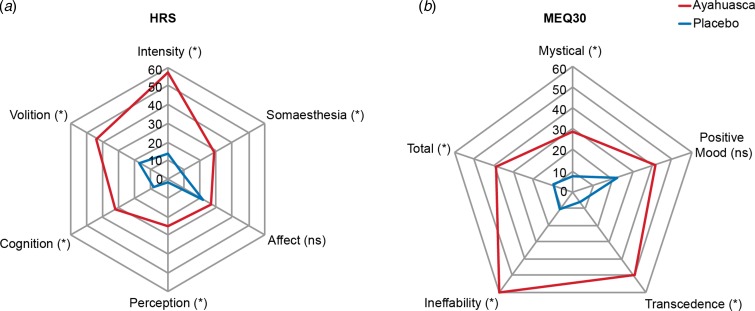
“…efficacy of ayahuasca in the treatment of depression and employing a different questionnaire, the Hallucinogen Rating Scale (Riba et al., 2001), found intensity of perceptual experience to be a significant predictor of remission in people that responded to treatment (Palhano-Fontes et al., 2019).”
BackgroundMethodLuoma, J. B., Sabucedo, P., Eriksson, J., Gates, N., & Pilecki, B. C. (2019) · Journal of Contextual Behavioral Science · doi:10.1016/j.jcbs.2019.10.003 · Cited by 56
Evens, R., Schmidt, M. E., Majić, T., & Schmidt, T. T. (2023) · Therapeutic Advances in Psychopharmacology · doi:10.1177/20451253231172254 · Cited by 56
“(4) No changes were reported in manic or psychotic symptoms or cognitive performance measures.”
BackgroundMethodRisk of bias in randomized clinical trials on psychedelic medicine: A systematic review
Hovmand, O. R., Poulsen, E. D., Arnfred, S., & Storebø, O. J. (2023) · Journal of Psychopharmacology · doi:10.1177/02698811231180276 · Cited by 72
“Seven (Bogenschutz et al., 2022; Gasser et al., 2014; Grob et al., 2011; Holze et al., 2022; Griffiths et al., 2016; Palhano-Fontes et al., 2019; Ross et al., 2016) trials published on the success of”
InfluentialHolze, F., Singh, N., Liechti, M. E., & D’Souza, D. C. (2024) · Biological Psychiatry Cognitive Neuroscience and Neuroimaging · doi:10.1016/j.bpsc.2024.01.007 · Cited by 78
dos Santos, R. G., & Hallak, J. E. C. (2021) · Epilepsy & Behavior · doi:10.1016/j.yebeh.2019.04.053 · Cited by 56
Self-citationdos Santos, R. G., Hallak, J. E., Baker, G., & Dursun, S. (2021) · Journal of Psychopharmacology · doi:10.1177/0269881120986422 · Cited by 55
“%) had a comorbid personality disorder, which could have influenced the results since patients with comorbid personality disorders can present higher placebo responses (Palhano-Fontes et al., 2019).”
MethodResultSelf-citationPsilocybin for Trauma-Related Disorders
Khan, A. J., Bradley, E., O’Donovan, A., & Woolley, J. (2022) · Current Topics in Behavioral Neurosciences · doi:10.1007/7854_2022_366 · Cited by 67
Leger, R. F., & Unterwald, E. M. (2021) · Journal of Psychopharmacology · doi:10.1177/02698811211044688 · Cited by 63
“Other trials introduced bias in the selection of the reported result domain via inclusion of multiple scales measuring the same outcome in most included trials (Carhart-Harris et al., 2018; Davis et al., 2021; Gasser et al., 2014; Griffiths et al., 2016; Grob et al., 2011; Palhano-Fontes et al., 2019; Ross et al., 201…”
BackgroundMethodResultInfluentialSolmi, M., Chen, C., Dauré, C., Buot, A., Ljuslin, M., Verroust, V., Mallet, L., Khazaal, Y., Rothen, S., Thorens, G., et al. (2022) · European Neuropsychopharmacology · doi:10.1016/j.euroneuro.2022.09.004 · Cited by 66
Perkins, D., Pagni, B. A., Sarris, J. J., Barbosa, P. C. R., & Chenhall, R. D. (2022) · Frontiers in Pharmacology · doi:10.3389/fphar.2022.884703 · Cited by 73
“Instead of subjective effects, based on the MEQ, predicting therapeutic outcomes, baseline personal characteristics pertaining to personality traits, general self-efficacy, and body dissociation at baseline strongly predicted improvements in mental health and alcohol and cannabis misuse/abuse.”
BackgroundResultInfluentialPsychedelic-assisted psychotherapy: Where is the psychotherapy research
Aday, J. S., Horton, D., Fernandes-Osterhold, G., O’Donovan, A., Bradley, E. R., Rosen, R. C., & Woolley, J. D. (2024) · Psychopharmacology · doi:10.1007/s00213-024-06620-x · Cited by 54
“This may be a particularly relevant hurdle for PAP, given that the treatment involves a limited number of sessions relative to traditional psychotherapy and can be characterized by periods of rapid, non-linear change in some cases (Palhano-Fontes et al. 2019).”
Agin-Liebes, G., Zeifman, R., Luoma, J. B., Garland, E. L., Campbell, W. K., & Weiss, B. (2022) · Journal of Psychopharmacology · doi:10.1177/02698811221080165 · Cited by 54
“Ayahuasca stimulates emotional dream-like experiences involving potent cognitiveaffective changes and spiritual insights (Dobkin de Rios, 1971) that have been associated with substantial and enduring antidepressant effects (Palhano-Fontes et al., 2019; Weiss et al., 2021).”
BackgroundClose, J. B., Hajien, E. C., Watts, R., Roseman, L., & Carhart-Harris, R. L. (2020) · Journal of Contextual Behavioral Science · doi:10.1016/j.jcbs.2020.01.005 · Cited by 54
Psychedelics: Alternative and Potential Therapeutic Options for Treating Mood and Anxiety Disorders
Lowe, H. I. C., Toyang, N. J., Steele, B., Grant, J., Ali, A., Gordon, L., & Ngwa, W. F. (2022) · Molecules · doi:10.3390/molecules27082520 · Cited by 71
“The 2019 U.S. Food and Drug Administration (USFDA)-approval of SPRAVATO®, a ketamine analog developed by Johnson and Johnson for use in patients suffering from treatment-resistant depression, and the approval of “breakthrough therapy” statuses for psilocybin treatments for Major Depressive Disorder (MDD) by Compass Pa…”
BackgroundOpioid use disorder: current trends and potential treatments
Lee, Y. K., Gold, M. S., Blum, K., Thanos, P. K., Hanna, C., & Fuehrlein, B. (2024) · Frontiers in Public Health · doi:10.3389/fpubh.2023.1274719 · Cited by 69
“Other psychedelic agents, such as LSD, ibogaine, kratom, and mescaline are also of interest as a potential therapeutic for OUD, for their role in reducing craving and substance use (104, 131–140).”
BackgroundSafety and risk assessment of psychedelic psychotherapy: A meta-analysis and systematic review
Roméo, B., Kervadec, E., Fauvel, B., Strika-Bruneau, L., Amirouche, A., Verroust, V., Piolino, P., & Benyamina, A. (2024) · Psychiatry Research · doi:10.1016/j.psychres.2024.115880 · Cited by 74
Chen, T., Cheng, L., Ma, J., Yuan, J., Pi, C., Xiong, L., Chen, J., Liu, H., Tang, J., Zhong, Y., et al. (2023) · Pharmacological Research · doi:10.1016/j.phrs.2023.106837 · Cited by 52
Pre-clinical investigations of β-carboline alkaloids as antidepressant agents: A systematic review
Ferraz, C. A. A., Júnior, R. G. D. O., Picot, L., Almeida, J. R. G. D. S., & Nunes, X. P. (2019) · Fitoterapia · doi:10.1016/j.fitote.2019.104196 · Cited by 66
Doss, M. K., May, D. G., Johnson, M. W., Clifton, J. M., Hedrick, S. L., Prisinzano, T. E., Griffiths, R. R., & Barrett, F. S. (2020) · Scientific Reports · doi:10.1038/s41598-020-73216-8 · Cited by 52
Husain, M. I., Ledwos, N., Fellows, E., Baer, J., Rosenblat, J. D., Blumberger, D. M., Mulsant, B. H., & Castle, D. J. (2023) · Frontiers in Psychiatry · doi:10.3389/fpsyt.2022.1076459 · Cited by 50
Yaden, D. B., Berghella, A. P., Regier, P. S., Garcia‐Romeu, A., Johnson, M. W., & Hendricks, P. S. (2021) · International Journal of Drug Policy · doi:10.1016/j.drugpo.2021.103380 · Cited by 59
New and emerging treatments for major depressive disorder
Njenga, C., Ramanuj, P., de Magalhães, F. J. C., & Pincus, H. A. (2024) · BMJ · doi:10.1136/bmj-2022-073823 · Cited by 62
“27”
BackgroundReview of otential sychedelic reatments for PTSD
Henner, R. L., Keshavan, M. S., & Hill, K. P. (2022) · Journal of the Neurological Sciences · doi:10.1016/j.jns.2022.120302 · Cited by 67
Psychedelic therapies reconsidered: compounds, clinical indications, and cautious optimism
Mitchell, J., & Anderson, B. T. (2023) · Neuropsychopharmacology · doi:10.1038/s41386-023-01656-7 · Cited by 57
“One recent placebo-controlled proof of principle trial has also shown that a single administration of ayahuasca can attenuate symptoms of treatment-resistant depression [68].”
BackgroundAyahuasca: A review of historical, pharmacological, and therapeutic aspects
Ruffell, S., Crosland‐Wood, M., Palmer, R., Netzband, N., Tsang, W., Weiss, B., Gandy, S., Cowley‐Court, T., Halman, A., McHerron, D., et al. (2023) · Psychiatry and Clinical Neurosciences Reports · doi:10.1002/pcn5.146 · Cited by 76
“81,92 Palhano ‐ Fontes et al. 81 used fMRI to demonstrate that ayahuas-ca reduced activity in the DMN, specifically the posterior cingulate cortext (PCC)/precuneus and medial prefrontal cortex (mPFC).”
BackgroundInfluentialEthnoracial inclusion in clinical trials of psychedelics: a systematic review
Hughes, M. E., & Garcia‐Romeu, A. (2024) · EClinicalMedicine · doi:10.1016/j.eclinm.2024.102711 · Cited by 52
Pharmacotherapies Targeting GABA-Glutamate Neurotransmission for Treatment-Resistant Depression
Vecera, C. M., C. Courtes, A., Jones, G., Soares, J. C., & Machado-Vieira, R. (2023) · Pharmaceuticals · doi:10.3390/ph16111572 · Cited by 48
“…of endogenous glutamate/BDNF signaling via TrkB. Notably, multiple serotonergic hallucino-gens have also demonstrated preliminary efficacy in TRD [55,56] and impart downstream glutamatergic effects (as well as robust spinogenesis and dendritogenesis), which are dependent on intact TrkB signaling…”
BackgroundWeiss, B., Nygart, V., Pommerencke, L. M., Carhart-Harris, R. L., & Erritzoe, D. (2021) · Frontiers in Psychology · doi:10.3389/fpsyg.2021.749788 · Cited by 47
Rocha, J. M., Rossi, G. N., de Lima Osório, F., Bouso, J. C., de Oliveira Silveira, G., Yonamine, M., Campos, A. C., Bertozi, G., Cecílio Hallak, J. E., & dos Santos, R. G. (2021) · Journal of Clinical Psychopharmacology · doi:10.1097/jcp.0000000000001396 · Cited by 46
“No specific psychotherapeutic intervention was used before, during, or after the experiments, as in our previous studies.(17,19,21) Our protocol included general principles described in the psycholytic and psychedelic models of the 1960s to 1970s and in recent guidelines for safety in human hallucinogen research.”
MethodResultInfluentialSelf-citationBrennan, B., Kelman, A. R., & Belser, A. (2023) · Psychedelic Medicine · doi:10.1089/psymed.2023.0007 · Cited by 52
Roméo, B., Kervadec, E., Fauvel, B., Strika-Bruneau, L., Amirouche, A., Bezo, A., Piolino, P., & Benyamina, A. (2025) · Neuroscience & Biobehavioral Reviews · doi:10.1016/j.neubiorev.2025.106086 · Cited by 68
Falchi-Carvalho, M., Palhano-Fontes, F., Wießner, I., Barros, H., Bolcont, R., Laborde, S., Silva, S. R. B., Montanini, D., Barbosa, D. C., Teixeira, E., et al. (2025) · Neuropsychopharmacology · doi:10.1038/s41386-025-02091-6 · Cited by 61
Self-citationAyahuasca’s Antidepressant Effects Covary with Behavioral Activation as Well as Mindfulness
Mian, M. N., Altman, B. R., & Earleywine, M. (2020) · Journal of Psychoactive Drugs · doi:10.1080/02791072.2019.1674428 · Cited by 46
“A double-blind randomized placebo-controlled trial found that depression scores were significantly lower for individuals following a single dose of Ayahuasca up to one week later when compared to those who received the placebo (Cohen’s d = .98; Palhano-Fontes et al. 2018).”
BackgroundInfluentialSexton, J. D., Nichols, C. D., & Hendricks, P. S. (2020) · Frontiers in Psychiatry · doi:10.3389/fpsyt.2019.00896 · Cited by 48
Acute effects of ayahuasca in a juvenile non-human primate model of depression
da Silva, F. S., Silva, E. A. S., Sousa Jr., G. M. D., Maia-de-Oliveira, J. P., Soares-Rachetti, V. D. P., de Araujo, D. B., Sousa, M. B. C., Lobão-Soares, B., Hallak, J., & Galvão-Coelho, N. L. (2019) · Brazilian Journal of Psychiatry · doi:10.1590/1516-4446-2018-0140 · Cited by 46
Self-citationRodrigues, L. S., Rossi, G. N., Rocha, J. M., Osório, F. D. L., Bouso, J. C., Hallak, J. E. C., & SANTOS, R. G. D. (2021) · European Archives of Psychiatry and Clinical Neuroscience · doi:10.1007/s00406-021-01267-7 · Cited by 51
“Furthermore, these results are corroborated by open-label [44] and controlled [45] trials showing that a single dose of ayahuasca significantly reduced depressive symptoms in patients with treatment-resistant depression.”
ResultSelf-citationEvaluating the Potential Use of Serotonergic Psychedelics in Autism Spectrum Disorder
Markopoulos, A., Inserra, A., De Gregorio, D., & Gobbi, G. (2022) · Frontiers in Pharmacology · doi:10.3389/fphar.2021.749068 · Cited by 46
“The antidepressant and anxiolytic properties of DMT and ayahuasca have been observed similarly both clinically (Osório Fde et al., 2015; Palhano-Fontes et al., 2019) and pre-clinically (Cameron et al.”
BackgroundAyahuasca's therapeutic potential: What we know – and what not
Maia, L. O., Daldegan‐Bueno, D., Wießner, I., de Araújo, D. B., & Tófoli, L. F. (2022) · European Neuropsychopharmacology · doi:10.1016/j.euroneuro.2022.10.008 · Cited by 61
Self-citationThe Bright Side of Psychedelics: Latest Advances and Challenges in Neuropharmacology
Mastinu, A., Anyanwu, M., Carone, M., Abate, G., Bonini, S. A., Peron, G., Tirelli, E., Pucci, M., Ribaudo, G., Oselladore, E., et al. (2023) · International Journal of Molecular Sciences · doi:10.3390/ijms24021329 · Cited by 57
Berlowitz, I., Torres, E. G., Walt, H., Wolf, U., Maake, C., & Martin-Söelch, C. (2020) · Frontiers in Pharmacology · doi:10.3389/fphar.2020.594591 · Cited by 48
Honk, L., Stenfors, C. U. D., Goldberg, S. B., Hendricks, P. S., Osika, W., Dourron, H. M., Lebedev, A. V., Petrović, P., & Simonsson, O. (2024) · Journal of Affective Disorders · doi:10.1016/j.jad.2024.01.197 · Cited by 48
Modulation of neuroimmune cytokine networks by antidepressants: implications in mood regulation
Nava, R. G., Adri, A. S., Filgueiras, I. S., Nóbile, A. L., Barcelos, P. M., Corrêa, Y. L. G., de Oliveira, S. F., Cabral‐Miranda, G., Dias, H. D., Schimke, L. F., et al. (2025) · Translational Psychiatry · doi:10.1038/s41398-025-03532-y · Cited by 58
“The study by Palhano-Fontes et al. [197] investigated the antidepressant effects of ayahuasca in patients with treatment-resistant depression.”
Witkin, J. M., Knutson, D. E., Rodriguez, G. J., & Shi, S. (2018) · Current Pharmaceutical Design · doi:10.2174/1381612824666180730104707 · Cited by 44
Bornemann, J., Close, J. B., Spriggs, M. J., Carhart-Harris, R. L., & Roseman, L. (2021) · Frontiers in Psychiatry · doi:10.3389/fpsyt.2021.735427 · Cited by 53
Molecular and Functional Imaging Studies of Psychedelic Drug Action in Animals and Humans.
Cumming, P., Scheidegger, M., Dornbierer, D., Palner, M., Quednow, B. B., & Martin-Soelch, C. (2021) · Molecules · doi:10.3390/molecules26092451 · Cited by 43
Phenolic Acids as Antidepressant Agents
Cordeiro, M. L. D. S., Aquino-Martins, V. G. D. Q., da Silva, A. P., Rocha, H. A. O., Soares-Rachetti, V. D. P., & Scortecci, K. C. (2022) · Nutrients · doi:10.3390/nu14204309 · Cited by 56
Rocha, J. M., Osório, F. L., Crippa, J. A. S., Bouso, J. C., Rossi, G. N., Hallak, J. E. C., & dos Santos, R. G. (2019) · Therapeutic Advances in Psychopharmacology · doi:10.1177/2045125319845774 · Cited by 43
Self-citationKelley, D. P., Venable, K., Destouni, A., Billac, G., Ebenezer, P., Stadler, K., Nichols, C., Barker, S., & Francis, J. (2022) · ACS Chemical Neuroscience · doi:10.1021/acschemneuro.1c00660 · Cited by 42
Inserra, A., Giorgini, G., Lacroix, S., Bertazzo, A., Choo, J. M., Markopolous, A., Grant, E., Abolghasemi, A., Gregorio, D. D., Flamand, N., et al. (2022) · British Journal of Pharmacology · doi:10.1111/bph.15977 · Cited by 44
Effects of DMT on mental health outcomes in healthy volunteers
Timmermann, C., Zeifman, R. J., Erritzøe, D., Nutt, D. J., & Carhart-Harris, R. L. (2024) · Scientific Reports · doi:10.1038/s41598-024-53363-y · Cited by 55
Brenner, P., Brandt, L., Li, G., DiBernardo, A., Bodén, R., & Reutfors, J. (2019) · Addiction · doi:10.1111/add.14596 · Cited by 47
Orłowski, P., Ruban, A., Szczypiński, J., Hobot, J., Bielecki, M., & Bola, M. (2022) · Journal of Psychopharmacology · doi:10.1177/02698811221089034 · Cited by 41
“…of psychedelics reduced symptoms of depression and anxiety in patients diagnosed with major depressive disorders (CarhartHarris et al., 2016, 2021; Galvão-Coelho et al., 2021; Luoma et al., 2020; Palhano-Fontes et al., 2019) and increased their extraversion and openness (Erritzoe et al., 2018).”
BackgroundRelational Processes in Ayahuasca Groups of Palestinians and Israelis
Roseman, L., Ron, Y., Saca, A., Ginsberg, N., Luan, L., Karkabi, N., Doblin, R., & Carhart-Harris, R. (2021) · Frontiers in Pharmacology · doi:10.3389/fphar.2021.607529 · Cited by 40
N,N‐dimethyltryptamine and Amazonian ayahuasca plant medicine
James, E., Keppler, J., Robertshaw, T. L., & Sessa, B. (2022) · Human Psychopharmacology Clinical and Experimental · doi:10.1002/hup.2835 · Cited by 58
Lafrance, A., Strahan, E., Bird, B. M., St. Pierre, M., & Walsh, Z. (2021) · Journal of Humanistic Psychology · doi:10.1177/00221678211048049 · Cited by 40
“Most recently, a double-blind randomized placebo-controlled trial was conducted to test the antidepressant effects of ayahuasca among 29 patients with treatment-resistant depression over 1 week (Palhano-Fontes et al., 2019).”
BackgroundThe Shipibo ceremonial use of ayahuasca to promote well-being: An observational study
Gonzalez, D., Cantillo, J., Perez, I., Carvalho, M., Aronovich, A., Farre, M., Feilding, A., Obiols, J. E., & Bouso, J. C. (2021) · Frontiers in Pharmacology · doi:10.3389/fphar.2021.623923 · Cited by 40
Koslowski, M., Johnson, M. W., Gründer, G., & Betzler, F. (2021) · Current Addiction Reports · doi:10.1007/s40429-021-00401-8 · Cited by 45
“In the mentioned studies, there were different control conditions applied, ranging from non-controlled openlabel [14, 15, 32] to randomized controlled trials, the latter with low-dose psilocybin or LSD [35], niacin [36–38, 40], a specially designed placebo [31] or methylphenidate as active placebo.”
Toward Mapping Neurobehavioral Heterogeneity of Psychedelic Neurobiology in Humans
Moujaes, F., Preller, K. H., Ji, J. L., Murray, J. D., Berkovitch, L., Vollenweider, F. X., & Anticevic, A. (2022) · Biological Psychiatry · doi:10.1016/j.biopsych.2022.10.021 · Cited by 40
Villiger, D., & Trachsel, M. (2023) · Journal of Medical Ethics · doi:10.1136/jme-2022-108816 · Cited by 45
Eleftheriou, M. E., & Thomas, E. (2021) · Frontiers in Psychiatry · doi:10.3389/fpsyt.2021.707057 · Cited by 39
“The intensity of mystical experiences has been strongly linked with the magnitude of psychedelic-interventions’ therapeutic effect in numerous studies, where it was shown to be predictive of positive outcomes for depression, addiction and well-being (28, 36, 49, 50, 74, 83, 84), and has been proposed as the treatmentm…”
BackgroundCurrent Perspective on the Therapeutic Preset for Substance-Assisted Psychotherapy
Thal, S. B., Bright, S. J., Sharbanee, J. M., Wenge, T., & Skeffington, P. (2021) · Frontiers in Psychology · doi:10.3389/fpsyg.2021.617224 · Cited by 41
Jones, G. M., & Nock, M. K. (2022) · Journal of Psychopharmacology · doi:10.1177/02698811211066714 · Cited by 43
“Given the Schedule 1 designation of classic psychedelics, extant research on classic psychedelic compounds remains in its inchoate stages, with only a handful of published trials existing (Gasser et al., 2014; Osório et al., 2015; Palhano-Fontes et al., 2019; Zeifman et al., 2019, 2021).”
BackgroundHistoric psychedelic drug trials and the treatment of anxiety disorders.
Weston, N. M., Gibbs, D., Bird, C. I. V., Daniel, A., Jelen, L. A., Knight, G., Goldsmith, D., Young, A. H., & Rucker, J. J. (2020) · Depression and Anxiety · doi:10.1002/da.23065 · Cited by 38
Barsuglia, J. P., Polanco, M., Palmer, R., Malcolm, B. J., Kelmendi, B., & Calvey, T. (2018) · Progress in Brain Research · doi:10.1016/bs.pbr.2018.08.002 · Cited by 38
Sakurai, H., Yonezawa, K., Tani, H., Mimura, M., Bauer, M., & Uchida, H. (2022) · Pharmacopsychiatry · doi:10.1055/a-1714-9097 · Cited by 42
Rocha, J. M., Rossi, G. N., Osório, F. D. L., Bouso, J. C., Silveira, G. D. O., Yonamine, M., Crevelin, E. J., Queiroz, M. E. C., Hallak, J. E. C., & SANTOS, R. G. D. (2021) · Frontiers in Psychiatry · doi:10.3389/fpsyt.2021.688439 · Cited by 40
Self-citationStability Evaluation of DMT and Harmala Alkaloids in Ayahuasca Tea Samples
Silveira, G. D. O., SANTOS, R. G. D., Lourenço, F. R., Rossi, G. N., Hallak, J. E. C., & Yonamine, M. (2020) · Molecules · doi:10.3390/molecules25092072 · Cited by 38
Self-citationCannabis-induced oceanic boundlessness
Earleywine, M., Ueno, L. F., Mian, M. N., & Altman, B. R. (2021) · Journal of Psychopharmacology · doi:10.1177/0269881121997099 · Cited by 37
“The treatment can undoubtedly benefit from the lessons provided by the administration of ketamine (Dore et al., 2019; Singh et al., 2017), psilocybin (Roseman et al., 2018), ayahuasca (Mian et al., 2020; Palhano-Fontes et al., 2019) and MDMA (Marseille et al., 2020).”
BackgroundSystematic review of psychometric instruments used in research with psychedelics
de Deus Pontual, A. A., Senhorini, H. G., Corradi-Webster, C. M., Tófoli, L. F., & Daldegan-Bueno, D. (2023) · Journal of Psychoactive Drugs · doi:10.1080/02791072.2022.2079108 · Cited by 36
Self-citationSeeking the Psilocybiome: Psychedelics meet the microbiota-gut-brain axis
Kelly, J. R., Clarke, G. A., Harkin, A., Corr, S. C., Galvin, S. D., Pradeep, V., Cryan, J. F., O’Keane, V., & Dinan, T. G. (2022) · International Journal of Clinical and Health Psychology · doi:10.1016/j.ijchp.2022.100349 · Cited by 45
“Ayahuasca reduced CRP levels in both TRD patients, and a comparison group of healthy adults compared to placebo, though there were no significant changes in IL-6 levels (Galv~ao-Coelho et al., 2020; Palhano-Fontes et al., 2019).”
ResultReconsidering “dissociation” as a predictor of antidepressant efficacy for esketamine
Mathai, D. S., Nayak, S. M., Yaden, D. B., & Garcia‐Romeu, A. (2023) · Psychopharmacology · doi:10.1007/s00213-023-06324-8 · Cited by 46
“36 mg/kg of N,N-DMT) for treatment-resistant depression included the CADSS as a safety/tolerability measure at 1:40 h, 2:40 h, and 4 h after intake (Palhano-Fontes et al. 2019).”
MethodA Systematic Review of Study Design and Placebo Controls in Psychedelic Research
Wen, A. Q., Singhal, N., Jones, B. D. M., Zeifman, R. J., Mehta, S. H., Shenasa, M. A., Blumberger, D. M., Daskalakis, Z. J., & Weissman, C. R. (2024) · Psychedelic Medicine · doi:10.1089/psymed.2023.0028 · Cited by 47
“12,14,17,23,26,28,29,33,55 Two studies did not report on participant blinding in the active and placebo group separately 12,29 : one ayahuasca study described that overall, 13 out of 20 (65”
InfluentialPsychedelics for treatment resistant depression: are they game changers?
Kalfas, M., Taylor, R. H., Tsapekos, D., & Young, A. H. (2023) · Expert Opinion on Pharmacotherapy · doi:10.1080/14656566.2023.2281582 · Cited by 40
“Palhano-Fontes et al. [106] mention that participants had a psychiatric evaluation following ayahuasca dosing and 4 of the 14 participants had to remain in the hospital ward for a week, without providing further details.”
BackgroundInfluentialNootropic effects of LSD: Behavioral, molecular and computational evidence
Ornelas, I. M., da Silva, F. A. C., Wießner, I., Marcos, E., de Araújo, D. B., Goto‐Silva, L., Nascimento, J. M., Silva, S. R. B., Costa, M., Falchi-Carvalho, M., et al. (2022) · Experimental Neurology · doi:10.1016/j.expneurol.2022.114148 · Cited by 38
“…the antidepressant and anxiolytic effects of serotonergic psychedelics (Carhart-Harris et al., 2016; Davis et al., 2020; Osório et al., 2015; Palhano-Fontes et al., 2018; Sanches et al., 2016; Winne et al., 2020), which seem to stem at least in part from a boost in synaptogenesis, improving…”
BackgroundSelf-citationYang, K. H., Han, B. H., & Palamar, J. J. (2022) · Addictive Behaviors · doi:10.1016/j.addbeh.2022.107343 · Cited by 38
Psilocybin and Other Classic Psychedelics in Depression
Nutt, D. J., Peill, J. M., Weiss, B., Godfrey, K., Carhart-Harris, R. L., & Erritzøe, D. (2023) · Current topics in behavioral neurosciences · doi:10.1007/7854_2023_451 · Cited by 43
Metadata
- Authors
- Palhano-Fontes, F., Barreto, D., Onias, H., Andrade, K. C., Novaes, M. M., Pessoa, J. A., Mota-Rolim, S. A., Osório, F. L., Sanches, R., dos Santos, R. G., Tófoli, L. F., de Oliveira Silveira, G., Yonamine, M., Riba, J., Santos, F. R., Silva-Junior, A. A., Alchieri, J. C., Galvão-Coelho, N. L., Lobão-Soares, B., Hallak, J. E. C., Arcoverde, E., Maia-de-Oliveira, J. P., & Araújo, D. B.
- Affiliations
- Universidade Federal do Rio Grande do Norte (BR)
- Universidade de São Paulo (BR)
- Universidade Estadual de Campinas (UNICAMP) (BR)
- Corresponding author
- Araújo, Dráulio B.
- ORCID
- Venue
- Psychological Medicine
- Publisher
- Cambridge University Press (CUP)
- Published
- 2018-06-15
- Volume
- 49
- Issue
- 4
- Pages
- 655-663
- ISSN
- 0033-2917 (ISSN-L)
- 1469-8978
- PMC
- PMC6378413
- OpenAlex
- W2952169207
- Semantic Scholar
- 8e6a44612a52817ea7aa6d429c7bebd0e4d85192
- Cited by
- 852
- References
- 55
- Citations by year
- 2026: 93 · 2025: 98 · 2024: 142 · 2023: 124 · 2022: 131 · 2021: 116 · 2020: 77 · 2019: 45 · 2018: 22
- FWCI
- 76.38
- Type
- journal article
- Language
- en
- Open access
- hybrid
- doi.org
- Locations
- Psychological Medicine (publishedVersion, cc-by)
- bioRxiv (Cold Spring Harbor Laboratory) (acceptedVersion)
- Europe PMC (PubMed Central) (publishedVersion, cc-by)
- PubMed Central (publishedVersion, cc-by)
- PubMed (publishedVersion)
- Americanae (AECID Library) (publishedVersion, other-oa)
- LA Referencia (Red Federada de Repositorios Institucionales de Publicaciones Científicas) (publishedVersion, other-oa)
- Funders
- Coordenação de Aperfeiçoamento de Pessoal de Nível Superior (#1677/2012, 1577/2013)
- Conselho Nacional de Desenvolvimento Científico e Tecnológico (466760/2014, #479466/2013)
- Universidade Federal do Rio Grande do Norte
- Topics
- Social Sciences › Psychology › Clinical Psychology › Psychedelics and Drug Studies
- Health Sciences › Medicine › Pharmacology (medical) › Treatment of Major Depression
- Life Sciences › Neuroscience › Biological Psychiatry › Tryptophan and brain disorders
- Keywords
- ayahuasca, treatment-resistant depression, antidepressant effects, psychedelics, single-dose administration, depression remission
- MeSH terms
- Adult, Antidepressive Agents, Double-Blind Method, Female, Hallucinogens, Humans, Male, Phytotherapy, Psychiatric Status Rating Scales, Time Factors, Treatment Outcome, Banisteriopsis, Depressive Disorder, Treatment-Resistant
About these checks
Registry, retraction, Cites and statistics results are computed, not judged, with one exception: a printed reference that no index lists is read once by a model before it counts as a citation error. Claims are extracted by a model and kept only when their quote appears verbatim in the text; each cited source is then checked, with a model’s help, for whether it says what the claim relies on. Those verdicts can be wrong — read the claim’s quote and the cited source before relying on one.
Statistics and arithmetic are recomputed, not judged.
Confidence bands are shown only for fields calibrated on our annotated test set. None is calibrated yet, so no band is shown.
What counts as a claim ›How we measure confidence ›How we check this ›
Are you an author, or do you see a problem with this page? Request a review
Data sources
Bibliographic data: Semantic Scholar, OpenAlex, Crossref.
Contains information from the Semantic Scholar Academic Graph Datasets, made available under the ODC Attribution License (ODC-BY 1.0).
Semantic Scholar’s data is described in: Kinney, R., et al. (2023). The Semantic Scholar Open Data Platform. arXiv:2301.10140.
