

The roles of livestock in developing countries
Open accessThe DOI matches its Crossref record; 110 of the 113 references it cites were found in a registry or an index, and 1 are not checked yet.
Abstract
Livestock play a significant role in rural livelihoods and the economies of developing countries. They are providers of income and employment for producers and others working in, sometimes complex, value chains. They are a crucial asset and safety net for the poor, especially for women and pastoralist groups, and they provide an important source of nourishment for billions of rural and urban households. These socio-economic roles and others are increasing in importance as the sector grows because of increasing human populations, incomes and urbanisation rates. To provide these benefits, the sector uses a significant amount of land, water, biomass and other resources and emits a considerable quantity of greenhouse gases. There is concern on how to manage the sector's growth, so that these benefits can be attained at a lower environmental cost. Livestock and environment interactions in developing countries can be both positive and negative. On the one hand, manures from ruminant systems can be a valuable source of nutrients for smallholder crops, whereas in more industrial systems, or where there are large concentrations of animals, they can pollute water sources. On the other hand, ruminant systems in developing countries can be considered relatively resource-use inefficient. Because of the high yield gaps in most of these production systems, increasing the efficiency of the livestock sector through sustainable intensification practices presents a real opportunity where research and development can contribute to provide more sustainable solutions. In order to achieve this, it is necessary that production systems become market-orientated, better regulated in cases, and socially acceptable so that the right mix of incentives exists for the systems to intensify. Managing the required intensification and the shifts to new value chains is also essential to avoid a potential increase in zoonotic, food-borne and other diseases. New diversification options and improved safety nets will also be essential when intensification is not the primary avenue for developing the livestock sector. These processes will need to be supported by agile and effective public and private institutions.
Overview
The claims and statistics of this paper haven’t been checked yet.
Free: it reads the open-access text and checks the first 5 claims that cite a source we can check. Create a free account to check every claim.
Integrity signals
Registry
Cites
Statistics
Figures
Verification
Claims the paper makes
The claims and statistics of this paper haven’t been checked yet.
Free: it reads the open-access text and checks the first 5 claims that cite a source we can check. Create a free account to check every claim.
Claims other papers make about this one
Each is checked against this paper’s own text: does it say what the citing paper says it does?
The source backs part of the claim, not all of it — or backs it for a different population, condition or comparison.
In the citing paper
“In many LMICs, most animal source foods and produce are produced by smallholders and sold in informal markets [19,20].”
From Food Safety in Low and Middle Income Countries (2015) · cites this paper as [20]
Experimental — accuracy not yet measured
Self-check
Percentages, sums and reported differences re-computed from the paper’s own numbers.
The self-check needs the paper’s full text.
Citations
Cites
Global trends in emerging infectious diseases
Jones, K. E., Patel, N. G., Levy, M. A., Storeygard, A., Balk, D., Gittleman, J. L., & Daszak, P. (2008) · Nature · doi:10.1038/nature06536 · Cited by 8,338
Maternal and child undernutrition: global and regional exposures and health consequences
Black, R. E., Allen, L. H., Bhutta, Z. A., Caulfield, L. E., de Onis, M., Ezzati, M., Mathers, C., & Rivera, J. (2008) · The Lancet · doi:10.1016/s0140-6736(07)61690-0 · Cited by 6,443 · cited 1×
“population and is implicated in the deaths of a third of all children under five (Black et al., 2008); an estimated 195 million children are too short for their age (stunted) and 129 million children are underweight.”
BackgroundSteinfeld, H., Gerber, P., Wassenaar, T., Castel, V., Rosales, M., & de Haan, C. (2006) · Agritrop (Cirad) · Cited by 5,238
Global, regional, and national causes of child mortality in 2008: a systematic analysis
Black, R. E., Cousens, S., Johnson, H. L., Lawn, J. E., Rudan, I., Bassani, D. G., Jha, P., Campbell, H., Walker, C. F., Cibulskis, R., et al. (2010) · The Lancet · doi:10.1016/s0140-6736(10)60549-1 · Cited by 3,058 · cited 1×
“4 million children a year (Black et al., 2010).”
Rebitzer, G., Ekvall, T., Frischknecht, R., Hunkeler, D., Norris, G., Rydberg, T., Schmidt, W.-P., Suh, S., Weidema, B. P., & Pennington, D. W. (2004) · Environment International · doi:10.1016/j.envint.2003.11.005 · Cited by 2,753
Livestock production: recent trends, future prospects
Thornton, P. K. (2010) · Philosophical Transactions of the Royal Society B: Biological Sciences · doi:10.1098/rstb.2010.0134 · Cited by 2,215 · cited 1×
“Numerous publications exist on this subject (Steinfeld et al., 2006; FAO, 2009 and 2010; Herrero et al., 2009; PBL, 2010; Pelletier and Tyedmers, 2010; Thornton, 2010; Thornton and Herrero, 2010; Bouwman et al., 2011).”
BackgroundBarrett, C. B., Reardon, T., & Webb, P. (2001) · Food Policy · doi:10.1016/s0306-9192(01)00014-8 · Cited by 1,925 · cited 3×
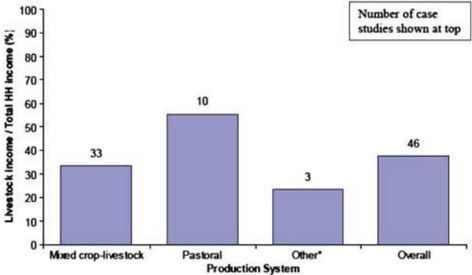
“Bernues and Herrero (2008) found a similar range of incomes (37% to 88%) from livestock in systems with different degrees of crop-livestock integration and diversification in lowland Bolivia (the more diverse and integrated with crops, the lower the share of the total income; the more specialised towards dairy, the hi…”
BackgroundLiving in a fungal world: impact of fungi on soil bacterial niche development
Boer, W. D., Folman, L. B., Summerbell, R. C., & Boddy, L. (2005) · FEMS Microbiology Reviews · doi:10.1016/j.femsre.2004.11.005 · Cited by 1,867
The State of Food and Agriculture 2020
(2020) · FAO eBooks · doi:10.4060/cb1447en · Cited by 1,830
The economics of poverty traps and persistent poverty: An asset-based approach
Carter, M. R., & Barrett, C. B. (2006) · Journal of Development Studies · doi:10.1080/00220380500405261 · Cited by 1,536 · cited 1×
“Access to, control over and ownership of assets are critical aspects of well-being (Sherraden, 1991; Carter and Barrett, 2006).”
Background
Research works printed but not linked: 12
- Gilbert J, Lapar ML, Unger F and Grace D 2010. The most important zoonosis in the world. Paper presented at Ecohealth Conference, August 18-20, London.
- Herath S 2007. Women in livestock development in Asia. Journal of Commonwealth Veterinary Association 24, 29-37.
- Lannerstad M, Heinke J, Herrero M and Havlik P. Livestock production systems - green, green, blue consumptive water use. In Water and livestock: Interactions, trade-offs and opportunities symposium, World Water Week in Stockholm 2012, Water and food security, 26 August 2012. Stockholm, Sweden.
- Njuki JM 2001. Gender roles in agroforesty: a socio-economic analysis of Embu and Kirinyaga Districts, Kenya. PhD thesis, Sokoine University of Agriculture, Tanzania.
- Peden D, Tadesse G, Misra AK, Awad Amed F, Astatke A, Ayalneh W, Herrero M, Kiwuwa G, Kumsa T, Mati B, Mpairwe D, Wassenaar T and Yimegnuhal A 2007. Chapter 13: Livestock and water for human development. In Water for food, water for life: comprehensive assessment of water management in agriculture (ed. D Molden), pp. 485-514. Oxford University Press, Oxford, UK.
- Rangnekar S 1998. Women in livestock production in developing countries. International Conference on Sustainable Animal Production, 24-27 November, Hisar, India.
- Salman MD, Morley PS and Ruch-Gallie R (eds) 1999. International Society for Veterinary Epidemiology and Economics, Nairobi (Kenya). Proceedings of the 9th Symposium of the International Society for Veterinary Epidemiology and Economics. Paper 333, Nairobi, Kenya.
- Schlundt J, Toyofuku H, Jansen J and Herbst SA 2004. Emerging food-borne zoonoses. Annual Review of Information Science and Technology 23, 513-533.
- Smith P, Martino D, Cai Z, Gwary D, Janzen H, Kumar P, McCarl B, Ogle S, O'Mara F, Rice C, Scholes B and Sirotenko O 2007. Agriculture. In Climate change 2007: mitigation. Contribution of Working Group III to the Fourth Assessment Report of 24 the Intergovernmental Panel on Climate Change (ed. B Metz, OR Davidson, PR Bosch, R Dave and RL Meyer), pp. 497-540. Cambridge University Press.
- Thompson DM, Serneels S, Ole Kaelo D and Chevenix Trench P 2009. Maasail mara -land privatization and wildlife decline: can conservation pay its way? In Staying Maasai: livelihoods, conservation and Human Development in East African Rangelands. Studies in Human Ecology and Adaptation (ed. K Homewood, P Trench, P Kristjanson, M Radeny), pp. 77-114. Springer Press, Germany.
- Thorns CJ 2000. Bacterial food-borne zoonoses. Revenue scientifique et technique Office international des epizooties 19, 226-239.
- Yisehak K 2008. Gender responsibility in smallholder mixed crop-livestock production systems of Jimma zone, South West Ethiopia. Livestock Research for Rural Development 20. Retrieved January 14, 2010, from http://www.lrrd.org/ lrrd20/1/yise20011.htm
Cited by
Items 401–500 of 683
Chavez-Lindell, T. L., Moncayo, A. L., Veloz, M. F. V., & Odoi, A. (2022) · PeerJ · doi:10.7717/peerj.12208 · Cited by 4
“Exposure to multiple sources is consistent with the findings of other studies of smallholders ( Herrero et al., 2013 ; Helmy et al., 2014 ; Tebug et al., 2015 ; Kelly et al., 2018 ), however, the specific sets of exposures likely vary with the context.”
Abigaba, R., Sianangama, P. C., Nyanga, P. H., Mwaanga, E. S., & Mwenya, W. N. M. (2022) · Advances in Animal and Veterinary Sciences · doi:10.17582/journal.aavs/2022/10.7.1532.1541 · Cited by 6
Ковпак, В. В., Ковпак, О. С., Derkach, S. S., Valchuk, O. A., Zhuk, Y. V., & Masalovych, Y. (2023) · Regulatory Mechanisms in Biosystems · doi:10.15421/022321 · Cited by 4
Gibernau, E. C. I., Krumkamp, R., Aglanu, L. M., Zakané, A., Jahn, A., Sié, A., Amuasi, J., & Souares, A. (2025) · Journal of Global Antimicrobial Resistance · doi:10.1016/j.jgar.2025.04.020 · Cited by 5
Motshekga, L. M., Ayisi, K. K., Isselstein, J., & Ndleve, S. (2025) · Cogent Food & Agriculture · doi:10.1080/23311932.2025.2505749 · Cited by 3
“Farmers indicated that they had multiple activities to diversify sources of income and nutrition and ensure food sovereignty. the same trend of farming activities of sheep farmers was reported by duguma and Janssens (2021), Herrero et al. (2013), mthi and nyangiwe (2018), and Kosgey et al. (2008).”
Zhu, H., Li, X., Zhang, M., Liu, S.-Y., Zhang, Y., Zheng, Y., Wei, Z., Han, M., Huang, H.-T., Fu, T., et al. (2025) · Genes · doi:10.3390/genes16060682 · Cited by 2
Villanueva, R. V., Hwang, H.-S., & Choi, K. S. (2025) · International Journal of Developing Country Studies · doi:10.47941/ijdcs.3030 · Cited by 3
Mohamed, A. A., Ibey, A. M. Y., Omar, M. M., & Abdulle, A. S. (2025) · Environmental Research Communications · doi:10.1088/2515-7620/adfeb8 · Cited by 3
Shanmugam, V., Kumar, V., Sundaram, R. M., Kumar, R. M., Peramaiyan, P., Murugaiyan, V., & Nayak, A. K. (2025) · Frontiers in Agronomy · doi:10.3389/fagro.2025.1689121 · Cited by 4
Brunetti, H. B., Fattori, I. M., Dias, T. S. S., de Melo, M. L. A., Santos, P. M., PEZZOPANE, J. R. M., Boote, K. J., & Marin, F. R. (2025) · Agricultural Systems · doi:10.1016/j.agsy.2025.104615 · Cited by 3
Utilization of farmer priority on local beef cattle development strategy in Central Java, Indonesia
Agustine, R., Muzayyanah, M. A. U., Putra, A. R. S., & Baliarti, E. (2023) · Biodiversitas Journal of Biological Diversity · doi:10.13057/biodiv/d240159 · Cited by 3
Setianto, N. A., Sodiq, A., Sumarmono, J., Kii, W. Y., Widiyanti, R., & Haryoko, I. (2024) · Jurnal Agripet · doi:10.17969/agripet.v24i1.34072 · Cited by 3
“Livestock have multi-faceted roles, not just for economy, but also social and cultural (Herrero et al ., 2013).”
BackgroundLal, B., Sarkar, S., Kumawat, P. K., Gautam, P., Meena, R. L., Sharma, S. C., & SAHOO, A. (2024) · Journal of Plant Nutrition · doi:10.1080/01904167.2024.2342372 · Cited by 3
Reverse Causality Between Urbanization and Climate Change
Khezri-nejad-gharaei, M., & Garcia–López, M.-À. (2025) · International Economic Journal · doi:10.1080/10168737.2024.2448617 · Cited by 4
“Herrero et al. (2013) argue that livestock production’s contribution to emissions is sector-specific, and the intensity of production is influenced by agricultural practices and global food markets, rather than by urban energy consumption.”
Cha, J. Y., Kim, Y., Kim, J.-H., Park, M. K., Jung, S., & Choi, Y. (2025) · Food and Life · doi:10.5851/fl.2025.e2 · Cited by 3
OO1, I., CU1, E., 1, E. B., 2, O. I., 3, O. A., 1, E. O., 1, E. H., & Okonkwo, J. C. (2025) · Agrobiological Records · doi:10.47278/journal.abr/2025.006 · Cited by 3
“According to Herrero et al. (2013), Okonkwo and Uba (2017), Unigwe et al. (2022) and Ezejesi et al. (2023), birds fed with herbal ingredients (such as cloves, ginger, P. amarus, and ginger) have higher levels of vital hematological constituents such as WBC, Hb, PCV, MCH, and PCT, indicating…”
Drivers of antimicrobial resistance in pig production systems of Uganda
Muwonge, A., Kakooza, T., Johnson, P., Kisuule, L., KIMAANGA, M., Kankya, C., Bronsvoort, M., & Lembo, T. (2025) · Communications Earth & Environment · doi:10.1038/s43247-025-02506-8 · Cited by 6
Bature, A., Melville, L., & Rahman, K. M. (2018) · International Conference on Agriculture and Forestry · doi:10.17501/icoaf.2017.3105 · Cited by 3
El papel multidimensional de la ganadería en África
Felis, A. (2020) · ICE Revista de Economía · doi:10.32796/ice.2020.914.7034 · Cited by 3
Farmanullah, F., Gouda, M., Zhang, M., Sutong, X., Kakar, M. U., Khan, S., Salim, M., Khan, M., Rehman, Z. U., Talpur, H. S., et al. (2021) · Journal of Genetic Engineering and Biotechnology · doi:10.1186/s43141-021-00258-4 · Cited by 5
de Bruin, S., Knoop, J. M., Visser, H., & Biemans, H. (2022) · Frontiers in Human Dynamics · doi:10.3389/fhumd.2022.754354 · Cited by 5
“crops, while livestock plays a significant role in many rural livelihoods (Herrero et al., 2013).”
BackgroundMngumi, F., Sun, N., Shair, F., Huang, L., & Shaorong, S. (2022) · Journal of Livestock Science · doi:10.33259/jlivestsci.2023.1-13 · Cited by 3
“Most African countries are blessed for having much livestock, but they make little contribution to the Economy (Herrero et al., 2013).”
Environmental and economic issues for animal-based composites
Kamarudin, S. H., Ridzuan, A. R., Abu, F., Osman, S., Basri, M. S. M., Hamzah, M. H., Zarin, N. I., Hatta, S. K. M., Yusof, N. N. M., & Abdullah, U. H. (2024) · Elsevier eBooks · doi:10.1016/b978-0-443-22414-0.00019-3 · Cited by 3
Vihi, S. K., Tanko, P. K., Selzing, P. M., Jesse, B., & Ahmad, I. I. (2024) · International Journal on Food Agriculture and Natural Resources · doi:10.46676/ij-fanres.v5i2.226 · Cited by 3
“Due to its performance and tremendous potential for meeting caloric needs, income generation and contribution to economic growth, poultry holds a key position among animal livestock enterprises [10].”
BackgroundRuminant livestock TR V(D)J genes and CDR3 repertoire
Wu, F., Deng, Y., Yao, X., & Li, J. (2024) · Veterinary Immunology and Immunopathology · doi:10.1016/j.vetimm.2024.110829 · Cited by 3
Behmanesh, B., Sharafatmandrad, M., Shahraki, M., & Badripour, H. (2025) · Scientific Reports · doi:10.1038/s41598-025-87202-5 · Cited by 3
Cerjak, M., Faletar, I., Šmit, G., & Ivanković, A. (2025) · Agriculture · doi:10.3390/agriculture15030321 · Cited by 4
Nanoparticles as an Alternative Strategy to Control Foot and Mouth Disease Virus in Bovines
Abbas, R. Z., Ambrose, S., Khan, A. M. A., Mobashar, M., & Mohamed, K. (2025) · Biological Trace Element Research · doi:10.1007/s12011-025-04533-0 · Cited by 10
“Livestock particularly the bovines play an important role in the rural livelihoods and in the economy of developing countries [1].”
IGBADUN, H. E., Ojeleye, O. A., Mabhaudhi, T., & Cofie, O. (2025) · Springer eBooks · doi:10.1007/978-981-96-1848-4_8 · Cited by 3
Li, Q., Ai, Z., Dang, X., Liu, H., Cao, Y., Hou, M., Yao, Y., Deng, Y., & Xiao, L. (2025) · Journal of Environmental Management · doi:10.1016/j.jenvman.2025.126215 · Cited by 3
Hadush, M. (2018) · Zagadnienia Ekonomiki Rolnej / Problems of Agricultural Economics · doi:10.30858/zer/92065 · Cited by 3
Seroprevalence of Brucellosis and Coxiellosis in a Linked Study Population in Egypt
Gwida, M., El-Ashker, M. R., Awad, A., Khan, I., & Gohary, A. E. (2020) · Asian Journal of Research in Animal and Veterinary Sciences · doi:10.9734/ajravs/2020/v3i4131 · Cited by 3
The Development of Sheep Breeding in the Doctrine of Food Security: Problems and Design
Жичкин, К. А., Nosov, V. V., Zhichkina, L. N., Levina, N., Lobacheva, T. I., & Pokidov, B. (2021) · IOP Conference Series Materials Science and Engineering · doi:10.1088/1757-899x/1079/7/072029 · Cited by 3
Typhoon and agricultural production portfolioEmpirical evidence for a developing economy
Tran, T. X. (2022) · International Journal of Disaster Risk Reduction · doi:10.1016/j.ijdrr.2022.102938 · Cited by 3
Sugiarto, M., Wakhidati, Y. N., Djatmiko, O. E., Nur, S., & Gandasari, D. (2021) · ANIMAL PRODUCTION · doi:10.20884/1.jap.2021.23.2.83 · Cited by 3
“Livestock, in general, is an economic activity that provides additional income for rural communities and absorbs rural labor (Herrero et al., 2013).”
BackgroundREVIEW ON KNOWLEDGE GAP IN Brachiaria GRASS RESEARCH AND UTILIZATION: ETHIOPIAN PERSPECTIVE
Adnew, W., Asmare, B., & Mekuriaw, Y. (2021) · AgroLife Scientific Journal · doi:10.17930/agl202111 · Cited by 6
Ibrahim, I., El-Gendi, G. M., Nihad, A., Okasha, H., & El-Attrouny, M. M. (2022) · Journal of Animal and Poultry Production · doi:10.21608/jappmu.2022.151774.1046 · Cited by 5
Asim, M., Khan, M. I., & Rab, A. (2022) · Journal of Soil Plant and Environment · doi:10.56946/jspae.v1i1.12 · Cited by 3
Majumder, R., Parvin, M. S., Shohana, N. N., Islam, M. A., Islam, M. T., Rahman, A. K. M. A., & Islam, M. T. (2022) · Bangladesh Journal of Veterinary Medicine · doi:10.33109/bjvmjd2022fam2 · Cited by 4
Hamid, P. H., Nuraini, D. M., Pawestri, W., Kurniawan, W., Kurnianto, H., Cahyadi, M., Yanti, Y., & Riyanto, J. (2023) · Community Empowerment · doi:10.31603/ce.8349 · Cited by 2
Farmers’ perceptions on stock theft in some districts of the Eastern Cape Province, South Africa
Ndzungu, K., & Jaja, I. F. (2024) · PLoS ONE · doi:10.1371/journal.pone.0310881 · Cited by 2
“Globally, animal science and technology have been primarily responsible for increased livestock numbers and productivity; therefore, this technology must be implemented in conjunction with strategies to prevent stock theft or catch livestock thieves [12, 13].”
BackgroundShi, S., Guo, Y., Liu, C., & Zang, F. (2025) · Sustainability · doi:10.3390/su17031290 · Cited by 2
Impact of Burdizzo and Surgical Castration on Immune and Oxidative Stress Markers in Cattle
Chalalai, T., Srinontong, P., Aengwanich, W., Srisila, K., Promkrathok, S., Sununta, M., Saraphol, B., & Wu, Z. (2025) · Veterinary Sciences · doi:10.3390/vetsci12060537 · Cited by 5
Herd Health Management Programme for Smallholder Goat Production
Aliyu, M. B., Kaltungo, B. Y., Alhaji, N. B., & Allah, S. S. N. (2025) · Veterinary medicine and science · doi:10.5772/intechopen.1010265 · Cited by 2
Mburu, M. N., Mugera, A. W., Mburu, J. I., Nyikal, R. A., & Ndambi, A. (2025) · Agribusiness · doi:10.1002/agr.70021 · Cited by 2
Mathinya, V. N., Franke, A. C., van de Ven, G. W. J., Giller, K. E., & Andersson, J. (2025) · European Journal of Development Research · doi:10.1057/s41287-025-00709-5 · Cited by 4
“This aligns with a broader body of African literature (e.g., Hänke, and Barkmann 2017; Herrero et al. 2013), where livestock plays an important buffering role where secure social safety nets are lacking.”
Environmental impacts of livestock management strategies in subtropical agroecosystems
Yasmin, T., Jabeen, A., Iram, S., Arshad, F., Waheed, M., Hashem, A., Ávila-Quezada, G. D., & Allah, E. F. A. (2025) · Cogent Food & Agriculture · doi:10.1080/23311932.2025.2562171 · Cited by 3
“…development of many developing countries, acting as a cornerstone for rural livelihoods, national food security, and agricultural sustainability (herrero et al., 2013). livestock farming is a primary source of income, meat, milk, hides, and draft power in both peri-urban and rural regions…”
Adetola, C., Egbinola, F., Alabi, O., Adebayo, M., & Ojo, R. (2025) · Discover Agriculture · doi:10.1007/s44279-025-00362-w · Cited by 3
“Accounting for 5.6 to 7.5 gigatonnes of carbon dioxide equivalent (GtCO 2 e) annually, livestock farming is a prominent contributor to greenhouse gas emissions worldwide [61].”
InfluentialHira, F. T. Z., Alam, M. J., Begum, I. A., Mamun, M. A. A., Iqbal, M. A., & Yeasmin, F. (2025) · PLoS ONE · doi:10.1371/journal.pone.0335146 · Cited by 2
Khan, M. I. R., Khan, W., Akbar, A., Ullah, A., Ali, A., Khan, A. U., & Ríos-Escalante, P. R. D. L. (2025) · Helminthologia · doi:10.2478/helm-2025-0023 · Cited by 2
Livelihood implications of dietary shifts to animal-source food alternatives: a scoping review
Nordhagen, S., Beal, T., Herrero, M., Mane, E., Neufeld, L. M., & Sokourenko, K. V. (2026) · The Lancet Planetary Health · doi:10.1016/j.lanplh.2025.101424 · Cited by 2
Self-citationBegna, D., Yohannes, Z., Jote, N., Teshome, G., & Mekonen, A. (2026) · PLoS ONE · doi:10.1371/journal.pone.0338019 · Cited by 2
“Many livestock keepers combine communal grazing areas with their private lands, a strategy that maximizes feed availability and allows adaptation to seasonal nutritional variations, ensuring year-round adequate feeding [50,51].”
Adaptability of Governance Structures and Processes for Sustainable Livestock in Jalisco, Mexico
Špirić, J. (2026) · Review of Policy Research · doi:10.1111/ropr.70079 · Cited by 3
Design and Evaluation of a Mudharabah-Based Dairy Goat Investment Model
Renaldo, N., Junaedi, A. T., Suhardjo, S., Tanjung, A. R., Indrastuti, S., Faruq, U., Musa, S., & Wahid, N. (2025) · Journal of Applied Business and Technology · doi:10.35145/jabt.v6i3.302 · Cited by 2
“The livestock sector plays a crucial role in strengthening food security, rural income generation, and sustainable agribusiness development in emerging economies (Herrero et al., 2013).”
Kagoyire, C., Ndagijimana, A., Nduwayezu, G., Utumatwishima, J. N., Mpatswenumugabo, J. P., Mukasafari, M. A., Rinda, D., Ndahindwa, V., Elfving, K., Krantz, G., et al. (2026) · PLoS ONE · doi:10.1371/journal.pone.0343772 · Cited by 2
“Ownership of livestock such as cows or poultry may improve dietary intake and provide economic resources, potentially buffering against food insecurity [24].”
Etwire, P. M., & Martey, E. (2026) · African Geographical Review · doi:10.1080/19376812.2026.2634897 · Cited by 2
Ngcobo, N., Mdoda, L., Verschoor, A.-J., Mkhize, N. R., & Qange, S. (2026) · Frontiers in Veterinary Science · doi:10.3389/fvets.2026.1673224 · Cited by 2
“Livestock serve not only as sources of income but also play critical roles in social and cultural practices (15).”
A green finance strategy plan to integrate livestock sectors sustainability in Tanzania
Mngumi, F., Sun, N., Huang, L., & Shaorong, S. (2022) · Journal of Livestock Science · doi:10.33259/jlivestsci.2022.267-278 · Cited by 2
“Many scholars and researchers have eloquent the importance of incorporating participants along with the livestock value chain from the production to the final consumption of livestock products (Herrero et al., 2013).”
Sustainable Livestock Practices
Man, N. B., & Siaw, S. Y. (2023) · Advances in biological sciences research/Advances in Biological Sciences Research · doi:10.2991/978-94-6463-116-6_5 · Cited by 4
The Link Between Animal Welfare and Sustainable Development: Lessons for Somalia. A Review Article
Mohamud, A. I., Mohamed, Y. A., & Mohamed, S. A. (2023) · Veterinary Sciences Research and Reviews · doi:10.17582/journal.vsrr/2023/9.2.132.151 · Cited by 5
Harnessing Tanzania's Rangelands to Mitigate Methane Emissions from Livestock Enteric Fermentation
Seif, S. K., & Kipkirui, E. (2024) · European Journal of Theoretical and Applied Sciences · doi:10.59324/ejtas.2024.2(2).44 · Cited by 2
Azizova, A., & Muradova, S. M. (2024) · Biosciences Biotechnology Research Asia · doi:10.13005/bbra/3287 · Cited by 2
Determinants of women small ruminant farmers’ perceptions of climate change impact in Northern Benin
Dimon, E., Toukourou, Y., Egah, J., Séidou, A. A., Diogo, R. V. C., & Traoré, I. A. (2025) · Animal Production Science · doi:10.1071/an23427 · Cited by 2
Building Trust in Agriculture: Blockchain Powered Livestock Buying and Selling
Shinde, A., Mamde, S., Umate, G., & Gangarde, M. (2025) · Lecture notes in networks and systems · doi:10.1007/978-981-97-8861-3_41 · Cited by 2
Backyard Farming of Pig and Poultry in Arunachal Pradesh: A Case Study
Thokchom, S., & Dewangan, K. (2024) · Journal of agricultural development and policy. · doi:10.63066/23220457.34.2.002 · Cited by 2
Nirmala, M. (2020) · Journal of animal research · doi:10.30954/2277-940x.05.2020.14 · Cited by 2
Mudawamah, M., Sumartono, S., Ciptadi, G., Susanto, E., Hartoyo, Y., & Affandhy, L. (2023) · Advances in Animal and Veterinary Sciences · doi:10.17582/journal.aavs/2023/11.9.1540.1547 · Cited by 2
Climate change as a threat to global food security
Ahmad, A., Wenxuan, M., Abbas, A., Hameed, R., Balooch, S., & Khattak, W. A. (2024) · Elsevier eBooks · doi:10.1016/b978-0-443-23707-2.00002-7 · Cited by 2
Whole-genome sequencing reveals genetic structure and adaptive genes in Nepalese buffalo breeds
Dhakal, A., Si, J., Sapkota, S., Pauciullo, A., Han, J., Gorkhali, N. A., Zhao, X., & Zhang, Y. (2024) · BMC Genomics · doi:10.1186/s12864-024-10993-w · Cited by 3
“The global buffalo population, primarily concentrated in Asia [1], is valuable to more than 2 billion people [2] and directly or indirectly supports their livelihoods [3].”
Livestock vulnerability to flooding
Lazzarin, T., & Defina, A. (2024) · Journal of Hydrology · doi:10.1016/j.jhydrol.2024.132613 · Cited by 2
Gözen, M. Ç. (2025) · Agribusiness · doi:10.1002/agr.22038 · Cited by 2
Sustainability, Biodiversity and Environmental Issues: A Global Perspective for Livestock Production
Michalk, D. L., Kemp, D. R., Badgery, W. B., Wu, J., Zhang, Y., & Thomassin, P. J. (2015) · UKnowledge (University of Kentucky) · Cited by 2
Wantasen, E., Umboh, S. J., & Endoh, E. K. M. (2020) · Jurnal Ilmu-Ilmu Peternakan · doi:10.21776/ub.jiip.2020.030.01.03 · Cited by 2
Waiswa, D., & Günlü, A. (2023) · Turkish Journal of Agriculture - Food Science and Technology · doi:10.24925/turjaf.v11i2.207-214.5126 · Cited by 2
“The dairy industry plays a significant role in Uganda’s economic development by creating employment opportunities, improving livelihoods, and rural poverty alleviation (Herrero et al., 2013; FAO, 2019).”
BackgroundCapacity for One Health research in the Horn of Africa
McIntyre, K. M., Cooper, M., & Baylis, M. (2023) · One Health · doi:10.1016/j.onehlt.2023.100549 · Cited by 2
Wallau, M., Neves, F. P., Caram, N., Bremm, C., Pinto, C. E., da Trindade, J. K., Mezzalira, J. C., & Carvalho, P. C. D. F. (2023) · Grassland Science · doi:10.1111/grs.12413 · Cited by 2
Potentialities of nanobiotechnology in nutrient management in the livestock products
Ritu, R., Sounkaria, S., Sachdeva, G., Das, A., Verma, S. R., Saxena, S. C., Singh, B. P., Rahman, S., & Chandra, P. (2023) · Elsevier eBooks · doi:10.1016/b978-0-323-98387-7.00016-1 · Cited by 2
López, G. G. E., Villegas, L. M. S., González, J. M. S., Ávila, J. A., & Barrera-Perales, O. T. (2022) · Cuadernos de Desarrollo Rural · doi:10.11144/javeriana.cdr19.gcis · Cited by 2
Mataveia, G. (2019) · UpSpace Institutional Repository (University of Pretoria) · Cited by 4
Chirinda, N., Peters, M., Burkart, S., Notenbaert, A. M. O., & van der Hoek, R. (2022) · Frontiers in Sustainable Food Systems · doi:10.3389/fsufs.2022.1056522 · Cited by 2
“In the tropics, the sustainable intensification of livestock production systems plays a critical role in supporting rural livelihoods and meeting food security and environmental goals (Herrero et al., 2013; Rao et al., 2015).”
BackgroundAmare, M., Parvathi, P., & Nguyễn, T. T. (2023) · CGSPace A Repository of Agricultural Research Outputs (Consultative Group for International Agricultural Research) · doi:10.2499/p15738coll2.136546 · Cited by 2
Whole-Genome Sequencing of 54 Dengchuan Cattle (Bos taurus) from Southwest China
Feng, K.-J., Yang, M., Liu, Y., Huang, Z., Li, Y.-M., Li, W., Xiao, H., & Chen, S. (2025) · Scientific Data · doi:10.1038/s41597-025-05429-3 · Cited by 2
“They are an important source of meat and milk for humans and play a significant role in the development of human agriculture and traditional culture 5,6 .”
Shinde, A. (2021) · Journal of animal research · doi:10.30954/2277-940x.05.2021.12 · Cited by 1
Preferences and Marketing of Afar Goats in Afar Region, Ethiopia
Yfter, K. A., Gebre, K. T., Teweldemedhn, T. G., Hagos, T. H., & Gebremariam, T. (2019) · OMO International Journal of Sciences · doi:10.59122/1352ef5 · Cited by 1
Maděrová, L., Šìpoš, J., Maděra, P., Modrý, D., Červená, B., & Suchomel, J. (2025) · Agriculture · doi:10.3390/agriculture15050475 · Cited by 1
Cumbe, T. A., Cunguara, B., Mcmanus, C. M., Alforma, A. M. P., & Barcellos, J. O. J. (2025) · PLoS ONE · doi:10.1371/journal.pone.0325929 · Cited by 1
“It also plays a significant role in the livelihood of several populations [3].”
Ssekibaala, G., Ilukor, J., & Bagamba, F. (2025) · Frontiers in Animal Science · doi:10.3389/fanim.2025.1596891 · Cited by 1
Bayraktar, M., Göncü, S., Ergül, A., Karaman, R., Özcan, B. D., Ergül, Ş., Oluk, C. A., Anitaş, Ö., Bayram, A., & Al‐Shuhaib, M. B. S. (2025) · Veterinary Sciences · doi:10.3390/vetsci12090893 · Cited by 2
“Cattle continue to play a central role in global food security and rural livelihoods by providing milk, meat, and other animal products that support human nutrition and household incomes [1].”
Medenou, C. M. E. H., Schlecht, E., & Dossa, L. H. (2025) · Discover Sustainability · doi:10.1007/s43621-025-02030-x · Cited by 1
Sangthong, D., Sangthong, P., Rangubpit, W., Pongprayoon, P., Suwan, E., Wongpanit, K., Chimnoi, W., Simking, P., Ngow, S. S., Morand, S., et al. (2025) · PLoS ONE · doi:10.1371/journal.pone.0337052 · Cited by 1
“The livestock sector is a major industry with high market value, providing benefits to all levels of society [34,35].”
Financial Impact of Human-Wildlife Conflict on Farmers’ Livelihoods in Northwestern Bhutan
Zangmo, T., Gurung, T., & Gurung, D. B. (2025) · Human Ecology · doi:10.1007/s10745-025-00623-8 · Cited by 1
“Livestock products play a significant role in rural income (Phangchung et al., 2002; Herrero et al., 2013).”
Trophic exposure pathways of microplastics in South Asia ecosystems
Kumar, A. A., & Kumar, M. (2026) · Discover Environment · doi:10.1007/s44274-026-00548-z · Cited by 2
“Microplastic pollution can cause trophic cascades, which can alter the dynamics of entire ecosystems by altering the abundance of behaviour of important species within trophic networks [113].”
Komarek, A. M., Rufino, M. C., Snow, V., Dixon, J. M., Whitbread, A. M., & Teufel, N. (2026) · npj Sustainable Agriculture · doi:10.1038/s44264-026-00124-1 · Cited by 1
Self-citationMekie, T. M., Huang, L., Ren, Y., & Tadié, M. (2026) · Food Policy · doi:10.1016/j.foodpol.2026.103146 · Cited by 2
Aspy, N. N., Kibria, M. G., Duraisamy, Y., Ko, J., Ridwan, M., Leung, C. K., & Ming, W. K. (2026) · Frontiers in Sustainable Food Systems · doi:10.3389/fsufs.2026.1858027 · Cited by 1
Adoption level of agroforestry systems in Brazil and the rural credit policy
Pontes, L. D. S., Bichel, A., Mantovani, G. G., da Silva, W. P., & Telles, T. S. (2026) · Anais da Academia Brasileira de Ciências · doi:10.1590/0001-3765202620251287 · Cited by 1
Rausser, G. C., Smith, V. K., & Zilberman, D. (2011) · Annual Review of Resource Economics · doi:10.1146/annurev-re-3-082211-100001 · Cited by 1
Assessment of Local Chicken Production Base Area in Minahasa Regency: A Location Quotient Approach
Silondae, H., Muzayyanah, M. A. U., Sulastri, E., & Guntoro, B. (2024) · Agraris Journal of Agribusiness and Rural Development Research · doi:10.18196/agraris.v10i1.230 · Cited by 1
“Livestock are crucial for rural livelihoods and the economy (Herrero et al., 2013).”
BackgroundPandey, A. K. (2024) · INDIAN JOURNAL OF AGRICULTURAL ECONOMICS · doi:10.63040/25827510.2024.03.014 · Cited by 1
“Livestock are vital for rural livelihoods in developing countries, providing income, employment, and nutrition (Herrero et al., 2013).”
Background
Metadata
- Authors
- Herrero, M., Grace, D., Njuki, J., Johnson, N., Enahoro, D., Silvestri, S., & Rufino, M. C.
- Affiliations
- International Livestock Research Institute (KE)
- Corresponding author
- Herrero, M.
- Venue
- Animal
- Publisher
- Elsevier BV
- Published
- 2013
- Volume
- 7
- Pages
- 3-18
- ISSN
- 1751-7311 (ISSN-L)
- OpenAlex
- W2045423228
- Semantic Scholar
- a903d14dc00c42b14c426d4cadbc8c8265e67ee0
- Cited by
- 659
- References
- 113
- Citations by year
- 2026: 68 · 2025: 118 · 2024: 81 · 2023: 96 · 2022: 63 · 2021: 72 · 2020: 32 · 2019: 26 · 2018: 29 · 2017: 17 · 2016: 16 · 2015: 18 · 2014: 11 · 2013: 10
- FWCI
- 25.72
- Type
- journal article
- Language
- en
- Open access
- hybrid
- doi.org
- Licence
- cc-by-nc-nd
- www.elsevier.com/tdm/userlicense/1.0/ (tdm)
- www.elsevier.com/legal/tdmrep-license (tdm)
- creativecommons.org/licenses/by-nc-nd/4.0/ (vor, 2870 d)
- Locations
- animal (publishedVersion, cc-by-nc-nd)
- PubMed (publishedVersion)
- IFPRI E-brary (International Food Policy Research Institute) (submittedVersion)
- CGSPace A Repository of Agricultural Research Outputs (Consultative Group for International Agricultural Research) (submittedVersion, cc-by-nc-nd)
- DOAJ (DOAJ: Directory of Open Access Journals) (submittedVersion, cc-by-sa)
- International Food Policy Research Institute (International Food Policy Research Institute) (submittedVersion)
- Lancaster EPrints (Lancaster University) (submittedVersion)
- Funders
- World Health Organization
- Consortium of International Agricultural Research Centers
- Natural Environment Research Council (NE/J001570/1, NE/J001422/1)
- Topics
- Life Sciences › Agricultural and Biological Sciences › Animal Science and Zoology › Livestock Farming and Management
- Life Sciences › Agricultural and Biological Sciences › Ecology, Evolution, Behavior and Systematics › Agriculture and Rural Development Research
- Physical Sciences › Environmental Science › Ecology › Agriculture Sustainability and Environmental Impact
- Keywords
- livestock, developing countries, rural livelihoods, value chain, smallholder farmers, women in livestock, pastoralism, manure application, water pollution, resource efficiency, sustainable intensification, zoonoses, food safety, diversification, social safety nets
- MeSH terms
- Animals, Animal Husbandry, Developing Countries, Environment, Humans, Livestock
About these checks
Registry, retraction, Cites and statistics results are computed, not judged, with one exception: a printed reference that no index lists is read once by a model before it counts as a citation error. Claims are extracted by a model and kept only when their quote appears verbatim in the text; each cited source is then checked, with a model’s help, for whether it says what the claim relies on. Those verdicts can be wrong — read the claim’s quote and the cited source before relying on one.
Statistics and arithmetic are recomputed, not judged.
Confidence bands are shown only for fields calibrated on our annotated test set. None is calibrated yet, so no band is shown.
What counts as a claim ›How we measure confidence ›How we check this ›
Are you an author, or do you see a problem with this page? Request a review
Data sources
Bibliographic data: Semantic Scholar, OpenAlex, Crossref.
Contains information from the Semantic Scholar Academic Graph Datasets, made available under the ODC Attribution License (ODC-BY 1.0).
Semantic Scholar’s data is described in: Kinney, R., et al. (2023). The Semantic Scholar Open Data Platform. arXiv:2301.10140.
