

The roles of livestock in developing countries
Open accessThe DOI matches its Crossref record; 110 of the 113 references it cites were found in a registry or an index, and 1 are not checked yet.
Abstract
Livestock play a significant role in rural livelihoods and the economies of developing countries. They are providers of income and employment for producers and others working in, sometimes complex, value chains. They are a crucial asset and safety net for the poor, especially for women and pastoralist groups, and they provide an important source of nourishment for billions of rural and urban households. These socio-economic roles and others are increasing in importance as the sector grows because of increasing human populations, incomes and urbanisation rates. To provide these benefits, the sector uses a significant amount of land, water, biomass and other resources and emits a considerable quantity of greenhouse gases. There is concern on how to manage the sector's growth, so that these benefits can be attained at a lower environmental cost. Livestock and environment interactions in developing countries can be both positive and negative. On the one hand, manures from ruminant systems can be a valuable source of nutrients for smallholder crops, whereas in more industrial systems, or where there are large concentrations of animals, they can pollute water sources. On the other hand, ruminant systems in developing countries can be considered relatively resource-use inefficient. Because of the high yield gaps in most of these production systems, increasing the efficiency of the livestock sector through sustainable intensification practices presents a real opportunity where research and development can contribute to provide more sustainable solutions. In order to achieve this, it is necessary that production systems become market-orientated, better regulated in cases, and socially acceptable so that the right mix of incentives exists for the systems to intensify. Managing the required intensification and the shifts to new value chains is also essential to avoid a potential increase in zoonotic, food-borne and other diseases. New diversification options and improved safety nets will also be essential when intensification is not the primary avenue for developing the livestock sector. These processes will need to be supported by agile and effective public and private institutions.
Overview
The claims and statistics of this paper haven’t been checked yet.
Free: it reads the open-access text and checks the first 5 claims that cite a source we can check. Create a free account to check every claim.
Integrity signals
Registry
Cites
Statistics
Figures
Verification
Claims the paper makes
The claims and statistics of this paper haven’t been checked yet.
Free: it reads the open-access text and checks the first 5 claims that cite a source we can check. Create a free account to check every claim.
Claims other papers make about this one
Each is checked against this paper’s own text: does it say what the citing paper says it does?
The source backs part of the claim, not all of it — or backs it for a different population, condition or comparison.
In the citing paper
“In many LMICs, most animal source foods and produce are produced by smallholders and sold in informal markets [19,20].”
From Food Safety in Low and Middle Income Countries (2015) · cites this paper as [20]
Experimental — accuracy not yet measured
Self-check
Percentages, sums and reported differences re-computed from the paper’s own numbers.
The self-check needs the paper’s full text.
Citations
Cites
Global trends in emerging infectious diseases
Jones, K. E., Patel, N. G., Levy, M. A., Storeygard, A., Balk, D., Gittleman, J. L., & Daszak, P. (2008) · Nature · doi:10.1038/nature06536 · Cited by 8,338
Maternal and child undernutrition: global and regional exposures and health consequences
Black, R. E., Allen, L. H., Bhutta, Z. A., Caulfield, L. E., de Onis, M., Ezzati, M., Mathers, C., & Rivera, J. (2008) · The Lancet · doi:10.1016/s0140-6736(07)61690-0 · Cited by 6,443 · cited 1×
“population and is implicated in the deaths of a third of all children under five (Black et al., 2008); an estimated 195 million children are too short for their age (stunted) and 129 million children are underweight.”
BackgroundSteinfeld, H., Gerber, P., Wassenaar, T., Castel, V., Rosales, M., & de Haan, C. (2006) · Agritrop (Cirad) · Cited by 5,238
Global, regional, and national causes of child mortality in 2008: a systematic analysis
Black, R. E., Cousens, S., Johnson, H. L., Lawn, J. E., Rudan, I., Bassani, D. G., Jha, P., Campbell, H., Walker, C. F., Cibulskis, R., et al. (2010) · The Lancet · doi:10.1016/s0140-6736(10)60549-1 · Cited by 3,058 · cited 1×
“4 million children a year (Black et al., 2010).”
Rebitzer, G., Ekvall, T., Frischknecht, R., Hunkeler, D., Norris, G., Rydberg, T., Schmidt, W.-P., Suh, S., Weidema, B. P., & Pennington, D. W. (2004) · Environment International · doi:10.1016/j.envint.2003.11.005 · Cited by 2,753
Livestock production: recent trends, future prospects
Thornton, P. K. (2010) · Philosophical Transactions of the Royal Society B: Biological Sciences · doi:10.1098/rstb.2010.0134 · Cited by 2,215 · cited 1×
“Numerous publications exist on this subject (Steinfeld et al., 2006; FAO, 2009 and 2010; Herrero et al., 2009; PBL, 2010; Pelletier and Tyedmers, 2010; Thornton, 2010; Thornton and Herrero, 2010; Bouwman et al., 2011).”
BackgroundBarrett, C. B., Reardon, T., & Webb, P. (2001) · Food Policy · doi:10.1016/s0306-9192(01)00014-8 · Cited by 1,925 · cited 3×
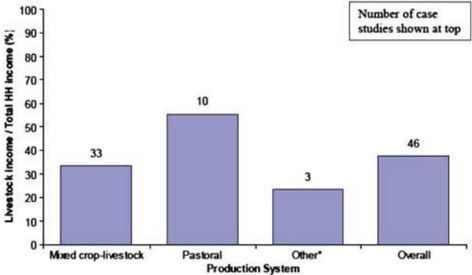
“Bernues and Herrero (2008) found a similar range of incomes (37% to 88%) from livestock in systems with different degrees of crop-livestock integration and diversification in lowland Bolivia (the more diverse and integrated with crops, the lower the share of the total income; the more specialised towards dairy, the hi…”
BackgroundLiving in a fungal world: impact of fungi on soil bacterial niche development
Boer, W. D., Folman, L. B., Summerbell, R. C., & Boddy, L. (2005) · FEMS Microbiology Reviews · doi:10.1016/j.femsre.2004.11.005 · Cited by 1,867
The State of Food and Agriculture 2020
(2020) · FAO eBooks · doi:10.4060/cb1447en · Cited by 1,830
The economics of poverty traps and persistent poverty: An asset-based approach
Carter, M. R., & Barrett, C. B. (2006) · Journal of Development Studies · doi:10.1080/00220380500405261 · Cited by 1,536 · cited 1×
“Access to, control over and ownership of assets are critical aspects of well-being (Sherraden, 1991; Carter and Barrett, 2006).”
Background
Research works printed but not linked: 12
- Gilbert J, Lapar ML, Unger F and Grace D 2010. The most important zoonosis in the world. Paper presented at Ecohealth Conference, August 18-20, London.
- Herath S 2007. Women in livestock development in Asia. Journal of Commonwealth Veterinary Association 24, 29-37.
- Lannerstad M, Heinke J, Herrero M and Havlik P. Livestock production systems - green, green, blue consumptive water use. In Water and livestock: Interactions, trade-offs and opportunities symposium, World Water Week in Stockholm 2012, Water and food security, 26 August 2012. Stockholm, Sweden.
- Njuki JM 2001. Gender roles in agroforesty: a socio-economic analysis of Embu and Kirinyaga Districts, Kenya. PhD thesis, Sokoine University of Agriculture, Tanzania.
- Peden D, Tadesse G, Misra AK, Awad Amed F, Astatke A, Ayalneh W, Herrero M, Kiwuwa G, Kumsa T, Mati B, Mpairwe D, Wassenaar T and Yimegnuhal A 2007. Chapter 13: Livestock and water for human development. In Water for food, water for life: comprehensive assessment of water management in agriculture (ed. D Molden), pp. 485-514. Oxford University Press, Oxford, UK.
- Rangnekar S 1998. Women in livestock production in developing countries. International Conference on Sustainable Animal Production, 24-27 November, Hisar, India.
- Salman MD, Morley PS and Ruch-Gallie R (eds) 1999. International Society for Veterinary Epidemiology and Economics, Nairobi (Kenya). Proceedings of the 9th Symposium of the International Society for Veterinary Epidemiology and Economics. Paper 333, Nairobi, Kenya.
- Schlundt J, Toyofuku H, Jansen J and Herbst SA 2004. Emerging food-borne zoonoses. Annual Review of Information Science and Technology 23, 513-533.
- Smith P, Martino D, Cai Z, Gwary D, Janzen H, Kumar P, McCarl B, Ogle S, O'Mara F, Rice C, Scholes B and Sirotenko O 2007. Agriculture. In Climate change 2007: mitigation. Contribution of Working Group III to the Fourth Assessment Report of 24 the Intergovernmental Panel on Climate Change (ed. B Metz, OR Davidson, PR Bosch, R Dave and RL Meyer), pp. 497-540. Cambridge University Press.
- Thompson DM, Serneels S, Ole Kaelo D and Chevenix Trench P 2009. Maasail mara -land privatization and wildlife decline: can conservation pay its way? In Staying Maasai: livelihoods, conservation and Human Development in East African Rangelands. Studies in Human Ecology and Adaptation (ed. K Homewood, P Trench, P Kristjanson, M Radeny), pp. 77-114. Springer Press, Germany.
- Thorns CJ 2000. Bacterial food-borne zoonoses. Revenue scientifique et technique Office international des epizooties 19, 226-239.
- Yisehak K 2008. Gender responsibility in smallholder mixed crop-livestock production systems of Jimma zone, South West Ethiopia. Livestock Research for Rural Development 20. Retrieved January 14, 2010, from http://www.lrrd.org/ lrrd20/1/yise20011.htm
Cited by
Items 501–600 of 683
Mpatswenumugabo, J. P. (2024) · Acta universitatis agriculturae Sueciae · doi:10.54612/a.ga1cnd4pvp · Cited by 3
Lohbeck, M., Kuyper, T. W., Bongers, F., Fernández, R. A., Balvanera, P., Behagel, J. H., Berget, C., Bianchi, F. J. J. A., Cardoso, I. M., Gomes, L. C., et al. (2026) · Global Environmental Change · doi:10.1016/j.gloenvcha.2026.103160 · Cited by 1
Sustainable Agricultural Practices: Technological Innovations for Healthier Food Systems
Sawyer, W. E., & Salimon, S. S. (2025) · Environmental science and engineering · doi:10.1007/978-3-031-81966-7_10 · Cited by 1
From barnyard to boarding pass: Exploring livestock's world tour
Warne, R. K., Cleaveland, S., & Chaber, A. (2025) · JSFA reports · doi:10.1002/jsf2.70002 · Cited by 1
Ariyanto, K. (2024) · Analisis Kebijakan Pertanian · doi:10.21082/akp.v22i1.33-50 · Cited by 4
Tyelo, M., & Punt, C. (2025) · Agrekon · doi:10.1080/03031853.2025.2521497 · Cited by 1
“Since small-scale farming households typically have low agricultural productivity, livestock production plays a crucial role in optimising resource utilisation by enhancing productivity through the provision of manure and draught power (Herrero et al. 2013).”
Tolcha, P. T., & Paulos, H. B. (2025) · Journal of Agriculture and Environment for International Development (JAEID) · doi:10.36253/jaeid-16931 · Cited by 1
“For instance, the works of Abbasi and Abbasi (2016); Broom, Galindo, and Murgueitio (2013); Delgado, Rosegrant, Steinfeld, Ehui, and Courbois (2001); M. Herrero et al. (2013) and Philip K. Thornton (2010) concluded that increasing livestock production, which is driven by urbanization, income…”
Simpkins, K., Bucherer-Ezer, O., Murray, E.-J., & Rushton, J. (2025) · Elsevier eBooks · doi:10.1016/b978-0-443-15976-3.00145-8 · Cited by 1
Bangert, E. A., & Wheeler, M. B. (2025) · Journal of Scientific Agriculture · doi:10.25081/jsa.2025.v9.9599 · Cited by 1
“In many African countries, livestock ownership is regarded as a sign of wealth, especially in regions lacking stable government currency backing (Herrero et al., 2013).”
García-Gudiño, J., Perea, J., Font‐i‐Furnols, M., Angón, E., & Blanco–Penedo, I. (2025) · Agriculture · doi:10.3390/agriculture15232515 · Cited by 2
Ntokome, K., Obitsu, T., Hisadomi, S., Inabu, Y., & Sugino, T. (2026) · Animal Science Journal · doi:10.1111/asj.70145 · Cited by 1
A socio-ecological approach to the determinants of animal health management: A scoping review
Vors, L., Debil, F., Saint-Cyr, L., Giacomini, A., Fortané, N., & Lhermie, G. (2026) · PLoS ONE · doi:10.1371/journal.pone.0344746 · Cited by 1
“Additionally, their structured livestock industries necessitate robust health control strategies to maintain productivity and trade relations [62,63].”
Carbon-Negative Farming: Pathways, Practices, and Policies for Sustainable Agricultural Futures
Khan, F. A., Dar, Z. M., Hussain, S., & Narayan, S. (2026) · CRC Press eBooks · doi:10.1201/9781042010370 · Cited by 1
Romero-Zúñiga, J. J., Galina, C. S., Geffroy, M., Corro, M., & Maquivar, M. (2026) · Animals · doi:10.3390/ani16111691 · Cited by 1
Shah, W. U. H., Hao, G., Yasmeen, R., Wu, J., Cai, S., & Xu, X. (2026) · Journal of Agriculture and Food Research · doi:10.1016/j.jafr.2026.103168 · Cited by 2
Luedeling, E., Whitney, C., Wilkes, A., Aynekulu, E., & Rosenstock, T. S. (2022) · Carbon Footprints · doi:10.20517/cf.2022.11 · Cited by 1
CONSTRAINTS ON FISH PREFERENCE AND CONSUMPTION PATTERN IN LAGOS STATE, NIGERIA
Oyebamiji, B. A., Sotean, O. J., Tolorunju, E. T., Oladeji, S. O., & Ojo, O. O. (2021) · Journal of Agripreneurship and Sustainable Development · doi:10.59331/jasd.v4i3.240 · Cited by 1
“Consumption of fish has increased worldwide in the last decade which promotes better economic growth in many parts of the developing world (Herrero et al. 2013).”
BackgroundHaematopinus suis Infestation in Pig Farms in Busogo Sector, Rwanda
Niyonsenga, E., Twizerimana, J., & Mwabonimana, M.-F. (2023) · Journal of Tropical Medicine · doi:10.1155/2023/9960745 · Cited by 1
“Te livestock sector plays an important role in sustainability of the world economy and attains food security in terms of protein availability and poverty alleviation [1, 2].”
BackgroundPricing patterns of an indigenous goat in rural and urban communities in KwaZulu-Natal, South Africa
Khowa, A. A., Tsvuura, Z., & Kraai, M. (2023) · Small Ruminant Research · doi:10.1016/j.smallrumres.2023.107115 · Cited by 1
What are Farmer Household Coping Strategies for Facing Crop Loss: Evidence from Indonesia
Feryanto, F., Harianto, H., & Rosiana, N. (2023) · Sustainability Science and Resources · doi:10.55168/ssr2809-6029.2023.5003 · Cited by 1
“The participation of farming households in insurance reduces the potential loss of their resources (Herrero et al., 2012; Harvey et al., 2014; Du et al., 2017; Fadhil et al., 2021; Silaban et al., 2022).”
BackgroundWaineina, R. W., Ngeno, K., Ilatsia, E. D., & Okeno, T. O. (2024) · Tropical Animal Health and Production · doi:10.1007/s11250-024-03929-9 · Cited by 1
“Dairy goat products (milk and meat) offer consumers food products with nutritional, health, and environmental benefits, while by-products are the essential raw materials in different manufacturing industries (Herrero et al., 2013; Lipson et al., 2019; Ogola et al., 2010).”
Islam, M. R. (2024) · International Journal of Science and Business · doi:10.58970/ijsb.2322 · Cited by 1
Mengyuan, Q. I. A. O., Jianchun, Z. H. U., Li, R., Junting, P. A. N., Ran, X. I. A. O., Hailong, W. A. N. G., Kuok Ho Daniel, T. A. N. G., & ZHANG, Z. (2024) · Frontiers of Agricultural Science and Engineering · doi:10.15302/j-fase-2024552 · Cited by 1
Ibraheem, O. T. (2023) · World Journal of Advanced Research and Reviews · doi:10.30574/wjarr.2023.20.3.1847 · Cited by 1
“A special emphasis was on the literature on the smallholder farming systems since these systems contribute considerably to the production of livestock in the world particularly in the developing nations (Herrero et al. 2012).”
InfluentialSoil Utilisation Patterns in the Global South
Lamidi, W. A., & Oyewusi, T. F. (2024) · Springer eBooks · doi:10.1007/978-981-97-5276-8_4 · Cited by 2
Arias, D. F. M., Mira-Naranjo, J. M., Carrazco, D. I. C., García-Guerra, J. I., Baquero-Tapia, M. F., Salazar, M. E. S., Melendres-Medina, E. M., Montalvan-Cobo, A. N., & Guamán-Rivera, S. A. (2024) · Brazilian Journal of Biology · doi:10.1590/1519-6984.285702 · Cited by 2
Swearingen, C., Alsouss, N., Babic, M., Clark, J., Dwyer, C., Hudock, C., Julien, L., McGraw, P., Mekhel, R., Mekhel, V., et al. (2025) · Water Practice & Technology · doi:10.2166/wpt.2025.008 · Cited by 1
Cattle Lameness Classification Using Cattle Back Depth Information
Tun, S. C., Tin, P., Aikawa, M., Kobayashi, I., & Zin, T. T. (2025) · Lecture notes in electrical engineering · doi:10.1007/978-981-96-1531-5_16 · Cited by 1
Fetene, G. M., Abro, Z., Getahun, T., & Kassie, M. B. (2025) · European Review of Agricultural Economics · doi:10.1093/erae/jbaf006 · Cited by 2
Gebeyehu, A. B. (2025) · Environmental and Sustainability Indicators · doi:10.1016/j.indic.2025.100667 · Cited by 1
Mukasafari, M. A. (2025) · Acta universitatis agriculturae Sueciae · doi:10.54612/a.406abvn25e · Cited by 1
Benavides, R. A. M., Guerrero, H. S., Ceballos, J. R. U., & Atzori, A. S. (2016) · Revista de Investigación Agraria y Ambiental · doi:10.22490/21456453.1561 · Cited by 1
Semi-automated double sided livestock (SADSL) mix feeder
Soh, Z. H. C., Abdullah, S. A. C., Shafie, M. A., & Ibrahim, M. N. (2019) · Indonesian Journal of Electrical Engineering and Computer Science · doi:10.11591/ijeecs.v15.i2.pp1019-1026 · Cited by 1
NJOROGE, E. K., Wambui, C. C., & Wasike, C. B. (2021) · Online Journal of Animal and Feed Research · doi:10.51227/ojafr.2021.7 · Cited by 1
Indi, A., Zulkarnain, D., Yaddi, Y., & Mursadat, A. (2022) · Advances in biological sciences research/Advances in Biological Sciences Research · doi:10.2991/absr.k.220309.013 · Cited by 1
“Community needs in consuming livestock products (meat, milk, and eggs) are increasing [1] [2] [3].”
BackgroundKnueven, D. (2015) · Journal of the American Veterinary Medical Association · doi:10.2460/javma.246.4.401 · Cited by 1
Browse species from Ethiopia: role in methane reduction and nematode control in goats
Mengistu, G. F. (2017) · doi:10.18174/393212 · Cited by 5
Change in Production Practices: The Role of Agri-Food and Diversified Cropping Systems
Dwivedi, S. L., & Ortiz, R. O. (2018) · Elsevier eBooks · doi:10.1016/b978-0-08-100596-5.22378-0 · Cited by 1
Squire, S. A. (2019) · Murdoch University Research Portal · Cited by 2
Meat consumption and potential reduction for environmental and public health benefits
Lentz, G. (2020) · Otago University Research Archive (University of Otago) · Cited by 4
Katz, D. L. (2022) · American Journal of Health Promotion · doi:10.1177/08901171221088661 · Cited by 1
(2021) · Australian Journal of Emergency Management · doi:10.47389/36.3 · Cited by 1
Kizza, D., Ocaido, M., Mugisha, A., Azuba, R., Nalule, S. A., Onyuth, H., Musinguzi, S. P., Nalubwama, S., & Waiswa, C. (2022) · Research Square · doi:10.21203/rs.3.rs-1679804/v1 · Cited by 1
Kuchimanchi, B. R. (2022) · doi:10.18174/572199 · Cited by 5
Impact of Poor Municipal Waste Management on Ruminant LivestockPreprint
Monguno, M. B., Umar, U. L., & Prata, J. C. (2023) · Research Square · doi:10.21203/rs.3.rs-3390808/v1 · Cited by 1
Muteyo, E., & Gift, C. (2025) · Research Square · doi:10.21203/rs.3.rs-5659878/v1 · Cited by 1
Ahmed, M. J., Hossain, M. I., Chalise, R., Rahman, M. A., Bhandari, P., Sikder, T., Khatun, A., & Hossain, D. (2025) · bioRxiv (Cold Spring Harbor Laboratory) · doi:10.1101/2025.06.26.661882 · Cited by 1
Cooley, H., McIntyre, K. M., Haddaway, N., Watson, M. P., Errington, L., Shah, A., Porciello, J., & Savilaakso, S. (2025) · doi:10.1079/junoreports.2025.0002 · Cited by 3
Rift Valley fever virus dynamics in a transhumant cattle system in The GambiaPreprint
Jarra, E., Ekwem, D., Cleaveland, S., & Haydon, D. T. (2025) · eLife · doi:10.7554/elife.107346 · Cited by 1
Breeding programme and infrastructure
König, E. Z. (2016) · Epsilon Open Archive (Sveriges lantbruksuniversitet biblioteket (Swedish University of Agricultural Sciences))
Reducing the carbon footprint of Senegalese cattle systems through improved productivity
Salmon, G. (2017) · ERA · Cited by 2
Analysis of Credit Access and Utilization Among Poultry Farmers in NigeriaPreprint
Afolayan, A. F., Omisope, E. T., Ajayi, A. M., Adeoti, O. S., & Ogunjinmi, O. F. (2021) · Research Square · doi:10.21203/rs.3.rs-162833/v1
Sila, W. (2020) · CGSPace A Repository of Agricultural Research Outputs (Consultative Group for International Agricultural Research)
The Impact of Global Climate Change on Nutrition Security: A Multidimensional Challenge
Elmadfa, I., & Meyer, A. L. (2018) · Cambridge University Press eBooks · doi:10.1017/9781316761489.028
Hassan‐Kadle, A. A. (2020) · LA Referencia (Red Federada de Repositorios Institucionales de Publicaciones Científicas)
Strategies to mitigate economic hardship among family dairy farms of Central Mexico
Martínez‐García, C. G., Clugston, C., Arriaga-Jordán, C. M., Olmos-Colmenero, J., & Wattiaux, M. A. (2021) · Experimental Agriculture · doi:10.1017/s0014479721000077
Regional epidemiology and associated risk factors of PPR in Asia-A Review
Li, Y. (2021) · International Journal of Veterinary Science and Research · doi:10.17352/ijvsr.000098
“Developing countries have more than 90% of the world’s small ruminant population, providing foodstuff, trade revenue from animals and animal goods; also improve economic strength and livelihood of smallholder agriculturalists [27].”
BackgroundRausser, G. C., Hanemann, W. M., & Zilberman, D. (2013) · Annual Review of Resource Economics · doi:10.1146/annurev-re-5-091913-100001
Monthly forage value of various plant organs of Brocchia cinerea (Vis.) from a Moroccan arid region
Chlif, N., DIOURI, M., OMARI, M. E., & Bentayeb, A. (2021) · Biodiversitas Journal of Biological Diversity · doi:10.13057/biodiv/d230109
Widiati, R., & Kusumastuti, T. A. (2022) · Livestock and Animal Research · doi:10.20961/lar.v20i1.58724
“Efforts to improve the welfare of breeders especially in developing countries are important and have become a major concern of the world [7].”
BackgroundDynamics of the Global Savanna and Grassland Biomes
Jane Southworth, B., & Herrero, H. V. (2021) · MDPI eBooks · doi:10.3390/books978-3-0365-0349-3
Tropical Grasslands – Forrajes Tropicales Vol.1 No.2 [December 2013]
Journal, T. (2013) · Tropical Grasslands - Forrajes Tropicales · doi:10.17138/tgft(1)125-248
Kizza, D., Ocaido, M., Mugisha, A., Azuba, R., Nalule, S. A., Onyuth, H., Musinguzi, S. P., Nalubwama, S., & Waiswa, C. (2022) · Research Square · doi:10.21203/rs.3.rs-1661721/v1
Future Earth and Food Security
Beer, T., Li, J., & Alverson, K. (2018) · Cambridge University Press eBooks · doi:10.1017/9781316761489.024
TEMAS İnsan ve Hayvanların Yazılmamış Ortak Tarihi
İzmirli, S. (2022) · Akademisyen Kitabevi eBooks · doi:10.37609/akya.2069 · Cited by 1
Patent trends in nanobiotechnology applications in the livestock industry
Parimi, J. L., Sadhu, S., & Malik, H. N. (2023) · Elsevier eBooks · doi:10.1016/b978-0-323-98387-7.00018-5
Gender relations in the livestock production in Koinadugu district, Sierra Leone
Sesay, A. R. (2023) · Journal of Applied and Advanced Research · doi:10.21839/jaar.2023.v8.8225
APDDD: animal parasitic diseases and drugs databasePreprint
Zhang, Y., Chen, G., Zhou, S., He, L., Ayanniyi, O. O., Xu, Q., Yue, Z., & Yang, C. (2023) · Research Square · doi:10.21203/rs.3.rs-3249124/v1
Sayed, A., Shathi, I. J., & Rahman, M. M. (2022) · Market demand of conventional and non-conventional fish species and price comparison between BFDC landing center and two popular fish markets the Baharchora and Borobazar in Cox’s Bazar Bangladesh · doi:10.60015/bjvas/v10i2a5
“This is a valuable impetus in the field of economics and food consumption (Herrero et al., 2013).”
BackgroundBuddle, E. A., Ankeny, R. A., & Paxton, R. (2023) · Issue Lab (Candid) · doi:10.15868/socialsector.42497
APDDD: Animal Parasitic Diseases and Drugs DatabasePreprint
Zhang, Y., Chen, G., Zhou, S., He, L., Ayanniyi, O. O., Xu, Q., Yue, Z., & Yang, C. (2023) · SSRN Electronic Journal · doi:10.2139/ssrn.4588421
Hassan, M. (2022) · International Journal of Livestock Policy · doi:10.47941/ijlp.841
“…agricultural and pastoral communities, the dominant pattern is the one where women are responsible for the livestock kept at the homestead, for raising small animals for instance poultry and pigs, and for the processing and marketing of milk and other livestock products (Herrero, M. et al 2013).”
BackgroundSugandi, D., Purnamasari, N. R., Nurawan, A., Sutrisna, N., & Surdianto, Y. (2024) · Revista de Economia e Sociologia Rural · doi:10.1590/1806-9479.2022.270959 · Cited by 1
Bourgeois, T. L., Favale, C., Bazan, S., Rajagopal, P., Vattakaven, T., & Blanfort, V. (2023) · Revue d’élevage et de médecine vétérinaire des pays tropicaux · doi:10.19182/remvt.37266
“…secteur de la production animale est une activité économique et sociale majeure dans les pays à faibles revenus, elle est une source de revenus conséquents pour une majorité de foyers, et plus d’un milliard de personnes en dépendent directement ou indirectement (Upton, 2004, Herrero et al., 2013).”
BackgroundWaris, I. (2024) · International Journal of Social Science and Human Research · doi:10.47191/ijsshr/v7-i01-33
Time Series Analysis of Cattle Population and Its Effect on Some Greenhouse Gases in Brazil
Çelik, Ş. (2024) · Advances in Science, Technology & Innovation/Advances in science, technology & innovation · doi:10.1007/978-3-031-48754-5_27
STATISTICAL STUDY OF SOME INDICATORS IN THE LIVESTOCK SECTOR
DIMITROV, R.-M. (2024) · Management & Marketing · doi:10.52846/mnmk.22.1.01
Peter, I. D., Stephen, J., Mohammed, M., Bature, M., Ali, R., Asuku, S. O., & Iliyasu, D. (2024) · Sahel Journal of Veterinary Sciences · doi:10.54058/k77vdq11
“Food animals are extensively reared and they play an important role in trade and economies of developing countries by providing employment and income as well as a source of nourishment for millions of households worldwide (Herrero et al ., 2013; Kimera et al ., 2020).”
BackgroundA Multi-Sensory Cattle Monitoring System With Wireless and Solar Charging Capabilities
Tinoco, J., Tinoco, F., Cuyubamba, P., & Huaytalla, J. (2024) · IEEE International Conference on Smart Energy Grid Engineering (SEGE) · doi:10.1109/sege62220.2024.10739408 · Cited by 3
“Livestock provides income and employment and is an important source of nourishment for billions of rural and urban households, so livestock plays a vital role in the socio-economic growth of developing countries [1].”
BackgroundEFFECT OF CINNAMON POWDER SUPPLEMENTS ON GROWTH PERFORMANCE OF YANKASA RAMS
Salisu, U. S., Garba, M. G., Murtala, U., & Gaddafi, S. (2024) · Nigerian Journal of Animal Production · doi:10.51791/njap.vi.7300
Control of odour and gaseous emissions from livestock buildings: Recent research and developments
Vela, R. J. L. D. (2024) · Research in Agricultural Engineering · doi:10.17221/55/2024-rae
Saputra, B., Lamid, M., Warsito, S. H., Hidanah, S., Sabdoningrum, E. K., & Lokapirnasari, W. P. (2024) · Jurnal Agro Veteriner · doi:10.20473/agrovet.v8i1.64752
Zhan, N., Ye, T., Herrero, M., et al. (2025) · Earth System Science Data Discussions · doi:10.5194/essd-2024-534-rc1
(2025) · Earth System Science Data Discussions · doi:10.5194/essd-2024-534-rc2
Relación costo-beneficio en la implementación de tecnologías productivas en el sistema-vaca becerro
Torres-Aburto, V. F., Severino-Lendechy, V. H., Cervantes, A. G., Itzá-Ortíz, M., Ortiz, V. E. E., & Aguirre, C. A. (2025) · Acta Universitaria · doi:10.15174/au.2025.4338
Commercial Applications of Soil Algae
Sivamurugan, V., Priya, P., Shanthi, N., Murugesan, S., & Poonguzhali, T. V. (2025) · Springer eBooks · doi:10.1007/978-981-97-9873-5_7
Multilevel analysis of determinants of cattle deaths in Ethiopia
Gizaw, Y. K., Muralidharan, A. R., Gebreegziabher, Z. A., Tefera, B. S., & Gebeyehu, A. (2025) · PLoS ONE · doi:10.1371/journal.pone.0306434
Zulpykharov, K., Tokbergenova, A., Kairova, S., Taukebayev, O., Salmurzauly, R., Әлшериева, Д. Е., Тұрымтаев, Ж. Б., & Дуйсенбаев, С. М. (2025) · Journal of Geography and Environmental Management · doi:10.26577/jgem20257614
Hassan, M. A., Abdulahi, K. A., & Yusuf, N. A. (2025) · Journal of Agriculture Aquaculture and Animal Science · doi:10.69739/jaaas.v2i1.446
Adaptation of livestock services delivery system to mitigate the effects of climate on goat farming
Thirunavukkarasu, D., Rana, S., Sangameswaran, R., Akila, N., Karthikeyan, S., & Jothilakshmi, M. (2025) · Elsevier eBooks · doi:10.1016/b978-0-443-13525-5.00024-3
Astuti, E., Husein, F., Riskayanti, R., Nisfi, L., Monasdir, M., & Nugroho, A. A. (2025) · International Journal of Issue Science · doi:10.71364/ijiss.v1i2.7
“The agricultural sector, including smallholder beef cattle farmers, plays an important role in economic development (Wahyudi et al., 2020) and rural livelihoods (Herrero et al., 2013) in the majority of communities, especially in developing countries such as Indonesia.”
Akani, B. T., Attoh-Kotoku, V., Olanrewaju, A. Y., Sasu, P., Ansah, K. O., Adegoke, Z. A., & Akani, R. A. (2025) · Ghanaian Journal of Animal Science. · doi:10.4314/gjansci.v16i1.5
Rift Valley fever virus dynamics in a transhumant cattle system in The Gambia
Jarra, E., Ekwem, D., Cleaveland, S., & Haydon, D. T. (2026) · eLife · doi:10.7554/elife.107346.3
Impact of the environment on milk production and aspects of its constituents for human consumption
Diwakar, V., Goli, R. C., Kumar, P., & Kumar, R. (2025) · Elsevier eBooks · doi:10.1016/b978-0-443-24820-7.00054-7
Evaluating the Potential for Livestock-Based Agribusiness Farms in Bangladesh: An Empirical Study
Rahman, M. H., Rahman, M. S., & Hasan, M. M. (2024) · International Journal of Reviews and Research in Social Sciences · doi:10.52711/2454-2687.2024.00040
Seroprevalence of small ruminant brucellosis in selected districts of Borana zone, southern Ethiopia
Haro, G., & Sheferaw, D. (2025) · Korean Journal of Veterinary Research · doi:10.14405/kjvr.20240045
Kdidi, S., Halmous, O., Hajji, H., Dbara, M., Hammadi, M., Khorchani, T., Najari, S., & Yahyaoui, M. H. (2025) · Farm Animal Health and Nutrition · doi:10.58803/fahn.v4i2.75
ШЛЯХИ ПІДВИЩЕННЯ ЕНЕРГОЕФЕКТИВНОСТІ ПІД ЧАС ВИРОБНИЦТВА ПРОДУКЦІЇ ТВАРИННИЦТВА
Ковязін, О. С., Chyzhykov, I., & Dereza, O. (2025) · Proceedings of the Tavria State agrotechnological university · doi:10.32782/2078-0877-2025-25-2-20
Venkatachalapathi, S., Ananthan, P. S., Mohammad, T., Qureshi, N. W., & Argade, S. D. (2024) · Journal of Indian Fisheries Association · doi:10.56093/jifa.v51i1.164413
Metadata
- Authors
- Herrero, M., Grace, D., Njuki, J., Johnson, N., Enahoro, D., Silvestri, S., & Rufino, M. C.
- Affiliations
- International Livestock Research Institute (KE)
- Corresponding author
- Herrero, M.
- Venue
- Animal
- Publisher
- Elsevier BV
- Published
- 2013
- Volume
- 7
- Pages
- 3-18
- ISSN
- 1751-7311 (ISSN-L)
- OpenAlex
- W2045423228
- Semantic Scholar
- a903d14dc00c42b14c426d4cadbc8c8265e67ee0
- Cited by
- 659
- References
- 113
- Citations by year
- 2026: 68 · 2025: 118 · 2024: 81 · 2023: 96 · 2022: 63 · 2021: 72 · 2020: 32 · 2019: 26 · 2018: 29 · 2017: 17 · 2016: 16 · 2015: 18 · 2014: 11 · 2013: 10
- FWCI
- 25.72
- Type
- journal article
- Language
- en
- Open access
- hybrid
- doi.org
- Licence
- cc-by-nc-nd
- www.elsevier.com/tdm/userlicense/1.0/ (tdm)
- www.elsevier.com/legal/tdmrep-license (tdm)
- creativecommons.org/licenses/by-nc-nd/4.0/ (vor, 2870 d)
- Locations
- animal (publishedVersion, cc-by-nc-nd)
- PubMed (publishedVersion)
- IFPRI E-brary (International Food Policy Research Institute) (submittedVersion)
- CGSPace A Repository of Agricultural Research Outputs (Consultative Group for International Agricultural Research) (submittedVersion, cc-by-nc-nd)
- DOAJ (DOAJ: Directory of Open Access Journals) (submittedVersion, cc-by-sa)
- International Food Policy Research Institute (International Food Policy Research Institute) (submittedVersion)
- Lancaster EPrints (Lancaster University) (submittedVersion)
- Funders
- World Health Organization
- Consortium of International Agricultural Research Centers
- Natural Environment Research Council (NE/J001570/1, NE/J001422/1)
- Topics
- Life Sciences › Agricultural and Biological Sciences › Animal Science and Zoology › Livestock Farming and Management
- Life Sciences › Agricultural and Biological Sciences › Ecology, Evolution, Behavior and Systematics › Agriculture and Rural Development Research
- Physical Sciences › Environmental Science › Ecology › Agriculture Sustainability and Environmental Impact
- Keywords
- livestock, developing countries, rural livelihoods, value chain, smallholder farmers, women in livestock, pastoralism, manure application, water pollution, resource efficiency, sustainable intensification, zoonoses, food safety, diversification, social safety nets
- MeSH terms
- Animals, Animal Husbandry, Developing Countries, Environment, Humans, Livestock
About these checks
Registry, retraction, Cites and statistics results are computed, not judged, with one exception: a printed reference that no index lists is read once by a model before it counts as a citation error. Claims are extracted by a model and kept only when their quote appears verbatim in the text; each cited source is then checked, with a model’s help, for whether it says what the claim relies on. Those verdicts can be wrong — read the claim’s quote and the cited source before relying on one.
Statistics and arithmetic are recomputed, not judged.
Confidence bands are shown only for fields calibrated on our annotated test set. None is calibrated yet, so no band is shown.
What counts as a claim ›How we measure confidence ›How we check this ›
Are you an author, or do you see a problem with this page? Request a review
Data sources
Bibliographic data: Semantic Scholar, OpenAlex, Crossref.
Contains information from the Semantic Scholar Academic Graph Datasets, made available under the ODC Attribution License (ODC-BY 1.0).
Semantic Scholar’s data is described in: Kinney, R., et al. (2023). The Semantic Scholar Open Data Platform. arXiv:2301.10140.
