

The roles of livestock in developing countries
Open accessThe DOI matches its Crossref record; 110 of the 113 references it cites were found in a registry or an index, and 1 are not checked yet.
Abstract
Livestock play a significant role in rural livelihoods and the economies of developing countries. They are providers of income and employment for producers and others working in, sometimes complex, value chains. They are a crucial asset and safety net for the poor, especially for women and pastoralist groups, and they provide an important source of nourishment for billions of rural and urban households. These socio-economic roles and others are increasing in importance as the sector grows because of increasing human populations, incomes and urbanisation rates. To provide these benefits, the sector uses a significant amount of land, water, biomass and other resources and emits a considerable quantity of greenhouse gases. There is concern on how to manage the sector's growth, so that these benefits can be attained at a lower environmental cost. Livestock and environment interactions in developing countries can be both positive and negative. On the one hand, manures from ruminant systems can be a valuable source of nutrients for smallholder crops, whereas in more industrial systems, or where there are large concentrations of animals, they can pollute water sources. On the other hand, ruminant systems in developing countries can be considered relatively resource-use inefficient. Because of the high yield gaps in most of these production systems, increasing the efficiency of the livestock sector through sustainable intensification practices presents a real opportunity where research and development can contribute to provide more sustainable solutions. In order to achieve this, it is necessary that production systems become market-orientated, better regulated in cases, and socially acceptable so that the right mix of incentives exists for the systems to intensify. Managing the required intensification and the shifts to new value chains is also essential to avoid a potential increase in zoonotic, food-borne and other diseases. New diversification options and improved safety nets will also be essential when intensification is not the primary avenue for developing the livestock sector. These processes will need to be supported by agile and effective public and private institutions.
Overview
The claims and statistics of this paper haven’t been checked yet.
Free: it reads the open-access text and checks the first 5 claims that cite a source we can check. Create a free account to check every claim.
Integrity signals
Registry
Cites
Statistics
Figures
Verification
Claims the paper makes
The claims and statistics of this paper haven’t been checked yet.
Free: it reads the open-access text and checks the first 5 claims that cite a source we can check. Create a free account to check every claim.
Claims other papers make about this one
Each is checked against this paper’s own text: does it say what the citing paper says it does?
The source backs part of the claim, not all of it — or backs it for a different population, condition or comparison.
In the citing paper
“In many LMICs, most animal source foods and produce are produced by smallholders and sold in informal markets [19,20].”
From Food Safety in Low and Middle Income Countries (2015) · cites this paper as [20]
Experimental — accuracy not yet measured
Self-check
Percentages, sums and reported differences re-computed from the paper’s own numbers.
The self-check needs the paper’s full text.
Citations
Cites
Global trends in emerging infectious diseases
Jones, K. E., Patel, N. G., Levy, M. A., Storeygard, A., Balk, D., Gittleman, J. L., & Daszak, P. (2008) · Nature · doi:10.1038/nature06536 · Cited by 8,338
Maternal and child undernutrition: global and regional exposures and health consequences
Black, R. E., Allen, L. H., Bhutta, Z. A., Caulfield, L. E., de Onis, M., Ezzati, M., Mathers, C., & Rivera, J. (2008) · The Lancet · doi:10.1016/s0140-6736(07)61690-0 · Cited by 6,443 · cited 1×
“population and is implicated in the deaths of a third of all children under five (Black et al., 2008); an estimated 195 million children are too short for their age (stunted) and 129 million children are underweight.”
BackgroundSteinfeld, H., Gerber, P., Wassenaar, T., Castel, V., Rosales, M., & de Haan, C. (2006) · Agritrop (Cirad) · Cited by 5,238
Global, regional, and national causes of child mortality in 2008: a systematic analysis
Black, R. E., Cousens, S., Johnson, H. L., Lawn, J. E., Rudan, I., Bassani, D. G., Jha, P., Campbell, H., Walker, C. F., Cibulskis, R., et al. (2010) · The Lancet · doi:10.1016/s0140-6736(10)60549-1 · Cited by 3,058 · cited 1×
“4 million children a year (Black et al., 2010).”
Rebitzer, G., Ekvall, T., Frischknecht, R., Hunkeler, D., Norris, G., Rydberg, T., Schmidt, W.-P., Suh, S., Weidema, B. P., & Pennington, D. W. (2004) · Environment International · doi:10.1016/j.envint.2003.11.005 · Cited by 2,753
Livestock production: recent trends, future prospects
Thornton, P. K. (2010) · Philosophical Transactions of the Royal Society B: Biological Sciences · doi:10.1098/rstb.2010.0134 · Cited by 2,215 · cited 1×
“Numerous publications exist on this subject (Steinfeld et al., 2006; FAO, 2009 and 2010; Herrero et al., 2009; PBL, 2010; Pelletier and Tyedmers, 2010; Thornton, 2010; Thornton and Herrero, 2010; Bouwman et al., 2011).”
BackgroundBarrett, C. B., Reardon, T., & Webb, P. (2001) · Food Policy · doi:10.1016/s0306-9192(01)00014-8 · Cited by 1,925 · cited 3×
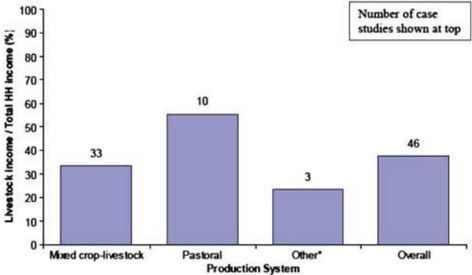
“Bernues and Herrero (2008) found a similar range of incomes (37% to 88%) from livestock in systems with different degrees of crop-livestock integration and diversification in lowland Bolivia (the more diverse and integrated with crops, the lower the share of the total income; the more specialised towards dairy, the hi…”
BackgroundLiving in a fungal world: impact of fungi on soil bacterial niche development
Boer, W. D., Folman, L. B., Summerbell, R. C., & Boddy, L. (2005) · FEMS Microbiology Reviews · doi:10.1016/j.femsre.2004.11.005 · Cited by 1,867
The State of Food and Agriculture 2020
(2020) · FAO eBooks · doi:10.4060/cb1447en · Cited by 1,830
The economics of poverty traps and persistent poverty: An asset-based approach
Carter, M. R., & Barrett, C. B. (2006) · Journal of Development Studies · doi:10.1080/00220380500405261 · Cited by 1,536 · cited 1×
“Access to, control over and ownership of assets are critical aspects of well-being (Sherraden, 1991; Carter and Barrett, 2006).”
Background
Research works printed but not linked: 12
- Gilbert J, Lapar ML, Unger F and Grace D 2010. The most important zoonosis in the world. Paper presented at Ecohealth Conference, August 18-20, London.
- Herath S 2007. Women in livestock development in Asia. Journal of Commonwealth Veterinary Association 24, 29-37.
- Lannerstad M, Heinke J, Herrero M and Havlik P. Livestock production systems - green, green, blue consumptive water use. In Water and livestock: Interactions, trade-offs and opportunities symposium, World Water Week in Stockholm 2012, Water and food security, 26 August 2012. Stockholm, Sweden.
- Njuki JM 2001. Gender roles in agroforesty: a socio-economic analysis of Embu and Kirinyaga Districts, Kenya. PhD thesis, Sokoine University of Agriculture, Tanzania.
- Peden D, Tadesse G, Misra AK, Awad Amed F, Astatke A, Ayalneh W, Herrero M, Kiwuwa G, Kumsa T, Mati B, Mpairwe D, Wassenaar T and Yimegnuhal A 2007. Chapter 13: Livestock and water for human development. In Water for food, water for life: comprehensive assessment of water management in agriculture (ed. D Molden), pp. 485-514. Oxford University Press, Oxford, UK.
- Rangnekar S 1998. Women in livestock production in developing countries. International Conference on Sustainable Animal Production, 24-27 November, Hisar, India.
- Salman MD, Morley PS and Ruch-Gallie R (eds) 1999. International Society for Veterinary Epidemiology and Economics, Nairobi (Kenya). Proceedings of the 9th Symposium of the International Society for Veterinary Epidemiology and Economics. Paper 333, Nairobi, Kenya.
- Schlundt J, Toyofuku H, Jansen J and Herbst SA 2004. Emerging food-borne zoonoses. Annual Review of Information Science and Technology 23, 513-533.
- Smith P, Martino D, Cai Z, Gwary D, Janzen H, Kumar P, McCarl B, Ogle S, O'Mara F, Rice C, Scholes B and Sirotenko O 2007. Agriculture. In Climate change 2007: mitigation. Contribution of Working Group III to the Fourth Assessment Report of 24 the Intergovernmental Panel on Climate Change (ed. B Metz, OR Davidson, PR Bosch, R Dave and RL Meyer), pp. 497-540. Cambridge University Press.
- Thompson DM, Serneels S, Ole Kaelo D and Chevenix Trench P 2009. Maasail mara -land privatization and wildlife decline: can conservation pay its way? In Staying Maasai: livelihoods, conservation and Human Development in East African Rangelands. Studies in Human Ecology and Adaptation (ed. K Homewood, P Trench, P Kristjanson, M Radeny), pp. 77-114. Springer Press, Germany.
- Thorns CJ 2000. Bacterial food-borne zoonoses. Revenue scientifique et technique Office international des epizooties 19, 226-239.
- Yisehak K 2008. Gender responsibility in smallholder mixed crop-livestock production systems of Jimma zone, South West Ethiopia. Livestock Research for Rural Development 20. Retrieved January 14, 2010, from http://www.lrrd.org/ lrrd20/1/yise20011.htm
Cited by
Items 601–683 of 683
Zuki, A. H. M., Isa, M. R., & Suddin, L. S. (2025) · Research Square · doi:10.21203/rs.3.rs-6572939/v1
External stressors impacting growth and development of livestock species
Thornton, K. J. (2025) · Animal Frontiers · doi:10.1093/af/vfaf016
“However, an understanding of the growth of all tissues that relate to the overall productivity and efficiency of livestock is also important, as these measurements impact economic outcomes for livestock producers and countries around the globe (Steinfeld and Gerber, 2010; Herrero et al., 2013).”
Carbon Farming Among Diverse Agricultural Systems
Loria, N., & Lal, R. (2025) · Springer eBooks · doi:10.1007/978-3-032-00842-8_5
Soares, G. O., Franco, A. L., Moreira, L. D. S., Daibert, R. M. D. P., Loures, A. R. S., Machado, M. A., Martins, M. F., Prata, M. C. D. A., Gaspar, E. B., Domingues, R., et al. (2025) · Veterinary Parasitology · doi:10.1016/j.vetpar.2025.110603
An optimized and affordable process for the synthesis of DL-Cloprostenol sodium for animal producers
Guttikonda, N. R., Venkatanarayana, M., Haridasyam, S. B., & Rao, B. S. (2025) · Results in Chemistry · doi:10.1016/j.rechem.2025.102748
Rift Valley fever virus dynamics in a transhumant cattle system in The GambiaPreprint
Jarra, E., Ekwem, D., Cleaveland, S., & Haydon, D. T. (2025) · eLife · doi:10.7554/elife.107346.1
Li, R. (2025) · American Journal of Agricultural Economics · doi:10.1111/ajae.70017
Kamaliyah, S. N., Subagiyo, I., Mashudi, M., Vicente, J., & Wahyuni, R. D. (2025) · BIO Web of Conferences · doi:10.1051/bioconf/202519100033
Treich, N. (2025) · Cambridge University Press eBooks · doi:10.1017/9781009699334.004
Treich, N. (2025) · Cambridge University Press eBooks · doi:10.1017/9781009699334.002
Algae: A “natural” additive for reducing methane emissions from ruminants?
Inrae, Popova, M., Morgavi, D., & Roques, S. (2025) · Notes Académiques de l Académie d agriculture de France / Academic Notes of the French Academy of Agriculture · doi:10.58630/pubac.not.a170746
Kimeli, P., Mwacalimba, K. K., Tiernan, R., Lugonzo, P. C., Mekete, B. K., Arul, J., Victor, J., Mijten, E., & Miroshnychenko, T. (2025) · doi:10.12688/verixiv.2481.1
Jere, I. F., Chingala, G., Ganya, F., & Chiumia, D. (2025) · Research Square · doi:10.21203/rs.3.rs-8253606/v1
Smallholders Beef Cattle Commercialization in Southwest EthiopiaPreprint
Kassa, G., Fantahun, T., & Anshiso, D. (2022) · Research Square · doi:10.21203/rs.3.rs-1242383/v1
“In a nutshell, investment in developing e cient value chains (including market development, service provision, adequate institutional support, etc.) should be high in the development agenda, to create incentives for smallholders to integrate in the market economy (Herrero et al., 2012).”
BackgroundInfluentialDeterminants of Beef Cattle Commercialization in Southwest EthiopiaPreprint
Kassa, G., Fantahun, T., & Anshiso, D. (2022) · Research Square · doi:10.21203/rs.3.rs-1242383/v2
“In a nutshell, creating efficient value chains (including market development, service supply, proper institutional support, and so on) should be prioritized in the development agenda to encourage smallholders to join the market economy (Herrero et al., 2012).”
BackgroundInfluentialNuvey, F. S., Haydon, D. T., Hattendorf, J., Addo, K. K., Mensah, G. I., Fink, G., Zinsstag, J., & Bonfoh, B. (2023) · Figshare · doi:10.6084/m9.figshare.23689734
Nuvey, F. S., Haydon, D. T., Hattendorf, J., Addo, K. K., Mensah, G. I., Fink, G., Zinsstag, J., & Bonfoh, B. (2023) · Figshare · doi:10.6084/m9.figshare.23689731
Livestock Tango: U.S. and Latin America Dance Together, but Who Will Lead?
de Menezes, T. C., Countryman, A. M., & Pendell, D. L. (2025) · Applied Economic Perspectives and Policy · doi:10.1002/aepp.70047
Balchin, E., Knight-Jones, T., O’Neill, L., Rothman-Ostrow, P., Martins, S. B., Temesgen, W., & Rushton, J. (2025) · medRxiv · doi:10.64898/2025.12.11.25341514
Distribution, Clinico-Pathologic Perspectives and Zoonotic Potentials of Trypanosoma evansi
Tenuche, O. Z., Godwin, E., Bello, A. M., Enem, S. I., & Egwu, G. O. (2025) · Open Journal of Veterinary Medicine · doi:10.4236/ojvm.2025.1512022
Merida, V. E., Cook, D., Ögmundarson, Ó., Shrivastava, S., & Davíðsdóttir, B. (2025) · Organic Agriculture · doi:10.1007/s13165-025-00536-2 · Cited by 1
“Additionally, cattle ownership is often cited as a key economic activity in the developing world that contributes significantly to wellbeing enhancement (Herrero et al. 2013).”
Shabir, A., Ali, N., Tak, H., & Bhat, A. H. (2026) · Journal of Parasitic Diseases · doi:10.1007/s12639-025-01892-2
Medenou, C. M. E. H., Schlecht, E., & Dossa, L. H. (2026) · Animal - Open Space · doi:10.1016/j.anopes.2025.100126
Gendered Dimensions of Livestock Ownership in Lesotho: An Analysis of Socioeconomic Determinants
Popoola, O. O., Ighodaro, I. D., & Nkonki-Mandleni, B. (2025) · Suid-Afrikaanse tydskrif vir landbouvoorligting/South African journal of agricultural extension · doi:10.17159/2413-3221/2025/v53n6a21927
“Livestock ownership enhances financial security, food production, and social cohesion, offering benefits such as income generation, fertiliser, and draught power (Nkonki-Mandleni et al ., 2019; Herrero et al ., 2013).”
Paré, B. A. M., & Yaméogo, B. T. (2026) · Food and Energy Security · doi:10.1002/fes3.70196
Patrick Rukiko, R. M. (2018) · International Journal of Biosciences (IJB) · doi:10.12692/ijb/13.1.477-488
Spatially divergent impacts of global nutrient emission scenarios on freshwater community intactness
Neijnens, F. K., Hoeks, S., Moreira, H., Kuipers, K., Beusen, A. H. W., Geerling, G., Huijbregts, M. A. J., & Schipper, A. M. (2026) · Environmental Challenges · doi:10.1016/j.envc.2026.101417 · Cited by 2
Maina, S., Miller, M., Torell, G. L., Hanan, N. P., Anchang, J. Y., & Kahiu, N. (2026) · Preprints.org · doi:10.20944/preprints202602.0545.v1
Rift Valley fever virus dynamics in a transhumant cattle system in The GambiaPreprint
Jarra, E., Ekwem, D., Cleaveland, S., & Haydon, D. T. (2026) · eLife · doi:10.7554/elife.107346.2
Alam, M. J., Sarma, P. K., Begum, I. A., & Iqbal, M. A. (2026) · Advances in Agriculture · doi:10.1155/aia/6718460
Exploring the ruminal microbiome and its impacts on feed efficiency in beef cattle
Sidney, T. S. (2025) · The Research Repository @ WVU (West Virginia University) · doi:10.33915/etd.13127
A critical narrative review of the welfare-productivity nexus in Ethiopia’s draft animal systems
Gobezie, D. (2026) · Discover Animals · doi:10.1007/s44338-026-00179-x
Nyirenda, D., Phepa, P., Dzupire, N., & Chidzalo, P. (2026) · International Journal of Development Mathematics (IJDM) · doi:10.62054/ijdm/0301.01
Hanisch, A. L., da Silva, D. A., Pandolfo, C., Pinotti, L. C. A., Vibrans, A. C., Lingner, D. V., & Caldeira, M. C. C. (2026) · Forest Ecology and Management · doi:10.1016/j.foreco.2026.123697 · Cited by 1
Inventory of Genetic Improvement Projects (by Species)
Abdelkader, A. (2026) · Springer eBooks · doi:10.1007/978-3-032-15624-2_15
Bruce‐Smith, A., Forrester, S. P., Coppin, K., Smith, E., Gray, N., & Osborne, C. (2026) · Journal of Soil Plant and Environment · doi:10.56946/jspae.v5i1.860
“A persistent challenge confronting smallholder livestock systems is insufficient access to high-quality feedstuffs that provide adequate energy and balanced amino acid profiles, nutritional attributes imperative for sustaining animal health and productivity [2, 7].”
Yasmin, S., Hasan, M. M., Nasrin, M., Rahman, M. W., & Palash, M. S. (2026) · Discover Agriculture · doi:10.1007/s44279-026-00572-w
The Value of Non-Human Animals’ Life
Martino, S., & Kenter, J. O. (2026) · Natural resource management and policy · doi:10.1007/978-3-032-17580-9_5
Ayagirwe, R. B., Mugumaarhahama, Y., Wasso, D. S., Kalye, S. K., Nyamugira, A. N., Amato, S., Mignouna, J., Bisimwa, P. N., Baenyi, S. P., Mutwedu, V. B., et al. (2026) · Research Square · doi:10.21203/rs.3.rs-8907373/v1
Mensah, C., Omondi, I., Bahta, S., & Enahoro, D. K. (2026) · NJAS Impact in Agricultural and Life Sciences · doi:10.1080/27685241.2026.2661572
Self-citationBekele, K., & Jemal, K. (2026) · doi:10.12688/verixiv.3145.1
Livestock rearing and its contribution to sustainable development of territories
Neba, W. S. (2025) · Journal of Innovations and Sustainability · doi:10.51599/is.2025.09.04.01 · Cited by 1
Maluleke, W., & Mulrooney, K. (2026) · Crime prevention and security management. · doi:10.1007/978-3-032-16081-2_14
Farming Efficiency and Productivity in Increasing Farmers' Income
Putri, A. R., & Apriliansyah, S. (2026) · Journal of Agro Complex Development Society · doi:10.62012/agrocomplex.vi.33
“The long-term effects of a combination of efficiency, productivity, and the right marketing strategy show that farmers are able to deal with fluctuations in commodity prices and climate change more adaptively, while improving quality of life and social well-being in rural communities [4].”
de la Cruz‐Amo, L., Sala, O. E., Pueyo, Y., Pérez, I., & Anadón, J. D. (2026) · Environmental Research Letters · doi:10.1088/1748-9326/ae6930
“Beyond its ecological role, managed grazing is crucial for human well-being, particularly in rural and economically vulnerable areas (Herrero et al 2013).”
An analysis of antibiotic use in livestock in three East African livestock production systems
Loosli, K., McIntyre, H., Matthews, L., Johnson, P., Almadhoon, H. W., Bootthong, K., Buyugu, P. S., Ibrahim, Y., Lea, R. S., Manangwa, O., et al. (2026) · One Health Outlook · doi:10.1186/s42522-026-00251-2
Impact of Pre-Existing Uterine Microbiome on Pregnancy Success After Embryo Transfer in Cattle
Valderrama, N. L. M., Portocarrero, G. T. S., Solar, J. C. D., Frías, H., Romani, A. C., Gongora-Bardales, D. J., Quispe‐Gutiérrez, U. S., Ordinola-Ramirez, C. M., Polveiro, R. C., Vieira, D. D. S., et al. (2026) · Microbiology Research · doi:10.3390/microbiolres17050091 · Cited by 1
“The economic impact of livestock is significant worldwide, with the livestock industry contributing approximately USD 1.4 trillion to global assets [1,2].”
InfluentialLivelihood resilience of smallholder livestock farmers in the face of climate change in Fiji
Sagero, P. O., Devi, V., & Magiri, R. B. (2026) · Frontiers in Animal Science · doi:10.3389/fanim.2026.1807896
Livestock Management Practices and Barriers to Vaccine Adoption in East Gojam Zone, Ethiopia
Wondie, D. A., & Getnet, M. (2026) · Bulletin of University of Agricultural Sciences and Veterinary Medicine Cluj-Napoca Animal Science and Biotechnologies · doi:10.15835/buasvmcn-asb:2025.0030
Lou, S., Ning, J., Guo, Y., Zhu, W., & Hou, F. (2026) · Field Crops Research · doi:10.1016/j.fcr.2026.110548
Population and dynamics of pesisir cattle farming management as plasma nutfah
Madarisa, F., Hellyward, J., Suresti, A., Wati, R., Putra, R. A., Rastosari, A., & Asmairicen, S. (2026) · IOP Conference Series Earth and Environmental Science · doi:10.1088/1755-1315/1623/1/012022
“[15] noted that this pattern is common in smallholder systems where livestock function primarily as savings rather than commercial enterprises, resulting in suboptimal marketing strategies and reduced profitability.”
Das, T. K., Biswas, S. K., Mondal, U. K., Uzzaman, M. S., Sagor, S. I., Chisty, N. N., Akter, S., Singha, S., Giasuddin, M., Haque, F., et al. (2026) · Research Square · doi:10.21203/rs.3.rs-9713892/v1
Piratae, S., Seerintra, T., Chatan, W., & Vaisusuk, K. (2026) · Animals · doi:10.3390/ani16121876
“Livestock production is a vital global economic activity, contributing significantly to agricultural Gross Domestic Product (GDP), rural livelihoods, and food security, particularly in tropical and developing regions such as Thailand [1].”
Effect of Climate Change on Livestock Production in Somalia
Ahmed, M. R., -, H. O. S., & Rage, G. A. (2026) · FUDMA Journal of Sciences · doi:10.33003/fjs-2026-1009-4961
Pereira, D. D. F. S., Spuri, A. C. R., Mamani, R. C. C., Campos, A. K., Soares, F. E. D. F., & Remédio, R. N. (2026) · Veterinary Parasitology · doi:10.1016/j.vetpar.2026.110844
Market Incentives and Adoption of Cross-breeding: A Study of Small-holder Dairy Farmers in India
Gupta, A. D., & Roy, S. (2026) · Arthaniti-Journal of Economic Theory and Practice · doi:10.1177/09767479261447818
Wijebandara, K. G. C. B., Silva, P., Dematawewa, M., Lokugalappatti, L. G. S., Pichler, R., Kurukulasuriya, M. S., Madusanka, S., Disnaka, K. G. J. S., Ramasamy, S., Hussain, T., et al. (2026) · Tropical Animal Health and Production · doi:10.1007/s11250-026-05210-7
“Livestock production is a major component of global agriculture contributing approximately 40% and 20% of agricultural gross domestic production in developed and developing countries respectively (Herrero et al. 2013; Baltenweck et al. 2020; FAO 2022).”
Asymmetric effects of production, conflict, and remittances on income inequality in Somalia
Mohamed, A. A., Abdulle, A. S., & Ibey, A. M. Y. (2026) · Discover Food · doi:10.1007/s44187-026-01137-y
“Livestock production is expected to reduce inequality because it is widely embedded in pastoral and rural livelihoods and provides income, assets, and trade opportunities for a broad segment of the population [21, 38].”
Agroforestry promotion for land restoration, livelihoods and economic resilience in India
Saakshi, Sharma, D., Bodh, R., & Bhatia, A. K. (2026) · Discover Forests · doi:10.1007/s44415-026-00108-6 · Cited by 1
“This sector is a vital support system for the livelihood of nearly 55% of the rural population in India, offering income and sustenance to millions of households [59].”
Livestock roles in agroecological transitions in mixed crop-livestock systems of Tunisia
Alary, V., Frija, A., Jones, S. K., Ouerghemmi, H., Shiri, Z., Idoudi, Z., & M’hamed, H. C. (2026) · Agricultural Systems · doi:10.1016/j.agsy.2026.104903
Gutiérrez, A. S., Otuko, R., Xie, K., Omondi, I., Kariukiu, M., Ruiz-Castillo, P., Wanjiku, C., Brazeal, A., Ngama, M., Onyango, T., et al. (2026) · BMJ Global Health · doi:10.1136/bmjgh-2025-022607
“13 Given the proclivities of some malaria vectors for animal hosts, there has been extensive exploration of the possibility of using livestock as zoopro-phylaxis for malaria, which means using the animals to attract mosquitoes, thus reducing the number of bites on humans.”
Sustainability of Local Cattle Production Systems in Hopelchén, Yucatan Peninsula, Mexico
Špirić, J., & González-Esquivel, C. E. (2026) · Human Ecology · doi:10.1007/s10745-026-00742-w
Tshinu, K. P., Tu, C., Owolawi, P. A., & Smith, A. J. (2026) · International Conference on System of Systems Engineering · doi:10.1109/sose69681.2026.11622365
“Similar detection difficulties influence herd counting, health monitoring, theft prevention, and animal behavior analysis [17], [18], [19].”
Does livestock management affect floral visitors’ diversity and composition in the arid Chaco?
Marquez, V., González-Vaquero, R. A., Zeballos, M., Zamudio, F., Ashworth, L., Calviño, A. A., & Aguilar, R. (2026) · Journal for Nature Conservation · doi:10.1016/j.jnc.2026.127397
Adinata, K. I., Arifin, M., Nuswantara, L. K., & Purbowati, E. (2026) · Asian Journal of Agriculture · doi:10.13057/asianjagric/g100208
A Lightweight Machine Learning Approach for Smartphone-Based Pig Weight Estimation
Umuhoza, E., Niyitegeka, L., Nsengiyumva, E., & Nwankwo, M. (2026) · Lecture notes in networks and systems · doi:10.1007/978-3-032-32726-0_1
Eritrina, H. N., Ardilia, F., & Sunarto, S. (2026) · MIMBAR AGRIBISNIS Jurnal Pemikiran Masyarakat Ilmiah Berwawasan Agribisnis · doi:10.25157/ma.v12i2.23001
“Bukti empiris menunjukkan bahwa sistem produksi daging sapi berbasis petani kecil berkontribusi signifikan terhadap produksi total di Asia dan Afrika, namun seringkali ditandai dengan produktivitas rendah dan praktik manajemen yang tidak efisien (Herrero et al., 2013).”
Sharma, S., Verma, P., Keshri, A. K., Chaudhary, A., Mehra, P., Kapoor, A., Panda, P. R., Rawat, S. S., & Prasad, A. (2026) · Discover Life · doi:10.1007/s11084-026-09756-2
“During the docking process, it executes a series of sequential steps: [1] sampling diverse conformations for rigid body docking [2], selecting 1000 structures with the lowest energy for RMSD-based clustering, and [3] refining through energy minimization.”
Handayani, S., Fathan, S., Maksum, H., Afandi, A., Hasnadia, H., Machieu, S. R., Mustapa, R., Dako, S., & Suleman, D. (2026) · Jambura Agribusiness Journal · doi:10.37046/jaj.v7i2.37003
Kadigi, I. L. (2026) · Discover Animals · doi:10.1007/s44338-026-00239-2
Ndunda, C. N., Ndunda, E. N., Luketero, S. W., & Mutinda, M. N. (2026) · International Journal of Natural Resource Ecology and Management · doi:10.11648/j.ijnrem.20261103.13
Determinants of livestock management knowledge and practices among farmers in Afghanistan
Kasundu, B., Murendo, C., & Montembault, S. (2026) · Critical Insights in Agriculture · doi:10.1080/29932106.2026.2718533
Shukla, R., Tyagi, N., Murken, L., Gornott, C., Sachdeva, K., & Joshi, P. K. (2026) · Current Research in Environmental Sustainability · doi:10.1016/j.crsust.2026.100374
Manyali, L., Oluremi, O. I. A., & Molefe, T. M. (2026) · Journal of World’s Poultry Science · doi:10.58803/jwps.v5i3.126
Behavioural-Economic Factors and Epidemiological Models for Improved Livestock Disease Interventions
Sok, J., de Lauwere, C., & Just, D. R. (2026) · Springer eBooks · doi:10.1007/978-3-032-31066-8_4
Chabiri, L. A., Weka, R., Bamaiyi, P. H., Adedeji, A. J., Woma, T. Y., Atuman, Y. J., & Luka, P. D. (2026) · Journal of Sustainable Veterinary and Allied Sciences · doi:10.54328/covm.josvas.2026.378
Putritamara, J. A., Nugroho, A. E., Purwanti, T. S., Agussabti, Bulkis, S., & Ponka, D. (2026) · Social Sciences & Humanities Open · doi:10.1016/j.ssaho.2026.103712
Ponnampalam, E. N., Jairath, G., Weka, R., Akpensuen, T. T., Priyashantha, H., Lauridsen, C., Lazarus, D. D., Mal, G., Zotte, A. D., Premaratne, S., et al. (2026) · Animals · doi:10.3390/ani16193138
“Livestock play multiple roles in rural livelihoods by providing food, income, manure, draught power, savings, insurance, transport, cultural value and social security, particularly in smallholder and mixed crop–livestock systems [145,147].”
HEMACHA, S. A., Kechero, Y., & Wamatu, J. (2026) · Advances in Agriculture · doi:10.1155/aia/7247803
Kouachi, K., Hammadou, B. B., Kaci, A., Ghezal, M., Hadjloune, H., Zemour, H., & Belhouadjeb, F. A. (2026) · International Research Journal of Multidisciplinary Scope · doi:10.47857/irjms.2026.v07i04.010972
“Since 1992, the government has launched several programs to revitalize the dairy sector, alongside significant investments (6, 7).”
Bamidele, O., Alary, V., & Enahoro, D. K. (2026) · NJAS Impact in Agricultural and Life Sciences · doi:10.1080/27685241.2026.2733650
Self-citationBEYOND TRAINING: DETERMINANTS OF SUSTAINABLE COMMUNITY ANIMAL HEALTH SERVICES IN NORTHERN MALAWIPreprint
Nyoni, R., Dzonzi‐Undi, J., Mathanda, H., Banda, G., & Chitete, M. M. N. (2026) · SSRN Electronic Journal · doi:10.2139/ssrn.7635170
Metadata
- Authors
- Herrero, M., Grace, D., Njuki, J., Johnson, N., Enahoro, D., Silvestri, S., & Rufino, M. C.
- Affiliations
- International Livestock Research Institute (KE)
- Corresponding author
- Herrero, M.
- Venue
- Animal
- Publisher
- Elsevier BV
- Published
- 2013
- Volume
- 7
- Pages
- 3-18
- ISSN
- 1751-7311 (ISSN-L)
- OpenAlex
- W2045423228
- Semantic Scholar
- a903d14dc00c42b14c426d4cadbc8c8265e67ee0
- Cited by
- 659
- References
- 113
- Citations by year
- 2026: 68 · 2025: 118 · 2024: 81 · 2023: 96 · 2022: 63 · 2021: 72 · 2020: 32 · 2019: 26 · 2018: 29 · 2017: 17 · 2016: 16 · 2015: 18 · 2014: 11 · 2013: 10
- FWCI
- 25.72
- Type
- journal article
- Language
- en
- Open access
- hybrid
- doi.org
- Licence
- cc-by-nc-nd
- www.elsevier.com/tdm/userlicense/1.0/ (tdm)
- www.elsevier.com/legal/tdmrep-license (tdm)
- creativecommons.org/licenses/by-nc-nd/4.0/ (vor, 2870 d)
- Locations
- animal (publishedVersion, cc-by-nc-nd)
- PubMed (publishedVersion)
- IFPRI E-brary (International Food Policy Research Institute) (submittedVersion)
- CGSPace A Repository of Agricultural Research Outputs (Consultative Group for International Agricultural Research) (submittedVersion, cc-by-nc-nd)
- DOAJ (DOAJ: Directory of Open Access Journals) (submittedVersion, cc-by-sa)
- International Food Policy Research Institute (International Food Policy Research Institute) (submittedVersion)
- Lancaster EPrints (Lancaster University) (submittedVersion)
- Funders
- World Health Organization
- Consortium of International Agricultural Research Centers
- Natural Environment Research Council (NE/J001570/1, NE/J001422/1)
- Topics
- Life Sciences › Agricultural and Biological Sciences › Animal Science and Zoology › Livestock Farming and Management
- Life Sciences › Agricultural and Biological Sciences › Ecology, Evolution, Behavior and Systematics › Agriculture and Rural Development Research
- Physical Sciences › Environmental Science › Ecology › Agriculture Sustainability and Environmental Impact
- Keywords
- livestock, developing countries, rural livelihoods, value chain, smallholder farmers, women in livestock, pastoralism, manure application, water pollution, resource efficiency, sustainable intensification, zoonoses, food safety, diversification, social safety nets
- MeSH terms
- Animals, Animal Husbandry, Developing Countries, Environment, Humans, Livestock
About these checks
Registry, retraction, Cites and statistics results are computed, not judged, with one exception: a printed reference that no index lists is read once by a model before it counts as a citation error. Claims are extracted by a model and kept only when their quote appears verbatim in the text; each cited source is then checked, with a model’s help, for whether it says what the claim relies on. Those verdicts can be wrong — read the claim’s quote and the cited source before relying on one.
Statistics and arithmetic are recomputed, not judged.
Confidence bands are shown only for fields calibrated on our annotated test set. None is calibrated yet, so no band is shown.
What counts as a claim ›How we measure confidence ›How we check this ›
Are you an author, or do you see a problem with this page? Request a review
Data sources
Bibliographic data: Semantic Scholar, OpenAlex, Crossref.
Contains information from the Semantic Scholar Academic Graph Datasets, made available under the ODC Attribution License (ODC-BY 1.0).
Semantic Scholar’s data is described in: Kinney, R., et al. (2023). The Semantic Scholar Open Data Platform. arXiv:2301.10140.
