

The roles of livestock in developing countries
Open accessThe DOI matches its Crossref record; 110 of the 113 references it cites were found in a registry or an index, and 1 are not checked yet.
Abstract
Livestock play a significant role in rural livelihoods and the economies of developing countries. They are providers of income and employment for producers and others working in, sometimes complex, value chains. They are a crucial asset and safety net for the poor, especially for women and pastoralist groups, and they provide an important source of nourishment for billions of rural and urban households. These socio-economic roles and others are increasing in importance as the sector grows because of increasing human populations, incomes and urbanisation rates. To provide these benefits, the sector uses a significant amount of land, water, biomass and other resources and emits a considerable quantity of greenhouse gases. There is concern on how to manage the sector's growth, so that these benefits can be attained at a lower environmental cost. Livestock and environment interactions in developing countries can be both positive and negative. On the one hand, manures from ruminant systems can be a valuable source of nutrients for smallholder crops, whereas in more industrial systems, or where there are large concentrations of animals, they can pollute water sources. On the other hand, ruminant systems in developing countries can be considered relatively resource-use inefficient. Because of the high yield gaps in most of these production systems, increasing the efficiency of the livestock sector through sustainable intensification practices presents a real opportunity where research and development can contribute to provide more sustainable solutions. In order to achieve this, it is necessary that production systems become market-orientated, better regulated in cases, and socially acceptable so that the right mix of incentives exists for the systems to intensify. Managing the required intensification and the shifts to new value chains is also essential to avoid a potential increase in zoonotic, food-borne and other diseases. New diversification options and improved safety nets will also be essential when intensification is not the primary avenue for developing the livestock sector. These processes will need to be supported by agile and effective public and private institutions.
Overview
The claims and statistics of this paper haven’t been checked yet.
Free: it reads the open-access text and checks the first 5 claims that cite a source we can check. Create a free account to check every claim.
Integrity signals
Registry
Cites
Statistics
Figures
Verification
Claims the paper makes
The claims and statistics of this paper haven’t been checked yet.
Free: it reads the open-access text and checks the first 5 claims that cite a source we can check. Create a free account to check every claim.
Claims other papers make about this one
Each is checked against this paper’s own text: does it say what the citing paper says it does?
The source backs part of the claim, not all of it — or backs it for a different population, condition or comparison.
In the citing paper
“In many LMICs, most animal source foods and produce are produced by smallholders and sold in informal markets [19,20].”
From Food Safety in Low and Middle Income Countries (2015) · cites this paper as [20]
Experimental — accuracy not yet measured
Self-check
Percentages, sums and reported differences re-computed from the paper’s own numbers.
The self-check needs the paper’s full text.
Citations
Cites
Global trends in emerging infectious diseases
Jones, K. E., Patel, N. G., Levy, M. A., Storeygard, A., Balk, D., Gittleman, J. L., & Daszak, P. (2008) · Nature · doi:10.1038/nature06536 · Cited by 8,338
Maternal and child undernutrition: global and regional exposures and health consequences
Black, R. E., Allen, L. H., Bhutta, Z. A., Caulfield, L. E., de Onis, M., Ezzati, M., Mathers, C., & Rivera, J. (2008) · The Lancet · doi:10.1016/s0140-6736(07)61690-0 · Cited by 6,443 · cited 1×
“population and is implicated in the deaths of a third of all children under five (Black et al., 2008); an estimated 195 million children are too short for their age (stunted) and 129 million children are underweight.”
BackgroundSteinfeld, H., Gerber, P., Wassenaar, T., Castel, V., Rosales, M., & de Haan, C. (2006) · Agritrop (Cirad) · Cited by 5,238
Global, regional, and national causes of child mortality in 2008: a systematic analysis
Black, R. E., Cousens, S., Johnson, H. L., Lawn, J. E., Rudan, I., Bassani, D. G., Jha, P., Campbell, H., Walker, C. F., Cibulskis, R., et al. (2010) · The Lancet · doi:10.1016/s0140-6736(10)60549-1 · Cited by 3,058 · cited 1×
“4 million children a year (Black et al., 2010).”
Rebitzer, G., Ekvall, T., Frischknecht, R., Hunkeler, D., Norris, G., Rydberg, T., Schmidt, W.-P., Suh, S., Weidema, B. P., & Pennington, D. W. (2004) · Environment International · doi:10.1016/j.envint.2003.11.005 · Cited by 2,753
Livestock production: recent trends, future prospects
Thornton, P. K. (2010) · Philosophical Transactions of the Royal Society B: Biological Sciences · doi:10.1098/rstb.2010.0134 · Cited by 2,215 · cited 1×
“Numerous publications exist on this subject (Steinfeld et al., 2006; FAO, 2009 and 2010; Herrero et al., 2009; PBL, 2010; Pelletier and Tyedmers, 2010; Thornton, 2010; Thornton and Herrero, 2010; Bouwman et al., 2011).”
BackgroundBarrett, C. B., Reardon, T., & Webb, P. (2001) · Food Policy · doi:10.1016/s0306-9192(01)00014-8 · Cited by 1,925 · cited 3×
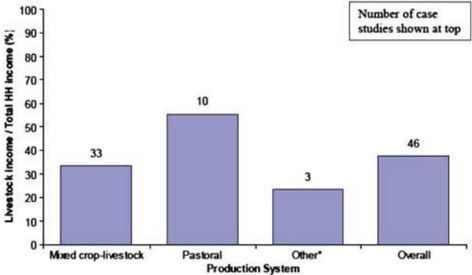
“Bernues and Herrero (2008) found a similar range of incomes (37% to 88%) from livestock in systems with different degrees of crop-livestock integration and diversification in lowland Bolivia (the more diverse and integrated with crops, the lower the share of the total income; the more specialised towards dairy, the hi…”
BackgroundLiving in a fungal world: impact of fungi on soil bacterial niche development
Boer, W. D., Folman, L. B., Summerbell, R. C., & Boddy, L. (2005) · FEMS Microbiology Reviews · doi:10.1016/j.femsre.2004.11.005 · Cited by 1,867
The State of Food and Agriculture 2020
(2020) · FAO eBooks · doi:10.4060/cb1447en · Cited by 1,830
The economics of poverty traps and persistent poverty: An asset-based approach
Carter, M. R., & Barrett, C. B. (2006) · Journal of Development Studies · doi:10.1080/00220380500405261 · Cited by 1,536 · cited 1×
“Access to, control over and ownership of assets are critical aspects of well-being (Sherraden, 1991; Carter and Barrett, 2006).”
BackgroundPayments for environmental services: some nuts and bolts
S., W. (2005) · Center for International Forestry Research (CIFOR) eBooks · doi:10.17528/cifor/001760 · Cited by 1,535
Assets and the poor: a new American welfare policy
(1991) · Choice Reviews Online · doi:10.5860/choice.28-5757 · Cited by 1,297
(2002) · Medical Entomology and Zoology · Cited by 1,279
Food, livestock production, energy, climate change, and health
McMichael, A. J., Powles, J. W., Butler, C. D., & Uauy, R. (2007) · The Lancet · doi:10.1016/s0140-6736(07)61256-2 · Cited by 1,226 · cited 1×
“In rich countries, consumption of animal source food has been linked to a number of high health burden chronic diseases including obesity, cardiovascular disease and cancer (McMichael et al., 2007).”
BackgroundSoil Fertility and Hunger in Africa
Sanchez, P. A. (2002) · Science · doi:10.1126/science.1065256 · Cited by 1,180 · cited 1×
“Poverty has often been associated with poor soil fertility (Sanchez, 2002), and problems of fertility are often not solved by just adding fertilisers, requiring sensible use of organic resources (Chivenge et al.”
BackgroundSutton, M. A., Oenema, O., Erisman, J. W., Leip, A., van Grinsven, H., & Winiwarter, W. (2011) · Nature · doi:10.1038/472159a · Cited by 1,164 · cited 1×
“The widespread use of fertilisers has helped to intensify not only agricultural production, but also the rate of nutrient cycling, with accumulation of nutrients in certain environments creating threats for human health and nature (Sutton et al., 2011).”
BackgroundPagiola, S., Arcenas, A., & Platais, G. (2005) · World Development · doi:10.1016/j.worlddev.2004.07.011 · Cited by 1,110
Bouwman, L., Goldewijk, K. K., Van Der Hoek, K. W., Beusen, A. H. W., Van Vuuren, D. P., Willems, J., Rufino, M. C., & Stehfest, E. (2013) · Proceedings of the National Academy of Sciences · doi:10.1073/pnas.1012878108 · Cited by 1,044
Self-citationDas Gupta, M., Zhenghua, J., Bohua, L., Zhenming, X., Chung, W., & Hwa-Ok, B. (2003) · The Journal of Development Studies · doi:10.1080/00220380412331293807 · Cited by 966
Reardon, T. (1997) · World Development · doi:10.1016/s0305-750x(96)00137-4 · Cited by 935 · cited 1×
“Accumulation of livestock assets is commonly followed by a shift to more non-farm income in comparison with farmrelated income (Reardon, 1997; Barrett et al., 2001; Ellis and Freeman, 2004).”
BackgroundCan Anyone Hear Us?: Voices of the Poor
naraya, D., Patel, R., Schafft, K., Rademacher, A., & Koch-Schulte, S. (2000) · World Bank, Washington, DC eBooks · doi:10.1596/0-1952-1601-6 · Cited by 933
Smart Investments in Sustainable Food Production: Revisiting Mixed Crop-Livestock Systems
Herrero, M., Thornton, P. K., Notenbaert, A. M., Wood, S., Msangi, S., Freeman, H. A., Bossio, D., Dixon, J., Peters, M., van de Steeg, J., et al. (2010) · Science · doi:10.1126/science.1183725 · Cited by 928
Self-citationSteinfeld, H., Gerber, P., Wassenaar, T., Castel, V., Rosales, M., & de Haan, C. (2006) · Cited by 877
World agriculture: towards 2015/2030: an FAO perspective
Thomson, K. J. (2003) · Land Use Policy · doi:10.1016/s0264-8377(03)00047-4 · Cited by 868
Landell-Mills, N., & Porras, I. (2002) · VTechWorks (Virginia Tech) · Cited by 723
A high-resolution assessment on global nitrogen flows in cropland
Liu, J., You, L., Amini, M., Obersteiner, M., Herrero, M., Zehnder, A. J. B., & Yang, H. (2010) · Proceedings of the National Academy of Sciences · doi:10.1073/pnas.0913658107 · Cited by 620
Self-citationViala, E. (2008) · Irrigation and Drainage Systems · doi:10.1007/s10795-008-9044-8 · Cited by 575
Kiers, E. T., Leakey, R. R. B., Izac, A.-M., Heinemann, J. A., Rosenthal, E., Nathan, D., & Jiggins, J. (2008) · Science · doi:10.1126/science.1158390 · Cited by 574
Randolph, T. F., Schelling, E., Grace, D., Nicholson, C. F., Leroy, J. L., Cole, D. C., Demment, M. W., Omore, A., Zinsstag, J., & Ruel, M. (2007) · Journal of Animal Science · doi:10.2527/jas.2007-0467 · Cited by 542
Self-citationRural livelihoods and poverty reduction strategies in four African countries
Ellis, F., & Freeman, H. A. (2004) · Journal of Development Studies · doi:10.1080/00220380410001673175 · Cited by 524 · cited 2×
“Although livestock ownership is often seen as a sign of wealth – household typically move up the ‘livestock ladder’ from poultry to goats or sheep, to cattle/buffalo (Dercon and Krishnan, 1996; Ellis and Freeman, 2004; Kristjanson et al., 2005; Deshingkar et al., 2008) – livestock’s share of income was highest in the…”
BackgroundNutritional Importance of Animal Source Foods
Murphy, S. P., & Allen, L. H. (2003) · The Journal of Nutrition · doi:10.1093/jn/133.11.3932s · Cited by 505 · cited 2×
“They also provide a variety of essential micronutrients, some of which, such as vitamin A, vitamin B12, riboflavin, calcium, iron, zinc and various essential fatty acids, are difficult to obtain in adequate amounts from plant-based foods alone (Murphy and Allen, 2003).”
BackgroundSmith, P., Gregory, P. J., van Vuuren, D., Obersteiner, M., Havlík, P., Rounsevell, M., Woods, J., Stehfest, E., & Bellarby, J. (2010) · Philosophical Transactions of the Royal Society B: Biological Sciences · doi:10.1098/rstb.2010.0127 · Cited by 487 · cited 2×
“This phenomenon has occurred predominantly in Latin America, and is projected to increase by a further 100 to 120 million ha by 2050 under current practices (Smith et al., 2010).”
BackgroundGrieg-Gran, M., Porras, I., & Wunder, S. (2005) · World Development · doi:10.1016/j.worlddev.2005.05.002 · Cited by 475
Improving the production and utilization of cowpea as food and fodder
Singh, B. B., Ajeigbe, H. A., Tarawali, S. A., Fernandez-Rivera, S., & Abubakar, M. (2003) · Field Crops Research · doi:10.1016/s0378-4290(03)00148-5 · Cited by 457 · cited 1×
“Dual-purpose legumes such as cowpea may be used as food and feeds, and its production justified to contribute to income and nutrition (Singh et al., 2003).”
BackgroundLivestock, livelihoods and the environment: understanding the trade-offs
Herrero, M., Thornton, P. K., Gerber, P., & Reid, R. S. (2009) · Current Opinion in Environmental Sustainability · doi:10.1016/j.cosust.2009.10.003 · Cited by 444 · cited 4×
“All these systems in developing countries produced about 50% of the beef, 41% of the milk, 72% of the lamb, 59% of the pork and 53% of the poultry, globally (Herrero et al., 2009).”
BackgroundInfluentialSelf-citationLosing the Links Between Livestock and Land
Naylor, R., Steinfeld, H., Falcon, W., Galloway, J., Smil, V., Bradford, E., Alder, J., & Mooney, H. (2005) · Science · doi:10.1126/science.1117856 · Cited by 436 · cited 2×
“In much of the industrialised world, the link between livestock and the land has been broken, with animals separated spatially from the places where their feed is produced (Naylor et al., 2005).”
BackgroundSustaining intensification of smallholder livestock systems in the tropics
McDermott, J. J., Staal, S. J., Freeman, H. A., Herrero, M., & Van de Steeg, J. A. (2010) · Livestock Science · doi:10.1016/j.livsci.2010.02.014 · Cited by 421
Self-citationAssessing the water challenge of a new green revolution in developing countries
Rockström, J., Lannerstad, M., & Falkenmark, M. (2007) · Proceedings of the National Academy of Sciences · doi:10.1073/pnas.0605739104 · Cited by 416 · cited 1×
“Enhancing this role through improved rangeland management could be of essential importance for enhancing global green water cycles (Rockström et al., 2007).”
BackgroundSurveillance for foodborne-disease outbreaks--United States, 1998-2002.
Lynch, M., Painter, J. E., Woodruff, R. Y., & Braden, C. R. (2006) · PubMed · Cited by 406
Turpie, J. K., Marais, C., & Blignaut, J. N. (2008) · Ecological Economics · doi:10.1016/j.ecolecon.2007.12.024 · Cited by 394 · cited 1×
“of promoting household income diversification, and indirectly through social and cultural benefits (Grieg-Gran et al., 2005; Pagiola et al., 2005 and 2008; Turpie et al., 2008).”
BackgroundIncome portfolios in rural Ethiopia and Tanzania: Choices and constraints
Dercon, S., & Krishnan, P. (1996) · Journal of Development Studies · doi:10.1080/00220389608422443 · Cited by 391
World livestock production systems. Current status, issues and trends
Seré, C., Steinfeld, H., & Groenewold, J. (1995) · Cited by 391
Popular myths around soil fertility management in sub-Saharan Africa
Vanlauwe, B., & Giller, K. E. (2006) · Agriculture, Ecosystems & Environment · doi:10.1016/j.agee.2006.03.016 · Cited by 386 · cited 1×
“Direct relationship arises from the need for animal manures to increase effectiveness of fertilisers applied to cropland (Vanlauwe and Giller, 2006).”
BackgroundForecasting potential global environmental costs of livestock production 2000–2050
Pelletier, N., & Tyedmers, P. (2010) · Proceedings of the National Academy of Sciences · doi:10.1073/pnas.1004659107 · Cited by 376 · cited 1×
“Numerous publications exist on this subject (Steinfeld et al., 2006; FAO, 2009 and 2010; Herrero et al., 2009; PBL, 2010; Pelletier and Tyedmers, 2010; Thornton, 2010; Thornton and Herrero, 2010; Bouwman et al., 2011).”
BackgroundMapping Poverty and Livestock in the Developing World
Thornton, P. K., Kruska, R. L., Henninger, N., Kristjanson, P., Reid, R. S., Atieno, F., Odero, A., & Ndegwa, T. (2002) · CGSPace A Repository of Agricultural Research Outputs (Consultative Group for International Agricultural Research) · Cited by 367
Constructed wetlands for livestock wastewater management
Knight, R. L., Payne, V. W. E., Borer, R. E., Clarke, R. A., & Pries, J. H. (2000) · Ecological Engineering · doi:10.1016/s0925-8574(99)00034-8 · Cited by 364 · cited 1×
“There are places where manure is indirectly discharged into water bodies (Centner, 2011), or accumulated in constructed wetlands (Knight et al., 2000).”
BackgroundNarayan, D., Belshaw, D., Calderisi, R., & Sugden, C. (1997) · Cited by 363
Neumann, C. G., Bwibo, N. O., Murphy, S. P., Sigman, M., Whaley, S., Allen, L. H., Guthrie, D., Weiss, R. E., & Demment, M. W. (2003) · The Journal of Nutrition · doi:10.1093/jn/133.11.3941s · Cited by 338
Chivenge, P., Vanlauwe, B., & Six, J. (2011) · Plant and Soil · doi:10.1007/s11104-010-0626-5 · Cited by 334
O’Mara, F. P. (2011) · Animal Feed Science and Technology · doi:10.1016/j.anifeedsci.2011.04.074 · Cited by 300 · cited 2×
“life cycle assessment), attribution of emissions to land use (Herrero et al., 2011; O’Mara, 2011) and uncertainty in parameter values (FAO, 2010).”
BackgroundNutrient losses from manure management in the European Union
Oenema, O., Oudendag, D., & Velthof, G. L. (2007) · Livestock Science · doi:10.1016/j.livsci.2007.09.007 · Cited by 293 · cited 1×
“In Europe, strong environmental regulations led to recycling of large proportion of the excreted manure, partly in grassland and cropland and partly for biogas production (Oenema et al., 2007).”
BackgroundRecycling of livestock manure in a whole-farm perspective
Petersen, S. O., Sommer, S. G., Béline, F., Burton, C., Dach, J., Dourmad, J. Y., Leip, A., Misselbrook, T., Nicholson, F., Poulsen, H. D., et al. (2007) · Livestock Science · doi:10.1016/j.livsci.2007.09.001 · Cited by 280 · cited 2×
“Costs and benefits of cycling nutrients through livestock Livestock wastes – considered a serious problem in the developed world – are a critical agricultural resource in large parts of Africa, where soils are inherently poor (Petersen et al., 2007; Rufino et al., 2007).”
BackgroundPerry, B., & Grace, D. (2009) · Philosophical Transactions of the Royal Society B: Biological Sciences · doi:10.1098/rstb.2009.0097 · Cited by 273 · cited 2×
“Street food is a large part of the informal sector in most developing countries – the largest in South Africa (Perry and Grace, 2009) – and therefore a major source of income and employment for the poor.”
BackgroundSelf-citationPotential soil carbon sequestration in overgrazed grassland ecosystems
Conant, R. T., & Paustian, K. (2002) · Global Biogeochemical Cycles · doi:10.1029/2001gb001661 · Cited by 266
Guèye, E. F. (2000) · Outlook on Agriculture · doi:10.5367/000000000101293130 · Cited by 244
Can anyone hear us?: voices of the poor
(2000) · Choice Reviews Online · doi:10.5860/choice.38-1041 · Cited by 240
Nitrogen cycling efficiencies through resource-poor African crop–livestock systems
Rufino, M. C., Rowe, E. C., Delve, R. J., & Giller, K. E. (2006) · Agriculture, Ecosystems & Environment · doi:10.1016/j.agee.2005.08.028 · Cited by 239
Self-citationNitrogen use efficiency: A potential performance indicator and policy tool for dairy farms
Powell, J. M., Gourley, C. J. P., Rotz, C. A., & Weaver, D. M. (2010) · Environmental Science & Policy · doi:10.1016/j.envsci.2010.03.007 · Cited by 217
Livestock and Women’s Livelihoods
Kristjanson, P., Waters‐Bayer, A., Johnson, N., Tipilda, A., Njuki, J., Baltenweck, I., Grace, D., & MacMillan, S. (2014) · Springer eBooks · doi:10.1007/978-94-017-8616-4_9 · Cited by 214
Self-citationGerber, P., Chilonda, P., Franceschini, G., & Menzi, H. (2005) · Bioresource Technology · doi:10.1016/j.biortech.2004.05.016 · Cited by 212 · cited 1×
“However, the concentration of animal wastes around urban centres raises serious concerns for water pollution and for GHG emissions, which may increase significantly in places of large livestock density (Gerber et al., 2005).”
BackgroundThe protein puzzle: the consumption and production of meat, dairy and fish in the European Union.
Westhoek, H., Rood, G., van den Berg, M., Janse, J. H., Nijdam, D. S., Reudink, M., & Stehfest, E. (2011) · European Journal of Nutrition & Food Safety · Cited by 209
Emerging food-borne zoonoses: -EN- -FR- -ES-
SCHLUNDT, J., TOYOFUKU, H., JANSEN, J., & HERBST, S. A. (2004) · Revue Scientifique et Technique de l'OIE · doi:10.20506/rst.23.2.1506 · Cited by 209
Bacterial food-borne zoonoses: -EN- -FR- -ES-
THORNS, C. J. (2000) · Revue Scientifique et Technique de l'OIE · doi:10.20506/rst.19.1.1219 · Cited by 205 · cited 1×
“In countries where good data exist, zoonotic pathogens are among the most important causes of food-borne disease (Thorns, 2000; Schlundt et al., 2004).”
BackgroundCow power: the energy and emissions benefits of converting manure to biogas
Cuéllar, A. D., & Webber, M. E. (2008) · Environmental Research Letters · doi:10.1088/1748-9326/3/3/034002 · Cited by 197 · cited 1×
“Use of manure for biogas production is increasingly gaining attention, but it is not yet globally widespread (Cuellar and Webber, 2008).”
BackgroundKeusch, G. T., & Farthing, M. J. G. (1986) · Annual Review of Nutrition · doi:10.1146/annurev.nu.06.070186.001023 · Cited by 192 · cited 1×
“Consumption of adequate amounts of micronutrients, such as those that can be found in animal source foods, is associated with more competent immune systems and better immune responses (Keusch and Farthing, 1986).”
BackgroundOn the narrow dip structure at 1.9 GeV/c2 in diffractive photoproduction
Frabetti, P. L., Cheung, H. W. K., Cumalat, J. P., Dallapiccola, C., Ginkel, J. F., Johns, W. E., Nehring, M. S., Vaandering, E. W., Butler, J. N., Cihangir, S., et al. (2004) · Physics Letters B · doi:10.1016/j.physletb.2003.10.071 · Cited by 187
Rufino, M. C., Tittonell, P., van Wijk, M. T., Castellanos-Navarrete, A., Delve, R. J., de Ridder, N., & Giller, K. E. (2007) · Livestock Science · doi:10.1016/j.livsci.2007.09.011 · Cited by 182 · cited 1×
“Costs and benefits of cycling nutrients through livestock Livestock wastes – considered a serious problem in the developed world – are a critical agricultural resource in large parts of Africa, where soils are inherently poor (Petersen et al., 2007; Rufino et al., 2007).”
BackgroundSelf-citationAdvanced swine manure treatment and utilization in Brazil
Kunz, A., Miele, M., & Steinmetz, R. L. R. (2009) · Bioresource Technology · doi:10.1016/j.biortech.2008.10.039 · Cited by 177 · cited 1×
“southern Brazil) where recycling of wastes into agricultural land, treatment of slurries and biogas production have been the result of the environmental concerns and the disconnection between livestock and the land than from the demand of the organic resources as soil amendments (Kunz et al., 2009).”
BackgroundTarawali, S. A., Herrero, M., Descheemaeker, K., Grings, E. E., & Blümmel, M. (2011) · Livestock Science · doi:10.1016/j.livsci.2011.03.003 · Cited by 166 · cited 1×
“The negative environmental impact of the livestock sector could increase with the forecasted increase of demands for animal proteins in the developing world (FAO, 2007; Tarawali et al., 2011).”
BackgroundSelf-citationIron Supplements: Scientific Issues Concerning Efficacy and Implications for Research and Programs
Allen, L. H. (2002) · The Journal of Nutrition · doi:10.1093/jn/132.4.813s · Cited by 159 · cited 1×
“Animal source foods provide multiple micronutrients simultaneously, which can be important in diets that are lacking in more than one nutrient: for example, vitamin A and riboflavin are both needed for iron mobilisation and haemoglobin synthesis, and supplementation with iron alone may not successfully treat anaemia i…”
BackgroundPAGIOLA, S., RIOS, A. R., & ARCENAS, A. (2008) · Environment and Development Economics · doi:10.1017/s1355770x08004270 · Cited by 155
Neglected and endemic zoonoses
Maudlin, I., Eisler, M. C., & Welburn, S. C. (2009) · Philosophical Transactions of the Royal Society B: Biological Sciences · doi:10.1098/rstb.2009.0067 · Cited by 155 · cited 1×
“1 billion (Maudlin et al., 2009).”
Rufino, M. C., Dury, J., Tittonell, P. A., van Wijk, M. T., Herrero, M., Zingore, S., Mapfumo, P., & Giller, K. E. (2010) · Agricultural Systems · doi:10.1016/j.agsy.2010.06.001 · Cited by 142 · cited 1×
“Indirect relationship arises from the competition for biomass to restore degraded agricultural soils, or to feed growing livestock populations (Rufino et al., 2011).”
BackgroundSelf-citationMcPeak, J. G., & Doss, C. R. (2006) · American Journal of Agricultural Economics · doi:10.1111/j.1467-8276.2006.00877.x · Cited by 139
Baggs, E. M., Chebii, J., & Ndufa, J. K. (2005) · Soil and Tillage Research · doi:10.1016/j.still.2005.08.006 · Cited by 126 · cited 1×
“However, the production of feeds, including legumes, results in emissions to the environment (e.g. Chikowo et al., 2004; Baggs et al., 2006) that must be accounted for by the livestock sector.”
BackgroundAklilu, H., Almekinders, C., Udo, H. M. J., & van der Zijpp, A. J. (2007) · Tropical Animal Health and Production · doi:10.1007/s11250-007-9002-8 · Cited by 112
Nitrogen use efficiency and manure management practices in contrasting dairy production systems
Gourley, C. J. P., Aarons, S. R., & Powell, J. M. (2011) · Agriculture Ecosystems & Environment · doi:10.1016/j.agee.2011.05.011 · Cited by 106 · cited 1×
“Sources: Oenema (2006); Gourley et al. (2011), Powell et al.”
Jaitner, J., Sowe, J., Secka-Njie, E., & Dempfle, L. (2001) · Small Ruminant Research · doi:10.1016/s0921-4488(00)00221-2 · Cited by 106 · cited 1×
“, 1998) and in The Gambia (Jaitner et al., 2001).”
Thornton, P. K., & Herrero, M. (2010) · World Bank, Washington, DC eBooks · doi:10.1596/1813-9450-5178 · Cited by 97
Self-citationChikowo, R., Mapfumo, P., Nyamugafata, P., & Giller, K. E. (2004) · Plant and Soil · doi:10.1023/b:plso.0000020977.28048.fd · Cited by 89
The logic of fodder legumes in Africa
Sumberg, J. (2002) · Food Policy · doi:10.1016/s0306-9192(02)00019-2 · Cited by 86 · cited 1×
“Research in the developing world has tried to implement this model of using legumes produced on farm on a local scale in, for example, African mixed systems with some success (Sumberg, 2002), but not enough to supply the future demand for feeds.”
BackgroundIs it possible to mitigate greenhouse gas emissions in pastoral ecosystems of the tropics?
Reid, R. S., Thornton, P. K., McCrabb, G. J., Kruska, R. L., Atieno, F., & Jones, P. G. (2003) · Environment Development and Sustainability · doi:10.1023/b:envi.0000003631.43271.6b · Cited by 86
Nitrogen budgets and losses in livestock systems
Oenema, O. (2006) · International Congress Series · doi:10.1016/j.ics.2006.02.040 · Cited by 84
Gender, livestock assets, resource management, and food security: Lessons from the SR-CRSP
Valdivia, C. (2001) · Agriculture and Human Values · doi:10.1023/a:1007613031102 · Cited by 82 · cited 1×
“For example, in many cases women control cattle milk when it is used for home consumption; however, they cannot sell it and keep the income (Valdivia, 2001).”
BackgroundDevelopment interventions, changing livelihoods, and the making of female Maasai pastoralists
Wangui, E. E. (2008) · Agriculture and Human Values · doi:10.1007/s10460-007-9111-z · Cited by 82 · cited 1×
“Many interventions aimed at intensifying livestock production, such as shifting from grazing to stall-feeding or by keeping potentially higher-yielding, but also more demanding, breeds, increase the workload of women and girls, because the intensification lies in their traditional tasks (Okali and Sumberg, 1985; Mulli…”
BackgroundLivestock Services and the Poor
Ahuja, V., & Redmond, E. (2004) · Tropical Animal Health and Production · doi:10.1023/b:trop.0000016831.75454.2c · Cited by 73
Rural Income Generating Activities: A Cross Country Comparison
Davis, B., Covarrubias, K., Stamoulis, K. G., Winters, P. C., Carletto, C., Quinones, E., Zezza, A., Di Giuseppe, S., Davis, B., Covarrubias, K., et al. (2007) · RePEc: Research Papers in Economics · doi:10.22004/ag.econ.7913 · Cited by 68
Rural Income Generating Activities: A Cross Country ComparisonPreprint
Davis, B., Winters, P., Carletto, C., Covarrubias, K., Quiñones, E. J., Zezza, A., Stamoulis, K., Bonomi, G., & Giuseppe, S. D. (2019) · SSRN Electronic Journal · doi:10.2139/ssrn.3307433 · Cited by 58
Impacts of intensive dairy production on smallholder farm women in coastal Kenya
Mullins, G. R., Wahome, L., Tsangari, P., & Maarse, L. (1996) · Human Ecology · doi:10.1007/bf02169128 · Cited by 56 · cited 1×
“Many interventions aimed at intensifying livestock production, such as shifting from grazing to stall-feeding or by keeping potentially higher-yielding, but also more demanding, breeds, increase the workload of women and girls, because the intensification lies in their traditional tasks (Okali and Sumberg, 1985; Mulli…”
BackgroundAssessing Returns to Land and Changing Livelihood Strategies in Kitengela
Nkedianye, D., Radeny, M., Kristjanson, P., & Herrero, M. (2009) · Studies in human ecology and adaptation · doi:10.1007/978-0-387-87492-0_4 · Cited by 40
Self-citationPathways of Continuity and Change: Maasai Livelihoods in Amboseli, Kajiado District, Kenya
BurnSilver, S. B. (2009) · Studies in human ecology and adaptation · doi:10.1007/978-0-387-87492-0_5 · Cited by 37
Participatory risk assessment: a new approach for safer food in vulnerable African communities
Grace, D., Randolph, T., Olawoye, J., Dipelou, M., & Kang'ethe, E. (2008) · Development in Practice · doi:10.1080/09614520802181731 · Cited by 35 · cited 1×
“Trading and processing jobs in the livestock sector are especially high in the informal sectors of countries in Asia and Africa, where most meat, milk, eggs and fish are sold (Grace et al., 2008) and where most of the people selling and buying livestock foods are themselves poor (Omore et al.”
BackgroundSelf-citationOverweight, obesity and underweight in rural black South African children
Toriola, A. L., Moselakgomo, V. K., Shaw, B. S., & Goon, D. T. (2012) · South African Journal of Clinical Nutrition · doi:10.1080/16070658.2012.11734406 · Cited by 35 · cited 1×
“In South Africa, for example, over a quarter of rural children are stunted, whereas nearly 60% of women are overweight or obese (Toriola and Goon, 2012).”
BackgroundOkali, C., & Sumberg, J. (1985) · Agricultural Systems · doi:10.1016/0308-521x(85)90056-3 · Cited by 34
Analysis of women involvement in livestock production in Lafia area of Nasarawa State, Nigeria.
Ayoade, J. A., Ibrahim, H. I., & Ibrahim, H. Y. (2009) · Livestock research for rural development · Cited by 30
Milking drylands : gender networks, pastoral markets and food security in stateless Somalia
Nori, M. (2010) · doi:10.18174/51717 · Cited by 30 · cited 1×
“A study of evolving pastoral markets in northeastern Somalia (Nori, 2008) documents the crucial role that women play in the commoditisation of pastoral camel milk.”
BackgroundJal, A. B., & Herrero, M. (2008) · Spanish Journal of Agricultural Research · doi:10.5424/sjar/2008062-319 · Cited by 25
Self-citationWomen farmers and extension services in small ruminant production in mountain areas of Turkey
Budak, D. B., Darcan, N., & ., M. K. (2005) · Journal of Arid Environments · doi:10.1016/j.jaridenv.2005.01.006 · Cited by 24 · cited 1×
“A study in the Taurus Mountain villages in Turkey found that most women farmers had little access to information about animal production through public extension services (Budaka et al., 2005).”
BackgroundContribution of goat husbandry to household income in the Punjab (Pakistan): A Review
Teufel, N., Kuettner, K., & Gall, C. F. (1998) · Small Ruminant Research · doi:10.1016/s0921-4488(97)00070-9 · Cited by 24 · cited 1×
“, 1999), in Pakistan (Teufel et al., 1998) and in The Gambia (Jaitner et al.”
BackgroundAssessing and managing milk-borne health risks for the benefit of consumers in Kenya
Odhiambo, J. A., Aboge, G. O., Staal, S. J., Ouma, E., Mwangi, A. W., Arimi, S. M., Koech, R., Omore, A. O., McDermott, J. J., Kang’ethe, E. K., et al. (2002) · Cited by 24
Whose cows are they, anyway?: Ideology and behavior in Nandi cattle “ownership” and control
Oboler, R. S. (1996) · Human Ecology · doi:10.1007/bf02169129 · Cited by 19
Njuki, J. M., Kihiyo, V. B. M. S., O'Ktingati, A., & Place, F. (2004) · International Journal of Agricultural Resources Governance and Ecology · doi:10.1504/ijarge.2004.004650 · Cited by 18
Self-citationL'alimentation de rue en Afrique
Canet, C., & N'Diaye, C. (1996) · Food, nutrition and agriculture · Cited by 15
Addressing water contamination from concentrated animal feeding operations
Centner, T. J. (2011) · Land Use Policy · doi:10.1016/j.landusepol.2010.12.007 · Cited by 14 · cited 1×
“There are places where manure is indirectly discharged into water bodies (Centner, 2011), or accumulated in constructed wetlands (Knight et al.”
BackgroundLivestock and climate change, challenges and options.
Henderson, B. B., Gerber, P., & Opio, C. (2011) · CABI Reviews · doi:10.1079/pavsnnr20116016 · Cited by 7
León-Velarde, C. U., & Quiroz, R. A. (2004) · Wageningen Academic Publishers eBooks · doi:10.3920/9789086865338_029 · Cited by 6
Dynamic Poverty Processes and the Role of Livestock in Peru
Kristjanson, P., Krishna, A., Radeny, M., Kuan, J., Quilca, G., & Sanchez-Urrelo, A. (2007) · CGSPace A Repository of Agricultural Research Outputs (Consultative Group for International Agricultural Research) · Cited by 5
Livestock and greenhouse gas emissions: mitigation options and trade- offs
MARIO HERRERO, P. K. T. (2013) · Routledge eBooks · doi:10.4324/9780203144510-38 · Cited by 3
Collective Action by Women’s Groups to Combat Drought and Poverty in Northern Kenya
Coppock, D. L., Desta, S., Wako, A., Aden, I., Gebru, G., Tezera, S., & Tadecha, C. (2006) · Digital Commons - USU (Utah State University) · Cited by 3
(2010) · CGSPace A Repository of Agricultural Research Outputs (Consultative Group for International Agricultural Research)
Self-citation
Research works printed but not linked: 12
- Gilbert J, Lapar ML, Unger F and Grace D 2010. The most important zoonosis in the world. Paper presented at Ecohealth Conference, August 18-20, London.
- Herath S 2007. Women in livestock development in Asia. Journal of Commonwealth Veterinary Association 24, 29-37.
- Lannerstad M, Heinke J, Herrero M and Havlik P. Livestock production systems - green, green, blue consumptive water use. In Water and livestock: Interactions, trade-offs and opportunities symposium, World Water Week in Stockholm 2012, Water and food security, 26 August 2012. Stockholm, Sweden.
- Njuki JM 2001. Gender roles in agroforesty: a socio-economic analysis of Embu and Kirinyaga Districts, Kenya. PhD thesis, Sokoine University of Agriculture, Tanzania.
- Peden D, Tadesse G, Misra AK, Awad Amed F, Astatke A, Ayalneh W, Herrero M, Kiwuwa G, Kumsa T, Mati B, Mpairwe D, Wassenaar T and Yimegnuhal A 2007. Chapter 13: Livestock and water for human development. In Water for food, water for life: comprehensive assessment of water management in agriculture (ed. D Molden), pp. 485-514. Oxford University Press, Oxford, UK.
- Rangnekar S 1998. Women in livestock production in developing countries. International Conference on Sustainable Animal Production, 24-27 November, Hisar, India.
- Salman MD, Morley PS and Ruch-Gallie R (eds) 1999. International Society for Veterinary Epidemiology and Economics, Nairobi (Kenya). Proceedings of the 9th Symposium of the International Society for Veterinary Epidemiology and Economics. Paper 333, Nairobi, Kenya.
- Schlundt J, Toyofuku H, Jansen J and Herbst SA 2004. Emerging food-borne zoonoses. Annual Review of Information Science and Technology 23, 513-533.
- Smith P, Martino D, Cai Z, Gwary D, Janzen H, Kumar P, McCarl B, Ogle S, O'Mara F, Rice C, Scholes B and Sirotenko O 2007. Agriculture. In Climate change 2007: mitigation. Contribution of Working Group III to the Fourth Assessment Report of 24 the Intergovernmental Panel on Climate Change (ed. B Metz, OR Davidson, PR Bosch, R Dave and RL Meyer), pp. 497-540. Cambridge University Press.
- Thompson DM, Serneels S, Ole Kaelo D and Chevenix Trench P 2009. Maasail mara -land privatization and wildlife decline: can conservation pay its way? In Staying Maasai: livelihoods, conservation and Human Development in East African Rangelands. Studies in Human Ecology and Adaptation (ed. K Homewood, P Trench, P Kristjanson, M Radeny), pp. 77-114. Springer Press, Germany.
- Thorns CJ 2000. Bacterial food-borne zoonoses. Revenue scientifique et technique Office international des epizooties 19, 226-239.
- Yisehak K 2008. Gender responsibility in smallholder mixed crop-livestock production systems of Jimma zone, South West Ethiopia. Livestock Research for Rural Development 20. Retrieved January 14, 2010, from http://www.lrrd.org/ lrrd20/1/yise20011.htm
Cited by
Herrero, M., Havlík, P., Valin, H., Notenbaert, A., Rufino, M. C., Thornton, P. K., Blümmel, M., Weiss, F., Grace, D., & Obersteiner, M. (2013) · Proceedings of the National Academy of Sciences · doi:10.1073/pnas.1308149110 · Cited by 1,254
“At the same time, grasslands are sometimes considered either underused or seen as an ecosystem warranting judicious management because of their importance for protecting key regulating ecosystems services (carbon, biodiversity, water) (1, 5, 29).”
BackgroundSelf-citationImpacts of land use, population, and climate change on global food security
Molotoks, A., Smith, P., & Dawson, T. P. (2021) · Food and Energy Security · doi:10.1002/fes3.261 · Cited by 596
“Although comprising of relatively few calories, these food sources are essential for delivering certain micronutrients, for example, zinc, iron, and B14 (Herrero et al., 2013; Nelson et al., 2018), which global studies often neglect.”
BackgroundFood Safety in Low and Middle Income Countries
Grace, D. (2015) · International Journal of Environmental Research and Public Health · doi:10.3390/ijerph120910490 · Cited by 544
“In many LMICs, most animal source foods and produce are produced by smallholders and sold in informal markets [19,20].”
BackgroundSelf-citationGerber, P. J., Hristov, A. N., Henderson, B., Makkar, H., Oh, J., Lee, C., Meinen, R., Montes, F., Ott, T., Firkins, J., et al. (2013) · Animal · doi:10.1017/s1751731113000876 · Cited by 442
“Livestock production plays a crucial role in food security, rural livelihoods and development at large (Herrero et al., 2013).”
BackgroundMeat Consumption and Sustainability
Parlasca, M. C., & Qaim, M. (2022) · Annual Review of Resource Economics · doi:10.1146/annurev-resource-111820-032340 · Cited by 357
Metadata
- Authors
- Herrero, M., Grace, D., Njuki, J., Johnson, N., Enahoro, D., Silvestri, S., & Rufino, M. C.
- Affiliations
- International Livestock Research Institute (KE)
- Corresponding author
- Herrero, M.
- Venue
- Animal
- Publisher
- Elsevier BV
- Published
- 2013
- Volume
- 7
- Pages
- 3-18
- ISSN
- 1751-7311 (ISSN-L)
- OpenAlex
- W2045423228
- Cited by
- 659
- References
- 113
- Citations by year
- 2026: 68 · 2025: 118 · 2024: 81 · 2023: 96 · 2022: 63 · 2021: 72 · 2020: 32 · 2019: 26 · 2018: 29 · 2017: 17 · 2016: 16 · 2015: 18 · 2014: 11 · 2013: 10
- FWCI
- 25.72
- Type
- journal article
- Language
- en
- Open access
- hybrid
- doi.org
- Licence
- cc-by-nc-nd
- www.elsevier.com/tdm/userlicense/1.0/ (tdm)
- www.elsevier.com/legal/tdmrep-license (tdm)
- creativecommons.org/licenses/by-nc-nd/4.0/ (vor, 2870 d)
- Locations
- animal (publishedVersion, cc-by-nc-nd)
- PubMed (publishedVersion)
- IFPRI E-brary (International Food Policy Research Institute) (submittedVersion)
- CGSPace A Repository of Agricultural Research Outputs (Consultative Group for International Agricultural Research) (submittedVersion, cc-by-nc-nd)
- DOAJ (DOAJ: Directory of Open Access Journals) (submittedVersion, cc-by-sa)
- International Food Policy Research Institute (International Food Policy Research Institute) (submittedVersion)
- Lancaster EPrints (Lancaster University) (submittedVersion)
- Funders
- World Health Organization
- Consortium of International Agricultural Research Centers
- Natural Environment Research Council (NE/J001570/1, NE/J001422/1)
- Topics
- Life Sciences › Agricultural and Biological Sciences › Animal Science and Zoology › Livestock Farming and Management
- Life Sciences › Agricultural and Biological Sciences › Ecology, Evolution, Behavior and Systematics › Agriculture and Rural Development Research
- Physical Sciences › Environmental Science › Ecology › Agriculture Sustainability and Environmental Impact
- Keywords
- livestock, developing countries, rural livelihoods, value chain, smallholder farmers, women in livestock, pastoralism, manure application, water pollution, resource efficiency, sustainable intensification, zoonoses, food safety, diversification, social safety nets
- MeSH terms
- Animals, Animal Husbandry, Developing Countries, Environment, Humans, Livestock
About these checks
Registry, retraction, Cites and statistics results are computed, not judged, with one exception: a printed reference that no index lists is read once by a model before it counts as a citation error. Claims are extracted by a model and kept only when their quote appears verbatim in the text; each cited source is then checked, with a model’s help, for whether it says what the claim relies on. Those verdicts can be wrong — read the claim’s quote and the cited source before relying on one.
Statistics and arithmetic are recomputed, not judged.
Confidence bands are shown only for fields calibrated on our annotated test set. None is calibrated yet, so no band is shown.
What counts as a claim ›How we measure confidence ›How we check this ›
Are you an author, or do you see a problem with this page? Request a review
Data sources
Bibliographic data: Semantic Scholar, OpenAlex, Crossref.
Contains information from the Semantic Scholar Academic Graph Datasets, made available under the ODC Attribution License (ODC-BY 1.0).
Semantic Scholar’s data is described in: Kinney, R., et al. (2023). The Semantic Scholar Open Data Platform. arXiv:2301.10140.
