

The DOI matches its Crossref record; 55 of the 56 references it cites were found in a registry or an index.
Regulation of DNA‐damage responses and cell‐cycle progression by the chromatin remodelling factor CHD4
Open accessAbstract
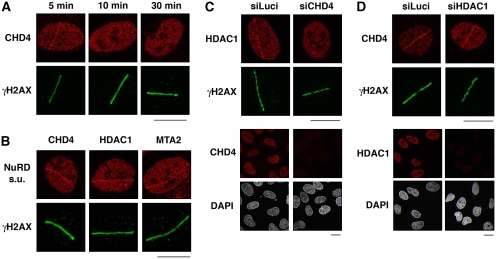
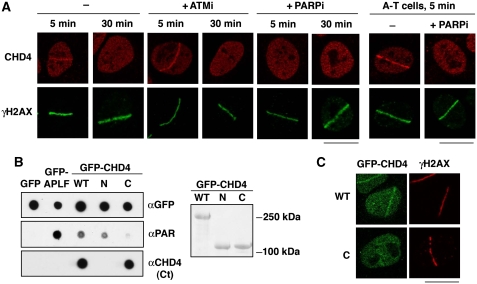
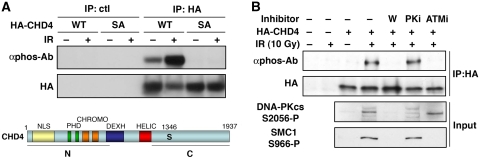
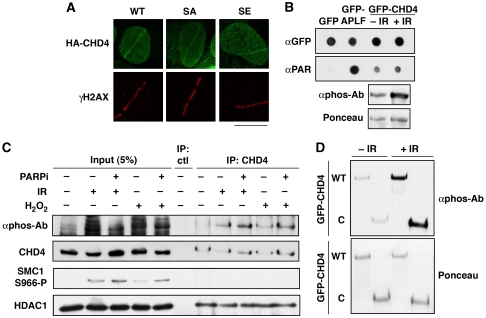
The chromatin remodelling factor chromodomain helicase DNA‐binding protein 4 (CHD4) is a catalytic subunit of the NuRD transcriptional repressor complex. Here, we reveal novel functions for CHD4 in the DNA‐damage response (DDR) and cell‐cycle control. We show that CHD4 mediates rapid poly(ADP‐ribose)‐dependent recruitment of the NuRD complex to DNA‐damage sites, and we identify CHD4 as a phosphorylation target for the apical DDR kinase ataxia‐telangiectasia mutated. Functionally, we show that CHD4 promotes repair of DNA double‐strand breaks and cell survival after DNA damage. In addition, we show that CHD4 acts as an important regulator of the G1/S cell‐cycle transition by controlling p53 deacetylation. These results provide new insights into how the chromatin remodelling complex NuRD contributes to maintaining genome stability. This paper adds to the emerging concept that chromatin remodelling contributes to DNA‐damage responses. CHD4, a known NuRD component, is identified as ATM target, localizes to DNA breaks and contributes to repair while associating with PARPylated factors.
Overview
The claims and statistics of this paper haven’t been checked yet.
Run the check — free, no account needed. It reads the open-access text and checks the sources it cites.
Integrity signals
Registry
Cites
Statistics
Figures
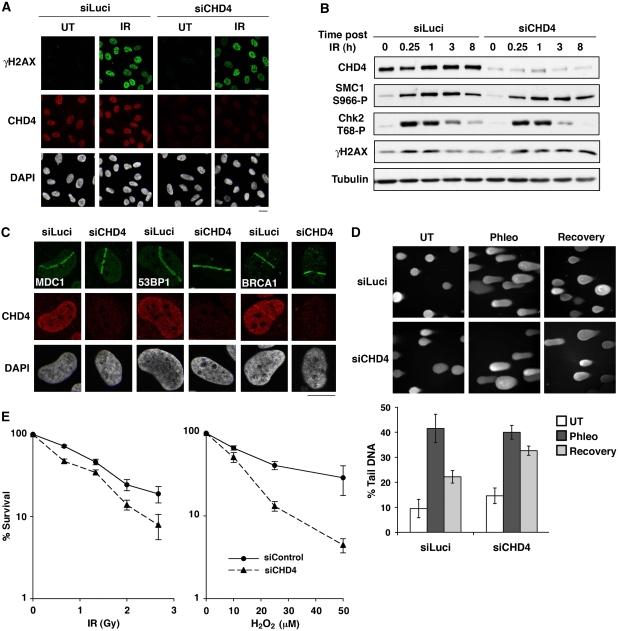
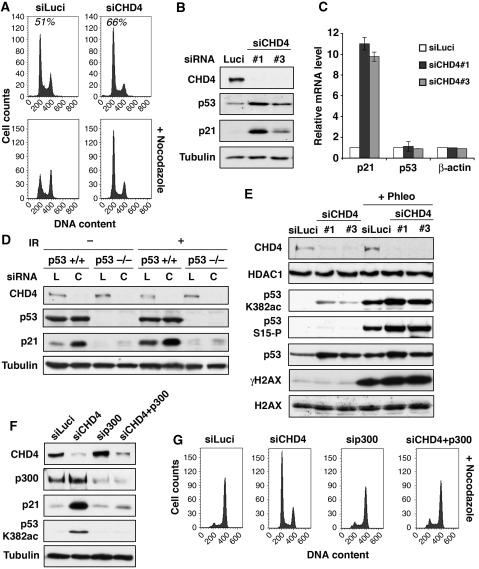
Verification
Claims the paper makes
The claims and statistics of this paper haven’t been checked yet.
Run the check — free, no account needed. It reads the open-access text and checks the sources it cites.
Claims other papers make about this one
Each is checked against this paper’s own text: does it say what the citing paper says it does?
The source backs part of the claim, not all of it — or backs it for a different population, condition or comparison.
In the citing paper
“Other repressive complexes, such as NuRD and histone deacetylases (HDACs) (43)(44)(45)(46), also transiently accumulate at DSBs, supporting this idea.”
From DNA double-strand breaks promote methylation of histone H3 on lysine 9 and transient formation of repressive chromatin (2014) · cites this paper as [43]
Experimental — accuracy not yet measuredThe source backs part of the claim, not all of it — or backs it for a different population, condition or comparison.
In the citing paper
“Thus, immediately after DNA damage, both euchromatin and heterochromatin domains have similar structural organization, including high density of H3K9me3 and the presence of repressive complexes, such as kap-1, HP1α, methyltransferases, HDACs, and CHD3/CHD4 remodeling ATPases (31,32,(43)(44)(45)(46)(47).”
From DNA double-strand breaks promote methylation of histone H3 on lysine 9 and transient formation of repressive chromatin (2014) · cites this paper as [43]
Experimental — accuracy not yet measured
Self-check
Percentages, sums and reported differences re-computed from the paper’s own numbers.
The self-check needs the paper’s full text.
Citations
Cites
Targeting the DNA repair defect in BRCA mutant cells as a therapeutic strategy
Farmer, H., McCabe, N., Lord, C. J., Tutt, A. N. J., Johnson, D. A., Richardson, T. B., Santarosa, M., Dillon, K. J., Hickson, I., Knights, C., et al. (2005) · Nature · doi:10.1038/nature03445 · Cited by 6,683
Self-citationThe DNA-damage response in human biology and disease
Jackson, S. P., & Bartek, J. (2009) · Nature · doi:10.1038/nature08467 · Cited by 6,092 · cited 3×
“In response to DNA damage, cells initiate a coordinated programme of events, termed the DNA-damage response (DDR), which is critical for maintenance of genome integrity and the prevention of ageing and tumourigenesis (Harper and Elledge, 2007; Jackson and Bartek, 2009).”
BackgroundSelf-citationDNA double-stranded breaks induce histone H2AX phosphorylation on serine 139
Rogakou, E. P., Pilch, D. R., Orr, A. H., Ivanova, V. S., & Bonner, W. M. (1998) · Journal of Biological Chemistry · doi:10.1074/jbc.273.10.5858 · Cited by 5,438 · cited 2×
“The work must be attributed back to the original author and commercial use is not permitted without specific permission.”
BackgroundBlinded by the Light: The Growing Complexity of p53
Vousden, K. H., & Prives, C. (2009) · Cell · doi:10.1016/j.cell.2009.04.037 · Cited by 3,163 · cited 2×
“The work must be attributed back to the original author and commercial use is not permitted without specific permission.”
BackgroundATM and ATR Substrate Analysis Reveals Extensive Protein Networks Responsive to DNA Damage
Matsuoka, S., Ballif, B. A., Smogorzewska, A., McDonald, E. R., Hurov, K. E., Luo, J., Bakalarski, C. E., Zhao, Z., Solimini, N., Lerenthal, Y., et al. (2007) · Science · doi:10.1126/science.1140321 · Cited by 3,075 · cited 5×
“Interestingly, proteomic screens in human cells have identified CHD4 as a target for DDR kinases (Matsuoka et al, 2007; Mu et al, 2007; Stokes et al, 2007).”
BackgroundMethodInfluentialThe biology of chromatin remodeling complexes.
Clapier, C. R., & Cairns, B. (2009) · Annual Review of Biochemistry · doi:10.1146/annurev.biochem.77.062706.153223 · Cited by 2,384 · cited 3×
“It is, therefore, possible that such factors will display synergistic and/or antagonistic functions in the regulation of chromatin compaction at DNA-damage sites, as happens in the context of transcription (Ramirez-Carrozzi et al, 2006; Clapier and Cairns, 2009).”
BackgroundAdvances in autism genetics: on the threshold of a new neurobiology
Abrahams, B. S., & Geschwind, D. H. (2008) · Nature Reviews Genetics · doi:10.1038/nrg2346 · Cited by 1,866
The DNA Damage Response: Ten Years After
Harper, J. W., & Elledge, S. J. (2007) · Molecular Cell · doi:10.1016/j.molcel.2007.11.015 · Cited by 1,705 · cited 3×
“In response to DNA damage, cells initiate a coordinated programme of events, termed the DNA-damage response (DDR), which is critical for maintenance of genome integrity and the prevention of ageing and tumourigenesis (Harper and Elledge, 2007; Jackson and Bartek, 2009).”
BackgroundKruse, J.-P., & Gu, W. (2009) · Cell · doi:10.1016/j.cell.2009.04.050 · Cited by 1,610 · cited 3×
“The work must be attributed back to the original author and commercial use is not permitted without specific permission.”
BackgroundPARP inhibition: PARP1 and beyond
Rouleau, M., Patel, A., Hendzel, M. J., Kaufmann, S. H., & Poirier, G. G. (2010) · Nature Reviews Cancer · doi:10.1038/nrc2812 · Cited by 1,298 · cited 1×
“…DNA nicks also activate poly(ADP-ribose) poly- merase (PARP) enzymes that modify target proteins with poly(ADP-ribose) chains (PAR chains) at DNA-damage sites, thereby stimulating the recruitment and/or activity of repair factors (Malanga and Althaus, 2005; Hakme et al, 2008; Rouleau et al, 2010).”
Background
Cited by
Sorted by citations
The DNA Damage Response: Making It Safe to Play with Knives
Ciccia, A., & Elledge, S. J. (2010) · Molecular Cell · doi:10.1016/j.molcel.2010.09.019 · Cited by 4,368
“…22, 2010 ª2010 Elsevier Inc. 181 182 Molecular Cell 40, October 22, 2010 ª2010 Elsevier Inc. recruitment of DNA repair and chromatin modifying complexes, such as polycomb and histone deacetylase (HDAC) complexes, at DNA damage sites (Polo et al., 2010; Schreiber et al., 2006; Chou et al., 2010).”
BackgroundThe multifaceted roles of PARP1 in DNA repair and chromatin remodelling
Ray Chaudhuri, A., & Nussenzweig, A. (2017) · Nature Reviews Molecular Cell Biology · doi:10.1038/nrm.2017.53 · Cited by 1,786
The ATM protein kinase: regulating the cellular response to genotoxic stress, and more
Shiloh, Y., & Ziv, Y. (2013) · Nature Reviews Molecular Cell Biology · doi:10.1038/nrm3546 · Cited by 1,649
Targeting the cancer epigenome for therapy
Jones, P. A., Issa, J. J., & Baylin, S. B. (2016) · Nature Reviews Genetics · doi:10.1038/nrg.2016.93 · Cited by 1,153
Dynamics of DNA damage response proteins at DNA breaks: a focus on protein modifications
Polo, S. E., & Jackson, S. P. (2011) · Genes & Development · doi:10.1101/gad.2021311 · Cited by 1,092
“PARylation at DNA breaks is also required for accrual of the chromatin remodeling factors ALC1 and CHD4 (Ahel et al. 2009; Gottschalk et al. 2009; Chou et al. 2010; Polo et al. 2010), the Polycomb histone-modifying complex (Chou et al. 2010), and the histone variant macroH2A (Timinszky et al. 2009).”
BackgroundSelf-citationATP-dependent chromatin remodeling: genetics, genomics and mechanisms
Hargreaves, D. C., & Crabtree, G. R. (2011) · Cell Research · doi:10.1038/cr.2011.32 · Cited by 923
Lukas, J., Lukas, C., & Bartek, J. (2011) · Nature Cell Biology · doi:10.1038/ncb2344 · Cited by 645
“Although binding to PAR chains seems to recruit these complexes to DNA break”
BackgroundChromatin Remodeling at DNA Double-Strand Breaks
Price, B. D., & D’Andrea, A. D. (2013) · Cell · doi:10.1016/j.cell.2013.02.011 · Cited by 588
“The recruitment of NuRD complexes to DSBs requires PARylation of the chromatin by PARP1 (Chou et al., 2010; Polo et al., 2010).”
InfluentialCancer biology and NuRD: a multifaceted chromatin remodelling complex
Lai, A. Y., & Wade, P. A. (2011) · Nature reviews. Cancer · doi:10.1038/nrc3091 · Cited by 541
“Other NuRD complex subunits have also been shown to have post-translational modifications, such as phosphorylation and acetylatio”
BackgroundThe diverse roles and clinical relevance of PARPs in DNA damage repair: Current state of the art
Vos, M. D., Schreiber, V., & Dantzer, F. (2012) · Biochemical Pharmacology · doi:10.1016/j.bcp.2012.03.018 · Cited by 522
Adamson, B., Smogorzewska, A., Sigoillot, F. D., King, R. W., & Elledge, S. J. (2012) · Nature Cell Biology · doi:10.1038/ncb2426 · Cited by 433
“PARP1 mediates recruitment of repair proteins to DNA damage via the transient polymerization of branched poly(ADP-ribose) (PAR) structures; and it is likely that RBMX localization is similarly facilitated 1, 22, 23 .”
Study, T. I., Sifrim, A., Study, T. D. D. D., Hitz, M., Wilsdon, A., Breckpot, J., Turki, S. H. A., Thienpont, B., McRae, J. F., Fitzgerald, T. W., et al. (2016) · Nature Genetics · doi:10.1038/ng.3627 · Cited by 449
Gallo, M. L., O’Hara, A. J., Rudd, M. L., Urick, M. E., Hansen, N. F., O’Neil, N. J., Price, J. C., Zhang, S., England, B. M., Godwin, A. K., et al. (2012) · Nature Genetics · doi:10.1038/ng.2455 · Cited by 426
Ayrapetov, M. K., Gursoy-Yuzugullu, O., Xu, C., Xu, Y., & Price, B. D. (2014) · Proceedings of the National Academy of Sciences · doi:10.1073/pnas.1403565111 · Cited by 391
Epigenetics and cardiovascular disease
Ordovás, J. M., & Smith, C. E. (2010) · Nature Reviews Cardiology · doi:10.1038/nrcardio.2010.104 · Cited by 413
SIRT6 recruits SNF2H to DNA break sites, preventing genomic instability through chromatin remodeling
Toiber, D., Erdel, F., Bouazoune, K., Silberman, D. M., Zhong, L., Mulligan, P., Sebastian, C., Cosentino, C., Martinez-Pastor, B., Giacosa, S., et al. (2013) · Molecular Cell · doi:10.1016/j.molcel.2013.06.018 · Cited by 381
“Various chromatin remodelers, including INO80 (Gospodinov et al., 2011; Kashiwaba et al., 2010; Neumann et al., 2012; Papamichos-Chronakis et al., 2011), SMARCAD1 (Fun 30 in yeast) (Chen et al., 2012; Costelloe et al., 2012; Lee et al., 2010), p400 (Xu et al., 2010, 2012), chromodomain helicase DNA-binding protein 4 (…”
Li, L., Shi, L., Yang, S., Yan, R., Zhang, D., Yang, J., He, L., Li, W., Yi, X., Sun, L., et al. (2016) · Nature Communications · doi:10.1038/ncomms12235 · Cited by 400
“KU-55933 (118500) and NADþ (20-221) were from Millipore.”
Thompson, L. H. (2012) · Mutation Research/Reviews in Mutation Research · doi:10.1016/j.mrrev.2012.06.002 · Cited by 357
Prime, Repair, Restore: The Active Role of Chromatin in the DNA Damage Response
Soria, G., Polo, S. E., & Almouzni, G. (2012) · Molecular Cell · doi:10.1016/j.molcel.2012.06.002 · Cited by 342
Self-citationMolecular Genetics of Endometrial Carcinoma
Bell, D. W., & Ellenson, L. H. (2018) · Annual Review of Pathology Mechanisms of Disease · doi:10.1146/annurev-pathol-020117-043609 · Cited by 306
ATM and ATR signaling at a glance
Awasthi, P., Foiani, M., & Kumar, A. (2015) · Journal of Cell Science · doi:10.1242/jcs.169730 · Cited by 292
“ATM-mediated pathways have also been shown to be involved in chromatin relaxation (Goodarzi et al., 2008; Moyal et al., 2011; Polo et al., 2010; Ziv et al., 2006), nucleosome remodeling (Goodarzi et al.”
BackgroundMastrocola, A. S., Kim, S. H., Trinh, A. T., Rodenkirch, L. A., & Tibbetts, R. S. (2013) · Journal of Biological Chemistry · doi:10.1074/jbc.m113.497974 · Cited by 280
“Both the SSB repair protein XRCC1 and chromatin remodeling factor CHD4 are recruited to DNA damage in a PARP-dependent manner (21, 68); however, depletion of FUS did not disrupt targeting of either XRCC1 or CHD4 (data not shown).”
BackgroundGoodarzi, A. A., Kurka, T., & Jeggo, P. A. (2011) · Nature Structural & Molecular Biology · doi:10.1038/nsmb.2077 · Cited by 255
SIRT1 collaborates with ATM and HDAC1 to maintain genomic stability in neurons
Dobbin, M. M., Madabhushi, R., Pan, L., Chen, Y., Kim, D., Gao, J., Ahanonu, B., Pao, P.-C., Qiu, Y., Zhao, Y., et al. (2013) · Nature Neuroscience · doi:10.1038/nn.3460 · Cited by 250
Histone methylation and the DNA damage response
Gong, F., & Miller, K. M. (2017) · Mutation Research/Reviews in Mutation Research · doi:10.1016/j.mrrev.2017.09.003 · Cited by 265
“Interestingly, PARP plays an important role in damage-induced transcriptional repression, including by promoting the recruitment of the ZMYND8-NuRD chromatin remodeling complex to damage chromatin where it participates in repressing transcription in the vicinity of DSBs [80, 95, 99, 100], Given these results for other…”
BackgroundGong, F., Chiu, L.-Y., Cox, B., Aymard, F., Clouaire, T., Leung, J. W., Cammarata, M., Perez, M., Agarwal, P., Brodbelt, J. S., et al. (2015) · Genes & Development · doi:10.1101/gad.252189.114 · Cited by 247
“The DNA damage recruitment dynamics of ZMYND8 are similar to those reported for the NuRD complex (i.e., CHD4) (Polo et al. 2010).”
BackgroundInfluentialChromatin and the genome integrity network
Papamichos‐Chronakis, M., & Peterson, C. L. (2012) · Nature Reviews Genetics · doi:10.1038/nrg3345 · Cited by 257
Murata, M. M., Kong, X., Moncada, E., Chen, Y., Imamura, H., Wang, P., Berns, M. W., Yokomori, K., & Digman, M. A. (2019) · Molecular Biology of the Cell · doi:10.1091/mbc.e18-10-0650 · Cited by 257
The Repair and Signaling Responses to DNA Double-Strand Breaks
Goodarzi, A. A., & Jeggo, P. A. (2013) · Advances in genetics · doi:10.1016/b978-0-12-407676-1.00001-9 · Cited by 245
ATP-dependent chromatin remodeling in the DNA-damage response
Lans, H., Marteijn, J. A. F., & Vermeulen, W. (2012) · Epigenetics & Chromatin · doi:10.1186/1756-8935-5-4 · Cited by 230
“Furthermore, many subunits of NuRD are recruited to DSBs in a, at least for CHD4 and MTA1, poly(ADP ribose) polymerase (PARP)-dependent manner, but surprisingly, do not require phosphorylation of H2AX [128-131].”
BackgroundInfluentialActivation of DNA Damage Response Signaling by Condensed Chromatin
Burgess, R. C., Burman, B., Kruhlak, M. J., & Misteli, T. (2014) · Cell Reports · doi:10.1016/j.celrep.2014.10.060 · Cited by 198
“Somewhat paradoxically, proteins that promote chromatin compaction, such as HP1, KAP-1, SPOC1, su(var)3-9 methyltransferase variant 1 (SUV3-9), PDRM2 methyltransferase, macro H2A, and histone deacetylases (HDACs), have also been shown to be recruited to the sites of DSBs (Ayoub et al., 2009; Ayrapetov et al., 2014; Ba…”
BackgroundInfluentialAllen, H. F., Wade, P. A., & Kutateladze, T. G. (2013) · Cellular and Molecular Life Sciences · doi:10.1007/s00018-012-1256-2 · Cited by 205
“NuRD complex rapidly accumulates in cells at sites of doublestrand breaks in a manner dependent on the activity of poly(ADP ribose) polymerase, PARP [95, 97].”
Spatiotemporal regulation of posttranslational modifications in the DNA damage response
Dantuma, N. P., & van Attikum, H. (2015) · The EMBO Journal · doi:10.15252/embj.201592595 · Cited by 209
“…was therefore proposed that the PAR-recruited NuRD complex facilitates the latter process by imposing a transient repressive chromatin state at DNA lesions, although a causal CHD4 contribution to the removal of RNA polymerase II still needs to be established (Chou et al , 2010; Polo et al , 2010).”
InfluentialXia, L., Huang, W., Bellani, M. A., Seidman, M. M., Wu, K., Fan, D., Nie, Y., Cai, Y., Zhang, Y. W., Yu, L., et al. (2017) · Cancer Cell · doi:10.1016/j.ccell.2017.04.005 · Cited by 203
“One defined role of CHD4 in DSB repair is to recruit repressive chromatin to open chromatin regions in active gene promoters (Chou et al., 2010; Larsen et al., 2010; Polo et al., 2010), serving to protect transcribed regions during repair (Chou et al.”
BackgroundInfluentialHistone ADP-ribosylation in DNA repair, replication and transcription
Messner, S., & Hottiger, M. O. (2011) · Trends in Cell Biology · doi:10.1016/j.tcb.2011.06.001 · Cited by 197
XRCC1 prevents toxic PARP1 trapping during DNA base excision repair
Demin, A. A., Hirota, K., Tsuda, M., Adamowicz, M., Hailstone, R., Bražina, J., Gittens, W. H., Kalasová, I., Shao, Z., Zha, S., et al. (2021) · Molecular Cell · doi:10.1016/j.molcel.2021.05.009 · Cited by 196
The nucleosome remodeling and deacetylase complex in development and disease
Basta, J., & Rauchman, M. (2015) · Translational Research · doi:10.1016/j.trsl.2014.05.003 · Cited by 191
“p53 acetylation status, [2]), independent of regulating gene expression.”
Small molecule inhibitors targeting the cancers
Liu, G., Chen, T., Zhang, X., Ma, X., & Shi, H. (2022) · MedComm · doi:10.1002/mco2.181 · Cited by 212
DNA single-strand break repair and human genetic disease
Caldecott, K. W. (2022) · Trends in Cell Biology · doi:10.1016/j.tcb.2022.04.010 · Cited by 196
Chromatin remodelers: We are the drivers!!
Tyagi, M. V., Imam, N., Verma, K., & Patel, A. K. (2016) · Nucleus · doi:10.1080/19491034.2016.1211217 · Cited by 182
“other syndromes and multi-system developmental disorders.(113) Studies have shown temporal and tissue specific function of chromatin remodelers during heart development and thereby any mutation leads to the advancement of many cardiovascular tissues.”
BackgroundHistone demethylase KDM5A regulates the ZMYND8–NuRD chromatin remodeler to promote DNA repair
Gong, F., Clouaire, T., Aguirrebengoa, M., Legube, G., & Miller, K. M. (2017) · The Journal of Cell Biology · doi:10.1083/jcb.201611135 · Cited by 192
“…and PARP inhibitors in cancer settings deficient in the KDM5A-ZMY ND8–NuRD JCB • Volume 216 • NumBer 7 • 20171968 pathway, given the therapeutic benefit associated with these treatments in DDR-deficient cancers (Helleday et al., 2008; Chou et al., 2010; Polo et al., 2010; Spruijt et al., 2016).”
BackgroundMethodInfluentialIzhar, L., Adamson, B., Ciccia, A., Lewis, J., Vaites, L. P., Leng, Y., Liang, A. C. T., Westbrook, T. F., Harper, J. W., & Elledge, S. J. (2015) · Cell Reports · doi:10.1016/j.celrep.2015.04.053 · Cited by 178
“…(PAR) structures and are responsible for the recruitment of a number of factors to sites of DNA damage, including ALC1, RBMX, and components of MRN and NuRD complexes, among others (Adamson et al., 2012; Ahel et al., 2009; Chou et al., 2010; Haince et al., 2008; Polo et al., 2010).”
InfluentialMansfield, R. E., Musselman, C. A., Kwan, A. H., Oliver, S. S., Garske, A. L., Davrazou, F., Denu, J. M., Kutateladze, T. G., & Mackay, J. P. (2011) · Journal of Biological Chemistry · doi:10.1074/jbc.m110.208207 · Cited by 177
Reprogramming cellular events by poly(ADP-ribose)-binding proteins
Krietsch, J., Rouleau, M., Pic, É., Ethier, C., Dawson, T. M., Dawson, V. L., Masson, J., Poirier, G. G., & Gagné, J. (2012) · Molecular Aspects of Medicine · doi:10.1016/j.mam.2012.12.005 · Cited by 185
Hu, Y., Petit, S. A., Ficarro, S. B., Toomire, K. J., Xie, A., Lim, E., Cao, S. A., Park, E., Eck, M. J., Scully, R., et al. (2014) · Cancer Discovery · doi:10.1158/2159-8290.cd-13-0891 · Cited by 181
“Among their interacting partners are proteins recently shown to be involved in cellular responses to DSBs, including SFPQ (15), CHD4 (16), and UBR5 (17) (Supplementary Fig.”
Krietsch, J., Caron, M., Gagné, J., Ethier, C., Vignard, J., Vincent, M., Rouleau, M., Hendzel, M. J., Poirier, G. G., & Masson, J. (2012) · Nucleic Acids Research · doi:10.1093/nar/gks798 · Cited by 166
“To date, many proteins have been shown to be recruited in a PAR-dependent manner by cell imaging techniques: MRE11 (6), NBS1 (6), APLF (46), XRCC1 (57), CHD4 (58), NuRD (59) and ALC1 (47).”
BackgroundQuantitative proteomics profiling of the poly(ADP-ribose)-related response to genotoxic stress
Gagné, J., Pic, É., Isabelle, M., Krietsch, J., Éthier, C., Paquet, É. R., Kelly, I., Boutin, M., Moon, K., Foster, L. J., et al. (2012) · Nucleic Acids Research · doi:10.1093/nar/gks486 · Cited by 165
“The recent identification of chromatinassociated proteins whose recruitment to DNA damage sites is pADPr-dependent [e.g.: CHD4 (38,73), MTA1(73), MRE11(74), NBS1(74), ALC1(39,40), APLF (75,76), XRCC1 (68), BMI-1 (77), MEL-18 (73)] also points towards this model.”
Epigenetic regulation of autophagy by the methyltransferase EZH2 through an MTOR-dependent pathway
Wei, F.-Z., Cao, Z., Wang, X., Wang, H., Cai, M.-Y., Li, T., Hattori, N., Wang, D., Du, Y., Song, B., et al. (2015) · Autophagy · doi:10.1080/15548627.2015.1117734 · Cited by 161
DDB2 promotes chromatin decondensation at UV-induced DNA damage
Luijsterburg, M. S., Lindh, M., Ács, K., Vrouwe, M. G., Pines, A., van Attikum, H., Mullenders, L. H. F., & Dantuma, N. P. (2012) · The Journal of Cell Biology · doi:10.1083/jcb.201106074 · Cited by 176
“Additionally, the DNA damage– induced reduction in histone density also required the activity of PARP1, which has recently been linked to chromatin remodeling in response to double-strand DNA breaks (Ahel et al., 2009; Gottschalk et al., 2009; Chou et al., 2010; Polo et al., 2010).”
Khoury-Haddad, H., Guttmann‐Raviv, N., Ipenberg, I., Huggins, D. J., Jeyasekharan, A. D. D., & Ayoub, N. (2014) · Proceedings of the National Academy of Sciences · doi:10.1073/pnas.1317585111 · Cited by 148
“Similarly, it was recently shown that PARP1 and Really Interesting New Gene finger protein (RNF)8 ubiquitin ligase regulate the recruitment of the catalytic subunit of the NuRD repressor complex, CHD4, to DNA-breakage sites (49, 61).”
BackgroundResultInfluentialHistone demethylase KDM5B is a key regulator of genome stability
Li, X., Liu, L., Yang, S., Song, N., Zhou, X., Gao, J., Yu, N., Shan, L., Wang, Q., Liang, J., et al. (2014) · Proceedings of the National Academy of Sciences · doi:10.1073/pnas.1324036111 · Cited by 148
Smeenk, G., Wiegant, W. W., Marteijn, J. A. F., Luijsterburg, M. S., Sroczynski, N., Costelloe, T., Romeijn, R. J., Pastink, A., Mailand, N., Vermeulen, W., et al. (2012) · Journal of Cell Science · doi:10.1242/jcs.109413 · Cited by 154
“itself and acceptor proteins, directs the recruitment of the chromatin remodeling enzymes ALC1 and CHD4 to DSBs (Ahel et al., 2009; Chou et al., 2010; Gottschalk et al., 2009; Luijsterburg et al., 2012a; Polo et al., 2010).”
BackgroundChromatin and the DNA damage response: The cancer connection
Luijsterburg, M. S., & van Attikum, H. (2011) · Molecular Oncology · doi:10.1016/j.molonc.2011.06.001 · Cited by 148
Snf2-family proteins: chromatin remodellers for any occasion
Ryan, D., & Owen‐Hughes, T. (2011) · Current Opinion in Chemical Biology · doi:10.1016/j.cbpa.2011.07.022 · Cited by 148
“Kinetic analysis of Alc1 retention at laserinduced damage sites suggest Alc1 acts at an early stage in the DDR. 48.”
BackgroundInfluentialWeiss, K., Terhal, P. A., Cohen, L., Bruccoleri, M., Irving, M. D., Martinez, A. F., Rosenfeld, J. A., Machol, K., Yang, Y., Liu, P., et al. (2016) · The American Journal of Human Genetics · doi:10.1016/j.ajhg.2016.08.001 · Cited by 139
Robert, C., & Rassool, F. V. (2012) · Advances in cancer research · doi:10.1016/b978-0-12-394387-3.00003-3 · Cited by 140
Automodification switches PARP-1 function from chromatin architectural protein to histone chaperone
Muthurajan, U. M., Chassé, M. H., Hieb, A. R., Clark, N., Kramer, M., Yao, T., & Luger, K. (2014) · Proceedings of the National Academy of Sciences · doi:10.1073/pnas.1405005111 · Cited by 139
The multifaceted influence of histone deacetylases on DNA damage signalling and DNA repair
Roos, W. P., & Krumm, A. (2016) · Nucleic Acids Research · doi:10.1093/nar/gkw922 · Cited by 142
“For DSBs, PARP1 and the PAR chains cause the recruitment of the nucleosome remodelling deacetylase (NuRD) complex (100,101) and the polycomb group (PcG) proteins (101–103), all of which are essential for the effective repair of DSBs (100,102–104) (Figure 1C).”
BackgroundThe histone demethylase LSD1/KDM1A promotes the DNA damage response
Mosammaparast, N., Kim, H., Laurent, B., Zhao, Y. J., Lim, H. J., Majid, M. C., Dango, S., Luo, Y., Hempel, K., Sowa, M. E., et al. (2013) · The Journal of Cell Biology · doi:10.1083/jcb.201302092 · Cited by 140
“…chromatin marks, such as methylation of H3K9, and recruitment of the NuRD–CHD4 complex are two other examples of a transient, repressive chromatin state that appear to be critical for the DDR (Chou et al., 2010; Larsen et al., 2010; Polo et al., 2010; Smeenk et al., 2010; Chiolo et al., 2011).”
InfluentialAcetylation Reader Proteins: Linking Acetylation Signaling to Genome Maintenance and Cancer
Gong, F., Chiu, L.-Y., & Miller, K. M. (2016) · PLoS Genetics · doi:10.1371/journal.pgen.1006272 · Cited by 137
NuRD–ZNF827 recruitment to telomeres creates a molecular scaffold for homologous recombination
Conomos, D., Reddel, R. R., & Pickett, H. A. (2014) · Nature Structural & Molecular Biology · doi:10.1038/nsmb.2877 · Cited by 129
Cai, Y., Geutjes, E.-J., de Lint, K., Roepman, P., Bruurs, L. J. M., Yu, L., Wang, W., van Blijswijk, J., Mohammad, H. P., de Rink, I., et al. (2013) · Oncogene · doi:10.1038/onc.2013.178 · Cited by 135
The Chromatin Response to DNA Breaks: Leaving a Mark on Genome Integrity
Smeenk, G., & van Attikum, H. (2013) · Annual Review of Biochemistry · doi:10.1146/annurev-biochem-061809-174504 · Cited by 135
“In contrast, both RNF8 and PARP activity appeared to contribute to CHD4 assembly at sites of DNA damage (132, 135).”
BackgroundSellou, H., Lebeaupin, T., Chapuis, C., Smith, R., Hegele, A., Singh, H. R., Kozłowski, M., Bultmann, S., Ladurner, A. G., Timinszky, G., et al. (2016) · Molecular Biology of the Cell · doi:10.1091/mbc.e16-05-0269 · Cited by 138
“Additionally, PARylation is also involved in the recruitment and the regulation of several chromatin-remodeling enzymes whose ATP-dependent activity could promote chromatin relaxation (Chou et al., 2010; Polo et al., 2010; Smeenk et al., 2013).”
BackgroundThe recognition and removal of cellular poly( ADP ‐ribose) signals
Barkauskaite, E., Jankevicius, G., Ladurner, A. G., Ahel, I., & Timinszky, G. (2013) · FEBS Journal · doi:10.1111/febs.12358 · Cited by 130
Zhao, Z., Cetin, N. S., Song, C., & Grummt, I. (2018) · Genes & Development · doi:10.1101/gad.311688.118 · Cited by 120
“CHD4 is phosphorylated at multiple sites (Bouazoune and Brehm 2005; Polo et al. 2010; Urquhart et al. 2011).”
Structure and Mechanisms of Lysine Methylation Recognition by the Chromodomain in Gene Transcription
Yap, K. L., & Zhou, M. (2011) · Biochemistry · doi:10.1021/bi101885m · Cited by 126
“CHD4 (Mi-2b) Refs (46,108-111) NuRD complex; checkpoint signaling and DNA damage repair; promotes CD4 gene expression during T cell development.”
BackgroundCREBBP and p300 lysine acetyl transferases in the DNA damage response
Dutto, I., Scalera, C., & Prosperi, E. (2017) · Cellular and Molecular Life Sciences · doi:10.1007/s00018-017-2717-4 · Cited by 118
“In fact, for other important DDR players, the information available indicates that p300/CBP may interact with them, while there is no evidence of their acetylation.”
BackgroundInfluentialCHD3 and CHD4 form distinct NuRD complexes with different yet overlapping functionality
Hoffmeister, H., Fuchs, A., Erdel, F., Pinz, S., Gröbner-Ferreira, R., Bruckmann, A., Deutzmann, R., Schwartz, U., Maldonado, R., Huber, C., et al. (2017) · Nucleic Acids Research · doi:10.1093/nar/gkx711 · Cited by 118
Pan, M., Hsieh, H.-J., Dai, H., Hung, W.-C., Li, K., Peng, G., & Lin, S. (2012) · Journal of Biological Chemistry · doi:10.1074/jbc.m111.287037 · Cited by 118
Chromatin regulation: How complex does it get?
Meier, K., & Brehm, A. (2014) · Epigenetics · doi:10.4161/15592294.2014.971580 · Cited by 114
A new non‐catalytic role for ubiquitin ligase RNF8 in unfolding higher‐order chromatin structure
Luijsterburg, M. S., Ács, K., Ackermann, L., Wiegant, W. W., Bekker‐Jensen, S., Larsen, D. H., Khanna, K. K., van Attikum, H., Mailand, N., & Dantuma, N. P. (2012) · The EMBO Journal · doi:10.1038/emboj.2012.104 · Cited by 117
“Endogenous CHD4 was recruited to laser-generated DSBs marked by phosphorylated histone H2AX ( g H2AX; Figure 6A), in line with several recent reports (Chou et al , 2010; Larsen et al , 2010; Polo et al , 2010; Smeenk et al , 2010).”
InfluentialPatching Broken DNA: Nucleosome Dynamics and the Repair of DNA Breaks
Gürsoy-Yüzügüllü, Ö., House, N. C. M., & Price, B. D. (2015) · Journal of Molecular Biology · doi:10.1016/j.jmb.2015.11.021 · Cited by 118
The tale of a tail: histone H4 acetylation and the repair of DNA breaks
Dhar, S., Gürsoy-Yüzügüllü, Ö., Parasuram, R., & Price, B. D. (2017) · Philosophical Transactions of the Royal Society B Biological Sciences · doi:10.1098/rstb.2016.0284 · Cited by 123
McMurchy, A. N., Stempor, P., Gaarenstroom, T., Wysolmerski, B., Yan, D., Ausiannikava, D., Appert, A., Huang, N., Kolasinska-Zwierz, P., Sapetschnig, A., et al. (2017) · eLife · doi:10.7554/elife.21666 · Cited by 106
Beck, C., Boehler, C., Guirouilh‐Barbat, J., Bonnet, M.-E., Illuzzi, G., Rondé, P., Gauthier, L., Magroun, N., Rajendran, A., López, B. S., et al. (2014) · Nucleic Acids Research · doi:10.1093/nar/gku174 · Cited by 126
“The alternative pathway (A-EJ) is initiated by an Mre11-mediated end-resection activity in a manner similar to HR and involves additional proteins such as PARP1, XRCC1, DNA ligase III and histone H1 (14–20).”
BackgroundInfluentialSpruijt, C. G., Luijsterburg, M. S., Menafra, R., Lindeboom, R. G. H., Jansen, P. W. T. C., Edupuganti, R. R., Baltissen, M. P. A., Wiegant, W. W., Voelker-Albert, M., Matarese, F., et al. (2016) · Cell Reports · doi:10.1016/j.celrep.2016.09.037 · Cited by 114
“This could reconcile our results with previous studies and possibly explain how both PAR and ZMYND8 could stimulate the recruitment of CHD4 and MBD2 (Chou et al., 2010; Luijsterburg et al., 2012; Polo et al., 2010; Sun et al., 2016).”
BackgroundResultInfluentialRegulation of DNA Repair Mechanisms: How the Chromatin Environment Regulates the DNA Damage Response
Stadler, J., & Richly, H. (2017) · International Journal of Molecular Sciences · doi:10.3390/ijms18081715 · Cited by 110
“The chromatin surrounding DSBs is rapidly and transiently PARylated (Figure 2) causing the recruitment of the NuRD complex [72,73], which harbors both ATP-dependent chromatin remodeling and histone deacetylase activities.”
BackgroundMetastasis-Associated Protein 1/Nucleosome Remodeling and Histone Deacetylase Complex in Cancer
Li, D., Pakala, S. B., Nair, S. S., Eswaran, J., & Kumar, R. (2012) · Cancer Research · doi:10.1158/0008-5472.can-11-2345 · Cited by 108
CHD chromatin remodelers and the transcription cycle
Murawska, M., & Brehm, A. (2011) · Transcription · doi:10.4161/trns.2.6.17840 · Cited by 108
PHF6 Interacts with the Nucleosome Remodeling and Deacetylation (NuRD) Complex
Todd, M. A. M., & Picketts, D. J. (2012) · Journal of Proteome Research · doi:10.1021/pr3004369 · Cited by 107
SIRT6 coordinates with CHD4 to promote chromatin relaxation and DNA repair
Hou, T., Cao, Z., Zhang, J., Tang, M., Tian, Y., Li, Y., Lu, X., Chen, Y., Wang, H., Wei, F., et al. (2020) · Nucleic Acids Research · doi:10.1093/nar/gkaa006 · Cited by 96
“We thus proposed that SIRT6 and CHD4 may coordinate their action in DDR.”
BackgroundInfluentialThe Cardiac TBX5 Interactome Reveals a Chromatin Remodeling Network Essential for Cardiac Septation
Wasson, L. K., Steimle, J. D., Greco, T. M., Gomez, N. C., Dorr, K. M., Kweon, J., Temple, B. R. S., Yang, X. H., Wilczewski, C. M., Davis, I. J., et al. (2016) · Developmental Cell · doi:10.1016/j.devcel.2016.01.009 · Cited by 96
“GFP tagged full length, C-terminal, and N-terminal human CHD4 constructs were generously provided by Stephen Jackson (Cambridge) (Polo et al., 2010).”
BackgroundCHD4 in the DNA-damage response and cell cycle progression: not so NuRDy now
O’Shaughnessy, A., & Hendrich, B. (2013) · Biochemical Society Transactions · doi:10.1042/bst20130027 · Cited by 97
The role of poly(ADP-ribosyl)ation in DNA damage response and cancer chemotherapy
Li, M., & Yu, X. (2014) · Oncogene · doi:10.1038/onc.2014.295 · Cited by 99
Nio, K., Yamashita, T., Okada, H., Kondo, M., Hayashi, T., Hara, Y., Nomura, Y., Zeng, S. S., Yoshida, M., Hayashi, T., et al. (2015) · Journal of Hepatology · doi:10.1016/j.jhep.2015.06.009 · Cited by 98
“Recent studies have shown the importance of CHD4 in response to ionizing radiation and PARP inhibitors [29-32, 38].”
BackgroundNucleosome-CHD4 chromatin remodeler structure maps human disease mutations
Farnung, L., Ochmann, M., & Cramer, P. (2020) · eLife · doi:10.7554/elife.56178 · Cited by 95
“It is essential for cell cycle progression (Polo et al., 2010), DNA damage response (Larsen et al.”
BackgroundPoly(ADP-ribosyl)ation in regulation of chromatin structure and the DNA damage response
Tallis, M., Morra, R., Barkauskaite, E., & Ahel, I. (2013) · Chromosoma · doi:10.1007/s00412-013-0442-9 · Cited by 100
“PARP1 is involved in the early recruitment of theMRN complex to DSBs (Haince et al. 2008) and interacts with cNHEJ components such as WRN (Adelfalk et al. 2003), Ku (Li et al. 2004) and DNAPK (Spagnolo et al. 2012).”
BackgroundInfluentialGrabarz, A., Barascu, A., Guirouilh‐Barbat, J., & López, B. S. (2012) · Europe PMC (PubMed Central) · Cited by 93
Preserving genome integrity and function: the DNA damage response and histone modifications
Kim, J. J., Lee, S. Y., & Miller, K. M. (2019) · Critical Reviews in Biochemistry and Molecular Biology · doi:10.1080/10409238.2019.1620676 · Cited by 96
“PARP also promotes the recruitment of the ZMYND8-NuRD chromatin remodeling complex to damaged chromatin where it participates in repressing transcription in the vicinity of DSBs (Chou et al. 2010; Polo et al. 2010; Gong et al. 2015; Spruijt et al. 2016).”
BackgroundNucleosome remodelers in double-strand break repair
Seeber, A., Hauer, M., & Gasser, S. M. (2013) · Current Opinion in Genetics & Development · doi:10.1016/j.gde.2012.12.008 · Cited by 92
Smith, R., Sellou, H., Chapuis, C., Huet, S., & Timinszky, G. (2018) · Nucleic Acids Research · doi:10.1093/nar/gky334 · Cited by 100
Sims, J. K., & Wade, P. A. (2011) · Molecular Biology of the Cell · doi:10.1091/mbc.e11-03-0258 · Cited by 87
“3100 | J. K. Sims and P. A. Wade Molecular Biology of the Cell mal chromatin architecture, including the Mi-2/NuRD complex (Sillibourne et al., 2007; Pegoraro et al., 2009; Chou et al., 2010; Cohet et al., 2010; Larsen et al., 2010; Misteli, 2010; Polo et al., 2010; Smeenk et al., 2010).”
InfluentialAwwad, S. W., Abu‐Zhayia, E. R., Guttmann‐Raviv, N., & Ayoub, N. (2017) · EMBO Reports · doi:10.15252/embr.201643191 · Cited by 95
A Poly-ADP-Ribose Trigger Releases the Auto-Inhibition of a Chromatin Remodeling Oncogene
Singh, H. R., Nardozza, A. P., Möller, I. R., Knobloch, G., Kistemaker, H. A. V., Hassler, M., Harrer, N., Blessing, C., Eustermann, S., Kotthoff, C., et al. (2017) · Molecular Cell · doi:10.1016/j.molcel.2017.11.019 · Cited by 88
“Sites of high PARP1 activity in vivo recruit ATP-dependent remodelers, including ALC1 (Amplified in Liver Cancer 1; also known as CHD1L), CHD2, CHD4, SMARCA5/SNF2H and Drosophila Mi-2 (Chou et al., 2010; Murawska et al., 2011; Polo et al., 2010; Smeenk et al., 2013).”
BackgroundDuan, M., & Smerdon, M. J. (2014) · Journal of Biological Chemistry · doi:10.1074/jbc.m113.540732 · Cited by 84
CTCF facilitates DNA double-strand break repair by enhancing homologous recombination repair
Hilmi, K., Jangal, M., Marques, M., Zhao, T., Saad, A., Zhang, C., Luo, V. M., Syme, A., Rejon, C. A., Yu, Z., et al. (2017) · Science Advances · doi:10.1126/sciadv.1601898 · Cited by 81
Ma, C., Wang, F., Han, B., Zhong, X., Si, F., Ye, J., Hsueh, E. C., Robbins, L., Kiefer, S. M., Zhang, Y., et al. (2018) · Molecular Cancer · doi:10.1186/s12943-018-0824-y · Cited by 79
“of the G1/S cell cycle transition and ATM-associated DNA damage responses [56].”
BackgroundMor, N., Rais, Y., Sheban, D., Peles, S., Aguilera-Castrejon, A., Zviran, A., Elinger, D., Viukov, S., Geula, S., Krupalnik, V., et al. (2018) · Cell Stem Cell · doi:10.1016/j.stem.2018.07.004 · Cited by 79
Zhao, Y. J., Brickner, J. R., Majid, M. C., & Mosammaparast, N. (2014) · Trends in Cell Biology · doi:10.1016/j.tcb.2014.01.005 · Cited by 79
“Originally identified as a key component of a histone deacetylase complex that promotes transcriptional repression [58], CHD4/NuRD binds directly to poly-ADP-ribose and requires PARP activity for its recruitment to damage sites [55, 56].”
Metadata
- Authors
- Polo, S. E., Kaidi, A., Baskcomb, L., Galanty, Y., & Jackson, S. P.
- Affiliations
- University of Cambridge (GB)
- Corresponding author
- Jackson, Stephen P
- Venue
- The EMBO Journal
- Published
- 2010-08-06
- Volume
- 29
- Issue
- 18
- Pages
- 3130-3139
- ISSN
- 0261-4189 (ISSN-L)
- 1460-2075
- PMC
- PMC2944064
- OpenAlex
- W2020084014
- Cited by
- 374
- References
- 56
- Citations by year
- 2026: 13 · 2025: 14 · 2024: 20 · 2023: 17 · 2022: 26 · 2021: 17 · 2020: 22 · 2019: 18 · 2018: 18 · 2017: 35 · 2016: 24 · 2015: 17 · 2014: 31 · 2013: 34 · 2012: 31
- FWCI
- 13.30
- Type
- journal article
- Language
- en
- Open access
- hybrid
- doi.org
- Licence
- Locations
- The EMBO Journal (publishedVersion, cc-by-nc-sa)
- PubMed Central (publishedVersion, cc-by-nc-sa)
- PubMed (publishedVersion)
- Explore Bristol Research (submittedVersion)
- Funders
- Wellcome Trust
- Cancer Research UK (11224, A5290, A4361)
- European Commission (512113, 201630, LSHG-CT-2005-512113)
- Directorate for Biological Sciences
- Biotechnology and Biological Sciences Research Council
- Topics
- Life Sciences › Biochemistry, Genetics and Molecular Biology › Molecular Biology › DNA Repair Mechanisms
- Life Sciences › Biochemistry, Genetics and Molecular Biology › Molecular Biology › Chromatin Remodeling and Cancer
- Life Sciences › Biochemistry, Genetics and Molecular Biology › Molecular Biology › Genomics and Chromatin Dynamics
- Keywords
- CHD4, chromatin remodeling, NuRD complex, DNA damage response, cell cycle regulation, G1/S transition, p53 deacetylation, ATM phosphorylation, DNA double-strand break repair, poly(ADP-ribose), poly(ADP-ribose) polymerase, genome stability, transcriptional repressor
- MeSH terms
- Animals, Autoantigens, Cell Cycle, DNA Damage, DNA Helicases, DNA-Binding Proteins, Fluorescent Antibody Technique, Histones, Humans, Phosphorylation, Poly Adenosine Diphosphate Ribose, RNA, Messenger, Blotting, Western, Tumor Suppressor Protein p53, Protein Serine-Threonine Kinases, Mice, Knockout, Cell Cycle Proteins, Reverse Transcriptase Polymerase Chain Reaction, Tumor Suppressor Proteins, Chromatin Assembly and Disassembly, Immunoprecipitation, Mice, Mi-2 Nucleosome Remodeling and Deacetylase Complex, Ataxia Telangiectasia Mutated Proteins
About these checks
Registry, retraction, Cites and statistics results are computed, not judged, with one exception: a printed reference that no index lists is read once by a model before it counts as a citation error. Claims are extracted by a model and kept only when their quote appears verbatim in the text; each cited source is then checked, with a model’s help, for whether it says what the claim relies on. Those verdicts can be wrong — read the claim’s quote and the cited source before relying on one.
Statistics and arithmetic are recomputed, not judged.
Confidence bands are shown only for fields calibrated on our annotated test set. None is calibrated yet, so no band is shown.
What counts as a claim ›How we measure confidence ›How we check this ›
Are you an author, or do you see a problem with this page? Request a review
