

Analysis of protein-coding genetic variation in 60,706 humans
Open accessPublished version of a preprint
The DOI matches its Crossref record; 44 of the 44 references it cites were found in a registry or an index.
Abstract
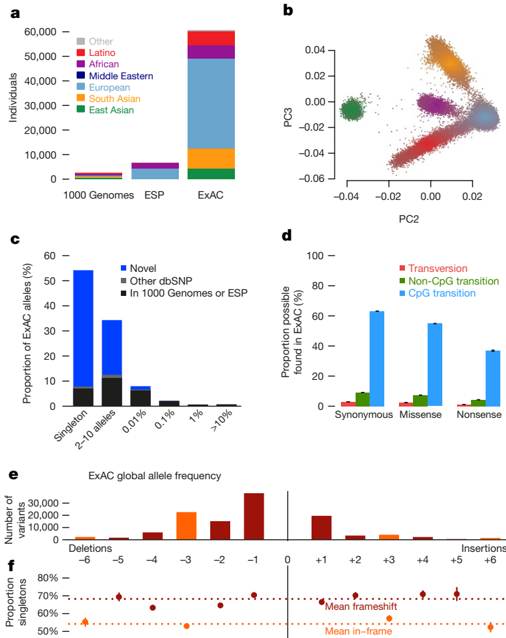
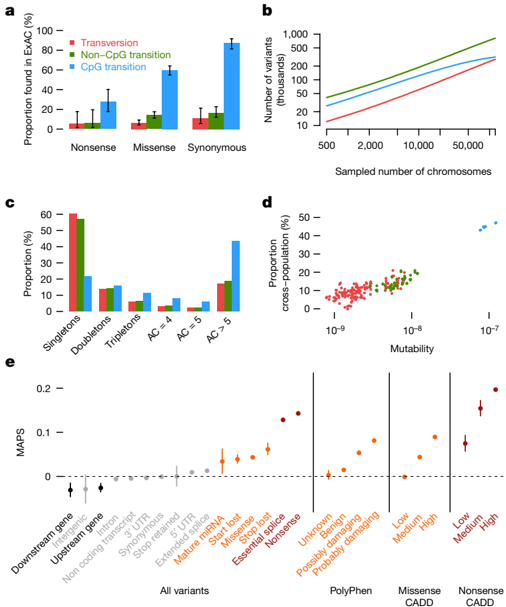
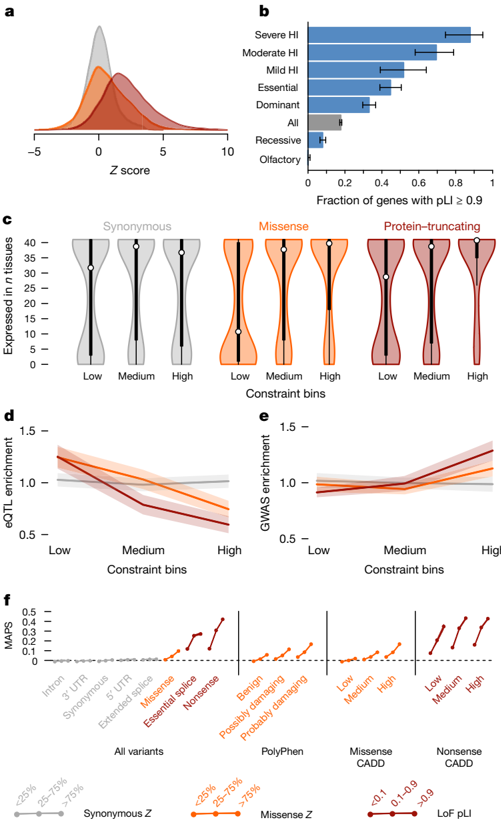
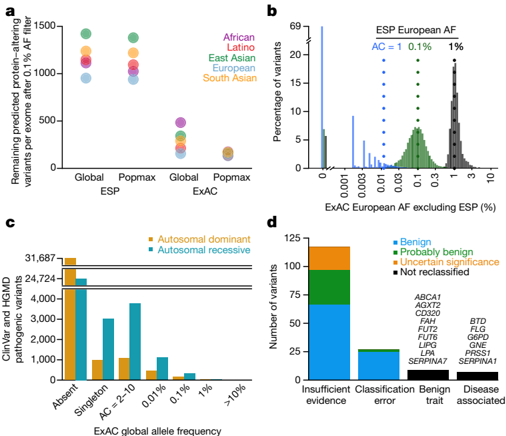
Large-scale reference data sets of human genetic variation are critical for the medical and functional interpretation of DNA sequence changes. Here we describe the aggregation and analysis of high-quality exome (protein-coding region) DNA sequence data for 60,706 individuals of diverse ancestries generated as part of the Exome Aggregation Consortium (ExAC). This catalogue of human genetic diversity contains an average of one variant every eight bases of the exome, and provides direct evidence for the presence of widespread mutational recurrence. We have used this catalogue to calculate objective metrics of pathogenicity for sequence variants, and to identify genes subject to strong selection against various classes of mutation; identifying 3,230 genes with near-complete depletion of predicted protein-truncating variants, with 72% of these genes having no currently established human disease phenotype. Finally, we demonstrate that these data can be used for the efficient filtering of candidate disease-causing variants, and for the discovery of human ‘knockout’ variants in protein-coding genes. Exome sequencing data from 60,706 people of diverse geographic ancestry is presented, providing insight into genetic variation across populations, and illuminating the relationship between DNA variants and human disease. As part of the Exome Aggregation Consortium (ExAC) project, Daniel MacArthur and colleagues report on the generation and analysis of high-quality exome sequencing data from 60,706 individuals of diverse ancestry. This provides the most comprehensive catalogue of human protein-coding genetic variation to date, yielding unprecedented resolution for the analysis of very rare variants across multiple human populations. The catalogue is freely accessible and provides a critical reference panel for the clinical interpretation of genetic variants and the discovery of disease-related genes.
Overview
The claims and statistics of this paper haven’t been checked yet.
Free: it reads the open-access text and checks the first 5 claims that cite a source we can check. Create a free account to check every claim.
Integrity signals
Registry
Cites
Statistics
Figures


Verification
Claims the paper makes
The claims and statistics of this paper haven’t been checked yet.
Free: it reads the open-access text and checks the first 5 claims that cite a source we can check. Create a free account to check every claim.
Claims other papers make about this one
Each is checked against this paper’s own text: does it say what the citing paper says it does?
The source backs part of the claim, not all of it — or backs it for a different population, condition or comparison.
In the citing paper
“Variants in constrained genes (pLI ≥ 0.5)12 explain most of the burden of dnLGD variants and de novo D-mis variants (defined by an MPC score ≥2) in the affected offspring in our study”
From Exome sequencing of 457 autism families recruited online provides evidence for autism risk genes (2019) · cites this paper as [12]
Experimental — accuracy not yet measuredThe source backs part of the claim, not all of it — or backs it for a different population, condition or comparison.
In the citing paper
“Known dominant DD-associated genes are strongly enriched in the minority of genes that exhibit strong selective constraint on heterozygous PTVs7.”
From Evidence for 28 genetic disorders discovered by combining healthcare and research data (2020) · cites this paper as [7]
Experimental — accuracy not yet measuredThe source backs part of the claim, not all of it — or backs it for a different population, condition or comparison.
In the citing paper
“As expected, all ten genes are among the most constrained genes in the genome, with a substantial depletion of PTVs compared to chance expectation24.”
From Rare coding variants in ten genes confer substantial risk for schizophrenia (2022) · cites this paper as [24]
Experimental — accuracy not yet measuredThe source backs part of the claim, not all of it — or backs it for a different population, condition or comparison.
In the citing paper
“In our evolution-focused SNP-h2 enrichment analysis, we detected an overabundance of genic and LoF intolerant loci in both EAS and EUR, suggesting that functionally important regions of the genome contribute to SNP-h2 to a different extent compared to the other annotations tested [10, 33, 40, 44].”
From Denisovan and Neanderthal archaic introgression differentially impacted the genetics of complex traits in modern populations (2022) · cites this paper as [33]
Experimental — accuracy not yet measuredThe source backs part of the claim, not all of it — or backs it for a different population, condition or comparison.
In the citing paper
“In line with previous studies [10, 33], the strongest enrichments in both ancestry groups were observed for annotations related to genic and LoF intolerant regions.”
From Denisovan and Neanderthal archaic introgression differentially impacted the genetics of complex traits in modern populations (2022) · cites this paper as [33]
Experimental — accuracy not yet measured
9 more claims about this paper
Create a free account to see every claim other papers make about this one.
Self-check
Percentages, sums and reported differences re-computed from the paper’s own numbers.
The self-check needs the paper’s full text.
Citations
Cites
Richards, S., Aziz, N., Bale, S., Bick, D., Das, S., Gastier-Foster, J., Grody, W. W., Hegde, M., Lyon, E., Spector, E., et al. (2015) · Genetics in Medicine · doi:10.1038/gim.2015.30 · Cited by 32,594
A global reference for human genetic variation
The 1000 Genomes Project Consortium, authors, C., Auton, A., Abecasis, G. R., Steering committee, Altshuler, D. M., Durbin, R. M., Abecasis, G. R., Bentley, D. R., Chakravarti, A., et al. (2015) · Nature · doi:10.1038/nature15393 · Cited by 18,247
Self-citationA framework for variation discovery and genotyping using next-generation DNA sequencing data
DePristo, M. A., Banks, E., Poplin, R., Garimella, K. V., Maguire, J. R., Hartl, C., Philippakis, A. A., del Angel, G., Rivas, M. A., Hanna, M., et al. (2011) · Nature Genetics · doi:10.1038/ng.806 · Cited by 11,456
Self-citationLethality and centrality in protein networks
Jeong, H., Mason, S. P., Barabási, A.-L., & Oltvai, Z. N. (2001) · Nature · doi:10.1038/35075138 · Cited by 5,287
The Genotype-Tissue Expression (GTEx) pilot analysis: Multitissue gene regulation in humans
The GTEx Consortium, Ardlie, K. G., Deluca, D. S., Segrè, A. V., Sullivan, T. J., Young, T. R., Gelfand, E. T., Trowbridge, C. A., Maller, J. B., Tukiainen, T., et al. (2015) · Science · doi:10.1126/science.1262110 · Cited by 5,062
Self-citationGoh, K.-I., Cusick, M. E., Valle, D., Childs, B., Vidal, M., & Barabási, A.-L. (2007) · Proceedings of the National Academy of Sciences · doi:10.1073/pnas.0701361104 · Cited by 3,242
Inference of human population history from individual whole-genome sequences
Li, H., & Durbin, R. (2011) · Nature · doi:10.1038/nature10231 · Cited by 2,590
Exome sequencing as a tool for Mendelian disease gene discovery
Bamshad, M. J., Ng, S. B., Bigham, A. W., Tabor, H. K., Emond, M. J., Nickerson, D. A., & Shendure, J. (2011) · Nature Reviews Genetics · doi:10.1038/nrg3031 · Cited by 1,673
De novo mutations in schizophrenia implicate synaptic networks
Fromer, M., Pocklington, A. J., Kavanagh, D. H., Williams, H. J., Dwyer, S., Gormley, P., Georgieva, L., Rees, E., Palta, P., Ruderfer, D. M., et al. (2014) · Nature · doi:10.1038/nature12929 · Cited by 1,617
Self-citationEvolution and functional impact of rare coding variation from deep sequencing of human exomes
Tennessen, J. A., Bigham, A. W., O’Connor, T. D., Fu, W., Kenny, E. E., Gravel, S., McGee, S., Do, R., Liu, X., Jun, G., et al. (2012) · Science · doi:10.1126/science.1219240 · Cited by 1,613
Self-citation
Cited by
Items 1,101–1,200 of 1,209
Farhan, S. M. K., Nixon, K. C. J., Everest, M., Edwards, T. N., Long, S., Segal, D., Knip, M. J., Arts, H. H., Chakrabarti, R., Wang, J., et al. (2017) · Human Molecular Genetics · doi:10.1093/hmg/ddx316 · Cited by 43
Coman, D., Vissers, L. E. L. M., Riley, L. G., Kwint, M. P., Hauck, R., Koster, J., Geuer, S., Hopkins, S., Hallinan, B., Sweetman, L., et al. (2018) · The American Journal of Human Genetics · doi:10.1016/j.ajhg.2018.05.004 · Cited by 42
(2020) · doi:10.1038/s41398-020-0817-7 · Cited by 42
An ABCA4 loss-of-function mutation causes a canine form of Stargardt disease
Mäkeläinen, S., Gòdia, M., Hellsand, M., Viluma, A., Hahn, D., Makdoumi, K., Zeiss, C. J., Mellersh, C., Ricketts, S. L., Narfström, K., et al. (2019) · PLOS Genetics · doi:10.1371/journal.pgen.1007873 · Cited by 41
De Novo Truncating Mutations in WASF1 Cause Intellectual Disability with Seizures
Ito, Y., Carss, K. J., Duarte, S. T., Hartley, T., Keren, B., Kurian, M. A., Marey, I., Charles, P., Mendonça, C., Nava, C., et al. (2018) · The American Journal of Human Genetics · doi:10.1016/j.ajhg.2018.06.001 · Cited by 41
Self-citationKo, C., Arscott, P., Concannon, M., Saberi, S., Day, S. M., Yashar, B. M., & Helms, A. S. (2018) · Genetics in Medicine · doi:10.1038/gim.2017.79 · Cited by 40
PSMD12 haploinsufficiency in a neurodevelopmental disorder with autistic features
Khalil, R., Kenny, C., Hill, R. S., Mochida, G. H., Nasir, R., Partlow, J. N., Barry, B. J., Al‐Saffar, M., Egan, C., Stevens, C. R., et al. (2018) · American Journal of Medical Genetics Part B: Neuropsychiatric Genetics · doi:10.1002/ajmg.b.32688 · Cited by 39
“The gene is extremely intolerant to heterozygous loss of function mutations, with a pLI score of 1 according to ExAC (the ExAC database, containing WES data from 60,706 individuals); the closer pLI is to one, the higher the likelihood that a gene is intolerant to loss-of-function (pLI ≥ 0.9 indicates extreme intoleran…”
InfluentialSelf-citationGeier, E. G., Bourdenx, M., Storm, N. J., Cochran, J. N., Sirkis, D. W., Hwang, J.-H., Bonham, L. W., Ramos, E. M., Diaz, A., Van Berlo, V., et al. (2019) · Acta Neuropathologica · doi:10.1007/s00401-018-1925-9 · Cited by 39
Hall, C. L., Sutanto, H., Dalageorgou, C., McKenna, W. J., Syrris, P., & Futema, M. (2018) · European Journal of Human Genetics · doi:10.1038/s41431-018-0169-4 · Cited by 38
NCKAP1 Disruptive Variants Lead to a Neurodevelopmental Disorder with Core Features of Autism
Guo, H., Zhang, Q., Dai, R., Yu, B., Hoekzema, K., Tan, J., Tan, S., Jia, X., Chung, W. K., Hernan, R., et al. (2020) · The American Journal of Human Genetics · doi:10.1016/j.ajhg.2020.10.002 · Cited by 38
Kaplanis, J., Samocha, K. E., Wiel, L., Zhang, Z., Arvai, K. J., Eberhardt, R. Y., Gallone, G., Lelieveld, S. H., Martin, H. C., McRae, J. F., et al. (2019) · doi:10.1101/797787 · Cited by 36
“Known dominant DD-associated genes are strongly enriched in the minority of genes that exhibit patterns of strong selective constraint on heterozygous PTVs in the general population 7 .”
BackgroundSelf-citationManshaei, R., Merico, D., Reuter, M. S., Engchuan, W., Mojarad, B. A., Chaturvedi, R., Heung, T., Pellecchia, G., Zarrei, M., Nalpathamkalam, T., et al. (2020) · Frontiers in Genetics · doi:10.3389/fgene.2020.00957 · Cited by 36
McRae, J. F., Clayton, S., Fitzgerald, T. W., Kaplanis, J., Prigmore, E., Rajan, D., Sifrim, A., Aitken, S., Akawi, N., Alvi, M., et al. (2016) · doi:10.1101/049056 · Cited by 30
Gertler, T. S., Cherian, S., DeKeyser, J.-M., Kearney, J. A., & George, A. L. (2022) · Neurobiology of Disease · doi:10.1016/j.nbd.2022.105713 · Cited by 36
Muir, A. M., Gardner, J. F., van Jaarsveld, R. H., de Lange, I. M., van der Smagt, J. J., Wilson, G. N., Dubbs, H., Goldberg, E. M., Zitano, L., Bupp, C., et al. (2021) · Genetics in Medicine · doi:10.1038/s41436-020-01076-8 · Cited by 35
Self-citationC1R mutations trigger constitutive complement 1 activation in periodontal Ehlers-Danlos syndrome
Gröbner, R., Kapferer-Seebacher, I., Amberger, A., Redolfi, R., Dalonneau, F., Björck, E., Milnes, D., Bally, I., Rossi, V., Thielens, N., et al. (2019) · Frontiers in Immunology · doi:10.3389/fimmu.2019.02537 · Cited by 35
“org/ (17), last accessed September 26, 2019].”
Liu, T., Ji, R.-L., & Tao, Y.-X. (2022) · Pharmacology & Therapeutics · doi:10.1016/j.pharmthera.2021.108044 · Cited by 34
Vigilante, A., Laddach, A., Moens, N., Meleckyte, R., Leha, A., Ghahramani, A., Culley, O. J., Kathuria, A., Hurling, C., Vickers, A., et al. (2019) · Cell Reports · doi:10.1016/j.celrep.2019.01.094 · Cited by 34
Torrico, B., Shaw, A. D., Mosca, R., Vivó-Luque, N., Hervás, A., Fernàndez-Castillo, N., Aloy, P., Bayés, M., Fullerton, J. M., Cormand, B., et al. (2019) · Journal of Psychiatry and Neuroscience · doi:10.1503/jpn.180184 · Cited by 34
Integrative Genetic and Epigenetic Analysis Uncovers Regulatory Mechanisms of Autoimmune Disease
Shooshtari, P., Huang, H., & Cotsapas, C. (2017) · The American Journal of Human Genetics · doi:10.1016/j.ajhg.2017.06.001 · Cited by 33
Koller, D., Wendt, F. R., Pathak, G. A., De Lillo, A., De Angelis, F., Cabrera-Mendoza, B., Tucci, S., & Polimanti, R. (2022) · BMC Biology · doi:10.1186/s12915-022-01449-2 · Cited by 27
“In our evolution-focused SNP-h2 enrichment analysis, we detected an overabundance of genic and LoF intolerant loci in both EAS and EUR, suggesting that functionally important regions of the genome contribute to SNP-h2 to a different extent compared to the other annotations tested [10, 33, 40, 44].”
BackgroundMethodResultInfluentialOlive, C., Ibanez, L., Farias, F. H. G., Wang, F., Budde, J. P., Norton, J. B., Gentsch, J., Morris, J. C., Li, Z., Dube, U., et al. (2020) · Journal of Alzheimer’s Disease · doi:10.3233/jad-200019 · Cited by 32
Ahmed, S. S. S. J., Husain, R. S. A., Kumar, S., & Ramakrishnan, V. (2016) · Journal of the Neurological Sciences · doi:10.1016/j.jns.2016.07.041 · Cited by 32
Perspectives on the Genomics of HSP Beyond Mendelian Inheritance
Bis-Brewer, D. M., & Züchner, S. (2018) · Frontiers in Neurology · doi:10.3389/fneur.2018.00958 · Cited by 31
“The challenge is the unexpected large amount of variation in the human genome on a population level, where>99% of all variants show a minor allele frequency of <1% (34).”
BackgroundBaker, E., Sims, R., Leonenko, G., Frizzati, A., Harwood, J., Grozeva, D., GERAD/PERADES, consortia, I., Morgan, K., Passmore, P., et al. (2018) · doi:10.1101/374876 · Cited by 31
Kharbanda, M., Kannike, K., Lampe, A., Berg, J., Timmusk, T., & Sepp, M. (2016) · European Journal of Medical Genetics · doi:10.1016/j.ejmg.2016.04.003 · Cited by 30
Accurate and robust protein sequence design with CarbonDesign
Ren, M., Yu, C., Bu, D., & Zhang, H. (2024) · Nature Machine Intelligence · doi:10.1038/s42256-024-00838-2 · Cited by 30
“The accurate interpretation of the functional effects of variants is crucial in directed evolution-based protein engineering 34,35 , as well as in the context of human genetic studies and clinical testing 36,37 .”
Park, J.-H., Park, I., Youm, E. M., Lee, S., Park, J.-H., Lee, J., Lee, D. Y., Byun, M. S., Lee, J. H., Yi, D., et al. (2021) · Translational Psychiatry · doi:10.1038/s41398-021-01412-9 · Cited by 30
Somatic mutations alter the differentiation outcomes of iPSC-derived neurons
Puigdevall, P., Jerber, J., Danecek, P., Castellano, S., & Kilpinen, H. (2023) · Cell Genomics · doi:10.1016/j.xgen.2023.100280 · Cited by 29
Deleterious Variation in BRSK2 Associates with a Neurodevelopmental Disorder
Hiatt, S. M., Thompson, M. L., Prokop, J. W., Lawlor, J. M. J., Gray, D. E., Bebin, E. M., Rinne, T., Kempers, M., Pfundt, R., van Bon, B. W., et al. (2019) · The American Journal of Human Genetics · doi:10.1016/j.ajhg.2019.02.002 · Cited by 29
Lao, Q., Brookner, B., & Merke, D. P. (2019) · The Journal of Molecular Diagnostics · doi:10.1016/j.jmoldx.2019.06.001 · Cited by 29
“org, last accessed March 1, 2019).(25) However, the allele frequency of the TNXA haplotype containing both variants remains unknown, and both SNPs are listed as “failed random forest filters,” suggesting that they were variants of low quality likely due to the mutual interference between TNXA and TNXB.”
BackgroundSokolowski, M., & Wasserman, D. (2020) · European Neuropsychopharmacology · doi:10.1016/j.euroneuro.2020.06.002 · Cited by 29
Platzer, K., Cogné, B., Hague, J., Marcelis, C. L., Mitter, D., Oberndorff, K., Park, S., Ploos van Amstel, H. K., Simonic, I., van der Smagt, J. J., et al. (2018) · Annals of Neurology · doi:10.1002/ana.25278 · Cited by 29
“05).(15) What phenotypic effects are caused by deleterious missense variants in CUX1 is also up to future studies.”
BackgroundMYT1L: A systematic review of genetic variation encompassing schizophrenia and autism
Mansfield, P., Constantino, J. N., & Baldridge, D. (2020) · American Journal of Medical Genetics Part B Neuropsychiatric Genetics · doi:10.1002/ajmg.b.32781 · Cited by 27
“Finally, we reviewed the Exome Aggregation Consortium (ExAC) (Lek et al., 2016), and the Genome Aggregation Database (gnomAD) (Karczewski et al., 2019), in order to contextualize the loss of function variants in relation to frequencies of the observed sequence variants in the general population.”
MethodResultInfluentialPosttranscriptional regulation of the human LDL receptor by the U2-Spliceosome
Zanoni, P., Panteloglou, G., Othman, A., Haas, J. T., Meier, R., Rimbert, A., Futema, M., Abou Khalil, Y., Norrelykke, S. F., Rzepiela, A. J., et al. (2022) · Circulation Research · doi:10.1161/circresaha.120.318141 · Cited by 27
Characterizing the effect of background selection on the polygenicity of brain-related traits
Wendt, F. R., Pathak, G. A., Overstreet, C., Tylee, D. S., Gelernter, J., Atkinson, E. G., & Polimanti, R. (2021) · Genomics · doi:10.1016/j.ygeno.2020.11.032 · Cited by 27
Fu, M., Hua, X., Shu, S., Xu, X., Zhang, H., Peng, Z., Mo, H., Liu, Y., Chen, X., Yang, Y., et al. (2024) · BMC Medicine · doi:10.1186/s12916-023-03232-8 · Cited by 27
“All variants were annotated by the following strategies: (1) variants with a MAF less than 5% in 1000 genomic data (1000g_all) [21], esp6500siv2_all (http:// evs. gs. washi ngton. edu/ EVS), and gnomAD data (gnomAD_ALL and gnomAD_EAS) [22].”
MethodA selection pressure landscape for 870 human polygenic traits
Song, W., Shi, Y., Wang, W., Pan, W., Qian, W., Yu, S., Zhao, M., & Lin, G. N. (2021) · Nature Human Behaviour · doi:10.1038/s41562-021-01231-4 · Cited by 25
GDAP2 mutations implicate susceptibility to cellular stress in a new form of cerebellar ataxia
Eidhof, I., Baets, J., Kamsteeg, E.-J., Deconinck, T., van Ninhuijs, L., Martin, J.-J., Schüle, R., Züchner, S., De Jonghe, P., Schenck, A., et al. (2018) · Brain · doi:10.1093/brain/awy198 · Cited by 25
“Additionally, no homozygous loss-of-function GDAP2 mutations were identified in controls, while heterozygous loss-of-function variants were present in low allele frequencies only (Lek et al., 2016).”
BackgroundBeecroft, S. J., Ayala, M., McGillivray, G., Nanda, V., Agolini, E., Novelli, A., Digilio, M. C., Dotta, A., Carrozzo, R., Clayton, J., et al. (2021) · Human Mutation · doi:10.1002/humu.24179 · Cited by 25
“23), and it is listed as one of the 3230 genes with near‐complete depletion of protein‐truncating variants in ExAC (Lek et al., 2016), indicating that this gene is intolerant to loss‐of‐function variants.”
BackgroundInfluentialHuman-specific gene expansions contribute to brain evolution
(2025) · doi:10.1016/j.cell.2025.06.037 · Cited by 25
LEF1 haploinsufficiency causes ectodermal dysplasia
Lévy, J., Capri, Y., Rachid, M., Dupont, C., Vermeesch, J. R., Devriendt, K., Verloes, A., Tabet, A., & Bailleul‐Forestier, I. (2020) · Clinical Genetics · doi:10.1111/cge.13714 · Cited by 25
“being LOF intolerant; 1) indicates also that LEF1 is extremely intolerant to a LOF mutation according to exome sequencing data from GnomAD.(17) In the literature, severe tooth agenesis was related to dysfunctions of the Wnt-β-catenin-Lef1 pathway, more specifically to pathogenic variants in WNT10A.”
BackgroundHuman-specific gene expansions contribute to brain evolution
Soto, D. C., Uribe-Salazar, J. M., Kaya, G., Valdarrago, R., Sekar, A., Haghani, N. K., Hino, K., La, G., Mariano, N. A. F., Ingamells, C., et al. (2024) · doi:10.1101/2024.09.26.615256 · Cited by 25
Personalised analytics for rare disease diagnostics
Anderson, D., Baynam, G., Blackwell, J. M., & Lassmann, T. (2019) · Nature Communications · doi:10.1038/s41467-019-13345-5 · Cited by 24
“We annotated variants in each VCF fi le using dbNSFP version 2.9.3 (release March 12 2017) and based on this annotation we removed variants with minor allele frequencies greater than 0.01 in any of the following cohorts: (1) 1000 Genomes, (2) NHLBI GO Exome Sequencing Project, (3) Atherosclerosis Risk in Communities St…”
BackgroundInfluentialKhan, N., Pelletier, D., McAlear, T. S., Croteau, N., Veyron, S., Bayne, A. N., Black, C., Ichikawa, M., Khalifa, A. A. Z., Chaaban, S., et al. (2021) · Structure · doi:10.1016/j.str.2021.01.001 · Cited by 24
Kock, K. H., Kimes, P. K., Gisselbrecht, S. S., Inukai, S., Phanor, S. K., Anderson, J. T., Ramakrishnan, G., Lipper, C. H., Song, D., Kurland, J. V., et al. (2024) · Nature Communications · doi:10.1038/s41467-024-47396-0 · Cited by 24
“Where available, minor allele frequencies (MAFs) were obtained from the Genome Aggregation Database (gnomAD) 81 , which was accessed on May 11, 2023 from https://registry.opendata.aws/ broad-gnomad.”
A spectrum of nonsense-mediated mRNA decay efficiency along the degree of mutational constraint
Kim, Y.-G., Kang, H., Lee, B., Jang, H.-J., Park, J.-H., Ha, C., Park, H., & Kim, J.-W. (2024) · Communications Biology · doi:10.1038/s42003-024-07136-y · Cited by 24
Weedon, M. N., Jackson, L., Harrison, J. W., Ruth, K. S., Tyrrell, J., Hattersley, A. T., & Wright, C. F. (2019) · bioRxiv (Cold Spring Harbor Laboratory) · doi:10.1101/696799 · Cited by 19
Tarailo-Graovac, M., Wasserman, W. W., & Van Karnebeek, C. D. M. (2017) · Expert Review of Molecular Diagnostics · doi:10.1080/14737159.2017.1293527 · Cited by 23
“Arising from large-scale sequencing projects, it is increasingly clear that many previously reported ‘disease-causing’ variants are too common in unselected populations to be considered pathogenic [11].”
BackgroundGCK-MODY in the US Monogenic Diabetes Registry: description of 27 unpublished variants
Sanyoura, M., Letourneau, L., Knight Johnson, A. E., del Gaudio, D., Greeley, S. A. W., Philipson, L. H., & Naylor, R. N. (2019) · Diabetes Research and Clinical Practice · doi:10.1016/j.diabres.2019.04.017 · Cited by 23
“Variants with a global frequency >1% in EXAC were excluded [16].”
BackgroundSingle-cell proteomic landscape of the developing human brain
Wu, T., Jiang, L., Mukhtar, T., Wang, L., Jian, R., Wang, C., Trinh, T., Kriegstein, A. R., Snyder, M., & Li, J. (2026) · Nature Biotechnology · doi:10.1038/s41587-025-02980-7 · Cited by 23
“We thus examined the probability of loss-of-function intolerance (pLI) scores 64 , a metric reflecting sensitivity to dosage alterations and intolerance to truncating genetic mutations.”
Single Cell Proteomics in the Developing Human Brain
Wu, T., Jiang, L., Mukhtar, T., Wang, L., Jian, R., Wang, C., Trinh, T., Kriegstein, A. R., Snyder, M., & Li, J. (2025) · doi:10.1101/2025.06.23.660079 · Cited by 23
Problems in variation interpretation guidelines and in their implementation in computational tools
Vihinen, M. (2020) · Molecular Genetics & Genomic Medicine · doi:10.1002/mgg3.1206 · Cited by 22
“A minor allele frequency between 0.01 and 0.25 in any of the ExAC populations (Lek et al., 2016) was used to reveal benign variants.”
BackgroundInfluentialRare Germline ATM Variants Influence the Development of Chronic Lymphocytic Leukemia
Lampson, B. L., Gupta, A., Tyekucheva, S., Mashima, K., Petráčková, A., Wang, Z., Wojciechowska, N., Shaughnessy, C. J., Baker, P. O., Fernandes, S. M., et al. (2023) · Journal of Clinical Oncology · doi:10.1200/jco.22.00269 · Cited by 22
“Age at diagnosis, years, median (range) 60 (23-89)”
BackgroundPopulation-scale immune multiome atlas reveals regulatory disease mechanisms
Kanai, M., Delorey, T. M., Honkanen, J., Rodosthenous, R. S., Juvila, J., Murphy, S., Teixeira-Soldano, I., Hwang, H. S., Karjalainen, J., Halonen, J., et al. (2026) · Nature · doi:10.1038/s41586-026-11078-2 · Cited by 22
“Constrained genes revealed a multilayered regulatory buffering architecture that reconciles the long-standing GWAS–eQTL colocalization paradox 8–11 .”
InfluentialSelf-citationGonzález-del Pozo, M., Fernández-Suárez, E., Bravo-Gil, N., Méndez-Vidal, C., Martín-Sánchez, M., Rodríguez-de la Rúa, E., Ramos-Jiménez, M., Morillo-Sánchez, M. J., Borrego, S., & Antiñolo, G. (2022) · npj Genomic Medicine · doi:10.1038/s41525-022-00286-0 · Cited by 21
Genes essential for embryonic stem cells are associated with neurodevelopmental disorders
Shohat, S., & Shifman, S. (2019) · Genome Research · doi:10.1101/gr.250019.119 · Cited by 21
“A list of genes defined as human LoF intolerant was obtained from Lek et al. (Lek et al. 2016).”
BackgroundMethodInfluentialHiatt, S. M., Trajkova, S., Sebastiano, M. R., Partridge, E. C., Abidi, F. E., Anderson, A., Ansar, M., Antonarakis, S. E., Azadi, A., Bachmann-Gagescu, R., et al. (2023) · The American Journal of Human Genetics · doi:10.1016/j.ajhg.2022.12.007 · Cited by 21
Delaney, A., Burkholder, A. B., Lavender, C. A., Plummer, L., Mericq, V., Merino, P. M., Quinton, R., Lewis, K. L., Meader, B. N., Albano, A., et al. (2021) · The Journal of Clinical Endocrinology & Metabolism · doi:10.1210/clinem/dgaa609 · Cited by 21
Li, Y., Xu, M., Xiang, B.-L., Li, X., Zhang, D.-F., Zhao, H., Bi, R., & Yao, Y.-G. (2023) · Neuropsychopharmacology · doi:10.1038/s41386-023-01542-2 · Cited by 20
“Single nucleotide polymorphisms (SNPs) located in the − 10kb ~ + 10kb region of CTSH were retrieved and subjected to subsequent analyses.”
BackgroundMethodInfluentialMissense Variants Reveal Functional Insights Into the Human ARID Family of Gene Regulators
Deák, G., & Cook, A. G. (2022) · Journal of Molecular Biology · doi:10.1016/j.jmb.2022.167529 · Cited by 20
“With nearly 15 million curated exome variants made available by the international Genome Aggregation Database (gnomAD),(1) statistical analyses have identified genes that are intolerant to loss-offunction and are likely associated with disease.(1,2) This has aided large-scale assessments, for example, of genetic causa…”
BackgroundMethodMissense variants reveal functional insights into the human ARID family of gene regulators
(2021) · doi:10.1101/2021.11.17.468850 · Cited by 20
Molecular analysis of NPAS3 functional domains and variants
Luoma, L. M., & Berry, F. B. (2018) · BMC Molecular Biology · doi:10.1186/s12867-018-0117-4 · Cited by 19
Rare ABCA7 variants in 2 German families with Alzheimer disease
May, P., Pichler, S., Hartl, D., Bobbili, D. R., Mayhaus, M., Spaniol, C., Kurz, A., Balling, R., Schneider, J. G., & Riemenschneider, M. (2018) · Neurology Genetics · doi:10.1212/nxg.0000000000000224 · Cited by 18
A biallelic truncating AEBP1 variant causes connective tissue disorder in two siblings
Hebebrand, M., Vasileiou, G., Krumbiegel, M., Kraus, C., Uebe, S., Ekici, A. B., Thiel, C. T., Reis, A., & Popp, B. (2019) · American Journal of Medical Genetics Part A · doi:10.1002/ajmg.a.60679 · Cited by 18
“To assess the carrier frequency for likely disease associated variants in AEBP1 and analyze their distribution throughout the gene we downloaded all described variants from the gnomAD (Lek et al., 2016) and Bravo (https://bravo.”
MethodNonlinear transcriptional responses to gradual modulation of transcription factor dosage
Domingo, J., Minaeva, M., Morris, J. A., Ghatan, S., Ziosi, M., Sanjana, N. E., & Lappalainen, T. (2024) · doi:10.1101/2024.03.01.582837 · Cited by 18
“By grouping cells with the same perturbations, the authors can obtain groups of cells with varying average TF expression levels.”
Lipocalin‐2 is increased in amyotrophic lateral sclerosis
Petrozziello, T., Mills, A. N., Farhan, S. M. K., Mueller, K. A., Granucci, E. J., Glajch, K. E., Chan, J., Chew, S., Berry, J. D., & Sadri‐Vakili, G. (2020) · Muscle & Nerve · doi:10.1002/mus.26911 · Cited by 17
Rare genetic variants confer a high risk of ADHD and implicate neuronal biology
Demontis, D., Duan, J., Hsu, Y.-H. H., Pintacuda, G., Grove, J., Nielsen, T. T., Thirstrup, J., Martorana, M., Botts, T., Satterstrom, F. K., et al. (2026) · Nature · doi:10.1038/s41586-025-09702-8 · Cited by 17
“…effect on the encoded protein, and their load in ADHD compared with that in con-trol individuals was assessed for all autosomal genes (18,866 genes) and autosomal genes with a probability of being loss-of-function intolerant (pLI) ≥ 0.9 (2,811 genes) 18 , hereafter referred to as constrained genes.”
InfluentialSelf-citationNovel STRA6 null mutations in the original family described with Matthew–Wood syndrome
Pasutto, F., Flinter, F., Rauch, A., & Reis, A. (2018) · American Journal of Medical Genetics Part A · doi:10.1002/ajmg.a.38529 · Cited by 17
“Both variants have been not yet reported in public databases, including the Genome Aggregation Database (gnomAD) (Lek et al., 2016).”
BackgroundVariants in DOCK3 cause developmental delay and hypotonia
Wiltrout, K., Ferrer, A., van de Laar, I., Namekata, K., Harada, T., Klee, E. W., Zimmerman, M. T., Cousin, M. A., Kempainen, J. L., Babovic-Vuksanovic, D., et al. (2019) · European Journal of Human Genetics · doi:10.1038/s41431-019-0397-2 · Cited by 17
Hoogmartens, J., Hens, E., Engelborghs, S., De Deyn, P. P., van der Zee, J., Van Broeckhoven, C., & Cacace, R. (2021) · Neurobiology of Aging · doi:10.1016/j.neurobiolaging.2021.03.011 · Cited by 17
Dines, J. N., Liu, Y. J., Neufeld‐Kaiser, W., Sawyer, T., Ishak, G. E., Tully, H. M., Racobaldo, M., Sanchez‐Valle, A., Disteche, C. M., Juusola, J., et al. (2019) · American Journal of Medical Genetics Part A · doi:10.1002/ajmg.a.61281 · Cited by 17
Huang, A. Y., Zhou, Z., Talukdar, M., Miller, M. B., Chhouk, B., Enyenihi, L., Rosen, I., Stronge, E., Zhao, B., Kim, D., et al. (2024) · doi:10.1101/2024.01.03.574078 · Cited by 16
Huang, A. Y., Zhou, Z., Talukdar, M., Enyenihi, L., Miller, M. B., Chhouk, B., Rosen, I., Zheng, M., Zhou, M., Yang, A., et al. (2026) · Cell · doi:10.1016/j.cell.2026.03.040 · Cited by 24
A systematic comparison of computational methods for expression forecasting
Kernfeld, E., Yang, Y., Weinstock, J. S., Battle, A., & Cahan, P. (2023) · doi:10.1101/2023.07.28.551039 · Cited by 15
“We stratified the results by many features, including probability of being loss-of-function intolerant (pLI), (Lek et al., 2016); in-degree or out-degree from published networks; mean, variance, or dispersion rank in training data; and expression characteristics in the test data.”
BackgroundStenfelt, L., Hellberg, Å., Möller, M., Thornton, N., Larson, G., & Olsson, M. L. (2019) · Biochemistry and Biophysics Reports · doi:10.1016/j.bbrep.2019.100659 · Cited by 15
Madsen, P., Isaksen, T. J., Siupka, P., Tóth, A. E., Nyegaard, M., Gustafsen, C., & Nielsen, M. S. (2019) · Scientific Reports · doi:10.1038/s41598-018-37336-6 · Cited by 15
Expansion of the Genotypic and Phenotypic Spectrum of WASF1-Related Neurodevelopmental Disorder
Srivastava, S., Macke, E. L., Swanson, L. C., Coulter, D., Klee, E. W., Mullegama, S. V., Xie, Y., Lanpher, B. C., Bedoukian, E. C., Skraban, C. M., et al. (2021) · Brain Sciences · doi:10.3390/brainsci11070931 · Cited by 14
“07, which suggests that GPR6 is likely tolerant to loss-of-function variation such as a heterozygous deletion [11].”
BackgroundALDH1A2‐related disorder: A new genetic syndrome due to alteration of the retinoic acid pathway
Leon, E., Nde, C., Ray, R. S., Preciado, D., & Zohn, I. E. (2023) · American Journal of Medical Genetics Part A · doi:10.1002/ajmg.a.62991 · Cited by 13
“The probability of being loss-of-function intolerant (pLI) score for ALDH1A2 is 0.36, indicating this gene is likely under strong selection against loss-of-function variants (Lek et al., 2016).”
BackgroundInfluentialWang, B., Lei, X., Tian, W., Perez-Rathke, A., Tseng, Y.-Y., & Liang, J. (2023) · Briefings in Bioinformatics · doi:10.1093/bib/bbad206 · Cited by 11
Wang, B., Lei, X., Tian, W., Perez-Rathke, A., Tseng, Y.-Y., & Liang, J. (2022) · doi:10.1101/2022.09.27.508720 · Cited by 11
Identification of a rare coding variant in TREM2 in a Chinese individual with Alzheimer’s disease
Bonham, L. W., Sirkis, D. W., Fan, J., Aparicio, R. E., Tse, M., Ramos, E. M., Wang, Q., Coppola, G., Rosen, H. J., Miller, B. L., et al. (2017) · Neurocase · doi:10.1080/13554794.2017.1294182 · Cited by 10
“In East Asian populations, the ExAC database frequency of rs150277350 is 0.069% (Lek et al., 2016).”
BackgroundInfluentialmvPPT: A Highly Efficient and Sensitive Pathogenicity Prediction Tool for Missense Variants
Tong, S.-Y., Fan, K., Zhou, Z.-W., Liu, L.-Y., Zhang, S.-Q., Fu, Y., Wang, G.-Z., Zhu, Y., & Yu, Y.-C. (2023) · Genomics, Proteomics & Bioinformatics · doi:10.1016/j.gpb.2022.07.005 · Cited by 9
“, Exome Aggregation Consortium (60)) as benign variants, to increase the size of the training set.”
BackgroundMvPPT: a highly efficient and sensitive pathogenicity prediction tool for missense variants
(2022) · doi:10.1101/2022.01.05.475156 · Cited by 9
Hwang, J. Y., Chai, P., Nawaz, S., Choi, J., Lopez-Giraldez, F., Hussain, S., Bilguvar, K., Mane, S., Lifton, R. P., Ahmad, W., et al. (2023) · eLife · doi:10.7554/elife.90095.3 · Cited by 9
MacGowan, S. A., Madeira, F., Britto-Borges, T., & Barton, G. J. (2024) · Communications Biology · doi:10.1038/s42003-024-06117-5 · Cited by 8
Ittisoponpisan, S., & David, A. (2018) · Journal of the Endocrine Society · doi:10.1210/js.2018-00077 · Cited by 8
“The human genome contains an excess of rare variants (those with a frequency ,1%) [4,7].”
BackgroundMethod(2023) · doi:10.1101/2023.02.25.530050 · Cited by 8
Structural ubiquitin contributes to K48 linkage-specificity of the HECT ligase Tom1
Warner, K., Hunkeler, M., Baek, K., Schmoker, A., Roy Burman, S. S., Overwijn, D., Jin, C., Donovan, K. A., & Fischer, E. S. (2024) · doi:10.1101/2024.11.25.625210 · Cited by 8
Non-linear transcriptional responses to gradual modulation of transcription factor dosage
Domingo, J., Minaeva, M., Morris, J. A., Ghatan, S., Ziosi, M., Sanjana, N. E., & Lappalainen, T. (2024) · doi:10.7554/elife.100555.1 · Cited by 6
Palumbo, P., Palumbo, O., Di Muro, E., Pia Leone, M., Castellana, S., Biagini, T., Mazza, T., Leotta, V., Carella, M., & Bukvic, N. (2019) · Archives of Clinical and Medical Case Reports · doi:10.26502/acmcr.96550088 · Cited by 5
“org) [16], Exome Variant Server (http://evs.”
(2023) · doi:10.1101/2023.02.28.530483 · Cited by 5
Xu, J., Yan, Q., Song, C., Liang, J., Zhao, L., Zhang, X., Weng, Z., Xu, C., Liu, Q., Xu, S., et al. (2021) · Hereditas · doi:10.1186/s41065-021-00182-0 · Cited by 4
InpherNet accelerates monogenic disease diagnosis using patients’ candidate genes’ neighbors
Yoo, B., Birgmeier, J., Bernstein, J. A., & Bejerano, G. (2021) · Genetics in Medicine · doi:10.1038/s41436-021-01238-2 · Cited by 4
“pLI score: This is the pLI [32] haploinsufficiency score of the candidate gene.”
BackgroundMethodInfluentialThe zebrafish mutant dreammist implicates sodium homeostasis in sleep regulation
(2020) · doi:10.1101/2020.11.18.388736 · Cited by 4
“…sleep-regulatory genes identified through human GWAS studies and sequencing of human patients suffering from insomnia and neuropsychiatric disorders (Allebrandt et al., 2013; Dashti et al., 2019; Jansen et al., 2019; Jones et al., 2019; Lane et al., 2019; Lek et al., 2016; Palagini et al., 2019).”
BackgroundAn interpretable molecular framework for predicting cancer driver missense mutations
Yang, Y., Sun, W., Liu, Y., Zhang, J., & Li, M. (2026) · Proceedings of the National Academy of Sciences · doi:10.1073/pnas.2524289123 · Cited by 3
“Given that recurrent somatic mutations are more likely to be drivers and common population variants are typically benign (40, 41), we focused on contrasting recurrent somatic mutations with common population variants to identify molecular features distinguishing likely drivers from frequently…”
Weston, T., Ng, J., Gracia Carmona, O., Gautel, M., & Fraternali, F. (2024) · Bioinformatics Advances · doi:10.1093/bioadv/vbaf062 · Cited by 3
“…included known SAVs in titin from three sources: variants reported as pathogenic in the literature, population variants from the Genome Aggregation Database (gnomAD) (Karczewski et al. 2020), and population variants from the 1000 Genomes Project (1KGP) (The 1000 Genomes Project Consortium 2015).”
Comrie, W. A., Poli, M. C., Cook, S. A., Similuk, M., Oler, A. J., Faruqi, A. J., Kuhns, D. B., Yang, S., Carisey, A. F., Fournier, B., et al. (2019) · doi:10.1101/692004 · Cited by 3
“Recombinant protein purification and biochemical assays Recombinant human WRC containing full-length (FL) Cyfip1, FL Hem2, FL HSPC300, Abi2 (1-158) and WAVE1 (1-230)-(GGS)6-(485-559), which we named WRC230VCA, was purified as previously”
MethodInfluentialWeston, T., Ng, J. C.-F., Gracia Carmona, O., Gautel, M., & Fraternali, F. (2024) · doi:10.1101/2024.05.08.593166 · Cited by 3
Identification and functional analysis of rare HECTD1 missense variants in human neural tube defects
Oxman, E., Li, H., Wang, H.-Y., & Zohn, I. E. (2024) · Human Genetics · doi:10.1007/s00439-024-02647-4 · Cited by 2
“Additionally, this high level of constraint could be consistent with sequence variation in HECTD1 causing disease in heterozygous individuals (Gud-mundsson et al. 2022; Lek et al. 2016).”
Metadata
- Authors
- Exome Aggregation Consortium, Lek, M., Karczewski, K. J., Minikel, E. V., Samocha, K. E., Banks, E., Fennell, T., O’Donnell-Luria, A. H., Ware, J. S., Hill, A. J., Cummings, B. B., Tukiainen, T., Birnbaum, D. P., Kosmicki, J. A., Duncan, L. E., Estrada, K., Zhao, F., Zou, J., Pierce-Hoffman, E., Berghout, J., Cooper, D. N., Deflaux, N., DePristo, M., Do, R., Flannick, J., Fromer, M., Gauthier, L., Goldstein, J., Gupta, N., Howrigan, D., Kiezun, A., Kurki, M. I., Moonshine, A. L., Natarajan, P., Orozco, L., Peloso, G. M., Poplin, R., Rivas, M. A., Ruano-Rubio, V., Rose, S. A., Ruderfer, D. M., Shakir, K., Stenson, P. D., Stevens, C., Thomas, B. P., Tiao, G., Tusie-Luna, M. T., Weisburd, B., Won, H.-H., Yu, D., Altshuler, D. M., Ardissino, D., Boehnke, M., Danesh, J., Donnelly, S., Elosua, R., Florez, J. C., Gabriel, S. B., Getz, G., Glatt, S. J., Hultman, C. M., Kathiresan, S., Laakso, M., McCarroll, S., McCarthy, M. I., McGovern, D., McPherson, R., Neale, B. M., Palotie, A., Purcell, S. M., Saleheen, D., Scharf, J. M., Sklar, P., Sullivan, P. F., Tuomilehto, J., Tsuang, M. T., Watkins, H. C., Wilson, J. G., Daly, M. J., & MacArthur, D. G.
- Affiliations
- Broad Institute (US)
- University of Arizona (US)
- Cardiff University (GB)
- Google (United States) (US)
- Icahn School of Medicine at Mount Sinai (US)
- National Institute of Genomic Medicine (MX)
- Instituto Nacional de Ciencias Médicas y Nutrición Salvador Zubirán (MX)
- Samsung Medical Center (KR)
- University of Michigan (US)
- University of Cambridge (GB)
- SUNY Upstate Medical University (US)
- Karolinska Institutet (SE)
- University of Eastern Finland (FI)
- Centre for Human Genetics (GB)
- Cedars-Sinai Medical Center (US)
- Ottawa Heart Institute (CA)
- Center for Non-Communicable Diseases (PK)
- University of North Carolina at Chapel Hill (US)
- University of Helsinki (FI)
- University of California San Diego (US)
- University of Mississippi Medical Center (US)
- Corresponding author
- MacArthur, Daniel G.
- ORCID
- Lek, Monkol
- Karczewski, Konrad J.
- Minikel, Eric V.
- Samocha, Kaitlin E.
- Banks, Eric
- Ware, James S.
- Cummings, Beryl B.
- Tukiainen, Taru
- Kosmicki, Jack A.
- Duncan, Laramie E.
- Estrada, Karol
- Zhao, Fengmei
- Zou, James
- Berghout, Joanne
- Cooper, David N.
- Deflaux, Nicole
- Do, Ron
- Flannick, Jason
- Fromer, Menachem
- Gupta, Namrata
- Howrigan, Daniel
- Kurki, Mitja I.
- Natarajan, Pradeep
- Orozco, Lorena
- Peloso, Gina M.
- Rivas, Manuel A.
- Rose, Samuel A.
- Ruderfer, Douglas M.
- Stevens, Christine
- Tiao, Grace
- Weisburd, Ben
- Won, Hong-Hee
- Yu, Dongmei
- Altshuler, David M.
- Ardissino, Diego
- Boehnke, Michael
- Danesh, John
- Donnelly, Stacey
- Gabriel, Stacey B.
- Getz, Gad
- Glatt, Stephen J.
- Hultman, Christina M.
- Kathiresan, Sekar
- Laakso, Markku
- McCarroll, Steven
- McCarthy, Mark I.
- McGovern, Dermot
- McPherson, Ruth
- Neale, Benjamin M.
- Palotie, Aarno
- Purcell, Shaun M.
- Saleheen, Danish
- Scharf, Jeremiah M.
- Sklar, Pamela
- Sullivan, Patrick F.
- Tuomilehto, Jaakko
- Tsuang, Ming T.
- Watkins, Hugh C.
- Wilson, James G.
- Daly, Mark J.
- MacArthur, Daniel G.
- Venue
- Nature
- Published
- 2016-08
- Volume
- 536
- Issue
- 7616
- Pages
- 285-291
- ISSN
- 0028-0836 (ISSN-L)
- 1476-4687
- PMC
- PMC5018207
- OpenAlex
- W2256016639
- Semantic Scholar
- 6509e32048b95c233cca1fd9e40cb9cbcacf2bfd
- Cited by
- 9,587
- References
- 41
- Citations by year
- 2026: 196 · 2025: 344 · 2024: 516 · 2023: 538 · 2022: 674 · 2021: 955 · 2020: 1390 · 2019: 1717 · 2018: 1664 · 2017: 1235 · 2016: 340
- FWCI
- 1334.22
- Type
- journal article
- Language
- en
- Open access
- hybrid
- doi.org
- Licence
- cc-by
- creativecommons.org/licenses/by/4.0 (tdm)
- Locations
- Nature (publishedVersion, cc-by)
- bioRxiv (Cold Spring Harbor Laboratory) (acceptedVersion, cc-by-nd)
- PubMed (publishedVersion)
- VU Research Portal (publishedVersion, other-oa)
- ORCA Online Research @Cardiff (Cardiff University) (acceptedVersion)
- PubMed Central (acceptedVersion)
- Apollo (University of Cambridge) (submittedVersion, cc-by)
- Digital Access to Scholarship at Harvard (DASH) (Harvard University) (submittedVersion, cc-by)
- RePEc: Research Papers in Economics (submittedVersion)
- eScholarship (California Digital Library) (submittedVersion)
- eScholarship (California Digital Library) (submittedVersion, cc-by)
- Työväentutkimus Vuosikirja (submittedVersion)
- The Mouseion at the JAXlibrary (Jackson Laboratory) (submittedVersion)
- Spiral (Imperial College London) (submittedVersion, cc-by)
- Data Archiving and Networked Services (DANS) (submittedVersion, other-oa)
- Apollo (cc-by)
- Funders
- ACMG Foundation for Genetic and Genomic Medicine
- Wellcome Trust (090367, 098381, 090532, 107469/Z/15/Z)
- National Institute for Health and Care Research (NF-SI-0507-10228, NF-SI-0611-10099, NF-SI-0611-10219, NF-SI-0514-10027, NF-SI-0513-10087)
- British Heart Foundation (FS/14/55/30806, CH/12/2/29428, RG/13/13/30194, RG/16/4/32218)
- European Commission (279143, 279233)
- Cambridge University Hospitals (3819-1516-29, BRC 2012-2017, 3819-1617-25, 146281)
- National Institutes of Health (5rc2dk088389-02, 5u01mh094432-04)
- U.S. Public Health Service (NIMHRC2MH089905)
- Pfizer Foundation
- Canadian Institutes of Health Research (MOP--82810, #MOP77682, MOP136936)
- Medical Research Council (MR/L003120/1, MR/L010305/1)
- National Health and Medical Research Council
- National Medical Research Council
- National Institute on Aging (P30AG038072)
- National Heart, Lung, and Blood Institute (HHSN268201300050C, HHSN268201300046C, R01HL024799, HHSN268201300048C, HHSN268201300049C, K01HL125751, HHSN268201300047C, R01HL24799, R01HL107816, T32HL007208)
- National Institute of Mental Health (R01MH077139, R01MH085521, U01 MH094432, MH094421, MH095034, P50MH066392, R01MH085560, RC2MH089905, U01MH094421, R01MH095034, MH077139, MH089905)
- National Human Genome Research Institute (U54HG003067, U41HG000330)
- National Institute of General Medical Sciences (F32GM115208, R01GM104371)
- National Institute of Diabetes and Digestive and Kidney Diseases (U01DK085526, U01DK085584, DK098032, U01DK085501, U01DK062370, U01DK085524, DK085545, RC2-DK088389, U01DK085545, 1RC2DK088389, DK088389, RC2F DK088389, R01DK098032, U54DK105566, P30DK020572, P30DK043351, R01DK062370)
- National Institute of Neurological Disorders and Stroke (U01 NS40024-09S1, K02NS085048, NS40024-09S1, U01NS040024, NS085048)
- Topics
- Life Sciences › Biochemistry, Genetics and Molecular Biology › Genetics › Genomics and Rare Diseases
- Life Sciences › Biochemistry, Genetics and Molecular Biology › Genetics › Genetic Associations and Epidemiology
- Life Sciences › Biochemistry, Genetics and Molecular Biology › Molecular Biology › Genomics and Phylogenetic Studies
- Keywords
- human genetic variation, ExAC, exome sequencing, rare variants, variant pathogenicity, truncating mutations, purifying selection, population genetic variation
- MeSH terms
- DNA Mutational Analysis, Humans, Phenotype, Genetic Variation, Sample Size, Proteome, Rare Diseases, Exome, Datasets as Topic
About these checks
Registry, retraction, Cites and statistics results are computed, not judged, with one exception: a printed reference that no index lists is read once by a model before it counts as a citation error. Claims are extracted by a model and kept only when their quote appears verbatim in the text; each cited source is then checked, with a model’s help, for whether it says what the claim relies on. Those verdicts can be wrong — read the claim’s quote and the cited source before relying on one.
Statistics and arithmetic are recomputed, not judged.
Confidence bands are shown only for fields calibrated on our annotated test set. None is calibrated yet, so no band is shown.
What counts as a claim ›How we measure confidence ›How we check this ›
Are you an author, or do you see a problem with this page? Request a review
Data sources
Bibliographic data: Semantic Scholar, OpenAlex, Crossref.
Contains information from the Semantic Scholar Academic Graph Datasets, made available under the ODC Attribution License (ODC-BY 1.0).
Semantic Scholar’s data is described in: Kinney, R., et al. (2023). The Semantic Scholar Open Data Platform. arXiv:2301.10140.
