

The role of m6A modification in the biological functions and diseases
Open accessThe DOI matches its Crossref record; 252 of the 253 references it cites were found in a registry or an index.
Abstract
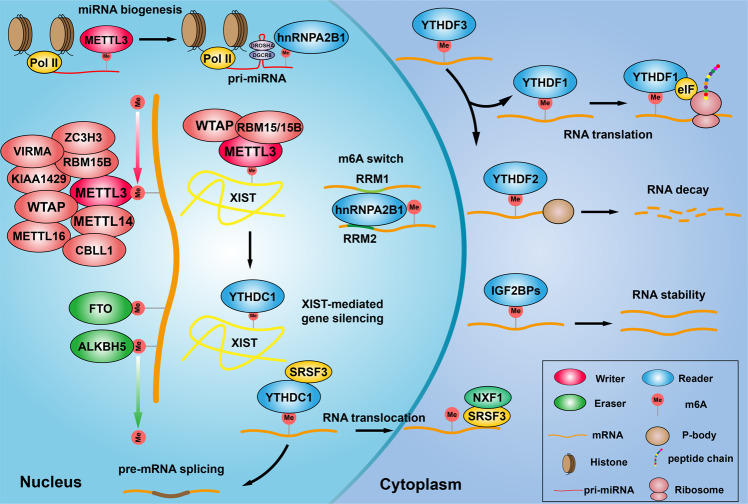
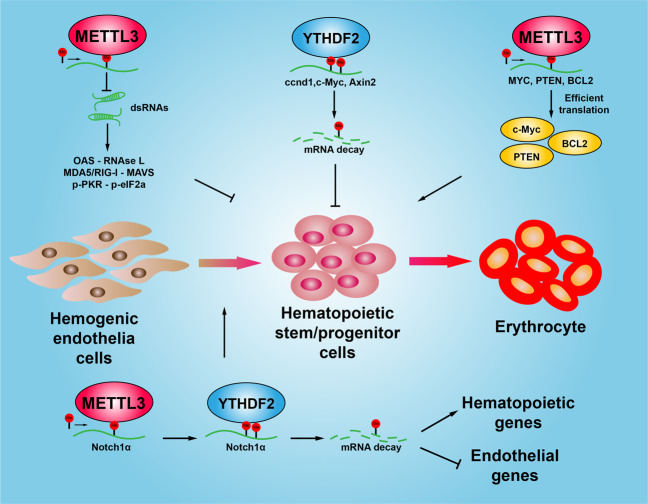
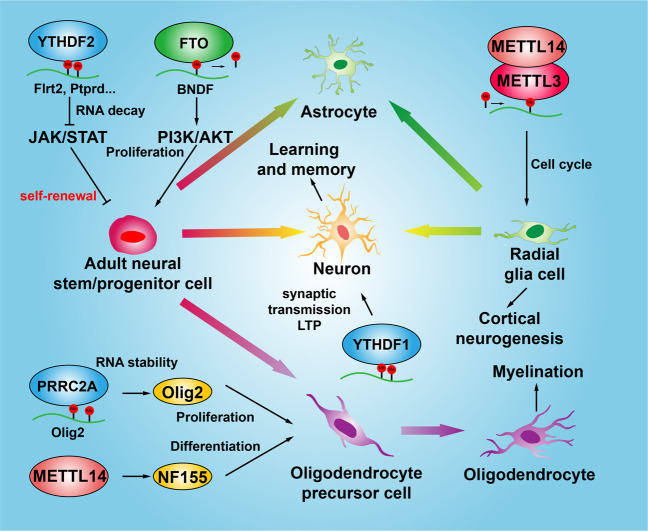
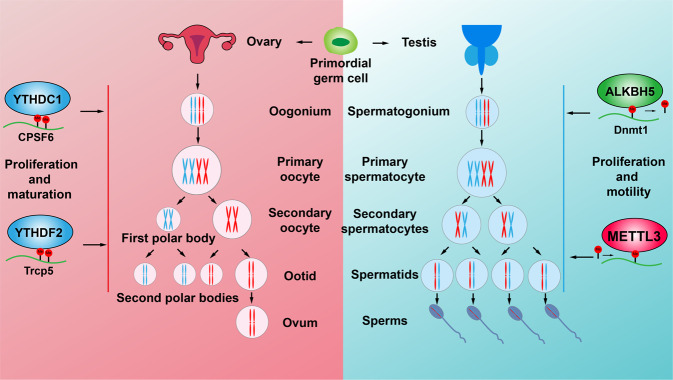
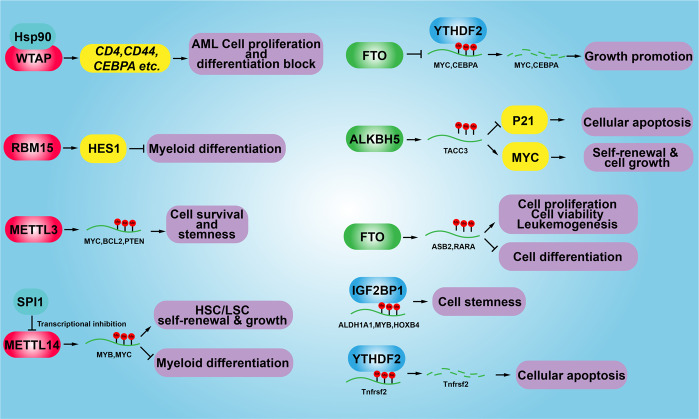
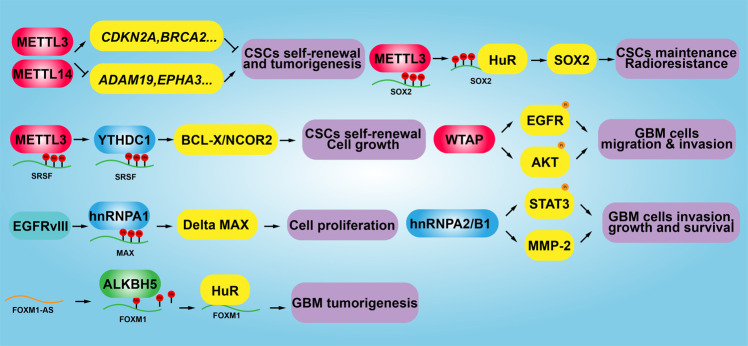
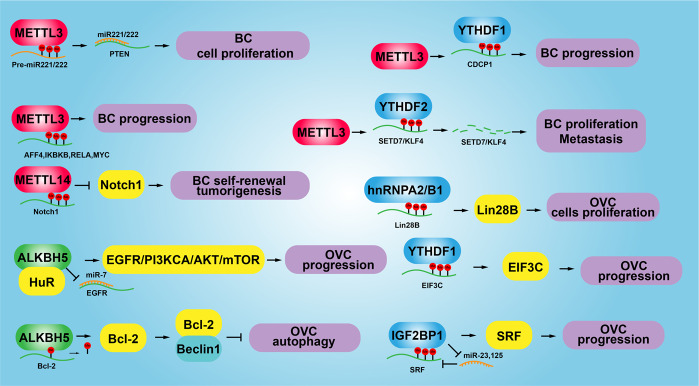
N 6 -methyladenosine (m6A) is the most prevalent, abundant and conserved internal cotranscriptional modification in eukaryotic RNAs, especially within higher eukaryotic cells. m6A modification is modified by the m6A methyltransferases, or writers, such as METTL3/14/16, RBM15/15B, ZC3H3, VIRMA, CBLL1, WTAP, and KIAA1429, and, removed by the demethylases, or erasers, including FTO and ALKBH5. It is recognized by m6A-binding proteins YTHDF1/2/3, YTHDC1/2 IGF2BP1/2/3 and HNRNPA2B1, also known as “readers”. Recent studies have shown that m6A RNA modification plays essential role in both physiological and pathological conditions, especially in the initiation and progression of different types of human cancers. In this review, we discuss how m6A RNA methylation influences both the physiological and pathological progressions of hematopoietic, central nervous and reproductive systems. We will mainly focus on recent progress in identifying the biological functions and the underlying molecular mechanisms of m6A RNA methylation, its regulators and downstream target genes, during cancer progression in above systems. We propose that m6A RNA methylation process offer potential targets for cancer therapy in the future.
Overview
The claims and statistics of this paper haven’t been checked yet.
Free: it reads the open-access text and checks the first 5 claims that cite a source we can check. Create a free account to check every claim.
Integrity signals
Registry
Cites
Statistics
Figures
Verification
Claims the paper makes
The claims and statistics of this paper haven’t been checked yet.
Free: it reads the open-access text and checks the first 5 claims that cite a source we can check. Create a free account to check every claim.
Claims other papers make about this one
Each is checked against this paper’s own text: does it say what the citing paper says it does?
The source backs part of the claim, not all of it — or backs it for a different population, condition or comparison.
In the citing paper
“Phylogenetically conserved RRM domains on readers are responsible for IMP2 identifying m6A marks on RNA [17,27].”
From IMPlications of IMP2 in RNA Biology and Disease (2025) · cites this paper as [17]
Experimental — accuracy not yet measuredThe cited source says what the claim attributes to it.
In the citing paper
“m6A (N6-methyladenosine) is a prevalent post-transcriptional modification found in mRNA and non-coding RNA in eukaryotic cells [17].”
From IMPlications of IMP2 in RNA Biology and Disease (2025) · cites this paper as [17]
In the citing paper
“m6A influences transcript splicing, stability, translation, nuclear export, and RNA structure283,284.”
From Air Pollution as an Environmental Risk Factor for Alzheimer’s Disease and Related Dementias (2024) · cites this paper as [283]
Self-check
Percentages, sums and reported differences re-computed from the paper’s own numbers.
The self-check needs the paper’s full text.
Citations
Cites
Genetics of Food Intake Self-Regulation in Childhood: Literature Review and Research Opportunities
Faith, M. S., Carnell, S., & Kral, T. V. E. (2013) · Human Heredity · doi:10.1159/000353879 · Cited by 7,601
Lippa, N. C., & Sanderson, S. C. (2013) · Human Heredity · doi:10.1159/000353712 · Cited by 6,078
Genome-wide atlas of gene expression in the adult mouse brain
Lein, E. S., Hawrylycz, M. J., Ao, N., Ayres, M., Bensinger, A., Bernard, A., Boe, A. F., Boguski, M. S., Brockway, K. S., Byrnes, E. J., et al. (2007) · Nature · doi:10.1038/nature05453 · Cited by 5,572
Topology of the human and mouse m6A RNA methylomes revealed by m6A-seq
Dominissini, D., Moshitch-Moshkovitz, S., Schwartz, S., Salmon-Divon, M., Ungar, L., Osenberg, S., Cesarkas, K., Jacob-Hirsch, J., Amariglio, N., Kupiec, M., et al. (2012) · Nature · doi:10.1038/nature11112 · Cited by 4,884
Frayling, T. M., Timpson, N. J., Weedon, M. N., Zeggini, E., Freathy, R. M., Lindgren, C. M., Perry, J. R. B., Elliott, K. S., Lango, H., Rayner, N. W., et al. (2007) · Science · doi:10.1126/science.1141634 · Cited by 4,531
Reynolds, B. A., & Weiss, S. (1992) · Science · doi:10.1126/science.1553558 · Cited by 4,482
Comprehensive Analysis of mRNA Methylation Reveals Enrichment in 3′ UTRs and near Stop Codons
Meyer, K. D., Saletore, Y., Zumbo, P., Elemento, O., Mason, C. E., & Jaffrey, S. R. (2012) · Cell · doi:10.1016/j.cell.2012.05.003 · Cited by 4,223
N6-Methyladenosine in nuclear RNA is a major substrate of the obesity-associated FTO
Jia, G., Fu, Y., Zhao, X., Dai, Q., Zheng, G., Yang, Y., Yi, C., Lindahl, T., Pan, T., Yang, Y.-G., et al. (2011) · Nature Chemical Biology · doi:10.1038/nchembio.687 · Cited by 4,106
ALKBH5 Is a Mammalian RNA Demethylase that Impacts RNA Metabolism and Mouse Fertility
Zheng, G., Dahl, J. A., Niu, Y., Fedorcsak, P., Huang, C.-M., Li, C. J., Vågbø, C. B., Shi, Y., Wang, W.-L., Song, S.-H., et al. (2013) · Molecular Cell · doi:10.1016/j.molcel.2012.10.015 · Cited by 3,550
N6-methyladenosine Modulates Messenger RNA Translation Efficiency
Wang, X., Zhao, B. S., Roundtree, I. A., Lu, Z., Han, D., Ma, H., Weng, X., Chen, K., Shi, H., & He, C. (2015) · Cell · doi:10.1016/j.cell.2015.05.014 · Cited by 3,483
Research works printed but not linked: 12
- Pendleton KE The U6 snRNA mA methyltransferase METTL16 regulates SAM synthetase intron retention Cell 2017 169 824 835.e814 10.1016/j.cell.2017.05.003 28525753 PMC5502809 · DOI · Paper page
- Patil DP m(6)A RNA methylation promotes XIST-mediated transcriptional repression Nature 2016 537 369 373 10.1038/nature19342 27602518 PMC5509218 · DOI · Paper page
- Wen J Zc3h13 regulates nuclear RNA m(6)A methylation and mouse embryonic stem cell self-renewal Mol. Cell. 2018 69 1028 1038.e1026 10.1016/j.molcel.2018.02.015 29547716 PMC5858226 · DOI · Paper page
- Huang H Recognition of RNA N-methyladenosine by IGF2BP proteins enhances mRNA stability and translation Nat. Cell Biol. 2018 20 285 295 10.1038/s41556-018-0045-z 29476152 PMC5826585 · DOI · Paper page
- Hsu PJ Ythdc2 is an N(6)-methyladenosine binding protein that regulates mammalian spermatogenesis Cell Res. 2017 27 1115 1127 10.1038/cr.2017.99 28809393 PMC5587856 · DOI · Paper page
- Yoon K-J Temporal control of mammalian cortical neurogenesis by mA methylation Cell 2017 171 877 889.e817 10.1016/j.cell.2017.09.003 28965759 PMC5679435 · DOI · Paper page
- Lv J Endothelial-specific m(6)A modulates mouse hematopoietic stem and progenitor cell development via Notch signaling Cell Res. 2018 28 249 252 10.1038/cr.2017.143 29148543 PMC5799811 · DOI
- Vu LP The N-methyladenosine (mA)-forming enzyme METTL3 controls myeloid differentiation of normal hematopoietic and leukemia cells Nat. Med. 2017 23 1369 1376 10.1038/nm.4416 28920958 PMC5677536 · DOI · Paper page
- Zhou, B. et al. N(6)-methyladenosine reader protein YT521-B Homology domain-containing 2 suppresses liver steatosis by regulation of mRNA stability of lipogenic genes. Hepatology10.1002/hep.31220 (2020). 32150756 · DOI · Paper page
- Shi H YTHDF3 facilitates translation and decay of N(6)-methyladenosine-modified RNA Cell Res. 2017 27 315 328 10.1038/cr.2017.15 28106072 PMC5339834 · DOI · Paper page
- Geula S Stem cells. m6A mRNA methylation facilitates resolution of naive pluripotency toward differentiation Science 2015 347 1002 1006 10.1126/science.1261417 25569111 · DOI · Paper page
- Su R R-2HG exhibits anti-tumor activity by targeting FTO/mA/MYC/CEBPA signaling Cell 2018 172 90 105.e123 10.1016/j.cell.2017.11.031 29249359 PMC5766423 · DOI · Paper page
Cited by
Items 201–300 of 1,006
Luo, Q., Yang, J., Yang, M., Wang, Y., Liu, Y., Liu, J., Kalvakolanu, D. V., Cong, X., Zhang, J., Zhang, L., et al. (2025) · Materials Today Bio · doi:10.1016/j.mtbio.2025.101457 · Cited by 61
Shen, D., Lin, J., Xie, Y., Zhuang, Z., Xu, G., Peng, S., Tang, G., Bai, L., Zhu, M., Zhang, Y., et al. (2023) · Clinical and Translational Medicine · doi:10.1002/ctm2.1279 · Cited by 40
WTAP weakens oxaliplatin chemosensitivity of colorectal cancer by preventing PANoptosis
Tan, Y., Li, T., Wang, R.-B., Liu, Z.-K., Ma, M., Huang, R., Mo, H., Luo, S.-Y., Lin, J., Xu, R., et al. (2024) · Cancer Letters · doi:10.1016/j.canlet.2024.217254 · Cited by 44
Raposo, A. C., Casanova, M., Gendrel, A.-V., & da Rocha, S. T. (2021) · Biochemical Society Transactions · doi:10.1042/bst20210253 · Cited by 39
Role of m6A modification in dysregulation of Wnt/β-catenin pathway in cancer
Tabnak, P., Ghasemi, Y., Natami, M., Khorram, R., & Ebrahimnezhad, M. (2022) · Biomedicine & Pharmacotherapy · doi:10.1016/j.biopha.2022.114023 · Cited by 36
Wan, L., Liu, J., Huang, C., Zhu, Z., Li, F., Sun, G., Wang, K., Li, S., Ma, X., Chen, X., et al. (2022) · Aging · doi:10.18632/aging.204439 · Cited by 36
Zhao, J., Zhao, Z., Ying, P., Zhou, Y., Xu, Z., Wang, H., & Tang, L. (2023) · Clinical and Translational Medicine · doi:10.1002/ctm2.1405 · Cited by 39
“28 Our outcomes showed that only METTL3 levels were significantly higher in the isolated epithelial cells from CD individuals than NCs (Figure 3D).”
BackgroundIn situ visualization of m6A sites in cellular mRNAs
Sheehan, C. J., Marayati, B. F., Bhatia, J., & Meyer, K. D. (2023) · Nucleic Acids Research · doi:10.1093/nar/gkad787 · Cited by 36
The biological function of the N6-Methyladenosine reader YTHDC2 and its role in diseases
Wu, X., Chen, H., Li, K., Zhang, H., & Tan, H. (2024) · Journal of Translational Medicine · doi:10.1186/s12967-024-05293-6 · Cited by 38
Wang, B., Wang, Y., Wang, W., Wang, Z., Zhang, Y., Pan, X. L., Wen, X., Leng, H., Guo, J. H., & Ma, X. (2024) · Journal of Experimental & Clinical Cancer Research · doi:10.1186/s13046-024-03120-w · Cited by 38
“N6-methyladenosine (m6A) is the most common post-transcriptional RNA modification in eukaryotic cells, and methyltransferase-like 3 (METTL3), methyltransferase-like 14 (METTL14) and Wilms’ tumor 1-associated protein (WTAP) together constitute the m6A methylase complex [11–13].”
BackgroundChen, X., Yuan, Y., Zhou, F., Li, L., Pu, J., & Jiang, X. (2025) · Journal of Translational Medicine · doi:10.1186/s12967-025-06221-y · Cited by 52
“…pathogens, remove dead or damaged cells and regulate immune response intensity to maintain homeostasis, ensuring normal physiological functions and vital activities of the organism. m6A methylation modification is regulated by methyltransferases, demethylases, and m6A recognition proteins [16].”
Self-citationSun, P., Wang, C., Mang, G., Xu, X., Fu, S., Chen, J., Wang, X., Wang, W., Li, H., Zhao, P., et al. (2022) · Clinical and Translational Medicine · doi:10.1002/ctm2.779 · Cited by 39
The Role of RNA Methyltransferase METTL3 in Normal and Malignant Hematopoiesis
Wu, X., Wu, Y., & Gong, Y. (2022) · Frontiers in Oncology · doi:10.3389/fonc.2022.873903 · Cited by 36
“Epigenetic modifications have been identified to be involved in many physiological and pathological processes in most eukaryotes without DNA sequence changes (1), including DNA methylation, histone modification, RNA methylation, and noncoding RNA regulation (2).”
BackgroundDetecting RNA modification using direct RNA sequencing: A systematic review
Zhao, X., Zhang, Y., Hang, D., Meng, J., & Wei, Z. C. (2022) · Computational and Structural Biotechnology Journal · doi:10.1016/j.csbj.2022.10.023 · Cited by 38
“Recent studies demonstrated that both over and under methylation of m(6)A can lead to or accelerate tumor development [12,13].”
Backgroundm6A RNA methylation orchestrates transcriptional dormancy during paused pluripotency
Collignon, É., Cho, B., Furlan, G., Fothergill-Robinson, J., Martin, S.-B., McClymont, S. A., Ross, R. L., Limbach, P. A., & Ramalho‐Santos, M. (2023) · Nature Cell Biology · doi:10.1038/s41556-023-01212-x · Cited by 35
Chen, B., Huang, R., Xia, T., Wang, C., Xiao, X., Lu, S., Chen, X., Ouyang, Y., Deng, X., Miao, J., et al. (2023) · Oncogene · doi:10.1038/s41388-023-02865-6 · Cited by 39
Application of Nanopore Sequencing in the Detection of Foodborne Microorganisms
Zhou, Y. L., Ren, M., Zhang, P., Jiang, D., Yao, X., Luo, Y., Yang, Z., & Yin, W. (2022) · Nanomaterials · doi:10.3390/nano12091534 · Cited by 40
“For instance, N6-methyladenosine (m6A) [82] and 5-methylcytosine (5-mC) [83] are the most common internal modifications in mRNA and play important roles in the metabolism and regulation of various RNAs.”
BackgroundMaternal obesity increases DNA methylation and decreases RNA methylation in the human placenta
Shen, W., Ni, J., Yao, R., Goetzinger, K. R., Harman, C. R., Reece, E. A., Wang, B., & Yang, P. (2021) · Reproductive Toxicology · doi:10.1016/j.reprotox.2021.12.002 · Cited by 36
METTL9-SLC7A11 axis promotes hepatocellular carcinoma progression through ferroptosis inhibition
Bi, F., Qiu, Y., Wu, Z., Liu, S., Zuo, D., Huang, Z., Li, B., Yuan, Y., Niu, Y., & Qiu, J. (2023) · Cell Death Discovery · doi:10.1038/s41420-023-01723-4 · Cited by 37
“Previous studies reported that METTL family genes are involved in diverse cellular processes and cancer progression [7 – 12].”
BackgroundAnalysis of bacterial transcriptome and epitranscriptome using nanopore direct RNA sequencing
Tan, L., Guo, Z., Shao, Y., Ye, L., Wang, M., Deng, X., Chen, S., & Li, R. (2024) · Nucleic Acids Research · doi:10.1093/nar/gkae601 · Cited by 31
“N6-methyladenosine (m6A), the most prevalent and conserved internal modification in eukaryotic RNAs ( 12 ), has been extensively investigated.”
BackgroundDong, S., Zhang, J., Fu, Y., Tang, G., Chen, J., Sun, D., Qi, Y., & Zhou, N. (2024) · Journal of Translational Medicine · doi:10.1186/s12967-024-05691-w · Cited by 35
“Dysregulated m6A modifications and their associated regulatory proteins influence the development of various diseases by affecting RNA metabolism, transport, and translation [14, 15].”
BackgroundFTO-dependent N(6)-Methyladenosine regulates the progression of endometriosis via the ATG5/PKM2 Axis
Wang, H., Liang, Z., Gou, Y., Li, Z., Cao, Y., Jiao, N., Tan, J., Yu, Y., & Zhang, Z. (2022) · Cellular Signalling · doi:10.1016/j.cellsig.2022.110406 · Cited by 40
Ge, F., Li, Z., Hu, J., Pu, Y., Zhao, F., & Kong, L. (2022) · Frontiers in Pharmacology · doi:10.3389/fphar.2022.1002565 · Cited by 35
“One-third of all mammalian mRNAs have an average of 3-5 m6A modifications, which is the most common type of posttranscriptional modification in mRNA (Jiang et al., 2021).”
BackgroundXiao, P., Meng, Q., Liu, Q., Lang, Q., Yin, Z., Li, G., Li, Z., Xu, Y., Yu, Z., Geng, Q., et al. (2023) · Cancer Letters · doi:10.1016/j.canlet.2023.216075 · Cited by 38
Fan, D., Geng, Q., Wang, B., Wang, X., Xia, Y., Yang, L., Zhang, Q., Deng, T., Xu, Y., Zhao, H., et al. (2024) · Clinical Immunology · doi:10.1016/j.clim.2024.109929 · Cited by 32
Self-citationZhao, K., Chen, L., Xie, Y., Ren, N., Li, J., Zhai, X., Zheng, S., Liu, K., Wang, C., Qiu, Q., et al. (2024) · Cancer Letters · doi:10.1016/j.canlet.2024.216735 · Cited by 34
Epigenetic control of skeletal muscle atrophy
Liang, W., Xu, F., Li, L., Peng, C., Sun, H., Qiu, J., & Sun, J. (2024) · Cellular & Molecular Biology Letters · doi:10.1186/s11658-024-00618-1 · Cited by 43
Wang, N., Shi, B., Ding, L., Zhang, X., Ma, X., Guo, S., Qiao, X., Wang, L., Ma, D., & Cao, J. (2024) · Redox Biology · doi:10.1016/j.redox.2024.103382 · Cited by 37
“…has indicated that FMRP recognized the m 6 A-modifica-tion site in EGFR mRNA to promote the tumorigenesis and metastasis of colorectal cancer [27]. m 6 A readers regulates the eukaryotic transcriptome to affect multiple aspects of RNA biology, including translation, splicing and stability [21].”
BackgroundLiu, B., Tian, X., Li, L., Zhang, R., Wu, J., Jiang, N., Meng, Y., Chen, D., Su, A., Xu, S., et al. (2024) · EMBO Reports · doi:10.1038/s44319-024-00310-7 · Cited by 36
“Therefore, m6A modi fi cation regulates many biological processes, such as development (Fustin et al, 2013; Zhong et al, 2018), metabolism (Lence et al, 2016; Xiong et al, 2021) and tumorigenesis (Yu et al, 2021b; Jiang et al, 2021).”
Self-citationLuo, F., & Lin, K. (2022) · Experimental Cell Research · doi:10.1016/j.yexcr.2022.113176 · Cited by 32
ELAVL1 promotes prostate cancer progression by interacting with other m6A regulators
Cai, Z., Xu, H., Bai, G., Hu, H., Wang, D., Li, H., & Wang, Z. (2022) · Frontiers in Oncology · doi:10.3389/fonc.2022.939784 · Cited by 37
“N6-Methyladenosine (m6A) is an RNA modification in which the 6th hydrogen atom of adenine is substituted by a methyl group (1).”
BackgroundTranscription factor condensates and signaling driven transcription
Mann, R., & Notani, D. (2023) · Nucleus · doi:10.1080/19491034.2023.2205758 · Cited by 40
“These various functions result from the protein interactions of m6A methylated RNA [79,80].”
BackgroundLian, B., Yan, S., Li, J., Bai, Z., & Li, J.-P. (2023) · Molecular Medicine · doi:10.1186/s10020-023-00696-5 · Cited by 32
“VIRMA acts as m6A methyltransferase to promote the m6A modification of mRNAs (Jiang et al. 2021).”
BackgroundInfluentialYang, J., Xu, P., Chen, Z., Zhang, X., Xia, Y., Fang, L., Xie, L., Li, B., & Xu, Z. (2023) · Cancer Letters · doi:10.1016/j.canlet.2023.216092 · Cited by 33
Lin, Y., Li, J., Liang, S., Chen, Y., Li, Y.-Q., Cun, Y., Tian, L., Zhou, Y., Chen, Y., Chu, J., et al. (2024) · Genomics Proteomics & Bioinformatics · doi:10.1093/gpbjnl/qzae052 · Cited by 31
“We previously identified 32 high-confidence cell-specific m 6 A regulators with a reasonable experimental validation rate that are responsible for global regulation and site-specific m 6 A dynamics through the interplay of classical m 6 A methyltransferases and demethylases at specific sites [21].”
BackgroundSelf-citationRole of reactive oxygen species in regulating epigenetic modifications
Chen, Y., & Shen, Y. (2024) · Cellular Signalling · doi:10.1016/j.cellsig.2024.111502 · Cited by 35
Self-citationInhibition of AlkB Nucleic Acid Demethylases: Promising New Epigenetic Targets
Perry, G. S., Das, M., & Woon, E. C. Y. (2021) · Journal of Medicinal Chemistry · doi:10.1021/acs.jmedchem.1c01694 · Cited by 34
Zhou, Z., Chen, S., Wu, T., Chen, Y., Cao, Y., Huang, Y., & Liu, D. (2022) · Journal of Cellular Physiology · doi:10.1002/jcp.30919 · Cited by 33
“The regulatory mechanisms of m6A in various cells and diseases have been widely elucidated (Jiang et al., 2021). m6A regulators are classified as “writers” [including methyltransferase 3, N6‐adenosine‐methyltransferase complex catalytic subunit (Mettl3), Mettl4, and Mettl14], “readers” (including…”
BackgroundSelf-citationFTO-mediated m6A demethylation of pri-miR-3591 alleviates osteoarthritis progression
Liu, W., Jiang, T., Zheng, W., Zhang, J., Li, A., Lu, C., & Lin, Z. (2023) · Arthritis Research & Therapy · doi:10.1186/s13075-023-03035-5 · Cited by 33
Promoting axon regeneration by inhibiting RNA N6-methyladenosine demethylase ALKBH5
Wang, D., Zheng, T., Zhou, S., Liu, M., Liu, Y., Gu, X., Mao, S., & Yu, B. (2023) · eLife · doi:10.7554/elife.85309 · Cited by 33
Yin, H., Gu, P. H., Xie, Y., You, X., Zhang, Y., Yao, Y., Yang, S., Wang, D., Chen, W., & Ma, J. (2023) · Journal of Hazardous Materials · doi:10.1016/j.jhazmat.2023.132736 · Cited by 32
Guo, Z., Bai, Y., Zhang, X., Guo, L., Zhu, L., Sun, D., Sun, K., Xu, X., Yang, X., Xie, W., et al. (2023) · Advanced Science · doi:10.1002/advs.202307650 · Cited by 32
Fagre, C. R., & Gilbert, W. V. (2024) · Wiley Interdisciplinary Reviews - RNA · doi:10.1002/wrna.1834 · Cited by 38
“As this review will largely focus on less-well-characterized modifications, we direct the reader to several of the excellent recent reviews of m6A by Jiang et al. ( 2021), Y. Xu et al. (2021), and Zaccara et al. (2019).”
BackgroundMethodA cis-acting ligase ribozyme generates circular RNA in vitro for ectopic protein functioning
Su, C.-I., Chuang, Z.-S., Shie, C.-T., Wang, H.-I., Kao, Y.-T., & Yu, C.-Y. (2024) · Nature Communications · doi:10.1038/s41467-024-51044-y · Cited by 34
“2a, b),weenrolled twocommoneukaryotic RNA modi fi cations, N6-methyladenosine 23 (m6A) and 5-methylcytosine 24 (m5C) to understand whether modi fi ed RNA is tolerated in the RzL-mediated circRNA formation.”
Targeting METTL3 as a checkpoint to enhance T cells for tumour immunotherapy
Wu, K., Li, S., Hong, G., Dong, H., Tang, T., He, L., Jin, L., Lin, S., Ji, J., Hu, M., et al. (2024) · Clinical and Translational Medicine · doi:10.1002/ctm2.70089 · Cited by 36
Dai, Z., Lin, B., Qin, M., Lin, Y., Wang, L., Liao, K., Xie, G., Wang, F., & Zhang, J. (2025) · International Journal of Biological Sciences · doi:10.7150/ijbs.100518 · Cited by 37
“A recent study reported that IGF2BPs and YTHDFs are distinct families of m6A readers that target thousands of mRNA transcripts through the recognition of the m6A motif [9, 34].”
Advances in understanding the mechanisms of the human papillomavirus oncoproteins
Obanya, D. I., Wootton, L. M., & Morgan, E. L. (2025) · Biochemical Society Transactions · doi:10.1042/bst20253041 · Cited by 36
Epigenetic alterations in glioblastomas: Diagnostic, prognostic and therapeutic relevance
Montella, L., Cuomo, M., Gaudio, N. D., Buonaiuto, M., Costabile, D., Visconti, R., Risi, T. D., Vinciguerra, R., Trio, F., Ferraro, S., et al. (2022) · International Journal of Cancer · doi:10.1002/ijc.34381 · Cited by 35
“Within Epi-modifications, the N6-methyladenosine (m6A) surely carves a niche for itself, as it is the most abundant mark on eukaryotic mRNAs and by far the most studied.(75) Accordingly, the role of the m6A mark and its effectors in GBM has been explored.”
BackgroundShi, J. Y., Zhang, P., Dong, X., Yuan, J., Li, Y., Li, S., Cheng, S., Ping, Y., Dai, X., & Dong, J. (2023) · Cell Death Discovery · doi:10.1038/s41420-023-01327-y · Cited by 30
“Translations studies on the relationship between m6A mRNA methylation and tumor chemotherapeutic resistance have potential significance in guiding clinical practice [36], for m6A mRNA methylation has been reported to be closely related to occurrence and development of tumors [37], and m6A-related protein has been prov…”
BackgroundZhang, S., Lv, C., Niu, Y., Li, C.-Q., Li, X., Shang, Y., Zhang, Y., Zhang, Y., Zhang, Y., & Zeng, Y. (2023) · Cell Death and Disease · doi:10.1038/s41419-023-05627-0 · Cited by 31
“It has been shown that METTL3 is the major catalytic methyltransferase modifying RNA m(6)A [24].”
BackgroundRole of epigenetic regulation in glaucoma
Feng, L., Wang, C., Zhang, C., Zhang, W., & Song, W. (2023) · Biomedicine & Pharmacotherapy · doi:10.1016/j.biopha.2023.115633 · Cited by 34
Wang, D., Wang, D., Jin, Q., & Wang, X. (2024) · Phytomedicine · doi:10.1016/j.phymed.2024.155359 · Cited by 33
Jin, X., Liu, L., Liu, D., Jia Rui, W. U., Wang, C., Wang, S., Wang, F., Yu, G., Jin, X., Xue, Y., et al. (2024) · Cell Death and Differentiation · doi:10.1038/s41418-024-01285-7 · Cited by 37
Chen, M., Yang, D., Zhou, Y., Yang, C., Lin, W., Li, J., Liu, J., Ye, J., Huang, W., Ma, W., et al. (2024) · International Journal of Biological Sciences · doi:10.7150/ijbs.93544 · Cited by 34
“…under different disease conditions. m6A modification, the most prevalent, abundant and conserved transcriptional modification, plays a critical role in controlling mRNA stability and all the cell types, including vascular SMC phenotype switching, critical to the pathogenesis of AAA [43, 44, 62-66].”
Self-citationStructure-Based Design of a Potent and Selective YTHDC1 Ligand
Zálešák, F., Nai, F., Herok, M., Bochenkova, E., Bedi, R. K., Li, Y., Errani, F., & Caflisch, A. (2024) · Journal of Medicinal Chemistry · doi:10.1021/acs.jmedchem.4c00599 · Cited by 32
Su, Z., Lan, J., Wang, Y., Ni, M., Yang, J., Liang, D., Zeng, H., & Yang, M. (2025) · Journal of Allergy and Clinical Immunology · doi:10.1016/j.jaci.2025.01.028 · Cited by 34
Interplay of m6A RNA methylation and gut microbiota in modulating gut injury
Wang, H., Han, J., & Zhang, X. (2025) · Gut Microbes · doi:10.1080/19490976.2025.2467213 · Cited by 36
Han, L., Wei, S., Wang, R., Liu, Y., Zhong, Y., Fu, J., Luo, H., & Bao, M. (2025) · Biomolecules · doi:10.3390/biom15081188 · Cited by 32
“Specifically, writer proteins catalyze the m6A methylation process [39].”
Gao, L., Chen, R., Sugimoto, M., Mizuta, M., Kishimoto, Y., & Omori, K. (2021) · International Journal of Molecular Sciences · doi:10.3390/ijms221910302 · Cited by 34
Liu, H., Zheng, J., & Liao, A. (2022) · Frontiers in Immunology · doi:10.3389/fimmu.2022.988130 · Cited by 35
“and pathological processes: hematopoietic development, central nervous and system development, the adaptive and innate immune system, carcinogenesis and the tumor microenvironment, as well as gametogenesis and early embryo development, the dysfunction of which generally results in various diseases by abnormal m6A modi…”
BackgroundZhan, L., Zhang, J., Zhang, J., Liu, X., Guo, B., Chen, J.-H., Tang, Z., Wang, W., Wang, Q.-Y., Wei, B., et al. (2023) · Biomarker Research · doi:10.1186/s40364-023-00479-4 · Cited by 31
“m6A modifications are the most prevalent modifications in human mRNA, and they perform vital functions in the pathophysiology of a wide range of diseases [3].”
BackgroundXiao, Z., Wang, S., Tian, Y., Lv, W., Sheng, H., Zhan, M., Huang, Q., Zhang, Z., Zhu, L., Zhu, C., et al. (2023) · Cell Reports · doi:10.1016/j.celrep.2023.112684 · Cited by 36
Cell death or survival: Insights into the role of mRNA translational control
Bhatter, N., Dmitriev, S. E., & Ivanov, P. V. (2023) · Seminars in Cell and Developmental Biology · doi:10.1016/j.semcdb.2023.06.006 · Cited by 34
Shi, K., Sa, R., Dou, L., Wu, Y., Dong, Z., Fu, X., & Yu, H. (2023) · Clinical Epigenetics · doi:10.1186/s13148-023-01568-9 · Cited by 30
“Among these modifications, N6-methyladenosine (m6A) RNA modification has emerged as a significant regulator of temporal and spatial gene expression during cancer development [9, 10].”
BackgroundKlf6 aggravates myocardial ischemia/reperfusion injury by activating Acsl4 ‐mediated ferroptosis
Qiu, M., Yan, W., & Liu, M. (2023) · The Kaohsiung Journal of Medical Sciences · doi:10.1002/kjm2.12733 · Cited by 30
“m6A-modified RNAs are recognized by m6Abinding proteins, known as “readers”, including insulin-like growth factor 2 mRNA-binding protein 2 (Igf2bp2).(12,13) Mettl3 has been reported to be upregulated in myocardial I/R models in vivo and in vitro, and its upregulation promotes myocardial I/R damage.”
BackgroundLiu, Y., Chen, K., Shou, Y., Li, S., Wang, J., Zhang, Q., Huang, Z., Xu, J., Li, M., Liu, D., et al. (2023) · Clinical and Translational Medicine · doi:10.1002/ctm2.1512 · Cited by 33
“9,10 Among them, the insulin-like growth factor 2 mRNA-binding proteins (IGF2BPs) family are important reader proteins.”
BackgroundRegulation of HNRNP family by post-translational modifications in cancer
Li, B., Wen, M., Gao, F., Wang, Y., Wei, G., & Duan, Y. (2024) · Cell Death Discovery · doi:10.1038/s41420-024-02198-7 · Cited by 39
M6A Demethylase ALKBH5 in Human Diseases: From Structure to Mechanisms
Fang, M., Ye, L., Zhu, Y., Huang, L., & Xu, S. (2025) · Biomolecules · doi:10.3390/biom15020157 · Cited by 32
“A pyrazolo and [1,5-a] pyrimidine derivative (DO-2728) increased the m6A level in AML cells by specifically downregulating ALKBH5 [113], which eventually inhibited tumor growth.”
Xu, L., Kong, Y., Li, K., Li, J., Xu, F., Xu, Y., Liang, S., & Chen, B. (2025) · Clinical and Translational Medicine · doi:10.1002/ctm2.70192 · Cited by 35
“44 Studies have shown that IGF2BP3 induces ferroptosis resistance and promotes LUAD.”
Functions and mechanisms of non-histone post-translational modifications in cancer progression
Li, Z., Zhu, T., Wu, Y., Yu, Y., Zang, Y.-J., Yu, L., & Zhang, Z. (2025) · Cell Death Discovery · doi:10.1038/s41420-025-02410-2 · Cited by 34
RNA modifications and their role in gene expression
Artika, I. M., Arianti, R., Demény, M. Á., & Kristóf, E. (2025) · Frontiers in Molecular Biosciences · doi:10.3389/fmolb.2025.1537861 · Cited by 38
“METTL3 is the catalytic subunit of the complex responsible for binding the co-substrate S-adenosyl methionine (SAM), while METTL14 functions as structural support for METTL3 and is involved in mRNA binding (Zhou et al., 2020; Jiang et al., 2021; Bedi et al., 2023).”
Guimarães‐Teixeira, C., Barros‐Silva, D., Lobo, J., Soares-Fernandes, D., Constâncio, V., Leite‐Silva, P., Silva‐Santos, R., Braga, I. C., Henrique, R., Miranda‐Gonçalves, V., et al. (2021) · Journal of Personalized Medicine · doi:10.3390/jpm11100996 · Cited by 29
The Role of N6-Methyladenosine (m6A) Methylation Modifications in Hematological Malignancies
Zhao, Y., & Peng, H. (2022) · Cancers · doi:10.3390/cancers14020332 · Cited by 35
Epi‐miRNAs : Modern mediators of methylation status in human cancers
Papadimitriou, M., Panoutsopoulou, K., Pilala, K., Scorilas, A., & Avgeris, M. (2022) · Wiley Interdisciplinary Reviews - RNA · doi:10.1002/wrna.1735 · Cited by 38
“Methylation in the N6-position of adenosine, N6-methyladenosine (m6A) is the most abundant modification of eukaryotic RNAs, and is introduced by a multicomponent complex consisting of the SAM-dependent METTL3 methyltransferase and accessory subunits, most importantly METTL14, WTAP, VIRMA, and RBM15 (Duan et al., 2019;…”
BackgroundInfluentialThe essential role of N6-methyladenosine RNA methylation in complex eye diseases
Li, X., Ma, B., Zhang, W., Song, Z., Zhang, X., Liao, M., Li, X., Zhao, X., Du, M., Yu, J., et al. (2022) · Genes & Diseases · doi:10.1016/j.gendis.2022.05.008 · Cited by 31
Long, H., Lin, H., Zheng, P., Hou, L., Zhang, M., Lin, S., Yin, K., & Zhao, G. (2022) · Frontiers in Pharmacology · doi:10.3389/fphar.2022.1023878 · Cited by 30
“RNA m6A modification has been shown to play important roles in regulating RNA splicing, translation, stability, translocation and high-level structure (Jiang et al., 2021).”
BackgroundLiang, J., Sun, J., Zhang, W., Wang, X., Xu, Y., Peng, Y., Zhang, L., Xiong, W., Liu, Y., & Liu, H. (2023) · International Journal of Biological Sciences · doi:10.7150/ijbs.75466 · Cited by 30
“Three complexes, namely m6A methyltransferases, m6A demethylases, and m6A binding proteins, participate in this dynamic regulation event [20] (Figure 1).”
BackgroundNicastro, G., Abis, G., Klein, P., Serna, S. E., Gallagher, C., Chaves‐Arquero, B., Cai, Y., Figueiredo, A. M., Martin, S. R., Patani, R., et al. (2023) · Nucleic Acids Research · doi:10.1093/nar/gkad534 · Cited by 30
Gan, L., Zhao, S., Gao, Y., Qi, Y., Su, M., Wang, A., & Cai, H. (2023) · Biology Direct · doi:10.1186/s13062-023-00420-7 · Cited by 29
“Until now, over 150 chemical alterations of RNA have been discovered, including in protein-coding and non-coding RNAs [5].”
BackgroundAir Pollution as an Environmental Risk Factor for Alzheimer’s Disease and Related Dementias
Park, H. H., Armstrong, M. J., Gorin, F. A., & Lein, P. J. (2024) · Medical Research Archives · doi:10.18103/mra.v12i10.5825 · Cited by 28
Carbon metabolism in the regulation of macrophage functions
Gan, Z., Zhao, M., Xia, Y., Yan, Y., & Ren, W. (2023) · Trends in Endocrinology and Metabolism · doi:10.1016/j.tem.2023.09.003 · Cited by 33
Zeng, Z., Lan, Y., Zhang, L., Chen, Y., Gong, Y., Zuo, F., Li, J., Luo, G., Peng, Y., & Yuan, Z. (2023) · Burns & Trauma · doi:10.1093/burnst/tkad023 · Cited by 28
“Accumulating evidence indicates the marked effects of m6A on numerous biological and pathological processes [6–8].”
BackgroundSelf-citationWang, C., Xu, J., Luo, S., Huang, J., Ji, D., Qiu, X., Song, X., Cao, X., Niu, C., Zeng, X., et al. (2023) · Environmental Science & Technology · doi:10.1021/acs.est.3c03579 · Cited by 27
Shi, Q., Chu, Q., Zeng, Y., Yuan, X., Wang, J., Zhang, Y., Xue, C., & Li, L. (2023) · Cell Communication and Signaling · doi:10.1186/s12964-023-01357-0 · Cited by 32
“KIAA1429 is a crucial component of the m6A methyl-transferase complex and plays a vital role in m6A modification [111].”
BackgroundKhan, F. A., Nsengimana, B., Awan, U. A., Ji, X., Ji, S., & Dong, J. (2024) · Cancer Gene Therapy · doi:10.1038/s41417-024-00789-1 · Cited by 32
Liu, Y., Wang, X., Huang, M., Luo, A., Liu, S., Cai, M., Li, W., Yuan, S., Zheng, Z., Liu, X., et al. (2024) · BMC Medicine · doi:10.1186/s12916-024-03735-y · Cited by 35
“…the adenine [14]. m6A can be installed by methyltransferase complexes (including METTL3, METTL14, and WTAP) and removed by demethyltransferase (including ALKBH5 and FTO). m6A reading proteins can specifically recognize and bind modification sites to perform corresponding biological functions [15].”
BackgroundComprehensive Analysis of YTHDF1 Immune Infiltrates and ceRNA in Human Esophageal Carcinoma
Liu, X., Kui, X.-Y., Gao, Y. P., Chen, X., Zeng, J., Liu, X., Zhang, Y., Zhang, Y., & Pei, Z. (2022) · Frontiers in Genetics · doi:10.3389/fgene.2022.835265 · Cited by 28
“One of the most common internal modifications of mammalian mRNAs is N6-methyladenosine (m6A) RNA modification (Deng et al., 2018; Shi et al., 2019a; Jiang et al., 2021).”
BackgroundShan, H., Gu, W., Duan, G., & Chen, H. (2022) · Bioengineered · doi:10.1080/21655979.2022.2051785 · Cited by 27
“The main function of readers is to recognize the m6A-modified RNAs, thus activating downstream regulatory pathways such as RNA processing, mRNA degradation, translation, and decay [7,8].”
BackgroundN6-methyladenine RNA Methylation Epigenetic Modification and Kidney Diseases
Luan, J., Kopp, J. B., & Zhou, H. (2022) · Kidney International Reports · doi:10.1016/j.ekir.2022.10.009 · Cited by 31
“Readers may also induce a change in the secondary structure of target mRNAs.(36,37)”
BackgroundMateos, P. A., Zhou, Y., Zarnack, K., & Eyras, E. (2023) · Briefings in Bioinformatics · doi:10.1093/bib/bbad163 · Cited by 29
“Through writers, readers and erasers, m6A is involved in the regulation of possibly all steps of RNA processing and function, thereby impacting major physiological functions such as cell differentiation and development [18, 19].”
BackgroundSu, X., Lai, T., Tao, Y., Zhang, Y., Zhao, C., Zhou, J., Chen, E., Zhu, M., Zhang, S., Wang, B., et al. (2023) · Scientific Reports · doi:10.1038/s41598-023-39506-7 · Cited by 27
“The most frequent internal mRNA modifications involve N6-methyladenosine (m 6 A), N1-methyladenosine (m 1 A), and 5-methyl-cytosine (m 5 C) 18 .”
Lu, Y., Zhang, H., Pan, H., Zhang, Z., Zeng, H., Xie, H., Yin, J., Tang, W., Lin, R., Zeng, C., et al. (2023) · Journal of Translational Medicine · doi:10.1186/s12967-023-04173-9 · Cited by 29
“Aberrant m6A modifications hamper gene expression and cell function and ultimately cause diseases, including OA [16].”
BackgroundLi, Y., Zhang, Y., Zhang, T., Ping, X., Wang, D., Chen, Y., Yu, J., Liu, C., Liu, Z., Zheng, Y., et al. (2023) · Advanced Science · doi:10.1002/advs.202300436 · Cited by 38
Self-citationRole of m6A modification in regulating the PI3K/AKT signaling pathway in cancer
Liu, J., Gu, X., Guan, Z., Huang, D., Xing, H., & Lian, Z. (2023) · Journal of Translational Medicine · doi:10.1186/s12967-023-04651-0 · Cited by 29
“The dysregulation of enzymes involved in m6A modification is associated with oncogenesis, tumor progression, and drug resistance [22, 24, 27, 28].”
BackgroundGao, L., Wang, A., Chen, Y., Cai, X., Li, Y., Zhao, J., Zhang, Y., Zhang, W., Zhu, J., Zeng, Y., et al. (2023) · Cell Communication and Signaling · doi:10.1186/s12964-023-01343-6 · Cited by 31
“It has been reported that YTHDF2 selectively binds to m 6 A-containing mRNA and localizes the YTHDF2-mRNA complex to sites of cellular RNA decay to promote mRNA degradation [39, 56].”
BackgroundSelf-citationHu, Y., Diao, L., Hou, Y., Lv, G., Tao, S., Xu, W., Xie, S., Ren, Y.-H., & Xiao, Z. (2023) · Hepatology · doi:10.1097/hep.0000000000000702 · Cited by 33
“[4,5] Recent advancements in high-throughput detection of RNA modification sites revealed that other RNA modifications such as pseudouridine (denoted by the Greek letter psi, ψ ), [6 – 8] were also present internally on mRNA.”
Chen, J., Lu, T., Wang, T., Yan, W., Zhong, F.-Y., Qu, X.-H., Gong, X., Li, J., Tou, F., Jiang, L., et al. (2024) · Cell Death and Disease · doi:10.1038/s41419-024-06736-0 · Cited by 37
“During m6A methylation, three types of m6A modi fi cation-related proteins (writers, erasers, and readers) work together to maintain a dynamic balance of m6A regulators in cells [13, 14].”
Ben, S., Ding, Z., Xin, J., Li, F., Cheng, Y., Chen, S., Fan, L., Zhang, Q., Li, S., Du, M., et al. (2024) · Advanced Science · doi:10.1002/advs.202402954 · Cited by 37
RNA ac4C modification in cancer: Unraveling multifaceted roles and promising therapeutic horizons
Ouyang, W., Huang, Z., Wan, K., Nie, T., Chen, H., & Yao, H. (2024) · Cancer Letters · doi:10.1016/j.canlet.2024.217159 · Cited by 31
Zhao, S. T., Cheng, J., Zhou, G. Q., Tao, L., Xing, J., Liu, L., Chen, Z., & Song, P. K. (2025) · Biochemical Pharmacology · doi:10.1016/j.bcp.2025.117097 · Cited by 34
Metadata
- Authors
- Jiang, X., Liu, B., Nie, Z., Duan, L., Xiong, Q., Jin, Z., Yang, C., & Chen, Y.
- Affiliations
- Kunming Institute of Zoology (CN)
- Kunming Medical University (CN)
- Corresponding author
- Yang, Cuiping
- Chen, Yongbin
- Venue
- Signal Transduction and Targeted Therapy
- Published
- 2021-02-21
- Volume
- 6
- Issue
- 1
- Pages
- 74-74
- ISSN
- 2059-3635 (ISSN-L)
- PMC
- PMC7897327
- OpenAlex
- W3133117790
- Semantic Scholar
- bb3e99165f58f5ec0b7529899c5348c6d862434c
- Cited by
- 2,335
- References
- 253
- Citations by year
- 2026: 366 · 2025: 624 · 2024: 589 · 2023: 426 · 2022: 230 · 2021: 96
- FWCI
- 35.75
- Type
- journal article
- Language
- en
- Open access
- gold
- doi.org
- Licence
- cc-by
- creativecommons.org/licenses/by/4.0 (tdm)
- creativecommons.org/licenses/by/4.0 (vor)
- Locations
- Signal Transduction and Targeted Therapy (publishedVersion, cc-by)
- PubMed Central (publishedVersion, cc-by)
- PubMed (publishedVersion)
- DOAJ (DOAJ: Directory of Open Access Journals) (submittedVersion, cc-by-sa)
- Funders
- National Natural Science Foundation of China (2016YFA0100900, 82060515, U1902216, 2020-1, 81772996, 81672764)
- Youth Innovation Promotion Association of the Chinese Academy of Sciences (2016YFA0100900)
- Recruitment Program of Global Experts
- National Key Research and Development Program of China (2016YFA0100900)
- Youth Innovation Promotion Association (2016YFA0100900)
- National Key Research and Development Program of China Stem Cell and Translational Research (2016YFA0100900)
- Topics
- Life Sciences › Biochemistry, Genetics and Molecular Biology › Molecular Biology › RNA modifications and cancer
- Life Sciences › Biochemistry, Genetics and Molecular Biology › Molecular Biology › RNA regulation and disease
- Life Sciences › Biochemistry, Genetics and Molecular Biology › Molecular Biology › Cancer-related gene regulation
- Keywords
- m6A RNA methylation, N6-methyladenosine, RNA methyltransferase, RNA demethylase, m6A-binding proteins, tumor progression, hematopoietic system, central nervous system, reproductive system, cancer therapy targets
- MeSH terms
- RNA Splicing Factors, Adenosine, Humans, Methylation, Methyltransferases, Neoplasms, Nerve Tissue Proteins, RNA Processing, Post-Transcriptional, RNA-Binding Proteins, Heterogeneous-Nuclear Ribonucleoprotein Group A-B, Epigenesis, Genetic
About these checks
Registry, retraction, Cites and statistics results are computed, not judged, with one exception: a printed reference that no index lists is read once by a model before it counts as a citation error. Claims are extracted by a model and kept only when their quote appears verbatim in the text; each cited source is then checked, with a model’s help, for whether it says what the claim relies on. Those verdicts can be wrong — read the claim’s quote and the cited source before relying on one.
Statistics and arithmetic are recomputed, not judged.
Confidence bands are shown only for fields calibrated on our annotated test set. None is calibrated yet, so no band is shown.
What counts as a claim ›How we measure confidence ›How we check this ›
Are you an author, or do you see a problem with this page? Request a review
Data sources
Bibliographic data: Semantic Scholar, OpenAlex, Crossref.
Contains information from the Semantic Scholar Academic Graph Datasets, made available under the ODC Attribution License (ODC-BY 1.0).
Semantic Scholar’s data is described in: Kinney, R., et al. (2023). The Semantic Scholar Open Data Platform. arXiv:2301.10140.
