

The role of m6A modification in the biological functions and diseases
Open accessThe DOI matches its Crossref record; 252 of the 253 references it cites were found in a registry or an index.
Abstract
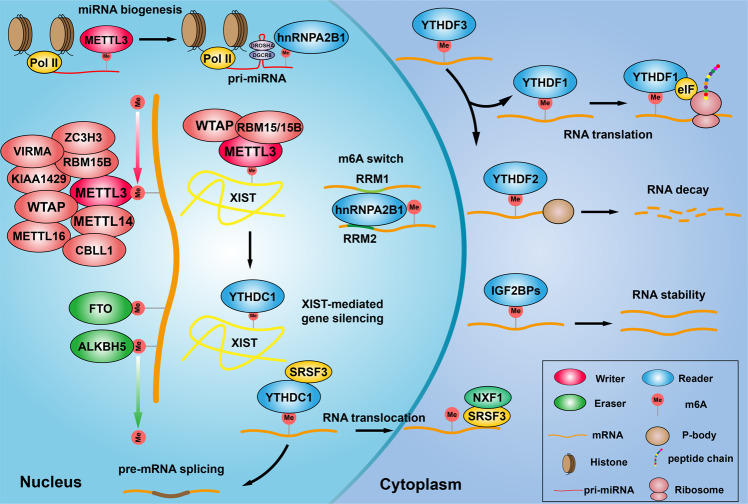
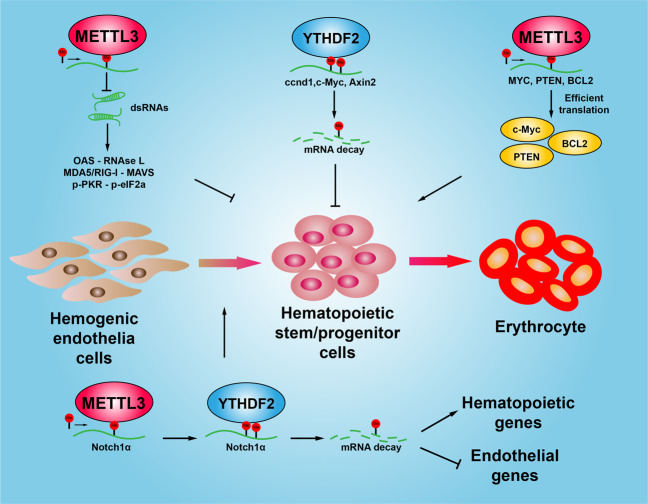
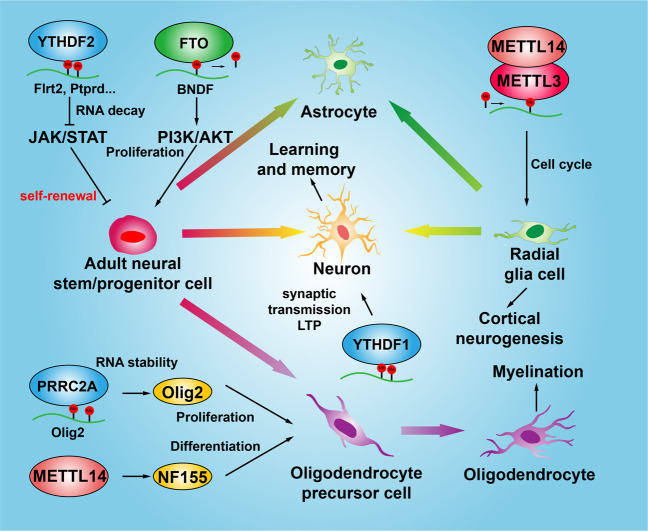
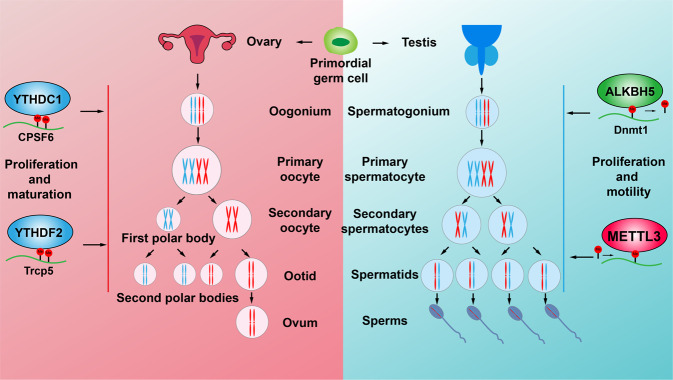
N 6 -methyladenosine (m6A) is the most prevalent, abundant and conserved internal cotranscriptional modification in eukaryotic RNAs, especially within higher eukaryotic cells. m6A modification is modified by the m6A methyltransferases, or writers, such as METTL3/14/16, RBM15/15B, ZC3H3, VIRMA, CBLL1, WTAP, and KIAA1429, and, removed by the demethylases, or erasers, including FTO and ALKBH5. It is recognized by m6A-binding proteins YTHDF1/2/3, YTHDC1/2 IGF2BP1/2/3 and HNRNPA2B1, also known as “readers”. Recent studies have shown that m6A RNA modification plays essential role in both physiological and pathological conditions, especially in the initiation and progression of different types of human cancers. In this review, we discuss how m6A RNA methylation influences both the physiological and pathological progressions of hematopoietic, central nervous and reproductive systems. We will mainly focus on recent progress in identifying the biological functions and the underlying molecular mechanisms of m6A RNA methylation, its regulators and downstream target genes, during cancer progression in above systems. We propose that m6A RNA methylation process offer potential targets for cancer therapy in the future.
Overview
The claims and statistics of this paper haven’t been checked yet.
Free: it reads the open-access text and checks the first 5 claims that cite a source we can check. Create a free account to check every claim.
Integrity signals
Registry
Cites
Statistics
Figures
Verification
Claims the paper makes
The claims and statistics of this paper haven’t been checked yet.
Free: it reads the open-access text and checks the first 5 claims that cite a source we can check. Create a free account to check every claim.
Claims other papers make about this one
Each is checked against this paper’s own text: does it say what the citing paper says it does?
The source backs part of the claim, not all of it — or backs it for a different population, condition or comparison.
In the citing paper
“Phylogenetically conserved RRM domains on readers are responsible for IMP2 identifying m6A marks on RNA [17,27].”
From IMPlications of IMP2 in RNA Biology and Disease (2025) · cites this paper as [17]
Experimental — accuracy not yet measuredThe cited source says what the claim attributes to it.
In the citing paper
“m6A (N6-methyladenosine) is a prevalent post-transcriptional modification found in mRNA and non-coding RNA in eukaryotic cells [17].”
From IMPlications of IMP2 in RNA Biology and Disease (2025) · cites this paper as [17]
In the citing paper
“m6A influences transcript splicing, stability, translation, nuclear export, and RNA structure283,284.”
From Air Pollution as an Environmental Risk Factor for Alzheimer’s Disease and Related Dementias (2024) · cites this paper as [283]
Self-check
Percentages, sums and reported differences re-computed from the paper’s own numbers.
The self-check needs the paper’s full text.
Citations
Cites
Genetics of Food Intake Self-Regulation in Childhood: Literature Review and Research Opportunities
Faith, M. S., Carnell, S., & Kral, T. V. E. (2013) · Human Heredity · doi:10.1159/000353879 · Cited by 7,601
Lippa, N. C., & Sanderson, S. C. (2013) · Human Heredity · doi:10.1159/000353712 · Cited by 6,078
Genome-wide atlas of gene expression in the adult mouse brain
Lein, E. S., Hawrylycz, M. J., Ao, N., Ayres, M., Bensinger, A., Bernard, A., Boe, A. F., Boguski, M. S., Brockway, K. S., Byrnes, E. J., et al. (2007) · Nature · doi:10.1038/nature05453 · Cited by 5,572
Topology of the human and mouse m6A RNA methylomes revealed by m6A-seq
Dominissini, D., Moshitch-Moshkovitz, S., Schwartz, S., Salmon-Divon, M., Ungar, L., Osenberg, S., Cesarkas, K., Jacob-Hirsch, J., Amariglio, N., Kupiec, M., et al. (2012) · Nature · doi:10.1038/nature11112 · Cited by 4,884
Frayling, T. M., Timpson, N. J., Weedon, M. N., Zeggini, E., Freathy, R. M., Lindgren, C. M., Perry, J. R. B., Elliott, K. S., Lango, H., Rayner, N. W., et al. (2007) · Science · doi:10.1126/science.1141634 · Cited by 4,531
Reynolds, B. A., & Weiss, S. (1992) · Science · doi:10.1126/science.1553558 · Cited by 4,482
Comprehensive Analysis of mRNA Methylation Reveals Enrichment in 3′ UTRs and near Stop Codons
Meyer, K. D., Saletore, Y., Zumbo, P., Elemento, O., Mason, C. E., & Jaffrey, S. R. (2012) · Cell · doi:10.1016/j.cell.2012.05.003 · Cited by 4,223
N6-Methyladenosine in nuclear RNA is a major substrate of the obesity-associated FTO
Jia, G., Fu, Y., Zhao, X., Dai, Q., Zheng, G., Yang, Y., Yi, C., Lindahl, T., Pan, T., Yang, Y.-G., et al. (2011) · Nature Chemical Biology · doi:10.1038/nchembio.687 · Cited by 4,106
ALKBH5 Is a Mammalian RNA Demethylase that Impacts RNA Metabolism and Mouse Fertility
Zheng, G., Dahl, J. A., Niu, Y., Fedorcsak, P., Huang, C.-M., Li, C. J., Vågbø, C. B., Shi, Y., Wang, W.-L., Song, S.-H., et al. (2013) · Molecular Cell · doi:10.1016/j.molcel.2012.10.015 · Cited by 3,550
N6-methyladenosine Modulates Messenger RNA Translation Efficiency
Wang, X., Zhao, B. S., Roundtree, I. A., Lu, Z., Han, D., Ma, H., Weng, X., Chen, K., Shi, H., & He, C. (2015) · Cell · doi:10.1016/j.cell.2015.05.014 · Cited by 3,483
Research works printed but not linked: 12
- Pendleton KE The U6 snRNA mA methyltransferase METTL16 regulates SAM synthetase intron retention Cell 2017 169 824 835.e814 10.1016/j.cell.2017.05.003 28525753 PMC5502809 · DOI · Paper page
- Patil DP m(6)A RNA methylation promotes XIST-mediated transcriptional repression Nature 2016 537 369 373 10.1038/nature19342 27602518 PMC5509218 · DOI · Paper page
- Wen J Zc3h13 regulates nuclear RNA m(6)A methylation and mouse embryonic stem cell self-renewal Mol. Cell. 2018 69 1028 1038.e1026 10.1016/j.molcel.2018.02.015 29547716 PMC5858226 · DOI · Paper page
- Huang H Recognition of RNA N-methyladenosine by IGF2BP proteins enhances mRNA stability and translation Nat. Cell Biol. 2018 20 285 295 10.1038/s41556-018-0045-z 29476152 PMC5826585 · DOI · Paper page
- Hsu PJ Ythdc2 is an N(6)-methyladenosine binding protein that regulates mammalian spermatogenesis Cell Res. 2017 27 1115 1127 10.1038/cr.2017.99 28809393 PMC5587856 · DOI · Paper page
- Yoon K-J Temporal control of mammalian cortical neurogenesis by mA methylation Cell 2017 171 877 889.e817 10.1016/j.cell.2017.09.003 28965759 PMC5679435 · DOI · Paper page
- Lv J Endothelial-specific m(6)A modulates mouse hematopoietic stem and progenitor cell development via Notch signaling Cell Res. 2018 28 249 252 10.1038/cr.2017.143 29148543 PMC5799811 · DOI
- Vu LP The N-methyladenosine (mA)-forming enzyme METTL3 controls myeloid differentiation of normal hematopoietic and leukemia cells Nat. Med. 2017 23 1369 1376 10.1038/nm.4416 28920958 PMC5677536 · DOI · Paper page
- Zhou, B. et al. N(6)-methyladenosine reader protein YT521-B Homology domain-containing 2 suppresses liver steatosis by regulation of mRNA stability of lipogenic genes. Hepatology10.1002/hep.31220 (2020). 32150756 · DOI · Paper page
- Shi H YTHDF3 facilitates translation and decay of N(6)-methyladenosine-modified RNA Cell Res. 2017 27 315 328 10.1038/cr.2017.15 28106072 PMC5339834 · DOI · Paper page
- Geula S Stem cells. m6A mRNA methylation facilitates resolution of naive pluripotency toward differentiation Science 2015 347 1002 1006 10.1126/science.1261417 25569111 · DOI · Paper page
- Su R R-2HG exhibits anti-tumor activity by targeting FTO/mA/MYC/CEBPA signaling Cell 2018 172 90 105.e123 10.1016/j.cell.2017.11.031 29249359 PMC5766423 · DOI · Paper page
Cited by
Items 401–500 of 1,006
Zhang, X., Chen, X., Qian, F., Zhu, Y., He, G., Yang, J., Wu, X., Zhang, H., Yu, X., & Liu, X. (2023) · Clinical and Translational Medicine · doi:10.1002/ctm2.1398 · Cited by 23
Ren, Y., Li, Z., Li, J., Liang, R., Wang, Z., Bai, Y., Yang, Y., Tang, Q., Fu, Y., Zhang, X., et al. (2023) · Obesity Reviews · doi:10.1111/obr.13639 · Cited by 27
“33 Recently, Uzonyi et al. 34 revealed that m 6 A deposition was exclusion-based, in which exon junction complexes (EJCs) regulated exclusion from splice junctions via physical occlusion.”
BackgroundTian, Q., Mu, Q., Liu, S., Huang, K., Tang, Y. W., Zhang, P., Zhao, J., & Shu, C. (2023) · Carcinogenesis · doi:10.1093/carcin/bgad066 · Cited by 20
Li, Z., Chen, Z., & Peng, J. (2023) · Journal of Neurogenetics · doi:10.1080/01677063.2023.2259995 · Cited by 22
YTHDF1-CLOCK axis contributes to pathogenesis of allergic airway inflammation through LLPS
Wang, J., Zhou, Y., Zhang, M., Wu, Y., Wu, Q., Su, W., Xu, M., Wu, J., Zhang, M., Shuai, J., et al. (2024) · Cell Reports · doi:10.1016/j.celrep.2024.113947 · Cited by 31
Song, J., Hao, J., Lü, Y., Ding, X., Li, M., & Xin, Y. (2024) · Environmental Pollution · doi:10.1016/j.envpol.2024.123848 · Cited by 24
Increased PTCHD4 expression via m6A modification of PTCHD4 mRNA promotes senescent cell survival
Rossi, M. S., Banskota, N., Shin, C. H., Anerillas, C., Tsitsipatis, D., Yang, J., Munk, R. B., Martindale, J. L., Yang, X., Piao, Y., et al. (2024) · Nucleic Acids Research · doi:10.1093/nar/gkae322 · Cited by 23
Zhang, Y., Xu, W., Peng, C., Ren, S., Hidig, S. M., & Zhang, C. (2024) · Cellular Signalling · doi:10.1016/j.cellsig.2024.111288 · Cited by 26
Deng, X., Yu, Y. V., & Jin, Y. N. (2024) · Cell Death Discovery · doi:10.1038/s41420-024-02185-y · Cited by 25
“…the direct in fl uence of altered m 6 A RNA metabolism on tumor progression and the acquisition of stem-like characteristics in cancer cells [74, 75, 77, 96, 97], most of these investigations lack an in-depth elucidation of the precise molecular mechanisms governing translational processes via m 6…”
BackgroundZhao, T., Qi, J., Liu, T., Wu, H., & Zhu, Q. (2022) · Frontiers in Medicine · doi:10.3389/fmed.2022.821710 · Cited by 22
“The dynamic balance of the sites of m6A modification can be recognized by RNA binding proteins, which affects the subsequent biological processes (12, 13).”
BackgroundAdvances in brain epitranscriptomics research and translational opportunities
Zhang, F., Ignatova, V. V., Ming, G., & Song, H. (2023) · Molecular Psychiatry · doi:10.1038/s41380-023-02339-x · Cited by 20
Sang, J., Ji, Z., Li, H., Wang, H., Quan, H., Yu, Y. W., Yan, J., Mao, Z., Wang, Y., Li, L., et al. (2024) · Environment International · doi:10.1016/j.envint.2024.108827 · Cited by 20
Li, J., Li, W., Hu, K., He, Y., Gong, G., Liu, Q., Zhang, Y., Zhou, K., Guo, J., Hua, Y., et al. (2024) · Theranostics · doi:10.7150/thno.95664 · Cited by 22
“…(LPS) stimulation in vitro , there is an upregulation of the m 6 A modification enzymes of methyltransferase-like 3 and 14 (METTL3 and METTL14) [13], suggesting their potential association with the inflammatory responses of monocytes/macrophages in cardiac fibrosis secondary to VSD occluder…”
Sheng, R., Meng, W., Zhang, Z., Yin, Q., Jiang, S., Li, Q., Gan, X., Zhang, D., Zhou, Z., Lin, S., et al. (2024) · Cell Reports · doi:10.1016/j.celrep.2024.114535 · Cited by 23
Ageing-Related Changes to H3K4me3, H3K27ac, and H3K27me3 in Purified Mouse Neurons
Signal, B., Phipps, A. J., Giles, K. A., Huskins, S. N., Mercer, T. R., Robinson, M. D., Woodhouse, A., & Taberlay, P. C. (2024) · Cells · doi:10.3390/cells13161393 · Cited by 28
“Moreover, the RNA modification m6A has key roles in brain development and neurogenesis [101,103,104], making this gene functionally relevant to neuronal biology.”
BackgroundMETTL14-mediated m6A modification enhances USP22-ERα axis to drive breast cancer malignancy
Zhuang, X., Yin, S., Ji, C., Sun, W., Fang, Z., Xiang, Y., Peng, E.-Y., Yao, Y., Li, Y., He, X., et al. (2024) · Pharmacological Research · doi:10.1016/j.phrs.2024.107509 · Cited by 21
Wang, F., Wang, Y., Zhang, S., Pu, M., & Zhou, P. (2024) · Cellular and Molecular Life Sciences · doi:10.1007/s00018-024-05503-w · Cited by 22
“This intricate network of enzymes plays a pivotal role in gene expression regulation and is implicated in various diseases, highlighting its significance in cellular regulation and disease pathology [13–15].”
InfluentialRole of epigenetic regulation in diminished ovarian reserve
Chen, W. L., Dong, L., Wei, C., & Wu, H. (2024) · Journal of Assisted Reproduction and Genetics · doi:10.1007/s10815-024-03301-8 · Cited by 25
METTL3 mediates atheroprone flow–induced glycolysis in endothelial cells
Zhao, G., Han, S. Y., Li, Y., Yuan, D., Qin, S., Li, Y., Jang, H., Chen, L., Wei, T. W., He, M., et al. (2025) · Proceedings of the National Academy of Sciences · doi:10.1073/pnas.2424796122 · Cited by 22
“Recent studies have highlighted m 6 A methyl ation of RNA as a crucial epitranscriptomic mechanism in ECs ( 2 , 27 ).”
Tan, K., Wu, W. D., Zhu, K., Lü, L., & Lv, Z. (2022) · Journal of Cancer · doi:10.7150/jca.69408 · Cited by 19
“The N6-methyladenosine (m6A) modification plays a role in cancer-related biological processes, including proliferation, invasion and metastasis [6, 7].”
BackgroundHibeRNAtion: HIV-1 RNA Metabolism and Viral Latency
Crespo, R., Rao, S., & Mahmoudi, T. (2022) · Frontiers in Cellular and Infection Microbiology · doi:10.3389/fcimb.2022.855092 · Cited by 24
Sikorski, V., Vento, A. E., & Kankuri, E. M. (2022) · Molecular Therapy — Nucleic Acids · doi:10.1016/j.omtn.2022.07.018 · Cited by 28
“Increased m6A on phosphatase and tensin homolog (Pten) mRNA led to reduced PTEN expression in a YTHDF2-dependent manner involving the phosphoinositide 3-kinase–AKT serine/threonine kinase 1 (PI3K–Akt) pathway.75 Moreover, YTHDF1 is upregulated alongside increased m6A contents in hypertensive pulmonary arteries, which…”
BackgroundInfluentialLi, J., Yang, J., Chen, Z., Liu, L., Wang, H., Deng, Q., Chen, Y., Que, Y., & Fu, Z. (2022) · Biomolecules and Biomedicine · doi:10.17305/bjbms.2022.7930 · Cited by 24
Self-citationNovel insights into mutual regulation between N6-methyladenosine modification and LncRNAs in tumors
Zhang, N., Sun, Y., Mei, Z., He, Z., & Gu, S. (2023) · Cancer Cell International · doi:10.1186/s12935-023-02955-1 · Cited by 19
Advances in the protein‑encoding functions of circular RNAs associated with cancer (Review)
Yuan, W., Zhang, X., & Cong, H. (2023) · Oncology Reports · doi:10.3892/or.2023.8597 · Cited by 20
“RNA immunoprecipitation (RIP) assays with m6A antibodies, followed by enrichment of circRNAs and RNA sequencing (RNA‐seq), has allowed the identification of all potential circRNAs that contain m6A sites (23).”
Zhang, X., Meng, W., Feng, J. J., Gao, X., Qin, C., Feng, P., Huang, Y., & Gao, S. (2023) · Cell Death and Disease · doi:10.1038/s41419-023-06121-3 · Cited by 21
N6-methyladenosine RNA modification in nonalcoholic fatty liver disease
Ping, L., Li, S., Wei, J., Tu, J., & Long, X. (2023) · Trends in Endocrinology and Metabolism · doi:10.1016/j.tem.2023.09.002 · Cited by 24
N6-methyladenosine modification: Regulatory mechanisms and therapeutic potential in sepsis
Wang, W., Wang, H., & Sun, T. (2023) · Biomedicine & Pharmacotherapy · doi:10.1016/j.biopha.2023.115719 · Cited by 20
Chen, X., Qin, Y., Wang, X., Lei, H., Zhang, X., Luo, H., Guo, C., Sun, W., Fang, S., Qin, W., et al. (2024) · Stem Cells International · doi:10.1155/2024/3361794 · Cited by 22
“RNA binding proteins, including YTHDF1/2/3 and IGF2BP1/2/3, can recognize m6A modi fi cations [10, 11].”
BackgroundSelf-citationWu, H., Jiao, Y., Guo, X., Wu, Z., & Lv, Q. (2024) · Journal of Cellular and Molecular Medicine · doi:10.1111/jcmm.18112 · Cited by 23
Li, J., Cao, H., Yang, J., & Wang, B. (2024) · Scientific Reports · doi:10.1038/s41598-024-53422-4 · Cited by 20
“Lately, it had been shown m6A modification on circRNAs acted crucial function in cancers via different mechanisms which included RNA splicing, localization, stabilization, translation and degradation 21,50,51 .”
BackgroundJin, W. (2024) · American Journal of Cancer Research · doi:10.62347/kfax9239 · Cited by 20
Fu, W., Liu, L., & Tong, S. (2024) · Thoracic Cancer · doi:10.1111/1759-7714.15321 · Cited by 20
“22,23 Moreover, the regulatory function of m6A is required for the recognition and binding of m6A sites via m6A binding proteins ( “ readers ” ), like insulin-like growth factor-2 mRNA-binding protein 1/2/3 (IGF2BP1/2/3) and YTHDF1/2/3.”
BackgroundLi, C., Chen, K., Fang, Q., Shi, S., Nan, J., He, J., Yin, Y., Li, X., Li, J., Hou, L., et al. (2024) · Cell Genomics · doi:10.1016/j.xgen.2024.100605 · Cited by 23
Lin, H., Cui, Z., Tiange, E., Xu, H., Wang, D., Wang, P., Ruan, X., Liu, L., & Xue, Y. (2024) · Cell Death and Disease · doi:10.1038/s41419-024-06946-6 · Cited by 21
“In brief, 2U RNase R (Lucigen, Madison, WI, USA) was added to 1 mg of total RNA and digested at 37 °C for 10 min.”
Li, L., He, H., Zheng, Z., & Zhao, X. (2024) · Biology Direct · doi:10.1186/s13062-024-00572-0 · Cited by 21
Current Advances in N6-Methyladenosine Methylation Modification During Bladder Cancer
Liu, Q. (2022) · Frontiers in Genetics · doi:10.3389/fgene.2021.825109 · Cited by 20
HNRNPA2B1 and HNRNPR stabilize ASCL1 in an m6A-dependent manner to promote neuroblastoma progression
Hu, T., Zeng, C., Song, Z., Liu, Q., Chen, S., Huang, W., Ma, Q., & Li, H. (2024) · Biochimica et Biophysica Acta (BBA) - Molecular Basis of Disease · doi:10.1016/j.bbadis.2024.167050 · Cited by 20
Zhao, L., Li, X., Gao, M., Liu, L., Ma, B., Liu, X., Zhang, J., Liu, R., Du, B., Wei, R., et al. (2025) · Advanced Science · doi:10.1002/advs.202415341 · Cited by 24
RNA m6A modification: a key regulator in normal and malignant processes
Zhang, L., Lou, Y., Li, W., Guo, H., Nguyen, L. X. T., & Chen, Z. (2025) · Cell investigation. · doi:10.1016/j.clnves.2025.100023 · Cited by 26
Shi, H. W., Li, Z., Zou, Q., & Yang, H. Q. (2025) · Briefings in Bioinformatics · doi:10.1093/bib/bbaf361 · Cited by 19
Cai, L., Liang, Y., Li, X., Fu, R., Niu, X., Jin, Y., Li, Y., Zhang, Y., Ouyang, P., Wang, C., et al. (2025) · Proceedings of the National Academy of Sciences · doi:10.1073/pnas.2504697122 · Cited by 24
“Recent studies have increasingly linked m 6 A transcriptomic modification to various neurological diseases ( 27 , 28 , 29 ).”
Wu, Q., Cai, Y., Yan, Z., Wang, Y., Liu, J., Guan, X., Zhou, S., Liu, Z., Chang, X., & Liu, R. (2025) · Redox Biology · doi:10.1016/j.redox.2025.103918 · Cited by 20
“Through recognition by “ reader ” proteins such as YTHDF1/2/3, m 6 A-modified transcripts undergo dynamic regulation of stability, translational efficiency, and decay, thereby precisely influencing cellular function [7].”
Sun, M., Xie, M., Zhang, T., Wang, Y., Huang, W., & Xia, L. (2021) · Frontiers in Immunology · doi:10.3389/fimmu.2021.739768 · Cited by 33
Zheng, H., Hua, J., Li, H., He, W., Chen, X., Ji, Y., & Li, Q. (2022) · Frontiers in Genetics · doi:10.3389/fgene.2022.974740 · Cited by 18
Catacalos-Goad, C., Krohannon, A., Somalraju, S., Meyer, K. D., Janga, S. C., & Chakrabarti, K. (2022) · PLoS Pathogens · doi:10.1371/journal.ppat.1010972 · Cited by 22
“Several RNA processing events are impacted by m(6)A, including miRNA biogenesis, pre-mRNA splicing, polyadenylation, cellular localization, mRNA stability, and translation [49], and reader proteins are the primary mediators of these diverse effects [36,50].”
BackgroundZhou, H., Zeng, C., Liu, J., Luo, H., & Huang, W. (2023) · Cancers · doi:10.3390/cancers15030957 · Cited by 20
“m6A is a common post-transcriptional mechanism that regulates the stability, translation, alternative splicing, and subcellular localization of tumor-related substrate RNAs [9,10].”
BackgroundInfluentialMa, C., Tu, D., Xu, Q., Wu, Y., Song, X., Guo, Z., & Zhao, X. (2023) · Clinical Epigenetics · doi:10.1186/s13148-023-01439-3 · Cited by 19
“RNA modifications, types of post-transcriptional regulation, have emerged as key regulators for RNA structural stability and cell metabolism [4, 5].”
Wang, R., Wan, S., Wang, X., Huang, W., Mengyuan, D., Mi, C., & Zhang, H. (2022) · Critical Reviews in Toxicology · doi:10.1080/10408444.2022.2144711 · Cited by 19
“In addition, m6A (N6-methyladenosine) methylation modification on RNAs is an abundant and conserved internal modification in eukaryotic RNAs (Jiang et al. 2021).”
BackgroundFu, Y., Liu, L., Wu, H., Zheng, Y., Zhan, H., & Li, L. (2023) · Molecular and Cellular Biochemistry · doi:10.1007/s11010-023-04748-6 · Cited by 18
“Above all, we pointed out that GAS5 might be a potential target for NSCLC therapy. m6A RNA methylation is mainly regulated by m6A methyltransferase (writers), demethylase (erasers) and reading protein (readers) from catalytic formation to functional realization [29].”
Du, X., Zhou, P., Zhang, H., Peng, H., Mao, X., Liu, S., Xu, W., Feng, K., & Zhang, Y. (2023) · Cell Death and Disease · doi:10.1038/s41419-023-05831-y · Cited by 18
Ma, Z., Ye, W., Wang, J., Huang, X., Huang, J., Li, X., Hu, C., Li, C., Zhou, Y., Lin, X., et al. (2023) · British Journal of Haematology · doi:10.1111/bjh.18884 · Cited by 21
RNA m6A modification in prostate cancer: A new weapon for its diagnosis and therapy
Han, Z., Yi, X., Li, J., Zhang, T., Liao, D., You, J. E., & Ai, J. (2023) · Biochimica et Biophysica Acta (BBA) - Reviews on Cancer · doi:10.1016/j.bbcan.2023.188961 · Cited by 19
Arsenic and Human Health: New Molecular Mechanisms For Arsenic-Induced Cancers
Nail, A. N., Xu, M., Bastick, J. C., Patel, D. P., Rogers, M. N., & States, J. C. (2023) · Current Pollution Reports · doi:10.1007/s40726-023-00278-3 · Cited by 21
“The most prevalent, conserved RNA modification in eukaryotes is N 6 -methyladenosine (m 6 A) [23]. m 6 A modification is identified as one of the post-transcriptional regulatory markers on all types of RNAs including messenger RNAs, transfer RNAs, ribosomal RNAs, circular RNAs, long non-coding…”
Wang, W., Xu, R., He, P., Xiong, Y., Zhao, H., Fu, X., Lin, J., & Ye, L. (2023) · The Journal of Infectious Diseases · doi:10.1093/infdis/jiad337 · Cited by 19
Liang, L., Wang, X., Lan, H., Wei, S., Yang, L., Zhang, S., Zhai, H.-C., Hu, Y., & Lv, Y. (2023) · Journal of Hazardous Materials · doi:10.1016/j.jhazmat.2023.132677 · Cited by 19
Hu, T., Pang, N., Li, Z., Xu, D., Jing, J., Li, F., Ding, J., Wang, J., & Jiang, M. (2023) · International Journal of COPD · doi:10.2147/copd.s420471 · Cited by 17
“Writers, erasers and readers collaborate to adapt the level of m6A methylation to the overall state of the organism.(31) The m6A-modified, methyltransferase-dependent, writers are a complex consisting of three core components: METTL3, methyltransferase-like 14 (METTL14), and the cofactor Wilms tumor 1-associated prote…”
BackgroundCrosstalk Between m6A RNA Methylation and miRNA Biogenesis in Cancer: An Unholy Nexus
Jayaprakash, J. P., Dutta, S., Karemore, P., & Khandelia, P. (2023) · Molecular Biotechnology · doi:10.1007/s12033-023-00921-w · Cited by 20
N6-Methyladenosine (m6A) Modification in Natural Immune Cell-Mediated Inflammatory Diseases
Teng, Y., Jin, Y., Chen, J., & Yang, L. (2023) · Journal of Innate Immunity · doi:10.1159/000534162 · Cited by 23
“Readers regulate RNA stability, translation, degradation, and splicing [3, 4].”
BackgroundEpigenetic control of plant senescence and cell death and its application in crop improvement
Zhang, Y., Huang, D., & Miao, Y. (2023) · Frontiers in Plant Science · doi:10.3389/fpls.2023.1258487 · Cited by 18
RNA m6A methylation and regulatory proteins in pulmonary arterial hypertension
Wang, Z., Zhang, Y., Shi, J.-Z., Yi, Y., Zhao, L.-L., Kou, J., He, Y., Xie, X., Zhang, S.-J., & Pang, X. (2024) · Hypertension Research · doi:10.1038/s41440-024-01607-9 · Cited by 21
Sun, X., Zhao, X., Xu, Y., Yan, Y., Li, H., Wei, M., & He, M. (2024) · Cancer Letters · doi:10.1016/j.canlet.2024.216794 · Cited by 20
RBM15 Protects Cardiomyocytes Apoptosis Under Myocardial Infarction Through Stabilizing NAE1
Cheng, H., Wu, J., Li, L., Song, X., Xue, J., Li, L., Shi, Y., Qian, J., Zou, Y., Ma, J., et al. (2022) · JACC Basic to Translational Science · doi:10.1016/j.jacbts.2024.01.017 · Cited by 19
Retrotransposon life cycle and its impacts on cellular responses
Luqman-Fatah, A., Nishimori, K., Amano, S., Fumoto, Y., & Miyoshi, T. (2024) · RNA Biology · doi:10.1080/15476286.2024.2409607 · Cited by 23
“This L1 m 6 A-mediated regulation plays an important role in mouse embryonic development [120,124].”
N 6-Methyladenosine Demethylase FTO Controls Macrophage Homeostasis in Diabetic Vasculopathy
Feng, S.-G., Zhang, Q., Liu, Q., Huang, C., Zhang, H., Wang, F., Zhu, Y., Jian, Q., Chen, X., Jiang, Q., et al. (2024) · Diabetes · doi:10.2337/db24-0691 · Cited by 20
N6-Methyladenosine methylation modification in breast cancer: current insights
Zhang, G., Chen, C., Wang, X., & Wang, S. (2024) · Journal of Translational Medicine · doi:10.1186/s12967-024-05771-x · Cited by 22
“HNRNPA2B1 directly binds and regulates m6A modifications by interacting with the miRNA microprocessor complex [27], while HNRNPC functions by recognizing m6A-induced secondary structures. eIF3, a reader of 5 ′ -UTR m6A, interacts with m6A-modified Fig.”
BackgroundYTHDC1 cooperates with the THO complex to prevent RNA damage-induced DNA breaks
Tsao, N., Lombardi, P. M., Park, A., Olabode, J., Rodell, R., Sun, H., Padmanaban, S., Brickner, J. R., Tsai, M.-S., Pollina, E. A., et al. (2024) · Molecular Cell · doi:10.1016/j.molcel.2025.02.003 · Cited by 19
RNA modification in normal hematopoiesis and hematologic malignancies
Chen, X., Yuan, Y., Zhou, F., Li, L., Pu, J., & Jiang, X. (2024) · MedComm · doi:10.1002/mco2.787 · Cited by 20
“4,28 How these m6A-modifying factors coordinate the epitranscrip-tomic regulation in specific cancer types, particularly at the single-cell level, remains unclear.”
BackgroundMethodSelf-citationHashmi, M. A. T. S., Fatima, H., Ahmad, S., Rehman, A., & Safdar, F. (2024) · Ibrain · doi:10.1002/ibra.12183 · Cited by 21
“94 The effects of the m6A modification on various pathophysiological and physiological functions are evident from its ability to regulate gene expression.”
FTO degrader impairs ribosome biogenesis and protein translation in acute myeloid leukemia
Li, W., Zhao, Y., Wu, D., Chen, Z., Qing, Y., Yang, F., Ji, F., Zhang, L., Sau, L., Chen, J., et al. (2025) · Science Advances · doi:10.1126/sciadv.adv7648 · Cited by 20
“Accumulating evidence suggests that the intricate regulatory network of this reversible modification is profoundly associated with human diseases ( 5 ).”
Boti, M. A., Diamantopoulos, M. A., & Scorilas, A. (2025) · Genes · doi:10.3390/genes16101168 · Cited by 23
“These engineered systems enable site-specific addition or removal of specific chemical groups to ribonucleotides, offering new avenues for investigating how m 6 A and other epitranscriptomic marks regulate RNA stability, translation efficiency, and degradation [154–157].”
Wang, X., Wu, Y., Guo, R., Zhao, L., Yan, J., & Gao, C. (2022) · Journal of Immunology Research · doi:10.1155/2022/5173761 · Cited by 19
“It was found that HNRNPA2B1 directly binds a group of nuclear transcripts and modifies their alternative splicing in a manner that is analogous to how METTL3, the “writer” of the m6A gene, does it [33, 34].”
BackgroundStudy on the prognosis, immune and drug resistance of m6A-related genes in lung cancer
Yang, Y., Qian, Z., Feng, M., Liao, W., Wu, Q., Wen, F., & Li, Q. (2022) · BMC Bioinformatics · doi:10.1186/s12859-022-04984-5 · Cited by 23
Zhou, Z., Zhang, A., Liu, X., Yang, Y., Zhao, R., & Jia, Y. (2022) · International Journal of Molecular Sciences · doi:10.3390/ijms232415761 · Cited by 18
“N6-methyladenosine (m6A) modifications are the most abundant internal modifications of message RNAs, which influence the stability, splicing and translation of mRNA [22].”
BackgroundTian, Y., Xiao, Y., Sun, C., Liu, B., & Sun, F. (2023) · Diabetes & Metabolism Journal · doi:10.4093/dmj.2021.0306 · Cited by 18
“org ated by methyltransferases (“writers”), and then removed by demethylases (“erasers”) [6].”
Self-citationThe Repertoire of RNA Modifications Orchestrates a Plethora of Cellular Responses
Adamopoulos, P. G., Athanasopoulou, K., Daneva, G. N., & Scorilas, A. (2023) · International Journal of Molecular Sciences · doi:10.3390/ijms24032387 · Cited by 21
“Undoubtedly, the existence of m6A in multiple RNA types manifests its involvement in the regulation of almost all phases of RNA metabolism, including RNA structure, localization, stability, and shelf life [21].”
BackgroundRNA levers and switches controlling viral gene expression
Allan, M. F., Brivanlou, A., & Rouskin, S. (2023) · Trends in Biochemical Sciences · doi:10.1016/j.tibs.2022.12.002 · Cited by 18
Kang, T., Liu, L., Tan, F., Zhang, D., Yu, L., Jiang, H., Qian, W., Hua, J., & Zheng, Z. (2023) · Experimental Cell Research · doi:10.1016/j.yexcr.2023.113505 · Cited by 18
YTHDC1 maintains trophoblasts function by promoting degradation of m6A-modified circMPP1
Wang, D., Guan, H., & Xia, Y. (2023) · Biochemical Pharmacology · doi:10.1016/j.bcp.2023.115456 · Cited by 22
Danckwardt, S., Trégouët, D., & Castoldi, E. (2023) · Cardiovascular Research · doi:10.1093/cvr/cvad046 · Cited by 17
“Interestingly, the fat mass and obesity-associated protein, one of the few m(6)A erasers, have emerged as an important pharmaceutical target in many pathophysiological conditions.(251) As many more RNA modifications are currently being discovered,(257) this holds great potential for systematically uncovering their imp…”
BackgroundRegulatory role of N6-methyladenosine in intramuscular fat deposition in chicken
Zhang, T., Yu, B., Cai, Z., Jiang, Q., Fu, X., Zhao, W., Wang, H., Gu, Y., & Zhang, J. (2023) · Poultry Science · doi:10.1016/j.psj.2023.102972 · Cited by 17
Li, L., Tan, H., Zhou, J., & Hu, F. (2023) · Scientific Reports · doi:10.1038/s41598-023-39935-4 · Cited by 21
ZC3H13 Enhances the Malignancy of Cervical Cancer by Regulating m6A Modification of CKAP2
Zhang, Y., Chen, H., Chen, H., & Zhang, Y. (2023) · Critical Reviews in Immunology · doi:10.1615/critrevimmunol.2023049342 · Cited by 18
Breger, K., Kunkler, C. N., O’Leary, N. J., Hulewicz, J. P., & Brown, J. A. (2023) · Wiley Interdisciplinary Reviews - RNA · doi:10.1002/wrna.1810 · Cited by 21
Lai, C., Kim, D.-K., Kang, S., Li, K., Cha, I., Sasaki, A., Porras, J., Xia, T., & Jung, J. U. (2023) · Journal of Medical Virology · doi:10.1002/jmv.29183 · Cited by 19
LUCAT1 inhibits ferroptosis in bladder cancer by regulating the mRNA stability of STAT3
Cao, Y., Zou, Z., Wu, X., Li, W., Lü, Z., Hu, J., & Liu, Y. (2023) · Gene · doi:10.1016/j.gene.2023.147974 · Cited by 18
Liu, Q., Qi, J., Li, W., Tian, X., Zhang, J., Liu, F., Lu, X., Zang, H., Liu, C., Ma, C., et al. (2023) · Cancer Cell International · doi:10.1186/s12935-023-03096-1 · Cited by 19
“Importantly, METTL3 has been implicated in human malignancy, acting as either an oncogene or a tumor suppressor [19].”
BackgroundProgrammable protein expression using a genetically encoded m6A sensor
Marayati, B. F., Thompson, M. G., Holley, C. L., Horner, S. M., & Meyer, K. D. (2024) · Nature Biotechnology · doi:10.1038/s41587-023-01978-3 · Cited by 16
Hu, J., Duan, H., Zou, J., Ding, W., Wei, Z., Peng, Q., Li, Z., Duan, R., Sun, J., & Zhu, J. (2024) · Aging · doi:10.18632/aging.205369 · Cited by 28
Li, Y., Ma, B., Wang, Z., Chen, Y., & Dong, Y. (2024) · International Journal of Biological Sciences · doi:10.7150/ijbs.95316 · Cited by 19
“N6-methyladenosine (m6A) is methylation that occurs in the N6-position of adenosine, which is the Ivyspring International Publisher most abundant mRNA modification (15–17).”
BackgroundSelf-citationJin, W., Yao, Y., Fu, Y., Lei, X., Fu, W., Lu, Q., Tong, X., Xu, Q., Su, W., & Hu, X. (2024) · Cellular & Molecular Biology Letters · doi:10.1186/s11658-024-00611-8 · Cited by 21
“Additionally, m6A modification is recognized by m6A binding proteins (also called “readers”, including IGF2BPs, YTHDFs and YTHDCs), thus affecting RNA fate [9, 10].”
BackgroundRole of N6-methyladenosine in tumor neovascularization
Zhao, L., Li, Q., Zhou, T.-L., Liu, X., Guo, J., Fang, Q., Cao, X., Geng, Q., Yu, Y., Zhang, S., et al. (2024) · Cell Death and Disease · doi:10.1038/s41419-024-06931-z · Cited by 18
Peptide Degrader‐Based Targeting of METTL3/14 Improves Immunotherapy Response in Cutaneous Melanoma
Han, H. J., Li, Z., Feng, Y., He, S., Fang, Z., Zhang, D., Yuan, D., & Shi, J. (2024) · Angewandte Chemie International Edition · doi:10.1002/anie.202407381 · Cited by 19
Nabeel‐Shah, S., Pu, S., Burke, G. L., Ahmed, N., Braunschweig, U., Farhangmehr, S., Lee, H., Wu, M., Ni, Z., Tang, H., et al. (2024) · Genome biology · doi:10.1186/s13059-024-03392-7 · Cited by 24
Shi, S., Wang, C., Cai, Q., Yang, R., Peng, M., Liang, H., Qian, B., Jiang, Y., Xiao, B., Wang, L., et al. (2024) · Life Sciences · doi:10.1016/j.lfs.2024.123146 · Cited by 20
Peng, Q., Deng, Y., Xu, Z., Duan, R., Wang, W., Wang, S., Hong, Y., Wang, Q., & Zhang, Y. (2024) · Biochemical Pharmacology · doi:10.1016/j.bcp.2024.116603 · Cited by 22
Visualization and Quantification of Single‐Base m 6 A Methylation
Zhang, Q., Dai, Y., Teng, X., & Li, J. (2024) · Angewandte Chemie International Edition · doi:10.1002/anie.202420977 · Cited by 22
YTHDF1-mediated m6A modification of GBP4 promotes M1 macrophage polarization in acute lung injury
Cao, F., Wang, S., Tan, Q., Hou, J., Li, Y., Ma, W., Zhao, S., & Gao, J. (2025) · Respiratory Research · doi:10.1186/s12931-024-03061-0 · Cited by 19
“2 Knockdown of GBP4 Inhibits M1 Macrophage Polarization and RNA interactions of RNA [16].”
Wen, L., Lin, X., Hu, D., Li, J., Xie, K., Li, S., Su, S., Duan, X., Zhong, G., Lin, Y., et al. (2025) · Atherosclerosis · doi:10.1016/j.atherosclerosis.2025.119109 · Cited by 19
Self-citationZhang, C., Dai, D., Zhang, W., Yang, W., Guo, Y., & Wei, Q. (2022) · Journal of Gastroenterology and Hepatology · doi:10.1111/jgh.15999 · Cited by 18
Metadata
- Authors
- Jiang, X., Liu, B., Nie, Z., Duan, L., Xiong, Q., Jin, Z., Yang, C., & Chen, Y.
- Affiliations
- Kunming Institute of Zoology (CN)
- Kunming Medical University (CN)
- Corresponding author
- Yang, Cuiping
- Chen, Yongbin
- Venue
- Signal Transduction and Targeted Therapy
- Published
- 2021-02-21
- Volume
- 6
- Issue
- 1
- Pages
- 74-74
- ISSN
- 2059-3635 (ISSN-L)
- PMC
- PMC7897327
- OpenAlex
- W3133117790
- Semantic Scholar
- bb3e99165f58f5ec0b7529899c5348c6d862434c
- Cited by
- 2,335
- References
- 253
- Citations by year
- 2026: 366 · 2025: 624 · 2024: 589 · 2023: 426 · 2022: 230 · 2021: 96
- FWCI
- 35.75
- Type
- journal article
- Language
- en
- Open access
- gold
- doi.org
- Licence
- cc-by
- creativecommons.org/licenses/by/4.0 (tdm)
- creativecommons.org/licenses/by/4.0 (vor)
- Locations
- Signal Transduction and Targeted Therapy (publishedVersion, cc-by)
- PubMed Central (publishedVersion, cc-by)
- PubMed (publishedVersion)
- DOAJ (DOAJ: Directory of Open Access Journals) (submittedVersion, cc-by-sa)
- Funders
- National Natural Science Foundation of China (2016YFA0100900, 82060515, U1902216, 2020-1, 81772996, 81672764)
- Youth Innovation Promotion Association of the Chinese Academy of Sciences (2016YFA0100900)
- Recruitment Program of Global Experts
- National Key Research and Development Program of China (2016YFA0100900)
- Youth Innovation Promotion Association (2016YFA0100900)
- National Key Research and Development Program of China Stem Cell and Translational Research (2016YFA0100900)
- Topics
- Life Sciences › Biochemistry, Genetics and Molecular Biology › Molecular Biology › RNA modifications and cancer
- Life Sciences › Biochemistry, Genetics and Molecular Biology › Molecular Biology › RNA regulation and disease
- Life Sciences › Biochemistry, Genetics and Molecular Biology › Molecular Biology › Cancer-related gene regulation
- Keywords
- m6A RNA methylation, N6-methyladenosine, RNA methyltransferase, RNA demethylase, m6A-binding proteins, tumor progression, hematopoietic system, central nervous system, reproductive system, cancer therapy targets
- MeSH terms
- RNA Splicing Factors, Adenosine, Humans, Methylation, Methyltransferases, Neoplasms, Nerve Tissue Proteins, RNA Processing, Post-Transcriptional, RNA-Binding Proteins, Heterogeneous-Nuclear Ribonucleoprotein Group A-B, Epigenesis, Genetic
About these checks
Registry, retraction, Cites and statistics results are computed, not judged, with one exception: a printed reference that no index lists is read once by a model before it counts as a citation error. Claims are extracted by a model and kept only when their quote appears verbatim in the text; each cited source is then checked, with a model’s help, for whether it says what the claim relies on. Those verdicts can be wrong — read the claim’s quote and the cited source before relying on one.
Statistics and arithmetic are recomputed, not judged.
Confidence bands are shown only for fields calibrated on our annotated test set. None is calibrated yet, so no band is shown.
What counts as a claim ›How we measure confidence ›How we check this ›
Are you an author, or do you see a problem with this page? Request a review
Data sources
Bibliographic data: Semantic Scholar, OpenAlex, Crossref.
Contains information from the Semantic Scholar Academic Graph Datasets, made available under the ODC Attribution License (ODC-BY 1.0).
Semantic Scholar’s data is described in: Kinney, R., et al. (2023). The Semantic Scholar Open Data Platform. arXiv:2301.10140.
