

The role of m6A modification in the biological functions and diseases
Open accessThe DOI matches its Crossref record; 252 of the 253 references it cites were found in a registry or an index.
Abstract
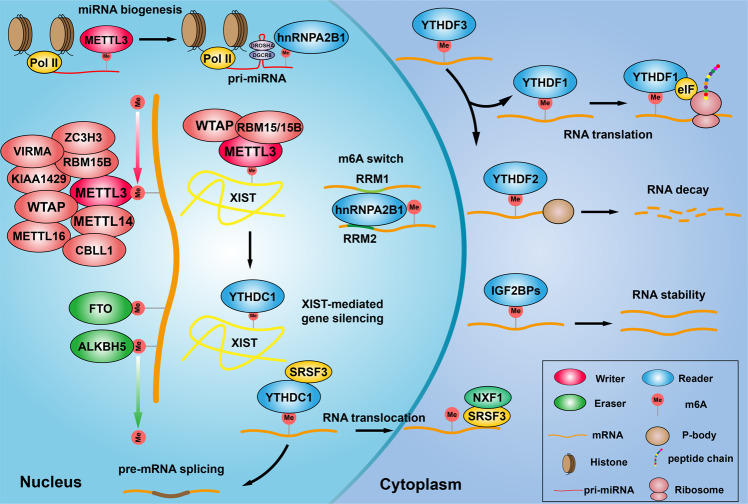
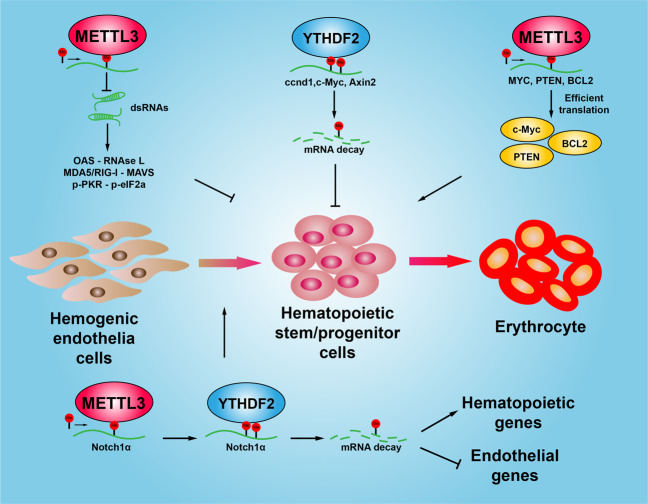
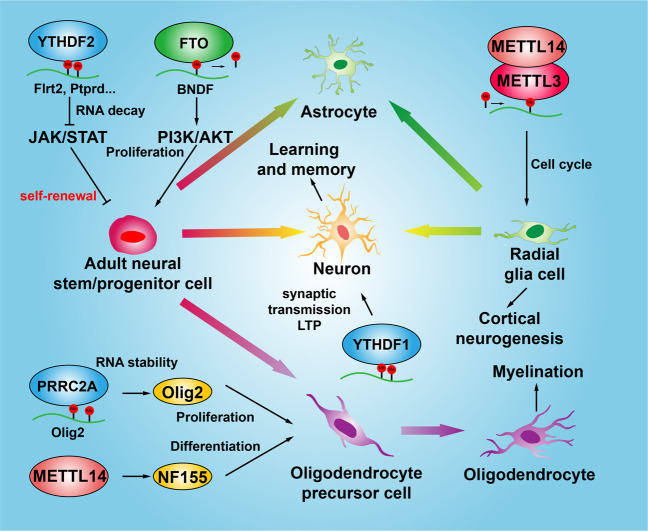
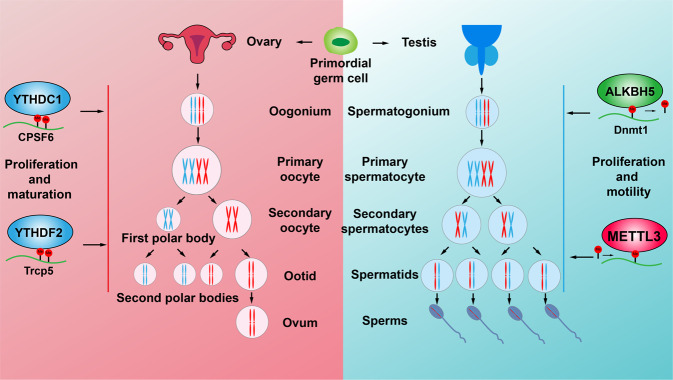
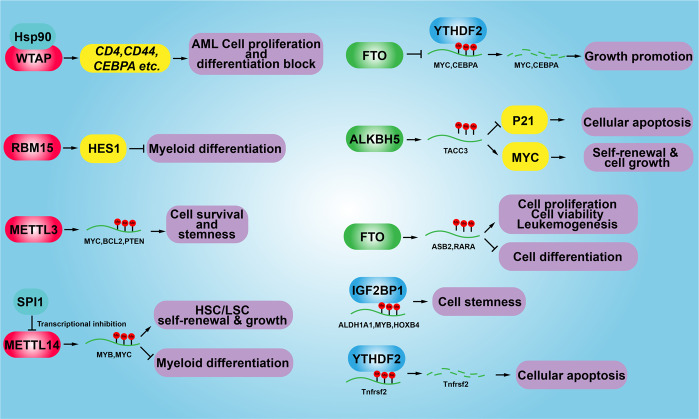
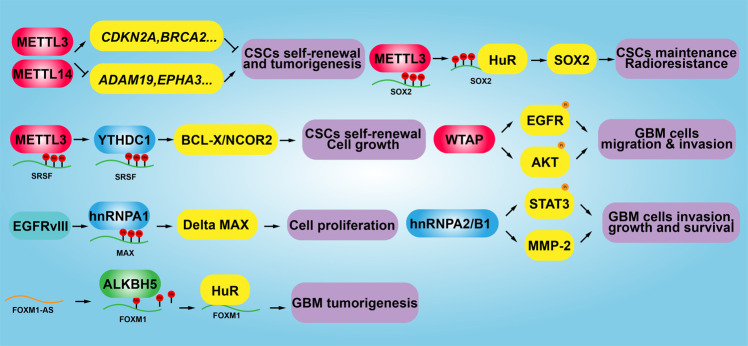
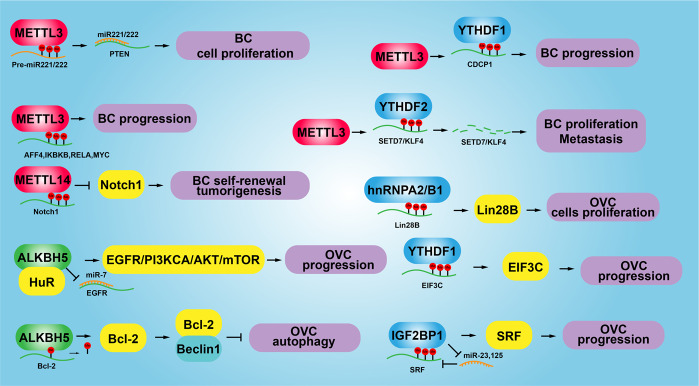
N 6 -methyladenosine (m6A) is the most prevalent, abundant and conserved internal cotranscriptional modification in eukaryotic RNAs, especially within higher eukaryotic cells. m6A modification is modified by the m6A methyltransferases, or writers, such as METTL3/14/16, RBM15/15B, ZC3H3, VIRMA, CBLL1, WTAP, and KIAA1429, and, removed by the demethylases, or erasers, including FTO and ALKBH5. It is recognized by m6A-binding proteins YTHDF1/2/3, YTHDC1/2 IGF2BP1/2/3 and HNRNPA2B1, also known as “readers”. Recent studies have shown that m6A RNA modification plays essential role in both physiological and pathological conditions, especially in the initiation and progression of different types of human cancers. In this review, we discuss how m6A RNA methylation influences both the physiological and pathological progressions of hematopoietic, central nervous and reproductive systems. We will mainly focus on recent progress in identifying the biological functions and the underlying molecular mechanisms of m6A RNA methylation, its regulators and downstream target genes, during cancer progression in above systems. We propose that m6A RNA methylation process offer potential targets for cancer therapy in the future.
Overview
The claims and statistics of this paper haven’t been checked yet.
Free: it reads the open-access text and checks the first 5 claims that cite a source we can check. Create a free account to check every claim.
Integrity signals
Registry
Cites
Statistics
Figures
Verification
Claims the paper makes
The claims and statistics of this paper haven’t been checked yet.
Free: it reads the open-access text and checks the first 5 claims that cite a source we can check. Create a free account to check every claim.
Claims other papers make about this one
Each is checked against this paper’s own text: does it say what the citing paper says it does?
The source backs part of the claim, not all of it — or backs it for a different population, condition or comparison.
In the citing paper
“Phylogenetically conserved RRM domains on readers are responsible for IMP2 identifying m6A marks on RNA [17,27].”
From IMPlications of IMP2 in RNA Biology and Disease (2025) · cites this paper as [17]
Experimental — accuracy not yet measuredThe cited source says what the claim attributes to it.
In the citing paper
“m6A (N6-methyladenosine) is a prevalent post-transcriptional modification found in mRNA and non-coding RNA in eukaryotic cells [17].”
From IMPlications of IMP2 in RNA Biology and Disease (2025) · cites this paper as [17]
In the citing paper
“m6A influences transcript splicing, stability, translation, nuclear export, and RNA structure283,284.”
From Air Pollution as an Environmental Risk Factor for Alzheimer’s Disease and Related Dementias (2024) · cites this paper as [283]
Self-check
Percentages, sums and reported differences re-computed from the paper’s own numbers.
The self-check needs the paper’s full text.
Citations
Cites
Genetics of Food Intake Self-Regulation in Childhood: Literature Review and Research Opportunities
Faith, M. S., Carnell, S., & Kral, T. V. E. (2013) · Human Heredity · doi:10.1159/000353879 · Cited by 7,601
Lippa, N. C., & Sanderson, S. C. (2013) · Human Heredity · doi:10.1159/000353712 · Cited by 6,078
Genome-wide atlas of gene expression in the adult mouse brain
Lein, E. S., Hawrylycz, M. J., Ao, N., Ayres, M., Bensinger, A., Bernard, A., Boe, A. F., Boguski, M. S., Brockway, K. S., Byrnes, E. J., et al. (2007) · Nature · doi:10.1038/nature05453 · Cited by 5,572
Topology of the human and mouse m6A RNA methylomes revealed by m6A-seq
Dominissini, D., Moshitch-Moshkovitz, S., Schwartz, S., Salmon-Divon, M., Ungar, L., Osenberg, S., Cesarkas, K., Jacob-Hirsch, J., Amariglio, N., Kupiec, M., et al. (2012) · Nature · doi:10.1038/nature11112 · Cited by 4,884
Frayling, T. M., Timpson, N. J., Weedon, M. N., Zeggini, E., Freathy, R. M., Lindgren, C. M., Perry, J. R. B., Elliott, K. S., Lango, H., Rayner, N. W., et al. (2007) · Science · doi:10.1126/science.1141634 · Cited by 4,531
Reynolds, B. A., & Weiss, S. (1992) · Science · doi:10.1126/science.1553558 · Cited by 4,482
Comprehensive Analysis of mRNA Methylation Reveals Enrichment in 3′ UTRs and near Stop Codons
Meyer, K. D., Saletore, Y., Zumbo, P., Elemento, O., Mason, C. E., & Jaffrey, S. R. (2012) · Cell · doi:10.1016/j.cell.2012.05.003 · Cited by 4,223
N6-Methyladenosine in nuclear RNA is a major substrate of the obesity-associated FTO
Jia, G., Fu, Y., Zhao, X., Dai, Q., Zheng, G., Yang, Y., Yi, C., Lindahl, T., Pan, T., Yang, Y.-G., et al. (2011) · Nature Chemical Biology · doi:10.1038/nchembio.687 · Cited by 4,106
ALKBH5 Is a Mammalian RNA Demethylase that Impacts RNA Metabolism and Mouse Fertility
Zheng, G., Dahl, J. A., Niu, Y., Fedorcsak, P., Huang, C.-M., Li, C. J., Vågbø, C. B., Shi, Y., Wang, W.-L., Song, S.-H., et al. (2013) · Molecular Cell · doi:10.1016/j.molcel.2012.10.015 · Cited by 3,550
N6-methyladenosine Modulates Messenger RNA Translation Efficiency
Wang, X., Zhao, B. S., Roundtree, I. A., Lu, Z., Han, D., Ma, H., Weng, X., Chen, K., Shi, H., & He, C. (2015) · Cell · doi:10.1016/j.cell.2015.05.014 · Cited by 3,483
Research works printed but not linked: 12
- Pendleton KE The U6 snRNA mA methyltransferase METTL16 regulates SAM synthetase intron retention Cell 2017 169 824 835.e814 10.1016/j.cell.2017.05.003 28525753 PMC5502809 · DOI · Paper page
- Patil DP m(6)A RNA methylation promotes XIST-mediated transcriptional repression Nature 2016 537 369 373 10.1038/nature19342 27602518 PMC5509218 · DOI · Paper page
- Wen J Zc3h13 regulates nuclear RNA m(6)A methylation and mouse embryonic stem cell self-renewal Mol. Cell. 2018 69 1028 1038.e1026 10.1016/j.molcel.2018.02.015 29547716 PMC5858226 · DOI · Paper page
- Huang H Recognition of RNA N-methyladenosine by IGF2BP proteins enhances mRNA stability and translation Nat. Cell Biol. 2018 20 285 295 10.1038/s41556-018-0045-z 29476152 PMC5826585 · DOI · Paper page
- Hsu PJ Ythdc2 is an N(6)-methyladenosine binding protein that regulates mammalian spermatogenesis Cell Res. 2017 27 1115 1127 10.1038/cr.2017.99 28809393 PMC5587856 · DOI · Paper page
- Yoon K-J Temporal control of mammalian cortical neurogenesis by mA methylation Cell 2017 171 877 889.e817 10.1016/j.cell.2017.09.003 28965759 PMC5679435 · DOI · Paper page
- Lv J Endothelial-specific m(6)A modulates mouse hematopoietic stem and progenitor cell development via Notch signaling Cell Res. 2018 28 249 252 10.1038/cr.2017.143 29148543 PMC5799811 · DOI
- Vu LP The N-methyladenosine (mA)-forming enzyme METTL3 controls myeloid differentiation of normal hematopoietic and leukemia cells Nat. Med. 2017 23 1369 1376 10.1038/nm.4416 28920958 PMC5677536 · DOI · Paper page
- Zhou, B. et al. N(6)-methyladenosine reader protein YT521-B Homology domain-containing 2 suppresses liver steatosis by regulation of mRNA stability of lipogenic genes. Hepatology10.1002/hep.31220 (2020). 32150756 · DOI · Paper page
- Shi H YTHDF3 facilitates translation and decay of N(6)-methyladenosine-modified RNA Cell Res. 2017 27 315 328 10.1038/cr.2017.15 28106072 PMC5339834 · DOI · Paper page
- Geula S Stem cells. m6A mRNA methylation facilitates resolution of naive pluripotency toward differentiation Science 2015 347 1002 1006 10.1126/science.1261417 25569111 · DOI · Paper page
- Su R R-2HG exhibits anti-tumor activity by targeting FTO/mA/MYC/CEBPA signaling Cell 2018 172 90 105.e123 10.1016/j.cell.2017.11.031 29249359 PMC5766423 · DOI · Paper page
Cited by
Cisplatin nephrotoxicity: new insights and therapeutic implications
Tang, C., Livingston, M. J., Safirstein, R., & Dong, Z. (2023) · Nature Reviews Nephrology · doi:10.1038/s41581-022-00631-7 · Cited by 548
RNA modifications: importance in immune cell biology and related diseases
Cui, L., Ma, R., Cai, J., Guo, C., Chen, Z., Yao, L., Wang, Y., Fan, R., Wang, X., & Shi, Y. (2022) · Signal Transduction and Targeted Therapy · doi:10.1038/s41392-022-01175-9 · Cited by 405
“6%).(11,12) It appears in the full-length sequence but is enriched in the vicinity of the stop codon and the 3ʹ untranslated region (3ʹUTR) of mRNAs, within the consensus motif RRACH (R= G or A; H= A, C, or U).”
Backgroundm6A modification: recent advances, anticancer targeted drug discovery and beyond
Deng, L.-J., Deng, W.-Q., Fan, S.-R., Chen, M.-F., Qi, M., Lyu, W.-Y., Qi, Q., Tiwari, A. K., Chen, J.-X., Zhang, D.-M., et al. (2022) · Molecular Cancer · doi:10.1186/s12943-022-01510-2 · Cited by 366
“The reversible process of m6A demethylation is also facilitated by “erasers”, such as fat mass and obesity-related protein (FTO) and alkB homologue 5 (ALKBH5) [3].”
BackgroundEpigenetics-targeted drugs: current paradigms and future challenges
Dai, W., Qiao, X., Fang, Y., Guo, R., Bai, P., Liu, S., Li, T., Jiang, Y., Wei, S., Na, Z., et al. (2024) · Signal Transduction and Targeted Therapy · doi:10.1038/s41392-024-02039-0 · Cited by 339
Wu, D., Spencer, C. B., Ortoga, L., Zhang, H., & Miao, C. (2024) · Redox Biology · doi:10.1016/j.redox.2024.103194 · Cited by 310
“Cellular m6A modification involves the participation of methyltransferases (Writers), demethylases (Erasers), and methylation reader proteins (Readers) [16].”
Molecular mechanisms of environmental exposures and human disease
Wu, H., Eckhardt, C. M., & Baccarelli, A. A. (2023) · Nature Reviews Genetics · doi:10.1038/s41576-022-00569-3 · Cited by 273
METTL3 promotes chemoresistance in small cell lung cancer by inducing mitophagy
Sun, Y., Shen, W., Hu, S., Lyu, Q., Wang, Q., Wei, T., Zhu, W., & Zhang, J. (2023) · Journal of Experimental & Clinical Cancer Research · doi:10.1186/s13046-023-02638-9 · Cited by 246
“m6A methylation is an epigenetic modification of RNA that mainly affects mRNA stability, nuclear output, and translation [44].”
BackgroundRole of m6A writers, erasers and readers in cancer
Fang, Z., Mei, W., Qu, C., Lu, J., Shang, L., Cao, F., & Li, F. (2022) · Experimental Hematology & Oncology · doi:10.1186/s40164-022-00298-7 · Cited by 241
“Introduction N6-methyladenosine (m6A) is the most prevalent, abundant and conserved posttranscriptional modification in eukaryotic RNAs and is deposited primarily within the RRACH consensus sequence [1, 2].”
BackgroundShen, M., Li, Y., Wang, Y., Shao, J., Zhang, F., Yin, G., Chen, A., Zhang, Z., & Zheng, S. (2021) · Redox Biology · doi:10.1016/j.redox.2021.102151 · Cited by 231
“m6A-binding proteins with YTH domain, including YTHDF1/2/3, YTHDC1/2, have been recognized to be the “readers” of m6A motif, which can regulate gene expression through recognize and bind to the m6A modified transcript [46].”
BackgroundRegulation of cisplatin resistance in bladder cancer by epigenetic mechanisms
Li, F., Zheng, Z., Chen, W., Li, D., Zhang, H., Zhu, Y., Mo, Q., Zhao, X., Fan, Q., Deng, F., et al. (2023) · Drug Resistance Updates · doi:10.1016/j.drup.2023.100938 · Cited by 211
Targeting the RNA m6A modification for cancer immunotherapy
Li, X., Ma, S., Deng, Y., Yi, P., & Yu, J. (2022) · Molecular Cancer · doi:10.1186/s12943-022-01558-0 · Cited by 208
“Erasers remove the m6A decoration from RNA by removing the adenosine [19].”
BackgroundXiao, Y.-L., Liu, S., Ge, R., Wu, Y., He, C., Chen, M., & Tang, W. (2023) · Nature Biotechnology · doi:10.1038/s41587-022-01587-6 · Cited by 201
“…-methyladenosine (m 6 A), the most prevalent internal mRNA modification in higher eukaryotes, constitutes a regulatory network extensively involved in physiological and pathological processes 1–4 . m 6 A alters mRNA processing, structure, translation, and decay without changing the genetic code 5 .”
Zheng, Y., Li, Y., Ran, X., Wang, D., Zheng, X., Zhang, M., Yu, B., Sun, Y., & Wu, J. (2022) · Cellular and Molecular Life Sciences · doi:10.1007/s00018-022-04331-0 · Cited by 196
“Previous research has established that m6A modification is associated with RNA metabolism, including changes in RNA structure, splicing, export and translation [19].”
BackgroundscDART-seq reveals distinct m6A signatures and mRNA methylation heterogeneity in single cells
Tegowski, M., Flamand, M. N., & Meyer, K. D. (2022) · Molecular Cell · doi:10.1016/j.molcel.2021.12.038 · Cited by 176
RNA-binding proteins and cancer metastasis
Wang, S., Sun, Z., Lei, Z., & Zhang, H.-T. (2022) · Seminars in Cancer Biology · doi:10.1016/j.semcancer.2022.03.018 · Cited by 169
Epigenetic modification of m6A regulator proteins in cancer
Wang, Y., Wang, Y., Patel, H., Chen, J., Wang, J., Chen, Z.-S., & Wang, H. (2023) · Molecular Cancer · doi:10.1186/s12943-023-01810-1 · Cited by 165
“Different readers have different m6A positioning functions [67].”
BackgroundShaath, H., Vishnubalaji, R., Elango, R., Kardousha, A., Islam, Z., Qureshi, R., Alam, T., Kolatkar, P. R., & Alajez, N. M. (2022) · Seminars in Cancer Biology · doi:10.1016/j.semcancer.2022.05.013 · Cited by 170
The role of RNA methylation in tumor immunity and its potential in immunotherapy
Li, Y., Jin, H., Li, Q., Shi, L., Mao, Y., & Zhao, L. (2024) · Molecular Cancer · doi:10.1186/s12943-024-02041-8 · Cited by 185
“…insulin-like growth factor 2 mRNA-binding proteins 1/2/3 (IGF2BP1/2/3), YTH domain family proteins 1/2/3 (YTHDF1/2/3), embryonic Lethal Abnormal Vision Like 1 (ELAVL1), eukaryotic translation initiation factors 3 (eIF3), 4E (eIF4E), and 4G (eIF4G), poly(A) binding protein (PABP), etc. [38, 39].”
BackgroundCui, Y., Zhang, C., Ma, S., Li, Z., Wang, W., Li, Y., Ma, Y., Fang, J., Wang, Y., Cao, W., et al. (2021) · Journal of Experimental & Clinical Cancer Research · doi:10.1186/s13046-021-02096-1 · Cited by 171
“The function of m6A-labeled RNA in cells is mainly determined by the m6A-reading protein [46, 48].”
BackgroundOu, X., Tan, Y., Xie, J., Yuan, J., Deng, X., Shao, R., Song, C., Cao, X., Xie, X., He, R., et al. (2024) · Drug Resistance Updates · doi:10.1016/j.drup.2024.101063 · Cited by 168
The RNA m6A writer WTAP in diseases: structure, roles, and mechanisms
Huang, Q., Mo, J., Liao, Z., Chen, X., & Zhang, B. (2022) · Cell Death and Disease · doi:10.1038/s41419-022-05268-9 · Cited by 169
“The m(6)A modification plays a dual role in cancer biology and is important for the recognition of cancer progression and cancer therapy [24].”
BackgroundTargeting GPX4 in human cancer: Implications of ferroptosis induction for tackling cancer resilience
Lee, J., & Roh, J. (2023) · Cancer Letters · doi:10.1016/j.canlet.2023.216119 · Cited by 164
Liu, W., Tang, P., Wang, J., Wu, Y., Ge, X., Rong, Y., Ji, C., Wang, Z., Bai, J., Fan, J., et al. (2021) · Journal of Pineal Research · doi:10.1111/jpi.12769 · Cited by 152
Wang, L., Zhu, L., Liang, C., Huang, X., Liu, Z., Huo, J., Zhang, Y., Zhang, Y., Chen, L., Xu, H., et al. (2023) · Journal of Hepatology · doi:10.1016/j.jhep.2023.06.021 · Cited by 161
Circular RNA translation, a path to hidden proteome
Sinha, T., Panigrahi, C., Das, D., & Panda, A. C. (2021) · Wiley Interdisciplinary Reviews - RNA · doi:10.1002/wrna.1685 · Cited by 159
RNA methyltransferase METTL16 : Targets and function
Satterwhite, E. R., & Mansfield, K. D. (2021) · Wiley Interdisciplinary Reviews - RNA · doi:10.1002/wrna.1681 · Cited by 151
“…Zhao, et al., 2015), and is involved in many different physiological processes including embryonic development (Geula et al., 2015; Y. Wang, Li, et al., 2014; Zhao & He, 2015), circadian rhythm (Fustin et al., 2013; Shi et al., 2018), and many types of cancer (Jiang et al., 2021; Lan et al., 2019).”
BackgroundChen, J., Xu, C., Yang, K., Gao, R., Cao, Y., Liang, L., Chen, S., Xu, S., Rong, R., Wang, J., et al. (2023) · Nature Communications · doi:10.1038/s41467-023-36747-y · Cited by 141
m6A-regulated tumor glycolysis: new advances in epigenetics and metabolism
Yue, S., Liu, H., Su, H.-F., Luo, C., Liang, H., Zhang, B., & Zhang, W. (2023) · Molecular Cancer · doi:10.1186/s12943-023-01841-8 · Cited by 140
“In tumor cells, m6A modification is widely involved in gene expression by regulating processes such as RNA splicing, maturation, stability, translation, and localization, thus controlling the progression of cancer [12].”
BackgroundYang, Q., Chen, S., Wang, X., Yang, X., Chen, L., Huang, T., Yang, Z., Zheng, X., Wu, X., Sun, Y., et al. (2023) · Arteriosclerosis Thrombosis and Vascular Biology · doi:10.1161/atvbaha.123.319251 · Cited by 135
The roles and mechanism of m6A RNA methylation regulators in cancer immunity
Chen, L., He, Y., Zhu, J., Zhao, S., Qi, S., Chen, X., Zhang, H., Ni, Z., Zhou, Y., Chen, G., et al. (2023) · Biomedicine & Pharmacotherapy · doi:10.1016/j.biopha.2023.114839 · Cited by 135
Writers, readers, and erasers RNA modifications and drug resistance in cancer
Chen, D., Gu, X., Nurzat, Y., Xu, L., Li, X., Wu, L., Jiao, H., Gao, P., Zhu, X., Yan, D., et al. (2024) · Molecular Cancer · doi:10.1186/s12943-024-02089-6 · Cited by 149
“This modification is present in various RNA species, including messenger RNAs (mRNAs), long non-coding RNAs (lncRNAs), ribosomal RNAs (rRNAs), and polyadenylated RNAs [83–87].”
BackgroundFTO Prevents Thyroid Cancer Progression by SLC7A11 m6A Methylation in a Ferroptosis-Dependent Manner
Ji, F., Fu, X.-H., Li, G., He, Q., & Qiu, X. (2022) · Frontiers in Endocrinology · doi:10.3389/fendo.2022.857765 · Cited by 134
“Meanwhile, it is also correlated with mitochondrial biogenesis and oxidative stress due to its capacity to modify associated genes post-transcriptionally (35).”
BackgroundOncofetal protein IGF2BPs in human cancer: functions, mechanisms and therapeutic potential
Zhu, T., Hong, L., & Ling, Z. (2023) · Biomarker Research · doi:10.1186/s40364-023-00499-0 · Cited by 140
“However, only METTL3 functions as the catalytic subunit, with METTL3/14 considered core subunits [24, 25].”
Systematic comparison of tools used for m6A mapping from nanopore direct RNA sequencing
Zhong, Z.-D., Xie, Y.-Y., Chen, H.-X., Lan, Y.-L., Liu, X., Ji, J.-Y., Wu, F., Jin, L., Chen, J., Mak, D. W., et al. (2023) · Nature Communications · doi:10.1038/s41467-023-37596-5 · Cited by 134
“Recent functional studies have demonstrated the essential role of m6A in physiological and pathological processes in various organisms, further advancing our knowledge and understanding of RNA biology 6,7 .”
BackgroundLiu, X., Liu, Y., Liu, Z., Lin, C., Meng, F., Xu, L., Zhang, X., Zhang, C., Zhang, P., Gong, S., et al. (2021) · Molecular Cancer · doi:10.1186/s12943-021-01412-9 · Cited by 125
“hnRNPA2B1 has also been regarded as the "reader" of m6A and can stabilize transcripts [19].”
BackgroundXia, P., & Du, J. (2025) · Molecular Biomedicine · doi:10.1186/s43556-025-00275-6 · Cited by 150
Yao, H., Gao, C., Zhang, D., Xu, J., Song, G., Fan, X., Liang, D.-B., Chen, Y., Li, Q., Guo, Y., et al. (2023) · Nature Communications · doi:10.1038/s41467-023-35958-7 · Cited by 124
Self-citationDong, G., Yu, J., Shan, G., Su, L., Yu, N., & Yang, S.-S. (2021) · Frontiers in Cell and Developmental Biology · doi:10.3389/fcell.2021.731810 · Cited by 126
Mapping epigenetic modifications by sequencing technologies
Chen, X., Xu, H., Shu, X., & Song, C.-X. (2025) · Cell Death & Differentiation · doi:10.1038/s41418-023-01213-1 · Cited by 105
The role of Insulin-like growth factor 2 mRNA-binding proteins (IGF2BPs) as m6A readers in cancer
Sun, C., Cao, D., Du, B.-B., Chen, C., & Liu, D. (2022) · International Journal of Biological Sciences · doi:10.7150/ijbs.70458 · Cited by 110
“The m6A modification by m6A readers affects mRNA fate by regulating RNA splicing, translation, stability, structure, export and decay of the modified RNA [21].”
BackgroundLiu, K., He, X. C., Huang, J., Yu, S., Cui, M., Gao, M., Liu, L., Yu, Q., Xie, Y., Miao, H., et al. (2023) · Clinical Epigenetics · doi:10.1186/s13148-023-01487-9 · Cited by 117
“The modification of m6A in RNA is involved in many important biological functions, such as RNA metabolism [7], spermatogenesis [8], and embryo development [9].”
BackgroundWang, X., Ma, R., Zhang, X., Cui, L., Ding, Y., Shi, W., Guo, C., & Shi, Y. (2021) · Molecular Cancer · doi:10.1186/s12943-021-01415-6 · Cited by 112
“METTL14 Forms heterodimer with METTL3 to stabilize METTL3 and assist recognizing the subtract [14, 18]”
Backgroundm6A sites in the coding region trigger translation-dependent mRNA decay
Zhou, Y., Ćorović, M., Hoch-Kraft, P., Meiser, N., Mesitov, M. V., Körtel, N., Back, H., Vries, I. S. N., Katti, K., Obrdlík, A., et al. (2024) · Molecular Cell · doi:10.1016/j.molcel.2024.10.033 · Cited by 118
The m6A reader YTHDF3-mediated PRDX3 translation alleviates liver fibrosis
Sun, R., Tian, X., Li, Y., Zhao, Y., Wang, Z., Hu, Y. W., Zhang, L., Wang, Y., Gao, D., Zheng, S., et al. (2022) · Redox Biology · doi:10.1016/j.redox.2022.102378 · Cited by 94
Epitranscriptome: Review of Top 25 Most-Studied RNA Modifications
Arzumanian, V. A., Dolgalev, G. V., Kurbatov, I. Y., Kiseleva, O. I., & Poverennaya, E. V. (2022) · International Journal of Molecular Sciences · doi:10.3390/ijms232213851 · Cited by 94
“N6-methyladenosine is installed by “writer” proteins, including METTL3, METTL14, METTL16, WTAP, KIAA1429, ZCCHC4, RBM15, ZC3H13, and ZCCHC4 [131,132].”
Wu, Y., Shao, W., Yan, M., Wang, Y., Xu, P., Huang, G., Li, X., Gregory, B. D., Yang, J. M., Wang, H., et al. (2024) · Nature Communications · doi:10.1038/s41467-024-48437-4 · Cited by 110
Liao, L., He, Y., Li, S.-J., Zhang, G.-G., Yu, W., Yang, J., Huang, Z., Zheng, C., He, Q., Li, Y., et al. (2022) · Cancer Research · doi:10.1158/0008-5472.can-21-4124 · Cited by 98
Li, R., Yan, X., Xiao, C., Wang, T., Li, X., Hu, Z., Liang, J., Zhang, J., Cai, J., Sui, X. Y., et al. (2024) · Nature Communications · doi:10.1038/s41467-024-49202-3 · Cited by 111
“FTO,whichisan m6A demethylase, affects multiple physiological and pathological processes by regulating intracellular m6A methylation levels 20 – 22 .”
RNA chemistry and therapeutics
Wang, S., Weissman, D., & Dong, Y. (2025) · Nature Reviews Drug Discovery · doi:10.1038/s41573-025-01237-x · Cited by 119
“Adenosine is commonly found in nature with various modifications that can confer mRNA stability or higher translation efficiency 204,205 . m 6 A is a modification present in eukaryotic mRNA, reported to primarily affect mRNA stability 206–209 .”
Lin, K., Zhou, E., Shi, T., Zhang, S., Zhang, J., Zheng, Z., Pan, Y., Gao, W., & Yu, Y. (2023) · Journal of Experimental & Clinical Cancer Research · doi:10.1186/s13046-023-02792-0 · Cited by 105
“These proteins include methyltrans-ferase-like 16 (METTL16), METTL14, METTL3, RNA-binding motif protein 15 (RBM15 and RBM15B), and vir-like m6A methyltransferase-associated protein (VIRMA) (ZCH3H13) [18–20].”
BackgroundYang, Z., Huang, S., Zhong, K., Huang, W., Huang, Z.-H., He, T., Yang, M.-T., Wusiman, M., Zhou, D.-D., Chen, S., et al. (2024) · Redox Biology · doi:10.1016/j.redox.2024.103026 · Cited by 97
“Recent studies have revealed that m 6 A is more abundant in the central nervous system than in other organs [78].”
BackgroundXu, X., Cui, J., Wang, H., Ma, L., Zhang, X., Guo, W., Xue, X., Wang, Y., Qiu, S., Tian, X., et al. (2022) · Materials Today Bio · doi:10.1016/j.mtbio.2022.100503 · Cited by 97
“m6A-related proteins regulate the biological effects of m6A, the most common RNA methylation modification [5].”
BackgroundNavigating the pitfalls of mapping DNA and RNA modifications
Kong, Y., Mead, E. A., & Fang, G. (2023) · Nature Reviews Genetics · doi:10.1038/s41576-022-00559-5 · Cited by 94
Liu, Y., Song, R., Zhao, L., Lu, Z., Li, Y., Zhan, X., Lu, F., Yang, J., Niu, Y., & Cao, X. (2022) · Signal Transduction and Targeted Therapy · doi:10.1038/s41392-022-01020-z · Cited by 95
“m(6)A RNA modification modulates gene expression by affecting the alternative splicing, stability, and translation of mRNA.(10,11,39) ALKBH5-mediated m(6)A demethylation has been demonstrated to promote or inhibit RNA decay of its different target transcripts under the same condition, respectively.”
BackgroundLi, Y., Dou, X., Liu, J., Xiao, Y., Zhang, Z., Hayes, L. R., Wu, R., Fu, X., Ye, Y., Yang, B., et al. (2023) · Nature Neuroscience · doi:10.1038/s41593-023-01374-9 · Cited by 91
Huang, C., & Wang, Y. (2022) · Cell Death and Disease · doi:10.1038/s41419-022-05362-y · Cited by 82
“Aberrant expression of IGF2BP1 is involved in pathological processes of diseases and regulates cellular processes, including growth, differentiation, and invasion [32].”
BackgroundImmunopathogenic mechanisms and immunoregulatory therapies in MASLD
He, Y., Chen, Y., Qian, S., van Der Merwe, S., Dhar, D., Brenner, D. A., & Tacke, F. (2025) · Cellular & Molecular Immunology · doi:10.1038/s41423-025-01307-5 · Cited by 81
“N 6 -methyladenosine (m 6 A), the most abundant RNA modi fi cation in eukaryotic cells, affects various biological functions and diseases [123], and it has been reported to regulate myeloid cell activation via MASLD.”
Self-citationMETTL16 promotes glycolytic metabolism reprogramming and colorectal cancer progression
Wei, W., Zhang, Z., Shi, B., Cai, Y., Zhang, H.-S., Sun, C., Fei, Y.-F., Zhong, W., Zhang, S., Wang, C., et al. (2023) · Journal of Experimental & Clinical Cancer Research · doi:10.1186/s13046-023-02732-y · Cited by 93
“Previous studies have shown that m6A modification is involved in various physiological and pathological processes, such as stem cell differentiation, DNA damage, circadian periods, embryonic development, and spermatogenesis [20, 21].”
BackgroundLiu, J., Liu, Y., Huang, C., He, C., Yang, T., Ren, R., Xin, Z., & Wang, X. (2025) · Advanced Science · doi:10.1002/advs.202412865 · Cited by 131
Effects of BMSC-Derived EVs on Bone Metabolism
Zhou, X., Cao, H., Guo, J., Yuan, Y. J., & Ni, G. (2022) · Pharmaceutics · doi:10.3390/pharmaceutics14051012 · Cited by 83
“At the RNA level, more than 100 post-transcriptional modifications have been identified, while m6A methylation is one of the most common modifications in mammals that regulate post-transcriptional gene expression without changing the base sequence [126].”
BackgroundEpigenetic regulation of B cells and its role in autoimmune pathogenesis
Xiao, F., Rui, K., Shi, X., Wu, H., Cai, X., Lui, K. O., Lu, Q., Ballestar, E., Tian, J., Zou, H., et al. (2022) · Cellular and Molecular Immunology · doi:10.1038/s41423-022-00933-7 · Cited by 91
“The effects of m6A are largely dependent on m6A-binding proteins (“readers”), such as YT521-B homology (YTH) domain family members [17].”
BackgroundLi, Y., Guo, M. L., Qiu, Y., Li, M., Wu, Y., Shen, M., Wang, Y., Zhang, F., Shao, J., Xu, X., et al. (2023) · Redox Biology · doi:10.1016/j.redox.2023.102971 · Cited by 83
“Fat mass and obesity-associated protein (FTO) and alkB homolog 5 (ALKBH5) are currently known erasers that remove m 6 A modification from mRNA and thus keep the level of m 6 A modification in dynamic equilibrium [20].”
BackgroundXu, G.-E., Yu, P., Hu, Y., Wan, W., Shen, K., Cui, X., Wang, J., Wang, T., Cui, C., Chatterjee, E., et al. (2024) · Basic Research in Cardiology · doi:10.1007/s00395-024-01044-2 · Cited by 86
“RNA m 6 A methylation is the most common internal RNA modification and plays pivotal roles in many disease-related downstream molecules and signal pathways [33, 38].”
Wang, X., Li, Q., He, S., Bai, J., Ma, C., Zhang, L., Guan, X., Yuan, H., Li, Y., Zhu, X., et al. (2022) · Molecular Medicine · doi:10.1186/s10020-022-00551-z · Cited by 78
YTHDF2 alleviates cardiac hypertrophy via regulating Myh7 mRNA decoy
Xu, H., Wang, Z., Chen, M., Zhao, W., Tao, T., Ma, L., Ni, Y., & Li, W. (2021) · Cell & Bioscience · doi:10.1186/s13578-021-00649-7 · Cited by 77
Hu, J., Cai, J., Xu, T., & Kang, H. (2022) · Plant Biotechnology Journal · doi:10.1111/pbi.13913 · Cited by 77
“In both animals and plants, disruption of any of these cellular components results in abnormal development and altered stress responses (Jiang et al., 2021; Shao et al., 2021; Wilkinson et al., 2021).”
BackgroundWang, Y., Li, M., Zhang, L., Chen, Y., & Zhang, S. (2021) · Molecular Therapy — Oncolytics · doi:10.1016/j.omto.2021.04.011 · Cited by 75
“FTO, well-recognized for its involvement in adipogenesis and obesity in humans, has further been correlated withmitochondrial biogenesis and oxidative stress based on the capability to post-transcriptionally modify relevant genes.(17) Due to its role in cellular metabolism, FTO has thus been considered as a promising…”
BackgroundSelf-citationLi, W., Ye, K., Li, X., Liu, X., Peng, M., Chen, F., Xiong, W., Wang, Y., & Zhu, L. (2022) · Journal of Experimental & Clinical Cancer Research · doi:10.1186/s13046-022-02460-9 · Cited by 75
You, Y., Liu, J., Zhang, L., Li, X., Sun, Z., Dai, Z., Ma, J., Jiao, G., & Chen, Y. (2023) · Cell Death and Disease · doi:10.1038/s41419-023-05565-x · Cited by 82
“Most mRNAs bound to WTAP and METTL3 contain a consensus m(6)A motif [9, 10].”
BackgroundSelf-citationLiu, X., Feng, M., Hao, X., Gao, Z., Wu, Z., Wang, Y., Du, L., & Wang, C. (2023) · Oncogene · doi:10.1038/s41388-023-02704-8 · Cited by 78
“to be another important layer of epigenetic regulation in energy metabolism regulation [44, 45].”
BackgroundLi, Y., Kang, X., Zhou, Z., Pan, L., Chen, H., Liang, X., Chu, J., Dong, S., Liu, C., Yu, S., et al. (2022) · Molecular Therapy · doi:10.1016/j.ymthe.2022.07.020 · Cited by 74
RBP–RNA interactions in the control of autoimmunity and autoinflammation
Liu, J., & Cao, X. (2023) · Cell Research · doi:10.1038/s41422-022-00752-5 · Cited by 83
“m(6)A RNA methylation has been closely related with the cell development of hemopoietic system, nervous system, reproductive system, and immune system.(168) Development and functional maturation of DCs are important in linking innate immunity with adaptive immunity.”
BackgroundGao, Y., Wang, H., Chen, S., An, R., Chu, Y., Li, G., Wang, Y., Xie, X., & Zhang, J. (2022) · Journal of Translational Medicine · doi:10.1186/s12967-022-03395-7 · Cited by 80
“Dynamic and reversible m6A methylation consists of readers (m6A-binding proteins), writers (methyltransferases), and erasers (demethylases) responsible for m6A’s functions, methylation, and demethylation, respectively [6].”
BackgroundDing, L., Wang, R., Zheng, Q., Shen, D., Wang, H., Lu, Z., Luo, W., Xie, H., Ren, L., Jiang, M., et al. (2022) · Journal of Experimental & Clinical Cancer Research · doi:10.1186/s13046-022-02391-5 · Cited by 73
The function and clinical implication of YTHDF1 in the human system development and cancer
Ren, W., Yuan, Y., Li, Y., Mutti, L., Peng, J., & Jiang, X. (2023) · Biomarker Research · doi:10.1186/s40364-023-00452-1 · Cited by 79
Self-citationWen, J., Lin, X., Wei, Y., Liang, J., Jia, W., Yong, T., Chu, L., Li, H., Han, S., Liao, J., et al. (2024) · Advanced Science · doi:10.1002/advs.202307242 · Cited by 84
The m6A reader PRRC2A is essential for meiosis I completion during spermatogenesis
Tan, X., Zheng, C., Zhuang, Y., Jin, P., & Wang, F. (2023) · Nature Communications · doi:10.1038/s41467-023-37252-y · Cited by 92
Mei, Z., Shen, Z., Pu, J., Liu, Q., Liu, G., He, X., Wang, Y., Yue, J., Ge, S., Li, T., et al. (2024) · Cell Communication and Signaling · doi:10.1186/s12964-023-01321-y · Cited by 79
Li, G., Zhao, B.-W., Su, X., Yang, Y., Hu, P., Zhou, X., & Hu, L. (2024) · IEEE Journal of Biomedical and Health Informatics · doi:10.1109/jbhi.2024.3357979 · Cited by 73
Yu, M., Ni, M., Xu, F., Liu, C., Chen, L., Li, J., Xia, S., Diao, Y., Chen, J., Zhu, J., et al. (2024) · Molecular Cancer · doi:10.1186/s12943-024-02055-2 · Cited by 90
“RNA epi-modifications such as m 6 A decoration play critical roles in gene expression and dynamically regulate various physiological and pathological processes, such as tumorigenesis [11].”
BackgroundLiu, P., Fan, B., Othmane, B., Hu, J., Li, H., Cui, Y., Ou, Z., Chen, J., & Zu, X. (2022) · Theranostics · doi:10.7150/thno.71456 · Cited by 66
Ye, F., Wu, J., & Zhang, F. (2022) · Biochemical and Biophysical Research Communications · doi:10.1016/j.bbrc.2022.10.065 · Cited by 72
Guo, S., Chen, F., Li, L., Dou, S., Li, Q., Huang, Y., Li, Z., Liu, W., & Zhang, G. (2023) · Journal of Advanced Research · doi:10.1016/j.jare.2023.08.014 · Cited by 75
“Additionally, m6A-binding proteins are responsible for recognizing this alteration [3].”
Yang, J.-G., Sun, B., Wang, Z., Li, X., Gao, J.-H., Qian, J., Li, J., Wei, W.-J., Zhang, P., & Wang, W. (2023) · Cell Death and Disease · doi:10.1038/s41419-023-06263-4 · Cited by 76
Liu, X., Wei, Q., Yang, C., Zhao, H., Xu, J., Mobet, Y., Luo, Q., Yang, D., Zuo, X., Chen, N., et al. (2024) · Experimental & Molecular Medicine · doi:10.1038/s12276-024-01184-4 · Cited by 72
Self-citationMetal Ion Signaling in Biomedicine
Rodriguez, R., Müller, S., Colombeau, L., Solier, S., Sindikubwabo, F., & Cañeque, T. (2025) · Chemical Reviews · doi:10.1021/acs.chemrev.4c00577 · Cited by 78
Wang, Y., Wang, C., Guan, X., Ma, Y., Zhang, S., Li, F., Yin, Y., Sun, Z., Chen, X., & Yin, H. (2023) · Advanced Science · doi:10.1002/advs.202303812 · Cited by 82
Marques, R., Lacerda, R., & Romão, L. (2022) · Biomedicines · doi:10.3390/biomedicines10081865 · Cited by 78
“m6A modifications have also been shown to play critical roles during normal brain development and function, and hematopoiesis [42].”
BackgroundInfluentialLiu, X., Li, P., Huang, Y., Li, H., Liu, X., Du, Y., Lin, X., Chen, D., Liu, H., & Zhou, Y. (2023) · Redox Biology · doi:10.1016/j.redox.2023.102993 · Cited by 72
“…mediated by RNA m 6 A methyltransferases, including methyltransferase-like (METTL)3, METTL14 and Wilms tumor 1-associ-ated protein (WTAP), and m 6 A demethylases, which includes fat mass and obesity-associated protein (FTO) and a-ketoglutarate-dependent dioxygenase AlkB homolog 5 (ALKBH5) [13,14].”
BackgroundZeng, K., Peng, J., Xing, Y., Zhang, L., Zeng, P., Li, W., Zhang, W., Pan, Z., Zhou, C., & Lin, J. (2023) · Molecular Cancer · doi:10.1186/s12943-023-01848-1 · Cited by 72
“…(m 6 A) modification [18]. m 6 A is the most abundant internal modification of eukaryotic RNA, which is dynamically reversible and catalyzed by m 6 A writer (METTL3/14 and WTAP), removed by m 6 A eraser (FTO and ALKBH5) and recognized by m 6 A reader (YTHDF1/2/3 and YTHDC1/2) [19].”
BackgroundThe crosstalk between metabolism and translation
Biffo, S., Ruggero, D., & Santoro, M. M. (2024) · Cell Metabolism · doi:10.1016/j.cmet.2024.07.022 · Cited by 72
METTL3 induces PLX4032 resistance in melanoma by promoting m6A-dependent EGFR translation
Bhattarai, P. Y., Kim, G., Poudel, M., Lim, S., & Choi, H. S. (2021) · Cancer Letters · doi:10.1016/j.canlet.2021.09.015 · Cited by 66
Wang, J., Zhang, J., Liu, H., Meng, L., Gao, X., Zhao, Y., Wang, C., Gao, X., Fan, A., Cao, T., et al. (2024) · 癌症:英文版 · doi:10.1002/cac2.12534 · Cited by 74
“…as a novel upstream regulator of cancer stemness, providing insight into the dysregulation of cancer stemness in cancer (Figure 9). m 6 A modification was found to be elevated in anti-cancer drug resistance, and a great number of studies have focused on the underlying mechanisms [4, 57, 58].”
BackgroundZhang, C., Wang, S., Lu, X., Zhong, W., Tang, Y., Huang, W., Wu, F., Wang, X., Wei, W., & Tang, H. (2024) · Research · doi:10.34133/research.0472 · Cited by 88
“The dysregulation or dysfunction of m6A writers, erasers, and readers can lead to changes in the m6A modification status of RNA or changes in the downstream effects of the modification, and eventually lead to abnormal expression of related genes [11].”
BackgroundNovel insights into the m6A-RNA methyltransferase METTL3 in cancer
Cai, Y., Feng, R., Lu, T., Chen, X., Zhou, X., & Wang, X. (2021) · Biomarker Research · doi:10.1186/s40364-021-00278-9 · Cited by 64
Zhu, H., Cai, C., Yu, Y., Zhou, Y., Yang, S.-Y., Hu, Y., Zhu, Y., Zhou, J., Zhao, J., Ma, H., et al. (2024) · Advanced Science · doi:10.1002/advs.202403412 · Cited by 79
Self-citationRole of WTAP in Cancer: From Mechanisms to the Therapeutic Potential
Fan, Y., Li, X., Sun, H., Gao, Z., Zhu, Z., & Yuan, K. (2022) · Biomolecules · doi:10.3390/biom12091224 · Cited by 62
“that the m6A methylation modifications are involved in the development of various diseases, such as malignant tumors [13–15], cardiovascular diseases [16,17], autoimmune diseases [18], and psychiatric diseases [19].”
BackgroundDeng, P., Zhang, H., Wang, L., Jie, S., Zhao, Q., Chen, F., Yue, Y., Wang, H., Tian, L., Xie, J., et al. (2022) · The Science of The Total Environment · doi:10.1016/j.scitotenv.2022.159950 · Cited by 61
Effects of DNA, RNA, and Protein Methylation on the Regulation of Ferroptosis
Wang, X., Kong, X., Feng, X., & Jiang, D. (2023) · International Journal of Biological Sciences · doi:10.7150/ijbs.85454 · Cited by 68
“m6A-methylated RNA is recognized by “readers”, such as YT521-B homology (YTH) domain family proteins (YTHDF1, YTHDF2, YTHDF3, and YTHDC1) and heterogeneous nuclear ribonucleoprotein family proteins (HNRNPA2B1 and HNRNPC), which determine the fate of the marked RNA, such as degradation, translation or splicing[144-147]…”
Wang, Y., Li, H., Zhang, Y., Jiang, R.-X., Xu, J., Gu, J., Jiang, Z., Jiang, Z., You, Q., & Guo, X. (2023) · Journal of Medicinal Chemistry · doi:10.1021/acs.jmedchem.3c01374 · Cited by 63
Metadata
- Authors
- Jiang, X., Liu, B., Nie, Z., Duan, L., Xiong, Q., Jin, Z., Yang, C., & Chen, Y.
- Affiliations
- Kunming Institute of Zoology (CN)
- Kunming Medical University (CN)
- Corresponding author
- Yang, Cuiping
- Chen, Yongbin
- Venue
- Signal Transduction and Targeted Therapy
- Published
- 2021-02-21
- Volume
- 6
- Issue
- 1
- Pages
- 74-74
- ISSN
- 2059-3635 (ISSN-L)
- PMC
- PMC7897327
- OpenAlex
- W3133117790
- Semantic Scholar
- bb3e99165f58f5ec0b7529899c5348c6d862434c
- Cited by
- 2,335
- References
- 253
- Citations by year
- 2026: 366 · 2025: 624 · 2024: 589 · 2023: 426 · 2022: 230 · 2021: 96
- FWCI
- 35.75
- Type
- journal article
- Language
- en
- Open access
- gold
- doi.org
- Licence
- cc-by
- creativecommons.org/licenses/by/4.0 (tdm)
- creativecommons.org/licenses/by/4.0 (vor)
- Locations
- Signal Transduction and Targeted Therapy (publishedVersion, cc-by)
- PubMed Central (publishedVersion, cc-by)
- PubMed (publishedVersion)
- DOAJ (DOAJ: Directory of Open Access Journals) (submittedVersion, cc-by-sa)
- Funders
- National Natural Science Foundation of China (2016YFA0100900, 82060515, U1902216, 2020-1, 81772996, 81672764)
- Youth Innovation Promotion Association of the Chinese Academy of Sciences (2016YFA0100900)
- Recruitment Program of Global Experts
- National Key Research and Development Program of China (2016YFA0100900)
- Youth Innovation Promotion Association (2016YFA0100900)
- National Key Research and Development Program of China Stem Cell and Translational Research (2016YFA0100900)
- Topics
- Life Sciences › Biochemistry, Genetics and Molecular Biology › Molecular Biology › RNA modifications and cancer
- Life Sciences › Biochemistry, Genetics and Molecular Biology › Molecular Biology › RNA regulation and disease
- Life Sciences › Biochemistry, Genetics and Molecular Biology › Molecular Biology › Cancer-related gene regulation
- Keywords
- m6A RNA methylation, N6-methyladenosine, RNA methyltransferase, RNA demethylase, m6A-binding proteins, tumor progression, hematopoietic system, central nervous system, reproductive system, cancer therapy targets
- MeSH terms
- RNA Splicing Factors, Adenosine, Humans, Methylation, Methyltransferases, Neoplasms, Nerve Tissue Proteins, RNA Processing, Post-Transcriptional, RNA-Binding Proteins, Heterogeneous-Nuclear Ribonucleoprotein Group A-B, Epigenesis, Genetic
About these checks
Registry, retraction, Cites and statistics results are computed, not judged, with one exception: a printed reference that no index lists is read once by a model before it counts as a citation error. Claims are extracted by a model and kept only when their quote appears verbatim in the text; each cited source is then checked, with a model’s help, for whether it says what the claim relies on. Those verdicts can be wrong — read the claim’s quote and the cited source before relying on one.
Statistics and arithmetic are recomputed, not judged.
Confidence bands are shown only for fields calibrated on our annotated test set. None is calibrated yet, so no band is shown.
What counts as a claim ›How we measure confidence ›How we check this ›
Are you an author, or do you see a problem with this page? Request a review
Data sources
Bibliographic data: Semantic Scholar, OpenAlex, Crossref.
Contains information from the Semantic Scholar Academic Graph Datasets, made available under the ODC Attribution License (ODC-BY 1.0).
Semantic Scholar’s data is described in: Kinney, R., et al. (2023). The Semantic Scholar Open Data Platform. arXiv:2301.10140.
