

The role of m6A modification in the biological functions and diseases
Open accessThe DOI matches its Crossref record; 252 of the 253 references it cites were found in a registry or an index.
Abstract
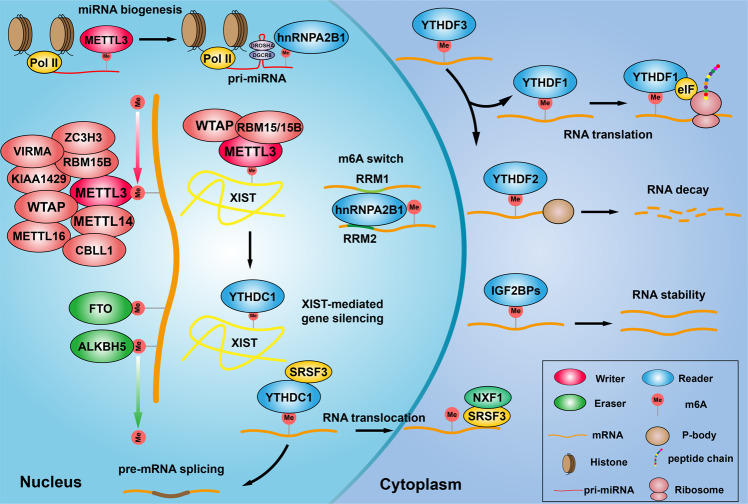
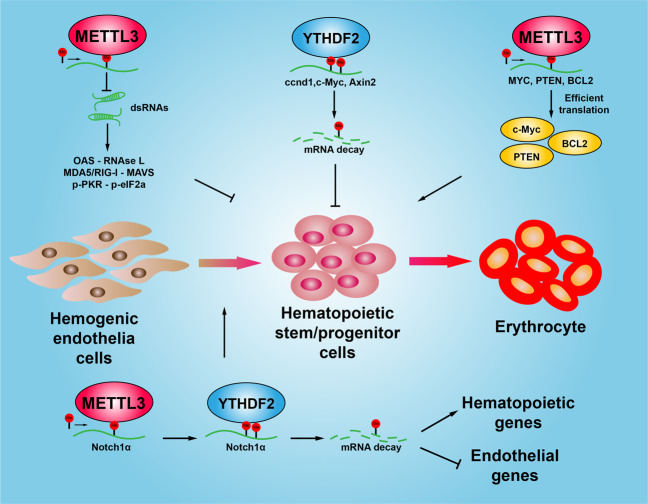
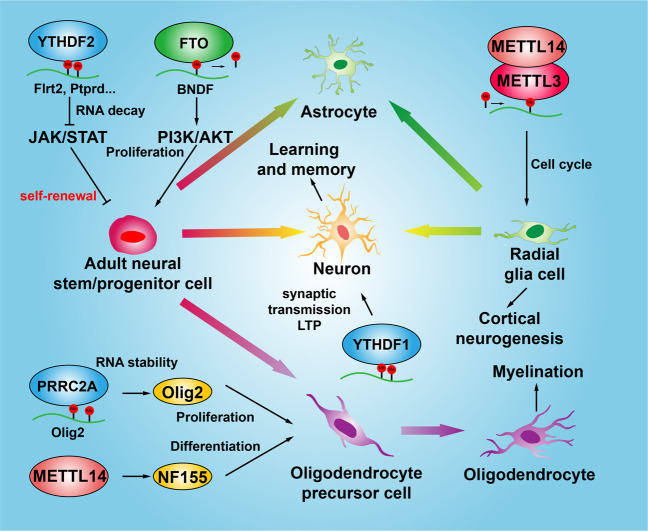
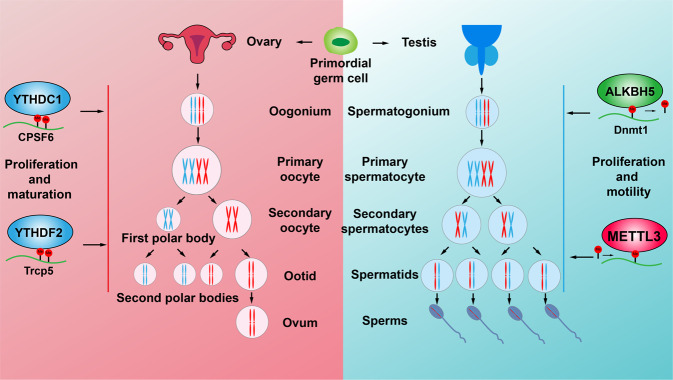
N 6 -methyladenosine (m6A) is the most prevalent, abundant and conserved internal cotranscriptional modification in eukaryotic RNAs, especially within higher eukaryotic cells. m6A modification is modified by the m6A methyltransferases, or writers, such as METTL3/14/16, RBM15/15B, ZC3H3, VIRMA, CBLL1, WTAP, and KIAA1429, and, removed by the demethylases, or erasers, including FTO and ALKBH5. It is recognized by m6A-binding proteins YTHDF1/2/3, YTHDC1/2 IGF2BP1/2/3 and HNRNPA2B1, also known as “readers”. Recent studies have shown that m6A RNA modification plays essential role in both physiological and pathological conditions, especially in the initiation and progression of different types of human cancers. In this review, we discuss how m6A RNA methylation influences both the physiological and pathological progressions of hematopoietic, central nervous and reproductive systems. We will mainly focus on recent progress in identifying the biological functions and the underlying molecular mechanisms of m6A RNA methylation, its regulators and downstream target genes, during cancer progression in above systems. We propose that m6A RNA methylation process offer potential targets for cancer therapy in the future.
Overview
The claims and statistics of this paper haven’t been checked yet.
Free: it reads the open-access text and checks the first 5 claims that cite a source we can check. Create a free account to check every claim.
Integrity signals
Registry
Cites
Statistics
Figures
Verification
Claims the paper makes
The claims and statistics of this paper haven’t been checked yet.
Free: it reads the open-access text and checks the first 5 claims that cite a source we can check. Create a free account to check every claim.
Claims other papers make about this one
Each is checked against this paper’s own text: does it say what the citing paper says it does?
The source backs part of the claim, not all of it — or backs it for a different population, condition or comparison.
In the citing paper
“Phylogenetically conserved RRM domains on readers are responsible for IMP2 identifying m6A marks on RNA [17,27].”
From IMPlications of IMP2 in RNA Biology and Disease (2025) · cites this paper as [17]
Experimental — accuracy not yet measuredThe cited source says what the claim attributes to it.
In the citing paper
“m6A (N6-methyladenosine) is a prevalent post-transcriptional modification found in mRNA and non-coding RNA in eukaryotic cells [17].”
From IMPlications of IMP2 in RNA Biology and Disease (2025) · cites this paper as [17]
In the citing paper
“m6A influences transcript splicing, stability, translation, nuclear export, and RNA structure283,284.”
From Air Pollution as an Environmental Risk Factor for Alzheimer’s Disease and Related Dementias (2024) · cites this paper as [283]
Self-check
Percentages, sums and reported differences re-computed from the paper’s own numbers.
The self-check needs the paper’s full text.
Citations
Cites
Genetics of Food Intake Self-Regulation in Childhood: Literature Review and Research Opportunities
Faith, M. S., Carnell, S., & Kral, T. V. E. (2013) · Human Heredity · doi:10.1159/000353879 · Cited by 7,601
Lippa, N. C., & Sanderson, S. C. (2013) · Human Heredity · doi:10.1159/000353712 · Cited by 6,078
Genome-wide atlas of gene expression in the adult mouse brain
Lein, E. S., Hawrylycz, M. J., Ao, N., Ayres, M., Bensinger, A., Bernard, A., Boe, A. F., Boguski, M. S., Brockway, K. S., Byrnes, E. J., et al. (2007) · Nature · doi:10.1038/nature05453 · Cited by 5,572
Topology of the human and mouse m6A RNA methylomes revealed by m6A-seq
Dominissini, D., Moshitch-Moshkovitz, S., Schwartz, S., Salmon-Divon, M., Ungar, L., Osenberg, S., Cesarkas, K., Jacob-Hirsch, J., Amariglio, N., Kupiec, M., et al. (2012) · Nature · doi:10.1038/nature11112 · Cited by 4,884
Frayling, T. M., Timpson, N. J., Weedon, M. N., Zeggini, E., Freathy, R. M., Lindgren, C. M., Perry, J. R. B., Elliott, K. S., Lango, H., Rayner, N. W., et al. (2007) · Science · doi:10.1126/science.1141634 · Cited by 4,531
Reynolds, B. A., & Weiss, S. (1992) · Science · doi:10.1126/science.1553558 · Cited by 4,482
Comprehensive Analysis of mRNA Methylation Reveals Enrichment in 3′ UTRs and near Stop Codons
Meyer, K. D., Saletore, Y., Zumbo, P., Elemento, O., Mason, C. E., & Jaffrey, S. R. (2012) · Cell · doi:10.1016/j.cell.2012.05.003 · Cited by 4,223
N6-Methyladenosine in nuclear RNA is a major substrate of the obesity-associated FTO
Jia, G., Fu, Y., Zhao, X., Dai, Q., Zheng, G., Yang, Y., Yi, C., Lindahl, T., Pan, T., Yang, Y.-G., et al. (2011) · Nature Chemical Biology · doi:10.1038/nchembio.687 · Cited by 4,106
ALKBH5 Is a Mammalian RNA Demethylase that Impacts RNA Metabolism and Mouse Fertility
Zheng, G., Dahl, J. A., Niu, Y., Fedorcsak, P., Huang, C.-M., Li, C. J., Vågbø, C. B., Shi, Y., Wang, W.-L., Song, S.-H., et al. (2013) · Molecular Cell · doi:10.1016/j.molcel.2012.10.015 · Cited by 3,550
N6-methyladenosine Modulates Messenger RNA Translation Efficiency
Wang, X., Zhao, B. S., Roundtree, I. A., Lu, Z., Han, D., Ma, H., Weng, X., Chen, K., Shi, H., & He, C. (2015) · Cell · doi:10.1016/j.cell.2015.05.014 · Cited by 3,483
Research works printed but not linked: 12
- Pendleton KE The U6 snRNA mA methyltransferase METTL16 regulates SAM synthetase intron retention Cell 2017 169 824 835.e814 10.1016/j.cell.2017.05.003 28525753 PMC5502809 · DOI · Paper page
- Patil DP m(6)A RNA methylation promotes XIST-mediated transcriptional repression Nature 2016 537 369 373 10.1038/nature19342 27602518 PMC5509218 · DOI · Paper page
- Wen J Zc3h13 regulates nuclear RNA m(6)A methylation and mouse embryonic stem cell self-renewal Mol. Cell. 2018 69 1028 1038.e1026 10.1016/j.molcel.2018.02.015 29547716 PMC5858226 · DOI · Paper page
- Huang H Recognition of RNA N-methyladenosine by IGF2BP proteins enhances mRNA stability and translation Nat. Cell Biol. 2018 20 285 295 10.1038/s41556-018-0045-z 29476152 PMC5826585 · DOI · Paper page
- Hsu PJ Ythdc2 is an N(6)-methyladenosine binding protein that regulates mammalian spermatogenesis Cell Res. 2017 27 1115 1127 10.1038/cr.2017.99 28809393 PMC5587856 · DOI · Paper page
- Yoon K-J Temporal control of mammalian cortical neurogenesis by mA methylation Cell 2017 171 877 889.e817 10.1016/j.cell.2017.09.003 28965759 PMC5679435 · DOI · Paper page
- Lv J Endothelial-specific m(6)A modulates mouse hematopoietic stem and progenitor cell development via Notch signaling Cell Res. 2018 28 249 252 10.1038/cr.2017.143 29148543 PMC5799811 · DOI
- Vu LP The N-methyladenosine (mA)-forming enzyme METTL3 controls myeloid differentiation of normal hematopoietic and leukemia cells Nat. Med. 2017 23 1369 1376 10.1038/nm.4416 28920958 PMC5677536 · DOI · Paper page
- Zhou, B. et al. N(6)-methyladenosine reader protein YT521-B Homology domain-containing 2 suppresses liver steatosis by regulation of mRNA stability of lipogenic genes. Hepatology10.1002/hep.31220 (2020). 32150756 · DOI · Paper page
- Shi H YTHDF3 facilitates translation and decay of N(6)-methyladenosine-modified RNA Cell Res. 2017 27 315 328 10.1038/cr.2017.15 28106072 PMC5339834 · DOI · Paper page
- Geula S Stem cells. m6A mRNA methylation facilitates resolution of naive pluripotency toward differentiation Science 2015 347 1002 1006 10.1126/science.1261417 25569111 · DOI · Paper page
- Su R R-2HG exhibits anti-tumor activity by targeting FTO/mA/MYC/CEBPA signaling Cell 2018 172 90 105.e123 10.1016/j.cell.2017.11.031 29249359 PMC5766423 · DOI · Paper page
Cited by
Items 701–800 of 1,006
Zhao, X., Li, Y., Zhang, H., Cai, Y., Wang, X., Liu, Y., Li, T., Xu, C., Teng, Y., Li, D. D., et al. (2025) · Cell Death and Disease · doi:10.1038/s41419-025-07657-2 · Cited by 14
“N 6 -methyladenosine (m 6 A) modi fi cation [37, 38] plays a crucial role in the structural stability and expression level changes of lncRNA.”
Lax, C., Mondo, S. J., Martínez, J. F., Muszewska, A., Baumgart, L. A., Pérez-Ruiz, J. A., Carrillo-Marín, P., LaButti, K. M., Lipzen, A., Zhang, Y., et al. (2025) · Nature Communications · doi:10.1038/s41467-025-59170-x · Cited by 14
“WhileRNA 6mAmethyltransferases have been reported to be crucial for humans 116 , future research is expected to provide information about the speci fi city of potential MTA1c inhibitors and to delve further into the DNA 6mA deposition mechanisms to ensure the ef fi - cient development of new…”
Huang, Y., Yang, Z., Huang, C., Jiang, X., Yan, Y., Zhuang, K., Wen, Y., Liu, F., & Li, P. (2021) · Frontiers in Oncology · doi:10.3389/fonc.2021.725181 · Cited by 14
Self-citationThe Role of Epitranscriptomic Modifications in the Regulation of RNA–Protein Interactions
Wanowska, E., McFeely, A., & Sztuba-Solińska, J. (2022) · BioChem · doi:10.3390/biochem2040017 · Cited by 13
“, fat mass and obesity-associated (FTO) and alpha-ketoglutarate-dependent dioxygenase, known as AlkB homolog 5 (ALKBH5), are responsible for removing m6A from target RNAs, offering a dynamic regulation of m6A status [20].”
BackgroundDong, R., Chen, S., Lu, F., Zheng, N., Peng, G., Li, Y., Yang, P., Wen, H., Qiu, Q., Wang, Y., et al. (2022) · BioMed Research International · doi:10.1155/2022/4909544 · Cited by 13
“N6methyladenosine (m6A) is a highly conserved form of DNA modification in eukaryotic cells [19], which mainly affects the function of genome through epigenetic modification and changing the chromatin structure [20].”
The diverse role of RNA methylation in esophageal cancer
Meng, W., Han, Y., Li, B., & Li, H. (2023) · Acta Biochimica et Biophysica Sinica · doi:10.3724/abbs.2023057 · Cited by 13
“Readers include YTH domaincontaining family protein 1/2/3 (YTHDF1/2/3), YTH domain containing 1/2 (YTHDC1/2), insulin-like growth factor 2 mRNAbinding protein 1/2/3 (IGF2BP1/2/3), and heterogeneous nuclear ribonucleoprotein C/G/A2B1 (HNRNPC/G/A2B1) (Table 1) [21].”
FTO-dependent m6A regulates muscle fiber remodeling in an NFATC1–YTHDF2 dependent manner
Wang, W., Du, X., Luo, M. B., & Yang, N. (2023) · Clinical Epigenetics · doi:10.1186/s13148-023-01526-5 · Cited by 15
“FTO has a reversible function in relevant RNA modifications [29], and its coordinated changes with muscle fiber asymmetry suggest that FTO may be involved in fiber type remodeling.”
BackgroundLuo, H., Wu, X., Huo, B., Liu, L., Jiang, D., & Yi, X. (2023) · Cell Division · doi:10.1186/s13008-023-00096-5 · Cited by 12
The Role of N6-Methyladenosine in the Promotion of Hepatoblastoma: A Critical Review
Auld, F. M., Sergi, C. M., Leng, R. P., & Shen, F. (2022) · Cells · doi:10.3390/cells11091516 · Cited by 12
“In addition to identifying therapeutic targets, understanding the mechanism by which the disease propagates may identify those who are predisposed outside of the established genetic syndromes, stratify risk, and offer clarity around patient outcomes [7,8,10].”
BackgroundInfluentialSong, J., Zhang, L., Li, C., Maimaiti, M., Sun, J. P., Hu, J., Li, L., Zhang, X., Wang, C., & Hu, H. (2022) · Computational and Structural Biotechnology Journal · doi:10.1016/j.csbj.2022.04.002 · Cited by 14
“…of m 6 A modification is governed by specific m 6 A ‘‘reader” including m 6 A-binding proteins YTHDF1/2/3, YTHDC1/2, IGF2BP1/2/3, and hnRNPA2B1 [74–75], it is appealing to speculate that the induction and repression of cs-lncRNA might be regulated by these m 6 A ‘‘reader” proteins that recognized…”
BackgroundChen, Y., Cai, K., Du, Y., Liu, Z., & Gong, Y. (2022) · Biochemistry and Cell Biology · doi:10.1139/bcb-2022-0314 · Cited by 13
Self-citationSingle-cell discovery of m 6 A RNA modifications in the hippocampus
Feng, S., Tellaetxe-Abete, M., Zhang, Y., Peng, Y., Zhou, H., Dong, M., Larrea, E., Xue, L., Zhang, L., & Koziol, M. J. (2024) · Genome Research · doi:10.1101/gr.278424.123 · Cited by 13
Li, L.-N., Wu, J.-M., Zheng, Z., Li, S., Cai, M.-Y., & Zou, M. (2024) · Autoimmunity · doi:10.1080/08916934.2024.2433628 · Cited by 13
“…by three types of protein molecules, namely writers (METTL3, METTL14, WTAP, etc.), erasers (FTO, ALKBH5, etc.), readers (YTHDF1/2/3, etc.) [13]. m6A modification regulates mRNA selective splicing, translation, and stability, and participates in various cellular life activities (immune…”
Ru, W., Cheng, J., Gao, Y., Yang, K., Qi, A., Zhang, X., Qi, X., Lan, X., Liu, W., Huang, B., et al. (2025) · International Journal of Biological Macromolecules · doi:10.1016/j.ijbiomac.2025.139576 · Cited by 14
Yang, Y., Jin, X., Lu, D., Wu, Y., Meng, F., Zhang, M., Wang, J., Cui, X., Li, T., Wang, S., et al. (2025) · Poultry Science · doi:10.1016/j.psj.2025.105496 · Cited by 11
“In mammalian cells, m 6 A is the most abundant RNA modification and regulates critical RNA metabolic processes, including mRNA splicing, nuclear export, degradation and translation (Jiang et al., 2021).”
Ibeagha-Awemu, E. M., Wang, M., & Zhao, X. (2025) · Journal of Dairy Science · doi:10.3168/jds.2024-26210 · Cited by 13
Wei, B., Zeng, M.-Y., Yang, J., Li, S., Zhang, J., Ding, N., & Jiang, Z. (2022) · Frontiers in Cell and Developmental Biology · doi:10.3389/fcell.2022.835205 · Cited by 13
“, 2021), which is involved in the regulation of a series of cellular processes such as cell fate decision, cell cycle regulation, cell proliferation and differentiation, indicating its pivotal roles in embryonic development, hematopoietic development, neurogenesis, stress responses, sex determination, tumorigenesis an…”
BackgroundZhao, R., Li, T., Zhao, X., Yang, Z., Ma, L., & Wang, X. (2023) · Biochemistry and Cell Biology · doi:10.1139/bcb-2023-0067 · Cited by 12
The m6A Reader YTHDC2 Suppresses Lung Adenocarcinoma Tumorigenesis by Destabilizing MRPL12
Sun, Y., Liu, Y., Wang, P., Lin, C., & Huang, J. (2023) · Molecular Biotechnology · doi:10.1007/s12033-023-01002-8 · Cited by 11
“…regulator in eukaryotic mRNA [7]. m6A RNA methylation is critical for the physiological progression of central nervous, reproductive and hematopoietic systems [16], importantly, abnormal m6A modification is also closely associated with cancer genesis and progression [10, 17, 18].”
Lang, Y., Wang, Q., Sheng, Q., Lu, S., Yang, M., Kong, Z., Gao, Y., Fan, X., Shen, N., Wang, R., et al. (2024) · The FASEB Journal · doi:10.1096/fj.202301419rr · Cited by 11
“10 m6A modifications are mainly involved in diverse biological regulatory processes, including mRNA stability, splicing, transport, positioning, translation, and protein–RNA interactions.”
BackgroundCircular RNAs and their roles in idiopathic pulmonary fibrosis
Surendran, A. M., Huang, C., & Liu, L. (2024) · Respiratory Research · doi:10.1186/s12931-024-02716-2 · Cited by 14
“m 6 A is a well conserved transcriptional modification in eukaryotic cells and is involved in the initiation and pathogenesis of human cancers [144].”
BackgroundRNA-Binding Proteins in Cardiomyopathies
Shi, D. (2024) · Journal of Cardiovascular Development and Disease · doi:10.3390/jcdd11030088 · Cited by 14
“…The knock-down of rbfox1 alters the cardiac-speci fi c isoform expression of several key proteins regulating cardiomyocyte structure and function [87]. modification in eukaryotic mRNAs, and this modification plays a central role in the post-transcriptional regulation of gene expression [89,90].”
BackgroundInfluentialNing, J., Yan, J., Wang, S., Cui, Z., Xue, Y., Juan, J., & Yang, H. (2024) · iScience · doi:10.1016/j.isci.2024.109900 · Cited by 14
“12 Although m6A modification has recently been reported to be associated with the proliferation, invasion, migration, and apoptosis of trophoblastic cells, 36 studies on the effect of m6A modification on syncytialization are lacking.”
The role of m6A methylation in targeted therapy resistance in lung cancer
Xue, H., Ma, Y., Guan, K. L., Zhou, Y., Liu, Y., Cao, F., & Kang, X. (2024) · American Journal of Cancer Research · doi:10.62347/lxos2662 · Cited by 13
Cai, J., Wang, X., Wang, Z., Sheng, S., Tang, F., & Zhang, Z. (2024) · Inflammation · doi:10.1007/s10753-024-02116-0 · Cited by 14
“Compelling evidence has indicated that m6A modification is closely related to physiological and pathological conditions, especially in the development of multiple cancers [7].”
Ma, C., Gou, C., Sun, S., Wang, J., Wei, X., Xing, F., Xing, N., Yuan, J., & Wang, Z. (2024) · Cell Biology and Toxicology · doi:10.1007/s10565-024-09909-x · Cited by 12
“WTAP (Wilms tumor 1-associating protein) and YTHDF1 (YTH N(6)-methyladenosine RNA binding protein 1) are two crucial molecules that have a pivotal role in m6A modification (Jiang et al. 2021; Zhang et al. 2020; Wang et al. 2020).”
Genetic and Epigenetic Interactions Involved in Senescence of Stem Cells
Iordache, F., Ionescu, A., & Alexandru, D. M. (2024) · International Journal of Molecular Sciences · doi:10.3390/ijms25179708 · Cited by 14
“The accumulation of IAP mRNAs after the deletion of YTHDFs leads to high ERV activity, resulting in senescence and diseases [118,119].”
BackgroundInfluentialMo, W.-L., Deng, L.-J., Cheng, Y., Ge, S., & Wang, J. (2024) · Journal of Cellular and Molecular Medicine · doi:10.1111/jcmm.70080 · Cited by 14
“42 As the first discovered RNA m 6 A demethylase, FTO is often dysregulated and plays important roles in various types of cancer.”
BackgroundA review of current developments in RNA modifications in lung cancer
Zhang, S., Liu, Y., Liu, K., Hu, X., & Gu, X. (2024) · Cancer Cell International · doi:10.1186/s12935-024-03528-6 · Cited by 13
“…recognized as a major modification in eukaryotic cell messenger RNA (mRNA) and other non-coding RNA. m6A has demonstrated regulatory roles in protein production by influencing mRNA stability, translation, splicing, and processing, as well as embryonic development and cell differentiation [8, 9].”
BackgroundMechanism of N6-Methyladenosine Modification in the Pathogenesis of Depression
Xian, Z., Tian, L., Yao, Z., Cao, L., Jia, Z., & Li, G. (2024) · Molecular Neurobiology · doi:10.1007/s12035-024-04614-6 · Cited by 11
“Readers are m6A-binding proteins that can recognize m6A, including the YTH domain family (YTHDF) and YTH domain-containing (YTHDC) protein [4, 5].”
Wang, C., Song, R., Yuan, J., Hou, G., Chu, A., Huang, Y., Xiao, C., Chai, T., Sun, C., & Liu, Z. (2024) · Drug Development Research · doi:10.1002/ddr.70025 · Cited by 13
Emerging role of small RNAs in inflammatory bowel disease and associated colorectal cancer (Review)
Qiu, W., Akanyibah, F. A., Xia, Y., Ocansey, D. K. W., Mao, F., & Liang, Y. (2024) · International Journal of Molecular Medicine · doi:10.3892/ijmm.2024.5474 · Cited by 14
RNA-ModX: a multilabel prediction and interpretation framework for RNA modifications
Yuge, C. C., Hang, E. S., Mamtha, M. R. N., Vishwakarma, S., Wang, S., Wang, C., & Le, N. Q. K. (2024) · Briefings in Bioinformatics · doi:10.1093/bib/bbae688 · Cited by 13
The role and mechanism of m6A methylation in diabetic nephropathy
Yan, L.-J., & Guo, L. (2025) · Life Sciences · doi:10.1016/j.lfs.2024.123355 · Cited by 14
Beyond destruction: emerging roles of the E3 ubiquitin ligase Hakai
Escuder‐Rodríguez, J.-J., Rodríguez-Alonso, A., Jove, L., Quiroga, M., Alfonsín, G., & Figueroa, A. (2025) · Cellular & Molecular Biology Letters · doi:10.1186/s11658-025-00693-y · Cited by 16
mRNA Transcript Variants Expressed in Mammalian Cells
Sharma, Y., Vo, K., Shila, S., Paul, A., Dahiya, V., Fields, P. E., & Rumi, M. A. K. (2025) · International Journal of Molecular Sciences · doi:10.3390/ijms26031052 · Cited by 14
Kelly, C., Kiltschewskij, D. J., Leong, A. J. W., Haw, T. J., Croft, A. J., Balachandran, L., Chen, D., Bond, D. R., Lee, H. J., Cairns, M. J., et al. (2025) · Scientific Reports · doi:10.1038/s41598-025-87442-5 · Cited by 13
“Furthermore, m6A (N6-methyladenosine) and the proteins responsible for m6A modification via regulation of the RNA methyltransferases are increasingly recognised to play a role in epitranscriptomic modifications of RNA stability and expression 18,19 .”
Liu, Z., Sun, T., Zhang, Z., Piao, C., Kong, C., & Zhang, X. (2025) · Clinical and Translational Medicine · doi:10.1002/ctm2.70232 · Cited by 11
“34 Through systemic investigation, the m6A reader IGF2BP2 was identified as a critical component in METTL14-mediated m6A regulation of ZFP14 mRNA stability and expression.”
Zhang, D., Liu, L., Li, M., Hu, X., Zhang, X., Xia, W., Wang, Z., Song, X., Huang, Y., Dong, Z., et al. (2025) · European Journal of Medicinal Chemistry · doi:10.1016/j.ejmech.2025.117444 · Cited by 12
Self-citationTu, L., Gu, S., Xu, R., Yang, E., Huang, X., Liang, H., Luo, S., Li, H., Zhao, Y., & Zan, T. (2025) · Advanced Science · doi:10.1002/advs.202417067 · Cited by 15
Ye, K., Han, X., Tian, M., Liu, L., Gao, X., Xia, Q. H., & Wang, D. (2025) · Journal of Translational Medicine · doi:10.1186/s12967-025-06324-6 · Cited by 12
The m6A RNA demethylase FTO promotes radioresistance and stemness maintenance of glioma stem cells
Zhang, J., Li, G., Wu, R., Shi, L., Tian, C., Jiang, H., Che, H., Jiang, Y., Jin, Z., Yu, R., et al. (2025) · Cellular Signalling · doi:10.1016/j.cellsig.2025.111782 · Cited by 11
Self-citationFeng, A., Liang, Y., Fu, P., Dong, Y., Black, S. M., & Wang, T. (2025) · Biochimica et Biophysica Acta (BBA) - Molecular Basis of Disease · doi:10.1016/j.bbadis.2025.167907 · Cited by 14
Jin, R., Zou, Q., & Luo, X. (2025) · International Journal of Molecular Sciences · doi:10.3390/ijms26146701 · Cited by 15
“These complex interactions are instrumental in modulating crucial physiological processes, including immune responses, neural development, stem cell differentiation, and cellular stress responses [6,7].”
Fu, J., Wei, C., Chen, Y., Xiao-ming, H., & Zhang, K. (2025) · Hereditas · doi:10.1186/s41065-025-00534-0 · Cited by 11
“As the name suggests, m 6 A RNA methylation refers to the chemical modification where a methyl group (-CH 3 ) is added to the nitrogen atom N6 at the sixth carbon position of adenosine (A) [38].”
Self-citationThe regulation of m6A-related proteins during whole-body freezing of the freeze-tolerant wood frog
Rehman, S., Varma, A., Gupta, A., & Storey, K. B. (2022) · Biochemistry and Cell Biology · doi:10.1139/bcb-2022-0164 · Cited by 14
Xu, Z., Qiu, P., Jiang, Y., Hu, J., Wu, Z., Lei, J., Pu, H., Huang, Q., Wang, X., Li, B., et al. (2023) · Oxidative Medicine and Cellular Longevity · doi:10.1155/2023/8134027 · Cited by 11
“Thus, m6A can regulate mRNA splicing, processing, translation, and stabilities [6, 7].”
BackgroundLuo, Y., Chen, J., Cui, Y., Fang, F., Zhang, Z., Hu, L., Chen, X., Li, Z., Li, L., & Chen, L. (2023) · The FASEB Journal · doi:10.1096/fj.202201232rrrr · Cited by 10
“RSA patients with the following features were excluded, and the exclusion criteria were listed as follows: (1) uterine malformation by pelvic examination and ultrasound; (2) chromosome abnormalities by CNV- seq; (3) symptoms of endocrine or metabolic diseases; (4) infection; and (5) immune abnormalities.”
MethodWaldbillig, F., Bormann, F., Neuberger, M., Ellinger, J., Erben, P., KRIEGMAIR, M. C., Michel, M. S., Nuhn, P., & Nientiedt, M. (2023) · Diagnostics · doi:10.3390/diagnostics13050823 · Cited by 11
“This led to the generation of highthroughput datasets for multiple cellular conditions and pathologies, including cancer [26,27].”
BackgroundZhou, B. (2023) · Journal of Neuroimmunology · doi:10.1016/j.jneuroim.2023.578224 · Cited by 11
“N6-methyladenosine (m6A) is the most abundant and conservative RNA post-transcriptional modification in epigenetic modifications of eukaryotic cells (Jiang et al., 2021).”
InfluentialMETTL16 in human diseases: What should we do next?
Zhang, H., Yin, M., Huang, H., Zhao, G., & Lu, M. (2023) · Open Medicine · doi:10.1515/med-2023-0856 · Cited by 15
“The primary writers category includes the METTL3 – METTL14 – WTAP methyltransferase complex, which orchestrates the addition of m6A modi fi cations to speci fi c adenosine residues in RNA molecules; while METTL3 and METTL14 act as the core catalytic units, WTAP enhances stability [6,18,40].”
BackgroundLiu, S., & Xiang, D. (2023) · Frontiers in Genetics · doi:10.3389/fgene.2023.1270983 · Cited by 12
Liu, L., Sun, H., Zhang, Y., Liu, C., Zhuang, Y., Liu, M., Ai, X., Long, D., Huang, B. S., Li, C., et al. (2024) · JOR Spine · doi:10.1002/jsp2.1316 · Cited by 11
“26,68 In present study, most of aging related genes contained opposite trends between m6A modification and gene expression.”
BackgroundResultInfluentialZhou, J., Yao, L., Yuan, S., & Tian, L. (2024) · Chemical Biology & Drug Design · doi:10.1111/cbdd.14473 · Cited by 12
“N6-methyladenosine (m6A) modification, the most common and abundant modification in eukaryotic RNAs, possesses a crucial role in various physiological and pathological processes, including cancer progression (Jiang et al., 2021; Sun et al., 2019).”
BackgroundKhan, D., Ramachandiran, I., Vasu, K. I., China, A., Khan, K., Cumbo, F., Halawani, D., Terenzi, F., Zin, I., Long, B., et al. (2024) · Nature Communications · doi:10.1038/s41467-024-48549-x · Cited by 13
Romanowska, K., Rawłuszko-Wieczorek, A. A., Marczak, Ł., Kosińska, A., Suchorska, W. M., & Golusiński, W. (2021) · Biomolecules · doi:10.3390/biom11060908 · Cited by 14
“The m6A modification is involved in nearly all crucial RNA metabolic aspects, including pre-mRNA processing, mRNA splicing, translation, nuclear export, decay, and the promotion of miRNA biogenesis [9,10].”
Backgroundm6A Regulator-Mediated Methylation Modification Patterns and Characteristics in COVID-19 Patients
Qing, X., Chen, Q., & Wang, K. (2022) · Frontiers in Public Health · doi:10.3389/fpubh.2022.914193 · Cited by 12
Kang, X., Chen, S., Pan, L., Liang, X., Lu, D., Chen, H., Li, Y., Liu, C., Ge, M., Zhang, Q., et al. (2022) · Journal of Immunology Research · doi:10.1155/2022/8118577 · Cited by 11
“It controls multiple physiological and pathophysiological processes [14, 15].”
Methyladenosine Modification in RNAs: From Regulatory Roles to Therapeutic Implications in Cancer
Qu, X., Zhang, Y., Sang, X., Ren, D., Zhao, H., & Wong, S. T. C. (2022) · Cancers · doi:10.3390/cancers14133195 · Cited by 12
“In addition to mRNAs, methyladenosine modifi ation also regulates noncoding RNAs (ncRNAs) [7] during oncogenesis, cancer metastasis, and therapeutic intervention [8].”
BackgroundWang, X., Zhao, C., Huang, D., Liu, Z., Liu, M., Lin, F., Lu, Y., Jia, J., Lin, L., Lin, X., et al. (2022) · Frontiers in Immunology · doi:10.3389/fimmu.2022.923533 · Cited by 11
“In eukaryotic cells, m6A is by far the most common RNA modification found within the RNA itself (10).”
BackgroundNing, Z., Wu, Z., Zhang, F., Yang, M., Lu, Z., Yu, B., Long, F., Guo, Y., Yang, K., Hu, G. M., et al. (2022) · Cancers · doi:10.3390/cancers14246046 · Cited by 11
“Disorders of m6A writers (methyltransferases), erasers (demethylases) or readers (m6A-binding proteins) lead to abnormal m6A modification of mRNAs, which impacts the expression of many genes in cancer [21,22].”
BackgroundXie, C., Huang, J., Chen, Y., Huang, B., Chen, Y., Li, Y., Gong, Z., Ma, Y., Xu, M., Fan, K., et al. (2025) · International Immunopharmacology · doi:10.1016/j.intimp.2025.115181 · Cited by 12
Self-citationPan, D., Zhang, H., Zhou, J., He, S., & Yuan, G. (2025) · Pathology - Research and Practice · doi:10.1016/j.prp.2025.156228 · Cited by 12
Micropeptides Encoded by Noncoding RNAs: Biological Functions and Roles in Diseases
Kong, J., Su, X., Zhou, C., Lin, W., Lin, A., & Tang, J. (2025) · Research · doi:10.34133/research.0967 · Cited by 14
YTHDF1 targets the chemotherapy response by suppressing NOTCH1-induced stemness in colorectal cancer
Cheung, H., Chen, H., Chen, D. M., Zhou, H., Liang, C., Liu, W., Cheung, A. H. K., Ding, Y., Yuan, K., Li, X., et al. (2025) · Signal Transduction and Targeted Therapy · doi:10.1038/s41392-025-02507-1 · Cited by 15
“Key m 6 A readers from the YTH domain family 10 and the insulin-like growth factor 2 mRNA-binding protein family, in turn, determine mRNA fate by regulating mRNA stability, translation, and splicing.”
Wan, Q., Yang, Z., Huang, L., Xia, Y., Long, L., Xu, Z., & Li, J. (2026) · Molecular Biomedicine · doi:10.1186/s43556-026-00411-w · Cited by 14
Roles of RNA m6A modification in nonalcoholic fatty liver disease
Tan, J., Wang, Y.-F., Dai, Z., Yin, H.-Z., Mu, C., Wang, S.-J., & Yang, F. (2023) · Hepatology Communications · doi:10.1097/hc9.0000000000000046 · Cited by 10
Zheng, W., Wang, M., Chai, X., Pan, F., Xu, M., Wang, Y., Lan, L., Hu, F., Zhang, Z., & Chen, Z. (2023) · Frontiers in Molecular Biosciences · doi:10.3389/fmolb.2023.1163089 · Cited by 14
“Moreover, aberrant m(6)A levels are tightly associated with the onset and progression of various types of cancers (Wang et al., 2020; Jiang et al., 2021).”
BackgroundZhang, Y., Lv, J., Bai, J., Zhang, X., Wu, G., Lei, X., Li, W., & Zhang, Z. (2024) · Inflammation · doi:10.1007/s10753-023-01958-4 · Cited by 11
“…mechanisms underlying I/R injury remain to be further excavated to provide promising therapeutic interventions. m 6 A modification, a form of epigenetic modification, is the most prevalent type of RNA methylation in mRNA and exerts crucial roles in the pathophysiology of human diseases [30, 31].”
Liu, X., Zhang, Y., Liu, Z., Gao, Y. P., Yuan, L., Zeng, D., Tan, F., Wan, H., & Pei, Z. (2024) · Journal of Cellular and Molecular Medicine · doi:10.1111/jcmm.18195 · Cited by 12
RNA base editors: The emerging approach of RNA therapeutics
Song, J., Luo, N., Dong, L., Peng, J., & Yi, C. (2024) · Wiley Interdisciplinary Reviews - RNA · doi:10.1002/wrna.1844 · Cited by 10
“Dysregulation of m 6 A can lead to various human diseases, including cancer, psychiatric disorders, heart failure, azoospermia, and metabolic disease (Jiang et al., 2021).”
BackgroundXiong, J., Zhou, Z., Jiang, Y., Li, Q., Geng, Z., Guo, J., Yan, C., & Zhang, J. (2024) · Oncogene · doi:10.1038/s41388-024-03180-4 · Cited by 11
“N 6 -methyladenosine (m 6 A) modi fi cation is an abundant and conserved eukaryotic RNA modi fi cation [1, 2], and affects RNA metabolism including splicing, localization, stability and translation [3 – 7].”
RBM15B Promotes Prostate Cancer Cell Proliferation via PCNA m6A Modification
Cheng, H., Chen, Z., Wang, Y., Ji, C., Wang, J., & Song, N. (2024) · Cell Biochemistry and Biophysics · doi:10.1007/s12013-024-01558-5 · Cited by 11
Zhang, L., Chen, Z., Sun, G., Li, C., Wu, P., Xu, W., Zhu, H., Zhang, Z., Tang, Y., Li, Y., et al. (2024) · Journal of Translational Medicine · doi:10.1186/s12967-024-05701-x · Cited by 14
“…in microRNAs, long non-coding RNAs, and circular RNAs [6]. m6A modification exerts various functions in RNA processing and metabolism, such as alternative splicing (AS) [7], export [8], translation [9], and RNA stability [10], and thereby contributing to the pathogenesis of various conditions [11].”
BackgroundZhang, H., Li, Y., Zhou, Y., Xu, Q., Liao, B., Qiu, X., & Liu, J. (2024) · Journal of Biochemical and Molecular Toxicology · doi:10.1002/jbt.70014 · Cited by 10
Yu, B., Nagae, G., Midorikawa, Y., Tatsuno, K., Dasgupta, B., Aburatani, H., & Ueda, H. (2024) · Briefings in Bioinformatics · doi:10.1093/bib/bbae529 · Cited by 11
“Not surprisingly, recent research has demonstrated that dysregulation of m6A contributes to a wide range of diseases, including neurological disorders,cardiovascular diseases,and cancers [7,8].”
BackgroundGao, D., Shi, J. R., Lu, S., Li, X., Lv, K., Xu, Y., & Song, M. (2024) · Journal of Orthopaedic Surgery and Research · doi:10.1186/s13018-024-05164-2 · Cited by 10
“…translation and splicing by interacting with proteins known as “writers”, such as methyltransferase-like 3 (METTL3), METTL14, “readers”, such as fat mass and obesity-associated protein (FTO) and alkB homolog 5 (ALKBH5), and “erasers”, such as YTH family, including YTHDF1/2/3, YTHDC1/2 [14, 15].”
Epigenetics of cardiomyopathies: the next frontier
Hajdarpašić, A., Tukker, M., Rijdt, W. P. T., Mohamedhoesein, S., Meijers, W. C., & Çalişkan, K. (2024) · Heart Failure Reviews · doi:10.1007/s10741-024-10460-4 · Cited by 13
Vujaklija, I., Biđin, S., Volarić, M., Bakić, S., Li, Z., Foo, R., Liu, J., & Šikić, M. (2024) · Nucleic Acids Research · doi:10.1093/nar/gkae1168 · Cited by 11
Wang, Y., He, S., Lan, L., Yu, H., Zhao, H., Xie, Y., Zhong, G., Yuan, L., Li, K., Hu, X., et al. (2024) · Cardiovascular Research · doi:10.1093/cvr/cvae253 · Cited by 12
Li, H., Fu, P., Guo, B., Liao, Z., Yan, X., & Qi, P. (2024) · Aquaculture · doi:10.1016/j.aquaculture.2024.742040 · Cited by 11
Targeted mitochondrial function for cardiac fibrosis: An epigenetic perspective
Liu, P., Liu, Z., Mao, S., Shen, X., Liu, Z., Lin, L.-C., Yang, J., Ye, Z., Zhao, J., & Tao, H. (2025) · Free Radical Biology and Medicine · doi:10.1016/j.freeradbiomed.2025.01.001 · Cited by 12
hnRNPU-mediated pathogenic alternative splicing drives gastric cancer progression
Jin, G., Song, Y., Fang, S., Yan, M., Yang, Z., Shao, Y. W., Zhao, K., Liu, M., Wang, Z., Guo, Z., et al. (2025) · Journal of Experimental & Clinical Cancer Research · doi:10.1186/s13046-024-03264-9 · Cited by 13
“…several m 6 A reader proteins have been identified, primarily falling into two major families: the YT521-B homology (YTH) family, which includes YTHDF1, YTHDF2, and YTHDF3; and the insulin-like growth factor 2 mRNA-binding protein (IGF2BP) family, comprising IGF2BP1, IGF2BP2, and IGF2BP3 [33, 34].”
The epigenetic regulatory network of long noncoding RNAs in hepatocellular carcinoma
Shi, Z., Jin, S., Liu, X., Jiang, M., Fang, Y., Khadaroo, P. A., Lin, H. M., & Fan, X. (2025) · Genes & Diseases · doi:10.1016/j.gendis.2025.101534 · Cited by 12
Shi, S., Chen, Q., Yang, Y., Li, Z., Zheng, R., Zhang, R., Liu, Z., & Cheng, Y. (2025) · Free Radical Biology and Medicine · doi:10.1016/j.freeradbiomed.2025.02.038 · Cited by 12
Wang, C., Liang, W., Zhong, J., Liu, J., Zhou, C., Ma, C., Liao, Y., Gao, Y., Zhao, J., & He, Y. (2025) · Cellular Signalling · doi:10.1016/j.cellsig.2025.111676 · Cited by 10
Ma, X., Chen, X., Mu, X., Cao, M., & Zhang, Y. (2025) · Frontiers in Immunology · doi:10.3389/fimmu.2025.1549839 · Cited by 17
Li, D., Liu, Z., Zhu, M., Yu, W., Mao, W., Mao, D., Wang, F., & Wan, Y. (2025) · International Journal of Biological Macromolecules · doi:10.1016/j.ijbiomac.2025.142858 · Cited by 16
Xu, X., Zhang, Y., Wu, S., Wu, Y., Lin, X., Chen, K., & Lin, X. (2025) · Journal of Medical Virology · doi:10.1002/jmv.70356 · Cited by 12
“…a key mechanism for post-transcriptional regulation in eukaryotic cells, influencing RNA stability and translation efficiency [19]. m6A modification is primarily governed by three classes of proteins: writers, erasers, and readers, which recognize and modify RNA to regulate its function [20 – 23].”
Cheng, Y., Wan, J., Xu, Y., Liu, S., Li, L., Zhou, J., & Xie, F. (2025) · Hereditas · doi:10.1186/s41065-025-00453-0 · Cited by 10
“It was demonstrated that RBM15/ACSL4 axis aggravated H/R-induced AC16 cell injury by inducing ferroptosis. m6A RNA methylation regulators have been confirmed to be involved in the occurrence and development of a variety of diseases [31, 32].”
Epigenetic orchestration of RNA m 6 A methylation in wound healing and post-wound events
Zhang, H., Gao, D., Li, Z., Aghayants, S., Wu, Y., Liu, Z., & Zhang, Q. (2025) · International Journal of Biological Sciences · doi:10.7150/ijbs.114988 · Cited by 11
“Epigenetics generally refers to heritable changes in gene expression that do not alter the underlying DNA sequence [43].”
m6A RNA Methylation in Psychiatric Disorders: An Emerging Epitranscriptomic Axis
Ngo, A. L., Nguyen, L., Alkhansari, N. G., & Zhang, H. (2025) · Epigenomes · doi:10.3390/epigenomes9030036 · Cited by 11
“Mutations or dysregulation of the m 6 A methylation machinery can disrupt the processes of installing, removing, or interpreting the m 6 A mark [36,37].”
Targeting the Mitochondria in High-Grade Gliomas
Sathe, S., Li, Q., Jung, J., & Wu, J. (2025) · Cancers · doi:10.3390/cancers17183062 · Cited by 13
“All of these methyltrans-ferases require S-adenosylmethionine (SAM) as the methyl group donor [138,139].”
Cai, Z., Zhang, J., Liu, Z., Su, J., Xu, J., Li, Z., Meng, H., Zhang, H., Huang, M., Zhao, D., et al. (2021) · Annals of Translational Medicine · doi:10.21037/atm-21-3139 · Cited by 11
“m6A RNA modification has been reported to be involved in tumorigenesis, progression, and immunity modulation of various cancers (8-10).”
BackgroundSun, W., Song, Y., Xia, K., Yu, L., Huang, X., Zhao, Z., & Liu, J. (2021) · Stem Cell Research & Therapy · doi:10.1186/s13287-021-02508-1 · Cited by 10
The Emerging Role of RNA N6-Methyladenosine Modification in Pancreatic Cancer
Hu, X., Lei, X., Guo, J., Fu, W., Sun, W. Y., Lu, Q., Su, W., Xu, Q., & Tu, K. (2022) · Frontiers in Oncology · doi:10.3389/fonc.2022.927640 · Cited by 12
“As reported, m6A modification is catalyzed by the methyltransferase (also called “m6A writers”) and meanwhile can also be removed by the demethylases (also called “m6A eraser”) (5, 6).”
BackgroundComprehensive analysis about prognostic and immunological role of WTAP in pan-cancer
Lei, J., Fan, Y., Yan, C., Jiamaliding, Y., Tang, Y., Zhou, J., Huang, M., Ju, G., Wu, J., & Peng, C. (2022) · Frontiers in Genetics · doi:10.3389/fgene.2022.1007696 · Cited by 12
“As the most important RNA epigenetic regulation in eukaryotic cells, the m6A modification affects RNA metabolism and plays an essential role in physiological as well as pathological conditions (Dai et al., 2018; Jiang et al., 2021).”
BackgroundPang, Q., Chen, H., Wu, H., Wang, Y., An, C., Lai, S., Xu, J. X., Wang, R., Zhou, J., & Xiao, H. (2022) · Frontiers in Immunology · doi:10.3389/fimmu.2022.1039013 · Cited by 8
“N6-methyladenosine (m6A) modification is one of the most prevalent and reversible modifications of RNA base in eukaryotes (7).”
BackgroundGenes related to N6-methyladenosine in the diagnosis and prognosis of idiopathic pulmonary fibrosis
Zhang, J., Zhang, Y., Wang, Z., Zhao, J., Li, Z., Wang, K., Tian, L., Yao, B., Wu, Q., Wang, T., et al. (2023) · Frontiers in Genetics · doi:10.3389/fgene.2022.1102422 · Cited by 12
“After export to the cytoplasm, m6A binds to a specific cytoplasmic reader, affecting mRNA stability, translation, and localization (Zaccara et al., 2019; Jiang et al., 2021).”
BackgroundJing, Q., Yao, H., Li, Y., Yuan, C., Hu, J., Zhang, P., Wu, Y., Zhou, Y., Ren, X., Yang, C., et al. (2023) · Frontiers in Oncology · doi:10.3389/fonc.2023.905139 · Cited by 10
Self-citation
Metadata
- Authors
- Jiang, X., Liu, B., Nie, Z., Duan, L., Xiong, Q., Jin, Z., Yang, C., & Chen, Y.
- Affiliations
- Kunming Institute of Zoology (CN)
- Kunming Medical University (CN)
- Corresponding author
- Yang, Cuiping
- Chen, Yongbin
- Venue
- Signal Transduction and Targeted Therapy
- Published
- 2021-02-21
- Volume
- 6
- Issue
- 1
- Pages
- 74-74
- ISSN
- 2059-3635 (ISSN-L)
- PMC
- PMC7897327
- OpenAlex
- W3133117790
- Semantic Scholar
- bb3e99165f58f5ec0b7529899c5348c6d862434c
- Cited by
- 2,335
- References
- 253
- Citations by year
- 2026: 366 · 2025: 624 · 2024: 589 · 2023: 426 · 2022: 230 · 2021: 96
- FWCI
- 35.75
- Type
- journal article
- Language
- en
- Open access
- gold
- doi.org
- Licence
- cc-by
- creativecommons.org/licenses/by/4.0 (tdm)
- creativecommons.org/licenses/by/4.0 (vor)
- Locations
- Signal Transduction and Targeted Therapy (publishedVersion, cc-by)
- PubMed Central (publishedVersion, cc-by)
- PubMed (publishedVersion)
- DOAJ (DOAJ: Directory of Open Access Journals) (submittedVersion, cc-by-sa)
- Funders
- National Natural Science Foundation of China (2016YFA0100900, 82060515, U1902216, 2020-1, 81772996, 81672764)
- Youth Innovation Promotion Association of the Chinese Academy of Sciences (2016YFA0100900)
- Recruitment Program of Global Experts
- National Key Research and Development Program of China (2016YFA0100900)
- Youth Innovation Promotion Association (2016YFA0100900)
- National Key Research and Development Program of China Stem Cell and Translational Research (2016YFA0100900)
- Topics
- Life Sciences › Biochemistry, Genetics and Molecular Biology › Molecular Biology › RNA modifications and cancer
- Life Sciences › Biochemistry, Genetics and Molecular Biology › Molecular Biology › RNA regulation and disease
- Life Sciences › Biochemistry, Genetics and Molecular Biology › Molecular Biology › Cancer-related gene regulation
- Keywords
- m6A RNA methylation, N6-methyladenosine, RNA methyltransferase, RNA demethylase, m6A-binding proteins, tumor progression, hematopoietic system, central nervous system, reproductive system, cancer therapy targets
- MeSH terms
- RNA Splicing Factors, Adenosine, Humans, Methylation, Methyltransferases, Neoplasms, Nerve Tissue Proteins, RNA Processing, Post-Transcriptional, RNA-Binding Proteins, Heterogeneous-Nuclear Ribonucleoprotein Group A-B, Epigenesis, Genetic
About these checks
Registry, retraction, Cites and statistics results are computed, not judged, with one exception: a printed reference that no index lists is read once by a model before it counts as a citation error. Claims are extracted by a model and kept only when their quote appears verbatim in the text; each cited source is then checked, with a model’s help, for whether it says what the claim relies on. Those verdicts can be wrong — read the claim’s quote and the cited source before relying on one.
Statistics and arithmetic are recomputed, not judged.
Confidence bands are shown only for fields calibrated on our annotated test set. None is calibrated yet, so no band is shown.
What counts as a claim ›How we measure confidence ›How we check this ›
Are you an author, or do you see a problem with this page? Request a review
Data sources
Bibliographic data: Semantic Scholar, OpenAlex, Crossref.
Contains information from the Semantic Scholar Academic Graph Datasets, made available under the ODC Attribution License (ODC-BY 1.0).
Semantic Scholar’s data is described in: Kinney, R., et al. (2023). The Semantic Scholar Open Data Platform. arXiv:2301.10140.
