

The role of m6A modification in the biological functions and diseases
Open accessThe DOI matches its Crossref record; 252 of the 253 references it cites were found in a registry or an index.
Abstract
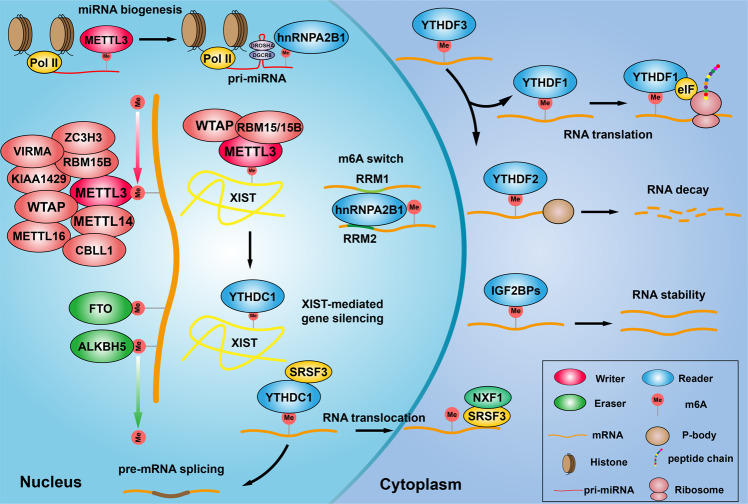
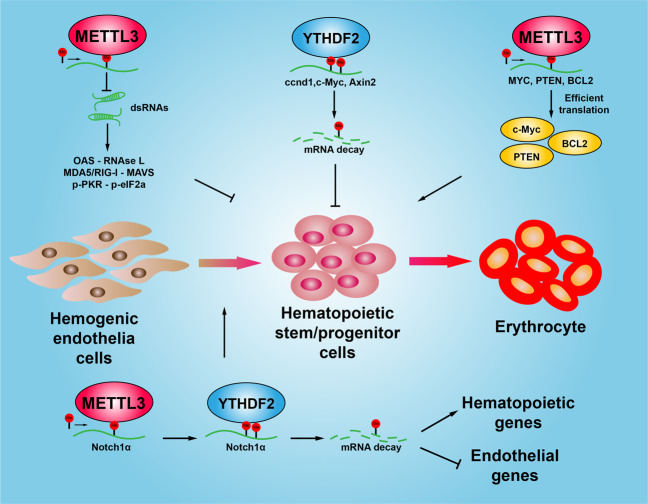
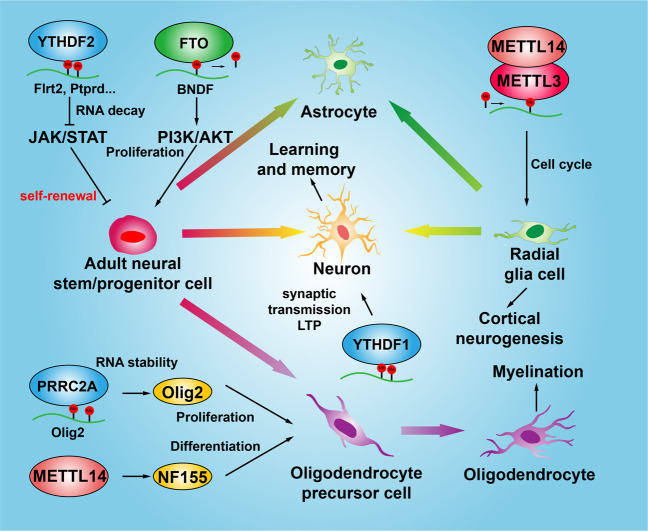
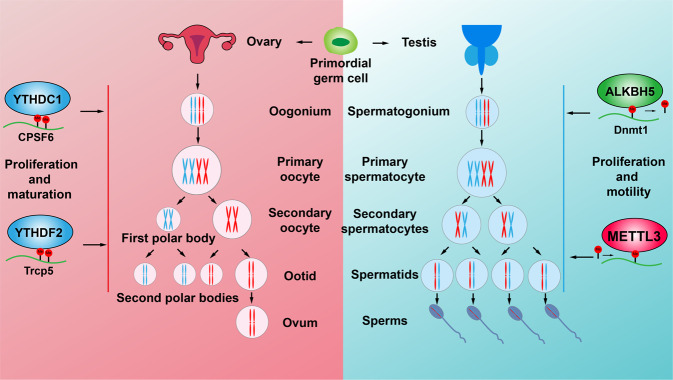
N 6 -methyladenosine (m6A) is the most prevalent, abundant and conserved internal cotranscriptional modification in eukaryotic RNAs, especially within higher eukaryotic cells. m6A modification is modified by the m6A methyltransferases, or writers, such as METTL3/14/16, RBM15/15B, ZC3H3, VIRMA, CBLL1, WTAP, and KIAA1429, and, removed by the demethylases, or erasers, including FTO and ALKBH5. It is recognized by m6A-binding proteins YTHDF1/2/3, YTHDC1/2 IGF2BP1/2/3 and HNRNPA2B1, also known as “readers”. Recent studies have shown that m6A RNA modification plays essential role in both physiological and pathological conditions, especially in the initiation and progression of different types of human cancers. In this review, we discuss how m6A RNA methylation influences both the physiological and pathological progressions of hematopoietic, central nervous and reproductive systems. We will mainly focus on recent progress in identifying the biological functions and the underlying molecular mechanisms of m6A RNA methylation, its regulators and downstream target genes, during cancer progression in above systems. We propose that m6A RNA methylation process offer potential targets for cancer therapy in the future.
Overview
The claims and statistics of this paper haven’t been checked yet.
Free: it reads the open-access text and checks the first 5 claims that cite a source we can check. Create a free account to check every claim.
Integrity signals
Registry
Cites
Statistics
Figures
Verification
Claims the paper makes
The claims and statistics of this paper haven’t been checked yet.
Free: it reads the open-access text and checks the first 5 claims that cite a source we can check. Create a free account to check every claim.
Claims other papers make about this one
Each is checked against this paper’s own text: does it say what the citing paper says it does?
The source backs part of the claim, not all of it — or backs it for a different population, condition or comparison.
In the citing paper
“Phylogenetically conserved RRM domains on readers are responsible for IMP2 identifying m6A marks on RNA [17,27].”
From IMPlications of IMP2 in RNA Biology and Disease (2025) · cites this paper as [17]
Experimental — accuracy not yet measuredThe cited source says what the claim attributes to it.
In the citing paper
“m6A (N6-methyladenosine) is a prevalent post-transcriptional modification found in mRNA and non-coding RNA in eukaryotic cells [17].”
From IMPlications of IMP2 in RNA Biology and Disease (2025) · cites this paper as [17]
In the citing paper
“m6A influences transcript splicing, stability, translation, nuclear export, and RNA structure283,284.”
From Air Pollution as an Environmental Risk Factor for Alzheimer’s Disease and Related Dementias (2024) · cites this paper as [283]
Self-check
Percentages, sums and reported differences re-computed from the paper’s own numbers.
The self-check needs the paper’s full text.
Citations
Cites
Genetics of Food Intake Self-Regulation in Childhood: Literature Review and Research Opportunities
Faith, M. S., Carnell, S., & Kral, T. V. E. (2013) · Human Heredity · doi:10.1159/000353879 · Cited by 7,601
Lippa, N. C., & Sanderson, S. C. (2013) · Human Heredity · doi:10.1159/000353712 · Cited by 6,078
Genome-wide atlas of gene expression in the adult mouse brain
Lein, E. S., Hawrylycz, M. J., Ao, N., Ayres, M., Bensinger, A., Bernard, A., Boe, A. F., Boguski, M. S., Brockway, K. S., Byrnes, E. J., et al. (2007) · Nature · doi:10.1038/nature05453 · Cited by 5,572
Topology of the human and mouse m6A RNA methylomes revealed by m6A-seq
Dominissini, D., Moshitch-Moshkovitz, S., Schwartz, S., Salmon-Divon, M., Ungar, L., Osenberg, S., Cesarkas, K., Jacob-Hirsch, J., Amariglio, N., Kupiec, M., et al. (2012) · Nature · doi:10.1038/nature11112 · Cited by 4,884
Frayling, T. M., Timpson, N. J., Weedon, M. N., Zeggini, E., Freathy, R. M., Lindgren, C. M., Perry, J. R. B., Elliott, K. S., Lango, H., Rayner, N. W., et al. (2007) · Science · doi:10.1126/science.1141634 · Cited by 4,531
Reynolds, B. A., & Weiss, S. (1992) · Science · doi:10.1126/science.1553558 · Cited by 4,482
Comprehensive Analysis of mRNA Methylation Reveals Enrichment in 3′ UTRs and near Stop Codons
Meyer, K. D., Saletore, Y., Zumbo, P., Elemento, O., Mason, C. E., & Jaffrey, S. R. (2012) · Cell · doi:10.1016/j.cell.2012.05.003 · Cited by 4,223
N6-Methyladenosine in nuclear RNA is a major substrate of the obesity-associated FTO
Jia, G., Fu, Y., Zhao, X., Dai, Q., Zheng, G., Yang, Y., Yi, C., Lindahl, T., Pan, T., Yang, Y.-G., et al. (2011) · Nature Chemical Biology · doi:10.1038/nchembio.687 · Cited by 4,106
ALKBH5 Is a Mammalian RNA Demethylase that Impacts RNA Metabolism and Mouse Fertility
Zheng, G., Dahl, J. A., Niu, Y., Fedorcsak, P., Huang, C.-M., Li, C. J., Vågbø, C. B., Shi, Y., Wang, W.-L., Song, S.-H., et al. (2013) · Molecular Cell · doi:10.1016/j.molcel.2012.10.015 · Cited by 3,550
N6-methyladenosine Modulates Messenger RNA Translation Efficiency
Wang, X., Zhao, B. S., Roundtree, I. A., Lu, Z., Han, D., Ma, H., Weng, X., Chen, K., Shi, H., & He, C. (2015) · Cell · doi:10.1016/j.cell.2015.05.014 · Cited by 3,483
Research works printed but not linked: 12
- Pendleton KE The U6 snRNA mA methyltransferase METTL16 regulates SAM synthetase intron retention Cell 2017 169 824 835.e814 10.1016/j.cell.2017.05.003 28525753 PMC5502809 · DOI · Paper page
- Patil DP m(6)A RNA methylation promotes XIST-mediated transcriptional repression Nature 2016 537 369 373 10.1038/nature19342 27602518 PMC5509218 · DOI · Paper page
- Wen J Zc3h13 regulates nuclear RNA m(6)A methylation and mouse embryonic stem cell self-renewal Mol. Cell. 2018 69 1028 1038.e1026 10.1016/j.molcel.2018.02.015 29547716 PMC5858226 · DOI · Paper page
- Huang H Recognition of RNA N-methyladenosine by IGF2BP proteins enhances mRNA stability and translation Nat. Cell Biol. 2018 20 285 295 10.1038/s41556-018-0045-z 29476152 PMC5826585 · DOI · Paper page
- Hsu PJ Ythdc2 is an N(6)-methyladenosine binding protein that regulates mammalian spermatogenesis Cell Res. 2017 27 1115 1127 10.1038/cr.2017.99 28809393 PMC5587856 · DOI · Paper page
- Yoon K-J Temporal control of mammalian cortical neurogenesis by mA methylation Cell 2017 171 877 889.e817 10.1016/j.cell.2017.09.003 28965759 PMC5679435 · DOI · Paper page
- Lv J Endothelial-specific m(6)A modulates mouse hematopoietic stem and progenitor cell development via Notch signaling Cell Res. 2018 28 249 252 10.1038/cr.2017.143 29148543 PMC5799811 · DOI
- Vu LP The N-methyladenosine (mA)-forming enzyme METTL3 controls myeloid differentiation of normal hematopoietic and leukemia cells Nat. Med. 2017 23 1369 1376 10.1038/nm.4416 28920958 PMC5677536 · DOI · Paper page
- Zhou, B. et al. N(6)-methyladenosine reader protein YT521-B Homology domain-containing 2 suppresses liver steatosis by regulation of mRNA stability of lipogenic genes. Hepatology10.1002/hep.31220 (2020). 32150756 · DOI · Paper page
- Shi H YTHDF3 facilitates translation and decay of N(6)-methyladenosine-modified RNA Cell Res. 2017 27 315 328 10.1038/cr.2017.15 28106072 PMC5339834 · DOI · Paper page
- Geula S Stem cells. m6A mRNA methylation facilitates resolution of naive pluripotency toward differentiation Science 2015 347 1002 1006 10.1126/science.1261417 25569111 · DOI · Paper page
- Su R R-2HG exhibits anti-tumor activity by targeting FTO/mA/MYC/CEBPA signaling Cell 2018 172 90 105.e123 10.1016/j.cell.2017.11.031 29249359 PMC5766423 · DOI · Paper page
Cited by
Items 501–600 of 1,006
PLAGL2 promotes Snail expression and gastric cancer progression via UCA1/miR-145-5p/YTHDF1 axis
Chen, W., He, Q., Liu, J., Li, N., Xiao, K., & Chen, H. (2023) · Carcinogenesis · doi:10.1093/carcin/bgad016 · Cited by 17
Liu, Q., Qi, J., Li, W., Tian, X., Zhang, J., Liu, F., Lu, X., Zang, H., Liu, C., Ma, C., et al. (2023) · doi:10.21203/rs.3.rs-3164252/v1 · Cited by 17
Zhang, J., Xiong, Y.-W., Zhu, H.-L., Tan, L., Zhou, H., Zheng, X., Zhang, Y., Chang, W., Xu, D., Tian, W., et al. (2024) · Journal of Hazardous Materials · doi:10.1016/j.jhazmat.2024.135159 · Cited by 18
Zhao, Y., Chen, X., Zhang, X., & Liu, H. (2025) · Biomarker Research · doi:10.1186/s40364-025-00794-y · Cited by 22
“As the most abundant mRNA modification in mammals, m6 A affects the regulation of mRNA splicing, nuclear export, stability, translation efficiency, and subcellular location [58–60].”
Chemical-assisted analysis of epigenetic modifications
Teng, X., Zhang, Q., Dai, Y., Hou, H., & Li, J. (2025) · Chemical Society Reviews · doi:10.1039/d5cs00479a · Cited by 16
Chen, H., Zhang, J., Yan, Y., Zhu, C., Wang, L., Fu, S., Zuo, F., & Zhang, G. (2022) · Theriogenology · doi:10.1016/j.theriogenology.2022.04.022 · Cited by 18
Potential medicinal value of N6‐methyladenosine in autoimmune diseases and tumours
Geng, Q., Cao, X., Fan, D., Wang, Q., Wang, X., Zhang, M., Zhao, L., Jiao, Y., Deng, T., Liu, H., et al. (2023) · British Journal of Pharmacology · doi:10.1111/bph.16030 · Cited by 19
“METTL3-mediated STAT1 mRNA methylation has been reported to significantly increase mRNA stability and subsequently up-regulate STAT1 expression, thereby driving M1 macrophage polarization (Liu, Yang, et al., 2021).”
Liu, Y., Yuan, Y., Zhou, Z., Jiang, X., He, S., Wei, F., Cui, Y., Yang, L., & Zhao, G. (2023) · Immunology Letters · doi:10.1016/j.imlet.2023.04.008 · Cited by 16
Self-citationCoordination of RNA modifications in the brain and beyond
Chen, A. Y., Owens, M. C., & Liu, K. F. (2023) · Molecular Psychiatry · doi:10.1038/s41380-023-02083-2 · Cited by 16
“These three classes of proteins are important for the regulation of m 6 A, and mutations or de fi ciencies in them may lead to a variety of diseases [31 – 34].”
BackgroundLu, J., Yu, L., Xie, N., Wu, Y., & Li, B. (2023) · Journal of Cancer · doi:10.7150/jca.84070 · Cited by 18
“RNA methylation modifications are especially crucial among the several epigenetic alterations such as histone acetylation, and DNA methylation [4].”
BackgroundLi, M., Zhi, Z., Jiang, X., Duan, G.-C., Zhu, W.-N., Pang, Z., Wang, L. Y., Ge, R., Dai, X., Liu, J., et al. (2023) · Carcinogenesis · doi:10.1093/carcin/bgad031 · Cited by 17
Self-citationMETTL16 promotes osteosarcoma progression by downregulating VPS33B in an m6A‐dependent manner
Cheng, J., Xu, Z., Tan, W., He, J., Pan, B., Zhang, Y., & Deng, Y. (2023) · Journal of Cellular Physiology · doi:10.1002/jcp.31068 · Cited by 18
“…and abundant internal transcriptional modification of messenger RNA (mRNA) in most eukaryotes (Chen et al., 2019a). m 6 A methylation is a dynamic and reversible enzymatic process involving transcription, processing, splicing, maintenance of mRNA stability and translation (Jiang et al., 2021).”
BackgroundMETTL14‑mediated RNA methylation in digestive system tumors
Hu, J., Lin, H., Wang, C., Su, Q., & Cao, B. (2023) · International Journal of Molecular Medicine · doi:10.3892/ijmm.2023.5289 · Cited by 19
“The m6A methylation ‘writer’ METTL14 has been charac‑ terized to be a weak methyltransferase that cannot catalyze methylation independently (6). complete catalysis is achieved by the METTL3/METTL14 complex, a stoichiometrically 1:1 heterodimer (48).”
BackgroundChen, Z., & Hua, Y. (2023) · Cytokine · doi:10.1016/j.cyto.2023.156313 · Cited by 19
Xu, D., Han, S., Yue, X., Xu, X., & Huang, T.-A. (2023) · Molecular Biotechnology · doi:10.1007/s12033-023-00843-7 · Cited by 17
“Core proteins for m6A methyltransferases encompass METTL3, METTL14, and WTAP, whereas m6A demeth-ylases are primarily made up of FTO and ALKBH5[12].”
InfluentialWang, Q., Shi, W., Lin, S., & Wang, H. (2023) · Journal of Orthopaedic Surgery and Research · doi:10.1186/s13018-023-04120-w · Cited by 17
“These processes are all completed by m 6 A-modifying enzymes (METTL3, METTL14, ALKBH5, etc.) [18].”
BackgroundSun, J., Zhou, H., Chen, Z., Zhang, H., Cao, Y., Yao, X., Chen, X., Liu, B., Gao, Z., Shen, Y., et al. (2023) · Journal of Translational Medicine · doi:10.1186/s12967-023-04694-3 · Cited by 21
“In addition to writer and eraser, transcripts containing m6A are also recognized and managed (determining fate) by m6A binding proteins (Reader), including YTH domain-containing family protein 1–3 (YTHDF1/2/3) and YTH domain-containing protein 1–2 (YTHDC1/2) [29–31].”
BackgroundSelf-citationComprehensive gene profiling of the metabolic landscape of humanized livers in mice
Jiang, C., Li, P., Ma, Y., Yoneda, N., Kawai, K., Uehara, S., Ohnishi, Y., Suemizu, H., & Cao, H. (2023) · Journal of Hepatology · doi:10.1016/j.jhep.2023.11.020 · Cited by 20
Li, J., Yang, F., Wang, Z., Zheng, S., Zhang, S., Wang, C., He, B., Wang, J., & Wang, H. (2023) · Cell Proliferation · doi:10.1111/cpr.13590 · Cited by 22
“14 Recently, mounting evidence has implicated m6A modulators in the initiation and malignant development of diverse tumour types.”
BackgroundTu, W., Huang, X. L., Liu, S., Zhan, Y., Cai, X., & Shao, L. (2024) · Cardiovascular Diagnosis and Therapy · doi:10.21037/cdt-23-326 · Cited by 19
Xuan, Y.-F., Lu, S., Ou, Y.-J., Bao, X., Huan, X., Song, S.-S., Miao, Z., & Wang, Y.-Q. (2024) · Biochemical and Biophysical Research Communications · doi:10.1016/j.bbrc.2024.150011 · Cited by 19
Yang, Y., Zhang, Y., Chen, G., Sun, B., Luo, F., Gao, Y., Feng, H., & Li, Y. (2024) · Journal of Experimental & Clinical Cancer Research · doi:10.1186/s13046-024-03040-9 · Cited by 18
“…YTHDC1 plays unique roles in regulating nuclear RNA alternative poly-adenylation, splicing, translation, nuclear export, and stability in an m 6 A-dependent manner [57, 58]. m 6 A modification is the most prevalent, abundant and conserved internal modification of RNA in eukaryotic cells [59].”
BackgroundRNA modifications in the progression of liver diseases: from fatty liver to cancer
Li, S., Mehal, W. Z., & Ouyang, X. (2024) · Science China Life Sciences · doi:10.1007/s11427-023-2494-x · Cited by 20
“Additionally, m 6 A modifications are implicated in metabolic diseases including diabetes mellitus, cardiovascular diseases, obesity, and notably NAFLD (De Jesus et al., 2019; Jiang et al., 2021a; Li et al., 2023; Yang et al., 2020).”
Yu, Y., Yang, Y., Chen, X., Chen, Z., Zhu, J., & Zhang, J. (2024) · Advanced Science · doi:10.1002/advs.202309712 · Cited by 20
Su, Y., Wu, Z., Liu, Y., Liu, X., Kang, J., Jia, J., & Zhang, L. (2024) · Experimental Cell Research · doi:10.1016/j.yexcr.2024.114237 · Cited by 16
Xu, L., Wang, Q., Nie, M.-X., & Chen, Z.-F. (2025) · Molecular Genetics and Genomics · doi:10.1007/s00438-024-02219-1 · Cited by 18
“As a major member of the methylation complex, METTL14 exerted biological effects mainly by regulating RNA splicing, translation, stability and translocation(Jiang et al. 2021a, b ).”
Biological roles of enhancer RNA m6A modification and its implications in cancer
Han, Y., Sun, J., Yao, M., Miao, L., & Li, M. (2025) · Cell Communication and Signaling · doi:10.1186/s12964-025-02254-4 · Cited by 22
“…and therapeutic targets. m6A modification is a methylation modification that occurs on RNA, accounting for about 60% of methylation modifications [7]. m6A methylation is primarily regulated by three types of proteins: writing proteins, which catalyse the formation of m6A methylation; erasing…”
RNAPII driven post-translational modifications of nucleosomal histones
Chan, W. S., Kumar, A., & Kono, H. (2022) · Trends in Genetics · doi:10.1016/j.tig.2022.04.010 · Cited by 16
Zhu, R., Cheng, G., Feng, Q., Guan, H., Wu, J., Samant, H. V., Yang, F., & Wang, X. (2022) · Annals of Translational Medicine · doi:10.21037/atm-22-5750 · Cited by 17
“Ann Transl Med 2022;10(24):1390 | https://dx.doi.org/10.21037/atm-22-5750 methyltransferase complex (comprising METTL3/14/16, WTAP , KIAA1429 , and RBM15/15B ) , erased v ia demethylases (FTO and ALKBH5), and recognized via binding proteins (such as YTHDF1/2/3, YTHDC1/2, and IGF2BP1/2/3) (16).”
BackgroundInfluentialJiang, L., Roberts, R., Wong, M., Zhang, L., Webber, C. J., Libera, J., Wang, Z., Kilci, A., Jenkins, M., Ortiz, A. R., et al. (2024) · Frontiers in Neuroscience · doi:10.3389/fnins.2024.1372297 · Cited by 16
Targeting DTX2/UFD1-mediated FTO degradation to regulate antitumor immunity
Cui, Y., Wei, J., Fan, H., Li, W., Zhao, L., Wilkinson, E., Peterson, J., Xie, L., Zou, Z., Yang, S., et al. (2024) · Proceedings of the National Academy of Sciences · doi:10.1073/pnas.2407910121 · Cited by 19
“Recent studies have shown that m 6 A RNA modification has vital roles in various physiological and pathological processes, especially in different types of cancers ( 6 – 8 ).”
RBM15-dependent m6A modification mediates progression of non-small cell lung cancer cells
Wang, M., Qin, Y., Ai, X., & Liu, X. (2024) · Molecular Medicine · doi:10.1186/s10020-024-01018-z · Cited by 17
FTO controls CD8+ T cell survival and effector response by modulating m6A methylation of Fas
Sun, L., Zhang, T., Ge, Y., Yao, Z., Su, Y., Wang, Q., Chen, Y., He, B., Ding, R., Zhang, C., et al. (2025) · Cell Death and Disease · doi:10.1038/s41419-025-07606-z · Cited by 15
“FTO exerts oncogenic effects on various types of cancer cells, promoting tumor cell growth by activating survival and cell-cycle signaling, such as PI3K/Akt/mTOR pathway, MYC, β -catenin, and CEBPA [10, 57].”
InfluentialSelf-citationChen, J., Liu, Z., Yue, Z., Tan, Q., Yin, H., Wang, H., Chen, Z., Zhu, Y., & Zheng, J. (2025) · Biochimica et Biophysica Acta (BBA) - General Subjects · doi:10.1016/j.bbagen.2025.130838 · Cited by 20
Worpenberg, L., Gobet, C., & Naef, F. (2025) · Genome biology · doi:10.1186/s13059-025-03800-6 · Cited by 19
CisBP-RNA: a web resource for eukaryotic RNA-binding proteins and their motifs
Rosado‐Tristani, D. A., Albu, M., Chen, X., Sasse, A., Laverty, K. U., Ray, D., Tam, C. L., Ernst, K., Lawson, L. P., Morris, Q., et al. (2025) · Nucleic Acids Research · doi:10.1093/nar/gkaf1081 · Cited by 24
“N 6 -methyladenosine/m 6 A [ 39 ]).”
Liao, X., Guo, Y., He, Y., Xiao, Y., Li, J., & Liu, R. (2021) · Pharmacological Research · doi:10.1016/j.phrs.2021.105834 · Cited by 14
Shi, R., Wang, Z., Zhang, J., Yu, Z., An, L., Wei, S., Feng, D., & Wang, H. (2021) · International Journal of General Medicine · doi:10.2147/ijgm.s336403 · Cited by 24
“N6-methyladenosine modification (m6A) is the most abundant and prevalent RNA modification present in eukaryotic cells and contains three categories of m6A methyltransferases: writer, reader, and and eraser.(4) M6A is implicated in multiple aspects of cellular metabolism, including RNA splicing, transcription, translat…”
BackgroundLiu, C., Cao, J., Zhang, H., Wu, J., & Yin, J. (2022) · International Journal of Molecular Sciences · doi:10.3390/ijms23094630 · Cited by 17
“By regulating mRNA fate, the cooperation of writers, readers, and erasers plays diverse roles in organism and diseases development [24,28].”
BackgroundWang, X., Xu, K., Liao, X., Rao, J., Huang, K., Gao, J., Xu, G., & Wang, D. (2022) · Frontiers in Genetics · doi:10.3389/fgene.2022.936658 · Cited by 15
“It is recognized by the m6A binding proteins YTHDF1/2/3, YTHDC1/2, IGF2BP1/2/3, and HNRNPA2B1, which are also known as “readers” (Jiang et al., 2021).”
BackgroundRNA N6‐methyladenosine modifications and potential targeted therapeutic strategies in kidney disease
Ni, W., Lu, H., Ma, N., Hou, B., Zeng, J., Zhou, H., Shao, W., & Meng, X. (2022) · British Journal of Pharmacology · doi:10.1111/bph.15968 · Cited by 17
“In addition, m6A has been reported to regulate the function of multiple RNAs by disrupting base pairing (Jiang et al., 2021).”
BackgroundShen, L., Zhang, C., Zhang, Y., & Yang, Y. (2022) · Reproductive BioMedicine Online · doi:10.1016/j.rbmo.2022.10.010 · Cited by 20
Dynamic regulation and key roles of ribonucleic acid methylation
Zou, J., Liu, H., Tan, W., Chen, Y., Dong, J., Bai, S.-Y., Wu, Z.-X., & Zeng, Y. (2022) · Frontiers in Cellular Neuroscience · doi:10.3389/fncel.2022.1058083 · Cited by 16
“Under the catalytic regulation of relevant enzymes, m6A participates in various diseases, including tumors, obesity, and infertility (Jiang et al., 2021).”
BackgroundSelf-citationCao, Y., Di, X., Cong, S., Tian, C., Wang, Y., Jin, X., Zhao, M., Zhou, X., Li, R., & Wang, K. (2023) · Life Sciences · doi:10.1016/j.lfs.2022.121359 · Cited by 15
Ran, Y., Yan, Z., Huang, M., Zhou, S., Wu, F., Wang, M., Yang, S., Zhang, P., Huang, X., Jiang, B., et al. (2023) · Journal of Personalized Medicine · doi:10.3390/jpm13010150 · Cited by 15
“m6A RNA methylation regulates oncogene expression, cancer stem/initiating cell pluripotency, cell differentiation, cell proliferation, migration, and angiogenesis [25].”
BackgroundIntegrated analysis of the voltage-gated potassium channel-associated gene KCNH2 across cancers
Zheng, Z., & Song, Y. (2023) · BMC Bioinformatics · doi:10.1186/s12859-023-05180-9 · Cited by 14
“In addition, there was a significant correlation between KCNH2 expression and m6A level in various tumours, such as colon adenocarcinoma (COAD), uveal melanoma (UVM), and LGG. m6A is removed by demethylases such as FTO and ALKBH5 [22], whose expression levels were significantly correlated with those of KCNH2 in PRAD,…”
BackgroundGuo, C., Tang, Y., Li, Q., Yang, Z., Guo, Y., Chen, C., & Zhang, Y. (2023) · Computers in Biology and Medicine · doi:10.1016/j.compbiomed.2023.106872 · Cited by 20
Yan, J., Wu, M., Kwok, L. Y., & Zhang, W. (2023) · Food Frontiers · doi:10.1002/fft2.279 · Cited by 16
GR-m6A: Prediction of N6-methyladenosine sites in mammals with molecular graph and residual network
Qiu, S., Liu, R., & Liang, Y. (2023) · Computers in Biology and Medicine · doi:10.1016/j.compbiomed.2023.107202 · Cited by 16
N6-methyladenosine RNA modification: an emerging molecule in type 2 diabetes metabolism
Zhang, H., Gu, Y., Gang, Q., Huang, J., Xiao, Q., & Ha, X. (2023) · Frontiers in Endocrinology · doi:10.3389/fendo.2023.1166756 · Cited by 20
“METTL3 andMETTL14 form a heterodimer, which is the main methylase catalyzing the transfer of S-adenosyl methionine (SAM) to bind to specific RNA sites, a well-conserved motif DRACH (D = G/A/U, R = G/A, H = A/U/C) (15).”
BackgroundLi, Q., Yin, Y., & Sun, M. (2023) · Genes & Genomics · doi:10.1007/s13258-023-01442-1 · Cited by 15
“Lung cancer, as one of the malignant tumors with the highest incidence and mortality rate in the world, seriously affects human life and endangers human health (Jiang et al. 2021a; Liu et al. 2023).”
BackgroundMettl3-Mediated m6A Methylation Controls Pancreatic Bipotent Progenitor Fate and Islet Formation
Sun, J., Wang, Y., Fu, H., Kang, F., Song, J., Xu, M., Ning, G., Wang, J., Wang, W., & Wang, Q. (2023) · Diabetes · doi:10.2337/db23-0360 · Cited by 18
Ni, J., Lu, X., Gao, X., Jin, C., & Mao, J. (2023) · Acta Biochimica et Biophysica Sinica · doi:10.3724/abbs.2023267 · Cited by 15
“…and development of tumors, and FTO, as the “eraser” of m 6 A, may also affect tumor biology by altering the m 6 A modification status of RNA [13], but its specific mechanism is still unclear. m 6 A modification is considered the most abundant endogenous mRNA modification and profoundly…”
Li, J., Li, S., Xing, X., Liu, N., Lai, S., Liao, D., & Li, J. (2023) · Biotechnology and Applied Biochemistry · doi:10.1002/bab.2536 · Cited by 16
“19,20 RNA translation, stability, and degradation are now all regulated by the m6A modification.”
BackgroundIPOP: An Integrative Plant Multi-omics Platform for Cross-species Comparison and Evolutionary Study
Huang, W., Hu, X., Ren, Y., Song, M., Ma, C., & Miao, Z. (2023) · Molecular Biology and Evolution · doi:10.1093/molbev/msad248 · Cited by 15
“The m 6 A modification is the most prevalent RNA modification observed in cellular systems (Jiang et al. 2021).”
BackgroundZhao, W., Xu, Y., Zhu, J., Zhang, C., Zhou, W., & Wang, S. (2024) · Scientific Reports · doi:10.1038/s41598-023-50557-8 · Cited by 17
Ji, X., Wan, X., Sun, H., Deng, Q., Meng, S., Xie, B., & Zhou, S. (2024) · Cancer Cell International · doi:10.1186/s12935-024-03250-3 · Cited by 15
“The interference with m6A modification can lead to a variety of diseases, including malignant tumors [11].”
BackgroundSu, X., Lu, R., Qu, Y., & Mu, D. (2024) · Journal of Cellular and Molecular Medicine · doi:10.1111/jcmm.18128 · Cited by 16
“51 Mechanistically, METTL3 functions by elevating m 6 A enrichment within genes linked to OVC, such as eukaryotic translation initiation factor 3 subunit C, AXL receptor tyrosine kinase ( AXL ), colony stimulating factor 1 and frizzled class receptor 10.”
BackgroundQian, Q., Pu, Q., Li, X., Liu, X., Ni, A., Han, X., Wang, Z., Wang, X., Yan, J., & Wang, H. (2024) · Chemosphere · doi:10.1016/j.chemosphere.2024.141395 · Cited by 16
Hong, L., Zhuo, T., & Jing, S. (2024) · Brain Research · doi:10.1016/j.brainres.2024.148828 · Cited by 16
Dynamics of N6-methyladenosine modification during Alzheimer's disease development
Gao, S., Wang, Y., Li, X., Liang, Y., Jin, Z., Yang, B., Yuan, T., Tian, H., Peng, B., & Rao, Y. (2024) · Heliyon · doi:10.1016/j.heliyon.2024.e26911 · Cited by 20
“While, YTHDF3 plays a dual role in the cytoplasm, which enhances translation in coordination with YTHDF1 and promotes degradation in conjunction with YTHDF2 [30].”
BackgroundSelf-citationXu, X. W., Qiu, S., Zeng, B., Huang, Y., Wang, X., Li, F., Yang, Y., Cao, L., Zhang, X., Wang, J., et al. (2024) · Oncogene · doi:10.1038/s41388-024-02992-8 · Cited by 16
“The main function of readers, including YTHDF1/2/3, YTHDC1/2, IGF2BP1/2/3, HNRNPC, and HNRNPA2B1 [9], are to recognize m 6 A-modi fi ed sites, then activate downstream effects [10], including RNA transcription, splicing, translation, and RNA stabilization [11].”
Song, P., Li, X., Chen, S., Gong, Y. L., Zhao, J., Jiao, Y., Dai, Y., Yang, H., Qian, J., Li, Y., et al. (2024) · Cell Proliferation · doi:10.1111/cpr.13619 · Cited by 17
Wang, H., Zhao, S., Liu, H., Liu, Y., Zhang, Z., Zhou, Z., Wang, P., Qi, S., & Xie, J. (2024) · International Journal of Biological Sciences · doi:10.7150/ijbs.92994 · Cited by 20
Zou, J., Ma, Q., Gao, C., Yang, M., Wen, J., Xu, L., Guo, X., Zhong, X., & Duan, Y. (2024) · Cancer Science · doi:10.1111/cas.15924 · Cited by 15
m6A control programmed cell death in cardiac fibrosis
Liu, Z., You, Q.-Y., Liu, Z., Lin, L.-C., Yang, J., & Tao, H. (2024) · Life Sciences · doi:10.1016/j.lfs.2024.122922 · Cited by 19
Zhou, L., Li, R., Wang, F., Zhou, R., Xia, Y., Jiang, X., Cheng, S., Wang, F., Li, D., Zhang, J., et al. (2024) · Journal of Hazardous Materials · doi:10.1016/j.jhazmat.2024.135736 · Cited by 18
Self-citationLONP1 alleviates ageing‐related renal fibrosis by maintaining mitochondrial homeostasis
Zhang, C., Shen, S., Xu, L., Li, M., Tian, B., Li, Y., & Zhu, X. (2024) · Journal of Cellular and Molecular Medicine · doi:10.1111/jcmm.70090 · Cited by 20
“51 METTL3 is an important methyltrans - ferase responsible for m6A modification.”
BackgroundZhang, X., Du, P., Bai, B., Lian, X., & Xue, G. (2024) · Brain Research Bulletin · doi:10.1016/j.brainresbull.2024.111156 · Cited by 16
“Furthermore, we found that YTHDF2 expression was elevated after tMCAO or OGD/R. m6A reader YTHDF2 can recognize m6A-modified transcripts by regulating diverse processes, such as mRNA stability, mRNA splicing, mRNA export, and miRNA biogenesis (Jiang et al., 2021).”
DNA and RNA Methylation in Periodontal and Peri-implant Diseases
Larsson, L., Giraldo-Osorno, P. M., Garaicoa‐Pazmiño, C., Giannobile, W. V., & Asa’ad, F. (2024) · Journal of Dental Research · doi:10.1177/00220345241291533 · Cited by 15
Liu, P., Gao, X., Yu, Z., Liu, Y., Liu, Y., Lin, J., Cao, Y., Zhai, S., Li, J., Huang, Y., et al. (2024) · Cancer Letters · doi:10.1016/j.canlet.2024.217389 · Cited by 24
Research progress concerning m6A methylation and cancer (Review)
Zhou, Y., Yang, J., Tian, Z., Zeng, J., & Shen, W. (2021) · Oncology Letters · doi:10.3892/ol.2021.13036 · Cited by 16
Bai, X., Huang, Y., Huang, W., Zhang, Y., Zhang, K., Li, Y., & Ouyang, H. (2022) · Cellular and Molecular Neurobiology · doi:10.1007/s10571-022-01267-8 · Cited by 18
“As previous studies have reported that m6A is conserved and popular mRNA modification and widely functions in cellular molecular metabolism (He et al. 2019; Liu et al. 2017; Jiang et al. 2021), where YTHDF1 works as the m6A reader and it plays an important role in nervous system and high level of YTHDF1 always associa…”
BackgroundHuang, G., Huang, S., & Cui, H. (2022) · Frontiers in Pharmacology · doi:10.3389/fphar.2022.993567 · Cited by 17
Bove, G., Amin, S., Babaei, M., Benedetti, R., Nebbioso, A., Altucci, L., & Gaudio, N. D. (2022) · International Journal of Cancer · doi:10.1002/ijc.34378 · Cited by 16
“m(6)A is the most frequent and conserved internal RNA modification.(38)”
BackgroundGong, C., Wu, J., Li, H., Luo, C., Ji, G., Guan, X., Liu, J., & Wang, M. (2023) · Biochimica et Biophysica Acta (BBA) - Molecular Cell Research · doi:10.1016/j.bbamcr.2023.119503 · Cited by 18
Targeting m6A binding protein YTHDFs for cancer therapy
Zhang, W., Wu, T., Zhang, Y., Kang, W., Du, C., You, Q., Chen, X., & Jiang, Z. (2023) · Bioorganic & Medicinal Chemistry · doi:10.1016/j.bmc.2023.117373 · Cited by 14
Decoding the epitranscriptome: a new frontier for cancer therapy and drug resistance
Tang, L., Tian, H., Min, Q., You, H., Yin, M., Yang, L., Zhao, Y., Wu, X., Li, M., Du, F., et al. (2024) · Cell Communication and Signaling · doi:10.1186/s12964-024-01854-w · Cited by 17
“The confirmation of FTO as a m 6 A "eraser" has accelerated study of it in cancer and drug resistance [181, 184].”
BackgroundSelf-citationLi, Y., Jiang, J., Zhuo, Y., Li, J., Li, Y., Xia, Y., & Yu, Z. (2025) · Biochimica et Biophysica Acta (BBA) - Molecular Basis of Disease · doi:10.1016/j.bbadis.2025.167877 · Cited by 20
An m6A methyltransferase confers host resistance by degrading viral proteins through ubiquitination
Guo, J., Zhang, T., Xie, H., Hu, H., Shi, C., Zhao, Y., Yin, J., Xu, G., Wu, Z., Wang, P., et al. (2025) · Nature Communications · doi:10.1038/s41467-025-60199-1 · Cited by 14
“Ingeneral, m 6 A modi fi cation is a reversible process catalysed by a series of speci fi c enzymes, namely, writers, readers and erasers, which together constitutethedynamicpatternof m 6 Amodi fi cationinmRNAs 9,10 .”
Circular RNA: From non-coding regulators to functional protein encoders
Zhang, X., Wu, H., Hong, X., Xiao, Y., & Zeng, X. (2025) · Pharmaceutical Science Advances · doi:10.1016/j.pscia.2025.100085 · Cited by 16
“This modification is catalyzed by m 6 A methyltransferases and removed by demethylases, with its recognition mediated by m 6 A-binding proteins [97].”
GlycoRNA research: from unknown unknowns to known unknowns
Yi, L., Zhou, Y., Zhang, C., Lu, H., & Xie, Y. (2025) · Protein & Cell · doi:10.1093/procel/pwaf102 · Cited by 18
The emerging roles of N6-methyladenosine in osteoarthritis
Liu, H., Zheng, Y.-L., & Wang, X. (2022) · Frontiers in Molecular Neuroscience · doi:10.3389/fnmol.2022.1040699 · Cited by 14
“The role of m6A in the central nervous system, hematopoietic system and reproductive system has been widely discussed, especially in cancer progression (Jiang et al., 2021).”
BackgroundALDOB represents a potential prognostic biomarker for patients with clear cell renal cell carcinoma
Shao, Y., Wu, B., Yang, Z., Liu, Z., Ma, Y., Huang, H., Liu, Y., Wang, Z., Hu, W., Wang, Y., et al. (2023) · Translational Andrology and Urology · doi:10.21037/tau-22-743 · Cited by 13
“…of immune cells and stromal cells to change the immune components of the TME, which in turn affects the prognosis of ccRCC patients. m6A modification is the most prevalent, abundant, and conserved post-transcriptional modification to control the gene expression in the eukaryotic cells (62).”
m6A methylation in cellular senescence of age-associated diseases
Gao, P., Yao, F., Pang, J., Yin, K., & Zhu, X. (2023) · Acta Biochimica et Biophysica Sinica · doi:10.3724/abbs.2023107 · Cited by 19
“The components of the reader include IGF2BP1/2/3, YTHDF1/2/3, HNRNPA2B1, and HNRNPC [19,25].”
BackgroundN6-methyladenosine modification: an important player in the tumor immune microenvironment
Hu, J., Xue, C., & Wang, Q. (2023) · Biomedicine & Pharmacotherapy · doi:10.1016/j.biopha.2023.115171 · Cited by 14
Han, Y., Yang, D., Jiang, S., Zhao, S., Ma, F., & Zhang, C. (2024) · TrAC Trends in Analytical Chemistry · doi:10.1016/j.trac.2024.117553 · Cited by 14
Ma, L., Zhou, X., Yao, S., Zhang, X., Mao, J., Vona, B., Fan, L., Lou, S., Li, D., Wang, L., et al. (2024) · Cell Death and Disease · doi:10.1038/s41419-024-06606-9 · Cited by 18
“Zebra fi sh embryos were cultured in E3 medium supplemented with 0.01mg/L methylene blue and collected at the 1-cell stage.”
Zhang, H., Chen, Q., Han, H., Guo, C., Jiang, X., Xia, Y., Zhang, Y., Zhou, L., Zhang, J., Tian, X., et al. (2024) · Journal of Hazardous Materials · doi:10.1016/j.jhazmat.2024.134440 · Cited by 17
Self-citationHarrahill, N. J., & Hadden, M. K. (2024) · European Journal of Medicinal Chemistry · doi:10.1016/j.ejmech.2024.116526 · Cited by 15
Pinello, N., Song, R., Lee, Q., Calonne, E., Duan, K., Wong, E., Tieng, J., Mehravar, M., Rong, B., Lan, F., et al. (2024) · Cellular and Molecular Life Sciences · doi:10.1007/s00018-024-05261-9 · Cited by 20
“In contrast to m 6 A, which has been extensively mapped across different tissues, cell types and pathological conditions [26, 27], few studies have explored the roles of RNA 5 hmC in normal physiology and”
BackgroundSu, Q., Wu, L., Zheng, C., Ji, X., Lin, X., Zhang, Y., Zheng, F., Guo, Z., Shao, W., Hu, H., et al. (2024) · Environment International · doi:10.1016/j.envint.2024.108897 · Cited by 16
Histone methylation and acetylation in cancer: mechanism, progression, and targets
Bu, S., Ye, T., Gao, H., Song, H., & Zhu, Y. (2024) · ONCOLOGIE · doi:10.1515/oncologie-2024-0324 · Cited by 17
Wang, S., Han, L., Su, M., He, J., Tang, Y., Ying, Y., Chen, Z., Zhu, Q., Ge, R.-S., Li, H., et al. (2024) · Ecotoxicology and Environmental Safety · doi:10.1016/j.ecoenv.2024.117061 · Cited by 14
Hou, R., Sun, X., Cao, S., Wang, Y., & Jiang, L. (2024) · Cell Death and Disease · doi:10.1038/s41419-024-07257-6 · Cited by 16
Feng, S., Zhou, H., Lin, X., Zhu, S., Chen, H., Zhou, H., Wang, R., Wang, P., Shao, X., & Wang, J. (2024) · Cellular & Molecular Biology Letters · doi:10.1186/s11658-024-00670-x · Cited by 19
“However, MyoD was not identified as a target of m6A-YTHDC1, possibly due to the diversity of other m6A readers such as YTHDF1, YTHDF2, and YTHDC2 [54, 55].”
Energy Stress–Induced circEPB41(2) Promotes Lipogenesis in Hepatocellular Carcinoma
Yang, Y., Luo, J., Wang, Z., Liu, K., Feng, K., Wang, F., & Mei, Y. (2024) · Cancer Research · doi:10.1158/0008-5472.can-24-1630 · Cited by 16
METTL3: a multifunctional regulator in diseases
Li, N., Xiang, W., Dai, J., Yang, J., & Xiong, S. (2025) · Molecular and Cellular Biochemistry · doi:10.1007/s11010-025-05208-z · Cited by 18
“Controversial conclusions have been drawn by different groups, which may be due to differential expression levels of the genes of interest or to differences in the cellular context [257].”
Zhang, X., Tang, Y., Yang, M., Yang, M., Jiang, J. H., Xue, H., Wang, Y., Zhang, J., & Wang, X. (2025) · Journal of Hazardous Materials · doi:10.1016/j.jhazmat.2025.137432 · Cited by 16
Liao, Q., Li, Y., Cui, M., & Liu, M. (2025) · Diabetic Medicine · doi:10.1111/dme.70033 · Cited by 20
“For instance, apart from ALKBH5, whether other m6A-related enzymes, such as METTL3 and FTO, 5,29 are involved in ferropto-sis in DR remains unclear.”
Metadata
- Authors
- Jiang, X., Liu, B., Nie, Z., Duan, L., Xiong, Q., Jin, Z., Yang, C., & Chen, Y.
- Affiliations
- Kunming Institute of Zoology (CN)
- Kunming Medical University (CN)
- Corresponding author
- Yang, Cuiping
- Chen, Yongbin
- Venue
- Signal Transduction and Targeted Therapy
- Published
- 2021-02-21
- Volume
- 6
- Issue
- 1
- Pages
- 74-74
- ISSN
- 2059-3635 (ISSN-L)
- PMC
- PMC7897327
- OpenAlex
- W3133117790
- Semantic Scholar
- bb3e99165f58f5ec0b7529899c5348c6d862434c
- Cited by
- 2,335
- References
- 253
- Citations by year
- 2026: 366 · 2025: 624 · 2024: 589 · 2023: 426 · 2022: 230 · 2021: 96
- FWCI
- 35.75
- Type
- journal article
- Language
- en
- Open access
- gold
- doi.org
- Licence
- cc-by
- creativecommons.org/licenses/by/4.0 (tdm)
- creativecommons.org/licenses/by/4.0 (vor)
- Locations
- Signal Transduction and Targeted Therapy (publishedVersion, cc-by)
- PubMed Central (publishedVersion, cc-by)
- PubMed (publishedVersion)
- DOAJ (DOAJ: Directory of Open Access Journals) (submittedVersion, cc-by-sa)
- Funders
- National Natural Science Foundation of China (2016YFA0100900, 82060515, U1902216, 2020-1, 81772996, 81672764)
- Youth Innovation Promotion Association of the Chinese Academy of Sciences (2016YFA0100900)
- Recruitment Program of Global Experts
- National Key Research and Development Program of China (2016YFA0100900)
- Youth Innovation Promotion Association (2016YFA0100900)
- National Key Research and Development Program of China Stem Cell and Translational Research (2016YFA0100900)
- Topics
- Life Sciences › Biochemistry, Genetics and Molecular Biology › Molecular Biology › RNA modifications and cancer
- Life Sciences › Biochemistry, Genetics and Molecular Biology › Molecular Biology › RNA regulation and disease
- Life Sciences › Biochemistry, Genetics and Molecular Biology › Molecular Biology › Cancer-related gene regulation
- Keywords
- m6A RNA methylation, N6-methyladenosine, RNA methyltransferase, RNA demethylase, m6A-binding proteins, tumor progression, hematopoietic system, central nervous system, reproductive system, cancer therapy targets
- MeSH terms
- RNA Splicing Factors, Adenosine, Humans, Methylation, Methyltransferases, Neoplasms, Nerve Tissue Proteins, RNA Processing, Post-Transcriptional, RNA-Binding Proteins, Heterogeneous-Nuclear Ribonucleoprotein Group A-B, Epigenesis, Genetic
About these checks
Registry, retraction, Cites and statistics results are computed, not judged, with one exception: a printed reference that no index lists is read once by a model before it counts as a citation error. Claims are extracted by a model and kept only when their quote appears verbatim in the text; each cited source is then checked, with a model’s help, for whether it says what the claim relies on. Those verdicts can be wrong — read the claim’s quote and the cited source before relying on one.
Statistics and arithmetic are recomputed, not judged.
Confidence bands are shown only for fields calibrated on our annotated test set. None is calibrated yet, so no band is shown.
What counts as a claim ›How we measure confidence ›How we check this ›
Are you an author, or do you see a problem with this page? Request a review
Data sources
Bibliographic data: Semantic Scholar, OpenAlex, Crossref.
Contains information from the Semantic Scholar Academic Graph Datasets, made available under the ODC Attribution License (ODC-BY 1.0).
Semantic Scholar’s data is described in: Kinney, R., et al. (2023). The Semantic Scholar Open Data Platform. arXiv:2301.10140.
