

KRAS mutation: from undruggable to druggable in cancer
Open accessThe DOI matches its Crossref record; 238 of the 240 references it cites were found in a registry or an index.
Abstract
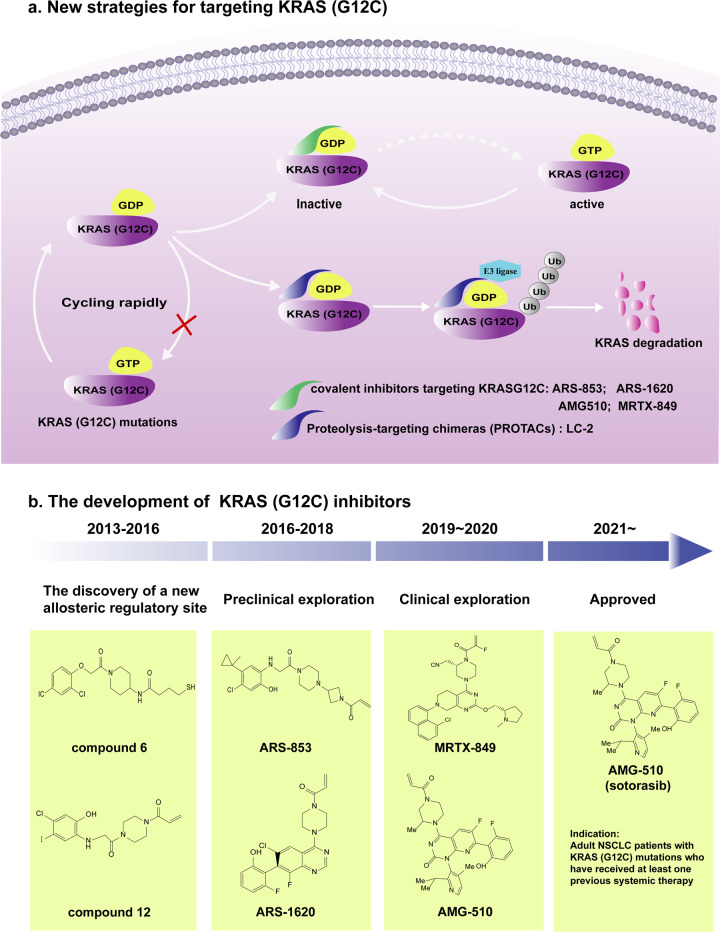
Cancer is the leading cause of death worldwide, and its treatment and outcomes have been dramatically revolutionised by targeted therapies. As the most frequently mutated oncogene, Kirsten rat sarcoma viral oncogene homologue (KRAS) has attracted substantial attention. The understanding of KRAS is constantly being updated by numerous studies on KRAS in the initiation and progression of cancer diseases. However, KRAS has been deemed a challenging therapeutic target, even “undruggable”, after drug-targeting efforts over the past four decades. Recently, there have been surprising advances in directly targeted drugs for KRAS, especially in KRAS (G12C) inhibitors, such as AMG510 (sotorasib) and MRTX849 (adagrasib), which have obtained encouraging results in clinical trials. Excitingly, AMG510 was the first drug-targeting KRAS (G12C) to be approved for clinical use this year. This review summarises the most recent understanding of fundamental aspects of KRAS, the relationship between the KRAS mutations and tumour immune evasion, and new progress in targeting KRAS, particularly KRAS (G12C). Moreover, the possible mechanisms of resistance to KRAS (G12C) inhibitors and possible combination therapies are summarised, with a view to providing the best regimen for individualised treatment with KRAS (G12C) inhibitors and achieving truly precise treatment.
Overview
The claims and statistics of this paper haven’t been checked yet.
Free: it reads the open-access text and checks the first 5 claims that cite a source we can check. Create a free account to check every claim.
Integrity signals
Registry
Cites
Statistics
Figures
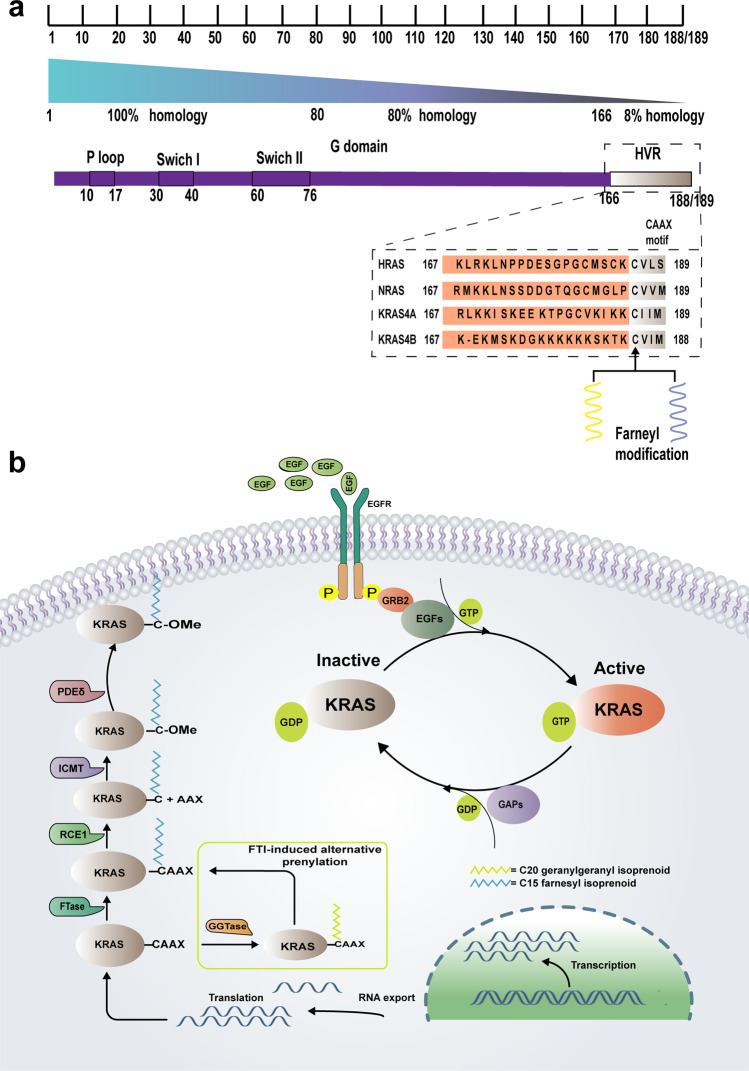
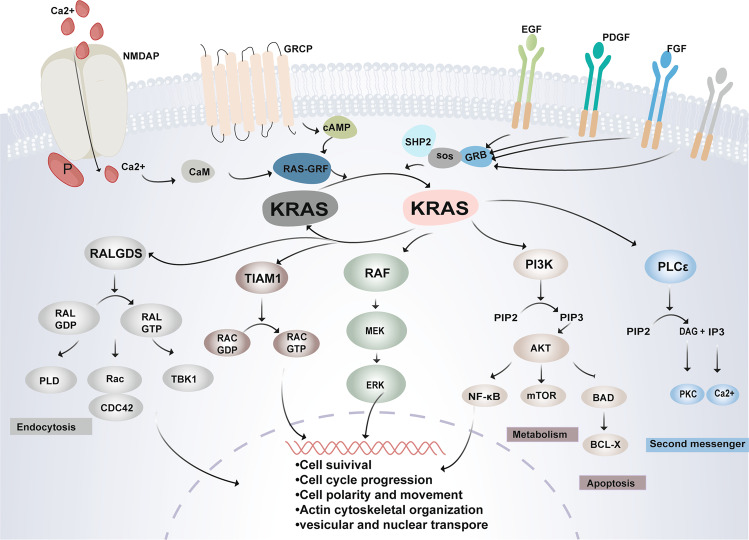
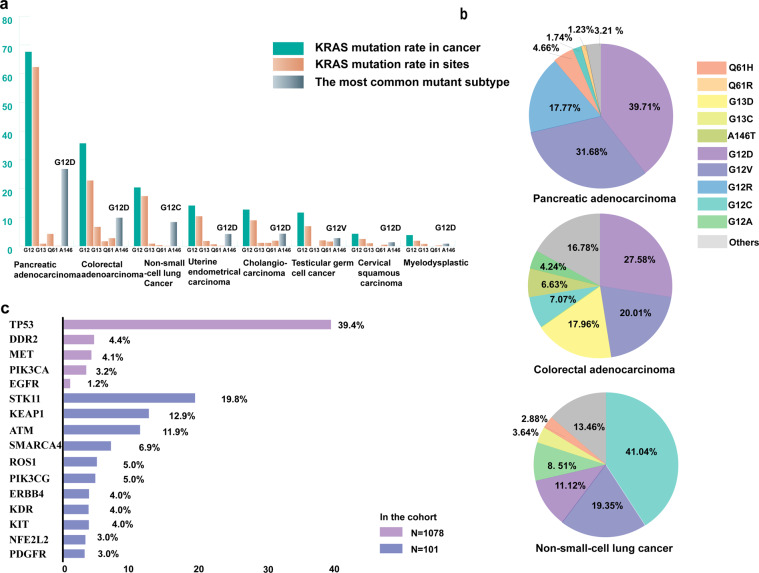
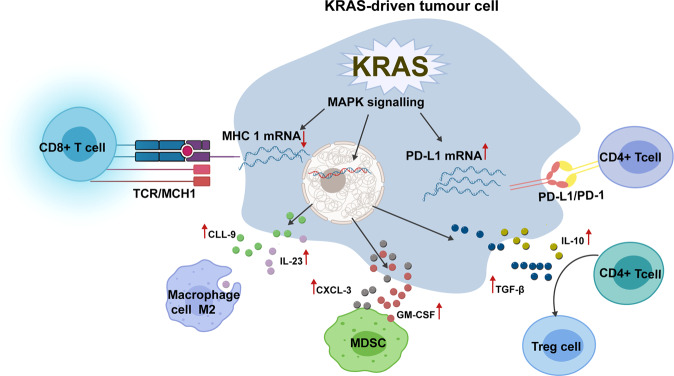
Verification
Claims the paper makes
The claims and statistics of this paper haven’t been checked yet.
Free: it reads the open-access text and checks the first 5 claims that cite a source we can check. Create a free account to check every claim.
Claims other papers make about this one
Each is checked against this paper’s own text: does it say what the citing paper says it does?
The source backs part of the claim, not all of it — or backs it for a different population, condition or comparison.
In the citing paper
“KRAS is the most frequently mutated oncogene, accounting for approximately 85% of all RAS mutations in 20–25% of all cancers [8–10].”
From Differential Response and Resistance to KRAS-Targeted Therapy (2025) · cites this paper as [8]
Experimental — accuracy not yet measuredThe source backs part of the claim, not all of it — or backs it for a different population, condition or comparison.
In the citing paper
“Among the various KRAS mutations in human cancers, G12C, G12D, G12V, and G12A are the most prevalent (2).”
From YAP/TAZ mediates resistance to KRAS inhibitors through inhibiting proapoptosis and activating the SLC7A5/mTOR axis (2024) · cites this paper as [2]
Experimental — accuracy not yet measuredThe cited source says what the claim attributes to it.
In the citing paper
“KRAS mutations most commonly occur at the 12th codon near the nucleotide-binding site, with less prevalent mutations occurring at codons 13, 61, and 146 within other catalytic domains (Figure 1b,c) [23].”
From KRAS: Biology, Inhibition, and Mechanisms of Inhibitor Resistance (2024) · cites this paper as [23]
The cited source says what the claim attributes to it.
In the citing paper
“Kirsten rat sarcoma viral oncogene homolog (KRAS) is the most frequently mutated oncogene in various types of human cancers such as pancreatic, lung, and colorectal cancer, with G12, G13, and Q61 being the most prevalent mutant codons observed (1, 2).”
From YAP/TAZ mediates resistance to KRAS inhibitors through inhibiting proapoptosis and activating the SLC7A5/mTOR axis (2024) · cites this paper as [2]
The cited source says what the claim attributes to it.
In the citing paper
“Moreover, potent inhibition through covalent modification has enabled targeting of traditionally ‘undruggable’ proteins, exemplified by the approval of sotorasib (Amgen), which is an inhibitor of mutant KRAS(G12C), a GTPase that resisted decades of drug discovery efforts9,10”
From Advances in covalent drug discovery (2022) · cites this paper as [10]
4 more claims about this paper
Create a free account to see every claim other papers make about this one.
Self-check
Percentages, sums and reported differences re-computed from the paper’s own numbers.
The self-check needs the paper’s full text.
Citations
Cites
Hallmarks of Cancer: The Next Generation
Hanahan, D., & Weinberg, R. A. (2011) · Cell · doi:10.1016/j.cell.2011.02.013 · Cited by 66,590
Adverse Renal Effects of Immune Checkpoint Inhibitors: A Narrative Review
Wanchoo, R., Karam, S., Uppal, N. N., Barta, V. S., Deray, G., Devoe, C., Launay-Vacher, V., Jhaveri, K. D., & on behalf of Cancer and Kidney International Network Workgroup on Immune Checkpoint Inhibitors (2017) · American Journal of Nephrology · doi:10.1159/000455014 · Cited by 15,256
Calcium's Role in Mechanotransduction during Muscle Development
Benavides Damm, T., & Egli, M. (2014) · Cellular Physiology and Biochemistry · doi:10.1159/000356667 · Cited by 14,502
Nivolumab versus Docetaxel in Advanced Squamous-Cell Non–Small-Cell Lung Cancer
Brahmer, J., Reckamp, K. L., Baas, P., Crinò, L., Eberhardt, W. E. E., Poddubskaya, E., Antonia, S., Pluzanski, A., Vokes, E. E., Holgado, E., et al. (2015) · New England Journal of Medicine · doi:10.1056/nejmoa1504627 · Cited by 8,447
Gefitinib or Carboplatin–Paclitaxel in Pulmonary Adenocarcinoma
Mok, T. S., Wu, Y.-L., Thongprasert, S., Yang, C.-H., Chu, D.-T., Saijo, N., Sunpaweravong, P., Han, B., Margono, B., Ichinose, Y., et al. (2009) · New England Journal of Medicine · doi:10.1056/nejmoa0810699 · Cited by 8,261
Understanding the tumor immune microenvironment (TIME) for effective therapy
Binnewies, M., Roberts, E. W., Kersten, K., Chan, V., Fearon, D. F., Merad, M., Coussens, L. M., Gabrilovich, D. I., Ostrand-Rosenberg, S., Hedrick, C. C., et al. (2018) · Nature Medicine · doi:10.1038/s41591-018-0014-x · Cited by 6,145
Osimertinib in Untreated EGFR -Mutated Advanced Non–Small-Cell Lung Cancer
Soria, J.-C., Ohe, Y., Vansteenkiste, J., Reungwetwattana, T., Chewaskulyong, B., Lee, K. H., Dechaphunkul, A., Imamura, F., Nogami, N., Kurata, T., et al. (2018) · New England Journal of Medicine · doi:10.1056/nejmoa1713137 · Cited by 5,508
Cancer drug resistance: an evolving paradigm
Holohan, C., Van Schaeybroeck, S., Longley, D. B., & Johnston, P. G. (2013) · Nature Reviews Cancer · doi:10.1038/nrc3599 · Cited by 4,681
Anaplastic Lymphoma Kinase Inhibition in Non–Small-Cell Lung Cancer
Kwak, E. L., Bang, Y.-J., Camidge, D. R., Shaw, A. T., Solomon, B., Maki, R. G., Ou, S.-H. I., Dezube, B. J., Jänne, P. A., Costa, D. B., et al. (2010) · New England Journal of Medicine · doi:10.1056/nejmoa1006448 · Cited by 4,446
Systematic RNA interference reveals that oncogenic KRAS-driven cancers require TBK1
Barbie, D. A., Tamayo, P., Boehm, J. S., Kim, S. Y., Moody, S. E., Dunn, I. F., Schinzel, A. C., Sandy, P., Meylan, E., Scholl, C., et al. (2009) · Nature · doi:10.1038/nature08460 · Cited by 3,890
Research works printed but not linked: 6
- Hunter JC Biochemical and Structural Analysis of Common Cancer-Associated KRAS Mutations Mol. Cancer Res. 2015 13 1325 1335 26037647 · DOI · Paper page
- Hunter JC Biochemical and Structural Analysis of Common Cancer-Associated KRAS Mutations Mol. Cancer Res 2015 13 1325 1335 26037647 · DOI · Paper page
- Romero R Keap1 loss promotes Kras-driven lung cancer and results in dependence on glutaminolysis Nat. Med 2017 23 1362 1368 28967920 PMC5677540 · DOI · Paper page
- Hallin J The KRAS(G12C) Inhibitor MRTX849 Provides Insight toward Therapeutic Susceptibility of KRAS-Mutant Cancers in Mouse Models and Patients Cancer Disco. 2020 10 54 71 PMC6954325 31658955 · DOI · Paper page
- Hallin J The KRAS Inhibitor MRTX849 Provides Insight toward Therapeutic Susceptibility of KRAS-Mutant Cancers in Mouse Models and Patients Cancer Discov. 2020 10 54 71 31658955 PMC6954325 · DOI · Paper page
- Tanaka N Clinical Acquired Resistance to KRAS Inhibition through a Novel KRAS Switch-II Pocket Mutation and Polyclonal Alterations Converging on RAS-MAPK Reactivation Cancer Discov. 2021 11 1913 1922 33824136 PMC8338755 · DOI · Paper page
Cited by
Items 201–300 of 999
Potocki, P. M., Wójcik, P., Chmura, Ł., Goc, B., Fedewicz, M., Bielańska, Z., Swadźba, J., Konopka, K. W., Kwinta, Ł., & Wysocki, P. J. (2023) · International Journal of Molecular Sciences · doi:10.3390/ijms24109073 · Cited by 20
Zhang, J. H., Darman, L., Hassan, M. S., von Holzen, U. W., & Awasthi, N. (2023) · Oncology Reports · doi:10.3892/or.2023.8643 · Cited by 24
“Therefore, targeting all KRAS mutation alleles with a single drug may be an ideal therapeutic strategy for most solid tumors where relative frequencies of different KRAS mutation subtypes are very diverse (130).”
BackgroundLee, M. R., Woo, S. M., Kim, M. K., Han, S., Park, S., Lee, W. J., Lee, D.-E., Choi, S. Y., Choi, W., Yoon, K., et al. (2024) · Cancer Science · doi:10.1111/cas.16104 · Cited by 18
“18 Here, in order to predict the prognosis of pancreatic cancer, we sought to identify seven mutations found in KRAS codons 12 and 13 of tumor and plasma ctDNA.”
BackgroundThe trend toward more target therapy in pancreatic ductal adenocarcinoma
Deiana, C., Agostini, M., Brandi, G., & Giovannetti, E. (2024) · Expert Review of Anticancer Therapy · doi:10.1080/14737140.2024.2357802 · Cited by 19
“…that can affect multiple pathways related to tumor survival, including the RAF-MEK-ERK pathway and the PI3K/AKT/mTOR pathway, more-over, several tyrosine kinase receptors have the ability to activate KRAS, through the mediation of other protein such as SHP2, GRB2, and SOS1 (Figure 1, Table 2) [61].”
BackgroundFontes, M. G., Silva, C., Roldán, W. H., & Monteiro, G. (2024) · Medical Oncology · doi:10.1007/s12032-024-02424-3 · Cited by 19
Qiu, Y., Wiewiora, R., Izaguirre, J. A., Xu, H., Sherman, W., Tang, W., & Huang, X. (2024) · JACS Au · doi:10.1021/jacsau.4c00503 · Cited by 21
Ramalingam, P. S., Premkumar, T., Sundararajan, V., Hussain, M. S., & Arumugam, S. (2024) · Discover Oncology · doi:10.1007/s12672-024-01455-6 · Cited by 19
“…upstream & down-stream effectors, direct KRAS and its regulators, cell cycle regulators); siRNA candidates; cancer vaccines; PROteolysis TArgeting Chimers (PROTACs); Antibody–Drug conjugates (ADCs); and Immunotherapies are being developed and studied in preclinical and clinical models [9–12].”
BackgroundA multiplex, prime editing framework for identifying drug resistance variants at scalePreprint
Chardon, F. M., Suiter, C. C., Daza, R. M., Smith, N. T., Parrish, P. C. R., McDiarmid, T. A., Lalanne, J., Martin, B., Calderon, D., Ellison, A., et al. (2023) · bioRxiv (Cold Spring Harbor Laboratory) · doi:10.1101/2023.07.27.550902 · Cited by 17
Long-term exposure to house dust mites accelerates lung cancer development in mice
Wang, D., Li, W., Albasha, N., Griffin, L., Chang, H., Amaya, L., Ganguly, S., Zeng, L., Keum, B., González-Navajas, J. M., et al. (2023) · Journal of Experimental & Clinical Cancer Research · doi:10.1186/s13046-022-02587-9 · Cited by 25
Chimera and Tandem-Repeat Type Galectins: The New Targets for Cancer Immunotherapy
Ko, F. C. F., Yan, S., Lee, K. W., Lam, S. K., & Ho, J. (2023) · Biomolecules · doi:10.3390/biom13060902 · Cited by 17
Polyacrylonitrile microfibers pose a significant threat to the early-stage survival of zebrafish
Zhang, Y., Jiang, Y., Zhu, Z., Xu, X., & Yang, H. (2023) · Aquatic Toxicology · doi:10.1016/j.aquatox.2023.106755 · Cited by 19
Choi, J., Shin, J. H., Kim, T. K., Kim, K., Kim, J.-Y., Jeon, E., Park, J., Han, Y. D., Kim, K., Sim, T., et al. (2024) · Cancer Letters · doi:10.1016/j.canlet.2024.216904 · Cited by 21
Yang, Q., To, K. K. W., Hu, G., Fu, K., Yang, C. H., Zhu, S., Pan, C., Wang, F., Luo, K.-W., & Fu, L. (2024) · Cell Communication and Signaling · doi:10.1186/s12964-024-01698-4 · Cited by 18
Self-citationConditional RNA interference in mammalian cells via RNA transactivation
Zhou, Y., Sheng, P., Li, J., Li, Y., Xie, M., & Green, A. A. (2024) · Nature Communications · doi:10.1038/s41467-024-50600-w · Cited by 17
Emerging Gene-editing nano-therapeutics for Cancer
Nujoom, N., Koyakutty, M., Biswas, L., Rajkumar, T., & Nair, S. V. (2024) · Heliyon · doi:10.1016/j.heliyon.2024.e39323 · Cited by 20
Drug‐Induced Liver Injury Associated With Emerging Cancer Therapies
Chodup, P., Samodelov, S. L., Visentin, M., & Kullak-Ublick, G. A. (2025) · Liver International · doi:10.1111/liv.70002 · Cited by 18
2-Deoxyglucose, an Inhibitor of Glycolysis, Enhances the Oncolytic Effect of Coxsackievirus
Vorobyev, P. O., Кочетков, Д. В., Chumakov, P. M., Zakirova, N. F., Zotova-Nefedorova, S., Василенко, К. В., Alekseeva, O. N., Kochetkov, S. N., Bartosch, B., Lipatova, A. V., et al. (2022) · Cancers · doi:10.3390/cancers14225611 · Cited by 18
Yuan, Y., Deng, Y., Jin, Y., Guo, Z., Pan, Y., Wang, C., Wang, Z., Hu, Y., Hua, D., Meng, X., et al. (2025) · Signal Transduction and Targeted Therapy · doi:10.1038/s41392-025-02315-7 · Cited by 22
Self-citationIdentification of a Highly Cooperative PROTAC Degrader Targeting GTP-Loaded KRAS(On) Alleles
Vetma, V., Puoti, I., Karolak, N. K., Chakraborti, S., Diers, E., Girardi, E., Khan, S., Kidd, G., Kropatsch, K., McLennan, R., et al. (2025) · Journal of the American Chemical Society · doi:10.1021/jacs.5c10354 · Cited by 21
Huang, D., Liu, Y., Wang, G. A., Lv, S., Tan, Y., & Li, F. (2026) · Chemical Society Reviews · doi:10.1039/d5cs01006c · Cited by 21
Oyedele, A.-Q. K., Ogunlana, A. T., Boyenle, I. D., Ibrahim, N. O., Gbadebo, I. O., Owolabi, N., Ashiru, M. A., Francis, A. C., Eyinade, O., & Adelusi, T. I. (2022) · Molecular Diversity · doi:10.1007/s11030-022-10534-1 · Cited by 19
“With only a few potent covalent KRAS G12C inhibitors in clinical trials [30, 31], there is pressing need for the identification of novel chemical scaffolds that could act as putative binders against the protein target.”
BackgroundNasioudis, D., Llauradó, M., Wong, N. K. Y., Powell, D. J., Mills, G. B., Westin, S. N., Fader, A. N., Carey, M. S., & Simpkins, F. A. (2023) · Gynecologic Oncology · doi:10.1016/j.ygyno.2023.08.007 · Cited by 19
Cameron, D. P., Grosser, J., Ladigan, S., Kuzin, V., Iliopoulou, E., Wiegard, A., Benredjem, H., Jackson, K., Liffers, S. T., Lueong, S., et al. (2023) · Science Advances · doi:10.1126/sciadv.adg5109 · Cited by 19
“Therefore, many strategies are directed to target KRAS downstream signaling to indirectly block the oncoprotein’s effect (83).”
BackgroundDual-targeted NAMPT inhibitors as a progressive strategy for cancer therapy
Özgencil, F., Gunindi, H. B., & Eren, G. (2024) · Bioorganic Chemistry · doi:10.1016/j.bioorg.2024.107509 · Cited by 15
Thomas, Q. D., Quantin, X., Lemercier, P., CHOUAID, C., Schneider, S., Filleron, T., Remon-Masip, J., Pérol, M., Debieuvre, D., Audigier-Valette, C., et al. (2024) · ESMO Open · doi:10.1016/j.esmoop.2024.103473 · Cited by 17
“13 So far, two molecules have been approved for the treatment of KRAS p.G12C -mutated NSCLC after failure of platinum-based chemotherapy and immunotherapy targeting programmed cell death protein 1 (PD-1)/PD-L1: sotorasib (AMG510) 14,15 and adagrasib (MRTX849).”
BackgroundGhannam, I. A. Y., Kerdawy, A. M. E., Mounier, M. M., Abo-Elfadl, M. T., & Abdel‐Mohsen, H. T. (2024) · Bioorganic Chemistry · doi:10.1016/j.bioorg.2024.107848 · Cited by 16
Advancements in gene therapies targeting mutant KRAS in cancers
Wang, Y., Bui, T. A., Yang, X., Hutvágner, G., & Deng, W. (2025) · Cancer and Metastasis Reviews · doi:10.1007/s10555-025-10243-9 · Cited by 23
“This phenomenon has been observed in pancreas, colon and lung cancers harbouring KRAS mutations [2].”
The Importance of Mg 2+ ‐Free State in Nucleotide Exchange of Oncogenic K‐Ras Mutants
Pálfy, G., Menyhárd, D. K., Ákontz‐Kiss, H., Vida, I., Batta, G., Tőke, O., & Perczel, A. (2022) · Chemistry - A European Journal · doi:10.1002/chem.202201449 · Cited by 14
Kang, D., Wang, Y., Lin, Y., Ma, W. W., Morgensztern, D., Leventakos, K., Bi, C., Ding, Y., Xiong, J., Yan, M., et al. (2025) · Clinical Cancer Research · doi:10.1158/1078-0432.ccr-24-3691 · Cited by 17
Pancreatic cancer: failures and hopes—a review of new promising treatment approaches
Cereda, V., & D'Andrea, M. R. (2025) · Exploration of Targeted Anti-tumor Therapy · doi:10.37349/etat.2025.1002299 · Cited by 23
Nalawansha, D. A., Mazis, G., Husemoen, G., Ashton, K. S., Deng, W., Wurz, R. P., Tran, A. T., Lanman, B. A., Xie, J., Guenette, R. G., et al. (2025) · Nature Communications · doi:10.1038/s41467-025-63128-4 · Cited by 20
Lu, J. G., Hu, M., Zhao, Y., Chu, T., Zhang, W., Zhou, Y., Cai, X., Wu, J., Hu, L., Shi, C., et al. (2025) · Signal Transduction and Targeted Therapy · doi:10.1038/s41392-025-02382-w · Cited by 16
“9 Nevertheless, a signi fi cant breakthrough occurred in 2021 with the introduction of the fi rst inhibitor against KRAS G12C , sotorasib, which has demonstrated clinical effectiveness.”
Gao, Q., Wu, H., Duan, L., Lv, G., & Quan, D. (2025) · Frontiers in Immunology · doi:10.3389/fimmu.2025.1648987 · Cited by 20
“KRAS mutations cause constitutive activation of the MAPK signaling pathway, promoting cell proliferation, survival, and motility (31, 32).”
Ahn, M., Lee, T., Kim, K. S., Lee, S., & Na, K. (2023) · Advanced Healthcare Materials · doi:10.1002/adhm.202302374 · Cited by 14
Cheng, C., Hou, K., Hsu, C., & Chiang, L. (2023) · Advanced Science · doi:10.1002/advs.202304926 · Cited by 14
Drivers of cancer metastasis – Arise early and remain present
Dymerska, D., & Marusiak, A. A. (2023) · Biochimica et Biophysica Acta (BBA) - Reviews on Cancer · doi:10.1016/j.bbcan.2023.189060 · Cited by 18
Pang, X., Cui, D., Lv, B., & Wang, C. (2024) · Journal of Medicinal Chemistry · doi:10.1021/acs.jmedchem.3c02135 · Cited by 14
Jiménez, D. J., Javed, A., Rubio‐Tomás, T., Seye-Loum, N., & Barceló, C. (2024) · International Journal of Molecular Sciences · doi:10.3390/ijms25052860 · Cited by 17
“Therapeutic approaches aim to target KRAS directly through inhibitors or indirectly by regulating its expression, membrane localization, and interaction with effectors [24] (Figure 1).”
BackgroundInfluentialTargeting KRAS Oncogene for Patients With Colorectal Cancer: A New Step Toward Precision Medicine
Şahin, İ. H., Saridogan, T., Ayasun, R., Syed, M. P., Gorantla, V. C., Malhotra, M. K., Thomas, R. A., Rhee, J. C., Zhang, J. Y., Hsu, D. J., et al. (2024) · JCO Oncology Practice · doi:10.1200/op.23.00787 · Cited by 15
IUPAC’s 2024 Top Ten Emerging Technologies in Chemistry
Gomollón‐Bel, F. (2024) · Chemistry International · doi:10.1515/ci-2024-0403 · Cited by 21
Metformin combined with CB-839 specifically inhibits KRAS-mutant ovarian cancer
Wu, H., Zhang, J., Wang, Q., Li, Z., Li, L., & Xie, Y. (2025) · Scientific Reports · doi:10.1038/s41598-025-90963-8 · Cited by 19
Acquired resistance to molecularly targeted therapies for cancer
Stubbs, N. M., Roady, T. J., Schwermann, M. P., Eteshola, E. O. U., MacDonald, W., Purcell, C., Ryspayeva, D., Verovkina, N., Tajiknia, V., Ghandali, M., et al. (2025) · Cancer Drug Resistance · doi:10.20517/cdr.2024.189 · Cited by 41
Rekowska, A. K., Rola, P., Wójcik-Superczyńska, M., Chmielewska, I., Krawczyk, P. A., & Milanowski, J. (2022) · Current Oncology · doi:10.3390/curroncol29050285 · Cited by 17
KRAS Pathways: A Potential Gateway for Cancer Therapeutics and Diagnostics
Tripathi, P. K., Mittal, K. R., Jain, N., Sharma, N., & Jain, C. K. (2023) · Recent Patents on Anti-Cancer Drug Discovery · doi:10.2174/1574892818666230406085120 · Cited by 18
Analysis of KRAS–Ligand Interaction Modes and Flexibilities Reveals the Binding Characteristics
Zhao, Z., Bohidar, N., & Bourne, P. E. (2023) · Journal of Chemical Information and Modeling · doi:10.1021/acs.jcim.3c00097 · Cited by 12
Personalized treatment in localized pancreatic cancer
Neoptolemos, J. P., Hu, K., Bailey, P. J., Springfeld, C., Cai, B., Miao, Y., Michalski, C. W., Carvalho, C. T., Hackert, T., & Büchler, M. W. (2023) · European surgery. Supplement/European surgery · doi:10.1007/s10353-023-00814-x · Cited by 18
“The potential fraction of PDAC patients with druggable driver alterations may significantly increase if novel KRAS inhibitors, targeting the G12D mutation present in about 40% of PDAC patients, prove successful in clinical trials [97].”
Doghish, A. S., Zaki, M. B., Eldeib, M. G., Radwan, A., Moussa, R., Abdelwahab, M. M., Kizilaslan, E. Z., Alhamshry, N. A. A., Ashour, A. E., & Elimam, H. (2023) · Pathology - Research and Practice · doi:10.1016/j.prp.2023.155044 · Cited by 15
A 3D lung lesion variational autoencoder
Li, Y., Sadée, C., Carrillo‐Pérez, F., Selby, H. M., Thieme, A. H., & Gevaert, O. (2024) · Cell Reports Methods · doi:10.1016/j.crmeth.2024.100695 · Cited by 16
IκBα kinase inhibitor BAY 11-7082 promotes anti-tumor effect in RAS-driven cancers
Guruvaiah, P., & Gupta, R. (2024) · Journal of Translational Medicine · doi:10.1186/s12967-024-05384-4 · Cited by 14
“Oncogenic KRAS mutations regulates several aspects of tumor growth and development including promoting tumor growth, metastasis, angiogenesis, resisting apoptosis, promoting immune evasion and also contributing to resistance to therapies [2, 3].”
BackgroundChasing Red Herrings: Palladium Metal Salt Impurities Feigning KRAS Activity in Biochemical Assays
Gerstberger, T., Berger, H., Büttner, F. H., Gmachl, M., Kessler, D., Koegl, M., Lucas, S., Martin, L. J., Mayer, M., McConnell, D. B., et al. (2024) · Journal of Medicinal Chemistry · doi:10.1021/acs.jmedchem.3c02381 · Cited by 14
Jeong, J. Y., Bafor, A. E., Freeman, B. H., Chen, P. R., Park, E. S., & Kim, E. (2024) · Biomedicines · doi:10.3390/biomedicines12081795 · Cited by 18
“Furthermore, activated KRAS can directly activate the PI3K/AKT pathway by binding with the p110 subunit of PI3K [182].”
BackgroundPhenotype Correlations With Pathogenic DNA Variants in the MUTYH Gene: A Review of Over 2000 Cases
Thet, M., Plazzer, J., Capellá, G., Latchford, A. R., Nadeau, E. A. W., Greenblatt, M. S., & Macrae, F. (2024) · Human Mutation · doi:10.1155/2024/8520275 · Cited by 17
“These transversions are typically [29].”
Decoding KRAS dynamics: Exploring the impact of mutations and inhibitor binding
Pandey, D., & Roy, K. K. (2024) · Archives of Biochemistry and Biophysics · doi:10.1016/j.abb.2024.110279 · Cited by 13
Liu, Z., Li, Y., Wang, S., Wang, Y., Sui, M., Liu, J., Chen, P., Wang, J., Zhang, Y., Dang, C., et al. (2025) · Journal of Experimental & Clinical Cancer Research · doi:10.1186/s13046-025-03338-2 · Cited by 19
Ghazali, N., Garassino, M. C., Leighl, N. B., & Bestvina, C. M. (2025) · Therapeutic Advances in Medical Oncology · doi:10.1177/17588359251323985 · Cited by 19
Zaidh, S. M., Vengateswaran, H. T., Habeeb, M., Aher, K. B., Bhavar, G. B., Irfan, N., & Lakshmi, K. N. V. C. (2025) · Scientific Reports · doi:10.1038/s41598-025-91568-x · Cited by 15
Ke, C., Chiu, Y., Huang, K., & Lin, C. (2022) · International Journal of Molecular Sciences · doi:10.3390/ijms24010147 · Cited by 21
Rafael, D. F. D. S., Montero, S., Carcavilla, P., Andrade, F., German-Cortés, J., Díaz‐Riascos, Z. V., Seras‐Franzoso, J., Munive, M. L., Fernández, B., Pereira, A., et al. (2023) · ACS Applied Materials & Interfaces · doi:10.1021/acsami.2c19897 · Cited by 14
Loos, N. H. C., Retmana, I. A., Rijmers, J., Wang, Y., Gan, C., Lebre, M. C., Sparidans, R. W., Beijnen, J. H., & Schinkel, A. H. (2023) · Biomedicine & Pharmacotherapy · doi:10.1016/j.biopha.2023.115304 · Cited by 16
Nolan, A. A., Raso, C., Kölch, W., von Kriegsheim, A., Wynne, K. J., & Matallanas, D. (2023) · Cancers · doi:10.3390/cancers15164141 · Cited by 11
Decoding Drug Response With Structurized Gridding Map-Based Cell Representation
Yin, J., Zhang, H., Sun, X., You, N., Mou, M., Lu, M., Pan, Z., Li, F., Li, H., Zeng, S., et al. (2023) · IEEE Journal of Biomedical and Health Informatics · doi:10.1109/jbhi.2023.3342280 · Cited by 12
Phosphoramidate Azole Oligonucleotides for Single Nucleotide Polymorphism Detection by PCR
Chubarov, A. S., Baranovskaya, E. E., Oscorbin, I. P., Yushin, I. I., Филипенко, М. Л., Pyshnyi, D. V., Vasilyeva, S. V., & Lomzov, A. A. (2024) · International Journal of Molecular Sciences · doi:10.3390/ijms25010617 · Cited by 16
“The Kirsten rat sarcoma gene ( KRAS ) is a crucial gene participating in the tumorogenesis of various cancers, such as pancreatic, colon, lung, and ovarian cancer [1–4].”
BackgroundHakami, Z. H. (2024) · Pathology - Research and Practice · doi:10.1016/j.prp.2024.155216 · Cited by 15
Molecular Mutations in Histiocytosis: A Comprehensive Survey of Genetic Alterations
Pai, P., Nirmal, A., Mathias, L., Jain, S., Shetty, M. G., & Babitha, K. S. (2024) · Molecular Biotechnology · doi:10.1007/s12033-024-01072-2 · Cited by 13
“The most common substitution is glycine to cysteine (G12C) [66].”
Current advances and development strategies of targeting son of sevenless 1 (SOS1) in drug discovery
Wu, J., Li, X., Wu, C., Wang, D., & Zhang, J. (2024) · European Journal of Medicinal Chemistry · doi:10.1016/j.ejmech.2024.116282 · Cited by 13
Burley, S. K., Wu-Wu, A., Dutta, S., Ganesan, S., & Zheng, X. F. S. (2024) · Oncogene · doi:10.1038/s41388-024-03077-2 · Cited by 18
“…of activation followed by inactivation is tightly regulated by guanine nucleotide exchange factors (GEFs) like Son of Sevenless (SOS, which facilitate exchange of GDP for GTP) and GTPase-activating proteins (GAPs, which promote hydrolysis of GTP to GDP), returning KRAS to its inactive state [74].”
BackgroundWang, K., Zhang, X., Fan, Y., Zhou, L. F., Duan, Y., Su, L., Sun, Z., Zhang, C., Yang, H., Yuan, W., et al. (2024) · Redox Biology · doi:10.1016/j.redox.2024.103419 · Cited by 15
Xu, C., Lin, W., Zhang, Q., Ma, Y., Wang, X., Guo, A., Zhou, Z., Zhou, Z., Song, W., Zhao, Z., et al. (2024) · Molecular Medicine · doi:10.1186/s10020-024-00972-y · Cited by 15
“These inhibitors have now been approved by the FDA (Huang et al. 2021; Ou et al. 2022).”
BackgroundUrtecho, S. B., Provenzano, L., Spagnoletti, A., Bottiglieri, A., Pircher, C. C., Massa, G., Sposetti, C., Proto, C., Brambilla, M., Occhipinti, M. A., et al. (2024) · Lung Cancer · doi:10.1016/j.lungcan.2024.108051 · Cited by 15
Khan, J., Ghosh, P. K., Bajpai, U., Dwivedi, K., & Saluja, D. (2024) · Discover Oncology · doi:10.1007/s12672-024-01712-8 · Cited by 16
Immunotherapy in Oncogene-Addicted NSCLC: Evidence and Therapeutic Approaches
Foffano, L., Bertoli, E., Bortolot, M., Torresan, S., Carlo, E. D., Stanzione, B., Conte, A. D., Puglisi, F., Spina, M., & Bearz, A. (2025) · International Journal of Molecular Sciences · doi:10.3390/ijms26020583 · Cited by 14
“KRAS mutations are the most prevalent genetic alterations observed in NSCLC, particularly affecting codons 12 and 13, with a prevalence estimated at 20–30% [102,103].”
Peanlikhit, T., Aryal, U. K., Welsh, J. S., Shroyer, K. R., & Rithidech, K. N. (2025) · International Journal of Molecular Sciences · doi:10.3390/ijms26062548 · Cited by 21
“KRAS mutations have been a therapeutic target for lung, colorectal, and pancreatic cancer for decades [63].”
The complex journey of targeting RAS in oncology
Wasiak, K., Ciunowicz, D., Kierasińska, A., Węgierska, M., Pacholczyk, M., Rieske, P., & Stoczyńska-Fidelus, E. (2025) · BMC Cancer · doi:10.1186/s12885-025-14033-y · Cited by 15
“Substitution of cysteine instead of glycine also provides another opportunity to target the KRAS G12C cysteine residue, and its thiol group can bind to potential small chemical inhibitors through disulfide bridges [53].”
Liang, H., Zhu, Y. M., & Wu, Y. (2023) · Frontiers in Oncology · doi:10.3389/fonc.2023.1135324 · Cited by 19
Genetic aspects of endometriosis and adenomyosis: a modern view on the problem
Adamyan, L. V., Kuznetsova, M. V., Pivazyan, L. G., Davydova, Y. D., & Trofimov, D. Y. (2023) · Russian Journal of Human Reproduction · doi:10.17116/repro20232904214 · Cited by 13
Druggability of Targets for Diagnostic Radiopharmaceuticals
Wang, X., Chen, C., Yan, J., Xu, Y., Pan, D., Wang, L., & Yang, M. (2023) · ACS Pharmacology & Translational Science · doi:10.1021/acsptsci.3c00081 · Cited by 13
Xiang, Y., Liu, Q., Liu, K., Chen, L., Chen, F., Li, T., Li, S., Yu, Q., Lv, Q., & Xiang, Z. (2025) · Materials Today Bio · doi:10.1016/j.mtbio.2025.101732 · Cited by 15
“…accelerated fibrosarcoma (RAF)-mitogen-activated protein kinase kinase (MEK)-extracellular signal-regulated kinase (ERK) cascade and the phosphatidylinositol 3-kinase (PI3K)-protein kinase B (AKT)-mechanistic target of rapamycin (mTOR) pathway, both of which drive tumor growth and survival [52].”
ZJK-807: A Selective PROTAC Degrader of KRASG12D Overcoming Resistance in Pancreatic Cancer
Liu, Z., Zheng, H., Tian, Y., Li, Z., Zhang, S., Zhang, S., Ma, S., Wang, X., & Qin, C. (2025) · Journal of Medicinal Chemistry · doi:10.1021/acs.jmedchem.5c01034 · Cited by 14
MAP4K signaling pathways in cancer: roles, mechanisms and therapeutic opportunities
Bunardi, C. S., Yeom, M., Kosasih, P., Han, H., Wang, W., & Seo, G. (2025) · Experimental & Molecular Medicine · doi:10.1038/s12276-025-01544-8 · Cited by 17
“The loss of MAP4K4 accelerated PDAC onset and progression by inducing the hyperactivation of ERK and AKT signaling, which are critical downstream effectors of the oncogene KRAS 58 .”
Hydrogel-Based Therapeutics for Pancreatic Ductal Adenocarcinoma Treatment
Liu, J., Wu, W., Zhu, Q., & Zhu, H. (2023) · Pharmaceutics · doi:10.3390/pharmaceutics15102421 · Cited by 12
“These immune cells are capable to impair the activation and functionality of effector immune cells like cytotoxic T lymphocytes (CTLs) and natural killer cells [24,26,27].”
BackgroundLuo, J., Florez, N., Donnelly, A., Lou, Y., Lu, K., Ma, P. C., Spira, A. I., Ryan, D. L., & Husain, H. (2024) · JCO Precision Oncology · doi:10.1200/po.23.00644 · Cited by 14
Kinase activities in pancreatic ductal adenocarcinoma with prognostic and therapeutic avenues
Vallés‐Martí, A., Haas, R. R. D. G., Henneman, A. A., Piersma, S. R., Pham, T. V., Knol, J. C., Verheij, J., Dijk, F., Halfwerk, H., Giovannetti, E., et al. (2024) · Molecular Oncology · doi:10.1002/1878-0261.13625 · Cited by 12
“Pancreatic ductal adenocarcinoma exhibits a high prevalence of activated KRAS , a key player in signal transduction that was considered undruggable until recently [13].”
BackgroundResistance to KRAS inhibition in advanced non-small cell lung cancer
Sreter, K. B., Catarata, M. J., von Laffert, M., & Frille, A. (2024) · Frontiers in Oncology · doi:10.3389/fonc.2024.1357898 · Cited by 12
Kim, H. R., Park, S. J., Cho, Y. S., Mudhibadhi, M. K., Choi, J. U., Lee, N. K., Chung, S. W., Kweon, S., Park, J., Kim, B., et al. (2024) · Journal of Controlled Release · doi:10.1016/j.jconrel.2024.06.028 · Cited by 13
A comprehensive review of new small molecule drugs approved by the FDA in 2022: Advance and prospect
Bai, Y., Yang, X., Chen, K.-T., Cuan, X.-D., Zhang, Y., Zhou, L., Yang, L., Liu, H., & Yuan, S. (2024) · European Journal of Medicinal Chemistry · doi:10.1016/j.ejmech.2024.116759 · Cited by 11
Gao, Q., Xu, T., Li, X., Gao, W. J., Shi, H., Zhang, Y., Chen, J., & Yue, Z. (2024) · IEEE Journal of Biomedical and Health Informatics · doi:10.1109/jbhi.2024.3483316 · Cited by 17
Antisense oligonucleotides-based approaches for the treatment of multiple myeloma
Oprea, M., & Ionita, M. (2024) · International Journal of Biological Macromolecules · doi:10.1016/j.ijbiomac.2024.139186 · Cited by 16
RASON promotes KRASG12C-driven tumor progression and immune evasion in non-small cell lung cancer
Wu, J., Xie, K., Zhang, Y., Zhang, W., Cheng, R., Zhang, Y., Xia, Y., Liu, T., Yin, R. H., Qiu, Y., et al. (2025) · Journal of Experimental & Clinical Cancer Research · doi:10.1186/s13046-025-03369-9 · Cited by 11
Biomimetic nanosystems for pancreatic cancer therapy: A review
Pereira‐Silva, M., Veiga, F., Paiva‐Santos, A. C., Concheiro, Á., & Alvarez‐Lorenzo, C. (2025) · Journal of Controlled Release · doi:10.1016/j.jconrel.2025.113824 · Cited by 13
Fernando, M. C., Craven, G. B., & Shokat, K. M. (2024) · Small GTPases · doi:10.1080/21541248.2025.2505441 · Cited by 13
“Hotspot mutations in the P-loop of the G-domain such as KRAS G12V , KRAS G12D , and KRAS G12C perturb the normal equilibrium by inhibiting GTP hydrolysis and locking KRAS in its active conformation [1,2].”
Recent advances in therapeutic targeting of the KRAS pathway in cancer
Hitchen, N., Williams, S., & Desai, J. (2025) · Pharmacology & Therapeutics · doi:10.1016/j.pharmthera.2025.108889 · Cited by 15
McCubrey, J. A., Abrams, S. L., Follo, M. Y., Manzoli, L., Ratti, S., Martelli, A. M., & Cervello, M. (2022) · Advances in Biological Regulation · doi:10.1016/j.jbior.2022.100917 · Cited by 14
Liu, C. X., & Wong, C. C.-L. (2025) · Clinical and Molecular Hepatology · doi:10.3350/cmh.2025.0889 · Cited by 15
“Consequently, KRAS mutant tumors were often targeted at the downstream level through RAF, MEK and ERK inhibitors [137].”
Cancer Pathways Targeted by Berberine: Role of microRNAs
Ali, M., Mishra, D., & Singh, R. P. (2024) · Current Medicinal Chemistry · doi:10.2174/0109298673275121231228124031 · Cited by 10
Targeting the molecular chaperone CCT2 inhibits GBM progression by influencing KRAS stability
Zhao, F., Yao, Z., Li, Y., Zhao, W., Sun, Y., Yang, X., Zhao, Z., Huang, B., Wang, J., Li, X., et al. (2024) · Cancer Letters · doi:10.1016/j.canlet.2024.216844 · Cited by 13
Qi, L., Ye, J., Wang, Y., Wen, J., Zhang, Y., Xu, Z., Chen, Y., Zhang, Y., Chen, Z., Li, S., et al. (2024) · Sensors and Actuators B Chemical · doi:10.1016/j.snb.2024.135745 · Cited by 10
Small molecular inhibitors: Therapeutic strategies for pancreatic cancer
Golivi, Y., Kumari, S., Farran, B., Alam, A., Peela, S., & Nagaraju, G. P. (2024) · Drug Discovery Today · doi:10.1016/j.drudis.2024.104053 · Cited by 10
Zheng, X., Wang, Y., & Qiu, X. (2024) · European Journal of Pharmacology · doi:10.1016/j.ejphar.2024.176840 · Cited by 10
Li, Y., Yang, X., Han, T., Zhou, J., Liu, Y., Guo, J., Liu, Z., Bai, Y., Xing, Y., Ding, X., et al. (2024) · Translational Oncology · doi:10.1016/j.tranon.2024.102095 · Cited by 11
Targeting KRAS in gynecological malignancies
Peng, Y., & Yang, Q. F. (2024) · The FASEB Journal · doi:10.1096/fj.202401734r · Cited by 13
Metadata
- Authors
- Huang, L., Guo, Z., Wang, F., & Fu, L.
- Affiliations
- Sun Yat-sen University (CN)
- Corresponding author
- Fu, Liwu
- Venue
- Signal Transduction and Targeted Therapy
- Published
- 2021-11-15
- Volume
- 6
- Issue
- 1
- Pages
- 386-386
- ISSN
- 2059-3635 (ISSN-L)
- PMC
- PMC8591115
- OpenAlex
- W3214173072
- Cited by
- 1,127
- References
- 240
- Citations by year
- 2026: 251 · 2025: 346 · 2024: 289 · 2023: 178 · 2022: 62
- FWCI
- 14.09
- Type
- journal article
- Language
- en
- Open access
- gold
- doi.org
- Licence
- cc-by
- creativecommons.org/licenses/by/4.0 (tdm)
- creativecommons.org/licenses/by/4.0 (vor)
- Locations
- Signal Transduction and Targeted Therapy (publishedVersion, cc-by)
- PubMed Central (publishedVersion, cc-by)
- PubMed (publishedVersion)
- DOAJ (DOAJ: Directory of Open Access Journals) (submittedVersion, cc-by-sa)
- Funders
- National Natural Science Foundation of China (82073882)
- Topics
- Life Sciences › Biochemistry, Genetics and Molecular Biology › Molecular Biology › Protein Kinase Regulation and GTPase Signaling
- Life Sciences › Biochemistry, Genetics and Molecular Biology › Molecular Biology › Melanoma and MAPK Pathways
- Life Sciences › Biochemistry, Genetics and Molecular Biology › Molecular Biology › Protein Tyrosine Phosphatases
- Keywords
- KRAS mutation, KRAS G12C inhibitors, sotorasib, adagrasib, targeted cancer therapy, tumor immune evasion, drug resistance mechanisms, combination therapy, oncogenes, precision oncology
- MeSH terms
- Humans, Neoplasms, Proto-Oncogene Proteins p21(ras), Amino Acid Substitution, Mutation, Missense, Protein Kinase Inhibitors
About these checks
Registry, retraction, Cites and statistics results are computed, not judged, with one exception: a printed reference that no index lists is read once by a model before it counts as a citation error. Claims are extracted by a model and kept only when their quote appears verbatim in the text; each cited source is then checked, with a model’s help, for whether it says what the claim relies on. Those verdicts can be wrong — read the claim’s quote and the cited source before relying on one.
Statistics and arithmetic are recomputed, not judged.
Confidence bands are shown only for fields calibrated on our annotated test set. None is calibrated yet, so no band is shown.
What counts as a claim ›How we measure confidence ›How we check this ›
Are you an author, or do you see a problem with this page? Request a review
Data sources
Bibliographic data: Semantic Scholar, OpenAlex, Crossref.
Contains information from the Semantic Scholar Academic Graph Datasets, made available under the ODC Attribution License (ODC-BY 1.0).
Semantic Scholar’s data is described in: Kinney, R., et al. (2023). The Semantic Scholar Open Data Platform. arXiv:2301.10140.
