

Co-targeting SRC overcomes resistance to BRAF inhibitors in colorectal cancer
Open accessThe DOI matches its Crossref record; 56 of the 64 references it cites were found in a registry or an index; 56 of the 75 sources its claims cite were checked for support.
Abstract
Background: BRAF V600E mutations occur in ∼10% of colorectal cancer (CRC) patients, leading to poor prognosis. Although BRAF-targeted therapy is ineffective in CRC, adding EGFR inhibitors (EGFRi) improves efficacy, yet patient survival remains suboptimal. This study explores SRC as a key mediator of resistance to BRAF inhibitors (BRAFi) in preclinical BRAF V600E CRC models, and its potential as a therapeutic target. Methods: We studied SRC using BRAF-mutated and wild-type CRC cell lines with CRISPR/Cas9 knockouts and lentiviral overexpression. We tested SRC, BRAF, EGFR, and JNK targeting drugs, assessing protein expression, cell viability, proliferation, migration, apoptosis, and cell cycle. CRC cell line-derived xenograft (CDX) and patient-derived xenograft (PDX) models were established for in vivo studies. Results: SRC regulates proliferation, clonogenicity, migration and mediates BRAFi resistance in BRAF V600E CRC, regardless of microsatellite instability. Depletion or inhibition of SRC sensitized cells to BRAFi. Combined SRC and BRAF inhibition demonstrated a synergistic antitumor effect, reducing cell viability and inducing apoptosis and cell cycle arrest in cell lines and PDXs. The JNK/c-Jun pathway contributes to adaptive resistance, and its inhibition enhances the effects of dual SRC and BRAF inhibition. Conclusions: These findings identify new therapeutic targets for clinical trials, potentially improving outcomes for this high-risk CRC subgroup.
Overview
CoChat Summary
TL;DR
This preclinical study identifies SRC as a mediator of resistance to BRAF inhibitors in BRAFV600E colorectal cancer and shows that co-targeting SRC with dasatinib plus BRAF inhibitors is synergistic in vitro and in vivo. It also implicates JNK/c-JUN signaling in adaptive resistance to dual SRC/BRAF inhibition.
Key findings
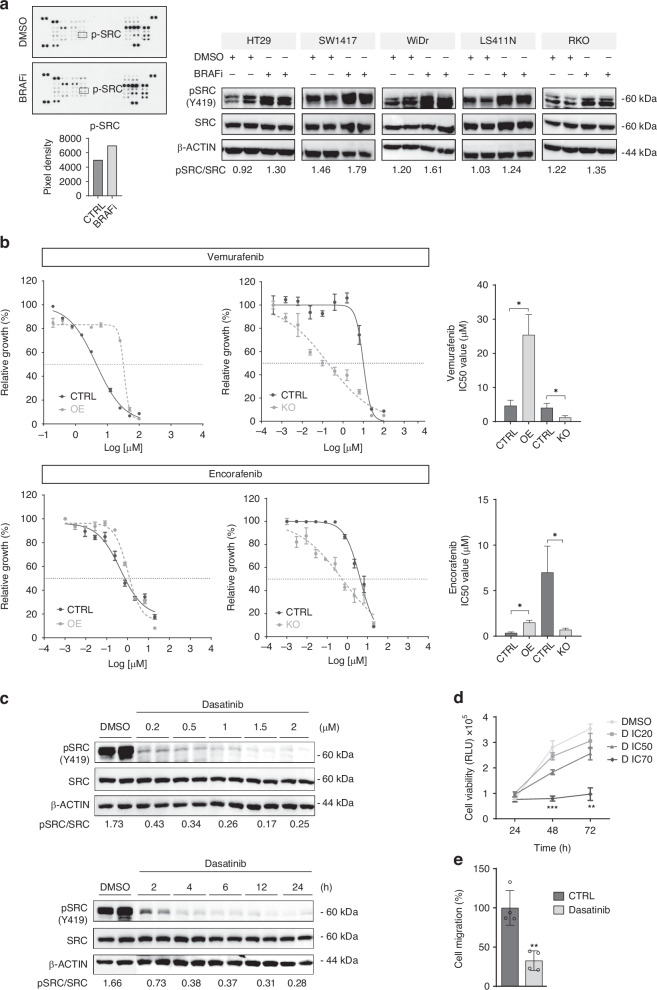
- SRC modulated oncogenic capacities in BRAFV600E CRC: overexpression promoted proliferation, migration, and colony formation and produced larger xenograft tumors, while SRC depletion reduced growth, migration, and colonies. BRAF inhibition upregulated pSRC; in HT29 cells, SRC overexpression increased BRAFi IC50 values up to five times, and SRC knockout lowered them four times versus controls.
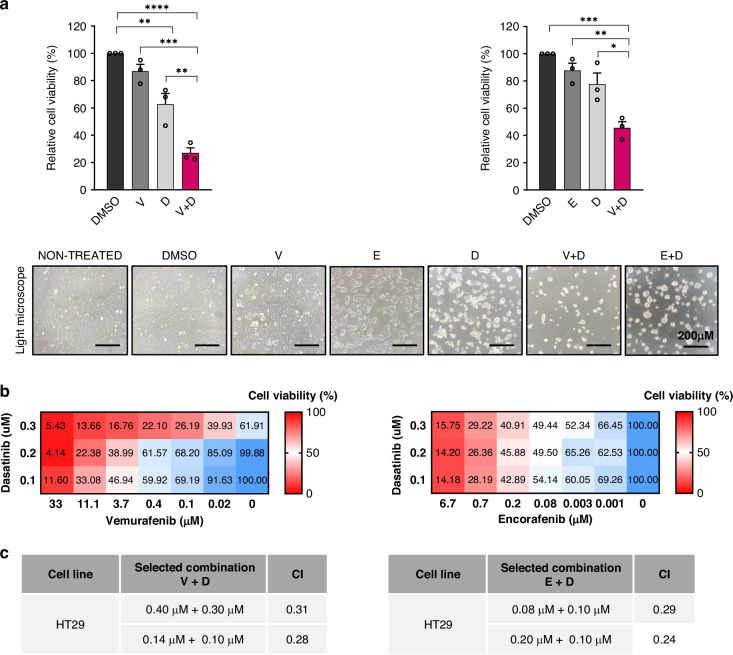
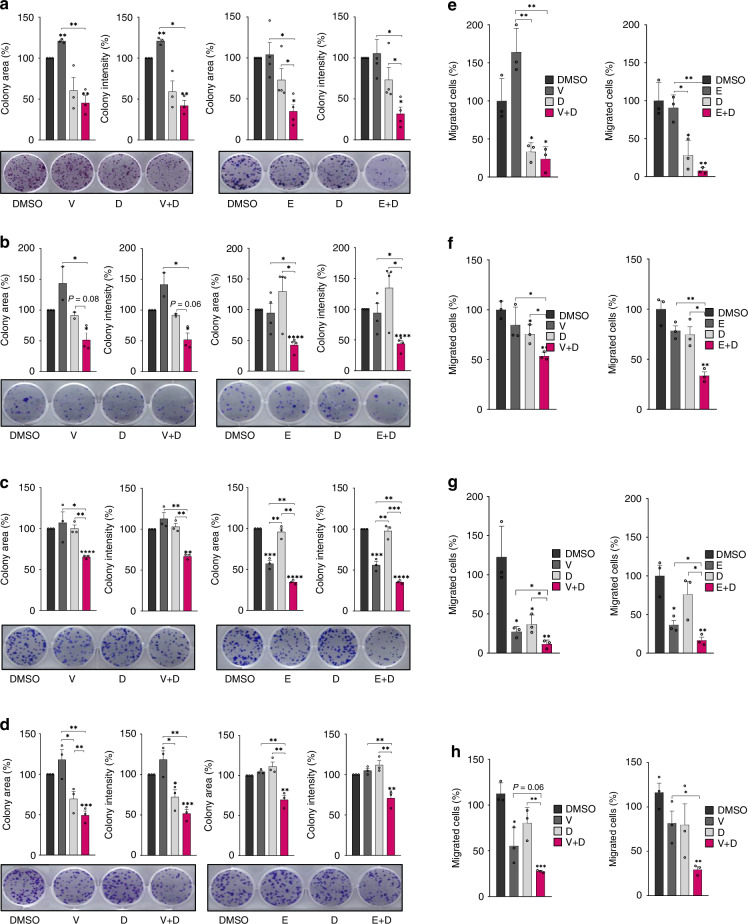
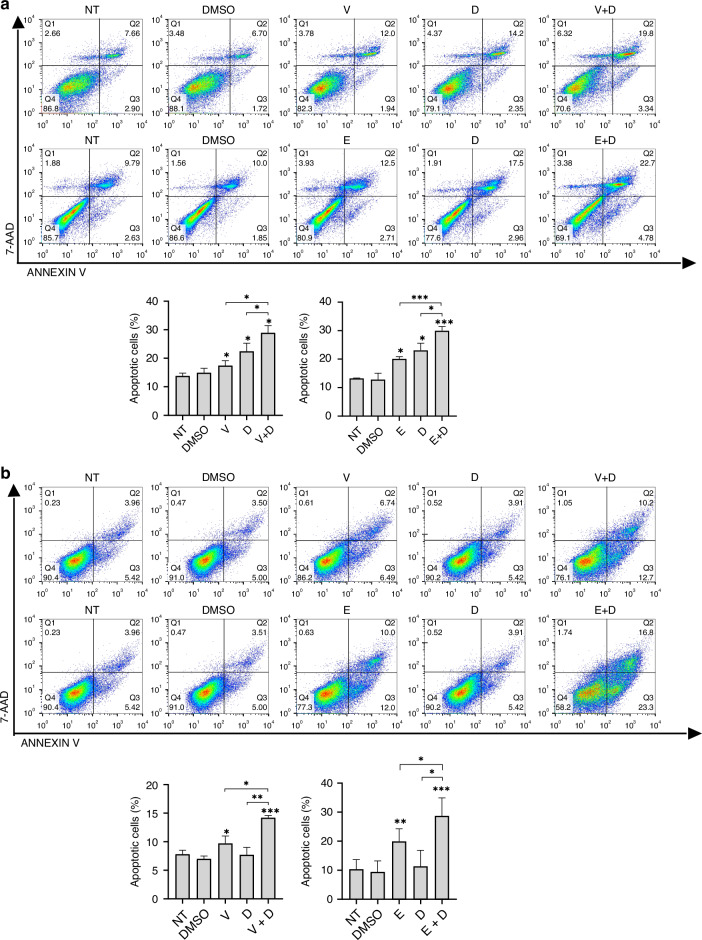
- Dual SRC and BRAF inhibition was synergistic by Chou-Talalay analysis (CI < 0.9) and reduced cell viability, colony formation, and migration, while increasing apoptosis and G0/G1 cell cycle arrest in BRAFV600E CRC cell lines.
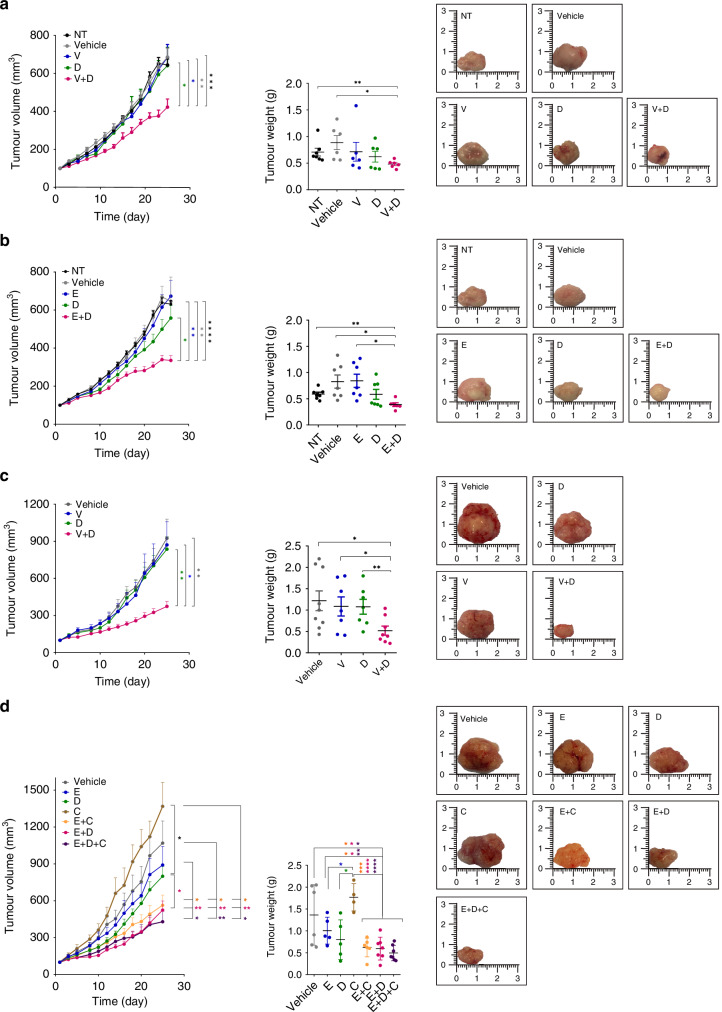
- In HT29 CDX and two PDX models, combined SRCi plus BRAFi produced significantly smaller tumors than monotherapies or vehicle. In PDX #2, encorafenib plus dasatinib, encorafenib plus cetuximab, and the triplet encorafenib/cetuximab/dasatinib all improved tumor growth inhibition versus vehicle and monotherapies, but the triplet was not significantly different from dual BRAF/EGFR or BRAF/SRC inhibition.
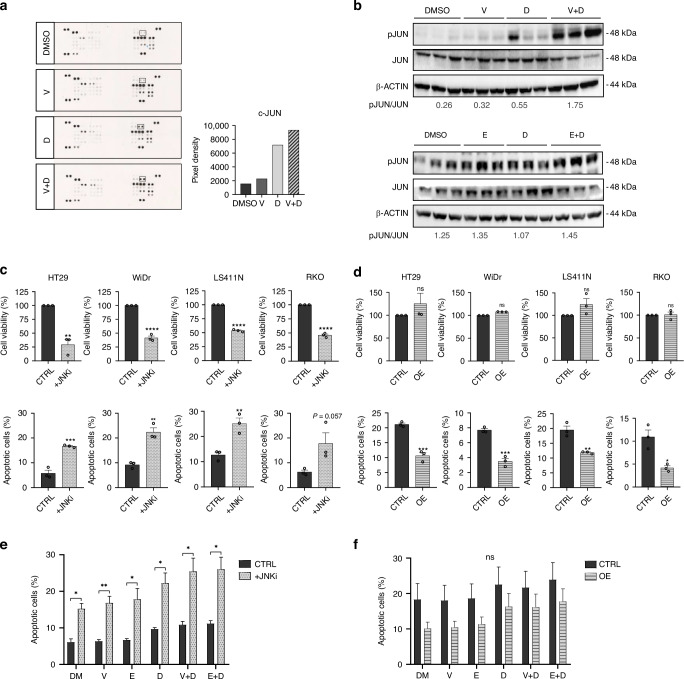
- c-JUN phosphorylation increased after dual SRC/BRAF inhibition; JNK inhibition reduced growth and increased apoptosis, c-JUN overexpression decreased apoptosis, and JNK inhibition enhanced apoptosis induced by dual SRC/BRAF targeting. The paper reports the combination effect was independent of microsatellite instability status across CDX (MSS) and PDX (MSI) models.
Methods
- BRAFV600E CRC cell lines (HT29, SW1417, WiDr, LS411N, RKO) and RAS/BRAF WT DIFI cells were used; SRC was knocked out by CRISPR/Cas9 or overexpressed lentivirally, and c-JUN was transiently overexpressed.
- Drugs tested included vemurafenib, encorafenib, dasatinib, cetuximab, and JNK inhibitor SP600125. Assays included Western blotting, phospho-kinase array, cell viability, Chou-Talalay synergy, proliferation, transwell migration, colony formation, and flow cytometry for apoptosis and cell cycle.
- In vivo studies used HT29 cell line-derived xenografts and two patient-derived xenografts in female athymic nude mice; tumors were molecularly characterized for KRAS/NRAS/BRAF and MSI/dMMR. Statistics used two-sided unpaired Student’s t tests or Mann–Whitney U tests, with P < 0.05 considered significant.
Limitations
- The paper states that dasatinib also inhibits other kinases including c-KIT, PDGFRβ, and EPHA2, so non-specific effects beyond SRC inhibition cannot be ruled out; it also notes that ATP-competitive inhibitors such as dasatinib can paradoxically activate SRC/ERK, and pERK increased in some dasatinib-treated mice.
- The paper states that data collection and analysis were not blinded, and that data distribution was assumed homoscedastic but not always formally tested; it also states that mechanisms of the observed synergism remain to be elucidated.
- Evident from the text: all efficacy findings are preclinical, using cell lines and mouse CDX/PDX models, with no clinical trial or patient outcome data; in vivo group sizes were small (for example, n = 4–9 per group in PDX experiments).
Model-written summary. Check it against the paper before relying on it.
Integrity signals
Registry
Cites
Statistics
Figures
Verification
Claims the paper makes
27 Valid · 0 Not valid · 3 Not checked · 83 Own results and interpretations
The sources with a verdict support this claim; the rest weren’t checked yet, have no full text we could read, or their verdicts aren’t rated yet.
In the paper
“SRC plays a role in EGFR transactivation, acting as an upstream effector of EGFR in the feedback loop [20, 43].”
§ Co-targeting SRC overcomes resistance to BRAF inhibitors in colorectal cancer > Discussion
What the sources say
- Supportedcites [20] Gargalionis AN, Karamouzis MV, Papavassiliou AG. The molecular rationale of Src inhibition in colorectal carcinomas. Int J Cancer. 2014;134:2019–29. 23733480 source
The “Crosstalk Between Src and RTKs in CRC” section says c-Src facilitates EGFR phosphorylation and can transactivate EGFR. It also describes reciprocal signaling in CRC cells: EGFR activation enhances c-Src activity, while c-Src overexpression induces EGFR phosphorylation. This supports Src’s upstream role within the described feedback relationship. (LLM, conf=0.88)
- Not checked yetcites [43] Kopetz S. Targeting Src and epidermal growth factor receptor in colorectal cancer: rationale and progress into the clinic. Gastrointest cancer res: Gcr 2007;1:S37–41. 19360146 PMC2666842
plainstates a cause- Asserted: passes — The authors put it forward as true.
- Checkable: passes — It can be checked against evidence.
- Load-bearing: passes — The paper’s conclusions depend on it.
- Based: passes — The paper gives a reason why it holds.
- Supported
Every source the paper cites for this claim was checked and supports it.
In the paper
“Additionally, studies in breast cancer revealed SRC as a common node downstream of multiple resistance pathways [44].”
§ Co-targeting SRC overcomes resistance to BRAF inhibitors in colorectal cancer > Discussion
What the sources say
- Supportedcites [44] Zhang S, Huang WC, Li P, Guo H, Poh SB, Brady SW, et al. Combating trastuzumab resistance by targeting SRC, a common node downstream of multiple resistance pathways. Nat Med. 2011;17:461–9. 21399647 PMC3877934 source
The Discussion identifies SRC activation as a key convergence point of multiple trastuzumab-resistance mechanisms. This supports the cited sentence in the context of breast cancer, with the qualification that the resistance studied is to trastuzumab. (LLM, conf=0.94)
plainstates an association- Asserted: passes — The authors put it forward as true.
- Checkable: passes — It can be checked against evidence.
- Load-bearing: unclear — It is unclear whether the paper’s conclusions depend on it.
- Based: passes — The paper gives a reason why it holds.
- Supported
Every source the paper cites for this claim was checked and supports it.
In the paper
“Their study revealed that targeting SRC and BRAF had an equivalent or better effect on tumor growth inhibition compared to targeting EGFR and BRAF, similar to our observations.”
§ Co-targeting SRC overcomes resistance to BRAF inhibitors in colorectal cancer > Discussion
What the sources say
- Supportedcites [45] Ruiz-Saenz A, Atreya CE, Wang C, Pan B, Dreyer CA, Brunen D, et al. A reversible SRC-relayed COX2 inflammatory program drives resistance to BRAF and EGFR inhibition in BRAFV600E colorectal tumors. Nat Cancer. 2023;4:240–56. 36759733 PMC9970872 source
The Results section (“Targeting of SRC with BRAF + EGFR increases efficacy”) explicitly states that adding an SRC inhibitor to a BRAF inhibitor had an equivalent or better effect on tumor growth inhibition than adding an EGFR inhibitor. This comparison was based on colorectal cancer xenograft models. (LLM, conf=0.94)
plainstates a cause- Asserted: passes — The authors put it forward as true.
- Checkable: passes — It can be checked against evidence.
- Load-bearing: unclear — It is unclear whether the paper’s conclusions depend on it.
- Based: passes — The paper gives a reason why it holds.
- Supported
The cited sources support only part of this claim — read each source’s verdict below.
In the paper
“preclinical studies suggest that inhibition of SRC may revert this resistance.”
§ Co-targeting SRC overcomes resistance to BRAF inhibitors in colorectal cancer > Background
What the sources say
- Supportedcites [29] Perez M, Lucena-Cacace A, Marín-Gómez LM, Padillo-Ruiz J, Robles-Frias MJ, Saez C, et al. Dasatinib, a Src inhibitor, sensitizes liver metastatic colorectal carcinoma to oxaliplatin in tumors with high levels of phospho-Src. Oncotarget. 2016;7:33111–24. 27105527 PMC5078079 source
The Introduction states that preclinical studies suggest Src activation reduces sensitivity to chemotherapeutic drugs, including platinum agents, and that pharmacological inhibition can reverse this resistance. It also describes an ovarian carcinoma cell-line experiment in which a Src inhibitor reversed cisplatin resistance. (LLM, conf=0.94)
- Partly supportedcites [30] Simpkins F, Jang K, Yoon H, Hew KE, Kim M, Azzam DJ, et al. Dual Src and MEK inhibition decreases ovarian cancer growth and targets tumor initiating stem-like cells. Clin Cancer Res. 2018;24:4874–86. 29959144 PMC6557165 sourceExperimental — accuracy not yet measured
The Results and Discussion report that combined Src and MEK inhibition overcame resistance to either inhibitor in preclinical ovarian cancer models. The resistance studied was to those targeted inhibitors, not to cytotoxic drugs, and Src inhibition alone did not reverse it. The Discussion also notes no added clinical benefit when a Src inhibitor was combined with chemotherapy for platinum-resistant ovarian cancer. (LLM, conf=0.85)
- Not checked — no full text of the sourcecites [31] Chen Y, Alvarez EA, Azzam D, Wander SA, Guggisberg N, Jordà M, et al. Combined Src and ER blockade impairs human breast cancer proliferation in vitro and in vivo. Breast Cancer Res Treat. 2011;128:69–78. 20669046 source
hedgedstates a possible cause- Asserted: passes — The authors put it forward as true.
- Checkable: passes — It can be checked against evidence.
- Load-bearing: passes — The paper’s conclusions depend on it.
- Based: passes — The paper gives a reason why it holds.
- Supported
The cited sources support only part of this claim — read each source’s verdict below.
In the paper
“In contrast with other BRAFV600E tumors (i.e. melanoma), BRAFV600E-targeted therapy (like vemurafenib) has proven largely ineffective in CRC, with response rates <5% as single agents [5, 6].”
§ Co-targeting SRC overcomes resistance to BRAF inhibitors in colorectal cancer > Background
What the sources say
- Partly supportedcites [5] Kopetz S, Desai J, Chan E, Hecht JR, O’Dwyer PJ, Maru D, et al. Phase II pilot study of vemurafenib in patients with metastatic BRAF -mutated colorectal cancer. JCO. 2015;33:4032–8. PMC4669589 26460303 sourceExperimental — accuracy not yet measured
The Discussion says BRAF V600E colorectal tumors have limited response to single-agent BRAF inhibition compared with melanoma. But the Results report one confirmed partial response among 21 vemurafenib-treated patients—a response rate of 5% (95% CI, 1%–24%), not below 5%. (LLM, conf=0.90)
- Supportedcites [6] Hyman DM, Puzanov I, Subbiah V, Faris JE, Chau I, Blay JY, et al. Vemurafenib in multiple nonmelanoma cancers with BRAF V600 mutations. N Engl J Med. 2015;373:726–36. 26287849 PMC4971773 source
The Results (Efficacy; page unavailable) report no responses in the colorectal cancer cohort receiving vemurafenib alone, a response rate of 0% and thus below 5%. The Discussion describes the monotherapy results as disappointing, in contrast to the response reported for melanoma. (LLM, conf=0.91)
plain- Asserted: passes — The authors put it forward as true.
- Checkable: passes — It can be checked against evidence.
- Load-bearing: passes — The paper’s conclusions depend on it.
- Based: passes — The paper gives a reason why it holds.
- Partly supported
68 more claims · 6 with their cited sources checked
Create a free account to see all 113 claims and to verify the 3 references still open.
- Probably not a substantial claim. 21
- It may state two separate claims as one. 25
- The quote only partly states this claim. 1
Self-check
Percentages, sums and reported differences re-computed from the paper’s own numbers.
Each contradiction between two passages listed here was confirmed by an independent check.
Rated minor: it would not touch a result — a value no result rests on, a p-value that stays on the same side of the significance level, or a conflict that is clerical, resolved elsewhere in the paper, or outside its own findings.
In the paper
§ Co-targeting SRC overcomes resistance to BRAF inhibitors in colorectal cancer > Material and methods > Synergy assay
“CI > 0.9, antagonism.”
§ Co-targeting SRC overcomes resistance to BRAF inhibitors in colorectal cancer > Material and methods > Synergy assay
“CI = 0.9–1.1, additivity;”
Rated minor: it would not touch a result — a value no result rests on, a p-value that stays on the same side of the significance level, or a conflict that is clerical, resolved elsewhere in the paper, or outside its own findings.
In the paper
§ Co-targeting SRC overcomes resistance to BRAF inhibitors in colorectal cancer > Results > Dual SRC kinase and BRAF inhibition confirms relevant antitumor efficacy in BRAFV600E CRC in vivo models
“Fig. 6 Inhibition of SRC and BRAFV600E reduces tumor growth in BRAFm CRC in vivo CDX models.”
§ Co-targeting SRC overcomes resistance to BRAF inhibitors in colorectal cancer > Results > Dual SRC kinase and BRAF inhibition confirms relevant antitumor efficacy in BRAFV600E CRC in vivo models
“c BRAFm CRC PDX #1 treated with vehicle (VEH, control, n = 9), vemurafenib (n = 7), dasatinib (n = 7), vemurafenib and dasatinib (n = 8). d PDX #2 treated with vehicle (VEH, control, n = 6)”
Rated minor: it would not touch a result — a value no result rests on, a p-value that stays on the same side of the significance level, or a conflict that is clerical, resolved elsewhere in the paper, or outside its own findings.
In the paper
§ Co-targeting SRC overcomes resistance to BRAF inhibitors in colorectal cancer > Material and methods > Flow cytometry
“Cells were collected and stained with Annexin V FITC and 7-Amino-Actinomycin D (7-AAD)”
§ Co-targeting SRC overcomes resistance to BRAF inhibitors in colorectal cancer > Results > Dual inhibition of SRC kinase and BRAF is synergistic in BRAFV600E CRC
“Representative apoptotic profiles of Annexin V-APC/7-AAD staining of HT29 (a), WiDr (b), LS411N (c) and RKO (d) cell lines”
Rated minor: it would not touch a result — a value no result rests on, a p-value that stays on the same side of the significance level, or a conflict that is clerical, resolved elsewhere in the paper, or outside its own findings.
In the paper
§ Co-targeting SRC overcomes resistance to BRAF inhibitors in colorectal cancer > Results > Dual inhibition of SRC kinase and BRAF is synergistic in BRAFV600E CRC
“A strong synergistic effect was found in HT29 cells after dual SRC and BRAF inhibition (Fig. 3b, c).”
§ Co-targeting SRC overcomes resistance to BRAF inhibitors in colorectal cancer > Results > Dual inhibition of SRC kinase and BRAF is synergistic in BRAFV600E CRC
“CFAs for HT29 (a), SW1417 (b), WiDr (c) and RKO (d) cell lines.”
Citations
Cites
Mutations of the BRAF gene in human cancer
Davies, H., Bignell, G. R., Cox, C., Stephens, P., Edkins, S., Clegg, S., Teague, J., Woffendin, H., Garnett, M. J., Bottomley, W., et al. (2002) · Nature · doi:10.1038/nature00766 · Cited by 10,674
Drug combination studies and their synergy quantification using the Chou-Talalay method
Chou, T.-C. (2010) · Cancer Research · doi:10.1158/0008-5472.can-09-1947 · Cited by 5,739 · cited 2×
“The combination indexes were determined by the median dose-effect method (Chou-Talalay analysis [35]) using CompuSyn software (ComboSyn, Inc.).”
Global burden of colorectal cancer in 2020 and 2040: incidence and mortality estimates from GLOBOCAN
Morgan, E., Arnold, M., Gini, A., Lorenzoni, V, Cabasag, C. J., Laversanne, M., Vignat, J., Ferlay, J., Murphy, N., & Bray, F. (2023) · Gut · doi:10.1136/gutjnl-2022-327736 · Cited by 2,429
Unresponsiveness of colon cancer to BRAF(V600E) inhibition through feedback activation of EGFR
Prahallad, A., Sun, C., Huang, S., Di Nicolantonio, F., Salazar, R., Zecchin, D., Beijersbergen, R. L., Bardelli, A., & Bernards, R. (2012) · Nature · doi:10.1038/nature10868 · Cited by 2,051
Vemurafenib in Multiple Nonmelanoma Cancers with BRAF V600 Mutations
Hyman, D. M., Puzanov, I., Subbiah, V., Faris, J. E., Chau, I., Blay, J.-Y., Wolf, J., Raje, N. S., Diamond, E. L., Hollebecque, A., et al. (2015) · New England Journal of Medicine · doi:10.1056/nejmoa1502309 · Cited by 1,764 · cited 1×
“In contrast with other BRAF V600E tumors (i.e. melanoma), BRAF V600E -targeted therapy (like vemurafenib) has proven largely ineffective in CRC, with response rates 5% as single agents [5, 6].”
Encorafenib, Binimetinib, and Cetuximab in BRAF V600E–Mutated Colorectal Cancer
Kopetz, S., Grothey, A., Yaeger, R., Van Cutsem, E., Desai, J., Yoshino, T., Wasan, H., Ciardiello, F., Loupakis, F., Hong, Y. S., et al. (2019) · New England Journal of Medicine · doi:10.1056/nejmoa1908075 · Cited by 1,491
COT drives resistance to RAF inhibition through MAP kinase pathway reactivation
Johannessen, C. M., Boehm, J. S., Kim, S. Y., Thomas, S. R., Wardwell, L., Johnson, L. A., Emery, C. M., Stransky, N., Cogdill, A. P., Barretina, J., et al. (2010) · Nature · doi:10.1038/nature09627 · Cited by 1,460
RAF inhibitor resistance is mediated by dimerization of aberrantly spliced BRAF(V600E)
Poulikakos, P. I., Persaud, Y., Janakiraman, M., Kong, X., Ng, C., Moriceau, G., Shi, H., Atefi, M., Titz, B., Gabay, M. T., et al. (2011) · Nature · doi:10.1038/nature10662 · Cited by 1,454
Bohmann, D., Bos, T. J., Admon, A., Nishimura, T., Vogt, P. K., & Tjian, R. (1987) · Science · doi:10.1126/science.2825349 · Cited by 1,321
Yeatman, T. J. (2004) · Nature Reviews Cancer · doi:10.1038/nrc1366 · Cited by 1,113
Corcoran, R. B., Ebi, H., Turke, A. B., Coffee, E. M., Nishino, M., Cogdill, A. P., Brown, R. D., Della Pelle, P., Dias-Santagata, D., Hung, K. E., et al. (2012) · Cancer Discovery · doi:10.1158/2159-8290.cd-11-0341 · Cited by 1,022
Src family kinases in tumor progression and metastasis
Summy, J. M., & Gallick, G. E. (2003) · Cancer and Metastasis Reviews · doi:10.1023/a:1023772912750 · Cited by 827
Phase II Pilot Study of Vemurafenib in Patients With Metastatic BRAF -Mutated Colorectal Cancer
Kopetz, S., Desai, J., Chan, E., Hecht, J. R., O'Dwyer, P. J., Maru, D., Morris, V., Janku, F., Dasari, A., Chung, W., et al. (2015) · Journal of Clinical Oncology · doi:10.1200/jco.2015.63.2497 · Cited by 697
Combined BRAF, EGFR, and MEK Inhibition in Patients with BRAF V600E-Mutant Colorectal Cancer
Corcoran, R. B., André, T., Atreya, C. E., Schellens, J. H. M., Yoshino, T., Bendell, J. C., Hollebecque, A., McRee, A. J., Siena, S., Middleton, G., et al. (2018) · Cancer Discovery · doi:10.1158/2159-8290.cd-17-1226 · Cited by 592
Tabernero, J., Grothey, A., Van Cutsem, E., Yaeger, R., Wasan, H., Yoshino, T., Desai, J., Ciardiello, F., Loupakis, F., Hong, Y. S., et al. (2021) · Journal of Clinical Oncology · doi:10.1200/jco.20.02088 · Cited by 569
Zhang, S., Huang, W.-C., Li, P., Guo, H., Poh, S.-B., Brady, S. W., Xiong, Y., Tseng, L.-M., Li, S.-H., Ding, Z., et al. (2011) · Nature Medicine · doi:10.1038/nm.2309 · Cited by 515
Corcoran, R. B., Atreya, C. E., Falchook, G. S., Kwak, E. L., Ryan, D. P., Bendell, J. C., Hamid, O., Messersmith, W. A., Daud, A., Kurzrock, R., et al. (2015) · Journal of Clinical Oncology · doi:10.1200/jco.2015.63.2471 · Cited by 507 · cited 1×
“Based on this premises, vertical inhibition of the MAPK pathway at different points has been explored in multiple studies, assessing different combinations of BRAFi with EGFR and/or MEK inhibitors, as well as dual inhibition of the MAPK and PI3K/mTOR pathways [14 – 16].”
MAPK/JNK signalling: a potential autophagy regulation pathway
Zhou, Y.-Y., Li, Y., Jiang, W.-Q., & Zhou, L.-F. (2015) · Bioscience Reports · doi:10.1042/bsr20140141 · Cited by 444
Increase in activity and level of pp60c-src in progressive stages of human colorectal cancer.
Talamonti, M. S., Roh, M. S., Curley, S. A., & Gallick, G. E. (1993) · Journal of Clinical Investigation · doi:10.1172/jci116200 · Cited by 399
Mathas, S., Hinz, M., Anagnostopoulos, I., Krappmann, D., Lietz, A., Jundt, F., Bommert, K., Mechta‐Grigoriou, F., Stein, H., Dörken, B., et al. (2002) · The EMBO Journal · doi:10.1093/emboj/cdf389 · Cited by 375
The Role of Src in Solid Tumors
Wheeler, D. L., Iida, M., & Dunn, E. F. (2009) · The Oncologist · doi:10.1634/theoncologist.2009-0009 · Cited by 346
Mao, M., Tian, F., Mariadason, J. M., Tsao, C. C., Lemos, R., Dayyani, F., Gopal, Y. N. V., Jiang, Z.-Q., Wistuba, I. I., Tang, X. M., et al. (2013) · Clinical Cancer Research · doi:10.1158/1078-0432.ccr-11-1446 · Cited by 290 · cited 1×
“Several mechanisms of innate resistance to BRAF inhibitors (BRAFi) in CRC have been identi fi ed, including a rapid EGFR feedback activation [7 – 9] or MAPK-pathway re-activation through multiple mechanisms [10 – 13].”
Activation of the pp60c-src protein kinase is an early event in colonic carcinogenesis.
Cartwright, C. A., Meisler, A. I., & Eckhart, W. (1990) · Proceedings of the National Academy of Sciences · doi:10.1073/pnas.87.2.558 · Cited by 277 · cited 1×
“Higher expression and activity of SRC has been documented in primary colon tumors compared with benign polyps or non-transformed colonic mucosa, and increased activity is observed in progressive stages of CRC [23 – 26].”
Target spectrum of the BCR-ABL inhibitors imatinib, nilotinib and dasatinib
Hantschel, O., Rix, U., & Superti-Furga, G. (2008) · Leukemia & Lymphoma · doi:10.1080/10428190801896103 · Cited by 256
Activation of Src kinase in primary colorectal carcinoma: An indicator of poor clinical prognosis
Allgayer, H., Boyd, D. D., Heiss, M. M., Abdalla, E. K., Curley, S. A., & Gallick, G. E. (2002) · Cancer · doi:10.1002/cncr.10221 · Cited by 251
c-Jun activation is associated with proliferation and angiogenesis in invasive breast cancer
Vleugel, M. M., Greijer, A. E., Bos, R., van der Wall, E., & van Diest, P. J. (2006) · Human Pathology · doi:10.1016/j.humpath.2006.01.022 · Cited by 250
van Geel, R. M. J. M., Tabernero, J., Elez, E., Bendell, J. C., Spreafico, A., Schuler, M., Yoshino, T., Delord, J.-P., Yamada, Y., Lolkema, M. P., et al. (2017) · Cancer Discovery · doi:10.1158/2159-8290.cd-16-0795 · Cited by 232
Yang, H., Higgins, B., Kolinsky, K., Packman, K., Bradley, W. D., Lee, R. J., Schostack, K., Simcox, M. E., Kopetz, S., Heimbrook, D., et al. (2012) · Cancer Research · doi:10.1158/0008-5472.can-11-2941 · Cited by 216 · cited 1×
“Several mechanisms of innate resistance to BRAF inhibitors (BRAFi) in CRC have been identi fi ed, including a rapid EGFR feedback activation [7 – 9] or MAPK-pathway re-activation through multiple mechanisms [10 – 13].”
Girotti, M. R., Lopes, F., Preece, N., Niculescu-Duvaz, D., Zambon, A., Davies, L., Whittaker, S., Saturno, G., Viros, A., Pedersen, M., et al. (2015) · Cancer Cell · doi:10.1016/j.ccell.2014.11.006 · Cited by 212 · cited 1×
“…implicated in innate or acquired resistance to targeted drugs, such as cetuximab in KRAS mutant CRC [32] or BRAFi in BRAF V600E melanoma patients [33, 34], thus opening new avenues for potential drug manipulation that may eventually expand treat-ment options and improve the prognosis of these…”
Molecular Pathways and Mechanisms of BRAF in Cancer Therapy
Poulikakos, P. I., Sullivan, R. J., & Yaeger, R. (2022) · Clinical Cancer Research · doi:10.1158/1078-0432.ccr-21-2138 · Cited by 145
Ramsdale, R., Jorissen, R. N., Li, F. Z., Al-Obaidi, S., Ward, T., Sheppard, K. E., Bukczynska, P. E., Young, R. J., Boyle, S. E., Shackleton, M., et al. (2015) · Science Signaling · doi:10.1126/scisignal.aab1111 · Cited by 143
Src Family Kinases as Therapeutic Targets in Advanced Solid Tumors: What We Have Learned So Far
Martellucci, S., Clementi, L., Sabetta, S., Mattei, V., Botta, L., & Angelucci, A. (2020) · Cancers · doi:10.3390/cancers12061448 · Cited by 139
BRAF — a tumour-agnostic drug target with lineage-specific dependencies
Hanrahan, A. J., Chen, Z., Rosen, N., & Solit, D. B. (2024) · Nature Reviews Clinical Oncology · doi:10.1038/s41571-023-00852-0 · Cited by 136
Dasatinib sensitizes KRAS mutant colorectal tumors to cetuximab
Dunn, E. F., Iida, M., Myers, R. A., Campbell, D. A., Hintz, K. A., Armstrong, E. A., Li, C., & Wheeler, D. L. (2011) · Oncogene · doi:10.1038/onc.2010.430 · Cited by 133 · cited 1×
“SRC activation has been also implicated in innate or acquired resistance to targeted drugs, such as cetuximab in KRAS mutant CRC [32] or BRAFi in BRAF V600E melanoma patients [33, 34], thus opening new avenues for potential drug manipulation that may eventually expand treat-ment options and improve…”
Morris, V., Overman, M. J., Jiang, Z.-Q., Garrett, C., Agarwal, S., Eng, C., Kee, B., Fogelman, D., Dasari, A., Wolff, R., et al. (2014) · Clinical Colorectal Cancer · doi:10.1016/j.clcc.2014.06.001 · Cited by 132 · cited 2×
“Activating mutations of the BRAF oncogene ( BRAF V600E ) lead to constitutive activation of this pathway and contributes to cancer progression [3, 4].”
Site-Specific Differences in pp60c-src Activity in Human Colorectal Metastases
Termuhlen, P. M., Curley, S. A., Talamonti, M. S., Saboorian, M. H., & Gallick, G. E. (1993) · Journal of Surgical Research · doi:10.1006/jsre.1993.1046 · Cited by 108
Fallahi‐Sichani, M., Moerke, N. J., Niepel, M., Zhang, T., Gray, N. S., & Sorger, P. K. (2015) · Molecular Systems Biology · doi:10.15252/msb.20145877 · Cited by 99
Simpkins, F., Jang, K., Yoon, H., Hew, K. E., Kim, M., Azzam, D. J., Sun, J., Zhao, D., Ince, T. A., Liu, W., et al. (2018) · Clinical Cancer Research · doi:10.1158/1078-0432.ccr-17-3697 · Cited by 67
Expression of Jun family members in human colorectal adenocarcinoma
Wang, H., Birkenbach, M., & Hart, J. (2000) · Carcinogenesis · doi:10.1093/carcin/21.7.1313 · Cited by 64
(1996) · PubMed · Cited by 63
Rangatia, J., Vangala, R. K., Singh, S. M., Peer Zada, A. A., Elsässer, A., Kohlmann, A., Haferlach, T., Tenen, D. G., Hiddemann, W., & Behre, G. (2003) · Oncogene · doi:10.1038/sj.onc.1206664 · Cited by 62
Combined Src and ER blockade impairs human breast cancer proliferation in vitro and in vivo
Chen, Y., Alvarez, E. A., Azzam, D., Wander, S. A., Guggisberg, N., Jordà, M., Ju, Z., Hennessy, B. T., & Slingerland, J. M. (2011) · Breast Cancer Research and Treatment · doi:10.1007/s10549-010-1024-7 · Cited by 54 · cited 1×
“On the other hand, activation of SRC contributes to resistance to different cytotoxic drugs (i.e. platinum agents) in several malignancies [29 – 31] and preclinical studies suggest that inhibition of SRC may revert this resistance.”
Sharma, M. R., Wroblewski, K., Polite, B. N., Knost, J. A., Wallace, J. A., Modi, S., Sleckman, B. G., Taber, D., Vokes, E. E., Stadler, W. M., et al. (2012) · Investigational New Drugs · doi:10.1007/s10637-011-9681-x · Cited by 49
The molecular rationale of Src inhibition in colorectal carcinomas
Gargalionis, A. N., Karamouzis, M. V., & Papavassiliou, A. G. (2014) · International Journal of Cancer · doi:10.1002/ijc.28299 · Cited by 47
Borre, P. V., Gunda, V., McFadden, D. G., Sadow, P. M., Varmeh, S., Bernasconi, M., & Parangi, S. (2014) · Oncotarget · doi:10.18632/oncotarget.2130 · Cited by 43
Ruiz-Saenz, A., Atreya, C. E., Wang, C., Pan, B., Dreyer, C. A., Brunen, D., Prahallad, A., Muñoz, D. P., Ramms, D. J., Burghi, V., et al. (2023) · Nature Cancer · doi:10.1038/s43018-022-00508-5 · Cited by 39
Perez, M., Lucena-Cacace, A., Marín-Gómez, L. M., Padillo-Ruiz, J., Robles-Frias, M. J., Saez, C., Garcia-Carbonero, R., & Carnero, A. (2016) · Oncotarget · doi:10.18632/oncotarget.8880 · Cited by 34
Paradoxical activation of c-Src as a drug-resistant mechanism
Higuchi, M., Ishiyama, K., Maruoka, M., Kanamori, R., Takaori-Kondo, A., & Watanabe, N. (2021) · Cell Reports · doi:10.1016/j.celrep.2021.108876 · Cited by 31
The AhR‐SRC axis as a therapeutic vulnerability in BRAFi‐resistant melanoma
Paris, A., Tardif, N., Baietti, F. M., Berra, C., Leclair, H. M., Leucci, E., Galibert, M., & Corre, S. (2022) · EMBO Molecular Medicine · doi:10.15252/emmm.202215677 · Cited by 26
Ghosh, C., Kumar, S., Kushchayeva, Y. S., Gaskins, K., Boufraqech, M., Wei, D., Gara, S. K., Zhang, L., Zhang, Y., Shen, M., et al. (2020) · Clinical Cancer Research · doi:10.1158/1078-0432.ccr-19-1606 · Cited by 23
Guerrero, P., Albarrán, V., San Román, M., González-Merino, C., García de Quevedo, C., Moreno, J., Calvo, J. C., González, G., Orejana, I., Chamorro, J., et al. (2023) · Cancers · doi:10.3390/cancers15215243 · Cited by 21
Prognostic relevance of Src activation in stage II-III colon cancer
Martínez-Pérez, J., Lopez-Calderero, I., Saez, C., Benavent, M., Limon, M. L., Gonzalez-Exposito, R., Soldevilla, B., Riesco-Martínez, M. C., Salamanca, J., Carnero, A., et al. (2017) · Human Pathology · doi:10.1016/j.humpath.2017.05.025 · Cited by 20
Self-citationLiang, W., Liu, D., & Wu, J. (2023) · Cell Biology International · doi:10.1002/cbin.12069 · Cited by 13 · cited 1×
“…independent experiments. c Representative WB analysis of pSRC and SRC in HT29 cells after being treated at different concentrations (0.2 – 2 µM) for 24 h and with 1.2 µM dasatinib at the indicated time points (1 – 24 h), and their respective controls. β -actin used as a loading control.”
InfluentialMoyano, A. J., Racca, A. C., Soria, G., Saka, H. A., Andreoli, V., Smania, A. M., Sola, C., & Bocco, J. L. (2018) · Frontiers in Cellular and Infection Microbiology · doi:10.3389/fcimb.2018.00170 · Cited by 10 · cited 1×
“…independent experiments. c Representative WB analysis of pSRC and SRC in HT29 cells after being treated at different concentrations (0.2 – 2 µM) for 24 h and with 1.2 µM dasatinib at the indicated time points (1 – 24 h), and their respective controls. β -actin used as a loading control.”
InfluentialAltered cJun expression: An early event in human lung carcinogenesis
(1996) · Lung Cancer · doi:10.1016/0169-5002(96)84172-9 · Cited by 1
(2007) · PubMed
Cited by
Dual inhibition of BRAF for cancer treatment: advances and therapeutic potential
Ren, C., Zhang, M., Liu, J., Zhang, L., Guan, X., Pu, S., & Li, J. (2025) · Future Medicinal Chemistry · doi:10.1080/17568919.2025.2575748 · Cited by 3
Src and Abl as Therapeutic Targets in Lung Cancer: Opportunities for Drug Repurposing
Ramos, R., Sousa, C., & Vale, N. (2025) · Pharmaceuticals · doi:10.3390/ph18101426 · Cited by 4
“Therefore, combination therapy with other agents targeting those genes or downstream effectors can be a possible solution to overcome Src resistance [44,45].”
Solé-Blanch, C., España, S., de la Puente-Noël, A., Marín-Béjar, O., Manzano, J. L., & Martínez‐Cardús, A. (2025) · Biochimica et Biophysica Acta (BBA) - Reviews on Cancer · doi:10.1016/j.bbcan.2025.189503 · Cited by 1
Iksen, I., Manihuruk, F. N., Syahputra, H. D., Saragih, M., Manurung, I. E. E., Peranginangin, R. S. U., Saragih, D. F. P., Simanjuntak, H. A., & Gurning, K. (2026) · Journal of Multidisciplinary Applied Natural Science · doi:10.47352/jmans.2774-3047.344 · Cited by 1
Huang, Q., Wei, S., Yu, J., Wu, Y., Lai, H., Wei, W., Yan, L., Su, C., Shi, W., & Su, Z. (2026) · Frontiers in Immunology · doi:10.3389/fimmu.2025.1744692 · Cited by 4
Metadata
- Authors
- Rubio-Cuesta, B., Carretero-Puche, C., Llamas, P., Sarmentero, J., Gil-Calderon, B., Lens-Pardo, A., Antón-Pascual, B., Rubio-González, E., Cámara-Jurado, M., Salamanca, J., Rueda-Fernández, D., Delcuratolo, M. D., Soldevilla, B., & Garcia-Carbonero, R.
- Affiliations
- Research Institute Hospital 12 de Octubre (ES)
- Hospital Universitario 12 De Octubre (ES)
- Corresponding author
- Soldevilla, Beatriz
- ORCID
- Venue
- British Journal of Cancer
- Published
- 2025-06-06
- Volume
- 133
- Issue
- 3
- Pages
- 404-419
- ISSN
- 0007-0920 (ISSN-L)
- 1532-1827
- PMC
- PMC12322152
- OpenAlex
- W4411089286
- Semantic Scholar
- 660b15c974a0e86adab18e174605a6dca7549d83
- Cited by
- 7
- References
- 64
- Citations by year
- 2026: 4 · 2025: 3
- FWCI
- 2.88
- Type
- journal article
- Language
- en
- Open access
- hybrid
- doi.org
- Licence
- cc-by
- creativecommons.org/licenses/by/4.0 (tdm)
- creativecommons.org/licenses/by/4.0 (vor)
- Locations
- British Journal of Cancer (publishedVersion, cc-by)
- PubMed Central (publishedVersion, cc-by)
- PubMed (publishedVersion)
- Funders
- Fundación Científica Asociación Española Contra el Cáncer (POSTDO46SOLD)
- Comunidad de Madrid (PEJD-2017-PRE/BMD-4981, PEJD-2016-PRE/BMD-2666)
- Ministry of Economy and Competitiveness | Instituto de Salud Carlos III (PFIS; FI20/00131, PI16-01827, PI19-01583)
- Topics
- Health Sciences › Medicine › Oncology › Colorectal Cancer Treatments and Studies
- Life Sciences › Biochemistry, Genetics and Molecular Biology › Molecular Biology › Melanoma and MAPK Pathways
- Health Sciences › Medicine › Pulmonary and Respiratory Medicine › Lung Cancer Treatments and Mutations
- Keywords
- Src kinase, BRAF V600E mutation, colorectal cancer, BRAF inhibitor resistance, EGFR inhibitors, JNK/c-Jun pathway, combination therapy, adaptive resistance, apoptosis, cell cycle arrest, microsatellite instability, patient-derived xenografts
- MeSH terms
- Animals, Cell Movement, Female, Humans, Mutation, Colorectal Neoplasms, Apoptosis, Drug Resistance, Neoplasm, src-Family Kinases, Xenograft Model Antitumor Assays, Cell Line, Tumor, Protein Kinase Inhibitors, Proto-Oncogene Proteins B-raf, Cell Proliferation, Mice
About these checks
Registry, retraction, Cites and statistics results are computed, not judged, with one exception: a printed reference that no index lists is read once by a model before it counts as a citation error. Claims are extracted by a model and kept only when their quote appears verbatim in the text; each cited source is then checked, with a model’s help, for whether it says what the claim relies on. Those verdicts can be wrong — read the claim’s quote and the cited source before relying on one.
The claim verdicts this report counts are experimental: their accuracy is not yet measured.
A language model drew the claims from the paper on 2026-10-10, under version 3 of the claim definition (model deepseek-v4.1-flash, prompt extract-v3).
A second model labelled each claim on 2026-10-10 (model jev-1.13-20260917, definition revision gold-guideline-v0.2).
Cited sources are checked with a language model’s help (gpt-6-sol).
Statistics and arithmetic are recomputed, not judged.
Confidence bands are shown only for fields calibrated on our annotated test set. None is calibrated yet, so no band is shown.
What counts as a claim ›How we measure confidence ›How we check this ›
Are you an author, or do you see a problem with this page? Request a review
Data sources
Bibliographic data: Semantic Scholar, OpenAlex, Crossref.
Contains information from the Semantic Scholar Academic Graph Datasets, made available under the ODC Attribution License (ODC-BY 1.0).
Semantic Scholar’s data is described in: Kinney, R., et al. (2023). The Semantic Scholar Open Data Platform. arXiv:2301.10140.
