

Gastric acid suppression promotes alcoholic liver disease by inducing overgrowth of intestinal Enterococcus
Open accessThe DOI matches its Crossref record; 46 of the 46 references it cites were found in a registry or an index.
Abstract
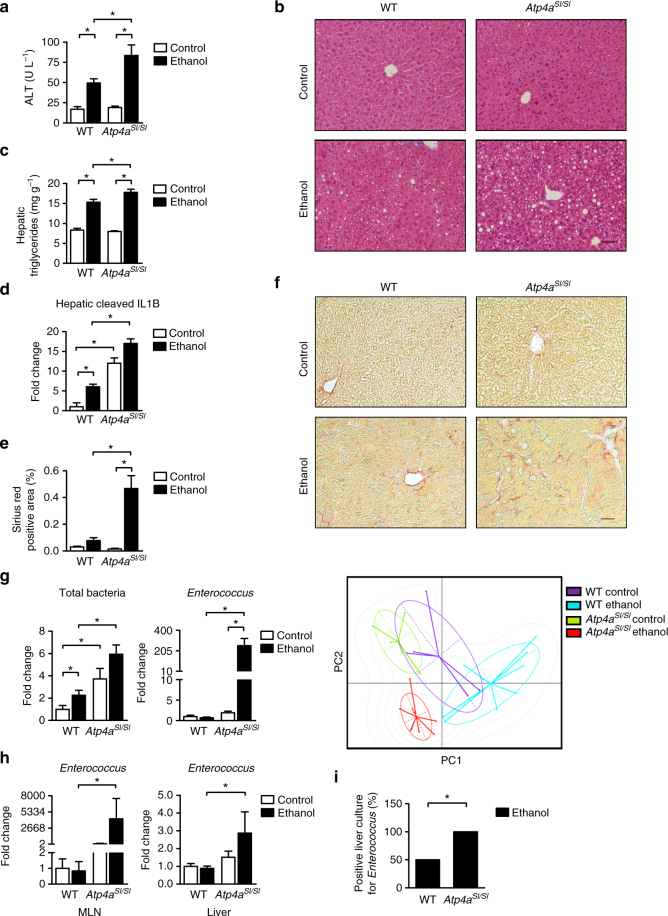
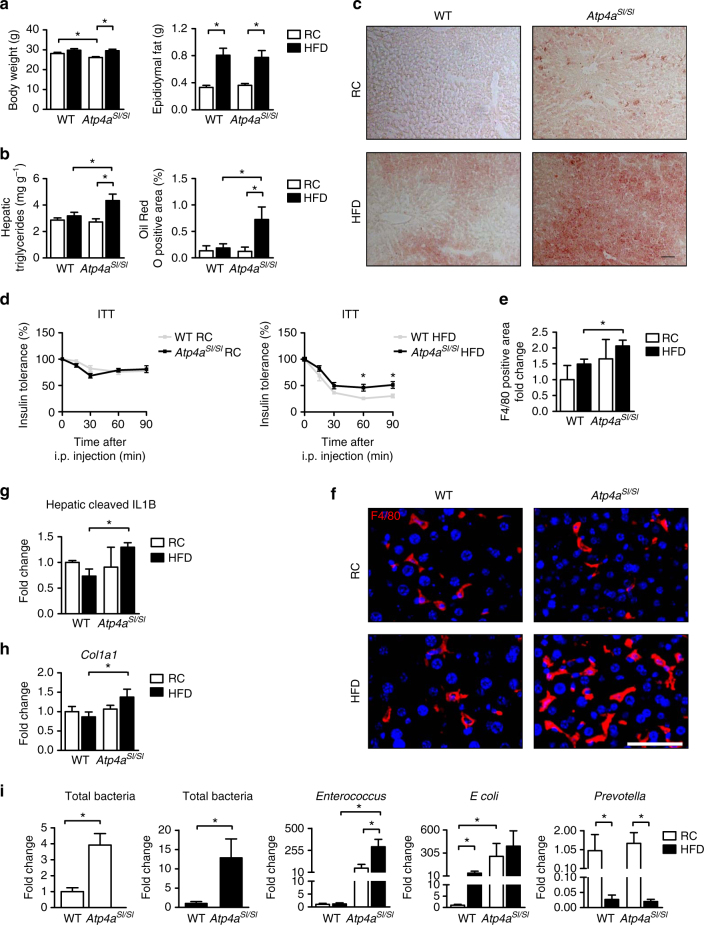
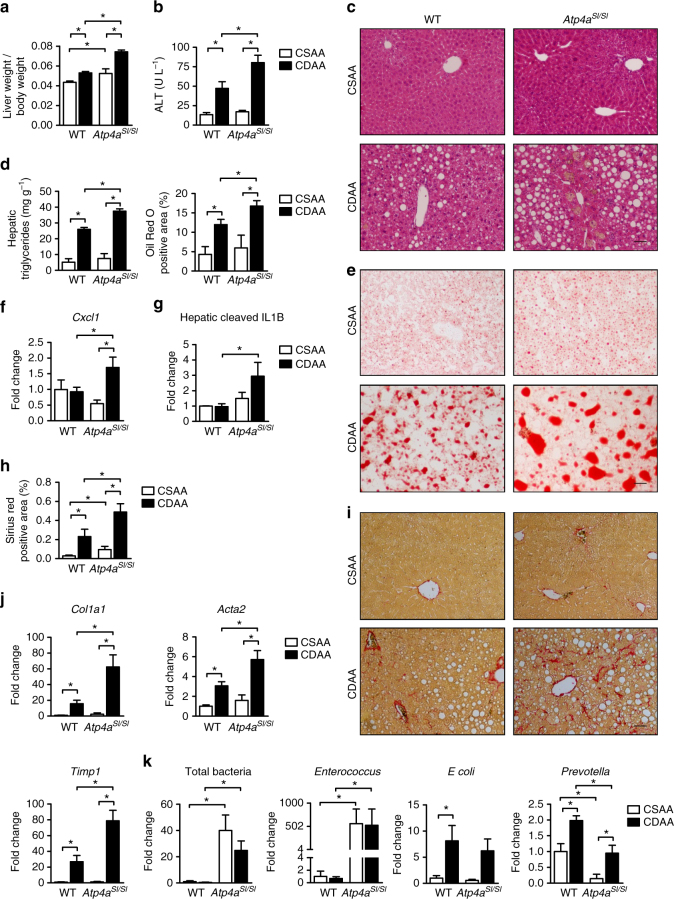
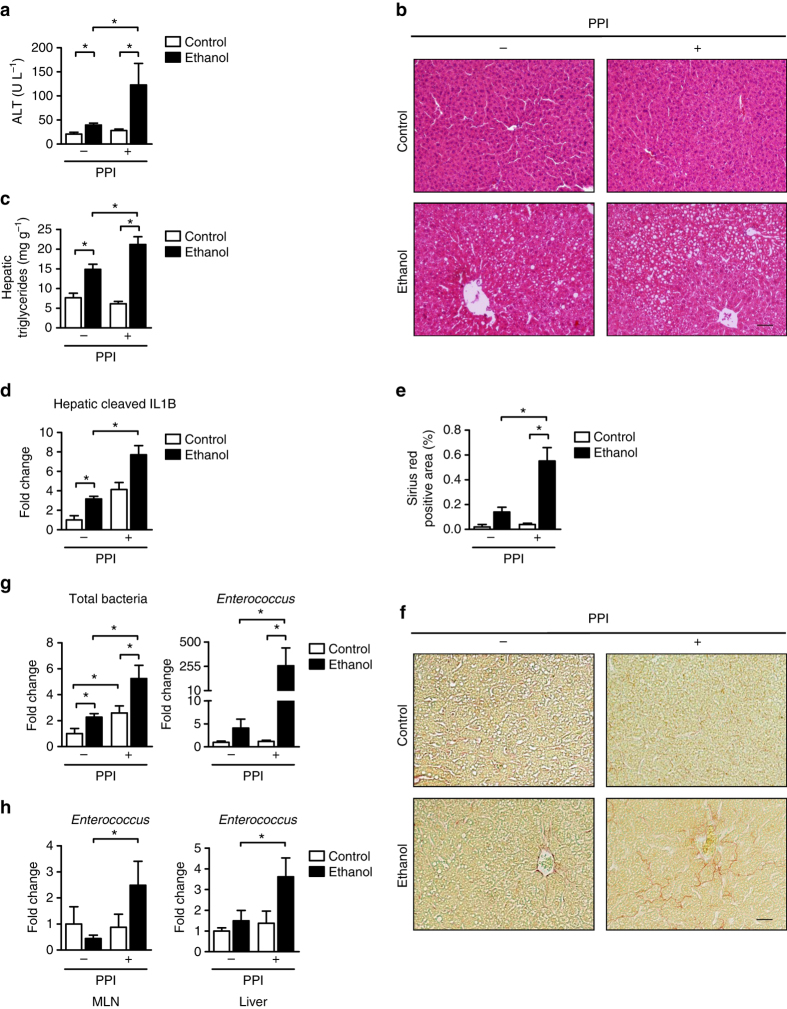
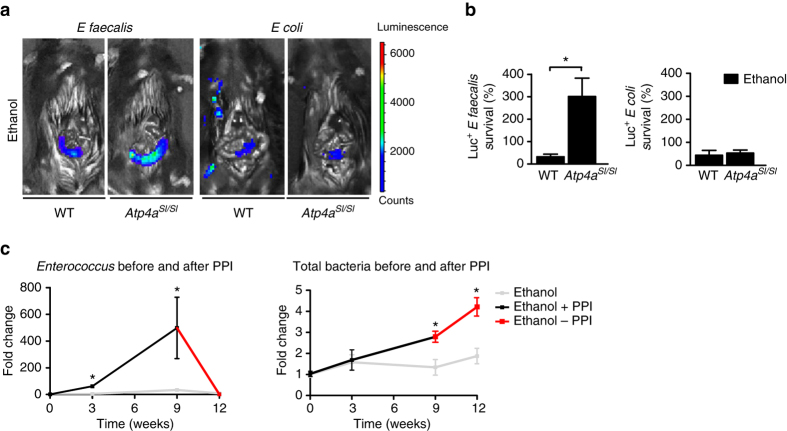
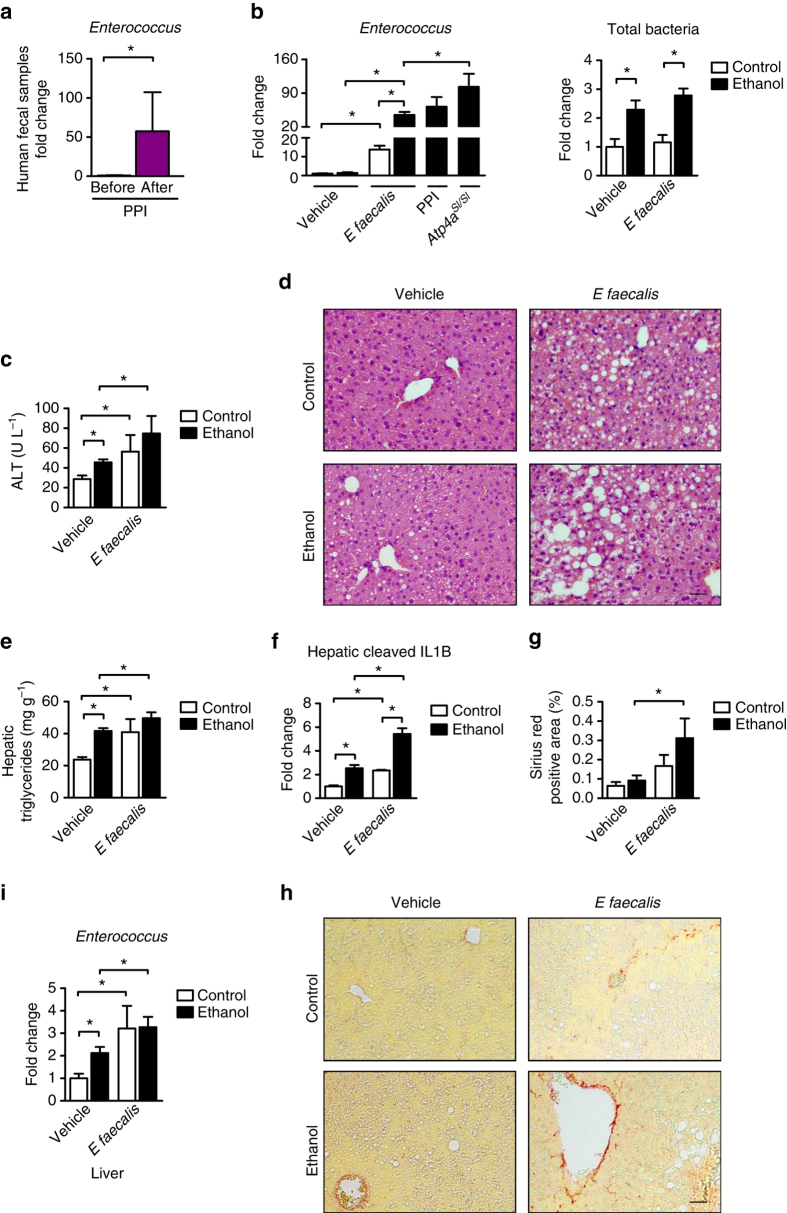
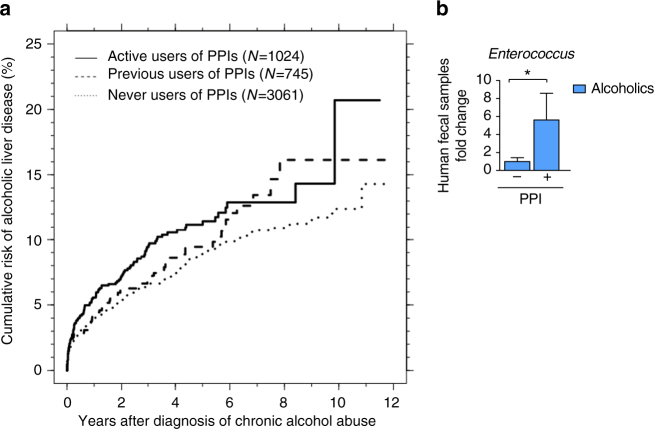
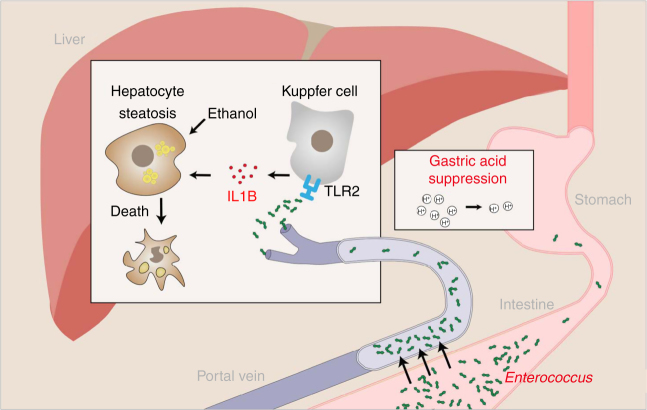
Chronic liver disease is rising in western countries and liver cirrhosis is the 12th leading cause of death worldwide. Simultaneously, use of gastric acid suppressive medications is increasing. Here, we show that proton pump inhibitors promote progression of alcoholic liver disease, non-alcoholic fatty liver disease, and non-alcoholic steatohepatitis in mice by increasing numbers of intestinal Enterococcus spp. Translocating enterococci lead to hepatic inflammation and hepatocyte death. Expansion of intestinal Enterococcus faecalis is sufficient to exacerbate ethanol-induced liver disease in mice. Proton pump inhibitor use increases the risk of developing alcoholic liver disease among alcohol-dependent patients. Reduction of gastric acid secretion therefore appears to promote overgrowth of intestinal Enterococcus, which promotes liver disease, based on data from mouse models and humans. Recent increases in the use of gastric acid-suppressive medications might contribute to the increasing incidence of chronic liver disease.
Overview
The claims and statistics of this paper haven’t been checked yet.
Free: it reads the open-access text and checks the first 5 claims that cite a source we can check. Create a free account to check every claim.
Integrity signals
Registry
Cites
Statistics
Figures
Verification
Claims the paper makes
The claims and statistics of this paper haven’t been checked yet.
Free: it reads the open-access text and checks the first 5 claims that cite a source we can check. Create a free account to check every claim.
Claims other papers make about this one
Each is checked against this paper’s own text: does it say what the citing paper says it does?
In the citing paper
“The gut microbiomes of patients with advanced liver disease and cirrhosis are characterized by an increase in potentially pathogenic bacteria, along with reduced numbers of bacteria with beneficial properties [220,221,222,223,224,225].”
From Gut-pancreas-liver Axis as a target for treatment of NAFLD/NASH (2020) · cites this paper as [223]
Self-check
Percentages, sums and reported differences re-computed from the paper’s own numbers.
The self-check needs the paper’s full text.
Citations
Cites
Lozano, R., Naghavi, M., Foreman, K., Lim, S., Shibuya, K., Aboyans, V., Abraham, J., Adair, T., Aggarwal, R., Ahn, S. Y., et al. (2012) · The Lancet · doi:10.1016/s0140-6736(12)61728-0 · Cited by 14,070
The ade4 Package: Implementing the Duality Diagram for Ecologists
Dray, S., & Dufour, A.-B. (2007) · Journal of Statistical Software · doi:10.18637/jss.v022.i04 · Cited by 6,211
The Danish National Patient Register
Lynge, E., Sandegaard, J. L., & Rebolj, M. (2011) · Scandinavian Journal of Public Health · doi:10.1177/1403494811401482 · Cited by 3,968
Inflammasome-mediated dysbiosis regulates progression of NAFLD and obesity
Henao-Mejia, J., Elinav, E., Jin, C., Hao, L., Mehal, W. Z., Strowig, T., Thaiss, C. A., Kau, A. L., Eisenbarth, S. C., Jurczak, M. J., et al. (2012) · Nature · doi:10.1038/nature10809 · Cited by 2,435
TLR4 enhances TGF-β signaling and hepatic fibrosis
Seki, E., De Minicis, S., Österreicher, C. H., Kluwe, J., Osawa, Y., Brenner, D. A., & Schwabe, R. F. (2007) · Nature Medicine · doi:10.1038/nm1663 · Cited by 1,942
Self-citationMouse model of chronic and binge ethanol feeding (the NIAAA model)
Bertola, A., Mathews, S., Ki, S. H., Wang, H., & Gao, B. (2013) · Nature Protocols · doi:10.1038/nprot.2013.032 · Cited by 1,213
Self-citationRinttila, T., Kassinen, A., Malinen, E., Krogius, L., & Palva, A. (2004) · Journal of Applied Microbiology · doi:10.1111/j.1365-2672.2004.02409.x · Cited by 1,017
Interactions Between the Intestinal Microbiome and Liver Diseases
Schnabl, B., & Brenner, D. A. (2014) · Gastroenterology · doi:10.1053/j.gastro.2014.01.020 · Cited by 971
Self-citationEnteric dysbiosis associated with a mouse model of alcoholic liver disease
Yan, A. W., Fouts, D. E., Brandl, J., Stärkel, P., Torralba, M., Schott, E., Tsukamoto, H., Nelson, K. E., Brenner, D. A., & Schnabl, B. (2011) · Hepatology · doi:10.1002/hep.24018 · Cited by 791
Self-citationGlobal burden of alcoholic liver diseases
Rehm, J., Samokhvalov, A. V., & Shield, K. D. (2013) · Journal of Hepatology · doi:10.1016/j.jhep.2013.03.007 · Cited by 740
Cited by
Items 101–200 of 257
Chu, H., Jiang, L., Gao, B., Gautam, N., Alamoudi, J. A., Lang, S., Wang, Y., Duan, Y., Alnouti, Y., Cable, E. E., et al. (2020) · Translational research · doi:10.1016/j.trsl.2020.06.006 · Cited by 32
Self-citationIndividualized prevention of proton pump inhibitor related adverse events by risk stratification
Xia, B., He, Q., Smith, F. G., Gkoutos, G. V., Nirantharakumar, K., Kuo, Z. C., Wang, D., Feng, Q., Cheung, E. C., Dai, L., et al. (2024) · Nature Communications · doi:10.1038/s41467-024-48007-8 · Cited by 36
“Enterococcus growth in the intestines translocating into the liver and inducing in fl ammation may contribute to chronic liver diseases 43 .”
Proton pump inhibitors and risk of all‐cause and cause‐specific mortality: A cohort study
Brown, J. P., Tazare, J., Williamson, E., Mansfield, K. E., Evans, S. J. W., Tomlinson, L. A., Bhaskaran, K., Smeeth, L. L., Wing, K., & Douglas, I. (2021) · British Journal of Clinical Pharmacology · doi:10.1111/bcp.14728 · Cited by 37
“Residual confounding may explain the wide ranging associations with PPI use observed both in the literature, where PPIs have been associated with over a dozen conditions, and in this study with causespecific mortality from a number of causes [1-9, 38-40].”
BackgroundKao, W., Su, C., Tan, E. C., Lee, P., Chen, P., Tang, J., Huang, Y., Huo, T., Chang, C., Hou, M., et al. (2018) · Hepatology · doi:10.1002/hep.30247 · Cited by 30
“recently demonstrated that PPIs promote (1) the growth of Enterococcus faecalis in the intestines and (2) the subsequent translocation of these bacteria to the liver, where they exacerbated hepatic inflammation and facilitated the development of liver fibrosis, a critical factor in hepatic carcinogenesis.(28) Taken to…”
BackgroundDam, G. A., Vilstrup, H., Andersen, P. K., Bossen, L., Watson, H., & Jepsen, P. (2018) · Liver International · doi:10.1111/liv.14012 · Cited by 32
Self-citationPlaza‐Díaz, J., Solis‐Urra, P., Aragón‐Vela, J., Rodríguez‐Rodríguez, F., Arancibia, J. E. O., & Álvarez‐Mercado, A. I. (2021) · Biomedicines · doi:10.3390/biomedicines9020145 · Cited by 31
“, 2017 [71] Sublytic Atp4a Sl/Sl mice, Proton pump inhibitors ↑progression of liver disease, ↑ Enterococcus spp.”
BackgroundLiang, C.-W., Yang, H., Islam, M. M., Nguyen, P., Feng, Y.-T., Hou, Z. Y., Huang, C., Poly, T. N., & Li, Y. (2021) · JMIR Cancer · doi:10.2196/19812 · Cited by 31
“Previous studies have shown that the use of antacids promotes liver disease [30], and the high impact of antacids (see Table 3) should be further investigated to determine whether a causal relationship exists.”
ResultThe potential role of bacteria in pancreatic cancer: a systematic review
Li, P., Shu, Y., & Gu, Y. (2020) · Carcinogenesis · doi:10.1093/carcin/bgaa013 · Cited by 34
Kang, K., Sun, Y., Pan, D., Sang, L.-X., Sun, M., Li, Y., & Chang, B. (2021) · Experimental and Therapeutic Medicine · doi:10.3892/etm.2021.9862 · Cited by 30
“The results of shifts in Enterococcus are in agreement with the study of Llorente et al (48), who reported that gastric acid suppression may promote alco‑ holic liver disease by inducing overgrowth of intestinal Enterococcus, further confirming the pathogenic role of Enterococcus in AFLD.”
ResultGut–Liver Axis Dysregulation in Portal Hypertension: Emerging Frontiers
Lombardi, M., Troisi, J., Motta, B. M., Torre, P., Masarone, M., & Persico, M. (2024) · Nutrients · doi:10.3390/nu16071025 · Cited by 31
“Hypochlorhydria in cirrhosis, even without proton pump inhibition, is an additional factor contributing to microbiota alterations [79–81].”
BackgroundXiang, Z., Wu, J., Li, J., Zheng, S., Wei, X., & Xu, X. (2023) · Engineering · doi:10.1016/j.eng.2022.12.012 · Cited by 28
Immunostimulatory gut bacteria
Zitvogel, L., & Kroemer, G. (2019) · Science · doi:10.1126/science.aaz7595 · Cited by 27
The unforeseen intracellular lifestyle of Enterococcus faecalis in hepatocytes
Nunez, N., Derré‐Bobillot, A., Trainel, N., Lakisic, G., Lecomte, A., Mercier‐Nomé, F., Cassard, A., Bierne, H., Serror, P., & Archambaud, C. (2022) · Gut Microbes · doi:10.1080/19490976.2022.2058851 · Cited by 31
“Their findings were corroborated by a significant increase in Enterococcus in the stool of healthy individuals after 2 weeks of treatment with PPIs and in chronic alcohol users taking PPIs.(14) More recently, it has been shown that the severity of alcoholic hepatitis and mortality of patients with alcoholic hepatitis…”
BackgroundmAChR4 suppresses liver disease via GAP-induced antimicrobial immunity
Llorente, C., Tonetti, F. R., Bruellman, R., Brea, R., Pell, N., Hartmann, P., Maccioni, L., Han, H., Cabré, N., Liu, J., et al. (2025) · Nature · doi:10.1038/s41586-025-09395-z · Cited by 30
Self-citationYao, Y., Zhang, W., Ming, R., Deng, Q., Zuo, A., Zhang, S., Ying, Y., Zhao, Y., & Ma, J. (2020) · Frontiers in Pharmacology · doi:10.3389/fphar.2020.00355 · Cited by 30
“The number of patients with chronic liver disease has increased rapidly in recent years (Llorente et al., 2017).”
BackgroundZhang, M., Fan, Y., Meng, R., Cai, W., Yin, S., Zhou, T. Y., Huang, Y., Wang, P., Jiang, F., Yang, M. X., et al. (2022) · American Journal of Clinical Oncology · doi:10.1097/coc.0000000000000949 · Cited by 29
Hao, J., Hu, R., Zhao, J., Li, Y., Li, Q., & Zhang, X. (2024) · Phytomedicine · doi:10.1016/j.phymed.2024.156032 · Cited by 27
Du, L., Zhang, K., Liang, L., Yang, Y., Lu, D., Zhou, Y., Ren, T., Fan, J., Zhang, H., Wang, Y., et al. (2025) · mSystems · doi:10.1128/msystems.01148-24 · Cited by 28
Yang, Z., Lian, J., Yang, Y., Li, J., Guo, W., Lv, X., Ni, L., & Chen, Y. (2024) · Current Research in Food Science · doi:10.1016/j.crfs.2024.100964 · Cited by 28
“One previous study alao showed that overgrowth of Enterococcus in the gut exacerbates the development of ethanol-induced liver injury by promoting hepatic inflammation and hepatocellular death, and thereby exacerbating the development of ethanol-induced liver injury (Llorente et al., 2017).”
The Role of Gut Dysbiosis in Acute-on-Chronic Liver Failure
Kim, S. E., Park, J. W., Kim, H. S., Jang, M. K., Suk, K. T., & Kim, D. J. (2021) · International Journal of Molecular Sciences · doi:10.3390/ijms222111680 · Cited by 26
“and Streptococcaceae, were highly associated with mortality [30,72,73].”
BackgroundHu, D., Yang, W., Mao, P., & Cheng, M. (2020) · Nutrition and Cancer · doi:10.1080/01635581.2020.1767166 · Cited by 26
Proton pump inhibitors use and the risk of fatty liver disease: A nationwide cohort study
Pyo, J. H., Kim, T. J., Lee, H., Choi, S. C., Cho, S., Choi, Y., Min, Y. W., Min, B., Lee, J. H., Kang, M., et al. (2020) · Journal of Gastroenterology and Hepatology · doi:10.1111/jgh.15236 · Cited by 23
Yan, Y., Wang, Z., Zhou, Y., Gao, Z., Ning, L., Zhao, Y., Xuan, B., Ma, Y., Tong, T., Huang, X., et al. (2023) · Cell Reports Medicine · doi:10.1016/j.xcrm.2023.101153 · Cited by 34
Deficiency of Intestinal α1‐2‐Fucosylation Exacerbates Ethanol‐Induced Liver Disease in Mice
Zhou, R., Llorente, C., Cao, J., Gao, B., Duan, Y., Jiang, L., Wang, Y., Kumar, V., Stärkel, P., Bode, L., et al. (2020) · Alcoholism Clinical and Experimental Research · doi:10.1111/acer.14405 · Cited by 24
“Enterococcus faecalis cultures A cytolysin positive strain of E. faecalis, which was isolated from feces of an ethanol-fed Atp4aSl/Sl mouse (Llorente et al., 2017), was cultured in BHI media with 0, 0.25, 0.5, 1, 2 or 20mg/ml of 2’-FL in triplicate for each concentration.”
BackgroundMethodResultSelf-citationMolecular mechanisms of enterococcal-bacteriophage interactions and implications for human health
Canfield, G. S., & Duerkop, B. A. (2020) · Current Opinion in Microbiology · doi:10.1016/j.mib.2020.06.003 · Cited by 22
Jiang, X., Yang, Q., Qu, H., Chen, Y. Q., & Zhu, S. (2023) · Nutrients · doi:10.3390/nu15030586 · Cited by 22
“Enterococcus was identified as a major conditional pathogen responsible for liver inflammation and disease progression [52].”
BackgroundEnterococcal-host interactions in the gastrointestinal tract and beyond
Madani, W. A. M., Ramos, Y., Cubillos‐Ruiz, J. R., & Morales, D. K. (2024) · FEMS Microbes · doi:10.1093/femsmc/xtae027 · Cited by 31
Mendes, B. G., Duan, Y., & Schnabl, B. (2022) · Viruses · doi:10.3390/v14030490 · Cited by 23
“IL1B is a key inflammatory cytokine to mediate alcohol-associated liver disease [22,23].”
BackgroundSelf-citationIntestinal Lymphatic Biology, Drug Delivery, and Therapeutics: Current Status and Future Directions
Reddiar, S. B., Xie, Y., Abdallah, M., Han, S., Hu, L., Feeney, O. M., Gracia, G., Anshabo, A., Lu, Z., Farooq, M. A., et al. (2024) · Pharmacological Reviews · doi:10.1124/pharmrev.123.001159 · Cited by 22
Schwenger, K. J. P., Copeland, J. K., Ghorbani, Y., Chen, L., Comelli, E. M., Guttman, D. S., Fischer, S. E., Jackson, T. D., Okrainec, A., & Allard, J. P. (2025) · Microbiome · doi:10.1186/s40168-024-02004-7 · Cited by 25
“The use of proton pump inhibitor medications which contribute to elevated translocation of Enterococcus to the liver has been associated with increased risk of MASLD and MASH [67].”
Song, H. J., Jeon, N., & Squires, P. J. (2020) · European Journal of Clinical Pharmacology · doi:10.1007/s00228-020-02927-8 · Cited by 21
“In addition, it should be noted that exposure of mouse models to PPIs has been demonstrated to promote liver tumors, the progression of alcoholic liver disease, nonalcoholic fatty liver disease, and nonalcoholic steatohepatitis [84, 85].”
BackgroundAlcoholic-Hepatitis, Links to Brain and Microbiome: Mechanisms, Clinical and Experimental Research
Neuman, M. G., Seitz, H. K., French, S. W., Malnick, S. D. H., Tsukamoto, H., Cohen, L. B., Hoffman, P. L., Tabakoff, B., Fasullo, M., Nagy, L. E., et al. (2020) · Biomedicines · doi:10.3390/biomedicines8030063 · Cited by 21
“Thus, gastric acid suppression is causing intestinal dysbiosis, which is associated with the progression of chronic liver disease [107].”
BackgroundSelf-citationBluemel, S., Wang, Y., Lee, S., & Schnabl, B. (2020) · World Journal of Gastroenterology · doi:10.3748/wjg.v26.i33.4933 · Cited by 19
Self-citationNakatake, R., Hishikawa, H., Kotsuka, M., Ishizaki, M., Matsui, K., Nishizawa, M., Yoshizawa, K., Kaibori, M., & Okumura, T. (2019) · Digestive Diseases and Sciences · doi:10.1007/s10620-019-05622-6 · Cited by 18
The impact of the gut microbiome on liver transplantation
Duong, N. K., & Bajaj, J. S. (2021) · Current Opinion in Organ Transplantation · doi:10.1097/mot.0000000000000930 · Cited by 19
“Alcohol in and of itself can lead to hepatotoxicity by way of gut-derived bacterial endotoxins [12,13].”
BackgroundSelf-citationTian, X., Xia, G., Zhang, M., Tan, C., Yang, M., Wang, H., Song, X., Chai, S., Yin, J., & Song, W. (2022) · Journal of Parenteral and Enteral Nutrition · doi:10.1002/jpen.2370 · Cited by 21
Self-citationMiyaue, N., Yamamoto, H., Liu, S., Ito, Y., Yamanishi, Y., Ando, R., Suzuki, Y., Mogi, M., & Nagai, M. (2025) · npj Parkinson's Disease · doi:10.1038/s41531-025-00903-6 · Cited by 16
“In addition, previous studies have reported a predominance of the genus Enterococcus in individuals using PPIs compared to non-users 21 and a signi fi cant increase in the genus Enterococcus or family Enter-ococcaceae after 2 – 4 weeks of PPI administration 22,23 .”
InfluentialTargeted inhibition of pathobiont virulence factor mitigates alcohol-associated liver disease
Yang, Y., Duan, Y., Lang, S., Fondevila, M. F., Schöler, D., Harberts, A., Cabré, N., Chen, S., Shao, Y., Vervier, K., et al. (2025) · Cell Host & Microbe · doi:10.1016/j.chom.2025.05.003 · Cited by 16
Self-citationChang, T.-E., Huang, Y., Perng, C., Huang, Y., & Hou, M. (2019) · Journal of the Chinese Medical Association · doi:10.1097/jcma.0000000000000157 · Cited by 17
IgY antibodies against cytolysin reduce ethanol-induced liver disease in mice
Cabré, N., Hartmann, P., Llorente, C., Kouno, T., Wang, Y., Zeng, S.-L., Kim, H. Y., Zhang, X., Kisseleva, T., Iyer, S., et al. (2023) · Hepatology · doi:10.1097/hep.0000000000000324 · Cited by 16
“, which translocate and lead to hepatic inflammation and hepatocyte death.[22] We have also demonstrated that patients suffering from alcohol use disorder are more likely to test positive for E.”
BackgroundSelf-citationTao, Y., Huang, F., Zhang, Z., Tao, X., Wu, Q., Qiu, L., & Wei, H. (2020) · Applied Microbiology and Biotechnology · doi:10.1007/s00253-020-10609-9 · Cited by 18
“2011), while a recent study of Cristina and colleagues observed that expansion of commensal Enterococcus promoted exacerbated alcoholic liver disease via translocation and toxin production (Llorente et al. 2017).”
BackgroundResultClinical characteristics and outcome of patients with enterococcal liver abscess
Große, K., Ohm, D., Würstle, S. M., Brozat, J. F., Schmid, R. M., Trautwein, C., Stallmach, A., Bruns, T., & Reuken, P. A. (2021) · Scientific Reports · doi:10.1038/s41598-021-01620-9 · Cited by 16
Labenz, C., Kostev, K., Galle, P. R., Wörns, M., Labenz, J., Tanislav, C., & Adarkwah, C. C. (2020) · Medicine · doi:10.1097/md.0000000000023436 · Cited by 16
“This is most likely due to the fact that a disruption of the gastric acid barrier leads to a change in gut microbiota and Small Intestinal Bacterial Overgrowth (SIBO).([9,10]) Hence, there is evidence indicating an additional effect of PPI treatment on the risk of infections in general especially in decompensated cirr…”
BackgroundZhou, H., Huang, Y., Chen, C., Song, M., & Hylemon, P. B. (2026) · Pharmacological Reviews · doi:10.1016/j.pharmr.2026.100120 · Cited by 19
Liu, Z., Liu, T., Zhang, Z., & Fan, Y. (2024) · Frontiers in Microbiology · doi:10.3389/fmicb.2024.1337185 · Cited by 18
“In mice with ALD models, phage therapy has also been shown to reduce liver damage (Llorente et al., 2017; Duan et al., 2019), however, phages’ limited host specificity restricts their use.”
BackgroundGut Bacteria in Alcohol-Associated Liver Disease
Yang, Y., & Schnabl, B. (2024) · Clinics in Liver Disease · doi:10.1016/j.cld.2024.06.008 · Cited by 18
Self-citationKawahara, Y., Kodama, M., Mizukami, K., Saito, T., Hirashita, Y., Sonoda, A., Fukuda, K., Matsunari, O., Okamoto, K., Ogawa, R., et al. (2019) · Journal of Clinical Biochemistry and Nutrition · doi:10.3164/jcbn.19-47 · Cited by 14
Motta, B. M., Grander, C., Gögele, M., Foco, L., Vuković, V., Melotti, R., Fuchsberger, C., Grandi, A. D., Cantaloni, C., Picard, A., et al. (2019) · Journal of Translational Medicine · doi:10.1186/s12967-019-02130-z · Cited by 18
Yu, H., Wang, Y., Zhang, J., Wang, X., Wang, R., Bao, J., & Zhang, R. (2023) · Poultry Science · doi:10.1016/j.psj.2023.103097 · Cited by 14
“Megasphaera and Megamonas are considered beneficial bacteria, while both relate to human diseases (Llorente et al., 2017; Liu et al., 2019).”
BackgroundEnterococci for human health: A friend or foe?
Wang, Y., Xu, W., Guo, S., Xu, S., Wang, J., Zhang, S., Kuang, Y., & Jin, P. (2025) · Microbial Pathogenesis · doi:10.1016/j.micpath.2025.107381 · Cited by 18
Assalin, H. B., Almeida, K. C. G. D., Guadagnini, D., Santos, A., Teixeira, C. J., Bordin, S. A., Rocha, G. Z., & Saad, M. J. A. (2022) · International Journal of Molecular Sciences · doi:10.3390/ijms232213766 · Cited by 15
“Recent evidence suggests a link between NAFLD and PPI use, probably through gastric achlorhydria which induces alterations in microbiota, but these studies were performed in alcohol-fed mice and in obese mice [33,34].”
BackgroundIkuta, K., Nakagawa, S., Yamawaki, C., Itohara, K., Hira, D., Imai, S., Yonezawa, A., Nakagawa, T., Sakuragi, M., Sato, N., et al. (2022) · BMC Nephrology · doi:10.1186/s12882-022-03008-x · Cited by 15
“For example, omeprazole has been shown to increase the expression of inflammatory cytokines in liver tissue and increases its vulnerability to hepatic injury, which occurs via changes in the gut microbiota [36].”
BackgroundReuter, B., & Bajaj, J. S. (2020) · Clinics in Liver Disease · doi:10.1016/j.cld.2020.04.006 · Cited by 14
Self-citationZhang, H., Zhou, W., Gao, P., Li, Z., Li, C., Li, J., Bian, J., Gong, L., He, C., Han, L., et al. (2024) · Journal of Agricultural and Food Chemistry · doi:10.1021/acs.jafc.4c06992 · Cited by 14
Coumarin Glycosides Reverse Enterococci-Facilitated Enteric Infections
Xu, W., Yuan, G., Fang, Y., Liu, X., Ma, X., & Zhu, K. (2024) · Research · doi:10.34133/research.0374 · Cited by 13
“Various factors such as gastric acid suppressive medication and antibiotic treatments contribute to the intestinal expansion of enterococci [13,34].”
BackgroundGut–liver axis: PPIs, Enterococcus and promotion of alcoholic liver disease
Ray, K. (2017) · Nature Reviews Gastroenterology & Hepatology · doi:10.1038/nrgastro.2017.152 · Cited by 11
Alcohol, aging, and the gut microbiome: Intersections of immunity, barrier dysfunction, and disease
Melamed, E., Rungratanawanich, W., Liangpunsakul, S., Maki, K. A., McCullough, R. L., & Llorente, C. (2025) · Alcohol · doi:10.1016/j.alcohol.2025.07.001 · Cited by 15
“For instance, microbiome alterations that promote intestinal overgrowth of Enterococcus have been linked to an increased risk of ALD (Llorente et al., 2017).”
Self-citationJansma, J., Thome, N. U., Schwalbe, M., Chatziioannou, A. C., Elsayed, S. S., van Wezel, G. P., den Abbeele, P. V., van Hemert, S., & Aidy, S. E. (2023) · Gut Microbes · doi:10.1080/19490976.2023.2232506 · Cited by 13
“positive correlations between ethanol and multiple Enterococcus species (Figure 3a), which is in agreement with previous observations showing a positive association between Enterococcus levels and increased ethanol levels and pH in the small intestine, which promotes alcoholic liver disease.(58) The reduced levels of…”
ResultObeticholic Acid Decreases Intestinal Content of Enterococcus in Rats With Cirrhosis and Ascites
Yan, K. G., Hung, A., Parmer, C. M., Yang, H., Jain, D., Lim, B., Goodman, A. L., & García–Tsao, G. (2021) · Hepatology Communications · doi:10.1002/hep4.1740 · Cited by 10
Sánchez-Niño, M. D., Aguilera-Correa, J. J., Politei, J. M., Esteban, J., Requena, T., & Ortíz, A. (2020) · Future Microbiology · doi:10.2217/fmb-2019-0249 · Cited by 11
Zhang, H., Wang, J., Qian, M., & Jin, Y. (2023) · The Science of The Total Environment · doi:10.1016/j.scitotenv.2023.167317 · Cited by 9
Liang, Z., Chen, S., Zhang, X., Li, J., Guo, W., Ni, L., & Lv, X. (2025) · Foods · doi:10.3390/foods14061054 · Cited by 8
“…bacterium closely associated with inflammatory bowel disease Among them, Enterococcus, as a resident bacterium in the host, has been implicated in exacerbating ethanol-related liver disease by triggering hepatic inflammation and hepatocyte loss [32]. associated with inflammation of the colon [31].”
Douadi, C., Lamy-Besnier, Q., Theodorou, I., Schiettekatte, O., Sbardella, Y., Brot, L., Costantini, P. E., Saporetti, R., Danielli, A., Calvaresi, M., et al. (2025) · Cell Reports · doi:10.1016/j.celrep.2025.116726 · Cited by 11
Yang, Z., Lian, J., Li, J., Guo, W., Ni, L., & Lv, X. (2024) · Journal of Agricultural and Food Chemistry · doi:10.1021/acs.jafc.4c06072 · Cited by 11
Sturm, L., Gahm, C., Schultheiß, M., Reincke, M., Huber, J. P., Boettler, T., Thimme, R., & Bettinger, D. (2023) · Hepatology Communications · doi:10.1097/hc9.0000000000000178 · Cited by 8
Tomkovich, S., Lesniak, N. A., Li, Y., Bishop, L., Fitzgerald, M. J., & Schloss, P. D. (2019) · mSphere · doi:10.1128/msphere.00693-19 · Cited by 9
“Although the omeprazole dose administered to mice is higher than the 142 recommended dose for humans, omeprazole has a shorter half-life in mice compared to humans 143 (21) and lacks an enteric coating (22).”
BackgroundSanye tablet regulates gut microbiota and bile acid metabolism to attenuate hepatic steatosis
Qi, Y., Du, S., Li, W., Qiu, X., Zhou, F., Bai, L., Zhang, B., Mi, Z.-X., Qian, W., Li, L., et al. (2025) · Journal of Ethnopharmacology · doi:10.1016/j.jep.2025.119514 · Cited by 7
Wang, C., Chen, J., Chen, N., Zhang, B., Wu, W., Lin, W., He, Y., Zhang, J., Lu, Y., & Yan, Z. (2026) · International Journal of Biological Macromolecules · doi:10.1016/j.ijbiomac.2026.150390 · Cited by 7
Proton pump inhibitor use is associated with increased liver steatosis
Yu, H., Li, M., Yang, B., Sun, H., Jiang, H., Liang, Z., Smayi, A., Wu, B., & Yang, Y. (2024) · Biomedical Reports · doi:10.3892/br.2024.1804 · Cited by 8
“Llorente et al (34) focused on the relationship between PPI use and ALD and underlying mechanism (inducing overgrowth of intestinal Enterococcus ).”
BackgroundInfluentialVilmar, A. C., Dehlendorff, C., Friis, S., Jäättelä, M., Tvingsholm, S. A., & Frederiksen, H. (2023) · Leukemia & lymphoma/Leukemia and lymphoma · doi:10.1080/10428194.2023.2216324 · Cited by 7
“Since then, several studies have shown an inferior prognosis in PPI users treated for a variety of different conditions such as kidney disease [8], liver disease [9], and different infectious diseases [10,11] as compared to nonusers.”
BackgroundTorre, A., Cisneros-Garza, L. E., Castillo-Barradas, M., Navarro–Álvarez, N., Sandoval-Salas, R., González-Huezo, M. S., Pérez-Hernández, J. L., Méndez-Guerrero, O., Ruiz-Manríquez, J. A., Trejo-Estrada, R., et al. (2023) · Annals of Hepatology · doi:10.1016/j.aohep.2023.101140 · Cited by 8
He, Q., Xia, B., Yang, M. S., Lu, K., Fan, D., Li, W., Liu, Y., Pan, Y., & Yuan, J. (2024) · The FASEB Journal · doi:10.1096/fj.202302558r · Cited by 7
“…reduce insulin sensitivity in mice by altering the composition of gut microbiota, for example, increasing numbers of intestinal Enterococcus spp. 22 Hence, we hypothesize that PPI use may regulate the gut microbiota-bile acid axis that may mediate the association between PPIs and metabolic…”
BackgroundMiyaue, N., Yabe, H., & Nagai, M. (2024) · Journal of the Neurological Sciences · doi:10.1016/j.jns.2024.123202 · Cited by 6
Kang, X., Wei, Y., Fan, X., Luo, S., Luo, X., Zhao, S., & Wang, G. (2022) · Microbial Pathogenesis · doi:10.1016/j.micpath.2022.105745 · Cited by 9
Chen, S., Cai, S., Xu, J., Chen, B., Chen, X., & Xiong, H. (2023) · International Journal of Diabetes in Developing Countries · doi:10.1007/s13410-022-01161-5 · Cited by 7
“[26] Interestingly, as a probiotic, several studies have observed a positive correlation between Lactobacillus and obesity.”
Self-citationProton pump inhibitors in chronic liver disease: accomplice or bystander?
Mak, L., & Fung, J. (2020) · Hepatology International · doi:10.1007/s12072-020-10033-1 · Cited by 6
Ding, B., Fan, M., Shi, Y., Chen, X., & Duan, Y. (2025) · Microbiome Research Reports · doi:10.20517/mrr.2025.62 · Cited by 10
“49-52,61-65 ,90 IBD, which includes ulcerative colitis (UC) and Crohn’s disease (CD), is characterized by chronic, relapsing inflammation of the gastrointestinal tract.”
The impact of proton pump inhibitors in liver diseases and the effects on the liver
Liu, Y., & Chen, M. K. (2022) · Journal of Digestive Diseases · doi:10.1111/1751-2980.13093 · Cited by 5
“PPIs have been shown to alter intestinal microflora in mice, and increase the overgrowth of Enterococcus in alcoholic liver disease.(5) In a recent study,(133) the authors revealed an association between”
BackgroundHuang, H., Liu, Z., Guo, Y., Zeng, Y., Shen, S., & Xu, C. (2023) · Journal of Clinical Gastroenterology · doi:10.1097/mcg.0000000000001847 · Cited by 7
“36 Second, growing evidence suggested that the use of PPIs is associated with a range of metabolic dysfunction-related disorders, including type 2 diabetes mellitus, 37 metabolic syndrome, 30 weight gain, 38 and cardiovascular events.”
BackgroundSingh, A., Garg, R., Lan, N., Siddiqui, M. T., Gupta, M., & Alkhouri, N. (2020) · Indian Journal of Gastroenterology · doi:10.1007/s12664-020-01087-y · Cited by 5
Zhong, W. H., & Zhou, Z. (2019) · Elsevier eBooks · doi:10.1016/b978-0-12-814468-8.00008-9 · Cited by 7
Microbial clues to a liver disease
Clokie, M. R. J. (2019) · Nature · doi:10.1038/d41586-019-03417-3 · Cited by 5
Infectious Complications of Portal Hypertension
Incicco, S., Angeli, P., & Piano, S. S. (2024) · Clinics in Liver Disease · doi:10.1016/j.cld.2024.03.007 · Cited by 5
Intestinal Microbes, Metabolites, and Hormones in Alcohol-Associated Liver Disease
Wang, R., Ma, F., Yin, D., Wang, H., & Wei, X. (2025) · Seminars in Liver Disease · doi:10.1055/a-2601-9480 · Cited by 5
“76,83 Elevated LPS and other metabolites activate immune cells such as Kupffer cells, potentially contributing to AH development.”
Self-citationCheng, H., Wen, J., Jia, Q., Luo, L., Li, Y., Wang, X., Yang, S., Su, X., Zhang, Y., Li, S., et al. (2026) · Food Research International · doi:10.1016/j.foodres.2026.119491 · Cited by 6
Novel drug discovery strategies for the treatment of decompensated cirrhosis
Lamatsch, S., Sittner, R., Tacke, F., & Engelmann, C. (2021) · Expert Opinion on Drug Discovery · doi:10.1080/17460441.2022.2020755 · Cited by 5
“[24], high intake of fat or ethanol and the frequent use of Article highlights”
BackgroundGut Bacteria Provide Genetic and Molecular Reporter Systems to Identify Specific Diseases
Dicks, L. M. T. (2024) · International Journal of Molecular Sciences · doi:10.3390/ijms25084431 · Cited by 5
“Furthermore, a deficiency of mucin-2 (Muc2), the most abundantly secreted mucin in the small and large intestine, resulted in an increase in antimicrobial lectins, including REG3B and REG3G [60,61].”
BackgroundZhou, M., Li, X., Xiao, N., & Tan, Z. (2025) · Frontiers in Cellular and Infection Microbiology · doi:10.3389/fcimb.2025.1620789 · Cited by 4
Luthra‐Guptasarma, M., & Guptasarma, P. (2021) · BioEssays · doi:10.1002/bies.202000211 · Cited by 5
General characteristics, results and prospects for the clinical application of bacteriophage therapy
Nacharov, P. V., Krivopalov, A. A., & Shustova, T. I. (2023) · Meditsinskiy sovet = Medical Council · doi:10.21518/ms2023-106 · Cited by 5
Ciocan, D. M., & Cassard, A. (2020) · Springer Link (Chiba Institute of Technology) · doi:10.1051/medsci/2020052/pdf · Cited by 3
Development of Analytical Tools and Animal Models for Studies of Small-Intestine Dysbiosis
Bogatyrev, S. R. (2019) · CaltechTHESIS (California Institute of Technology) · doi:10.7907/vjdz-7b52 · Cited by 3
Karin, M., Llorente, C., Bruellman, R., Cabré, N., Brea, R., Pell, N., Maccioni, L., Alghafri, A., Zhou, R., Gao, B., et al. (2021) · Research Square · doi:10.21203/rs.3.rs-366644/v1 · Cited by 4
Self-citationHabich, D., Horvath, A., Feldbacher, N., Rebol, L., Nepel, M., Madl, T., Habisch, H.-J., Baumann‐Durchschein, F., Fürst, S., Plank, J., et al. (2025) · Clinical Nutrition · doi:10.1016/j.clnu.2025.11.007 · Cited by 3
Relationship Between Gut Microbiota and Pancreatitis: A Systematic Review
Zhang, X., Armel, T. T., & Tyagi, G. (2024) · Apollo Medicine · doi:10.1177/09760016241262194 · Cited by 3
“The human gastrointestinal system hosts a rich and diverse microbial community, surpassing a staggering 10 [14] bacteria, collectively harbouring more than 5,000,000 genes.”
Ma, T., Gan, G., Cheng, J., Shen, Z., Zhang, G., Liu, S., & Hu, J. (2025) · Angewandte Chemie · doi:10.1002/ange.202502588 · Cited by 23
Faitová, T., Ilett, E. E., da Cunha‐Bang, C., Sengeløv, H., Brieghel, C., Gülay, A., Rafiq, S., Ravn, H. B., Zheng, C., Nielsen, R. V., et al. (2025) · Microbiology Spectrum · doi:10.1128/spectrum.00944-25 · Cited by 3
Gut–liver axis molecular mechanisms in alcohol-associated liver disease
Jiang, Y., & Llorente, C. (2026) · Alcohol · doi:10.1016/j.alcohol.2026.04.001 · Cited by 2
Self-citationRivera, A. G. M., Bala, A., Casella, L. G., Brunson, D. N., Wongso, E., Patel, A., Cuvilly, I. E., Walker, A. R., Wallet, S. M., Flores‐Mireles, A. L., et al. (2026) · PLoS Pathogens · doi:10.1371/journal.ppat.1014206 · Cited by 2
Jia, W. P., Luo, J., Yang, F., Dai, W., Huang, Z., Yan, Y., & Luo, M. (2024) · Gene · doi:10.1016/j.gene.2024.148668 · Cited by 3
Metadata
- Authors
- Llorente, C., Jepsen, P., Inamine, T., Wang, L., Bluemel, S., Wang, H. J., Loomba, R., Bajaj, J. S., Schubert, M. L., Sikaroodi, M., Gillevet, P. M., Xu, J., Kisseleva, T., Ho, S. B., DePew, J., Du, X., Sørensen, H. T., Vilstrup, H., Nelson, K. E., Brenner, D. A., Fouts, D. E., & Schnabl, B.
- Affiliations
- University of California San Diego (US)
- Aarhus University Hospital (DK)
- Virginia Commonwealth University (US)
- George Mason University (US)
- J. Craig Venter Institute (US)
- Corresponding author
- Schnabl, Bernd
- ORCID
- Venue
- Nature Communications
- Published
- 2017-10-16
- Volume
- 8
- Issue
- 1
- Pages
- 837-837
- ISSN
- 2041-1723 (ISSN-L)
- PMC
- PMC5643518
- OpenAlex
- W2761437180
- Semantic Scholar
- 8154bae7647c4ba3db4231d88b74fdff61ae032a
- Cited by
- 257
- References
- 46
- Citations by year
- 2026: 13 · 2025: 21 · 2024: 32 · 2023: 25 · 2022: 24 · 2021: 32 · 2020: 53 · 2019: 29 · 2018: 23 · 2017: 4
- FWCI
- 12.18
- Type
- journal article
- Language
- en
- Update notices
- correction (2017-12-12)
- Open access
- gold
- doi.org
- Licence
- cc-by
- creativecommons.org/licenses/by/4.0 (tdm)
- creativecommons.org/licenses/by/4.0 (vor)
- Locations
- Nature Communications (publishedVersion, cc-by)
- PubMed Central (publishedVersion, cc-by)
- PubMed (publishedVersion)
- RePEc: Research Papers in Economics (submittedVersion)
- DOAJ (DOAJ: Directory of Open Access Journals) (submittedVersion, cc-by-sa)
- DOAJ (DOAJ: Directory of Open Access Journals) (submittedVersion)
- eScholarship (California Digital Library) (submittedVersion)
- eScholarship (California Digital Library) (submittedVersion, cc-by)
- Scopus (Elsevier) (submittedVersion, other-oa)
- Funders
- U.S. Department of Veterans Affairs (I01BX002213)
- Office of Research and Development (CX10076)
- National Institutes of Health (I01BX002213, R01DK089713, R01‐AA020703, AA020703)
- National Institute on Alcohol Abuse and Alcoholism (R01AA020703, U01AA024726, U01AA021856)
- Topics
- Life Sciences › Biochemistry, Genetics and Molecular Biology › Molecular Biology › Gut microbiota and health
- Health Sciences › Medicine › Pathology and Forensic Medicine › Alcohol Consumption and Health Effects
- Health Sciences › Medicine › Gastroenterology › Gastrointestinal motility and disorders
- Keywords
- proton pump inhibitors, gastric acid suppression, alcoholic liver disease, Enterococcus faecalis, intestinal bacterial overgrowth, nonalcoholic steatohepatitis, non-alcoholic fatty liver disease, gut microbiota, ethanol-induced liver injury, hepatocyte death, liver inflammation, alcoholism, chronic liver disease
- MeSH terms
- Animals, Female, Gastric Acid, Humans, Liver Diseases, Alcoholic, Male, Mice, Inbred C57BL, Incidence, Enterococcus, Disease Progression, Mice, Proton Pump Inhibitors, Microbiota, Non-alcoholic Fatty Liver Disease
About these checks
Registry, retraction, Cites and statistics results are computed, not judged, with one exception: a printed reference that no index lists is read once by a model before it counts as a citation error. Claims are extracted by a model and kept only when their quote appears verbatim in the text; each cited source is then checked, with a model’s help, for whether it says what the claim relies on. Those verdicts can be wrong — read the claim’s quote and the cited source before relying on one.
Statistics and arithmetic are recomputed, not judged.
Confidence bands are shown only for fields calibrated on our annotated test set. None is calibrated yet, so no band is shown.
What counts as a claim ›How we measure confidence ›How we check this ›
Are you an author, or do you see a problem with this page? Request a review
Data sources
Bibliographic data: Semantic Scholar, OpenAlex, Crossref.
Contains information from the Semantic Scholar Academic Graph Datasets, made available under the ODC Attribution License (ODC-BY 1.0).
Semantic Scholar’s data is described in: Kinney, R., et al. (2023). The Semantic Scholar Open Data Platform. arXiv:2301.10140.
