

Gastric acid suppression promotes alcoholic liver disease by inducing overgrowth of intestinal Enterococcus
Open accessThe DOI matches its Crossref record; 46 of the 46 references it cites were found in a registry or an index.
Abstract
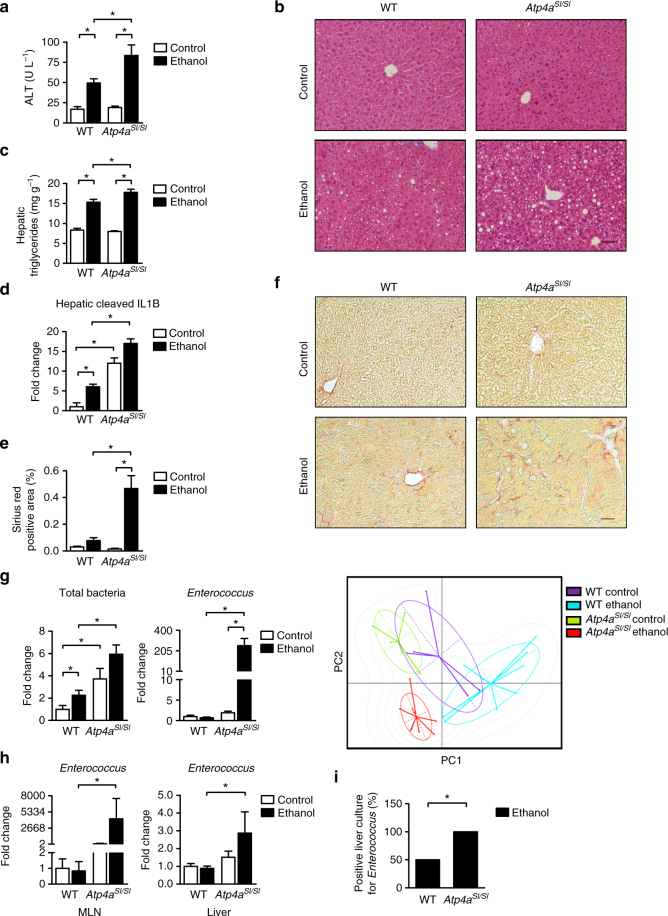
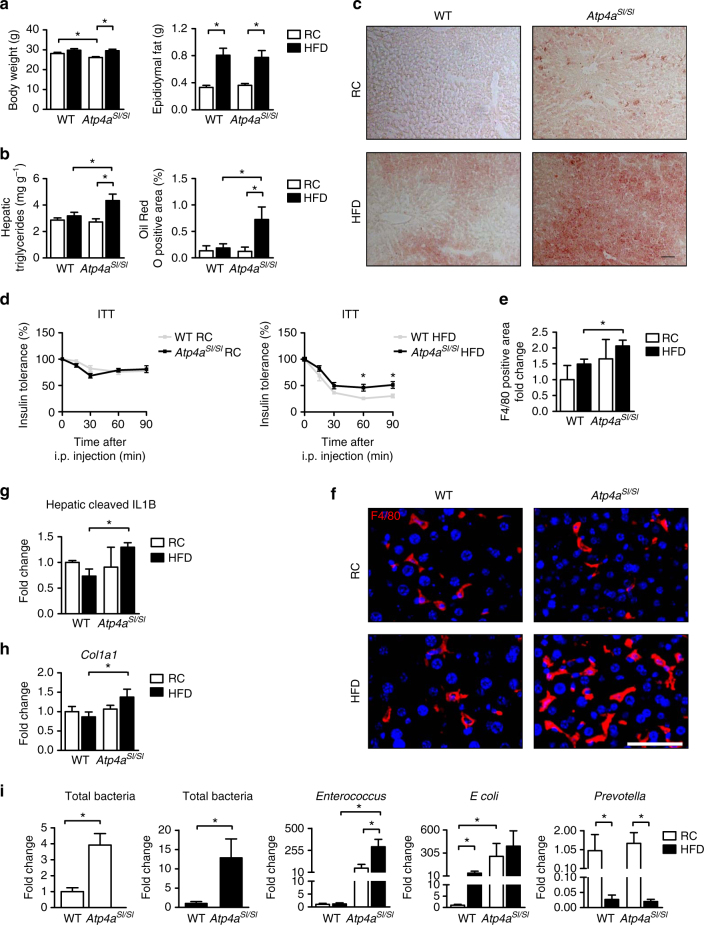
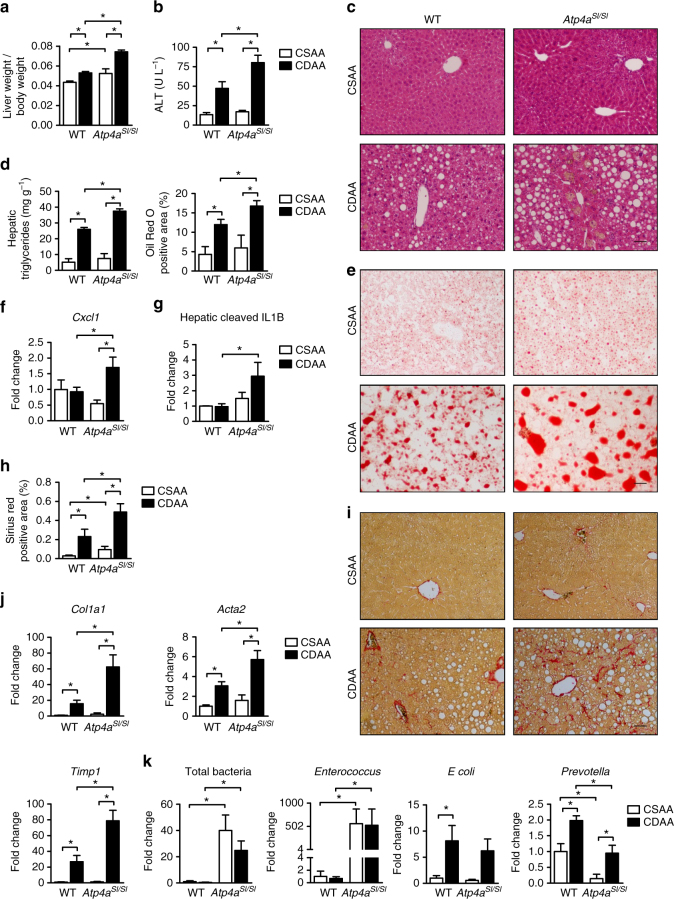
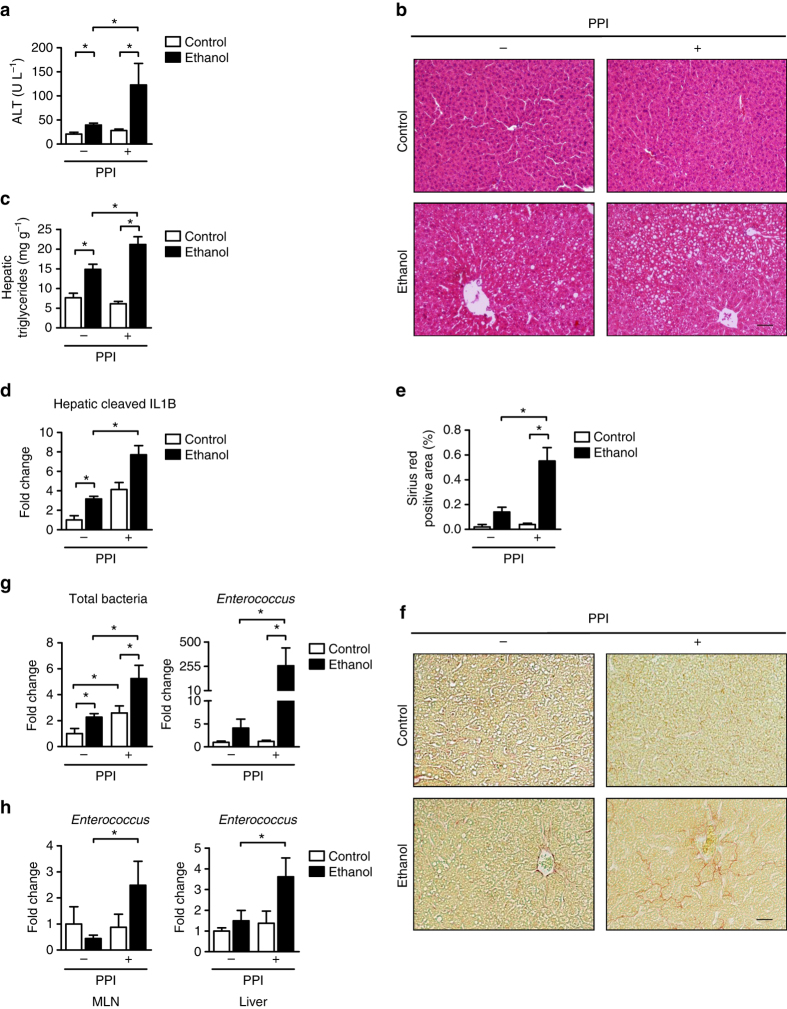
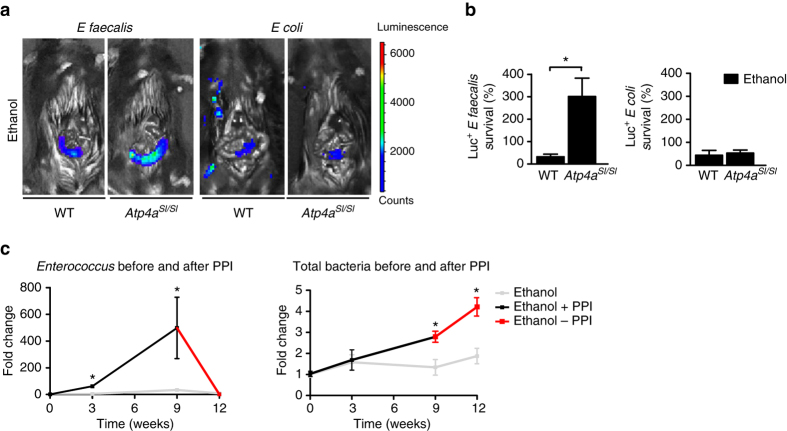
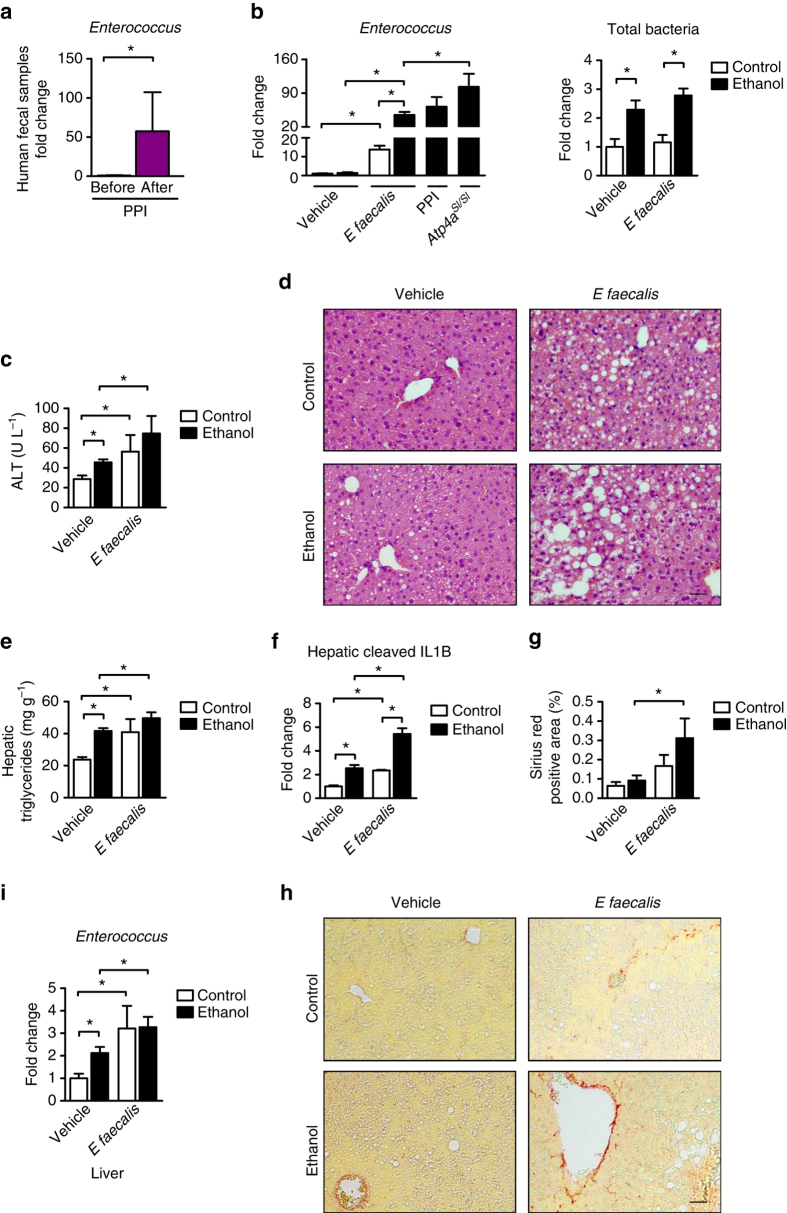
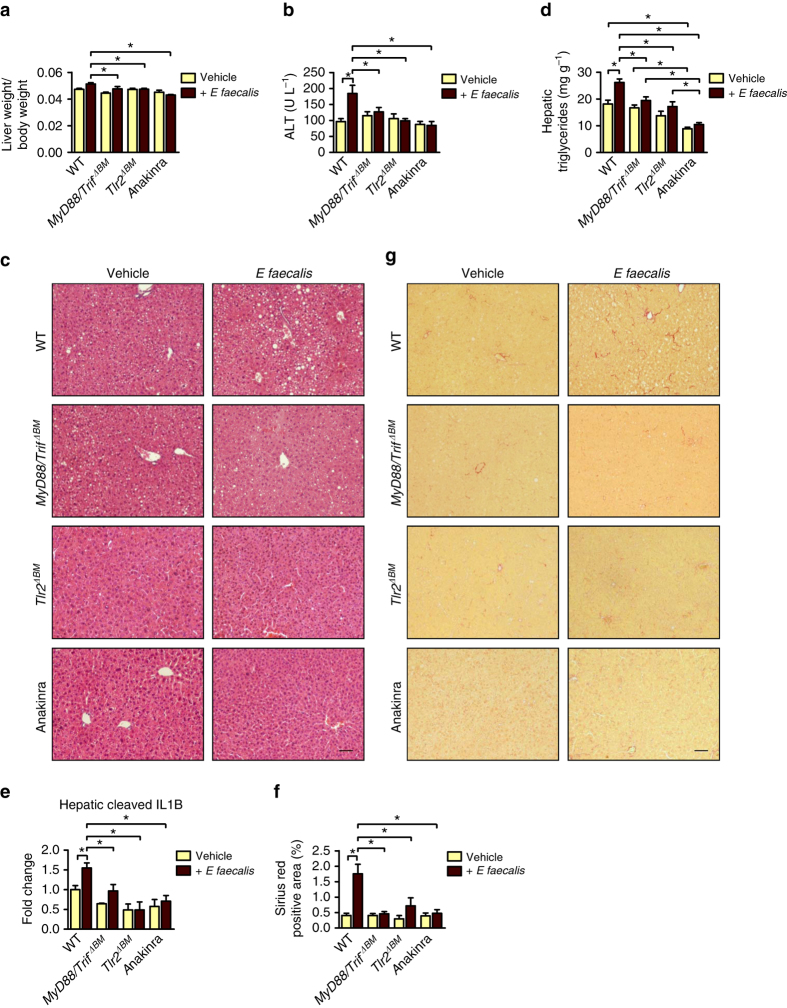
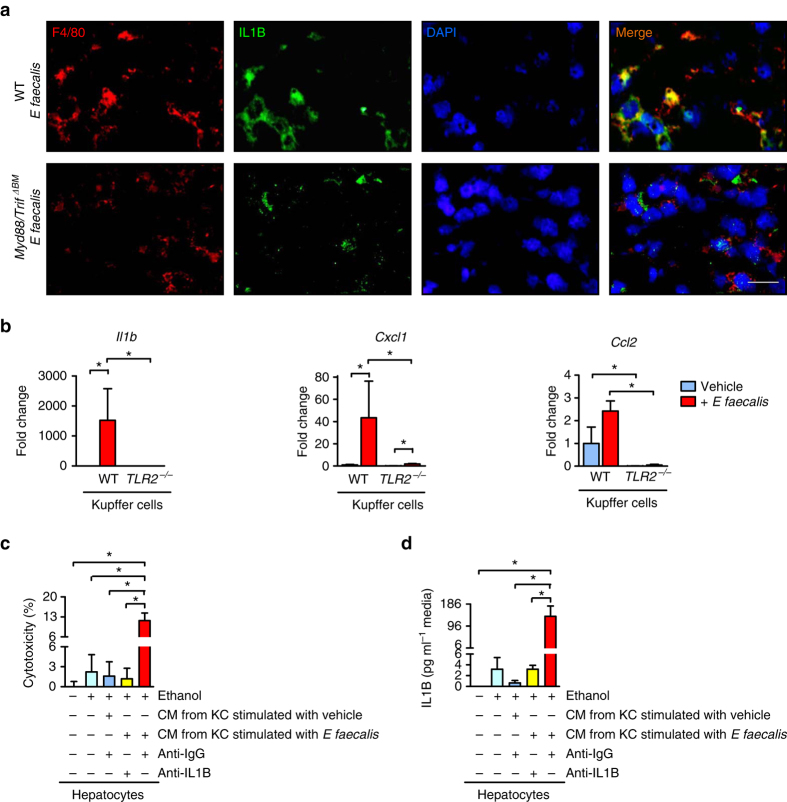
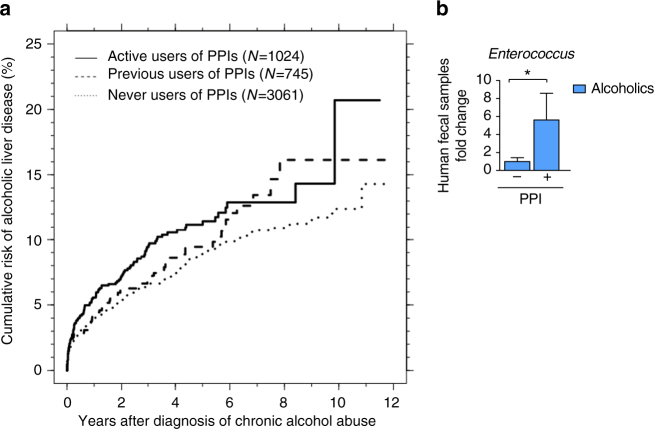
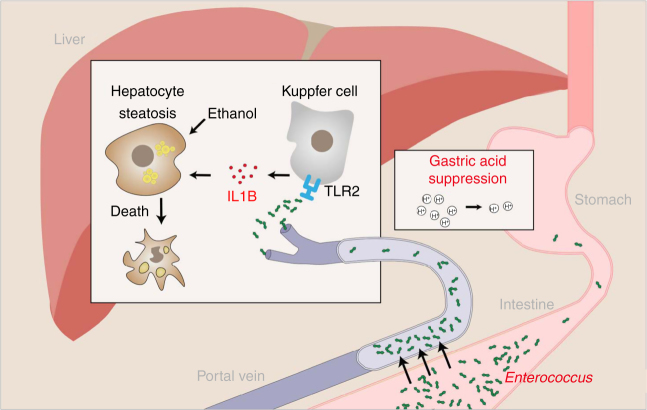
Chronic liver disease is rising in western countries and liver cirrhosis is the 12th leading cause of death worldwide. Simultaneously, use of gastric acid suppressive medications is increasing. Here, we show that proton pump inhibitors promote progression of alcoholic liver disease, non-alcoholic fatty liver disease, and non-alcoholic steatohepatitis in mice by increasing numbers of intestinal Enterococcus spp. Translocating enterococci lead to hepatic inflammation and hepatocyte death. Expansion of intestinal Enterococcus faecalis is sufficient to exacerbate ethanol-induced liver disease in mice. Proton pump inhibitor use increases the risk of developing alcoholic liver disease among alcohol-dependent patients. Reduction of gastric acid secretion therefore appears to promote overgrowth of intestinal Enterococcus, which promotes liver disease, based on data from mouse models and humans. Recent increases in the use of gastric acid-suppressive medications might contribute to the increasing incidence of chronic liver disease.
Overview
The claims and statistics of this paper haven’t been checked yet.
Free: it reads the open-access text and checks the first 5 claims that cite a source we can check. Create a free account to check every claim.
Integrity signals
Registry
Cites
Statistics
Figures
Verification
Claims the paper makes
The claims and statistics of this paper haven’t been checked yet.
Free: it reads the open-access text and checks the first 5 claims that cite a source we can check. Create a free account to check every claim.
Claims other papers make about this one
Each is checked against this paper’s own text: does it say what the citing paper says it does?
In the citing paper
“The gut microbiomes of patients with advanced liver disease and cirrhosis are characterized by an increase in potentially pathogenic bacteria, along with reduced numbers of bacteria with beneficial properties [220,221,222,223,224,225].”
From Gut-pancreas-liver Axis as a target for treatment of NAFLD/NASH (2020) · cites this paper as [223]
Self-check
Percentages, sums and reported differences re-computed from the paper’s own numbers.
The self-check needs the paper’s full text.
Citations
Cites
Lozano, R., Naghavi, M., Foreman, K., Lim, S., Shibuya, K., Aboyans, V., Abraham, J., Adair, T., Aggarwal, R., Ahn, S. Y., et al. (2012) · The Lancet · doi:10.1016/s0140-6736(12)61728-0 · Cited by 14,070
The ade4 Package: Implementing the Duality Diagram for Ecologists
Dray, S., & Dufour, A.-B. (2007) · Journal of Statistical Software · doi:10.18637/jss.v022.i04 · Cited by 6,211
The Danish National Patient Register
Lynge, E., Sandegaard, J. L., & Rebolj, M. (2011) · Scandinavian Journal of Public Health · doi:10.1177/1403494811401482 · Cited by 3,968
Inflammasome-mediated dysbiosis regulates progression of NAFLD and obesity
Henao-Mejia, J., Elinav, E., Jin, C., Hao, L., Mehal, W. Z., Strowig, T., Thaiss, C. A., Kau, A. L., Eisenbarth, S. C., Jurczak, M. J., et al. (2012) · Nature · doi:10.1038/nature10809 · Cited by 2,435
TLR4 enhances TGF-β signaling and hepatic fibrosis
Seki, E., De Minicis, S., Österreicher, C. H., Kluwe, J., Osawa, Y., Brenner, D. A., & Schwabe, R. F. (2007) · Nature Medicine · doi:10.1038/nm1663 · Cited by 1,942
Self-citationMouse model of chronic and binge ethanol feeding (the NIAAA model)
Bertola, A., Mathews, S., Ki, S. H., Wang, H., & Gao, B. (2013) · Nature Protocols · doi:10.1038/nprot.2013.032 · Cited by 1,213
Self-citationRinttila, T., Kassinen, A., Malinen, E., Krogius, L., & Palva, A. (2004) · Journal of Applied Microbiology · doi:10.1111/j.1365-2672.2004.02409.x · Cited by 1,017
Interactions Between the Intestinal Microbiome and Liver Diseases
Schnabl, B., & Brenner, D. A. (2014) · Gastroenterology · doi:10.1053/j.gastro.2014.01.020 · Cited by 971
Self-citationEnteric dysbiosis associated with a mouse model of alcoholic liver disease
Yan, A. W., Fouts, D. E., Brandl, J., Stärkel, P., Torralba, M., Schott, E., Tsukamoto, H., Nelson, K. E., Brenner, D. A., & Schnabl, B. (2011) · Hepatology · doi:10.1002/hep.24018 · Cited by 791
Self-citationGlobal burden of alcoholic liver diseases
Rehm, J., Samokhvalov, A. V., & Shield, K. D. (2013) · Journal of Hepatology · doi:10.1016/j.jhep.2013.03.007 · Cited by 740
IL-1 receptor antagonist ameliorates inflammasome-dependent alcoholic steatohepatitis in mice
Petrasek, J., Bala, S., Csak, T., Lippai, D., Kodys, K., Menashy, V., Barrieau, M., Min, S.-Y., Kurt-Jones, E. A., & Szabo, G. (2012) · Journal of Clinical Investigation · doi:10.1172/jci60777 · Cited by 735
Wong, R. J., Cheung, R., & Ahmed, A. (2014) · Hepatology · doi:10.1002/hep.26986 · Cited by 723
Matsuki, T., Watanabe, K., Fujimoto, J., Takada, T., & Tanaka, R. (2004) · Applied and Environmental Microbiology · doi:10.1128/aem.70.12.7220-7228.2004 · Cited by 655
Vancomycin-resistant enterococci exploit antibiotic-induced innate immune deficits
Brandl, K., Plitas, G., Mihu, C. N., Ubeda, C., Jia, T., Fleisher, M., Schnabl, B., DeMatteo, R. P., & Pamer, E. G. (2008) · Nature · doi:10.1038/nature07250 · Cited by 631
Self-citationPharmacology of proton pump inhibitors
Shin, J. M., & Sachs, G. (2008) · Current Gastroenterology Reports · doi:10.1007/s11894-008-0098-4 · Cited by 538
Moresco, E. M. Y., LaVine, D., & Beutler, B. (2011) · Current Biology · doi:10.1016/j.cub.2011.05.039 · Cited by 500
Maeda, H., Fujimoto, C., Haruki, Y., Maeda, T., Kokeguchi, S., Petelin, M., Arai, H., Tanimoto, I., Nishimura, F., & Takashiba, S. (2003) · FEMS Immunology & Medical Microbiology · doi:10.1016/s0928-8244(03)00224-4 · Cited by 500
Balmer, M. L., Slack, E., de Gottardi, A., Lawson, M. A. E., Hapfelmeier, S., Miele, L., Grieco, A., Van Vlierberghe, H., Fahrner, R., Patuto, N., et al. (2014) · Science Translational Medicine · doi:10.1126/scitranslmed.3008618 · Cited by 470
Wang, L., Fouts, D. E., Stärkel, P., Hartmann, P., Chen, P., Llorente, C., DePew, J., Moncera, K., Ho, S. B., Brenner, D. A., et al. (2016) · Cell Host & Microbe · doi:10.1016/j.chom.2016.01.003 · Cited by 389
Self-citationBrandl, K., Plitas, G., Schnabl, B., DeMatteo, R. P., & Pamer, E. G. (2007) · The Journal of Experimental Medicine · doi:10.1084/jem.20070563 · Cited by 385
Self-citationSteck, N., Hoffmann, M., Sava, I. G., Kim, S. C., Hahne, H., Tonkonogy, S. L., Mair, K., Krueger, D., Pruteanu, M., Shanahan, F., et al. (2011) · Gastroenterology · doi:10.1053/j.gastro.2011.05.035 · Cited by 343
Chen, P., Torralba, M., Tan, J., Embree, M., Zengler, K., Stärkel, P., van Pijkeren, J.-P., DePew, J., Loomba, R., Ho, S. B., et al. (2015) · Gastroenterology · doi:10.1053/j.gastro.2014.09.014 · Cited by 322
Self-citationChen, P., Stärkel, P., Turner, J. R., Ho, S. B., & Schnabl, B. (2015) · Hepatology · doi:10.1002/hep.27489 · Cited by 312
Self-citationBacterial translocation and changes in the intestinal microbiome in mouse models of liver disease
Fouts, D. E., Torralba, M., Nelson, K. E., Brenner, D. A., & Schnabl, B. (2012) · Journal of Hepatology · doi:10.1016/j.jhep.2012.01.019 · Cited by 311
Self-citationDeficiency of intestinal mucin-2 ameliorates experimental alcoholic liver disease in mice
Hartmann, P., Chen, P., Wang, H. J., Wang, L., McCole, D. F., Brandl, K., Stärkel, P., Belzer, C., Hellerbrand, C., Tsukamoto, H., et al. (2013) · Hepatology · doi:10.1002/hep.26321 · Cited by 246
Self-citationDever, J. B., & Sheikh, M. Y. (2015) · Alimentary Pharmacology & Therapeutics · doi:10.1111/apt.13172 · Cited by 202
Commensal microbiota is hepatoprotective and prevents liver fibrosis in mice
Mazagova, M., Wang, L., Anfora, A. T., Wissmueller, M., Lesley, S. A., Miyamoto, Y., Eckmann, L., Dhungana, S., Pathmasiri, W., Sumner, S., et al. (2015) · The FASEB Journal · doi:10.1096/fj.14-259515 · Cited by 199
Self-citationThe clinical course of cirrhosis: The importance of multistate models and competing risks analysis
Jepsen, P., Vilstrup, H., & Andersen, P. K. (2015) · Hepatology · doi:10.1002/hep.27598 · Cited by 194
Self-citationProton Pump Inhibitor Use in the U.S. Ambulatory Setting, 2002–2009
Rotman, S. R., & Bishop, T. F. (2013) · PLoS ONE · doi:10.1371/journal.pone.0056060 · Cited by 167
Protection from liver fibrosis by a peroxisome proliferator-activated receptor δ agonist
Iwaisako, K., Haimerl, M., Paik, Y.-H., Taura, K., Kodama, Y., Sirlin, C., Yu, E., Yu, R. T., Downes, M., Evans, R. M., et al. (2012) · Proceedings of the National Academy of Sciences · doi:10.1073/pnas.1202464109 · Cited by 157
Self-citationBrandl, K., Sun, L., Neppl, C., Siggs, O. M., Le Gall, S. M., Tomisato, W., Li, X., Du, X., Maennel, D. N., Blobel, C. P., et al. (2010) · Proceedings of the National Academy of Sciences · doi:10.1073/pnas.1014669107 · Cited by 143
Self-citationBajaj, J. S., Cox, I. J., Betrapally, N. S., Heuman, D. M., Schubert, M. L., Ratneswaran, M., Hylemon, P. B., White, M. B., Daita, K., Noble, N. A., et al. (2014) · American Journal of Physiology-Gastrointestinal and Liver Physiology · doi:10.1152/ajpgi.00268.2014 · Cited by 143
Self-citationExisting data sources for clinical epidemiology: Aarhus University Prescription Database
Ehrenstein, V. (2010) · Clinical Epidemiology · doi:10.2147/clep.s13458 · Cited by 141
Hartmann, P., Haimerl, M., Mazagova, M., Brenner, D. A., & Schnabl, B. (2012) · Gastroenterology · doi:10.1053/j.gastro.2012.07.099 · Cited by 119
Self-citationYamamoto, O., Okada, Y., & Okabe, S. (1984) · Digestive Diseases and Sciences · doi:10.1007/bf01296212 · Cited by 117
Bajaj, J. S., Ratliff, S. M., Heuman, D. M., & Lapane, K. L. (2012) · Alimentary Pharmacology & Therapeutics · doi:10.1111/apt.12045 · Cited by 110
Self-citationMicrobiota Protects Mice Against Acute Alcohol‐Induced Liver Injury
Chen, P., Miyamoto, Y., Mazagova, M., Lee, K., Eckmann, L., & Schnabl, B. (2015) · Alcoholism: Clinical and Experimental Research · doi:10.1111/acer.12900 · Cited by 110
Self-citationBusque, S. M., Kerstetter, J. E., Geibel, J. P., & Insogna, K. (2005) · American Journal of Physiology-Gastrointestinal and Liver Physiology · doi:10.1152/ajpgi.00096.2005 · Cited by 109
Merli, M., Lucidi, C., Di Gregorio, V., Giannelli, V., Giusto, M., Ceccarelli, G., Riggio, O., & Venditti, M. (2015) · Liver International · doi:10.1111/liv.12593 · Cited by 96
An amino acid transporter involved in gastric acid secretion
Kirchhoff, P., Dave, M. H., Remy, C., Kosiek, O., Busque, S. M., Dufner, M. M., Geibel, J. P., Verrey, F., & Wagner, C. A. (2005) · Pflügers Archiv - European Journal of Physiology · doi:10.1007/s00424-005-1507-2 · Cited by 38
Hvid‐Jensen, F., Pedersen, L. H., Nielsen, R., Funch-Jensen, P. M., Drewes, A. M., Thomsen, R. W., & Larsen, F. B. (2013) · Clinical Epidemiology · doi:10.2147/clep.s49354 · Cited by 36
Quantitative Detection of Residual E. coli Host Cell DNA by Real-Time PCR
Lee, D. H. (2010) · Journal of Microbiology and Biotechnology · doi:10.4014/jmb.1004.04035 · Cited by 34
Krieg, L., Milstein, O., Krebs, P., Xia, Y., Beutler, B., & Du, X. (2011) · Blood · doi:10.1182/blood-2011-04-350082 · Cited by 34
Self-citationRosa, S. L. L., Casey, P. G., Hill, C., Diep, D. B., Nes, I. F., & Brede, D. A. (2013) · Applied and Environmental Microbiology · doi:10.1128/aem.00831-13 · Cited by 30
National Use of Proton Pump Inhibitors From 2007 to 2011
Johansen, M. E., Huerta, T. R., & Richardson, C. R. (2014) · JAMA Internal Medicine · doi:10.1001/jamainternmed.2014.2900 · Cited by 27
Miele, L., Cammarota, G., Vero, V., Racco, S., Cefalo, C., Marrone, G., Pompili, M., Rapaccini, G. L., Bianco, A., Landolfi, R., et al. (2012) · Digestive and Liver Disease · doi:10.1016/j.dld.2012.08.005 · Cited by 23
Cited by
The gut-liver axis in liver disease: Pathophysiological basis for therapy
Albillos, A., de Gottardi, A., & Rescigno, M. (2020) · Journal of Hepatology · doi:10.1016/j.jhep.2019.10.003 · Cited by 2,166
Molecular and cellular mechanisms of liver fibrosis and its regression
Kisseleva, T., & Brenner, D. (2021) · Nature Reviews Gastroenterology & Hepatology · doi:10.1038/s41575-020-00372-7 · Cited by 2,024
Self-citationBacteriophage targeting of gut bacterium attenuates alcoholic liver disease
Duan, Y., Llorente, C., Lang, S., Brandl, K., Chu, H., Jiang, L., White, R. C., Clarke, T. H., Nguyen, K., Torralba, M., et al. (2019) · Nature · doi:10.1038/s41586-019-1742-x · Cited by 844
“We have shown that Atp4a Sl/Sl mice, which lack gastric acid, have overgrowth of intestinal enterococci, associated with increased susceptibility to alcohol-induced steatohepatitis 11 .”
InfluentialSelf-citationIntestinal Barrier in Human Health and Disease
Di Tommaso, N., Gasbarrini, A., & Ponziani, F. R. (2021) · International Journal of Environmental Research and Public Health · doi:10.3390/ijerph182312836 · Cited by 533
“This process is called “gut oralization”, and is associated with bacterial translocation and liver damage in alcoholic and metabolic liver diseases [75].”
BackgroundGut barrier disruption and chronic disease
Martel, J., Chang, S.-H., Ko, Y.-F., Hwang, T.-L., Young, J. D., & Ojcius, D. M. (2022) · Trends in Endocrinology & Metabolism · doi:10.1016/j.tem.2022.01.002 · Cited by 514
“Another group of widely used drugs, proton pump inhibitors, enhance alcohol-induced fatty liver disease in mice and humans by reducing gastric acid, which increases growth of commensal bacteria in the small intestine and leads to translocation of microbial products and liver in fl ammation [63].”
Background
Metadata
- Authors
- Llorente, C., Jepsen, P., Inamine, T., Wang, L., Bluemel, S., Wang, H. J., Loomba, R., Bajaj, J. S., Schubert, M. L., Sikaroodi, M., Gillevet, P. M., Xu, J., Kisseleva, T., Ho, S. B., DePew, J., Du, X., Sørensen, H. T., Vilstrup, H., Nelson, K. E., Brenner, D. A., Fouts, D. E., & Schnabl, B.
- Affiliations
- University of California San Diego (US)
- Aarhus University Hospital (DK)
- Virginia Commonwealth University (US)
- George Mason University (US)
- J. Craig Venter Institute (US)
- Corresponding author
- Schnabl, Bernd
- ORCID
- Venue
- Nature Communications
- Published
- 2017-10-16
- Volume
- 8
- Issue
- 1
- Pages
- 837-837
- ISSN
- 2041-1723 (ISSN-L)
- PMC
- PMC5643518
- OpenAlex
- W2761437180
- Semantic Scholar
- 8154bae7647c4ba3db4231d88b74fdff61ae032a
- Cited by
- 257
- References
- 46
- Citations by year
- 2026: 13 · 2025: 21 · 2024: 32 · 2023: 25 · 2022: 24 · 2021: 32 · 2020: 53 · 2019: 29 · 2018: 23 · 2017: 4
- FWCI
- 12.18
- Type
- journal article
- Language
- en
- Update notices
- correction (2017-12-12)
- Open access
- gold
- doi.org
- Licence
- cc-by
- creativecommons.org/licenses/by/4.0 (tdm)
- creativecommons.org/licenses/by/4.0 (vor)
- Locations
- Nature Communications (publishedVersion, cc-by)
- PubMed Central (publishedVersion, cc-by)
- PubMed (publishedVersion)
- RePEc: Research Papers in Economics (submittedVersion)
- DOAJ (DOAJ: Directory of Open Access Journals) (submittedVersion, cc-by-sa)
- DOAJ (DOAJ: Directory of Open Access Journals) (submittedVersion)
- eScholarship (California Digital Library) (submittedVersion)
- eScholarship (California Digital Library) (submittedVersion, cc-by)
- Scopus (Elsevier) (submittedVersion, other-oa)
- Funders
- U.S. Department of Veterans Affairs (I01BX002213)
- Office of Research and Development (CX10076)
- National Institutes of Health (I01BX002213, R01DK089713, R01‐AA020703, AA020703)
- National Institute on Alcohol Abuse and Alcoholism (R01AA020703, U01AA024726, U01AA021856)
- Topics
- Life Sciences › Biochemistry, Genetics and Molecular Biology › Molecular Biology › Gut microbiota and health
- Health Sciences › Medicine › Pathology and Forensic Medicine › Alcohol Consumption and Health Effects
- Health Sciences › Medicine › Gastroenterology › Gastrointestinal motility and disorders
- Keywords
- proton pump inhibitors, gastric acid suppression, alcoholic liver disease, Enterococcus faecalis, intestinal bacterial overgrowth, nonalcoholic steatohepatitis, non-alcoholic fatty liver disease, gut microbiota, ethanol-induced liver injury, hepatocyte death, liver inflammation, alcoholism, chronic liver disease
- MeSH terms
- Animals, Female, Gastric Acid, Humans, Liver Diseases, Alcoholic, Male, Mice, Inbred C57BL, Incidence, Enterococcus, Disease Progression, Mice, Proton Pump Inhibitors, Microbiota, Non-alcoholic Fatty Liver Disease
About these checks
Registry, retraction, Cites and statistics results are computed, not judged, with one exception: a printed reference that no index lists is read once by a model before it counts as a citation error. Claims are extracted by a model and kept only when their quote appears verbatim in the text; each cited source is then checked, with a model’s help, for whether it says what the claim relies on. Those verdicts can be wrong — read the claim’s quote and the cited source before relying on one.
Statistics and arithmetic are recomputed, not judged.
Confidence bands are shown only for fields calibrated on our annotated test set. None is calibrated yet, so no band is shown.
What counts as a claim ›How we measure confidence ›How we check this ›
Are you an author, or do you see a problem with this page? Request a review
Data sources
Bibliographic data: Semantic Scholar, OpenAlex, Crossref.
Contains information from the Semantic Scholar Academic Graph Datasets, made available under the ODC Attribution License (ODC-BY 1.0).
Semantic Scholar’s data is described in: Kinney, R., et al. (2023). The Semantic Scholar Open Data Platform. arXiv:2301.10140.
