

Gastric acid suppression promotes alcoholic liver disease by inducing overgrowth of intestinal Enterococcus
Open accessThe DOI matches its Crossref record; 46 of the 46 references it cites were found in a registry or an index.
Abstract
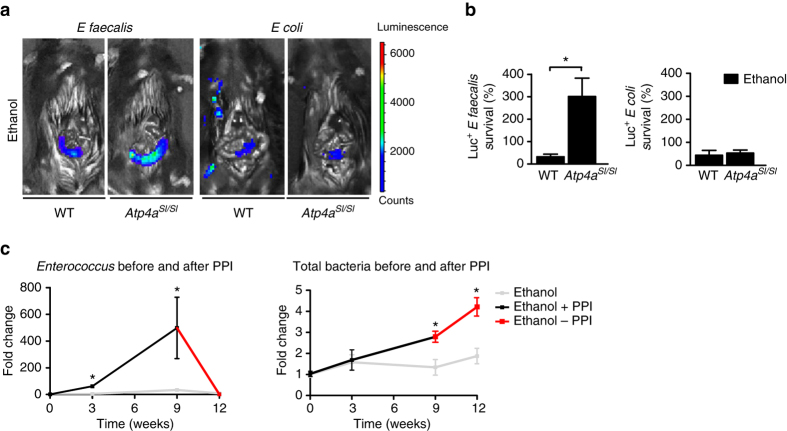
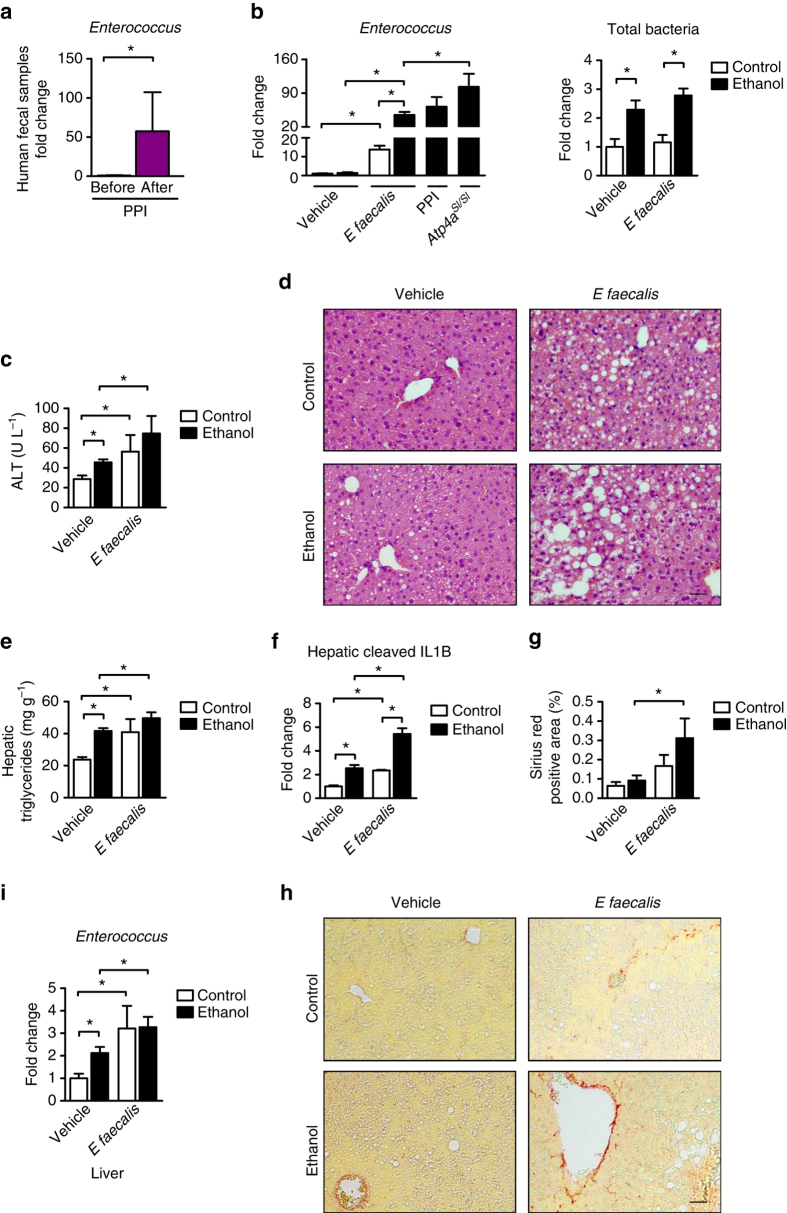
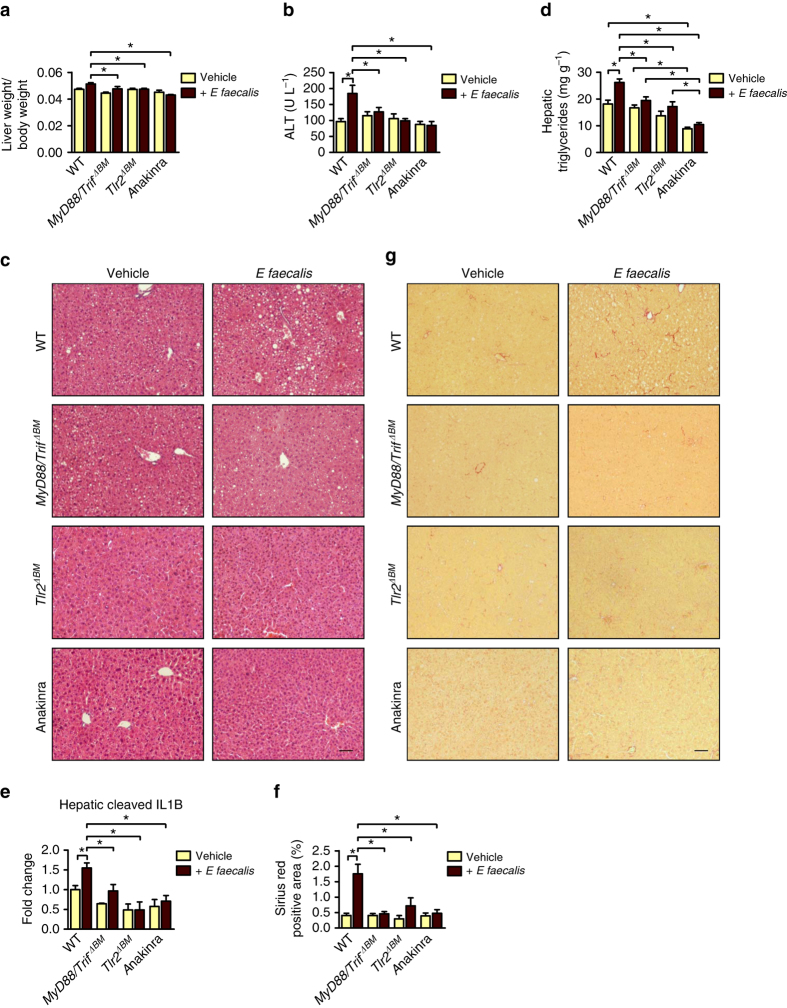
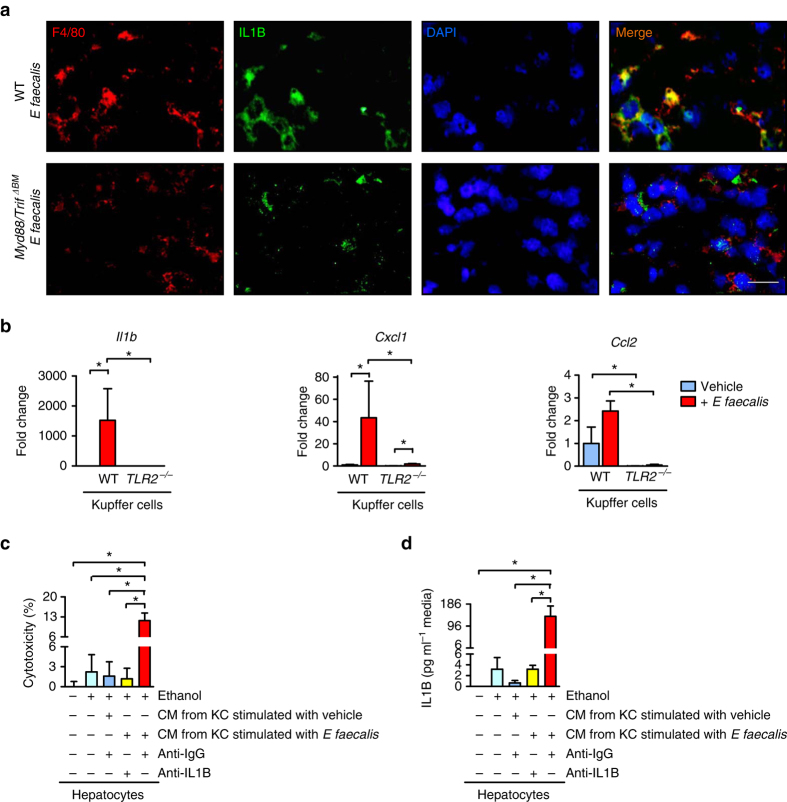
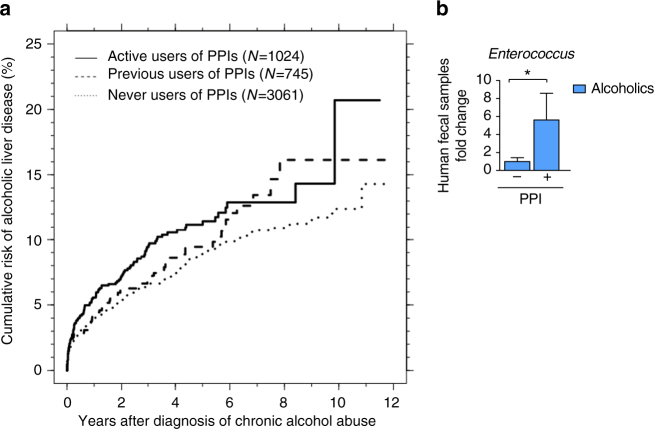
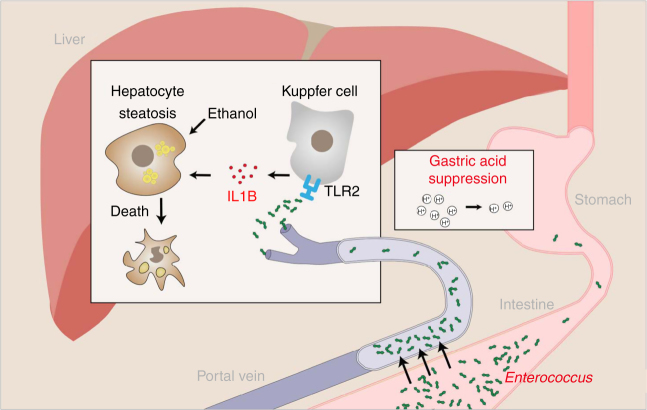
Chronic liver disease is rising in western countries and liver cirrhosis is the 12th leading cause of death worldwide. Simultaneously, use of gastric acid suppressive medications is increasing. Here, we show that proton pump inhibitors promote progression of alcoholic liver disease, non-alcoholic fatty liver disease, and non-alcoholic steatohepatitis in mice by increasing numbers of intestinal Enterococcus spp. Translocating enterococci lead to hepatic inflammation and hepatocyte death. Expansion of intestinal Enterococcus faecalis is sufficient to exacerbate ethanol-induced liver disease in mice. Proton pump inhibitor use increases the risk of developing alcoholic liver disease among alcohol-dependent patients. Reduction of gastric acid secretion therefore appears to promote overgrowth of intestinal Enterococcus, which promotes liver disease, based on data from mouse models and humans. Recent increases in the use of gastric acid-suppressive medications might contribute to the increasing incidence of chronic liver disease.
Overview
The claims and statistics of this paper haven’t been checked yet.
Free: it reads the open-access text and checks the first 5 claims that cite a source we can check. Create a free account to check every claim.
Integrity signals
Registry
Cites
Statistics
Figures
Verification
Claims the paper makes
The claims and statistics of this paper haven’t been checked yet.
Free: it reads the open-access text and checks the first 5 claims that cite a source we can check. Create a free account to check every claim.
Claims other papers make about this one
Each is checked against this paper’s own text: does it say what the citing paper says it does?
In the citing paper
“The gut microbiomes of patients with advanced liver disease and cirrhosis are characterized by an increase in potentially pathogenic bacteria, along with reduced numbers of bacteria with beneficial properties [220,221,222,223,224,225].”
From Gut-pancreas-liver Axis as a target for treatment of NAFLD/NASH (2020) · cites this paper as [223]
Self-check
Percentages, sums and reported differences re-computed from the paper’s own numbers.
The self-check needs the paper’s full text.
Citations
Cites
Lozano, R., Naghavi, M., Foreman, K., Lim, S., Shibuya, K., Aboyans, V., Abraham, J., Adair, T., Aggarwal, R., Ahn, S. Y., et al. (2012) · The Lancet · doi:10.1016/s0140-6736(12)61728-0 · Cited by 14,070
The ade4 Package: Implementing the Duality Diagram for Ecologists
Dray, S., & Dufour, A.-B. (2007) · Journal of Statistical Software · doi:10.18637/jss.v022.i04 · Cited by 6,211
The Danish National Patient Register
Lynge, E., Sandegaard, J. L., & Rebolj, M. (2011) · Scandinavian Journal of Public Health · doi:10.1177/1403494811401482 · Cited by 3,968
Inflammasome-mediated dysbiosis regulates progression of NAFLD and obesity
Henao-Mejia, J., Elinav, E., Jin, C., Hao, L., Mehal, W. Z., Strowig, T., Thaiss, C. A., Kau, A. L., Eisenbarth, S. C., Jurczak, M. J., et al. (2012) · Nature · doi:10.1038/nature10809 · Cited by 2,435
TLR4 enhances TGF-β signaling and hepatic fibrosis
Seki, E., De Minicis, S., Österreicher, C. H., Kluwe, J., Osawa, Y., Brenner, D. A., & Schwabe, R. F. (2007) · Nature Medicine · doi:10.1038/nm1663 · Cited by 1,942
Self-citationMouse model of chronic and binge ethanol feeding (the NIAAA model)
Bertola, A., Mathews, S., Ki, S. H., Wang, H., & Gao, B. (2013) · Nature Protocols · doi:10.1038/nprot.2013.032 · Cited by 1,213
Self-citationRinttila, T., Kassinen, A., Malinen, E., Krogius, L., & Palva, A. (2004) · Journal of Applied Microbiology · doi:10.1111/j.1365-2672.2004.02409.x · Cited by 1,017
Interactions Between the Intestinal Microbiome and Liver Diseases
Schnabl, B., & Brenner, D. A. (2014) · Gastroenterology · doi:10.1053/j.gastro.2014.01.020 · Cited by 971
Self-citationEnteric dysbiosis associated with a mouse model of alcoholic liver disease
Yan, A. W., Fouts, D. E., Brandl, J., Stärkel, P., Torralba, M., Schott, E., Tsukamoto, H., Nelson, K. E., Brenner, D. A., & Schnabl, B. (2011) · Hepatology · doi:10.1002/hep.24018 · Cited by 791
Self-citationGlobal burden of alcoholic liver diseases
Rehm, J., Samokhvalov, A. V., & Shield, K. D. (2013) · Journal of Hepatology · doi:10.1016/j.jhep.2013.03.007 · Cited by 740
Cited by
Items 201–257 of 257
Effects of chronic alcohol use disorder and alcohol withdrawal on phosphate, magnesium, and calcium
Bianda, D., Huber, L. C., Trachsler, J., & Arrigo, M. (2025) · Swiss Medical Weekly · doi:10.57187/s.4072 · Cited by 3
Proton pump inhibitors, Enterococcus, and the liver, oh my!
Carr, R. M. (2018) · Hepatology · doi:10.1002/hep.29822 · Cited by 2
“propose a possible mechanistic link among these epidemiologic trends.((7)) Through a series of novel experiments, the authors demonstrate that proton pump inhibition and gastric achlorhydria promote intestinal dysbiosis and subsequent hepatic inflammation in alcohol-fed mice.”
Ciocan, D., & Cassard, A. (2020) · médecine/sciences · doi:10.1051/medsci/2020052 · Cited by 3
Sturm, L., Muller, L., Schultheiss, M., Binder, B., Huber, J. P., Thimme, R., & Bettinger, D. (2020) · European Journal of Gastroenterology & Hepatology · doi:10.1097/meg.0000000000002018 · Cited by 2
Spontaneous Bacterial Peritonitis: Physiopathological Mechanism and Clinical Manifestations
de Vaca, R. P., Vairappan, B., Espinoza, T. C., Cuenca, J. A. S., Licona‐Cassani, C., Maldonado‐Arriaga, B., Navarro-Gerrard, C., Penagos, D. S. M., Mondragón‐Terán, P., & de Sánchez, V. C. (2021) · IntechOpen eBooks · doi:10.5772/intechopen.96910 · Cited by 2
Drozdov, V. N., Meshcheryakov, Y. V., Serebrova, S. Y., & Ших, Е. В. (2020) · Meditsinskiy sovet = Medical Council · doi:10.21518/2079-701x-2019-21-166-174 · Cited by 2
Microbial Therapeutics in Liver Disease
Bajaj, J. S., & Khoruts, A. (2021) · Elsevier eBooks · doi:10.1016/b978-0-12-820472-6.00193-6 · Cited by 2
Self-citationEditorial: proton pump inhibitors ( PPI s) and primary liver cancer
Waldum, H. L. (2018) · Alimentary Pharmacology & Therapeutics · doi:10.1111/apt.14841 · Cited by 2
Sorribas, M., Jakob, M. O., Yilmaz, B., Li, H., Stutz, D., Noser, Y., Gottardi, A. D., Moghadamrad, S., Hassan, M., Albillos, A., et al. (2019) · bioRxiv (Cold Spring Harbor Laboratory) · doi:10.1101/690057 · Cited by 2
The Gut Microbiome and Liver Disease
Yu, L., Bajaj, J. S., & Schwabe, R. F. (2020) · Wiley eBooks · doi:10.1002/9781119436812.ch84 · Cited by 1
Self-citationProbiotics and the gut-liver axis
Amedei, A., Gitto, S., Campani, C., & Marra, F. (2022) · Elsevier eBooks · doi:10.1016/b978-0-323-85170-1.00003-8 · Cited by 1
Fecal gelatinase does not predict mortality in patients with alcohol-associated hepatitis
Yang, Y., Hartmann, P., & Schnabl, B. (2024) · Microbial Cell · doi:10.15698/mic2024.08.836 · Cited by 1
Self-citationGu, Z., Meng, S., Yao, B., Gao, B., Chen, S., Ren, F., Li, P., Shao, T., & Shang, N. (2026) · Nature Communications · doi:10.1038/s41467-026-72211-3 · Cited by 2
“Pathogenic Escherichia coli ( E. coli ) and cytolysin-positive Enterococcus faecalis ( E. faecalis ) have been shown to induce severe alcoholic hepatitis and increase the risk of mortality 17,21 – 23 .”
Davids, M., Herrema, H., Groen, A. K., Galenkamp, H., Zwinderman, A. H., Palmu, J., Havulinna, A. S., Niiranen, T., Knight, R. D., Acherman, Y. I. Z., et al. (2026) · Gut Microbes · doi:10.1080/19490976.2026.2664712 · Cited by 1
Self-citationDas Mikrobiom als Drehscheibe für Nebenwirkungen der Protonenpumpenhemmer-Therapie
Horvath, A., & Stadlbauer, V. (2020) · Zentralblatt für Chirurgie - Zeitschrift für Allgemeine Viszeral- Thorax- und Gefäßchirurgie · doi:10.1055/a-1312-7587 · Cited by 1
Intestinal flora and pancreatitis: Present and future
Wen, H., Li, Q., Lü, N., Su, Y., Ma, P.-H., & Zhang, M. (2021) · World Chinese Journal of Digestology · doi:10.11569/wcjd.v29.i22.1269 · Cited by 1
Association between proton pump inhibitor use and the risk of hepatobiliary cancers: A meta‐analysis
Yi, T.-Y., Peng, T., Wu, T., & Wu, A. (2024) · Advances in digestive medicine · doi:10.1002/aid2.13386 · Cited by 1
“33 Several studies have demonstrated that differences between PPI users and non-users are consistently associated with changes in the gut microbiome.”
Deleterious effect of proton pump inhibitors on the disease course of cirrhosis
Vitális, Z., Janka, T., Tornai, T., Tornai, I., Tornai, D., & Papp, M. (2018) · Journal of Hepatology · doi:10.1016/s0168-8278(18)31689-1 · Cited by 1
Mikrobiom bei Leberzirrhose: Pathophysiologie und therapeutische Interventionen
Stadlbauer, V. (2019) · Die Gastroenterologie · doi:10.1007/s11377-019-0346-1 · Cited by 1
“Im Tiermodell wurde gezeigt, dass die Kombination von Alkohol mit Säuremangel zu einer Progression der Lebererkrankung führt [21].”
BackgroundHope for alcoholics from phage therapy?
Brüssow, H. (2019) · Environmental Microbiology · doi:10.1111/1462-2920.14898 · Cited by 1
La acuicultura en México, bases conceptuales y principios
Gutiérrez, M. R., & Jiménez, C. M. (1996) · Oceanologia · Cited by 1
Liu, Y., Zhang, X., Chen, S., Wang, J., Yu, S., Li, Y., Xu, M. M., Aboubacar, H., Li, J., Shan, T., et al. (2021) · Research Square · doi:10.21203/rs.3.rs-1124551/v1 · Cited by 1
Brüssow, H. (2019) · Faculty Opinions – Post-Publication Peer Review of the Biomedical Literature · doi:10.3410/f.736896846.793567891 · Cited by 1
Robles‐Vera, I., Jarit-Cabanillas, A., Brandi, P., Martínez‐López, M., Martínez-Cano, S., González‐Correa, C., Moleón, J., Duarte, J., Conejero, L., Mata-Martínez, P., et al. (2024) · bioRxiv (Cold Spring Harbor Laboratory) · doi:10.1101/2024.11.07.622236 · Cited by 1
Bruns, T., & Stallmach, A. (2020) · Die Gastroenterologie · doi:10.1007/s11377-020-00436-9
Microbiote intestinal et stéatopathie métabolique
Cassard, A., Houron, C., & Ciocan, D. M. (2020) · Nutrition Clinique et Métabolisme · doi:10.1016/j.nupar.2019.12.002
Clinical Significance of Changes in Gut Microbiome Associated with Use of Proton Pump Inhibitors
Kim, T. J., & Lee, H. (2020) · The Korean Journal of Helicobacter and Upper Gastrointestinal Research · doi:10.7704/kjhugr.2020.0014
Diagnostic Approach to Laryngopharyngeal Reflux
Iannuzzi, R. A. (2020) · Springer eBooks · doi:10.1007/978-3-030-48890-1_12
Daguet, D., Venkataramana, S. H., Justin, T., & Kodimule, S. P. (2021) · Annals of Clinical Gastroenterology and Hepatology · doi:10.29328/journal.acgh.1001028
“Another important aspect of this kind of liver diseases, is that changes in gut’s microbiota can affect the progression of liver disease [19].”
BackgroundThe role of the gut microbiome and intestinal barrier in liver diseases
Ткач, С. М., Dorofeev, A. E., & Чеверда, Т. Л. (2021) · Modern Gastroenterology · doi:10.30978/mg-2021-3-77
The unforeseen intracellular lifestyle of Enterococcus faecalis in hepatocytesPreprint
Nunez, N., Derré‐Bobillot, A., Lakisic, G., Lecomte, A., Mercier‐Nomé, F., Cassard, A., Bierne, H., Serror, P., & Archambaud, C. (2021) · bioRxiv (Cold Spring Harbor Laboratory) · doi:10.1101/2021.09.30.462169
(2020) · Clinical Infectious Diseases · doi:10.1093/cid/ciaa251
Joly, E. (2020) · Faculty Opinions – Post-Publication Peer Review of the Biomedical Literature · doi:10.3410/f.736896846.793570168
Kang, X., Wei, Y., Fan, X., Luo, S., Luo, X., Zhao, S., & Wang, G. (2022) · SSRN Electronic Journal · doi:10.2139/ssrn.4122064
Advances in research of microbiome regulation as a therapy for liver failure
Chen, Y.-Q., & Liu, J.-L. (2022) · World Chinese Journal of Digestology · doi:10.11569/wcjd.v30.i22.971
Jansma, J., Thome, N. U., Schwalbe, M., Chatziioannou, A. C., Elsayed, S. S., van Wezel, G. P., den Abbeele, P. V., van Hemert, S., & Aidy, S. E. (2023) · bioRxiv (Cold Spring Harbor Laboratory) · doi:10.1101/2023.01.29.525861
Fungal plasma biomarkers in patients admitted for inpatient treatment of alcohol use disorder
Fuster, D., Llorente, C., García‐Calvo, X., Bolao, F., Zuluaga, P., Hernández‐Rubio, A., Casado‐Carbajo, J., Leis, A., & Muga, R. (2023) · Alcoholism Clinical and Experimental Research · doi:10.1111/acer.15140
Self-citationAhmadi, A. R., Song, G., Gao, T., Ma, J., Han, X., Hu, M., Cameron, A. M., Wesson, R., Philosophe, B., Ottmann, S. E., et al. (2023) · eLife · doi:10.7554/elife.86678.1
Yu, H., Li, M., Yang, B., Sun, H., Jiang, H., Liang, Z., Smayi, A., Wu, B., & Yang, Y. (2023) · Research Square · doi:10.21203/rs.3.rs-3291921/v1
Trends of Proton Pump Inhibitor Uses among Pharmaceutical Promotional Workers
Saha, S. K., Saha, M., Shil, B. C., Saifullah, A., Hasan, M., & Chowdhury, N. F. (2023) · Sir Salimullah Medical College Journal · doi:10.3329/ssmcj.v31i1.69359
de Ruijter, L. K. (2024) · University of Groningen research database (University of Groningen / Centre for Information Technology) · doi:10.33612/diss.952617592
冯, 琳. (2024) · Advances in Clinical Medicine · doi:10.12677/acm.2024.1441127
Proton pump inhibitors use and risk of liver cancer: Concerns to be addressed
Kao, W., & Su, C. (2024) · Advances in digestive medicine · doi:10.1002/aid2.13434
“8,9 Hepatocellular carcinoma (HCC) is the most common primary liver cancer and the fourth leading cause of cancer-related deaths worldwide.”
Zhang, J., Zhang, C., Zhang, Q., Yu, L., Chen, W., Xue, Y., & Zhai, Q. (2023) · Figshare · doi:10.6084/m9.figshare.23542924
Huang, Y., Lu, W., Zeng, M., Hu, X., Su, Z., Liu, Y., Liu, Z., Yuan, J., Li, L., Zhang, X., et al. (2023) · Figshare · doi:10.6084/m9.figshare.22613396
Liang, Z., Zhang, X., Chen, S., Wang, M., Men, D., Liu, W., & Lv, X. (2025) · Foods · doi:10.3390/foods14244209
“Enterococcus is a conditional pathogen commonly found in the gastrointestinal tract, has been associated with various infectious diseases, including endocarditis, urinary tract infections, and liver injury [41].”
Die Darm-Leber-Achse bei Leberzirrhose: Pathophysiologie und klinische Relevanz
Bruns, T., & Trebicka, J. (2026) · Die Gastroenterologie · doi:10.1007/s11377-025-00954-4
Intestinal neutral ceramidase, microbial metabolites and epithelial fucosylation in MASH
Llorente, C. (2026) · eGastroenterology · doi:10.1136/egastro-2026-100458
“8 9 Therefore, fucosylation plays a key role in shaping intestinal homeostasis.”
Self-citationNon-absorbable antibiotics worsen alcohol-associated liver disease in gastric acid-suppressed mice
Tonetti, F. R., Han, H., Fondevila, M. F., Wei, W., Özdirik, B., Bajaj, J. S., Schubert, M. L., Sikaroodi, M., Gillevet, P. M., Lang, S., et al. (2026) · Gut Microbes · doi:10.1080/19490976.2026.2694797 · Cited by 1
“…mice, which carry a point mutation in the gastric H + /K + -ATPase gene resulting in lifelong achlorhydria and are a well-established model of gastric acid suppression, 11,29 treatment with non-absorbable antibiotics targeting Gram-positive bacteria exacerbated ethanol-induced steatohepatitis.”
InfluentialSelf-citationMa, X., (1428787), H. Z., Wang, Y., Li, J., Chen, T., Song, W., Luo, Y., Feng, K., Yuan, Y., Niu, C., et al. (2026) · Food Bioscience · doi:10.1016/j.fbio.2026.110160
Proton Pump Inhibitors and the Gut Microbiota: From Mechanisms to Clinical Implications
Deutschbein, F., Severino, A., Ferrari, M., Capuano, E., Fusco, W. G., Varca, S., Rondinella, D., Galasso, T., Porcari, S., Gasbarrini, A., et al. (2026) · Microorganisms · doi:10.3390/microorganisms14102236
“Suppression of gastric acidity promotes the overgrowth of Enterococcus species, normally constrained by gastric acid [33].”
Kang, X., Tang, Y., Xue, H., Hong, K., Lin, Y., Han, X., Yuan, X., Huang, W., Zhan, J., Guo, J., et al. (2026) · Science China Life Sciences · doi:10.1007/s11427-025-3383-9
Metadata
- Authors
- Llorente, C., Jepsen, P., Inamine, T., Wang, L., Bluemel, S., Wang, H. J., Loomba, R., Bajaj, J. S., Schubert, M. L., Sikaroodi, M., Gillevet, P. M., Xu, J., Kisseleva, T., Ho, S. B., DePew, J., Du, X., Sørensen, H. T., Vilstrup, H., Nelson, K. E., Brenner, D. A., Fouts, D. E., & Schnabl, B.
- Affiliations
- University of California San Diego (US)
- Aarhus University Hospital (DK)
- Virginia Commonwealth University (US)
- George Mason University (US)
- J. Craig Venter Institute (US)
- Corresponding author
- Schnabl, Bernd
- ORCID
- Venue
- Nature Communications
- Published
- 2017-10-16
- Volume
- 8
- Issue
- 1
- Pages
- 837-837
- ISSN
- 2041-1723 (ISSN-L)
- PMC
- PMC5643518
- OpenAlex
- W2761437180
- Semantic Scholar
- 8154bae7647c4ba3db4231d88b74fdff61ae032a
- Cited by
- 257
- References
- 46
- Citations by year
- 2026: 13 · 2025: 21 · 2024: 32 · 2023: 25 · 2022: 24 · 2021: 32 · 2020: 53 · 2019: 29 · 2018: 23 · 2017: 4
- FWCI
- 12.18
- Type
- journal article
- Language
- en
- Update notices
- correction (2017-12-12)
- Open access
- gold
- doi.org
- Licence
- cc-by
- creativecommons.org/licenses/by/4.0 (tdm)
- creativecommons.org/licenses/by/4.0 (vor)
- Locations
- Nature Communications (publishedVersion, cc-by)
- PubMed Central (publishedVersion, cc-by)
- PubMed (publishedVersion)
- RePEc: Research Papers in Economics (submittedVersion)
- DOAJ (DOAJ: Directory of Open Access Journals) (submittedVersion, cc-by-sa)
- DOAJ (DOAJ: Directory of Open Access Journals) (submittedVersion)
- eScholarship (California Digital Library) (submittedVersion)
- eScholarship (California Digital Library) (submittedVersion, cc-by)
- Scopus (Elsevier) (submittedVersion, other-oa)
- Funders
- U.S. Department of Veterans Affairs (I01BX002213)
- Office of Research and Development (CX10076)
- National Institutes of Health (I01BX002213, R01DK089713, R01‐AA020703, AA020703)
- National Institute on Alcohol Abuse and Alcoholism (R01AA020703, U01AA024726, U01AA021856)
- Topics
- Life Sciences › Biochemistry, Genetics and Molecular Biology › Molecular Biology › Gut microbiota and health
- Health Sciences › Medicine › Pathology and Forensic Medicine › Alcohol Consumption and Health Effects
- Health Sciences › Medicine › Gastroenterology › Gastrointestinal motility and disorders
- Keywords
- proton pump inhibitors, gastric acid suppression, alcoholic liver disease, Enterococcus faecalis, intestinal bacterial overgrowth, nonalcoholic steatohepatitis, non-alcoholic fatty liver disease, gut microbiota, ethanol-induced liver injury, hepatocyte death, liver inflammation, alcoholism, chronic liver disease
- MeSH terms
- Animals, Female, Gastric Acid, Humans, Liver Diseases, Alcoholic, Male, Mice, Inbred C57BL, Incidence, Enterococcus, Disease Progression, Mice, Proton Pump Inhibitors, Microbiota, Non-alcoholic Fatty Liver Disease
About these checks
Registry, retraction, Cites and statistics results are computed, not judged, with one exception: a printed reference that no index lists is read once by a model before it counts as a citation error. Claims are extracted by a model and kept only when their quote appears verbatim in the text; each cited source is then checked, with a model’s help, for whether it says what the claim relies on. Those verdicts can be wrong — read the claim’s quote and the cited source before relying on one.
Statistics and arithmetic are recomputed, not judged.
Confidence bands are shown only for fields calibrated on our annotated test set. None is calibrated yet, so no band is shown.
What counts as a claim ›How we measure confidence ›How we check this ›
Are you an author, or do you see a problem with this page? Request a review
Data sources
Bibliographic data: Semantic Scholar, OpenAlex, Crossref.
Contains information from the Semantic Scholar Academic Graph Datasets, made available under the ODC Attribution License (ODC-BY 1.0).
Semantic Scholar’s data is described in: Kinney, R., et al. (2023). The Semantic Scholar Open Data Platform. arXiv:2301.10140.
