

Gastric acid suppression promotes alcoholic liver disease by inducing overgrowth of intestinal Enterococcus
Open accessThe DOI matches its Crossref record; 46 of the 46 references it cites were found in a registry or an index.
Abstract
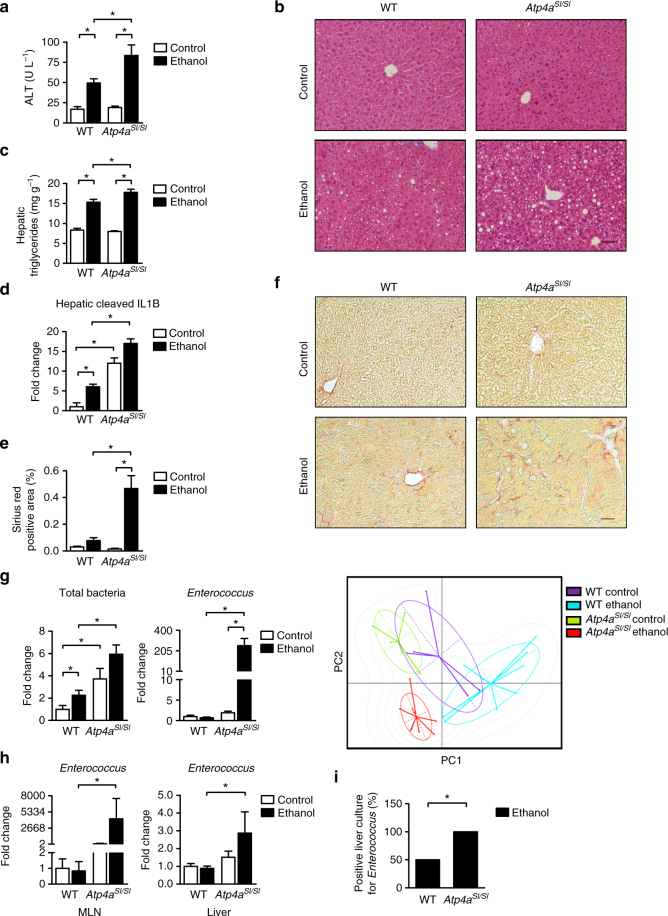
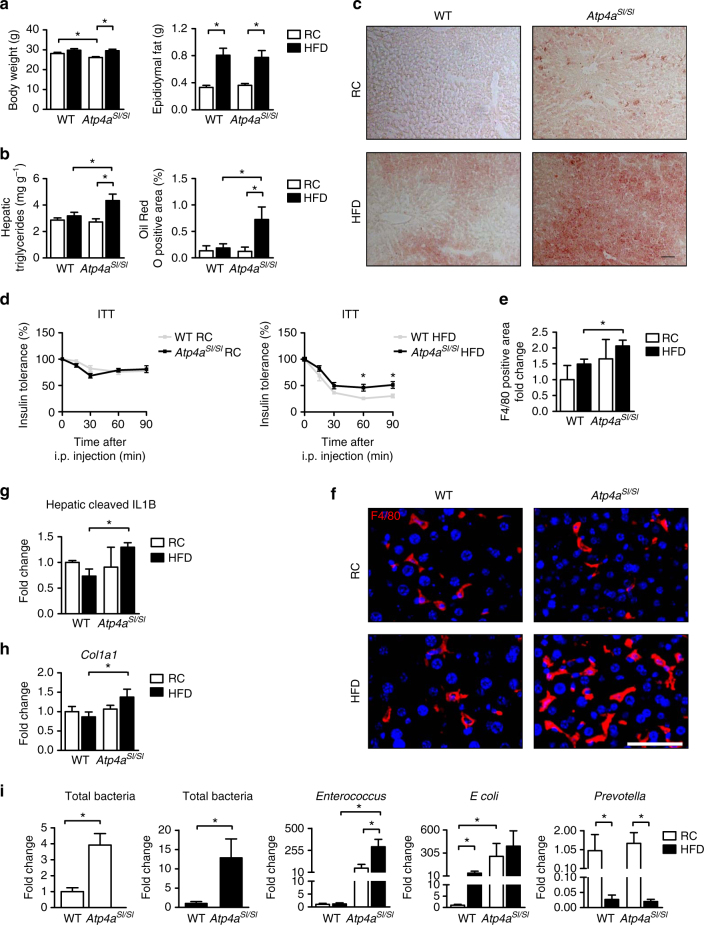
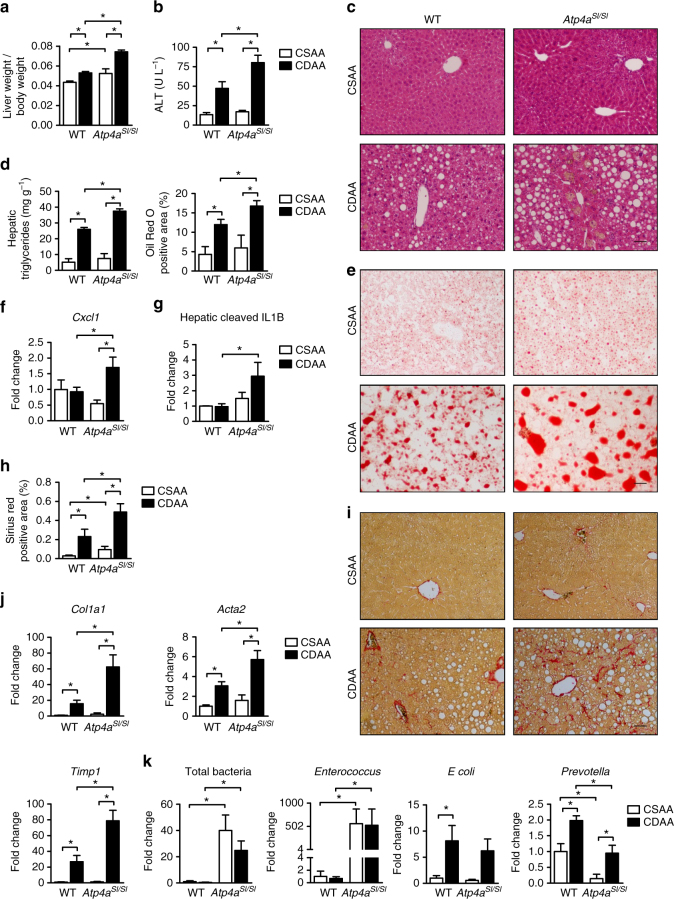
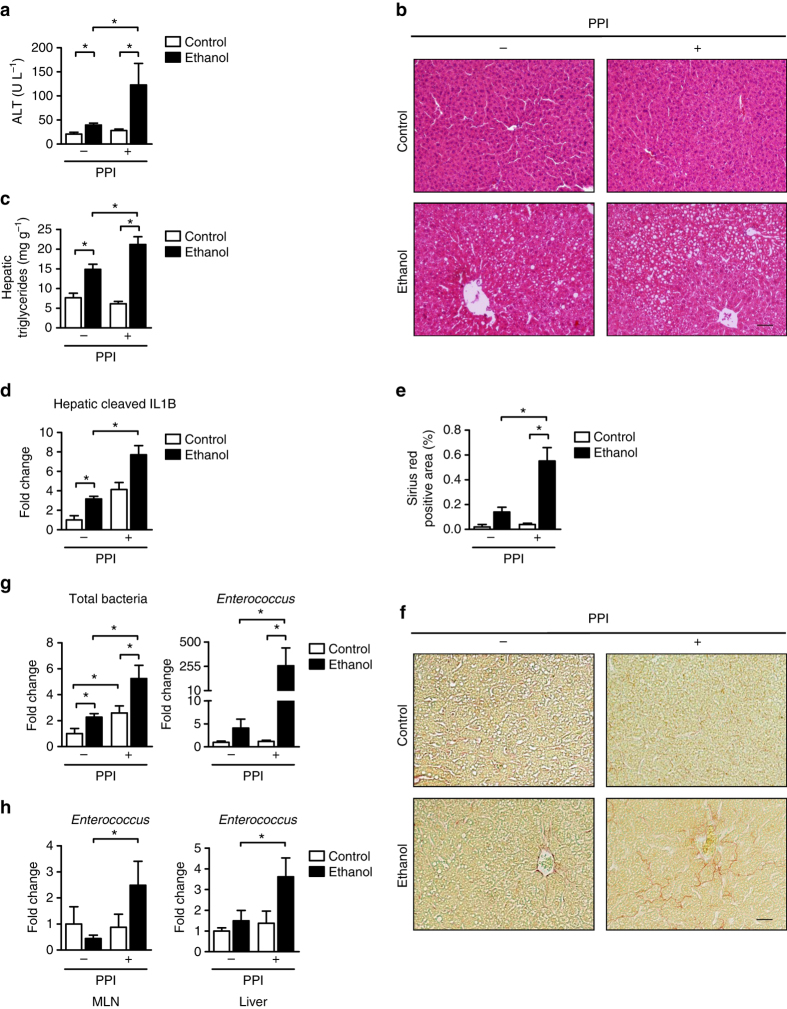
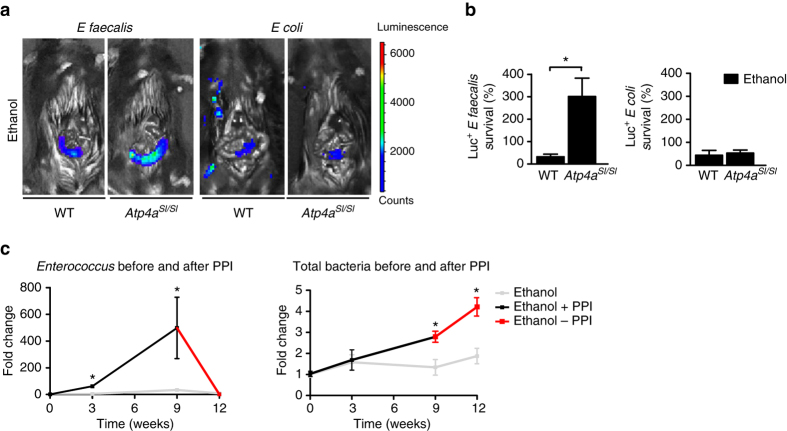
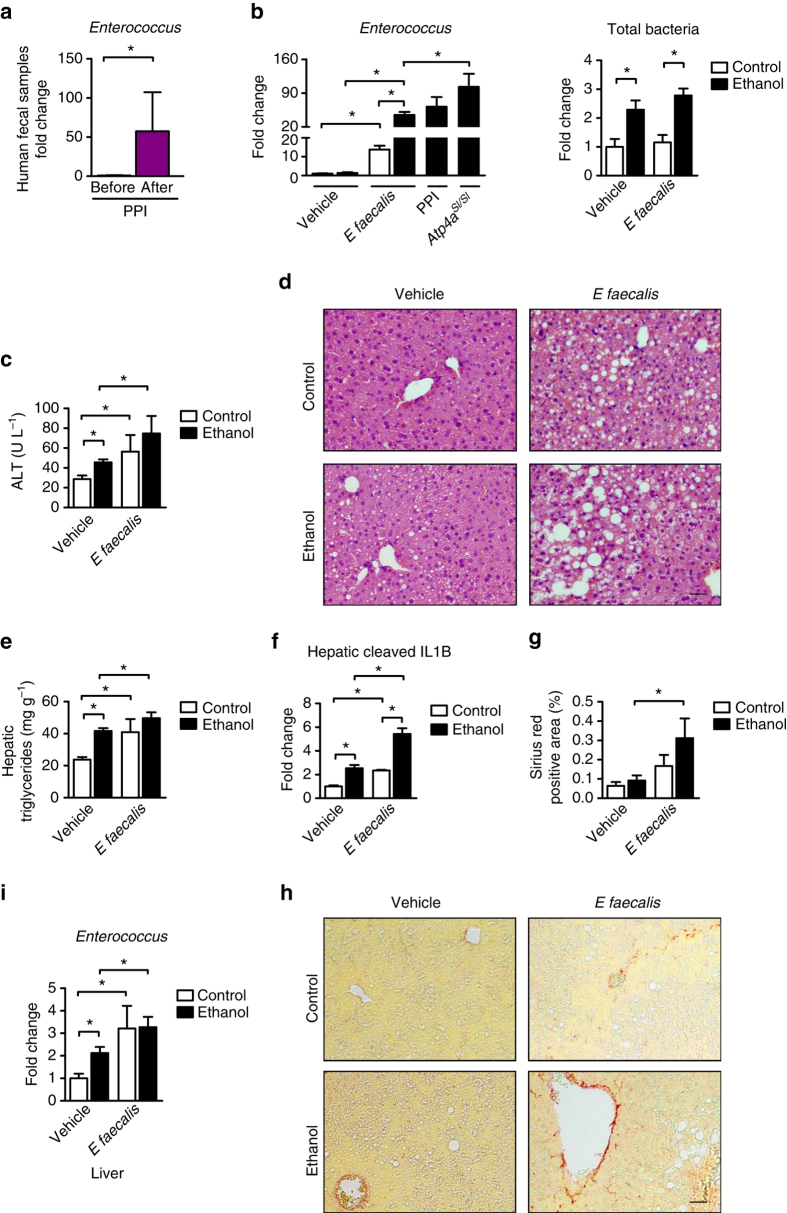
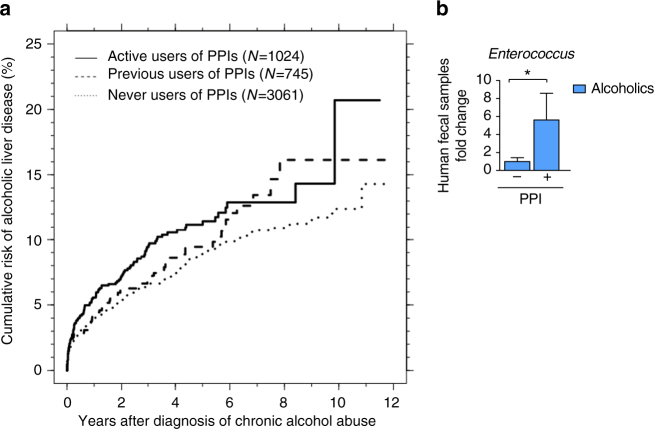
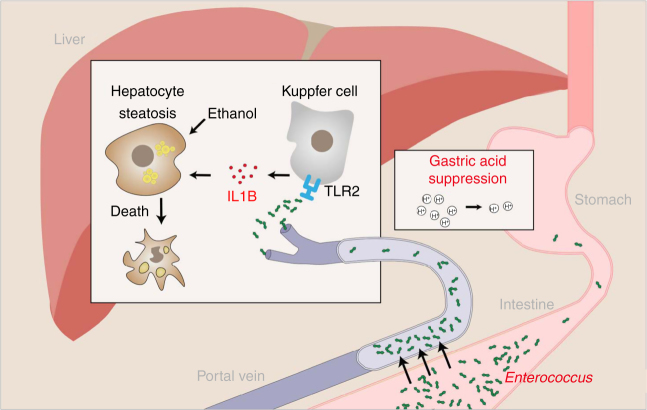
Chronic liver disease is rising in western countries and liver cirrhosis is the 12th leading cause of death worldwide. Simultaneously, use of gastric acid suppressive medications is increasing. Here, we show that proton pump inhibitors promote progression of alcoholic liver disease, non-alcoholic fatty liver disease, and non-alcoholic steatohepatitis in mice by increasing numbers of intestinal Enterococcus spp. Translocating enterococci lead to hepatic inflammation and hepatocyte death. Expansion of intestinal Enterococcus faecalis is sufficient to exacerbate ethanol-induced liver disease in mice. Proton pump inhibitor use increases the risk of developing alcoholic liver disease among alcohol-dependent patients. Reduction of gastric acid secretion therefore appears to promote overgrowth of intestinal Enterococcus, which promotes liver disease, based on data from mouse models and humans. Recent increases in the use of gastric acid-suppressive medications might contribute to the increasing incidence of chronic liver disease.
Overview
The claims and statistics of this paper haven’t been checked yet.
Free: it reads the open-access text and checks the first 5 claims that cite a source we can check. Create a free account to check every claim.
Integrity signals
Registry
Cites
Statistics
Figures
Verification
Claims the paper makes
The claims and statistics of this paper haven’t been checked yet.
Free: it reads the open-access text and checks the first 5 claims that cite a source we can check. Create a free account to check every claim.
Claims other papers make about this one
Each is checked against this paper’s own text: does it say what the citing paper says it does?
In the citing paper
“The gut microbiomes of patients with advanced liver disease and cirrhosis are characterized by an increase in potentially pathogenic bacteria, along with reduced numbers of bacteria with beneficial properties [220,221,222,223,224,225].”
From Gut-pancreas-liver Axis as a target for treatment of NAFLD/NASH (2020) · cites this paper as [223]
Self-check
Percentages, sums and reported differences re-computed from the paper’s own numbers.
The self-check needs the paper’s full text.
Citations
Cites
Lozano, R., Naghavi, M., Foreman, K., Lim, S., Shibuya, K., Aboyans, V., Abraham, J., Adair, T., Aggarwal, R., Ahn, S. Y., et al. (2012) · The Lancet · doi:10.1016/s0140-6736(12)61728-0 · Cited by 14,070
The ade4 Package: Implementing the Duality Diagram for Ecologists
Dray, S., & Dufour, A.-B. (2007) · Journal of Statistical Software · doi:10.18637/jss.v022.i04 · Cited by 6,211
The Danish National Patient Register
Lynge, E., Sandegaard, J. L., & Rebolj, M. (2011) · Scandinavian Journal of Public Health · doi:10.1177/1403494811401482 · Cited by 3,968
Inflammasome-mediated dysbiosis regulates progression of NAFLD and obesity
Henao-Mejia, J., Elinav, E., Jin, C., Hao, L., Mehal, W. Z., Strowig, T., Thaiss, C. A., Kau, A. L., Eisenbarth, S. C., Jurczak, M. J., et al. (2012) · Nature · doi:10.1038/nature10809 · Cited by 2,435
TLR4 enhances TGF-β signaling and hepatic fibrosis
Seki, E., De Minicis, S., Österreicher, C. H., Kluwe, J., Osawa, Y., Brenner, D. A., & Schwabe, R. F. (2007) · Nature Medicine · doi:10.1038/nm1663 · Cited by 1,942
Self-citationMouse model of chronic and binge ethanol feeding (the NIAAA model)
Bertola, A., Mathews, S., Ki, S. H., Wang, H., & Gao, B. (2013) · Nature Protocols · doi:10.1038/nprot.2013.032 · Cited by 1,213
Self-citationRinttila, T., Kassinen, A., Malinen, E., Krogius, L., & Palva, A. (2004) · Journal of Applied Microbiology · doi:10.1111/j.1365-2672.2004.02409.x · Cited by 1,017
Interactions Between the Intestinal Microbiome and Liver Diseases
Schnabl, B., & Brenner, D. A. (2014) · Gastroenterology · doi:10.1053/j.gastro.2014.01.020 · Cited by 971
Self-citationEnteric dysbiosis associated with a mouse model of alcoholic liver disease
Yan, A. W., Fouts, D. E., Brandl, J., Stärkel, P., Torralba, M., Schott, E., Tsukamoto, H., Nelson, K. E., Brenner, D. A., & Schnabl, B. (2011) · Hepatology · doi:10.1002/hep.24018 · Cited by 791
Self-citationGlobal burden of alcoholic liver diseases
Rehm, J., Samokhvalov, A. V., & Shield, K. D. (2013) · Journal of Hepatology · doi:10.1016/j.jhep.2013.03.007 · Cited by 740
Cited by
The gut-liver axis in liver disease: Pathophysiological basis for therapy
Albillos, A., de Gottardi, A., & Rescigno, M. (2020) · Journal of Hepatology · doi:10.1016/j.jhep.2019.10.003 · Cited by 2,166
Molecular and cellular mechanisms of liver fibrosis and its regression
Kisseleva, T., & Brenner, D. (2021) · Nature Reviews Gastroenterology & Hepatology · doi:10.1038/s41575-020-00372-7 · Cited by 2,024
Self-citationBacteriophage targeting of gut bacterium attenuates alcoholic liver disease
Duan, Y., Llorente, C., Lang, S., Brandl, K., Chu, H., Jiang, L., White, R. C., Clarke, T. H., Nguyen, K., Torralba, M., et al. (2019) · Nature · doi:10.1038/s41586-019-1742-x · Cited by 844
“We have shown that Atp4a Sl/Sl mice, which lack gastric acid, have overgrowth of intestinal enterococci, associated with increased susceptibility to alcohol-induced steatohepatitis 11 .”
InfluentialSelf-citationIntestinal Barrier in Human Health and Disease
Di Tommaso, N., Gasbarrini, A., & Ponziani, F. R. (2021) · International Journal of Environmental Research and Public Health · doi:10.3390/ijerph182312836 · Cited by 533
“This process is called “gut oralization”, and is associated with bacterial translocation and liver damage in alcoholic and metabolic liver diseases [75].”
BackgroundGut barrier disruption and chronic disease
Martel, J., Chang, S.-H., Ko, Y.-F., Hwang, T.-L., Young, J. D., & Ojcius, D. M. (2022) · Trends in Endocrinology & Metabolism · doi:10.1016/j.tem.2022.01.002 · Cited by 514
“Another group of widely used drugs, proton pump inhibitors, enhance alcohol-induced fatty liver disease in mice and humans by reducing gastric acid, which increases growth of commensal bacteria in the small intestine and leads to translocation of microbial products and liver in fl ammation [63].”
BackgroundContribution of the Intestinal Microbiome and Gut Barrier to Hepatic Disorders
Chopyk, D. M., & Grakoui, A. (2020) · Gastroenterology · doi:10.1053/j.gastro.2020.04.077 · Cited by 490
Lee, K. A., Thomas, A. M., Bolte, L. A., Björk, J. R., de Ruijter, L. K., Armanini, F., Asnicar, F., Blanco-Miguez, A., Board, R., Calbet-Llopart, N., et al. (2022) · Nature Medicine · doi:10.1038/s41591-022-01695-5 · Cited by 464
Senolysis by glutaminolysis inhibition ameliorates various age-associated disorders
Johmura, Y., Yamanaka, T., Omori, S., Wang, T.-W., Sugiura, Y., Matsumoto, M., Suzuki, N., Kumamoto, S., Yamaguchi, K., Hatakeyama, S., et al. (2021) · Science · doi:10.1126/science.abb5916 · Cited by 440
Vallianou, N., Christodoulatos, G. S., Karampela, I., Tsilingiris, D., Magkos, F., Stratigou, T., Kounatidis, D., & Dalamaga, M. (2021) · Biomolecules · doi:10.3390/biom12010056 · Cited by 289
“, 2017 [46] Sublytic Atp4aSl/Sl mice treated with PPIs ↑ Enterococcus faecalis with PPIs Figure 2.”
BackgroundRecent Advances in Understanding of Pathogenesis of Alcohol-Associated Liver Disease
Wu, X., Fan, X., Miyata, T., Kim, A., Cajigas-Du Ross, C. K., Ray, S., Huang, E., Taiwo, M., Arya, R., Wu, J., et al. (2023) · Annual Review of Pathology: Mechanisms of Disease · doi:10.1146/annurev-pathmechdis-031521-030435 · Cited by 289
“In addition, viable bacteria can also cross the damaged gut epithelial barrier, contributing to liver injury (119, 123).”
BackgroundSorribas, M., Jakob, M. O., Yilmaz, B., Li, H., Stutz, D., Noser, Y., de Gottardi, A., Moghadamrad, S., Hassan, M., Albillos, A., et al. (2019) · Journal of Hepatology · doi:10.1016/j.jhep.2019.06.017 · Cited by 253
Microbiome as a therapeutic target in alcohol-related liver disease
Sarin, S. K., Pande, A., & Schnabl, B. (2019) · Journal of Hepatology · doi:10.1016/j.jhep.2018.10.019 · Cited by 253
Self-citationSide Effects of Long‐Term Proton Pump Inhibitor Use: A Review
Haastrup, P. F., Thompson, W., Søndergaard, J., & Jarbøl, D. E. (2018) · Basic & Clinical Pharmacology & Toxicology · doi:10.1111/bcpt.13023 · Cited by 230
“Liver diseases It has recently been demonstrated that PPI-induced hypochlorhydria can cause intestinal bacterial overgrowth of Enterococci, which may exacerbate alcoholic liver disease [20].”
BackgroundMicrobiota and Fatty Liver Disease—the Known, the Unknown, and the Future
Lang, S., & Schnabl, B. (2020) · Cell Host & Microbe · doi:10.1016/j.chom.2020.07.007 · Cited by 231
“Findings from preclinical models support the contribution of translocated viable bacteria to ethanol-induced liver disease (Duan et al., 2019; Llorente et al., 2017; Wang et al., 2016).”
BackgroundSelf-citationThe Candida albicans exotoxin candidalysin promotes alcohol-associated liver disease
Chu, H., Duan, Y., Lang, S., Jiang, L., Wang, Y., Llorente, C., Liu, J., Mogavero, S., Bosques-Padilla, F., Abraldes, J. G., et al. (2020) · Journal of Hepatology · doi:10.1016/j.jhep.2019.09.029 · Cited by 228
Self-citationRecent advances in alcohol-related liver disease (ALD): summary of a Gut round table meeting
Avila, M. A., Dufour, J.-F., Gerbes, A. L., Zoulim, F., Bataller, R., Burra, P., Cortez-Pinto, H., Gao, B., Gilmore, I., Mathurin, P., et al. (2020) · Gut · doi:10.1136/gutjnl-2019-319720 · Cited by 206
Self-citationWrzosek, L., Ciocan, D., Hugot, C., Spatz, M., Dupeux, M., Houron, C., Lievin-Le Moal, V., Puchois, V., Ferrere, G., Trainel, N., et al. (2021) · Gut · doi:10.1136/gutjnl-2020-321565 · Cited by 202
Utilizing the gut microbiome in decompensated cirrhosis and acute-on-chronic liver failure
Trebicka, J., Bork, P., Krag, A., & Arumugam, M. (2021) · Nature Reviews Gastroenterology & Hepatology · doi:10.1038/s41575-020-00376-3 · Cited by 201
Maccioni, L., Gao, B., Leclercq, S., Pirlot, B., Horsmans, Y., De Timary, P., Leclercq, I., Fouts, D., Schnabl, B., & Stärkel, P. (2020) · Gut Microbes · doi:10.1080/19490976.2020.1782157 · Cited by 174
“16 S sequence reads were processed using MOTHUR-base 16 S analysis workflow to determine the operational taxonomic units as described previously.(11,27,28) Phyloseq package was used for the α-diversity (observed OTUs, Chao 1, Shannon, and Simpson) and β-diversity (weighted and unweighted Unifrac) analysis.”
MethodSelf-citationMicrobiota changes and intestinal microbiota transplantation in liver diseases and cirrhosis
Bajaj, J. S., & Khoruts, A. (2020) · Journal of Hepatology · doi:10.1016/j.jhep.2020.01.017 · Cited by 167
Self-citationAdverse Effects of Proton Pump Inhibitors—Evidence and Plausibility
Fossmark, R., Martinsen, T. C., & Waldum, H. L. (2019) · International Journal of Molecular Sciences · doi:10.3390/ijms20205203 · Cited by 160
“More specifically, hypoacidity caused expansion of Enterococci, which was hypothesized to worsen alcoholic liver disease in mice as well as in humans [113].”
BackgroundLiver–Microbiome Axis in Health and Disease
Adolph, T. E., Grander, C., Moschen, A. R., & Tilg, H. (2018) · Trends in Immunology · doi:10.1016/j.it.2018.05.002 · Cited by 150
Proton-pump inhibitors among adults: a nationwide drug-utilization study
Hálfdánarson, Ó., Pottegård, A., Bjornsson, E. S., Lund, S. H., Ogmundsdottir, M. H., Steingrı́msson, E., Ogmundsdottir, H. M., & Zoëga, H. (2018) · Therapeutic Advances in Gastroenterology · doi:10.1177/1756284818777943 · Cited by 146
Adverse Effects Associated with Proton Pump Inhibitor Use
Yibirin, M., Oliveira, D. D., Valera, R. J., Plitt, A. E., & Lutgen, S. (2021) · Cureus · doi:10.7759/cureus.12759 · Cited by 207
“The mechanism of liver injury associated with PPI use, is not completely understood, although investigators observed that H+/K+ ATPase inhibition leads to intestinal bacterial overgrowth and an altered intestinal microbial composition [25], which may lead to increased portal venous concentrations of several potentiall…”
BackgroundXu, L., Zhang, Y., Li, X., Li, C., Hu, H., Hu, J., Liu, M., Yang, Q. Z., Gu, P., Li, J., et al. (2025) · iMeta · doi:10.1002/imt2.270 · Cited by 154
The Gut Microbiome in Pancreatic Disease
Akshintala, V. S., Talukdar, R., Singh, V. K., & Goggins, M. (2019) · Clinical Gastroenterology and Hepatology · doi:10.1016/j.cgh.2018.08.045 · Cited by 131
Zheng, R., Wang, G., Pang, Z., Ran, N., Gu, Y., Guan, X., Yuan, Y., Zuo, X., Pan, H., Zheng, J., et al. (2020) · Cancer Medicine · doi:10.1002/cam4.3045 · Cited by 129
Bajaj, J. S., Vargas, H. E., Reddy, K. R., Lai, J. C., O’Leary, J. G., Tandon, P., Wong, F., Mitrani, R., White, M. B., Kelly, M., et al. (2019) · Clinical Gastroenterology and Hepatology · doi:10.1016/j.cgh.2018.07.022 · Cited by 123
Self-citationBajaj, J. S., Acharya, C., Fagan, A., White, M. B., Gavis, E., Heuman, D. M., Hylemon, P. B., Fuchs, M., Puri, P., Schubert, M. L., et al. (2018) · American Journal of Gastroenterology · doi:10.1038/s41395-018-0085-9 · Cited by 120
Self-citationMechanisms and consequences of gut commensal translocation in chronic diseases
Fine, R. L., Vieira, S. M., Gilmore, M. S., & Kriegel, M. A. (2019) · Gut Microbes · doi:10.1080/19490976.2019.1629236 · Cited by 136
“faecalis enhances inflammation in mouse models of alcoholic cirrhosis with gastric acid suppression.(36,72) Enterococcus spp.”
BackgroundLiu, Z., Li, J., Liu, H., Ying, T., Zhan, Q., Lai, W., Ao, L., Meng, X., Ren, H., Xu, D., et al. (2018) · Atherosclerosis · doi:10.1016/j.atherosclerosis.2018.11.038 · Cited by 118
Periodontal therapy favorably modulates the oral-gut-hepatic axis in cirrhosis
Bajaj, J. S., Matin, P., White, M. B., Fagan, A., Deeb, J. G., Acharya, C., Dalmet, S. S., Sikaroodi, M., Gillevet, P. M., & Sahingur, S. E. (2018) · American Journal of Physiology-Gastrointestinal and Liver Physiology · doi:10.1152/ajpgi.00230.2018 · Cited by 135
Self-citationTargeting the gut barrier for the treatment of alcoholic liver disease
Zhou, Z., & Zhong, W. (2017) · Liver Research · doi:10.1016/j.livres.2017.12.004 · Cited by 113
Bogatyrev, S. R., Rolando, J. C., & Ismagilov, R. F. (2020) · Microbiome · doi:10.1186/s40168-020-0785-4 · Cited by 121
“Recently, the small intestine microbiome has become the focus of studies conducted in mice in the context of host physiology [101] and disease [4, 131].”
BackgroundThe Gut-liver Axis in Immune Remodeling: New insight into Liver Diseases
Yang, X., Lu, D., Zhuo, J., Lin, Z., Yang, M., & Xu, X. (2020) · International Journal of Biological Sciences · doi:10.7150/ijbs.46405 · Cited by 120
Kanwal, S., Joseph, T. P., Owusu, L., Ren, X., Li, M., & Xin, Y. (2018) · Nutrients · doi:10.3390/nu10081003 · Cited by 115
“The expansion of Enterococcus has been also associated with hepatic inflammation and development of liver disease [81] and is most commonly capable of causing urinary tract infections and a variety of community-acquired infections [82] Nonetheless, the notable improvement was observed after DIP administration in antib…”
ResultThe Human Gastric Microbiome Is Predicated upon Infection with Helicobacter pylori
Klymiuk, I., Bilgilier, C., Stadlmann, A., Thannesberger, J., Kastner, M.-T., Högenauer, C., Püspök, A., Biowski-Frotz, S., Schrutka-Kölbl, C., Thallinger, G. G., et al. (2017) · Frontiers in Microbiology · doi:10.3389/fmicb.2017.02508 · Cited by 107
“In the same manner, characterization of human gastric microbiota in patients with acid inhibitors does not reflect natural stomach conditions and cannot exclude oral or intestinal sources overgrowing the natural gastric community due to the artificially increased stomach pH and therefore the disruption of its barrier…”
BackgroundIntestinal Dysbiosis Amplifies Acetaminophen-Induced Acute Liver Injury
Schneider, K. M., Elfers, C., Ghallab, A., Schneider, C. V., Galvez, E. J. C., Mohs, A., Gui, W., Candels, L. S., Wirtz, T. H., Zuehlke, S., et al. (2021) · Cellular and Molecular Gastroenterology and Hepatology · doi:10.1016/j.jcmgh.2020.11.002 · Cited by 108
Liu, R., Kang, J. D., Sartor, R. B., Sikaroodi, M., Fagan, A., Gavis, E. A., Zhou, H., Hylemon, P. B., Herzog, J., Li, X., et al. (2019) · Hepatology · doi:10.1002/hep.30827 · Cited by 110
“(41) The use of antibiotics in the pre-FMT period was associated with higher levels of Enterococcaceae and Streptococcaceae in the stools.(42) Because the healthy FMT donor was enriched in Lachnospiraceae and Ruminococcaceae, we found a higher relative abundance of these bacterial families and constituent species afte…”
BackgroundSelf-citationThe multifactorial mechanisms of bacterial infection in decompensated cirrhosis
der Merwe, V., Chokshi, S., Bernsmeier, C., & Albillos, A. (2021) · Journal of Hepatology · doi:10.1016/j.jhep.2020.11.029 · Cited by 112
The Gut-Liver Axis in Cholestatic Liver Diseases
Blesl, A., & Stadlbauer, V. (2021) · Nutrients · doi:10.3390/nu13031018 · Cited by 113
Horvath, A., Rainer, F., Bashir, M., Leber, B., Schmerboeck, B., Klymiuk, I., Groselj-Strele, A., Durdevic, M., Freedberg, D. E., Abrams, J. A., et al. (2019) · Scientific Reports · doi:10.1038/s41598-019-48352-5 · Cited by 93
Saji, N., Murotani, K., Hisada, T., Kunihiro, T., Tsuduki, T., Sugimoto, T., Kimura, A., Niida, S., Toba, K., & Sakurai, T. (2020) · Scientific Reports · doi:10.1038/s41598-020-65196-6 · Cited by 90
Bajaj, J. S., Salzman, N., Acharya, C., Takei, H., Kakiyama, G., Fagan, A., White, M. B., Gavis, E. A., Holtz, M. L., Hayward, M., et al. (2019) · JCI Insight · doi:10.1172/jci.insight.133410 · Cited by 89
“All our subjects, regardless of oral capsular FMT or placebo grouping, were on rifaximin and PPI, which can affect microbial function and could affect engraftment (18, 19).”
BackgroundSelf-citationProtection against Metabolic Associated Fatty Liver Disease by Protocatechuic Acid
Tan, J., Hu, R., Gong, J., Fang, C., Li, Y., Liu, M., He, Z., Hou, D., Zhang, H., He, J., et al. (2023) · Gut Microbes · doi:10.1080/19490976.2023.2238959 · Cited by 91
“Recently, Enterococcus was considered as one of the major causative agents of infection in HFD-induced MAFLD.31 As an opportunistic pathogen, E. faecalis has been showing drugs resistance and virulence genes, such as metalloprotease gelatinase E,32 during the long process of biological evolution,33,34 leading to peria…”
BackgroundLiu, J., Lahousse, L., Nivard, M. G., Bot, M., Chen, L., van Klinken, J. B., Thesing, C. S., Beekman, M., van den Akker, E. B., Slieker, R. C., et al. (2020) · Nature Medicine · doi:10.1038/s41591-019-0722-x · Cited by 85
Acharya, C., & Bajaj, J. S. (2021) · Gastroenterology · doi:10.1053/j.gastro.2020.10.056 · Cited by 78
Self-citationGut-liver axis: Recent concepts in pathophysiology in alcohol-associated liver disease
Raya Tonetti, F., Eguileor, A., Mrdjen, M., Pathak, V., Travers, J., Nagy, L. E., & Llorente, C. (2024) · Hepatology · doi:10.1097/hep.0000000000000924 · Cited by 78
Self-citationCRIg on liver macrophages clears pathobionts and protects against alcoholic liver disease
Duan, Y., Chu, H., Brandl, K., Jiang, L., Zeng, S., Meshgin, N., Papachristoforou, E., Argemi, J., Mendes, B. G., Wang, Y., et al. (2021) · Nature Communications · doi:10.1038/s41467-021-27385-3 · Cited by 76
Self-citationLei, C., Sun, R., Xu, G., Tan, Y. H., Feng, W., McClain, C. J., & Deng, Z. (2022) · Cell Host & Microbe · doi:10.1016/j.chom.2022.09.001 · Cited by 89
Pezzino, S., Sofia, M., Faletra, G., Mazzone, C., Litrico, G., Greca, G. L., & Latteri, S. (2022) · Biology · doi:10.3390/biology11111622 · Cited by 88
Zhang, Z., Tanaka, I., Pan, Z., Ernst, P. B., Kiyono, H., & Kurashima, Y. (2022) · European Journal of Immunology · doi:10.1002/eji.202149532 · Cited by 69
Qian, M., Liu, J., Zhao, D., Cai, P., Pan, C., Jia, W., Gao, Y., Zhang, Y., Zhang, N., Zhang, Y., et al. (2021) · Cellular and Molecular Gastroenterology and Hepatology · doi:10.1016/j.jcmgh.2021.08.014 · Cited by 76
Self-citationGut-pancreas-liver Axis as a target for treatment of NAFLD/NASH
Svegliati-Baroni, G., Patrício, B., Lioci, G., Macedo, M. P., & Gastaldelli, A. (2020) · International Journal of Molecular Sciences · doi:10.3390/ijms21165820 · Cited by 66
Yuan, J., He, Q., Nguyen, L. H., Wong, M. C. S., Huang, J., Yu, Y., Xia, B., Tang, Y., He, Y., & Zhang, C. (2020) · Gut · doi:10.1136/gutjnl-2020-322557 · Cited by 73
Gustot, T., Stadlbauer, V., Laleman, W., Alessandria, C., & Thursz, M. R. (2021) · Journal of Hepatology · doi:10.1016/j.jhep.2020.12.005 · Cited by 84
Endogenous ethanol production in health and disease
Meijnikman, A. S., Nieuwdorp, M., & Schnabl, B. (2024) · Nature Reviews Gastroenterology & Hepatology · doi:10.1038/s41575-024-00937-w · Cited by 83
Self-citationChi, Q., Wang, Z., Tian, F., You, J., & Xu, S. (2018) · Micromachines · doi:10.3390/mi9100537 · Cited by 69
“Native acids are found in cellular by-products and the gastric area [84,85].”
BackgroundGut Microbiome Dysbiosis in Alcoholism: Consequences for Health and Recovery
Day, A. W., & Kumamoto, C. A. (2022) · Frontiers in Cellular and Infection Microbiology · doi:10.3389/fcimb.2022.840164 · Cited by 66
“Several studies have focused on studying specific microbial players such as Enterococcus faecalis (Llorente et al., 2017; Duan et al., 2019) that drive ALD progression.”
BackgroundLiu, Y., Zhang, X., Chen, S., Wang, J., Yu, S., Li, Y., Xu, M. M., Aboubacar, H., Li, J., Shan, T., et al. (2022) · Clinical and Molecular Hepatology · doi:10.3350/cmh.2022.0039 · Cited by 64
“into the liver via the portal vein[34, 35].”
Huang, Y., Lu, W., Zeng, M., Hu, X., Su, Z., Liu, Y., Liu, Z., Yuan, J., Li, L., Zhang, X., et al. (2022) · Microbiome · doi:10.1186/s40168-022-01437-2 · Cited by 72
Robles‐Vera, I., Jarit-Cabanillas, A., Brandi, P., Martínez‐López, M., Martínez-Cano, S., Rodrigo-Tapias, M., Femenía-Muiña, M., Redondo‐Urzainqui, A., Nuñez, V., González‐Correa, C., et al. (2025) · Immunity · doi:10.1016/j.immuni.2024.12.012 · Cited by 70
Meta-analysis of the effects of proton pump inhibitors on the human gut microbiota
Zhang, J., Zhang, C., Zhang, Q., Yu, L., Chen, W., Xue, Y., & Zhai, Q. (2023) · BMC Microbiology · doi:10.1186/s12866-023-02895-w · Cited by 74
“(2017) also found that PPI-induced overgrowth of Enterococcus will in turn exacerbate ethanol-induced liver disease in mice and humans [13].”
BackgroundGut-Liver Axis Links Portal Hypertension to Acute-on-Chronic Liver Failure
Trebicka, J., Reiberger, T., & Laleman, W. (2018) · Visceral Medicine · doi:10.1159/000490262 · Cited by 63
From intestinal dysbiosis to alcohol-associated liver disease
Mendes, B. G., & Schnabl, B. (2020) · Clinical and Molecular Hepatology · doi:10.3350/cmh.2020.0086 · Cited by 60
“Gastric acid suppression by proton pump inhibitor increases intestinal Enterococcus and its translocation to the liver, exacerbating ethanol-induced liver disease both in mice and humans.(103) E.”
BackgroundSelf-citationLactobacillus reuteri DSM 17938 alleviates d-galactosamine-induced liver failure in rats
Jiang, H., Ren, Y., Wang, K., Wang, Q., Chen, X., Chen, L., Li, L., & Lv, L. (2020) · Biomedicine & Pharmacotherapy · doi:10.1016/j.biopha.2020.111000 · Cited by 57
Gut-liver axis: Pathophysiological concepts and medical perspective in chronic liver diseases
Rodrigues, S. G., der Merwe, V., Krag, A. A., & Wiest, R. (2024) · Seminars in Immunology · doi:10.1016/j.smim.2023.101859 · Cited by 58
Li, C., Cai, C., Wang, C., Chen, X., Zhang, B., & Huang, Z. (2024) · Clinical and Molecular Hepatology · doi:10.3350/cmh.2024.0857 · Cited by 63
Gut microbial RNA and DNA analysis predicts hospitalizations in cirrhosis
Bajaj, J. S., Thacker, L. R., Fagan, A., White, M. B., Gavis, E. A., Hylemon, P. B., Brown, R., Acharya, C., Heuman, D. M., Fuchs, M. A., et al. (2018) · JCI Insight · doi:10.1172/jci.insight.98019 · Cited by 52
Self-citationSystemic Immunoregulatory Consequences of Gut Commensal Translocation
McPherson, A. C., Pandey, S. P., Bender, M. J., & Meisel, M. (2021) · Trends in Immunology · doi:10.1016/j.it.2020.12.005 · Cited by 49
Li, D. K., Yan, P., Abou‐Samra, A., Chung, R. T., & Butt, A. A. (2017) · Alimentary Pharmacology & Therapeutics · doi:10.1111/apt.14391 · Cited by 57
“Furthermore, while this manuscript was being prepared, data from another study were presented in which Atp4 (encoding the H/K-ATPase targeted by proton pump inhibitors) mutant mice with resultant achlorhydria were found to have exacerbated phenotypes of alcoholic liver injury and non-alcoholic steatohepatitis compared…”
BackgroundMethodInfluence of proton pump inhibitors on microbiota in chronic liver disease patients
Yamamoto, K., Ishigami, M., Honda, T., Takeyama, T., Ito, T., Ishizu, Y., Kuzuya, T., Hayashi, K., Goto, H., & Hirooka, Y. (2019) · Hepatology International · doi:10.1007/s12072-019-09932-9 · Cited by 52
Gao, B., Duan, Y., Lang, S., Barupal, D. K., Wu, T., Valdiviez, L., Roberts, B., Choy, Y. Y., Shen, T., Byram, G., et al. (2020) · Hepatology Communications · doi:10.1002/hep4.1537 · Cited by 53
“(1) Recent studies showed that gut microbiota, a potentially modifiable factor, plays an important role in alcohol-related liver disease.(4–6) Colonization of mice with fecal material from patients with alcoholic hepatitis increased susceptibility to ethanol-induced liver disease.”
BackgroundSelf-citationTran, K., McMenamin, Ú. C., Hicks, B. M., Murchie, P., Thrift, A. P., Coleman, H. G., Iversen, L., Johnston, B. T., Lee, A. J., & Cardwell, C. R. (2018) · Alimentary Pharmacology & Therapeutics · doi:10.1111/apt.14796 · Cited by 50
“The resulting bacterial overgrowth could greatly contribute to the transformation of primary bile acid in the intestine to secondary bile acid(33) and has been shown to impact upon the liver(34) exacerbating various liver diseases in mice.(16) A high level of secondary bile acid has been shown to cause toxic, inflamma…”
BackgroundIntestinal and hepatic microbiota changes associated with chronic ethanol administration in mice
Bluemel, S., Wang, L., Kuelbs, C., Moncera, K. J., Torralba, M., Singh, H., Fouts, D. E., & Schnabl, B. (2019) · Gut Microbes · doi:10.1080/19490976.2019.1595300 · Cited by 52
“CCL5 expression in the liver is increased in ethanol-induced liver disease.(16,45,46) It induces T-cell mediated inflammation,(47) and just recently inhibition of CCL5 signaling by a CCR2/5 inhibitor prevented and reversed ethanol-induced liver injury in mice.”
BackgroundSelf-citationSong, X., Cui, W., Meng, F., Xia, Q., Li, X., Hou, M., Jia, L., & Zhang, J. (2021) · Food & Function · doi:10.1039/d1fo03486c · Cited by 49
Macrophage‐derived MLKL in alcohol‐associated liver disease: Regulation of phagocytosis
Wu, X., Fan, X., McMullen, M. R., Miyata, T., Kim, A., Pathak, V., Wu, J., Day, L. Z., Hardesty, J., Welch, N., et al. (2023) · Hepatology · doi:10.1002/hep.32612 · Cited by 53
“2023;77:902–919 Mlkl in the Gao‐binge model of ALD.”
BackgroundDevaux, C. A., Million, M., & Raoult, D. (2020) · Frontiers in Microbiology · doi:10.3389/fmicb.2020.01642 · Cited by 53
Liang, T. G., Huang, C., Fu, W., Gao, L., Mi, N., Bai, M., Ma, H., Zhang, C., Lu, Y., Zhao, J., et al. (2023) · Frontiers in Pharmacology · doi:10.3389/fphar.2023.1217306 · Cited by 52
The Role of Intestinal C‐type Regenerating Islet Derived‐3 Lectins for Nonalcoholic Steatohepatitis
Bluemel, S., Wang, L., Martino, C., Lee, S., Wang, Y., Williams, B., Horvath, A., Stadlbauer, V., Zengler, K., & Schnabl, B. (2018) · Hepatology Communications · doi:10.1002/hep4.1165 · Cited by 46
“Alcohol-associated liver disease is dependent on increased translocation of microbial products (29,37) or viable bacteria,((19,38)) while our current data indicate that increased intestinal permeability for endotoxins is not a major contributor to NAFLD disease progression.”
BackgroundSelf-citationLeung, H., Xiong, L., Ni, Y., Busch, A., Bauer, M. W., Press, A. T., & Panagiotou, G. (2023) · npj Biofilms and Microbiomes · doi:10.1038/s41522-023-00398-0 · Cited by 49
Ma, T., Gan, G., Cheng, J. G., Shen, Z., Zhang, G., Liu, S., & Hu, J. (2025) · Angewandte Chemie International Edition · doi:10.1002/anie.202502588 · Cited by 57
Enterococci facilitate polymicrobial infections
Xu, W., Fang, Y., & Zhu, K. (2023) · Trends in Microbiology · doi:10.1016/j.tim.2023.07.010 · Cited by 48
Jung, J. H., Kim, S. E., Suk, K. T., & Kim, D. J. (2022) · Frontiers in Medicine · doi:10.3389/fmed.2022.913842 · Cited by 48
Enterococcus faecalis : an overlooked cell invader
Archambaud, C., Nunez, N., da Silva, R. A. G., Kline, K. A., & Serror, P. (2024) · Microbiology and Molecular Biology Reviews · doi:10.1128/mmbr.00069-24 · Cited by 52
Nighot, M., Liao, P.-L., Morris, N. M., McCarthy, D., Viszwapriya, D., Khan, I. U., Dalessio, S., Saha, K., Ganapathy, A. S., Wang, A., et al. (2022) · Journal of Crohn s and Colitis · doi:10.1093/ecco-jcc/jjac168 · Cited by 47
Chi, Y.-Y., Xiang, J., Li, H., Shi, H.-Y., Ning, K., Shi, C., Xiang, H., & Xie, Q. (2024) · International Journal of Biological Macromolecules · doi:10.1016/j.ijbiomac.2024.136843 · Cited by 54
Kuo, C., Wu, L., Chen, H., Yu, J. Q., & Wu, C. (2024) · Journal of Gastroenterology and Hepatology · doi:10.1111/jgh.16539 · Cited by 51
“20 Enterococcus is usually regulated by gastric acid, while the overgrowth of Enterococcus leads to gut dysbiosis and increases the risk of bacterial translocation to liver.”
Song, H. J., Jiang, X., Henry, L. L., Nguyen, M. H., & Park, H. (2020) · European Journal of Clinical Pharmacology · doi:10.1007/s00228-020-02854-8 · Cited by 45
Deleterious effect of proton pump inhibitors on the disease course of cirrhosis
Janka, T., Tornai, T., Borbély, B., Tornai, D., Altorjay, I., Papp, M., & Vitális, Z. (2019) · European Journal of Gastroenterology & Hepatology · doi:10.1097/meg.0000000000001499 · Cited by 67
Proton Pump Inhibitors and Oral–Gut Microbiota: From Mechanism to Clinical Significance
Zhang, X., Li, Q., Xia, S., He, Y., Liu, Y., Yang, J., & Xiao, X. (2024) · Biomedicines · doi:10.3390/biomedicines12102271 · Cited by 46
“Mechanistically, an increasing number of Enterococcus translocated to the liver through the portal vein and bound to the pathogen recognition receptors on hepatic Kupffer cells, leading to interleukin (IL)-1 β secretion and inflammation [58].”
BackgroundIn sickness and health: Effects of gut microbial metabolites on human physiology
Glowacki, R. W. P., & Martens, E. C. (2020) · PLOS Pathogens · doi:10.1371/journal.ppat.1008370 · Cited by 36
“References for associations highlighted in the figure that are not mentioned in detail in the main text: autism [21, 33], Parkinson’s [64, 65], depression [29], multiple sclerosis [66], drug metabolism [54, 55], nonalcoholic fatty liver disease [67, 68], asthma [69], allergy [70, 71], heart disease [51], Celiac diseas…”
BackgroundZhang, J., Wang, Z., Huo, D., & Shao, Y. (2018) · Frontiers in Immunology · doi:10.3389/fimmu.2018.01034 · Cited by 37
“Intestinal Enterococcus species are known to promote liver disease (30), even though they are lactic acid bacteria.”
BackgroundA perspective of intestinal immune-microbiome interactions in alcohol-associated Liver Disease
Bruellman, R., & Llorente, C. (2020) · International Journal of Biological Sciences · doi:10.7150/ijbs.53589 · Cited by 38
“faecalis overgrowth in mice with ethanol-induced liver disease fed a long-term ethanol diet and it is a risk factor for developing ALD in alcohol-dependent patients [203].”
BackgroundShimizu, K., Seiki, I., Goto, Y., & Murata, T. (2021) · Antibiotics · doi:10.3390/antibiotics10020180 · Cited by 42
“The low level of gastric acid secretion might cause the increasing number of gut bacteria [17,20], resulting in a decrease in intestinal pH.”
BackgroundGut non-bacterial microbiota contributing to alcohol-associated liver disease
Gao, W., Zhu, Y., Ye, J., & Chu, H. (2021) · Gut Microbes · doi:10.1080/19490976.2021.1984122 · Cited by 36
Lee, K., Chen, P., Maricic, I., Inamine, T., Hu, J., Gong, S., Sun, J. C., Dasgupta, S., Lin, H., Lin, Y.-T., et al. (2019) · American Journal of Physiology-Gastrointestinal and Liver Physiology · doi:10.1152/ajpgi.00269.2018 · Cited by 36
Self-citationLi, X., Lei, S., Liu, L., Zhang, Y., Zheng, B., & Zeng, H. (2021) · International Journal of Biological Macromolecules · doi:10.1016/j.ijbiomac.2021.06.016 · Cited by 34
Gao, Y., Qian, M., Wei, Q., Duan, X., Wang, S.-L., Hu, H., Liu, J., Pan, C., Zhang, S.-Q., Qi, L., et al. (2019) · Acta Pharmacologica Sinica · doi:10.1038/s41401-019-0310-0 · Cited by 34
Self-citationHorvath, A., Baušys, A., Sabaliauskaitė, R., Stratilatovas, E., Jarmalaitė, S., Schuetz, B., Stiegler, P., Baušys, R., Stadlbauer, V., & Strupas, K. (2020) · Annals of Surgical Oncology · doi:10.1245/s10434-020-08678-1 · Cited by 36
“In a model of gastric barrier dysfunction, both genetic and pharmaceutical blockage of acid secretion in the stomach resulted in increased survival of orally gavaged Enterococcus.(15) Moreover, after SGB2, patients showed a significant increase in Streptococcus.”
BackgroundResultInfluential
Metadata
- Authors
- Llorente, C., Jepsen, P., Inamine, T., Wang, L., Bluemel, S., Wang, H. J., Loomba, R., Bajaj, J. S., Schubert, M. L., Sikaroodi, M., Gillevet, P. M., Xu, J., Kisseleva, T., Ho, S. B., DePew, J., Du, X., Sørensen, H. T., Vilstrup, H., Nelson, K. E., Brenner, D. A., Fouts, D. E., & Schnabl, B.
- Affiliations
- University of California San Diego (US)
- Aarhus University Hospital (DK)
- Virginia Commonwealth University (US)
- George Mason University (US)
- J. Craig Venter Institute (US)
- Corresponding author
- Schnabl, Bernd
- ORCID
- Venue
- Nature Communications
- Published
- 2017-10-16
- Volume
- 8
- Issue
- 1
- Pages
- 837-837
- ISSN
- 2041-1723 (ISSN-L)
- PMC
- PMC5643518
- OpenAlex
- W2761437180
- Semantic Scholar
- 8154bae7647c4ba3db4231d88b74fdff61ae032a
- Cited by
- 257
- References
- 46
- Citations by year
- 2026: 13 · 2025: 21 · 2024: 32 · 2023: 25 · 2022: 24 · 2021: 32 · 2020: 53 · 2019: 29 · 2018: 23 · 2017: 4
- FWCI
- 12.18
- Type
- journal article
- Language
- en
- Update notices
- correction (2017-12-12)
- Open access
- gold
- doi.org
- Licence
- cc-by
- creativecommons.org/licenses/by/4.0 (tdm)
- creativecommons.org/licenses/by/4.0 (vor)
- Locations
- Nature Communications (publishedVersion, cc-by)
- PubMed Central (publishedVersion, cc-by)
- PubMed (publishedVersion)
- RePEc: Research Papers in Economics (submittedVersion)
- DOAJ (DOAJ: Directory of Open Access Journals) (submittedVersion, cc-by-sa)
- DOAJ (DOAJ: Directory of Open Access Journals) (submittedVersion)
- eScholarship (California Digital Library) (submittedVersion)
- eScholarship (California Digital Library) (submittedVersion, cc-by)
- Scopus (Elsevier) (submittedVersion, other-oa)
- Funders
- U.S. Department of Veterans Affairs (I01BX002213)
- Office of Research and Development (CX10076)
- National Institutes of Health (I01BX002213, R01DK089713, R01‐AA020703, AA020703)
- National Institute on Alcohol Abuse and Alcoholism (R01AA020703, U01AA024726, U01AA021856)
- Topics
- Life Sciences › Biochemistry, Genetics and Molecular Biology › Molecular Biology › Gut microbiota and health
- Health Sciences › Medicine › Pathology and Forensic Medicine › Alcohol Consumption and Health Effects
- Health Sciences › Medicine › Gastroenterology › Gastrointestinal motility and disorders
- Keywords
- proton pump inhibitors, gastric acid suppression, alcoholic liver disease, Enterococcus faecalis, intestinal bacterial overgrowth, nonalcoholic steatohepatitis, non-alcoholic fatty liver disease, gut microbiota, ethanol-induced liver injury, hepatocyte death, liver inflammation, alcoholism, chronic liver disease
- MeSH terms
- Animals, Female, Gastric Acid, Humans, Liver Diseases, Alcoholic, Male, Mice, Inbred C57BL, Incidence, Enterococcus, Disease Progression, Mice, Proton Pump Inhibitors, Microbiota, Non-alcoholic Fatty Liver Disease
About these checks
Registry, retraction, Cites and statistics results are computed, not judged, with one exception: a printed reference that no index lists is read once by a model before it counts as a citation error. Claims are extracted by a model and kept only when their quote appears verbatim in the text; each cited source is then checked, with a model’s help, for whether it says what the claim relies on. Those verdicts can be wrong — read the claim’s quote and the cited source before relying on one.
Statistics and arithmetic are recomputed, not judged.
Confidence bands are shown only for fields calibrated on our annotated test set. None is calibrated yet, so no band is shown.
What counts as a claim ›How we measure confidence ›How we check this ›
Are you an author, or do you see a problem with this page? Request a review
Data sources
Bibliographic data: Semantic Scholar, OpenAlex, Crossref.
Contains information from the Semantic Scholar Academic Graph Datasets, made available under the ODC Attribution License (ODC-BY 1.0).
Semantic Scholar’s data is described in: Kinney, R., et al. (2023). The Semantic Scholar Open Data Platform. arXiv:2301.10140.
