

Influence of fake news in Twitter during the 2016 US presidential election
Open accessThe DOI matches its Crossref record; 44 of the 44 references it cites were found in a registry or an index.
Abstract
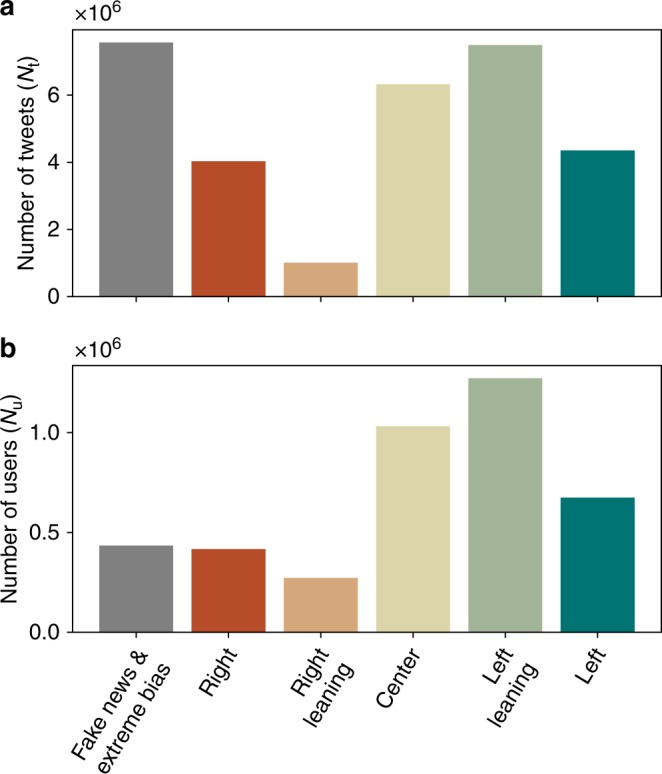
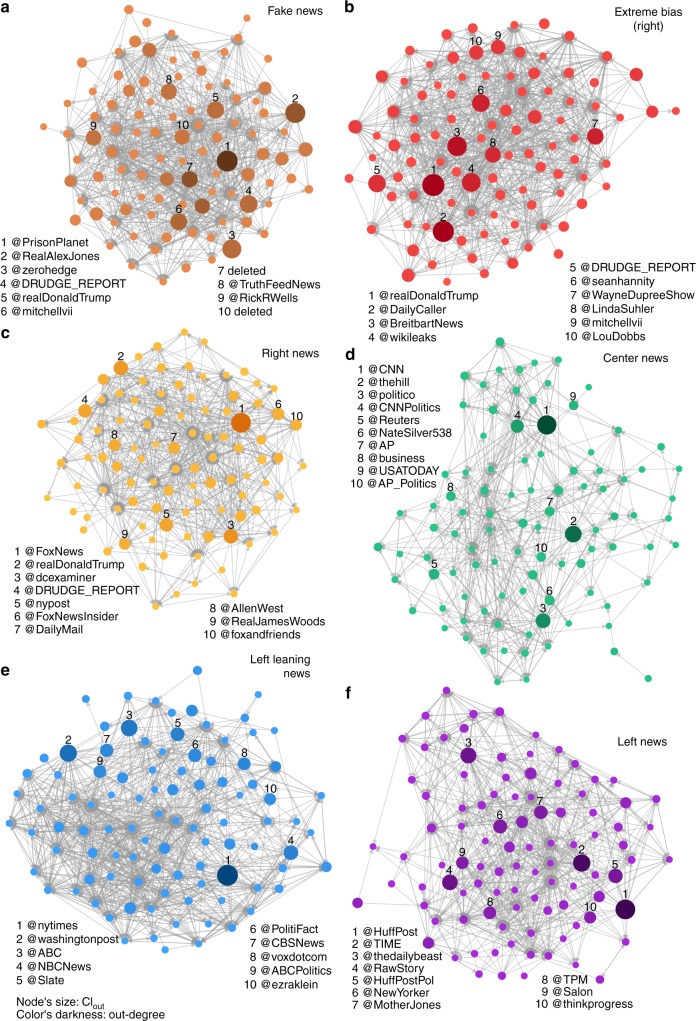
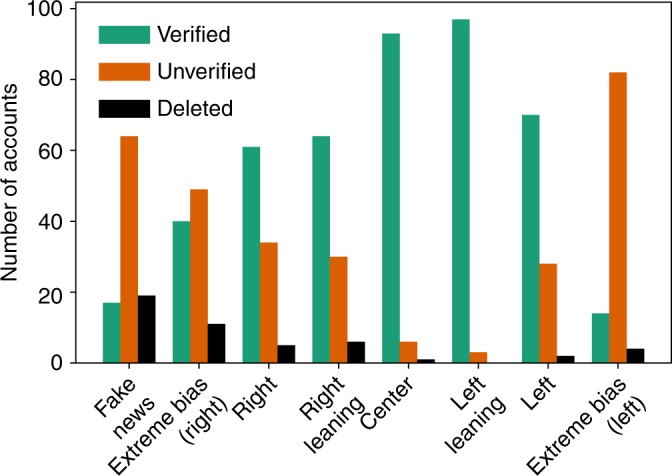
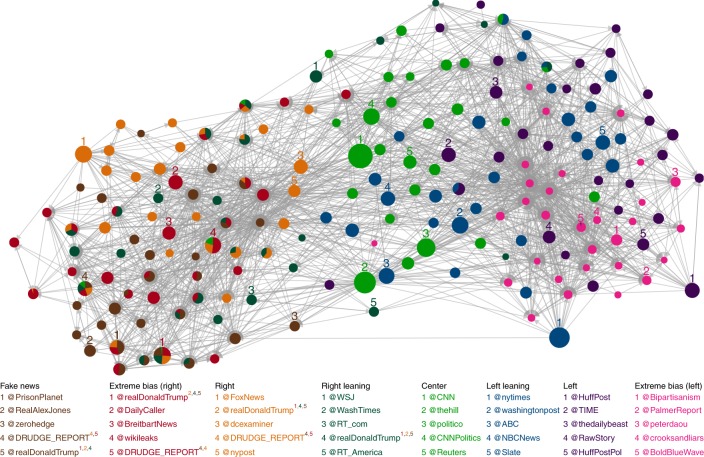
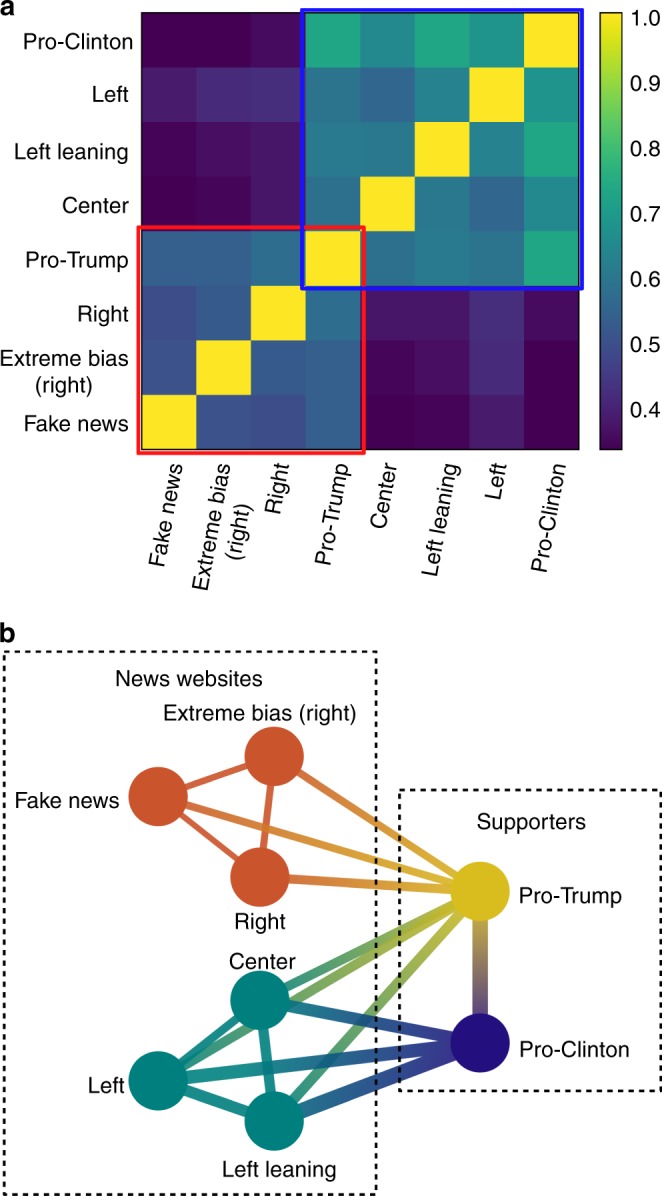
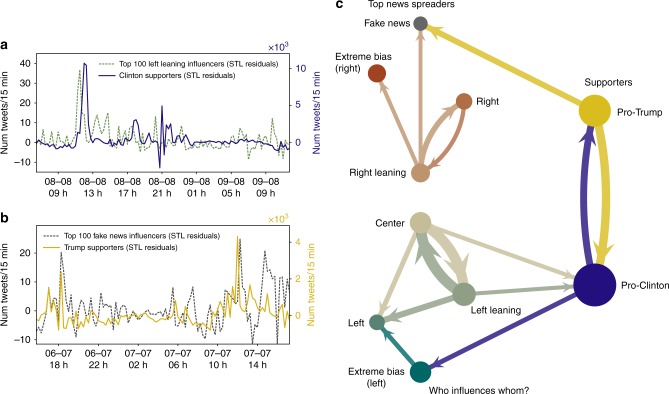
The dynamics and influence of fake news on Twitter during the 2016 US presidential election remains to be clarified. Here, we use a dataset of 171 million tweets in the five months preceding the election day to identify 30 million tweets, from 2.2 million users, which contain a link to news outlets. Based on a classification of news outlets curated by www.opensources.co , we find that 25% of these tweets spread either fake or extremely biased news. We characterize the networks of information flow to find the most influential spreaders of fake and traditional news and use causal modeling to uncover how fake news influenced the presidential election. We find that, while top influencers spreading traditional center and left leaning news largely influence the activity of Clinton supporters, this causality is reversed for the fake news: the activity of Trump supporters influences the dynamics of the top fake news spreaders.
Overview
The claims and statistics of this paper haven’t been checked yet.
Free: it reads the open-access text and checks the first 5 claims that cite a source we can check. Create a free account to check every claim.
Integrity signals
Registry
Cites
Statistics
Figures
Verification
Claims the paper makes
The claims and statistics of this paper haven’t been checked yet.
Free: it reads the open-access text and checks the first 5 claims that cite a source we can check. Create a free account to check every claim.
Claims other papers make about this one
Each is checked against this paper’s own text: does it say what the citing paper says it does?
The cited source says what the claim attributes to it.
In the citing paper
“Real and present concerns exist over the role of mis- and disinformation in public discourse (116–118), the emergence of echo chambers (119) and deepening political polarization (120, 121), in particular around big societal issues like climate change (122).”
From The benefits and dangers of anthropomorphic conversational agents (2025) · cites this paper as [117]
Self-check
Percentages, sums and reported differences re-computed from the paper’s own numbers.
The self-check needs the paper’s full text.
Citations
Cites
1 retracted
Limited individual attention and online virality of low-quality information
Qiu, X., F. M. Oliveira, D., Sahami Shirazi, A., Flammini, A., & Menczer, F. (2017) · Nature Human Behaviour · doi:10.1038/s41562-017-0132 · Cited by 180
RetractedControlling the False Discovery Rate: A Practical and Powerful Approach to Multiple Testing
Benjamini, Y., & Hochberg, Y. (1995) · Journal of the Royal Statistical Society Series B: Statistical Methodology · doi:10.1111/j.2517-6161.1995.tb02031.x · Cited by 109,482
Investigating causal relations by econometric models and cross-spectral methods
Granger, C. W. J. (1969) · Econometrica · doi:10.2307/1912791 · Cited by 22,989
The spread of true and false news online
Vosoughi, S., Roy, D., & Aral, S. (2018) · Science · doi:10.1126/science.aap9559 · Cited by 8,847
Causation, Prediction, and Search
Spirtes, P., Glymour, C., & Scheines, R. (2001) · doi:10.7551/mitpress/1754.001.0001 · Cited by 4,521
A New Status Index Derived from Sociometric Analysis
Katz, L. (1953) · Psychometrika · doi:10.1007/bf02289026 · Cited by 3,866
Exposure to ideologically diverse news and opinion on Facebook
Bakshy, E., Messing, S., & Adamic, L. A. (2015) · Science · doi:10.1126/science.aaa1160 · Cited by 3,245
The spreading of misinformation online
Del Vicario, M., Bessi, A., Zollo, F., Petroni, F., Scala, A., Caldarelli, G., Stanley, H. E., & Quattrociocchi, W. (2016) · Proceedings of the National Academy of Sciences · doi:10.1073/pnas.1517441113 · Cited by 2,407
Confirmation, disconfirmation, and information in hypothesis testing
Klayman, J., & Ha, Y.-W. (1987) · Psychological Review · doi:10.1037/0033-295x.94.2.211 · Cited by 2,094
Ferrara, E., Varol, O., Davis, C., Menczer, F., & Flammini, A. (2016) · Communications of the ACM · doi:10.1145/2818717 · Cited by 1,973
Research works printed but not linked: 2
- Howell L Digital wildfires in a hyperconnected world WEF Rep. 2013 3 15 94
- Cleveland RB Cleveland WS McRae JE Terpenning I STL: a seasonal-trend decomposition procedure based on loess J. Off. Stat. 1990 6 3 73
Cited by
Items 301–400 of 1,000
The Propagation of Misinformation in Social Media: A Cross-platform Analysis
Rogers, R. (2023) · Amsterdam University Press eBooks · doi:10.5117/9789463720762 · Cited by 27
Ru, X., Yang, J., Ge, J., Feng, L., Wang, J., Song, K., Chen, T., Yu, Z., Li, L., & Yao, H. (2023) · Advanced Optical Materials · doi:10.1002/adom.202300606 · Cited by 27
Guzman, E. M., Zhang, Z., & Ahmed, W. (2021) · Information Discovery and Delivery · doi:10.1108/idd-08-2020-0106 · Cited by 27
Peng, J. G., Wu, C., Zhang, X., Ju, W., Wang, X., Lu, L., & Liu, Y. (2021) · Environmental Research Letters · doi:10.1088/1748-9326/ac1a3b · Cited by 27
gDART: Improving rumor verification in social media with Discrete Attention Representations
Roy, S., Bhanu, M., Saxena, S., Dandapat, S. K., & Chandra, J. (2022) · Information Processing & Management · doi:10.1016/j.ipm.2022.102927 · Cited by 26
A linguistic/game-theoretic approach to detection/explanation of propaganda
Barfar, A. (2021) · Expert Systems with Applications · doi:10.1016/j.eswa.2021.116069 · Cited by 26
LFWE: Linguistic Feature Based Word Embedding for Hindi Fake News Detection
Sharma, R., & Arya, A. (2023) · ACM Transactions on Asian and Low-Resource Language Information Processing · doi:10.1145/3589764 · Cited by 26
A calibrated measure to compare fluctuations of different entities across timescales
Chołoniewski, J., Sienkiewicz, J., Dretnik, N., Leban, G., Thelwall, M. A., & Hołyst, J. A. (2020) · Scientific Reports · doi:10.1038/s41598-020-77660-4 · Cited by 26
Wasike, B. (2023) · International journal of communication · Cited by 27
Attraction to politically extreme users on social media
Zimmerman, F., Bailey, D. D., Murić, G., Ferrara, E., Schöne, J. P., Willer, R., Halperin, E., Navajas, J., Gross, J. J., & Goldenberg, A. (2024) · PNAS Nexus · doi:10.1093/pnasnexus/pgae395 · Cited by 25
A real-time hostile activities analyses and detection system
Dadkhah, S., Shoeleh, F., Yadollahi, M. M., Zhang, X., & Ghorbani, A. A. (2021) · Applied Soft Computing · doi:10.1016/j.asoc.2021.107175 · Cited by 25
VaccinEU: COVID-19 Vaccine Conversations on Twitter in French, German and Italian
Giovanni, M. D., Pierri, F., Torres-Lugo, C., & Brambilla, M. (2022) · Proceedings of the International AAAI Conference on Web and Social Media · doi:10.1609/icwsm.v16i1.19374 · Cited by 25
Social Media and Microblogs Credibility: Identification, Theory Driven Framework, and Recommendation
Qureshi, K. A., Malick, R. A. S., & Sabih, M. (2021) · IEEE Access · doi:10.1109/access.2021.3114417 · Cited by 25
Moral responses to the COVID-19 crisis
Navajas, J., Heduan, F. Á., Garbulsky, G., Tagliazucchi, E., Ariely, D., & Sigman, M. (2021) · Royal Society Open Science · doi:10.1098/rsos.210096 · Cited by 25
Diffusion capacity of single and interconnected networks
Schieber, T. A., Carpi, L. C., Pardalos, P. M., Masoller, C., Díaz-Guilera, A., & Ravetti, M. G. (2023) · Nature Communications · doi:10.1038/s41467-023-37323-0 · Cited by 25
Automated Fake News Detection in the Age of Digital Libraries
Mertoğlu, U., & Genç, B. (2020) · Information Technology and Libraries · doi:10.6017/ital.v39i4.12483 · Cited by 25
Variation across Scales: Measurement Fidelity under Twitter Data Sampling
Wu, S., Rizoiu, M.-A., & Xie, L. (2020) · Proceedings of the International AAAI Conference on Web and Social Media · doi:10.1609/icwsm.v14i1.7337 · Cited by 25
Wasike, B. (2022) · Telematics and Informatics Reports · doi:10.1016/j.teler.2023.100090 · Cited by 25
Lasotte, Y., Garba, E. J., Malgwi, Y. M., & Buhari, M. A. (2022) · European Journal of Electrical Engineering and Computer Science · doi:10.24018/ejece.2022.6.2.409 · Cited by 25
Towards a soft three-level voting model (Soft T-LVM) for fake news detection
Jlifi, B., Sakrani, C., & Duvallet, C. (2022) · Journal of Intelligent Information Systems · doi:10.1007/s10844-022-00769-7 · Cited by 26
Early Detection and Prevention of Malicious User Behavior on Twitter Using Deep Learning Techniques
Sánchez, R., Zubiaga, A., & Almeida, A. (2024) · IEEE Transactions on Computational Social Systems · doi:10.1109/tcss.2024.3419171 · Cited by 25
Hong, H., & Oh, H. J. (2020) · Sustainability · doi:10.3390/su12166515 · Cited by 24
Misinformation spreading on correlated multiplex networks
Xian, J., Yang, D., Pan, L., Wang, W., & Wang, Z. (2019) · Chaos An Interdisciplinary Journal of Nonlinear Science · doi:10.1063/1.5121394 · Cited by 24
Fake News Detection using Machine Learning with Feature Selection
Tian, Z., & Baskiyar, S. (2021) · International Conference on Computing, Communication and Security (ICCCS) · doi:10.1109/icccs51487.2021.9776346 · Cited by 24
HeadlineStanceChecker: Exploiting summarization to detect headline disinformation
Sepúlveda-Torres, R., Vicente, M., Saquete, E., Lloret, E., & Palomar, M. (2021) · Journal of Web Semantics · doi:10.1016/j.websem.2021.100660 · Cited by 25
Wang, Y., Zhang, L., Yang, J., Yan, M., & Li, H. (2024) · Chaos Solitons & Fractals · doi:10.1016/j.chaos.2024.114485 · Cited by 24
Av, D., & Dmitriev, V. (2021) · Complexity · doi:10.1155/2021/6612785 · Cited by 25
Modeling and Analysis of Competitive Behavior in Social Systems
Li, S., Jin, L., & Li, S. (2022) · IEEE Transactions on Computational Social Systems · doi:10.1109/tcss.2022.3163799 · Cited by 24
Identification of affective valence of Twitter generated sentiments during the COVID-19 outbreak
Mittal, R., Mittal, A., & Aggarwal, I. (2021) · Social Network Analysis and Mining · doi:10.1007/s13278-021-00828-x · Cited by 23
Hussain, M., & Soomro, T. R. (2023) · Applied Computer Systems · doi:10.2478/acss-2023-0002 · Cited by 23
CausalRD: A Causal View of Rumor Detection via Eliminating Popularity and Conformity Biases
Zhang, W., Zhong, T., Li, C., Zhang, K., & Zhou, F. (2022) · IEEE Conference on Computer Communications (INFOCOM) · doi:10.1109/infocom48880.2022.9796678 · Cited by 23
The Rise and Fall of Fake News sites: A Traffic Analysis
Chalkiadakis, M., Kornilakis, A., Papadopoulos, P., Markatos, E. P., & Kourtellis, N. (2021) · ACM Web Science Conference (WebSci) · doi:10.1145/3447535.3462510 · Cited by 23
Peres, R., Talwar, S., Alter, L., Elhanan, M., & Friedmann, Y. (2020) · Journal of International Marketing · doi:10.1177/1069031x19897893 · Cited by 23
Ultra-high-performance Ag 2 Se-based flexible thermoelectric generator
Zhang, L., Shang, H., Dong, H., Gu, H., & Ding, F. (2025) · Energy & Environmental Science · doi:10.1039/d5ee03009a · Cited by 23
Using Social Media to Detect Fake News Information Related to Product Marketing: The FakeAds Corpus
Alnazzawi, N., Alsaedi, N., Alharbi, F., & Alaswad, N. (2022) · Data · doi:10.3390/data7040044 · Cited by 22
Gura, D. A., Dong, B., Mehiar, D. A. F., & Said, N. A. (2024) · Computers, materials & continua/Computers, materials & continua (Print) · doi:10.32604/cmc.2024.048238 · Cited by 22
Who Shares Fake News? Uncovering Insights from Social Media Users’ Post Histories
Schoenmueller, V., Blanchard, S. J., & Johar, G. V. (2024) · Journal of Marketing Research · doi:10.1177/00222437241281873 · Cited by 22
Estimating the Bot Population on Twitter via Random Walk Based Sampling
Fukuda, M., Nakajima, K., & Shudo, K. (2022) · IEEE Access · doi:10.1109/access.2022.3149887 · Cited by 22
Exploring beyond detection: a review on fake news prevention and mitigation techniques
Sallami, D., & Aïmeur, E. (2024) · Journal of Computational Social Science · doi:10.1007/s42001-024-00351-x · Cited by 22
Modeling information propagation in high-order networks based on explicit–implicit relationship
Nian, F., Shi, Y., & Cao, J. (2021) · Journal of Computational Science · doi:10.1016/j.jocs.2021.101438 · Cited by 22
Pollack, C. C., Emond, J. A., O’Malley, A. J., Byrd, A. I., Green, P., Miller, K., Vosoughi, S., Gilbert‐Diamond, D., & Onega, T. (2022) · Journal of Medical Internet Research · doi:10.2196/36729 · Cited by 23
Bolinches, R. T., & Alonso, N. (2020) · Prisma social · Cited by 24
Pre-Trained Language Model Ensemble for Arabic Fake News Detection
Al-Zahrani, L., & Al-Yahya, M. M. (2024) · Mathematics · doi:10.3390/math12182941 · Cited by 22
Abudu, H., Wesseh, P. K., & Lin, B. (2023) · Journal of Management Science and Engineering · doi:10.1016/j.jmse.2022.12.006 · Cited by 22
Forecasting countries' gross domestic product from patent data
Ye, Y., Xu, S., Mariani, M. S., & Lü, L. (2022) · Chaos Solitons & Fractals · doi:10.1016/j.chaos.2022.112234 · Cited by 22
Health Misinformation on Social Media and its Impact on COVID-19 Vaccine Inoculation in Jordan
Aljalabneh, A. A. (2023) · Communication & Society · doi:10.15581/003.36.1.185-200 · Cited by 21
Schuchard, R., & Crooks, A. T. (2021) · PLoS ONE · doi:10.1371/journal.pone.0244309 · Cited by 21
How Twitter data sampling biases U.S. voter behavior characterizations
Yang, K.-C., Hui, P.-M., & Menczer, F. (2022) · PeerJ Computer Science · doi:10.7717/peerj-cs.1025 · Cited by 22
From Symbols to Embeddings: A Tale of Two Representations in Computational Social Science
Chen, H., Yang, C. H., Zhang, X., Liu, Z., Sun, M., & Jin, J. (2021) · Journal of Social Computing · doi:10.23919/jsc.2021.0011 · Cited by 21
Himelboim, I., Borah, P., Lee, D. K. L., Lee, J. J., Su, Y., Vishnevskaya, A., & Xiao, X. (2023) · New Media & Society · doi:10.1177/14614448221142800 · Cited by 21
Entity-Aware Dual Co-Attention Network for Fake News Detection
Yang, S.-H., Chen, C.-C., Huang, H., & Chen, H. (2023) · Findings of the Association for Computational Linguistics: EACL · doi:10.18653/v1/2023.findings-eacl.7 · Cited by 21
Máquinas de guerra híbrida em plataformas algorítmicas
de Castro, J. C. L. (2020) · E-Compós · doi:10.30962/ec.1929 · Cited by 21
Fake News Detection Related to the COVID-19 in Slovak Language Using Deep Learning Methods
Sarnovský, M., Krešňáková, V., & Ivancová, K. (2022) · Acta Polytechnica Hungarica · doi:10.12700/aph.19.2.2022.2.3 · Cited by 21
Muenster, R. M., Gangi, K., & Margolin, D. (2024) · Journal of Medical Internet Research · doi:10.2196/60283 · Cited by 21
Others Are to Blame: Whom People Consider Responsible for Online Misinformation
Lima, G., Han, J., & Cha, M. (2022) · Proceedings of the ACM on Human-Computer Interaction · doi:10.1145/3512953 · Cited by 21
Survey on Fake News Detection Techniques
Dwivedi, S., & Wankhade, S. B. (2020) · Advances in intelligent systems and computing · doi:10.1007/978-3-030-51859-2_31 · Cited by 21
Sambetbayeva, M., Nekessova, A., Yerimbetova, A., Abdygalym, B., Kaldarova, M., Telman, D., & Смайлов, Н. (2025) · Big Data and Cognitive Computing · doi:10.3390/bdcc9080215 · Cited by 21
Bistable dielectric elastomer actuator with directional motion
Meng, J., Qiu, Y. F., Hou, C., Zhang, Q., Li, Y., & Wang, H. (2021) · Sensors and Actuators A Physical · doi:10.1016/j.sna.2021.112889 · Cited by 21
The Great Data Standoff: Researchers vs. Platforms Under the Digital Services Act
Goanță, C., Zannettou, S., Kaushal, R., van de Kerkhof, J., Bertaglia, T., Annabell, T., Gui, H., Spanakis, G., & Iamnitchi, A. (2026) · Proceedings of the International AAAI Conference on Web and Social Media · doi:10.1609/icwsm.v20i1.42671 · Cited by 21
On the Influence of Twitter Trolls during the 2016 US Presidential ElectionPreprint
Salamanos, N., Jensen, M. J., He, X., Chen, Y., & Sirivianos, M. (2019) · arXiv (Cornell University) · doi:10.48550/arxiv.1910.00531 · Cited by 21
Martin, P. G., Jones, C. P., Cipiccia, S., Batey, D., Hallam, K., Satou, Y., Griffiths, I. J., Rau, C., Richards, D. A., Sueki, K., et al. (2020) · Scientific Reports · doi:10.1038/s41598-020-58545-y · Cited by 21
Haupt, M. R., Chiu, M., Chang, J., Li, Z., Cuomo, R. E., & Mackey, T. K. (2023) · PLoS ONE · doi:10.1371/journal.pone.0295414 · Cited by 20
News and misinformation consumption: A temporal comparison across European countries
Baqir, A., Galeazzi, A., & Zollo, F. (2024) · PLoS ONE · doi:10.1371/journal.pone.0302473 · Cited by 21
Zhang, X., Chen, X., Kourkoumelis, N., Gao, R., Li, G., & Zhu, C. (2021) · JMIR mhealth and uhealth · doi:10.2196/18763 · Cited by 20
Removing AI’s sentiment manipulation of personalized news delivery
Wu, C., Wu, F., Qi, T., Zhang, W.-Q., Xie, X., & Huang, Y. (2022) · Humanities and Social Sciences Communications · doi:10.1057/s41599-022-01473-1 · Cited by 20
Kim, J., Wang, Z., Shi, H., Ling, H.-K., & Evans, J. A. (2025) · Nature Communications · doi:10.1038/s41467-025-55868-0 · Cited by 20
VaccinItaly: monitoring Italian conversations around vaccines on Twitter and FacebookPreprint
Pierri, F., Tocchetti, A., Corti, L., Giovanni, M. D., Pavanetto, S., Brambilla, M., & Ceri, S. (2021) · arXiv (Cornell University) · doi:10.48550/arxiv.2101.03757 · Cited by 20
Detecting Social Media Manipulation in Low-Resource Languages
Haider, S., Luceri, L., Deb, A., Badawy, A., Peng, N., & Ferrara, E. (2023) · International World Wide Web Conference (WWW) · doi:10.1145/3543873.3587615 · Cited by 20
Fairness-aware fake news mitigation using counter information propagation
Saxena, A., Bierbooms, C. G., & Pechenizkiy, M. (2023) · Applied Intelligence · doi:10.1007/s10489-023-04928-3 · Cited by 20
Attention to misleading and contentious tweets in the case of Hurricane Harvey
Cheong, S., & Babcock, M. (2020) · Natural Hazards · doi:10.1007/s11069-020-04430-w · Cited by 21
The impact of online misinformation on U.S. COVID-19 vaccinationsPreprint
Pierri, F., Perry, B. L., DeVerna, M., Yang, K.-C., Flammini, A., Menczer, F., & Bryden, J. (2021) · arXiv (Cornell University) · Cited by 20
Agarwal, A., & Toshniwal, D. (2020) · Scientific Reports · doi:10.1038/s41598-020-59086-0 · Cited by 20
A Self-Attention Mechanism-Based Model for Early Detection of Fake News
Jamshidi, B., Hakak, S., & Lu, R. (2023) · IEEE Transactions on Computational Social Systems · doi:10.1109/tcss.2023.3322160 · Cited by 20
Political Fact-Checking Efforts are Constrained by Deficiencies in Coverage, Speed, and Reach
Wack, M., Duskin, K., & Hodel, D. (2026) · Political Communication · doi:10.1080/10584609.2026.2704896 · Cited by 20
A deterministic model of the spread of scam rumor and its numerical simulations
Nwaibeh, E. A., & Chikwendu, C. R. (2022) · Mathematics and Computers in Simulation · doi:10.1016/j.matcom.2022.12.024 · Cited by 20
A Privacy-Preserving and Transparent Identity Management Scheme for Vehicular Social Networking
Khan, S., Luo, F., Zhang, Z., Rahim, M. A., Khan, S. A., Qadri, S. F., & Wu, K. (2022) · IEEE Transactions on Vehicular Technology · doi:10.1109/tvt.2022.3190908 · Cited by 20
Credulous Users and Fake News: a Real Case Study on the Propagation in Twitter
Balestrucci, A., & Nicola, R. D. (2020) · IEEE Conference on Evolving and Adaptive Intelligent Systems (EAIS) · doi:10.1109/eais48028.2020.9122764 · Cited by 21
Network Topology Inference Based on Timing Meta-Data
Du, W., Tan, T., Zhang, H., Cao, X., Yan, G., & Simeone, O. (2023) · IEEE Transactions on Communications · doi:10.1109/tcomm.2023.3255252 · Cited by 20
Physical Activity Misinformation on Social Media: Systematic Review
Thomas, D. D., Xu, L., Yu, B., Alanis, O., Adamek, J. F., Canton, I., Lin, X., Luo, Y., & Mullen, S. P. (2025) · JMIR Infodemiology · doi:10.2196/62760 · Cited by 22
Ahmed, S., Khan, D. M., Sadiq, S., Umer, M., Shahzad, F., Mahmood, K., Mohsen, H., & Ashraf, I. (2023) · PeerJ Computer Science · doi:10.7717/peerj-cs.1190 · Cited by 19
The nature, cause and consequence of COVID-19 panic among social media users in India
Bhattacharya, C., Chowdhury, D., Ahmed, N., Özgür, S., Bhattacharya, B., Mridha, S. K., & Bhattacharyya, M. (2021) · Social Network Analysis and Mining · doi:10.1007/s13278-021-00750-2 · Cited by 19
Unveiling the hidden agenda: Biases in news reporting and consumption
Galeazzi, A., Peruzzi, A., Brugnoli, E., Delmastro, M., & Zollo, F. (2024) · PNAS Nexus · doi:10.1093/pnasnexus/pgae474 · Cited by 20
Quantifying the Echo Chamber Effect: An Embedding Distance-based Approach
Alatawi, F., Sheth, P., & Liu, H. (2023) · IEEE/ACM International Conference on Advances in Social Networks Analysis and Mining (ASONAM) · doi:10.1145/3625007.3627731 · Cited by 19
Antagonistic bias: developing a typology of agonistic talk on Twitter using gun control networks
Marichal, J., & Neve, R. (2019) · Online Information Review · doi:10.1108/oir-11-2018-0338 · Cited by 19
Raising the Flag: Monitoring User Perceived Disinformation on Reddit
Achimescu, V., & Chachev, P. D. (2020) · Information · doi:10.3390/info12010004 · Cited by 19
The Impact of Social Media on Political Polarization
Otieno, P. (2024) · Journal of Communication · doi:10.47941/jcomm.1686 · Cited by 19
Mitigation of Diachronic Bias in Fake News Detection Dataset
Murayama, T., Wakamiya, S., & Aramaki, E. (2021) · Workshop on Noisy User-generated Text (W-NUT) · doi:10.18653/v1/2021.wnut-1.21 · Cited by 19
Safarnejad, L., Xu, Q., Ge, Y., & Chen, S. (2021) · IEEE Internet Computing · doi:10.1109/mic.2021.3063257 · Cited by 19
Pierri, F., Liu, G., & Ceri, S. (2023) · ACM International Conference on Information and Knowledge Management (CIKM) · doi:10.1145/3583780.3615121 · Cited by 19
On the Influence of Twitter Trolls during the 2016 US Presidential ElectionPreprint
Salamanos, N., Jensen, M. J., He, X., Chen, Y., & Sirivianos, M. (2019) · arXiv (Cornell University) · doi:10.5281/zenodo.3540801 · Cited by 19
Spatio-Temporal Machine Learning Analysis of Social Media Data and Refugee Movement Statistics
Havas, C. R., Wendlinger, L., Stier, J., Julka, S., Krieger, V., Ferner, C., Petutschnig, A., Granitzer, M., Wegenkittl, S., & Resch, B. (2021) · ISPRS International Journal of Geo-Information · doi:10.3390/ijgi10080498 · Cited by 19
Kloo, I., Cruickshank, I. J., & Carley, K. M. (2024) · Proceedings of the International AAAI Conference on Web and Social Media · doi:10.1609/icwsm.v18i1.31356 · Cited by 19
Dense and influential core promotion of daily viral information spread in political echo chambers
Asatani, K., Yamano, H., Sakaki, T., & Sakata, I. (2021) · Scientific Reports · doi:10.1038/s41598-021-86750-w · Cited by 18
A Multi-Platform Collection of Social Media Posts about the 2022 U.S. Midterm Elections
Aiyappa, R., DeVerna, M., Pote, M., Truong, B. T., Zhao, W., Axelrod, D., Pessianzadeh, A., Kachwala, Z., Kim, M., Seckin, O. C., et al. (2023) · Proceedings of the International AAAI Conference on Web and Social Media · doi:10.1609/icwsm.v17i1.22205 · Cited by 18
Underlying socio-political processes behind the 2016 US election
Bryden, J., & Silverman, E. (2019) · PLoS ONE · doi:10.1371/journal.pone.0214854 · Cited by 18
A Framework to Understand Attitudes towards Immigration through Twitter
Freire-Vidal, Y., Graells-Garrido, E., & Rowe, F. (2021) · Applied Sciences · doi:10.3390/app11209689 · Cited by 18
MANIFESTO: a huMAN-centric explaInable approach for FakE news spreaders deTectiOn
Lampridis, O., Karanatsiou, D., & Vakali, A. I. (2022) · Computing · doi:10.1007/s00607-021-01013-w · Cited by 18
Fake News Detection: An Application of Quantum K-Nearest Neighbors
Tian, Z., & Baskiyar, S. (2021) · IEEE Symposium Series on Computational Intelligence (SSCI) · doi:10.1109/ssci50451.2021.9659944 · Cited by 18
Problem Understanding of Fake News Detection from a Data Mining Perspective
Chua, H. N., Khan, Q., Jasser, M. B., & Wong, R. T. K. (2023) · IEEE International Conference on Control System, Computing and Engineering · doi:10.1109/iccsce58721.2023.10237152 · Cited by 18
Metadata
- Authors
- Bovet, A., & Makse, H. A.
- Affiliations
- City College of New York (US)
- Corresponding author
- Makse, Hernán A.
- Venue
- Nature Communications
- Published
- 2019-01-02
- Volume
- 10
- Issue
- 1
- Pages
- 7-7
- ISSN
- 2041-1723 (ISSN-L)
- PMC
- PMC6315042
- OpenAlex
- W2792307011
- Cited by
- 701
- References
- 40
- Citations by year
- 2026: 38 · 2025: 106 · 2024: 114 · 2023: 105 · 2022: 109 · 2021: 114 · 2020: 86 · 2019: 28
- FWCI
- 130.25
- Type
- journal article
- Language
- en
- Open access
- gold
- doi.org
- Licence
- cc-by
- creativecommons.org/licenses/by/4.0 (tdm)
- creativecommons.org/licenses/by/4.0 (vor)
- Locations
- Nature Communications (publishedVersion, cc-by)
- Europe PMC (PubMed Central) (publishedVersion, other-oa)
- PubMed Central (publishedVersion, cc-by)
- PubMed (publishedVersion)
- Repository of the University of Namur (publishedVersion, cc-by)
- arXiv (Cornell University) (submittedVersion)
- RePEc: Research Papers in Economics (submittedVersion)
- DOAJ (DOAJ: Directory of Open Access Journals) (submittedVersion)
- DOAJ (DOAJ: Directory of Open Access Journals) (submittedVersion, cc-by-sa)
- arXiv (Cornell University) (cc-by)
- Funders
- National Science Foundation
- Schweizerischer Nationalfonds zur Förderung der Wissenschaftlichen Forschung (165158)
- Topics
- Social Sciences › Sociology and Political Science › Misinformation and Its Impacts
- Physical Sciences › Physics and Astronomy › Statistical and Nonlinear Physics › Complex Network Analysis Techniques
- Social Sciences › Communication › Social Media and Politics
- Keywords
- fake news, 2016 US presidential election, Twitter, information dissemination, influential spreaders, election influence, Trump supporters, social media misinformation
About these checks
Registry, retraction, Cites and statistics results are computed, not judged, with one exception: a printed reference that no index lists is read once by a model before it counts as a citation error. Claims are extracted by a model and kept only when their quote appears verbatim in the text; each cited source is then checked, with a model’s help, for whether it says what the claim relies on. Those verdicts can be wrong — read the claim’s quote and the cited source before relying on one.
Statistics and arithmetic are recomputed, not judged.
Confidence bands are shown only for fields calibrated on our annotated test set. None is calibrated yet, so no band is shown.
What counts as a claim ›How we measure confidence ›How we check this ›
Are you an author, or do you see a problem with this page? Request a review
Data sources
Bibliographic data: Semantic Scholar, OpenAlex, Crossref.
Contains information from the Semantic Scholar Academic Graph Datasets, made available under the ODC Attribution License (ODC-BY 1.0).
Semantic Scholar’s data is described in: Kinney, R., et al. (2023). The Semantic Scholar Open Data Platform. arXiv:2301.10140.
