

Genome-wide association analyses of chronotype in 697,828 individuals provides insights into circadian rhythms
Open accessThe DOI matches its Crossref record; 106 of the 106 references it cites were found in a registry or an index.
Abstract
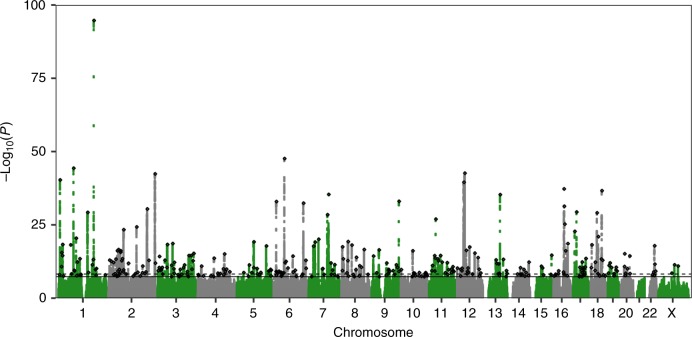
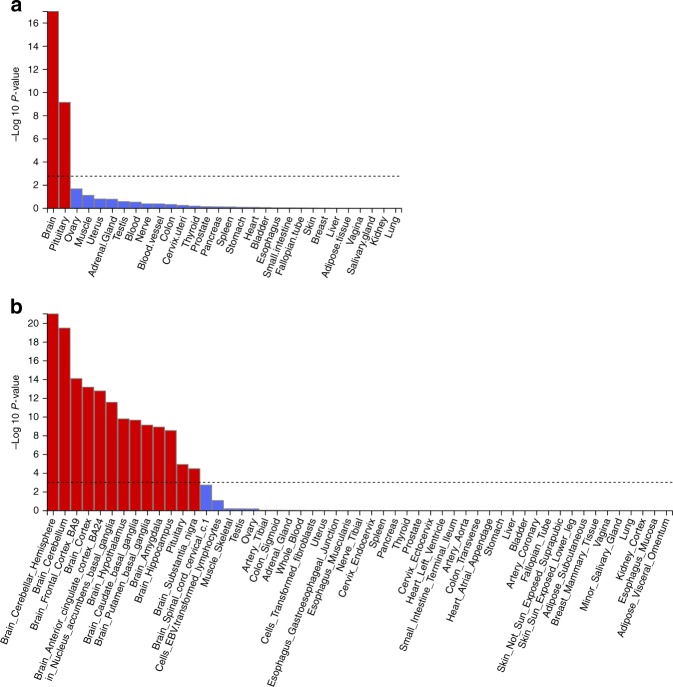
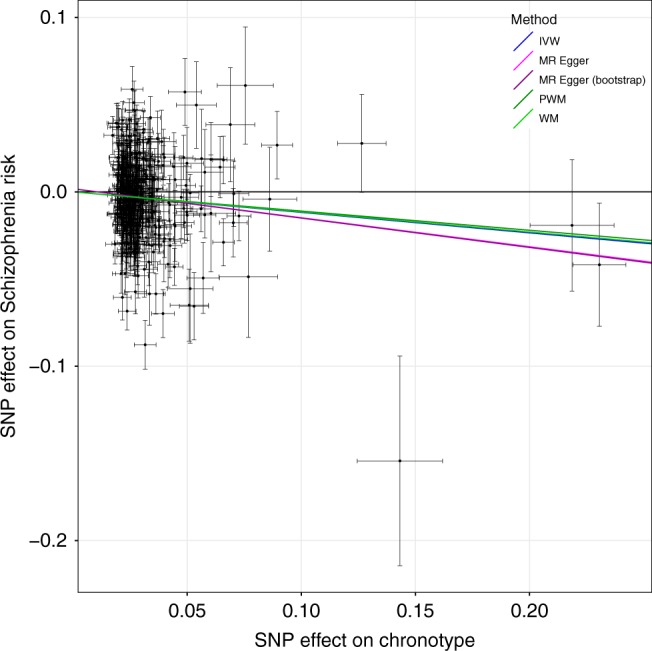
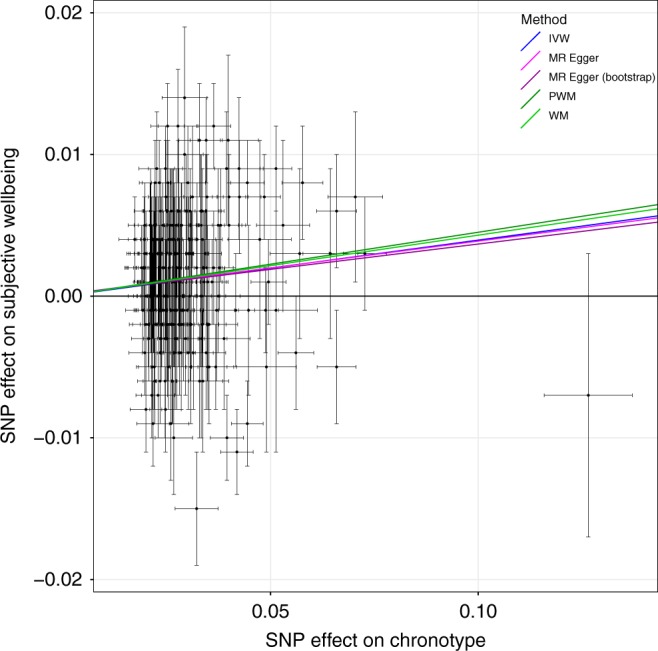
Being a morning person is a behavioural indicator of a person’s underlying circadian rhythm. Using genome-wide data from 697,828 UK Biobank and 23andMe participants we increase the number of genetic loci associated with being a morning person from 24 to 351. Using data from 85,760 individuals with activity-monitor derived measures of sleep timing we find that the chronotype loci associate with sleep timing: the mean sleep timing of the 5% of individuals carrying the most morningness alleles is 25 min earlier than the 5% carrying the fewest. The loci are enriched for genes involved in circadian regulation, cAMP, glutamate and insulin signalling pathways, and those expressed in the retina, hindbrain, hypothalamus, and pituitary. Using Mendelian Randomisation, we show that being a morning person is causally associated with better mental health but does not affect BMI or risk of Type 2 diabetes. This study offers insights into circadian biology and its links to disease in humans.
Overview
The claims and statistics of this paper haven’t been checked yet.
Free: it reads the open-access text and checks the first 5 claims that cite a source we can check. Create a free account to check every claim.
Integrity signals
Registry
Cites
Statistics
Figures


Verification
Claims the paper makes
The claims and statistics of this paper haven’t been checked yet.
Free: it reads the open-access text and checks the first 5 claims that cite a source we can check. Create a free account to check every claim.
Claims other papers make about this one
Each is checked against this paper’s own text: does it say what the citing paper says it does?
The source backs part of the claim, not all of it — or backs it for a different population, condition or comparison.
In the citing paper
“the chronotype seems to be dependent on environmental factors, which again is affected by mechanisms of innate homeostasis of sleep and circadian rhythms, as shown by a genome-wide association analysis, identifying genomic loci associated to chronotype (156).”
From Meal timing and its role in obesity and associated diseases (2024) · cites this paper as [156]
Experimental — accuracy not yet measuredIn the citing paper
“In several genome-wide association studies (GWASs) of depression-related traits, TNKS was found to be associated with (p = 7.68 × 10⁻¹⁰)38, bipolar disorder (p = 3 × 10⁻⁶)39, and positive affect (p = 0.0003)40.”
From Methylome-wide change associated with response to electroconvulsive therapy in depressed patients (2021) · cites this paper as [38]
Self-check
Percentages, sums and reported differences re-computed from the paper’s own numbers.
The self-check needs the paper’s full text.
Citations
Cites
Sudlow, C., Gallacher, J., Allen, N., Beral, V., Burton, P., Danesh, J., Downey, P., Elliott, P., Green, J., Landray, M., et al. (2015) · PLOS Medicine · doi:10.1371/journal.pmed.1001779 · Cited by 12,728
Bowden, J., Davey Smith, G., Haycock, P. C., & Burgess, S. (2016) · Genetic Epidemiology · doi:10.1002/gepi.21965 · Cited by 8,922
Self-citationThe MR-Base platform supports systematic causal inference across the human phenome
Hemani, G., Zheng, J., Elsworth, B., Wade, K. H., Haberland, V., Baird, D., Laurin, C., Burgess, S., Bowden, J., Langdon, R., et al. (2018) · eLife · doi:10.7554/elife.34408 · Cited by 7,959
Self-citationGenetics of Food Intake Self-Regulation in Childhood: Literature Review and Research Opportunities
Faith, M. S., Carnell, S., & Kral, T. V. E. (2013) · Human Heredity · doi:10.1159/000353879 · Cited by 7,601
Biological insights from 108 schizophrenia-associated genetic loci
Schizophrenia Working Group of the Psychiatric Genomics Consortium (2014) · Nature · doi:10.1038/nature13595 · Cited by 7,577
LD Score regression distinguishes confounding from polygenicity in genome-wide association studies
Schizophrenia Working Group of the Psychiatric Genomics Consortium, Bulik-Sullivan, B. K., Loh, P.-R., Finucane, H. K., Ripke, S., Yang, J., Patterson, N., Daly, M. J., Price, A. L., & Neale, B. M. (2015) · Nature Genetics · doi:10.1038/ng.3211 · Cited by 5,559
METAL: fast and efficient meta-analysis of genomewide association scans
Willer, C. J., Li, Y., & Abecasis, G. R. (2010) · Bioinformatics · doi:10.1093/bioinformatics/btq340 · Cited by 5,205
A self-assessment questionnaire to determine morningness- eveningness in human circadian rhythms
Home, J. K. (1976) · Medical Entomology and Zoology · Cited by 4,783
Mendelian randomization: Using genes as instruments for making causal inferences in epidemiology
Lawlor, D. A., Harbord, R. M., Sterne, J. A. C., Timpson, N., & Davey Smith, G. (2008) · Statistics in Medicine · doi:10.1002/sim.3034 · Cited by 4,618
Self-citationGenetic studies of body mass index yield new insights for obesity biology
Study, T. L. C., Locke, A. E., The ADIPOGen Consortium, The AGEN-BMI Working Group, The CARDIOGRAMplusC4D Consortium, The CKDGen Consortium, The, G. L. G. C., The, I. C. B. P., The MAGIC Investigators, The MuTHER Consortium, et al. (2015) · Nature · doi:10.1038/nature14177 · Cited by 4,534
Self-citation
Cited by
Items 501–600 of 758
Fink, A. M., & Kerulis, M. (2026) · Brain Sciences · doi:10.3390/brainsci16020212 · Cited by 4
“…because genetic and behavioral characteristics affect chronotype preferences and health in young adults [55], research into the loci associated with circadian regulation could lead to discoveries that advance knowledge about mental health and performance, metabolism, and future disease risk [56].”
Sex and age modulate the relationship between melanopsin-dependent light sensitivity and chronotype
van der Zwet, G., Bor, Z., Bos, R., van Dorp, R., Pape, L. M., van der Zwet, L. C. A., van Dijk, E. H. C., van de Stadt, H., McGlashan, E. M., Michel, S. H., et al. (2026) · SLEEP · doi:10.1093/sleep/zsag057 · Cited by 2
Sleep and circadian health in the UK Biobank: report on the 2023 sleep questionnaire enhancement
Tse, K. Y. K., Yuan, H., Zisou, C., Holliday, J., Espie, C. A., Dijk, D., Burns, A. C., Doherty, A., Lane, J. M., Ollila, H. M., et al. (2026) · SLEEP · doi:10.1093/sleep/zsag068 · Cited by 2
Self-citationChan, Z. M., Patel, P. P., Levitsky, G. M., McClung, C. A., Nouraie, S. M., & Kelly, N. J. (2026) · The Journal of Physiology · doi:10.1113/jp290337 · Cited by 2
“Our study replicated associations with the RGS16 - RNASEL genomic locus, which has been most strongly and consistently associated with chronotype (Jones et al., 2019).”
InfluentialGenetic architecture of sleep in a genome wide association study of device measured sleep traits
Portas, L., Yuan, H., Cai, L., Smith-Byrne, K., van Duijvenboden, S., Kyle, S. D., Ray, D. W., Howson, J. M. M., & Doherty, A. (2026) · Nature Communications · doi:10.1038/s41467-026-71252-y · Cited by 2
Self-citationŻebrowska, M., Wielscher, M., Zhang, J., Saksvik‐Lehouillier, I., Milia, L. V. D., Burns, A. C., Valliere, J., Vincenzi, L., Redline, S. S., Okereke, O. I., et al. (2026) · EBioMedicine · doi:10.1016/j.ebiom.2026.106380 · Cited by 2
Self-citationPolygenic impact of morningness on the overnight dynamics of sleep spindle amplitude
Pesonen, A., Merikanto, I., Halonen, R., Ujma, P. P., Makkonen, T., Räikkönen, K., Lahti, J. M. T., & Kuula, L. (2020) · Genes Brain & Behavior · doi:10.1111/gbb.12641 · Cited by 2
“Recent genome-wide studies (GWAS) have identified a set of genetic loci associated with the circadian preference,(4-6) and provided evidence that morningness is genetically negatively correlated with both depression and schizophrenia, and positively correlated with well-being.(7) The same study did not find any associ…”
BackgroundPinpointing the genetic and cellular links between sleep and metabolism
Harbison, S. T. (2022) · SLEEP · doi:10.1093/sleep/zsac128 · Cited by 2
Predictors of sleepiness in obstructive sleep-apnea syndrome: a cross-sectional study
Suliman, L. A. E.-M., Ali, R. E., Shehata, M. E. D. A., & Mohammed, E.-S. S. (2022) · Egyptian Journal of Chest Diseases and Tuberculosis · doi:10.4103/ecdt.ecdt_81_21 · Cited by 2
Dashti, H. S., Alimenti, K., Levy, D. E., Hivert, M., McCurley, J. L., Saxena, R., & Thorndike, A. N. (2023) · Current Developments in Nutrition · doi:10.1016/j.cdnut.2023.100048 · Cited by 2
Self-citationWang, Y., Luo, Y.-F., Mhalgi, A., Ren, W., & Wu, L. (2023) · Healthcare · doi:10.3390/healthcare11070926 · Cited by 2
Ren, Z., Long, J., Deng, W., Jing, Y., Qiu, J., Ren, W., & Liu, D. (2024) · Nature and Science of Sleep · doi:10.2147/nss.s442231 · Cited by 3
“21 For further details, please refer to Supplementary Table 1.”
BackgroundCircadian rhythm and host genetics
Odriozola, A., González, A., Álvarez‐Herms, J., & Corbi, F. (2024) · Advances in genetics · doi:10.1016/bs.adgen.2024.02.001 · Cited by 2
AI for precision medicine must keep non-random complexity in mind to support equity in outcomes
Smarr, B. L. (2024) · IEEE International Conference on eScience · doi:10.1109/e-science62913.2024.10678664 · Cited by 2
“This has already happened in the case of “chronotypes” emerging as a way to classify individuals by differences in their circadian rhythms [26].”
BackgroundLi, Y., Sun, F., Ji, C., Yang, H., Ma, Z., Zhao, Y., Zhao, Z., & Xia, Y. (2025) · American Journal of Hematology · doi:10.1002/ajh.27620 · Cited by 2
“…five self-reported sleep traits, including sleep duration (24-h sleep duration, long sleep duration, and short sleep duration), insomnia, daytime sleepiness, snoring, and chronotype, and VTE passing the GWAS multiple testing p value threshold ( p 5 × 10 − 8 ) in UKB, 23andMe, and FinnGen [22–26].”
Detaching From the Nine‐to‐Five: How Retirement and Genetics Are Related to Chronotype
Landvreugd, A., Gordijn, M. C. M., Nivard, M. G., & Bartels, M. (2025) · Journal of Sleep Research · doi:10.1111/jsr.70026 · Cited by 2
“Jones et al. (2019) performed a Genome-Wide Association Study (GWAS) on morningness and identified 351 genetic markers associated with morningness.”
Hickman, R., Jie, D. L., Shergill, S. S., Laborde, S., & D’Oliveira, T. C. (2025) · Chronobiology International · doi:10.1080/07420528.2025.2471887 · Cited by 2
“Chronotype refers to an individual’s preference in performing activities at certain times including sleep-wake rhythmicity, also known as morningness (morning “lark”) or eveningness (evening “night owl”) types (Jones et al. 2019; Melo et al. 2017; Thun et al. 2012; Walsh et al. 2022).”
Sleep factors and risk of thyroid cancer, nodules and dysfunction: Mendelian randomization study
Fan, Y., Zheng, X., Xu, T., Li, P., Zhang, Y., Ran, Y., & Wei, T. (2025) · Gland Surgery · doi:10.21037/gs-24-435 · Cited by 2
“Chronotype, often denoted as circadian preference, describes an individual’s tendency towards earlier or later sleep cycles and is a physical and behavioral manifestation of the coupling between internal circadian cycles and the need for sleep, driven by sleep homeostasis (26).”
Associations Between Chronotype, Genetic Susceptibility and Risk of Colorectal Cancer in UK Biobank
Xie, H., Xi, Z., Wen, S., Zhang, W., Liu, Y., Zheng, J., Feng, H., Wu, D., & Li, Y. (2025) · Journal of Epidemiology and Global Health · doi:10.1007/s44197-025-00399-6 · Cited by 2
“First, We identified 316 SNPs associated with chronotype from the study by Yuan et al. (PMID: 36,093,575), which were reported in their supplementary materials and had reached genome-wide significance (P < 5 × 10 ⁻⁸ ) [9, 21].”
Jiang, C., Wang, Y., Tian, C., Lin, Z., & Mu, Y. (2025) · Medicine · doi:10.1097/md.0000000000042600 · Cited by 2
“[46] Typically, the endogenous sleep–wake cycle remains synchronized with fluctuations in the circadian rhythm.”
CACNA1D is a circadian gene and causes familial advanced sleep phase
Webb, J. M., Abderemane-Ali, F., Ashbrook, L. H., Ma, M., Nibber, N., Zou, X., Yamazaki, M., Wohler, E., Sobreira, N. L. D. M., Minor, D. L., et al. (2025) · Proceedings of the National Academy of Sciences · doi:10.1073/pnas.2424387122 · Cited by 2
“Calcium itself is vital for a wide array of cellular processes ( 40 ).”
Morning clock gene expression in young adults of early and late chronotypes
Krueger, B., Rajcsanyi, L. S., Hundertmark, K., Stutz, B., Hinney, A., & Buyken, A. E. (2025) · Scientific Reports · doi:10.1038/s41598-025-12423-7 · Cited by 2
Muinais-DNA: Avain menneisyyteen
Nordfors, U., & Meriluoto, M. (2025) · doi:10.21435/tl.298 · Cited by 2
Delayed Circadian Rhythms and Pars Tuberalis Dysfunction in Mood Disorders
Kripke, D. F. (2020) · Chronobiology in Medicine · doi:10.33069/cim.2020.0001 · Cited by 3
“In a broader sense, massive genome-wide association studies and Mendelian randomization analyses confirmed the causal role of genetic polymorphisms in circadian rhythm characteristics and resultant mood variations [5].”
BackgroundNeurobioloy of sleep and circadian disorders
Kornum, B. R., & Mignot, E. J.-M. (2022) · Elsevier eBooks · doi:10.1016/b978-0-323-85654-6.00020-4 · Cited by 2
Imamura, K., Bota, A., Shirafuji, T., & Takumi, T. (2023) · Neuroscience Research · doi:10.1016/j.neures.2023.11.004 · Cited by 3
“Consistent with this, in the clinical field, many cross-sectional studies showed that individuals with morning chro-notype have a lower risk of developing depression (Lee et al., 2016; Jones et al., 2019; Bauducco et al., 2020).”
Gachon, F. (2024) · European Journal of Neuroscience · doi:10.1111/ejn.16335 · Cited by 2
“This concept gained further support from genome-wide association studies, which linked several genetic variants, including those in circadian clock genes, with chronotype (Jones et al., 2019; Lane et al., 2016).”
A pleiotropy scan to discover new susceptibility loci for pancreatic ductal adenocarcinoma
Giaccherini, M., Rende, M., Gentiluomo, M., Corradi, C., Archibugi, L., Ermini, S., Maiello, E., Morelli, L., van Eijck, C. H. J., Cavestro, G. M., et al. (2024) · Mutagenesis · doi:10.1093/mutage/geae012 · Cited by 2
Williams, J. A., Russ, D., Bravo-Merodio, L., Gkoutos, G. V., Bellgrove, M. A., Bagshaw, A. P., & Chechlacz, M. (2023) · bioRxiv (Cold Spring Harbor Laboratory) · doi:10.1101/2023.08.31.555801 · Cited by 2
Chronotype and Performance in Students
Shimura, A. (2020) · Elsevier eBooks · doi:10.1016/b978-0-12-816658-1.00002-8 · Cited by 1
Awakening new sleep biology with machine learning
Hazuga, M. A., & Grant, S. F. A. (2022) · SLEEP · doi:10.1093/sleep/zsac284 · Cited by 1
Zhong, W., Li, W., Li, Z., Wang, Q., & Zhang, W. (2024) · PubMed Central · doi:10.12122/j.issn.1673-4254.2024.08.21 · Cited by 1
Validation and TaqMan Conversion of a Molecular Chronotype Assessment Approach
Biscontin, A., Russo, A., Marnetto, D., Pagani, L., Costa, R., & Montagnese, S. (2024) · Journal of Biological Rhythms · doi:10.1177/07487304241298404 · Cited by 2
“…instances, this has resulted in genome-wide association studies (GWAS), which have identified several gene loci associated with chrono-type, using a morningness-eveningness binary approach (Burns et al., 2023; Hu et al., 2016; Jones et al., 2016, 2019; Lane et al., 2016; Maukonen et al., 2020).”
Sleep characteristics in association with risk of sporadic anovulation among eumenorrheic women
Freeman, J. R., Whitcomb, B. W., Bertone‐Johnson, E. R., O'Brien, L. M., Dunietz, G. L., Purdue‐Smithe, A., Kim, K., Silver, R. M., Schisterman, E. F., & Mumford, S. L. (2025) · Chronobiology International · doi:10.1080/07420528.2025.2481165 · Cited by 2
“…vary in clock genes and later chronotypes have been associated with longer menstrual cycles, variation in clock genes or their expression may explain why some chronotypes have delayed or disrupted ovulatory function (Jones et al. 2019; Kalmbach et al. 2017; Michels et al. 2020; Toffol et al. 2013).”
Circadian Rhythm Desynchrony and Its Correlation with Insulin Resistance in Type 2 Diabetes
Samaddar, R., Rani, V., Yadav, H., & Mishra, N. (2025) · Indian Journal of Clinical Biochemistry · doi:10.1007/s12291-025-01318-z · Cited by 1
de Lau, M., & Foushée, R. D. (2025) · International Journal of Psychological Studies · doi:10.5539/ijps.v17n2p39 · Cited by 1
“…individual, has been well researched in a variety of different academic fields, including medicine and psychiatry (Montaruli et al., 2021; Zou et al., 2022), genetics (Jones et al., 2019; Kalmbach et al., 2017), and psychology (Lipnevich et al., 2017; Randler et al., 2017; Soehner et al., 2007).”
Bidirectional Mendelian randomization analysis of inflammatory factors and sleep related traits
Liao, Z., Guo, S. J., Wang, K., Xu, Y., Zheng, R., Yu, B., Zhao, G., Zhang, R., Kang, X., & Ai, S. (2025) · Brain Behavior & Immunity - Health · doi:10.1016/j.bbih.2025.101053 · Cited by 2
“While chronotype is typically treated as a continuous variable, a binary phenotype was also defined in this GWAS study to provide interpretable odds ratios (ORs) using the same data field (Jones et al., 2019).”
Cao, S., Xu, H., Tang, Y., Zhi-yun, X. U., & Yu, S. (2025) · Scientific Reports · doi:10.1038/s41598-025-10929-8 · Cited by 1
“GWAS data for chronotype were sourced from a published study 15 .”
Xu, W., Tian, E., Wang, J., Yu, X., Guo, Z., Chen, J., & Zhang, S. (2025) · Current Molecular Medicine · doi:10.2174/0115665240358943250612115854 · Cited by 1
Causal association between sleep traits and diabetic nephropathy
Ji, C., & Zhang, C. (2025) · Archives of Medical Science · doi:10.5114/aoms/208530 · Cited by 1
“The dataset The chronotype dataset was from a published study [10].”
McElroy, T., Dickinson, D. L., & Vale, S. (2025) · Chronobiology International · doi:10.1080/07420528.2025.2579143 · Cited by 1
“Recent research has shed light on the genetic basis of chronotype, with Jones et al. (2019) identifying 351 genetic loci associated with circadian preferences.”
InfluentialLi, Y., Wang, Y., Zhang, Y., Wang, W., & Hong-mei, A. (2025) · Clinical Cosmetic and Investigational Dermatology · doi:10.2147/ccid.s546362 · Cited by 1
Exploring the causal association between 6 sleep traits and Parkinson disease
Zhang, X., Zhang, M., Deng, Y., & Zhang, L. (2025) · Medicine · doi:10.1097/md.0000000000045693 · Cited by 1
“[53] 54–56] For traits displaying broad CIs, it is imperative to regard our findings as hypothesis-generating, as opposed to conclusive.”
Ai, S., Zhang, H., Liu, J., Song, Z., Liao, Z., Li, G., Yin, S., Yu, B., Guo, S. J., Zhang, R., et al. (2025) · Sleep research. · doi:10.1002/slp2.70016 · Cited by 1
Adaptive introgression in modern human circadian rhythm genes
Kendall, C., Nooranikhojasteh, A., Debortoli, G., Roberto, V. C. F., de Aquino, M. M., Samson, D. R., Parra, E. J., Viola, B., & Schillaci, M. A. (2025) · npj Biological Timing and Sleep · doi:10.1038/s44323-025-00060-2 · Cited by 1
Gao, L.-Y., Huang, J.-H., Zhao, W., Chang, Y.-F., Wang, X., Wang, X.-Y., & Jin, H. (2025) · Medicine · doi:10.1097/md.0000000000046371 · Cited by 2
“After excluding outliers, 59, 5, 20, 80, 107, and 131 SNPs were used as IVs to assess the causal effects of sleep duration, long sleep, short sleep, daytime nap, morning person, and chronotype on FI, respectively.”
Zhou, J., & Mao, L. (2026) · Lifestyle Genomics · doi:10.1159/000550315 · Cited by 1
Wang, L., Liu, J., Liu, J., Zhang, L., & Zhang, R. (2026) · Hematology · doi:10.1080/16078454.2026.2626211 · Cited by 1
Genetic evidence for causality of late chronotype on metabolic syndrome in East Asians and Europeans
Lee, C.-Y., Chung, R., Zhuang, Y., Rotter, J. I., Chen, Y. I., & Sheu, W. H. (2026) · Sleep Medicine · doi:10.1016/j.sleep.2026.108845 · Cited by 1
Scartozzi, A., Wang, Y., Coleman, P. L., Du’Mottuchi, X. L., Henechowicz, T. L., Gustavson, D. E., Petty, L. E., Highland, H. M., Creanza, N., Magne, C., et al. (2026) · Human Genetics and Genomics Advances · doi:10.1016/j.xhgg.2026.100581 · Cited by 2
“78 Additionally, G P2 has been associated with sleep quality 79 and endo-crine-related traits.”
Pan, Y., Cheung, F. T. W., Chan, J. W.-Y., Chan, N., Li, X., Ho, A. W., Ho, C. S., Gradisar, M., Wing, Y.-K., & Li, S. X. (2026) · Sleep Medicine · doi:10.1016/j.sleep.2026.108859 · Cited by 1
Bright Light Therapy in Psychiatric Disorders: Mechanisms, Clinical Procedures and Evidence
Pardossi, S., Bossini, L., Milani, V., Rescalli, M. B., & Cuomo, A. (2026) · Life · doi:10.3390/life16030449 · Cited by 1
“In addition, alterations in circadian clock genes, including PER , CLOCK , and BMAL1 , as above-mentioned, have been linked to vulnerability to mood disorders [53].”
You, S., Xie, Y., Wang, X., Tang, S., & Wu, D. (2026) · Frontiers in Psychiatry · doi:10.3389/fpsyt.2026.1744418 · Cited by 1
Kağıtçı, M., Şentürk, Ş., Kivrak, M., Puşuroğlu, M., Delibaş, D. D., & YILMAZ, B. (2026) · Bratislavské lekárske listy/Bratislava medical journal · doi:10.1007/s44411-026-00603-4 · Cited by 1
“Another study examining 697,828 patients showed that there was no relationship between chronotype and the risk of developing diabetes [26].”
Zafrilla-López, M., Herrera-Escartín, D., Guardiola-Ripoll, M., García-Fernández, A., Acosta-Díez, M., Giménez‐Palomo, A., Sáiz, P. A., García-Portilla, M. P., Jiménez, E., Papiol, S., et al. (2026) · Neuropsychobiology · doi:10.1159/000551565 · Cited by 1
“PGS for eight sleep-related traits were calculated using summary statistics from previous studies [2, 27].”
InfluentialXie, Q., Liu, G., & Liu, X. (2026) · International Journal of Tryptophan Research · doi:10.1177/11786469261441903 · Cited by 1
Eng, D. Z. H., Tham, E. K. H., Yeo, S., Ooi, D. S. Q., Goh, D. Y. T., Teoh, O.-H., Lee, Y. S., Yap, F., Gluckman, P. D., Eriksson, J. G., et al. (2026) · Sleep Medicine · doi:10.1016/j.sleep.2026.108963 · Cited by 1
Metzler, Y. A., Schade, H. M., Nitsche, M. A., Wascher, E., Getzmann, S., Gajewski, P. D., & Melo, L. (2026) · Scientific Reports · doi:10.1038/s41598-026-54301-w · Cited by 1
“Evidence of reduced circadian gene expression among individuals with intermediate chronotypes supports this interpretation, suggesting that “neutral” may reflect attenuated rhythmicity rather than a distinct category 8,94 .”
Tang, L., Du, Y., Liu, S., Huang, Y., He, W., Hu, H., Wang, J., Ji-yan, L., & Wang, Q. (2026) · Journal of Advanced Research · doi:10.1016/j.jare.2026.06.001 · Cited by 1
Bumrungthai, S., Pongpukdeesakul, S., Ekalaksananan, T., Duangjit, S., Pientong, C., & Sunthamala, N. (2026) · Frontiers in Microbiology · doi:10.3389/fmicb.2026.1825548 · Cited by 1
“…studies have reported that the TNF-α ( − 308) AA genotype may be rare or absent in some populations (Al-Kholy et al., 2016; Al-Rayes et al., 2011), and DAT1 genotype distributions also vary across ethnic groups, including Thai populations (Pattarachotanant et al., 2010; Jones et al., 2019).”
Marschollek, K., Martynowicz, H., Budrewicz, S., Straburzyński, M., & Waliszewska‐Prosół, M. (2026) · The Journal of Headache and Pain · doi:10.1186/s10194-026-02425-9 · Cited by 1
“GWAS studies have identified chronotype-associated loci enriched for core circadian clock genes (e.g., PER , CRY1 , ARNTL ) and pathways involving glutamate and insulin signaling, predominantly expressed in the hypothalamus and pituitary gland [42].”
Luo, S., Ai, Y., Zheng, J., Wan, E. Y. F., Yoshiji, S., & Yeung, S. L. A. (2026) · Communications Medicine · doi:10.1038/s43856-026-01731-2 · Cited by 1
“This approach has successfully identi fi ed circulating proteins, such as nephronectin, which mediates the effect of obesity on COVID-19 risk 15 , and endotrophin, which mediates the effect of obesity on coronary artery disease 16 .”
InfluentialKumar, N., & Krishnamurthy, S. (2026) · Journal of Internal Medicine · doi:10.1111/joim.70133 · Cited by 2
Haga, T., Iwama, S., Ushiba, J., & Ushiyama, J. (2026) · SLEEP Advances · doi:10.1093/sleepadvances/zpag087 · Cited by 1
“These types are regulated by a complex interplay of external factors, such as light exposure [ 14], and innate factors, such as endogenous oscillator periods [ 15] and genetic variations in light sensitivity [ 16– 19].”
Longitudinal digital phenotyping of activity rhythms and biological aging using commercial wearables
Shim, J., & Onnela, J.-P. “. (2026) · Nature Communications · doi:10.1038/s41467-026-76147-6 · Cited by 3
Lu, Y., Xu, Y., Sun, Y., Li, Y., Chang, S., Que, J., Han, X., Wei, Y. B., Lavebratt, C., & Liu, J. (2026) · Molecular Psychiatry · doi:10.1038/s41380-026-03858-z · Cited by 1
Sleep, Genetics, and Human Health
Fan, M., & Qi, L. (2020) · Elsevier eBooks · doi:10.1016/b978-0-12-816658-1.00006-5 · Cited by 2
Circadian Rhythms in Bipolar Disorder Patient-Derived Neurons Predict Lithium Response
Mishra, H. K., Ying, N. M., Luis, A., Wei, H., Nguyen, M., Nakhla, T. S., Vandenburgh, S., Alda, M., Berrettini, W. H., Brennand, K., et al. (2021) · Biological Psychiatry · doi:10.1016/j.biopsych.2021.02.193 · Cited by 1
Wang, X., Lin, T., Yengo, L., Sidorenko, J., Wray, N. R., & Levinson, D. F. (2021) · American Journal of Medical Genetics Part B Neuropsychiatric Genetics · doi:10.1002/ajmg.b.32876 · Cited by 1
“The β̂ weights were calculated using the SBayesR method (Lloyd-Jones et al., 2019) applied to the GWAS summary statistics.”
MethodMania and Bipolar Spectrum Disorders
Gruber, J., Cosgrove, V. E., Dodd, A., Dutra, S. J., Hinshaw, S. P., Ibonie, S. G., Kahawage, P. N., Meyer, T. D., Murray, G., Nusslock, R., et al. (2023) · Oxford University Press eBooks · doi:10.1093/med-psych/9780197542521.003.0010 · Cited by 1
Woo, S.-W., Kim, M., Kang, D., Choe, Y., Oh, S.-J., You, A.-S., Lee, S., & Kim, J. (2024) · Genes · doi:10.3390/genes15060801 · Cited by 1
Modulation of neuronal excitability and plasticity by BHLHE41 conveys lithium non-responsiveness
Stephan, M., Papiol, S., Zhang, M., Song, J., Frommeyer, S. M., Haupt, H., Jensen, N., Kannaiyan, N. R., Gupta, R., Schuler, P., et al. (2026) · Molecular Psychiatry · doi:10.1038/s41380-026-03822-x · Cited by 1
Mechanisms of Circadian Oscillations
Rizvi, S. I., & Majumdar, G. (2024) · Springer eBooks · doi:10.1007/978-981-97-6695-6_2 · Cited by 1
Pleiotropic effects of APOE variants on a sleep-based adult epidemiological cohort
Moysés‐Oliveira, M., Zamariolli, M., Tempaku, P. F., Mosini, A. C., Cunha, L. A. D. S., Ruggiero, R. N., Vallim, J. R. D. S., Poyares, D. R., D’Almeida, V., Andersen, M. L., et al. (2025) · Sleep Medicine · doi:10.1016/j.sleep.2025.106490 · Cited by 1
Chronotype and Health: The Role of Moderators and Mediators in Shaping Outcomes
Kalra, Y., & Kour, P. (2025) · Chronobiology in Medicine · doi:10.33069/cim.2025.0007 · Cited by 1
Lin, J., & Zhao, B. (2021) · SSRN Electronic Journal · doi:10.2139/ssrn.3830040 · Cited by 1
McMaster, S. (2020) · Repository@Hull (Worktribe) (University of Hull) · Cited by 1
Hellwege, J. N., Liang, J., Giri, A., Keaton, J. M., Sun, X., Torstenson, E. S., Shuey, M. M., Wilson, O. D., Warren, H. R., Arnett, D. K., et al. (2022) · Research Square · doi:10.21203/rs.3.rs-1392991/v1 · Cited by 2
Assessing the Causal Role of Sleep Traits on Glycated Hemoglobin: A Mendelian Randomization Study
Liu, J., Richmond, R. C., Bowden, J., Barry, C.-J. S., Dashti, H. S., Daghlas, I., Lane, J. M., Jones, S. E., Wood, A. R., Frayling, T. M., et al. (2022) · doi:10.2337/figshare.17054093.v1 · Cited by 1
Self-citationLin, K., Song, M., & Giovannucci, E. L. (2023) · Annals of Internal Medicine · doi:10.7326/m23-2257 · Cited by 1
Sleep and degenerative skeletal disorders: an Observational and Mendelian randomization studyPreprint
Zhang, S., Liang, Z., Wu, S., Wang, D., Sun, Y., Xia, B., Hu, L., Kang, Y., Sheng, P., Wei, F., et al. (2024) · Research Square · doi:10.21203/rs.3.rs-4217671/v1 · Cited by 1
Evolution of mental traits linked to cultural development in modern humans and NeanderthalsPreprint
Moriya, Y., Fujito, N. T., Terahara, M., Takahata, N., Satta, Y., Teshima, K. M., & Hayakawa, T. (2024) · bioRxiv (Cold Spring Harbor Laboratory) · doi:10.1101/2024.08.13.604521 · Cited by 1
Both neuropsychiatric symptoms and circadian rhythm alter effort-based decision-makingPreprint
Mehrhof, S. Z., & Nord, C. L. (2024) · eLife · doi:10.7554/elife.96803.2 · Cited by 1
A common alteration in effort-based decision-making in apathy, anhedonia, and late circadian rhythmPreprint
Mehrhof, S. Z., & Nord, C. L. (2024) · eLife · doi:10.7554/elife.96803.3 · Cited by 1
Genomic dissection of sleep archetypes in a large autism cohortPreprint
Brueggeman, L., Pottschmidt, N. R., Koomar, T., Thomas, T., & Michaelson, J. J. (2025) · medRxiv · doi:10.1101/2025.04.04.25325272 · Cited by 1
“To test for a possible genetic association of sleep traits with ASD, we used LD score regression to compare GWAS summary statistics from studies of ASD[38], sleep (18 sleep traits from 6 individual studies [46, 47, 48, 49, 50, 51]), and several psychiatric disorders.”
Kunorozva, L., Valliere, J., Chen, C., Maher, M., Tchio, C. I. M., Burns, A. C., Zhang, Y., Strausz, S. J., FinnGen, Winkelman, J. W., et al. (2025) · medRxiv · doi:10.1101/2025.11.21.25340447 · Cited by 2
Self-citationSangha, N. (2024) · Enlighten: Theses (The University of Glasgow) · doi:10.5525/gla.thesis.84515 · Cited by 1
Circadian rhythms regulate refractive development across speciesPreprint
Palumaa, T., Taba, N., Balamurugan, S., Burns, A. C., Cherry, J. C., D’Souza, S. P., Teder‐Laving, M., Saxena, R., Esko, T., Abner, E., et al. (2026) · bioRxiv (Cold Spring Harbor Laboratory) · doi:10.64898/2026.04.02.713440 · Cited by 1
“Both biobanks were predominantly of European ancestry, 50,51 and refractive status was derived from health records or self-report rather than from direct measurement of refractive error.”
Self-citationScartozzi, A., Polikowsky, H. G., Wang, T., Baker, J. T., Highland, H. M., Petty, L. E., Lin, P., Jones, R. M., Gamazon, E. R., Huff, C., et al. (2026) · medRxiv · doi:10.64898/2026.08.11.26359888 · Cited by 1
Genetic pleiotropy highlights immune mechanisms that link insomnia and C-reactive protein
Daya, F. A., Valliere, J., Maher, M., & Saxena, R. (2026) · SLEEP · doi:10.1093/sleep/zsag254
Self-citationBjörkqvist, J. (2020) · Helda - University of Helsinki Institutional Repository · Cited by 1
Screens, School District Employees, and Sleep: Is There a Relationship?
Bruihler, M. K. L. (2020) · Cornerstone (Minnesota State University, Mankato) · Cited by 1
Malik, B. T., & Hearn, T. J. (2020) · medRxiv · doi:10.1101/2020.08.17.20176420
“Linkage disequilibrium (LD) was calculated for the 350 of the 351 chronotype markers identified in previous GWAS studies (Jones et al., 2019) that are present in the 1,000 genomes project populations (Supplemental table 1).”
BackgroundMethodInfluentialInsights on the Regulation of the PERIOD 2 Gene in the Cellular Response to DNA Damage
Liang, J. (2019) · VTechWorks (Virginia Tech)
Tonetti, L. (2021) · Springer eBooks · doi:10.1007/978-3-030-65574-7_9 · Cited by 1
Rowan, T. N. (2020) · MOspace Institutional Repository (University of Missouri) · doi:10.32469/10355/81564
Diverse Functions Associate With Non-Coding Trans-species Polymorphisms in HumansPreprint
Velázquez-Arcelay, K., Benton, M. L., & Capra, J. A. (2021) · Research Square · doi:10.21203/rs.3.rs-559297/v1
Bos, M. M., Goulding, N., Lee, M. A., Hofman, A., Bot, M., Pool, R., Vijfhuizen, L. S., Zhang, X., Li, C., Mustafa, R., et al. (2021) · Atherosclerosis · doi:10.1016/j.atherosclerosis.2021.06.119
Self-citationCircadian biomarkers of bipolar disorder
Merikangas, K. R., & Swaminathan, A. (2022) · Elsevier eBooks · doi:10.1016/b978-0-12-821398-8.00026-6 · Cited by 1
Burdon, K. P. (2019) · Faculty Opinions – Post-Publication Peer Review of the Biomedical Literature · doi:10.3410/f.734879251.793556184
Metadata
- Authors
- Jones, S. E., Lane, J. M., Wood, A. R., van Hees, V. T., Tyrrell, J., Beaumont, R. N., Jeffries, A. R., Dashti, H. S., Hillsdon, M., Ruth, K. S., Tuke, M. A., Yaghootkar, H., Sharp, S. A., Jie, Y., Thompson, W. D., Harrison, J. W., Dawes, A., Byrne, E. M., Tiemeier, H., Allebrandt, K. V., Bowden, J., Ray, D. W., Freathy, R. M., Murray, A., Mazzotti, D. R., Gehrman, P. R., Lawlor, D. A., Frayling, T. M., Rutter, M. K., Hinds, D. A., Saxena, R., & Weedon, M. N.
- Affiliations
- University of Exeter (GB)
- Broad Institute (US)
- The University of Queensland (AU)
- Erasmus MC (NL)
- Sanofi (Germany) (DE)
- University of Bristol (GB)
- University of Manchester (GB)
- University of Pennsylvania (US)
- Manchester Academic Health Science Centre (GB)
- 23andMe (United States) (US)
- Brigham and Women's Hospital (US)
- Corresponding author
- Weedon, Michael N.
- ORCID
- Jones, Samuel E.
- Lane, Jacqueline M.
- Wood, Andrew R.
- van Hees, Vincent T.
- Tyrrell, Jessica
- Beaumont, Robin N.
- Jeffries, Aaron R.
- Dashti, Hassan S.
- Hillsdon, Melvyn
- Ruth, Katherine S.
- Tuke, Marcus A.
- Yaghootkar, Hanieh
- Sharp, Seth A.
- Thompson, William D.
- Harrison, Jamie W.
- Dawes, Amy
- Byrne, Enda M.
- Tiemeier, Henning
- Allebrandt, Karla V.
- Bowden, Jack
- Ray, David W.
- Freathy, Rachel M.
- Murray, Anna
- Mazzotti, Diego R.
- Gehrman, Philip R.
- Lawlor, Debbie A.
- Frayling, Timothy M.
- Rutter, Martin K.
- Hinds, David A.
- Saxena, Richa
- Weedon, Michael N.
- Venue
- Nature Communications
- Published
- 2019-01-29
- Volume
- 10
- Issue
- 1
- Pages
- 343-343
- ISSN
- 2041-1723 (ISSN-L)
- PMC
- PMC6351539
- OpenAlex
- W2914232633
- Cited by
- 691
- References
- 103
- Citations by year
- 2026: 79 · 2025: 108 · 2024: 122 · 2023: 87 · 2022: 100 · 2021: 92 · 2020: 66 · 2019: 34
- FWCI
- 40.46
- Type
- journal article
- Language
- en
- Open access
- gold
- doi.org
- Licence
- cc-by
- creativecommons.org/licenses/by/4.0 (tdm)
- creativecommons.org/licenses/by/4.0 (vor)
- Locations
- Nature Communications (publishedVersion, cc-by)
- Europe PMC (PubMed Central) (publishedVersion, cc-by)
- PubMed Central (publishedVersion, cc-by)
- PubMed (publishedVersion)
- EUR Research Repository (Erasmus University Rotterdam) (publishedVersion, other-oa)
- EUR Research Repository (Erasmus University Rotterdam) (submittedVersion, other-oa)
- RePub (Erasmus University Rotterdam) (submittedVersion, other-oa)
- RePEc: Research Papers in Economics (submittedVersion)
- Adelaide Research & Scholarship (AR&S) (University of Adelaide) (submittedVersion, cc-by)
- DOAJ (DOAJ: Directory of Open Access Journals) (submittedVersion)
- DOAJ (DOAJ: Directory of Open Access Journals) (submittedVersion, cc-by-sa)
- Figshare (submittedVersion)
- Open Research Exeter (University of Exeter) (submittedVersion, cc-by)
- Research Explorer (The University of Manchester) (submittedVersion, cc-by)
- Royal Devon and Exeter Research Repository (Royal Devon and Exeter) (submittedVersion)
- Bristol Research (University of Bristol) (submittedVersion, cc-by)
- Explore Bristol Research (submittedVersion, cc-by)
- Funders
- Wellcome Trust (MC_UU_00011/6, 104150/Z/14/Z, 107849, 107851/Z/15/Z, 104150, WT097835MF)
- National Institute for Health and Care Research (NF-SI-0611-10196)
- Diabetes Research and Wellness Foundation
- University of Manchester
- European Commission (2007–2013, 669545, FP/2007-2013)/ERC, FP/2007/2013)
- University of Bristol (MC_UU_00011/6, MC_UU_00,011/3)
- National Institutes of Health (FP/2007-2013)
- Medical Research Council (MR/M005070/1, MC_UU_00011/6, MR/P012167/1, MC_UU_00011/2, MC_UU_00011/3, 1078901, MC_PC_17228, MR/P023576/2, MC_UU_00011, WT097835MF)
- National Health and Medical Research Council (1078901, 1145645, MC_UU_00011/6, 1087889)
- National Heart, Lung, and Blood Institute (K01HL136884, T32HL007901)
- National Institute of Mental Health
- National Institute on Drug Abuse
- National Human Genome Research Institute
- NIH Office of the Director
- National Cancer Institute
- National Institute of Diabetes and Digestive and Kidney Diseases (R01DK105072, R01DK102696, F32DK102323, R01DK107859)
- National Institute of Neurological Disorders and Stroke
- FP7 Ideas: European Research Council (323195, 669545, 2007-2013, FP2007‐2013)
- Common Fund
- Topics
- Life Sciences › Neuroscience › Endocrine and Autonomic Systems › Circadian rhythm and melatonin
- Life Sciences › Biochemistry, Genetics and Molecular Biology › Genetics › Genetic Associations and Epidemiology
- Social Sciences › Psychology › Experimental and Cognitive Psychology › Sleep and related disorders
- Keywords
- chronotype, morningness, circadian rhythm, sleep timing, genetic loci, cAMP signaling, glutamate signalling, insulin signaling, Mendelian randomization, mental health, type 2 diabetes, body mass index, activity monitoring
- MeSH terms
- Cyclic AMP, Adult, Aged, Circadian Rhythm, Female, United Kingdom, Humans, Male, Middle Aged, Sleep, Glutamic Acid, White People, Genome-Wide Association Study, Genetic Loci
About these checks
Registry, retraction, Cites and statistics results are computed, not judged, with one exception: a printed reference that no index lists is read once by a model before it counts as a citation error. Claims are extracted by a model and kept only when their quote appears verbatim in the text; each cited source is then checked, with a model’s help, for whether it says what the claim relies on. Those verdicts can be wrong — read the claim’s quote and the cited source before relying on one.
Statistics and arithmetic are recomputed, not judged.
Confidence bands are shown only for fields calibrated on our annotated test set. None is calibrated yet, so no band is shown.
What counts as a claim ›How we measure confidence ›How we check this ›
Are you an author, or do you see a problem with this page? Request a review
Data sources
Bibliographic data: Semantic Scholar, OpenAlex, Crossref.
Contains information from the Semantic Scholar Academic Graph Datasets, made available under the ODC Attribution License (ODC-BY 1.0).
Semantic Scholar’s data is described in: Kinney, R., et al. (2023). The Semantic Scholar Open Data Platform. arXiv:2301.10140.
