

Genome-wide association analyses of chronotype in 697,828 individuals provides insights into circadian rhythms
Open accessThe DOI matches its Crossref record; 106 of the 106 references it cites were found in a registry or an index.
Abstract
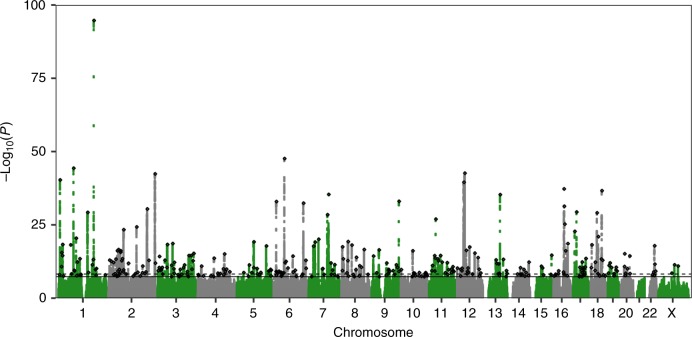
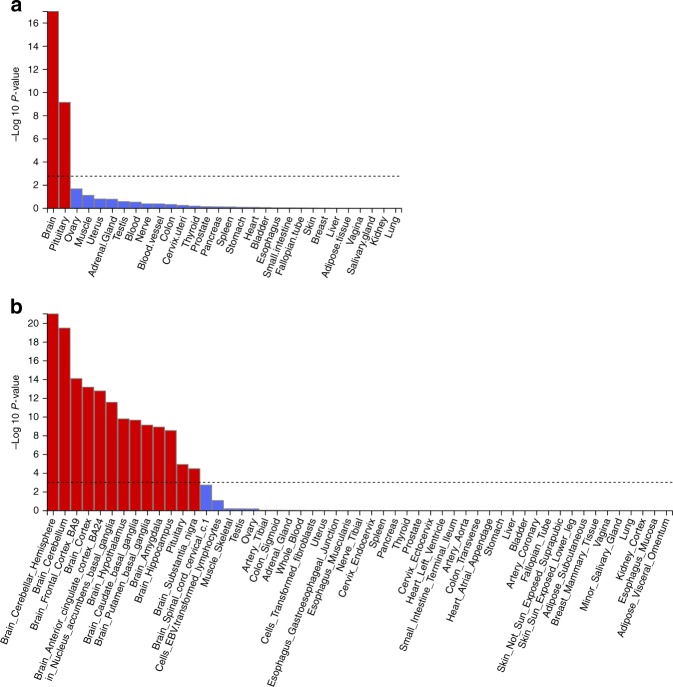
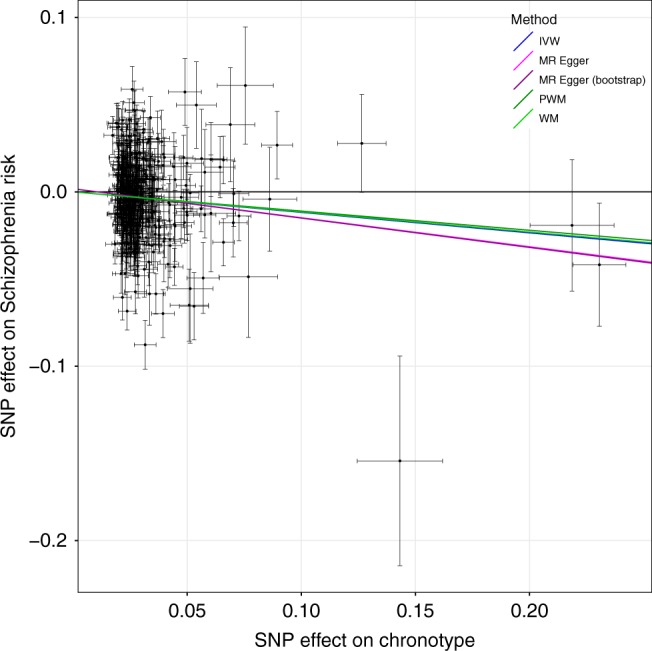
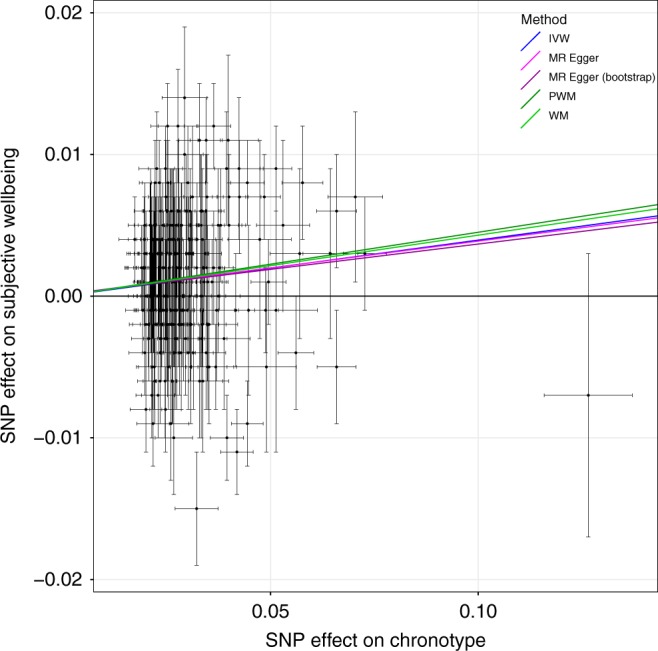
Being a morning person is a behavioural indicator of a person’s underlying circadian rhythm. Using genome-wide data from 697,828 UK Biobank and 23andMe participants we increase the number of genetic loci associated with being a morning person from 24 to 351. Using data from 85,760 individuals with activity-monitor derived measures of sleep timing we find that the chronotype loci associate with sleep timing: the mean sleep timing of the 5% of individuals carrying the most morningness alleles is 25 min earlier than the 5% carrying the fewest. The loci are enriched for genes involved in circadian regulation, cAMP, glutamate and insulin signalling pathways, and those expressed in the retina, hindbrain, hypothalamus, and pituitary. Using Mendelian Randomisation, we show that being a morning person is causally associated with better mental health but does not affect BMI or risk of Type 2 diabetes. This study offers insights into circadian biology and its links to disease in humans.
Overview
The claims and statistics of this paper haven’t been checked yet.
Free: it reads the open-access text and checks the first 5 claims that cite a source we can check. Create a free account to check every claim.
Integrity signals
Registry
Cites
Statistics
Figures


Verification
Claims the paper makes
The claims and statistics of this paper haven’t been checked yet.
Free: it reads the open-access text and checks the first 5 claims that cite a source we can check. Create a free account to check every claim.
Claims other papers make about this one
Each is checked against this paper’s own text: does it say what the citing paper says it does?
The source backs part of the claim, not all of it — or backs it for a different population, condition or comparison.
In the citing paper
“the chronotype seems to be dependent on environmental factors, which again is affected by mechanisms of innate homeostasis of sleep and circadian rhythms, as shown by a genome-wide association analysis, identifying genomic loci associated to chronotype (156).”
From Meal timing and its role in obesity and associated diseases (2024) · cites this paper as [156]
Experimental — accuracy not yet measuredIn the citing paper
“In several genome-wide association studies (GWASs) of depression-related traits, TNKS was found to be associated with (p = 7.68 × 10⁻¹⁰)38, bipolar disorder (p = 3 × 10⁻⁶)39, and positive affect (p = 0.0003)40.”
From Methylome-wide change associated with response to electroconvulsive therapy in depressed patients (2021) · cites this paper as [38]
Self-check
Percentages, sums and reported differences re-computed from the paper’s own numbers.
The self-check needs the paper’s full text.
Citations
Cites
Sudlow, C., Gallacher, J., Allen, N., Beral, V., Burton, P., Danesh, J., Downey, P., Elliott, P., Green, J., Landray, M., et al. (2015) · PLOS Medicine · doi:10.1371/journal.pmed.1001779 · Cited by 12,728
Bowden, J., Davey Smith, G., Haycock, P. C., & Burgess, S. (2016) · Genetic Epidemiology · doi:10.1002/gepi.21965 · Cited by 8,922
Self-citationThe MR-Base platform supports systematic causal inference across the human phenome
Hemani, G., Zheng, J., Elsworth, B., Wade, K. H., Haberland, V., Baird, D., Laurin, C., Burgess, S., Bowden, J., Langdon, R., et al. (2018) · eLife · doi:10.7554/elife.34408 · Cited by 7,959
Self-citationGenetics of Food Intake Self-Regulation in Childhood: Literature Review and Research Opportunities
Faith, M. S., Carnell, S., & Kral, T. V. E. (2013) · Human Heredity · doi:10.1159/000353879 · Cited by 7,601
Biological insights from 108 schizophrenia-associated genetic loci
Schizophrenia Working Group of the Psychiatric Genomics Consortium (2014) · Nature · doi:10.1038/nature13595 · Cited by 7,577
LD Score regression distinguishes confounding from polygenicity in genome-wide association studies
Schizophrenia Working Group of the Psychiatric Genomics Consortium, Bulik-Sullivan, B. K., Loh, P.-R., Finucane, H. K., Ripke, S., Yang, J., Patterson, N., Daly, M. J., Price, A. L., & Neale, B. M. (2015) · Nature Genetics · doi:10.1038/ng.3211 · Cited by 5,559
METAL: fast and efficient meta-analysis of genomewide association scans
Willer, C. J., Li, Y., & Abecasis, G. R. (2010) · Bioinformatics · doi:10.1093/bioinformatics/btq340 · Cited by 5,205
A self-assessment questionnaire to determine morningness- eveningness in human circadian rhythms
Home, J. K. (1976) · Medical Entomology and Zoology · Cited by 4,783
Mendelian randomization: Using genes as instruments for making causal inferences in epidemiology
Lawlor, D. A., Harbord, R. M., Sterne, J. A. C., Timpson, N., & Davey Smith, G. (2008) · Statistics in Medicine · doi:10.1002/sim.3034 · Cited by 4,618
Self-citationGenetic studies of body mass index yield new insights for obesity biology
Study, T. L. C., Locke, A. E., The ADIPOGen Consortium, The AGEN-BMI Working Group, The CARDIOGRAMplusC4D Consortium, The CKDGen Consortium, The, G. L. G. C., The, I. C. B. P., The MAGIC Investigators, The MuTHER Consortium, et al. (2015) · Nature · doi:10.1038/nature14177 · Cited by 4,534
Self-citation
Cited by
Migueles, J. H., Rowlands, A. V., Huber, F., Sabia, S., & van Hees, V. T. (2019) · Journal for the Measurement of Physical Behaviour · doi:10.1123/jmpb.2018-0063 · Cited by 955
Using human genetics to understand the disease impacts of testosterone in men and women
The Endometrial Cancer Association Consortium, Ruth, K. S., Day, F. R., Tyrrell, J., Thompson, D. J., Wood, A. R., Mahajan, A., Beaumont, R. N., Wittemans, L., Martin, S., et al. (2020) · Nature Medicine · doi:10.1038/s41591-020-0751-5 · Cited by 720
Self-citationDashti, H. S., Jones, S. E., Wood, A. R., Lane, J. M., van Hees, V. T., Wang, H., Rhodes, J. A., Song, Y., Patel, K., Anderson, S. G., et al. (2019) · Nature Communications · doi:10.1038/s41467-019-08917-4 · Cited by 609
Self-citationEGG Consortium, Warrington, N. M., Beaumont, R. N., Horikoshi, M., Day, F. R., Helgeland, Ø., Laurin, C., Bacelis, J., Peng, S., Hao, K., et al. (2019) · Nature Genetics · doi:10.1038/s41588-019-0403-1 · Cited by 593
Self-citationEstimating sleep parameters using an accelerometer without sleep diary
van Hees, V. T., Sabia, S., Jones, S. E., Wood, A. R., Anderson, K. N., Kivimäki, M., Frayling, T. M., Pack, A. I., Bucan, M., Trenell, M. I., et al. (2018) · Scientific Reports · doi:10.1038/s41598-018-31266-z · Cited by 554
Self-citationGenetic determinants of daytime napping and effects on cardiometabolic health
Dashti, H. S., Daghlas, I., Lane, J. M., Huang, Y., Udler, M. S., Wang, H., Ollila, H. M., Jones, S. E., Kim, J., Wood, A. R., et al. (2021) · Nature Communications · doi:10.1038/s41467-020-20585-3 · Cited by 446
Self-citationGenomics of circadian rhythms in health and disease
Rijo-Ferreira, F., & Takahashi, J. S. (2019) · Genome Medicine · doi:10.1186/s13073-019-0704-0 · Cited by 534
Trans effects on gene expression can drive omnigenic inheritance
Liu, X., Li, Y. I., & Pritchard, J. K. (2019) · Cell · doi:10.1016/j.cell.2019.04.014 · Cited by 523
Sleep timing, chronotype and social jetlag: Impact on cognitive abilities and psychiatric disorders
Taillard, J., Sagaspe, P., Philip, P., & Bioulac, S. (2021) · Biochemical Pharmacology · doi:10.1016/j.bcp.2021.114438 · Cited by 288
Navigating Challenges and Opportunities in Multi-Omics Integration for Personalized Healthcare
Mohr, A. E., Ortega-Santos, C. P., Whisner, C. M., Klein-Seetharaman, J., & Jasbi, P. (2024) · Biomedicines · doi:10.3390/biomedicines12071496 · Cited by 311
Chronotype, circadian rhythm, and psychiatric disorders: Recent evidence and potential mechanisms
Zou, H., Zhou, H., Yan, R., Yao, Z., & Lu, Q. (2022) · Frontiers in Neuroscience · doi:10.3389/fnins.2022.811771 · Cited by 269
“, 2016) and that people with the morning chronotype have a lower risk of schizophrenia and greater subjective well-being (Jones et al., 2019).”
BackgroundInfluentialGenetic studies of accelerometer-based sleep measures yield new insights into human sleep behaviour
Jones, S. E., van Hees, V. T., Mazzotti, D. R., Marques-Vidal, P., Sabia, S., van der Spek, A., Dashti, H. S., Engmann, J., Kocevska, D., Tyrrell, J., et al. (2019) · Nature Communications · doi:10.1038/s41467-019-09576-1 · Cited by 300
Self-citationCrouse, J. J., Carpenter, J. S., Song, Y. J. C., Hockey, S. J., Naismith, S. L., Grunstein, R. R., Scott, E. M., Merikangas, K. R., Scott, J., & Hickie, I. B. (2021) · The Lancet Psychiatry · doi:10.1016/s2215-0366(21)00034-1 · Cited by 255
Pei, Y.-F., Liu, Y.-Z., Yang, X.-L., Zhang, H., Feng, G.-J., Wei, X.-T., & Zhang, L. (2020) · Communications Biology · doi:10.1038/s42003-020-01334-0 · Cited by 266
Wang, H., Lane, J. M., Jones, S. E., Dashti, H. S., Ollila, H. M., Wood, A. R., van Hees, V. T., Brumpton, B., Winsvold, B. S., Kantojärvi, K., et al. (2019) · Nature Communications · doi:10.1038/s41467-019-11456-7 · Cited by 237
“…fi cant loci for frequent insomnia 49 ; 78, 27, and 8 loci for sleep duration, long sleep, and short sleep, respectively 59 ; 348 loci for chronotype 67 ; 125 loci for daytime napping; 20 genome-wide signi fi cant loci for RLS 48 ; 8 non-HLA suggestive signi fi cant loci ( P < 10 − 4 ) in a…”
Self-citationGenetics of circadian rhythms and sleep in human health and disease
Lane, J. M., Qian, J., Mignot, E., Redline, S., Scheer, F. A. J. L., & Saxena, R. (2023) · Nature Reviews Genetics · doi:10.1038/s41576-022-00519-z · Cited by 236
Self-citationCommon genetic variation influencing human white matter microstructure
Zhao, B., Li, T., Yang, Y., Wang, X., Luo, T., Shan, Y., Zhu, Z., Xiong, D., Hauberg, M. E., Bendl, J., et al. (2021) · Science · doi:10.1126/science.abf3736 · Cited by 231
Wright, C. F., West, B., Tuke, M., Jones, S. E., Patel, K., Laver, T. W., Beaumont, R. N., Tyrrell, J., Wood, A. R., Frayling, T. M., et al. (2019) · The American Journal of Human Genetics · doi:10.1016/j.ajhg.2018.12.015 · Cited by 212
Self-citationThe sleep–circadian interface: A window into mental disorders
Meyer, N., Lok, R., Schmidt, C., Kyle, S. D., McClung, C. A., Cajochen, C., Scheer, F. A. J. L., Jones, M. W., & Chellappa, S. L. (2024) · Proceedings of the National Academy of Sciences · doi:10.1073/pnas.2214756121 · Cited by 218
Resource profile and user guide of the Polygenic Index Repository
Becker, J., Burik, C. A. P., Goldman, G., Wang, N., Jayashankar, H., Bennett, M., Belsky, D. W., Karlsson Linnér, R., Ahlskog, R., Kleinman, A., et al. (2021) · Nature Human Behaviour · doi:10.1038/s41562-021-01119-3 · Cited by 173
Self-citationA comparative atlas of single-cell chromatin accessibility in the human brain
Li, Y. E., Preissl, S., Miller, M., Johnson, N. D., Wang, Z., Jiao, H., Zhu, C., Wang, Z., Xie, Y., Poirion, O., et al. (2023) · Science · doi:10.1126/science.adf7044 · Cited by 173
Sleep disturbance and psychiatric disorders: a bidirectional Mendelian randomisation study
Sun, X., Liu, B., Liu, S., Wu, D. J. H., Wang, J., Qian, Y., Ye, D., & Mao, Y. (2022) · Epidemiology and Psychiatric Sciences · doi:10.1017/s2045796021000810 · Cited by 176
Individual differences in light sensitivity affect sleep and circadian rhythms
Chellappa, S. L. (2021) · Sleep · doi:10.1093/sleep/zsaa214 · Cited by 163
“Furthermore, genome-wide association studies in adults of European ancestry identified 78 loci for selfreported habitual sleep duration [106], accelerometer-derived sleep duration, sleep efficiency and number of sleep bouts [106], and that the chronotype loci associates with sleep timing [107].”
BackgroundGenetic predictors of participation in optional components of UK Biobank
Tyrrell, J., Zheng, J., Beaumont, R., Hinton, K., Richardson, T. G., Wood, A. R., Davey Smith, G., Frayling, T. M., & Tilling, K. (2021) · Nature Communications · doi:10.1038/s41467-021-21073-y · Cited by 162
Self-citationRichmond, R. C., Anderson, E. L., Dashti, H. S., Jones, S. E., Lane, J. M., Strand, L. B., Brumpton, B., Rutter, M. K., Wood, A. R., Straif, K., et al. (2019) · BMJ · doi:10.1136/bmj.l2327 · Cited by 149
Self-citationSalehinejad, M. A., Wischnewski, M., Ghanavati, E., Mosayebi-Samani, M., Kuo, M.-F., & Nitsche, M. A. (2021) · Nature Communications · doi:10.1038/s41467-021-24885-0 · Cited by 146
Off the Clock: From Circadian Disruption to Metabolic Disease
Maury, E. (2019) · International Journal of Molecular Sciences · doi:10.3390/ijms20071597 · Cited by 140
BaHammam, A. S., & Pirzada, A. (2023) · Clocks & Sleep · doi:10.3390/clockssleep5030034 · Cited by 129
“…dietary composition and portion sizes, physical activity levels, environmental factors including nighttime light exposure, age, and genetic factors can interact with these rhythms, with some evidence suggesting that high-fat meals eaten late at night may be particularly disruptive [58,67,68].”
BackgroundCampos, A. I., García-Marín, L. M., Byrne, E. M., Martin, N. G., Cuéllar-Partida, G., & Rentería, M. E. (2020) · Nature Communications · doi:10.1038/s41467-020-14625-1 · Cited by 135
Self-citationMcCarthy, M. J., Gottlieb, J. F., Gonzalez, R., McClung, C. A., Alloy, L. B., Cain, S., Dulcis, D., Etain, B., Frey, B. N., Garbazza, C., et al. (2022) · Bipolar Disorders · doi:10.1111/bdi.13165 · Cited by 136
“In GWAS of chronotype, PRS for morningness are inversely correlated with risk for BD, but also MDD and SCHZ, and positively correlated with subjective well-being, 174,218– 220 while PRS for low amplitude activity are associated with both MDD and BD as well as trait neuroticism.”
Kanki, M., Nath, A. P., Xiang, R., Yiallourou, S. R., Fuller, P. J., Cole, T. J., Cánovas, R., & Young, M. J. (2023) · Nature Communications · doi:10.1038/s41467-023-42758-6 · Cited by 140
Genome-wide association study of musical beat synchronization demonstrates high polygenicity
Niarchou, M., Gustavson, D. E., Sathirapongsasuti, J. F., Anglada-Tort, M., Eising, E., Bell, E., McArthur, E., Straub, P., Aslibekyan, S. W., Auton, A., et al. (2022) · Nature Human Behaviour · doi:10.1038/s41562-022-01359-x · Cited by 134
Self-citationGenetics of the human circadian clock and sleep homeostat
Ashbrook, L. H., Krystal, A. D., Fu, Y.-H., & Ptáček, L. J. (2020) · Neuropsychopharmacology · doi:10.1038/s41386-019-0476-7 · Cited by 123
“Through this work, morningness has been associated with lower rates of depression and with better mental health [28, 42].”
BackgroundCircadian depression: A mood disorder phenotype
Carpenter, J. S., Crouse, J. J., Scott, E. M., Naismith, S. L., Wilson, C., Scott, J., Merikangas, K. R., & Hickie, I. B. (2021) · Neuroscience & Biobehavioral Reviews · doi:10.1016/j.neubiorev.2021.02.045 · Cited by 114
Circadian regulation of liver function: from molecular mechanisms to disease pathophysiology
Bolshette, N. B., Ibrahim, H., Reinke, H., & Asher, G. (2023) · Nature Reviews Gastroenterology & Hepatology · doi:10.1038/s41575-023-00792-1 · Cited by 115
“Moreover, chrono-type, that is, the preference to be a morning or an evening person (a ‘lark’ or an ‘owl’), can exacerbate circadian misalignment and is genetically modified by clock genes 98 .”
BackgroundNight shift work is associated with an increased risk of asthma
Maidstone, R. J., Turner, J., Vetter, C., Dashti, H. S., Saxena, R., Scheer, F. A. J. L., Shea, S. A., Kyle, S. D., Lawlor, D. A., Loudon, A. S. I., et al. (2020) · Thorax · doi:10.1136/thoraxjnl-2020-215218 · Cited by 106
Self-citationSeasonality of brain function: role in psychiatric disorders
Zhang, R., & Volkow, N. D. (2023) · Translational Psychiatry · doi:10.1038/s41398-023-02365-x · Cited by 113
“There is evidence that greater eveningness is associated with poor mental health [143] and greater risk for depression [144].”
BackgroundLiang, Y. Y., Feng, H., Chen, Y., Jin, X., Xue, H., Zhou, M., Ma, H., Ai, S., Wing, Y.-K., Geng, Q., et al. (2023) · European Journal of Preventive Cardiology · doi:10.1093/eurjpc/zwad060 · Cited by 102
The circadian clock protein REVERBα inhibits pulmonary fibrosis development
Cunningham, P. S., Meijer, P., Nazgiewicz, A., Anderson, S. G., Borthwick, L. A., Bagnall, J., Kitchen, G. B., Lodyga, M., Begley, N., Venkateswaran, R., et al. (2019) · Proceedings of the National Academy of Sciences · doi:10.1073/pnas.1912109117 · Cited by 103
Self-citationSleep, major depressive disorder, and Alzheimer disease: A Mendelian randomization study
Huang, J., Zuber, V., Matthews, P. M., Elliott, P., Tzoulaki, J., & Dehghan, A. (2020) · Neurology · doi:10.1212/wnl.0000000000010463 · Cited by 82
“Genetic associations of accelerometer-based sleep-related phenotypes were obtained from a GWAS among 85,670 individuals of the UK Biobank.16 We focused on 4 accelerometer-based sleep-related phenotypes in this study: number of sleep episodes, sleep duration, L5 timing, and sleep efficiency.”
InfluentialKianersi, S., Liu, Y., Guasch‐Ferré, M., Redline, S. S., Schernhammer, E. S., Sun, Q., & Huang, T. (2023) · Annals of Internal Medicine · doi:10.7326/m23-0728 · Cited by 92
“Furthermore, genetic variants previously identi fi ed for chronotype are implicated in insulin secretion (for example, MADD ) and obesity (for example, FTO ) that could lead to diabetes development (6).”
InfluentialLongitudinal change of sleep timing: association between chronotype and longevity in older adults
Didikoğlu, A., Maharani, A., Payton, A., Pendleton, N., & Canal, M. M. (2019) · Chronobiology International · doi:10.1080/07420528.2019.1641111 · Cited by 83
“Chronotype is mostly an intrinsic property and an expression of the circadian clock in humans with up to 50% of determinants of diurnal type regulated genetically (Jones et al. 2019; Koskenvuo et al. 2007).”
BackgroundGenetically Proxied Diurnal Preference, Sleep Timing, and Risk of Major Depressive Disorder
Daghlas, I., Lane, J. M., Saxena, R., & Vetter, C. (2021) · JAMA Psychiatry · doi:10.1001/jamapsychiatry.2021.0959 · Cited by 90
“Ethical Approval All contributingGWAS studies sought informed consent from their studyparticipants.(10,16,17)Weusedpublicly available, deidentified, summary-level genetic associationdata,which, per the US code of federal regulations (45 CFR 46.”
BackgroundMethodSelf-citationMerikanto, I., Kortesoja, L., Benedict, C., Chung, F., Cedernaes, J., Espie, C. A., Morin, C. M., Dauvilliers, Y., Partinen, M., De Gennaro, L., et al. (2022) · SLEEP · doi:10.1093/sleep/zsab216 · Cited by 75
“Other driving mechanisms contributing to the elevated sleep and mental health problems among evening-types may be innate, such as genetic [40] or related to disruption of circadian rhythms.”
Background3D chromatin maps of the human pancreas reveal lineage-specific regulatory architecture of T2D risk
Su, C., Gao, L., May, C. L., Pippin, J. A., Boehm, K. D., Lee, M., Liu, C., Pahl, M. C., Golson, M. L., Naji, A., et al. (2022) · Cell Metabolism · doi:10.1016/j.cmet.2022.08.014 · Cited by 82
Sleep timing and the circadian clock in mammals: Past, present and the road ahead
Sanchez, R. E. A., Kalume, F. K., & de la Iglesia, H. O. (2021) · Seminars in Cell and Developmental Biology · doi:10.1016/j.semcdb.2021.05.034 · Cited by 80
Chrononutrition—When We Eat Is of the Essence in Tackling Obesity
Ahluwalia, M. K. (2022) · Nutrients · doi:10.3390/nu14235080 · Cited by 64
“In addition to the age, gender and societal set-up, an individual’s chronotype is also influenced by their genetic makeup and various genome-wide association studies (GWAS) and candidate-gene approaches have associated more than 350 loci with the morning chronotype and, not surprisingly, these include the components f…”
BackgroundIlan, Y. (2020) · Molecular Therapy — Methods & Clinical Development · doi:10.1016/j.omtm.2020.06.006 · Cited by 76
“A strong impact of sex, genetic background, and chronotype were described to affect the circadian timing system, drug chronopharmacokinetics/pharmacodynamics, and optimal timing.(85,90,91) The inter-patient variability may explain the results of studies that assumed the same rhythm for the whole patient population, mi…”
BackgroundMetabolic implications of circadian disruption
Fatima, N., & Rana, S. (2020) · Pflügers Archiv - European Journal of Physiology · doi:10.1007/s00424-020-02381-6 · Cited by 80
“Moreover, a recent study has reported that morning persons are mentally healthy as compared with evening persons, but no evidence is found for the causal link of chronotype with the risk of being diabetic or obese [68].”
BackgroundCharacterizing the Genetic Overlap Between Psychiatric Disorders and Sleep-Related Phenotypes
O’Connell, K. S., Frei, O., Bahrami, S., Smeland, O. B., Bettella, F., Cheng, W., Chu, Y., Hindley, G., Lin, A., Shadrin, A. A., et al. (2021) · Biological Psychiatry · doi:10.1016/j.biopsych.2021.07.007 · Cited by 78
“The insomnia sample included 109,402 cases and 277,131 controls (21), and the chronotype sample included 449,734 individuals (20).”
BackgroundInfluential(2021) · Human Molecular Genetics · doi:10.1093/hmg/ddab130 · Cited by 73
“For the morning person phenotype, we found enrichments in many brain tissues in the European ancestry population, concordant with a previous study (41) Evidence showed that circadian rhythm was controlled by the suprachiasmatic nucleus,the master clock in our brain,and also the circadian oscillator…”
Genetics of Sleep and Insights into Its Relationship with Obesity
Dashti, H. S., & Ordovás, J. M. (2021) · Annual Review of Nutrition · doi:10.1146/annurev-nutr-082018-124258 · Cited by 77
Self-citationEmerging phenotyping strategies will advance our understanding of psychiatric genetics
Sanchez‐Roige, S., & Palmer, A. A. (2020) · Nature Neuroscience · doi:10.1038/s41593-020-0609-7 · Cited by 77
Meal timing and its role in obesity and associated diseases
Peters, B., Vahlhaus, J., & Pivovarova-Ramich, O. (2024) · Frontiers in Endocrinology · doi:10.3389/fendo.2024.1359772 · Cited by 72
Ferguson, A., Lyall, L. M., Ward, J., Strawbridge, R. J., Cullen, B., Graham, N., Niedzwiedz, C. L., Johnston, K. J. A., MacKay, D., Biello, S. M., et al. (2018) · EBioMedicine · doi:10.1016/j.ebiom.2018.08.004 · Cited by 70
Genome-wide association study meta-analysis of suicide death and suicidal behavior
Li, Q. S., Shabalin, A. A., DiBlasi, E., Gopal, S., Canuso, C. M., FinnGen, I. S. G. C., Palotie, A., Drevets, W. C., Docherty, A. R., & Coon, H. (2023) · Molecular Psychiatry · doi:10.1038/s41380-022-01828-9 · Cited by 68
“Variants in ROBO2 were previously reported to be associated with circadian phenotypes such as self-identification as a “morning person” and chronotype [62], smoking initiation [84], and highest math classes taken [85], all reaching genome-wide significance threshold.”
BackgroundRelationships between sleep traits and lung cancer risk: a prospective cohort study in UK Biobank
Xie, J., Zhu, M., Ji, M., Fan, J., Huang, Y., Wei, X., Jiang, X., Xu, J., Yin, R. H., Wang, Y., et al. (2021) · SLEEP · doi:10.1093/sleep/zsab089 · Cited by 70
Zhao, B., Shan, Y., Yang, Y., Yu, Z., Li, T., Wang, X., Luo, T., Zhu, Z., Sullivan, P. F., Zhao, H., et al. (2021) · Nature Communications · doi:10.1038/s41467-021-23130-y · Cited by 79
Genome-wide association study of breakfast skipping links clock regulation with food timing
Dashti, H. S., Merino, J., Lane, J. M., Song, Y., Smith, C. E., Tanaka, T., McKeown, N. M., Tucker, C., Sun, D., Bartz, T. M., et al. (2019) · American Journal of Clinical Nutrition · doi:10.1093/ajcn/nqz076 · Cited by 70
“…analysis of linkage disequilibrium score regression (37–39) with LDHub was conducted for the breakfast skipping GWAS and publicly available data from 224 published non-UK Biobank GWAS and other lifestyle UK Biobank GWASs for chronotype (40), sleep duration (30), and macronutrient intake.”
InfluentialSelf-citationA Prospective Analysis of Genetic Variants Associated with Human Lifespan
Wright, K. M., Rand, K. A., Kermany, A. R., Noto, K., Curtis, D., Garrigan, D., Slinkov, D., Dorfman, I., Granka, J. M., Byrnes, J., et al. (2019) · G3 Genes Genomes Genetics · doi:10.1534/g3.119.400448 · Cited by 69
Wainberg, M., Jones, S. E., Beaupre, L. M., Hill, S. L., Felsky, D., Rivas, M. A., Lim, A. S. P., Ollila, H. M., & Tripathy, S. J. (2021) · PLOS Medicine · doi:10.1371/journal.pmed.1003782 · Cited by 64
Self-citationAssessing the Causal Role of Sleep Traits on Glycated Hemoglobin: A Mendelian Randomization Study
Liu, J., Richmond, R. C., Bowden, J., Barry, C.-J. S., Dashti, H. S., Daghlas, I., Lane, J. M., Jones, S. E., Wood, A. R., Frayling, T. M., et al. (2022) · Diabetes Care · doi:10.2337/dc21-0089 · Cited by 70
“Two previous MR studies of the effect of chronotype on T2D reported differing results.(20) 47 Jones et al found no clear association of chronotype with T2D in a 2SMR design,(20) whereas, Adams et al suggested a protective effect of morning preference on T2D via lowering circulating total fatty acids.”
ResultSelf-citationPathomechanisms of Blood-Brain Barrier Disruption in ALS
Kakaroubas, N., Brennan, S. E., Keon, M., & Saksena, N. (2019) · Neuroscience Journal · doi:10.1155/2019/2537698 · Cited by 66
“” There existed negative correlations between being a morning person and schizophrenia, depressive symptoms, major depressive disorder, and intelligence [128].”
BackgroundEvening chronotype as a discrete clinical subphenotype in bipolar disorder
Romo-Nava, F., Blom, T. J., Cuellar-Barboza, A. B., Winham, S. J., Colby, C. L., Nunez, N. A., Biernacka, J. M., Frye, M. A., & McElroy, S. L. (2020) · Journal of Affective Disorders · doi:10.1016/j.jad.2020.01.151 · Cited by 63
Chen, F., Wen, W., Long, J., Shu, X., Yang, Y., Shu, X., & Zheng, W. (2022) · International Journal of Cancer · doi:10.1002/ijc.34026 · Cited by 67
Salehinejad, M. A., Majidinezhad, M., Ghanavati, E., Kouestanian, S., Vicario, C. M., Nitsche, M. A., & Nejati, V. (2020) · EXCLI journal · doi:10.17179/excli2020-2831 · Cited by 67
“(Jones et al., 2019).”
Smolensky, M. H., Hermida, R. C., & Geng, Y. (2020) · Current Opinion in Pharmacology · doi:10.1016/j.coph.2020.10.014 · Cited by 65
Kortesoja, L., Vainikainen, M., Hotulainen, R., & Merikanto, I. (2022) · Journal of Youth and Adolescence · doi:10.1007/s10964-022-01703-4 · Cited by 66
“As chronotype is rather a stable state (Koskenvuo et al., 2007) and has a genetic basis (Jones et al., 2019), in the form of genetic variants (Merikanto et al., 2021) it is more likely to explain the time of the day when media is used than vice versa (Lin et al., 2021).”
BackgroundAnderson, E. L., Richmond, R. C., Jones, S. E., Hemani, G., Wade, K. H., Dashti, H. S., Lane, J. M., Wang, H., Saxena, R., Brumpton, B., et al. (2021) · International Journal of Epidemiology · doi:10.1093/ije/dyaa183 · Cited by 58
Self-citationSang, N., Gao, R., Zhang, M.-Y., Wu, Z., Wu, Z.-G., & Wu, G. (2022) · Frontiers in Immunology · doi:10.3389/fimmu.2022.918749 · Cited by 60
Ambati, A., Hillary, R. P., Leu‐Semenescu, S., Ollila, H. M., Lin, L., During, E., Farber, N. M., Rico, T. J., Faraco, J. H., Leary, E. B., et al. (2021) · Proceedings of the National Academy of Sciences · doi:10.1073/pnas.2005753118 · Cited by 59
Metagenomic analysis reveals the signature of gut microbiota associated with human chronotypes
Carasso, S., Fishman, B., Lask, L. S., Shochat, T., Geva‐Zatorsky, N., & Tauber, E. (2021) · The FASEB Journal · doi:10.1096/fj.202100857rr · Cited by 57
“There is a genetic predisposition for chronotype (1), which changes over the course of development and determines individual variation in diurnal timing of various functions, such as sleep, cognitive and physical activities (2).”
BackgroundMetagenomic analysis reveals the signature of gut microbiota associated with human chronotypes
Carasso, S., Fishman, B., Lask, L. S., Shochat, T., Geva-Zatorsky, N., & Tauber, E. (2021) · doi:10.1101/2021.03.16.435653 · Cited by 57
Jia, Y., Guo, D., Sun, L., Shi, M., Zhang, K., Yang, P., Zang, Y., Wang, Y., Liu, F., Zhang, Y., et al. (2022) · European Journal of Preventive Cardiology · doi:10.1093/eurjpc/zwac123 · Cited by 62
Circadian preference and mental health outcomes in youth: A systematic review and meta-analysis
Cheung, F. T. W., Li, X., Hui, T. K., Chan, N. Y., Chan, N. Y., Chan, J. W. Y., & Li, S. X. (2023) · Sleep Medicine Reviews · doi:10.1016/j.smrv.2023.101851 · Cited by 57
Lewis, K. J. S., Richards, A., Karlsson, R., Leonenko, G., Jones, S. E., Jones, H. J., Gordon-Smith, K., Forty, L., Escott-Price, V., Owen, M. J., et al. (2020) · JAMA Psychiatry · doi:10.1001/jamapsychiatry.2019.4079 · Cited by 51
Self-citationMadrid‐Valero, J. J., Rubio‐Aparicio, M., Gregory, A. M., Sánchez‐Meca, J., & Ordoñana, J. R. (2019) · Neuroscience & Biobehavioral Reviews · doi:10.1016/j.neubiorev.2019.12.028 · Cited by 55
Taylor, A. H., Taylor, R. S., Ingram, W. M., Anokye, N., Dean, S. G., Jolly, K. B., Mutrie, N., Lambert, J. D., Yardley, L., Greaves, C. J., et al. (2020) · Health Technology Assessment · doi:10.3310/hta24630 · Cited by 55
“Step 5 Setting SMART goals for any PA for next week 96 (43)”
BackgroundMorning chronotype and digestive tract cancers: Mendelian randomization study
Yuan, S., Mason, A. M., Titova, O. E., Vithayathil, M. K., Kar, S., Chen, J., Li, X., Burgess, S., & Larsson, S. C. (2022) · International Journal of Cancer · doi:10.1002/ijc.34284 · Cited by 56
“The genetic score of these SNPs showed no associations with sleep duration and quality as well as insomnia.(18) In the main analysis, we used the estimates (beta and corresponding SE coefficients) of the associations between SNPs and chronotype from the metaanalysis of UK Biobank and 23andMe to increase the power.”
InfluentialSofer, T., Kurniansyah, N., Murray, M., Ho, Y.-L. A., Abner, E., Esko, T., Metspalu, A., Milani, L. A., Esko, T., Mägi, R., et al. (2023) · EBioMedicine · doi:10.1016/j.ebiom.2023.104536 · Cited by 54
Kember, R. L., Vickers‐Smith, R., Zhou, H., Xu, H., Jennings, M. V., Dao, C., Davis, L. K., Sanchez‐Roige, S., Justice, A. C., Gelernter, J. E., et al. (2023) · American Journal of Psychiatry · doi:10.1176/appi.ajp.21090892 · Cited by 54
Molecular genetic overlap between posttraumatic stress disorder and sleep phenotypes
Lind, M. J., Brick, L. A. D., Gehrman, P., Duncan, L. E., Gelaye, B., Maihofer, A. X., Nievergelt, C. M., Nugent, N. R., Stein, M. B., Amstadter, A. B., et al. (2019) · SLEEP · doi:10.1093/sleep/zsz257 · Cited by 52
“Additional research is needed to further elucidate the role of circadian genes in PTSD, and a better understanding of the role of circadian loci in chronotype, as is emerging from new GWAS [51], will also be useful in this endeavor.”
BackgroundSelf-citationXu, H., Liu, F., Li, Z., Li, X., Liu, Y., Li, N., Zhang, X., Gao, Z., Zhang, X., Liu, Y., et al. (2022) · American Journal of Respiratory and Critical Care Medicine · doi:10.1164/rccm.202109-2044oc · Cited by 55
Mishra, H. K., Ying, N. M., Luis, A., Wei, H., Nguyen, M., Nakhla, T. S., Vandenburgh, S. A., Alda, M., Berrettini, W. H., Brennand, K., et al. (2021) · Molecular Psychiatry · doi:10.1038/s41380-021-01048-7 · Cited by 53
Evening chronotype, disordered eating behavior, and poor dietary habits in bipolar disorder
Romo‐Nava, F., Blom, T. J., Guerdjikova, A. I., Winham, S. J., Barboza, A. B. C., Núñez, N. A., Singh, B., Biernacka, J. M., Frye, M. A., & McElroy, S. L. (2020) · Acta Psychiatrica Scandinavica · doi:10.1111/acps.13179 · Cited by 53
“This approach has been utilized successfully in recent studies to evaluate and classify chronotypes (36,45,48-51), including large-scale genome-wide association studies (GWAS), where core chronotype is evaluated separately from sleep/wake patterns (50,52).”
MethodShared genetic liability and causal effects between major depressive disorder and insomnia
Baranova, A. V., Cao, H., & Zhang, F. (2021) · Human Molecular Genetics · doi:10.1093/hmg/ddab328 · Cited by 53
Palermo, J., Chesi, A., Zimmerman, A. J., Sonti, S., Pahl, M. C., Lasconi, C., Brown, E., Pippin, J. A., Wells, A. D., Doldur-Balli, F., et al. (2023) · Science Advances · doi:10.1126/sciadv.abq0844 · Cited by 49
“…substantial progress has been made in understanding the mechanisms underlying circadian rhythms, including the identification of many genetic loci that affect interindividual variability, yet much less is known about variability in sleep disorders such as insomnia across human populations ( 5 ).”
Self-citationGuo, C., Harshfield, E. L., & Markus, H. S. (2024) · Neurology · doi:10.1212/wnl.0000000000209141 · Cited by 52
Green, H., Beaumont, R. N., Thomas, A., Hamilton, B., Wood, A. R., Sharp, S. A., Jones, S. E., Tyrrell, J., Walker, G., Goodhand, J., et al. (2019) · Journal of Crohn s and Colitis · doi:10.1093/ecco-jcc/jjz104 · Cited by 49
Self-citationMolina‐Montes, E., Rodríguez‐Barranco, M., Ching-López, A., Artacho, R., Huerta, J. M., Amiano, P., Lasheras, C., Moreno‐Iribas, C., Jiménez-Zabala, A., Chirlaque, M., et al. (2022) · Clinical Nutrition · doi:10.1016/j.clnu.2022.07.027 · Cited by 47
“Several GWAS studies have identi fi ed genetic variants associated with a self-reported chronotype [1,16,49].”
InfluentialWang, Z., Chen, M., Wei, Y., Zhuo, C., Xu, H., Li, W., & Ma, L. (2022) · BMC Psychiatry · doi:10.1186/s12888-022-03946-8 · Cited by 62
“Data sources and instruments selection As genetic variants for morning diurnal preference, we selected variants from a meta-analysis of GWAS conducted using data from the UKB and 23andMe cohorts [7].”
MethodShim, J., Fleisch, E., & Barata, F. (2024) · npj Digital Medicine · doi:10.1038/s41746-024-01111-x · Cited by 54
Kianersi, S., Wang, H., Sofer, T., Noordam, R., Phillips, A., Rutter, M. K., Redline, S. S., & Huang, T. (2024) · Diabetes Care · doi:10.2337/dc24-0213 · Cited by 46
Self-citationPahl, M. C., Doege, C. A., Hodge, K. M., Littleton, S. H., Leonard, M. E., Lu, S., Rausch, R., Pippin, J. A., Rosa, M. C. D., Basak, A., et al. (2021) · Nature Communications · doi:10.1038/s41467-021-27001-4 · Cited by 49
O’Loughlin, J., Casanova, F., Jones, S. E., Hagenaars, S. P., Beaumont, R. N., Freathy, R. M., Watkins, E. R., Vetter, C., Rutter, M. K., Cain, S. W., et al. (2021) · Molecular Psychiatry · doi:10.1038/s41380-021-01157-3 · Cited by 44
“Our findings provide further evidence that morningness improves mental health and wellbeing as suggested in previous observational and genetic studies [6, 10, 43, 44].”
BackgroundResultSelf-citationAre Circadian Disturbances a Core Pathophysiological Component of Schizophrenia?
Delorme, T. C., Srivastava, L. K., & Cermakian, N. (2020) · Journal of Biological Rhythms · doi:10.1177/0748730420929448 · Cited by 50
“In a subset of nearly 700,000 subjects, the researchers used Mendelian randomization to infer causality between morningness (being an early chronotype) and reduced risk of schizophrenia (Jones et al., 2019).”
BackgroundUlsa, M. C., Zheng, X., Li, P., Gaba, A., Wong, P. M., Saxena, R., Scheer, F. A. J. L., Rutter, M. K., Akeju, O., Hu, K., et al. (2021) · The Journals of Gerontology Series A · doi:10.1093/gerona/glab272 · Cited by 49
“In line with other investigators reporting UK Biobank data (21,22), we have classified this group as an intermediate or “neither a morning person nor an evening person” group.”
ResultSelf-citationEvolutionarily conserved regulation of sleep by epidermal growth factor receptor signaling
Lee, D. A., Liu, J., Hong, Y. K., Lane, J. M., Hill, A. J., Hou, S., Wang, H., Oikonomou, G., Pham, U., Engle, J., et al. (2019) · Science Advances · doi:10.1126/sciadv.aax4249 · Cited by 43
Self-citationLiu, R., Ren, Y., Hou, T., Liang, X., Dong, Y., Wang, Y., Cong, L., Wang, X., Qin, Y., Ren, J., et al. (2022) · Journal of the American Geriatrics Society · doi:10.1111/jgs.18042 · Cited by 45
Jin, X., Chen, Y., Feng, H., Zhou, M., Chan, J. W. Y., Liu, Y., Kong, A. P. S., Tan, X., Wing, Y.-K., Liang, Y. Y., et al. (2024) · Journal of Sport and Health Science · doi:10.1016/j.jshs.2023.03.001 · Cited by 42
“26 Sleep periods were defined using an automated detection algorithm 26,27 implemented in the GGIR R package 28 and validated using polysomnography (PSG) in an external cohort.”
Method
Metadata
- Authors
- Jones, S. E., Lane, J. M., Wood, A. R., van Hees, V. T., Tyrrell, J., Beaumont, R. N., Jeffries, A. R., Dashti, H. S., Hillsdon, M., Ruth, K. S., Tuke, M. A., Yaghootkar, H., Sharp, S. A., Jie, Y., Thompson, W. D., Harrison, J. W., Dawes, A., Byrne, E. M., Tiemeier, H., Allebrandt, K. V., Bowden, J., Ray, D. W., Freathy, R. M., Murray, A., Mazzotti, D. R., Gehrman, P. R., Lawlor, D. A., Frayling, T. M., Rutter, M. K., Hinds, D. A., Saxena, R., & Weedon, M. N.
- Affiliations
- University of Exeter (GB)
- Broad Institute (US)
- The University of Queensland (AU)
- Erasmus MC (NL)
- Sanofi (Germany) (DE)
- University of Bristol (GB)
- University of Manchester (GB)
- University of Pennsylvania (US)
- Manchester Academic Health Science Centre (GB)
- 23andMe (United States) (US)
- Brigham and Women's Hospital (US)
- Corresponding author
- Weedon, Michael N.
- ORCID
- Jones, Samuel E.
- Lane, Jacqueline M.
- Wood, Andrew R.
- van Hees, Vincent T.
- Tyrrell, Jessica
- Beaumont, Robin N.
- Jeffries, Aaron R.
- Dashti, Hassan S.
- Hillsdon, Melvyn
- Ruth, Katherine S.
- Tuke, Marcus A.
- Yaghootkar, Hanieh
- Sharp, Seth A.
- Thompson, William D.
- Harrison, Jamie W.
- Dawes, Amy
- Byrne, Enda M.
- Tiemeier, Henning
- Allebrandt, Karla V.
- Bowden, Jack
- Ray, David W.
- Freathy, Rachel M.
- Murray, Anna
- Mazzotti, Diego R.
- Gehrman, Philip R.
- Lawlor, Debbie A.
- Frayling, Timothy M.
- Rutter, Martin K.
- Hinds, David A.
- Saxena, Richa
- Weedon, Michael N.
- Venue
- Nature Communications
- Published
- 2019-01-29
- Volume
- 10
- Issue
- 1
- Pages
- 343-343
- ISSN
- 2041-1723 (ISSN-L)
- PMC
- PMC6351539
- OpenAlex
- W2914232633
- Cited by
- 691
- References
- 103
- Citations by year
- 2026: 79 · 2025: 108 · 2024: 122 · 2023: 87 · 2022: 100 · 2021: 92 · 2020: 66 · 2019: 34
- FWCI
- 40.46
- Type
- journal article
- Language
- en
- Open access
- gold
- doi.org
- Licence
- cc-by
- creativecommons.org/licenses/by/4.0 (tdm)
- creativecommons.org/licenses/by/4.0 (vor)
- Locations
- Nature Communications (publishedVersion, cc-by)
- Europe PMC (PubMed Central) (publishedVersion, cc-by)
- PubMed Central (publishedVersion, cc-by)
- PubMed (publishedVersion)
- EUR Research Repository (Erasmus University Rotterdam) (publishedVersion, other-oa)
- EUR Research Repository (Erasmus University Rotterdam) (submittedVersion, other-oa)
- RePub (Erasmus University Rotterdam) (submittedVersion, other-oa)
- RePEc: Research Papers in Economics (submittedVersion)
- Adelaide Research & Scholarship (AR&S) (University of Adelaide) (submittedVersion, cc-by)
- DOAJ (DOAJ: Directory of Open Access Journals) (submittedVersion)
- DOAJ (DOAJ: Directory of Open Access Journals) (submittedVersion, cc-by-sa)
- Figshare (submittedVersion)
- Open Research Exeter (University of Exeter) (submittedVersion, cc-by)
- Research Explorer (The University of Manchester) (submittedVersion, cc-by)
- Royal Devon and Exeter Research Repository (Royal Devon and Exeter) (submittedVersion)
- Bristol Research (University of Bristol) (submittedVersion, cc-by)
- Explore Bristol Research (submittedVersion, cc-by)
- Funders
- Wellcome Trust (MC_UU_00011/6, 104150/Z/14/Z, 107849, 107851/Z/15/Z, 104150, WT097835MF)
- National Institute for Health and Care Research (NF-SI-0611-10196)
- Diabetes Research and Wellness Foundation
- University of Manchester
- European Commission (2007–2013, 669545, FP/2007-2013)/ERC, FP/2007/2013)
- University of Bristol (MC_UU_00011/6, MC_UU_00,011/3)
- National Institutes of Health (FP/2007-2013)
- Medical Research Council (MR/M005070/1, MC_UU_00011/6, MR/P012167/1, MC_UU_00011/2, MC_UU_00011/3, 1078901, MC_PC_17228, MR/P023576/2, MC_UU_00011, WT097835MF)
- National Health and Medical Research Council (1078901, 1145645, MC_UU_00011/6, 1087889)
- National Heart, Lung, and Blood Institute (K01HL136884, T32HL007901)
- National Institute of Mental Health
- National Institute on Drug Abuse
- National Human Genome Research Institute
- NIH Office of the Director
- National Cancer Institute
- National Institute of Diabetes and Digestive and Kidney Diseases (R01DK105072, R01DK102696, F32DK102323, R01DK107859)
- National Institute of Neurological Disorders and Stroke
- FP7 Ideas: European Research Council (323195, 669545, 2007-2013, FP2007‐2013)
- Common Fund
- Topics
- Life Sciences › Neuroscience › Endocrine and Autonomic Systems › Circadian rhythm and melatonin
- Life Sciences › Biochemistry, Genetics and Molecular Biology › Genetics › Genetic Associations and Epidemiology
- Social Sciences › Psychology › Experimental and Cognitive Psychology › Sleep and related disorders
- Keywords
- chronotype, morningness, circadian rhythm, sleep timing, genetic loci, cAMP signaling, glutamate signalling, insulin signaling, Mendelian randomization, mental health, type 2 diabetes, body mass index, activity monitoring
- MeSH terms
- Cyclic AMP, Adult, Aged, Circadian Rhythm, Female, United Kingdom, Humans, Male, Middle Aged, Sleep, Glutamic Acid, White People, Genome-Wide Association Study, Genetic Loci
About these checks
Registry, retraction, Cites and statistics results are computed, not judged, with one exception: a printed reference that no index lists is read once by a model before it counts as a citation error. Claims are extracted by a model and kept only when their quote appears verbatim in the text; each cited source is then checked, with a model’s help, for whether it says what the claim relies on. Those verdicts can be wrong — read the claim’s quote and the cited source before relying on one.
Statistics and arithmetic are recomputed, not judged.
Confidence bands are shown only for fields calibrated on our annotated test set. None is calibrated yet, so no band is shown.
What counts as a claim ›How we measure confidence ›How we check this ›
Are you an author, or do you see a problem with this page? Request a review
Data sources
Bibliographic data: Semantic Scholar, OpenAlex, Crossref.
Contains information from the Semantic Scholar Academic Graph Datasets, made available under the ODC Attribution License (ODC-BY 1.0).
Semantic Scholar’s data is described in: Kinney, R., et al. (2023). The Semantic Scholar Open Data Platform. arXiv:2301.10140.
