

Genome-wide association analyses of chronotype in 697,828 individuals provides insights into circadian rhythms
Open accessThe DOI matches its Crossref record; 106 of the 106 references it cites were found in a registry or an index.
Abstract
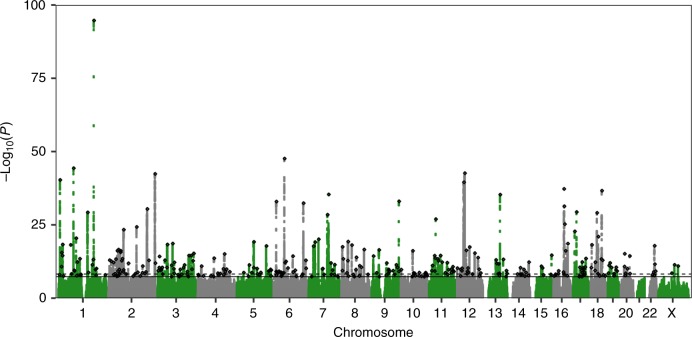
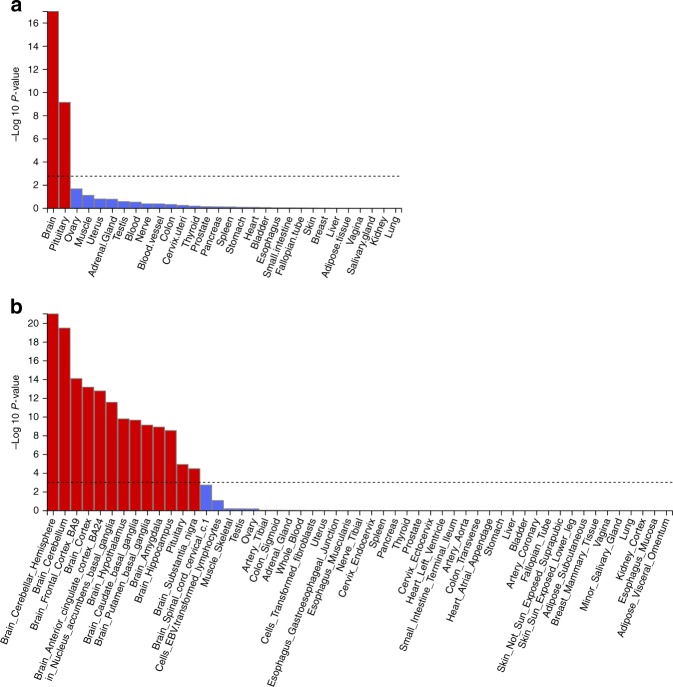
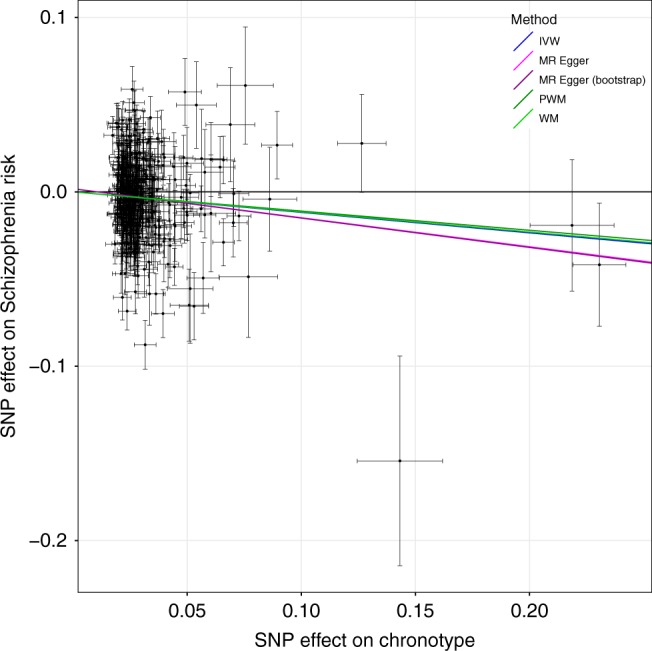
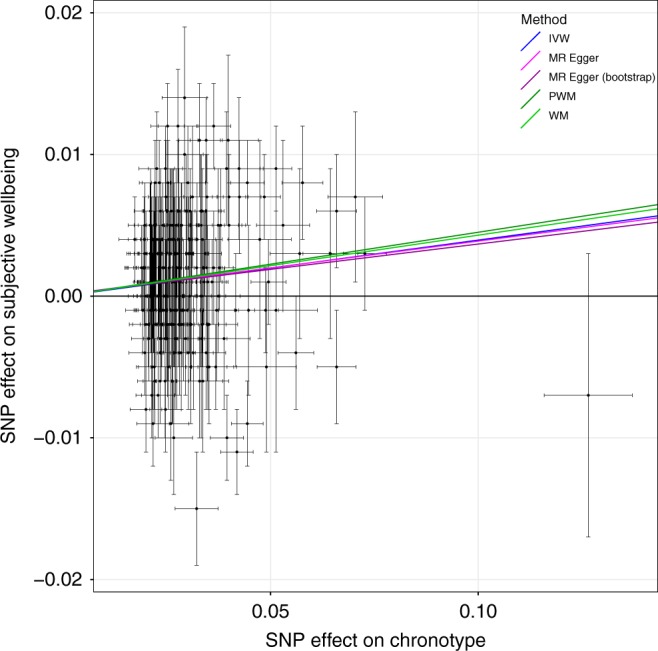
Being a morning person is a behavioural indicator of a person’s underlying circadian rhythm. Using genome-wide data from 697,828 UK Biobank and 23andMe participants we increase the number of genetic loci associated with being a morning person from 24 to 351. Using data from 85,760 individuals with activity-monitor derived measures of sleep timing we find that the chronotype loci associate with sleep timing: the mean sleep timing of the 5% of individuals carrying the most morningness alleles is 25 min earlier than the 5% carrying the fewest. The loci are enriched for genes involved in circadian regulation, cAMP, glutamate and insulin signalling pathways, and those expressed in the retina, hindbrain, hypothalamus, and pituitary. Using Mendelian Randomisation, we show that being a morning person is causally associated with better mental health but does not affect BMI or risk of Type 2 diabetes. This study offers insights into circadian biology and its links to disease in humans.
Overview
The claims and statistics of this paper haven’t been checked yet.
Free: it reads the open-access text and checks the first 5 claims that cite a source we can check. Create a free account to check every claim.
Integrity signals
Registry
Cites
Statistics
Figures


Verification
Claims the paper makes
The claims and statistics of this paper haven’t been checked yet.
Free: it reads the open-access text and checks the first 5 claims that cite a source we can check. Create a free account to check every claim.
Claims other papers make about this one
Each is checked against this paper’s own text: does it say what the citing paper says it does?
The source backs part of the claim, not all of it — or backs it for a different population, condition or comparison.
In the citing paper
“the chronotype seems to be dependent on environmental factors, which again is affected by mechanisms of innate homeostasis of sleep and circadian rhythms, as shown by a genome-wide association analysis, identifying genomic loci associated to chronotype (156).”
From Meal timing and its role in obesity and associated diseases (2024) · cites this paper as [156]
Experimental — accuracy not yet measuredIn the citing paper
“In several genome-wide association studies (GWASs) of depression-related traits, TNKS was found to be associated with (p = 7.68 × 10⁻¹⁰)38, bipolar disorder (p = 3 × 10⁻⁶)39, and positive affect (p = 0.0003)40.”
From Methylome-wide change associated with response to electroconvulsive therapy in depressed patients (2021) · cites this paper as [38]
Self-check
Percentages, sums and reported differences re-computed from the paper’s own numbers.
The self-check needs the paper’s full text.
Citations
Cites
Sudlow, C., Gallacher, J., Allen, N., Beral, V., Burton, P., Danesh, J., Downey, P., Elliott, P., Green, J., Landray, M., et al. (2015) · PLOS Medicine · doi:10.1371/journal.pmed.1001779 · Cited by 12,728
Bowden, J., Davey Smith, G., Haycock, P. C., & Burgess, S. (2016) · Genetic Epidemiology · doi:10.1002/gepi.21965 · Cited by 8,922
Self-citationThe MR-Base platform supports systematic causal inference across the human phenome
Hemani, G., Zheng, J., Elsworth, B., Wade, K. H., Haberland, V., Baird, D., Laurin, C., Burgess, S., Bowden, J., Langdon, R., et al. (2018) · eLife · doi:10.7554/elife.34408 · Cited by 7,959
Self-citationGenetics of Food Intake Self-Regulation in Childhood: Literature Review and Research Opportunities
Faith, M. S., Carnell, S., & Kral, T. V. E. (2013) · Human Heredity · doi:10.1159/000353879 · Cited by 7,601
Biological insights from 108 schizophrenia-associated genetic loci
Schizophrenia Working Group of the Psychiatric Genomics Consortium (2014) · Nature · doi:10.1038/nature13595 · Cited by 7,577
LD Score regression distinguishes confounding from polygenicity in genome-wide association studies
Schizophrenia Working Group of the Psychiatric Genomics Consortium, Bulik-Sullivan, B. K., Loh, P.-R., Finucane, H. K., Ripke, S., Yang, J., Patterson, N., Daly, M. J., Price, A. L., & Neale, B. M. (2015) · Nature Genetics · doi:10.1038/ng.3211 · Cited by 5,559
METAL: fast and efficient meta-analysis of genomewide association scans
Willer, C. J., Li, Y., & Abecasis, G. R. (2010) · Bioinformatics · doi:10.1093/bioinformatics/btq340 · Cited by 5,205
A self-assessment questionnaire to determine morningness- eveningness in human circadian rhythms
Home, J. K. (1976) · Medical Entomology and Zoology · Cited by 4,783
Mendelian randomization: Using genes as instruments for making causal inferences in epidemiology
Lawlor, D. A., Harbord, R. M., Sterne, J. A. C., Timpson, N., & Davey Smith, G. (2008) · Statistics in Medicine · doi:10.1002/sim.3034 · Cited by 4,618
Self-citationGenetic studies of body mass index yield new insights for obesity biology
Study, T. L. C., Locke, A. E., The ADIPOGen Consortium, The AGEN-BMI Working Group, The CARDIOGRAMplusC4D Consortium, The CKDGen Consortium, The, G. L. G. C., The, I. C. B. P., The MAGIC Investigators, The MuTHER Consortium, et al. (2015) · Nature · doi:10.1038/nature14177 · Cited by 4,534
Self-citation
Cited by
Items 101–200 of 758
Boiko, D. I., Chopra, H., Bilal, M., Kydon, P. V., Herasymenko, L. O., Rud, V. O., Боднарь, Л. А., Vasylyeva, G. Y., Isakov, R. І., Zhyvotovska, L. V., et al. (2023) · Schizophrenia Research · doi:10.1016/j.schres.2023.12.002 · Cited by 58
“The authors found that self-report morningness reduced the risk of schizophrenia (Jones et al., 2019).”
BackgroundHabitual sleep disturbances and migraine: a Mendelian randomization study
Daghlas, I., Vgontzas, A., Guo, Y., Chasman, D. I., & Saxena, R. (2020) · Annals of Clinical and Translational Neurology · doi:10.1002/acn3.51228 · Cited by 43
Self-citationQian, Y., Xia, J., Liu, K.-Q., Xu, L., Xie, S., Chen, G., Cong, P., Khederzadeh, S., & Zheng, H. (2021) · Communications Biology · doi:10.1038/s42003-021-02861-0 · Cited by 44
Accounting for age of onset and family history improves power in genome-wide association studies
Pedersen, E. M., Agerbo, E., Plana‐Ripoll, O., Grove, J., Dreier, J. W., Musliner, K. L., Bækvad‐Hansen, M., Athanasiadis, G. I., Schork, A. J., Bybjerg‐Grauholm, J., et al. (2022) · The American Journal of Human Genetics · doi:10.1016/j.ajhg.2022.01.009 · Cited by 42
“63 The second association is near MYCBP2 (MIM: 610392), which has previously been identified as being associated with chronotype, 64 and the expression of this gene was recently found to increase with age and interact with the SARS-CoV-2 proteome.”
BackgroundWu, J., Zhang, B., Zhou, S., Huang, Z., Xu, Y., Lu, X., Zheng, X., & Ouyang, D. (2023) · Frontiers in Microbiology · doi:10.3389/fmicb.2023.1236847 · Cited by 46
“Chronotype is generally treated as a continuous variable, but to provide interpretable OR in this GWAS study, a binary phenotype was also defined by using the same data field as for chronotype (Jones et al., 2019).”
MethodCullell, N., Cárcel‐Márquez, J., Gallego-Fábrega, C., Muiño, E., Llucià‐Carol, L., Lledós, M., Uscamaita, K. E., Krupiński, J., & Fernández‐Cadenas, I. (2021) · Neurobiology of Aging · doi:10.1016/j.neurobiolaging.2021.05.008 · Cited by 41
Extensive tissue-specific expression variation and novel regulators underlying circadian behavior
Litovchenko, M., Meireles-Filho, A. C. A., Frochaux, M., Bevers, R. P. J., Prunotto, A., Anduaga, A. M., Hollis, B., Gardeux, V., Braman, V. S., Russeil, J., et al. (2021) · Science Advances · doi:10.1126/sciadv.abc3781 · Cited by 42
Chronotype and cognitive function: Observational study and bidirectional Mendelian randomization
Wang, J., Li, Y. R., Jiang, C. Q., Zhang, W. S., Zhu, T., Zhu, F., Jin, Y. L., Lam, T., Cheng, K. K., & Xu, L. (2022) · EClinicalMedicine · doi:10.1016/j.eclinm.2022.101713 · Cited by 43
Epigenetics and seasonal timing in animals: a concise review
Fishman, B., & Tauber, E. (2023) · Journal of Comparative Physiology A · doi:10.1007/s00359-023-01673-3 · Cited by 40
“This parallels the functioning of the circadian clock, where genetic variations influencing chronotype are predominantly found in genes outside of the core pacemaker circuit, as indicated by a recent meta-analysis GWAS study (Jones 2019).”
BackgroundWiley, A. S. (2021) · American Journal of Human Biology · doi:10.1002/ajhb.23563 · Cited by 38
“…Allen et al., 2010), “Defining the role of common variation in the genomic and biological architecture of adult human height” (Wood et al., 2014), or more recently “Genome-wide association analyses of chronotype in 697,828 individuals provides insights into circadian rhythms” (Jones et al., 2019).”
BackgroundSambou, M. L., Zhao, X., Hong, T., Fan, J., Basnet, T. B., Zhu, M., Wang, C., Hang, D., Yue, J., & Dai, J. (2021) · Frontiers in Genetics · doi:10.3389/fgene.2021.663449 · Cited by 38
Genetic Associations of Chronotype in the Finnish General Population
Maukonen, M., Havulinna, A. S., Männistö, S., Kanerva, N., Salomaa, V. V., & Partonen, T. (2020) · Journal of Biological Rhythms · doi:10.1177/0748730420935328 · Cited by 47
“These GWASs are based on 2 large cohorts, the 23andMe (Hu et al., 2016) and the UK biobank study (Jones et al., 2016; Lane et al., 2016), while the most recent one is a meta-analysis of these 2 cohorts (n = 697,828; Jones et al., 2019).”
BackgroundMethodResultInfluentialSleep health, diseases, and pain syndromes: findings from an electronic health record biobank
Dashti, H. S., Cade, B. E., Stutaite, G., Saxena, R., Redline, S. S., & Karlson, E. W. (2020) · SLEEP · doi:10.1093/sleep/zsaa189 · Cited by 37
“Associations for major depressive disorder were evident in both cross-sectional and prospective analyses and suggests suboptimal sleep as an antecedent risk factor for depression, as previously noted [45].”
Self-citationGao, X., Sun, H., Zhang, Y., Liu, L., Wang, J., & Wang, T. (2020) · Frontiers in Genetics · doi:10.3389/fgene.2020.607865 · Cited by 39
The Genetics of Sleep Disorders in Children: A Narrative Review
Mainieri, G., Montini, A., Nicotera, A. G., Rosa, G. D., Provini, F., & Loddo, G. (2021) · Brain Sciences · doi:10.3390/brainsci11101259 · Cited by 40
Xu, Y., Su, S., McCall, W. V., Isales, C. M., Snieder, H., & Wang, X. (2022) · BMJ Open Diabetes Research & Care · doi:10.1136/bmjdrc-2021-002632 · Cited by 41
Vitaterna, M. H., Shimomura, K., & Jiang, P. (2019) · Neurologic Clinics · doi:10.1016/j.ncl.2019.05.002 · Cited by 36
Chronotype in individuals with schizophrenia: A meta-analysis
Linke, M., & Jankowski, K. S. (2021) · Schizophrenia Research · doi:10.1016/j.schres.2021.07.020 · Cited by 39
Qi, G., Dutta, D., Leroux, A., Ray, D., Muschelli, J., Crainiceanu, C. M., & Chatterjee, N. (2022) · Genetic Epidemiology · doi:10.1002/gepi.22441 · Cited by 38
Self-citationGenetically predicted insomnia causally increases the risk of erectile dysfunction
Xiong, Y., Zhang, F., Zhang, Y., Wu, C., Qin, F., & Yuan, J. (2022) · Asian Journal of Andrology · doi:10.4103/aja202261 · Cited by 40
Gut microbiome and metabolic pathways linked to sleep quality
Seong, H. J., Baek, Y., Lee, S., & Jin, H. (2024) · Frontiers in Microbiology · doi:10.3389/fmicb.2024.1418773 · Cited by 36
“Significant advances in our understanding of sleep biology have been made through large-scale genetic association studies (Jones et al., 2019; Campos et al., 2020; Sonti and Grant, 2022) and more recently, through comprehensive omics data analysis (Lahtinen et al., 2021; Wang et al., 2021).”
BackgroundRemchak, M. E., Heiston, E. M., Ballantyne, A. C., Dotson, B. L., Stewart, N. R., Spaeth, A. M., & Malin, S. K. (2022) · The Journal of Clinical Endocrinology & Metabolism · doi:10.1210/clinem/dgac233 · Cited by 36
Liang, Y. Y., Ai, S., Xue, H., Chen, Y., Zhou, J., Shu, X., Weng, F., Zhou, M., Ma, H., Zhang, J., et al. (2023) · The Journals of Gerontology: Series A · doi:10.1093/gerona/glad108 · Cited by 33
The Role of Circadian Rhythms and Sleep in Anorexia Nervosa
Wilcox, H., Paz, V., Saxena, R., Winkelman, J. W., Garfield, V., & Dashti, H. S. (2024) · JAMA Network Open · doi:10.1001/jamanetworkopen.2023.50358 · Cited by 33
Self-citationChronoradiobiology of Breast Cancer: The Time Is Now to Link Circadian Rhythm and Radiation Biology
Nelson, N. G., Lombardo, J. F., Matlack, L. E., Smith, A. C., Hines, K., Shi, W., & Simone, N. L. (2022) · International Journal of Molecular Sciences · doi:10.3390/ijms23031331 · Cited by 35
Acheson, D. T., Kwan, B., Maihofer, A. X., Risbrough, V. B., Nievergelt, C. M., Clark, J. W., Tu, X. M., Irwin, M. R., & Baker, D. G. (2019) · European Journal of Psychotraumatology · doi:10.1080/20008198.2019.1679964 · Cited by 34
“2018; Joiner, 2018; Jones et al., 2019; Lane et al., 2017; Stein et al., 2018).”
Methylome-wide change associated with response to electroconvulsive therapy in depressed patients
Sirignano, L., Frank, J., Kranaster, L., Witt, S. H., Streit, F., Zillich, L., Sartorius, A., Rietschel, M., & Foo, J. C. (2021) · Translational Psychiatry · doi:10.1038/s41398-021-01474-9 · Cited by 32
Data Analytics in Physical Activity Studies With Accelerometers: Scoping Review
Liang, Y., Wang, C. I., & Hsiao, C. K. (2024) · Journal of Medical Internet Research · doi:10.2196/59497 · Cited by 37
“For example, it was used by Jones et al [461,462] to differentiate sleep status, and it was combined with genomic data to explore significant sleep factors.”
Carpena, M. X., Bonilla, C., Matijasevich, A., Martins‐Silva, T., Genro, J. P., Hutz, M. H., Rohde, L. A., & Tovo‐Rodrigues, L. (2021) · The World Journal of Biological Psychiatry · doi:10.1080/15622975.2021.1907719 · Cited by 35
Swope, C. B., Rong, S., Campanella, C., Vaicekonyte, R., Phillips, A. J. K., Cain, S. W., & McGlashan, E. M. (2023) · Chronobiology International · doi:10.1080/07420528.2023.2188091 · Cited by 33
“a link between genetic factors and sleep and circadian phenotypes (Chang et al. 2016; Jones et al. 2019; Viola et al. 2007), and some evidence for”
BackgroundGenetically proxied morning chronotype was associated with a reduced risk of prostate cancer
Sun, X., Ye, D., Jiang, M., Qian, Y., & Mao, Y. (2021) · SLEEP · doi:10.1093/sleep/zsab104 · Cited by 33
Personality traits relate to chronotype at both the phenotypic and genetic level
Lenneis, A., Vainik, U., Teder‐Laving, M., Ausmees, L., Lemola, S., Allïk, J., & Realo, A. (2021) · Journal of Personality · doi:10.1111/jopy.12645 · Cited by 32
Balter, L. J. T., Holding, B. C., Petrović, P., & Axelsson, J. (2024) · Translational Psychiatry · doi:10.1038/s41398-024-02943-7 · Cited by 32
“Besides well-established genetic and physiological differences between chronotypes [23], there are also phenotypic health differences, e.g., evening-types are more likely to suffer from mood problems and psychiatric problems beyond mood [24, 25].”
The Lifestyle-Related Cardiovascular Risk Is Modified by Sleep Patterns
Song, Q., Wang, M., Zhou, T., Sun, D., Ma, H., Li, X. O., Heianza, Y., & Qi, L. (2022) · Mayo Clinic Proceedings · doi:10.1016/j.mayocp.2021.08.031 · Cited by 32
Hayes, B., Robinson, T., Kar, S., Ruth, K. S., Tsilidis, K. K., Frayling, T. M., Murray, A., Martin, R. M., Lawlor, D. A., & Richmond, R. C. (2022) · PLoS Genetics · doi:10.1371/journal.pgen.1009887 · Cited by 34
“The first comprised SNPs identified in the largest published GWAS of meta-analysed women and men combined from UKB and 23andme (N = 697,828) (37).”
BackgroundSelf-citationCausal Associations Between Sleep Traits and Four Cardiac Diseases: A Mendelian Randomization Study
Yang, Y., Fan, J., Shi, X., Wang, Y., Yang, C., Lian, J., Wang, N., Zhao, C., Zhao, Y., & Jia, X. (2022) · ESC Heart Failure · doi:10.1002/ehf2.14016 · Cited by 31
“Genetic variants associated with chronotype (n = 252 287 cases with morning chronotype and n = 150 908 controls with evening chronotype) were obtained from Jones SE’s study.(22) The GWAS data of frequent insomnia symptoms (n = 129 270 cases and n = 108 357 controls) were based on the UK biobank.”
MethodWebb, A. J., Harper, E., Rattay, T., Aguado-Barrera, M. E., Azria, D., Bourgier, C., Brengues, M., Briers, E., Bultijnck, R., Chang-Claude, J. C., et al. (2022) · EBioMedicine · doi:10.1016/j.ebiom.2022.104269 · Cited by 30
U‐shaped association between sleep duration and biological aging: Evidence from the UK Biobank study
Wang, X., Yan, X., Li, M., Cheng, L., Qi, X., Zhang, J., Pan, S., Xu, X., Wei, W., & Li, Y. (2024) · Aging Cell · doi:10.1111/acel.14159 · Cited by 32
Panjeh, S., Pompéia, S., Archer, S. N., Pedrazzoli, M., von Schantz, M., & Cogo‐Moreira, H. (2020) · Chronobiology International · doi:10.1080/07420528.2020.1815758 · Cited by 34
“For instance, genome-wide association studies have determined genetic influences on chronotype by classifying participants in morning or evening chronotypes (Jones et al. 2019).”
BackgroundAnalysis of common genetic variation and rare CNVs in the Australian Autism Biobank
Yap, C. X., Alvares, G. A., Henders, A. K., Lin, T., Wallace, L. M., Farrelly, A., McLaren, T., Berry, J., Vinkhuyzen, A. A. E., Trzaskowski, M., et al. (2021) · Molecular Autism · doi:10.1186/s13229-020-00407-5 · Cited by 38
“Description of input GWAS summary statistics We used summary statistics from GWAS for height [33], ASD [4], IQ [34] and chronotype [35].”
MethodExplaining diurnal patterns of food consumption
Spence, C. J. (2021) · Food Quality and Preference · doi:10.1016/j.foodqual.2021.104198 · Cited by 31
Statistical mechanics of clock gene networks underlying circadian rhythms
Sun, L., Dong, A., Griffin, C. H., & Wu, R. (2021) · Applied Physics Reviews · doi:10.1063/5.0029993 · Cited by 29
Adolescent circadian patterns link with psychiatric problems: A multimodal approach
Kuula, L., Halonen, R., Lipsanen, J. O., & Pesonen, A. (2022) · Journal of Psychiatric Research · doi:10.1016/j.jpsychires.2022.03.056 · Cited by 29
The Suprachiasmatic Nucleus Regulates Anxiety-Like Behavior in Mice
Vadnie, C. A., Petersen, K. A., Eberhardt, L. A., Hildebrand, M. A., Cerwensky, A. J., Zhang, H., Burns, J. N., Becker‐Krail, D. D., DePoy, L. M., Logan, R. W., et al. (2022) · Frontiers in Neuroscience · doi:10.3389/fnins.2021.765850 · Cited by 32
Li, B., Liao, G., Lee, P. M. Y., Huss, A., Ma, Y. T. J., Chan, J. W.-Y., Wing, Y. K., & Tse, L. A. (2023) · Journal of Epidemiology & Community Health · doi:10.1136/jech-2022-220280 · Cited by 29
Mao, B., Xie, Z., Liu, M., Gong, Y., Wang, H., Yang, S., Liao, M., Xiao, T., Tang, S., Wang, Y., et al. (2024) · Journal of Affective Disorders · doi:10.1016/j.jad.2024.01.188 · Cited by 31
Genome‐wide association studies: utility and limitations for research in physiology
Ciochetti, N. P., Lugli‐Moraes, B., da Silva, B. S., & Rovaris, D. L. (2023) · The Journal of Physiology · doi:10.1113/jp284241 · Cited by 33
The circadian system: A neglected player in neurodevelopmental disorders
Bouteldja, A. A., Penichet, D., Srivastava, L. K., & Cermakian, N. (2024) · European Journal of Neuroscience · doi:10.1111/ejn.16423 · Cited by 30
“Using participants from the UK Biobank, genome-wide association analyses revealed that evening chronotype is positively correlated to increased SZ risk while morning chronotype is negatively correlated to SZ (Jones et al., 2016; Jones et al., 2019; Lane et al., 2016).”
Sleep Duration Irregularity and Risk for Incident Cardiovascular Disease in the UK Biobank
Huang, T., Kianersi, S., Wang, H., Potts, K. S., Noordam, R., Sofer, T., Rutter, M. K., & Redline, S. S. (2025) · Journal of the American Heart Association · doi:10.1161/jaha.124.040027 · Cited by 31
Self-citationClock gene polygenic risk score and seasonality in major depressive disorder and bipolar disorder
Ferrer, Á., Costas, J., Gratacòs, M., Martínez‐Amorós, È., Labad, J., Soriano‐Mas, C., Palao, D. J., Menchón, J. M., Crespo, J. M., Urretavizcaya, M., et al. (2020) · Genes Brain & Behavior · doi:10.1111/gbb.12683 · Cited by 28
“chronotype influences the liability for MDD, thereby providing a link between variations in clock genes and mood disorders.(39) Meta-analysis of genetic studies focusing on seasonality showed an association between PRS for schizophrenia and BD with seasonality measured using the Seasonal Pattern Assessment Questionnai…”
BackgroundMethodTahara, Y., Shinto, T., Inoue, K., Roshanmehr, F., Ito, A., Michie, M., & Shibata, S. (2021) · International Journal of Obesity · doi:10.1038/s41366-021-00890-7 · Cited by 30
“Other studies showed an association of sleep phase and chronotype with genetic SNPs [10] and with age-dependent environmental factors [6].”
BackgroundBurns, A. C., Phillips, A. J. K., Rutter, M. K., Saxena, R., Cain, S. W., & Lane, J. M. (2022) · SLEEP · doi:10.1093/sleep/zsac287 · Cited by 28
Self-citationEstablishing causal relationships between sleep and adiposity traits using Mendelian randomization
Hayes, B., Vabistsevits, M., Martin, R. M., Lawlor, D. A., Richmond, R. C., & Robinson, T. (2023) · Obesity · doi:10.1002/oby.23668 · Cited by 29
“We identified genetic instruments for chronotype from UKB and 23andMe meta-summary data (N = 697,828) [21], from which 351 independent single-nucleotide polymorphisms (SNPs; defined as Study Importance”
MethodSelf-citationMadrid‐Valero, J. J., & Gregory, A. M. (2023) · Sleep Medicine Reviews · doi:10.1016/j.smrv.2023.101769 · Cited by 29
“Signi fi cant loci have also been identi fi ed for napping (123) [88] and chronotype (327) [89] with signi fi cant heritability estimates (11.9% and 13.7% respectively).”
InfluentialZheng, J.-W., Ai, S., Chang, S., Meng, S., Shi, L., Deng, J., Di, T.-Q., Liu, W.-Y., Chang, X.-W., Yue, J.-L., et al. (2024) · Molecular Psychiatry · doi:10.1038/s41380-023-02375-7 · Cited by 27
“The code was obtained from https://github.com/jrs95/nlmr/tree/ master/R.”
Recent advances in understanding the genetics of sleep
Jan, M., O’Hara, B. F., & Franken, P. (2020) · F1000Research · doi:10.12688/f1000research.22028.1 · Cited by 28
Forward genetics identifies a novel sleep mutant with sleep state inertia and REM sleep deficits
Banks, G. T., Guillaumin, M. C. C., Heise, I., Lau, P., Yin, M., Bourbia, N., Aguilar, C., Bowl, M. R., Esapa, C. T., Brown, L. A., et al. (2020) · Science Advances · doi:10.1126/sciadv.abb3567 · Cited by 28
Morning diurnal preference and food intake: a Mendelian randomization study
Dashti, H. S., Chen, A., Daghlas, I., & Saxena, R. (2020) · American Journal of Clinical Nutrition · doi:10.1093/ajcn/nqaa219 · Cited by 28
“Through MR, causal links have been observed between genetic liability to a morning preference and decreased breakfast skipping (11) and health outcomes, including reduced risks of breast cancer (22) and schizophrenia (21).”
BackgroundMethodSelf-citationGenomic perspectives on the circadian clock hypothesis of psychiatric disorders
von Schantz, M., Leocádio-Miguel, M. A., McCarthy, M. J., Papiol, S., & Landgraf, D. (2020) · Advances in genetics · doi:10.1016/bs.adgen.2020.11.005 · Cited by 30
Merikanto, I., Kantojärvi, K., Partonen, T., Pesonen, A., & Paunio, T. (2021) · Sleep Medicine · doi:10.1016/j.sleep.2021.01.054 · Cited by 29
Sleep, Pain, and Neurodegeneration: A Mendelian Randomization Study
Grover, S., & Sharma, M. (2022) · Frontiers in Neurology · doi:10.3389/fneur.2022.765321 · Cited by 31
“5 Morning person (MP) (22) 252,287 cases/ 150,908 controls 5 × 10 11,977,111 1,0949 127 37.”
BackgroundMethodInfluentialFitzgerald, T. W., & Birney, E. (2022) · Cell Genomics · doi:10.1016/j.xgen.2022.100167 · Cited by 28
“We also discovered significant CNV-only associations at SPDYE6 and the directly adjacent region containing the POLR and SPDYE2B genes, which have been previously associated with chronotype by SNP GWAS in the UK Biobank.(82) Here we provide strong evidence that CNVs at SPDYE1-, SPDYE6-, and POLR-related genes are assoc…”
BackgroundInfluentialDong, X., Xie, J., Li, D., Dong, Y., Zhang, X.-F., Lança, C., Grzybowski, A. E., & Pan, C. (2024) · Preventive Medicine · doi:10.1016/j.ypmed.2024.107893 · Cited by 26
Wang, S., Wang, K., Chen, X., & Lin, S. (2024) · Frontiers in Endocrinology · doi:10.3389/fendo.2023.1325538 · Cited by 27
Genetics of Equine Behavioral Traits
Wickens, C. L., & Brooks, S. A. (2020) · Veterinary Clinics of North America Equine Practice · doi:10.1016/j.cveq.2020.03.014 · Cited by 26
Webster, W., & Smarr, B. L. (2020) · Journal of Circadian Rhythms · doi:10.5334/jcr.200 · Cited by 27
An association study of clock genes with major depressive disorder
Li, Y., Miao, P., Li, F., Huang, J., Fan, L., Chen, Q., Zhang, Y., Feng, Y., & Gao, Y. P. (2023) · Journal of Affective Disorders · doi:10.1016/j.jad.2023.08.113 · Cited by 25
Selection of genetic instruments in Mendelian randomisation studies of sleep traits
Paz, V., Dashti, H. S., Burgess, S., & Garfield, V. (2023) · Sleep Medicine · doi:10.1016/j.sleep.2023.10.036 · Cited by 26
“For example, low-frequency variants in PERIOD3 have been associated with chronotype [7] and familial advanced sleep phase syndrome [99].”
BackgroundMethodSelf-citationExome sequencing identifies genes associated with sleep-related traits
Fei, C.-J., Li, Z.-Y., Ning, J., Yang, L., Wu, B., Kang, J., Liu, W., He, X., You, J., Chen, S.-D., et al. (2024) · Nature Human Behaviour · doi:10.1038/s41562-023-01785-5 · Cited by 28
“Among these associations, those of PER3 , PER2 and MTNR1B with the morning chronotype have been previously reported by other GWAS 17 (Supplementary Fig.”
InfluentialGustavson, D. E., Morrison, C. L., Mallard, T. T., Jennings, M. V., Fontanillas, P., Elson, S. L., Palmer, A. A., Friedman, N. P., & Sanchez‐Roige, S. (2023) · Clinical Psychological Science · doi:10.1177/21677026231207845 · Cited by 25
Liu, C., & Gershon, E. S. (2024) · Translational Psychiatry · doi:10.1038/s41398-024-03195-1 · Cited by 28
Li, X., & Zhao, H. (2020) · PLoS Genetics · doi:10.1371/journal.pgen.1009089 · Cited by 27
Yue, M., Jin, C., Jiang, X., Xue, X., Wu, N., Li, Z., & Zhang, L. (2023) · Clocks & Sleep · doi:10.3390/clockssleep5030037 · Cited by 26
“Chronotype refers to an individual’s behavioral tendencies based on their circadian rhythm [50], subdivided into evening person and morning person, commonly referred to as “night owls” and “early larks” [51].”
BackgroundWang, Q., Hu, S., Qi, L., Wang, X., Jin, G., Wu, D., Wang, Y., & Ren, L. (2023) · Behavioral and Brain Functions · doi:10.1186/s12993-023-00220-z · Cited by 24
“Participants who answered “Defi-nitely a ‘morning’ person” and “More a ‘morning’ than ‘evening’ person” were categorized as cases for morningness, while those who answered “Definitely an ‘evening’ person” and “More an ‘evening’ than a ‘morning’ person” were considered as controls [44].”
InfluentialCausal relationship between sleep traits and cognitive impairment: A Mendelian randomization study
Wáng, Q., Xu, S., Liu, F., Liu, Y., Chen, K., Huang, L., Xu, F., & Liu, Y. (2023) · Journal of Evidence-Based Medicine · doi:10.1111/jebm.12576 · Cited by 25
Diurnal Regulation of the Orexin/Hypocretin System in Mice
Ventzke, K., Oster, H., & Jöhren, O. (2019) · Neuroscience · doi:10.1016/j.neuroscience.2019.10.002 · Cited by 24
The Role of BTBD9 in the Cerebellum, Sleep-like Behaviors and the Restless Legs Syndrome
Lyu, S., Xing, H., DeAndrade, M. P., Pérez, P. D., Yokoi, F., Febo, M., Walters, A. S., & Li, Y. (2020) · Neuroscience · doi:10.1016/j.neuroscience.2020.05.021 · Cited by 27
Tesfaye, R., Wright, N., Zaidman‐Zait, A., Bedford, R., Zwaigenbaum, L., Kerns, C. M., Duku, E., Mirenda, P., Bennett, T. A., Georgiades, S., et al. (2021) · SLEEP · doi:10.1093/sleep/zsab122 · Cited by 27
Casanova, F., Tyrrell, J., Beaumont, R. N., Ji, Y., Jones, S. E., Hattersley, A. T., Weedon, M. N., Murray, A., Shore, A. C., Frayling, T. M., et al. (2019) · Human Molecular Genetics · doi:10.1093/hmg/ddz243 · Cited by 24
“We identified 62 statistically independent SNPs in 56 loci associated with ACR at P < 5 × 10⁻⁸ of which 42 reached P < 6 × 10⁻⁹, a threshold that we estimate reflects better the 5% type 1 error rate (13).”
BackgroundSelf-citationChan, J. W. Y., Chan, N. Y., Li, S. X., Lam, S. P., Chau, S. W. H., Liu, Y., Zhang, J., & Wing, Y. K. (2021) · Journal of Clinical Sleep Medicine · doi:10.5664/jcsm.9648 · Cited by 24
“Several items shared by both MEQ and Composite Scale of Morningness (CSM) 43 were connected to morning mood characteristics (ie, MEQ items 4, 5, 7, 9) and was termed “ Morning Affect ” by some researchers.”
Balcioglu, S. S. K., Balcıoğlu, Y. H., & Balaban, Ö. D. (2021) · Chronobiology International · doi:10.1080/07420528.2021.1974029 · Cited by 24
“For instance, in a genome-wide association study, having a morning chronotype was shown to be related to a reduced risk of schizophrenia (Jones et al. 2019).”
BackgroundHu, J., Lu, J., Lu, Q., Weng, W., Guan, Z., & Wang, Z. (2023) · Communications Biology · doi:10.1038/s42003-023-05397-7 · Cited by 26
“BOLT-LMM with adjustment for age, sex, study center, and genotyping array was performed to estimate the genetic associations between SNPs and morning chronotype 38 .”
Chronotype in relation to shift work: A cohort study among 37,731 female nurses
de Bruijn, L., Berentzen, N. E., Vermeulen, R. C. H., Vlaanderen, J. J., Kromhout, H., van Leeuwen, F. E., & Schaapveld, M. (2024) · Journal of Sleep Research · doi:10.1111/jsr.14308 · Cited by 26
“However, being an evening type has been associated with higher all-cause mortality (Knutson & von Schantz, 2018), poorer mental health (Jones et al., 2019), and a higher prevalence of cardiometabolic risk factors (Merikanto et al., 2013; Yu et al., 2015).”
Federoff, M., McCarthy, M. J., Anand, A., Berrettini, W. H., Bertram, H. S., Bhattacharjee, A. K., Calkin, C., Conroy, C. M., Coryell, W. H., D’Arcangelo, N., et al. (2021) · Bipolar Disorders · doi:10.1111/bdi.13162 · Cited by 27
Daghlas, I., Richmond, R. C., Lane, J. M., Dashti, H. S., Ollila, H. M., Schernhammer, E. S., Smith, G. D., Rutter, M. K., Saxena, R., & Vetter, C. (2021) · International Journal of Epidemiology · doi:10.1093/ije/dyab031 · Cited by 23
Self-citationCrouse, J. J., Park, S. H., Byrne, E. M., Mitchell, B. L., Chan, K., Scott, J. L., Medland, S. E., Martin, N. G., Wray, N. R., & Hickie, I. B. (2024) · Biological Psychiatry · doi:10.1016/j.biopsych.2023.12.023 · Cited by 22
Self-citationGenome-wide association analysis of composite sleep health scores in 413,904 individuals
Goodman, M. O., Faquih, T. O., Paz, V., Nagarajan, P., Lane, J. M., Spitzer, B., Maher, M., Chung, J., Cade, B. E., Purcell, S., et al. (2025) · Communications Biology · doi:10.1038/s42003-025-07514-0 · Cited by 25
“Further discussion of their implication in sleep should be reserved for the discussion.”
Self-citationCircadian clock genes and insomnia: molecular mechanisms and therapeutic implications
Ren, Q., Gu, M., & Xu, F. (2025) · Annals of Medicine · doi:10.1080/07853890.2025.2576643 · Cited by 25
“Human studies demonstrate that polymorphisms in circadian clock genes contribute to variability in sleep timing, duration, and vulnerability to insomnia [30].”
Reeve, M. P., Kanai, M., Graham, D. B., Karjalainen, J. M., Luo, S., Kolosov, N., Adams, C., Ritari, J., Karczewski, K. J., Kiiskinen, T., et al. (2026) · Nature Genetics · doi:10.1038/s41588-026-02521-1 · Cited by 23
“Two PER3 variants in complete LD (Pro415Ala and His417Arg) that lower AIHT risk are associated with morning chronotype in UKBB 13 and reported 14 to segregate in a family with familial advanced sleep phase syndrome and demonstrated to reduce PER3 protein levels and repressor activity.”
Longitudinal associations of DNA methylation and sleep in children: a meta-analysis
Sammallahti, S., Koopman‐Verhoeff, M. E., Binter, A.-C., Mulder, R. H., Cabré-Riera, A., Kvist, T., Malmberg, A., Pesce, G., Plancoulaine, S., Heiss, J. A., et al. (2022) · Clinical Epigenetics · doi:10.1186/s13148-022-01298-4 · Cited by 24
Self-citationGustavson, D. E., Coleman, P. L., Wang, Y., Nitin, R., Petty, L. E., Bush, C. T., Mosing, M. A., Wesseldijk, L. W., Ullén, F., Below, J. E., et al. (2023) · Annals of the New York Academy of Sciences · doi:10.1111/nyas.14964 · Cited by 24
Saidi, O., Peyrel, P., Sordo, G. C. D., Gabriel, B. M., Maso, F., Doré, É., & Duché, P. (2023) · SLEEP · doi:10.1093/sleep/zsad099 · Cited by 24
Lok, R., Weed, L., Winer, J. R., & Zeitzer, J. M. (2024) · Psychiatry Research · doi:10.1016/j.psychres.2024.115956 · Cited by 23
Multi-ancestry genome-wide gene–sleep interactions identify novel loci for blood pressure
Wang, H., Noordam, R., Cade, B. E., Schwander, K., Winkler, T. W., Lee, J., Sung, Y. J., Bentley, A. R., Manning, A. K., Aschard, H., et al. (2021) · Molecular Psychiatry · doi:10.1038/s41380-021-01087-0 · Cited by 25
“1 × 10; Supplementary Table 22), a circadian phenotype associated with increased cardiometabolic and neuropsychiatric disorders [65].”
PLIN1 Haploinsufficiency Causes a Favorable Metabolic Profile
Patel, K., Burman, S., Laver, T. W., Hattersley, A. T., Frayling, T. M., & Weedon, M. N. (2022) · The Journal of Clinical Endocrinology & Metabolism · doi:10.1210/clinem/dgac104 · Cited by 22
Self-citationMiyagawa, T., Tanaka, S., Shimada, M., Sakai, N., Tanida, K., Kotorii, N., Kotorii, T., Ariyoshi, Y., Hashizume, Y., Ogi, K., et al. (2022) · npj Genomic Medicine · doi:10.1038/s41525-022-00298-w · Cited by 22
Dai, X., Williams, G. J., Groeger, J. A., Jones, G., Brookes, K. J., Zhou, W., Hua, J., & Du, W. (2024) · Autism · doi:10.1177/13623613241258546 · Cited by 22
Bos, M. M., Goulding, N., Lee, M. A., Hofman, A., Bot, M., Pool, R., Vijfhuizen, L. S., Zhang, X., Li, C., Mustafa, R., et al. (2021) · BMC Medicine · doi:10.1186/s12916-021-01939-0 · Cited by 22
Self-citationYao, Y., Jia, Y., Wen, Y., Cheng, B., Cheng, S., Liu, L., Yang, X., Meng, P., Chen, Y., Li, C., et al. (2022) · Nature and Science of Sleep · doi:10.2147/nss.s326818 · Cited by 23
“Many of the previous studies conducted GWASs of individual sleep behaviors.(15,16,18,19) We compare our results with the three previous individual GWAS studies on sleep traits, including 446,118,(22) 386,533(19) and 237,627(23) individuals from the UK Biobank.”
ResultCooper, R. E., Biase, M. A. D., Bei, B., Allen, N. B., Schwartz, O., Whittle, S., & Cropley, V. (2022) · Journal of Child Psychology and Psychiatry · doi:10.1111/jcpp.13718 · Cited by 21
“In addition, emerging evidence suggests that circadian preferences, externalizing behaviours and sleep quality are influencedby common pleiotropic mechanisms (Barclay et al., 2011; Jones et al., 2019; Winiger et al., 2021).”
Background
Metadata
- Authors
- Jones, S. E., Lane, J. M., Wood, A. R., van Hees, V. T., Tyrrell, J., Beaumont, R. N., Jeffries, A. R., Dashti, H. S., Hillsdon, M., Ruth, K. S., Tuke, M. A., Yaghootkar, H., Sharp, S. A., Jie, Y., Thompson, W. D., Harrison, J. W., Dawes, A., Byrne, E. M., Tiemeier, H., Allebrandt, K. V., Bowden, J., Ray, D. W., Freathy, R. M., Murray, A., Mazzotti, D. R., Gehrman, P. R., Lawlor, D. A., Frayling, T. M., Rutter, M. K., Hinds, D. A., Saxena, R., & Weedon, M. N.
- Affiliations
- University of Exeter (GB)
- Broad Institute (US)
- The University of Queensland (AU)
- Erasmus MC (NL)
- Sanofi (Germany) (DE)
- University of Bristol (GB)
- University of Manchester (GB)
- University of Pennsylvania (US)
- Manchester Academic Health Science Centre (GB)
- 23andMe (United States) (US)
- Brigham and Women's Hospital (US)
- Corresponding author
- Weedon, Michael N.
- ORCID
- Jones, Samuel E.
- Lane, Jacqueline M.
- Wood, Andrew R.
- van Hees, Vincent T.
- Tyrrell, Jessica
- Beaumont, Robin N.
- Jeffries, Aaron R.
- Dashti, Hassan S.
- Hillsdon, Melvyn
- Ruth, Katherine S.
- Tuke, Marcus A.
- Yaghootkar, Hanieh
- Sharp, Seth A.
- Thompson, William D.
- Harrison, Jamie W.
- Dawes, Amy
- Byrne, Enda M.
- Tiemeier, Henning
- Allebrandt, Karla V.
- Bowden, Jack
- Ray, David W.
- Freathy, Rachel M.
- Murray, Anna
- Mazzotti, Diego R.
- Gehrman, Philip R.
- Lawlor, Debbie A.
- Frayling, Timothy M.
- Rutter, Martin K.
- Hinds, David A.
- Saxena, Richa
- Weedon, Michael N.
- Venue
- Nature Communications
- Published
- 2019-01-29
- Volume
- 10
- Issue
- 1
- Pages
- 343-343
- ISSN
- 2041-1723 (ISSN-L)
- PMC
- PMC6351539
- OpenAlex
- W2914232633
- Cited by
- 691
- References
- 103
- Citations by year
- 2026: 79 · 2025: 108 · 2024: 122 · 2023: 87 · 2022: 100 · 2021: 92 · 2020: 66 · 2019: 34
- FWCI
- 40.46
- Type
- journal article
- Language
- en
- Open access
- gold
- doi.org
- Licence
- cc-by
- creativecommons.org/licenses/by/4.0 (tdm)
- creativecommons.org/licenses/by/4.0 (vor)
- Locations
- Nature Communications (publishedVersion, cc-by)
- Europe PMC (PubMed Central) (publishedVersion, cc-by)
- PubMed Central (publishedVersion, cc-by)
- PubMed (publishedVersion)
- EUR Research Repository (Erasmus University Rotterdam) (publishedVersion, other-oa)
- EUR Research Repository (Erasmus University Rotterdam) (submittedVersion, other-oa)
- RePub (Erasmus University Rotterdam) (submittedVersion, other-oa)
- RePEc: Research Papers in Economics (submittedVersion)
- Adelaide Research & Scholarship (AR&S) (University of Adelaide) (submittedVersion, cc-by)
- DOAJ (DOAJ: Directory of Open Access Journals) (submittedVersion)
- DOAJ (DOAJ: Directory of Open Access Journals) (submittedVersion, cc-by-sa)
- Figshare (submittedVersion)
- Open Research Exeter (University of Exeter) (submittedVersion, cc-by)
- Research Explorer (The University of Manchester) (submittedVersion, cc-by)
- Royal Devon and Exeter Research Repository (Royal Devon and Exeter) (submittedVersion)
- Bristol Research (University of Bristol) (submittedVersion, cc-by)
- Explore Bristol Research (submittedVersion, cc-by)
- Funders
- Wellcome Trust (MC_UU_00011/6, 104150/Z/14/Z, 107849, 107851/Z/15/Z, 104150, WT097835MF)
- National Institute for Health and Care Research (NF-SI-0611-10196)
- Diabetes Research and Wellness Foundation
- University of Manchester
- European Commission (2007–2013, 669545, FP/2007-2013)/ERC, FP/2007/2013)
- University of Bristol (MC_UU_00011/6, MC_UU_00,011/3)
- National Institutes of Health (FP/2007-2013)
- Medical Research Council (MR/M005070/1, MC_UU_00011/6, MR/P012167/1, MC_UU_00011/2, MC_UU_00011/3, 1078901, MC_PC_17228, MR/P023576/2, MC_UU_00011, WT097835MF)
- National Health and Medical Research Council (1078901, 1145645, MC_UU_00011/6, 1087889)
- National Heart, Lung, and Blood Institute (K01HL136884, T32HL007901)
- National Institute of Mental Health
- National Institute on Drug Abuse
- National Human Genome Research Institute
- NIH Office of the Director
- National Cancer Institute
- National Institute of Diabetes and Digestive and Kidney Diseases (R01DK105072, R01DK102696, F32DK102323, R01DK107859)
- National Institute of Neurological Disorders and Stroke
- FP7 Ideas: European Research Council (323195, 669545, 2007-2013, FP2007‐2013)
- Common Fund
- Topics
- Life Sciences › Neuroscience › Endocrine and Autonomic Systems › Circadian rhythm and melatonin
- Life Sciences › Biochemistry, Genetics and Molecular Biology › Genetics › Genetic Associations and Epidemiology
- Social Sciences › Psychology › Experimental and Cognitive Psychology › Sleep and related disorders
- Keywords
- chronotype, morningness, circadian rhythm, sleep timing, genetic loci, cAMP signaling, glutamate signalling, insulin signaling, Mendelian randomization, mental health, type 2 diabetes, body mass index, activity monitoring
- MeSH terms
- Cyclic AMP, Adult, Aged, Circadian Rhythm, Female, United Kingdom, Humans, Male, Middle Aged, Sleep, Glutamic Acid, White People, Genome-Wide Association Study, Genetic Loci
About these checks
Registry, retraction, Cites and statistics results are computed, not judged, with one exception: a printed reference that no index lists is read once by a model before it counts as a citation error. Claims are extracted by a model and kept only when their quote appears verbatim in the text; each cited source is then checked, with a model’s help, for whether it says what the claim relies on. Those verdicts can be wrong — read the claim’s quote and the cited source before relying on one.
Statistics and arithmetic are recomputed, not judged.
Confidence bands are shown only for fields calibrated on our annotated test set. None is calibrated yet, so no band is shown.
What counts as a claim ›How we measure confidence ›How we check this ›
Are you an author, or do you see a problem with this page? Request a review
Data sources
Bibliographic data: Semantic Scholar, OpenAlex, Crossref.
Contains information from the Semantic Scholar Academic Graph Datasets, made available under the ODC Attribution License (ODC-BY 1.0).
Semantic Scholar’s data is described in: Kinney, R., et al. (2023). The Semantic Scholar Open Data Platform. arXiv:2301.10140.
