

Genome-wide association analyses of chronotype in 697,828 individuals provides insights into circadian rhythms
Open accessThe DOI matches its Crossref record; 106 of the 106 references it cites were found in a registry or an index.
Abstract
Being a morning person is a behavioural indicator of a person’s underlying circadian rhythm. Using genome-wide data from 697,828 UK Biobank and 23andMe participants we increase the number of genetic loci associated with being a morning person from 24 to 351. Using data from 85,760 individuals with activity-monitor derived measures of sleep timing we find that the chronotype loci associate with sleep timing: the mean sleep timing of the 5% of individuals carrying the most morningness alleles is 25 min earlier than the 5% carrying the fewest. The loci are enriched for genes involved in circadian regulation, cAMP, glutamate and insulin signalling pathways, and those expressed in the retina, hindbrain, hypothalamus, and pituitary. Using Mendelian Randomisation, we show that being a morning person is causally associated with better mental health but does not affect BMI or risk of Type 2 diabetes. This study offers insights into circadian biology and its links to disease in humans.
Overview
The claims and statistics of this paper haven’t been checked yet.
Free: it reads the open-access text and checks the first 5 claims that cite a source we can check. Create a free account to check every claim.
Integrity signals
Registry
Cites
Statistics
Figures
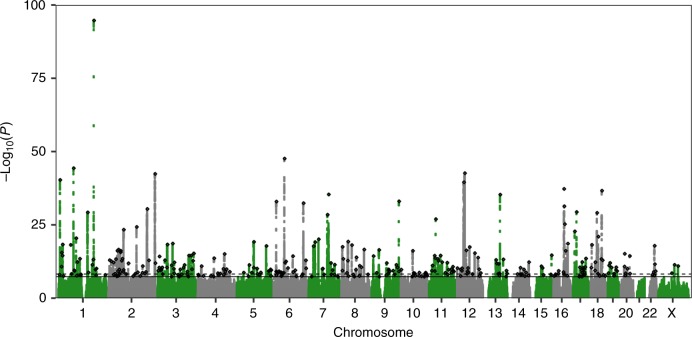


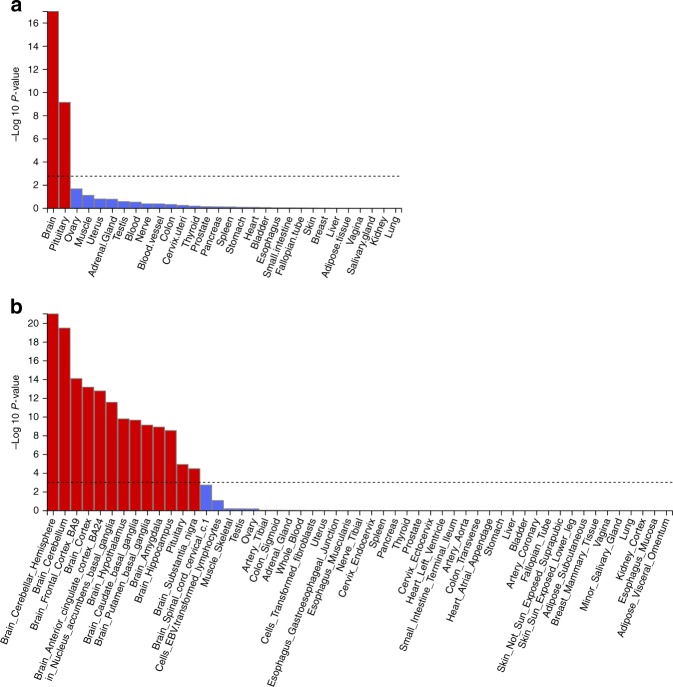
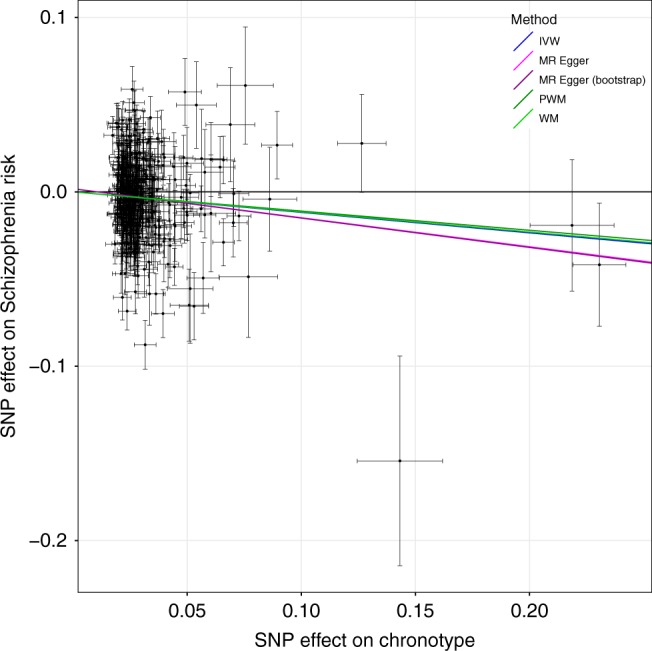
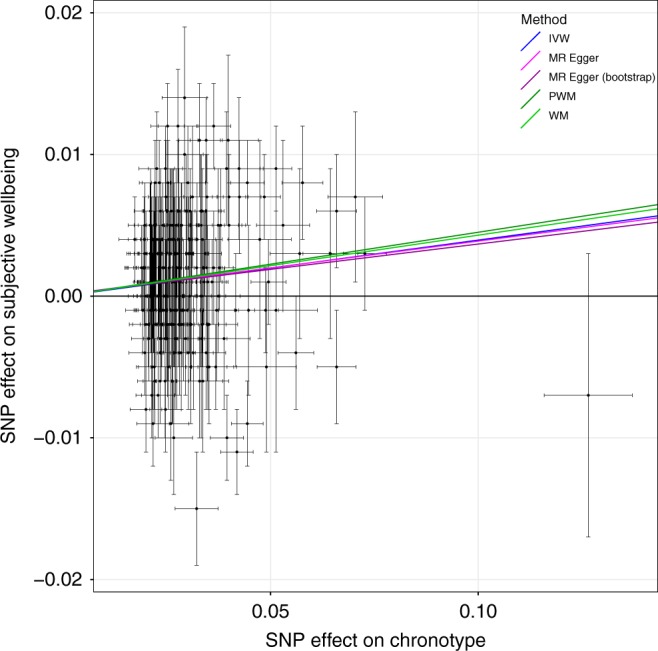
Verification
Claims the paper makes
The claims and statistics of this paper haven’t been checked yet.
Free: it reads the open-access text and checks the first 5 claims that cite a source we can check. Create a free account to check every claim.
Claims other papers make about this one
Each is checked against this paper’s own text: does it say what the citing paper says it does?
The source backs part of the claim, not all of it — or backs it for a different population, condition or comparison.
In the citing paper
“the chronotype seems to be dependent on environmental factors, which again is affected by mechanisms of innate homeostasis of sleep and circadian rhythms, as shown by a genome-wide association analysis, identifying genomic loci associated to chronotype (156).”
From Meal timing and its role in obesity and associated diseases (2024) · cites this paper as [156]
Experimental — accuracy not yet measuredIn the citing paper
“In several genome-wide association studies (GWASs) of depression-related traits, TNKS was found to be associated with (p = 7.68 × 10⁻¹⁰)38, bipolar disorder (p = 3 × 10⁻⁶)39, and positive affect (p = 0.0003)40.”
From Methylome-wide change associated with response to electroconvulsive therapy in depressed patients (2021) · cites this paper as [38]
Self-check
Percentages, sums and reported differences re-computed from the paper’s own numbers.
The self-check needs the paper’s full text.
Citations
Cites
Sudlow, C., Gallacher, J., Allen, N., Beral, V., Burton, P., Danesh, J., Downey, P., Elliott, P., Green, J., Landray, M., et al. (2015) · PLOS Medicine · doi:10.1371/journal.pmed.1001779 · Cited by 12,728
Bowden, J., Davey Smith, G., Haycock, P. C., & Burgess, S. (2016) · Genetic Epidemiology · doi:10.1002/gepi.21965 · Cited by 8,922
Self-citationThe MR-Base platform supports systematic causal inference across the human phenome
Hemani, G., Zheng, J., Elsworth, B., Wade, K. H., Haberland, V., Baird, D., Laurin, C., Burgess, S., Bowden, J., Langdon, R., et al. (2018) · eLife · doi:10.7554/elife.34408 · Cited by 7,959
Self-citationGenetics of Food Intake Self-Regulation in Childhood: Literature Review and Research Opportunities
Faith, M. S., Carnell, S., & Kral, T. V. E. (2013) · Human Heredity · doi:10.1159/000353879 · Cited by 7,601
Biological insights from 108 schizophrenia-associated genetic loci
Schizophrenia Working Group of the Psychiatric Genomics Consortium (2014) · Nature · doi:10.1038/nature13595 · Cited by 7,577
LD Score regression distinguishes confounding from polygenicity in genome-wide association studies
Schizophrenia Working Group of the Psychiatric Genomics Consortium, Bulik-Sullivan, B. K., Loh, P.-R., Finucane, H. K., Ripke, S., Yang, J., Patterson, N., Daly, M. J., Price, A. L., & Neale, B. M. (2015) · Nature Genetics · doi:10.1038/ng.3211 · Cited by 5,559
METAL: fast and efficient meta-analysis of genomewide association scans
Willer, C. J., Li, Y., & Abecasis, G. R. (2010) · Bioinformatics · doi:10.1093/bioinformatics/btq340 · Cited by 5,205
A self-assessment questionnaire to determine morningness- eveningness in human circadian rhythms
Home, J. K. (1976) · Medical Entomology and Zoology · Cited by 4,783
Mendelian randomization: Using genes as instruments for making causal inferences in epidemiology
Lawlor, D. A., Harbord, R. M., Sterne, J. A. C., Timpson, N., & Davey Smith, G. (2008) · Statistics in Medicine · doi:10.1002/sim.3034 · Cited by 4,618
Self-citationGenetic studies of body mass index yield new insights for obesity biology
Study, T. L. C., Locke, A. E., The ADIPOGen Consortium, The AGEN-BMI Working Group, The CARDIOGRAMplusC4D Consortium, The CKDGen Consortium, The, G. L. G. C., The, I. C. B. P., The MAGIC Investigators, The MuTHER Consortium, et al. (2015) · Nature · doi:10.1038/nature14177 · Cited by 4,534
Self-citation
Cited by
Items 601–700 of 758
Faculty Opinions recommendation of Trans effects on gene expression can drive omnigenic inheritance.
Bahlo, M. (2019) · Faculty Opinions – Post-Publication Peer Review of the Biomedical Literature · doi:10.3410/f.735650839.793559732
Alkuraya, F. S. (2019) · Faculty Opinions – Post-Publication Peer Review of the Biomedical Literature · doi:10.3410/f.734879251.793557857
Identifying genomic risk factors for neurodevelopmental disorders using machine learning
Brueggeman, L., Bassuk, A. G., Williams, A. J., Smith, R., Michaelson, J. J., & Braun, T. A. (2022) · doi:10.17077/etd.006360
Evolving Approaches to Identifying Genetic Risk Variants for Sleep Disorders
Pack, A. I. (2022) · Translational medicine research · doi:10.1007/978-94-024-2168-2_1
Marshall, S., Adams, M. J., Evans, K. L., Strawbridge, R. J., Campbell, A., Hayward, C., McIntosh, A. M., & Thomson, P. A. (2022) · bioRxiv (Cold Spring Harbor Laboratory) · doi:10.1101/2022.08.30.504498
Changes in the Sleep and Circadian Pattern of Sleep During the COVID-19 Pandemic
Kortesoja, L., & Merikanto, I. (2023) · Progress in Sleep Research · doi:10.1007/978-981-99-0240-8_2
Córdova‐Palomera, A., Diogo, D., & Szalma, S. (2023) · medRxiv · doi:10.1101/2023.04.24.23289058
Poor sleep behaviors and high genetic susceptibility increase the risk of osteoarthritisPreprint
Yang, Y., Yu, X., Fu, T., Bo, L., Lei, S., & Deng, F. (2023) · Research Square · doi:10.21203/rs.3.rs-3325988/v1
Molecular Basis of the Circadian Mechanism in Women
Crandall, M., Rabinovich-Nikitin, I., & Kirshenbaum, L. A. (2023) · Advances in biochemistry in health and disease · doi:10.1007/978-3-031-39928-2_13
A common alteration in effort-based decision-making in apathy, anhedonia, and late circadian rhythm
Mehrhof, S. Z., & Nord, C. L. (2025) · eLife · doi:10.31234/osf.io/z69w4 · Cited by 2
Fahey, L., & Lopez, L. M. (2024) · medRxiv · doi:10.1101/2024.02.16.24302920
Twenty four food intakes and nonalcoholic fatty liver disease: A Mendelian randomization studyPreprint
Chen, Z., Li, C., Gao, T., & Ke, D. (2024) · Research Square · doi:10.21203/rs.3.rs-4066050/v1
Stars and Rising Stars in Pediatric Endocrinology: 2022
(2024) · Frontiers research topics · doi:10.3389/978-2-8325-4686-4
Bos, M. M., Goulding, N., Lee, M. A., Hofman, A., Bot, M., Pool, R., Vijfhuizen, L. S., Zhang, X., Li, C., Mustafa, R., et al. (2021) · Figshare · doi:10.6084/m9.figshare.14234926
Self-citationSleep regulation and host genetics
Odriozola, A., González, A., Álvarez‐Herms, J., & Corbi, F. (2024) · Advances in genetics · doi:10.1016/bs.adgen.2024.02.002
Bedeutung des circadianen Rhythmus bei psychischen Störungen
Cajochen, C., & Garbazza, C. (2024) · Elsevier eBooks · doi:10.1016/b978-3-437-21054-9.00007-0
Vicuña, L., Barrientos, E., Leiva-Yamaguchi, V., Alvares, D., Verónica Mericq, G., Pereira, A., & Eyheramendy, S. (2024) · Human Molecular Genetics · doi:10.1093/hmg/ddae098
Genetic Studies of Sleep in Children
Mitchell, J. A., & Cielo︎, C. M. (2024) · Springer eBooks · doi:10.1007/978-3-031-62723-1_17
Mendelian Randomization of Sleep and Circadian Traits
Sonti, S., & Grant, S. F. A. (2024) · Springer eBooks · doi:10.1007/978-3-031-62723-1_9
Genetics of Chronotype and Circadian Rhythm Disorders
Kunorozva, L., & Lane, J. M. (2024) · Springer eBooks · doi:10.1007/978-3-031-62723-1_11
Self-citationMajor risks of harmful environmental carcinogenic effects in light industry enterprises
Baciu, A. (2024) · Bulletin of the Academy of Sciences of Moldova Medical Sciences · doi:10.52692/1857-0011.2024.1-78.32
Mørch, N. J. S., Calderón, A. B., Kvamme, T. L., Donskov, J. G., Secher, D. K., Díaz-i-Calvete, J., Pediotidis-Maniatis, D., Zana, B., Durand, S., Rumi, B., et al. (2024) · medRxiv · doi:10.1101/2024.09.01.24312906
Wang, Y., Bi, Y., Wang, Y., Ji, F., & Zhang, L. (2024) · BMC Gastroenterology · doi:10.1186/s12876-024-03400-x · Cited by 1
“…[21], computer using [21]), two stress-related traits (insomnia [22], major depression [23]), two sleep traits (sleep duration [24], morning person [25]), three smoking and drinking traits (smoking initiation [26], smoking behaviors [26] and alcohol drinking per week [26]), total household income…”
BackgroundBi, Z., Cai, Y., Chen, J., Shi, X., Liao, S., Jin, L., & Liu, J. (2024) · Journal of Orthopaedic Surgery and Research · doi:10.1186/s13018-024-05031-0
“…association studies (GWASs), a total of 10 sleep-related traits were ascertained, including sleep duration, short sleep duration, long sleep duration [35], daytime napping [36], insomnia [37], chronotype [38], daytime sleepiness [39], snoring [40], sleep apnea [41], and trouble falling asleep [40].”
BackgroundZheng, J., Li, Y., Wu, C., Wang, H., Jiang, F., & Tang, X. (2024) · Psychiatry Investigation · doi:10.30773/pi.2024.0192
Bian, B., Revez, J. A., Crouse, J. J., Hickie, I. B., Gachon, F., & Wray, N. R. (2024) · Research Directions Depression · doi:10.1017/dep.2024.7 · Cited by 1
“In addition, circadian phase can vary among individuals, which can lead to behavioral differences known as chronotypes that can also influence depression and mental health (Jones et al. 2019).”
Paz, V., Williams, D. M., Richards, M., Tassino, B., da Silva, A. C. R., & Garfield, V. (2024) · medRxiv · doi:10.1101/2024.12.08.24318680
Cai, W., Forsell, Y., Lavebratt, C., & Melas, P. A. (2024) · medRxiv · doi:10.1101/2024.02.20.24303076
Karaağaç, M., & Gıca, Ş. (2024) · Biological Rhythm Research · doi:10.1080/09291016.2024.2439932
“Genome-wide association studies have shown that a morning chronotype is negatively associated with schizophrenia (Jones et al. 2019), whereas an evening chronotype is highly associated with the development of schizophrenia (Lane et al. 2016).”
Penichet, D. (2025) · Journal of Biological Rhythms · doi:10.1177/07487304241308633
“And so, in a recent study, Landvreugd and colleagues (2024) made use of the aforementioned GWAS for chrono-type (i.e. morningness) (Jones et al., 2019) and RA (Ferguson et al., 2018) to calculate PGSs for each circadian phenotype in the Netherlands Twin Registry.”
Altay, G., & Karaaslan, M. M. (2025) · Chronobiology International · doi:10.1080/07420528.2025.2493218
“…into three categories: morning types (or “larks”), who prefer to go to bed and wake up earlier; evening types (or “owls”), who favor later sleep and wake times; and intermediate types, who exhibit characteristics of both morning and evening chronotypes (Jones et al. 2019; Selvi et al. 2017).”
Agrawal, S., & Degia, U. M. (2025) · Journal of Food Innovation, Nutrition, and Environmental Sciences · doi:10.70851/jfines.2025.2(2).46.59
0010 The Diurnal Rhythmicity of Untargeted Metabolomic Profiles in Humans
Nagarajan, P., Faquih, T. O., Yu, B., Dashti, H. S., Noordam, R., Xiao, Q., Kaplan, R. C., Qi, Q., Isasi, C. R., Saxena, R., et al. (2025) · SLEEP · doi:10.1093/sleep/zsaf090.0010
Self-citationEpidemiology of Sleep and Circadian Health
Xiao, Q., & Stone, K. L. (2025) · Oxford University Press eBooks · doi:10.1093/oxfordhb/9780197602751.013.12
Zheng, K., Zhang, J., Shi, Z., Yang, Z., & Li, Z. (2025) · Biological Rhythm Research · doi:10.1080/09291016.2025.2525368
“Chronotype data was taken from GWAS data of 449,734 people with European ancestry; morningness was defined as the positive event and eveningness as the negative event (Jones et al. 2019).”
Luo, S., Zhu, M., Zhang, S., Ni, L., Zheng, X., & Li, J. (2025) · Neurosurgical Review · doi:10.1007/s10143-025-03691-y
Lam, M. I., Tong, L. K., Xu, Q., & Cheong, P. L. (2025) · Journal of Affective Disorders · doi:10.1016/j.jad.2025.120098 · Cited by 2
Does it matter what time I go to bed?
Gachon, F., & Weger, M. (2023) · The Conversation · doi:10.64628/aa.h6ug9qdwx
Li, Z., & Chen, L. (2025) · Genome biology · doi:10.1186/s13059-025-03767-4
Niu, W., Zhang, J., Lan, X., Sha, Y., Han, X., Qiao, J., Zheng, F., Liu, L., Ma, F., Yao, L., et al. (2025) · Archives of Gerontology and Geriatrics · doi:10.1016/j.archger.2025.106046
Lin, W., Chen, X., Wei, Y., Yang, L., Li, H., & Zhu, T. (2025) · Brain and Behavior · doi:10.1002/brb3.70870
Fu, Y., He, Y., & Wu, W. (2025) · Medicine · doi:10.1097/md.0000000000045084
“…intake, fat intake, protein intake, sugar intake, [15] physical activity (vigorous), physical activity (moderate to vigorous), [16] chro-notype, [17,18] snoring, insomnia, daytime napping, [19] drinks per week, smoking per day, smoking Initiation, [20] lifetime smoking index, [21] coffee intake,…”
Kou, X., & Xiao, J. (2025) · International Journal of Women s Health · doi:10.2147/ijwh.s531967 · Cited by 1
Duan, Y., Sun, Y., Zhang, Z., Huang, S., Lin, J., Xu, S., Xi, Y., He, X., Chen, R., & An, J. W. (2025) · Journal of Affective Disorders · doi:10.1016/j.jad.2025.120839
Rehman, Z., Khan, A. A., Ye, J., Ma, X., Kuang, Y., Wang, Z., Lan, Z., Zhao, Q., Yang, J., Zhang, X., et al. (2025) · Biomedicines · doi:10.3390/biomedicines13123101
“CHR encompassed a dataset of 248,100 participants, including 120,478 cases and 127,622 controls [34], and the SD data were obtained from 446,118 European individuals [35].”
InfluentialGan, Q., Song, E., Zhang, L., Zhou, Y., Wang, L., Shan, Z., Liang, J., Fan, S., Pan, S., Cao, K., et al. (2024) · Figshare · doi:10.6084/m9.figshare.26753167
Gan, Q., Song, E., Zhang, L., Zhou, Y., Wang, L., Shan, Z., Liang, J., Fan, S., Pan, S., Cao, K., et al. (2024) · Figshare · doi:10.6084/m9.figshare.26753170
Gan, Q., Song, E., Zhang, L., Zhou, Y., Wang, L., Shan, Z., Liang, J., Fan, S., Pan, S., Cao, K., et al. (2024) · Figshare · doi:10.6084/m9.figshare.26753188
Wang, Z., Chen, M., Wei, Y., Zhuo, C.-G., Xu, H., Li, W., & Ma, L. (2022) · Figshare · doi:10.6084/m9.figshare.20081115
Zhang, Y., Li, S., Xie, Y., Xiao, W., Xu, H., Jin, Z., Li, R., Wan, Y., & Tao, F. (2024) · Figshare · doi:10.6084/m9.figshare.26656798
Wang, Z., Chen, M., Wei, Y., Zhuo, C.-G., Xu, H., Li, W., & Ma, L. (2022) · Figshare · doi:10.6084/m9.figshare.20081109
Wang, Z., Chen, M., Wei, Y., Zhuo, C.-G., Xu, H., Li, W., & Ma, L. (2022) · Figshare · doi:10.6084/m9.figshare.20081112
Mehrhof, S. Z. (2024) · Apollo (University of Cambridge) · doi:10.17863/cam.117708
Gan, Q., Song, E., Zhang, L., Zhou, Y., Wang, L., Shan, Z., Liang, J., Fan, S., Pan, S., Cao, K., et al. (2024) · Figshare · doi:10.6084/m9.figshare.26753191
Wang, Z., Chen, M., Wei, Y., Zhuo, C.-G., Xu, H., Li, W., & Ma, L. (2022) · Figshare · doi:10.6084/m9.figshare.20081118
Gan, Q., Song, E., Zhang, L., Zhou, Y., Wang, L., Shan, Z., Liang, J., Fan, S., Pan, S., Cao, K., et al. (2024) · Figshare · doi:10.6084/m9.figshare.26753173
Yang, X., Cheng, B., Cheng, S., Liu, L., Pan, C., Meng, P., Li, C., Chen, Y., Zhang, J., Zhang, H., et al. (2024) · Figshare · doi:10.6084/m9.figshare.25884923
Longitudinal Investigation of Phenotypic, Genetic and Epigenetic Factors in Mood Disorders
Sirignano, L. (2024) · heiDOK (Heidelberg University) · doi:10.11588/heidok.00035568
The relevance of chronotype for meal timing, glycemic response and hunger sensations
Stutz, B. (2024) · Habilitation Regulations of the Faculty of Mechanical Engineering (University of Paderborn) · doi:10.17619/unipb/1-2044
Yap, C. X., Alvares, G. A., Henders, A. K., Lin, T., Wallace, L. M., Farrelly, A., McLaren, T., Berry, J., Vinkhuyzen, A. A. E., Trzaskowski, M., et al. (2021) · Figshare · doi:10.6084/m9.figshare.13889079
Yang, X., Cheng, B., Cheng, S., Liu, L., Pan, C., Meng, P., Li, C., Chen, Y., Zhang, J., Zhang, H., et al. (2024) · Figshare · doi:10.6084/m9.figshare.25885134
Bos, M. M., Goulding, N., Lee, M. A., Hofman, A., Bot, M., Pool, R., Vijfhuizen, L. S., Zhang, X., Li, C., Mustafa, R., et al. (2021) · Figshare · doi:10.6084/m9.figshare.14234932
Self-citationGan, Q., Song, E., Zhang, L., Zhou, Y., Wang, L., Shan, Z., Liang, J., Fan, S., Pan, S., Cao, K., et al. (2024) · Figshare · doi:10.6084/m9.figshare.26753176
Hu, J., Wang, X., Cheng, L., Dang, K., Ming, Z., Tao, X., Xu, X., Sarker, S., & Li, Y. (2024) · Figshare · doi:10.6084/m9.figshare.26666467
Wang, Z., Chen, M., Wei, Y., Zhuo, C.-G., Xu, H., Li, W., & Ma, L. (2022) · Figshare · doi:10.6084/m9.figshare.20081121
Zhang, X.-B., Jiang, H.-H., Zhang, L.-L., Li, C.-J., Chen, C., Xing, M.-Z., Ma, Y., & Ma, Y.-X. (2024) · Figshare · doi:10.6084/m9.figshare.25347055
Wang, Q., Hu, S., Qi, L., Wang, X., Jin, G., Wu, D., Wang, Y., & Ren, L. (2024) · Figshare · doi:10.6084/m9.figshare.24234300
Gan, Q., Song, E., Zhang, L., Zhou, Y., Wang, L., Shan, Z., Liang, J., Fan, S., Pan, S., Cao, K., et al. (2024) · Figshare · doi:10.6084/m9.figshare.26753182
Gan, Q., Song, E., Zhang, L., Zhou, Y., Wang, L., Shan, Z., Liang, J., Fan, S., Pan, S., Cao, K., et al. (2024) · Figshare · doi:10.6084/m9.figshare.26753185
Hu, J., Wang, X., Cheng, L., Dang, K., Ming, Z., Tao, X., Xu, X., Sarker, S., & Li, Y. (2024) · Figshare · doi:10.6084/m9.figshare.26666464
Gan, Q., Song, E., Zhang, L., Zhou, Y., Wang, L., Shan, Z., Liang, J., Fan, S., Pan, S., Cao, K., et al. (2024) · Figshare · doi:10.6084/m9.figshare.26753179
Li, M. (2023) · eScholarship (California Digital Library)
Хронотипи: зв'язок способу життя із ефективністю навчальної діяльності
Кирилова, О. В. (2025) · DSpace BSMU · Cited by 1
Circadian rhythms and sleep of postmenopausal women
Pérez‐Medina‐Carballo, R. (2024) · eScholarship@McGill (McGill) · doi:10.82308/50303
IL DIGIUNO INTERMITTENTE: EFFETTI SULLA SINDROME METABOLICA
Valeria, I. (2024) · Electronic Theses and Dissertations Repository (University of Pisa)
Impairment in mitochondrial oxidative phosphorylation alters clock gene expression
Baxter, B. J. (2020) · Lu Zone Ul (Laurentian University)
Características y predictores del sueño en jóvenes y su relación con el desempeño cognitivo
Estevan Debat, I. M. (2022) · LA Referencia (Red Federada de Repositorios Institucionales de Publicaciones Científicas) · Cited by 2
The interplay between sleep, cognition, and copy number variations in Autism Spectrum Disorder (ASD)
Tesfaye, R. (2023) · eScholarship@McGill (McGill) · doi:10.82308/27967
Metabolic, Genetic and Neurological Control of Sleep Behavior
Palermo, J. (2023) · OakTrust (Texas A&M University Libraries)
Digitalisaatio oppimisen ja oppimistulosten selittäjänä
(2024) · Jyväskylä University Digital Archive (University of Jyväskylä) · Cited by 5
Multiomic analysis of neuropsychiatric disorders
Shane, C. (2025) · ARAN (University of Galway Research Repository) (Ollscoil na Gaillimhe – University of Galway) · doi:10.13025/29945
Wang, Z., Zhang, M., Liu, C., Zhang, Y., Cheng, R., Zhang, S., Yang, B., Wang, L., Guo, J., & Wang, X. (2026) · Naunyn-Schmiedeberg s Archives of Pharmacology · doi:10.1007/s00210-026-05926-1
Circadian ADCY3 Ser107Pro variant bridges difficulty awakening in the morning and adiposity
Tchio, C. I. M., Maher, M., Moth, C. W., Meiler, J., Lane, J. M., Taylor, H. A., Williams, J., & Saxena, R. (2025) · iScience · doi:10.1016/j.isci.2025.114587
Self-citationBeyond Chronotype: Complex Genetic Influences on Sleep Architecture in Healthy Adults
Kim, J., Yu, Y., Choung, J., Lee, N. R., Yoo, J., Kim, H., & Jeon, H. (2025) · Journal of Sleep Medicine · doi:10.13078/jsm.250022
Miyagawa, T., Shimada, M., Tanida, K., Kotorii, N., Kato, T., Kotorii, T., Ariyoshi, Y., Hiejima, H., Ozone, M., Uchimura, N., et al. (2026) · medRxiv · doi:10.64898/2026.01.06.26343504
Kianersi, S., Potts, K. S., Wang, H., Sofer, T., Noordam, R., Rutter, M. K., Rexrode, K. M., Redline, S. S., & Huang, T. (2026) · medRxiv · doi:10.64898/2026.01.12.26343964
Self-citationXue, X., Wang, H., Zhu, Z., Yu, G., Seney, M. L., Zhang, L., & Tseng, G. C. (2026) · bioRxiv (Cold Spring Harbor Laboratory) · doi:10.64898/2026.01.21.700905
Tchio, C. I. M., Maher, M., Moth, C., Meiler, J., Lane, J. M., Taylor, H. A., Williams, J., & Saxena, R. (2026) · Sleep Medicine · doi:10.1016/j.sleep.2025.107133
Self-citationChronotype, Sleep Pattern and Use of Bedtime E-devices Among High School Student-Athletes
Wang, C. K. J., Burns, S. F., Teo, W., Chian, L. K., & Sumarta, T. T. (2026) · American Behavioral Scientist · doi:10.1177/00027642261421294
A Developmentally Informed Study of Sleep and Circadian Polygenic Scores in Adolescence
Lewis, K. S., Martin, J., Heron, J. E., Riglin, L., Rice, F. J., O’Donovan, M. C., & Gregory, A. M. (2026) · JAMA Psychiatry · doi:10.1001/jamapsychiatry.2025.4647
Hou, Y.-Y., Wu, H.-T., Chen, W.-J., Lan, Y.-Z., Yu, X.-N., & Liu, J. (2026) · Future Science OA · doi:10.1080/20565623.2026.2631966
Особливості якості життя та сну студентів з різним хронотипом
Дідківська, К. (2025) · eKNUTSHIR
Chronotype and Chrononutrition Profiles in Adolescents Obesity
Hidayat, D. A., Khudin, M., & Prawitasari, T. (2026) · Jurnal Gastrohepatologi Anak Indonesia/Archives of Pediatric Gastroenterology, Hepatology, and Nutrition · doi:10.58427/apghn.5.1.2026.45-61
“16, 18 These genetic variations are known to contribute to differences in sleep patterns, caloric intake, waist circumference, obesity, and the presence of other metabolic disorders.”
Genome-Wide Association Study Identifies Genetic Loci Involved with Sleep Fragmentation
Maxwell, A. M. (2025) · TSpace (University of Toronto)
Hybridisation in Primates: Cryptic Admixture and Adaptive Introgression
Kendall, C. J. R. (2025) · TSpace (University of Toronto)
Assessing the quality of life of shift-working nurses based on their chronotypes
Locihová, H., Pačísková, M., Greplová, K., & Hosáková, J. (2026) · Kontakt · doi:10.32725/kont.2026.013
Su, P., Yang, F., Hu, T., & Cui, H. L. (2026) · International Journal of Clinical Practice · doi:10.1155/ijcp/9918115
Joshi, D., Rafiq, T., Pigeyre, M., de Mutsert, R., Rutters, F., Campbell, D. J. T., Després, J., Carpentier, A. C., Hoeks, J., Schrauwen, P., et al. (2026) · Diabetes Obesity and Metabolism · doi:10.1111/dom.70616
“[16].”
Wu, C., Lin, M., Cheng, C., Liao, S. F., Su, M., Pan, Y., & Wang, S. (2026) · European Archives of Psychiatry and Clinical Neuroscience · doi:10.1007/s00406-026-02211-3
“PRS for early chronotype was derived from a discovery sample with 697,828 individuals from the GWAS meta-analysis of the UK Biobank and 23andMe [16].”
Metadata
- Authors
- Jones, S. E., Lane, J. M., Wood, A. R., van Hees, V. T., Tyrrell, J., Beaumont, R. N., Jeffries, A. R., Dashti, H. S., Hillsdon, M., Ruth, K. S., Tuke, M. A., Yaghootkar, H., Sharp, S. A., Jie, Y., Thompson, W. D., Harrison, J. W., Dawes, A., Byrne, E. M., Tiemeier, H., Allebrandt, K. V., Bowden, J., Ray, D. W., Freathy, R. M., Murray, A., Mazzotti, D. R., Gehrman, P. R., Lawlor, D. A., Frayling, T. M., Rutter, M. K., Hinds, D. A., Saxena, R., & Weedon, M. N.
- Affiliations
- University of Exeter (GB)
- Broad Institute (US)
- The University of Queensland (AU)
- Erasmus MC (NL)
- Sanofi (Germany) (DE)
- University of Bristol (GB)
- University of Manchester (GB)
- University of Pennsylvania (US)
- Manchester Academic Health Science Centre (GB)
- 23andMe (United States) (US)
- Brigham and Women's Hospital (US)
- Corresponding author
- Weedon, Michael N.
- ORCID
- Jones, Samuel E.
- Lane, Jacqueline M.
- Wood, Andrew R.
- van Hees, Vincent T.
- Tyrrell, Jessica
- Beaumont, Robin N.
- Jeffries, Aaron R.
- Dashti, Hassan S.
- Hillsdon, Melvyn
- Ruth, Katherine S.
- Tuke, Marcus A.
- Yaghootkar, Hanieh
- Sharp, Seth A.
- Thompson, William D.
- Harrison, Jamie W.
- Dawes, Amy
- Byrne, Enda M.
- Tiemeier, Henning
- Allebrandt, Karla V.
- Bowden, Jack
- Ray, David W.
- Freathy, Rachel M.
- Murray, Anna
- Mazzotti, Diego R.
- Gehrman, Philip R.
- Lawlor, Debbie A.
- Frayling, Timothy M.
- Rutter, Martin K.
- Hinds, David A.
- Saxena, Richa
- Weedon, Michael N.
- Venue
- Nature Communications
- Published
- 2019-01-29
- Volume
- 10
- Issue
- 1
- Pages
- 343-343
- ISSN
- 2041-1723 (ISSN-L)
- PMC
- PMC6351539
- OpenAlex
- W2914232633
- Cited by
- 691
- References
- 103
- Citations by year
- 2026: 79 · 2025: 108 · 2024: 122 · 2023: 87 · 2022: 100 · 2021: 92 · 2020: 66 · 2019: 34
- FWCI
- 40.46
- Type
- journal article
- Language
- en
- Open access
- gold
- doi.org
- Licence
- cc-by
- creativecommons.org/licenses/by/4.0 (tdm)
- creativecommons.org/licenses/by/4.0 (vor)
- Locations
- Nature Communications (publishedVersion, cc-by)
- Europe PMC (PubMed Central) (publishedVersion, cc-by)
- PubMed Central (publishedVersion, cc-by)
- PubMed (publishedVersion)
- EUR Research Repository (Erasmus University Rotterdam) (publishedVersion, other-oa)
- EUR Research Repository (Erasmus University Rotterdam) (submittedVersion, other-oa)
- RePub (Erasmus University Rotterdam) (submittedVersion, other-oa)
- RePEc: Research Papers in Economics (submittedVersion)
- Adelaide Research & Scholarship (AR&S) (University of Adelaide) (submittedVersion, cc-by)
- DOAJ (DOAJ: Directory of Open Access Journals) (submittedVersion)
- DOAJ (DOAJ: Directory of Open Access Journals) (submittedVersion, cc-by-sa)
- Figshare (submittedVersion)
- Open Research Exeter (University of Exeter) (submittedVersion, cc-by)
- Research Explorer (The University of Manchester) (submittedVersion, cc-by)
- Royal Devon and Exeter Research Repository (Royal Devon and Exeter) (submittedVersion)
- Bristol Research (University of Bristol) (submittedVersion, cc-by)
- Explore Bristol Research (submittedVersion, cc-by)
- Funders
- Wellcome Trust (MC_UU_00011/6, 104150/Z/14/Z, 107849, 107851/Z/15/Z, 104150, WT097835MF)
- National Institute for Health and Care Research (NF-SI-0611-10196)
- Diabetes Research and Wellness Foundation
- University of Manchester
- European Commission (2007–2013, 669545, FP/2007-2013)/ERC, FP/2007/2013)
- University of Bristol (MC_UU_00011/6, MC_UU_00,011/3)
- National Institutes of Health (FP/2007-2013)
- Medical Research Council (MR/M005070/1, MC_UU_00011/6, MR/P012167/1, MC_UU_00011/2, MC_UU_00011/3, 1078901, MC_PC_17228, MR/P023576/2, MC_UU_00011, WT097835MF)
- National Health and Medical Research Council (1078901, 1145645, MC_UU_00011/6, 1087889)
- National Heart, Lung, and Blood Institute (K01HL136884, T32HL007901)
- National Institute of Mental Health
- National Institute on Drug Abuse
- National Human Genome Research Institute
- NIH Office of the Director
- National Cancer Institute
- National Institute of Diabetes and Digestive and Kidney Diseases (R01DK105072, R01DK102696, F32DK102323, R01DK107859)
- National Institute of Neurological Disorders and Stroke
- FP7 Ideas: European Research Council (323195, 669545, 2007-2013, FP2007‐2013)
- Common Fund
- Topics
- Life Sciences › Neuroscience › Endocrine and Autonomic Systems › Circadian rhythm and melatonin
- Life Sciences › Biochemistry, Genetics and Molecular Biology › Genetics › Genetic Associations and Epidemiology
- Social Sciences › Psychology › Experimental and Cognitive Psychology › Sleep and related disorders
- Keywords
- chronotype, morningness, circadian rhythm, sleep timing, genetic loci, cAMP signaling, glutamate signalling, insulin signaling, Mendelian randomization, mental health, type 2 diabetes, body mass index, activity monitoring
- MeSH terms
- Cyclic AMP, Adult, Aged, Circadian Rhythm, Female, United Kingdom, Humans, Male, Middle Aged, Sleep, Glutamic Acid, White People, Genome-Wide Association Study, Genetic Loci
About these checks
Registry, retraction, Cites and statistics results are computed, not judged, with one exception: a printed reference that no index lists is read once by a model before it counts as a citation error. Claims are extracted by a model and kept only when their quote appears verbatim in the text; each cited source is then checked, with a model’s help, for whether it says what the claim relies on. Those verdicts can be wrong — read the claim’s quote and the cited source before relying on one.
Statistics and arithmetic are recomputed, not judged.
Confidence bands are shown only for fields calibrated on our annotated test set. None is calibrated yet, so no band is shown.
What counts as a claim ›How we measure confidence ›How we check this ›
Are you an author, or do you see a problem with this page? Request a review
Data sources
Bibliographic data: Semantic Scholar, OpenAlex, Crossref.
Contains information from the Semantic Scholar Academic Graph Datasets, made available under the ODC Attribution License (ODC-BY 1.0).
Semantic Scholar’s data is described in: Kinney, R., et al. (2023). The Semantic Scholar Open Data Platform. arXiv:2301.10140.
