

A high-stringency blueprint of the human proteome
Open accessThe DOI matches its Crossref record; 178 of the 181 references it cites were found in a registry or an index, and 2 are not checked yet; 51 of the 96 sources its claims cite were checked for support.
Abstract
The Human Proteome Organization (HUPO) launched the Human Proteome Project (HPP) in 2010, creating an international framework for global collaboration, data sharing, quality assurance and enhancing accurate annotation of the genome-encoded proteome. During the subsequent decade, the HPP established collaborations, developed guidelines and metrics, and undertook reanalysis of previously deposited community data, continuously increasing the coverage of the human proteome. On the occasion of the HPP’s tenth anniversary, we here report a 90.4% complete high-stringency human proteome blueprint. This knowledge is essential for discerning molecular processes in health and disease, as we demonstrate by highlighting potential roles the human proteome plays in our understanding, diagnosis and treatment of cancers, cardiovascular and infectious diseases.
Verified 2026-10-05 · 2 references not checked yet
Overview
CoChat Summary
TL;DR
The Human Proteome Project reports a 90.4% complete high-stringency human proteome blueprint after its first decade, based on neXtProt release 17-01-2020. It highlights progress in cataloguing protein existence and applications in cancer, cardiovascular disease, and infectious disease, including SARS-CoV-2.
Key findings
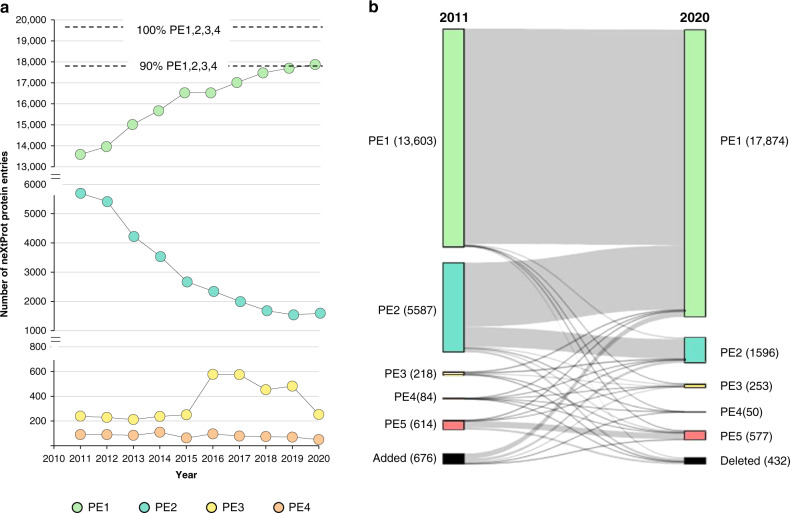
- The 17-01-2020 neXtProt HPP release designates credible PE1 evidence for 17,874 proteins, or 90.4% of the 19,773 PE1,2,3,4 protein entries excluding 577 dubious PE5 entries; 1,899 (9.6%) PE2,3,4 entries remain missing.
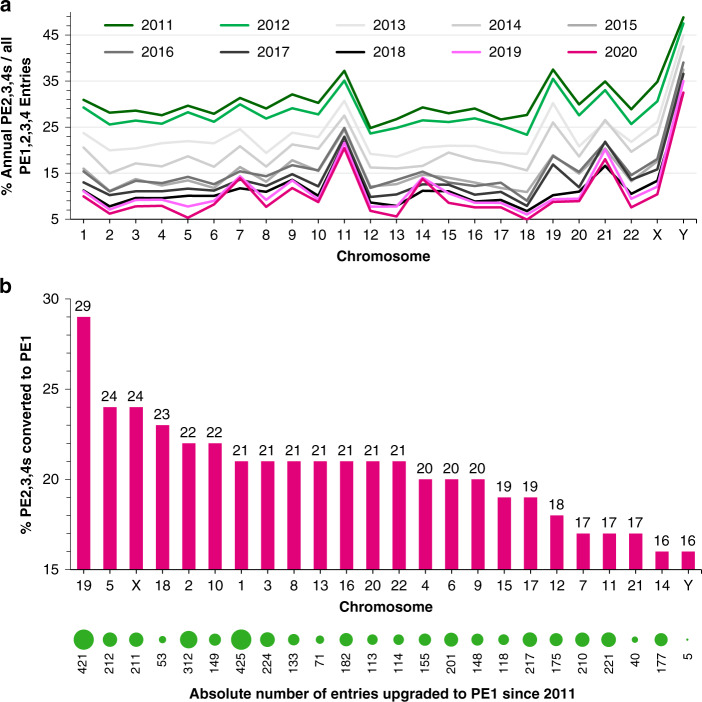
- PE1 identifications rose from 13,588 in 2011 to 17,874 in 2020, while PE2 entries fell from 5,696 to 1,596; linear regression of PE1 increases against PE2 decreases gave R² = 97%, and extrapolation suggested 95% PE1s may be reached between 2024 and 2027.
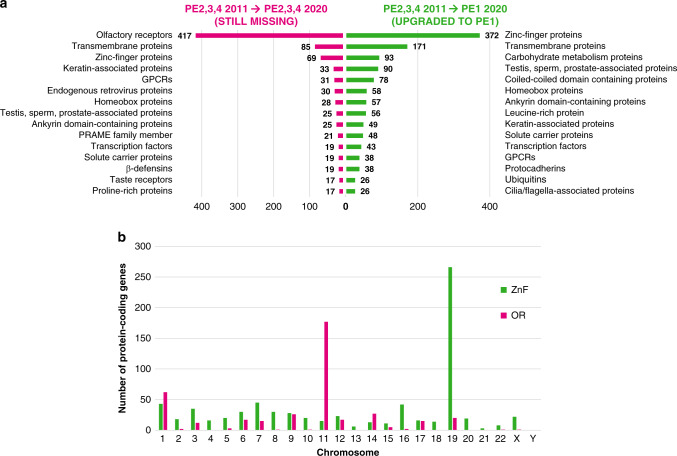
- Some protein families were resistant to PE1 upgrade: 417 of the 2011 PE2,3,4 olfactory receptor entries remained missing in 2020, and 17 of 20 taste receptors remained PE2,3,4; in contrast, 372 zinc finger proteins were upgraded from PE2,3,4 to PE1 between 2011 and 2020.
- HPP resources include the Human SRMAtlas, developed from 166,174 synthetic proteotypic peptides and enabling targeted identification/quantification of a theoretical maximum of 99.7% of the human proteome, and the HPA, which targets ~87% of the proteome with >1 antibody.
Methods
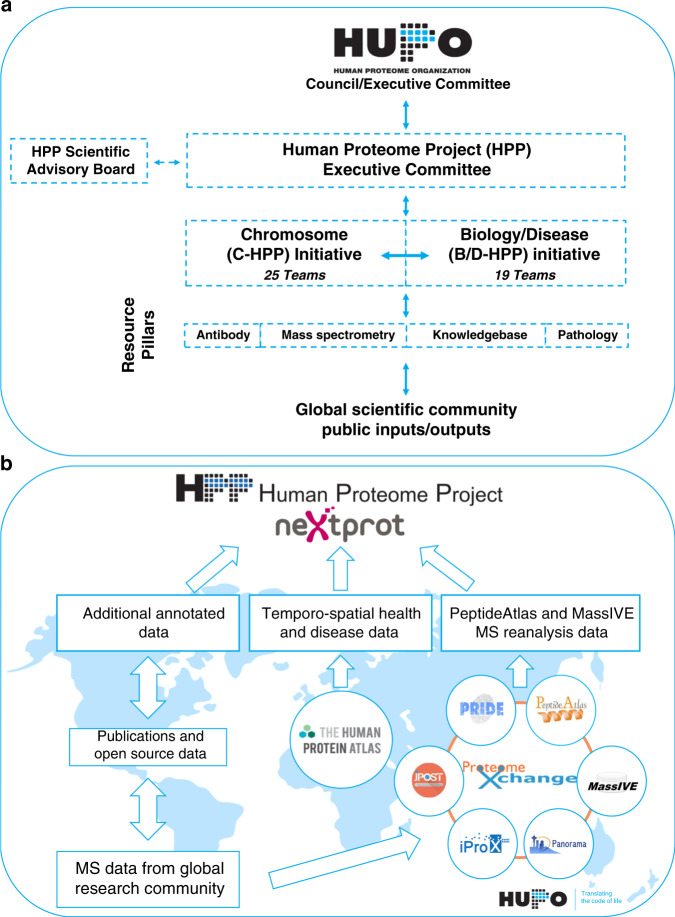
- Community MS data are deposited through ProteomeXchange repositories, reprocessed by PeptideAtlas and MassIVE, and integrated into neXtProt, which is the HPP reference knowledgebase and issues annual HPP releases.
- High-stringency protein inference requires at least two uniquely mapping, non-nested peptides of at least nine amino acid residues, coverage exceeding 18 residues, and a maximum protein-level FDR of 1%; missing-protein publications require further synthetic peptide spectra matching.
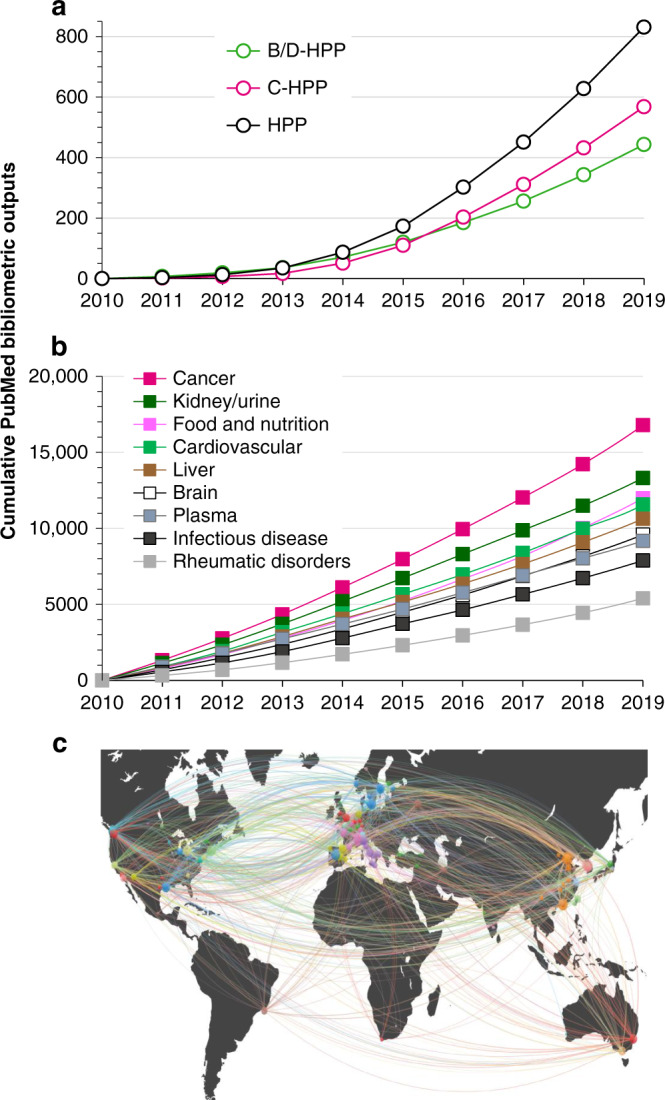
- The paper analyses decadal neXtProt PE1–PE5 metrics, including Sankey diagrams, linear regression, chromosome-level missing-protein statistics, and bibliometric/community impact via the Human Proteome Reference Library and VOSviewer.
Limitations
- The paper states that progress has recently slowed, suggesting it may be difficult to confidently identify all 1,899 missing proteins; many may be below detection limits, in under-studied cell types/tissues, expressed only under particular conditions or developmental stages, or difficult to solubilize as hydrophobic multi-transmembrane proteins.
- The paper states that the current HPP KB processing pipeline makes it impossible to isolate decadal PE1 contributions from any particular C-HPP team versus the overall community, so PE1s emanating from community deposition can only be historically estimated.
- Evident from the text: the blueprint is tied to the 17-01-2020 neXtProt release and PE-based protein-existence tracking, while future priorities note a needed shift toward proteoforms and single-cell proteomic technology.
Model-written summary. Check it against the paper before relying on it.
Integrity signals
Registry
Cites
Statistics
Figures
Verification
Claims the paper makes
27 Valid · 0 Not valid · 28 Not checked · 43 Own results and interpretations
Every source the paper cites for this claim was checked and supports it.
In the paper
“The HPP routinely applies high-stringency protein inference analytics10, generated through the Trans-Proteomic Pipeline11.”
§ A high-stringency blueprint of the human proteome > HPP structure and achievements > Defining the human proteome at high-stringency
What the sources say
- Supportedcites [10] Deutsch EW Human proteome project mass spectrometry data interpretation guidelines 3.0 J. Proteome Res. 2019 18 4108 4116 10.1021/acs.jproteome.9b00542 31599596 PMC6986310 source
In “Changes to the HPP PE2,3,4 Missing Protein Strategy,” the paper describes the HPP pipeline’s routine reprocessing of MS data with Trans-Proteomic Pipeline tools. It also says PeptideAtlas sets extremely high thresholds to achieve a 1% protein-level false discovery rate, supporting the high-stringency characterization. (LLM, conf=0.93)
- Supportedcites [11] Deutsch EW Trans-Proteomic Pipeline, a standardized data processing pipeline for large-scale reproducible proteomics informatics Proteom. Clin. Appl. 2015 9 745 754 10.1002/prca.201400164 PMC4506239 25631240 source
The citation is attached to “generated through the Trans-Proteomic Pipeline,” not to the separate assertion that the HPP routinely applies high-stringency analytics. The Basic Workflow section identifies ProteinProphet as a TPP protein-inference tool that assigns protein probabilities, and Data analysis perils describes stringent protein-level thresholds. (LLM, conf=0.91)
plain- Asserted: passes — The authors put it forward as true.
- Checkable: passes — It can be checked against evidence.
- Load-bearing: passes — The paper’s conclusions depend on it.
- Based: passes — The paper gives a reason why it holds.
- Supported
Every source the paper cites for this claim was checked and supports it.
In the paper
“The HPP relies upon a coordinated system developed by neXtProt and UniProtKB, which attributes five levels of supporting evidence for protein existence (PE)6.”
§ A high-stringency blueprint of the human proteome > HPP structure and achievements > Defining the human proteome at high-stringency
What the sources say
- Supportedcites [6] Lane L Metrics for the human proteome project 2013-2014 and strategies for finding missing proteins J. Proteome Res. 2014 13 15 20 10.1021/pr401144x 24364385 PMC3928647 source
The section 'The neXtProt and UniProt/SwissProt Scheme of Levels of Evidence' states that the protein evidence levels used by neXtProt (and UniProt/SwissProt) are classified in five categories, PE1-PE5, and defines each. The Abstract and the September 2013 metrics section confirm the HPP designated neXtProt (with its PE levels) as the baseline resource, and the Pie Chart section refers to UniProtKB/SwissProt alongside neXtProt. The only slight wording shift is 'developed by' versus the paper's 'used by'/jointly named scheme, which does not alter the attributed content. (LLM, conf=0.90)
plain- Asserted: passes — The authors put it forward as true.
- Checkable: passes — It can be checked against evidence.
- Load-bearing: passes — The paper’s conclusions depend on it.
- Based: passes — The paper gives a reason why it holds.
- Supported
The cited sources support only part of this claim — read each source’s verdict below.
In the paper
“We emphasize that MS-based data from high-accuracy14,15 MS instruments combined with subsequent high-stringency protein inference analysis provide definitive best-practice confirmation of protein identification and abundance.”
§ A high-stringency blueprint of the human proteome > HPP structure and achievements > Defining the human proteome at high-stringency
What the sources say
- Partly supportedcites [14] Zubarev R Mann M On the proper use of mass accuracy in proteomics Mol. Cell. Proteomics 2007 6 377 381 10.1074/mcp.M600380-MCP200 17164402 sourceExperimental — accuracy not yet measured
The paper’s “HOW ACCURATE IS ACCURATE ENOUGH?” passage says high mass accuracy improves peptide-identification specificity and could eliminate many false positives. Its conclusion limits the potential for near-error-free results to peptide identification. It does not establish that combining high-accuracy instruments with high-stringency protein inference definitively confirms protein identification or abundance. (LLM, conf=0.86)
- Not checked yetcites [15] Mann M Kelleher NL Precision proteomics: the case for high resolution and high mass accuracy Proc. Natl Acad. Sci. USA 2008 105 18132 18138 10.1073/pnas.0800788105 18818311 PMC2587563 source
boostedstates a cause- Asserted: passes — The authors put it forward as true.
- Checkable: passes — It can be checked against evidence.
- Load-bearing: passes — The paper’s conclusions depend on it.
- Based: passes — The paper gives a reason why it holds.
- Partly supported
Every source the paper cites for this claim was checked and supports it.
In the paper
“This assay library enables targeted identification and quantification of a theoretical maximum of 99.7% of the human proteome36, provided proteins are expressed spatiotemporally at concentrations amenable to MS detection.”
§ A high-stringency blueprint of the human proteome > HPP structure and achievements > Biology/disease-centric (B/D)-HPP
What the sources say
- Supportedcites [36] Kusebauch U Human SRMAtlas: a resource of targeted assays to quantify the complete human proteome Cell 2016 166 766 778 10.1016/j.cell.2016.06.041 27453469 PMC5245710 source
The Results (Step 4: Development of SRM Assays and a Complete Human Peptide Library) state that the 158,015 successfully developed assays 'covered 99.7% of the predicted human proteome with at least one SRM assay per protein', matching the claimed figure and its status as an upper bound (only 22 proteins were inaccessible by selectable tryptic peptides, Step 3). The Introduction and Discussion attribute to this resource the purpose of 'targeted identification and quantification' of any human protein 'in principle ... in any sample', which supports the enabling part of the claim. The spatiotemporal-expression/abundance caveat is consistent with the paper's own qualification that 'Currently the technique cannot attain the entire range of proteins in higher eukaryotes' due to complexity and dynamic range (Discussion), so the added condition does not overstate the source. (LLM, conf=0.90)
plainstates a cause- Asserted: passes — The authors put it forward as true.
- Checkable: passes — It can be checked against evidence.
- Load-bearing: passes — The paper’s conclusions depend on it.
- Based: passes — The paper gives a reason why it holds.
- Supported
Every source the paper cites for this claim was checked and supports it.
In the paper
“To ensure only high-quality Ab data are used, in 2018 neXtProt/HPP Ab pillar revised criteria to upgrade entries to PE1, including specificity and other rigorous criteria suggested by the International Working Group for Ab Validation50.”
§ A high-stringency blueprint of the human proteome > The human proteome in the neXtProt HPP reference KB > Assembly and curation of neXtProt
What the sources say
- Supportedcites [50] Uhlen M A proposal for validation of antibodies Nat. Methods 2016 13 823 827 10.1038/nmeth.3995 27595404 PMC10335836 source
The part attributed to this source is the existence of rigorous validation criteria suggested by the International Working Group for Antibody Validation, including specificity. Our copy states exactly that: the Abstract (IWGAV convened; five conceptual pillars proposed; 'at least one of these pillars should be used as a minimum criterion for claiming that a particular antibody has been adequately validated for a specific application') and the section 'Determining antibody specificity' (pillars provide evidence of target binding and allow evaluation of crossreactivity). The 2018 neXtProt/HPP PE1 criteria revision is the citing authors' own statement and is not attributed to this paper, so nothing here falls outside the source; note the paper is from 2016 and does not mention neXtProt, HPP or PE1 levels. (LLM, conf=0.85)
plainstates a cause- Asserted: passes — The authors put it forward as true.
- Checkable: passes — It can be checked against evidence.
- Load-bearing: passes — The paper’s conclusions depend on it.
- Based: passes — The paper gives a reason why it holds.
- Supported
35 more claims · 11 with their cited sources checked
Create a free account to see all 98 claims and to verify the 45 references still open.
- It may state two separate claims as one. 43
- Probably not a substantial claim. 24
Claims other papers make about this one
Each is checked against this paper’s own text: does it say what the citing paper says it does?
In the citing paper
“the Human Proteome Organization has called for the community to “systematically map all human proteoforms” ( 36 ).”
From The Human Proteoform Project: Defining the human proteome (2021) · cites this paper as [36]
Self-check
Percentages, sums and reported differences re-computed from the paper’s own numbers.
Each contradiction between two passages listed here was confirmed by an independent check.
Rated minor: it would not touch a result — a value no result rests on, a p-value that stays on the same side of the significance level, or a conflict that is clerical, resolved elsewhere in the paper, or outside its own findings.
In the paper
§ A high-stringency blueprint of the human proteome > The human proteome in the neXtProt HPP reference KB > Expansion of the high-stringency proteome
“PE2 (5,696 to 1596)”
§ A high-stringency blueprint of the human proteome > The human proteome in the neXtProt HPP reference KB > Expansion of the high-stringency proteome
“PE2s (5,587 down to 1,596)”
Rated minor: it would not touch a result — a value no result rests on, a p-value that stays on the same side of the significance level, or a conflict that is clerical, resolved elsewhere in the paper, or outside its own findings.
In the paper
§ A high-stringency blueprint of the human proteome > The human proteome in the neXtProt HPP reference KB > Expansion of the high-stringency proteome
“13,588 in 2011 to 17,874 in 2020”
§ A high-stringency blueprint of the human proteome > The human proteome in the neXtProt HPP reference KB > Expansion of the high-stringency proteome
“PE1s (13,603 up to 17,874)”
Citations
Cites
Hallmarks of Cancer: The Next Generation
Hanahan, D., & Weinberg, R. A. (2011) · Cell · doi:10.1016/j.cell.2011.02.013 · Cited by 66,590
Software survey: VOSviewer, a computer program for bibliometric mapping
van Eck, N. J., & Waltman, L. (2010) · Scientometrics · doi:10.1007/s11192-009-0146-3 · Cited by 21,484
Hoffmann, M., Kleine-Weber, H., Schroeder, S., Krüger, N., Herrler, T., Erichsen, S., Schiergens, T. S., Herrler, G., Wu, N.-H., Nitsche, A., et al. (2020) · Cell · doi:10.1016/j.cell.2020.02.052 · Cited by 20,286
The FAIR Guiding Principles for scientific data management and stewardship
Wilkinson, M. D., Dumontier, M., Aalbersberg, I. J., Appleton, G., Axton, M., Baak, A., Blomberg, N., Boiten, J.-W., da Silva Santos, L. B., Bourne, P. E., et al. (2016) · Scientific Data · doi:10.1038/sdata.2016.18 · Cited by 18,423
Tissue-based map of the human proteome
Uhlén, M., Fagerberg, L., Hallström, B. M., Lindskog, C., Oksvold, P., Mardinoglu, A., Sivertsson, Å., Kampf, C., Sjöstedt, E., Asplund, A., et al. (2015) · Science · doi:10.1126/science.1260419 · Cited by 15,286
Self-citationA new coronavirus associated with human respiratory disease in China
Wu, F., Zhao, S., Yu, B., Chen, Y.-M., Wang, W., Song, Z.-G., Hu, Y., Tao, Z.-W., Tian, J.-H., Pei, Y.-Y., et al. (2020) · Nature · doi:10.1038/s41586-020-2008-3 · Cited by 11,688
An interactive web-based dashboard to track COVID-19 in real time
Dong, E., Du, H., & Gardner, L. (2020) · The Lancet Infectious Diseases · doi:10.1016/s1473-3099(20)30120-1 · Cited by 10,048
Perez-Riverol, Y., Csordas, A., Bai, J., Bernal-Llinares, M., Hewapathirana, S., Kundu, D. J., Inuganti, A., Griss, J., Mayer, G., Eisenacher, M., et al. (2019) · Nucleic Acids Research · doi:10.1093/nar/gky1106 · Cited by 6,693
Angiotensin-converting enzyme 2 is a functional receptor for the SARS coronavirus
Li, W., Moore, M. J., Vasilieva, N., Sui, J., Wong, S. K., Berne, M. A., Somasundaran, M., Sullivan, J. L., Luzuriaga, K., Greenough, T. C., et al. (2003) · Nature · doi:10.1038/nature02145 · Cited by 5,923
A SARS-CoV-2 protein interaction map reveals targets for drug repurposing
Gordon, D. E., Jang, G. M., Bouhaddou, M., Xu, J., Obernier, K., White, K. M., O’Meara, M. J., Rezelj, V. V., Guo, J. Z., Swaney, D. L., et al. (2020) · Nature · doi:10.1038/s41586-020-2286-9 · Cited by 4,405
Research works printed but not linked: 1
- Minakshi, P. et al. in Single-Cell Omics (eds Barh, D. & Azevedo, V.) (Academic Press, 2019).
Cited by
Items 101–200 of 221
Yang, X., Neta, P., Mirokhin, Y. A., Tchekhovskoi, D. V., Remoroza, C. A., Burke, M. C., Liang, Y., Markey, S. P., & Stein, S. E. (2021) · Journal of Proteome Research · doi:10.1021/acs.jproteome.1c00324 · Cited by 11
Kasprzyk, R., Rieth, S., Heid, P., Stengel, F., & Marx, A. (2024) · Angewandte Chemie International Edition · doi:10.1002/anie.202411203 · Cited by 10
Single-cell omics analyses with single molecular detection: challenges and perspectives
Misevic, G. N. (2021) · Journal of Biomedical Research · doi:10.7555/jbr.35.20210026 · Cited by 10
Validation of antibodies: Lessons learned from the Common Fund Protein Capture Reagents Program
Roy, A. L., Wilder, E. L., & Anderson, J. M. (2021) · Science Advances · doi:10.1126/sciadv.abl7148 · Cited by 10
“Another systematic initiative focusing on mapping the entire human proteome via MS is the Human Proteome Project launched by the Human Proteome Organization (27, 28).”
BackgroundStageTip: a little giant unveiling the potential of mass spectrometry-based proteomics
Kanao, E., & Ishihama, Y. (2025) · Analytical Sciences · doi:10.1007/s44211-025-00749-1 · Cited by 9
Leveraging proteomics in orphan disease research: pitfalls and potential
Braconi, D., Bernardini, G., Spiga, O., & Santucci, A. (2021) · Expert Review of Proteomics · doi:10.1080/14789450.2021.1918549 · Cited by 9
“international project launched in 2010 by the Human Proteome Organization (HUPO) whose aim is to revolutionize our understanding of the human proteome [164], will be vital to discerning molecular processes also in the field of rare diseases [165].”
BackgroundSpatial Proteomics for Further Exploration of Missing Proteins: A Case Study of the Ovary
Méar, L., Sutantiwanichkul, T., Östman, J., Damdimopoulou, P., & Lindskog, C. (2022) · Journal of Proteome Research · doi:10.1021/acs.jproteome.2c00392 · Cited by 9
“decade after the initiation of the HPP project, a high-stringency blueprint of the human proteome was released, 19 whereby ≥ 1 protein product from each protein-coding gene had been identified for 90.4% of the human proteome using established and reliable standards for mass spectrometry-based…”
InfluentialSelf-citationSakura, F., Noma, K., Asano, T., Tanita, K., Toyofuku, E., Kato, K., Tsumura, M., Nihira, H., Izawa, K., Mitsui‐Sekinaka, K., et al. (2023) · PNAS Nexus · doi:10.1093/pnasnexus/pgad104 · Cited by 9
“To date, more than 90% of the proteins corresponding to known protein-coding genes have been detected by MS-based proteomics (29).”
BackgroundApplications of high performance liquid chromatography-mass spectrometry in proteomics
Wei, L. I. U., Weng, L., Gao, M., & Zhang, X. (2024) · Chinese Journal of Chromatography · doi:10.3724/sp.j.1123.2023.11006 · Cited by 9
Tay, A. P., Hamey, J. J., Martyn, G. E., Wilson, L. O. W., & Wilkins, M. R. (2022) · Journal of Proteome Research · doi:10.1021/acs.jproteome.1c00968 · Cited by 9
Self-citationClinical application of serum-based proteomics technology in human tumor research
Li, C., Xiao, J., Wu, S., Liu, L., Zeng, X., Zhao, Q., & Zhang, Z. (2022) · Analytical Biochemistry · doi:10.1016/j.ab.2022.115031 · Cited by 9
A High-Resolution Subcellular Map of Proteins in Cells with Motile Cilia
Bertilsson, F., Hikmet, F., Hansen, J. N., Uhlén, M., Méar, L., & Lindskog, C. (2025) · Journal of Proteome Research · doi:10.1021/acs.jproteome.5c00686 · Cited by 8
Self-citationIntegrating omics data for personalized medicine in treating psoriasis
Ramchandani, M., & Goyal, A. K. (2024) · Medicinal Chemistry Research · doi:10.1007/s00044-024-03355-4 · Cited by 8
“These fi ndings highlight the complexities of psoriasis pathogenesis, as well as the need of proteomics in understanding the disease ’ s molecular underpinnings [50].”
Alnakli, A., Mohamedali, A., Heng, B., Chan, C., Shin, J., Solomon, M. J., Chapuis, P. H., Guillemin, G. J., Baker, M. S., & Ahn, S. B. (2024) · BJC Reports · doi:10.1038/s44276-024-00043-z · Cited by 8
“Once the protein has been assigned as a candidate upon the application of stringent criteria [40], technologies such as sequential window acquisition of all theoretical fragment ion spectra (SWATH MS), multiple reaction monitoring (MRM), IHC and ELISA allow the validation of the proposed candidates…”
MethodSelf-citationMouse Organ-Specific Proteins and Functions
Sun, B., Lorang, C. G., Qin, S., Zhang, Y., Liu, K., Li, G., Sun, Z., Francke, A., Utleg, A. G., Flores, P., et al. (2021) · Cells · doi:10.3390/cells10123449 · Cited by 8
“The current mapping of the human proteome is approximately 90% [5,6].”
BackgroundSelf-citationEvolution of Protein Functional Annotation: Text Mining Study
Ilgisonis, E. V., Pogodin, P. V., Kiseleva, O. I., Tarbeeva, S. N., & Ponomarenko, E. A. (2022) · Journal of Personalized Medicine · doi:10.3390/jpm12030479 · Cited by 8
New Function Annotation of PROSER2 in Pancreatic Ductal Adenocarcinoma
Lee, Y., Im, J.-E., Yang, Y., Lee, H. J., Lee, M. R., Woo, S. M., Park, S., Kong, S., Kim, J. Y., Hwang, H., et al. (2024) · Journal of Proteome Research · doi:10.1021/acs.jproteome.3c00632 · Cited by 7
Mohamedali, A., Heng, B., Amirkhani, A., Krishnamurthy, S., Cantor, D. I., Lee, P. J. M., Shin, J., Solomon, M. J., Guillemin, G. J., Baker, M. S., et al. (2024) · Cancers · doi:10.3390/cancers16244259 · Cited by 7
“However, discrepancies in data analysis standards have often reduced confidence in some experimental datasets [57].”
Self-citationMcCabe, M. C., Gejji, V., Barnebey, A., Siuzdak, G. E., Hoang, L. T., Pham, T. V., Larson, K. Y., Saviola, A. J., Yannone, S. M., & Hansen, K. C. (2023) · Journal of Proteomics · doi:10.1016/j.jprot.2023.104992 · Cited by 7
Dowling, P., Swandulla, D., & Ohlendieck, K. (2023) · Expert Review of Proteomics · doi:10.1080/14789450.2023.2255743 · Cited by 7
“This included the systematic proteomic cataloging of the vastus lateralis and other human muscles [115–119] and various rodent skeletal muscles [38,39,80,120], including isolated fractions enriched in vesicles derived from the SR [69,98,121], as listed in Table 1.”
BackgroundSystems Biology of COVID-19 and Human Diseases: Beyond a Bird's Eye View, and Toward One Health
Banerjee, S., Chakraborty, S., & Ray, S. (2023) · OMICS A Journal of Integrative Biology · doi:10.1089/omi.2022.0107 · Cited by 7
Orthogonal Versatile Interacting Peptide Tags for Imaging Cellular Proteins
Suyama, A., Devlin, K. L., Macias‐Contreras, M., Doh, J. K., Shinde, U. P., & Beatty, K. E. (2023) · Biochemistry · doi:10.1021/acs.biochem.2c00712 · Cited by 7
Vincent, D., Bui, A., Ezernieks, V., Shahinfar, S., Luke, T. D. W., Ram, D., Rigas, N., Panozzo, J., Rochfort, S. J., Daetwyler, H. D., et al. (2022) · GigaScience · doi:10.1093/gigascience/giad084 · Cited by 7
“Lar ge-scale pr oteomics studies hav e been a pplied to humans [ 54 ]; to our knowledge, this is the largest plant proteomics study carried out to date.”
The evolution of analytical techniques for multiplex analysis of protein biomarkers
Kim, H., Hall, D. R., Nierves, L. A., Lin, T., Kitata, R. B., Shi, T., & Liu, T. (2025) · Expert Review of Proteomics · doi:10.1080/14789450.2025.2529185 · Cited by 6
“As of 2023 this is estimated to be 19,370 [9], although physical evidence for transcribed gene products only exists for ~90% of these protein coding genes [10].”
KATP channel dependent heart multiome atlas
Arrell, D. K., Park, S., Yamada, S., Alekseev, A. E., Garmany, A., Jeon, R., Vučković, I., Lindor, J. Z., & Terzic, A. (2022) · Scientific Reports · doi:10.1038/s41598-022-11323-4 · Cited by 6
Li, W., Li, M., Zhang, X., Yue, S., Xu, Y., Jian, W., Qin, Y., Lin, L., & Liu, W. (2022) · Analytical and Bioanalytical Chemistry · doi:10.1007/s00216-022-04196-z · Cited by 6
Vitreous Humor Proteomic Profile in Patients With Vitreoretinal Lymphoma
Komatsu, H., Usui, Y., Tsubota, K., Fujii, R., Yamaguchi, T., Maruyama, K., Wakita, R., Asakage, M., Hamada, K., Yamakawa, N., et al. (2023) · Investigative Ophthalmology & Visual Science · doi:10.1167/iovs.64.15.2 · Cited by 6
“29 17, 30 These analyses have In the field of ophthalmology, comprehensive proteomic analyses of normal human vitreous 13,33 and vitreous of patients with different uveitis etiologies 34,35 contribute to elucidation of the pathogenesis of ocular inflammation.”
BackgroundHe, C., Guo, J., Tian, W., & Wong, C. C. L. (2021) · Journal of Proteome Research · doi:10.1021/acs.jproteome.1c00373 · Cited by 6
Bîndilă, L., Eid, T., Mills, J. D., Hildebrand, M. S., Brennan, G. P., Masino, S. A., Whittemore, V., Perucca, P., Reid, C. A., Patel, M., et al. (2022) · Epilepsia Open · doi:10.1002/epi4.12662 · Cited by 6
“The rodent and human proteome has about 18 000– 21 000 proteins, 29,30 which generally function as biological cata-lysts (enzymes), structural proteins (eg, cytoskeletal proteins), DNA/RNA binding proteins, cell membrane bound receptor proteins or transporter proteins, as well as adaptor or binding…”
Dowling, P., Gargan, S., Zweyer, M., Henry, M. A., Meleady, P., Swandulla, D., & Ohlendieck, K. (2024) · European Journal of Translational Myology · doi:10.4081/ejtm.2024.12564 · Cited by 6
Comparative Analysis of T-Cell Spatial Proteomics and the Influence of HIV Expression
Oom, A. L., Stoneham, C. A., Lewinski, M. K., Richards, A., Wozniak, J. M., Shams‐Ud‐Doha, K., Gonzalez, D. J., Krogan, N. J., & Guatelli, J. (2022) · Molecular & Cellular Proteomics · doi:10.1016/j.mcpro.2022.100194 · Cited by 6
“Thresholds for expected number of protein translocations were determined by dividing the size of the Jӓger HIV interactome (27), 453 proteins, or the NIH HIV interactome (28), 4628 proteins, by the predicted human proteome size of 19,773 proteins (35).”
MethodDesai, M., & Sun, B. (2024) · Scientific Reports · doi:10.1038/s41598-024-77056-8 · Cited by 5
Drugging the entire human proteome: Are we there yet?
Smith, M. D., Quarles, L. D., Demerdash, O., & Smith, J. C. (2024) · Drug Discovery Today · doi:10.1016/j.drudis.2024.103891 · Cited by 6
Dowling, P., Gargan, S., Zweyer, M., Henry, M. A., Meleady, P., Swandulla, D., & Ohlendieck, K. (2024) · European Journal of Translational Myology · doi:10.4081/ejtm.2024.12565 · Cited by 5
Krishnamurthy, S., Gunasegaran, B., Paul-Heng, M., Mohamedali, A., Klare, W. P., Pang, C. N. I., Gluch, L., Shin, J., Chan, C., Baker, M. S., et al. (2025) · Communications Chemistry · doi:10.1038/s42004-025-01531-0 · Cited by 5
“High stringency peptide and protein identi fi cation criteria, following the Human Proteome Project (HPP) Guidelines as described in our previous study 22 , were applied for DIA-MS data analysis.”
InfluentialSelf-citationProteomics for Quality and Safety in Fishery Products
Farinha, A. P., Moreira, M., de Magalhães, C. R., Schrama, D., Cerqueira, M. A. C., Carrilho, R., & Rodrigues, P. M. (2021) · Elsevier eBooks · doi:10.1016/b978-0-12-824296-4.00007-4 · Cited by 5
The Case for, and Challenges of, Human Cardiac Tissue in Advancing Phosphoprotein Research
Huang, A. W., & Janssen, P. M. L. (2022) · Frontiers in Physiology · doi:10.3389/fphys.2022.853511 · Cited by 5
Mukherjee, A., Ghosh, S., Biswas, D., Rao, A. A., Shetty, P. M., Epari, S., Moiyadi, A. V., & Srivastava, S. (2022) · OMICS A Journal of Integrative Biology · doi:10.1089/omi.2022.0082 · Cited by 5
Self-citationRuíz‐Romero, C., Fernández‐Puente, P., González, L., Illiano, A., Lourido, L., Paz-González, R., Quaranta, P., Pérez-Pampín, E. M., Gonzalez, A., Blanco, F. J., et al. (2022) · Frontiers in Medicine · doi:10.3389/fmed.2022.963540 · Cited by 5
“In the proteomic field, technological advances born under the Human Proteome Project have been extremely valuable (29).”
BackgroundSystematic Assessment of Protein C-Termini Mutated in Human Disorders
FitzHugh, Z. T., & Schiller, M. R. (2023) · Biomolecules · doi:10.3390/biom13020355 · Cited by 5
Validation and the Determination of Antibody Bioactivity Using MILKSHAKE and Sundae Protocols
Ferguson, M. R., Mendez, Q. M., Acca, F. E., Chapados, C. D., Driscoll, H. A., Jones, K. S., Mirando, G. R., Weiner, M. P., & Li, X. (2023) · Methods in molecular biology · doi:10.1007/978-1-0716-3381-6_24 · Cited by 5
Gao, X., Lian, Q., Guan, B., Liu, Q., Meng, M., Chen, Y., Jin, J., Li, H., Liu, X., Sun, Z., et al. (2022) · Journal of Proteome Research · doi:10.1021/acs.jproteome.2c00412 · Cited by 5
Proteomics approaches in the identification of cancer biomarkers and drug discovery
Nisar, N., Mir, S. A., Kareem, O., & Pottoo, F. H. (2023) · Elsevier eBooks · doi:10.1016/b978-0-323-95072-5.00001-8 · Cited by 5
The World of Protein Interactions: Defining the Caveolin 3 Cardiac Interactome
Eyk, J. E. V. (2021) · Circulation Research · doi:10.1161/circresaha.121.318922 · Cited by 5
The emerging role of high-throughput proteomics in advancing precision medicine
You, J., Deng, Y., Chen, L., Wang, L., Guo, Y., Li, Z.-Y., Feng, J., Yu, Y., & Cheng, W. (2026) · Science Bulletin · doi:10.1016/j.scib.2026.02.054 · Cited by 4
DeepQR: single‐molecule QR codes for optical gene‐expression analysis
Jeffet, J., Hadad, B., Froim, S., Kaboub, K., Rabinowitz, K. M., Deek, J., Margalit, S., Dotan, I., Bahabad, A., & Ebenstein, Y. (2024) · Nanophotonics · doi:10.1515/nanoph-2024-0236 · Cited by 4
“An outstanding goal in single-molecule analysis is to capture extensive transcriptome [4] or proteome [5] panels from small amounts of a native unamplified sample.”
BackgroundShahin‐Shamsabadi, A., & Cappuccitti, J. (2024) · Heliyon · doi:10.1016/j.heliyon.2024.e40772 · Cited by 4
Recent developments in genome design and assembly tools
Barreiro, C., & García‐Estrada, C. (2022) · Elsevier eBooks · doi:10.1016/b978-0-12-824469-2.00012-9 · Cited by 4
Tornyi, I., Lázár, J., Pettkó‐Szandtner, A., Hunyadi‐Gulyás, É., & Takács, L. (2023) · International Journal of Molecular Sciences · doi:10.3390/ijms241814359 · Cited by 4
ARID3C Acts as a Regulator of Monocyte-to-Macrophage Differentiation Interacting with NPM1
Kim, H.-S., Kim, Y., & Cho, J. (2024) · Journal of Proteome Research · doi:10.1021/acs.jproteome.3c00509 · Cited by 4
Enhancing Sensitivity in Low-Load Proteomics Orbitrap Workflows via SLIM Integration
Deng, L., Adamson, B., McKenzie‐Coe, A., Fort, K. L., Wörner, T. P., Bernhardt, O. M., Bruderer, R., Gandhi, T., Reiter, L., Wouters, E. R., et al. (2025) · Analytical Chemistry · doi:10.1021/acs.analchem.5c00897 · Cited by 4
The alternative proteome in neurobiology
Mohaupt, P., Roucou, X., Delaby, C., Vialaret, J., Lehmann, S., & Hirtz, C. (2022) · Frontiers in Cellular Neuroscience · doi:10.3389/fncel.2022.1019680 · Cited by 4
Proteome profiling of ductal carcinoma in situ
Mosavi, Z., Fakhar, H. B. Z., Rezaei–Tavirani, M., Akbari, M. E., & Rostami, F. (2023) · Breast Disease · doi:10.3233/bd-220017 · Cited by 4
“In addition, proteome integrates cell genetic information and affects environment [22].”
Proteogenomics Reveals how Metastatic Melanoma Modulates the Immune System to Allow Immune EvasionPreprint
Gil, J., Kim, Y., Szeitz, B., Doma, V., Çakır, U., de Almeida, N. P., Hagemeijer, Y. P., Guryev, V., Johansson, J. G., Sharma, Y., et al. (2021) · bioRxiv (Cold Spring Harbor Laboratory) · doi:10.1101/2021.04.10.439245 · Cited by 4
Self-citationComputational Analysis of Human Cysteine Redox Proteoforms Reveals Novel InsightsPreprint
Cobley, J. N., Chatzinikolaou, P. N., & Schmidt, C. A. (2024) · bioRxiv (Cold Spring Harbor Laboratory) · doi:10.1101/2024.09.18.613618 · Cited by 4
Machine Learning and Omic Data for Prediction of Health and Chronic Diseases
Olenik, M., & Dönertaş, H. M. (2025) · Elsevier eBooks · doi:10.1016/b978-0-323-95502-7.00284-0 · Cited by 4
Li, R., Qin, T., Guo, Y., Zhang, S., & Guo, X. (2024) · Biochemical and Biophysical Research Communications · doi:10.1016/j.bbrc.2024.150737 · Cited by 3
Artificial intelligence for drug target identification
Li, Y., Huang, J., Sheng, Y., Wei, C., Liu, M., Wang, X., Chen, Y., Li, X., & Zheng, M. (2025) · Annual reports in medicinal chemistry · doi:10.1016/bs.armc.2025.08.002 · Cited by 3
Multi-omics Investigations in Endocrine Systems and Their Clinical Implications
Garcia, R. A. P., de Barros, C. F., Secio‐Silva, A., Peruchetti, D. B., Romano, R. M., & Bargi‐Souza, P. (2024) · Advances in experimental medicine and biology · doi:10.1007/978-3-031-50624-6_10 · Cited by 3
Are Most Human-Specific Proteins Encoded by Long Noncoding RNAs?
Sanejouand, Y. (2024) · Journal of Molecular Evolution · doi:10.1007/s00239-024-10174-z · Cited by 3
“Such a result is in sharp contrast with the fact that 90% of the human proteome is nowadays known at this level [33].”
The HUPO High-Stringency Inventory of Humanity’s Shared Human Proteome Revealed
Overall, C. M. (2020) · Journal of Proteome Research · doi:10.1021/acs.jproteome.0c00794 · Cited by 3
Self-citationNeely, B. A., & Palmblad, M. (2021) · Journal of Proteome Research · doi:10.1021/acs.jproteome.1c00528 · Cited by 2
Self-citationIdentifying PE2 and PE5 Proteins from Existing Mass Spectrometry Data Using pFind
Wei, Q., Li, J., He, Q., Chen, Y., & Zhang, G. (2024) · Journal of Proteome Research · doi:10.1021/acs.jproteome.3c00674 · Cited by 2
Saeed, B. I., Kumar, A., Oghenemaro, E. F., Almutairi, L. A., M, R. M., Kumawat, R., Uthirapathy, S., Hulail, H. M., Sharma, S., & Kumar, M. (2025) · Experimental Cell Research · doi:10.1016/j.yexcr.2025.114406 · Cited by 2
Zhang, Y., Yang, Y., Li, K., Chen, L., Yang, Y., Yang, C., Xie, Z., Wang, H., & Zhao, Q. C. (2025) · Analytical Chemistry · doi:10.1021/acs.analchem.4c02924 · Cited by 2
Serum proteomic analysis: role in the search for biomarkers of atherosclerosis
Metelskaya, V. A. (2022) · Russian Journal of Preventive Medicine · doi:10.17116/profmed202225121135 · Cited by 2
Transcription | Messenger RNA Processing in Eukaryotes
Wise, J. A., & Lou, H. J. (2021) · Elsevier eBooks · doi:10.1016/b978-0-12-819460-7.00332-7 · Cited by 2
OMICS – Mass Spectrometry-Based Proteomics in Systems Biology Research
Blattmann, P., & Aebersold, R. H. (2022) · Elsevier eBooks · doi:10.1016/b978-0-12-821618-7.00158-9 · Cited by 2
Self-citationEvaluation of PE5 Entries on the Human Proteome Project Target List
Zheng, C., Andken, M., Mudge, J. M., Magrane, M., Orchard, S., Sun, Z., & Deutsch, E. W. (2025) · Journal of Proteome Research · doi:10.1021/acs.jproteome.5c00167 · Cited by 1
Self-citationNovikova, S. E., Tolstova, T. V., Соловьева, Н. А., Farafonova, T. E., Tikhonova, O. V., Kurbatov, L. K., Rusanov, A. L., & Zgoda, V. G. (2023) · Biochemistry (Moscow) · doi:10.1134/s000629792310019x · Cited by 1
“According to the interim results of the Human Proteome Project announced in 2020, detection of missing proteins increased the proteome coverage from 69.8 to 90.4% of all protein-coding genes [5].”
BackgroundResultInfluentialPollin, G., Chi, Y., Mathison, A., Zimmermann, M. T., Lomberk, G. A., & Urrutia, R. A. (2024) · Epigenomics · doi:10.1080/17501911.2024.2435244 · Cited by 1
“According to the neXtProt Human Proteome Project (HPP) database 18,397 proteins are currently reported, suggesting that approximately 15% of the known proteome contains evidence of lysine methylation [63].”
Ying, Y., Xiong, Y. Z., Pan, X., Zhang, Q., Chen, J., Zhao, Y. S., Cai, X., Yi, X., Zhu, Y., Guo, T., et al. (2025) · Developmental Cell · doi:10.1016/j.devcel.2025.08.015 · Cited by 1
Lahav, C., Dahan, N., Harel, M., Elon, Y., Sela, I., Geyer, P. E., Schneider, M. A., Muley, T., Bacchiocchi, A., Marté, J. L., et al. (2026) · Journal of Pharmaceutical and Biomedical Analysis · doi:10.1016/j.jpba.2026.117421 · Cited by 1
“As such, these biofluids represent rich sources of potential biomarkers for risk prediction, diagnosis, prognosis, and therapeutic monitoring [2,3].”
Asia-Oceania HUPO: Past, Present, and Future
Ishihama, Y., Chen, Y., Cho, J., Chung, M. C. M., Cordwell, S. J., Low, T. Y., Poon, T. C. W., & Kwon, H. J. (2021) · Molecular & Cellular Proteomics · doi:10.1016/j.mcpro.2021.100048 · Cited by 1
“4% complete high-stringency human proteome blueprint through the chromosome-based human proteome project in HUPO (5).”
BackgroundOuyang, Y., Zhang, Y., Guo, X., Li, J., Ao, Q., Guo, S., Zhang, M., & Sun, J. (2023) · Frontiers in Neurology · doi:10.3389/fneur.2022.1083182 · Cited by 1
““Proteome” refers to the entire set of proteins expressed by the genome through transcription, translation, and post-translational modifications (16, 17).”
Background¡Proteínas al descubierto! Un vistazo biotecnológico a la proteómica mundial y nacional
Hernández, R. R., & Salazar, L. P. (2022) · RD-ICUAP · doi:10.32399/icuap.rdic.2448-5829.2022.22.685 · Cited by 1
Omics wise analysis of RNA splicing
Modestov, A., Buzdin, A. A., & Prassolov, V. (2025) · Elsevier eBooks · doi:10.1016/b978-0-443-19110-7.00012-4 · Cited by 1
Zhang, J., Zhou, X., Yi, Z.-L., Tian, X., & Liu, H. (2025) · Clinical Breast Cancer · doi:10.1016/j.clbc.2025.05.004 · Cited by 1
Protein Sequence Determination: Methodology and Evolutionary Implications
Bradshaw, R. A. (2022) · Elsevier eBooks · doi:10.1016/b978-0-12-821618-7.00198-x · Cited by 1
Human TUBA1B short open reading frame product regulates cancer cell growth via importin βPreprint
Tao, Y., Bai, X., Zhou, Y., Zhao, Y., Yang, L., Zhang, S., Liu, H., Huang, X., Schneider, E., Zampetaki, A., et al. (2023) · bioRxiv (Cold Spring Harbor Laboratory) · doi:10.1101/2023.08.26.554759 · Cited by 1
Zhai, Y., & Zhai, X. (2024) · Research Square · doi:10.21203/rs.3.rs-4687704/v1 · Cited by 1
Peri-implantation stem cell models characterization : a step toward the establishment of standards
Onfray, C. (2023) · theses.fr (ABES) · doi:10.70675/1693410dza8a9z49ebz8e50zb193cf115d15 · Cited by 1
GenomeProt: User friendly proteogenomics for canonical and non-canonical proteoform characterisationPreprint
Kore, H., Gleeson, J., Wan, C. Y., Paoli‐Iseppi, R. D., Dutt, M., Prawer, Y. D. J., Alkaraki, A., Lonsdale, A., Wells, C. A., Smith, L. K., et al. (2026) · bioRxiv (Cold Spring Harbor Laboratory) · doi:10.64898/2026.08.06.743133 · Cited by 1
Phos-tag diagonal electrophoresis to analyze phosphoproteins
Hirano, H., & Shirakawa, J. (2021) · SEIBUTSU BUTSURI KAGAKU · doi:10.2198/electroph.65.51
Proteomic biomarkers for bipolar disorder
Muneer, A. (2022) · Elsevier eBooks · doi:10.1016/b978-0-12-821398-8.00021-7
Yang, W., Robichaux, W. G., Mei, F. C., Lin, W., Li, L., Pan, S., White, M. A., Chen, Y., & Cheng, X. (2022) · The FASEB Journal · doi:10.1096/fasebj.2022.36.s1.r4009
Assessing emerging technologies from an arms control perspective
Brackmann, M., Gemünden, M., Invernizzi, C. F., & Mogl, S. (2022) · Frontiers in Research Metrics and Analytics · doi:10.3389/frma.2022.1012355
“, the Human Proteome or the Beyond 1 Million Genomes projects will also yield insights whose impact we cannot yet completely anticipate in both, their benefits but also their misuse potential (Adhikari et al., 2020).”
BackgroundCross-Linking Mass Spectrometry Data Analysis
Zhou, C., & Yu, W. (2022) · Springer handbooks of computational statistics · doi:10.1007/978-3-662-65902-1_17
Xue, Z., Zhu, T., Zhang, F., Zhang, C., Xiang, N., Qian, L., Yi, X., Sun, Y., Liu, W., Cai, X., et al. (2023) · bioRxiv (Cold Spring Harbor Laboratory) · doi:10.1101/2023.01.07.523067
Felmingham, B., Collier, L., Stenta, T., Halman, A., Sadedin, S., Moore, C., Elliott, D. A., & Conyers, R. K. (2023) · Pathology · doi:10.1016/j.pathol.2022.12.063
The omics pipeline: the pathway to drug discovery and personalised/precision medicine
Nice, E. C. (2023) · Pathology · doi:10.1016/j.pathol.2022.12.027
Self-citationNoh, D., Yu, M., Kim, Y., & Oh, T. Y. (2023) · Springer eBooks · doi:10.1007/978-981-19-7630-8_9
Drapkina, O. M., Блохина, А. В., Borisova, A. L., Bukaeva, A. A., Voshev, D. V., Garbuzova, E. V., Dzhioeva, O. N., Drozdova, L. Y., Олеговна, Е. С., Ershova, A. I., et al. (2023) · doi:10.15829/ropniz-d95-2023
Novikova, S. E., Tolstova, T. V., Соловьева, Н. А., Farafonova, T. E., Tikhonova, O. V., Kurbatov, L. K., Rusanov, A. L., & Zgoda, V. G. (2023) · Biochemistry (Moscow) · doi:10.31857/s0320972523100196
Kasprzyk, R., Rieth, S., Heid, P., Stengel, F., & Marx, A. (2024) · Angewandte Chemie · doi:10.1002/ange.202411203
Canderan, J., Yuan, R., Tang, H., & Ye, Y. (2024) · bioRxiv (Cold Spring Harbor Laboratory) · doi:10.1101/2024.11.25.625239
Gene Technology in Drug Research
Klebe, G. (2024) · Springer eBooks · doi:10.1007/978-3-662-68998-1_12
ZHENG, J., Wang, Y., Zhang, F., & Wang, L. (2025) · Scientia Sinica Vitae · doi:10.1360/ssv-2024-0230
Metal Organic Layers–Based Sample Preparation Method for Membrane Proteome Analysis
Jiang, Q., Jiang, B., Yukui, Z., & Lihua, Z. (2025) · Methods in molecular biology · doi:10.1007/978-1-0716-4434-8_8
Metadata
- Authors
- Adhikari, S., Nice, E. C., Deutsch, E. W., Lane, L., Omenn, G. S., Pennington, S. R., Paik, Y.-K., Overall, C. M., Corrales, F. J., Cristea, I. M., Van Eyk, J. E., Uhlén, M., Lindskog, C., Chan, D. W., Bairoch, A., Waddington, J. C., Justice, J. L., LaBaer, J., Rodriguez, H., He, F., Kostrzewa, M., Ping, P., Gundry, R. L., Stewart, P., Srivastava, S., Srivastava, S., Nogueira, F. C. S., Domont, G. B., Vandenbrouck, Y., Lam, M. P. Y., Wennersten, S., Vizcaino, J. A., Wilkins, M., Schwenk, J. M., Lundberg, E., Bandeira, N., Marko-Varga, G., Weintraub, S. T., Pineau, C., Kusebauch, U., Moritz, R. L., Ahn, S. B., Palmblad, M., Snyder, M. P., Aebersold, R., & Baker, M. S.
- Affiliations
- Macquarie University (AU)
- Monash University (AU)
- Institute for Systems Biology (US)
- University of Geneva (CH)
- University of Michigan (US)
- University College Dublin (IE)
- Yonsei University (KR)
- University of British Columbia (CA)
- Consejo Superior de Investigaciones Científicas (ES)
- Princeton University (US)
- Science for Life Laboratory (SE)
- Uppsala University (SE)
- Johns Hopkins University (US)
- Arizona State University (US)
- National Institutes of Health (US)
- Beijing Proteome Research Center (CN)
- University of Bremen (DE)
- University of California, Los Angeles (US)
- University of Nebraska Medical Center (US)
- Royal Prince Alfred Hospital (AU)
- Universidade Federal do Rio de Janeiro (BR)
- Inserm (FR)
- University of Colorado Anschutz (US)
- UNSW Sydney (AU)
- University of California San Diego (US)
- The University of Texas at San Antonio Health Science Center (US)
- Leiden University (NL)
- Stanford Medicine (US)
- University of Zurich (CH)
- Corresponding author
- Baker, Mark S.
- ORCID
- Adhikari, Subash
- Nice, Edouard C.
- Deutsch, Eric W.
- Lane, Lydie
- Omenn, Gilbert S.
- Pennington, Stephen R.
- Paik, Young-Ki
- Overall, Christopher M.
- Corrales, Fernando J.
- Cristea, Ileana M.
- Van Eyk, Jennifer E.
- Uhlén, Mathias
- Lindskog, Cecilia
- Chan, Daniel W.
- Bairoch, Amos
- Waddington, James C.
- Justice, Joshua L.
- LaBaer, Joshua
- Rodriguez, Henry
- He, Fuchu
- Kostrzewa, Markus
- Ping, Peipei
- Gundry, Rebekah L.
- Stewart, Peter
- Srivastava, Sanjeeva
- Srivastava, Sudhir
- Domont, Gilberto B.
- Vandenbrouck, Yves
- Lam, Maggie P. Y.
- Wennersten, Sara
- Vizcaino, Juan Antonio
- Wilkins, Marc
- Schwenk, Jochen M.
- Lundberg, Emma
- Bandeira, Nuno
- Weintraub, Susan T.
- Pineau, Charles
- Kusebauch, Ulrike
- Moritz, Robert L.
- Ahn, Seong Beom
- Palmblad, Magnus
- Snyder, Michael P.
- Aebersold, Ruedi
- Baker, Mark S.
- Venue
- Nature Communications
- Published
- 2020-10-16
- Volume
- 11
- Issue
- 1
- Pages
- 5301-5301
- ISSN
- 2041-1723 (ISSN-L)
- PMC
- PMC7568584
- OpenAlex
- W3092794487
- Cited by
- 210
- References
- 181
- Citations by year
- 2026: 8 · 2025: 22 · 2024: 37 · 2023: 42 · 2022: 57 · 2021: 40 · 2020: 4
- FWCI
- 4.22
- Type
- journal article
- Language
- en
- Open access
- gold
- doi.org
- Licence
- cc-by
- creativecommons.org/licenses/by/4.0 (tdm)
- creativecommons.org/licenses/by/4.0 (vor)
- Locations
- Nature Communications (publishedVersion, cc-by)
- PubMed Central (publishedVersion, cc-by)
- PubMed (publishedVersion)
- Archive ouverte UNIGE (University of Geneva) (publishedVersion, other-oa)
- Leiden Repository (Leiden University) (submittedVersion, cc-by)
- Data Archiving and Networked Services (DANS) (submittedVersion, cc-by)
- KTH Publication Database DiVA (KTH Royal Institute of Technology) (submittedVersion, other-oa)
- HAL (submittedVersion, other-oa)
- RePEc: Research Papers in Economics (submittedVersion)
- DIGITAL.CSIC (Spanish National Research Council (CSIC)) (submittedVersion, cc-by)
- DOAJ (DOAJ: Directory of Open Access Journals) (submittedVersion, cc-by-sa)
- Lund University Publications (Lund University) (submittedVersion)
- Archive ouverte UNIGE (University of Geneva) (submittedVersion, cc-by)
- Repository for Publications and Research Data (ETH Zurich) (submittedVersion, cc-by)
- ETH Zürich Research Collection (cc-by)
- Funders
- National Science Foundation (U24CA210985, 1933311, DBI-193331.1, P30ES017885, PT17/0019)
- Wellcome Trust (WT101477MA, 208391/Z/17/Z, Z/17/Z, 208391)
- Comunidad de Madrid (B2017, B2017/BMD‐3817)
- Cancer Institute NSW (15/ECF/1-38)
- Agence Nationale de la Recherche (ANR-10-INBS-0008, ANR-10-INBS-08, 10-INBS-08, ANR-10)
- Coordenação de Aperfeiçoamento de Pessoal de Nível Superior (88887, 2016-7, 88887.130697)
- Conselho Nacional de Desenvolvimento Científico e Tecnológico (440613/2016-7)
- Knut och Alice Wallenbergs Stiftelse
- Fundação Carlos Chagas Filho de Amparo à Pesquisa do Estado do Rio de Janeiro (E-26/, E-26/202, E-26/210, E-26/210.173/2018, E-26/202.650/2018, 26/202)
- National Institutes of Health (COVID-19, PT17/0019)
- Canadian Institutes of Health Research (COVID-19 Rapid Research, COVID-19, F20-01013)
- National Health and Medical Research Council (1010303)
- Cancer Council NSW (RG19-04)
- Instituto de Salud Carlos III (PT17/0019, PT17/0019/0001, B2017/BMD-3817)
- National Institute on Aging (U19AG023122)
- National Heart, Lung, and Blood Institute (R01HL111362)
- National Cancer Institute (U24CA210967, U24CA115102, U24CA210985)
- National Institute of General Medical Sciences (R24GM127667, R01GM087221, R01GM114141)
- National Institute of Environmental Health Sciences (P30ES017885)
- Division of Biological Infrastructure (DBI-1933311, 1933311)
- Topics
- Physical Sciences › Chemistry › Spectroscopy › Advanced Proteomics Techniques and Applications
- Life Sciences › Biochemistry, Genetics and Molecular Biology › Molecular Biology › Bioinformatics and Genomic Networks
- Life Sciences › Biochemistry, Genetics and Molecular Biology › Molecular Biology › Advanced Biosensing Techniques and Applications
- Keywords
- human proteome, Human Proteome Project, Human Proteome Organization, proteome annotation, quality assurance, cancer, cardiovascular disease, infectious diseases
- MeSH terms
- Disease, Humans, Human Genome Project, Proteome, Proteomics
About these checks
Registry, retraction, Cites and statistics results are computed, not judged, with one exception: a printed reference that no index lists is read once by a model before it counts as a citation error. Claims are extracted by a model and kept only when their quote appears verbatim in the text; each cited source is then checked, with a model’s help, for whether it says what the claim relies on. Those verdicts can be wrong — read the claim’s quote and the cited source before relying on one.
The claim verdicts this report counts are experimental: their accuracy is not yet measured.
A language model drew the claims from the paper on 2026-10-05, under version 3 of the claim definition (model deepseek-v4.1-flash, prompt extract-v3).
A second model labelled each claim on 2026-10-05 (model jev-1.13-20260917, definition revision gold-guideline-v0.2).
Cited sources are checked with a language model’s help (gpt-6-sol and qwen3.8-omni-flash).
Statistics and arithmetic are recomputed, not judged.
Confidence bands are shown only for fields calibrated on our annotated test set. None is calibrated yet, so no band is shown.
What counts as a claim ›How we measure confidence ›How we check this ›
Are you an author, or do you see a problem with this page? Request a review
Data sources
Bibliographic data: Semantic Scholar, OpenAlex, Crossref.
Contains information from the Semantic Scholar Academic Graph Datasets, made available under the ODC Attribution License (ODC-BY 1.0).
Semantic Scholar’s data is described in: Kinney, R., et al. (2023). The Semantic Scholar Open Data Platform. arXiv:2301.10140.
