

Design of efficacious somatic cell genome editing strategies for recessive and polygenic diseases
Open accessThe DOI matches its Crossref record; 107 of the 108 references it cites were found in a registry or an index.
Abstract
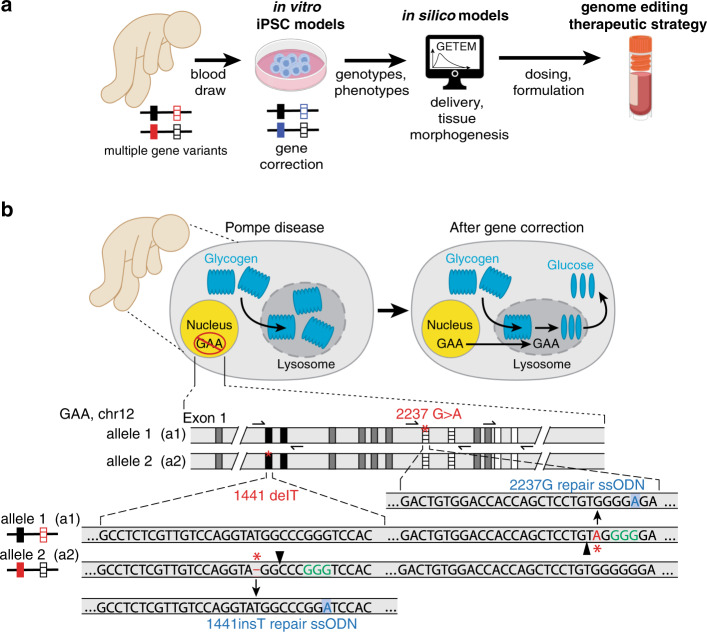
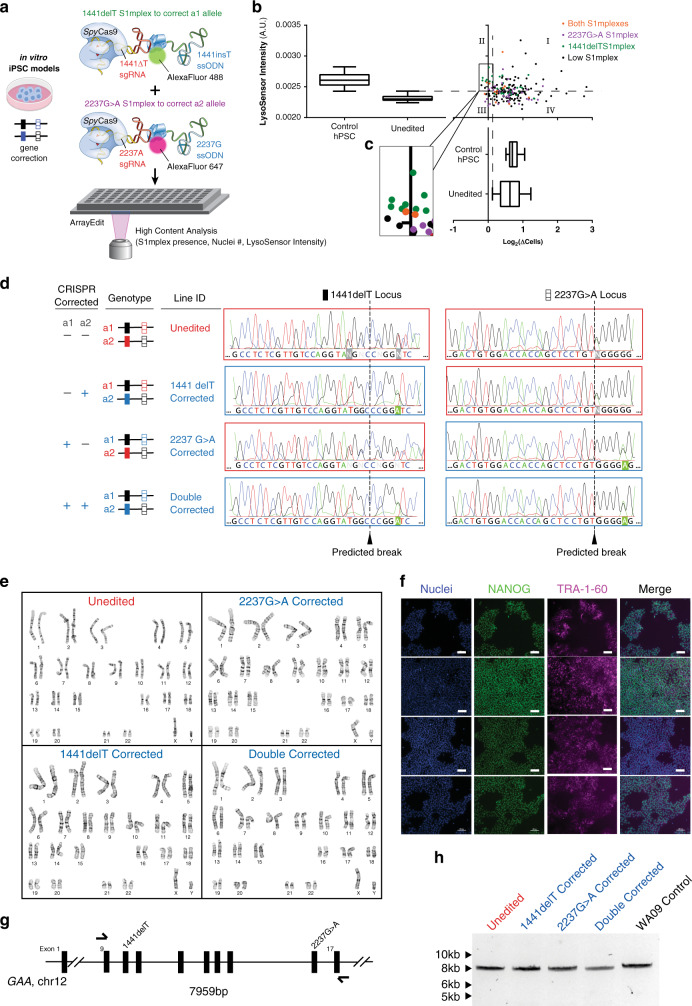
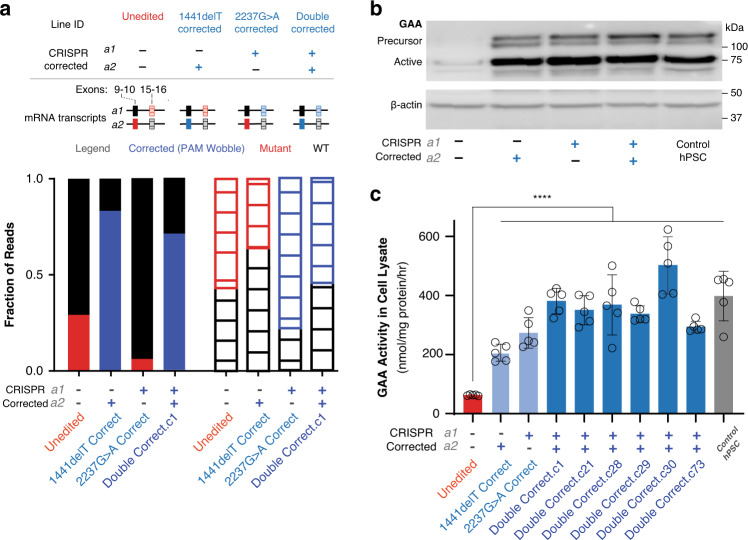
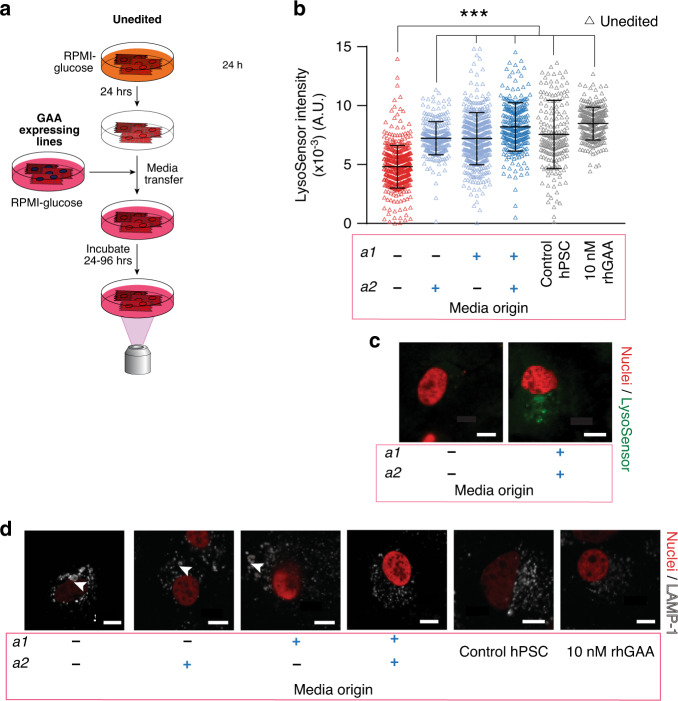
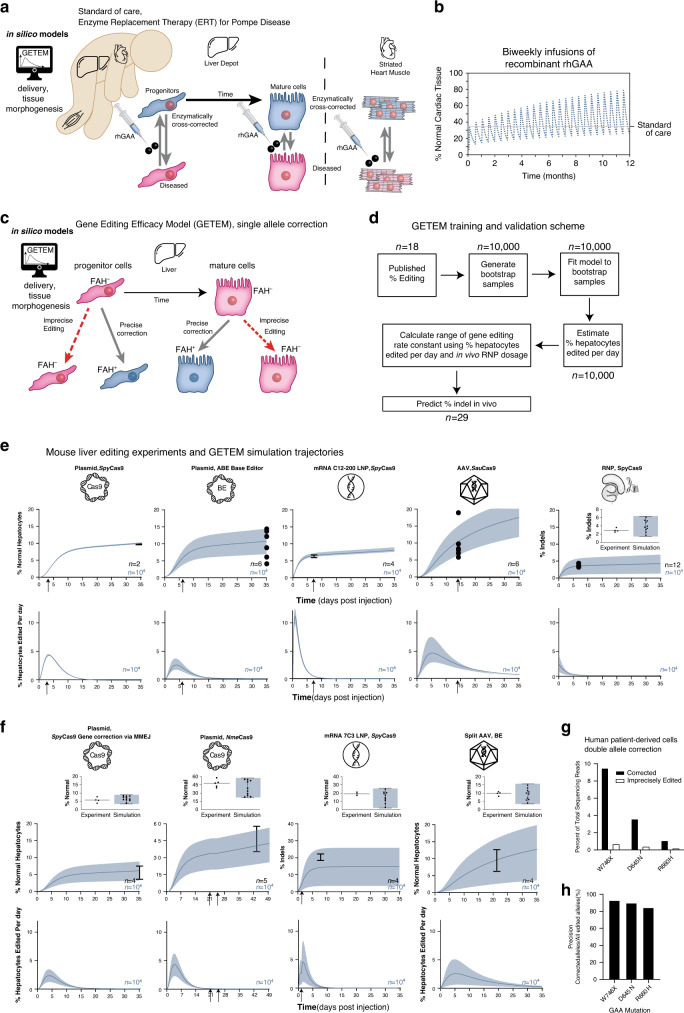
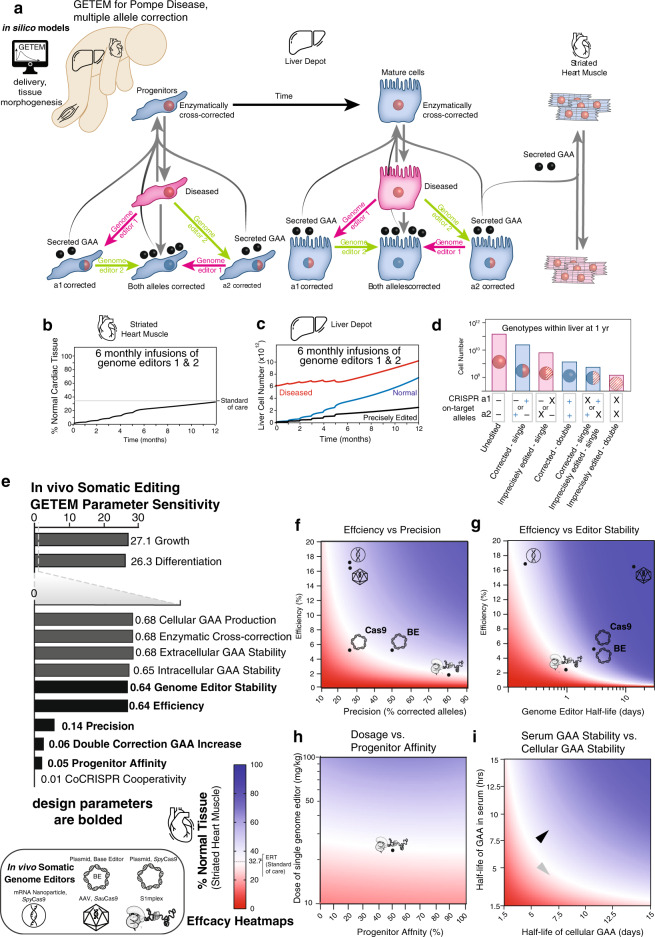
Compound heterozygous recessive or polygenic diseases could be addressed through gene correction of multiple alleles. However, targeting of multiple alleles using genome editors could lead to mixed genotypes and adverse events that amplify during tissue morphogenesis. Here we demonstrate that Cas9-ribonucleoprotein-based genome editors can correct two distinct mutant alleles within a single human cell precisely. Gene-corrected cells in an induced pluripotent stem cell model of Pompe disease expressed the corrected transcript from both corrected alleles, leading to enzymatic cross-correction of diseased cells. Using a quantitative in silico model for the in vivo delivery of genome editors into the developing human infant liver, we identify progenitor targeting, delivery efficiencies, and suppression of imprecise editing outcomes at the on-target site as key design parameters that control the efficacy of various therapeutic strategies. This work establishes that precise gene editing to correct multiple distinct gene variants could be highly efficacious if designed appropriately.
Overview
The claims and statistics of this paper haven’t been checked yet.
Free: it reads the open-access text and checks the first 5 claims that cite a source we can check. Create a free account to check every claim.
Integrity signals
Registry
Cites
Statistics
Figures
Verification
Claims the paper makes
The claims and statistics of this paper haven’t been checked yet.
Free: it reads the open-access text and checks the first 5 claims that cite a source we can check. Create a free account to check every claim.
Claims other papers make about this one
Each is checked against this paper’s own text: does it say what the citing paper says it does?
The source backs part of the claim, not all of it — or backs it for a different population, condition or comparison.
In the citing paper
“The use of this technology in drug discovery has allowed the identification of many new compounds for the potential treatment of various diseases including Zika virus [66], SMA [51], as well as understanding cellular processes and developmental stages using genome editing strategies [72].”
From Utility of iPSC-Derived Cells for Disease Modeling, Drug Development, and Cell Therapy (2022) · cites this paper as [72]
Experimental — accuracy not yet measuredThe source backs part of the claim, not all of it — or backs it for a different population, condition or comparison.
In the citing paper
“Such disease models could also be used in combination with in silico approaches for high-throughput drug discovery and drug development studies [72].”
From Utility of iPSC-Derived Cells for Disease Modeling, Drug Development, and Cell Therapy (2022) · cites this paper as [72]
Experimental — accuracy not yet measured
Self-check
Percentages, sums and reported differences re-computed from the paper’s own numbers.
The self-check needs the paper’s full text.
Citations
Cites
Genome engineering using the CRISPR-Cas9 system
Ran, F. A., Hsu, P. D., Wright, J., Agarwala, V., Scott, D. A., & Zhang, F. (2013) · Nature Protocols · doi:10.1038/nprot.2013.143 · Cited by 11,133
CellProfiler: image analysis software for identifying and quantifying cell phenotypes
Carpenter, A. E., Jones, T. R., Lamprecht, M. R., Clarke, C., Kang, I. H., Friman, O., Guertin, D. A., Chang, J. H., Lindquist, R. A., Moffat, J., et al. (2006) · Genome Biology · doi:10.1186/gb-2006-7-10-r100 · Cited by 5,157
Search-and-replace genome editing without double-strand breaks or donor DNA
Anzalone, A. V., Randolph, P. B., Davis, J. R., Sousa, A. A., Koblan, L. W., Levy, J. M., Chen, P. J., Wilson, C., Newby, G. A., Raguram, A., et al. (2019) · Nature · doi:10.1038/s41586-019-1711-4 · Cited by 4,767
Optimized sgRNA design to maximize activity and minimize off-target effects of CRISPR-Cas9
Doench, J. G., Fusi, N., Sullender, M., Hegde, M., Vaimberg, E. W., Donovan, K. F., Smith, I., Tothova, Z., Wilen, C., Orchard, R., et al. (2016) · Nature Biotechnology · doi:10.1038/nbt.3437 · Cited by 4,637
Organoid Models and Applications in Biomedical Research
Xinaris, C., Brizi, V., & Remuzzi, G. (2015) · Nephron · doi:10.1159/000433566 · Cited by 3,515
Double nicking by RNA-guided CRISPR Cas9 for enhanced genome editing specificity
Ran, F. A., Hsu, P. D., Lin, C.-Y., Gootenberg, J. S., Konermann, S., Trevino, A. E., Scott, D. A., Inoue, A., Matoba, S., Zhang, Y., et al. (2013) · Cell · doi:10.1016/j.cell.2013.08.021 · Cited by 3,299
High-fidelity CRISPR-Cas9 nucleases with no detectable genome-wide off-target effects
Kleinstiver, B. P., Pattanayak, V., Prew, M. S., Tsai, S. Q., Nguyen, N. T., Zheng, Z., & Joung, J. K. (2016) · Nature · doi:10.1038/nature16526 · Cited by 2,673
COPASI—a COmplex PAthway SImulator
Hoops, S., Sahle, S., Gauges, R., Lee, C., Pahle, J., Simus, N., Singhal, M., Xu, L., Mendes, P., & Kummer, U. (2006) · Bioinformatics · doi:10.1093/bioinformatics/btl485 · Cited by 2,618
Rationally engineered Cas9 nucleases with improved specificity
Slaymaker, I. M., Gao, L., Zetsche, B., Scott, D. A., Yan, W. X., & Zhang, F. (2016) · Science · doi:10.1126/science.aad5227 · Cited by 2,414
GUIDE-seq enables genome-wide profiling of off-target cleavage by CRISPR-Cas nucleases
Tsai, S. Q., Zheng, Z., Nguyen, N. T., Liebers, M., Topkar, V. V., Thapar, V., Wyvekens, N., Khayter, C., Iafrate, A. J., Le, L. P., et al. (2015) · Nature Biotechnology · doi:10.1038/nbt.3117 · Cited by 2,268
Use of CAR-Transduced Natural Killer Cells in CD19-Positive Lymphoid Tumors
Liu, E., Marin, D., Banerjee, P., Macapinlac, H. A., Thompson, P., Basar, R., Nassif Kerbauy, L., Overman, B., Thall, P., Kaplan, M., et al. (2020) · New England Journal of Medicine · doi:10.1056/nejmoa1910607 · Cited by 2,217
Kosicki, M., Tomberg, K., & Bradley, A. (2018) · Nature Biotechnology · doi:10.1038/nbt.4192 · Cited by 1,883
Lian, X., Hsiao, C., Wilson, G., Zhu, K., Hazeltine, L. B., Azarin, S. M., Raval, K. K., Zhang, J., Kamp, T. J., & Palecek, S. P. (2012) · Proceedings of the National Academy of Sciences · doi:10.1073/pnas.1200250109 · Cited by 1,717
Engineered CRISPR-Cas9 nucleases with altered PAM specificities
Kleinstiver, B. P., Prew, M. S., Tsai, S. Q., Topkar, V. V., Nguyen, N. T., Zheng, Z., Gonzales, A. P. W., Li, Z., Peterson, R. T., Yeh, J.-R. J., et al. (2015) · Nature · doi:10.1038/nature14592 · Cited by 1,624
Pattanayak, V., Lin, S., Guilinger, J. P., Ma, E., Doudna, J. A., & Liu, D. R. (2013) · Nature Biotechnology · doi:10.1038/nbt.2673 · Cited by 1,487
CRISPR-engineered T cells in patients with refractory cancer
Stadtmauer, E. A., Fraietta, J. A., Davis, M. M., Cohen, A. D., Weber, K. L., Lancaster, E., Mangan, P. A., Kulikovskaya, I., Gupta, M., Chen, F., et al. (2020) · Science · doi:10.1126/science.aba7365 · Cited by 1,478
Seeger, C., & Mason, W. S. (2000) · Microbiology and Molecular Biology Reviews · doi:10.1128/mmbr.64.1.51-68.2000 · Cited by 1,451
Therapeutic genome editing: prospects and challenges
Cox, D. B. T., Platt, R. J., & Zhang, F. (2015) · Nature Medicine · doi:10.1038/nm.3793 · Cited by 1,336
CRISPR–Cas9 genome editing induces a p53-mediated DNA damage response
Haapaniemi, E., Botla, S., Persson, J., Schmierer, B., & Taipale, J. (2018) · Nature Medicine · doi:10.1038/s41591-018-0049-z · Cited by 1,264
Unconstrained genome targeting with near-PAMless engineered CRISPR-Cas9 variants
Walton, R. T., Christie, K. A., Whittaker, M. N., & Kleinstiver, B. P. (2020) · Science · doi:10.1126/science.aba8853 · Cited by 1,233
Chu, V. T., Weber, T., Wefers, B., Wurst, W., Sander, S., Rajewsky, K., & Kühn, R. (2015) · Nature Biotechnology · doi:10.1038/nbt.3198 · Cited by 1,210
Enhanced homology-directed human genome engineering by controlled timing of CRISPR/Cas9 delivery
Lin, S., Staahl, B. T., Alla, R. K., & Doudna, J. A. (2014) · eLife · doi:10.7554/elife.04766 · Cited by 1,189
Richardson, C. D., Ray, G. J., DeWitt, M. A., Curie, G. L., & Corn, J. E. (2016) · Nature Biotechnology · doi:10.1038/nbt.3481 · Cited by 1,098
Identification of preexisting adaptive immunity to Cas9 proteins in humans
Charlesworth, C. T., Deshpande, P. S., Dever, D. P., Camarena, J., Lemgart, V. T., Cromer, M. K., Vakulskas, C. A., Collingwood, M. A., Zhang, L., Bode, N. M., et al. (2019) · Nature Medicine · doi:10.1038/s41591-018-0326-x · Cited by 1,093
Genome editing with Cas9 in adult mice corrects a disease mutation and phenotype
Yin, H., Xue, W., Chen, S., Bogorad, R. L., Benedetti, E., Grompe, M., Koteliansky, V., Sharp, P. A., Jacks, T., & Anderson, D. G. (2014) · Nature Biotechnology · doi:10.1038/nbt.2884 · Cited by 951
Yin, H., Song, C.-Q., Dorkin, J. R., Zhu, L. J., Li, Y., Wu, Q., Park, A., Yang, J., Suresh, S., Bizhanova, A., et al. (2016) · Nature Biotechnology · doi:10.1038/nbt.3471 · Cited by 876
Robust expansion of human hepatocytes in Fah−/−/Rag2−/−/Il2rg−/− mice
Azuma, H., Paulk, N., Ranade, A., Dorrell, C., Al-Dhalimy, M., Ellis, E., Strom, S., Kay, M. A., Finegold, M., & Grompe, M. (2007) · Nature Biotechnology · doi:10.1038/nbt1326 · Cited by 835
Genetic compensation: A phenomenon in search of mechanisms
El-Brolosy, M. A., & Stainier, D. Y. R. (2017) · PLOS Genetics · doi:10.1371/journal.pgen.1006780 · Cited by 829
Recombinant human acid α-glucosidase: Major clinical benefits in infantile-onset Pompe disease
Kishnani, P. S., Corzo, D., Nicolino, M., Byrne, B., Mandel, H., Hwu, W. L., Leslie, N., Levine, J., Spencer, C., McDonald, M., et al. (2007) · Neurology · doi:10.1212/01.wnl.0000251268.41188.04 · Cited by 781
Development of a gene-editing approach to restore vision loss in Leber congenital amaurosis type 10
Maeder, M. L., Stefanidakis, M., Wilson, C. J., Baral, R., Barrera, L. A., Bounoutas, G. S., Bumcrot, D., Chao, H., Ciulla, D. M., DaSilva, J. A., et al. (2019) · Nature Medicine · doi:10.1038/s41591-018-0327-9 · Cited by 707
Gene therapy in a patient with sickle cell disease
Ribeil, J.-A., Hacein-Bey-Abina, S., Payen, E., Magnani, A., Semeraro, M., Magrin, E., Caccavelli, L., Neven, B., Bourget, P., El Nemer, W., et al. (2017) · New England Journal of Medicine · doi:10.1056/nejmoa1609677 · Cited by 696
Self-renewing diploid Axin2+ cells fuel homeostatic renewal of the liver
Wang, B., Zhao, L., Fish, M., Logan, C. Y., & Nusse, R. (2015) · Nature · doi:10.1038/nature14863 · Cited by 674
A Multifunctional AAV-CRISPR-Cas9 and Its Host Response
Chew, W. L., Tabebordbar, M., Cheng, J. K. W., Mali, P., Wu, E. Y., Ng, A. H. M., Zhu, K., Wagers, A. J., & Church, G. M. (2016) · Nature Methods · doi:10.1038/nmeth.3993 · Cited by 617
Delivery technologies for genome editing
Yin, H., Kauffman, K. J., & Anderson, D. G. (2017) · Nature Reviews Drug Discovery · doi:10.1038/nrd.2016.280 · Cited by 597
Wei, T., Cheng, Q., Min, Y.-L., Olson, E. N., & Siegwart, D. J. (2020) · Nature Communications · doi:10.1038/s41467-020-17029-3 · Cited by 590
Predictable and precise template-free CRISPR editing of pathogenic variants
Shen, M. W., Arbab, M., Hsu, J. Y., Worstell, D., Culbertson, S. J., Krabbe, O., Cassa, C. A., Liu, D. R., Gifford, D. K., & Sherwood, R. I. (2018) · Nature · doi:10.1038/s41586-018-0686-x · Cited by 569
A dual AAV system enables the Cas9-mediated correction of a metabolic liver disease in newborn mice
Yang, Y., Wang, L., Bell, P., McMenamin, D., He, Z., White, J., Yu, H., Xu, C., Morizono, H., Musunuru, K., et al. (2016) · Nature Biotechnology · doi:10.1038/nbt.3469 · Cited by 556
In vivo genome editing restores haemostasis in a mouse model of haemophilia
Li, H., Haurigot, V., Doyon, Y., Li, T., Wong, S. Y., Bhagwat, A. S., Malani, N., Anguela, X. M., Sharma, R., Ivanciu, L., et al. (2011) · Nature · doi:10.1038/nature10177 · Cited by 548
Predicting the mutations generated by repair of Cas9-induced double-strand breaks
Allen, F., Crepaldi, L., Alsinet, C., Strong, A. J., Kleshchevnikov, V., De Angeli, P., Páleníková, P., Khodak, A., Kiselev, V., Kosicki, M., et al. (2019) · Nature Biotechnology · doi:10.1038/nbt.4317 · Cited by 496
Small molecules enhance CRISPR genome editing in pluripotent stem cells
Yu, C., Liu, Y., Ma, T., Liu, K., Xu, S., Zhang, Y., Liu, H., La Russa, M., Xie, M., Ding, S., et al. (2015) · Cell stem cell · doi:10.1016/j.stem.2015.01.003 · Cited by 455
Long-term evaluation of AAV-CRISPR genome editing for Duchenne muscular dystrophy
Nelson, C. E., Wu, Y., Gemberling, M. P., Oliver, M. L., Waller, M. A., Bohning, J. D., Robinson-Hamm, J. N., Bulaklak, K., Castellanos Rivera, R. M., Collier, J. H., et al. (2019) · Nature Medicine · doi:10.1038/s41591-019-0344-3 · Cited by 430
Treatment of a metabolic liver disease by in vivo genome base editing in adult mice
Villiger, L., Grisch-Chan, H. M., Lindsay, H., Ringnalda, F., Pogliano, C. B., Allegri, G., Fingerhut, R., Häberle, J., Matos, J., Robinson, M. D., et al. (2018) · Nature Medicine · doi:10.1038/s41591-018-0209-1 · Cited by 429
Small molecule–triggered Cas9 protein with improved genome-editing specificity
Davis, K. M., Pattanayak, V., Thompson, D. B., Zuris, J. A., & Liu, D. R. (2015) · Nature Chemical Biology · doi:10.1038/nchembio.1793 · Cited by 418
Technical Challenges in Using Human Induced Pluripotent Stem Cells to Model Disease
Saha, K., & Jaenisch, R. (2009) · Cell Stem Cell · doi:10.1016/j.stem.2009.11.009 · Cited by 411
Self-citationCas-analyzer: an online tool for assessing genome editing results using NGS data
Park, J., Lim, K., Kim, J.-S., & Bae, S. (2017) · Bioinformatics · doi:10.1093/bioinformatics/btw561 · Cited by 410
High prevalence of Streptococcus pyogenes Cas9-reactive T cells within the adult human population
Wagner, D. L., Amini, L., Wendering, D. J., Burkhardt, L.-M., Akyüz, L., Reinke, P., Volk, H.-D., & Schmueck-Henneresse, M. (2019) · Nature Medicine · doi:10.1038/s41591-018-0204-6 · Cited by 399
Lee, B., Lee, K., Panda, S., Gonzales-Rojas, R., Chong, A., Bugay, V., Park, H. M., Brenner, R., Murthy, N., & Lee, H. Y. (2018) · Nature Biomedical Engineering · doi:10.1038/s41551-018-0252-8 · Cited by 361
Optimized base editors enable efficient editing in cells, organoids and mice
Zafra, M. P., Schatoff, E. M., Katti, A., Foronda, M., Breinig, M., Schweitzer, A. Y., Simon, A., Han, T., Goswami, S., Montgomery, E., et al. (2018) · Nature Biotechnology · doi:10.1038/nbt.4194 · Cited by 347
Functional Gene Correction for Cystic Fibrosis in Lung Epithelial Cells Generated from Patient iPSCs
Firth, A. L., Menon, T., Parker, G. S., Qualls, S. J., Lewis, B. M., Ke, E., Dargitz, C. T., Wright, R., Khanna, A., Gage, F. H., et al. (2015) · Cell Reports · doi:10.1016/j.celrep.2015.07.062 · Cited by 326
Sago, C. D., Lokugamage, M. P., Paunovska, K., Vanover, D. A., Monaco, C. M., Shah, N. N., Gamboa Castro, M., Anderson, S. E., Rudoltz, T. G., Lando, G. N., et al. (2018) · Proceedings of the National Academy of Sciences · doi:10.1073/pnas.1811276115 · Cited by 313
Post-translational Regulation of Cas9 during G1 Enhances Homology-Directed Repair
Gutschner, T., Haemmerle, M., Genovese, G., Draetta, G. F., & Chin, L. (2016) · Cell Reports · doi:10.1016/j.celrep.2016.01.019 · Cited by 299
Leveraging Rules of Nonsense-Mediated mRNA Decay for Genome Engineering and Personalized Medicine
Popp, M. W., & Maquat, L. E. (2016) · Cell · doi:10.1016/j.cell.2016.05.053 · Cited by 298
Optical Control of CRISPR/Cas9 Gene Editing
Hemphill, J., Borchardt, E. K., Brown, K., Asokan, A., & Deiters, A. (2015) · Journal of the American Chemical Society · doi:10.1021/ja512664v · Cited by 269
Pompe disease in infants and children
Kishnani, P. S., & Howell, R. R. (2004) · The Journal of Pediatrics · doi:10.1016/j.jpeds.2004.01.053 · Cited by 267
De Ravin, S. S., Li, L., Wu, X., Choi, U., Allen, C., Koontz, S., Lee, J., Theobald-Whiting, N., Chu, J., Garofalo, M., et al. (2017) · Science Translational Medicine · doi:10.1126/scitranslmed.aah3480 · Cited by 258
Liang, X., Potter, J., Kumar, S., Ravinder, N., & Chesnut, J. D. (2017) · Journal of Biotechnology · doi:10.1016/j.jbiotec.2016.11.011 · Cited by 248
Prevalence of Pre-existing Antibodies to CRISPR-Associated Nuclease Cas9 in the USA Population
Simhadri, V. L., McGill, J., McMahon, S., Wang, J., Jiang, H., & Sauna, Z. E. (2018) · Molecular Therapy - Methods & Clinical Development · doi:10.1016/j.omtm.2018.06.006 · Cited by 241
AAV-CRISPR Gene Editing Is Negated by Pre-existing Immunity to Cas9
Li, A., Tanner, M. R., Lee, C. M., Hurley, A. E., De Giorgi, M., Jarrett, K. E., Davis, T. H., Doerfler, A. M., Bao, G., Beeton, C., et al. (2020) · Molecular Therapy · doi:10.1016/j.ymthe.2020.04.017 · Cited by 230
Enzyme replacement therapy in the mouse model of Pompe disease
Raben, N., Danon, M., Gilbert, A. L., Dwivedi, S., Collins, B., Thurberg, B. L., Mattaliano, R. J., Nagaraju, K., & Plotz, P. H. (2003) · Molecular Genetics and Metabolism · doi:10.1016/j.ymgme.2003.08.022 · Cited by 217
Insulin independence after living-donor distal pancreatectomy and islet allotransplantation
Matsumoto, S., Okitsu, T., Iwanaga, Y., Noguchi, H., Nagata, H., Yonekawa, Y., Yamada, Y., Fukuda, K., Tsukiyama, K., Suzuki, H., et al. (2005) · The Lancet · doi:10.1016/s0140-6736(05)66383-0 · Cited by 214
Pompe disease: from pathophysiology to therapy and back again
Lim, J.-A., Li, L., & Raben, N. (2014) · Frontiers in Aging Neuroscience · doi:10.3389/fnagi.2014.00177 · Cited by 207
A Thermostable Cas9 with Increased Lifetime in Human Plasma
Harrington, L. B., Paez-Espino, D., Staahl, B. T., Chen, J. S., Ma, E., Kyrpides, N. C., & Doudna, J. A. (2017) · Nature Communications · doi:10.1038/s41467-017-01408-4 · Cited by 205
Yang, D., Scavuzzo, M. A., Chmielowiec, J., Sharp, R., Bajic, A., & Borowiak, M. (2016) · Scientific Reports · doi:10.1038/srep21264 · Cited by 200
Adenine base editing in an adult mouse model of tyrosinaemia
Song, C.-Q., Jiang, T., Richter, M., Rhym, L. H., Koblan, L. W., Zafra, M. P., Schatoff, E. M., Doman, J. L., Cao, Y., Dow, L. E., et al. (2019) · Nature Biomedical Engineering · doi:10.1038/s41551-019-0357-8 · Cited by 200
Induced pluripotent stem cells: at the heart of cardiovascular precision medicine
Chen, I. Y., Matsa, E., & Wu, J. C. (2016) · Nature Reviews Cardiology · doi:10.1038/nrcardio.2016.36 · Cited by 191
Warren, C. R., O’Sullivan, J. F., Friesen, M., Becker, C. E., Zhang, X., Liu, P., Wakabayashi, Y., Morningstar, J. E., Shi, X., Choi, J., et al. (2017) · Cell stem cell · doi:10.1016/j.stem.2017.01.010 · Cited by 191
Digital Quantification of Proteins and mRNA in Single Mammalian Cells
Albayrak, C., Jordi, C. A., Zechner, C., Lin, J., Bichsel, C. A., Khammash, M., & Tay, S. (2016) · Molecular Cell · doi:10.1016/j.molcel.2016.02.030 · Cited by 176
Carlson-Stevermer, J., Abdeen, A. A., Kohlenberg, L., Goedland, M., Molugu, K., Lou, M., & Saha, K. (2017) · Nature Communications · doi:10.1038/s41467-017-01875-9 · Cited by 170
Self-citationSampling distributions and the bootstrap
Kulesa, A., Krzywinski, M., Blainey, P., & Altman, N. (2015) · Nature Methods · doi:10.1038/nmeth.3414 · Cited by 155
Spatial control of in vivo CRISPR–Cas9 genome editing via nanomagnets
Zhu, H., Zhang, L., Tong, S., Lee, C. M., Deshmukh, H., & Bao, G. (2018) · Nature Biomedical Engineering · doi:10.1038/s41551-018-0318-7 · Cited by 151
Katare, Y. K., Muthukumaran, T., & Panda, A. K. (2005) · International Journal of Pharmaceutics · doi:10.1016/j.ijpharm.2005.05.028 · Cited by 145
Current Progress in Therapeutic Gene Editing for Monogenic Diseases
Prakash, V., Moore, M., & Yáñez-Muñoz, R. J. (2016) · Molecular Therapy · doi:10.1038/mt.2016.5 · Cited by 138
Cromer, M. K., Vaidyanathan, S., Ryan, D. E., Curry, B., Lucas, A. B., Camarena, J., Kaushik, M., Hay, S. R., Martin, R. M., Steinfeld, I., et al. (2018) · Molecular Therapy · doi:10.1016/j.ymthe.2018.06.002 · Cited by 120
Ousterout, D. G., Kabadi, A. M., Thakore, P. I., Perez-Pinera, P., Brown, M. T., Majoros, W. H., Reddy, T. E., & Gersbach, C. A. (2015) · Molecular Therapy · doi:10.1038/mt.2014.234 · Cited by 118
van der Wal, E., Herrero-Hernandez, P., Wan, R., Broeders, M., in 't Groen, S. L. M., van Gestel, T. J. M., van IJcken, W. F. J., Cheung, T. H., van der Ploeg, A. T., Schaaf, G. J., et al. (2018) · Stem Cell Reports · doi:10.1016/j.stemcr.2018.04.002 · Cited by 116
Non-Viral Delivery To Enable Genome Editing
Rui, Y., Wilson, D. R., & Green, J. J. (2019) · Trends in Biotechnology · doi:10.1016/j.tibtech.2018.08.010 · Cited by 113
All-in-one adeno-associated virus delivery and genome editing by Neisseria meningitidis Cas9 in vivo
Ibraheim, R., Song, C.-Q., Mir, A., Amrani, N., Xue, W., & Sontheimer, E. J. (2018) · Genome Biology · doi:10.1186/s13059-018-1515-0 · Cited by 113
Genome Editing in Human Pluripotent Stem Cells: Approaches, Pitfalls, and Solutions
Hendriks, W. T., Warren, C. R., & Cowan, C. A. (2016) · Cell Stem Cell · doi:10.1016/j.stem.2015.12.002 · Cited by 110
Live-cell Microscopy and Fluorescence-based Measurement of Luminal pH in Intracellular Organelles
Ma, L., Ouyang, Q., Werthmann, G. C., Thompson, H. M., & Morrow, E. M. (2017) · Frontiers in Cell and Developmental Biology · doi:10.3389/fcell.2017.00071 · Cited by 108
Herzog, A., Hartung, R., Reuser, A. J. J., Hermanns, P., Runz, H., Karabul, N., Gökce, S., Pohlenz, J., Kampmann, C., Lampe, C., et al. (2012) · Orphanet Journal of Rare Diseases · doi:10.1186/1750-1172-7-35 · Cited by 89
Raval, K. K., Tao, R., White, B. E., De Lange, W. J., Koonce, C. H., Yu, J., Kishnani, P. S., Thomson, J. A., Mosher, D. F., Ralphe, J. C., et al. (2015) · Journal of Biological Chemistry · doi:10.1074/jbc.m114.628628 · Cited by 85
Han, S.-O., Ronzitti, G., Arnson, B., Leborgne, C., Li, S., Mingozzi, F., & Koeberl, D. (2017) · Molecular Therapy - Methods & Clinical Development · doi:10.1016/j.omtm.2016.12.010 · Cited by 78
Newborn Screening for Pompe Disease
Bodamer, O. A., Scott, C. R., Giugliani, R., & on behalf of the Pompe Disease Newborn Screening Working Group (2017) · Pediatrics · doi:10.1542/peds.2016-0280c · Cited by 72
Scarless Genome Editing of Human Pluripotent Stem Cells via Transient Puromycin Selection
Steyer, B., Bu, Q., Cory, E., Jiang, K., Duong, S., Sinha, D., Steltzer, S., Gamm, D., Chang, Q., & Saha, K. (2018) · Stem Cell Reports · doi:10.1016/j.stemcr.2017.12.004 · Cited by 69
Self-citationvan der Wal, E., Bergsma, A. J., Pijnenburg, J. M., van der Ploeg, A. T., & Pijnappel, W. W. M. P. (2017) · Molecular Therapy - Nucleic Acids · doi:10.1016/j.omtn.2017.03.001 · Cited by 67
Ding, E. Y., Hodges, B. L., Hu, H., McVie-Wylie, A. J., Serra, D., Migone, F. K., Pressley, D., Chen, Y. T., & Amalfitano, A. (2001) · Human Gene Therapy · doi:10.1089/104303401750195917 · Cited by 64
Sinha, D., Steyer, B., Shahi, P. K., Mueller, K. P., Valiauga, R., Edwards, K. L., Bacig, C., Steltzer, S. S., Srinivasan, S., Abdeen, A., et al. (2020) · The American Journal of Human Genetics · doi:10.1016/j.ajhg.2020.06.011 · Cited by 58
Self-citationFukuhara, Y., Fuji, N., Yamazaki, N., Hirakiyama, A., Kamioka, T., Seo, J.-H., Mashima, R., Kosuga, M., & Okuyama, T. (2017) · Molecular Genetics and Metabolism Reports · doi:10.1016/j.ymgmr.2017.10.009 · Cited by 56
Progress and challenges of gene therapy for Pompe disease
Ronzitti, G., Collaud, F., Laforet, P., & Mingozzi, F. (2019) · Annals of Translational Medicine · doi:10.21037/atm.2019.04.67 · Cited by 51
Duong, T. T., Vasireddy, V., Ramachandran, P., Herrera, P. S., Leo, L., Merkel, C., Bennett, J., & Mills, J. A. (2018) · Stem Cell Research · doi:10.1016/j.scr.2018.01.009 · Cited by 48
Kishnani, P., Tarnopolsky, M., Roberts, M., Sivakumar, K., Dasouki, M., Dimachkie, M. M., Finanger, E., Goker-Alpan, O., Guter, K. A., Mozaffar, T., et al. (2017) · Molecular Therapy · doi:10.1016/j.ymthe.2017.02.017 · Cited by 46
Jin, S., Lippmann, E. S., McNulty, J., Ma, Y., & Ashton, R. S. (2013) · Biomacromolecules · doi:10.1021/bm400900r · Cited by 37
Torriano, S., Erkilic, N., Baux, D., Cereso, N., DeLuca, V. J., Meunier, I., Moosajee, M., Roux, A., Hamel, C., & Kalatzis, V. (2018) · Scientific Reports · doi:10.1038/s41598-018-26481-7 · Cited by 37
Translational Advances of Hydrofection by Hydrodynamic Injection
Sendra, L., Herrero, M. J., & Aliño, S. F. (2018) · Genes · doi:10.3390/genes9030136 · Cited by 34
Muscle as a putative producer of acid alpha-glucosidase for glycogenosis type II gene therapy
Martin-Touaux, E., Puech, J. P., Château, D., Emiliani, C., Kremer, E. J., Raben, N., Tancini, B., Orlacchio, A., Kahn, A., & Poenaru, L. (2002) · Human Molecular Genetics · doi:10.1093/hmg/11.14.1637 · Cited by 33
Xu, F., Ding, E., Migone, F., Serra, D. M., Schneider, A., Chen, Y.-T., & Amalfitano, A. (2005) · The Journal of Gene Medicine · doi:10.1002/jgm.660 · Cited by 30
Matsumoto, S., Tanaka, K., Strong, D. M., & Reems, J. A. (2004) · Transplantation · doi:10.1097/01.tp.0000130177.03326.d5 · Cited by 30
Harkness, T., McNulty, J. D., Prestil, R., Seymour, S. K., Klann, T. S., Murrell, M. P., Ashton, R. S., & Saha, K. (2015) · Biotechnology Journal · doi:10.1002/biot.201400756 · Cited by 29
Self-citationHigh-Content Analysis of CRISPR-Cas9 Gene-Edited Human Embryonic Stem Cells
Carlson-Stevermer, J., Goedland, M., Steyer, B., Movaghar, A., Lou, M., Kohlenberg, L. K., Prestil, R., & Saha, K. (2016) · Stem Cell Reports · doi:10.1016/j.stemcr.2015.11.014 · Cited by 26
Self-citationYang, H. W., Kikuchi, T., Hagiwara, Y., Mizutani, M., Chen, Y., & Hove, J. L. K. V. (1998) · Pediatric Research · doi:10.1203/00006450-199803000-00011 · Cited by 25
Immunomodulatory, liver depot gene therapy for Pompe disease
Bond, J. E., Kishnani, P. S., & Koeberl, D. D. (2017) · Cellular Immunology · doi:10.1016/j.cellimm.2017.12.011 · Cited by 24
Modelling multi-scale cell–tissue interaction of tissue-engineered muscle constructs
Torii, R., Velliou, R.-I., Hodgson, D., & Mudera, V. (2018) · Journal of Tissue Engineering · doi:10.1177/2041731418787141 · Cited by 23
Youm, J. W., Won, Y. S., Jeon, J. H., Moon, K.-B., Kim, H. C., Shin, K., Joung, H., & Kim, H. S. (2010) · Clinical and Vaccine Immunology · doi:10.1128/cvi.00262-10 · Cited by 18
Migani, D., Smales, C. M., & Bracewell, D. G. (2017) · Biotechnology Progress · doi:10.1002/btpr.2455 · Cited by 17
Cui, M., Xu, L., Wang, H., Ju, S., Xu, S., & Jing, R. (2017) · Clinical Biochemistry · doi:10.1016/j.clinbiochem.2017.09.008 · Cited by 16
Shin, J. H., Jung, S., Ramakrishna, S., Kim, S., & Lee, J. (2018) · Biochemical and Biophysical Research Communications · doi:10.1016/j.bbrc.2018.05.130 · Cited by 10
The oracle of inDelphi predicts Cas9 repair outcomes
Cloney, R. (2018) · Nature Reviews Genetics · doi:10.1038/s41576-018-0077-z · Cited by 4
Cited by
CRISPR/Cas: Advances, Limitations, and Applications for Precision Cancer Research
Yang, Y., Xu, J., Ge, S., & Lai, L. (2021) · Frontiers in Medicine · doi:10.3389/fmed.2021.649896 · Cited by 195
Prediction and mitigation of mutation threats to COVID-19 vaccines and antibody therapies
Chen, J., Gao, K., Wang, R., & Wei, G. (2021) · Chemical Science · doi:10.1039/d1sc01203g · Cited by 115
Alosairi, Y., Alsulaiman, N., Rashed, A. M., & Al-Houti, D. (2020) · Marine Pollution Bulletin · doi:10.1016/j.marpolbul.2020.111766 · Cited by 74
Byun, E., Rezanezhad, F., Fairbairn, L., Slowinski, S., Basiliko, N., Price, J. S., Quinton, W. L., Roy‐Léveillée, P., Webster, K. L., & Cappellen, P. V. (2021) · Scientific Reports · doi:10.1038/s41598-021-02606-3 · Cited by 76
Utility of iPSC-Derived Cells for Disease Modeling, Drug Development, and Cell Therapy
Nicholson, M. W., Ting, C.-Y., Chan, D. Z. H., Cheng, Y.-C., Lee, Y.-C., Hsu, C.-C., Huang, C.-Y., & Hsieh, P. C. H. (2022) · Cells · doi:10.3390/cells11111853 · Cited by 65
“Such disease models could also be used in combination with in silico approaches for high-throughput drug discovery and drug development studies [72].”
BackgroundMethod
Metadata
- Authors
- Carlson-Stevermer, J., Das, A., Abdeen, A. A., Fiflis, D., Grindel, B. I., Saxena, S., Akcan, T., Alam, T., Kletzien, H., Kohlenberg, L., Goedland, M., Dombroe, M. J., & Saha, K.
- Affiliations
- University of Wisconsin–Madison (US)
- Corresponding author
- Saha, Krishanu
- ORCID
- Venue
- Nature Communications
- Published
- 2020-12-08
- Volume
- 11
- Issue
- 1
- Pages
- 6277-6277
- ISSN
- 2041-1723 (ISSN-L)
- PMC
- PMC7722885
- OpenAlex
- W3112830125
- Cited by
- 32
- References
- 108
- Citations by year
- 2026: 2 · 2025: 1 · 2024: 2 · 2023: 4 · 2022: 1 · 2021: 18 · 2020: 4
- FWCI
- 2.19
- Type
- journal article
- Language
- en
- Open access
- gold
- doi.org
- Licence
- cc-by
- creativecommons.org/licenses/by/4.0 (tdm)
- creativecommons.org/licenses/by/4.0 (vor)
- Locations
- Nature Communications (publishedVersion, cc-by)
- PubMed Central (publishedVersion, cc-by)
- PubMed (publishedVersion)
- RePEc: Research Papers in Economics (submittedVersion)
- DOAJ (DOAJ: Directory of Open Access Journals) (submittedVersion, cc-by-sa)
- Funders
- National Science Foundation (P30CA014520, 1350178, 1645123)
- University of Wisconsin Carbone Cancer Center (CA014520, P30 CA 014520, Grant P30 CA014520)
- National Cancer Institute (P30CA014520)
- National Institute of General Medical Sciences (R35GM119644)
- Division of Chemical, Bioengineering, Environmental, and Transport Systems
- Topics
- Life Sciences › Biochemistry, Genetics and Molecular Biology › Molecular Biology › CRISPR and Genetic Engineering
- Life Sciences › Biochemistry, Genetics and Molecular Biology › Genetics › Virus-based gene therapy research
- Health Sciences › Medicine › Genetics (clinical) › Lysosomal Storage Disorders Research
- Keywords
- polygenic disease, Cas9 ribonucleoprotein, Pompe disease, induced pluripotent stem cells
- MeSH terms
- Gene Editing, Alleles, Cells, Cultured, Computer Simulation, Glycogen Storage Disease Type II, Humans, Infant, Liver, Male, Models, Genetic, Mutation, Genetic Therapy, Gene Transfer Techniques, Inheritance Patterns, Induced Pluripotent Stem Cells, Primary Cell Culture, CRISPR-Cas Systems
About these checks
Registry, retraction, Cites and statistics results are computed, not judged, with one exception: a printed reference that no index lists is read once by a model before it counts as a citation error. Claims are extracted by a model and kept only when their quote appears verbatim in the text; each cited source is then checked, with a model’s help, for whether it says what the claim relies on. Those verdicts can be wrong — read the claim’s quote and the cited source before relying on one.
Statistics and arithmetic are recomputed, not judged.
Confidence bands are shown only for fields calibrated on our annotated test set. None is calibrated yet, so no band is shown.
What counts as a claim ›How we measure confidence ›How we check this ›
Are you an author, or do you see a problem with this page? Request a review
Data sources
Bibliographic data: Semantic Scholar, OpenAlex, Crossref.
Contains information from the Semantic Scholar Academic Graph Datasets, made available under the ODC Attribution License (ODC-BY 1.0).
Semantic Scholar’s data is described in: Kinney, R., et al. (2023). The Semantic Scholar Open Data Platform. arXiv:2301.10140.
