

Bioengineered liver crosslinked with nano-graphene oxide enables efficient liver regeneration via MMP suppression and immunomodulation
Open accessThe DOI matches its Crossref record; 69 of the 69 references it cites were found in a registry or an index; 31 of the 64 sources its claims cite were checked for support.
Abstract
Decellularized extracellular matrix scaffold, widely utilized for organ engineering, often undergoes matrix decomposition after transplantation and produces byproducts that cause inflammation, leading to clinical failure. Here we propose a strategy using nano-graphene oxide to modify the biophysical properties of decellularized liver scaffolds. Notably, we demonstrate that scaffolds crosslinked with nano-graphene oxide show high resistance to enzymatic degradation via direct inhibition of matrix metalloproteinase activity and increased mechanical rigidity. We find that M2-like macrophage polarization is promoted within the crosslinked scaffolds, which reduces graft-elicited inflammation. Moreover, we show that low activities of matrix metalloproteinases, attributed to both nano-graphene oxide and tissue inhibitors of metalloproteinases expressed by M2c, can protect the crosslinked scaffolds against in vivo degradation. Lastly, we demonstrate that bioengineered livers fabricated with the crosslinked scaffolds remain functional, thereby effectively regenerating damaged livers after transplantation into liver failure mouse models. Overall, nano-graphene oxide crosslinking prolongs allograft survival and ultimately improves therapeutic effects of bioengineered livers, which offer an alternative for donor organs.
Overview
CoChat Summary
## TL;DR
Nano-graphene oxide (NGO) was used to crosslink decellularized liver scaffolds, making them mechanically stronger and more resistant to MMP-mediated degradation while also shifting the immune response toward M2c-like macrophages. In mouse transplantation models, NGO-crosslinked bioengineered livers remained more functional and supported better liver regeneration than non-crosslinked controls.
## Key findings
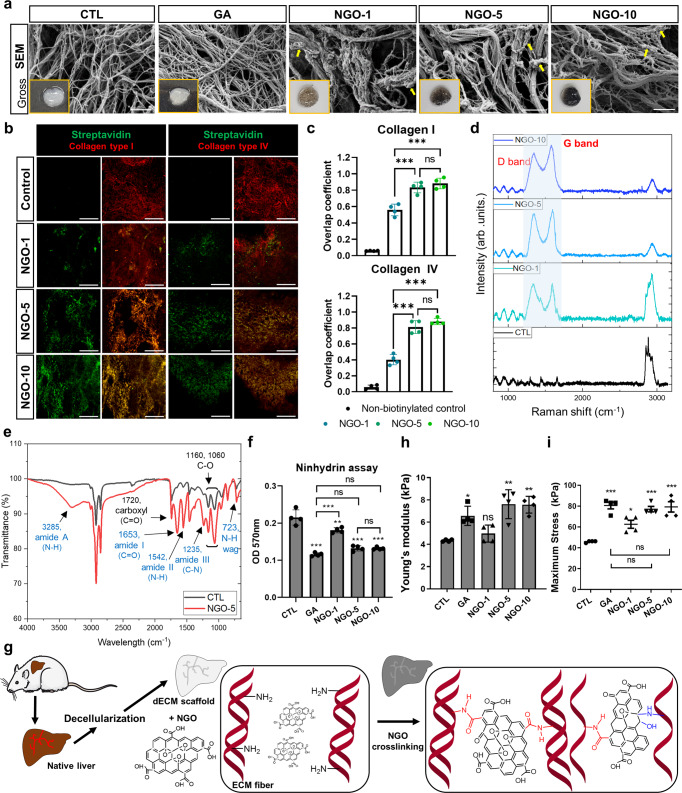
- NGO crosslinking improved scaffold chemistry and mechanics: the NGO-5 and NGO-10 scaffolds had increased crosslinking degree, Young’s modulus comparable to glutaraldehyde, and higher ultimate tensile strength than control scaffolds.
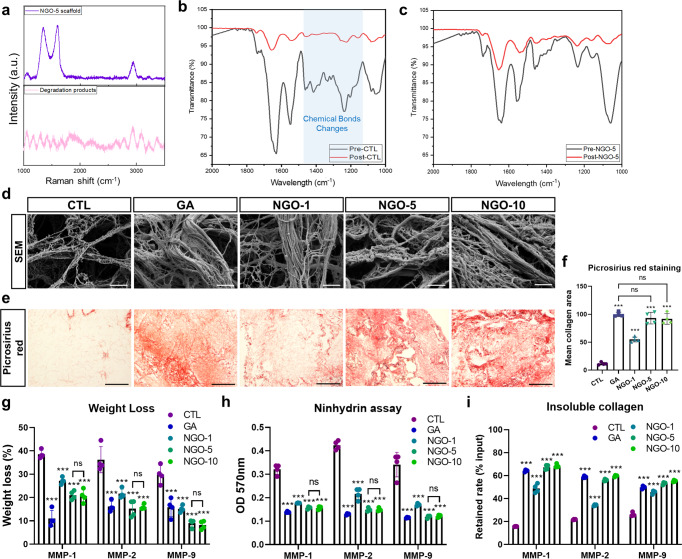
- NGO-crosslinked scaffolds were more resistant to enzymatic degradation: after MMP treatment, NGO-5 and NGO-10 retained scaffold structure and insoluble collagen better than controls, with lower weight loss and preserved microstructure.
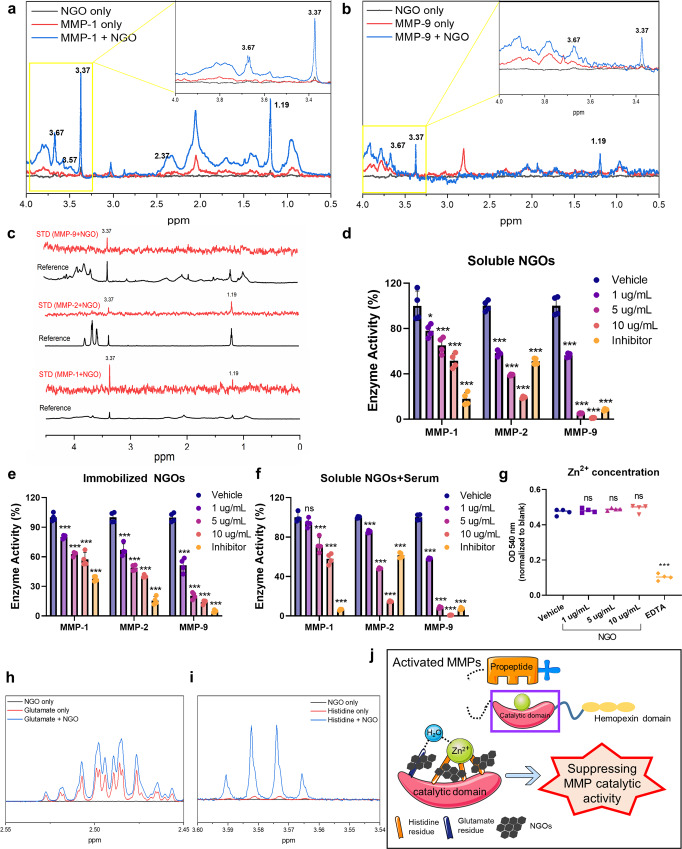
- NGOs directly inhibited MMP activity: NMR showed direct interactions with MMP-1, MMP-2, and MMP-9, and NGO reduced catalytic activity in a dose-dependent manner, including in the presence of serum proteins.
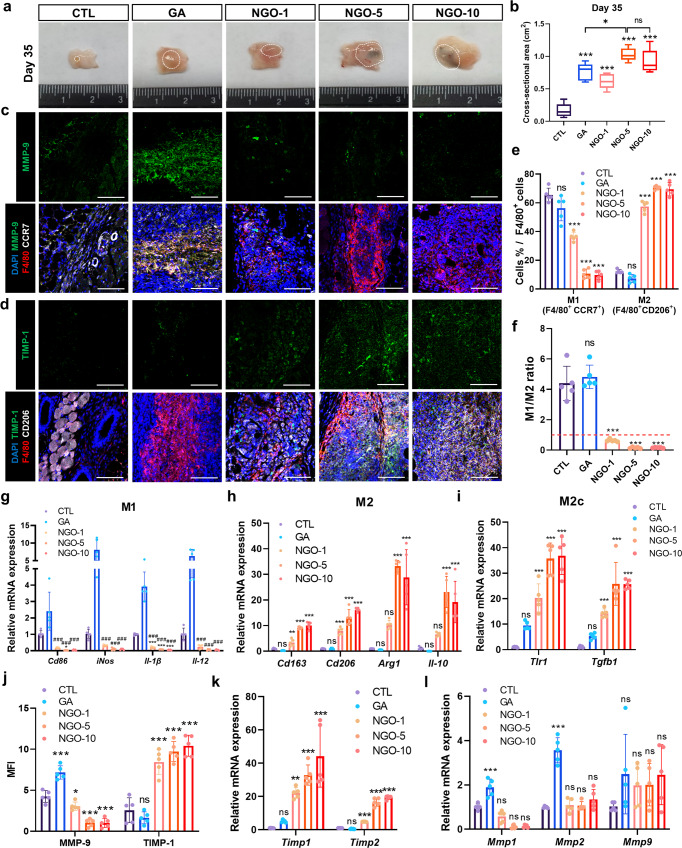
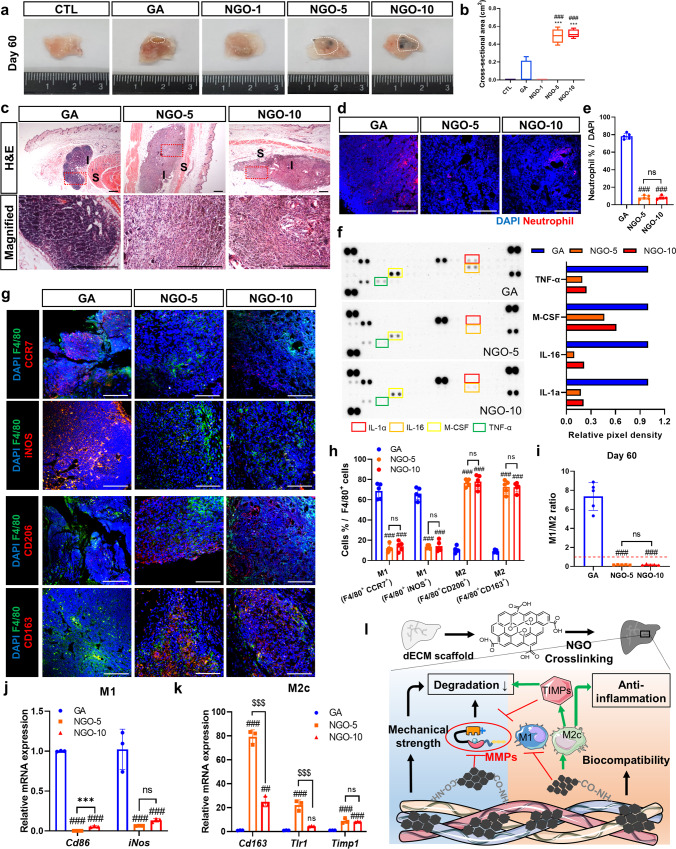
- In vivo, NGO scaffolds reduced inflammation and lasted longer: by day 60, NGO-5 and NGO-10 scaffolds remained highly stable, while control and NGO-1 scaffolds were completely absorbed; NGO groups also showed reduced neutrophil infiltration, lower systemic cytokines, and more M2/M2c-like macrophages and Treg cells.
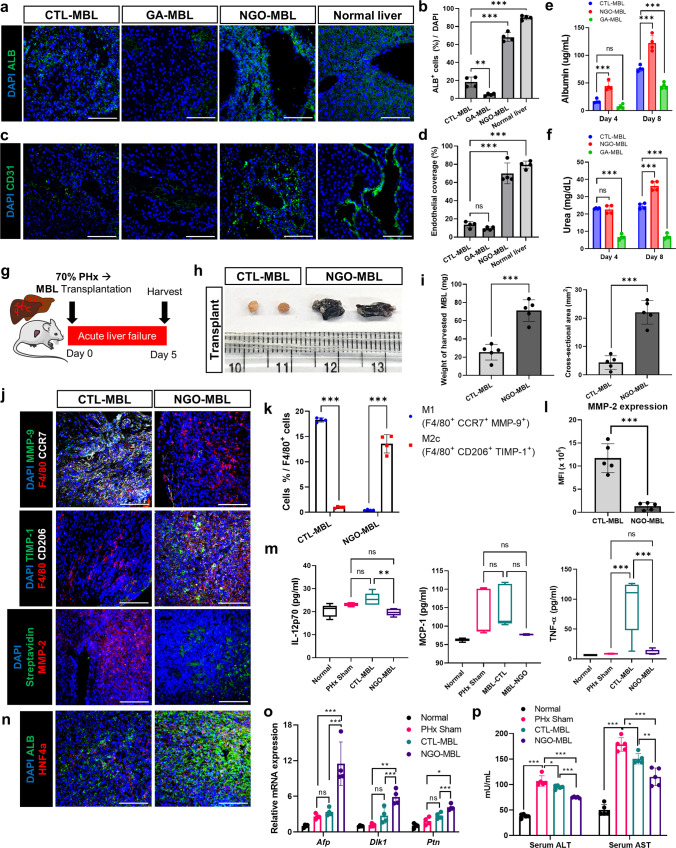
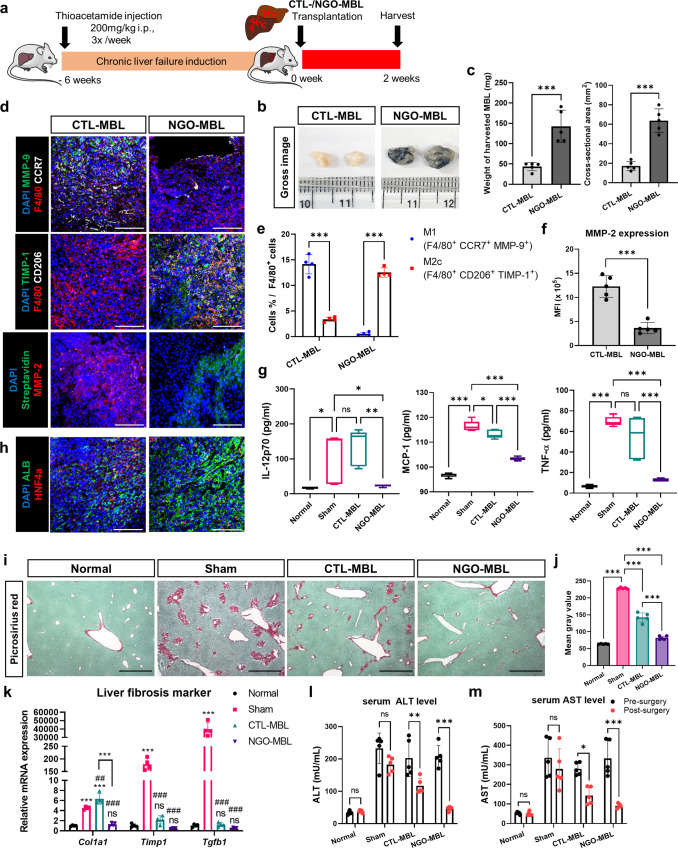
- In bioengineered livers, NGO-MBLs showed better function and regeneration: in acute and chronic liver failure models, NGO-MBLs retained more scaffold and hepatocyte-like cells, had lower MMP-2/MMP-9 and higher TIMP-1, reduced serum ALT/AST, and less fibrosis than CTL-MBLs.
## Methods
- Decellularized rat liver scaffolds were produced by perfusion decellularization, then crosslinked by perfusing PBS, 0.625% glutaraldehyde, or NGOs at 1, 5, or 10 μg/mL through the bile duct and portal vein for 24 h at 4 °C.
- Scaffold characterization included SEM, HRTEM, Raman, ATR-FTIR, zeta potential, swelling ratio, ninhydrin assay, tensile testing, and LC/MS-based matrisome analysis; MMP resistance was tested in vitro using active MMP-1, MMP-2, and MMP-9.
- In vivo testing used subcutaneous implantation in 6-week-old male BALB/c mice, hPBMC-derived macrophage polarization assays, biocompatibility assays with hCdHs and ECs, and transplantation of mouse bioengineered livers into acute (70% PHx) and chronic (TAA-induced) liver failure mouse models.
## Limitations
- The paper states that more kinds of liver-composing cells should be included in future bioengineered livers, specifically biliary epithelial cells, Kupffer cells, and hepatic stellate cells.
- The paper states that protocol optimization is still needed for injected cell types, total cell number, mixing ratio, and ex vivo culture duration.
- The paper states that human-scale clinical translation remains unresolved and that porcine scaffolds should be tested before scaling up; it also notes the need for longer-term monitoring of immune profiles and possible tumorigenic risks.
Model-written summary. Check it against the paper before relying on it.
Integrity signals
Registry
Cites
Statistics
Figures
Verification
Claims the paper makes
23 Valid · 2 Not valid · 16 Not checked · 105 Own results and interpretations
The cited sources support only part of this claim — read each source’s verdict below.
In the paper
“These infiltrating host cells, such as neutrophils, macrophages, lymphocytes, and stromal cells, continuously secrete matrix metalloproteinases (MMPs), which catalyze the ECM components of the scaffolds11,16.”
§ Bioengineered liver crosslinked with nano-graphene oxide enables efficient liver regeneration via MMP suppression and immunomodulation > Introduction
What the sources say
- Not checked — no full text of the sourcecites [11] Lopresti ST, Brown BN. Chapter 4 - Host Response to Naturally Derived Biomaterials. In: Host Response to Biomaterials (ed Badylak SF) (Academic Press, 2015). source
- Partly supportedcites [16] Gardner AB Lee SK Woods EC Acharya AP Biomaterials-based modulation of the immune system Biomed. Res Int 2013 2013 732182 10.1155/2013/732182 24171170 PMC3793288 sourceExperimental — accuracy not yet measured
Section 1, “Immune Evasion” (page unavailable), says neutrophils release proteases and other enzymes that break down biodegradable materials; during chronic inflammation, macrophages and neutrophils continue to release tissue-damaging enzymes. It does not identify those enzymes as MMPs or say that they degrade ECM components of scaffolds, and it does not attribute continuous secretion to every cell type listed in the claim. (LLM, conf=0.86)
plainstates a cause- Asserted: passes — The authors put it forward as true.
- Checkable: passes — It can be checked against evidence.
- Load-bearing: passes — The paper’s conclusions depend on it.
- Based: passes — The paper gives a reason why it holds.
The cited sources support only part of this claim — read each source’s verdict below.
In the paper
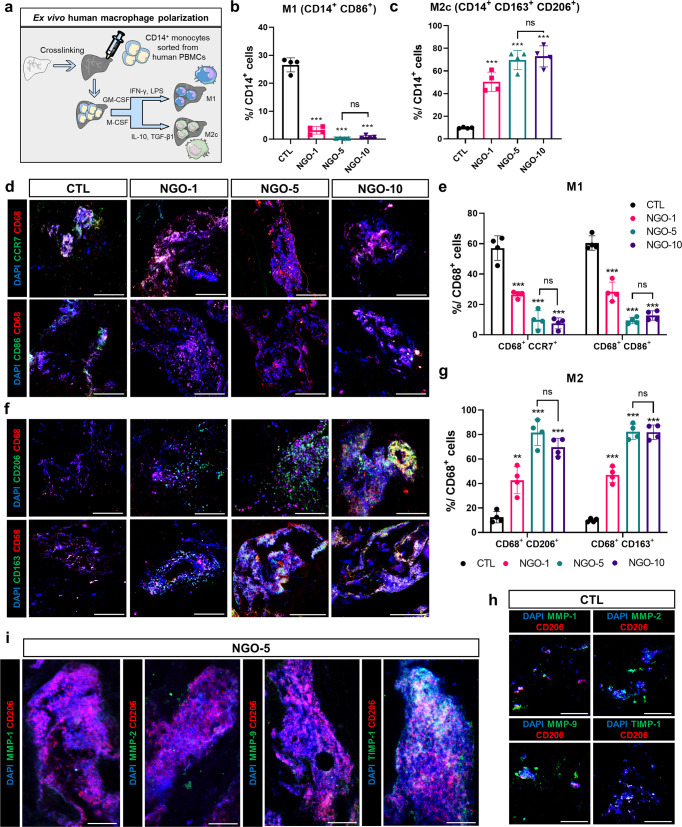
“the proteolytic balance, a ratio of MMP-9 to TIMP-1, is known to be higher in M1 macrophages39,40.”
§ Bioengineered liver crosslinked with nano-graphene oxide enables efficient liver regeneration via MMP suppression and immunomodulation > Results > Constructive remodeling of NGO-crosslinked scaffolds via M2c polarization
What the sources say
- Partly supportedcites [39] Jager NA Distribution of matrix metalloproteinases in human atherosclerotic carotid plaques and their production by smooth muscle cells and macrophage subsets Mol. Imaging Biol. 2016 18 283 291 10.1007/s11307-015-0882-0 26377769 PMC4783451 sourceExperimental — accuracy not yet measured
The Results section (page not available) reports lower TIMP-1 expression in M1 than M2 macrophages, which could contribute to a higher MMP-9/TIMP-1 ratio. But it also reports higher MMP-9 expression and protein levels in M2 macrophages and does not calculate or establish that the ratio is higher in M1 macrophages. (LLM, conf=0.82)
- Supportedcites [40] Roma-Lavisse C M1 and M2 macrophage proteolytic and angiogenic profile analysis in atherosclerotic patients reveals a distinctive profile in type 2 diabetes Diab Vasc. Dis. Res 2015 12 279 289 10.1177/1479164115582351 25966737 source
The Results section 'Distinct proteolytic and angiogenic profiles of human M1 and M2 macrophages from atherosclerotic patients' states that the proteolytic balance expressed as the MMP-9/TIMP-1 (along with MMP-9/PAI-1 and MMP-9/TFPI-2) ratio was significantly higher in M1 than M2 macrophages (Figure 3(a)); the Abstract and Discussion (p. ~, 'The expression of these inhibitors was upregulated in M1... and the MMP-9/TIMP-1... ratios were significantly higher in M1') repeat this. Minor scope note: the measurement was made in IL-1beta/IL-4-induced monocyte-derived macrophages from 36 atherosclerotic patients, and the paper defines proteolytic balance by three ratios rather than MMP-9/TIMP-1 alone. (LLM, conf=0.90)
boostedstates an association- Asserted: passes — The authors put it forward as true.
- Checkable: passes — It can be checked against evidence.
- Load-bearing: passes — The paper’s conclusions depend on it.
- Based: passes — The paper gives a reason why it holds.
- Partly supported
The cited sources support only part of this claim — read each source’s verdict below.
In the paper
“Among several types of M2 macrophages, M2c macrophages are known to orchestrate matrix remodeling by releasing MMPs and TIMPs (tissue inhibitors of metalloproteinase)15,39.”
§ Bioengineered liver crosslinked with nano-graphene oxide enables efficient liver regeneration via MMP suppression and immunomodulation > Results > Constructive remodeling of NGO-crosslinked scaffolds via M2c polarization
What the sources say
- Partly supportedcites [15] Brown BN Ratner BD Goodman SB Amar S Badylak SF Macrophage polarization: an opportunity for improved outcomes in biomaterials and regenerative medicine Biomaterials 2012 33 3792 3802 10.1016/j.biomaterials.2012.02.034 22386919 PMC3727238 sourceExperimental — accuracy not yet measured
Section 3.2.5 says macrophages produce MMPs and TIMPs that drive extracellular-matrix remodeling. Section 3.2 also suggests an M2a-to-M2c transition may aid late-stage muscle repair, but it does not attribute MMP and TIMP release specifically to M2c macrophages; it says the contributions of specific M1 and M2 populations are not well defined. Page numbers were not available in our copy. (LLM, conf=0.88)
- Partly supportedcites [39] Jager NA Distribution of matrix metalloproteinases in human atherosclerotic carotid plaques and their production by smooth muscle cells and macrophage subsets Mol. Imaging Biol. 2016 18 283 291 10.1007/s11307-015-0882-0 26377769 PMC4783451 sourceExperimental — accuracy not yet measured
The Introduction (page unavailable) identifies matrix deposition and tissue remodeling as functions of M2c macrophages. The Results (page unavailable) show MMP-9 secretion by M2c macrophages and TIMP-1 mRNA expression in M2 macrophages, but do not establish that M2c macrophages release TIMPs or that the measured molecules orchestrate remodeling. (LLM, conf=0.86)
boostedstates a cause- Asserted: passes — The authors put it forward as true.
- Checkable: passes — It can be checked against evidence.
- Load-bearing: passes — The paper’s conclusions depend on it.
- Based: passes — The paper gives a reason why it holds.
- Partly supported
Every source the paper cites for this claim was checked and supports it.
In the paper
“circulating monocytes are also recruited into the tissues and differentiated into macrophages, which dictate both inflammatory responses and tissue remodeling in the implants12,15.”
§ Bioengineered liver crosslinked with nano-graphene oxide enables efficient liver regeneration via MMP suppression and immunomodulation > Introduction
What the sources say
- Supportedcites [12] Aamodt JM Grainger DW Extracellular matrix-based biomaterial scaffolds and the host response Biomaterials 2016 86 68 82 10.1016/j.biomaterials.2016.02.003 26890039 PMC4785021 source
The section on rodent and human implant responses (page unavailable) describes monocyte recruitment to inflamed tissue, differentiation pathways, and macrophages’ central role in the foreign-body reaction. “Initial Host Tissue Responses to Implants” (page unavailable) links that reaction to persistent inflammation and fibrous capsule formation, supporting the claim about inflammatory responses and tissue remodeling around implants. (LLM, conf=0.85)
- Supportedcites [15] Brown BN Ratner BD Goodman SB Amar S Badylak SF Macrophage polarization: an opportunity for improved outcomes in biomaterials and regenerative medicine Biomaterials 2012 33 3792 3802 10.1016/j.biomaterials.2012.02.034 22386919 PMC3727238 source
Section 2 states that circulating monocytes enter tissues and differentiate into macrophages. The Introduction says macrophages can direct inflammatory versus constructive tissue remodeling following biomaterial implantation, and Section 4.1 describes their key role in determining remodeling at the implant interface. (LLM, conf=0.93)
plainstates a cause- Asserted: passes — The authors put it forward as true.
- Checkable: passes — It can be checked against evidence.
- Load-bearing: passes — The paper’s conclusions depend on it.
- Based: passes — The paper gives a reason why it holds.
- Supported
The cited sources support only part of this claim — read each source’s verdict below.
In the paper
“upon transplantation of xenograft-derived scaffolds, innate host immune systems are activated to eliminate foreign materials12.”
§ Bioengineered liver crosslinked with nano-graphene oxide enables efficient liver regeneration via MMP suppression and immunomodulation > Introduction
What the sources say
- Partly supportedcites [12] Aamodt JM Grainger DW Extracellular matrix-based biomaterial scaffolds and the host response Biomaterials 2016 86 68 82 10.1016/j.biomaterials.2016.02.003 26890039 PMC4785021 sourceExperimental — accuracy not yet measured
The “Initial Host Tissue Responses to Implants” section says implanted materials trigger inflammation involving macrophages, supporting activation of a host response. But it describes that response as often persisting while the implant remains, not as necessarily eliminating it. The “Inflammatory ECM proteins” section identifies particular rejection risks for xenogeneic materials and says the conditions for implant rejection remain unverified. (LLM, conf=0.86)
plainstates a cause- Asserted: passes — The authors put it forward as true.
- Checkable: passes — It can be checked against evidence.
- Load-bearing: passes — The paper’s conclusions depend on it.
- Based: passes — The paper gives a reason why it holds.
- Partly supported
86 more claims · 4 with their cited sources checked
Create a free account to see all 146 claims and to verify the 6 references still open.
- Probably not a substantial claim. 26
- It may state two separate claims as one. 37
- The quote only partly states this claim. 2
Claims other papers make about this one
Each is checked against this paper’s own text: does it say what the citing paper says it does?
The cited source says what the claim attributes to it.
In the citing paper
“Nano-graphene oxide protected scaffold from in vitro degradation by directly inhibiting matrix metalloproteinase activity and increasing mechanical rigidity.”
From Liver tissue engineering using decellularized scaffolds: Current progress, challenges, and opportunities (2024) · cites this paper as [178]
The cited source says what the claim attributes to it.
In the citing paper
“In another study, Kim et al. perfused decellularized rat livers with nano-graphene oxide via both bile duct and portal vein for 24 h at 4 °C [178].”
From Liver tissue engineering using decellularized scaffolds: Current progress, challenges, and opportunities (2024) · cites this paper as [178]
The cited source says what the claim attributes to it.
In the citing paper
“Interestingly, nano-graphene oxide-cross-linked livers were recellularized with endothelial and miHep cells and transplanted into acute (median and lateral lobe hepatectomy) and chronic (thioacetamide induced) liver failure mouse models, remaining functional post-transplantation.”
From Liver tissue engineering using decellularized scaffolds: Current progress, challenges, and opportunities (2024) · cites this paper as [178]
In the citing paper
“This approach successfully achieved efficient regeneration of damaged liver tissue, extended the survival time of allogeneic transplants, and improved the therapeutic effect of bioengineered livers, providing a novel solution for organ donation.”
From Constructing biomimetic microenvironments for liver regeneration (2025) · doi:10.1186/s12951-025-03729-9 · cites this paper as [158]
Citations
Cites
The chemistry of graphene oxide
Dreyer, D. R., Park, S., Bielawski, C. W., & Ruoff, R. S. (2010) · Chem. Soc. Rev. · doi:10.1039/b917103g · Cited by 11,653
The M1 and M2 paradigm of macrophage activation: Time for reassessment
Martinez, F. O., & Gordon, S. (2014) · F1000Prime Reports · doi:10.12703/p6-13 · Cited by 4,689
Michalopoulos, G. K., & DeFrances, M. C. (1997) · Science · doi:10.1126/science.276.5309.60 · Cited by 2,828
Glowing Graphene Quantum Dots and Carbon Dots: Properties, Syntheses, and Biological Applications
Zheng, X. T., Ananthanarayanan, A., Luo, K. Q., & Chen, P. (2015) · Small · doi:10.1002/smll.201402648 · Cited by 2,190
The complex role of estrogens in inflammation
Straub, R. H. (2007) · Endocrine Reviews · doi:10.1210/er.2007-0001 · Cited by 1,950
Pathogenesis of Liver Fibrosis
Hernandez-Gea, V., & Friedman, S. L. (2011) · Annual Review of Pathology: Mechanisms of Disease · doi:10.1146/annurev-pathol-011110-130246 · Cited by 1,809
Uygun, B. E., Soto-Gutierrez, A., Yagi, H., Izamis, M.-L., Guzzardi, M. A., Shulman, C., Milwid, J., Kobayashi, N., Tilles, A., Berthiaume, F., et al. (2010) · Nature Medicine · doi:10.1038/nm.2170 · Cited by 1,370
Type 2 immunity in tissue repair and fibrosis
Gieseck, R. L., Wilson, M. S., & Wynn, T. A. (2018) · Nature Reviews Immunology · doi:10.1038/nri.2017.90 · Cited by 1,055
The extracellular matrix: tools and insights for the "omics" era
Naba, A., Clauser, K. R., Ding, H., Whittaker, C. A., Carr, S. A., & Hynes, R. O. (2016) · Matrix Biology · doi:10.1016/j.matbio.2015.06.003 · Cited by 1,037
Brown, B. N., Ratner, B. D., Goodman, S. B., Amar, S., & Badylak, S. F. (2012) · Biomaterials · doi:10.1016/j.biomaterials.2012.02.034 · Cited by 926
Cross-tissue single-cell landscape of human monocytes and macrophages in health and disease
Mulder, K., Patel, A. A., Kong, W. T., Piot, C., Halitzki, E., Dunsmore, G., Khalilnezhad, S., Irac, S. E., Dubuisson, A., Chevrier, M., et al. (2021) · Immunity · doi:10.1016/j.immuni.2021.07.007 · Cited by 678
Structure and Function of Human Matrix Metalloproteinases
Laronha, H., & Caldeira, J. (2020) · Cells · doi:10.3390/cells9051076 · Cited by 609
Graphene and graphene oxide as nanomaterials for medicine and biology application
Priyadarsini, S., Mohanty, S., Mukherjee, S., Basu, S., & Mishra, M. (2018) · Journal of Nanostructure in Chemistry · doi:10.1007/s40097-018-0265-6 · Cited by 570
Zhu, S., Song, Y., Wang, J., Wan, H., Zhang, Y., Ning, Y., & Yang, B. (2017) · Nano Today · doi:10.1016/j.nantod.2016.12.006 · Cited by 567
Selders, G. S., Fetz, A. E., Radic, M. Z., & Bowlin, G. L. (2017) · Regenerative Biomaterials · doi:10.1093/rb/rbw041 · Cited by 538
Extracellular matrix-based biomaterial scaffolds and the host response
Aamodt, J. M., & Grainger, D. W. (2016) · Biomaterials · doi:10.1016/j.biomaterials.2016.02.003 · Cited by 509
Newby, A. C. (2008) · Arteriosclerosis, Thrombosis, and Vascular Biology · doi:10.1161/atvbaha.108.173898 · Cited by 496
Decellularized human liver as a natural 3D-scaffold for liver bioengineering and transplantation
Mazza, G., Rombouts, K., Rennie Hall, A., Urbani, L., Vinh Luong, T., Al-Akkad, W., Longato, L., Brown, D., Maghsoudlou, P., Dhillon, A. P., et al. (2015) · Scientific Reports · doi:10.1038/srep13079 · Cited by 415
Luo, J., Cote, L. J., Tung, V. C., Tan, A. T. L., Goins, P. E., Wu, J., & Huang, J. (2010) · Journal of the American Chemical Society · doi:10.1021/ja1078943 · Cited by 389
Preparation and characterisation of covalent polymer functionalized graphene oxide
Lin, Y., Jin, J., & Song, M. (2011) · J. Mater. Chem. · doi:10.1039/c0jm01859g · Cited by 345
Reduced Cytotoxicity of Graphene Nanosheets Mediated by Blood-Protein Coating
Chong, Y., Ge, C., Yang, Z., Garate, J. A., Gu, Z., Weber, J. K., Liu, J., & Zhou, R. (2015) · ACS Nano · doi:10.1021/nn5066606 · Cited by 314
Organic Functionalization of Graphene in Dispersions
Quintana, M., Vazquez, E., & Prato, M. (2013) · Accounts of Chemical Research · doi:10.1021/ar300138e · Cited by 240
Interactions of graphene and graphene oxide with proteins and peptides
Zhang, Y., Wu, C., Guo, S., & Zhang, J. (2013) · Nanotechnology Reviews · doi:10.1515/ntrev-2012-0078 · Cited by 235
Matricryptins and matrikines: biologically active fragments of the extracellular matrix
Ricard‐Blum, S., & Salza, R. (2014) · Experimental Dermatology · doi:10.1111/exd.12435 · Cited by 224
Rhazouani, A., Gamrani, H., El Achaby, M., Aziz, K., Gebrati, L., Uddin, M. S., & AZIZ, F. (2021) · BioMed Research International · doi:10.1155/2021/5518999 · Cited by 221
Structural properties of scaffolds: Crucial parameters towards stem cells differentiation
Ghasemi-Mobarakeh, L. (2015) · World Journal of Stem Cells · doi:10.4252/wjsc.v7.i4.728 · Cited by 210
Kolanthai, E., Sindu, P. A., Khajuria, D. K., Veerla, S. C., Kuppuswamy, D., Catalani, L. H., & Mahapatra, D. R. (2018) · ACS Applied Materials & Interfaces · doi:10.1021/acsami.8b00699 · Cited by 208
Li, M.-J., Liu, C.-M., Xie, Y.-B., Cao, H.-B., Zhao, H., & Zhang, Y. (2014) · Carbon · doi:10.1016/j.carbon.2013.09.004 · Cited by 202
Small molecule-mediated reprogramming of human hepatocytes into bipotent progenitor cells
Kim, Y., Kang, K., Lee, S. B., Seo, D., Yoon, S., Kim, S. J., Jang, K., Jung, Y. K., Lee, K. G., Factor, V. M., et al. (2019) · Journal of Hepatology · doi:10.1016/j.jhep.2018.09.007 · Cited by 167
Self-citationBioengineered transplantable porcine livers with re-endothelialized vasculature
Ko, I. K., Peng, L., Peloso, A., Smith, C. J., Dhal, A., Deegan, D. B., Zimmerman, C., Clouse, C., Zhao, W., Shupe, T. D., et al. (2015) · Biomaterials · doi:10.1016/j.biomaterials.2014.11.027 · Cited by 148
Size-dependent aggregation of graphene oxide
Szabo, T., Maroni, P., & Szilagyi, I. (2020) · Carbon · doi:10.1016/j.carbon.2020.01.022 · Cited by 137
Wolf, M. T., Ganguly, S., Wang, T. L., Anderson, C. W., Sadtler, K., Narain, R., Cherry, C., Parrillo, A. J., Park, B. V., Wang, G., et al. (2019) · Science Translational Medicine · doi:10.1126/scitranslmed.aat7973 · Cited by 131
Depleting Macrophages In Vivo with Clodronate-Liposomes
Moreno, S. G. (2018) · Methods in molecular biology · doi:10.1007/978-1-4939-7837-3_23 · Cited by 126
Kang, S., Park, J. B., Lee, T.-J., Ryu, S., Bhang, S. H., La, W.-G., Noh, M.-K., Hong, B. H., & Kim, B.-S. (2015) · Carbon · doi:10.1016/j.carbon.2014.11.029 · Cited by 125
High shear-induced exfoliation of graphite into high quality graphene by Taylor–Couette flow
Tran, T. S., Park, S. J., Yoo, S. S., et al. (2016) · RSC Advances · doi:10.1039/c5ra22273g · Cited by 105
Willemse, J., Verstegen, M. M. A., Vermeulen, A., Schurink, I. J., Roest, H. P., van der Laan, L. J. W., & de Jonge, J. (2020) · Materials Science and Engineering: C · doi:10.1016/j.msec.2019.110200 · Cited by 102
Wang, Y., Bao, J., Wu, X., Wu, Q., Li, Y., Zhou, Y., Li, L., & Bu, H. (2016) · Scientific Reports · doi:10.1038/srep24779 · Cited by 101
Critical role of estrogen in the progression of chronic liver diseases
Ezhilarasan, D. (2020) · Hepatobiliary & Pancreatic Diseases International · doi:10.1016/j.hbpd.2020.03.011 · Cited by 96
The Role of Neutrophils in Transplanted Organs
Scozzi, D., Ibrahim, M., Menna, C., Krupnick, A. S., Kreisel, D., & Gelman, A. E. (2017) · American Journal of Transplantation · doi:10.1111/ajt.13940 · Cited by 95
Biomaterials-Mediated Regulation of Macrophage Cell Fate
Liu, Y., & Segura, T. (2020) · Frontiers in Bioengineering and Biotechnology · doi:10.3389/fbioe.2020.609297 · Cited by 92
Biomaterials-Based Modulation of the Immune System
Gardner, A. B., Lee, S. K. C., Woods, E. C., & Acharya, A. P. (2013) · BioMed Research International · doi:10.1155/2013/732182 · Cited by 81
Vaday, G. G., Hershkoviz, R., Rahat, M. A., Lahat, N., Cahalon, L., & Lider, O. (2000) · Journal of Leukocyte Biology · doi:10.1189/jlb.68.5.737 · Cited by 79
Shaheen, M. F., Joo, D. J., Ross, J. J., Anderson, B. D., Chen, H. S., Huebert, R. C., Li, Y., Amiot, B., Young, A., Zlochiver, V., et al. (2019) · Nature Biomedical Engineering · doi:10.1038/s41551-019-0460-x · Cited by 75
Gao, S., Yuan, Z., Guo, W., Chen, M., Liu, S., Xi, T., & Guo, Q. (2017) · Materials Science and Engineering: C · doi:10.1016/j.msec.2016.10.074 · Cited by 72
Stahl, E. C., Bonvillain, R. W., Skillen, C. D., Burger, B. L., Hara, H., Lee, W., Trygg, C. B., Didier, P. J., Grasperge, B. F., Pashos, N. C., et al. (2018) · Biomaterials · doi:10.1016/j.biomaterials.2018.09.038 · Cited by 72
Principles governing control of aggregation and dispersion of aqueous graphene oxide
Suter, J. L., & Coveney, P. V. (2021) · Scientific Reports · doi:10.1038/s41598-021-01626-3 · Cited by 70
Harnessing FOXP3+ regulatory T cells for transplantation tolerance
Waldmann, H., Hilbrands, R., Howie, D., & Cobbold, S. (2014) · Journal of Clinical Investigation · doi:10.1172/jci67226 · Cited by 69
Vaday, G. G., Hershkoviz, R., Rahat, M. A., et al. (2000) · PubMed · Cited by 63
Ogiso, S., Yasuchika, K., Fukumitsu, K., Ishii, T., Kojima, H., Miyauchi, Y., Yamaoka, R., Komori, J., Katayama, H., Kawai, T., et al. (2016) · Scientific Reports · doi:10.1038/srep35887 · Cited by 59
Mechanisms of graphene influence on cell differentiation
Luong-Van, E. K., Madanagopal, T. T., & Rosa, V. (2020) · Materials Today Chemistry · doi:10.1016/j.mtchem.2020.100250 · Cited by 59
Dynamics of Proliferative and Quiescent Stem Cells in Liver Homeostasis and Injury
Cao, W., Chen, K., Bolkestein, M., Yin, Y., Verstegen, M. M. A., Bijvelds, M. J. C., Wang, W., Tüysüz, N., ten Berge, D., Sprengers, D., et al. (2017) · Gastroenterology · doi:10.1053/j.gastro.2017.07.006 · Cited by 57
Liver Tissue Engineering as an Emerging Alternative for Liver Disease Treatment
Mirdamadi, E. S., Kalhori, D., Zakeri, N., Azarpira, N., & Solati-Hashjin, M. (2020) · Tissue Engineering Part B: Reviews · doi:10.1089/ten.teb.2019.0233 · Cited by 57
Jager, N. A., Wallis de Vries, B. M., Hillebrands, J.-L., Harlaar, N. J., Tio, R. A., Slart, R. H. J. A., van Dam, G. M., Boersma, H. H., Zeebregts, C. J., & Westra, J. (2016) · Molecular Imaging and Biology · doi:10.1007/s11307-015-0882-0 · Cited by 55
Roma-Lavisse, C., Tagzirt, M., Zawadzki, C., Lorenzi, R., Vincentelli, A., Haulon, S., Juthier, F., Rauch, A., Corseaux, D., Staels, B., et al. (2015) · Diabetes and Vascular Disease Research · doi:10.1177/1479164115582351 · Cited by 50
Development of highly functional bioengineered human liver with perfusable vasculature
Kim, D.-H., Ahn, J., Kang, H. K., Kim, M.-S., Kim, N.-G., Kook, M. G., Choi, S. W., Jeon, N. L., Woo, H.-M., & Kang, K.-S. (2021) · Biomaterials · doi:10.1016/j.biomaterials.2020.120417 · Cited by 48
Self-citationcAMP/EPAC Signaling Enables ETV2 to Induce Endothelial Cells with High Angiogenesis Potential
Kim, J.-J., Kim, D., Lee, J. Y., Lee, B., Kang, I., Kook, M. G., Kong, D., Choi, S. W., Woo, H., Kim, D., et al. (2019) · Molecular Therapy · doi:10.1016/j.ymthe.2019.11.019 · Cited by 45
Self-citationFiore, E., Malvicini, M., Bayo, J., Peixoto, E., Atorrasagasti, C., Sierra, R., Rodríguez, M., Gómez Bustillo, S., García, M. G., Aquino, J. B., et al. (2016) · Stem Cell Research & Therapy · doi:10.1186/s13287-016-0424-y · Cited by 35
EDC Cross-linking of Decellularized Tissue: A Promising Approach?
Lehmann, N., Christ, T., Daugs, A., Bloch, O., & Holinski, S. (2017) · Tissue Engineering Part A · doi:10.1089/ten.tea.2016.0416 · Cited by 30
Wu, G., Wu, D., Lo, J., Wang, Y., Wu, J., Lu, S., Xu, H., Zhao, X., He, Y., Li, J., et al. (2020) · Biomaterials Science · doi:10.1039/c9bm01879d · Cited by 28
Arming Treg Cells at the Inflammatory Site
Belkaid, Y., & V. Tarbell, K. (2009) · Immunity · doi:10.1016/j.immuni.2009.03.004 · Cited by 27
Genetic Models of Macrophage Depletion
Hua, L., Shi, J., Shultz, L. D., & Ren, G. (2018) · Methods in molecular biology · doi:10.1007/978-1-4939-7837-3_22 · Cited by 26
Fu, P.-S., Wang, J.-C., Lai, P.-L., Liu, S.-M., Chen, Y.-S., Chen, W.-C., & Hung, C.-C. (2021) · Polymers · doi:10.3390/polym13060938 · Cited by 25
Host Response to Naturally Derived Biomaterials
Lopresti, S. T., & Brown, B. N. (2015) · Host Response to Biomaterials · doi:10.1016/b978-0-12-800196-7.00004-9 · Cited by 24
The extracellular matrix phenome across species
Statzer, C., & Ewald, C. Y. (2020) · Matrix Biology Plus · doi:10.1016/j.mbplus.2020.100039 · Cited by 21
Proton Transfer at the Interaction Interface of Graphene Oxide
Wu, L., & Jiang, X. (2018) · Analytical Chemistry · doi:10.1021/acs.analchem.8b01596 · Cited by 21
Nash, A., Birch, H. L., & de Leeuw, N. H. (2016) · Journal of Biomolecular Structure and Dynamics · doi:10.1080/07391102.2016.1153521 · Cited by 14
(2020) · PubMed Central · Cited by 13
Dunson, J. R., Bakhtiyar, S. S., Joshi, M., Goss, J. A., & Rana, A. (2021) · Clinical Transplantation · doi:10.1111/ctr.14433 · Cited by 11
Simple Maturation of Direct-Converted Hepatocytes Derived from Fibroblasts
Cho, Y., Yoon, S., Kang, K., Kim, Y., Lee, S. B., Seo, D., Ryu, K., Jeong, J., & Choi, D. (2017) · Tissue Engineering and Regenerative Medicine · doi:10.1007/s13770-017-0064-z · Cited by 5
Self-citation
Cited by
Nanomaterial surface modification toolkit: Principles, components, recipes, and applications
Kaymaz, S. V., Nobar, H. M., Sarıgül, H., Soylukan, C., Akyüz, L., & Yüce, M. (2023) · Advances in Colloid and Interface Science · doi:10.1016/j.cis.2023.103035 · Cited by 205
Xu, P., Kankala, R. K., Wang, S., & Chen, A. (2024) · Regenerative Biomaterials · doi:10.1093/rb/rbad107 · Cited by 129
“[200] crosslinked the dECM scaffold with nano-graphene oxide to alleviate the enzymatic degradation activity and enhance the mechanical rigidity.”
Jiang, T., Chen, S., Xu, J., Zhang, Y., Fu, H., Ling, Q., Xu, Y., Chu, X., Wang, R., Hu, L., et al. (2024) · Nature Communications · doi:10.1038/s41467-024-49578-2 · Cited by 104
Biomimetic hepatic lobules from three-dimensional imprinted cell sheets
Wang, J., Huang, D., Chen, H., & Zhao, Y. (2024) · Science Bulletin · doi:10.1016/j.scib.2024.02.030 · Cited by 37
In Vitro Modeling of Atherosclerosis Using iPSC‐Derived Blood Vessel Organoids
Kong, D., Ryu, J., Shin, N., Lee, S., Kim, N. G., Kim, H., Kim, M., Choi, J., Kim, D., & Kang, K. (2025) · Advanced Healthcare Materials · doi:10.1002/adhm.202400919 · Cited by 36
Self-citation
Metadata
- Authors
- Kim, D.-H., Kim, M.-J., Kwak, S.-Y., Jeong, J., Choi, D., Choi, S. W., Ryu, J., & Kang, K.-S.
- Affiliations
- Seoul National University (KR)
- Hanyang University (KR)
- Corresponding author
- Kang, Kyung-Sun
- Venue
- Nature Communications
- Published
- 2023-02-13
- Volume
- 14
- Issue
- 1
- Pages
- 801-801
- ISSN
- 2041-1723 (ISSN-L)
- PMC
- PMC9925774
- OpenAlex
- W4320498301
- Cited by
- 53
- References
- 69
- Citations by year
- 2026: 15 · 2025: 18 · 2024: 13 · 2023: 7
- FWCI
- 14.14
- Type
- journal article
- Language
- en
- Open access
- gold
- doi.org
- Licence
- cc-by
- creativecommons.org/licenses/by/4.0 (tdm)
- creativecommons.org/licenses/by/4.0 (vor)
- Locations
- Nature Communications (publishedVersion, cc-by)
- PubMed Central (publishedVersion, cc-by)
- PubMed (publishedVersion)
- RePEc: Research Papers in Economics (submittedVersion)
- DOAJ (DOAJ: Directory of Open Access Journals) (submittedVersion, cc-by-sa)
- Funders
- National Research Foundation
- Seoul National University
- National Research Foundation of Korea
- Ministry of Science and ICT, South Korea (22A0101L1‐11)
- National Center for Inter-University Research Facilities, Seoul National University
- Topics
- Health Sciences › Medicine › Surgery › Tissue Engineering and Regenerative Medicine
- Physical Sciences › Engineering › Biomedical Engineering › 3D Printing in Biomedical Research
- Physical Sciences › Materials Science › Biomaterials › Electrospun Nanofibers in Biomedical Applications
- Keywords
- nanographene oxide, decellularized liver scaffold, liver regeneration, matrix metalloproteinase inhibition, tissue inhibitors of metalloproteinases, M2 macrophage polarization, immunomodulation, enzyme resistance, allograft survival, liver failure, organ engineering, mechanical rigidity
- MeSH terms
- Animals, Extracellular Matrix, Graphite, Inflammation, Liver, Liver Regeneration, Oxides, Tissue Engineering, Mice, Tissue Scaffolds, Immunomodulation
About these checks
Registry, retraction, Cites and statistics results are computed, not judged, with one exception: a printed reference that no index lists is read once by a model before it counts as a citation error. Claims are extracted by a model and kept only when their quote appears verbatim in the text; each cited source is then checked, with a model’s help, for whether it says what the claim relies on. Those verdicts can be wrong — read the claim’s quote and the cited source before relying on one.
The claim verdicts this report counts are experimental: their accuracy is not yet measured.
A language model drew the claims from the paper on 2026-10-10, under version 3 of the claim definition (model deepseek-v4.1-flash, prompt extract-v3).
A second model labelled each claim on 2026-10-10 (model jev-1.13-20260917, definition revision gold-guideline-v0.2).
Cited sources are checked with a language model’s help (gpt-6-sol and qwen3.8-omni-flash).
Statistics and arithmetic are recomputed, not judged.
Confidence bands are shown only for fields calibrated on our annotated test set. None is calibrated yet, so no band is shown.
What counts as a claim ›How we measure confidence ›How we check this ›
Are you an author, or do you see a problem with this page? Request a review
Data sources
Bibliographic data: Semantic Scholar, OpenAlex, Crossref.
Contains information from the Semantic Scholar Academic Graph Datasets, made available under the ODC Attribution License (ODC-BY 1.0).
Semantic Scholar’s data is described in: Kinney, R., et al. (2023). The Semantic Scholar Open Data Platform. arXiv:2301.10140.
