

The DOI matches its Crossref record; 71 of the 73 references it cites were found in a registry or an index.
A general model to predict small molecule substrates of enzymes based on machine and deep learning
Open accessAbstract
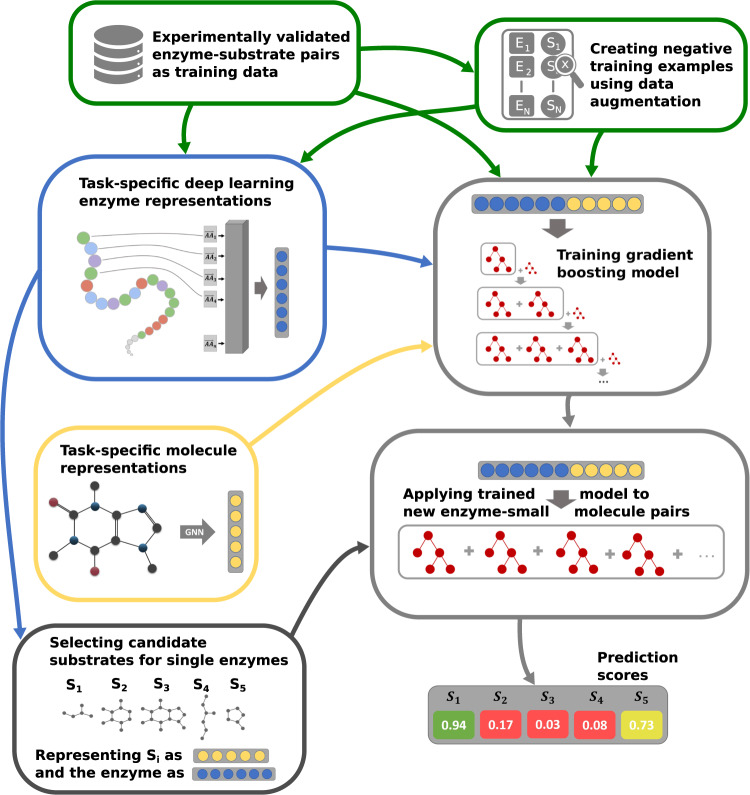
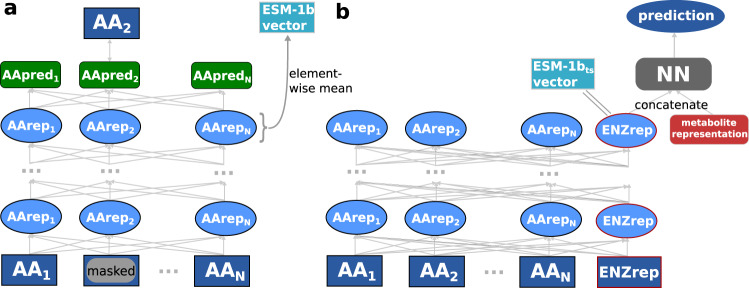
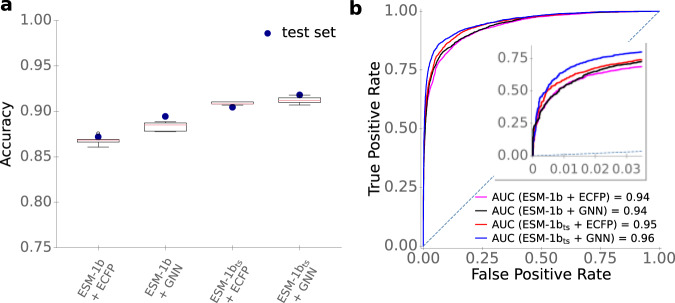
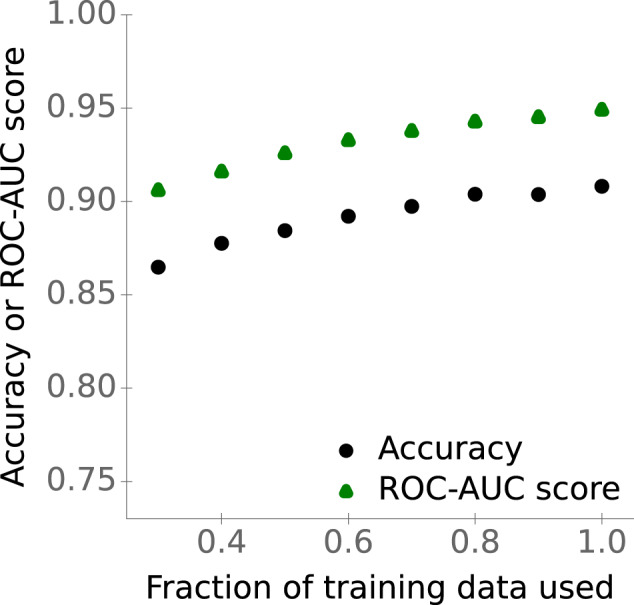
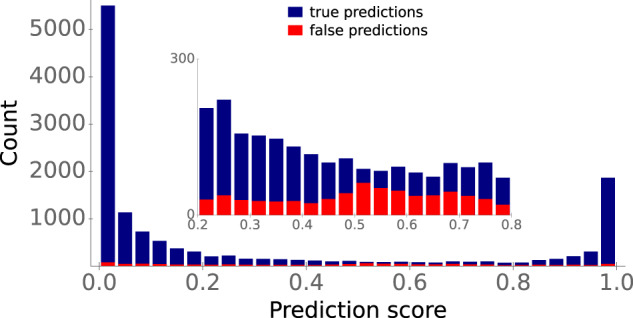
For most proteins annotated as enzymes, it is unknown which primary and/or secondary reactions they catalyze. Experimental characterizations of potential substrates are time-consuming and costly. Machine learning predictions could provide an efficient alternative, but are hampered by a lack of information regarding enzyme non-substrates, as available training data comprises mainly positive examples. Here, we present ESP, a general machine-learning model for the prediction of enzyme-substrate pairs with an accuracy of over 91% on independent and diverse test data. ESP can be applied successfully across widely different enzymes and a broad range of metabolites included in the training data, outperforming models designed for individual, well-studied enzyme families. ESP represents enzymes through a modified transformer model, and is trained on data augmented with randomly sampled small molecules assigned as non-substrates. By facilitating easy in silico testing of potential substrates, the ESP web server may support both basic and applied science.
Overview
The claims and statistics of this paper haven’t been checked yet.
Run the check — free, no account needed. It reads the open-access text and checks the sources it cites.
Integrity signals
Registry
Cites
Statistics
Figures
Verification
Claims the paper makes
The claims and statistics of this paper haven’t been checked yet.
Run the check — free, no account needed. It reads the open-access text and checks the sources it cites.
Claims other papers make about this one
Each is checked against this paper’s own text: does it say what the citing paper says it does?
The source backs part of the claim, not all of it — or backs it for a different population, condition or comparison.
In the citing paper
“It has been shown that the resulting representations contain rich information about the structure and the function of the proteins 17 , 32 , 33 .”
From Turnover number predictions for kinetically uncharacterized enzymes using machine and deep learning (2023) · cites this paper as [32]
Experimental — accuracy not yet measuredIn the citing paper
“the enzyme sequence contains information about the catalyzed reaction 32”
From Turnover number predictions for kinetically uncharacterized enzymes using machine and deep learning (2023) · cites this paper as [32]
In the citing paper
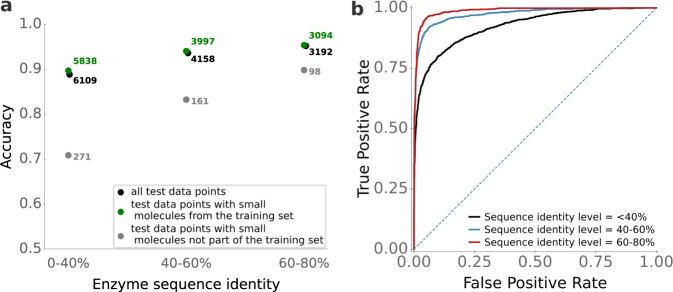
“In our study on predicting the substrate scope of enzymes 32 , we found that prediction performance depends strongly on the sequence similarity between a target enzyme and enzymes in the training set”
From Turnover number predictions for kinetically uncharacterized enzymes using machine and deep learning (2023) · cites this paper as [32]
Self-check
Percentages, sums and reported differences re-computed from the paper’s own numbers.
The self-check needs the paper’s full text.
Citations
Cites
Vaswani, A., Shazeer, N., Parmar, N., Uszkoreit, J., Jones, L., Gomez, A. N., Kaiser, L., & Polosukhin, I. (2017) · arXiv · doi:10.48550/arxiv.1706.03762 · Cited by 120,404
BERT: Pre-training of Deep Bidirectional Transformers for Language Understanding
Devlin, J., Chang, M.-W., Lee, K., & Toutanova, K. (2018) · arXiv · doi:10.48550/arxiv.1810.04805 · Cited by 73,173
Scikit-learn: Machine Learning in Python
Pedregosa, F., Varoquaux, G., Gramfort, A., Michel, V., Thirion, B., Grisel, O., Blondel, M., Müller, A., Nothman, J., Louppe, G., et al. (2012) · arXiv · doi:10.48550/arxiv.1201.0490 · Cited by 71,016
XGBoost: A Scalable Tree Boosting System
Chen, T., & Guestrin, C. (2016) · Proceedings of the 22nd ACM SIGKDD International Conference on Knowledge Discovery and Data Mining · doi:10.1145/2939672.2939785 · Cited by 54,569
Highly accurate protein structure prediction with AlphaFold
Jumper, J., Evans, R., Pritzel, A., Green, T., Figurnov, M., Ronneberger, O., Tunyasuvunakool, K., Bates, R., Žídek, A., Potapenko, A., et al. (2021) · Nature · doi:10.1038/s41586-021-03819-2 · Cited by 43,764
SciPy 1.0: fundamental algorithms for scientific computing in Python
Virtanen, P., Gommers, R., Oliphant, T. E., Haberland, M., Reddy, T., Cournapeau, D., Burovski, E., Peterson, P., Weckesser, W., Bright, J., et al. (2020) · Nature Methods · doi:10.1038/s41592-019-0686-2 · Cited by 38,430
KEGG: Kyoto Encyclopedia of Genes and Genomes
Kanehisa, M. (2000) · Nucleic Acids Research · doi:10.1093/nar/28.1.27 · Cited by 37,077
PyTorch: An Imperative Style, High-Performance Deep Learning Library
Paszke, A., Gross, S., Massa, F., Lerer, A., Bradbury, J., Chanan, G., Killeen, T., Lin, Z., Gimelshein, N., Antiga, L., et al. (2019) · arXiv · doi:10.48550/arxiv.1912.01703 · Cited by 31,473
KEGG: Kyoto Encyclopedia of Genes and Genomes
Ogata, H., Goto, S., Sato, K., Fujibuchi, W., Bono, H., & Kanehisa, M. (1999) · Nucleic Acids Research · doi:10.1093/nar/27.1.29 · Cited by 31,232
Neural Machine Translation by Jointly Learning to Align and Translate
Bahdanau, D., Cho, K., & Bengio, Y. (2014) · arXiv · doi:10.48550/arxiv.1409.0473 · Cited by 16,213
Jolliffe, I. T. (2005) · Wiley eBooks · doi:10.1002/0470013192.bsa501 · Cited by 14,522
Cd-hit: Accelerated for clustering the next-generation sequencing data
Fu, L., Niu, B., Zhu, Z., Wu, S., & Li, W. (2012) · Bioinformatics · doi:10.1093/bioinformatics/bts565 · Cited by 11,175
SciPy 1.0: fundamental algorithms for scientific computing in Python
Virtanen, P., Gommers, R., Oliphant, T. E., Haberland, M., Reddy, T., Cournapeau, D., Burovski, E., Peterson, P., Weckesser, W., Bright, J., et al. (2019) · Apollo - University of Cambridge Repository · doi:10.17863/cam.64134 · Cited by 10,460
Extended-Connectivity Fingerprints
Rogers, D. O. W., & Hahn, M. (2010) · Journal of Chemical Information and Modeling · doi:10.1021/ci100050t · Cited by 7,925
Weininger, D. (1988) · Journal of Chemical Information and Computer Sciences · doi:10.1021/ci00057a005 · Cited by 7,436
Statsmodels: Econometric and Statistical Modeling with Python
Seabold, S., & Perktold, J. (2010) · Proceedings of the Python in Science Conferences · doi:10.25080/majora-92bf1922-011 · Cited by 6,968
Graph neural networks: A review of methods and applications
Zhou, J., Cui, G., Hu, S., Zhang, Z., Yang, C., Liu, Z., Wang, L., Li, C., & Sun, M. (2020) · AI Open · doi:10.1016/j.aiopen.2021.01.001 · Cited by 6,880
UniProt: the universal protein knowledgebase in 2021
The UniProt Consortium, Bateman, A., Martin, M.-J., Orchard, S., Magrane, M., Agivetova, R., Ahmad, S., Alpi, E., Bowler-Barnett, E. H., Britto, R., et al. (2021) · Nucleic Acids Research · doi:10.1093/nar/gkaa1100 · Cited by 6,372
Chicco, D., & Jurman, G. (2020) · BMC Genomics · doi:10.1186/s12864-019-6413-7 · Cited by 6,143 · cited 1×
“As the test datasets used by Yang et al. 15 are imbalanced, with a proportion of 18 – 31% of positive data points, the MCC is a more meaningful score compared to the accuracy 52 ; we hence conclude that ESP outperforms GT-Predict.”
MethodAccurate prediction of protein structures and interactions using a 3-track network
Baek, M., DiMaio, F., Anishchenko, I., Dauparas, J., Ovchinnikov, S., Lee, G. R., Wang, J., Cong, Q., Kinch, L. N., Schaeffer, R. D., et al. (2021) · doi:10.1101/2021.06.14.448402 · Cited by 5,549
PubChem in 2021: new data content and improved web interfaces
Kim, S., Chen, J., Cheng, T., Gindulyte, A., He, J., He, S., Li, Q., Shoemaker, B. A., Thiessen, P. A., Yu, B., et al. (2021) · Nucleic Acids Research · doi:10.1093/nar/gkaa971 · Cited by 3,953
Approximate Statistical Tests for Comparing Supervised Classification Learning Algorithms
Dietterich, T. G. (1998) · Neural Computation · doi:10.1162/089976698300017197 · Cited by 3,840
The Gene Ontology resource: enriching a GOld mine
The Gene Ontology Consortium, Carbon, S., Douglass, E., Good, B. M., Unni, D. R., Harris, N. L., Mungall, C. J., Basu, S., Chisholm, R. L., Dodson, R. J., et al. (2021) · Nucleic Acids Research · doi:10.1093/nar/gkaa1113 · Cited by 3,555
Rives, A., Meier, J., Sercu, T., Goyal, S., Lin, Z., Liu, J., Guo, D., Ott, M., Zitnick, C. L., Ma, J., et al. (2021) · Proceedings of the National Academy of Sciences · doi:10.1073/pnas.2016239118 · Cited by 3,286
Rives, A., Meier, J., Sercu, T., Goyal, S., Lin, Z., Liu, J., Guo, D., Ott, M., Zitnick, C. L., Ma, J., et al. (2019) · doi:10.1101/622803 · Cited by 3,280 · cited 6×
“In this work, wego beyond the current state-of-the-artby creating maximally informative protein representations, using a customized, task-speci fi c version of the ESM-1b transformer model 34 .”
BackgroundMethodInfluentialConvolutional Networks on Graphs for Learning Molecular Fingerprints
Duvenaud, D., Maclaurin, D., Aguilera-Iparraguirre, J., Gómez-Bombarelli, R., Hirzel, T., Aspuru-Guzik, A., & Adams, R. P. (2015) · arXiv · doi:10.48550/arxiv.1509.09292 · Cited by 2,628
ProtTrans: Toward Understanding the Language of Life Through Self-Supervised Learning
Elnaggar, A., Heinzinger, M., Dallago, C., Rehawi, G., Wang, Y., Jones, L., Gibbs, T., Feher, T., Angerer, C., Steinegger, M., et al. (2022) · IEEE Transactions on Pattern Analysis and Machine Intelligence · doi:10.1109/tpami.2021.3095381 · Cited by 2,329 · cited 1×
“In order to create a single fi xed-length numerical representation of the whole protein, one typically calculates the element-wise mean across all amino acid representations 34,35,49 .”
BackgroundUniRef clusters: a comprehensive and scalable alternative for improving sequence similarity searches
Suzek, B. E., Wang, Y., Huang, H., McGarvey, P. B., Wu, C. H., & the UniProt Consortium (2015) · Bioinformatics · doi:10.1093/bioinformatics/btu739 · Cited by 1,928
Analyzing Learned Molecular Representations for Property Prediction
Yang, K., Swanson, K., Jin, W., Coley, C., Eiden, P., Gao, H., Guzman-Perez, A., Hopper, T., Kelley, B., Mathea, M., et al. (2019) · Journal of Chemical Information and Modeling · doi:10.1021/acs.jcim.9b00237 · Cited by 1,923
DeepDTA: deep drug–target binding affinity prediction
Öztürk, H., Özgür, A., & Özkırımlı, E. (2018) · Bioinformatics · doi:10.1093/bioinformatics/bty593 · Cited by 1,792
Molecular graph convolutions: moving beyond fingerprints
Kearnes, S., McCloskey, K., Berndl, M., Pande, V., & Riley, P. (2016) · Journal of Computer-Aided Molecular Design · doi:10.1007/s10822-016-9938-8 · Cited by 1,631
Strategies for Pre-training Graph Neural NetworksPreprint
Hu, W., Liu, B., Gomes, J., Žitnik, M., Liang, P., Pande, V. S., & Leskovec, J. (2019) · arXiv (Cornell University) · doi:10.48550/arxiv.1905.12265 · Cited by 1,410
The MetaCyc database of metabolic pathways and enzymes - a 2019 update
Caspi, R., Billington, R., Keseler, I. M., Kothari, A., Krummenacker, M., Midford, P. E., Ong, W. K., Paley, S., Subhraveti, P., & Karp, P. D. (2019) · Nucleic Acids Research · doi:10.1093/nar/gkz862 · Cited by 1,407
Enzyme promiscuity: A mechanistic and evolutionary perspective
Tawfik, O. K. A. D. S. (2010) · Annual Review of Biochemistry · doi:10.1146/annurev-biochem-030409-143718 · Cited by 1,355
Unified rational protein engineering with sequence-based deep representation learning
Alley, E. C., Khimulya, G., Biswas, S., AlQuraishi, M., & Church, G. M. (2019) · Nature Methods · doi:10.1038/s41592-019-0598-1 · Cited by 1,131 · cited 1×
“In order to create a single fi xed-length numerical representation of the whole protein, one typically calculates the element-wise mean across all amino acid representations 34,35,49 .”
BackgroundMicrobial Enzymes: Tools for Biotechnological Processes
Adrio, J. L., & Demain, A. L. (2014) · Biomolecules · doi:10.3390/biom4010117 · Cited by 830
BRENDA, the ELIXIR core data resource in 2021: new developments and updates
Chang, A., Jeske, L., Ulbrich, S., Hofmann, J., Koblitz, J., Schomburg, I., Neumann-Schaal, M., Jahn, D., & Schomburg, D. (2021) · Nucleic Acids Research · doi:10.1093/nar/gkaa1025 · Cited by 789
Learning from positive and unlabeled data: a survey
Bekker, J., & Davis, J. (2020) · Machine Learning · doi:10.1007/s10994-020-05877-5 · Cited by 651
Karimi, M., Wu, D. J., Wang, Z., & Shen, Y. (2019) · Bioinformatics · doi:10.1093/bioinformatics/btz111 · Cited by 540
Protein promiscuity and its implications for biotechnology
Nobeli, I., Favia, A. D., & Thornton, J. M. (2009) · Nature Biotechnology · doi:10.1038/nbt1519 · Cited by 508
Deep learning-based kcat prediction enables improved enzyme-constrained model reconstruction
Li, F., Yuan, L., Lu, H., Li, G., Chen, Y., Engqvist, M. K. M., Kerkhoven, E. J., & Nielsen, J. (2022) · Nature Catalysis · doi:10.1038/s41929-022-00798-z · Cited by 466 · cited 3×
“State-of-the-art approaches in this domain are feature-based, i.e., numerical representations of the protein and the substrate molecule are used as input to machine learning models 25 – 29 .”
BackgroundMethodSelf-citationHow Well is Enzyme Function Conserved as a Function of Pairwise Sequence Identity?
Tian, W., & Skolnick, J. (2003) · Journal of Molecular Biology · doi:10.1016/j.jmb.2003.08.057 · Cited by 434
The UniProt-GO Annotation database in 2011
Dimmer, E. C., Huntley, R. P., Alam-Faruque, Y., Sawford, T., O’Donovan, C., Martin, M. J., Bely, B., Browne, P., Chan, W. M., Eberhardt, R. Y., et al. (2011) · Nucleic Acids Research · doi:10.1093/nar/gkr1048 · Cited by 430
Using deep learning to annotate the protein universe
Bileschi, M. L., Belanger, D., Bryant, D. H., Sanderson, T., Carter, B., Sculley, D., Bateman, A., DePristo, M. A., & Colwell, L. J. (2022) · Nature Biotechnology · doi:10.1038/s41587-021-01179-w · Cited by 332 · cited 1×
“Deep learning models have been used to predict enzyme functions by either predicting their assignment to EC classes 20 – 22 , or by predicting functional domains within the protein sequence 23 .”
MethodDeep learning enables high-quality and high-throughput prediction of enzyme commission numbers
Ryu, J. Y., Kim, H. U., & Lee, S. Y. (2019) · Proceedings of the National Academy of Sciences · doi:10.1073/pnas.1821905116 · Cited by 294
DEEPre: sequence-based enzyme EC number prediction by deep learning
Li, Y., Wang, S., Umarov, R. K., Xie, B., Fan, M., Li, L., & Gao, X. (2017) · Bioinformatics · doi:10.1093/bioinformatics/btx680 · Cited by 292
Rhea, the reaction knowledgebase in 2022
Bansal, P., Morgat, A., Axelsen, K. B., Muthukrishnan, V., Coudert, E., Aimo, L., Hyka‐Nouspikel, N., Gasteiger, E., Kerhornou, A., Neto, T. B., et al. (2021) · Nucleic Acids Research · doi:10.1093/nar/gkab1016 · Cited by 251
Learning protein fitness models from evolutionary and assay-labeled data
Hsu, C., Nisonoff, H. M., Fannjiang, C., & Listgarten, J. (2022) · Nature Biotechnology · doi:10.1038/s41587-021-01146-5 · Cited by 240
Deep Dive into Machine Learning Models for Protein Engineering
Xu, Y., Verma, D., Sheridan, R. P., Liaw, A. I., Ma, J., Marshall, N., McIntosh, J. A., Sherer, E. C., Svetnik, V., & Johnston, J. M. (2020) · Journal of Chemical Information and Modeling · doi:10.1021/acs.jcim.0c00073 · Cited by 210
SABIO-RK: an updated resource for manually curated biochemical reaction kinetics
Wittig, U., Rey, M., Weidemann, A., Kania, R., & Müller, W. (2018) · Nucleic Acids Research · doi:10.1093/nar/gkx1065 · Cited by 204
Shining a light on enzyme promiscuity
Copley, S. D. (2017) · Current Opinion in Structural Biology · doi:10.1016/j.sbi.2017.11.001 · Cited by 200
ProteInfer, deep neural networks for protein functional inference
Sanderson, T., Bileschi, M. L., Belanger, D., & Colwell, L. J. (2023) · eLife · doi:10.7554/elife.80942 · Cited by 197
Learning meaningful representations of protein sequences
Detlefsen, N. S., Hauberg, S., & Boomsma, W. (2022) · Nature Communications · doi:10.1038/s41467-022-29443-w · Cited by 171
ProteinNet: a standardized data set for machine learning of protein structure
AlQuraishi, M. (2019) · BMC Bioinformatics · doi:10.1186/s12859-019-2932-0 · Cited by 147
High-throughput screening technologies for enzyme engineering
Longwell, C. K., Labanieh, L., & Cochran, J. R. (2017) · Current Opinion in Biotechnology · doi:10.1016/j.copbio.2017.05.012 · Cited by 141
Functional and informatics analysis enables glycosyltransferase activity prediction
Yang, M., Fehl, C., Lees, K. V., Lim, E., Offen, W. A., Davies, G. J., Bowles, D. J., Davidson, M. G., Roberts, S., & Davis, B. G. (2018) · Nature Chemical Biology · doi:10.1038/s41589-018-0154-9 · Cited by 134
Deep learning allows genome-scale prediction of Michaelis constants from structural features
Kroll, A., Engqvist, M. K. M., Heckmann, D., & Lercher, M. J. (2021) · PLOS Biology · doi:10.1371/journal.pbio.3001402 · Cited by 132
Self-citationMachine learning modeling of family wide enzyme-substrate specificity screens
Goldman, S., Das, R., Yang, K. K., & Coley, C. W. (2022) · PLOS Computational Biology · doi:10.1371/journal.pcbi.1009853 · Cited by 120
PADME: A Deep Learning-based Framework for Drug-Target Interaction PredictionPreprint
Feng, Q., Dueva, E., Cherkasov, A. R., & Ester, M. (2018) · arXiv (Cornell University) · doi:10.48550/arxiv.1807.09741 · Cited by 114
Chevrette, M. G., Aicheler, F., Kohlbacher, O., Currie, C. R., & Medema, M. H. (2017) · Bioinformatics · doi:10.1093/bioinformatics/btx400 · Cited by 112
Machine learning‐based prediction of enzyme substrate scope: Application to bacterial nitrilases
Mou, Z., Eakes, J., Cooper, C. J., Foster, C. M., Standaert, R. F., Podar, M., Doktycz, M. J., & Parks, J. M. (2020) · Proteins Structure Function and Bioinformatics · doi:10.1002/prot.26019 · Cited by 70
Predicting novel substrates for enzymes with minimal experimental effort with active learning
Pertusi, D. A., Moura, M., Jeffryes, J. G., Prabhu, S., Biggs, B. W., & Tyo, K. E. J. (2017) · Metabolic Engineering · doi:10.1016/j.ymben.2017.09.016 · Cited by 55
Rembeza, E., & Engqvist, M. K. M. (2021) · PLoS Computational Biology · doi:10.1371/journal.pcbi.1009446 · Cited by 55
Self-citationRöttig, M., Rausch, C. R., & Kohlbacher, O. (2010) · PLoS Computational Biology · doi:10.1371/journal.pcbi.1000636 · Cited by 47
A high-throughput screening method for determining the substrate scope of nitrilases
Black, G. W., Brown, N. L., Perry, J. J. B., Randall, P. D., Turnbull, G., & Zhang, M. (2014) · Chemical Communications · doi:10.1039/c4cc06021k · Cited by 44
Enzyme promiscuity prediction using hierarchy-informed multi-label classification
Visani, G. M., Hughes, M. C., & Hassoun, S. (2021) · Bioinformatics · doi:10.1093/bioinformatics/btab054 · Cited by 36
Bioengineering natural product biosynthetic pathways for therapeutic applications
Wu, M., Law, B. J. C., Wilkinson, B. M., & Micklefield, J. (2012) · Current Opinion in Biotechnology · doi:10.1016/j.copbio.2012.03.008 · Cited by 35
Multitask Learning On Graph Neural Networks Applied To Molecular Property PredictionsPreprint
Capela, F., Nouchi, V., van Deursen, R., Tetko, I. V., & Godin, G. (2019) · arXiv (Cornell University) · doi:10.48550/arxiv.1910.13124 · Cited by 17
Engineering a Synthetic Pathway for Gentisate in Pseudomonas Chlororaphis P3
Wang, S., Fu, C., Liu, K., Cui, J., Hu, H., Wang, W., & Zhang, X. (2021) · Frontiers in Bioengineering and Biotechnology · doi:10.3389/fbioe.2020.622226 · Cited by 12
Discovery of Two Novel Oxidases Using a High‐Throughput Activity Screen
Rembeza, E., Boverio, A., Fraaije, M. W., & Engqvist, M. K. M. (2021) · ChemBioChem · doi:10.1002/cbic.202100510 · Cited by 11
Self-citationAlexanderKroll/ESP: Inititial release for ESP paper
Kroll, A. (2023) · Zenodo (CERN European Organization for Nuclear Research) · doi:10.5281/zenodo.7763141 · Cited by 1
Self-citation
Research works printed but not linked: 4
- Cooper, G. M., Hausman, R. E. & Hausman, R. E.The Cell: A Molecular Approach, vol. 4 (ASM press, Washington DC, 2007).
- Zhou, J. et al. Graph neural networks: A review of methods and applications. AI Open 1, 57–81 (2020). · DOI · Paper page
- Van Rossum, G. & Drake, F. L. Python 3 Reference Manual. (CreateSpace, Scotts Valley, 2009).
- Bergstra, J., Yamins, D. & Cox, D. Making a science of model search: Hyperparameter optimization in hundreds of dimensions for vision architectures. In International conference on machine learning, 115-123 (PMLR, 2013).
Cited by
Sorted by citations
Machine Learning-Guided Protein Engineering
Kouba, P., Kohout, P., Haddadi, F., Bushuiev, A., Samusevich, R., Sedlář, J., Damborský, J., Pluskal, T., Šivic, J., & Mazurenko, S. (2023) · ACS Catalysis · doi:10.1021/acscatal.3c02743 · Cited by 218
Turnover number predictions for kinetically uncharacterized enzymes using machine and deep learning
Kroll, A., Rousset, Y., Hu, X.-P., Liebrand, N. A., & Lercher, M. J. (2023) · Nature Communications · doi:10.1038/s41467-023-39840-4 · Cited by 186
Self-citationNavigating the landscape of enzyme design: from molecular simulations to machine learning
Zhou, J., & Huang, M. (2024) · Chemical Society Reviews · doi:10.1039/d4cs00196f · Cited by 168
A General Machine Learning Model for Assessing Fruit Quality Using Deep Image Features
Apostolopoulos, I. D., Tzani, M., & Aznaouridis, S. I. (2023) · AI · doi:10.3390/ai4040041 · Cited by 88
Enzyme specificity prediction using cross-attention graph neural networks
Cui, H., Su, Y., Dean, T. J., Yu, T., Zhang, Z., Peng, J., Shukla, D., & Zhao, H. (2025) · Nature · doi:10.1038/s41586-025-09697-2 · Cited by 73
Metadata
- Authors
- Kroll, A., Ranjan, S., Engqvist, M. K. M., & Lercher, M. J.
- Affiliations
- Heinrich Heine University Düsseldorf (DE)
- Indian Institute of Technology Bombay (IN)
- EnginZyme (Sweden) (SE)
- Corresponding author
- Lercher, Martin J.
- Venue
- Nature Communications
- Published
- 2023-05-15
- Volume
- 14
- Issue
- 1
- Pages
- 2787-2787
- ISSN
- 2041-1723 (ISSN-L)
- PMC
- PMC10185530
- OpenAlex
- W4376601927
- Cited by
- 193
- References
- 73
- Citations by year
- 2026: 65 · 2025: 64 · 2024: 51 · 2023: 13
- FWCI
- 17.23
- Type
- journal article
- Language
- en
- Open access
- gold
- doi.org
- Locations
- Nature Communications (publishedVersion, cc-by)
- PubMed Central (publishedVersion, cc-by)
- PubMed (publishedVersion)
- Chalmers Research (Chalmers University of Technology) (submittedVersion, other-oa)
- RePEc: Research Papers in Economics (submittedVersion)
- DOAJ (DOAJ: Directory of Open Access Journals) (submittedVersion, cc-by-sa)
- Univ. Duesseldorf: Duesseldorfer Dokumenten- und Publikationsserver (submittedVersion, cc-by)
- Funders
- Deutsche Forschungsgemeinschaft (CRC 1310 + 390686111)
- Volkswagen Foundation
- Topics
- Life Sciences › Biochemistry, Genetics and Molecular Biology › Molecular Biology › Machine Learning in Bioinformatics
- Life Sciences › Pharmacology, Toxicology and Pharmaceutics › Drug Discovery › Computational Drug Discovery Methods
- Life Sciences › Biochemistry, Genetics and Molecular Biology › Molecular Biology › Enzyme Catalysis and Immobilization
- Keywords
- enzyme catalysis, transformer models, deep learning, metabolites
- MeSH terms
- Machine Learning, Deep Learning, Catalysis, Proteins, Support Vector Machine
About these checks
Registry, retraction, Cites and statistics results are computed, not judged, with one exception: a printed reference that no index lists is read once by a model before it counts as a citation error. Claims are extracted by a model and kept only when their quote appears verbatim in the text; each cited source is then checked, with a model’s help, for whether it says what the claim relies on. Those verdicts can be wrong — read the claim’s quote and the cited source before relying on one.
Statistics and arithmetic are recomputed, not judged.
Confidence bands are shown only for fields calibrated on our annotated test set. None is calibrated yet, so no band is shown.
What counts as a claim ›How we measure confidence ›How we check this ›
Are you an author, or do you see a problem with this page? Request a review
